Picture this: you walk into a living room and the first thing you notice is a wall of soft fabric framed like fine art. Floral cotton, linen, gingham, and velvet sit behind glass in simple wooden frames, and the whole room feels warmer for it. That gentle, handmade charm is exactly what framed fabric art brings into a home.
You do not need expensive art or a large budget to get this look. A piece of fabric you already own, a simple frame, and an afternoon of careful work are all it takes. These 28 DIY framed fabric art ideas for beautiful interiors will help you turn plain cloth into wall decor that feels personal, stylish, and made with care.
1. Frame a Single Bold Floral Print
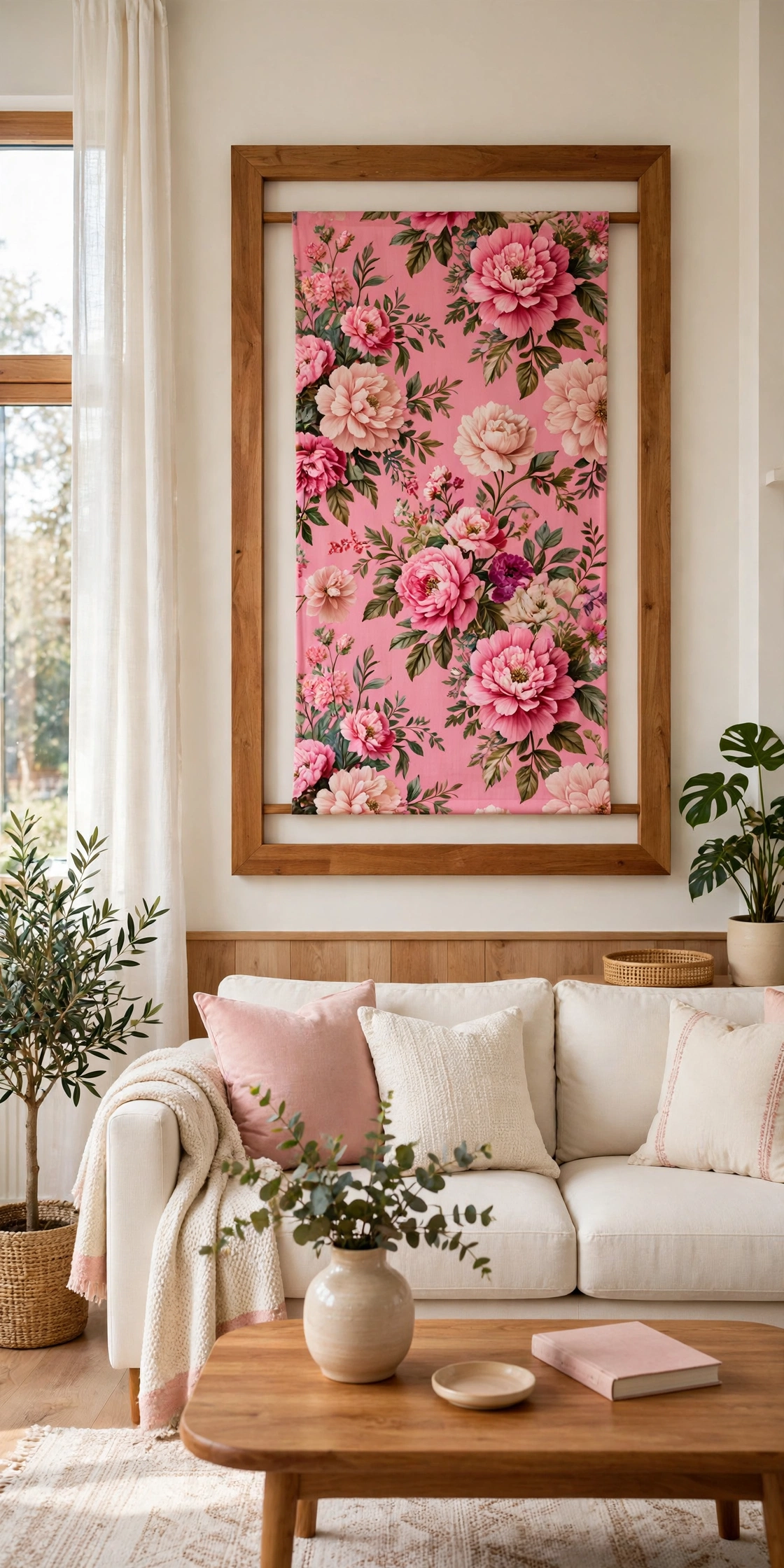
A single bold floral print can carry a whole wall on its own. Choose a fabric with large blooms in soft pink, sage green, or dusty blue, and stretch it flat inside a simple wooden frame. The large scale of the flowers gives the piece the same presence as a painted canvas.
Hang the frame at eye level above a sofa or a console table so it becomes the clear focal point of the room. Keep the surrounding wall plain so the print can breathe. One strong floral frame often looks better than a crowded wall of small pieces.
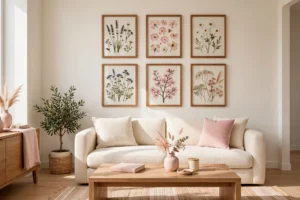
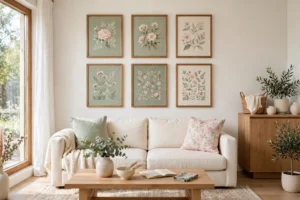
2. Create a Matching Set of Four Small Squares
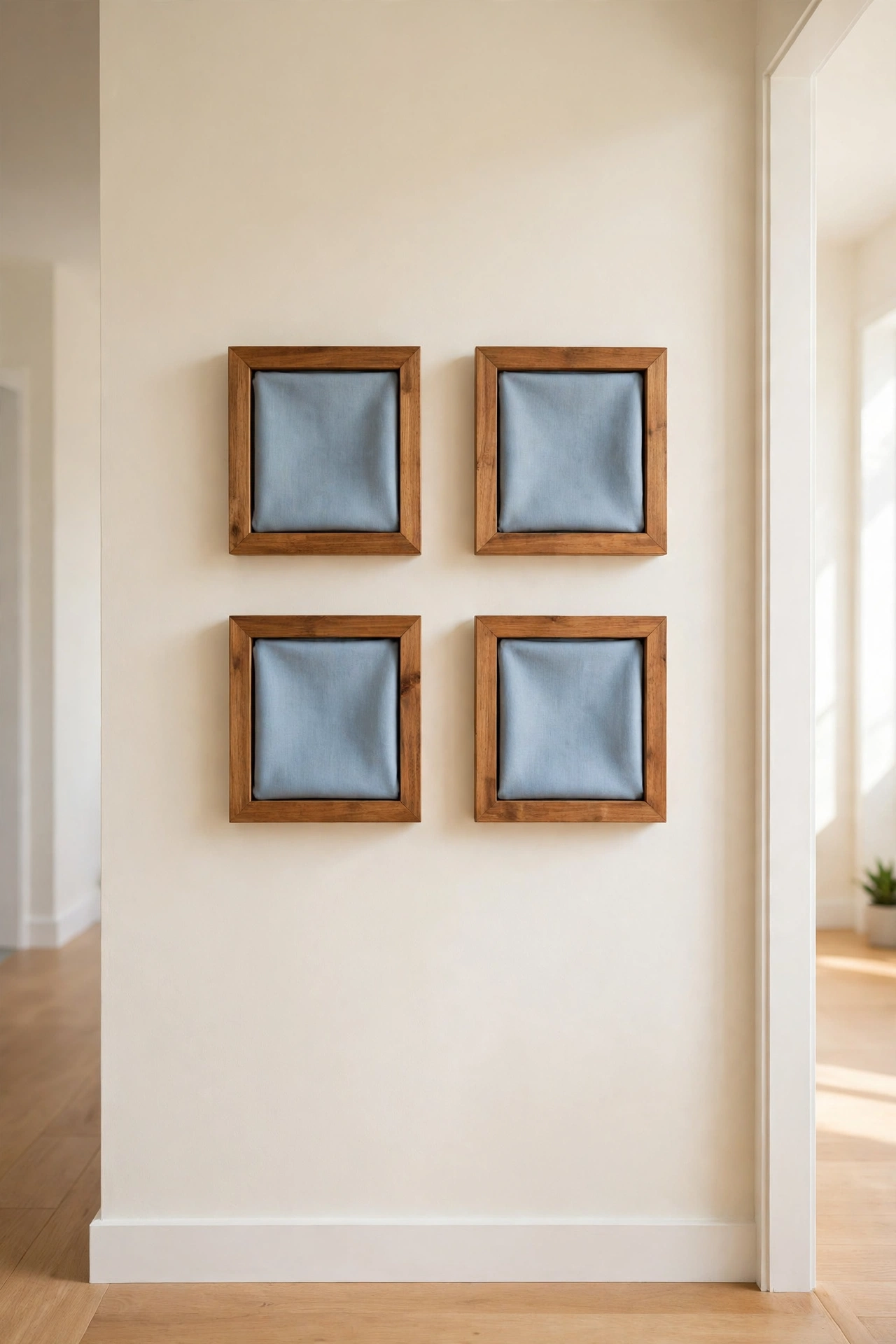
Four small square frames hung in a neat grid make a tidy and balanced display. Cut the same fabric into four equal pieces, or use four different fabrics that share one color, such as soft blue. The matching frames tie the set together even when the fabrics are different.
Space the squares evenly with about two inches between each frame. A grid of four works well in a hallway, above a desk, or on a narrow wall where one large frame would feel too heavy. The symmetry of the grid gives the wall a calm and organized feel.
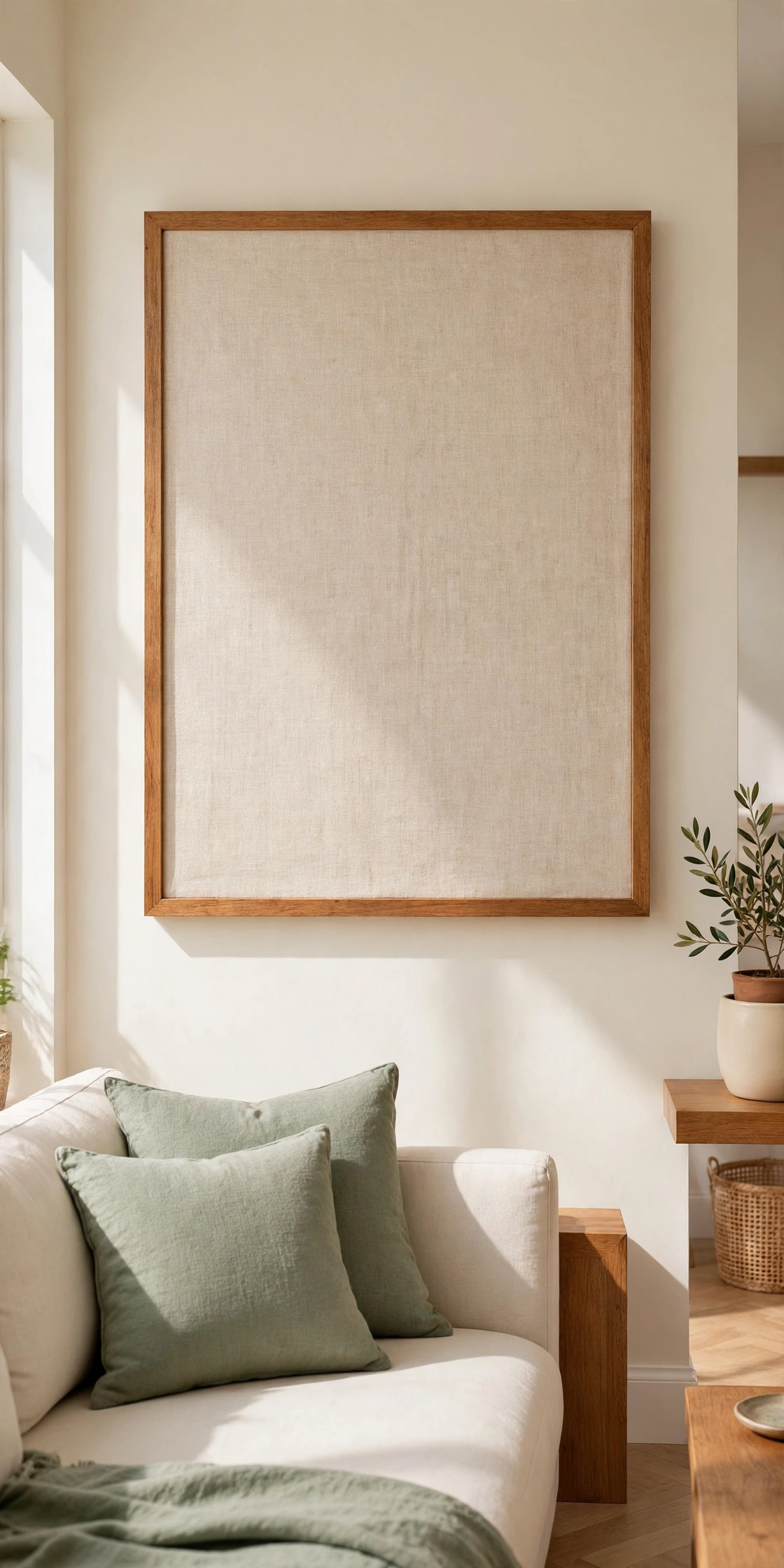
3. Stretch Linen Over a Wooden Frame
Natural linen stretched over a wooden frame has a quiet texture that suits almost every room. The weave of the fabric catches the light in a soft way, and the neutral color keeps the piece from competing with other decor. Linen works best in calm rooms where you want warmth without bold pattern.
Pull the linen tight and staple it to the back of the frame so the front stays smooth and flat. A frame in warm wood adds contrast against the pale fabric. For more ways to refresh soft furnishings with simple sewing, see these DIY cushion cover ideas. A linen panel also pairs well with floral or striped pillows on a nearby sofa.
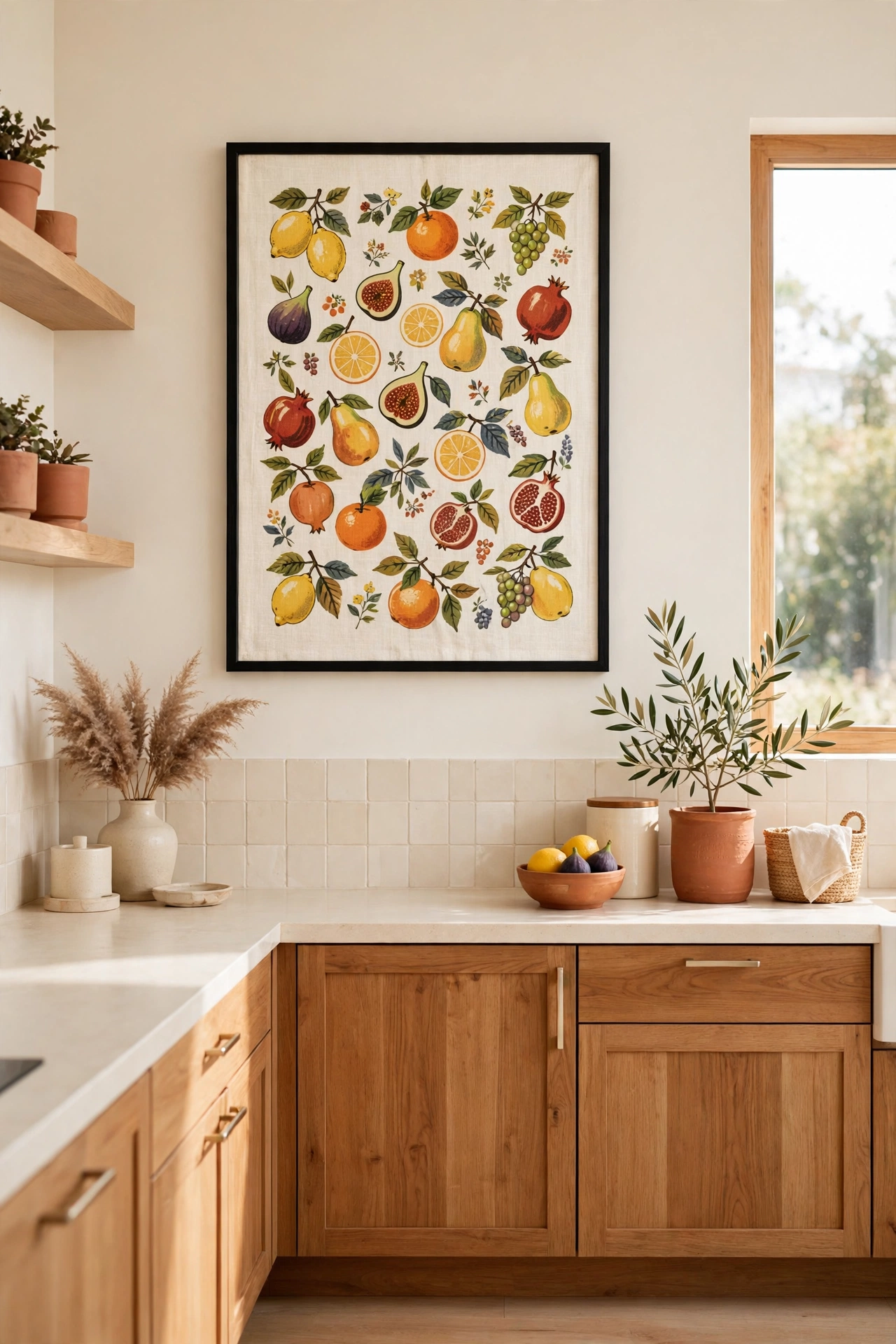
4. Frame Vintage Tea Towels
Vintage tea towels often carry beautiful prints that deserve a better home than a kitchen drawer. Look for towels with fruit, flowers, or old maps printed in faded colors. A clean tea towel ironed flat fits neatly inside a standard frame.
Choose a frame with a thin gold or black edge so the print stays the star of the piece. Hang one tea towel in a kitchen or a pair in a dining room for a touch of nostalgia. This idea costs very little and gives a forgotten textile a second life on the wall.
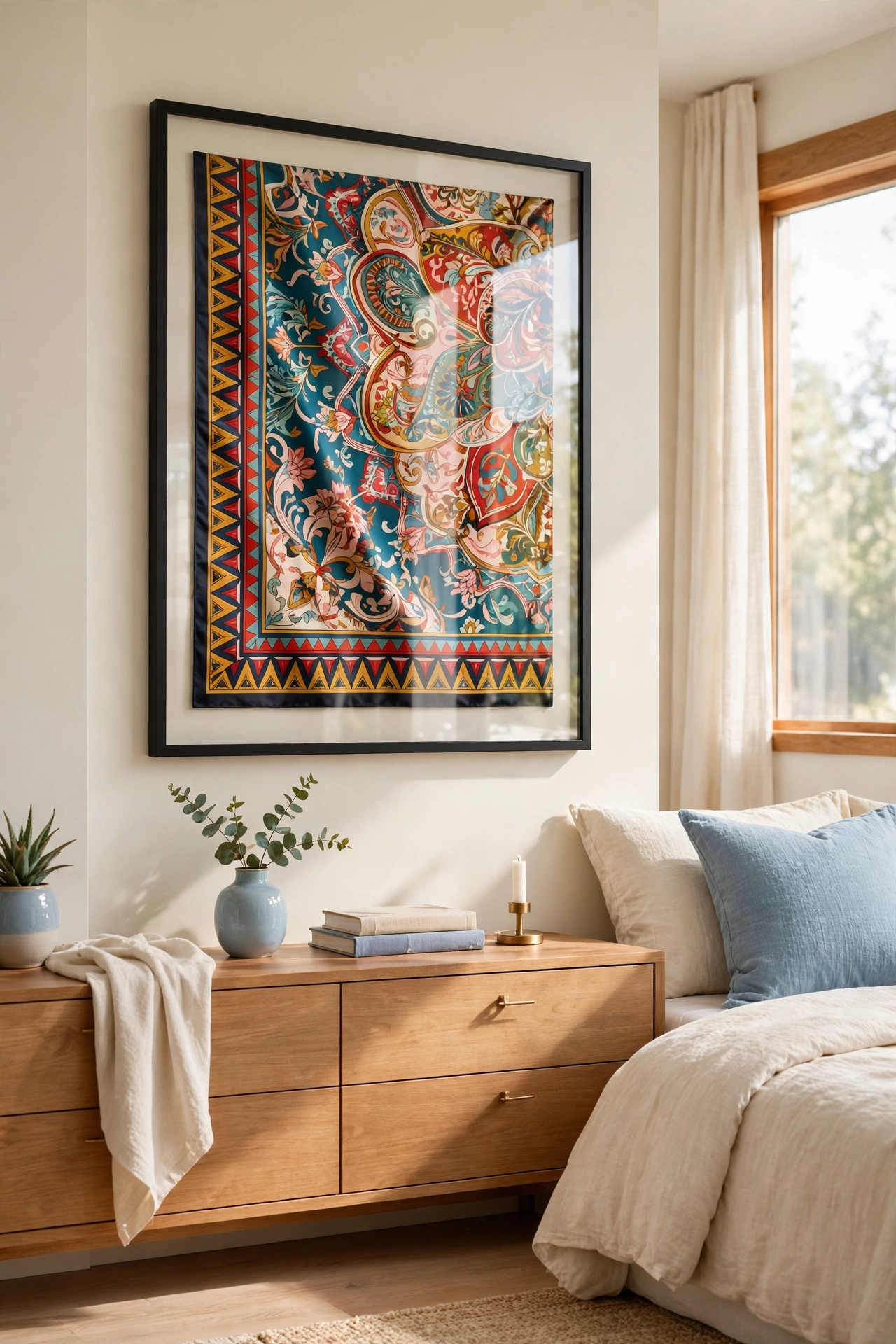
5. Turn Old Scarves Into Wall Art
A silk or cotton scarf with a beautiful print can become striking wall art with almost no effort. Fold the scarf to show its best section, iron it flat, and mount it behind glass in a frame that fits its size. The soft sheen of silk adds a touch of luxury to a bedroom or dressing area.
Scarves with bold borders or large central motifs work best because the design reads clearly from across the room. Keep the frame simple so the scarf pattern stays the focus. This is a lovely way to display a scarf you love too much to wear every day.
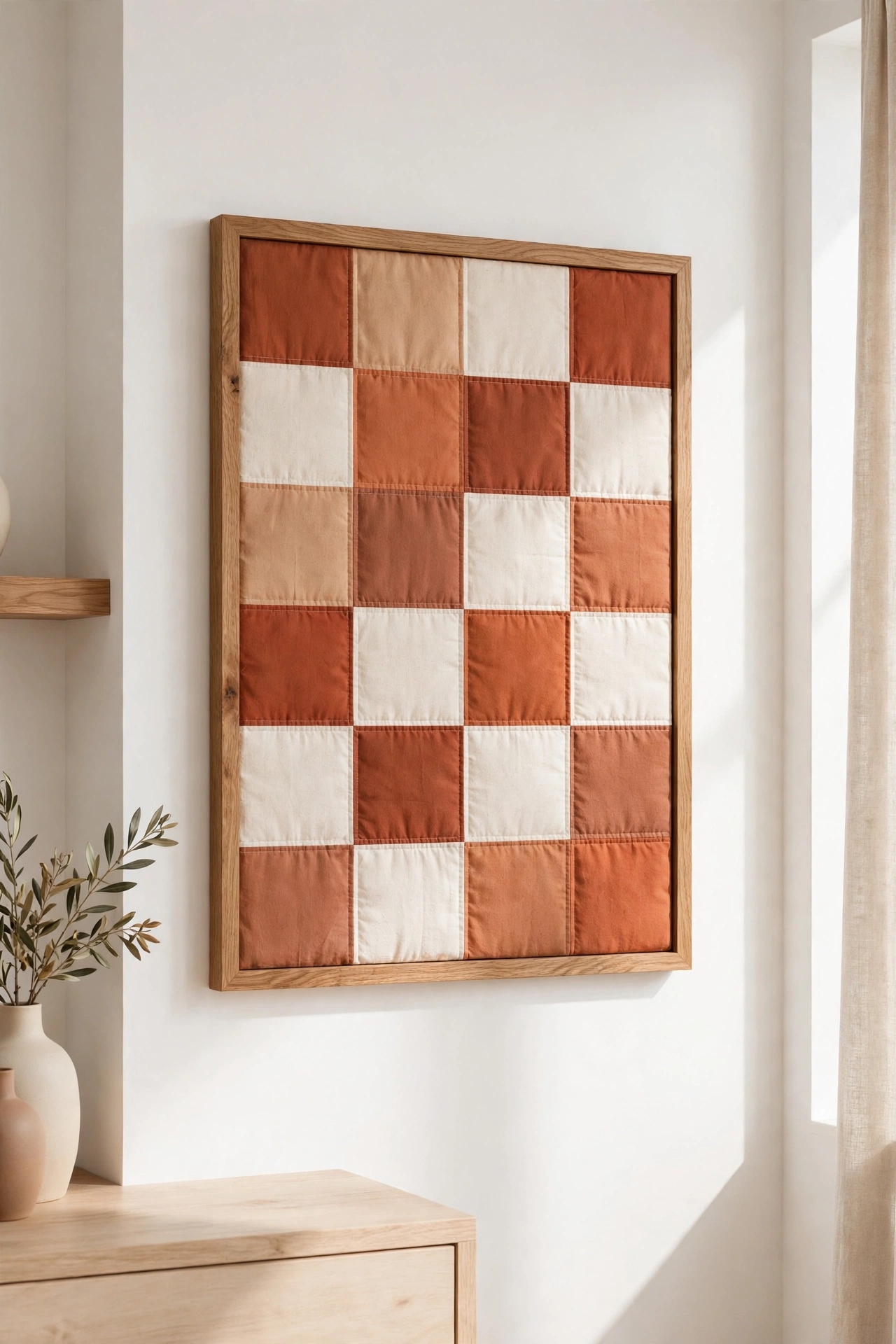
6. Display a Patchwork of Fabric Scraps
Small fabric scraps left over from other projects can become a cheerful patchwork panel. Sew squares of cotton in different prints into one larger cloth, then frame the finished piece. The mix of patterns feels playful and personal, like a quilt hung on the wall.
Keep the colors in one family, such as warm terracotta and cream, so the patchwork feels calm rather than chaotic. Iron every seam flat before framing so the surface stays smooth. A patchwork frame is a good project for a sewing room or a bedroom made for a child.
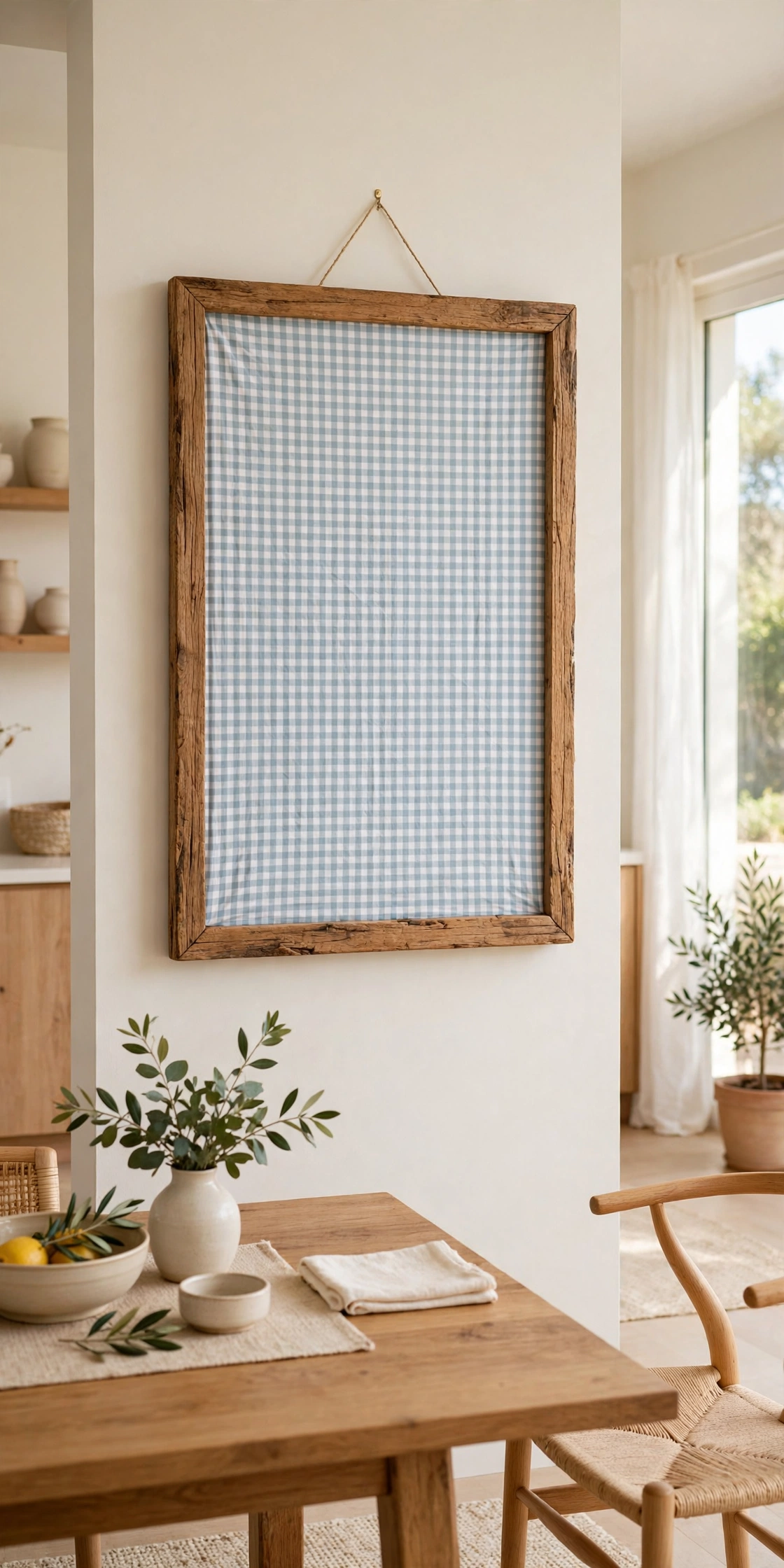
7. Frame Gingham in a Rustic Wood Frame
Gingham fabric in a rustic wood frame brings a cheerful country note to a kitchen or dining room. The checked pattern reads as classic rather than childish when you choose a soft color like pale blue or sage green on white. A thick wooden frame with a natural grain suits the simple pattern well.
Hang the gingham frame near a window or above a sideboard where it catches daylight. Pair it with plain white dishes or linen napkins so the check stays the main pattern in the room. Gingham also works well in a breakfast nook or a laundry room.
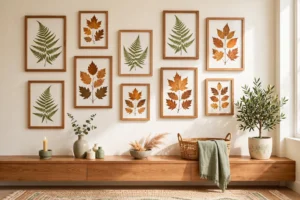
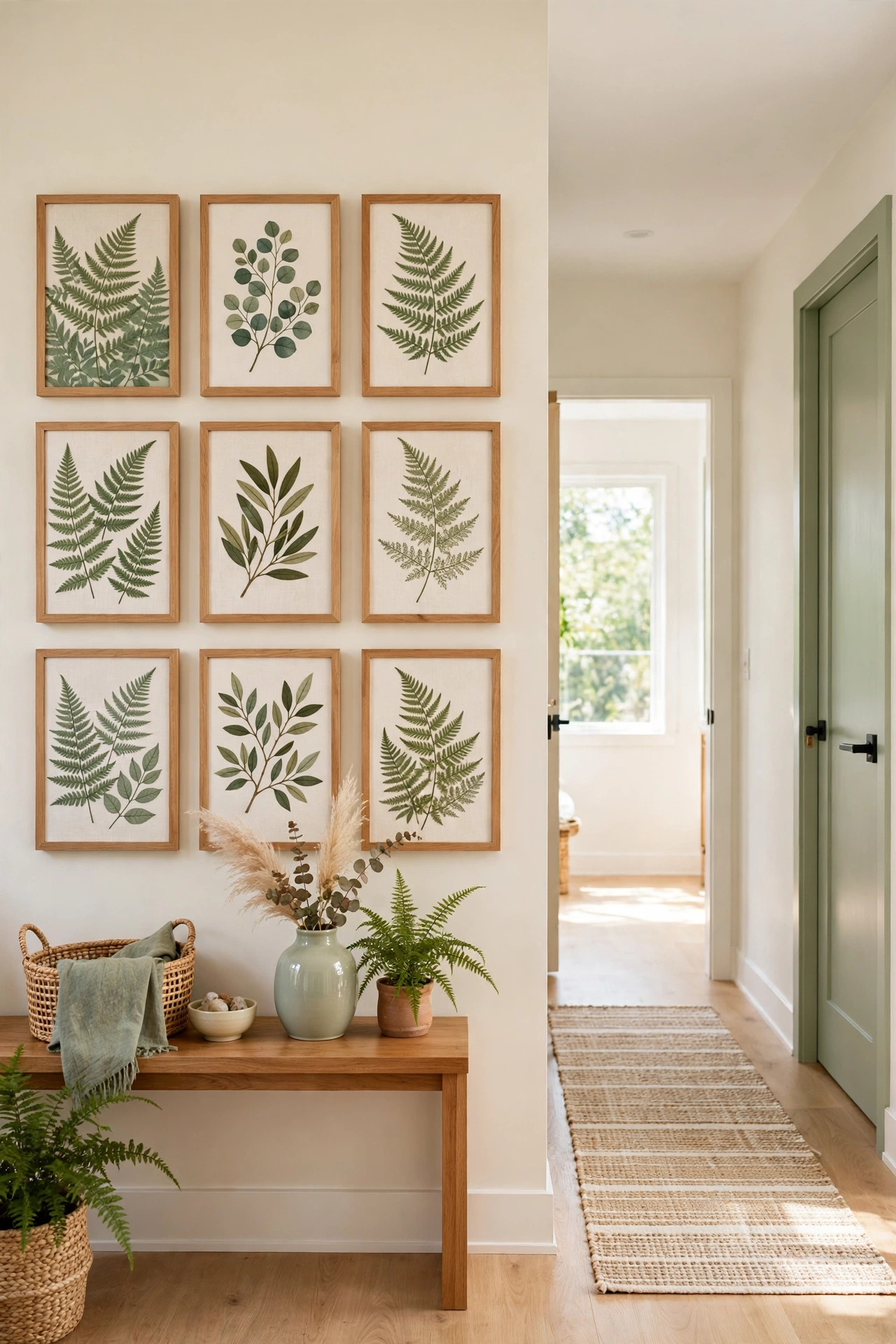
8. Make a Gallery Wall of Botanical Prints
A gallery wall of botanical fabric prints turns a blank wall into a small garden. Choose fabrics printed with ferns, leaves, or flowers in soft greens and creams, and frame each one in matching wood frames. The repeated plant theme ties the wall together even when each print is different.
Mix large and small frames, and hang the largest piece at eye level in the center. Leave a little space between frames so each print can breathe. A botanical gallery wall suits hallways, bedrooms, and dining rooms equally well.
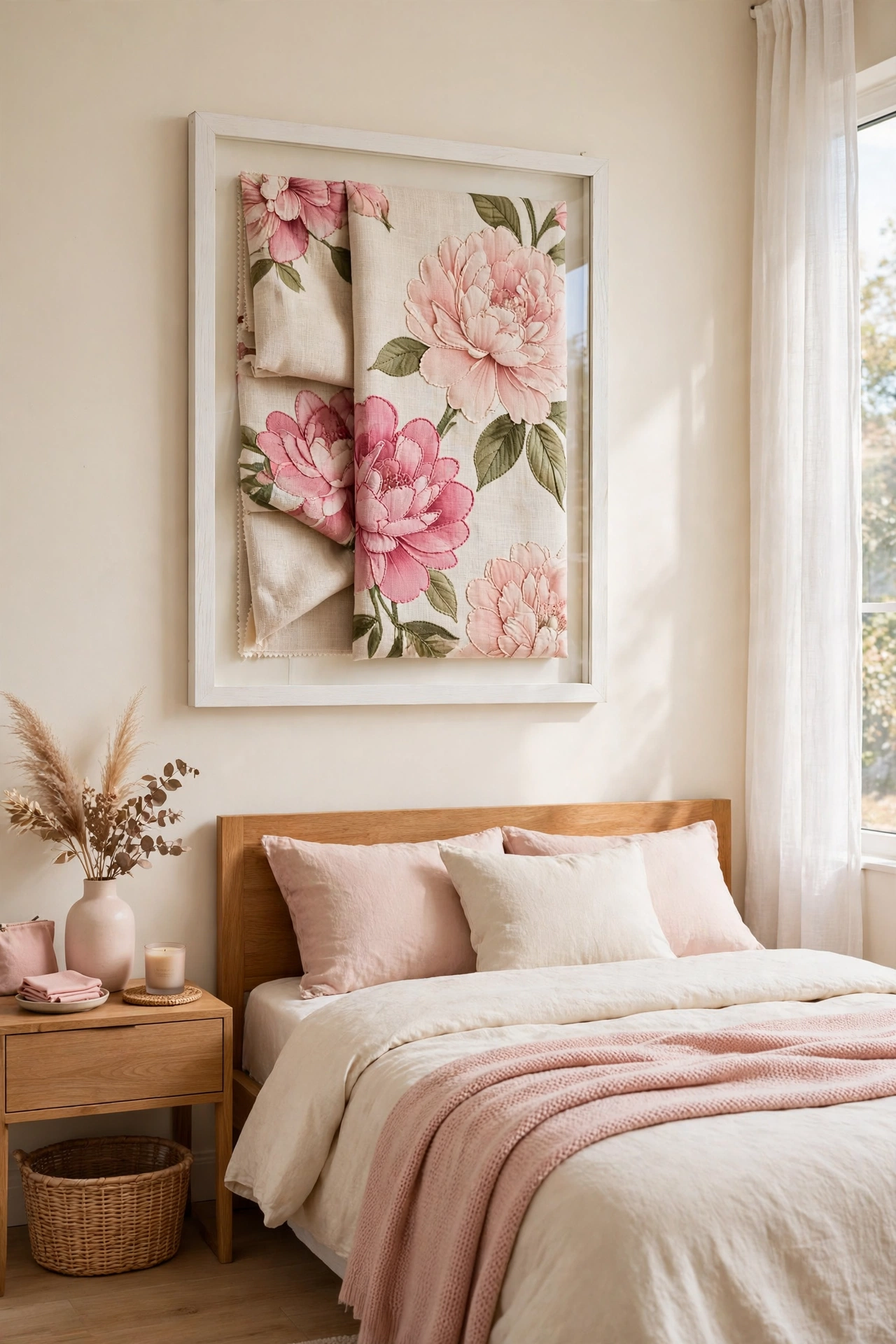
9. Frame a Piece of Your Favorite Dress Fabric
A piece of fabric from a favorite dress or skirt can become a keepsake on the wall. Cut a section that shows the best part of the print, such as a large flower or a bold stripe, and frame it behind glass. The fabric keeps its memory while gaining a new purpose.
This idea works well for fabric with a strong personal story, like material from a wedding dress or a gift from a loved one. Choose a frame that matches the mood of the fabric, such as white for a light summer print or dark wood for a rich winter fabric. The framed piece becomes a quiet reminder every time you see it.
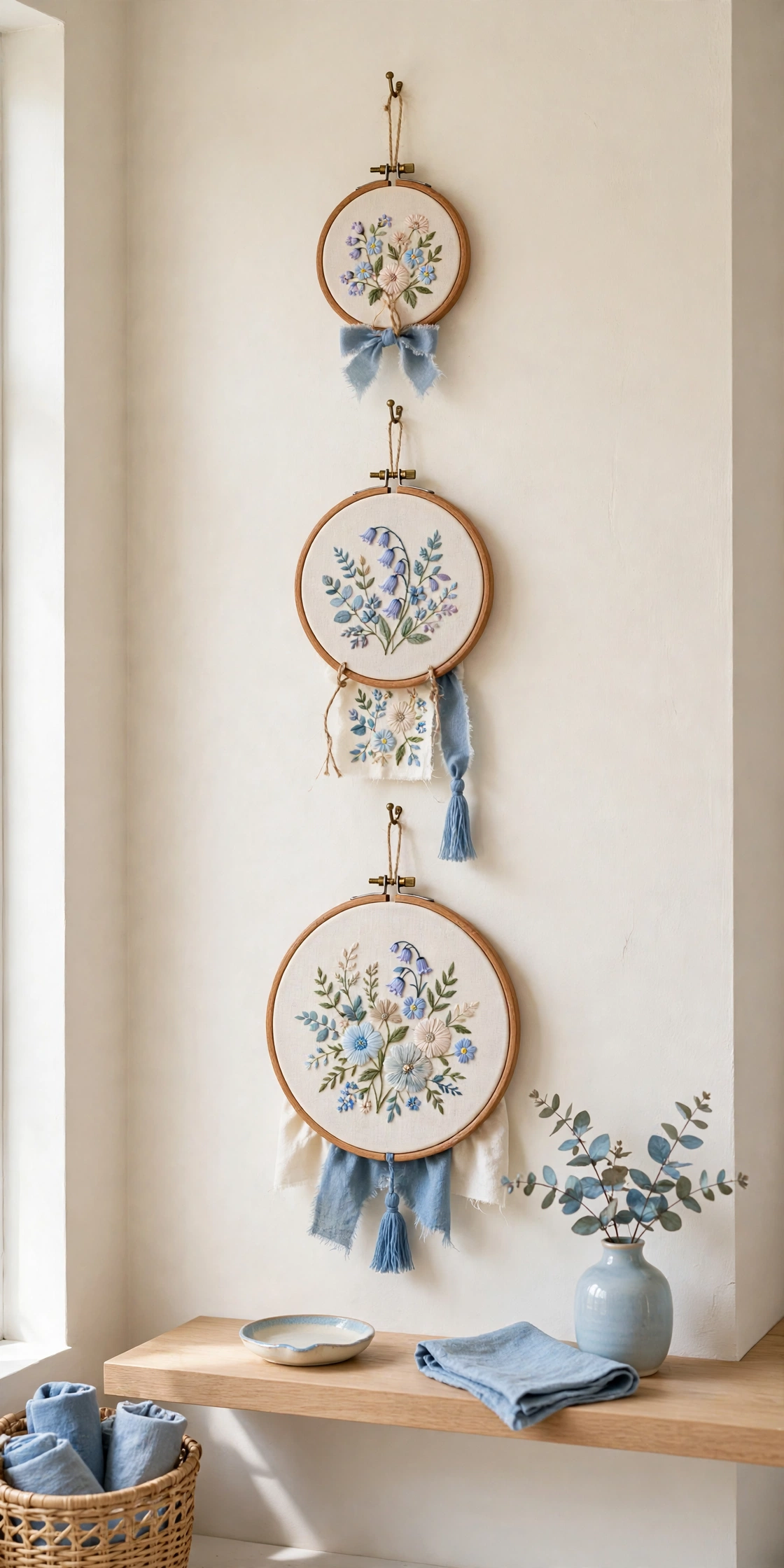
10. Use Embroidery Hoops as Mini Frames
Wooden embroidery hoops make charming mini frames for small pieces of fabric. Stretch a scrap of printed cotton or linen inside a hoop, tighten the screw, and trim the extra fabric at the back. The round shape softens a wall of square frames and adds a handmade touch.
Hang three hoops of different sizes in a cluster for a playful display. Small hoops suit narrow walls, shelves, and desk areas where a full frame would feel too large. For more ways to add handmade trim and detail to simple projects, see these DIY trim ideas. Hoops also make thoughtful gifts because each one is quick to make.
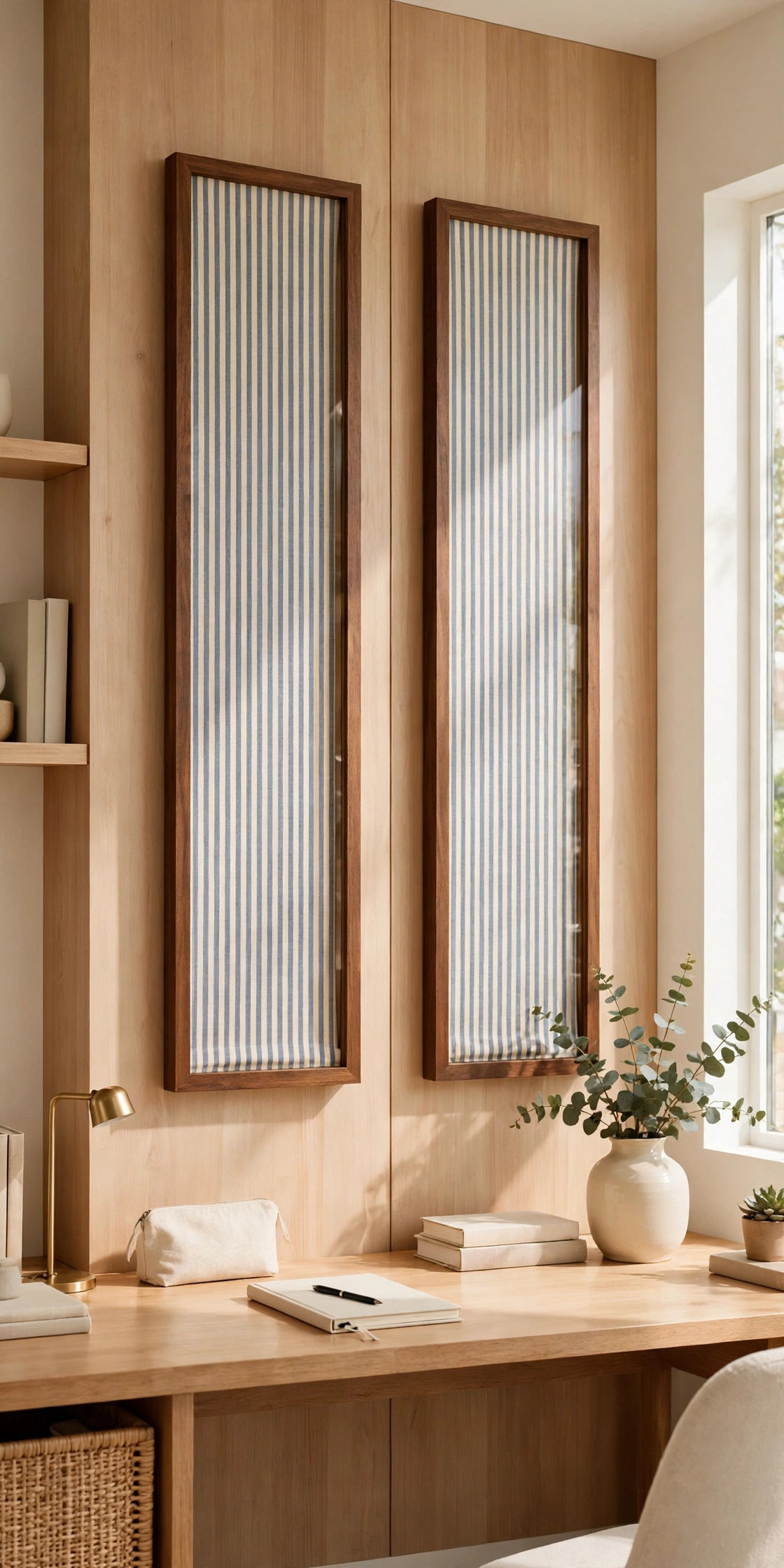
11. Frame Striped Ticking Fabric
Striped ticking fabric, with its narrow lines on a cream ground, brings a clean and classic look to a wall. The stripes feel calm and orderly, which makes them a good choice for a home office or a reading corner. A black or dark wood frame gives the light fabric a strong edge.
Hang ticking fabric in a pair of tall narrow frames to echo the vertical lines of the stripes. The pattern pairs well with plain furniture and solid color cushions. Ticking fabric also suits a laundry room or a mudroom where a tidy look matters.
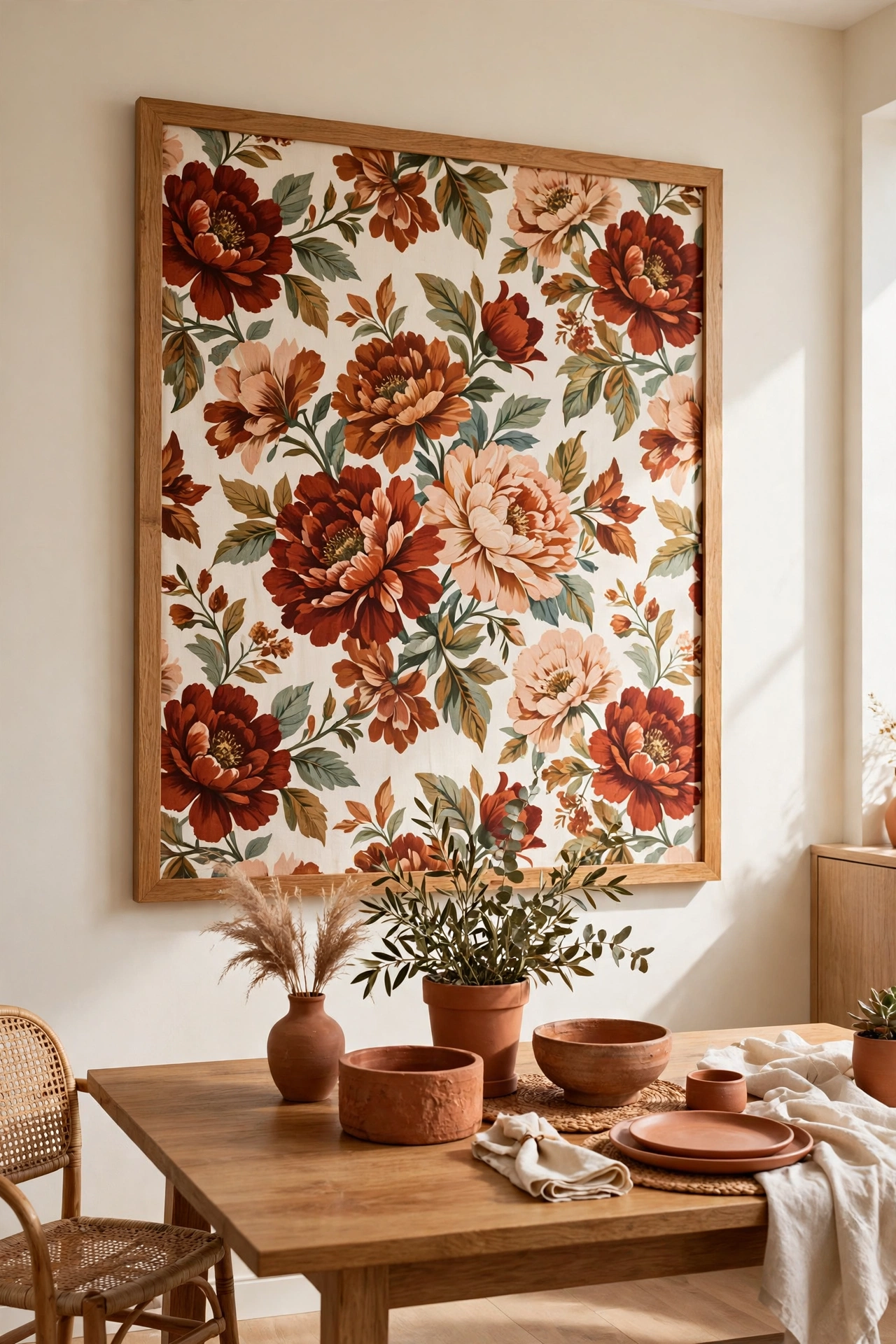
12. Create Oversized Art from a Tablecloth
A large printed tablecloth can become oversized wall art when stretched over a big frame or a wooden stretcher. Choose a tablecloth with a bold pattern, such as large flowers or a wide border design, and let the scale of the print fill the wall. The result looks like a custom canvas at a fraction of the cost.
Hang the oversized piece above a dining table or a long sofa where its size feels right for the space. Keep the rest of the wall bare so the large print can stand alone. For more ways to style a dining table with simple handmade pieces, see these DIY decorative tray ideas. A tablecloth panel is an easy way to fill a large empty wall.
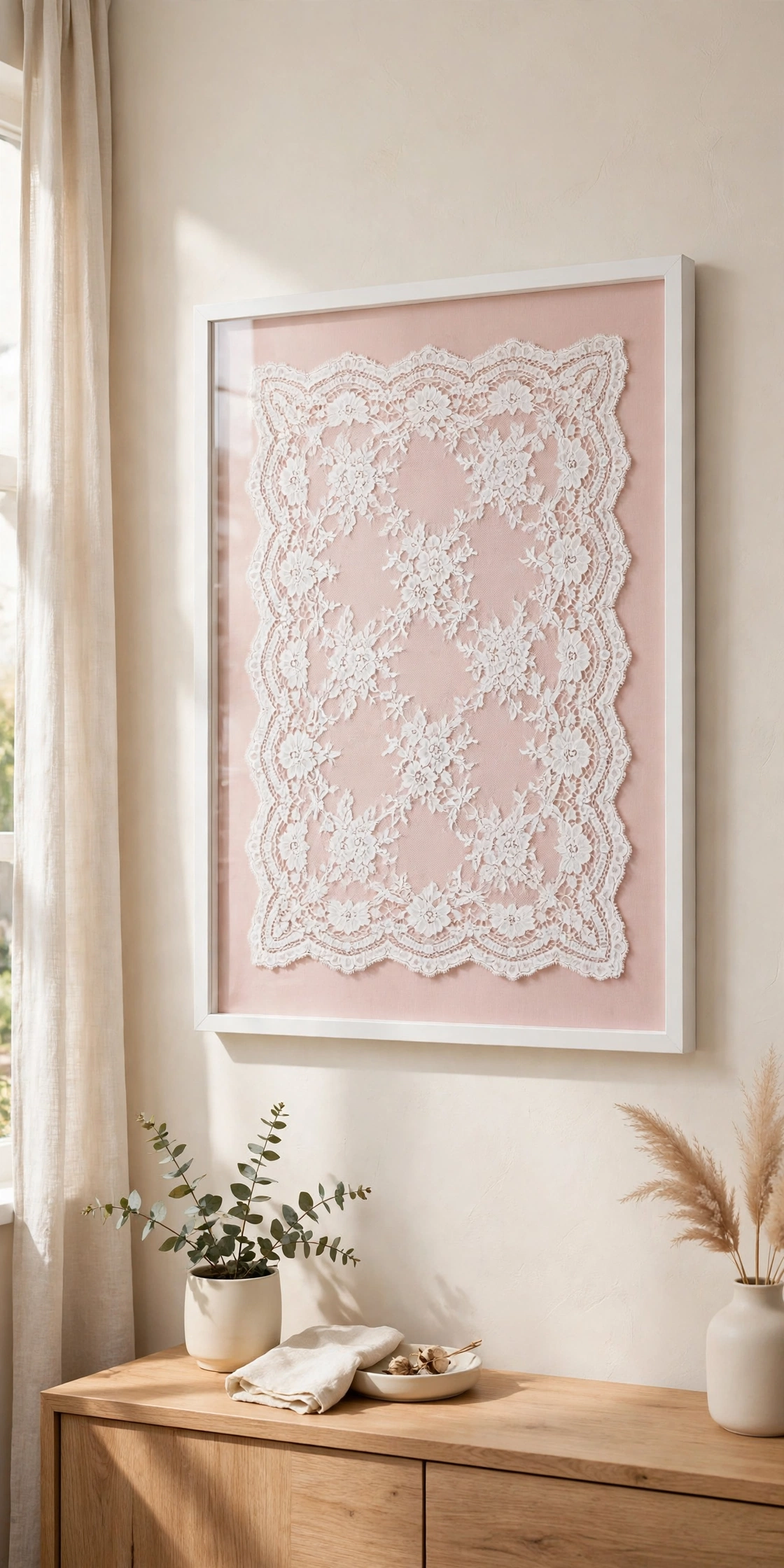
13. Frame Lace Over Colored Backing
White lace framed over a colored backing creates a delicate layered effect. The backing color shows through the open weave of the lace, so a soft blue or blush pink backing changes the whole mood of the piece. The lace adds texture while the color adds warmth.
Use a deep frame with a spacer so the lace does not press flat against the glass. This keeps the shadows and depth of the lace visible. For more ideas on styling vintage lace and delicate textiles, see these vintage doily decor ideas. A lace frame suits a bedroom, a bathroom, or a quiet reading corner.
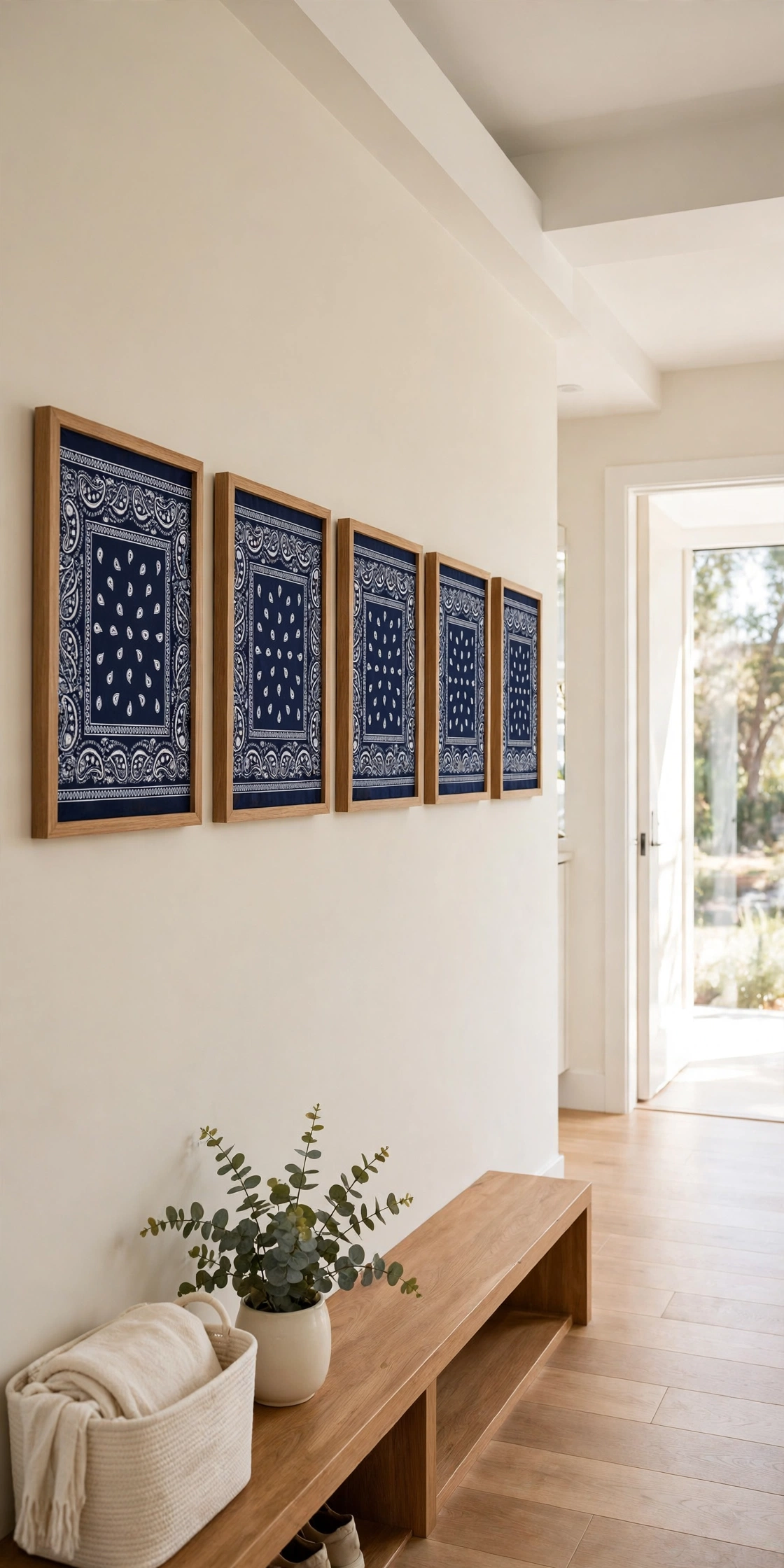
14. Display a Collection of Bandana Squares
Bandanas come in cheerful prints and bold colors that look surprisingly smart inside matching frames. Choose bandanas in one color family, such as navy and white, and frame four or six of them in a row. The repeated squares create a rhythm that feels both casual and intentional.
Hang the row in a hallway, a den, or a teen bedroom where a relaxed look fits. Keep the frames identical so the bandanas feel like a planned collection. This is one of the cheapest ways to fill a long empty wall with color.
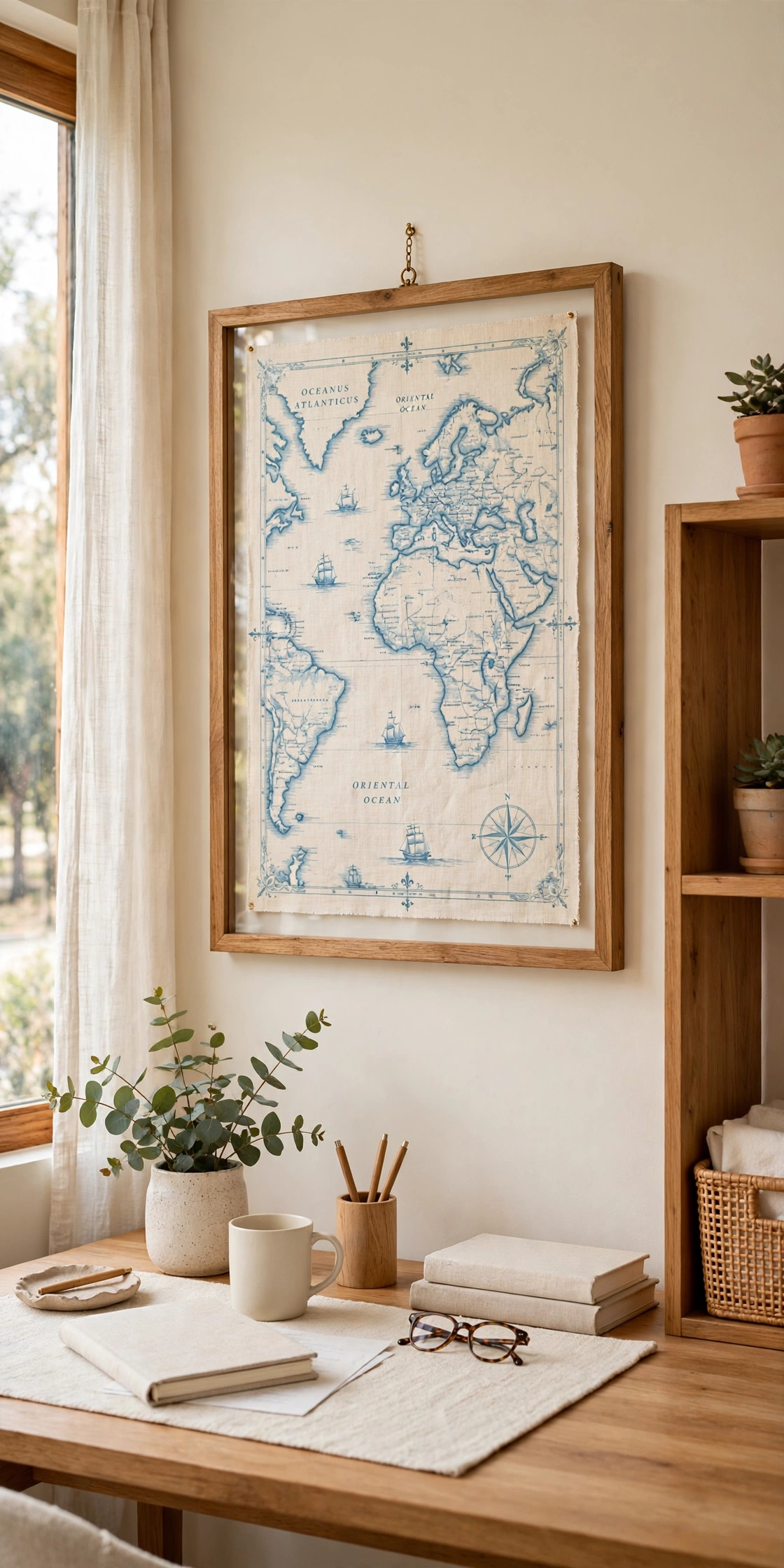
15. Frame a Map Printed on Cotton
Cotton fabric printed with a map makes wall art with a story. Choose a map of a place you love, such as a favorite city or a coastline, and frame the section that matters most to you. The printed place names and coastlines give the piece a personal meaning.
A map panel suits a home office, a study, or a travel themed bedroom. Pair it with plain wood furniture and a globe or a few travel books nearby. The muted colors of most map prints keep the piece calm while the details invite a closer look.
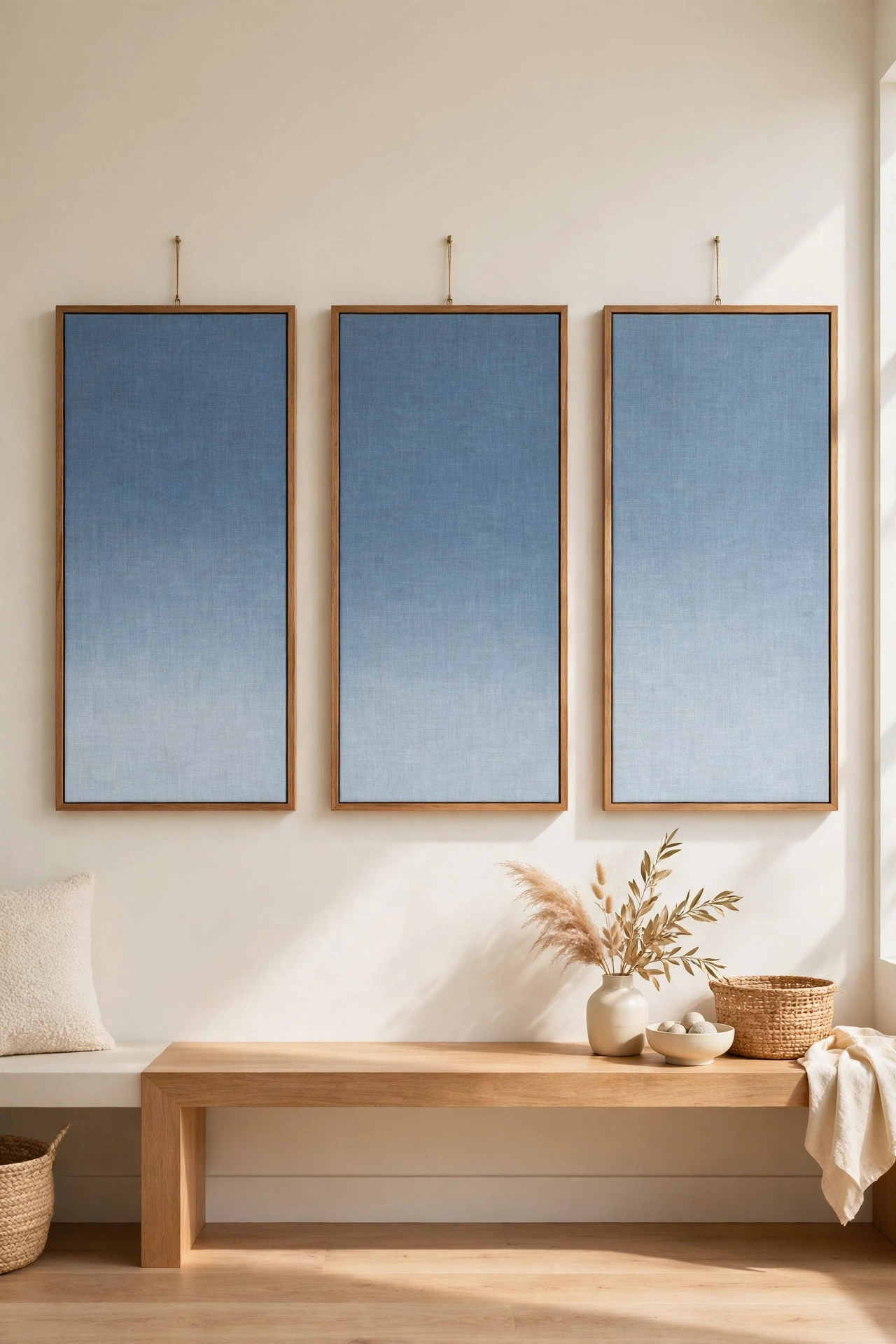
16. Make a Trio of Ombre Fabric Panels
Three fabric panels in ombre shades, from pale to deep, create a soft gradient across a wall. Dye plain cotton in three strengths of the same color, such as dusty blue, and frame each panel in a matching frame. The gradual change of color feels calm and modern.
Hang the trio in order from lightest to darkest, either side by side or stacked vertically. Ombre panels suit a bedroom or a bathroom where a gentle color wash feels restful. The simple design also works well in a modern living room with plain furniture.
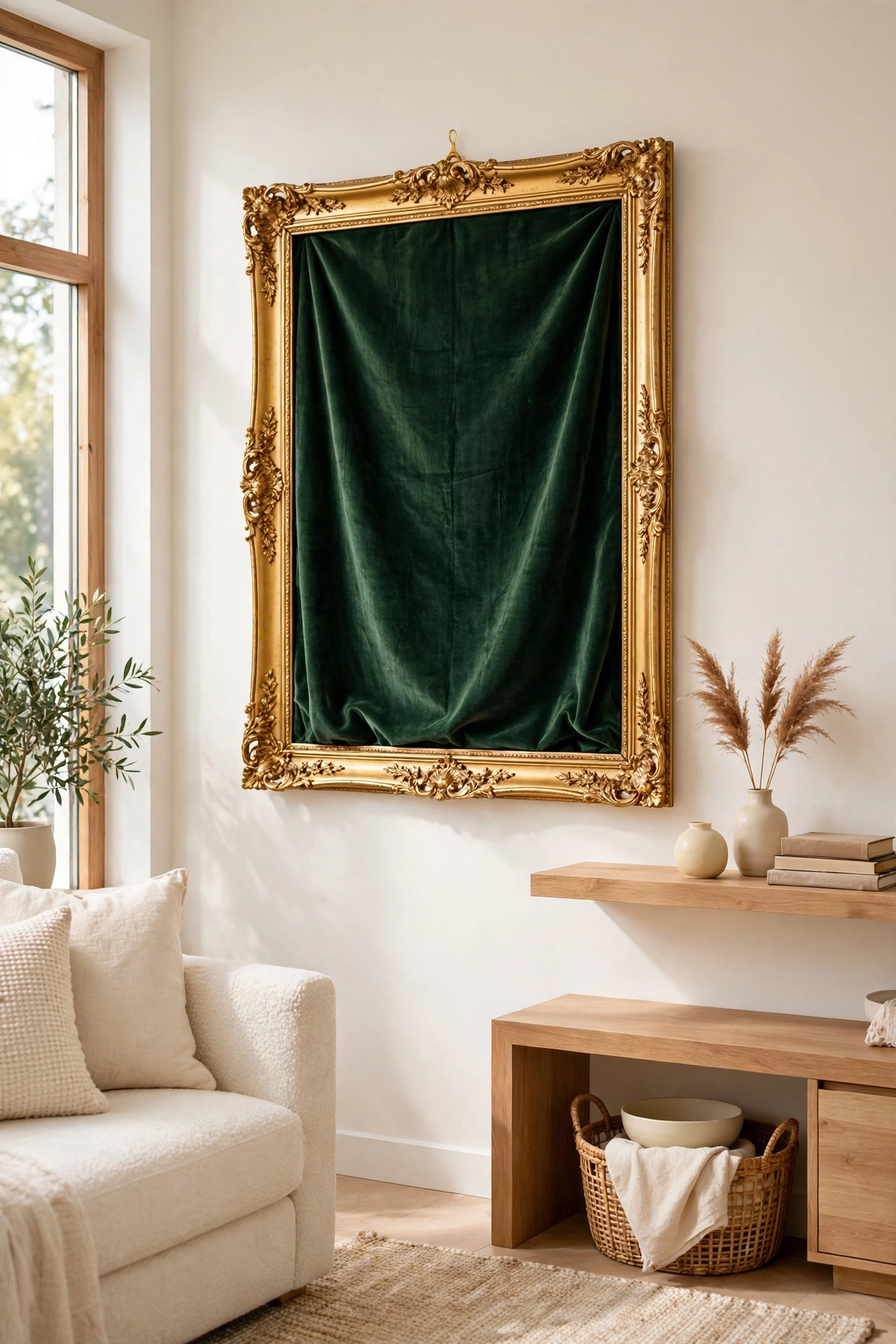
17. Frame Velvet in a Gold Frame
A piece of velvet in a deep color, framed in gold, adds a touch of luxury to a living room or bedroom. The soft pile of the velvet catches the light and looks rich even in a small frame. Deep green, burgundy, or navy velvet all work well against a gold edge.
Keep the velvet plain without a printed pattern so the texture itself is the decoration. Hang the frame near a lamp so the light brings out the soft sheen of the fabric. Velvet frames pair well with brass lamps, dark wood, and cream upholstery.
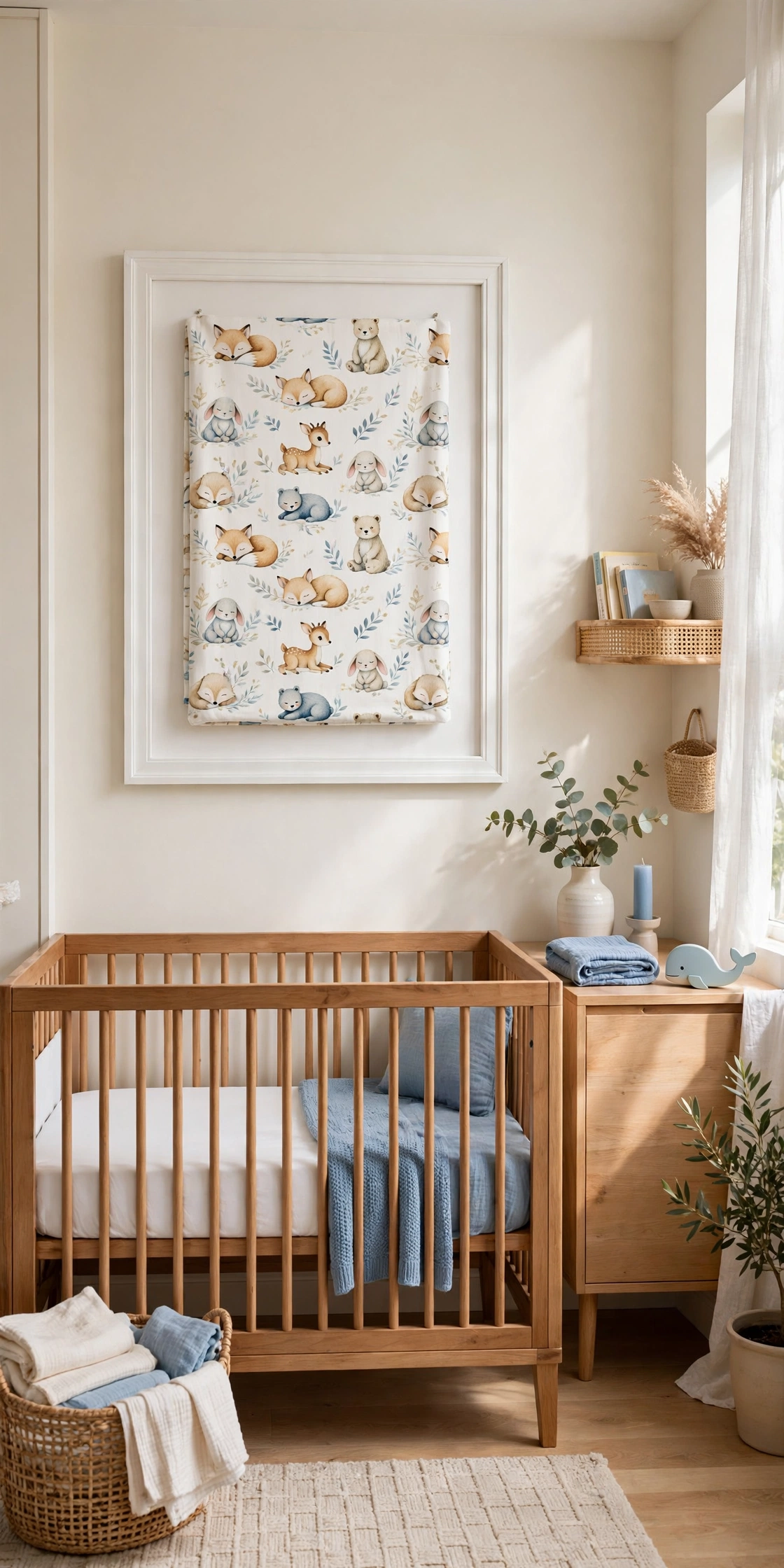
18. Turn a Baby Blanket Into Nursery Art
A small baby blanket with a sweet print can become nursery wall art that keeps its memory safe. Choose a soft cotton blanket with animals, stars, or gentle stripes, and frame the best section behind glass. The blanket stays protected from dust while remaining visible every day.
Hang the frame above a crib or a changing table where it adds color without clutter. Use a white or pale wood frame to match the soft tones of a nursery. This idea turns a keepsake into a decoration that grows more meaningful with time.
19. Frame Hand Block Printed Fabric
Hand block printed fabric carries the charm of a craft made by human hands. The small variations in each stamped motif show that the cloth was printed one block at a time. Choose a fabric with a repeating floral or geometric motif in two or three colors.
Frame the fabric in natural wood so the handmade feel of the print stays front and center. A block printed panel suits a living room, a dining room, or an entryway where guests can see it up close. The texture of the print rewards a closer look.
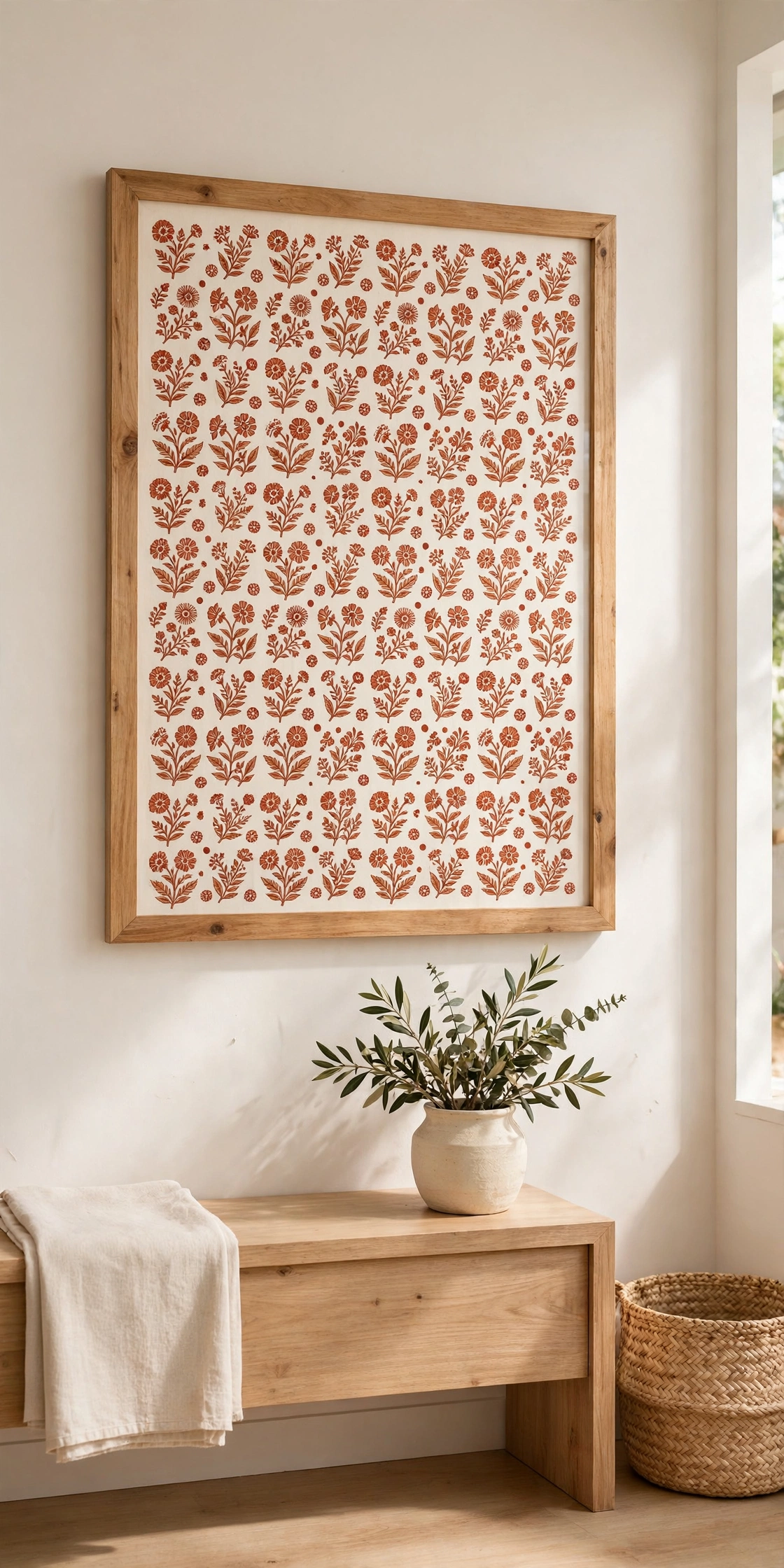
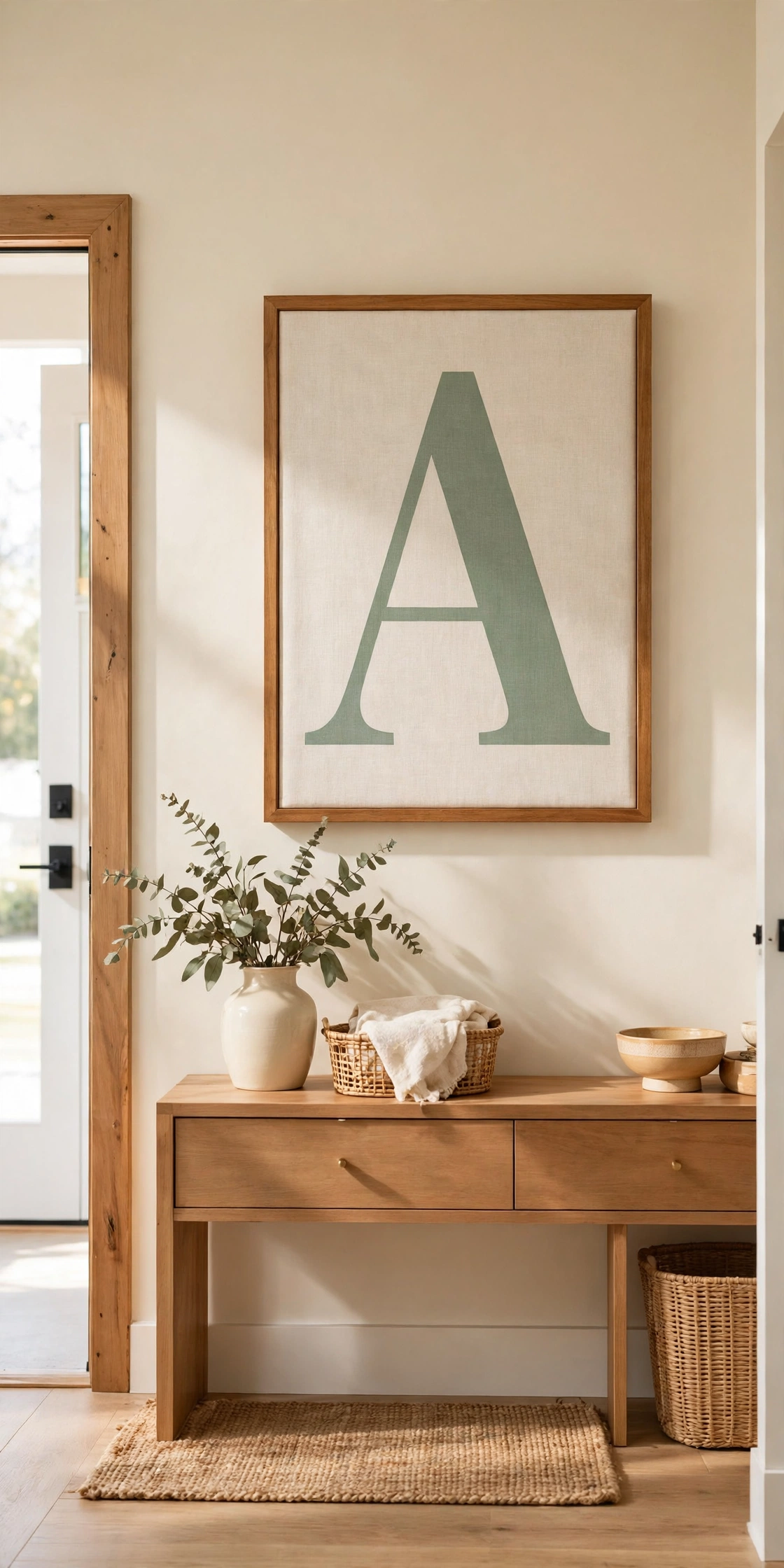
20. Create a Monogram Panel with Letter Fabric
A monogram panel made from letter printed fabric adds a personal mark to a wall. Choose a fabric printed with a large letter, such as the first letter of a family name, and frame it in a simple black or wood frame. The single letter reads clearly from across the room.
Hang the monogram in an entryway or above a mantel where it greets everyone who enters. Pair it with plain decor so the letter stays the focus. A monogram panel also makes a thoughtful housewarming gift when made with the initial of the new home owner.
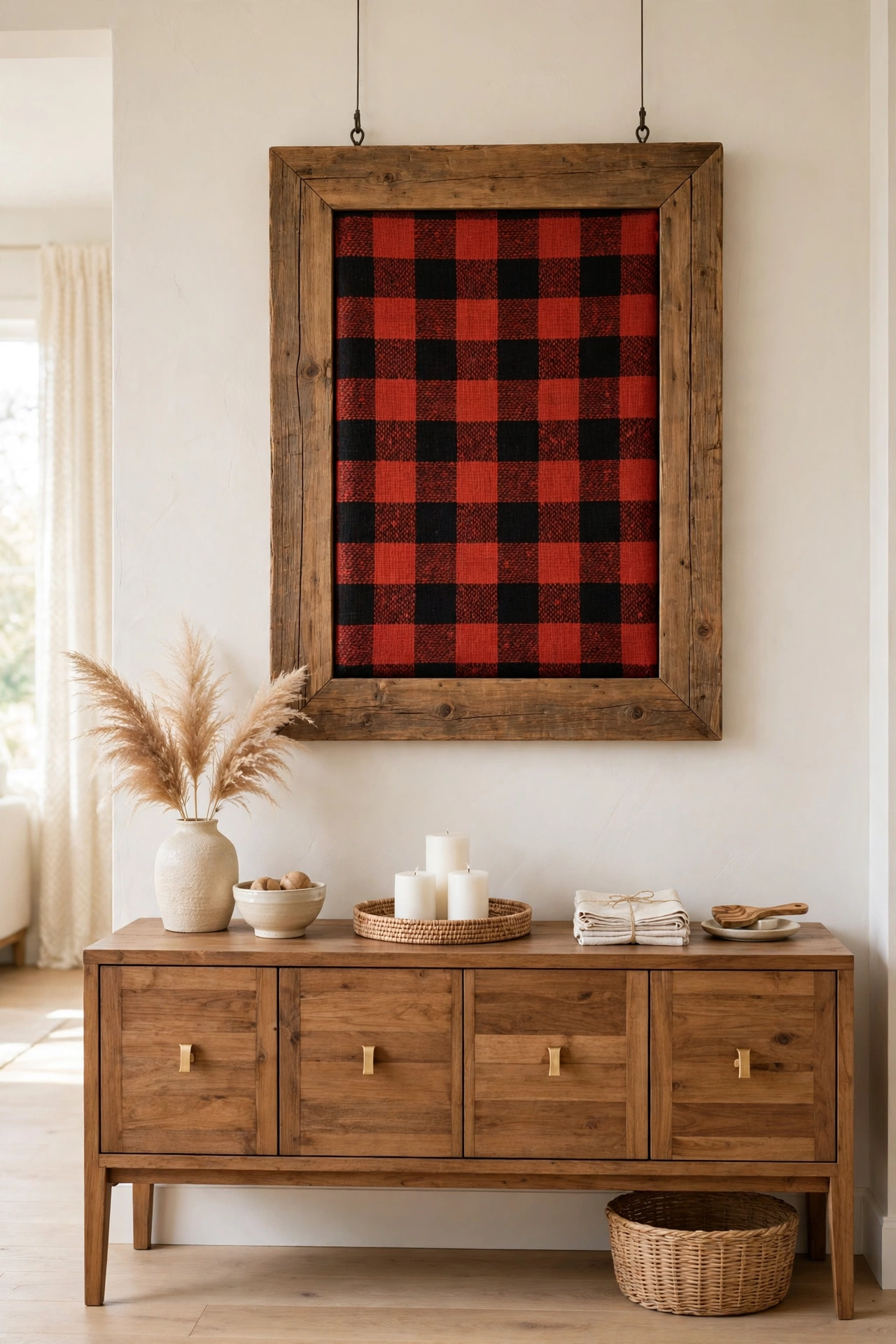
21. Frame Plaid in a Farmhouse Frame
Plaid fabric in a thick farmhouse frame brings warmth to a living room or a kitchen. The crossing lines of the plaid feel cozy and classic, especially in warm red, sage green, or soft brown. A chunky wood frame with a natural finish suits the rustic pattern.
Hang the plaid frame above a wooden sideboard or beside a fireplace where its warm colors echo the wood around it. Keep the nearby decor simple so the plaid can stand out. For more ways to refresh window treatments and fabric accents on a small budget, see these affordable curtain makeover ideas. Plaid also works well in a dining room with wooden chairs.
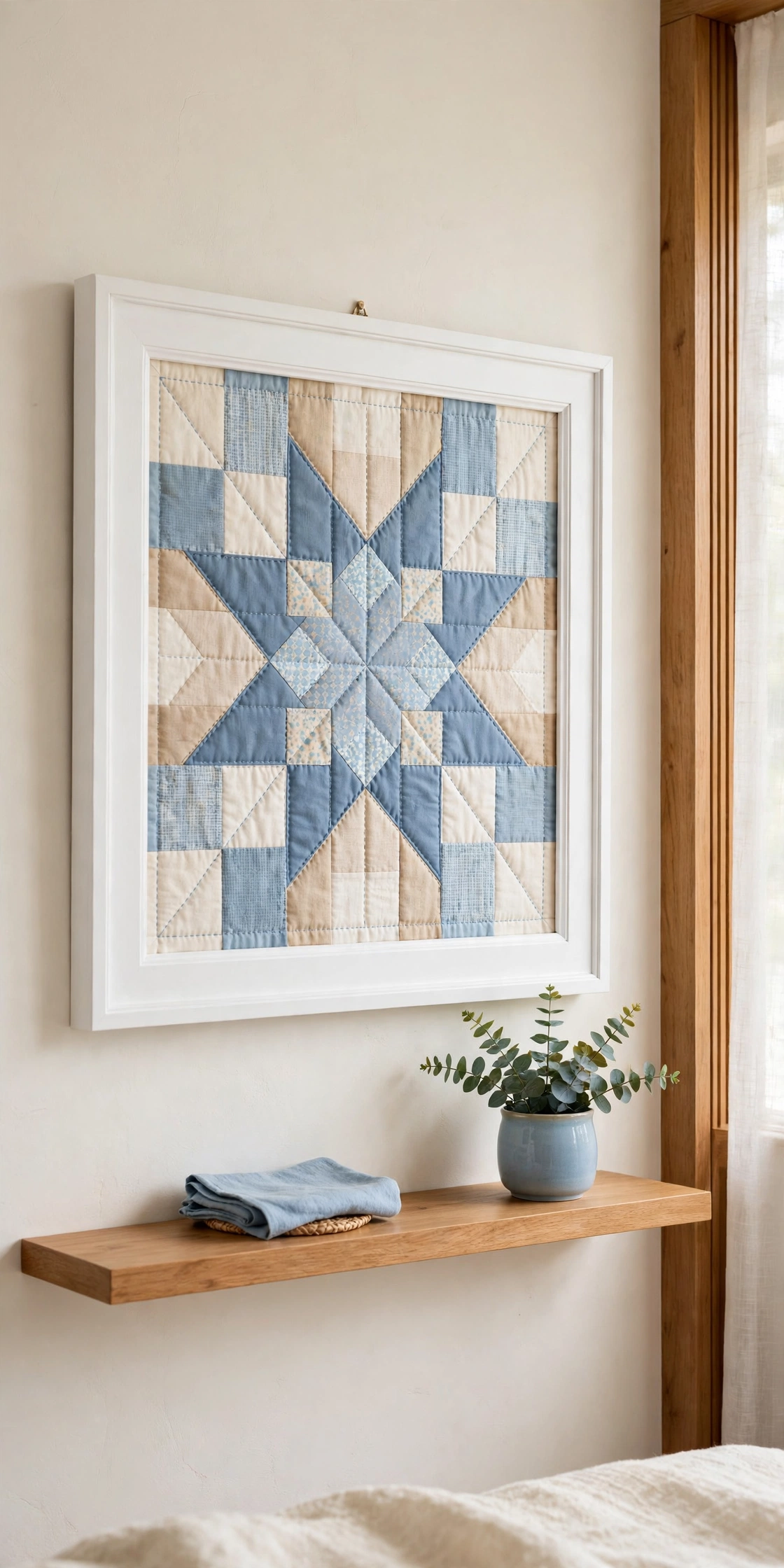
22. Display a Quilt Block as Art
A single quilt block, with its precise geometry and careful stitching, makes beautiful wall art on its own. Choose a block with a strong pattern, such as a star or a pinwheel, and mount it flat inside a deep frame. The stitching and the fabric layers add texture that a flat print cannot match.
Hang the quilt block in a bedroom or a sewing room where its craft is easy to admire. A white or pale wood frame keeps the focus on the block itself. One framed quilt block can also anchor a small gallery wall of other textile pieces.
23. Frame Sheer Fabric Over a Painted Backing
Sheer fabric framed over a painted backing creates a soft and dreamy effect. The paint color shows through the translucent cloth, and the weave of the fabric softens the color into a gentle wash. A pale gold or soft peach backing gives the piece a warm glow.
Use a frame with a deep edge so the sheer fabric floats above the backing without touching it. This layered look suits a bathroom, a dressing room, or a sunny window wall. The sheer panel catches daylight in a way that changes through the day.
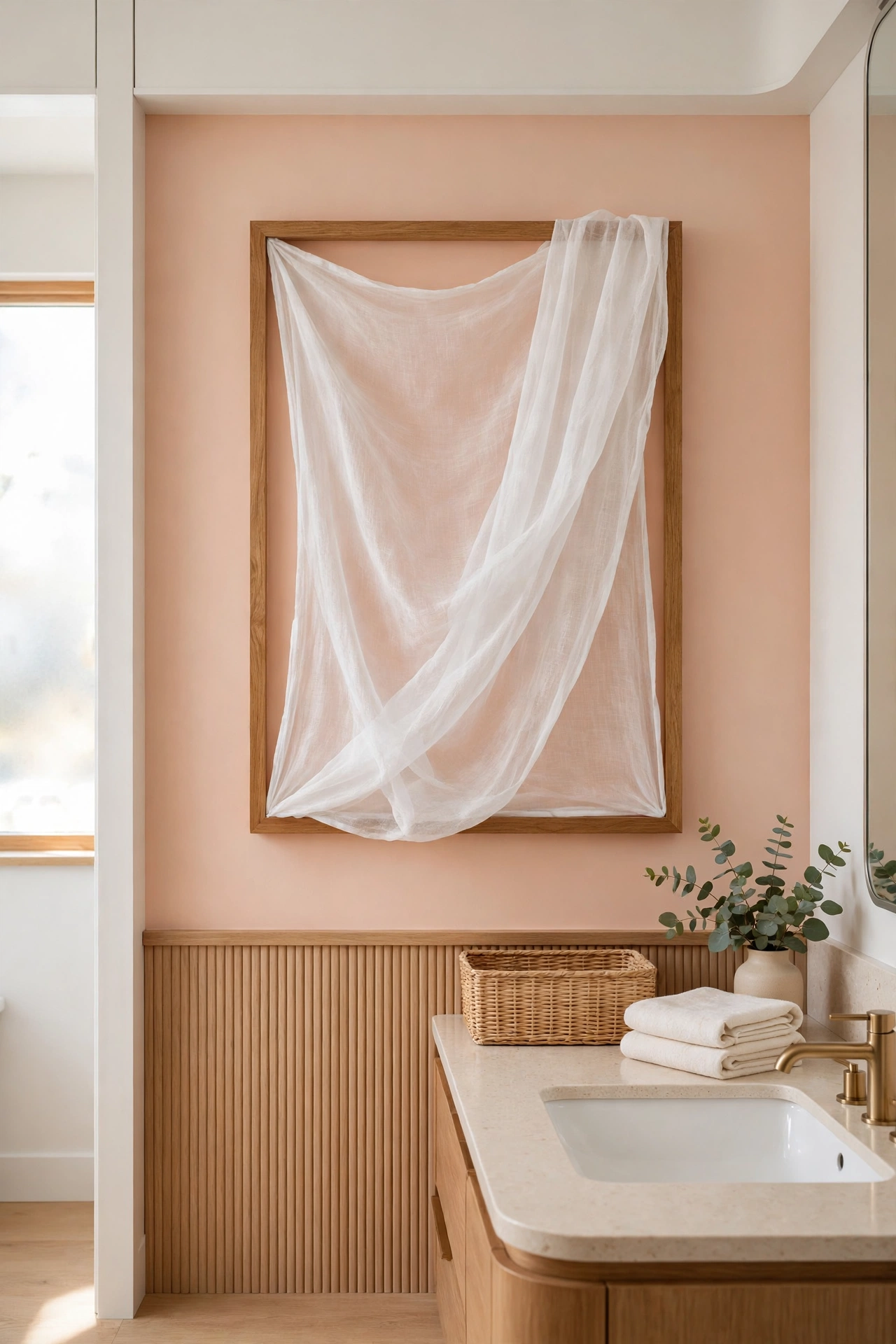
24. Make a Seasonal Swap Frame
A seasonal swap frame lets you change your wall art four times a year with one frame. Choose a frame with a hinged front or a simple clip system, then keep a set of fabric panels for each season. A bright floral for spring, a light linen for summer, a warm plaid for autumn, and a deep velvet for winter keep the wall fresh all year.
Store the spare panels flat in a drawer or a labeled box so they stay clean between uses. Swapping the fabric takes only a few minutes and gives the room a new mood each season. This is a smart idea for a hallway or a living room where you like change without new purchases.
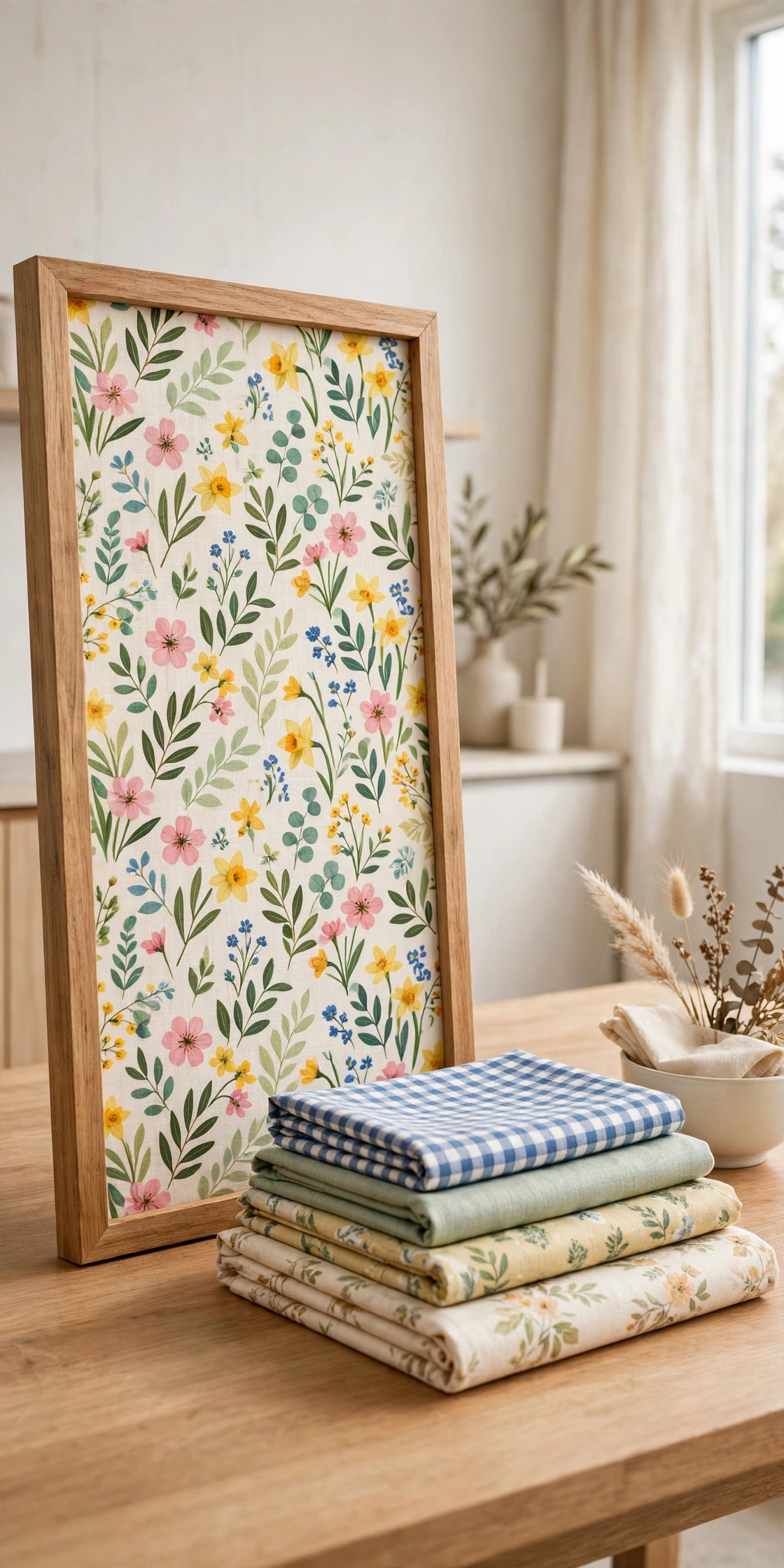
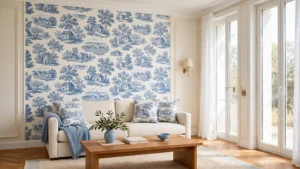
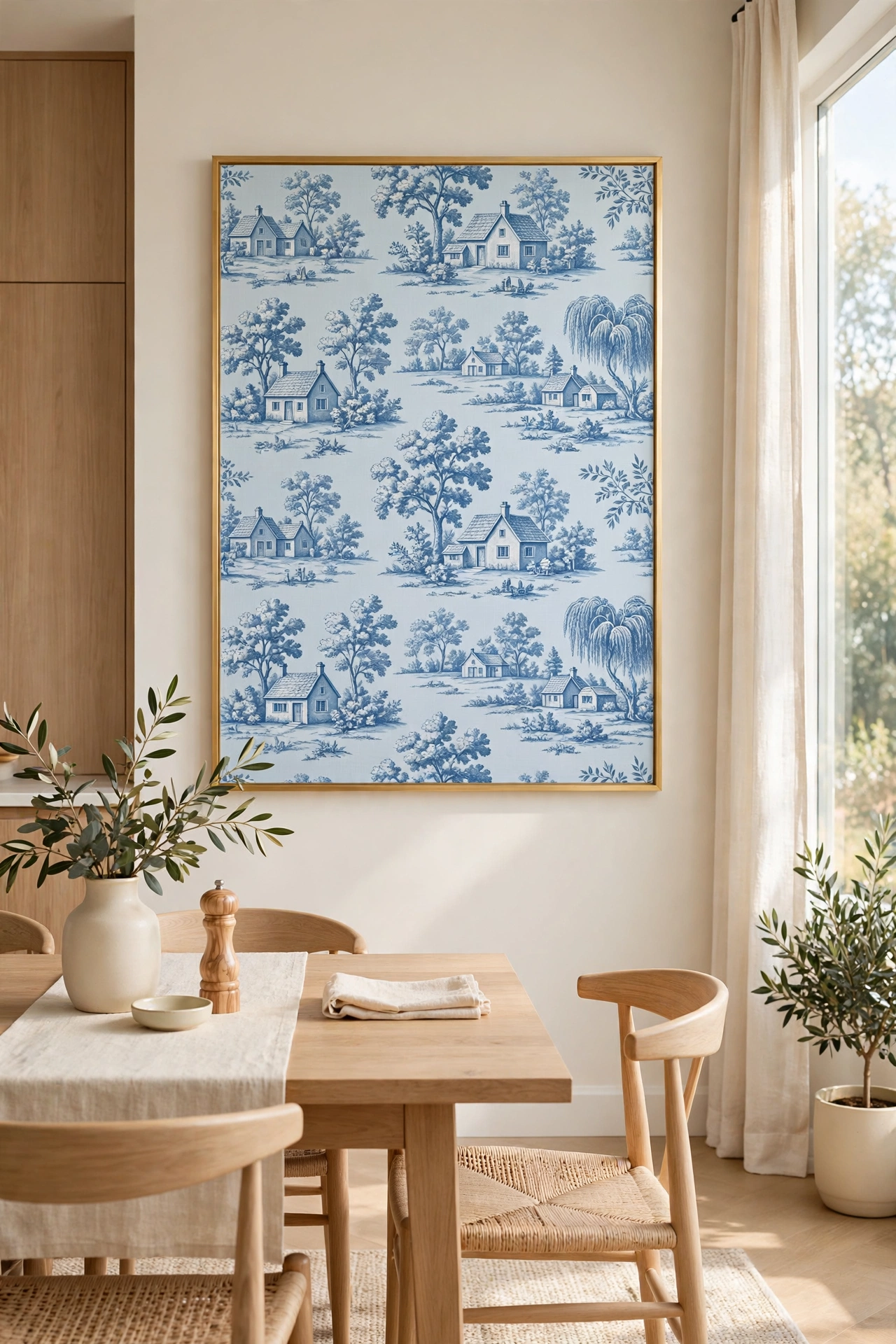
25. Frame Toile in a Classic Frame
Toile fabric, with its fine scenic prints of cottages and trees, brings instant classic character to a wall. Choose a soft blue or dusty pink toile on a cream ground for a look that feels fresh rather than dark. The delicate scenes give the frame a storybook quality.
Hang the toile frame in a dining room or a bedroom where a classic touch feels at home. A thin gold frame suits the fine lines of the print. Toile pairs well with plain linen curtains and simple wood furniture, so the detailed fabric stays the star of the wall.
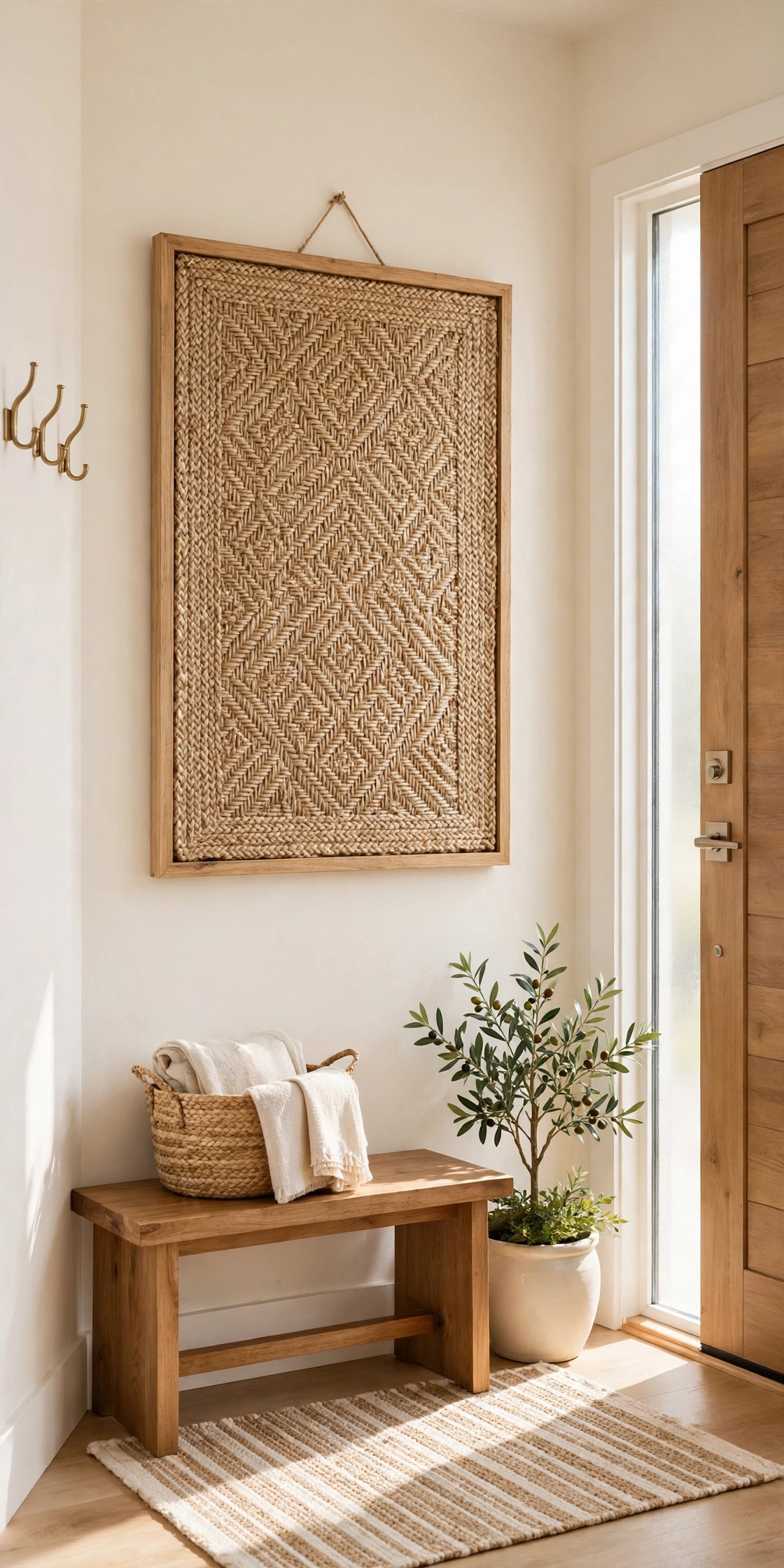
26. Create a Textured Wall Hanging in a Frame
A textured fabric, such as woven jute or thick cotton canvas, makes a sculptural piece when framed without glass. The rough surface and the visible weave add depth to a wall that flat prints cannot match. A natural wood frame keeps the look earthy and calm.
Hang the textured panel in a living room or an entryway where guests can see the weave up close. Keep the wall around it plain so the texture stands out. This idea suits homes with a natural or bohemian style where materials matter as much as color.
27. Frame a Piece of Sari Silk
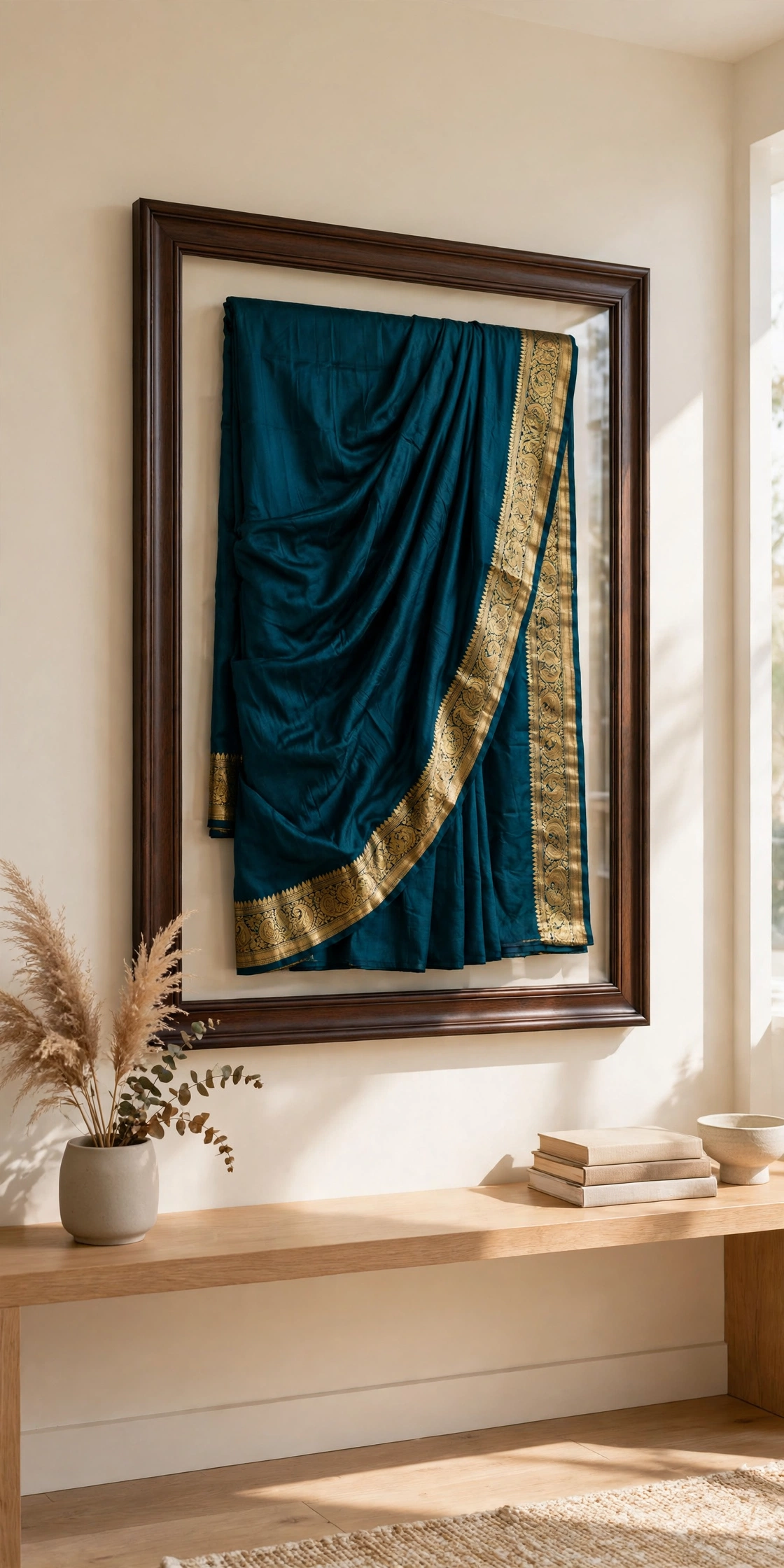
A piece of sari silk, with its rich color and fine gold border, makes a stunning framed panel. The silk catches the light with a soft sheen, and the woven border adds a finished edge to the piece. Deep teal, magenta, or warm amber silk all look beautiful behind glass.
Choose a frame in dark wood or black so the bright silk stands out clearly. Hang the panel in a living room or a bedroom where its color can warm the whole space. A sari silk frame celebrates a beautiful textile while giving it a lasting home on the wall.
28. Build a Grid of Nine Tiny Fabric Swatches
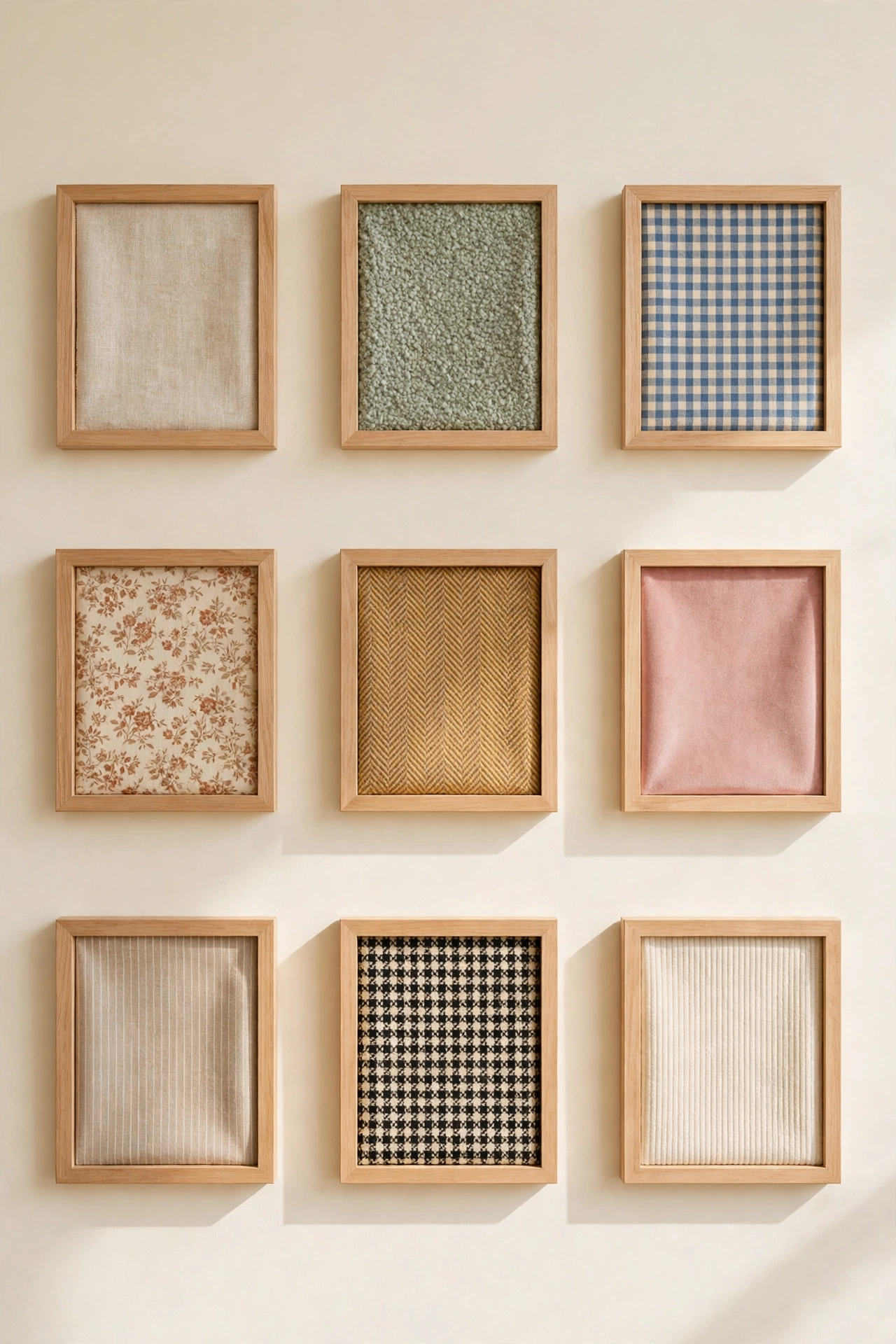
Nine tiny fabric swatches in matching small frames create a neat grid that feels like a fabric library on the wall. Cut small squares from different fabrics you love, such as florals, stripes, checks, and solids, and frame each one in the same slim frame. The grid turns a collection of scraps into a tidy display.
Arrange the nine frames in three rows of three with even spacing between each one. A grid of tiny swatches suits a sewing room, a craft corner, or a hallway where a small display fits best. The mix of patterns shows off your taste while keeping the wall organized and calm.
Conclusion
Framed fabric art proves that beautiful wall decor does not need a large budget or a trip to a gallery. From a single bold floral print to a grid of tiny swatches, each idea here turns cloth you already own into something worth looking at every day. The best piece is the one that tells your story, whether it is a vintage tea towel, a baby blanket, or a scrap of sari silk.
Start with one idea that fits your home and your fabric stash. Frame a scarf, stretch a piece of linen, or hang a trio of ombre panels, and watch the wall change. For more ways to decorate with care and reuse what you already own, see these sustainable home decor ideas. Your walls will feel personal, warm, and made with care for years to come.
Frequently Asked Questions About DIY Framed Fabric Art Ideas for Beautiful Interiors
What is the best fabric for framed art?
Cotton, linen, and silk work best for framed fabric art because they press flat and hold their shape behind glass. Choose a fabric with a clear print or an interesting texture so the design reads well from across the room. Avoid stretchy fabrics because they wrinkle and sag inside a frame.
How do I keep fabric flat inside a frame?
Iron the fabric first, then stretch it over a thin backing board and tape or staple the edges at the back. A piece of acid free foam board behind the fabric keeps it smooth and stops it from shifting. Glass in front of the fabric also helps it stay flat and dust free.
Can I frame fabric without glass?
Yes, you can frame fabric without glass, especially for textured pieces like woven jute or thick canvas. A frame without glass lets the texture show and makes the piece feel more like a wall hanging. Keep the fabric out of direct sunlight so the colors stay bright for longer.
What size frame works best for fabric art?
The size depends on the wall and the fabric. A single large frame suits a wide wall above a sofa, while small frames in a grid suit a hallway or a narrow wall. Measure the wall first and leave at least six inches of empty wall around the frame so the art can breathe.
How do I stop framed fabric from fading?
Hang framed fabric away from direct sunlight and use glass with UV protection if the piece sits near a window. Rotate the art every few months so no single piece takes all the sun. Lighter fabrics fade faster than dark ones, so keep pale prints in shaded spots.

Hi, I’m Emily! I turn messy corners into cozy, organized spots. DreamNestDecor is where I share simple, practical home ideas — decor, organization, and small-space solutions that work in real life, not just in photos. Every idea here is carefully researched before it’s shared.