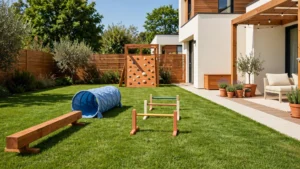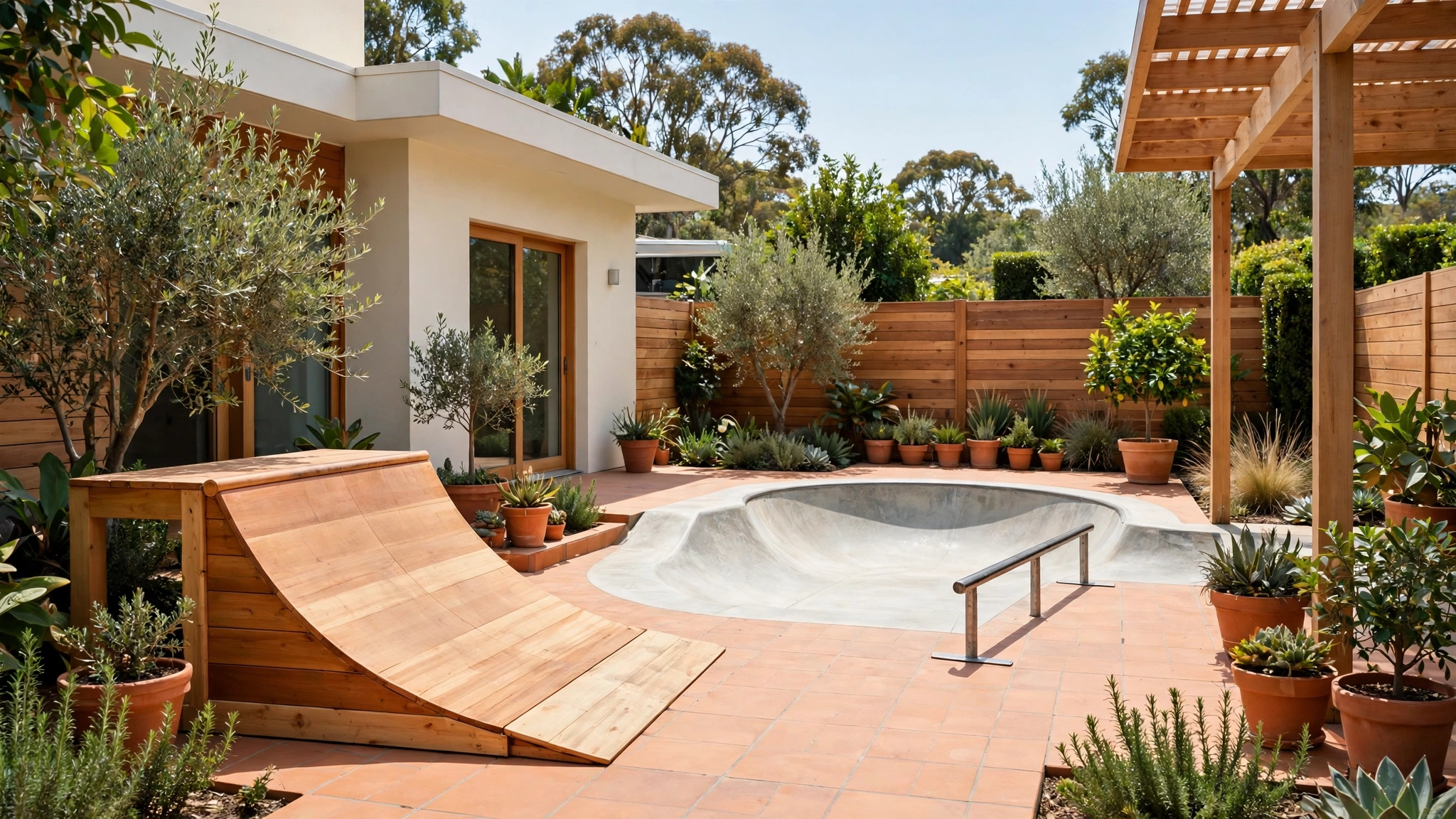
Picture this: a young skater rolls out the back door, drops into a smooth wooden ramp, and practices tricks in the fresh air without waiting for a ride to the skate park. A backyard skate park turns an ordinary yard into a training ground where skills grow every single day. The sound of wheels on wood becomes the soundtrack of summer afternoons.
You do not need a huge yard or a professional budget to build one. All you need is a flat spot, a few well-built features, and a clear plan for safety. These 18 backyard skate park ideas for young athletes will help you create a fun and safe place to ride, one feature at a time.
1. Build a Small Quarter Pipe for Beginners
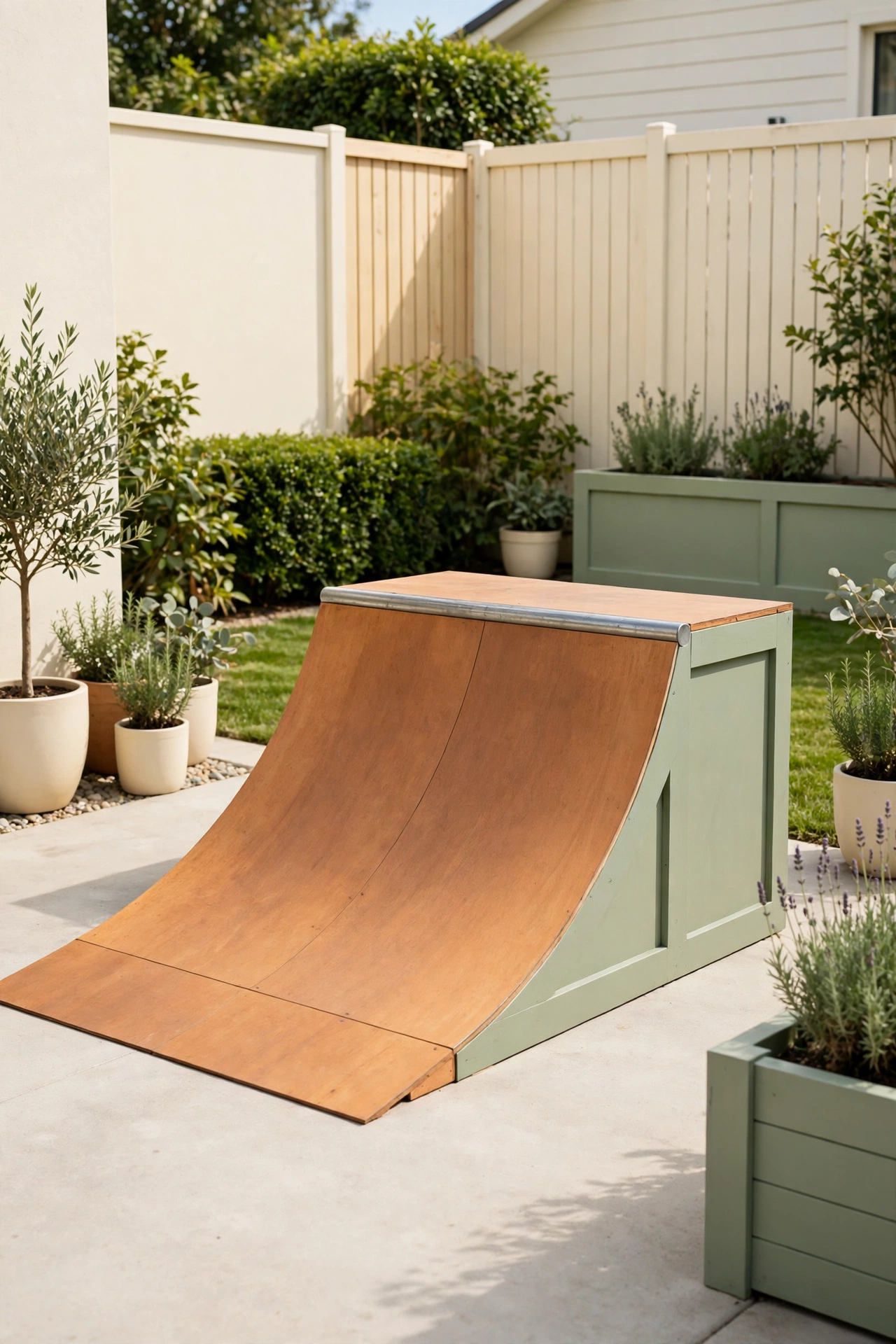
A small quarter pipe is the best first ramp for a backyard skate park. It gives young skaters a curved wall to ride up and roll back down, which teaches balance, speed control, and turning without a big drop. A height of around one meter keeps the feature friendly for beginners while still feeling exciting.
Build the frame from pressure-treated lumber and cover the surface with smooth plywood sealed against rain. Add a steel coping along the top edge so grinds feel smooth and the wood stays protected. Place the quarter pipe against a fence or a wall so it stays stable and the yard keeps a clear open area beside it.
2. Add a Flat Bar Rail for Grinds
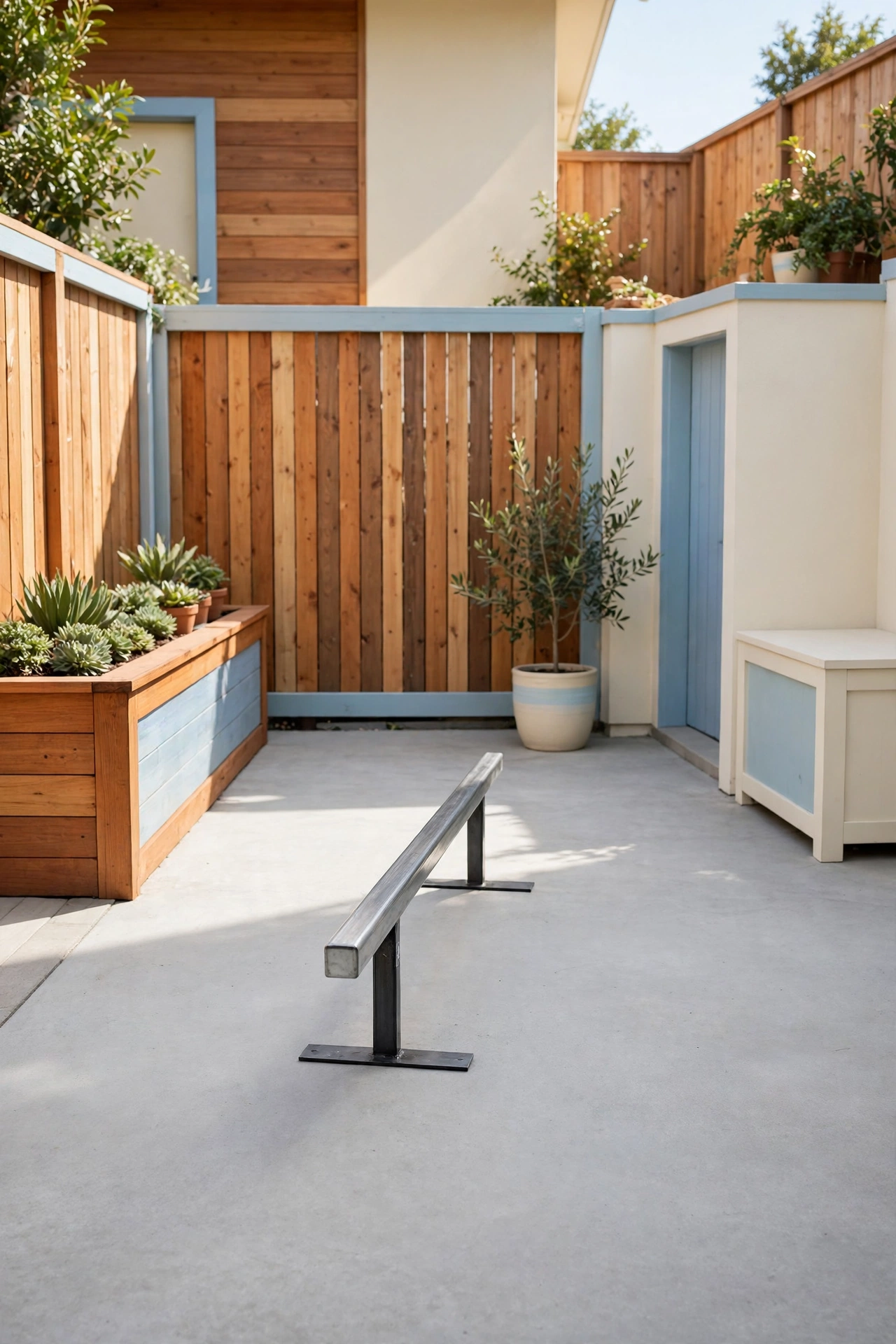
A flat bar rail is a simple steel bar set low to the ground, and it is perfect for learning grinds and slides. Young skaters approach it at low speed, lock onto the bar, and slide across with control. Because the rail sits close to the ground, falls stay short and confidence grows fast.
Use a round steel tube about five centimeters wide, mounted on two sturdy feet so it never wobbles. Keep the rail height near thirty centimeters so beginners can step onto it with ease. A coat of bright paint on the feet makes the rail easy to see from across the yard.
3. Create a Mini Bowl for Flow
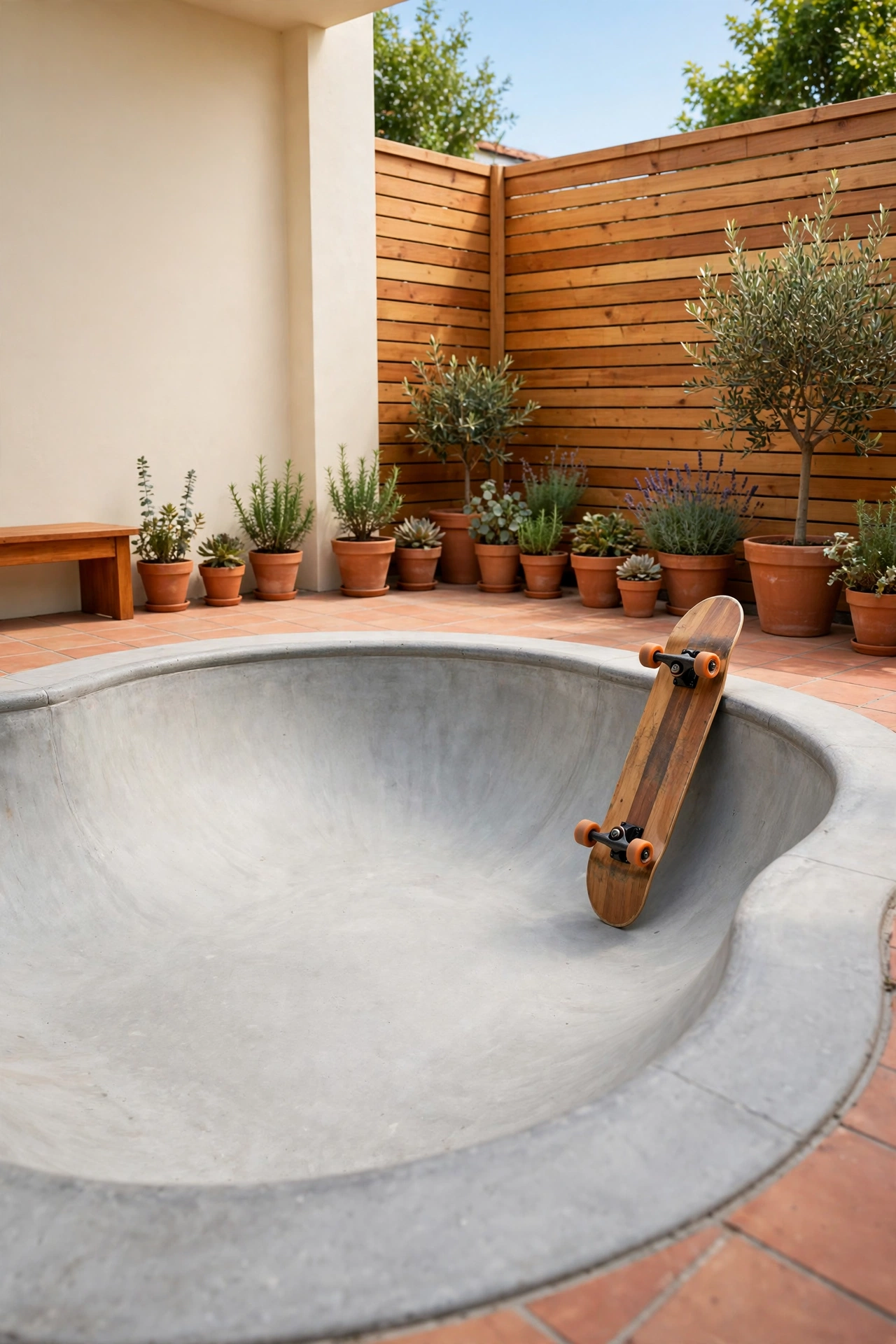
A mini bowl is a shallow concrete or wooden dish that lets skaters carve smooth lines and build flow. The curved walls carry speed from one side to the other, so a skater can pump around the bowl without pushing. It feels like surfing on land, and it builds leg strength with every lap.
Keep the bowl shallow, no deeper than one meter, so young riders stay comfortable and safe. Smooth the surface with care, because a rough finish slows wheels and causes sudden stops. For more backyard sport ideas that share the same space, see these backyard basketball court ideas. A small bench beside the bowl gives tired legs a place to rest between runs.
4. Set Up a Launch Ramp for Air
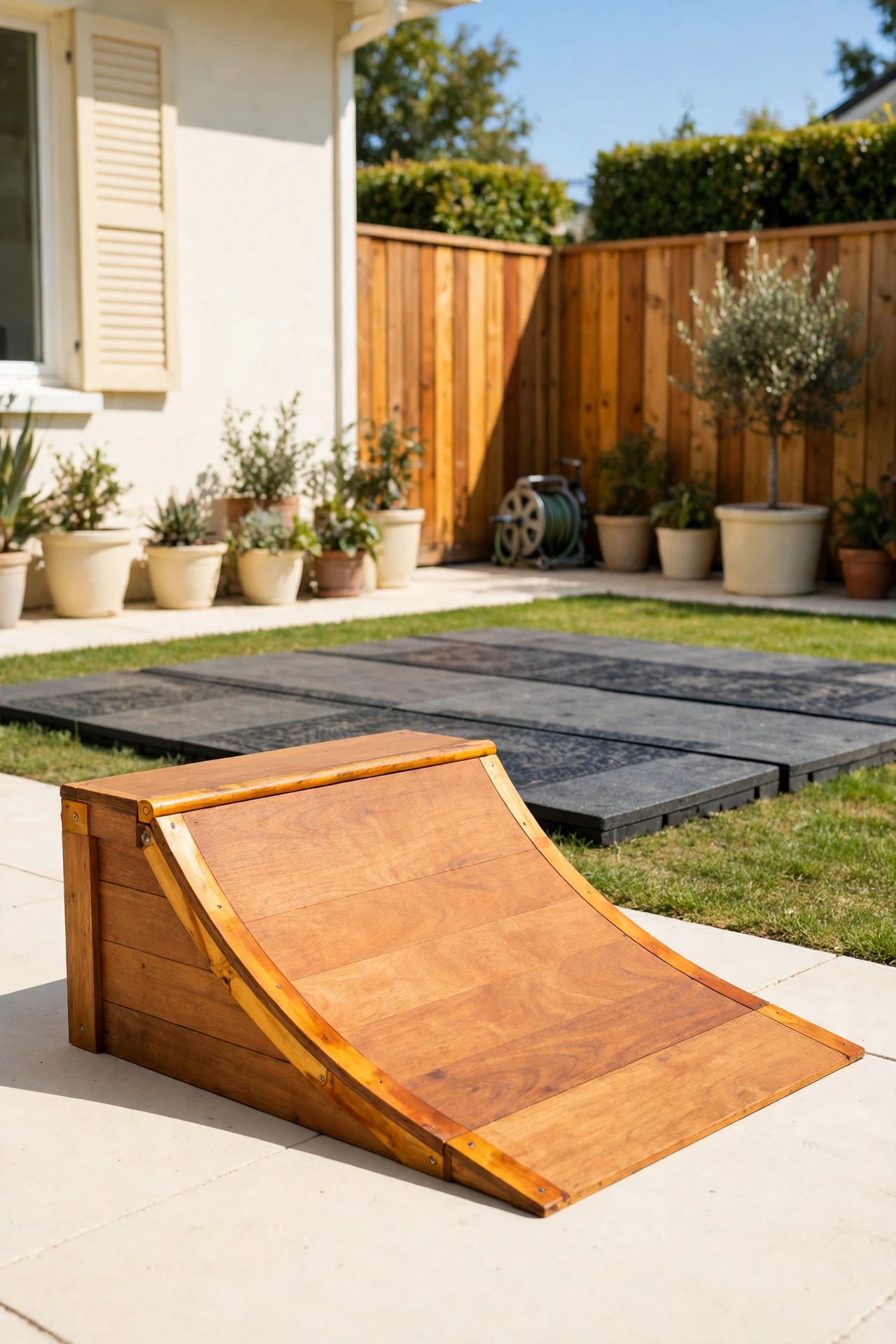
A launch ramp, also called a kicker, is a small wedge that sends a skater into the air for jumps and grabs. It is the simplest ramp to build and one of the most fun to ride. Young athletes use it to practice ollies, build air awareness, and land with control.
Build the kicker from a sturdy plywood triangle with a smooth transition at the base so wheels roll onto it without a bump. Keep the angle gentle, around thirty degrees, so the launch feels predictable. Place a soft landing zone of smooth concrete or rubber mats beyond the ramp to cushion every landing.
5. Install a Funbox with a Ledge
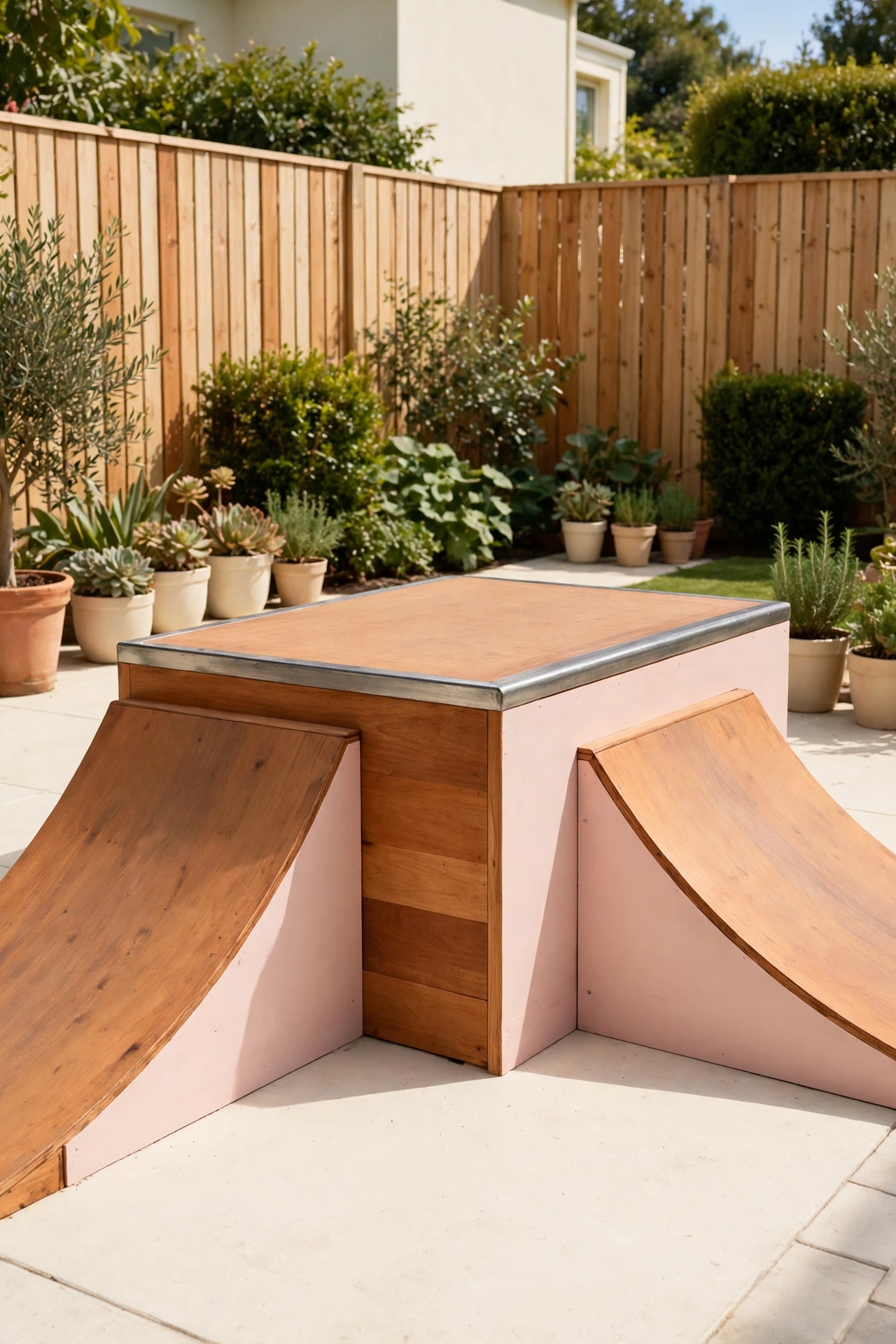
A funbox is a raised platform with ramps on both sides and a ledge along the top edge. Skaters ride up one side, grind the ledge, and roll down the other side in one smooth line. It packs three features into one box, which saves space in a small yard.
Build the box from treated lumber with a plywood top and a steel angle along the ledge for smooth grinds. Keep the platform low, around forty centimeters high, so young riders can step on and off with ease. Paint the sides in a bright color so the funbox becomes a cheerful centerpiece of the park.
6. Add a Bank Ramp Against the Fence
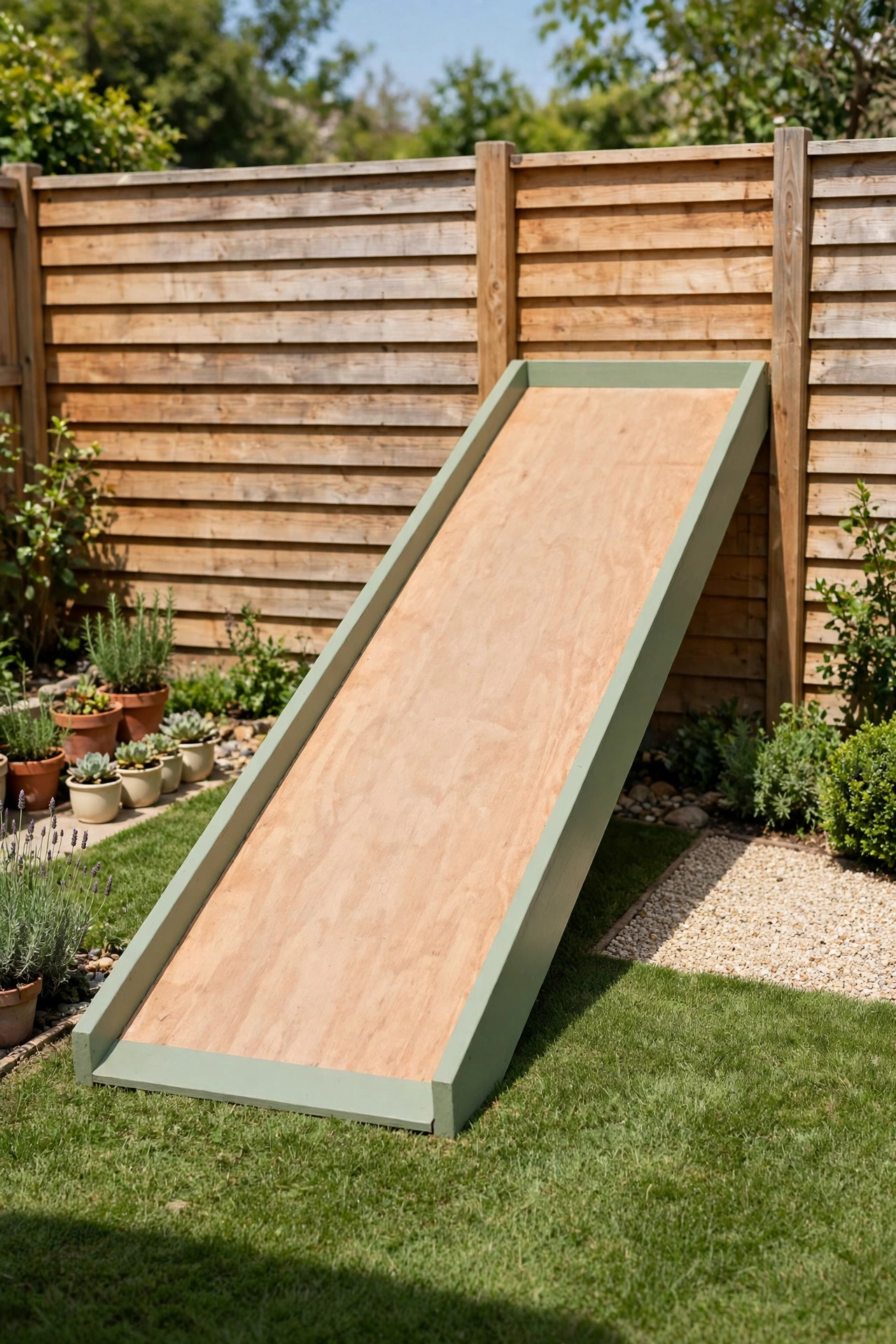
A bank ramp is a straight sloped surface that leans against a fence or a wall, and it is one of the easiest features to build. Skaters ride up the slope, turn at the top, and roll back down, which teaches carving and speed control. The fence behind it doubles as a backstop and a support.
Use a wide plywood sheet over a simple lumber frame, and anchor the top edge firmly to the fence posts. Keep the slope gentle so beginners can ride it without fear. A bank ramp also works as a practice wall for ball games when the skateboards rest for the day.
7. Build a Manual Pad for Balance
A manual pad is a low, flat platform that skaters ride onto and balance on two wheels. It builds balance, foot control, and patience, because a manual needs a steady body and a light touch. Young athletes love the challenge of holding a manual across the whole pad.
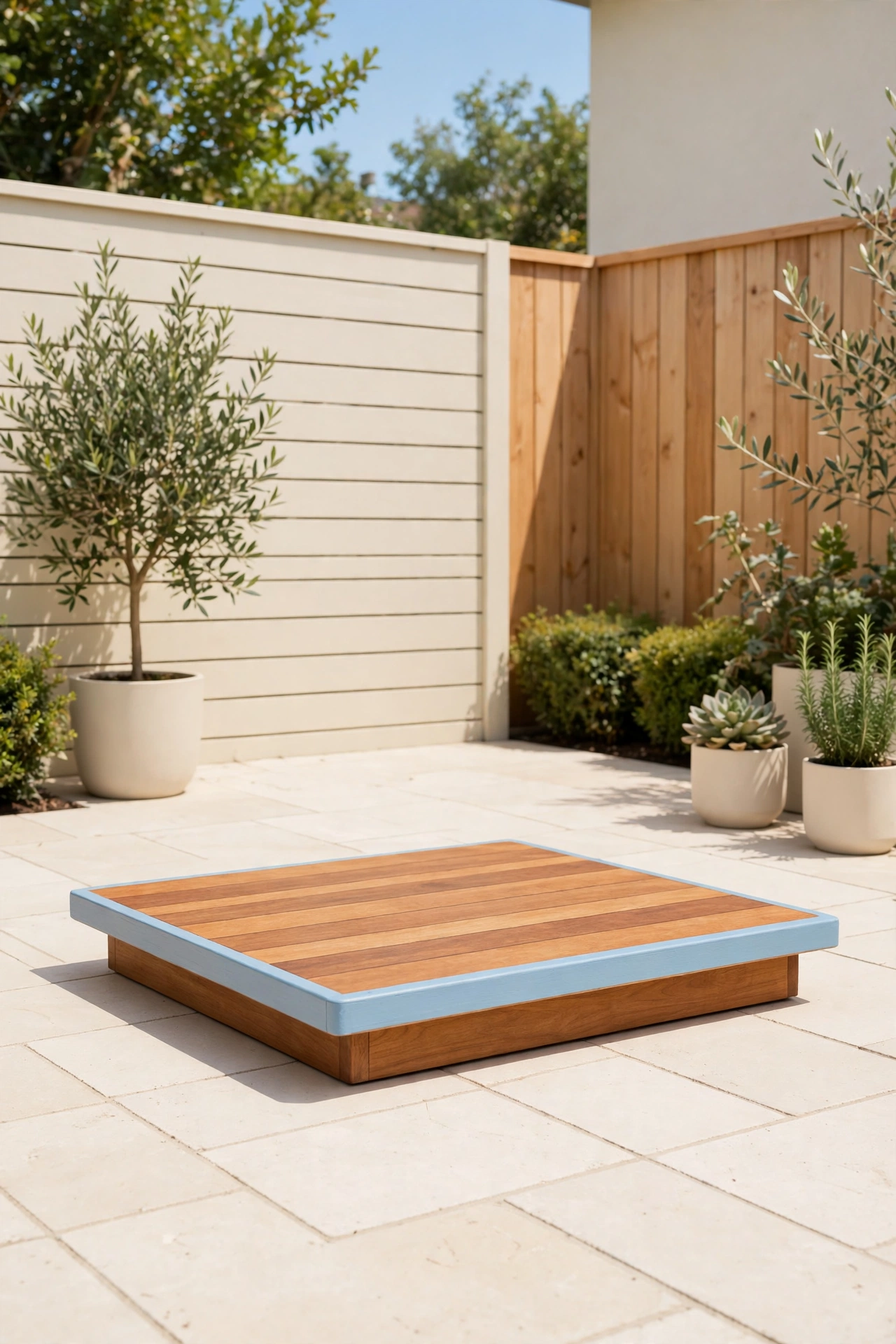
Build the pad as a simple plywood box about fifteen centimeters high and two meters long. Keep the surface perfectly flat and smooth so wheels roll evenly. Add a bright stripe along the edge so the pad is easy to see and the landing zone stays clear.
8. Create a Dedicated Flatground Practice Zone
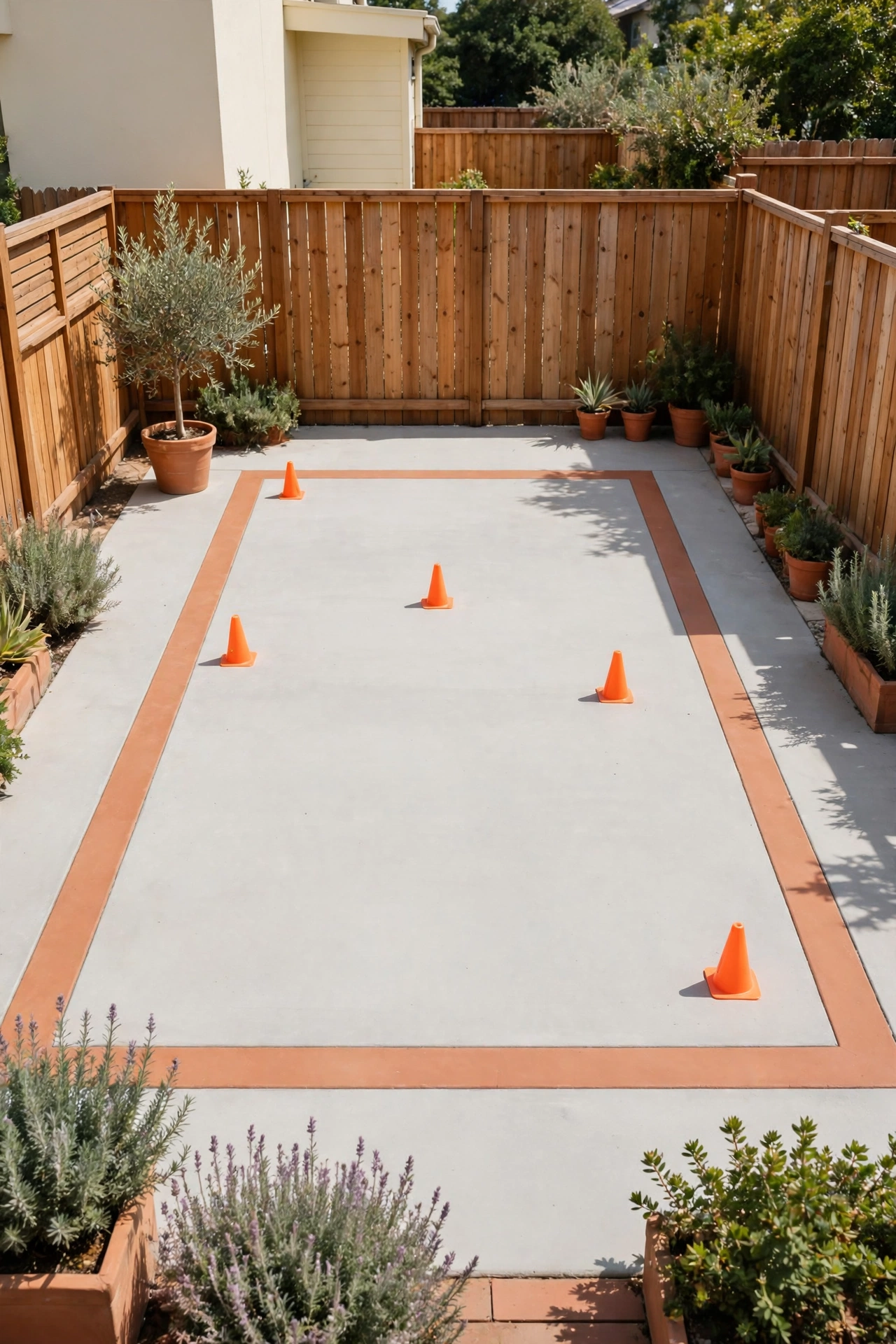
Flatground is the smooth, open space where skaters practice ollies, kickflips, and footwork without any ramps. A dedicated flatground zone keeps beginners away from fast traffic on the ramps and gives them room to fall safely. Every great skater starts on flat ground.
Pour or lay a smooth concrete slab at least four meters square, and keep it free of cracks, leaves, and loose stones. Mark the edges with painted lines so everyone knows where the practice zone begins. A few cones inside the zone turn drills into games and keep practice fun.
9. Add a Spine Ramp for Transfers
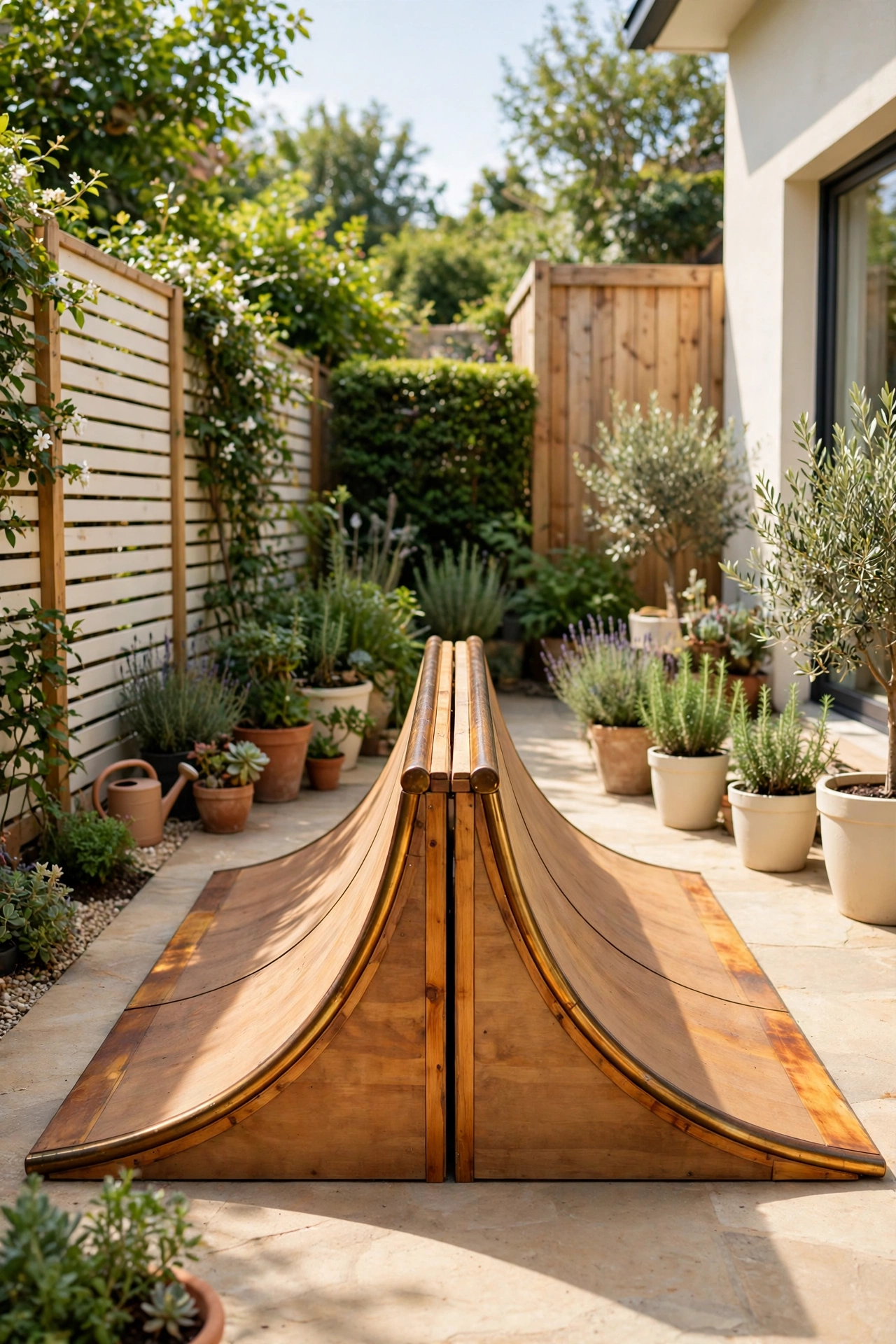
A spine ramp is two quarter pipes placed back to back, so skaters ride up one side and transfer over the peak to the other side. It teaches air control, timing, and commitment, and it feels thrilling even at a small height. A low spine is a perfect step up from a single quarter pipe.
Keep the spine low, around one meter high, with a rounded peak so the transfer feels smooth. Build both sides with the same curve so the ride feels balanced from either direction. A spine ramp becomes the showpiece of the park once young riders gain confidence.
10. Install a Wallride Panel
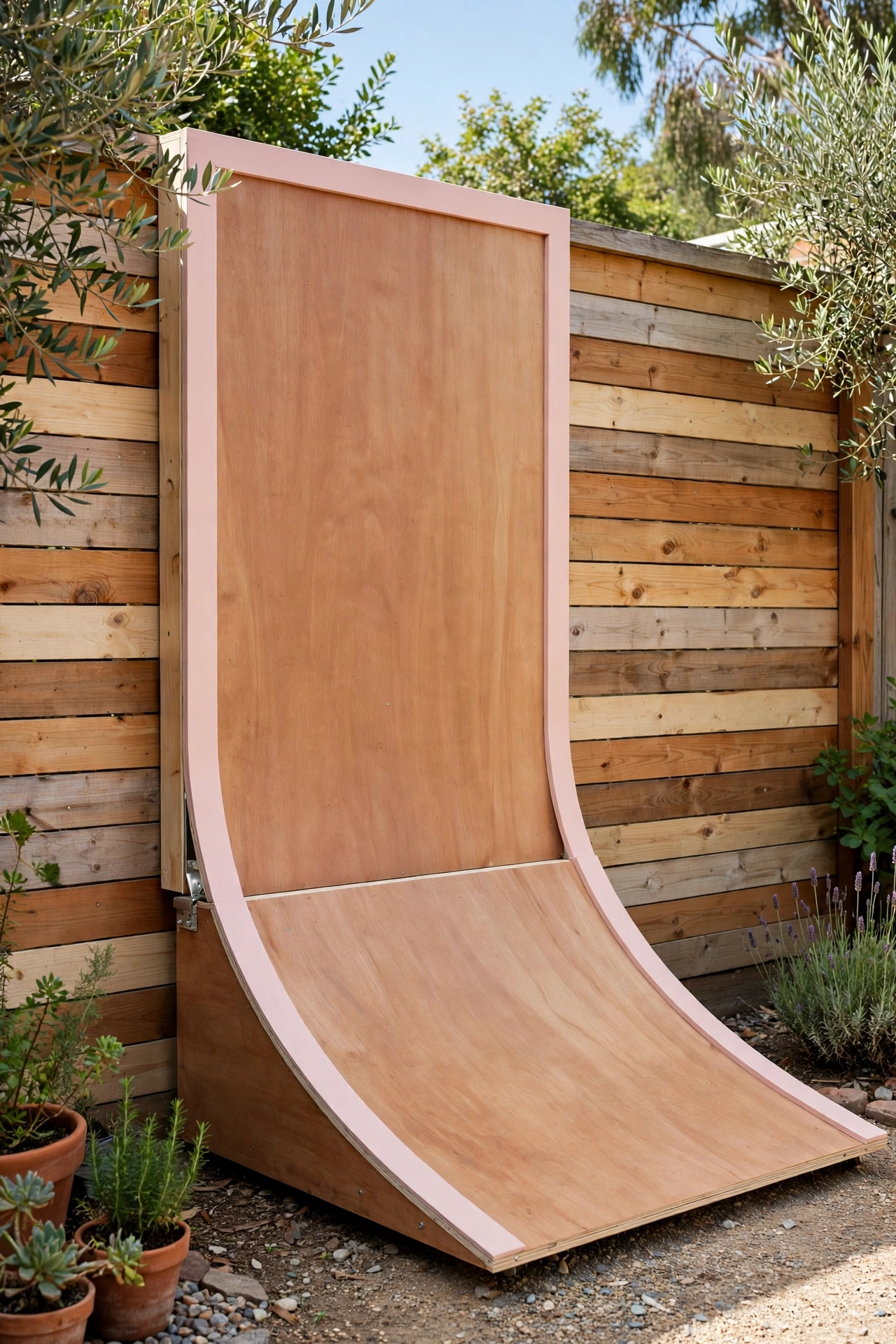
A wallride panel is a smooth vertical surface that skaters ride up and along, with their board touching the wall. It adds a street-style trick to the park and uses a fence or a shed wall that would otherwise sit empty. Young riders love the feeling of riding on a vertical surface.
Mount a large sheet of smooth plywood on the fence, with the bottom edge angled slightly outward so wheels transition onto it. Seal the plywood against rain and check it often for cracks. A wallride panel turns a plain fence into a feature that every visitor wants to try.
11. Build a Wooden Pump Track Loop
A pump track is a loop of small rollers and banked turns that skaters ride without pushing, using only the pump motion of their bodies. It builds stamina, rhythm, and flow, and it keeps several riders moving at once. A wooden pump track fits neatly around the edge of a yard.
Build the rollers from curved plywood over lumber frames, and bank the turns so riders lean into each curve. Keep the loop wide enough for two riders to pass safely. For a neat edge that keeps the track tidy, border the loop with landscape edging like the edging in these backyard landscape border ideas. A pump track loop turns a simple yard into a full circuit of fun.
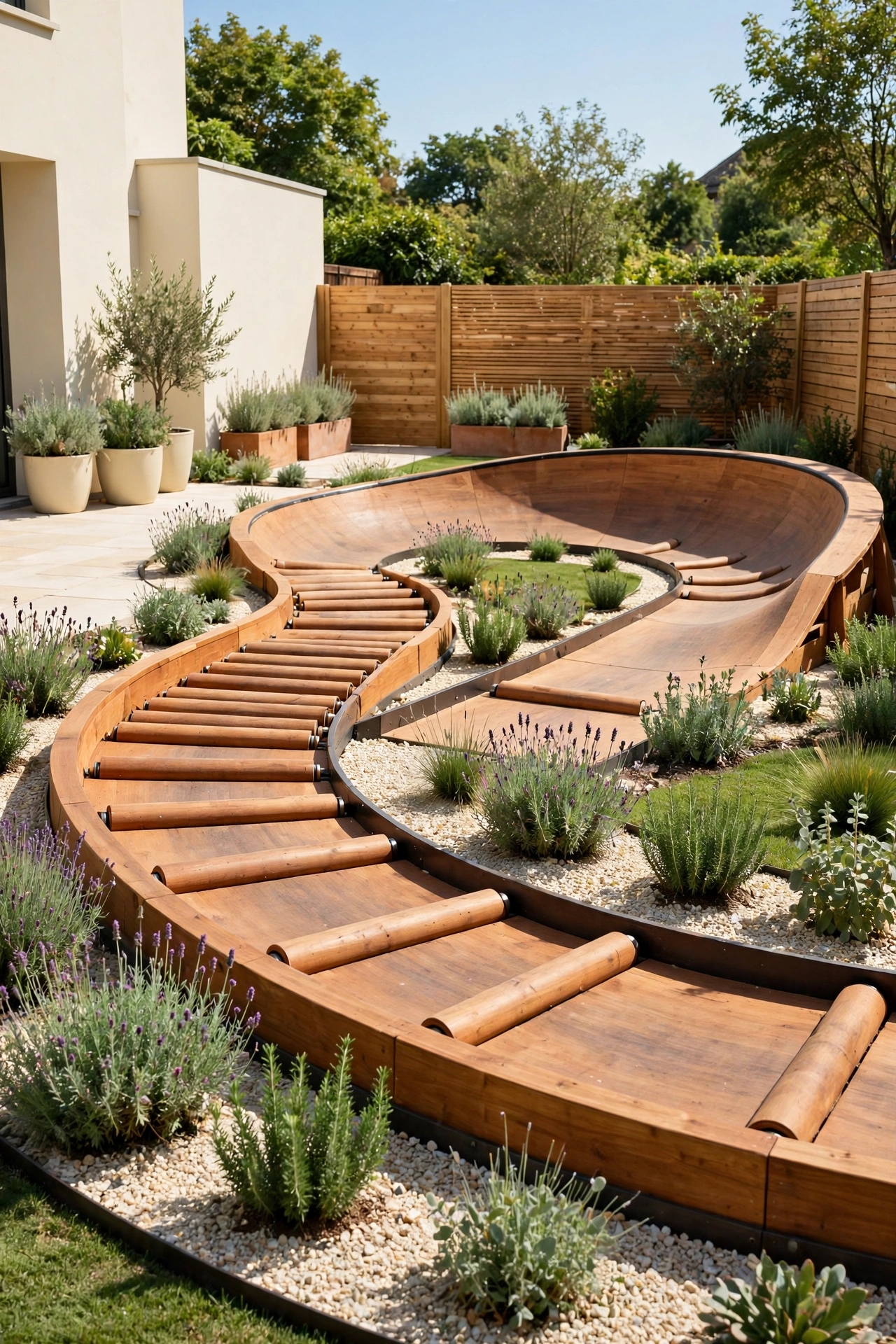
12. Add a Stair Set with a Handrail
A small stair set with a handrail is a classic street feature that teaches ollies down steps and grinds along the rail. Start with just two or three steps so the feature stays friendly for young athletes. The handrail gives riders a target for grinds and a support for balance.
Build the steps from solid lumber or concrete blocks with a smooth landing zone beyond them. Mount a steel handrail along one side at a comfortable height for young hands. Keep the landing clear of toys and tools so every jump ends on clean ground.
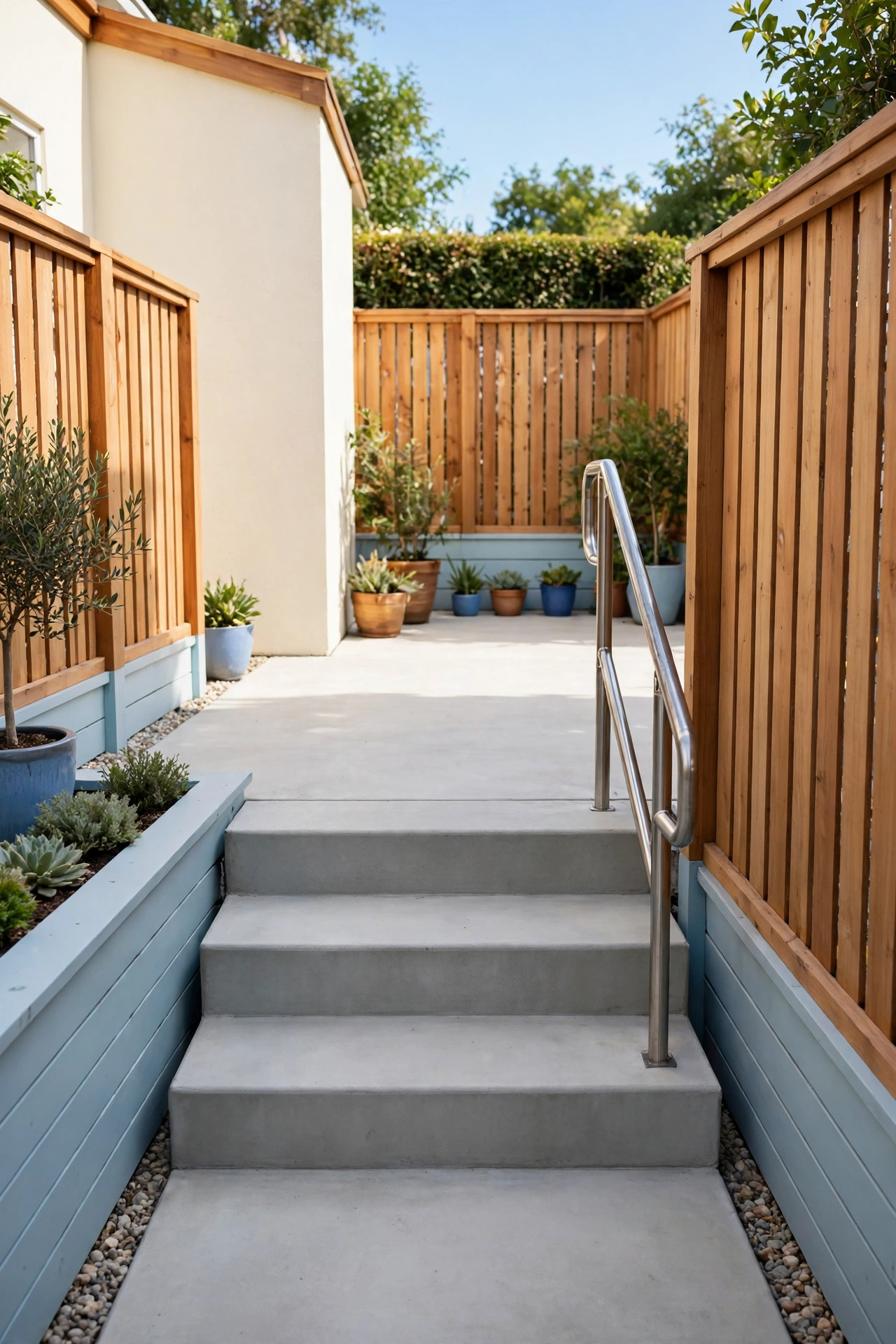
13. Create a Shaded Rest Zone with Benches
A shaded rest zone gives young athletes a place to cool down, drink water, and watch friends ride. Two simple benches under a shade sail or a small pergola turn the edge of the park into a social spot. Parents also appreciate a comfortable place to sit and supervise.
Build the benches from warm wood with cream cushions that match the yard, and add a small table for water bottles and snacks. A shade sail overhead blocks harsh sun while letting breeze through. If the family enjoys evening gatherings beside the park, a small fire feature nearby like the ones in these outdoor fireplace ideas extends the fun after dark.
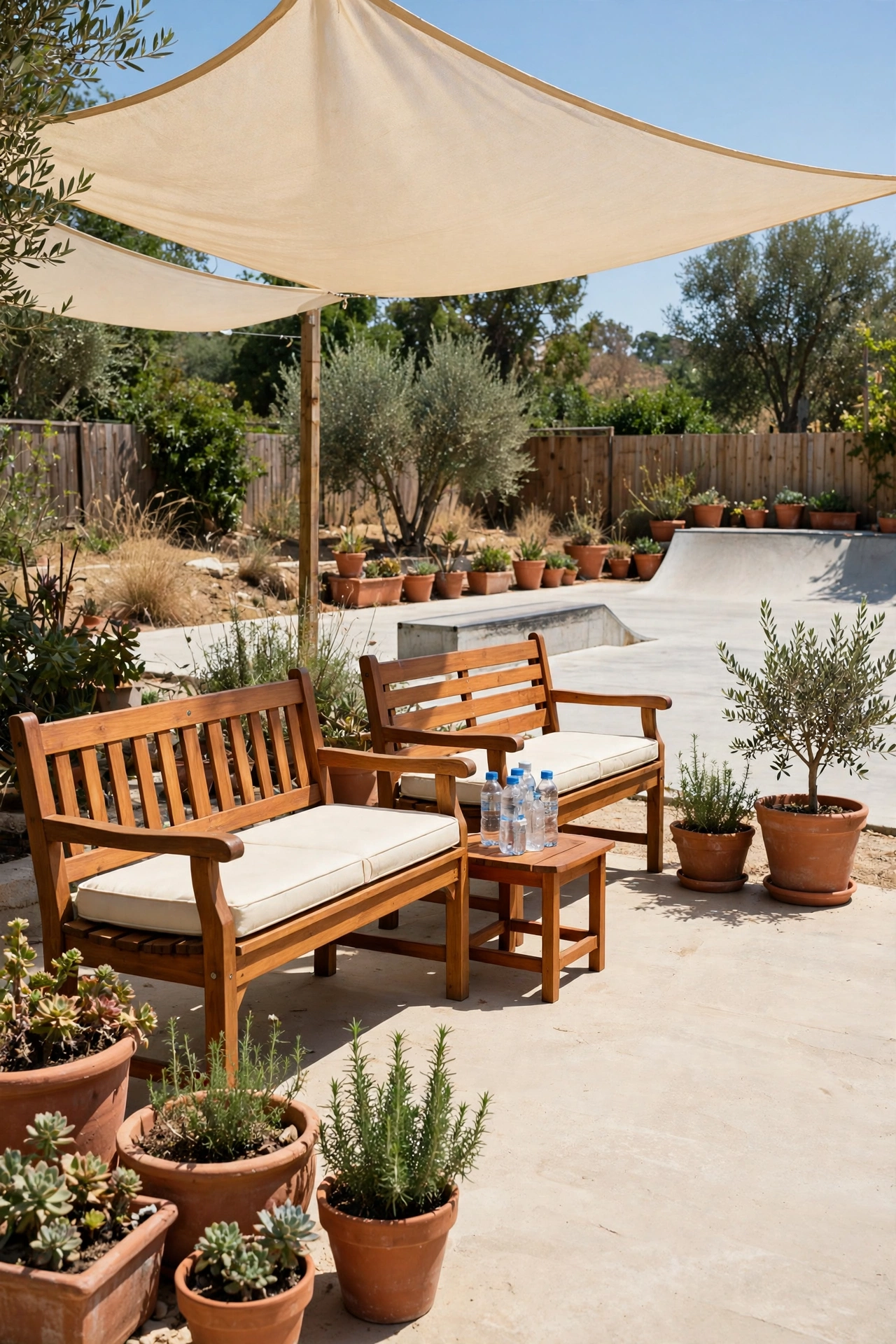
14. Set Up a Helmet and Gear Storage Station
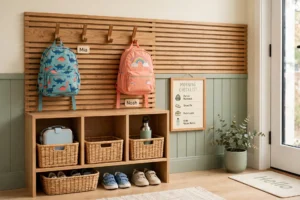
A gear station keeps helmets, pads, and skateboards organized and off the ground. A simple wall rack with hooks holds each helmet by its strap, while a low shelf stores knee pads, elbow pads, and gloves. When gear has a home, young athletes actually wear it.
Build the station from weatherproof wood and mount it under a small roof or awning so gear stays dry. Label each hook with a name so siblings stop arguing over whose helmet is whose. A tidy gear station also teaches responsibility, because every rider puts gear back after a session.
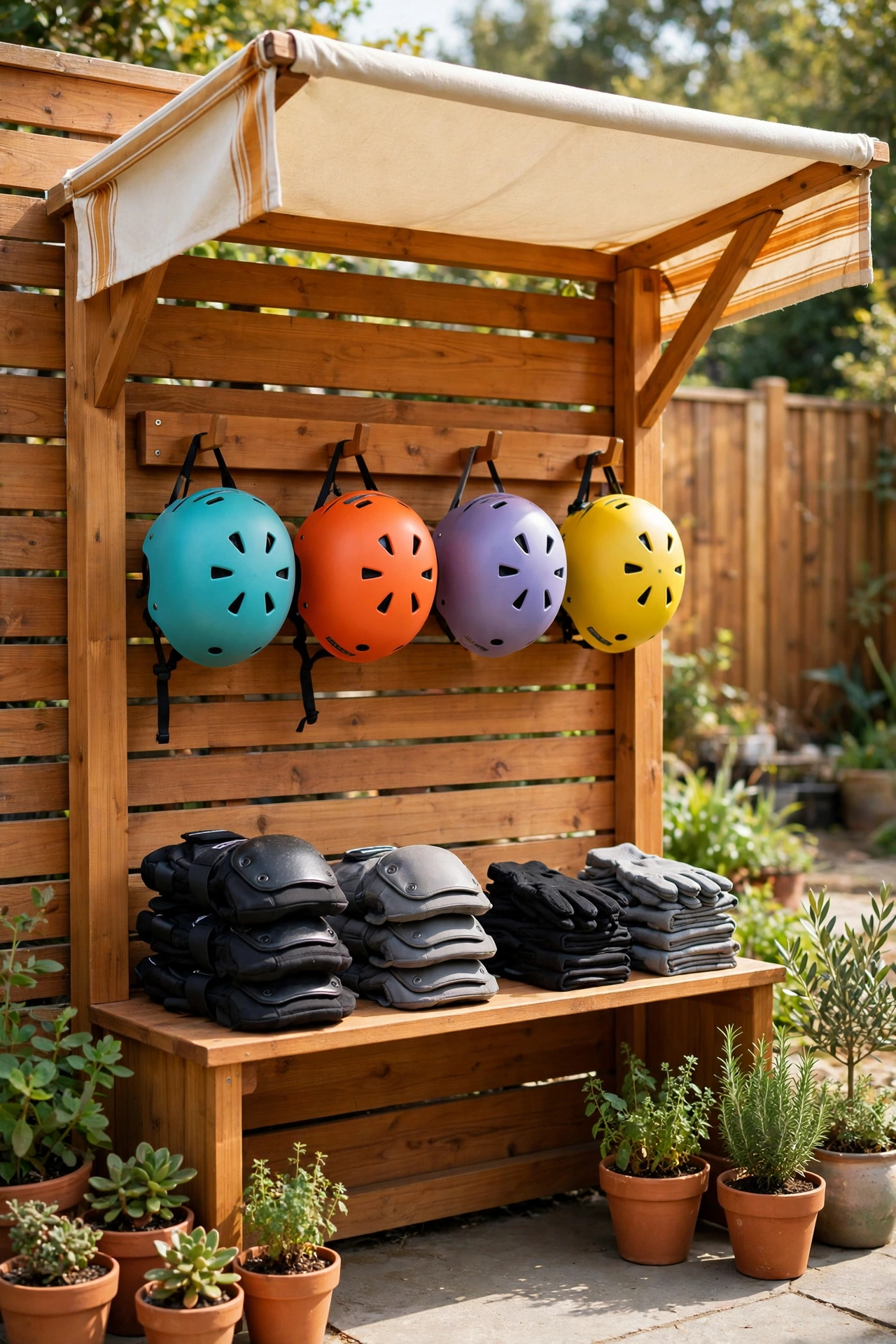
15. Add Solar Lights for Evening Sessions
Solar lights let young athletes ride safely into the early evening without any wiring or power bills. Small solar path lights along the edges of the park mark the boundaries, while a few solar floodlights on posts light the ramps. The park glows warmly as the sun goes down.
Place the lights where they shine onto the riding surface, never directly into a rider’s eyes. Choose lights with motion sensors so they brighten when someone enters the park. Solar lights also make the park look inviting from the house, even on nights when nobody rides.
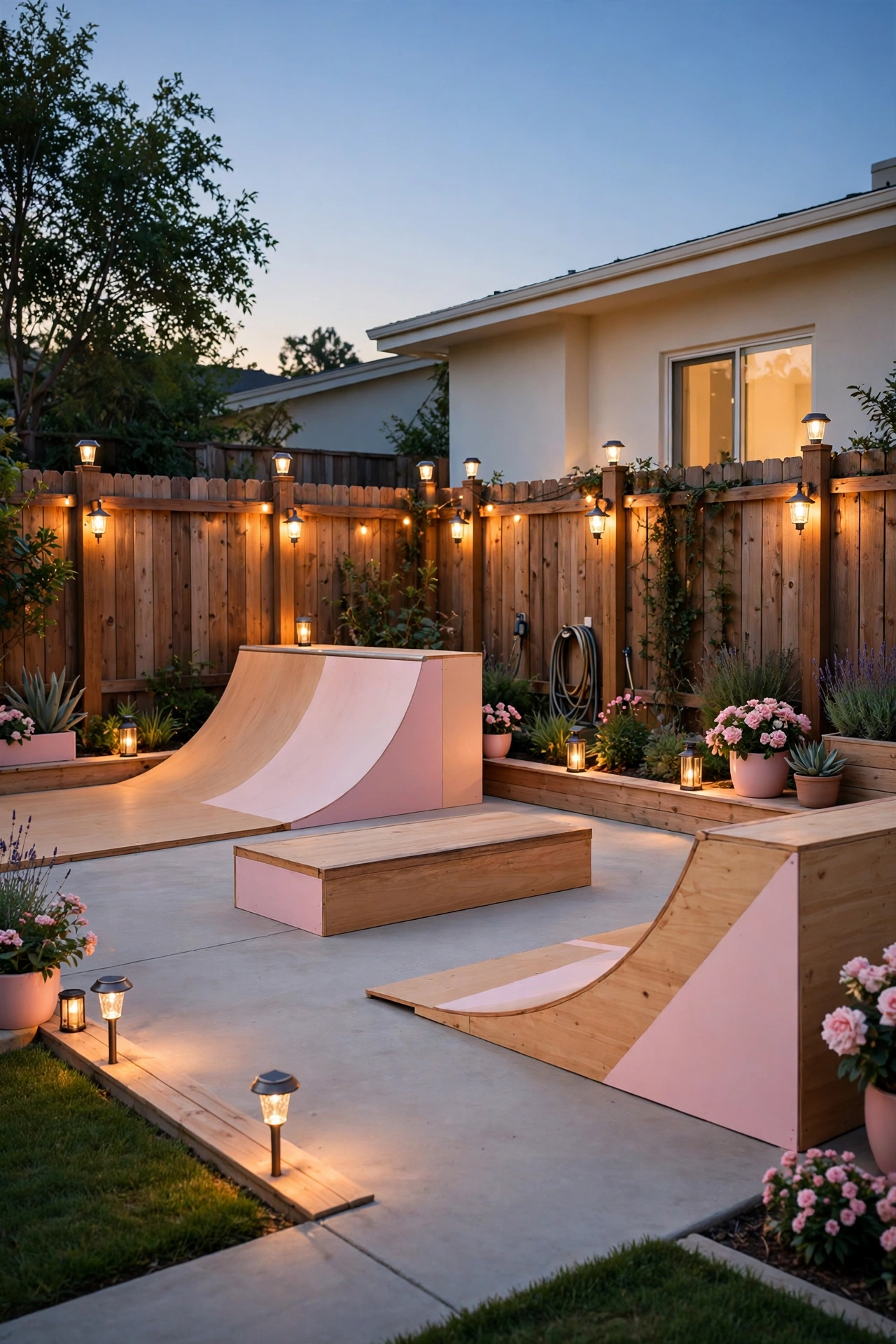
16. Lay a Smooth Concrete Pad as the Base
Every great backyard skate park starts with a smooth concrete pad as its base. Concrete gives wheels a fast, even surface, and it drains well after rain. A single large pad under the whole park ties all the features together into one clean space.
Pour the pad at least ten centimeters thick with a slight slope so rainwater runs off to one side. Plan the drainage so water flows toward a garden bed or a rain barrel, and a simple rainwater setup like the ones in these DIY rain barrel ideas puts that water to good use. Keep the concrete free of cracks by sealing it once a year.
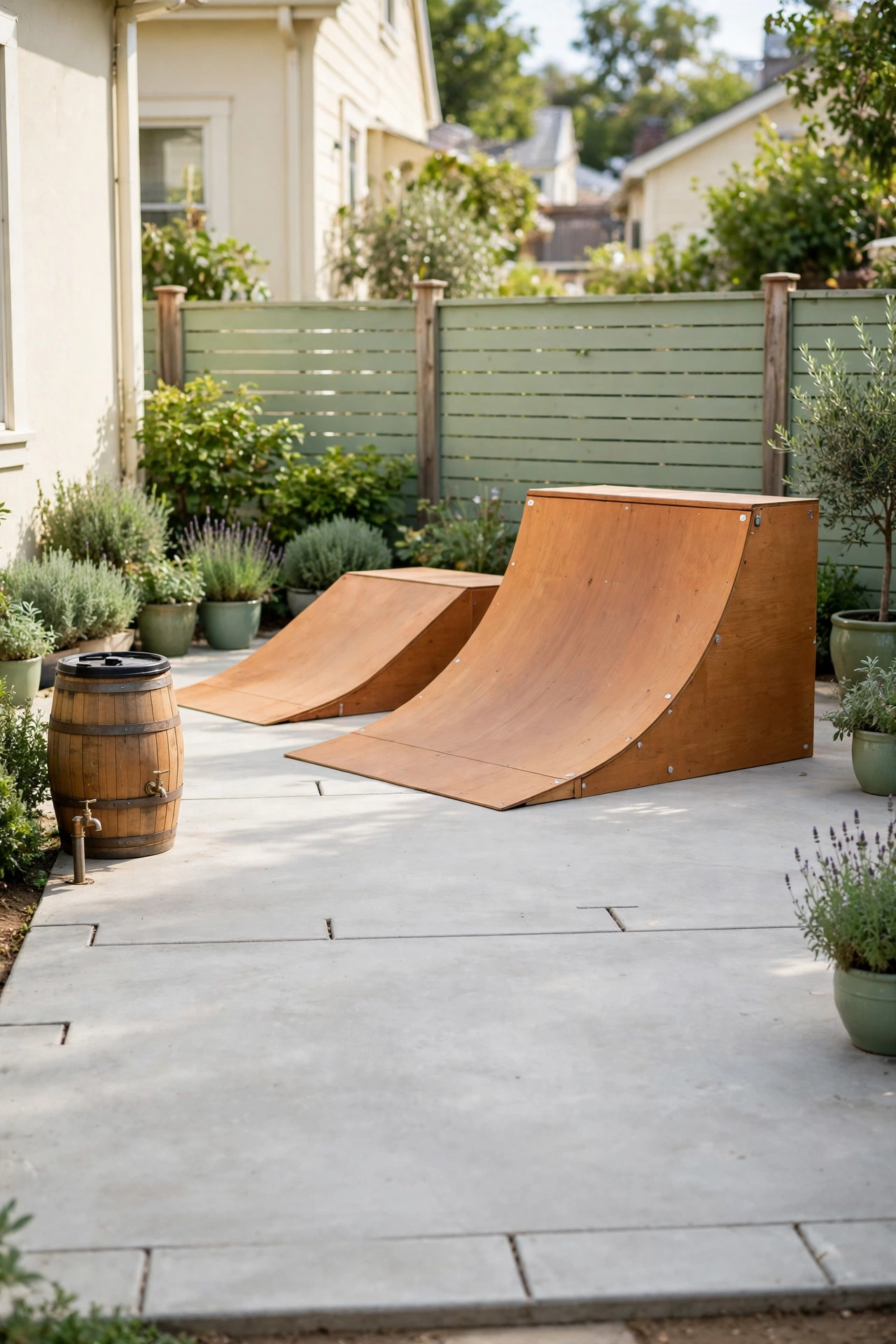
17. Paint a Bright Mural on the Ramp Faces
A bright mural on the ramp faces turns a plain skate park into a work of art. Bold shapes, waves, and sunbursts in cheerful colors make the park feel personal and exciting. Young athletes love riding on ramps they helped to paint.
Use outdoor paint made for wood so the colors survive rain and sun. Let the kids choose the design, then seal the mural with a clear coat so wheels and weather do not wear it away. A painted park photographs beautifully and becomes a feature the whole family is proud of.
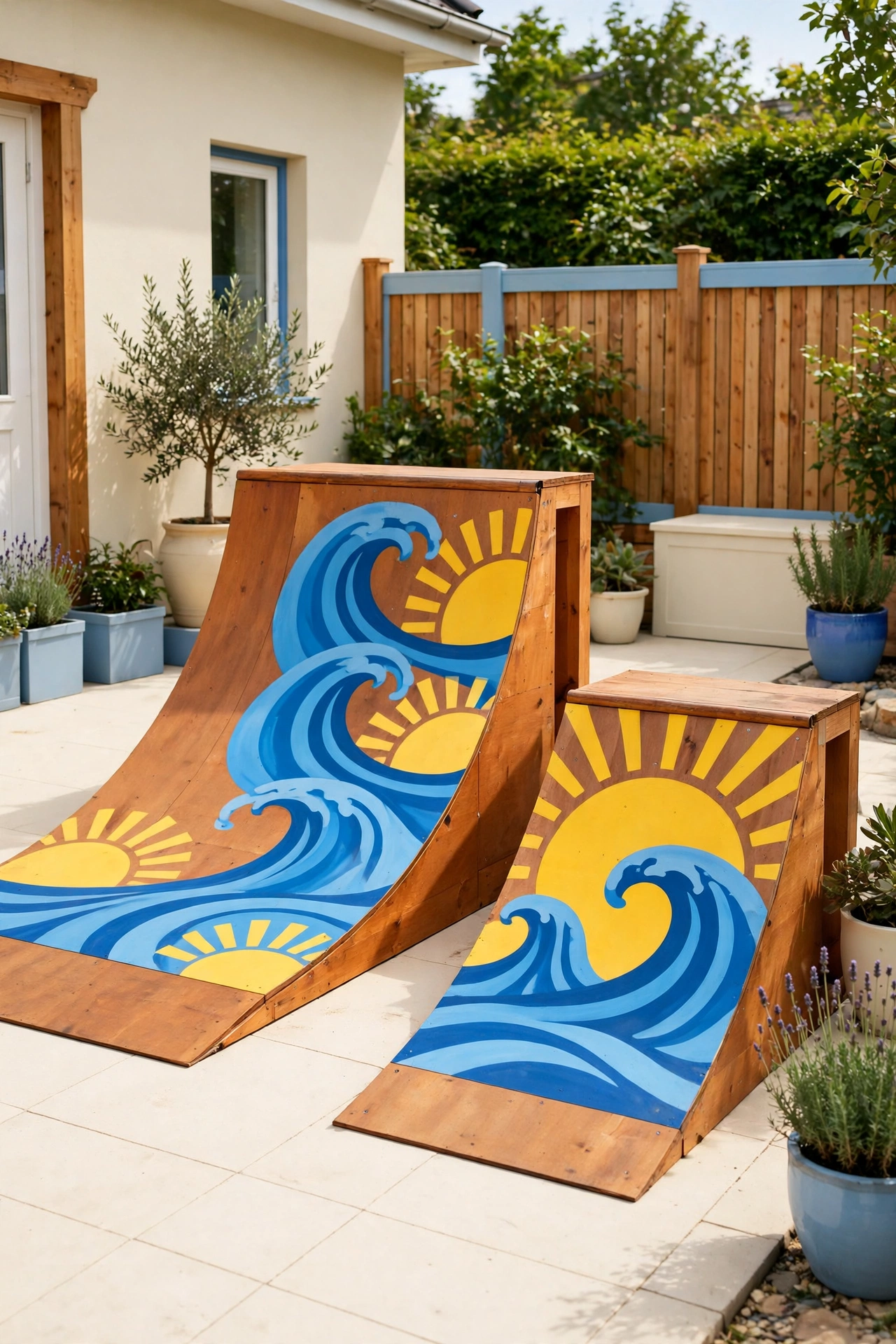
18. Add a First Aid and Water Station
A first aid and water station is the most important feature in any backyard skate park. A small cabinet with bandages, antiseptic wipes, and ice packs handles scrapes fast, while a water cooler with cups keeps young athletes hydrated. Safety gear only works when it is close at hand.
Mount the cabinet on a post near the rest zone, clearly labeled so everyone can find it in a hurry. Refill the water cooler before every session and check the first aid supplies once a month. A park with a proper safety station gives parents peace of mind and lets kids ride with confidence.
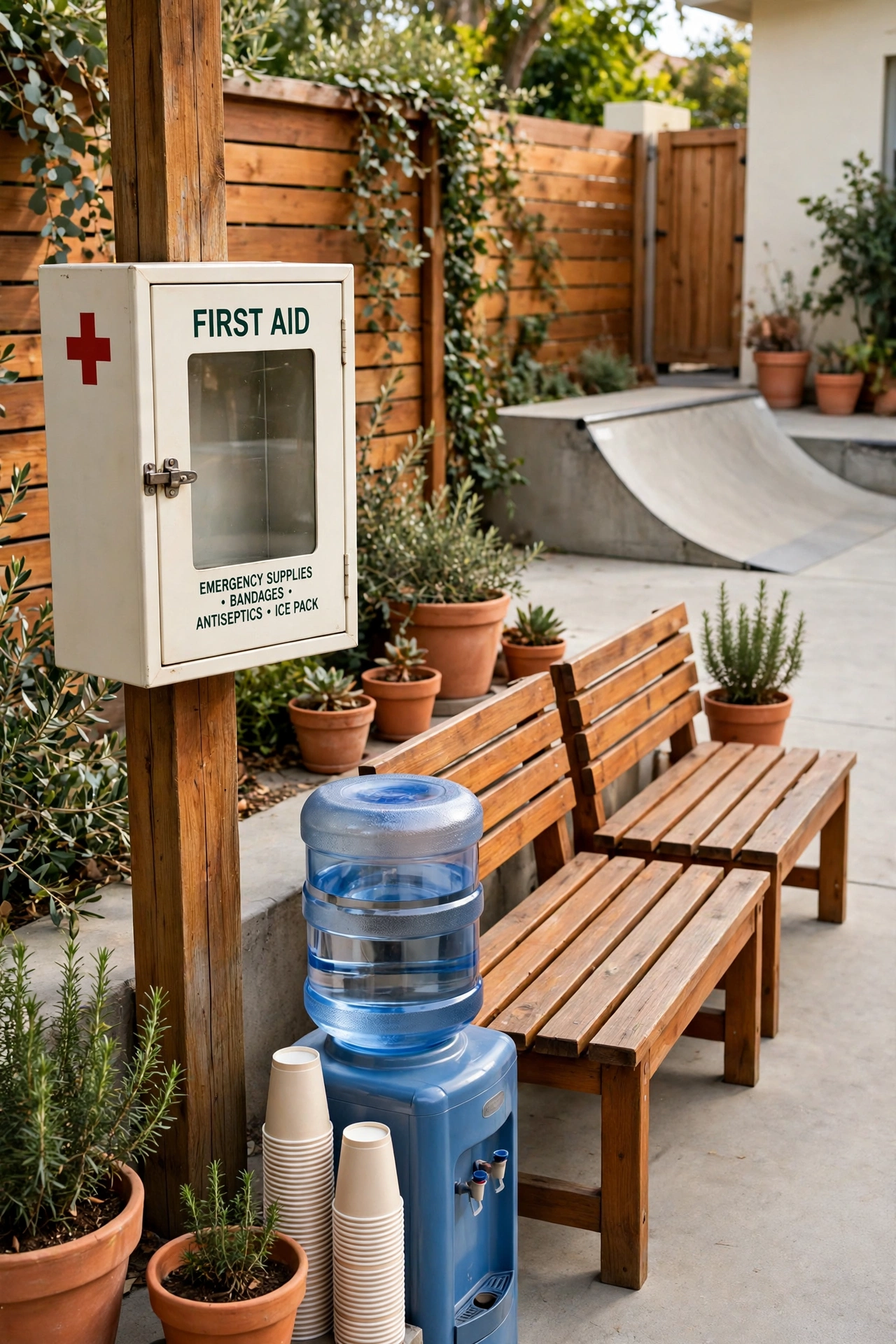
Conclusion
A backyard skate park does not need to be big or expensive to be great. From a small quarter pipe to a smooth concrete pad, each idea here adds fun, skill, and safety to the yard. The best park is the one that matches your space, your budget, and the skill level of your young athletes.
Pick one or two features to build first and add more as skills grow. Start with a flatground zone and a quarter pipe, then add rails and ramps over time. For a calm home beyond the backyard, these nightly reset routine ideas will help you keep every room organized with just a few minutes each evening.
Frequently Asked Questions About Backyard Skate Park Ideas for Young Athletes
How much space do I need for a backyard skate park?
A space of about six by six meters fits a small skate park with a quarter pipe, a flat bar rail, and a flatground zone. Larger yards can hold a bowl, a pump track, and a rest zone as well. Measure the yard first, then choose features that leave clear paths around them.
Is a backyard skate park safe for kids?
Yes, a backyard skate park is safe when young riders wear helmets, knee pads, and elbow pads every time they ride. Start with low features, keep the surfaces smooth and clean, and add a first aid station nearby. Adult supervision makes the park safer, especially for younger children.
What surface works best under skate ramps?
Smooth concrete is the best surface under skate ramps because it stays fast, even, and easy to clean. Sealed plywood also works for ramps built on a deck or a patio. Avoid grass, gravel, and rough asphalt, since wheels catch and stop suddenly on those surfaces.
How much does a small backyard skate park cost?
A small backyard skate park with a quarter pipe, a flat bar rail, and a flatground pad costs between a few hundred and a few thousand dollars, depending on materials and size. Building ramps from lumber and plywood keeps costs low. Start with one or two features and add more over time to spread the cost.
How do I keep a backyard skate park in good shape?
Seal wooden ramps once a year, sweep the surfaces before every session, and check screws and coping for wear each month. Store loose boards and gear under cover when rain is coming. A short weekly check keeps the park safe and smooth all year long.

Hi, I’m Emily! I turn messy corners into cozy, organized spots. DreamNestDecor is where I share simple, practical home ideas — decor, organization, and small-space solutions that work in real life, not just in photos. Every idea here is carefully researched before it’s shared.