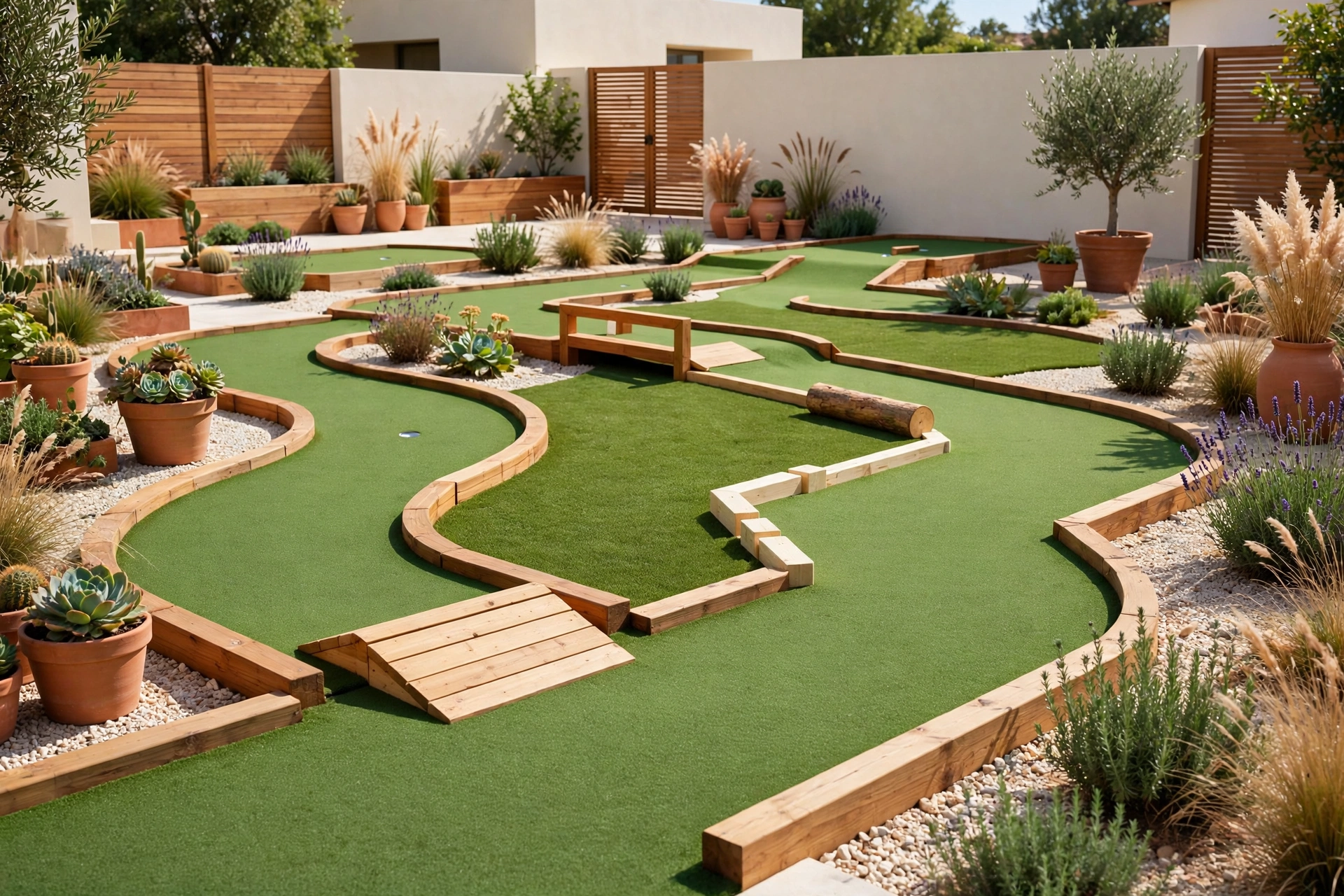
Picture this: a sunny afternoon in your own backyard, a putter in your hand, and a bright green mini golf course winding past flower beds and wooden obstacles right outside your back door. There is no ticket line, no drive across town, and no waiting for other groups to finish. Your family can play a full round of mini golf any time the sun is shining.
You do not need a huge yard or a professional budget to build one. All you need is a flat patch of ground, a few simple materials, and a clear plan for each hole. These 26 backyard mini golf course ideas for golf lovers will help you design a course that is fun for kids, challenging for adults, and beautiful enough to enjoy every single day.
1. Start with a Simple One-Hole Putting Green
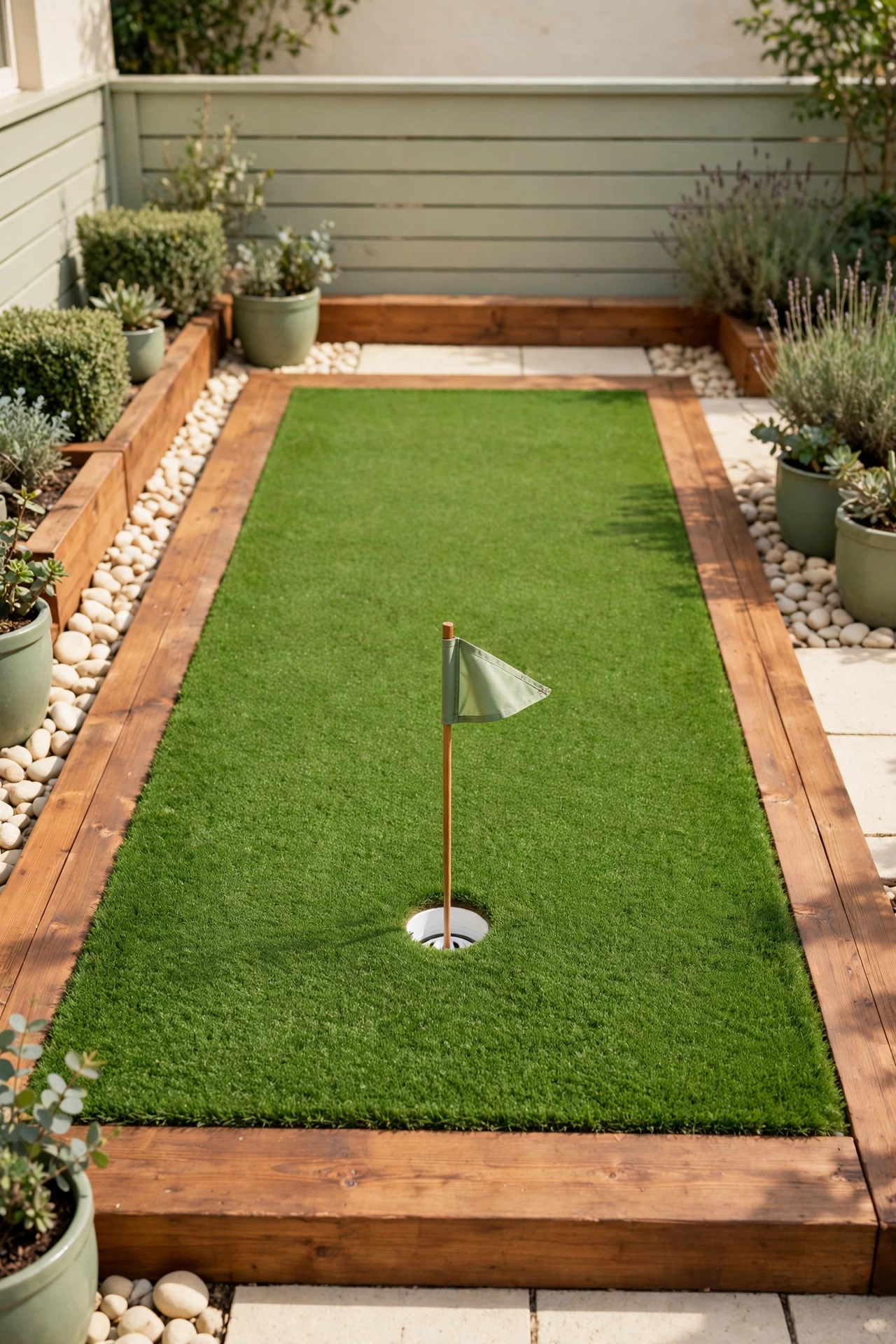
A single putting hole is the best place to begin your backyard mini golf course. A flat rectangle of turf with one cup gives everyone a place to practice and builds confidence before you add harder holes. You can shape it with a few wooden boards as edging and a small piece of artificial turf on top.
Keep the first hole short and level so young players can sink a putt and feel proud. A simple hole also teaches you how turf, edging, and drainage work in your yard before you commit to a full course. Once the first hole plays well, the rest of the course becomes much easier to plan.
2. Lay Artificial Turf for a Smooth Roll
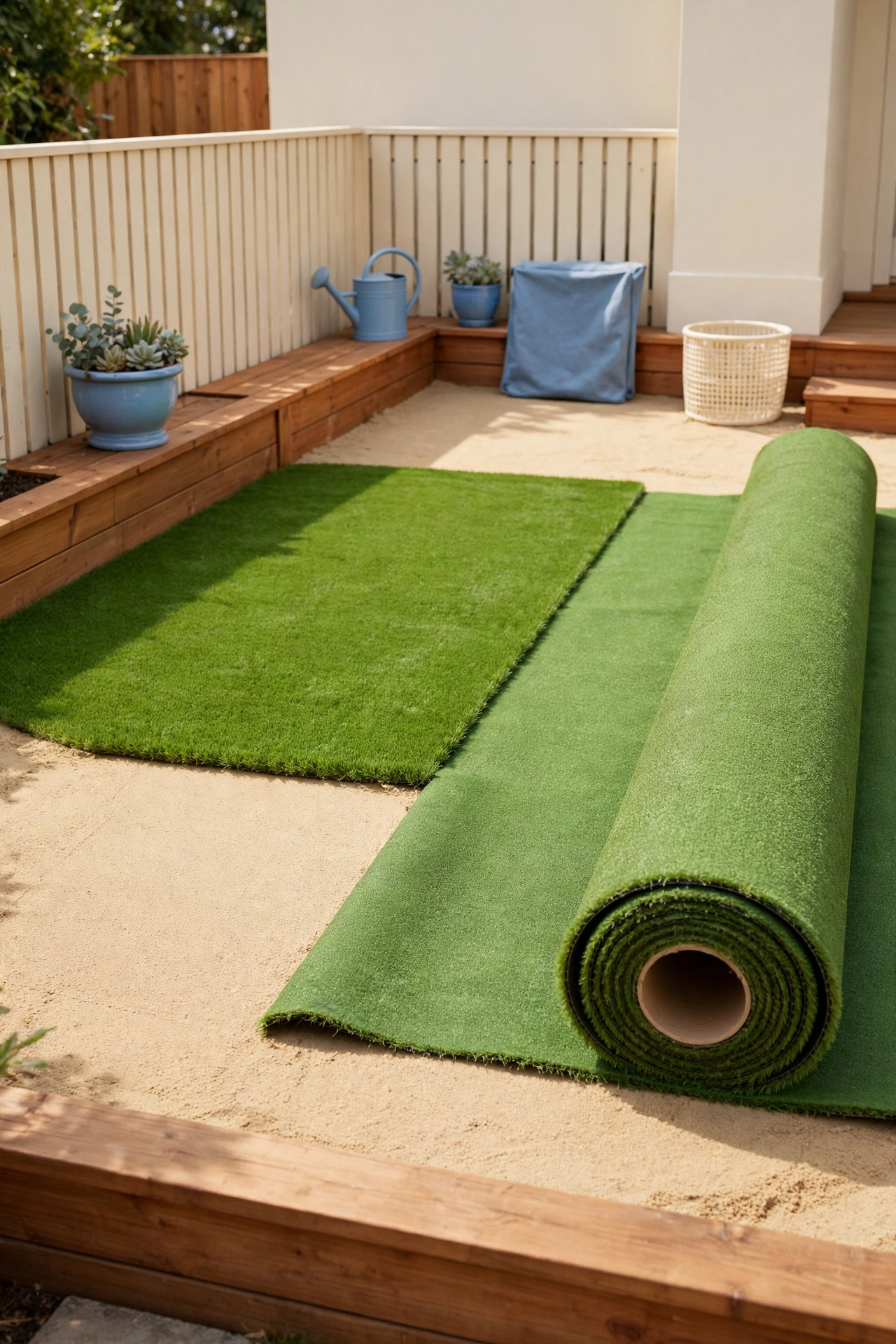
Artificial turf gives a mini golf ball a smooth, true roll that natural grass can rarely match. The surface stays level in all weather, it never needs mowing, and it keeps its bright green color through every season. A roll of putting turf over a level base is the foundation of almost every great home course.
Prepare the ground first by leveling the soil and adding a thin layer of packed sand or fine gravel. Lay the turf over the base, trim the edges, and secure it with landscape staples so it never bunches up. A smooth turf surface makes every putt fair and every game more fun.
3. Add a Wooden Ramp Obstacle
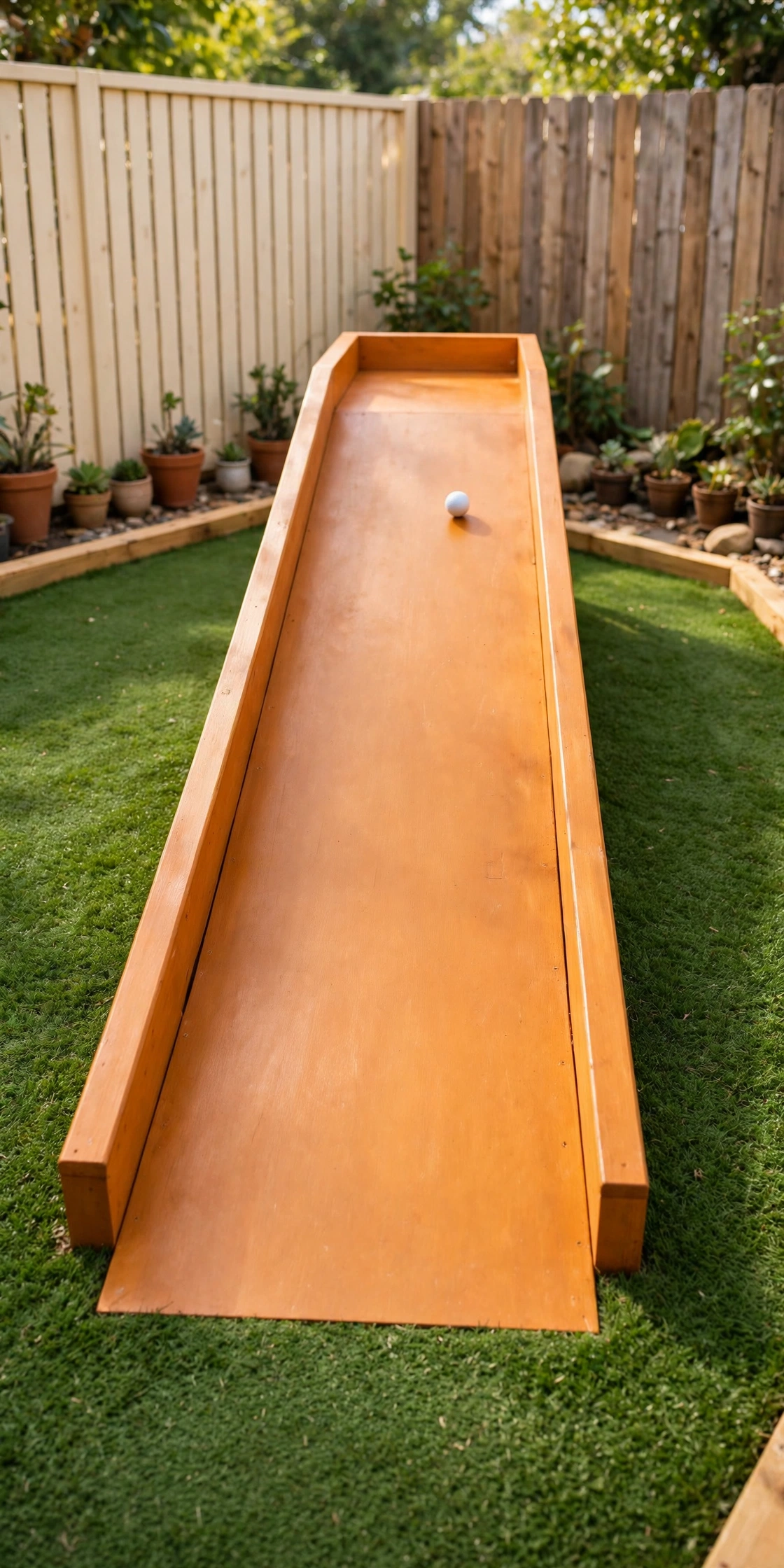
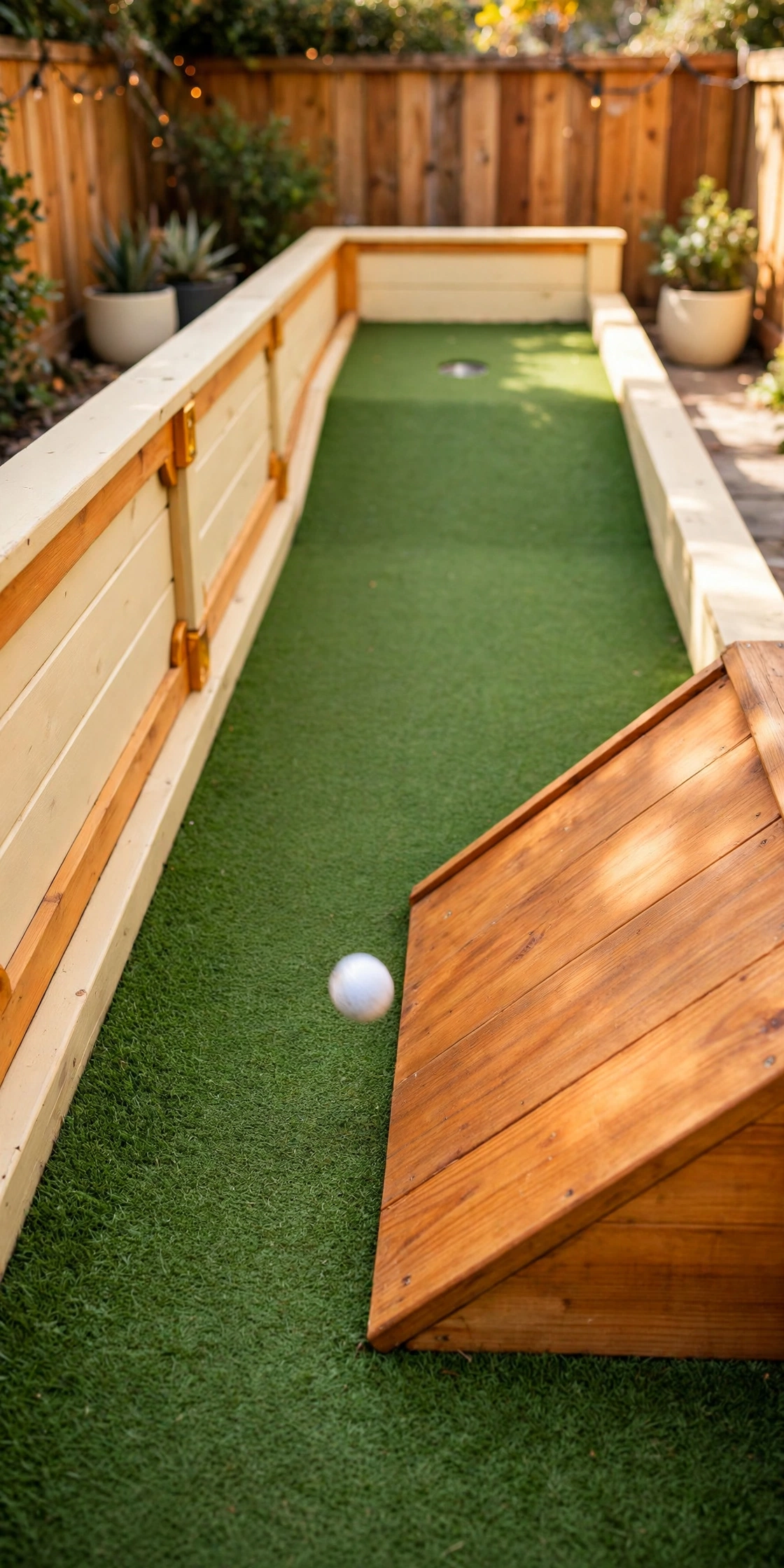
A wooden ramp obstacle turns a straight putt into a fun challenge. The ball rolls up the ramp, over a small crest, and down the other side toward the cup. A simple ramp built from plywood and a few wooden supports is one of the easiest obstacles to make at home.
Keep the ramp low and wide so the ball stays on the course instead of flying off the edge. Sand the wood smooth and paint it in a bright accent color so the obstacle stands out on the green. A ramp hole is a favorite with kids because the ball seems to disappear and reappear as it rolls.
4. Build a Classic Windmill Obstacle
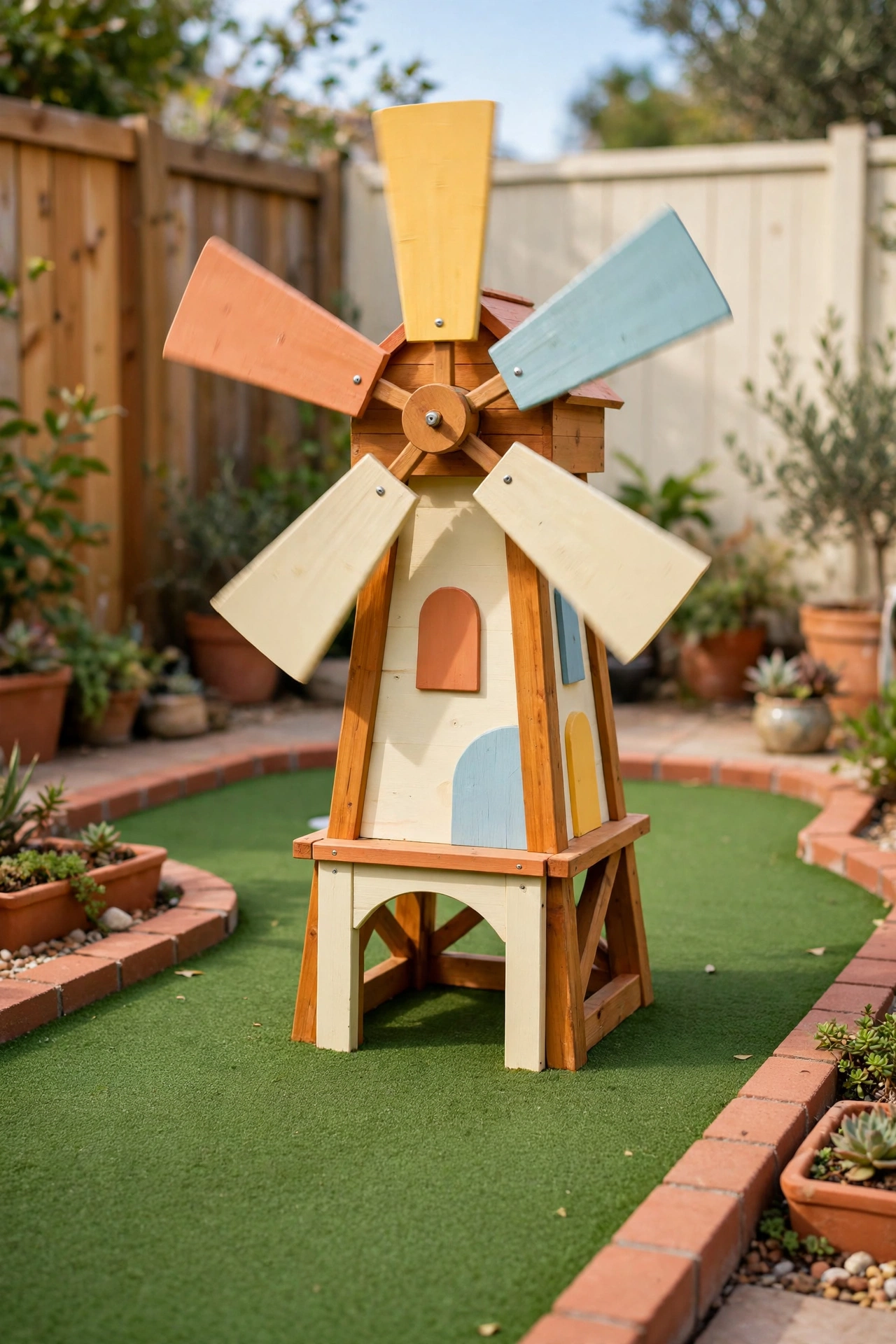
A windmill is the most famous obstacle in mini golf, and a backyard version is easier to build than it looks. A small wooden tower with four spinning blades stands across the putting line, and the ball must pass through the gap as the blades turn. The moving blades add timing and excitement to every putt.
Build the windmill from light plywood and mount the blades on a simple axle so they spin freely in a light breeze. Paint the tower in cheerful colors and add a tiny roof for charm. A windmill hole quickly becomes the signature hole that every guest remembers.
5. Create a Loop-the-Loop Ramp
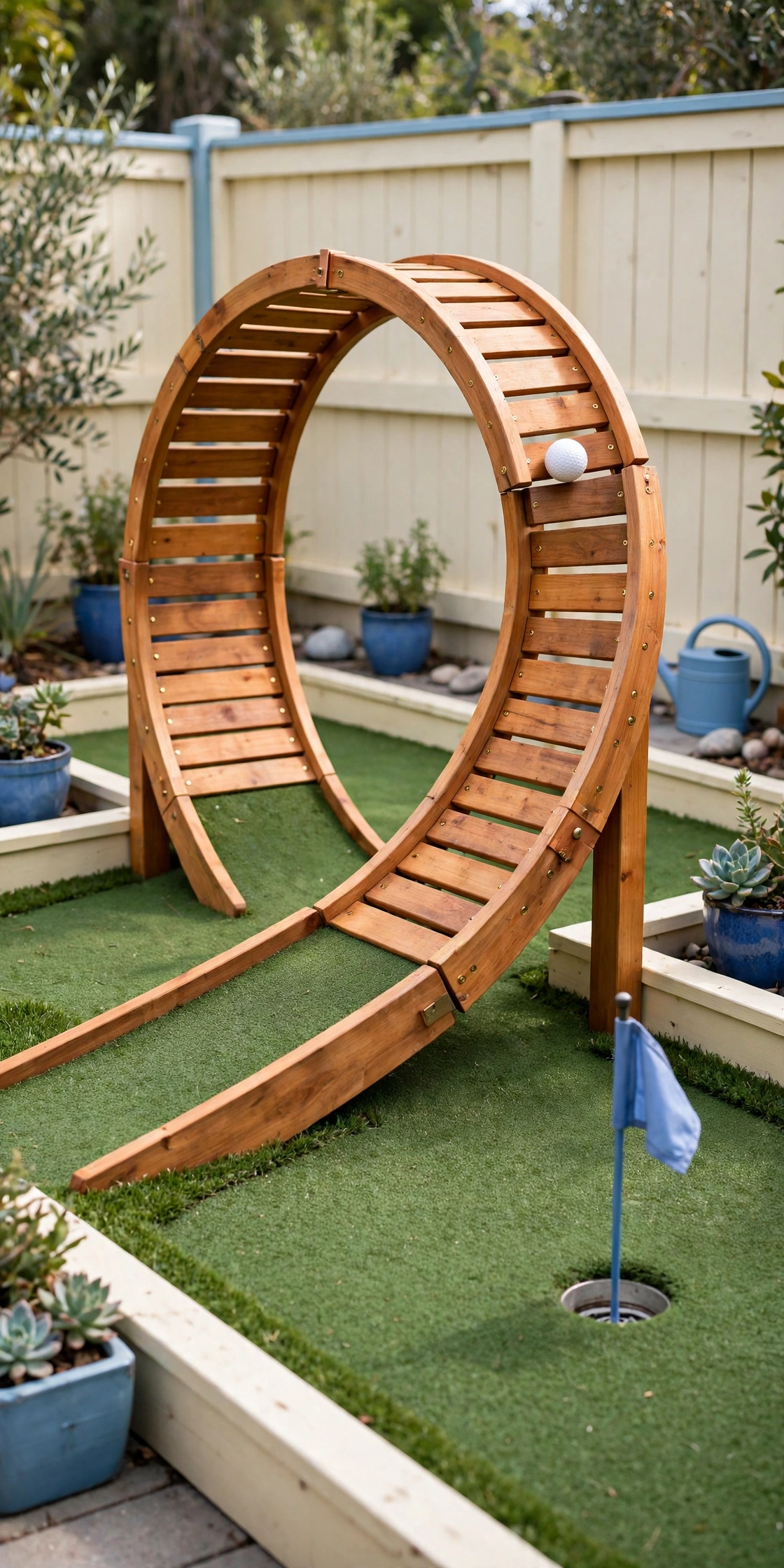
A loop-the-loop ramp sends the ball around a full circle before it drops back onto the green. The ball needs just the right speed to make it all the way around, which makes this hole a test of touch and control. A loop built from a curved sheet of plywood or a wide plastic pipe is a showstopper on any home course.
Anchor the loop firmly to the ground so it never wobbles when the ball rolls through. Test the loop many times with different putt speeds until the ball flows through it smoothly. For more backyard game ideas that bring the whole family outside, see these backyard basketball court ideas. A loop hole rewards a confident putt and gives every round a moment of drama.
6. Add a Small Water Hazard
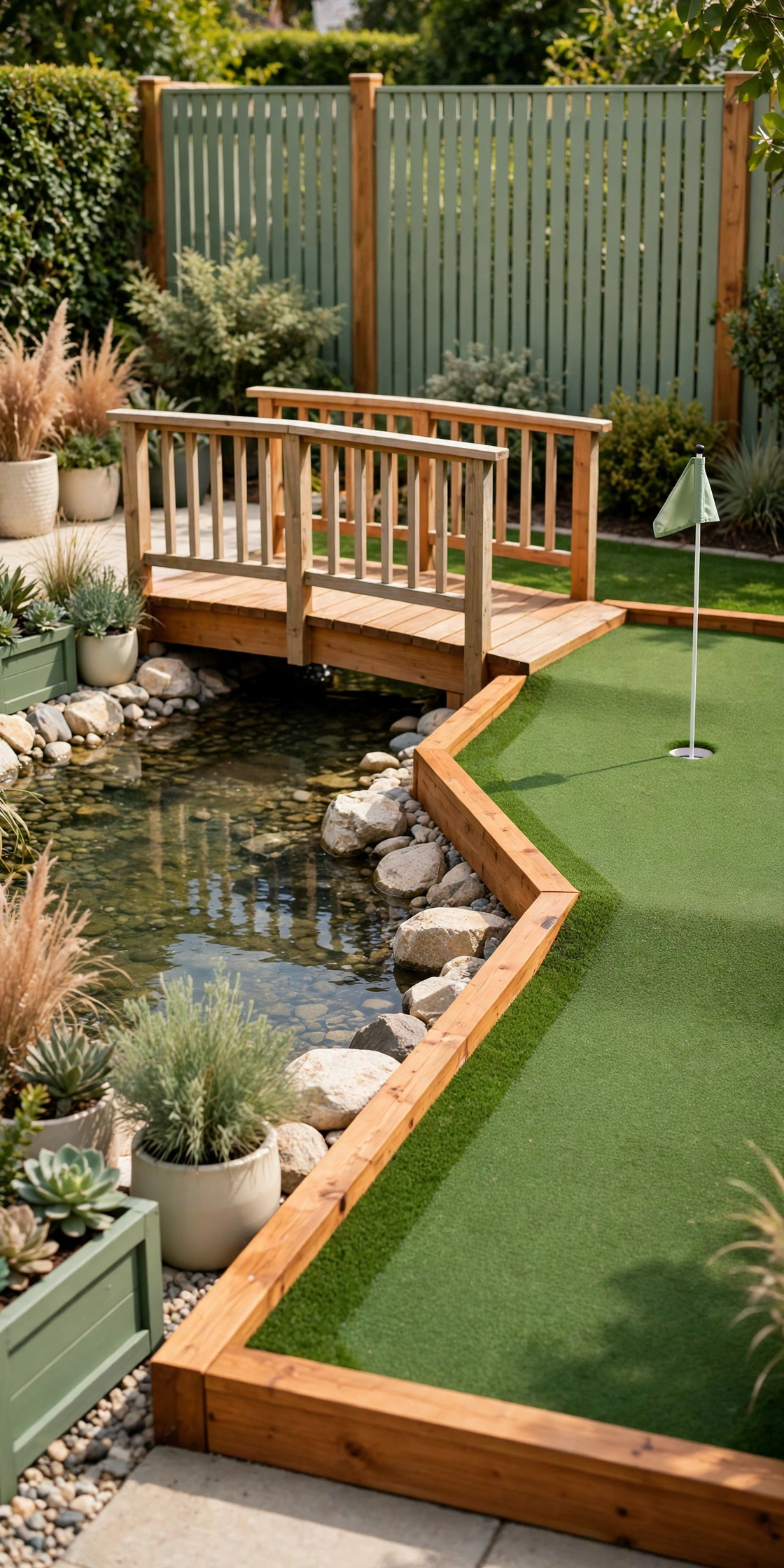
A small water hazard adds beauty and challenge to a backyard mini golf course. A shallow pond or a narrow stream crossing forces players to aim carefully or risk a splash. The water also attracts birds and adds a calm, natural sound to the course.
Use a small preformed pond liner or a shallow basin sunk into the ground, and fill it with clean water. Place a small bridge or a narrow strip of turf across it so skilled players can carry the ball over the water. Keep the hazard shallow and easy to reach so lost balls are simple to retrieve.
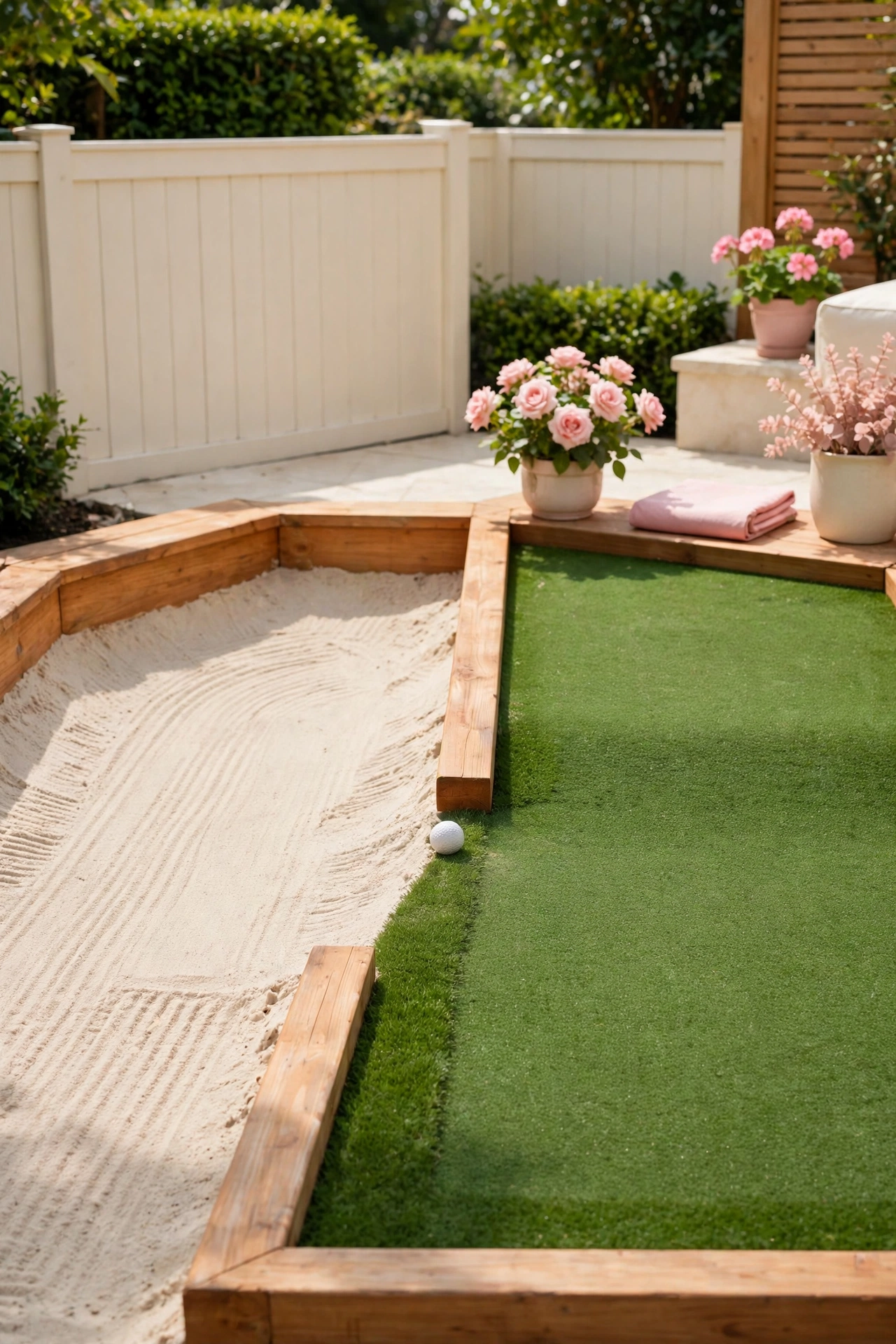
7. Build a Sand Trap Bunker
A sand trap bunker brings a touch of real golf to a backyard mini golf course. A shallow pit filled with fine sand sits beside the putting line, and a ball that lands in it needs a careful shot to escape. The pale sand also looks lovely against the bright green turf.
Dig a shallow hollow, line it with landscape fabric, and fill it with clean play sand. Rake the sand smooth after each game so the bunker always looks neat. A sand trap teaches players to control their putt speed, since a hard hit can send the ball straight into the sand.
8. Create a Tunnel Hole
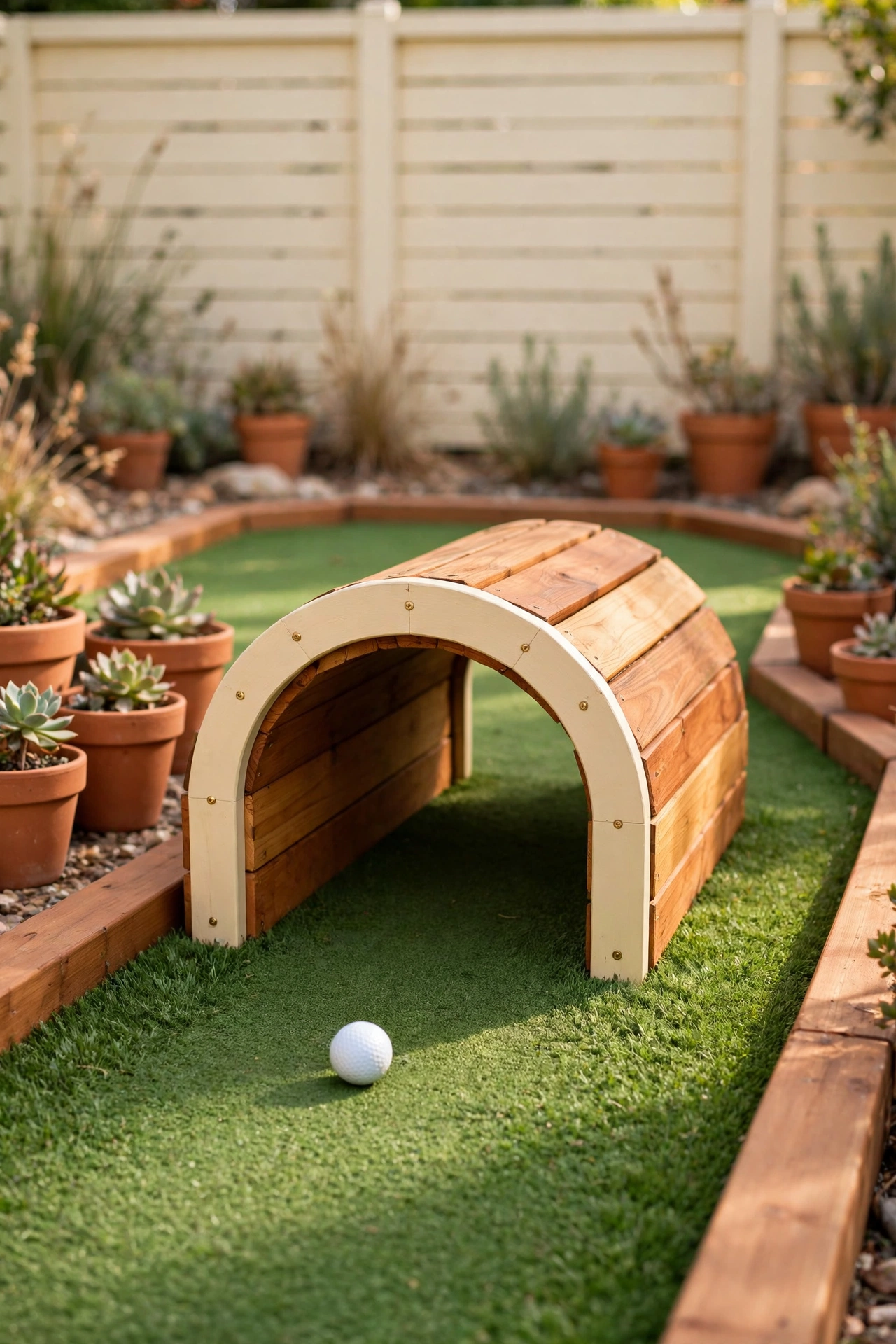
A tunnel hole hides the ball from view as it rolls through a short pipe or a wooden arch and pops out near the cup. The surprise of watching the ball disappear and reappear makes this hole a delight for young players. A tunnel also adds a fun mystery to an otherwise simple straight putt.
Use a wide drainpipe or build a small wooden tunnel with an arched top, and bury the sides slightly so the ball rolls in smoothly. Paint the tunnel entrance in a bright color so players can aim for it easily. A tunnel works best on a gentle slope where gravity helps the ball through.
9. Design a Sloped Hill Hole
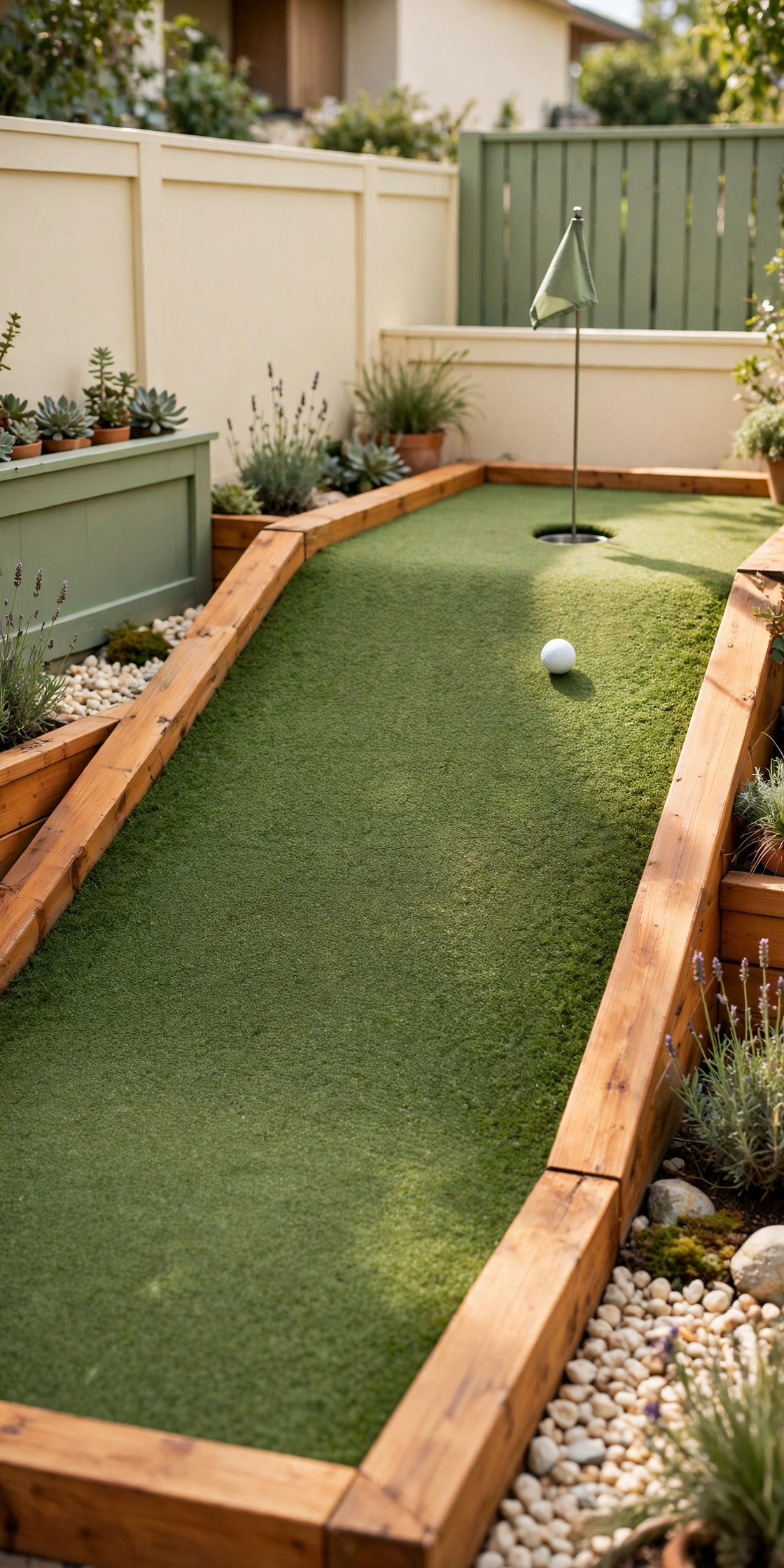
A sloped hill hole uses a gentle rise in the ground to test a player’s judgment of speed. The ball must climb the slope, crest the top, and roll down toward the cup on the far side. A putt that is too soft rolls back down, while a putt that is too hard races past the hole.
Shape the hill with packed soil and cover it with turf so the surface stays smooth and even. Keep the slope gentle enough that a well-struck ball can reach the top without a huge swing. A hill hole rewards patience and teaches players to read the ground before they putt.
10. Add a Bank Shot Wall
A bank shot wall lets players bounce the ball off a wooden board and around a corner toward the cup. The wall turns a straight hole into a puzzle, since the best route to the hole is off the board at just the right angle. A smooth wooden wall with a low edge is all you need.
Angle the wall so the ball rebounds toward the cup instead of bouncing back toward the player. Sand the face of the board smooth so the ball rolls true after the bounce. A bank shot hole is a great way to teach kids about angles while they play.
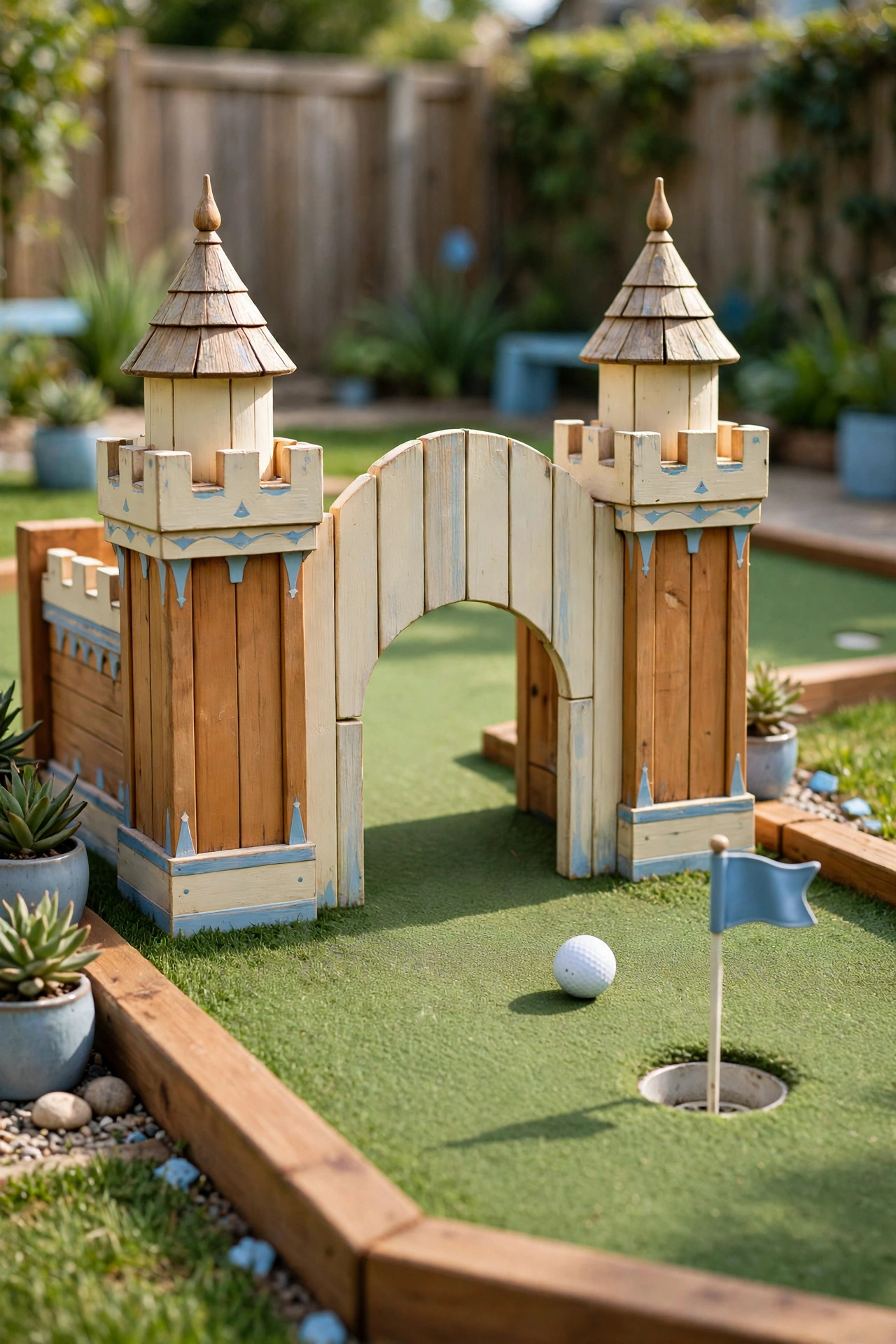
11. Build a Tiny Castle Obstacle
A tiny castle obstacle adds storybook charm to a backyard mini golf course. A small wooden castle with towers and a gate stands on the green, and the ball must roll through the castle gate to reach the cup. The castle becomes a landmark that children love to play around.
Build the castle from plywood and paint it in warm stone colors with a tiny flag on the tallest tower. Leave the gate wide enough for the ball to pass through easily, and place the cup just beyond it. A castle hole turns an ordinary round of golf into a small adventure.
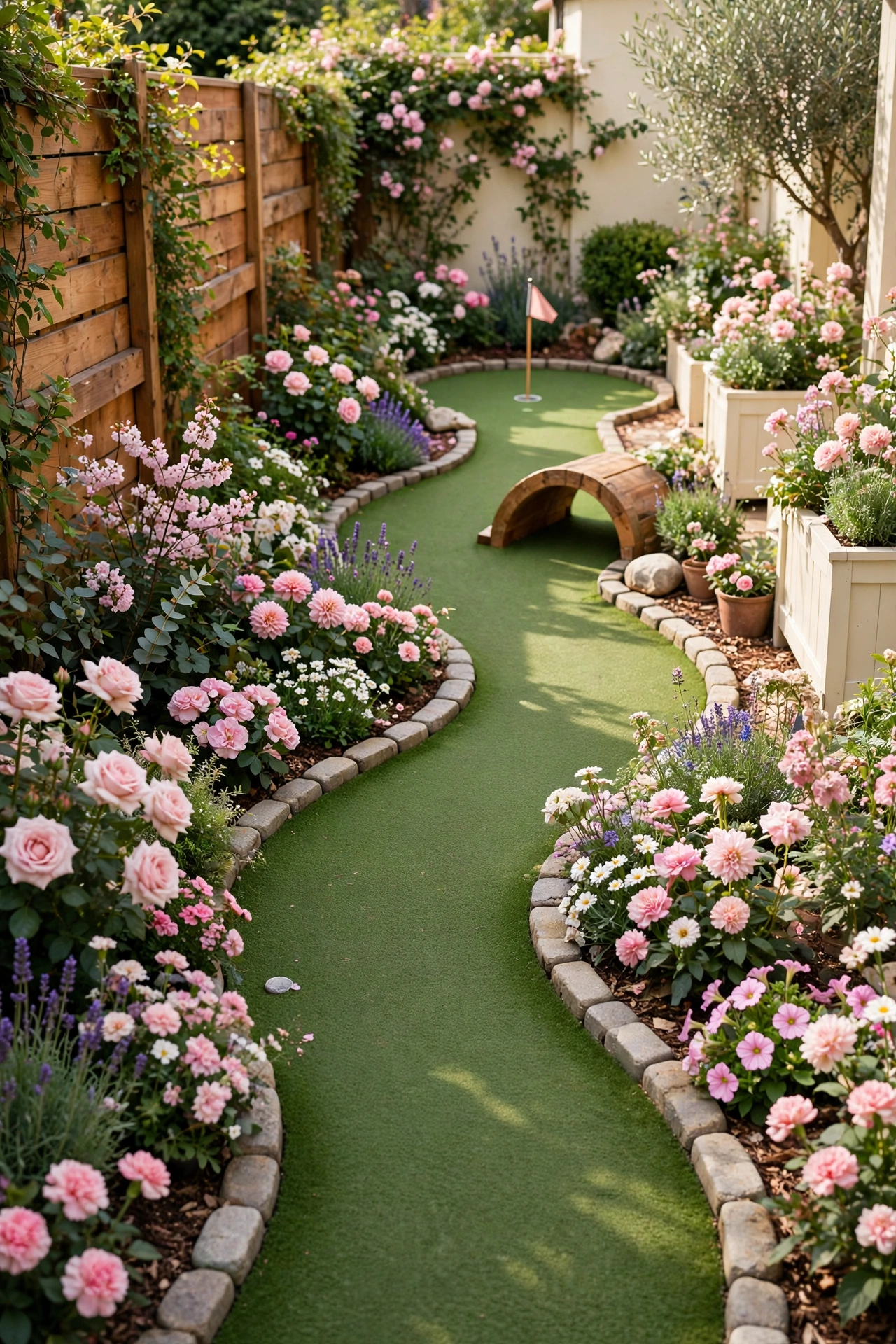
12. Create a Garden Path Hole
A garden path hole winds the putting line through flower beds and shrubs so the course feels like part of the garden. The ball rolls along a narrow strip of turf between blooms, and the flowers frame every putt with color. This hole blends the game into the landscape instead of standing apart from it.
Choose low flowers that never flop onto the putting line, and edge the path with small stones to keep soil off the turf. Keep the path wide enough for a comfortable putt but narrow enough to feel like a real challenge. A garden path hole is proof that a golf course and a flower garden can share the same yard.
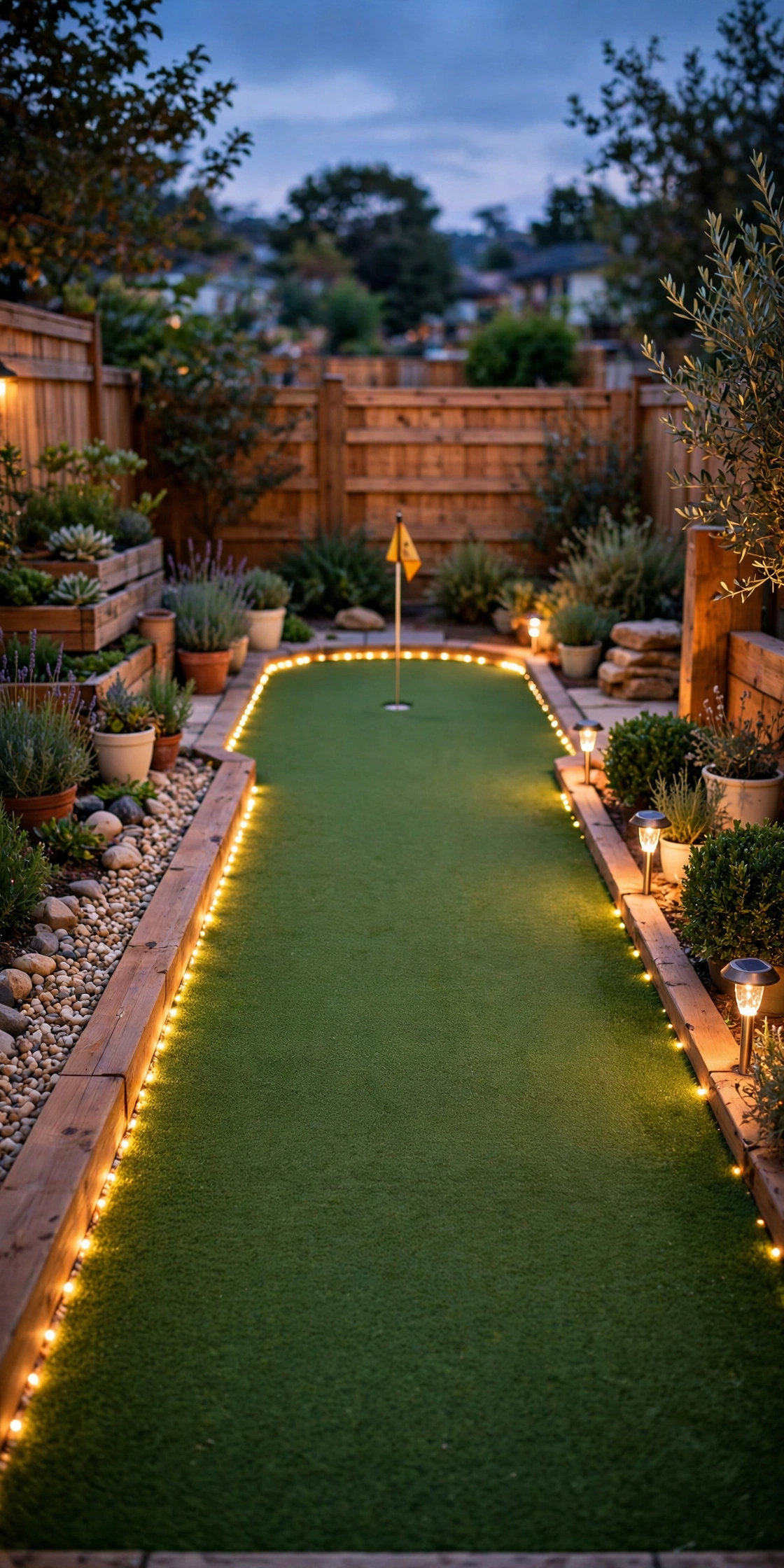
13. Add Solar Lights for Evening Play
Solar lights let your mini golf course stay open after sunset without any wiring or power bills. Small solar path lights along the edges of each hole mark the putting lines, while a few spotlights make the cups easy to see. The soft glow turns an evening game into a magical experience.
Place the lights just outside the putting surface so they never block a rolling ball. Choose warm white lights for a cozy glow that suits a backyard at dusk. Solar lights charge all day and switch on by themselves, so evening play starts with no effort at all.
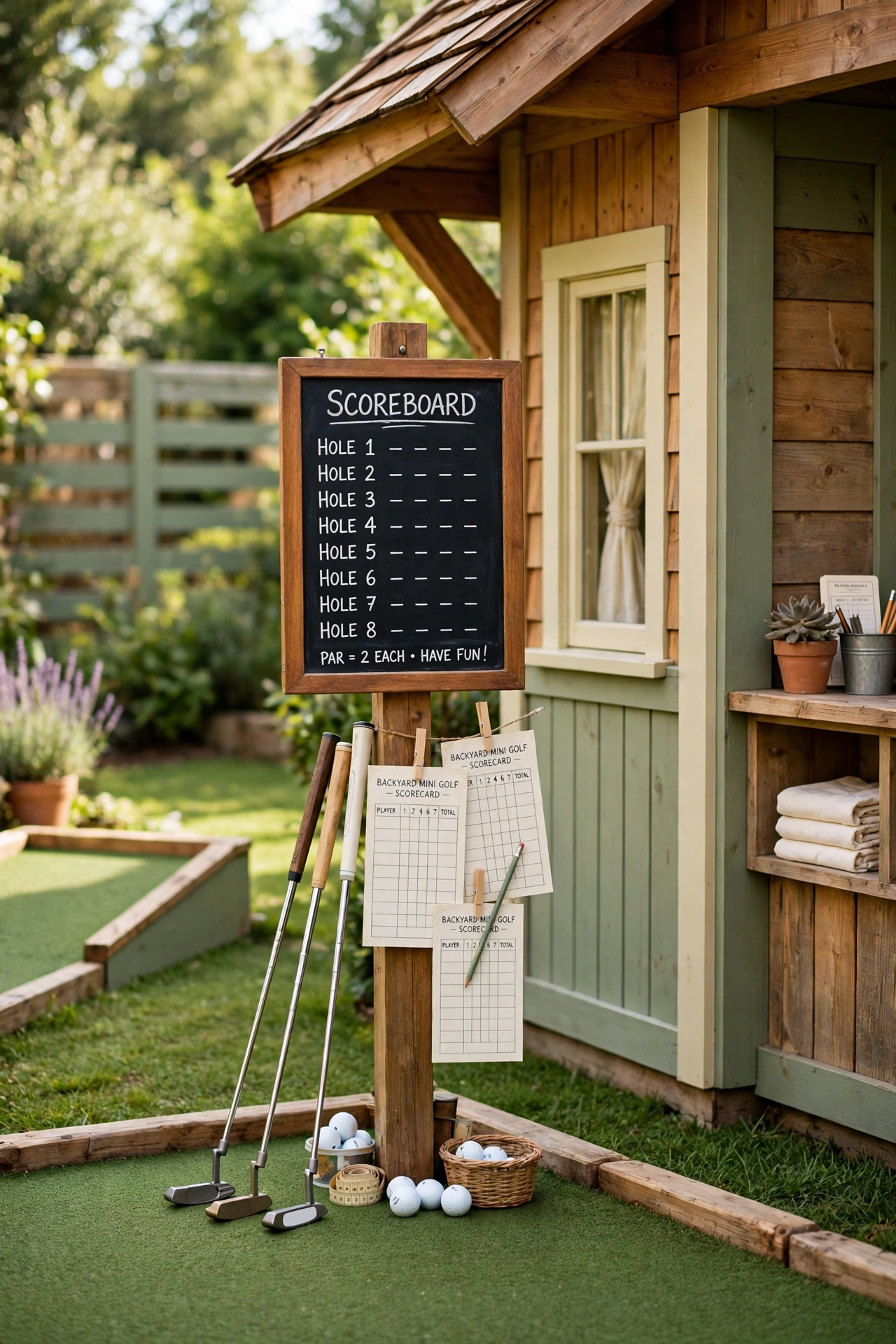
14. Build a Scoreboard and Clubhouse Corner
A scoreboard and clubhouse corner gives your mini golf course a real clubhouse feel. A small wooden board with hooks for scorecards and a shelf for putters turns one corner of the yard into the heart of the game. Players gather there to record scores and plan the next round.
Mount a chalkboard or a whiteboard on a wooden post and add a small roof to keep it dry. Keep scorecards, pencils, and a few spare balls in a weatherproof box below the board. A clubhouse corner makes every game feel like an event instead of a quick pastime.
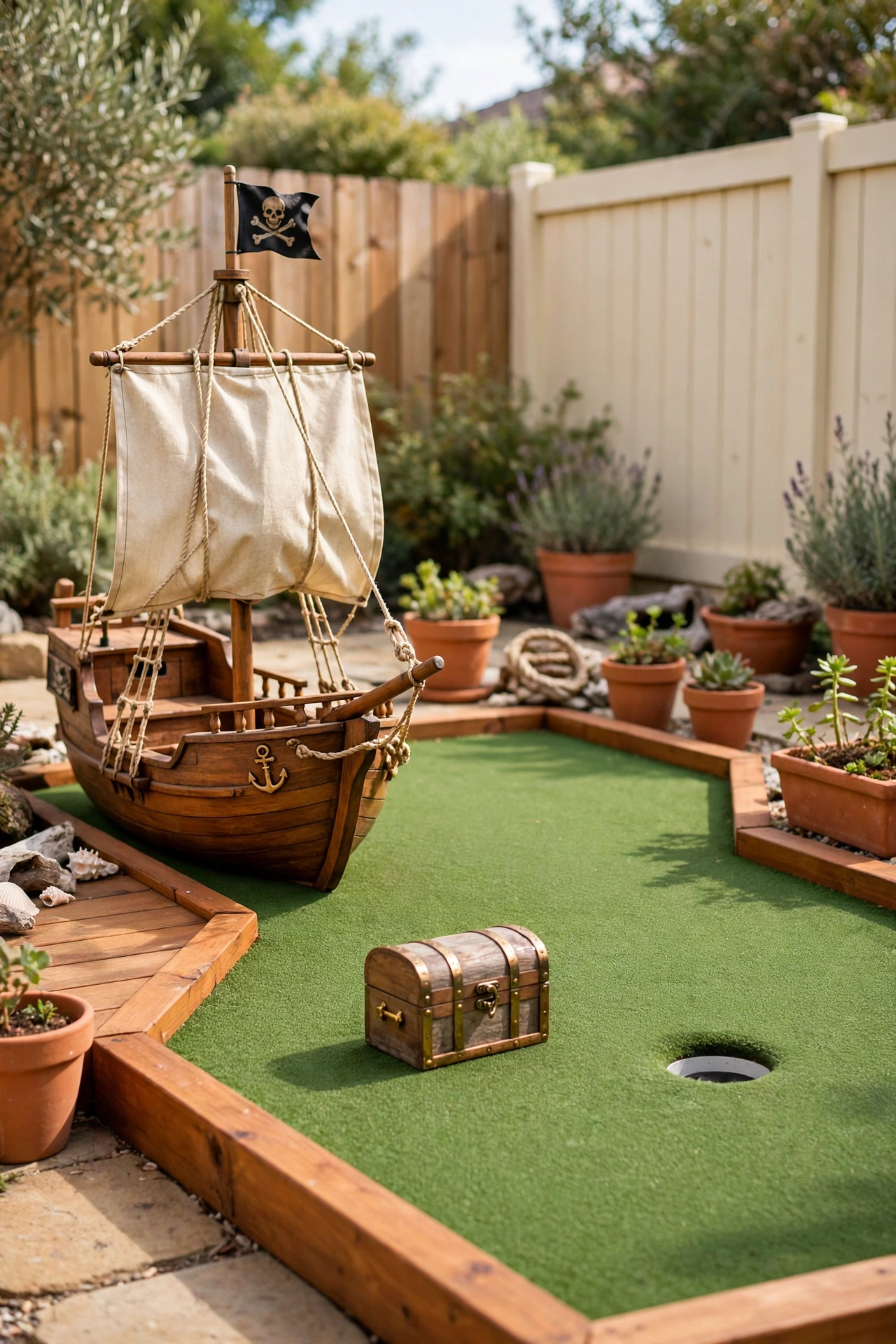
15. Create a Pirate Ship Themed Hole
A pirate ship themed hole turns one hole into a treasure hunt on the high seas. A small wooden ship with a mast and a sail sits beside the green, and the ball must sail past the ship to reach the cup. A tiny treasure chest near the hole holds the prize for the winner of the round.
Paint the ship in bold colors and add a small skull flag on the mast for a playful touch. Use sand around the ship to suggest a beach, and keep the putting line clear of decorations. A themed hole sparks the imagination and makes the course a favorite with children of all ages.
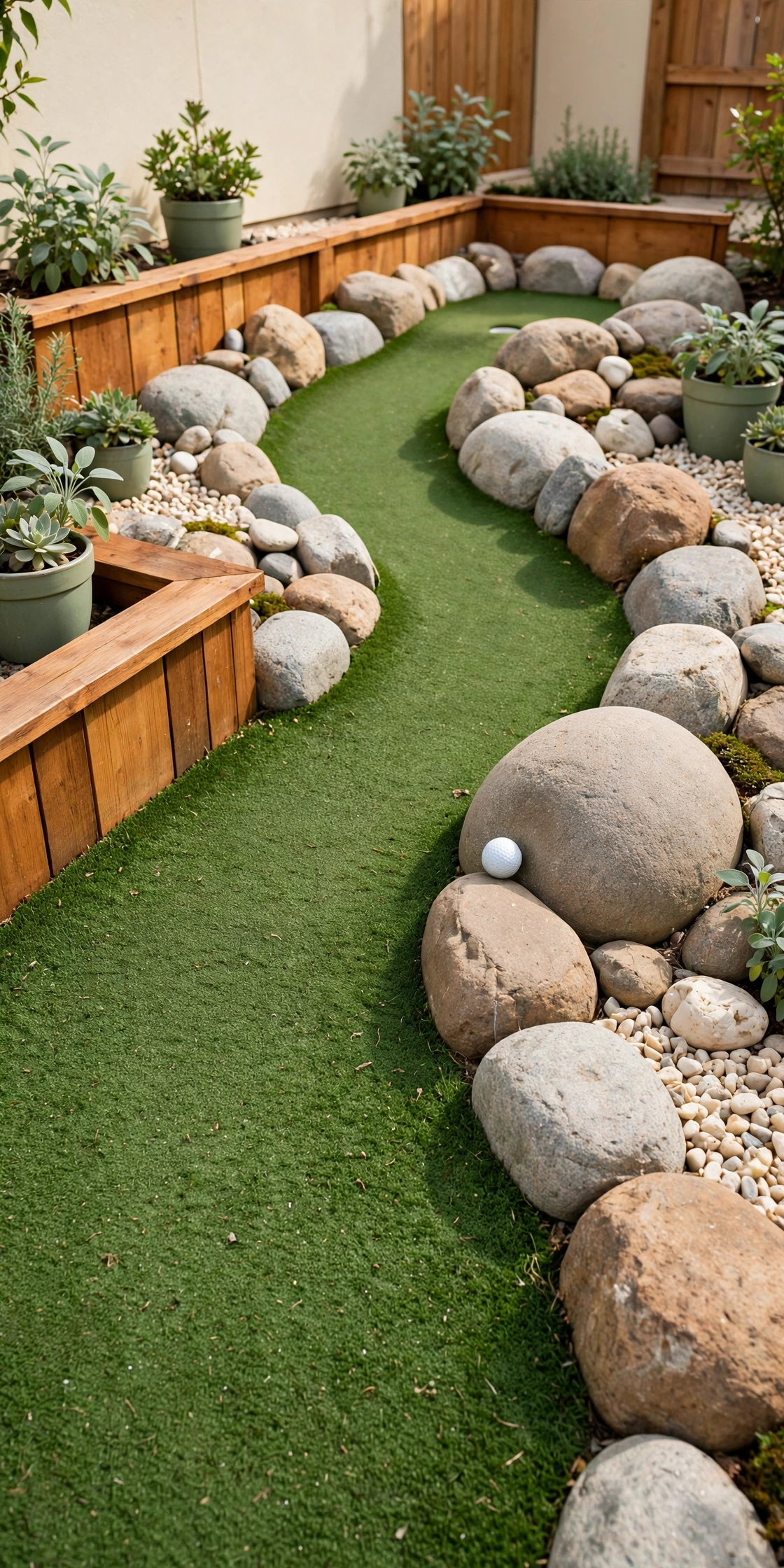
16. Add a Rock Garden Obstacle
A rock garden obstacle uses smooth stones and boulders to shape the putting line into a winding path. The ball must curve around the rocks without getting stuck behind one, which tests aim and gentle touch. The stones also give the course a natural, rugged look that suits a backyard full of plants.
Choose rounded stones with no sharp edges so the ball rolls cleanly off them. Set the largest rocks at the edges of the hole and smaller stones as gentle guides in the middle. For more ideas on shaping stones and plants into a calm outdoor space, see these Japanese garden ideas. A rock garden hole looks beautiful even when nobody is playing, since the stones and plants form a lovely garden feature.
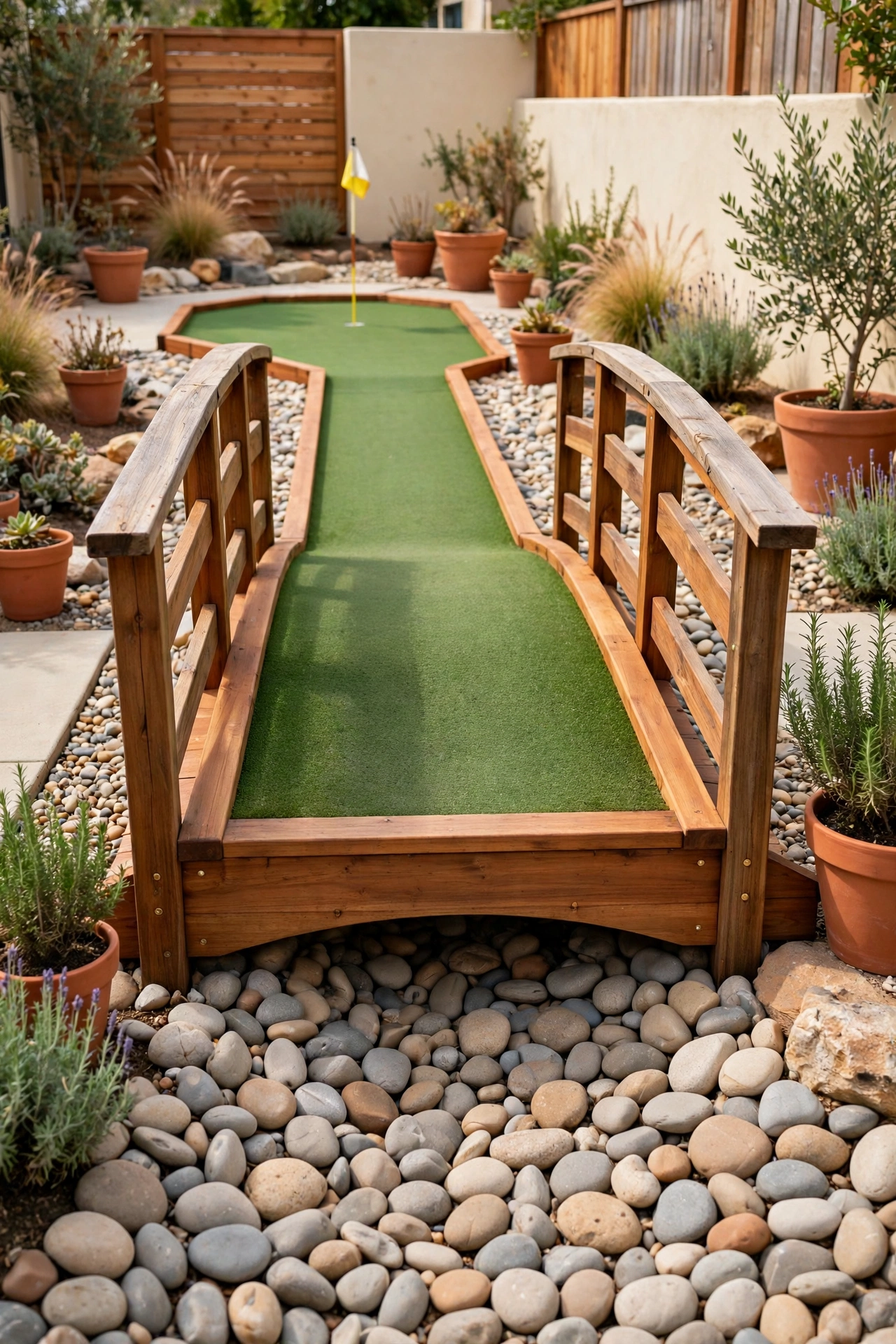
17. Build a Bridge Over a Dry Creek Bed
A bridge over a dry creek bed adds a charming crossing to a backyard mini golf course. A small arched wooden bridge spans a shallow bed of pebbles, and the ball rolls across the bridge toward the cup on the far side. The creek bed below adds texture and a natural feel to the course.
Build the bridge wide enough for the ball to cross easily, with low rails to keep it on track. Fill the creek bed with smooth river pebbles in soft natural colors. A bridge hole is a gentle challenge that looks wonderful in photos and feels satisfying to play.
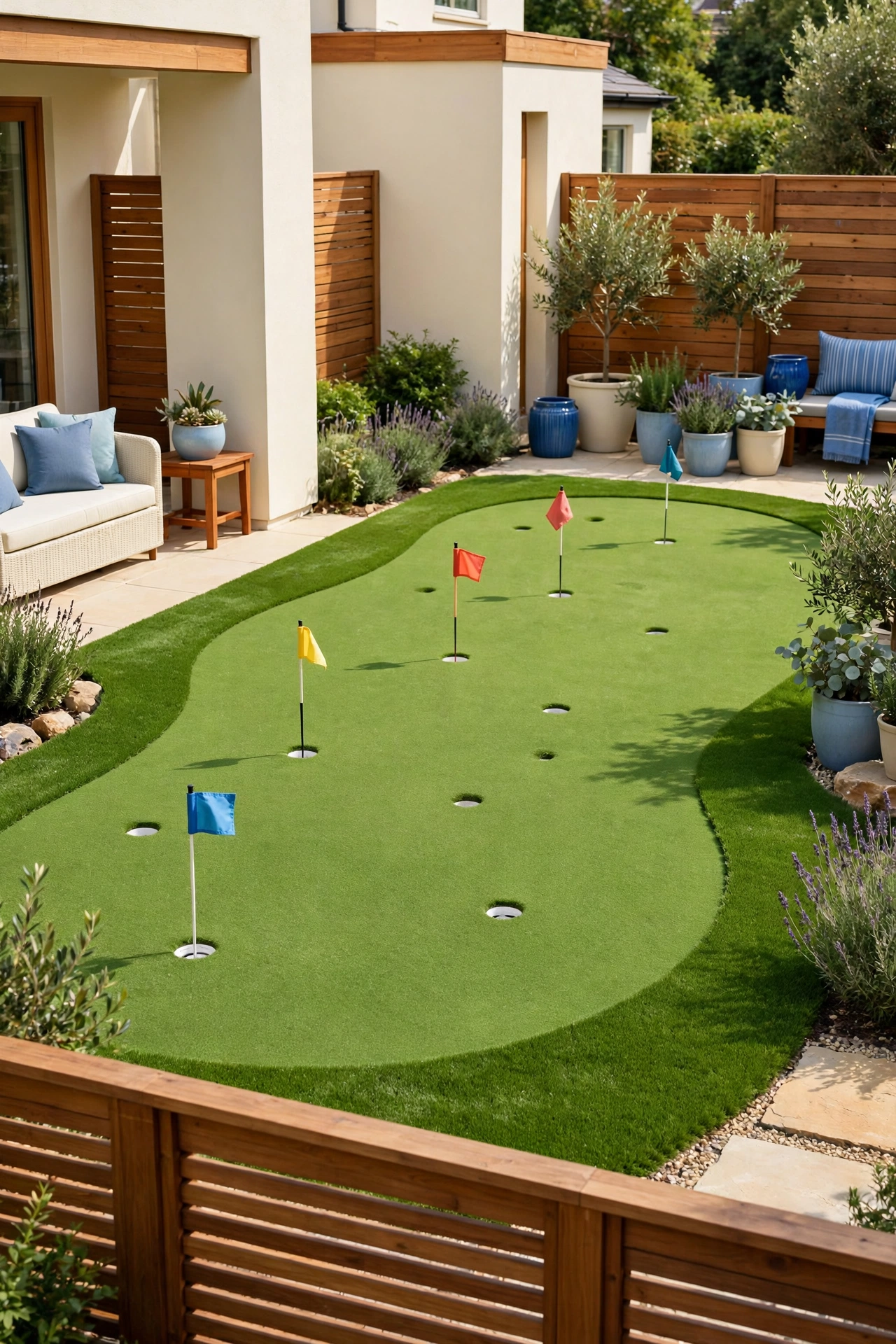
18. Create a Multi-Hole Putting Green
A multi-hole putting green packs several cups into one large turf area so players can practice many different putts without walking far. Each cup sits at a different distance and angle, which makes the green useful for quick games and serious practice alike. A large green also hosts putting contests for the whole family.
Space the cups far enough apart that putts never cross each other, and mark each cup with a small flag. Vary the distances from short tap-ins to long lag putts so every skill level finds a challenge. A multi-hole green turns a quiet corner of the yard into the busiest spot on the course.
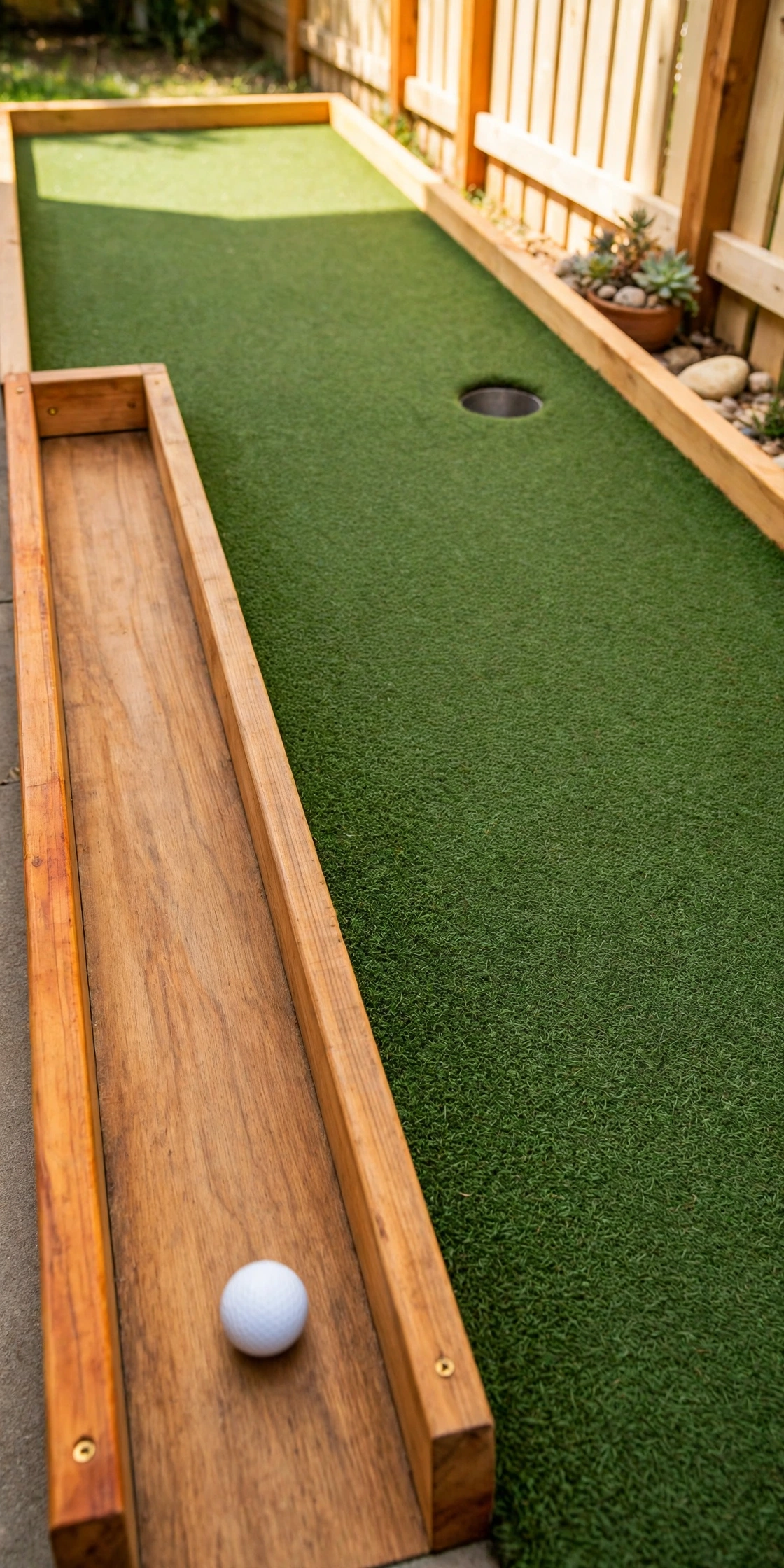
19. Add a Ball Return Channel
A ball return channel is a narrow groove or a half-pipe that carries a sunk putt back to the start of the hole. The ball drops into the cup, rolls through the channel, and pops out near the tee where the next player can grab it. The channel saves time and keeps the game flowing.
Build the channel from a split plastic pipe or a wooden trough with a gentle slope. Keep the channel clean and free of leaves so the ball rolls smoothly every time. A ball return is a small detail that makes your course feel professionally built.
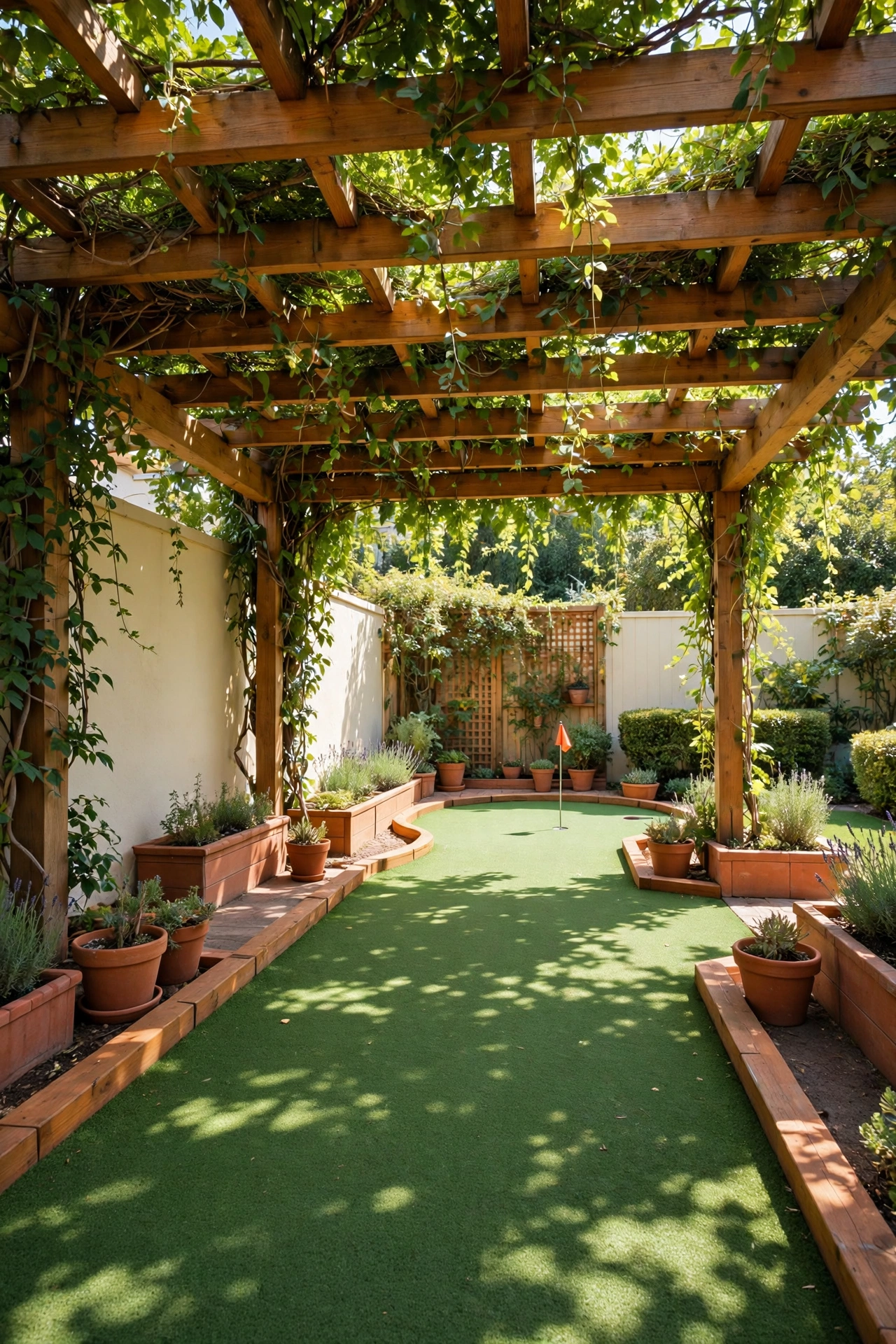
20. Build a Shaded Pergola Over the Course
A shaded pergola over part of the course gives players a cool place to play on hot sunny days. The wooden beams filter the sunlight and create a pleasant dappled shade over the green below. A pergola also frames the course beautifully and makes the whole yard feel like a resort.
Build the pergola from sturdy wooden posts and beams, and train a vine or two to climb over the top for extra shade. Keep the structure high enough that putters swing freely underneath it. For more covered outdoor gathering ideas, see these backyard pavilion ideas. A shaded hole becomes the most popular spot on the course during summer afternoons.
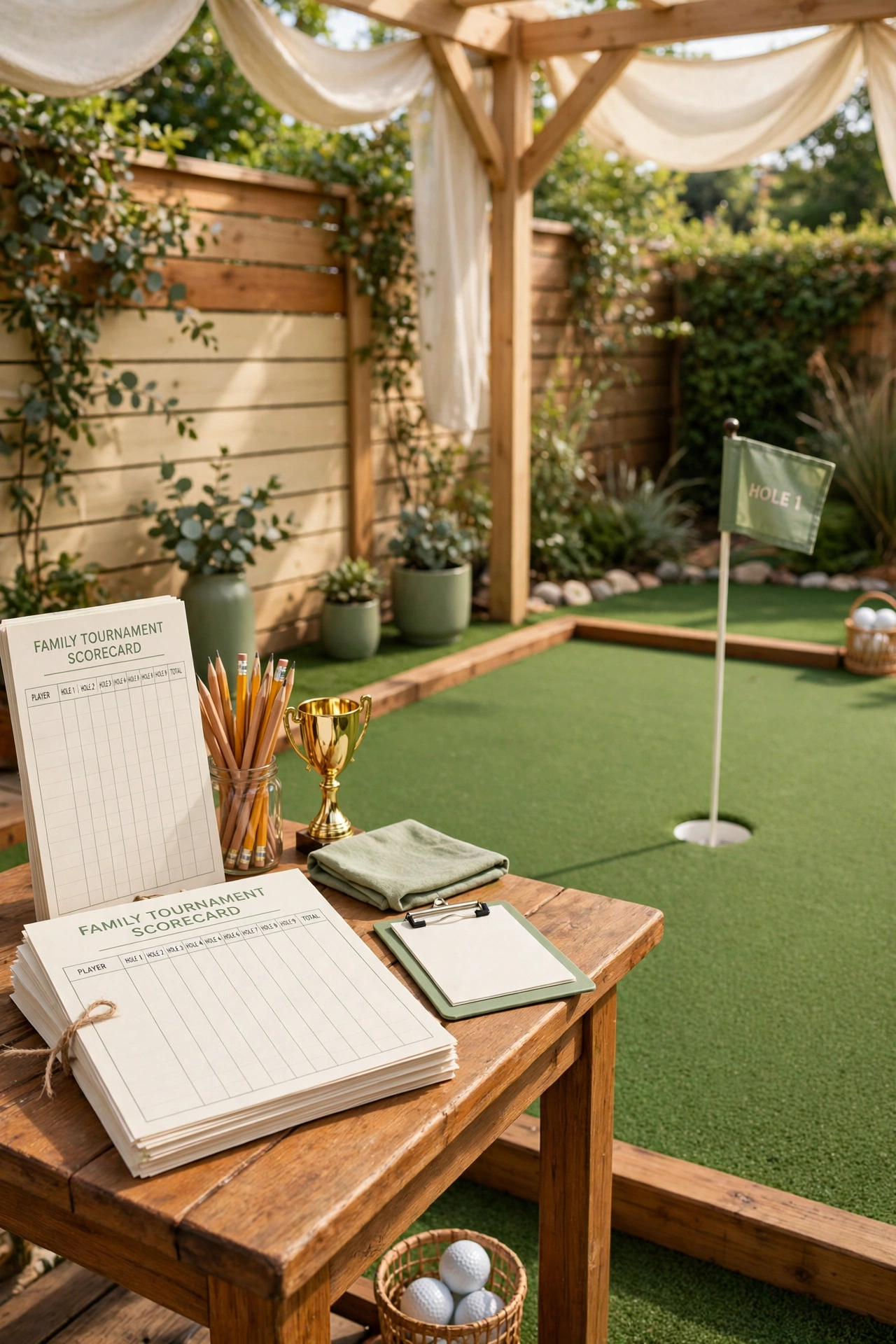
21. Set Up a Family Tournament Scorecard Station
A family tournament scorecard station turns casual games into a friendly competition. A small table with printed scorecards, pencils, and a trophy shelf gives every round a sense of occasion. Families can run a weekly tournament and track the champion on a simple leaderboard.
Print scorecards with one row per hole and one column per player, and keep them in a dry box beside the table. Add a small whiteboard for the weekly standings so everyone can see who leads the family league. A tournament station keeps the course in use week after week.
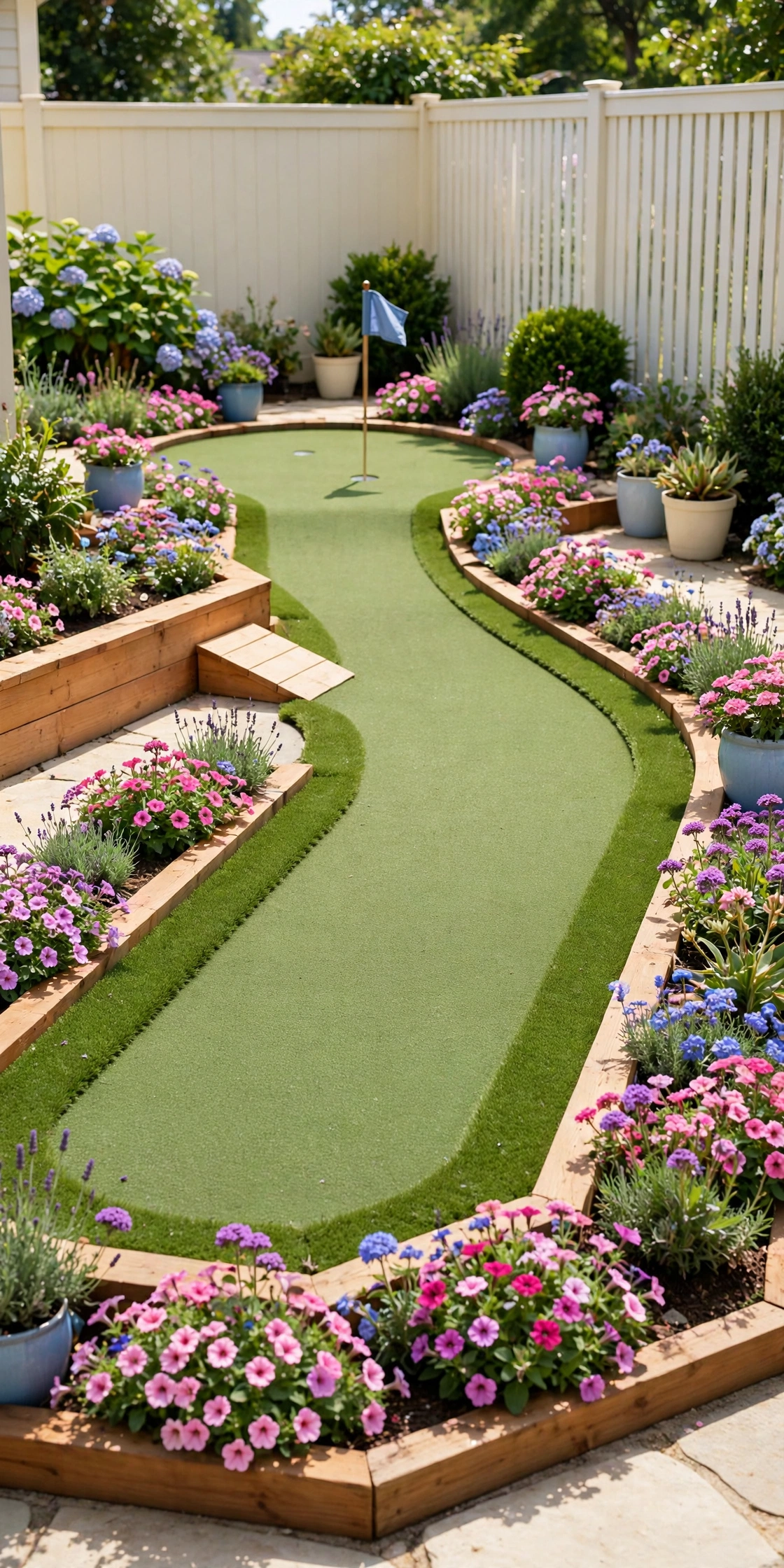
22. Edge the Course with Flower Beds
Flower beds along the edges of a mini golf course soften the lines of turf and wood with color and life. Low blooms in bright shades frame each hole without blocking the ball, and the flowers make the course a garden feature even between games. A course edged with flowers looks cared for and welcoming.
Choose hardy flowers that bounce back if a stray ball lands among them, and keep the beds a few inches below the turf level. Mulch the beds neatly so the edge between flowers and green stays crisp. For more ways to define garden beds with clean edges, see these backyard landscape border ideas. Flower beds prove that a play space can be both fun and beautiful.
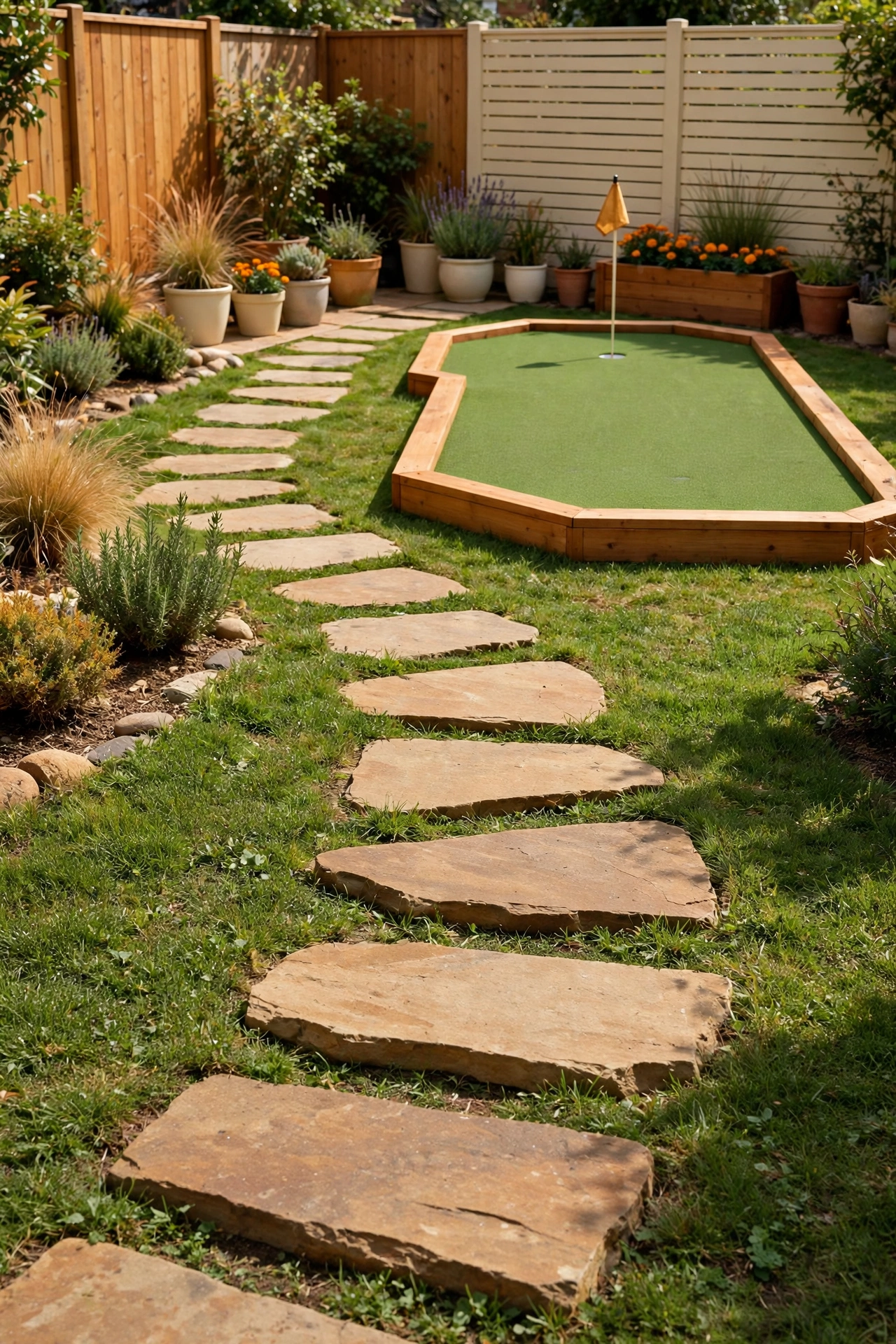
23. Lay Stepping Stones Between Holes
Stepping stones between holes give players a clear path to walk from one hole to the next. Flat stones set into the grass guide the flow of the game and keep feet off the putting turf. The stones also add a rustic, garden-like charm to the course.
Space the stones at a comfortable walking stride and set them level with the ground so nobody trips. Choose stones in a warm natural color that matches the rest of the yard. A stone path makes the course feel like a real walk through a garden rather than a set of separate holes.
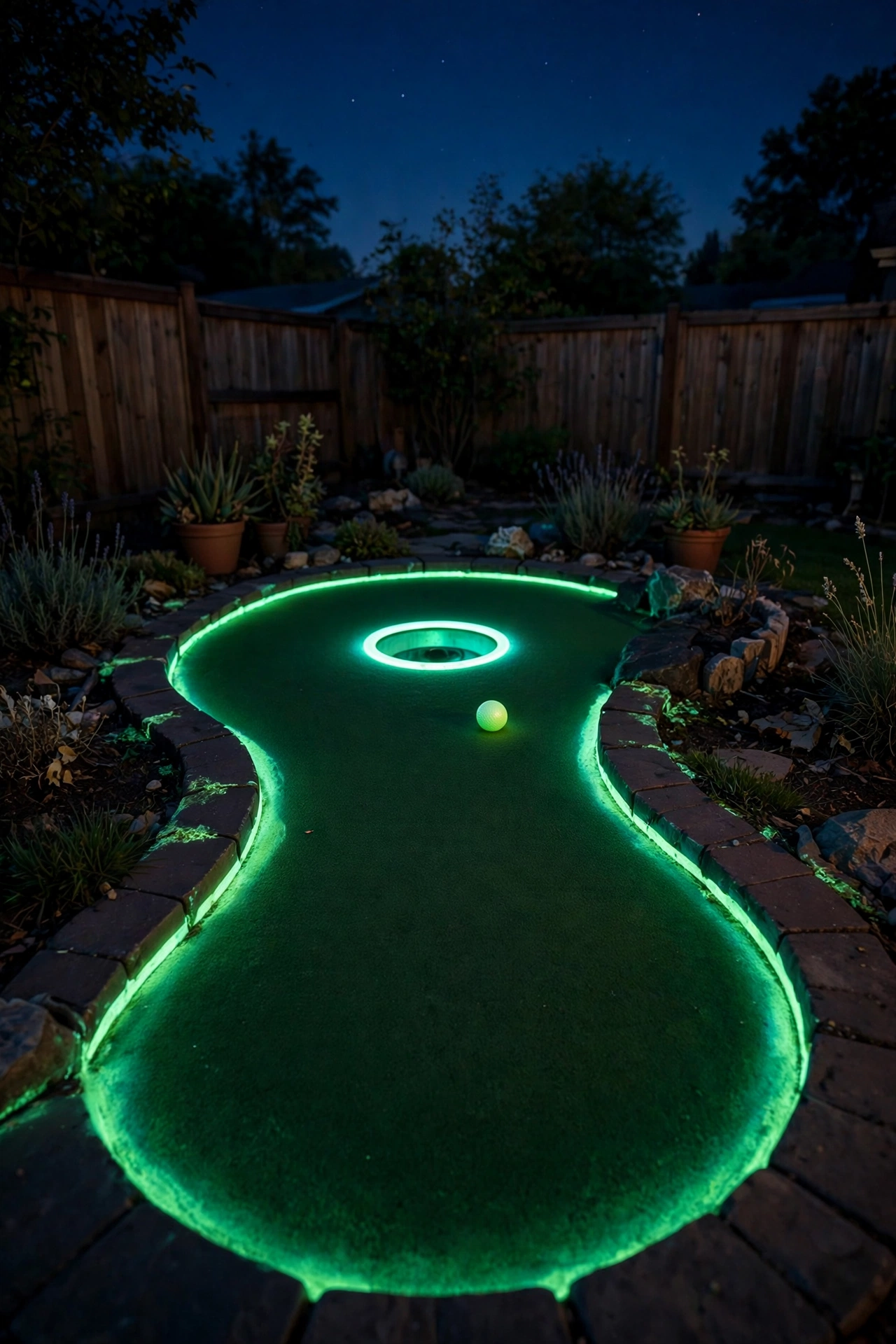
24. Create a Glow-in-the-Dark Night Hole
A glow-in-the-dark night hole turns your mini golf course into an after-dark adventure. Glow paint on the cup rim, glow tape along the edges, and a glowing ball make the hole easy to play even in full darkness. The soft green glow looks magical against the night sky.
Charge the glow paint in sunlight during the day so it shines brightly after dark. Use glow tape on the putting line and the cup so players can aim with confidence. A night hole extends playtime into warm summer evenings and gives the course a second life after sunset.
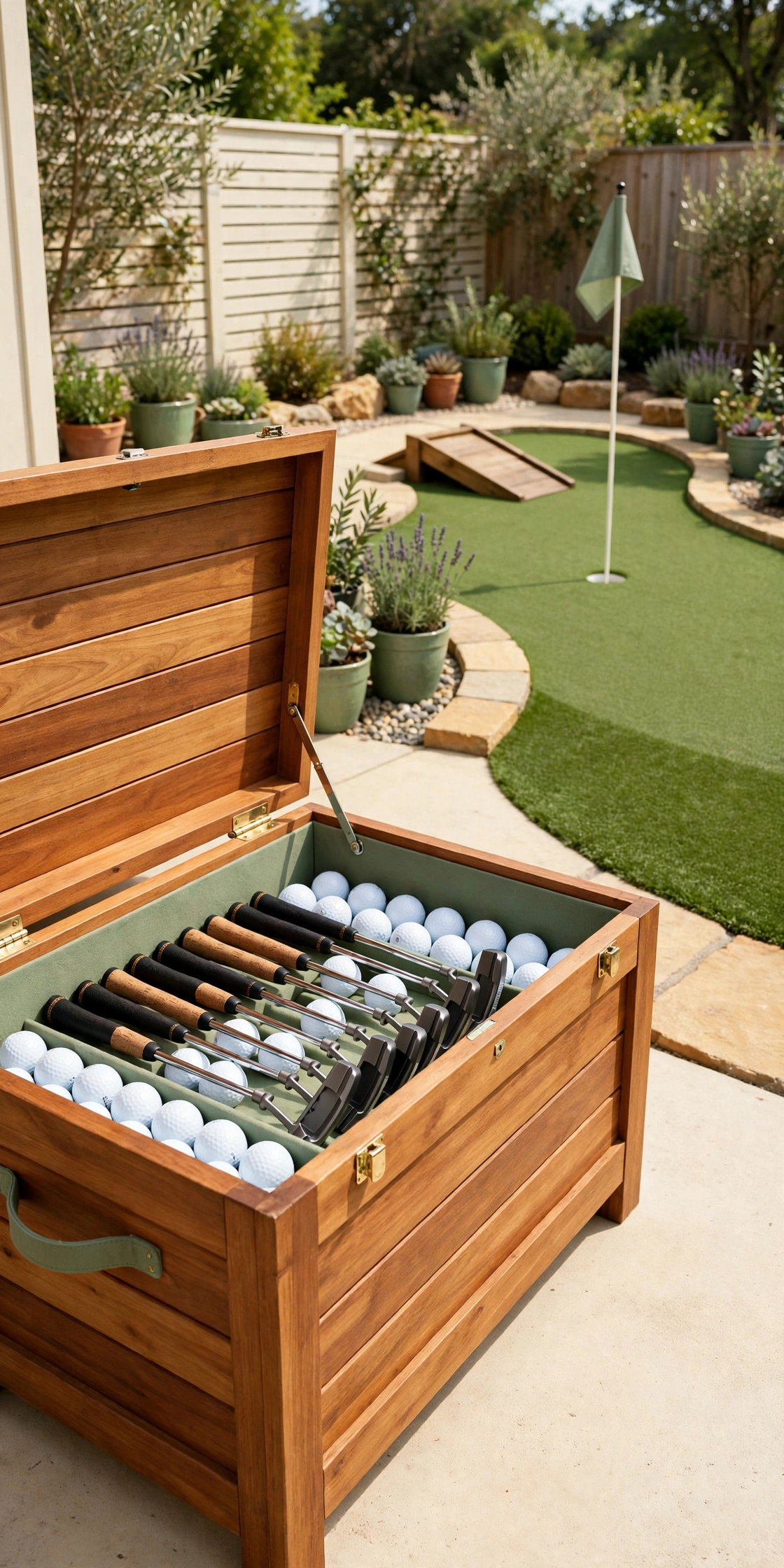
25. Add a Storage Bench for Putters and Balls
A storage bench near the first hole keeps putters, balls, and scorecards tidy and within reach. The bench gives players a place to sit while they wait, and the storage space inside holds all the gear between games. A weatherproof bench means the gear stays dry through rain and sun.
Build the bench from outdoor wood and add a hinged lid so the inside stays easy to open. Label a small basket inside for balls and a rack for putters so everything has its own spot. A storage bench keeps the course neat and makes every game start in seconds.
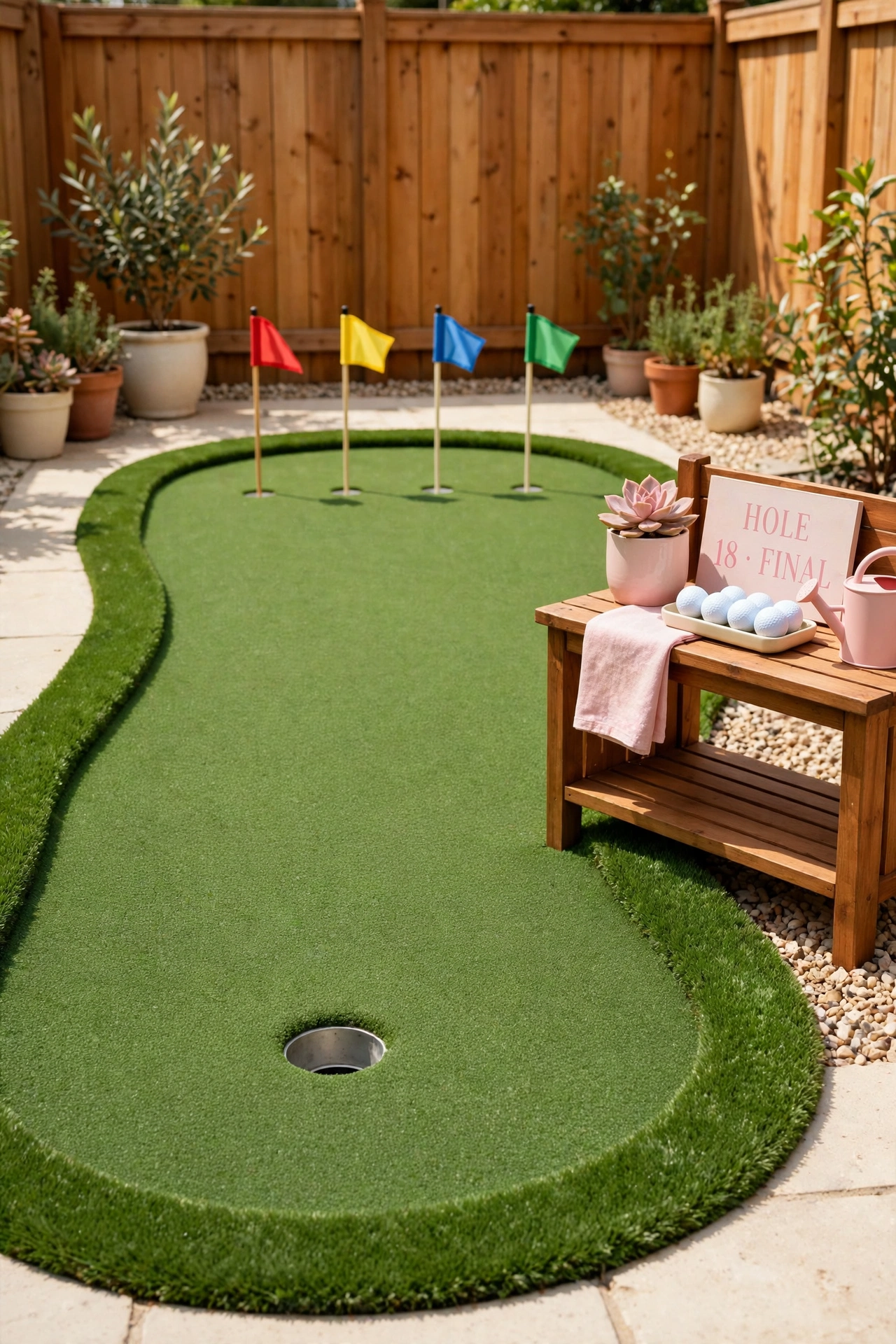
26. Finish with a Flag and Cup Display
A flag and cup display at the final hole gives your mini golf course a proper finish. A row of colorful flags marks each hole, and a small display shelf near the last cup holds the flags from the best rounds. The final hole feels like a celebration instead of just another putt.
Choose flags in bright colors that match the accents of your course, and swap them for fresh ones each season. Place the display where players gather after the game so everyone can admire it. A flag display is the finishing touch that turns a backyard project into a course you are proud to show off.
Conclusion
A backyard mini golf course does not need a professional budget or a huge yard to bring joy to your family. From a simple one-hole green to a glowing night hole, each idea here adds fun, beauty, and challenge to the space outside your back door. The best course is the one your family plays again and again.
Pick one or two ideas that fit your yard and start today. Lay a strip of turf, build a small ramp, or plant a flower bed along the edge, and watch your backyard turn into a place everyone wants to visit. For a calm home beyond the backyard, these nightly reset routine ideas will help you keep every room organized with just a few minutes each evening.
Frequently Asked Questions About Backyard Mini Golf Course Ideas for Golf Lovers
How much space do I need for a backyard mini golf course?
A single hole fits in a strip about two meters wide and five meters long, while a full nine-hole course needs a yard of at least fifteen meters by ten meters. Start with one or two holes if space is tight, since even a small course brings plenty of fun. Measure your yard first and sketch the holes on paper before you build anything.
What is the best surface for backyard mini golf?
Artificial putting turf is the best surface for most home courses because it stays smooth, level, and green in all weather. It needs no mowing and no watering, and a ball rolls true on it every time. A thin layer of packed sand or fine gravel underneath keeps the turf flat and helps water drain away.
How much does a backyard mini golf course cost to build?
A simple one-hole course costs very little, since a small roll of turf, a few boards, and a cup are often enough to start. A full course with obstacles, lights, and a clubhouse corner costs more, but you can build it one hole at a time over several weekends. Building in stages keeps the project affordable and fun.
Can kids play safely on a backyard mini golf course?
Yes, a backyard mini golf course is safe for kids when obstacles are low, edges are smooth, and water hazards are shallow. Use light putters sized for children and keep the course free of sharp corners. Adult supervision is wise for younger children, especially near any water feature.
How do I keep a backyard mini golf course looking good?
Brush the turf regularly to remove leaves, rinse it with a hose after dusty days, and rake sand traps smooth after each game. Check wooden obstacles for loose screws each season and repaint them when the color fades. A short weekly tidy keeps the course looking fresh all year.

Hi, I’m Emily! I turn messy corners into cozy, organized spots. DreamNestDecor is where I share simple, practical home ideas — decor, organization, and small-space solutions that work in real life, not just in photos. Every idea here is carefully researched before it’s shared.