Picture this: you walk into your garage to grab an extension cord and you find it in seconds, neatly coiled and hanging in its own spot. No more untangling a knotted mess or tripping over a pile of cords on the floor. That small moment of order is exactly what smart cord storage gives you every single day.
You do not need a bigger garage or expensive storage systems to get there. All you need is the right method for your cords and your space. These 14 extension cord storage ideas will help you keep every cord tangle free, easy to find, and ready to use whenever you need it.
1. Hang Cords on a Tension Rod
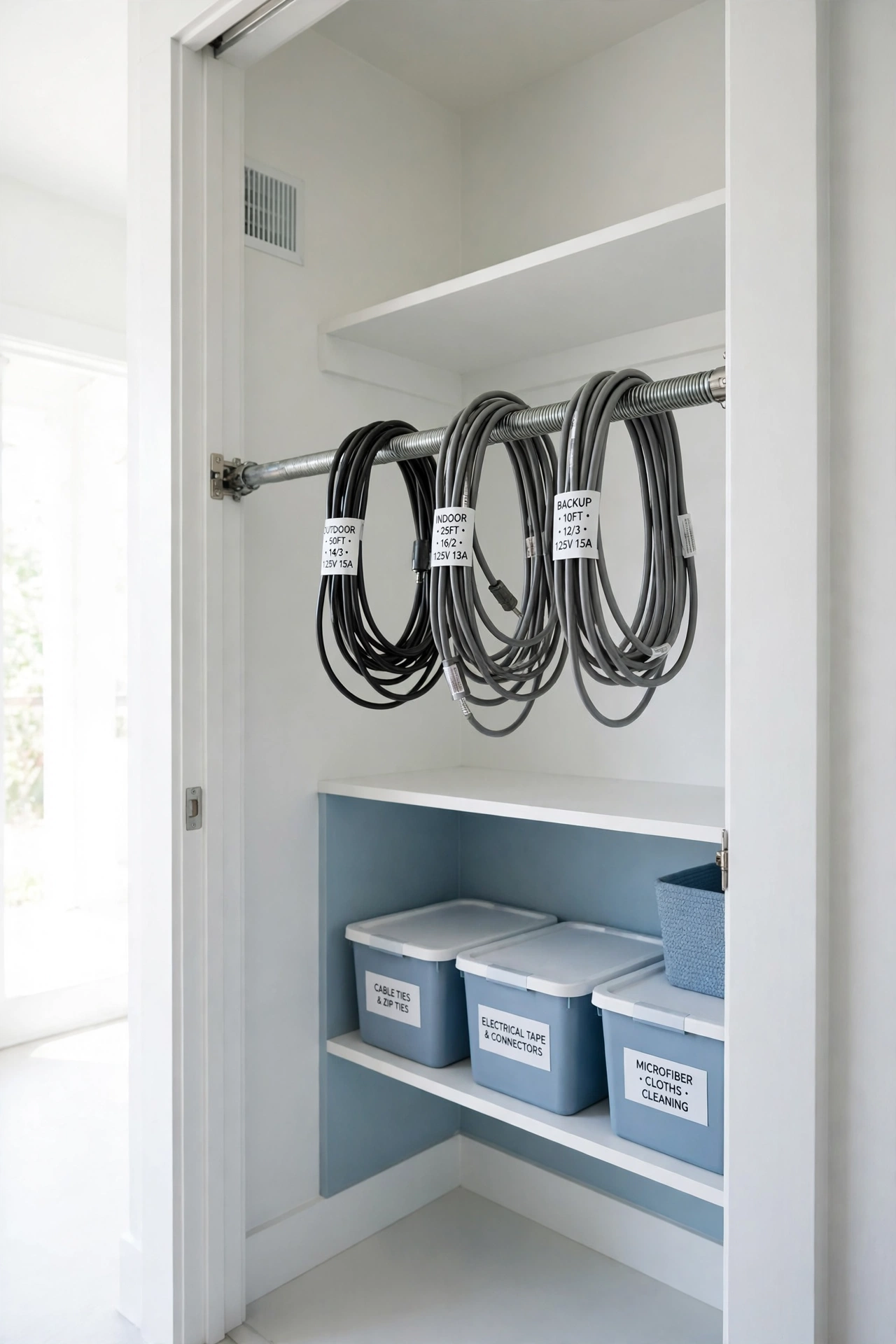
A tension rod is one of the simplest ways to hang extension cords without drilling a single hole. Wedge the rod between two walls inside a closet or a narrow nook, then hang your coiled cords over it. The cords stay off the floor and off your shelves, which frees up space for other tools and supplies.
This method works best for lighter cords and shorter lengths, so keep your heaviest cords on a sturdier hook. You can add a second rod below the first one if you own several cords. A tension rod costs very little and takes only a few minutes to set up, which makes it a great first step toward a tidy garage.
2. Braid Cords Into a Neat Wrap
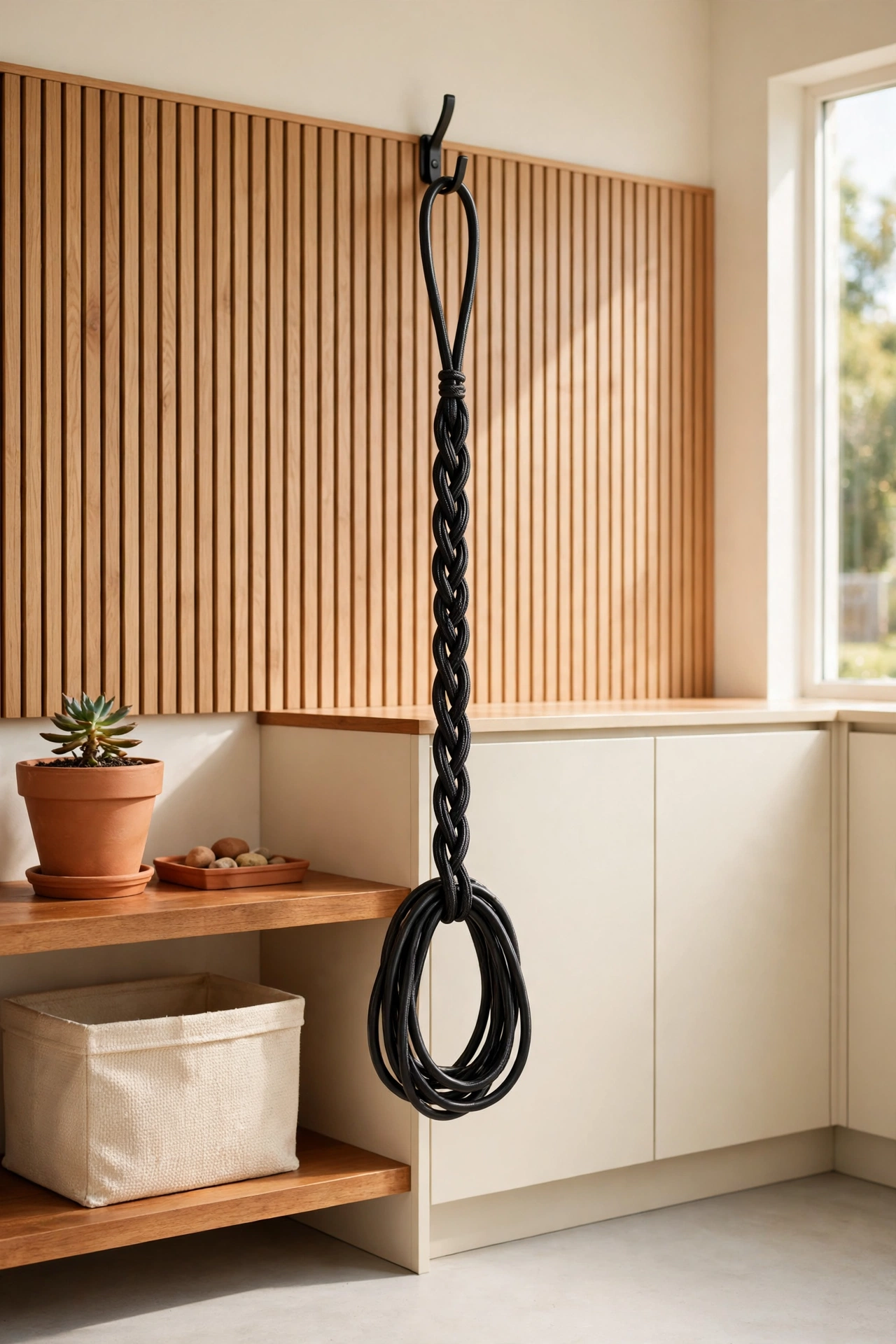
Braiding a long cord keeps it compact and stops it from tangling in storage. Start at the plug end and weave the cord into a loose chain, pulling each loop through the last one. The braid shortens a long cord into a tidy bundle that you can hang from a single hook.
This method looks neat and takes up very little room on a wall or inside a bin. When you need the cord, pull the free end and the braid unravels smoothly without knots. A braided cord also stays clean because it is not lying on a dusty garage floor.
3. Mount a Rack on the Wall
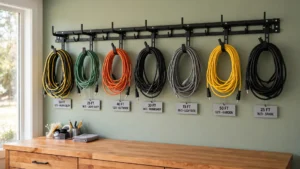
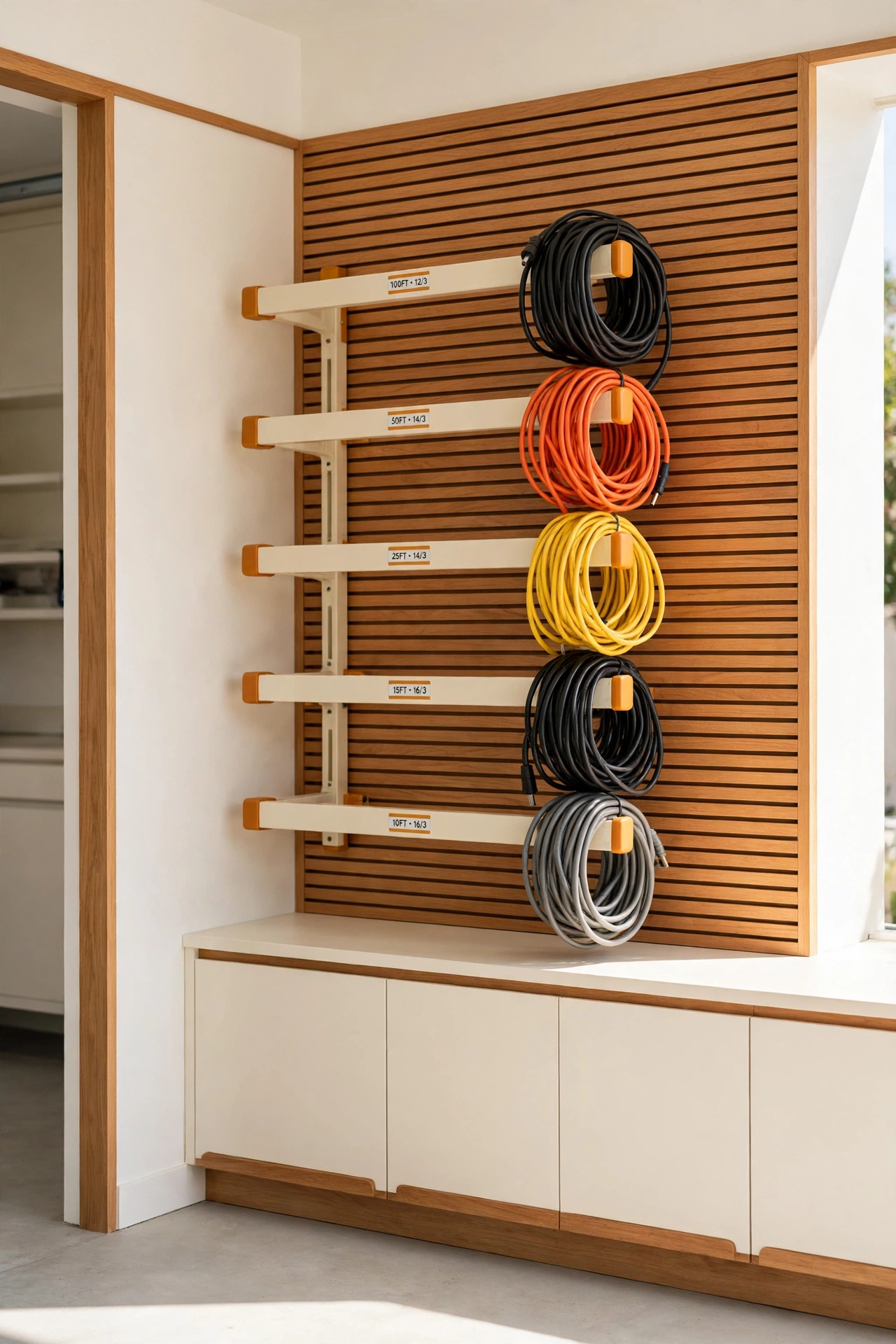
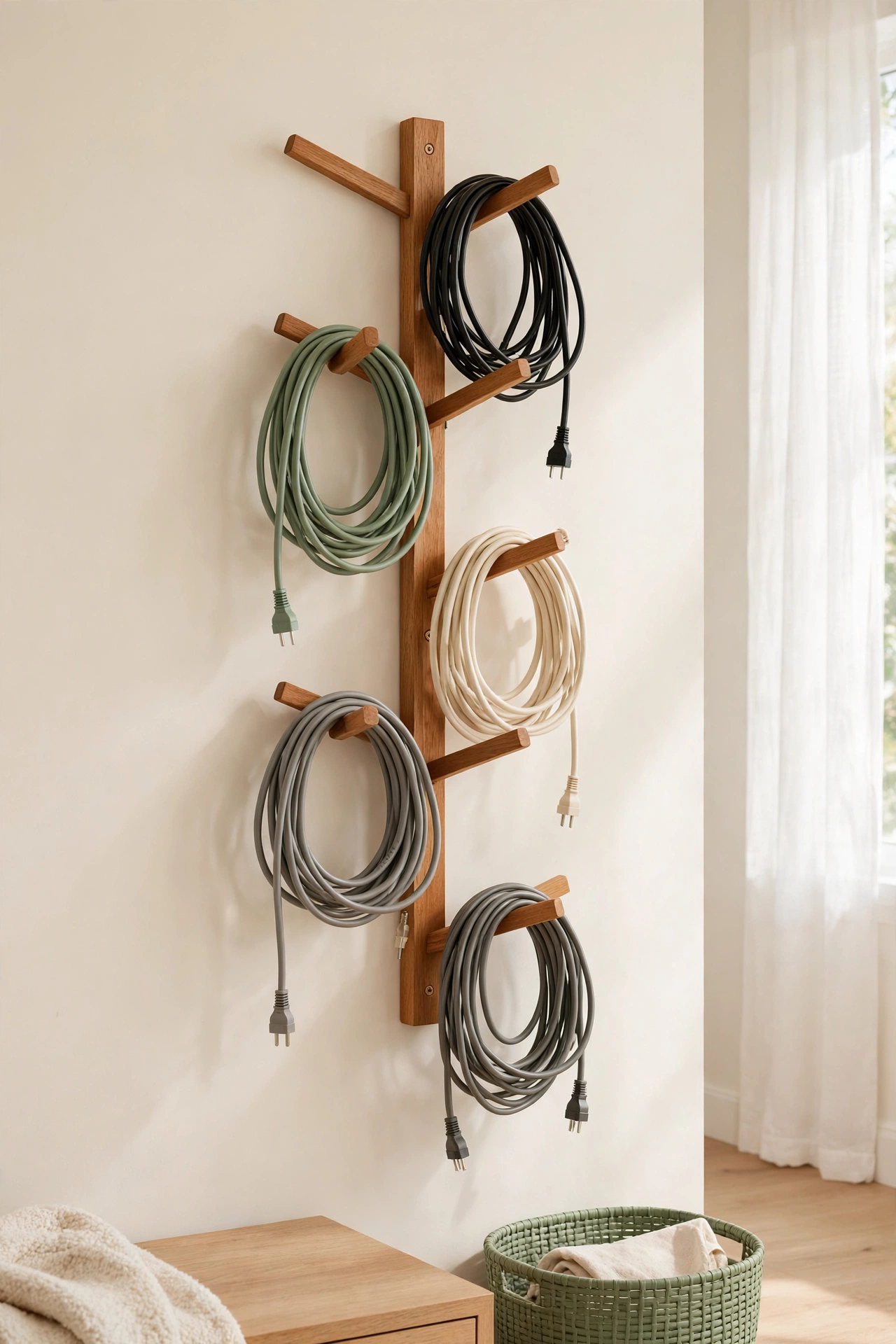
A wall-mounted rack turns an empty garage wall into organized cord storage. Screw a sturdy rack into the wall studs and hang your coiled cords over its arms. Every cord stays visible and within easy reach, so you can grab the right length without digging through a pile.
Choose a rack with several arms if you own cords of different lengths, and label each arm so everyone in the house knows where each cord belongs. For more ways to organize your garage workspace, see these garage workbench organization ideas. A wall rack keeps cords off the floor, which also keeps them dry and safe from damage.
4. Master the Over-Under Wrap
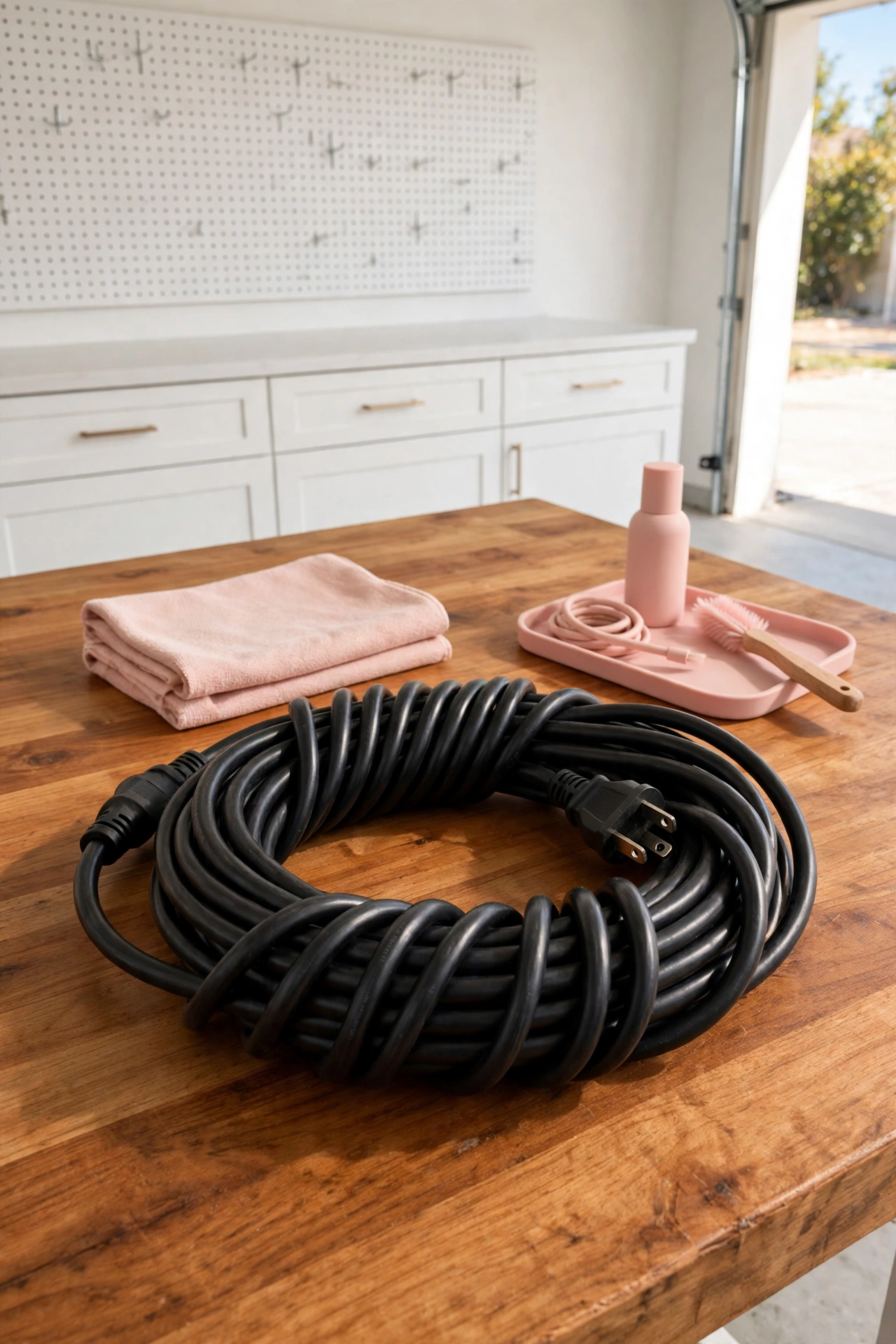
The over-under wrap is a professional coiling method that keeps cords twist free in storage. Coil the cord with alternating over and under loops, which lets it unroll smoothly without kinks or tangles. This technique takes a little practice, but it is worth learning because it protects the cord from damage.
Once the cord is coiled, secure it with a strap or a twist tie so it holds its shape on a hook or a shelf. The over-under method works for any length of cord, from short indoor cords to long outdoor ones. A well-coiled cord lasts longer and is far easier to use the next time you need it.
5. Secure Coils With Hook-and-Loop Straps
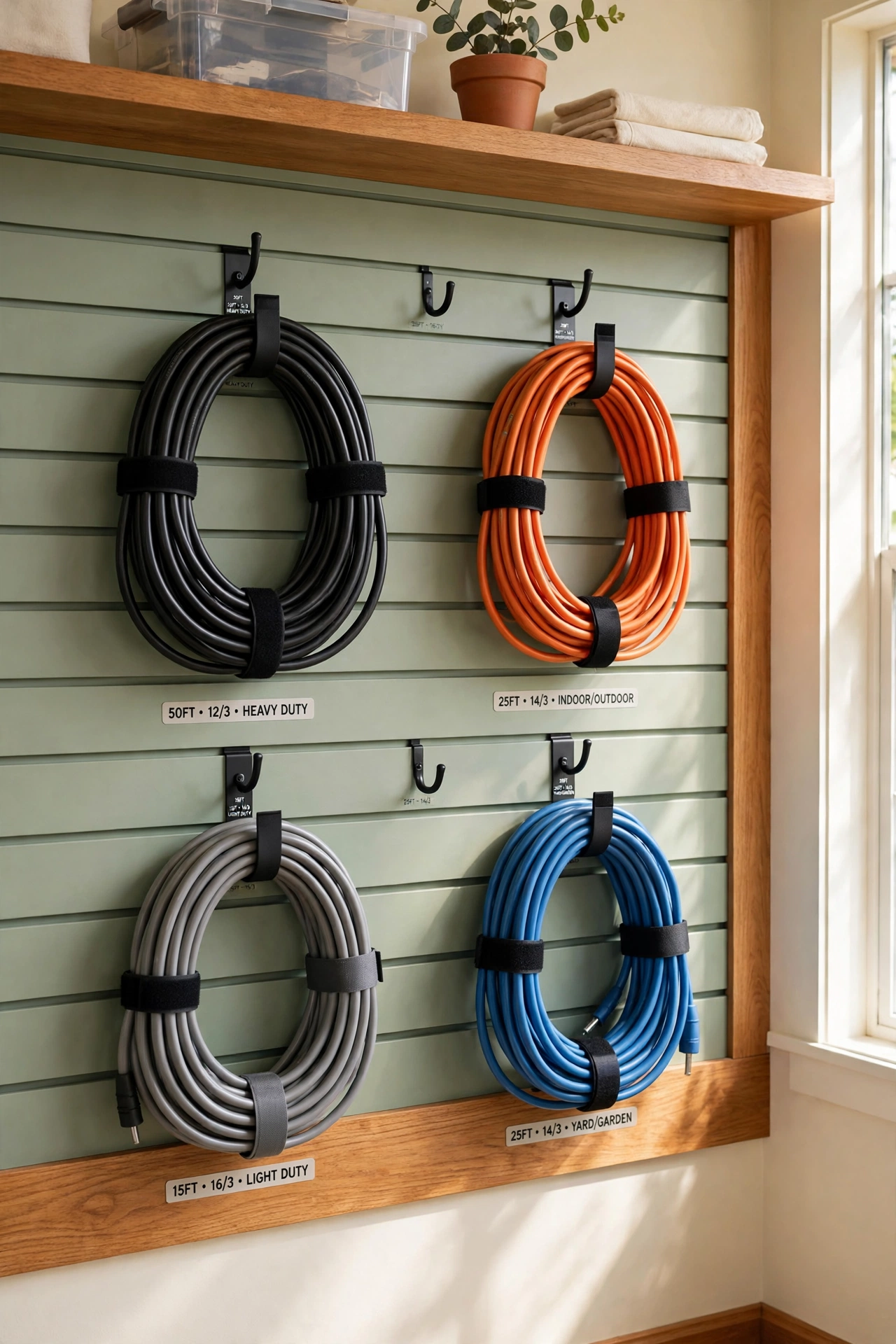
Hook-and-loop straps are small reusable bands that hold a coiled cord together with a simple wrap and press. Coil the cord, wrap the strap around it, and the bundle stays tight and neat on a hook or inside a bin. The straps are cheap, they last for years, and they never leave sticky residue on your cords.
Use a different colored strap for each cord length so you can spot the one you need at a glance. For more ideas on keeping cables tidy around the house, see these cable management ideas. Strapped coils stack neatly on shelves and hang evenly from hooks, which keeps your whole storage wall looking tidy.
6. Line Up Hooks and Pegs on the Wall
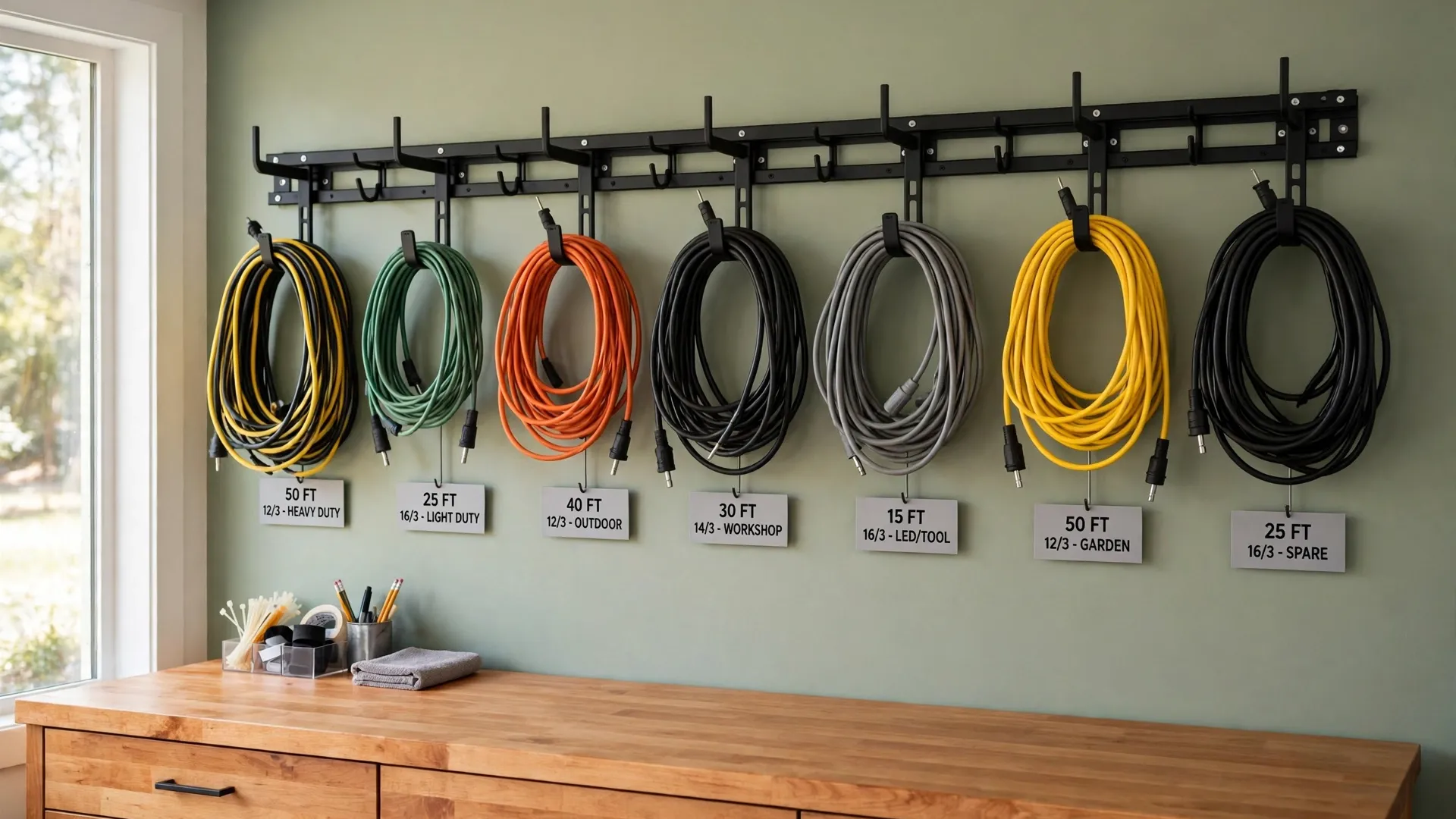
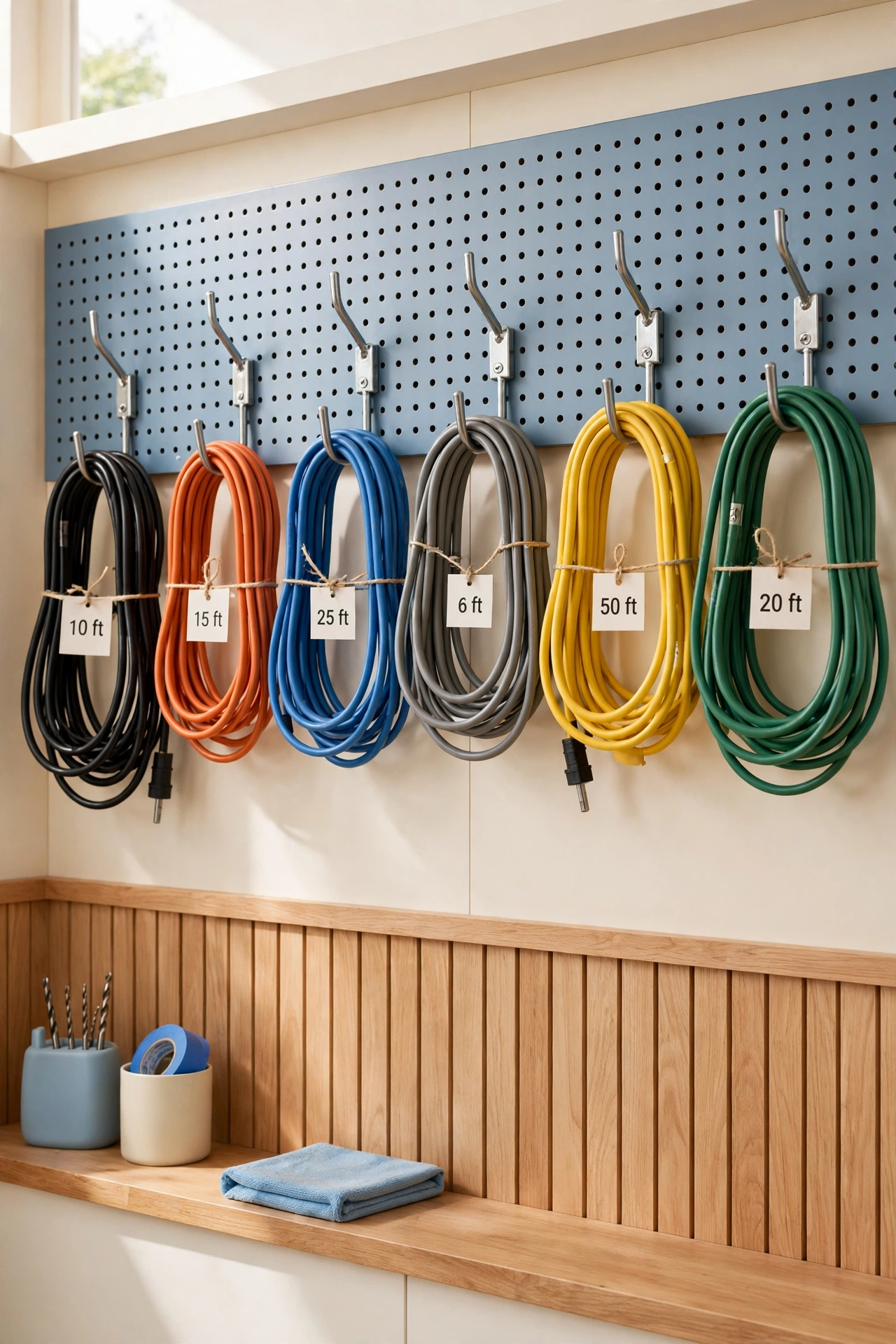
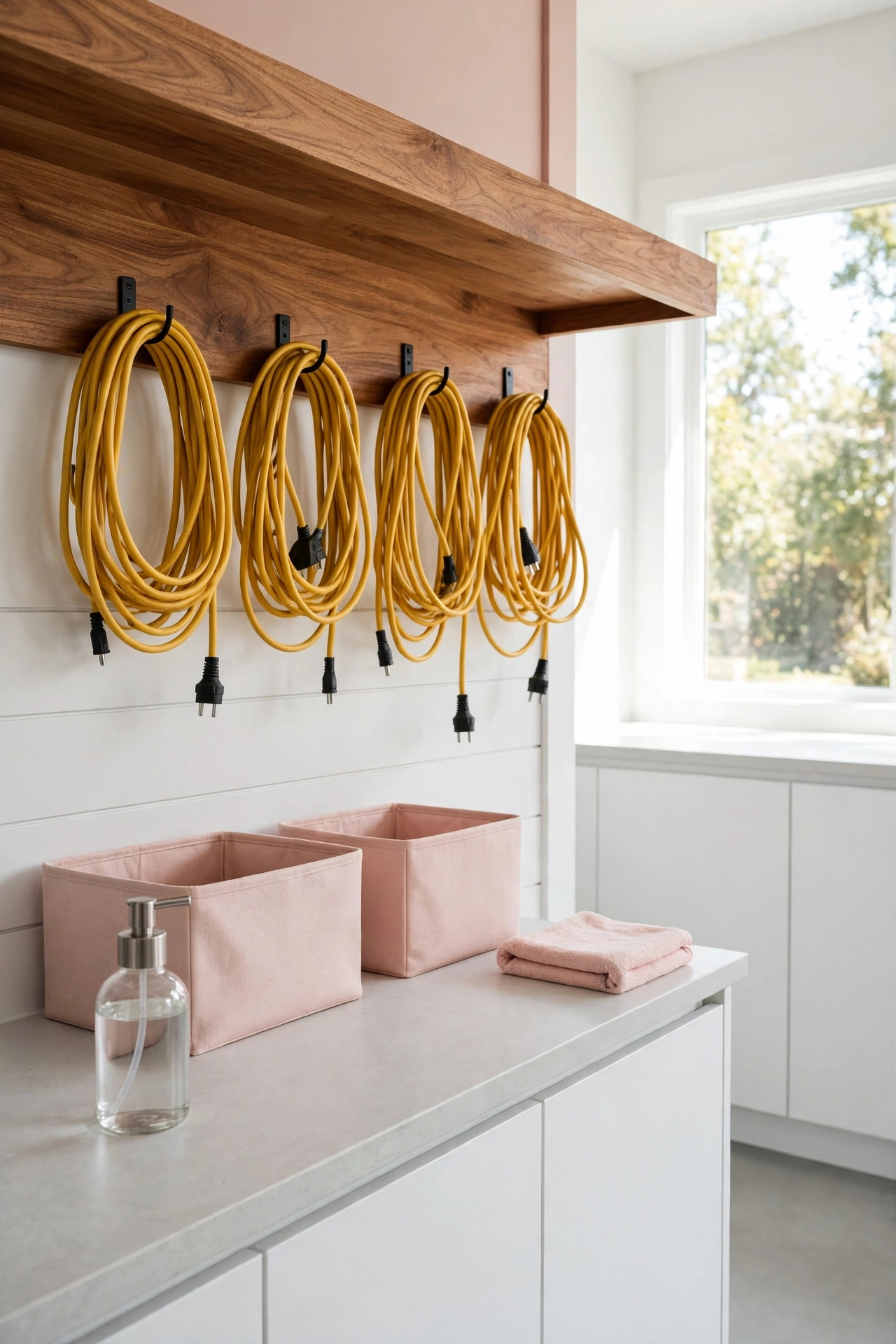
A row of sturdy hooks or pegs along a workshop wall gives every cord its own home. Space the hooks a few inches apart so the coils do not crowd each other, and hang one cord per hook. You can see every cord at a glance, which makes choosing the right length quick and easy.
Use heavy-duty hooks for long, thick cords and smaller pegs for short indoor cords. Label each hook with the cord length so nobody has to uncoil a cord just to check how long it is. This is one of the cheapest storage systems you can build, and it works in a garage, a shed, or a utility room.
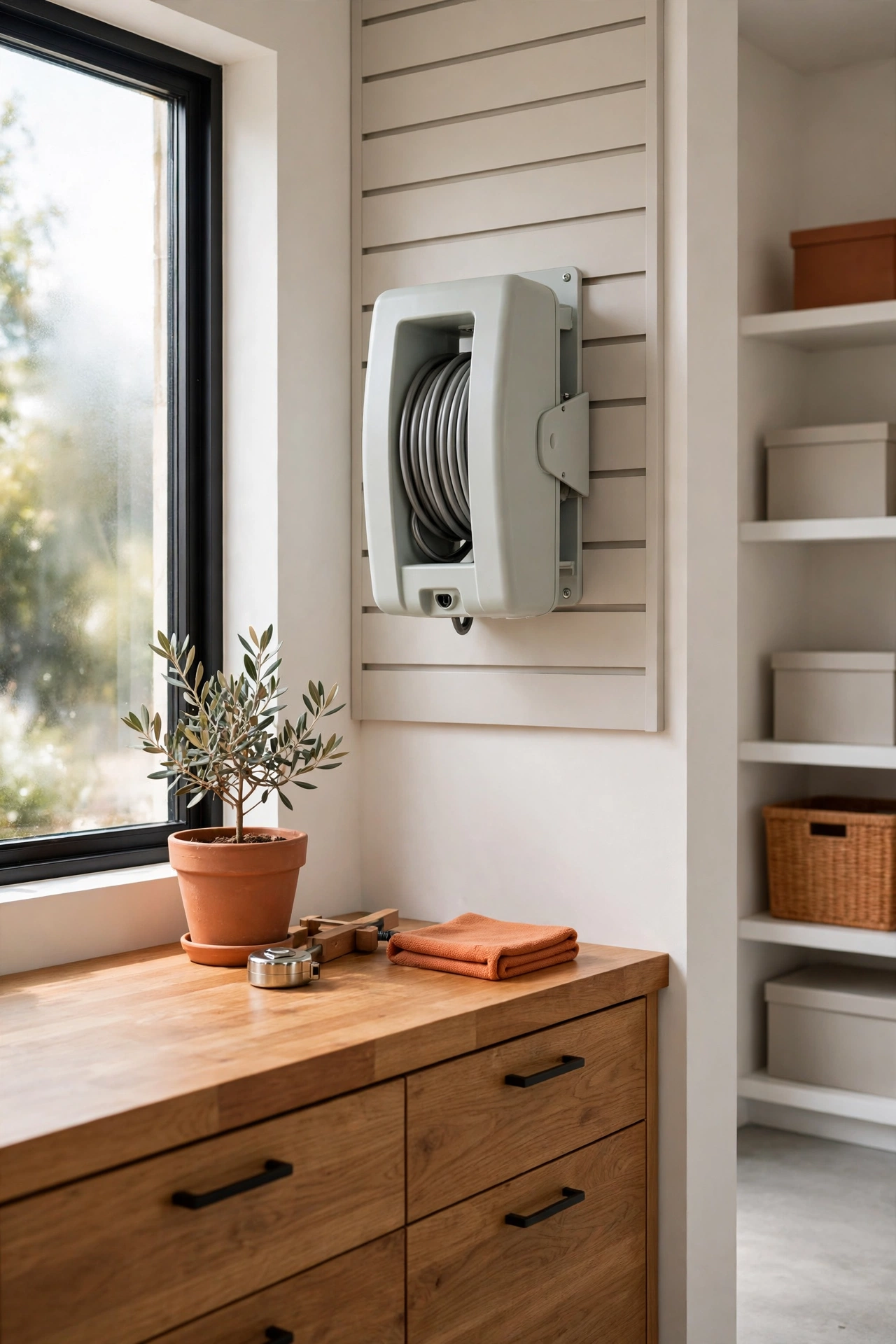
7. Install a Retractable Cord Reel
A retractable reel mounts on the wall or the ceiling and winds your cord in with a gentle pull. The reel keeps the cord off the floor and out of the way until you need it, then it lets out only as much cord as you want. This is the tidiest option for a garage where you use extension cords often.
Mount the reel near your workbench or near the garage door so the cord reaches your tools easily. A reel also protects the cord from being stepped on or run over, which extends its life. If your garage sees daily use, a retractable reel is a smart upgrade that pays for itself in saved time and frustration.
8. Build a DIY Cord Bucket
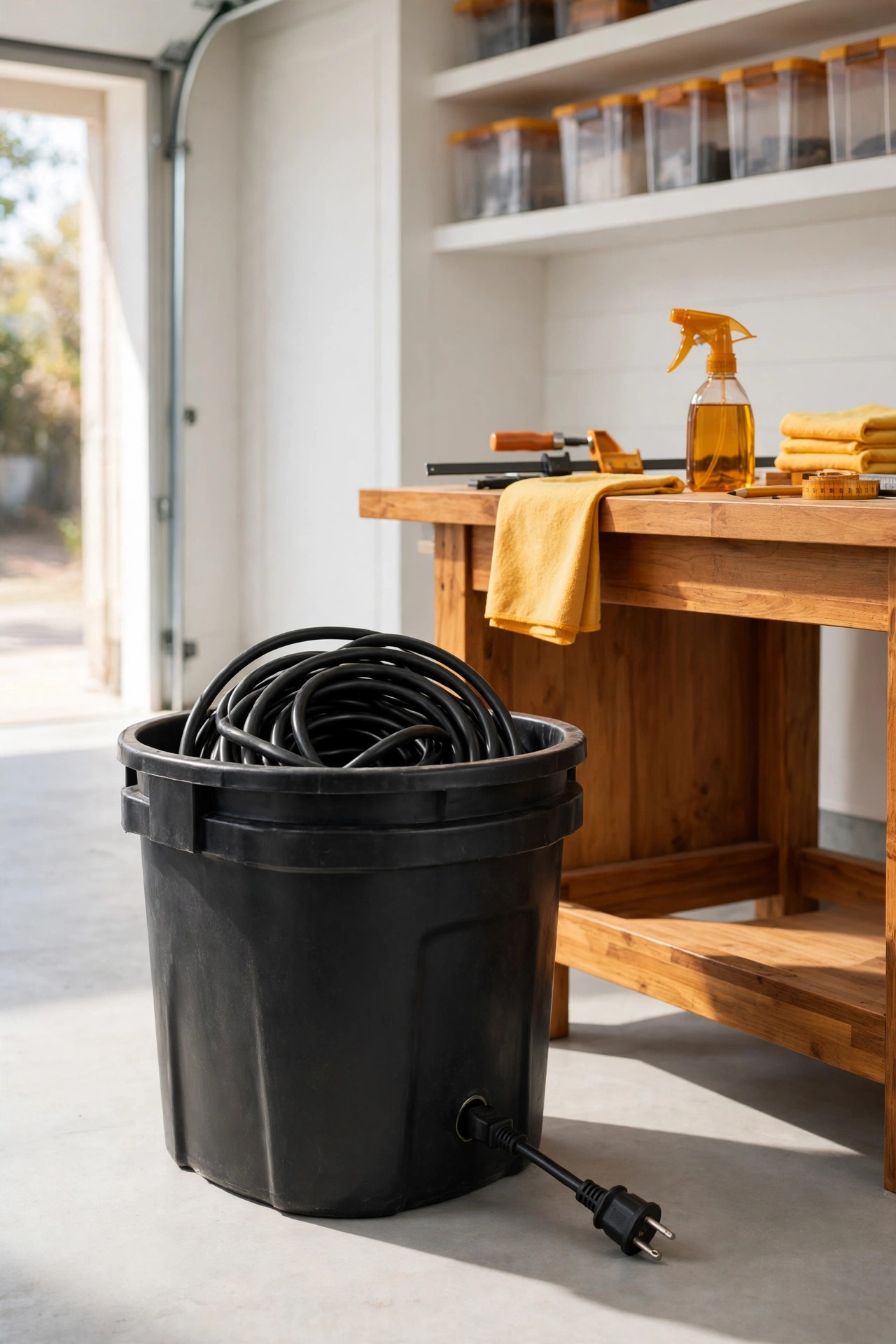
A large bucket makes a portable home for a coiled extension cord. Drill a small hole near the base of the bucket, feed the plug end through it, and coil the rest of the cord inside. The bucket keeps the cord contained and easy to carry, and the plug stays accessible for a quick connection.
This is a great solution if you move cords between the garage, the yard, and the house. Label the bucket with the cord length and keep it near the door you use most. A cord bucket costs almost nothing to make, and it stops cords from spilling across the floor every time you put one away.
9. Add Hooks Under Your Shelves
The underside of a garage shelf is unused space that makes a perfect cord hanger. Screw a few hooks into the shelf bottom and hang your coiled cords from them. The cords stay hidden beneath the shelf, which keeps your workbench clear and your wall space free for other tools.
This method works well for shorter cords that you reach for often, like the ones for a drill or a lamp. Keep heavier cords on wall hooks instead, since shelf hooks hold less weight. Hooks under a shelf are subtle, cheap, and easy to install in a single afternoon.
10. Give a Tie Rack a New Job
An old tie rack makes a brilliant cord hanger with no changes at all. Mount the rack on a wall or inside a closet door, then drape your coiled cords over its arms. Each arm holds one cord, which keeps them separated and tangle free. A revolving tie rack works even better because you can spin it to reach the cord at the back.
This is a clever way to reuse something you already own instead of buying new storage hardware. For more ideas on using closet space wisely, see these closet door organization ideas. A tie rack fits in a narrow spot where a full wall rack would be too wide, which makes it ideal for small garages and utility closets.
11. Wind Cords Around Old Spools
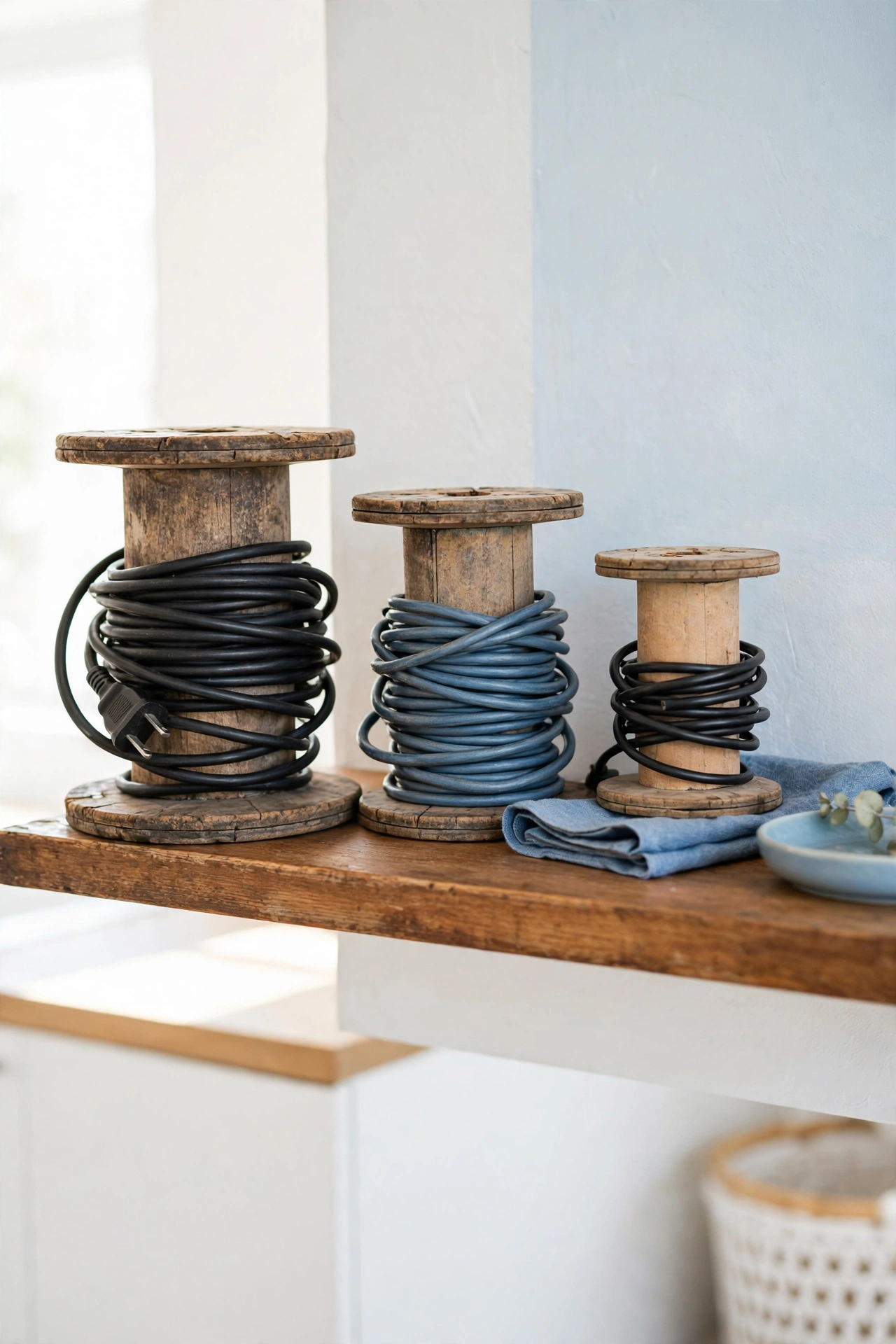
Old wooden spools make charming and practical cord winders. Wrap your extension cord around a spool and it stays coiled, compact, and easy to carry. The spool keeps the cord from kinking, and you can set it on a shelf or hang it from a hook by its center hole.
Look for spools at craft stores, flea markets, or in your own garage. A spool also adds a rustic touch to a workshop shelf, which makes storage look intentional instead of improvised. Wind the cord evenly and secure the ends with a small strap so the spool stays neat between uses.
12. Hang Cords on Wooden Pegs
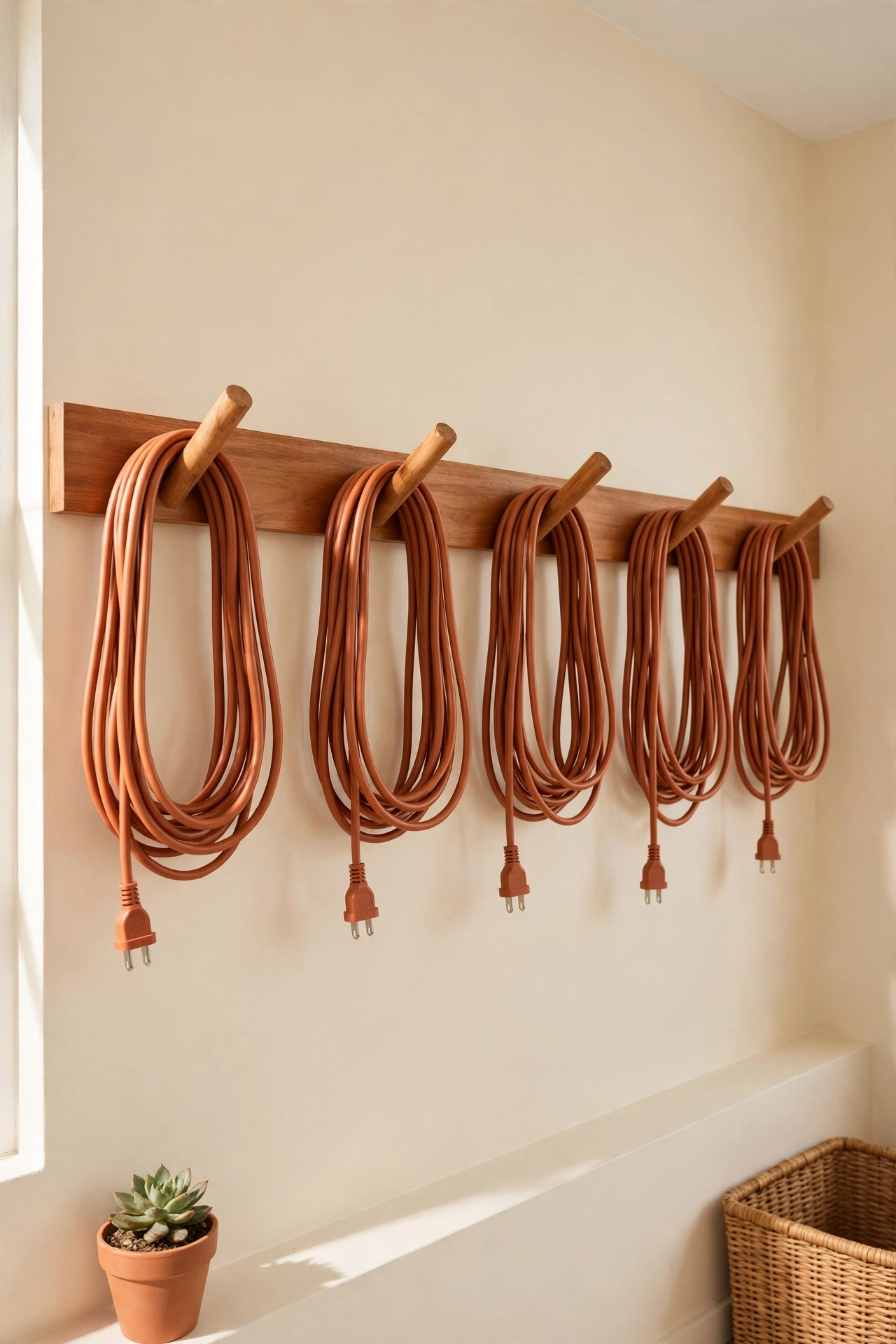
Wooden pegs give your garage a warm, rustic look while they keep cords organized. Mount a row of pegs on the wall and hang one coiled cord from each peg. The pegs hold the cords away from the wall, which keeps air flowing around them and makes them easy to lift off.
Choose thick, sturdy pegs that can carry the weight of a long outdoor cord. You can paint the pegs to match your garage or leave the wood natural for a workshop feel. Wooden pegs are simple to install and they turn a plain wall into useful storage in minutes.
13. Chain Long Cords Into a Daisy Chain
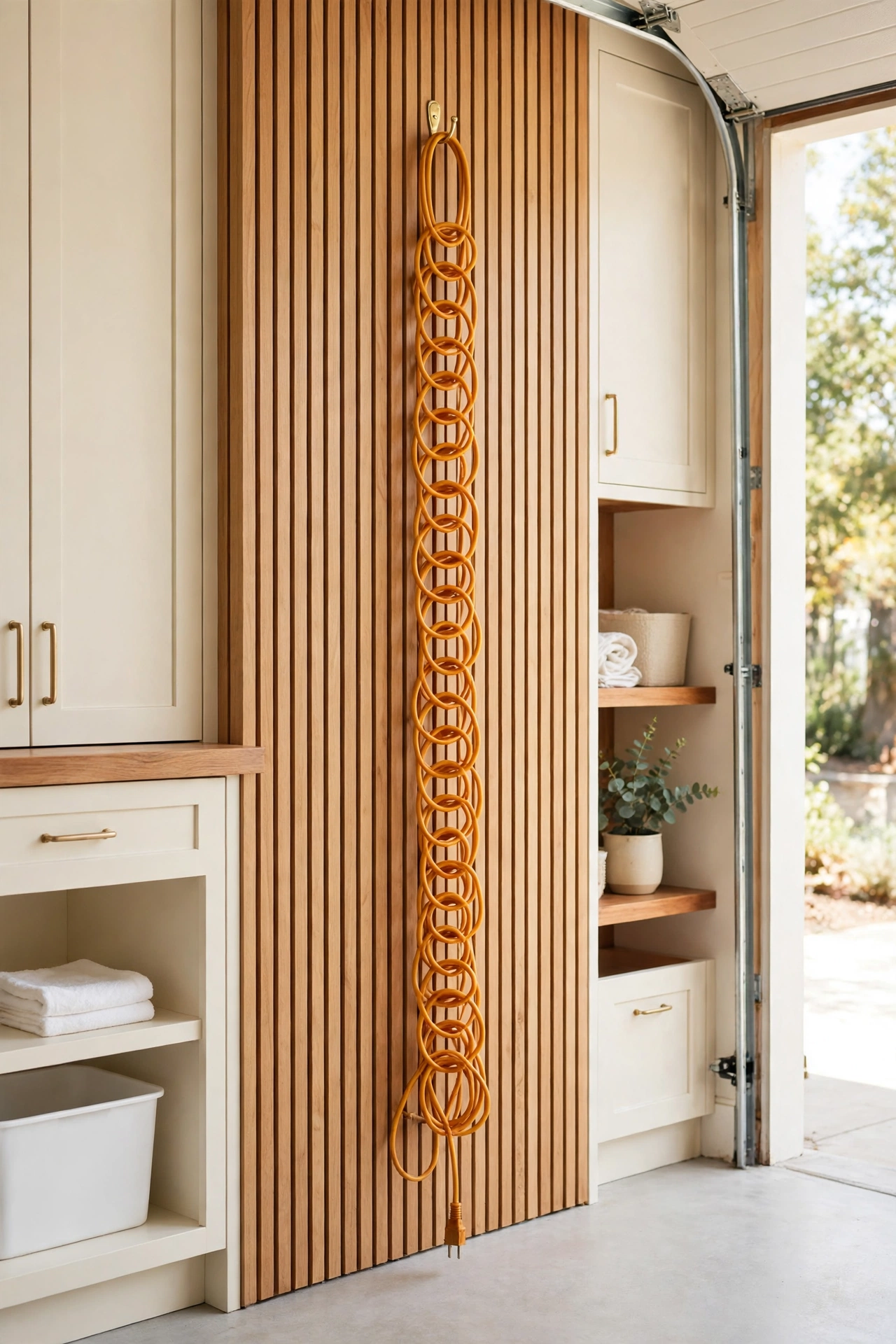
A daisy chain shortens a very long cord into a compact chain of loops. Loop the cord back on itself and pull each new loop through the last one, which creates a neat chain that hangs from a single hook. The chain takes up far less space than a loose coil, and it never tangles.
This method is ideal for the longest cords in your collection, the ones that always seem to turn into a knot. When you need the cord, pull the free end and the whole chain unravels in seconds. A daisy-chained cord looks tidy on a hook and stays clean off the floor.
14. Sort Cords Into Labeled Plastic Bins
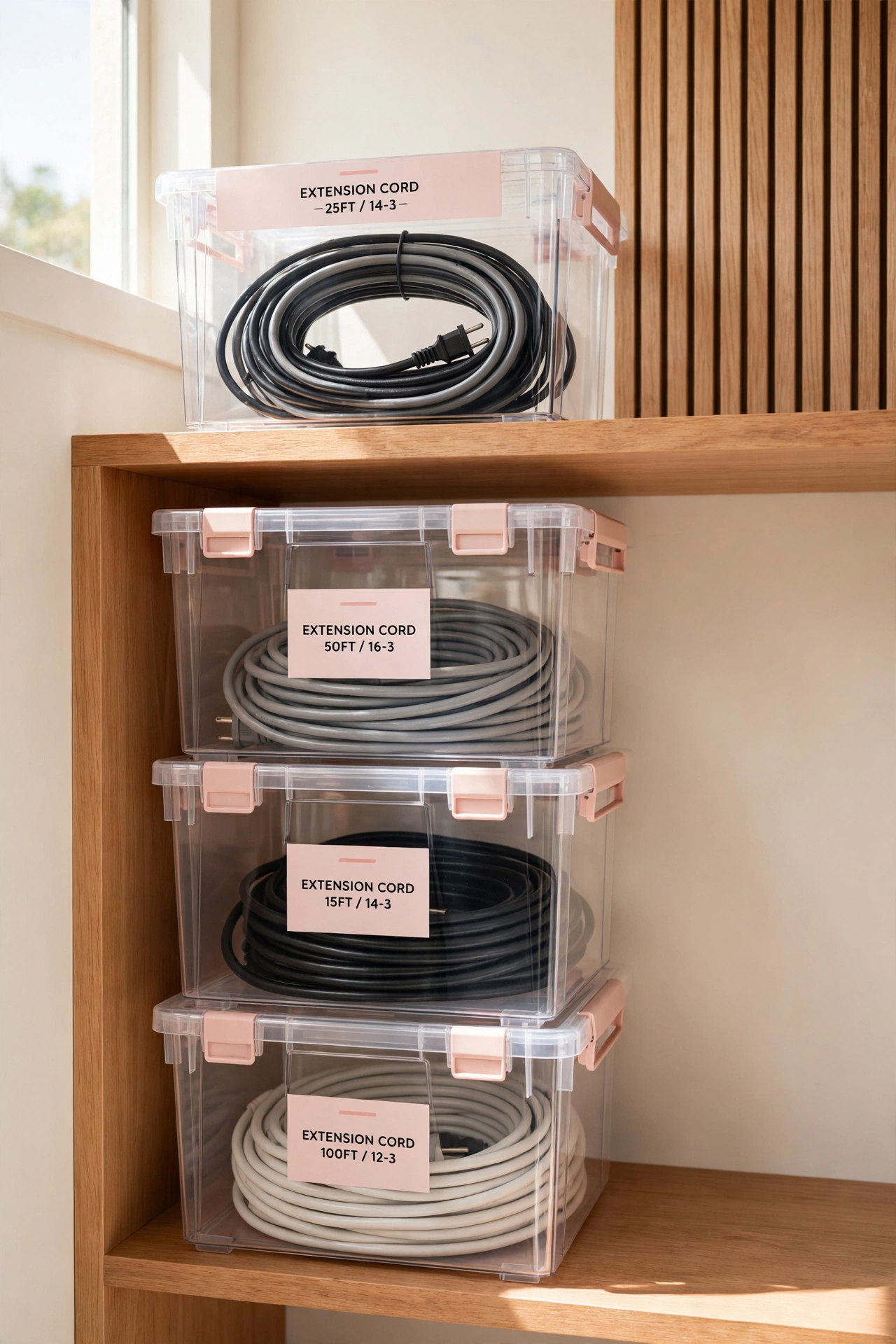
Labeled plastic bins are the best home for cords you use only a few times a year. Coil each cord, secure it with a strap, and place it in a bin with a label that shows its length and its use. Stack the bins on a garage shelf where they stay clean, dry, and out of the way.
Sort the bins by length so you can find the right cord without opening every box. For more ideas on keeping storage bins tidy, see these mudroom bench organization ideas. Clear bins let you see the cords inside, while solid bins with clear labels work just as well and cost less.
Conclusion
Extension cord storage does not have to be complicated or expensive. From a simple tension rod to a retractable reel, there is an idea here for every garage and every budget. The best system is the one that keeps your cords off the floor and easy to grab.
Pick one or two ideas that fit your space and start today. Coil your cords, give each one a home, and enjoy a garage without tangles. For a calm home beyond the garage, these nightly reset routine ideas will help you keep every room tidy with just a few minutes each evening.
Frequently Asked Questions About Extension Cord Storage Ideas to End Garage Tangles
How do I store extension cords so they do not tangle?
Coil each cord with the over-under method, secure the coil with a hook-and-loop strap, and hang it on its own hook or rack. Keeping one cord per hook stops cords from wrapping around each other, which is the main cause of tangles in storage.
What is the best way to coil an extension cord?
The over-under wrap is the best method for most cords. Alternate over and under loops as you coil, which lets the cord unroll without twists or kinks. This method also protects the cord from internal damage that comes from tight, twisted coils.
Can I store extension cords in the garage?
Yes, the garage is a good place for extension cords as long as they stay dry and off the floor. Hang cords on hooks, racks, or pegs, or store them in labeled bins on a shelf. Keep them away from damp spots and direct sunlight, which can damage the cord coating over time.
How do I label extension cords by length?
Use colored tape, tags, or printed labels on the plug end and on the hook or bin where the cord lives. Write the length and the use on each label, such as 25 feet for yard tools. Color coding by length makes it easy to grab the right cord without uncoiling several.
Is it safe to store extension cords in plastic bins?
Yes, as long as the cords are clean, dry, and loosely coiled before they go in the bin. Do not force a cord into a bin that is too small, and keep bins in a cool, dry spot away from heat sources. Loose coils in a labeled bin stay safe and ready to use.

Hi, I’m Emily! I turn messy corners into cozy, organized spots. DreamNestDecor is where I share simple, practical home ideas — decor, organization, and small-space solutions that work in real life, not just in photos. Every idea here is carefully researched before it’s shared.