Picture this: you sit down for a quiet evening with a puzzle, reach for the box, and every piece is right where it should be. No more hunting through drawers for a missing edge piece or finding a box crushed behind a pile of games. That small moment of calm is exactly what smart puzzle storage gives you every single day. When every puzzle has a proper home, your playtime starts with joy instead of a search.
You do not need a bigger house or expensive furniture to get there. All you need is the right storage idea for your space and your collection. These 15 puzzle organization ideas will help you keep every piece, box, and board tidy, safe, and ready whenever you want to start a new puzzle.
1. Tuck Puzzles Away in Hidden Cabinets
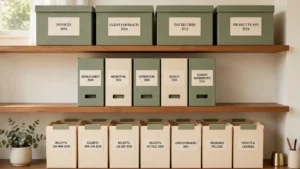
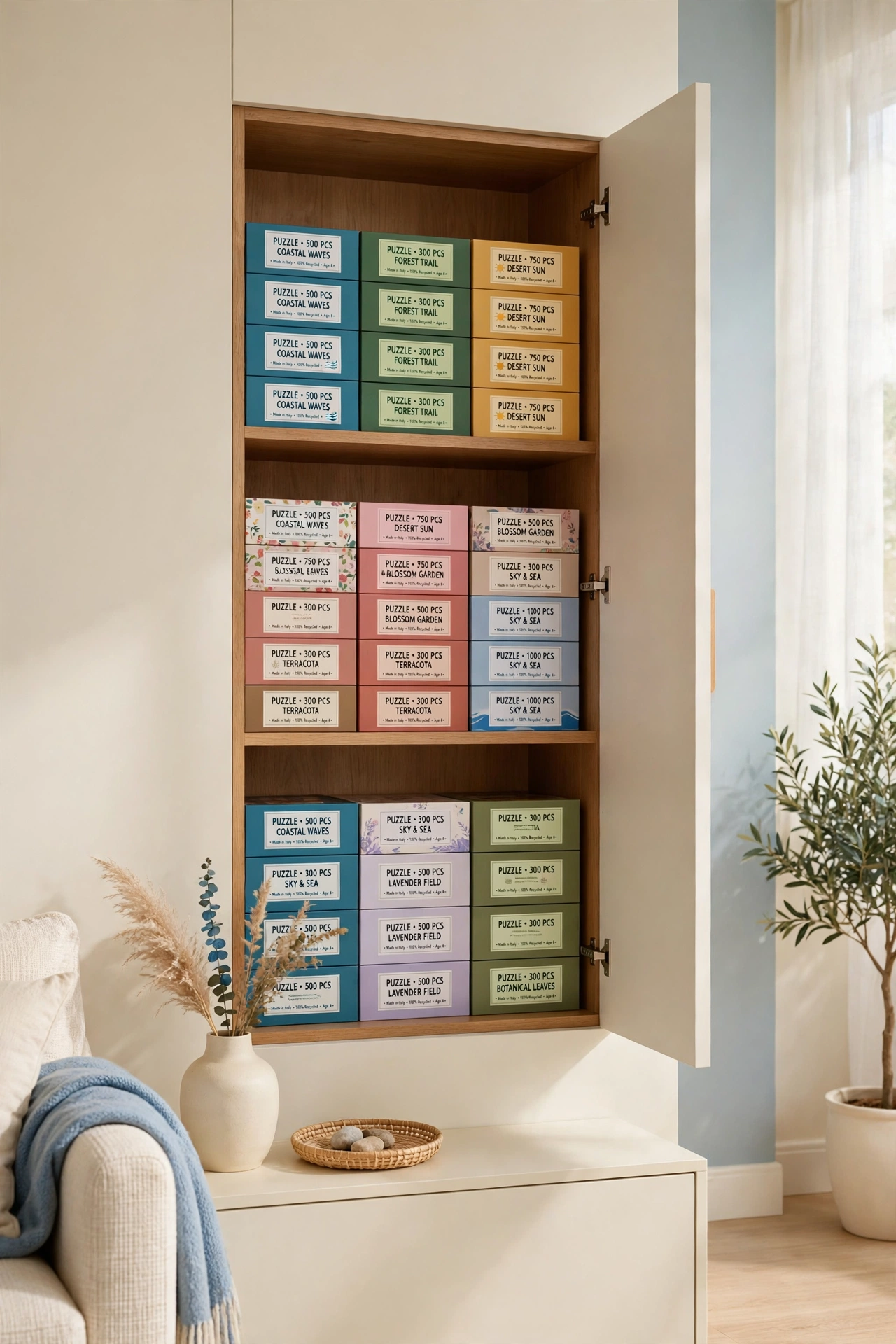
A hidden cabinet keeps your puzzle collection out of sight while it stays easy to reach. A slim wall cabinet or a closed cupboard near the living room holds several puzzle boxes in neat rows. The doors hide everything, which keeps the room looking calm and uncluttered even when your collection keeps growing.
This idea works best when your puzzles live in a shared family room. Choose a cabinet with adjustable shelves so tall and wide boxes fit side by side. Keep the puzzles you play most often on the lowest shelf so they are always within easy reach.
2. Store Pieces in See-Through Bins
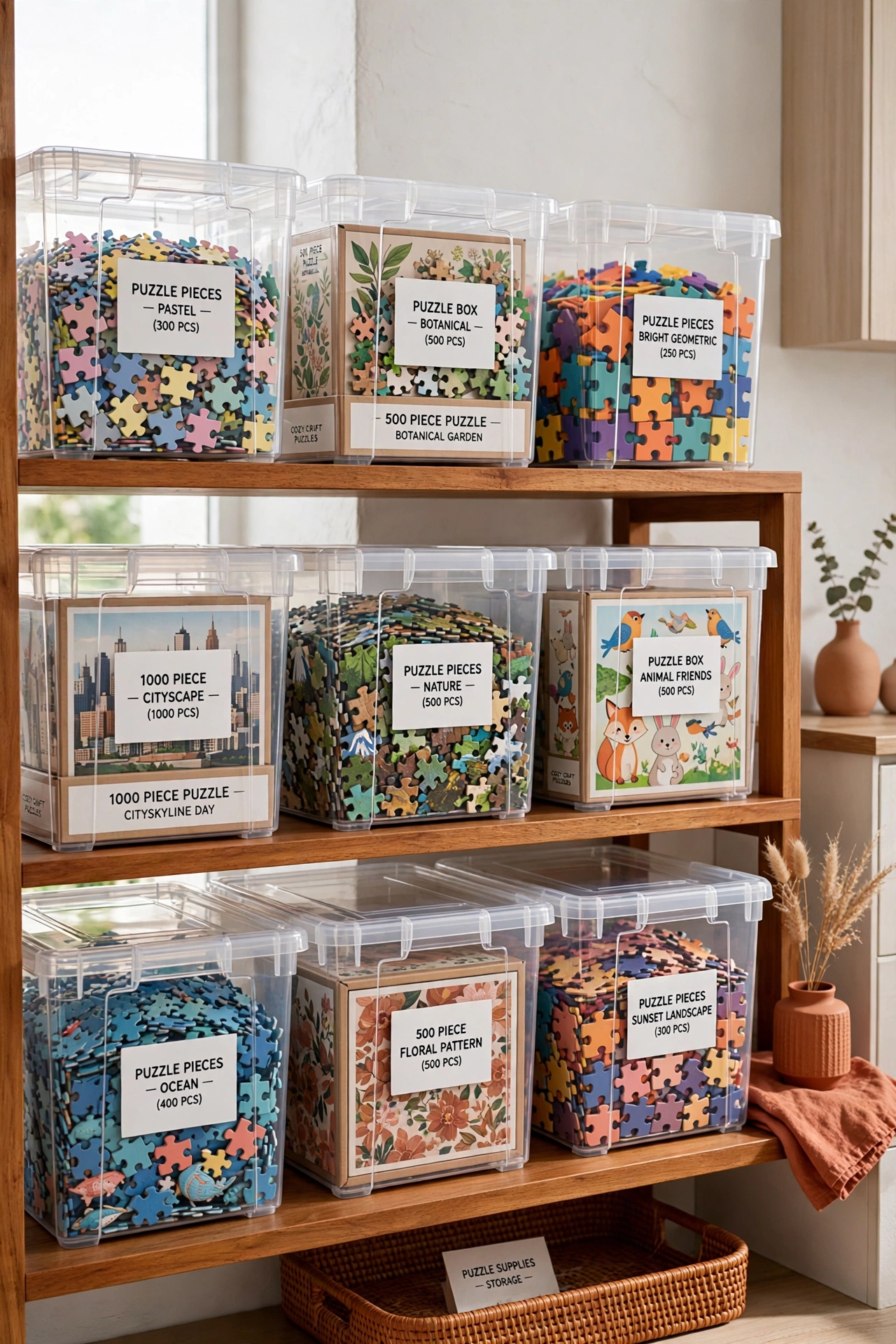
See-through bins let you spot the puzzle you want without opening a single lid. Clear stackable containers show the box art and the pieces inside, so you can find the right puzzle in seconds. The transparent walls also help you notice when a bin is getting low on space.
Choose bins with tight-fitting lids to keep dust away from loose pieces. Stack them on a shelf or inside a closet where they stay out of the way. This simple switch turns a messy pile of boxes into a tidy display you can read at a glance.
3. Keep Pieces Safe in Puzzle Envelopes
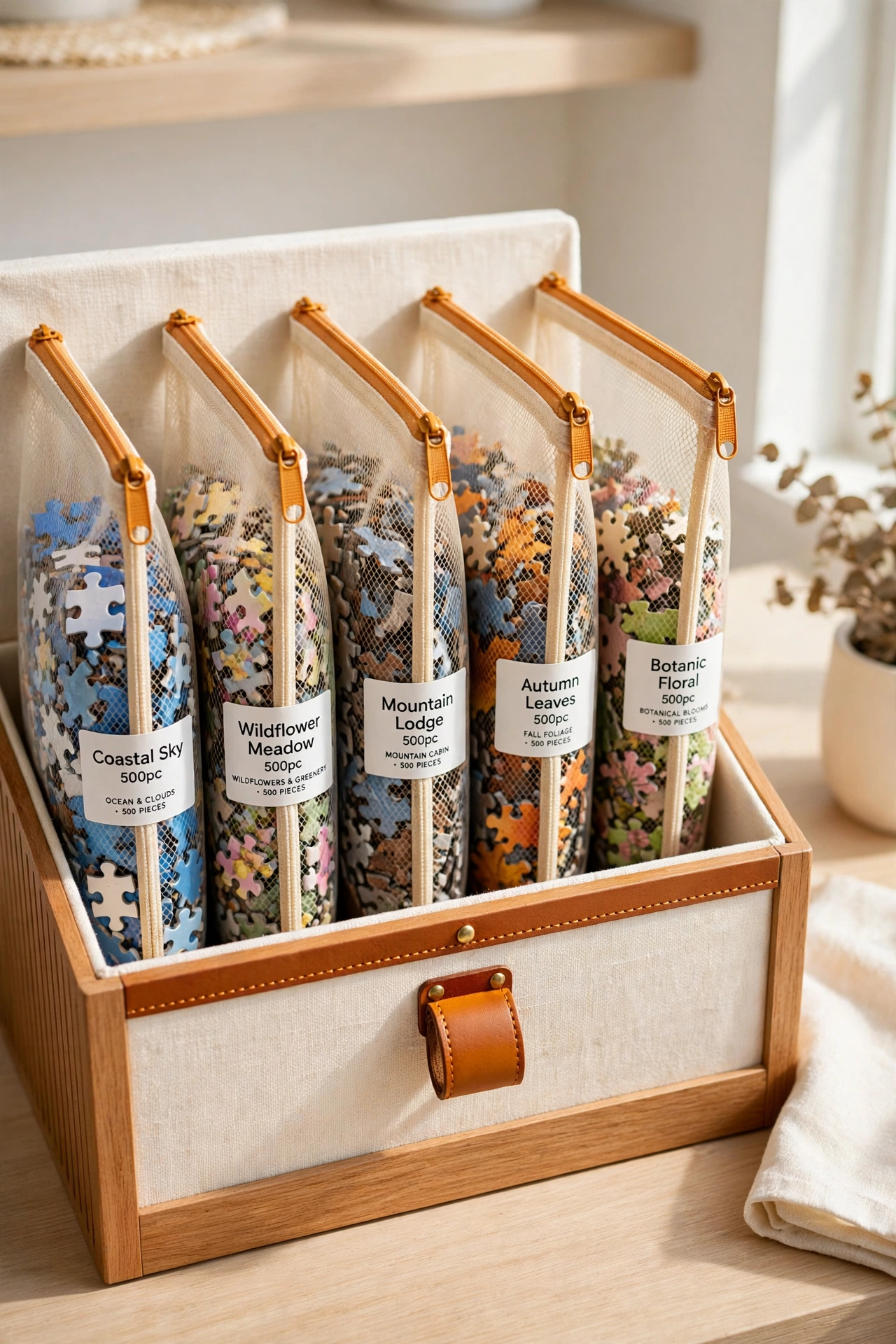
Puzzle envelopes are mesh zip-top pouches that hold all the pieces of one puzzle in a flat, light package. The mesh lets you see the puzzle image through the pouch, and the zipper keeps every tiny piece safe. Envelopes take up far less space than bulky boxes, so a whole collection fits in one drawer.
Label each envelope with the puzzle name and piece count so you can grab the right one fast. Store the envelopes upright in a file box or a basket, like books on a shelf. This is one of the cheapest ways to organize puzzles, and it works especially well for families with many small puzzles.
4. Display Puzzles in Antique Boxes
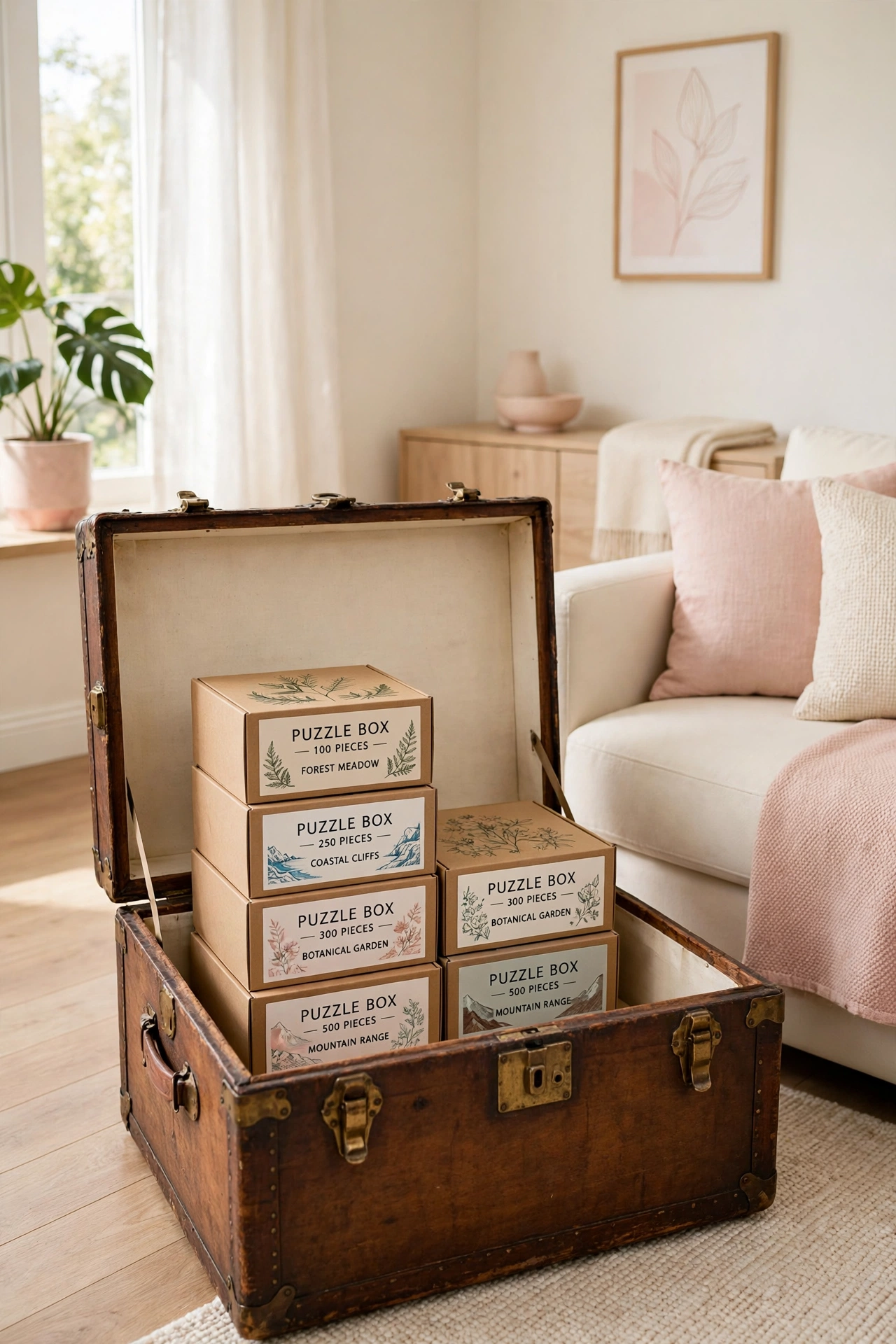
An antique box turns puzzle storage into a beautiful part of your room. A decorative wooden trunk or an old-fashioned chest holds several puzzle boxes while it adds warmth and character to the space. The lid keeps dust away, and the sturdy sides protect the boxes from getting crushed.
Place the trunk beside the sofa or at the foot of a reading chair so puzzles stay close to where you play. Line the inside with soft fabric to stop boxes from sliding around. This idea suits homes with a classic or farmhouse style, and it proves that storage can be both practical and pretty.
5. Turn Spare Pieces Into Puzzle-Piece Frames
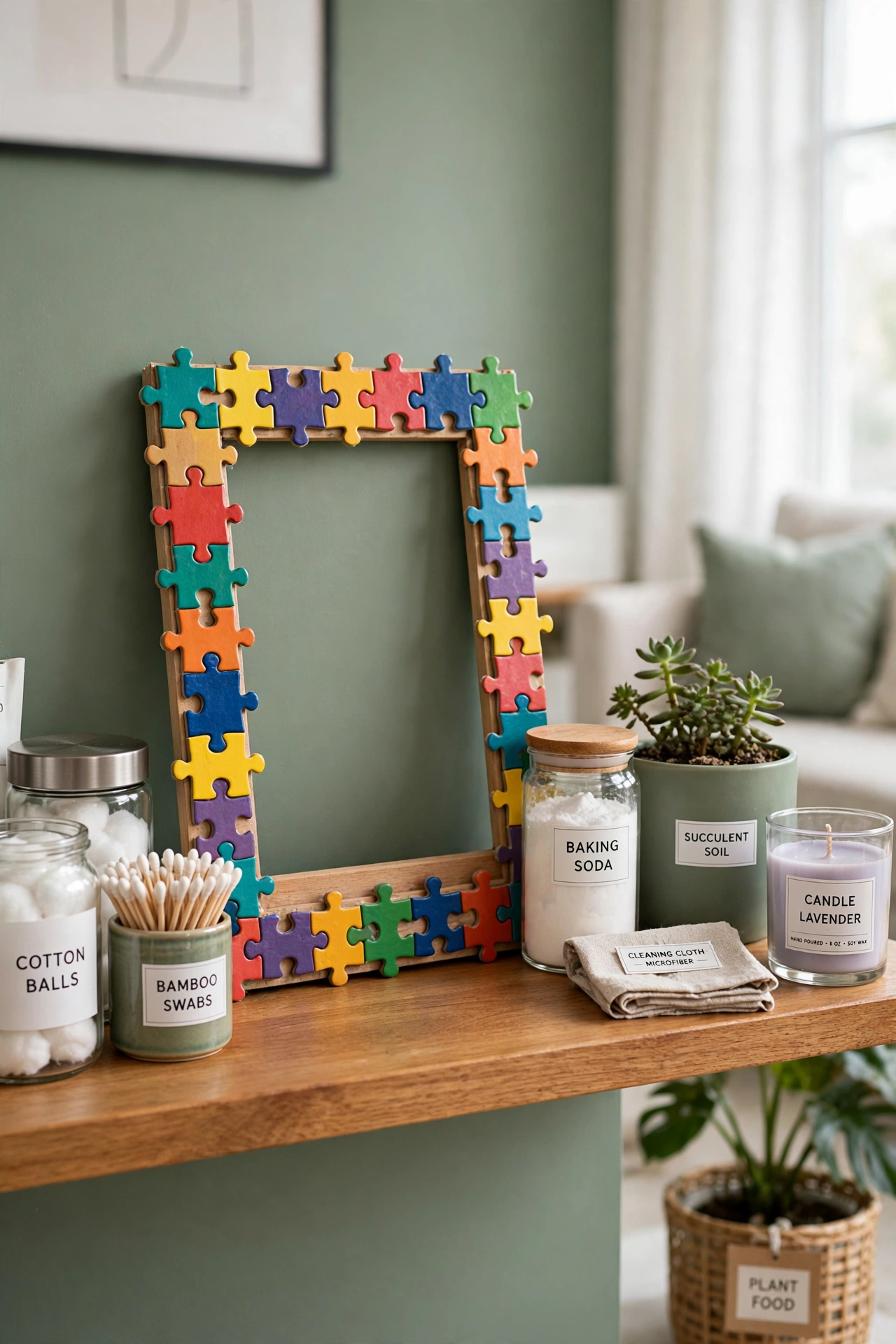
Spare puzzle pieces make charming picture frames with a bit of creativity. Glue pieces around a plain frame to create a colorful border, then use the frame to display a photo or a small piece of art. This is a lovely way to use puzzles that have lost a piece or two and can no longer be finished.
Choose pieces in colors that match the room, and seal the frame with clear varnish so it lasts for years. Children love this project because it turns an old puzzle into something new. A handmade frame adds a personal touch to a shelf or a wall that no store-bought frame can match.
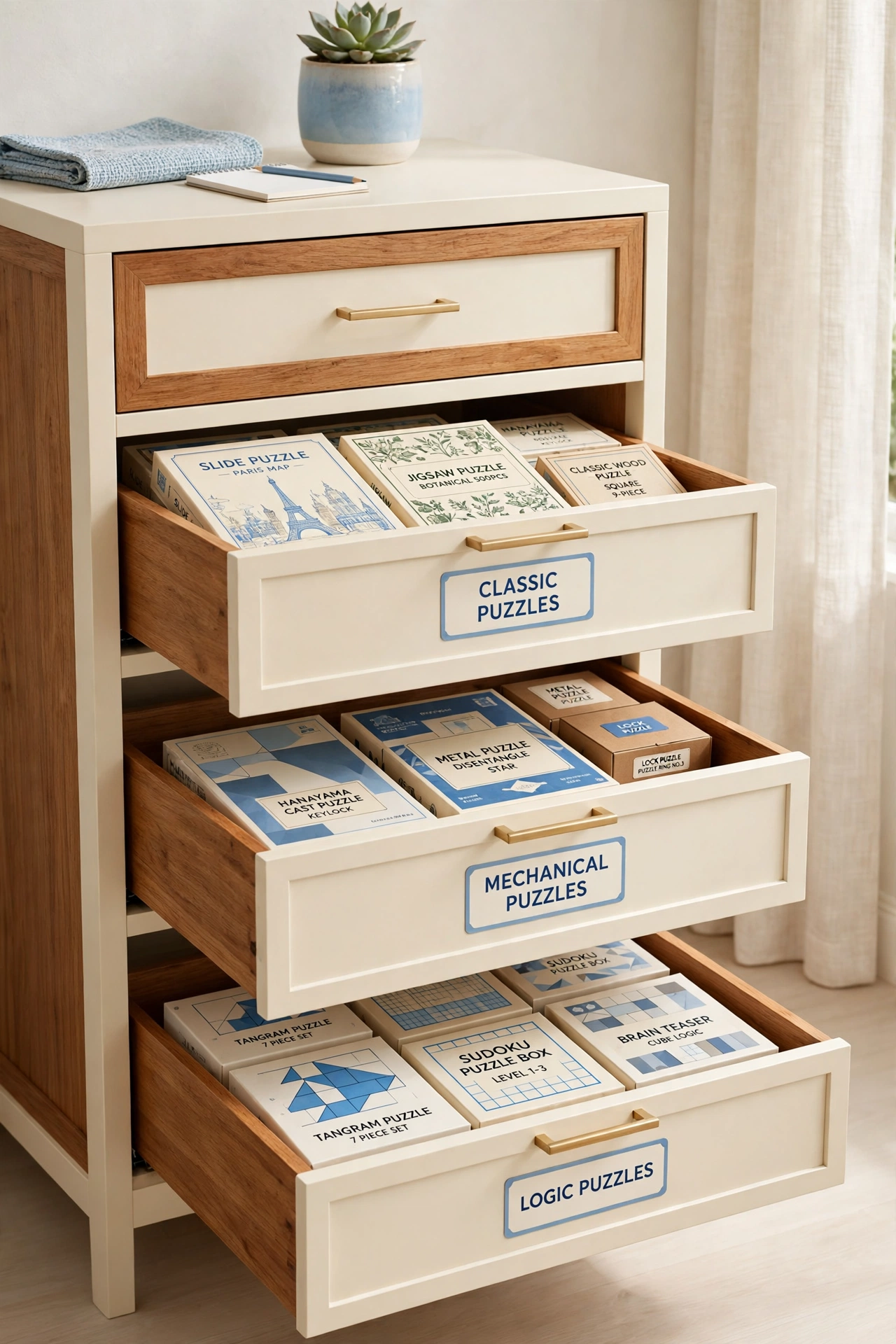
6. Sort Puzzles With Drawer Organization
Drawer units give every puzzle its own spot while they stay hidden from view. Sort puzzles by theme or size, and give each drawer a clear label so you can find exactly what you need. Drawers work well in a playroom, a craft corner, or a living room cabinet.
Use shallow drawers for flat puzzle boxes and deeper drawers for bulkier sets. For more ways to keep game storage tidy, see these board game organization ideas that work just as well for puzzles. Keep the drawer you use most often at the top so your favorite puzzles are always easy to grab.
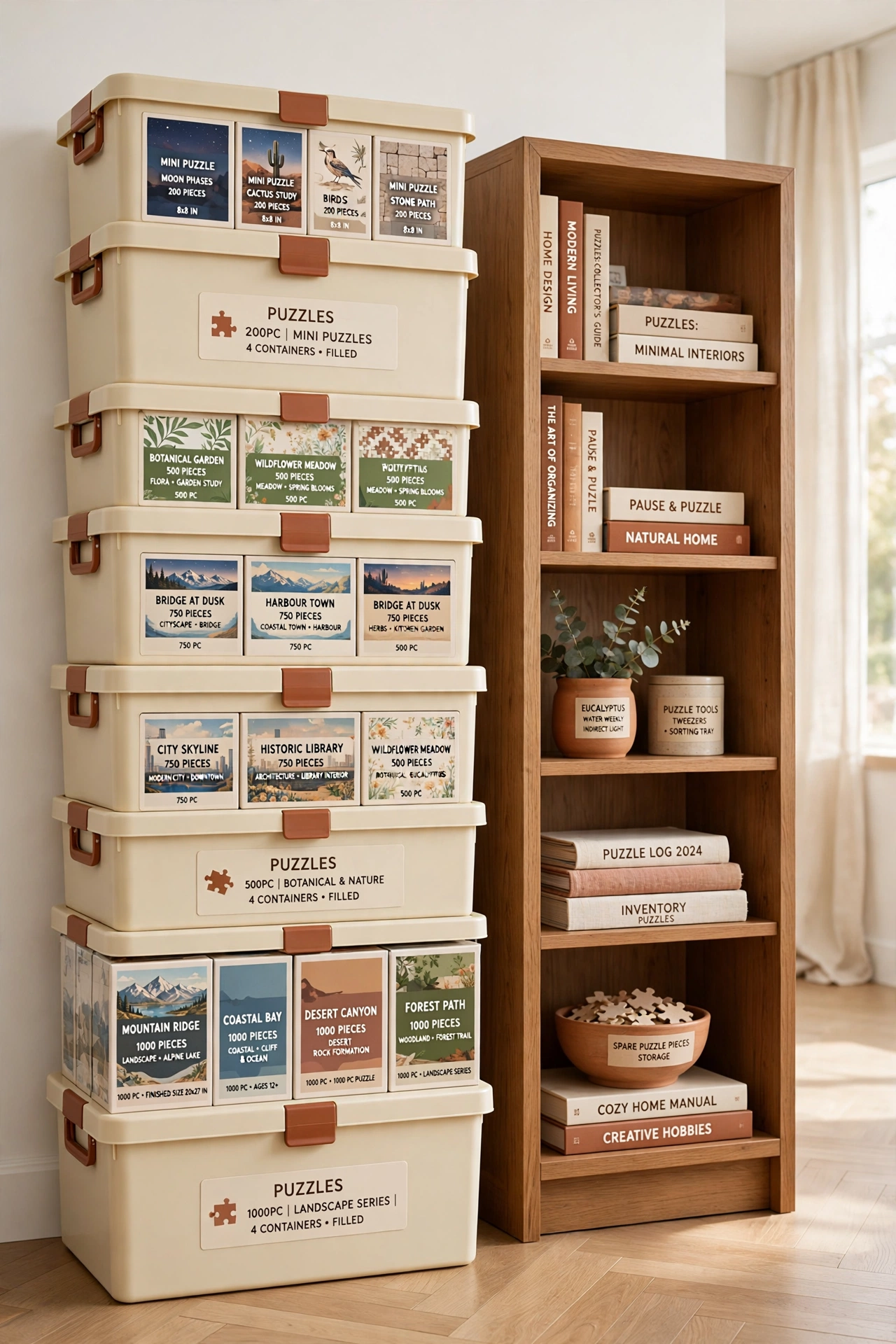
7. Stack Puzzles High With Upward Storage
Stackable storage boxes let you use vertical space instead of spreading puzzles across every surface. Place the boxes you use least at the bottom and the ones you reach for most at the top. This upward approach frees up floor and table space while it keeps the whole collection in one neat tower.
Choose boxes with flat, sturdy lids so the stack stays stable and safe. Label the front of each box so you can read the stack like a bookshelf. This idea works best in a closet, a corner, or beside a bookcase where the tower stays out of the way.
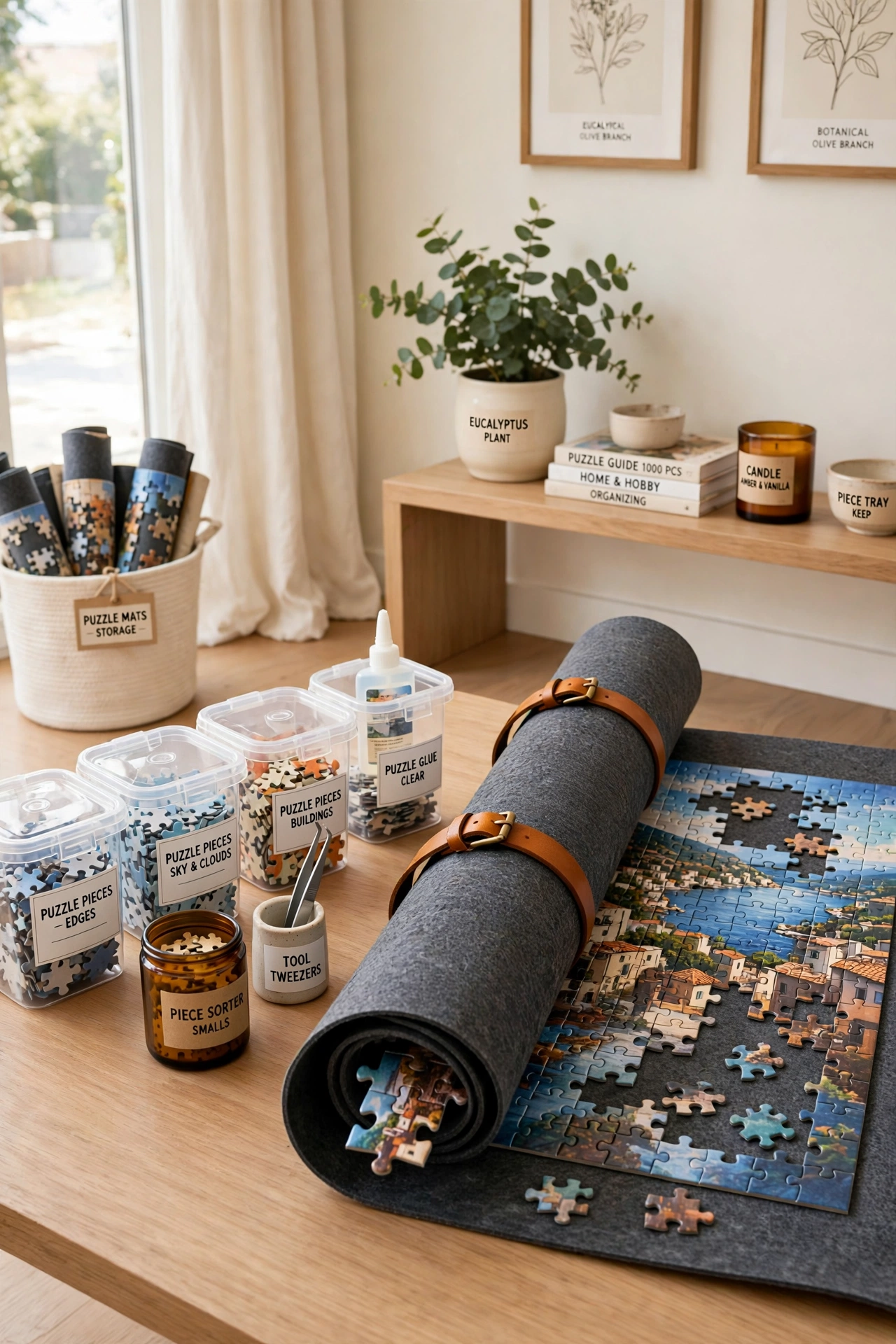
8. Protect Works in Progress With Puzzle Liners
A puzzle mat or liner keeps a half-finished puzzle safe while you take a break. Lay the mat flat, build your puzzle on top, and roll it up when you need the table back. The pieces stay in place inside the roll, so you can pick up exactly where you left off.
Choose a mat with a smooth surface and a strap or a tube to hold the roll tight. Store the rolled mat in a closet or behind the sofa until you are ready to play again. This simple tool means a big puzzle never has to stay spread across the dining table for days.
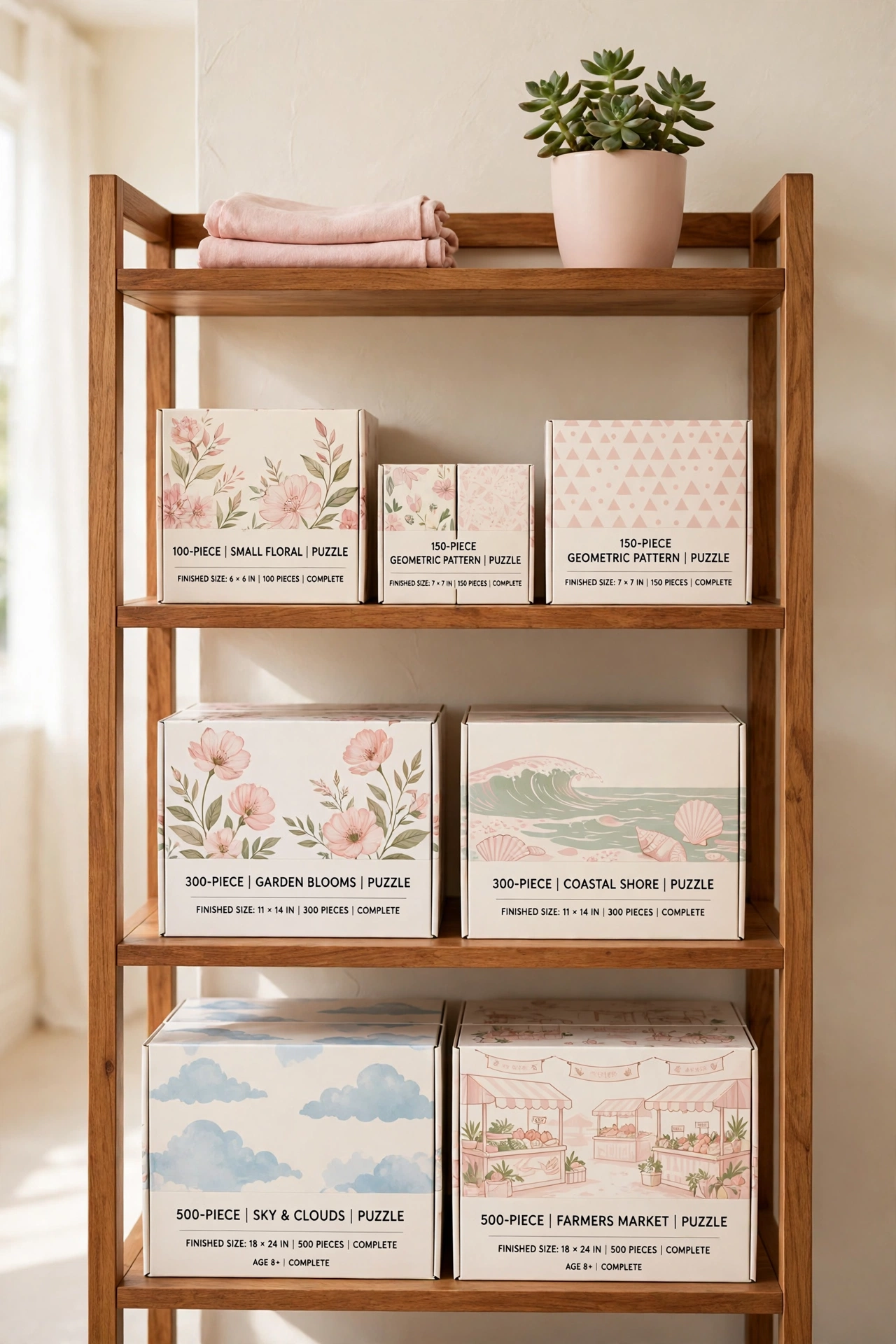
9. Show Off Puzzles With Smart Shelving
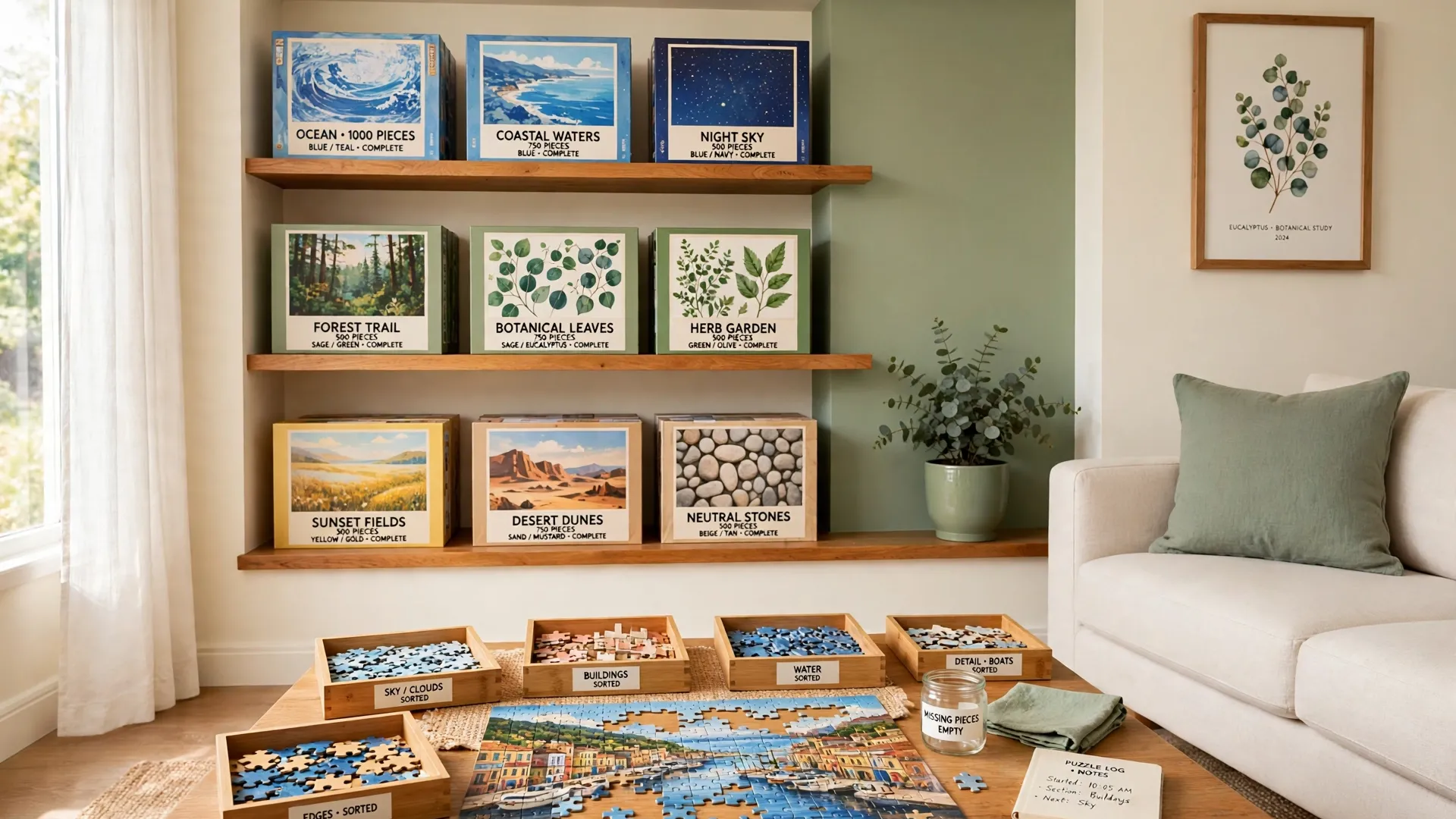
A shelving unit turns your puzzle collection into an attractive display. Arrange the boxes by color or size, mix in a small plant or a framed photo, and the shelf becomes a feature of the room instead of a storage problem. Open shelves also make it easy to pull a puzzle down and put it back.
Keep heavier boxes on the lower shelves so the unit stays stable and safe. For a full plan for a tidy play area, see these playroom organization ideas that pair well with smart shelving. Leave a little breathing room on each shelf so the display looks calm instead of crowded.
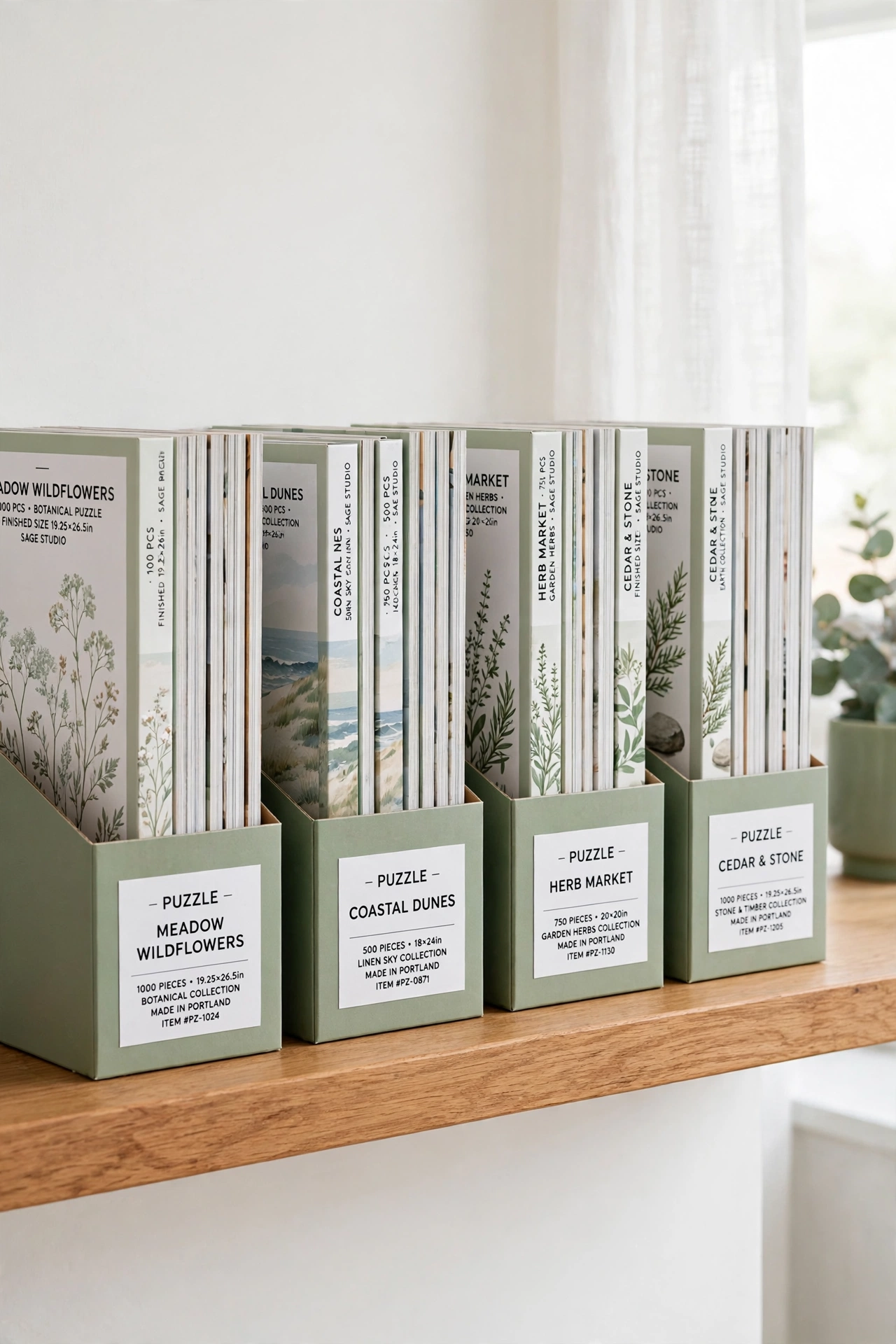
10. Stand Boxes Upright in Magazine Holders
Magazine holders keep puzzle boxes upright and well ordered, just like books on a shelf. Slide one box into each holder and line them up on a shelf or inside a cabinet. This method saves a lot of room and stops boxes from sliding into a messy pile.
Choose sturdy holders in wood, metal, or thick plastic that match your room. This idea works best for flat puzzle boxes that stand on their own. Label the spine of each holder so you can find the right puzzle without pulling every box out.
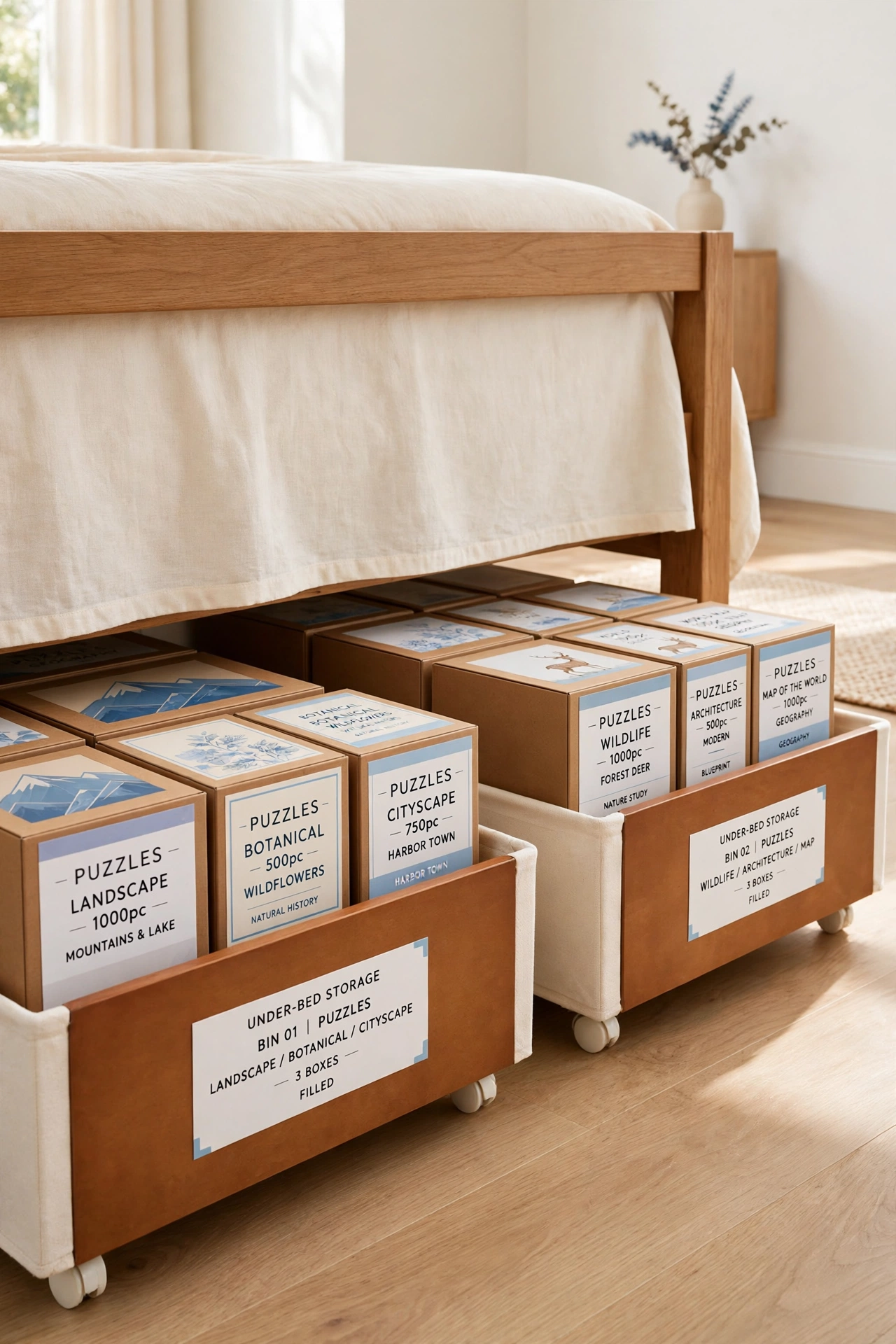
11. Slide Puzzles Into Below-the-Bed Storage
The space under the bed is a perfect hiding spot for puzzles you do not use every day. Slide flat bins or boxes underneath to keep them clean and out of the way. Many under-bed bins come with wheels, so you can pull them out easily when puzzle night arrives.
Choose shallow bins with lids so dust stays away from the boxes. For more ideas on using this hidden space well, see these under bed storage organization ideas. This is one of the best options for small homes where every inch of storage counts.
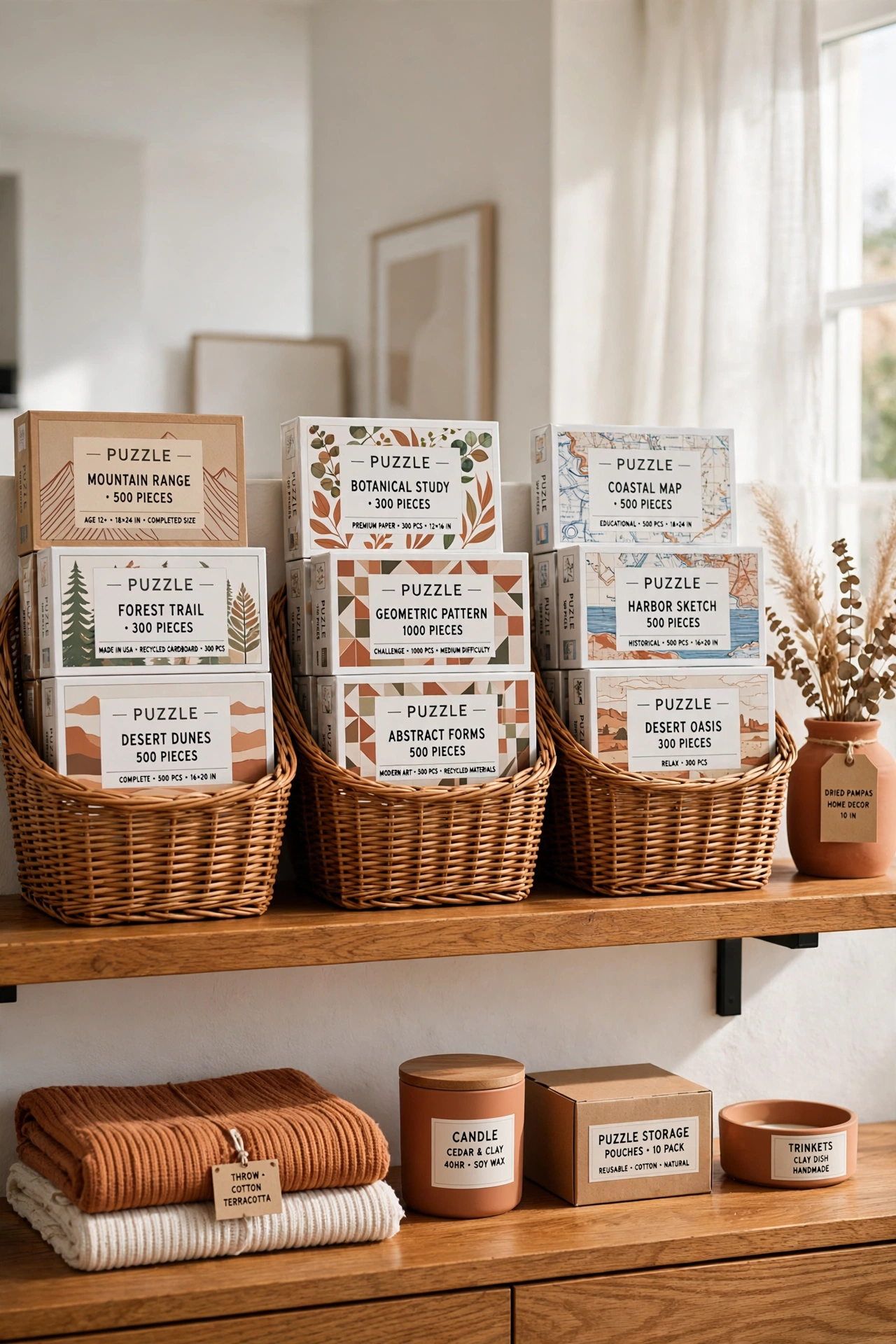
12. Gather Puzzles in Rustic Baskets
Rustic baskets add a cozy touch to any room while they keep puzzles neatly contained. Wicker baskets hold several puzzle boxes at once, and you can carry the whole basket to the table when it is time to play. The natural texture warms up a plain shelf or a corner.
Choose baskets with handles so they are easy to move from room to room. For more ways to store toys in baskets, see these stuffed animal storage ideas that use the same simple trick. Keep one basket per family member or per puzzle size so sorting stays easy.
13. Turn Old Boxes Into Upcycled Puzzle Storage
Old shoe boxes make wonderful puzzle storage with a little creativity. Cover them with pretty paper, paint them in your favorite colors, and add a label on the front. Each box holds one puzzle, and the whole set stacks neatly on a shelf.
This is a budget-friendly project that keeps useful boxes out of the trash. Let children decorate their own boxes so they feel proud of the result. Upcycled boxes work best for smaller puzzles, and they add a handmade charm that store-bought containers never have.
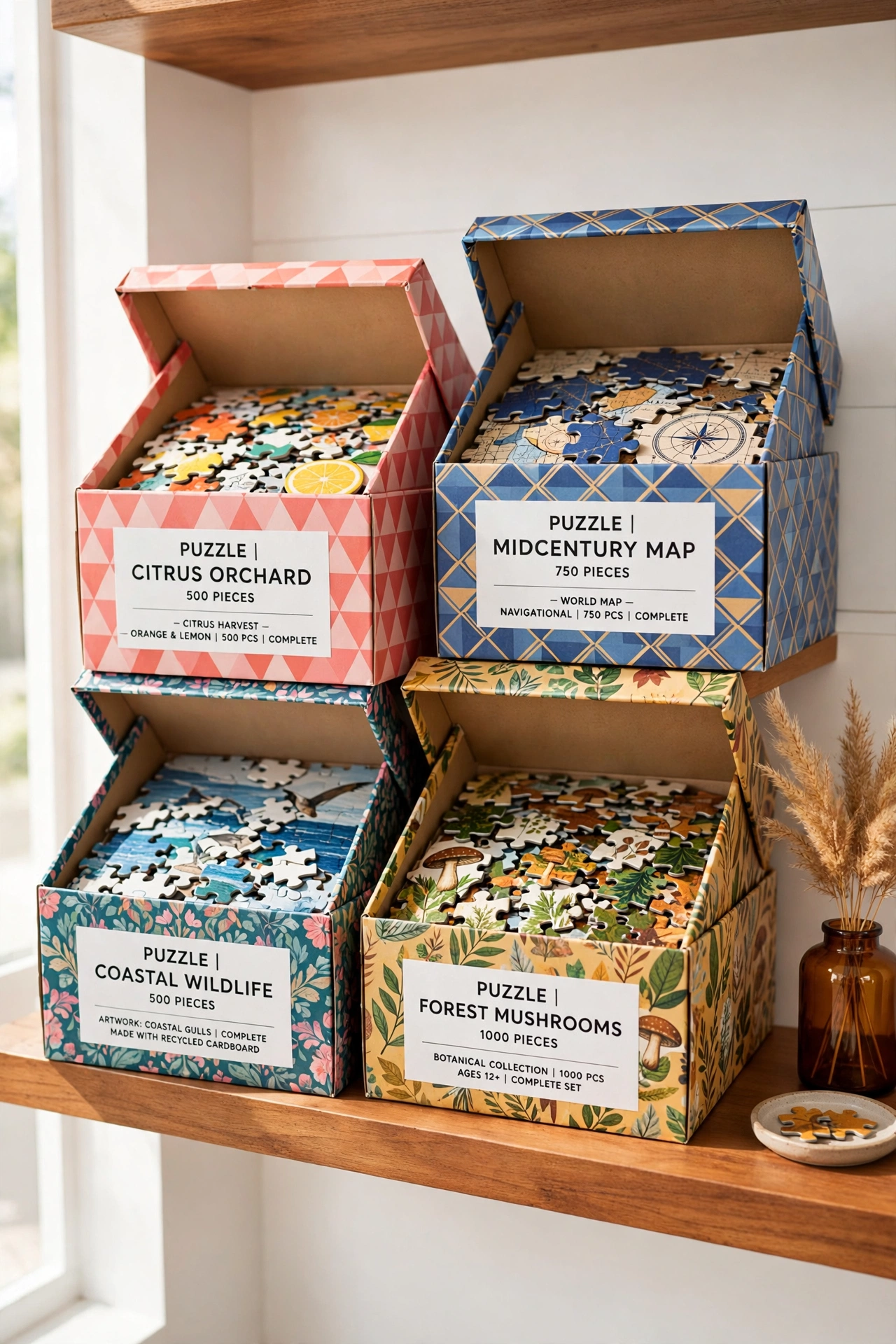
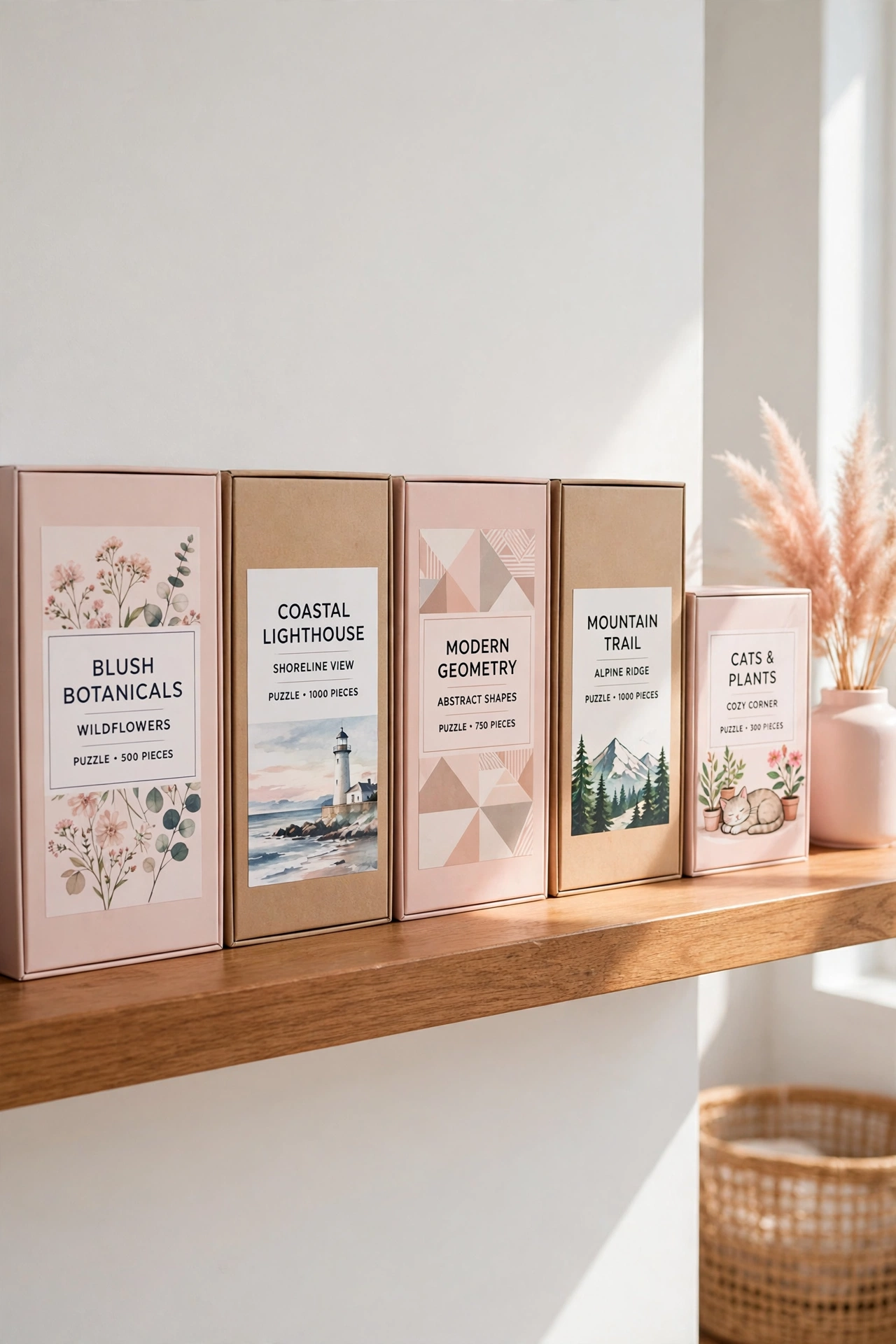
14. Find Favorites Fast With Smart Labeling
A labeling system makes your puzzle collection easy to use for everyone in the family. Label each box with the puzzle name, the piece count, and the difficulty level, so you can pick the right puzzle for the time you have. Sorting by theme or by age group keeps things fun and organized.
Use a label maker or neat handwritten tags on white labels for the clearest result. Place the label where you can read it without moving the box. Good labels mean you never have to open five boxes to find the one puzzle you want.
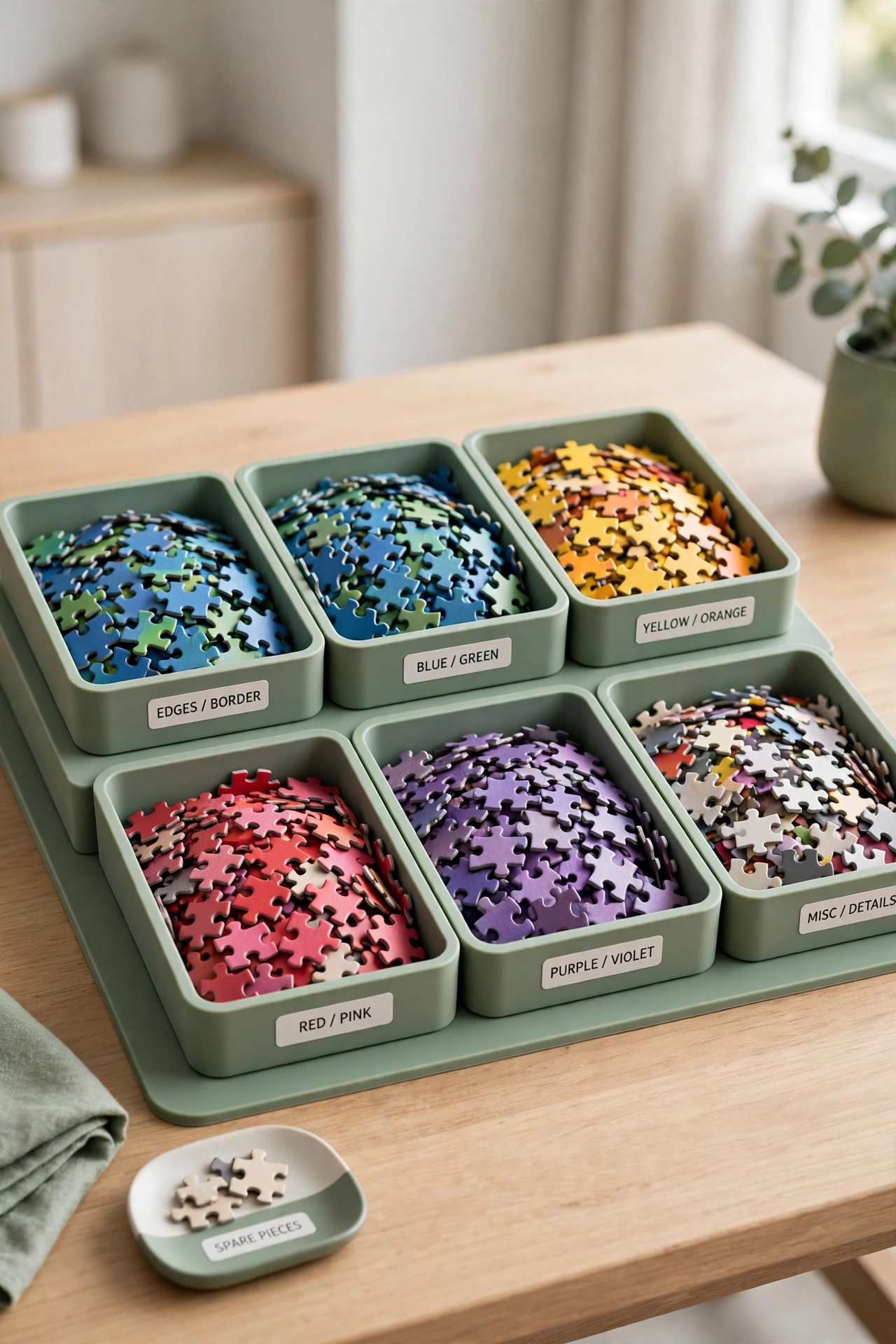
15. Work on a Dedicated Puzzle Surface
A dedicated puzzle board gives you a special place to work on puzzles without taking over the dining table. Many boards have built-in sorting trays for pieces, so edge pieces, colors, and shapes each get their own spot. The board slides away under a sofa or behind a door when you finish for the day.
Choose a board large enough for the puzzles you love most, with a smooth surface that lets pieces slide into place. A board with a cover keeps dust off a work in progress. This is the best choice for serious puzzle fans who return to the same puzzle over several evenings.
Conclusion
Puzzle organization does not have to be complicated or expensive. From a simple labeled box to a dedicated puzzle board, there is an idea here for every collection and every home. The best solution is the one that keeps your puzzles safe and your playtime stress-free.
Pick one or two ideas that fit your space and start today. Sort your puzzles, label every box, and enjoy a tidier home. For a full system that keeps every toy in its place, these toy rotation ideas will help you manage the whole playroom with ease.
Frequently Asked Questions About Puzzle Organization Ideas for Pieces and Boxes
How do I store puzzle pieces so none get lost?
Keep all the pieces of one puzzle together in a zip-top mesh pouch or a labeled box with a tight lid. Store the pouch inside the puzzle box or in a file box with the other puzzles. Count the pieces when you finish a puzzle so you know right away if one is missing.
What is the best way to store puzzle boxes in a small home?
Use vertical storage like stackable boxes, magazine holders, or under-bed bins to save floor space. Puzzle envelopes take up even less room than boxes, so a whole collection can fit in one drawer. Choose one vertical system and keep the rest of your puzzles in a closet.
How do I keep a puzzle safe while it is half finished?
Build the puzzle on a puzzle mat or a dedicated puzzle board, then roll up the mat or slide the board under a sofa when you need the table. A cover or a lid keeps dust off the pieces. This way a big puzzle never has to stay spread across the dining table for days.
Should I keep the original puzzle box or use a pouch?
Keep the original box if you like the picture on the front or plan to gift the puzzle later. Use a mesh pouch if space is tight, since pouches take up far less room than boxes. Either way, label the pouch or the box clearly so you can find the puzzle again.
How do I organize puzzles for children of different ages?
Sort puzzles by age group and piece count, and give each group its own labeled bin or shelf. Keep easy puzzles low where small children can reach them, and store harder puzzles higher up for older kids. A simple color code, one color per age group, makes the system easy for everyone to follow.

Hi, I’m Emily! I turn messy corners into cozy, organized spots. DreamNestDecor is where I share simple, practical home ideas — decor, organization, and small-space solutions that work in real life, not just in photos. Every idea here is carefully researched before it’s shared.