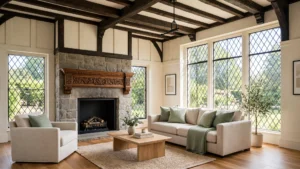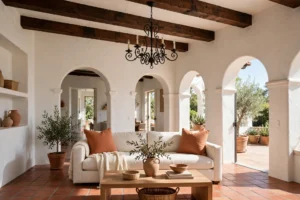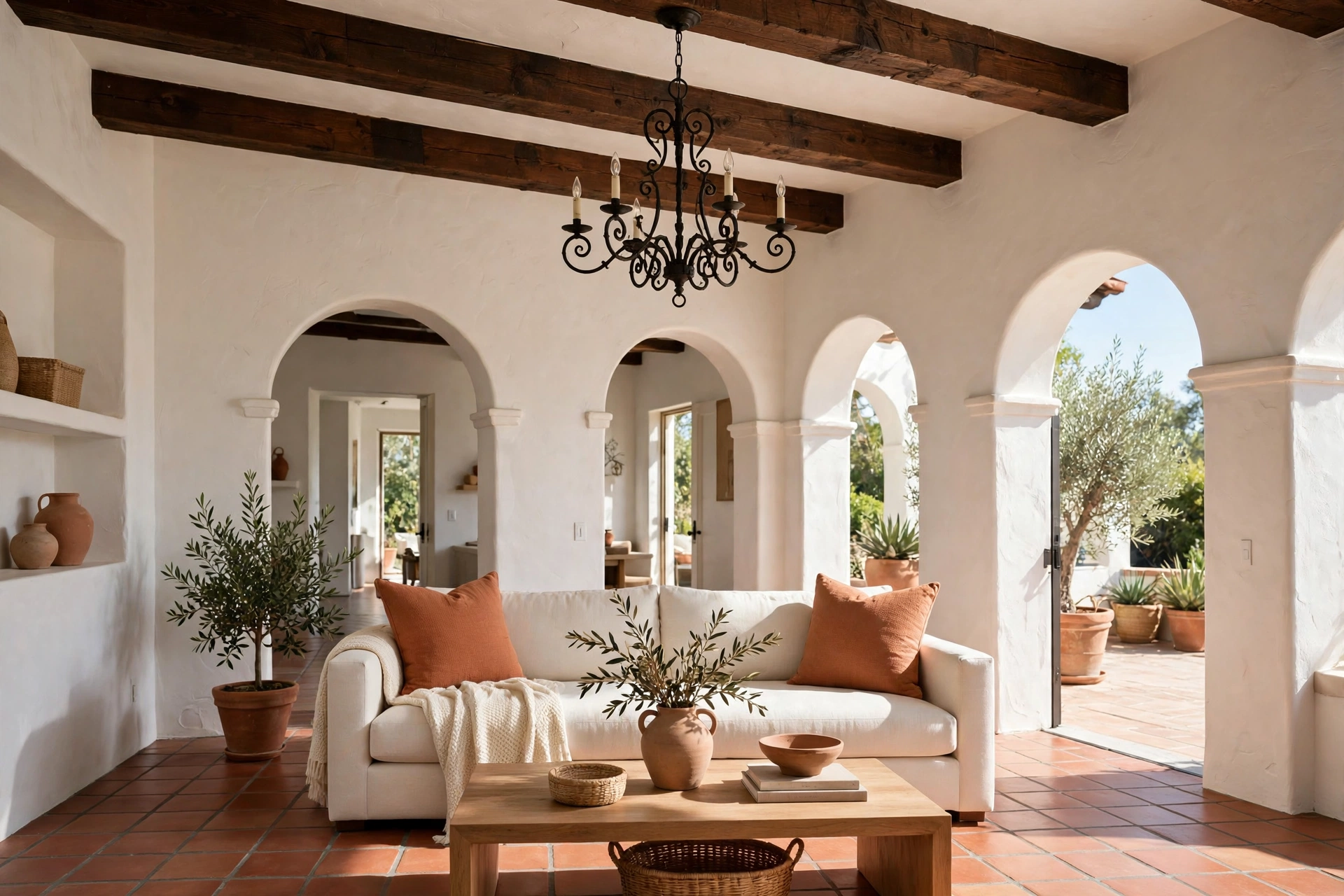
Picture this: you step through a heavy carved wooden door into a home that feels warm, sunlit, and full of old-world charm. Arched doorways frame each room, terracotta tiles glow underfoot, and dark wood beams cross a high ceiling above you. That timeless feeling is exactly what Spanish Revival interior design gives a classic home.
You do not need a historic villa or a large budget to bring this look home. All you need is the right mix of warm plaster, natural wood, handmade tile, and wrought iron details. These 32 Spanish Revival interior design ideas will help you fill every room with rich color, honest materials, and a calm Mediterranean warmth that never goes out of style.
1. Start with Warm White Plaster Walls
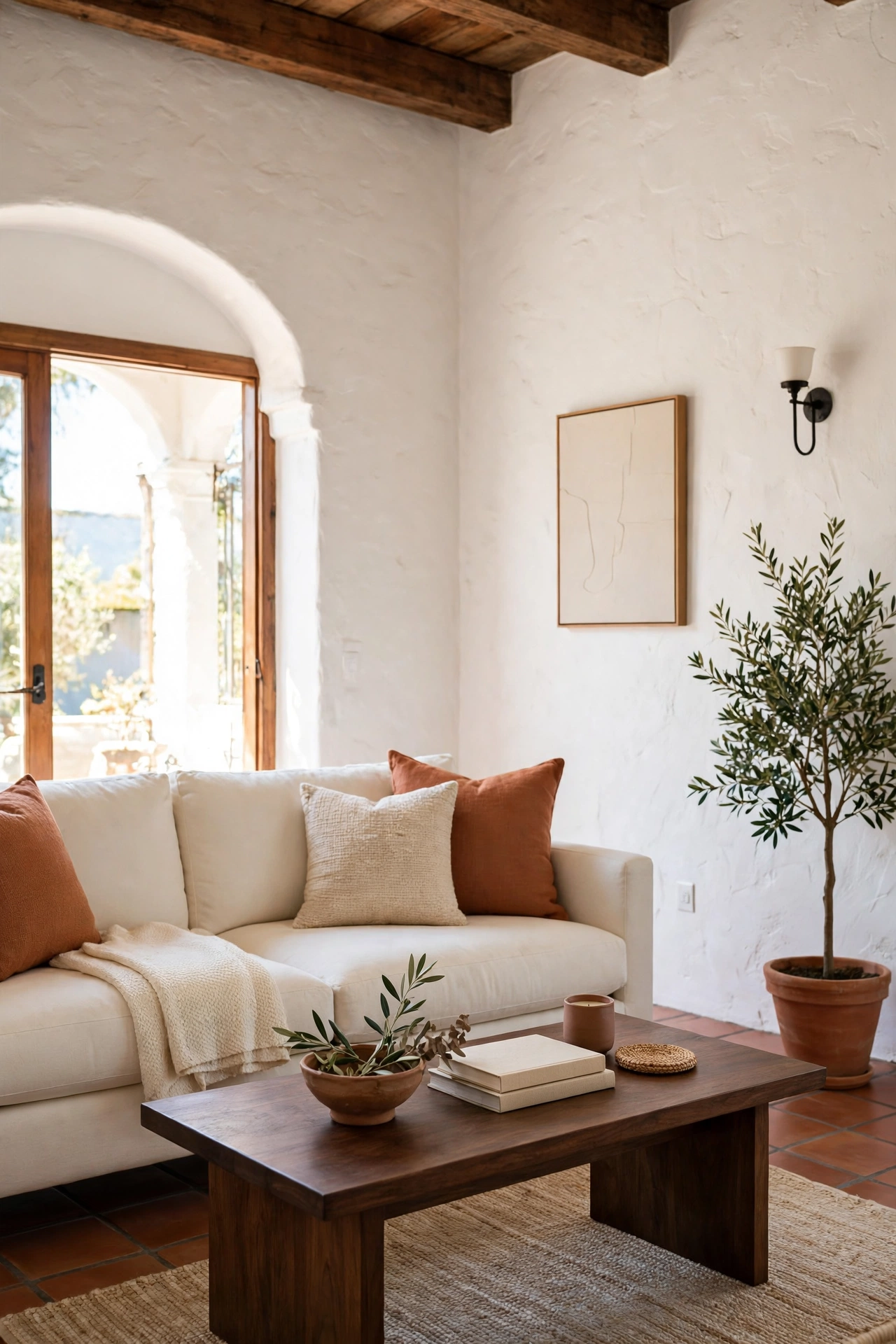
Warm white plaster walls are the foundation of every Spanish Revival interior. The soft, slightly uneven surface catches the light in a gentle way that flat painted drywall never can. A warm white with a hint of cream keeps rooms bright while adding depth and character.
Choose a plaster finish with a light texture for the most authentic look. If real plaster is beyond your budget, a lime wash paint gives a similar soft, cloudy effect on ordinary walls. Keep the walls simple so the wood, tile, and iron details in the room can shine.
2. Add a Terracotta Tile Floor
Terracotta tile floors are the most recognizable feature of Spanish Revival homes. The warm orange-brown color grounds every room and pairs beautifully with cream walls and dark wood. Saltillo tiles, with their handmade look and soft color variation, are the classic choice.
Seal the tiles well so they resist stains and stay easy to clean. In cooler climates, add radiant heat under the tile so the floor feels warm underfoot in winter. A terracotta floor works in living rooms, kitchens, hallways, and even bedrooms.
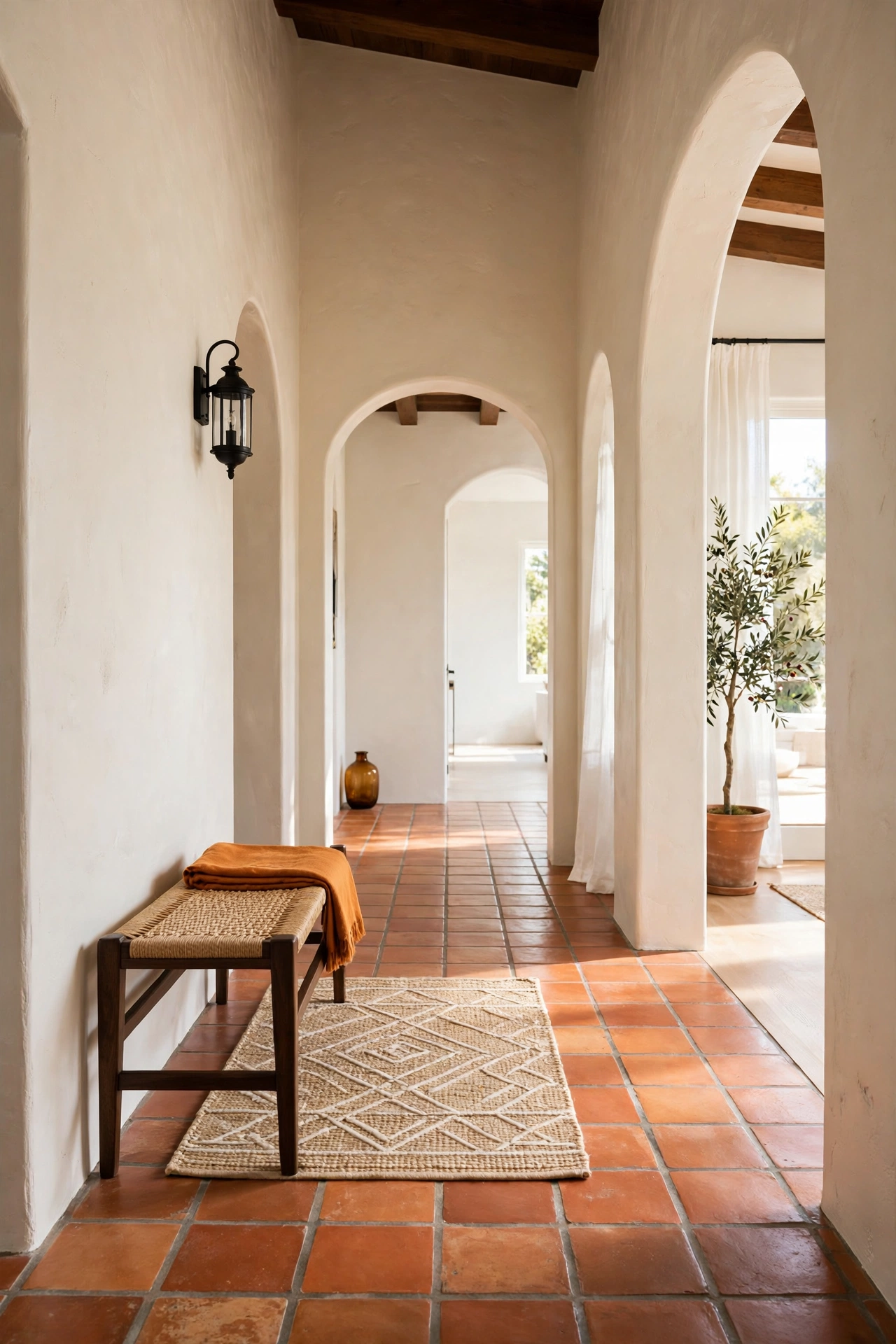
3. Build a Grand Arched Doorway
Arched doorways turn an ordinary passage into a beautiful feature. A wide, graceful arch between the living room and dining room creates flow while keeping each space distinct. The soft curve adds romance and history to the whole home.
Frame the arch with smooth plaster and a slightly darker edge for definition. If you are building new, make the arch tall and generous so it feels grand rather than cramped. For more ideas on using arches well, see these interior arch design ideas.
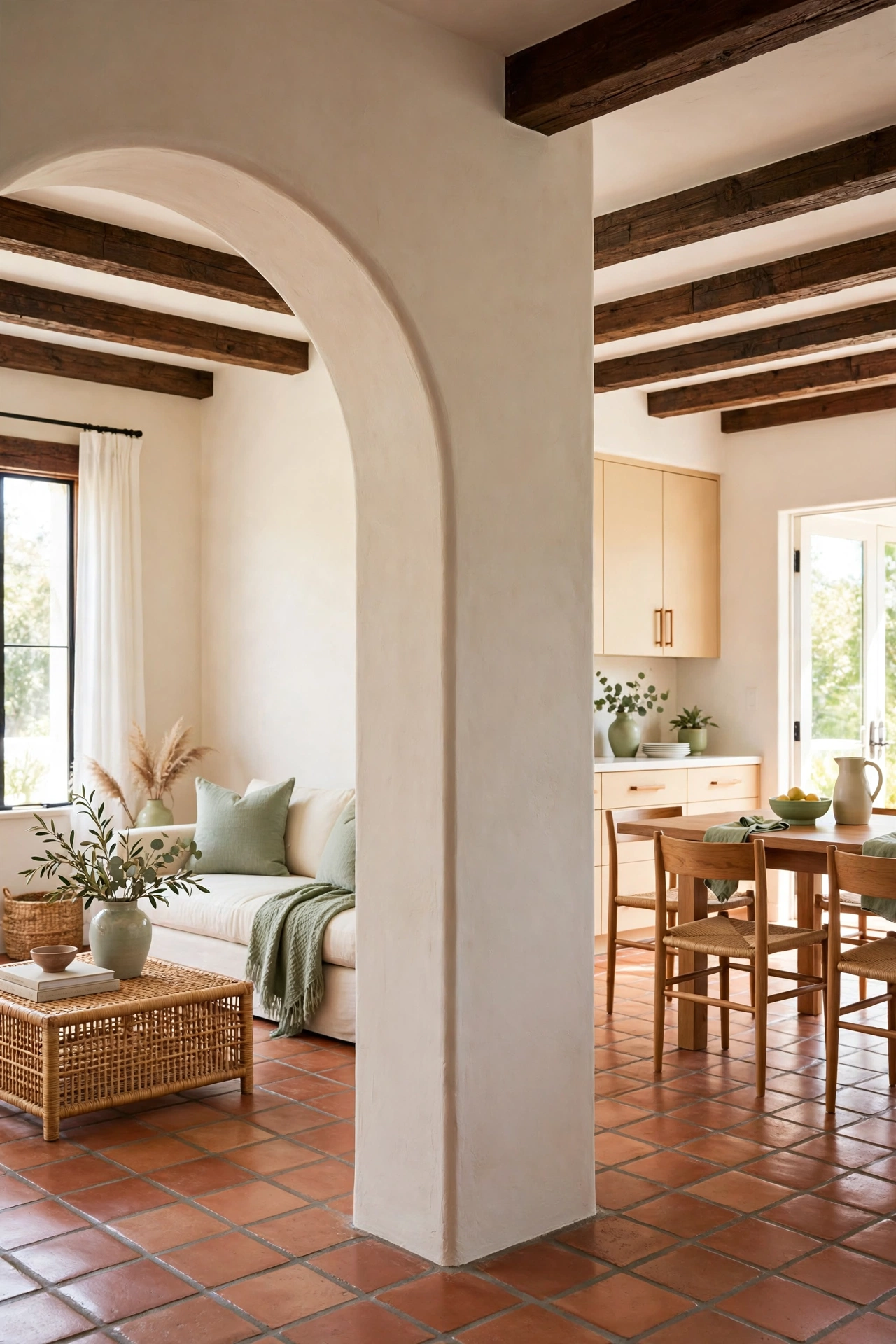
4. Choose Dark Wood Ceiling Beams
Dark wood ceiling beams bring instant warmth and structure to a Spanish Revival room. Heavy beams across a high ceiling draw the eye upward and make the space feel grand. Rough-hewn or hand-scraped wood looks the most authentic.
Paint the ceiling between the beams a soft warm white so the dark wood stands out. In rooms with low ceilings, use slimmer beams placed close together for the same effect without making the room feel heavy. The beams also hide wiring and add a handcrafted feel.
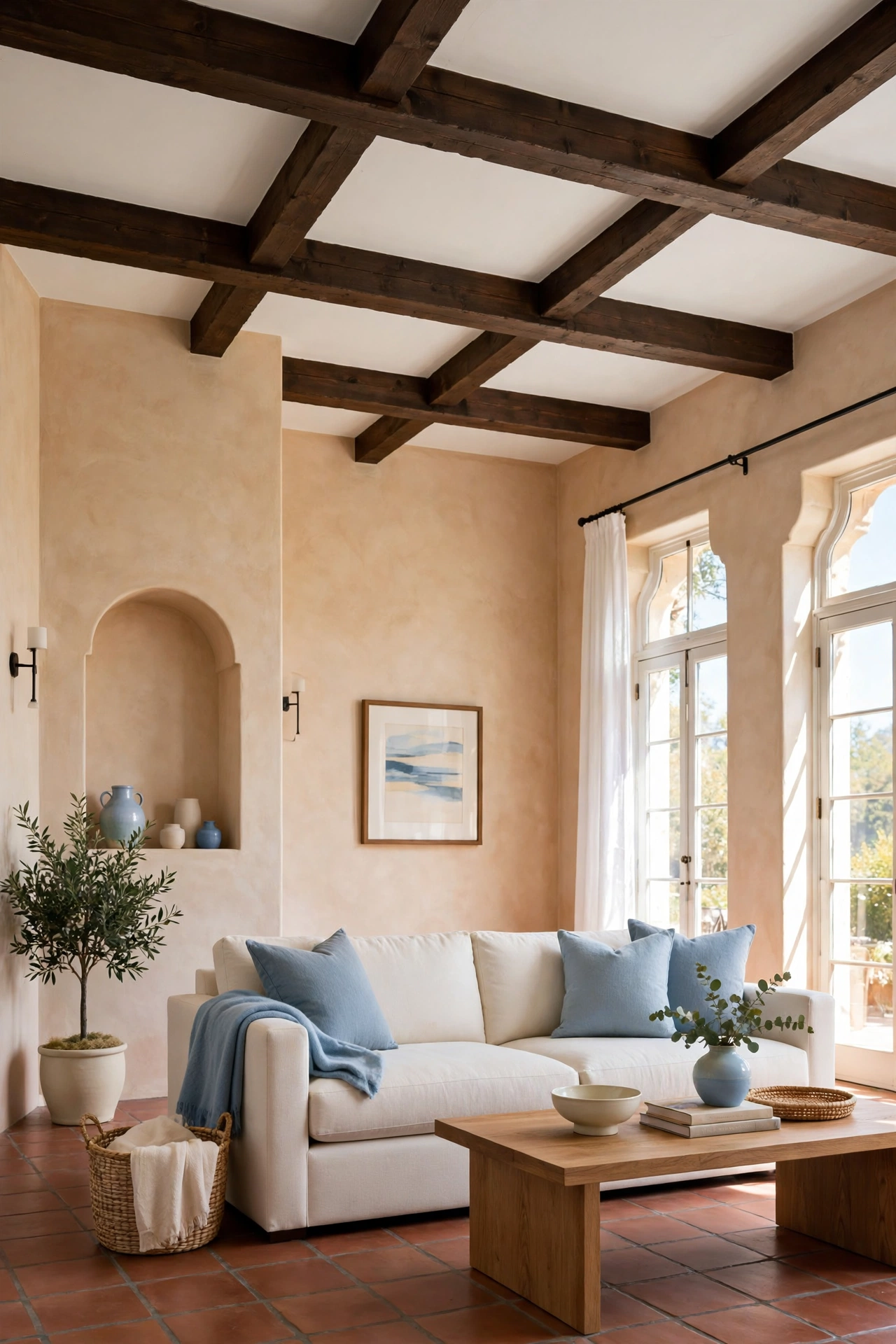
5. Install a Wrought Iron Chandelier
A wrought iron chandelier is the crown of a Spanish Revival dining room or entryway. The dark metal curves and candle-style lights cast a warm glow that suits the style perfectly. Choose a large fixture so it matches the scale of the room.
Hang the chandelier low enough to light the table well, about 30 inches above the surface. Pair it with smaller iron sconces on the walls for a layered look. The dark iron contrasts beautifully with warm plaster and terracotta floors.
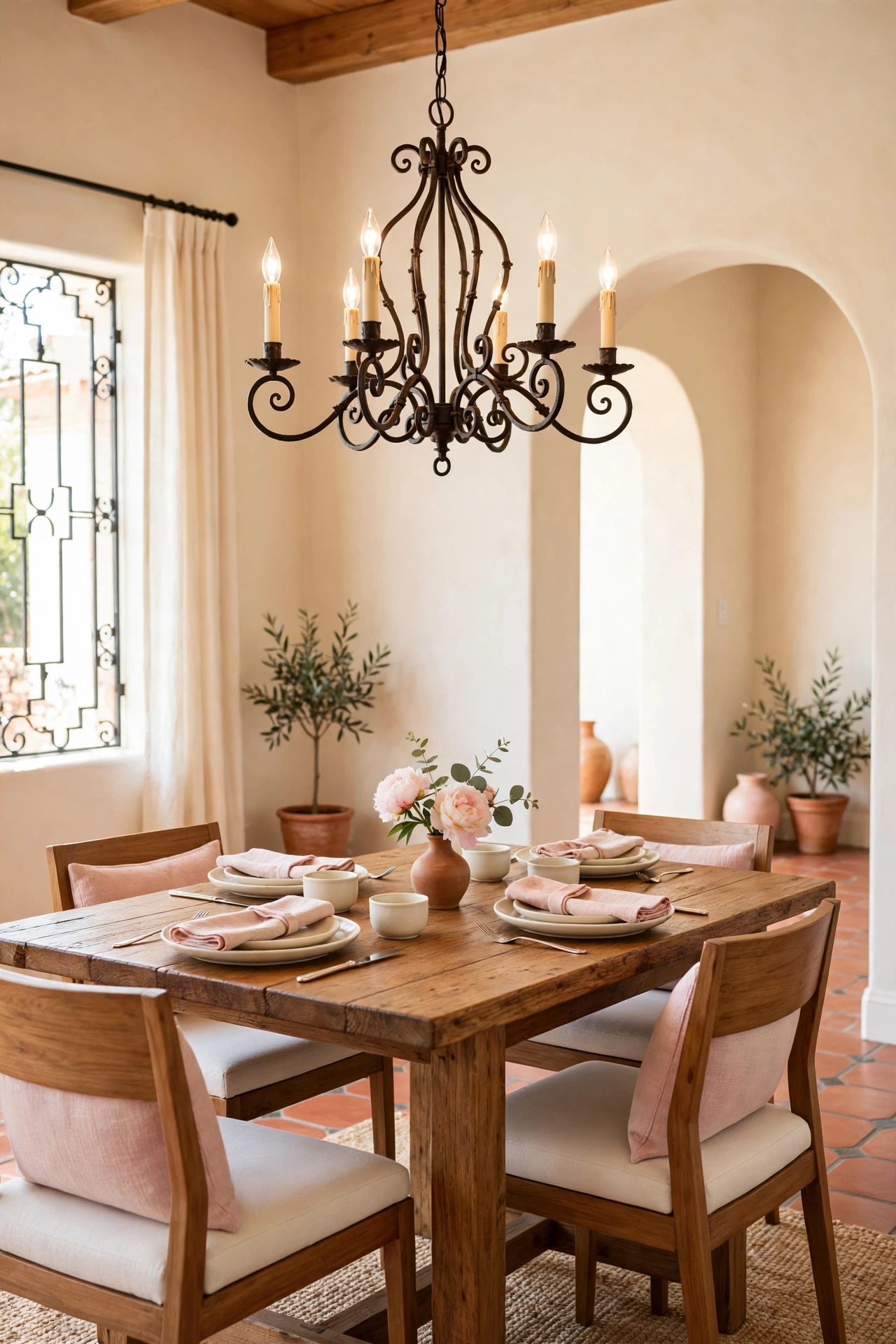
6. Use Saltillo Tiles in the Kitchen
Saltillo tiles in the kitchen floor bring the warmth of the outdoors inside. Their handmade character, with soft color shifts from peach to deep rust, makes the kitchen feel lived in and welcoming. The tiles also hide crumbs and wear far better than a plain floor.
Pair the floor with cream cabinets and a dark wood island for a balanced look. A matte sealer keeps the tiles looking natural while protecting them from spills. Saltillo tiles age gracefully, gaining character with every year of use.
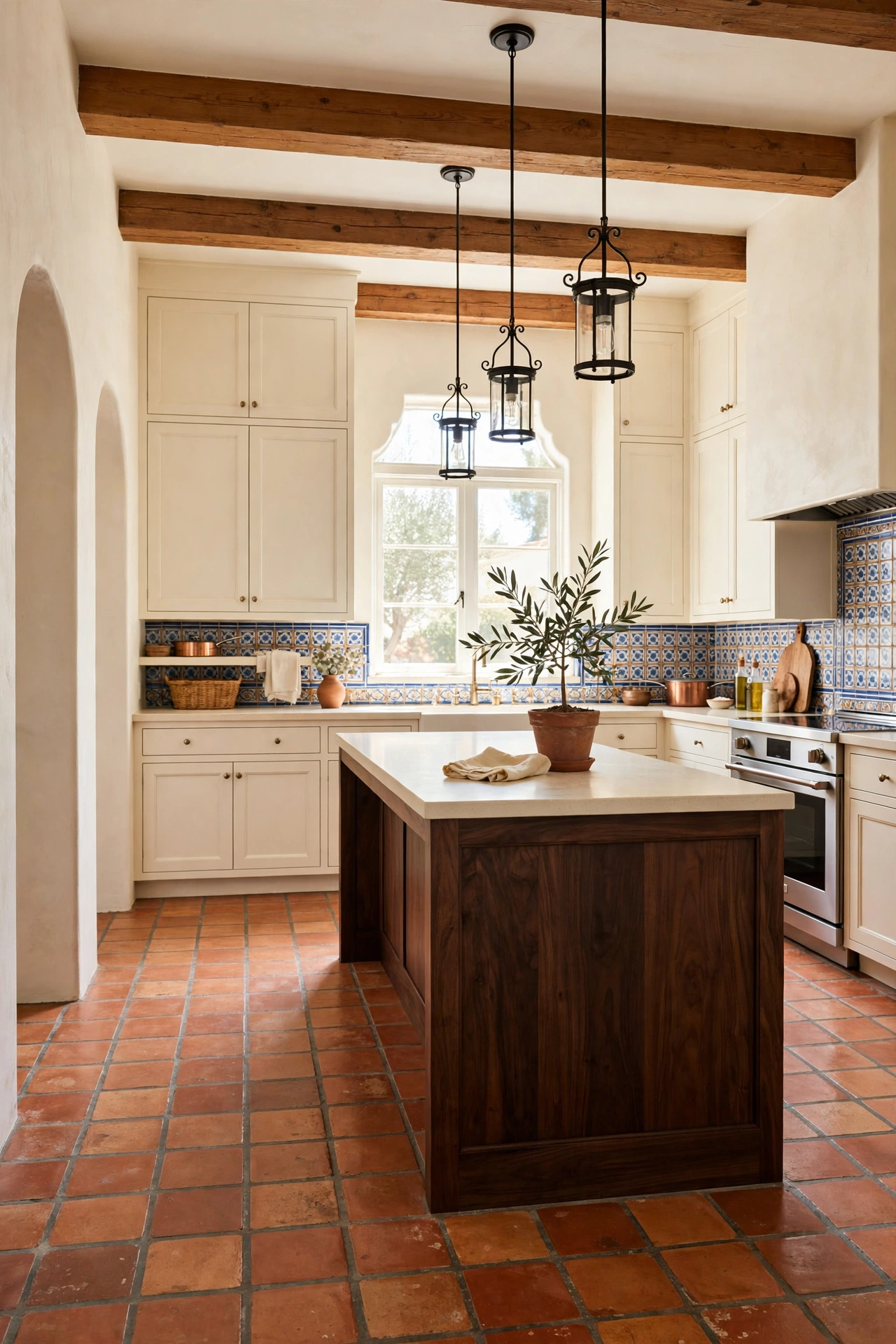
7. Add Hand-Painted Talavera Tiles
Hand-painted Talavera tiles add color and craft to a Spanish Revival home. Their bold blues, greens, and yellows come from a centuries-old pottery tradition. Use them as a kitchen backsplash, a stair riser detail, or a border around a fireplace.
Keep the rest of the room calm so the painted tiles become the star. A small area of Talavera tile has more impact than a whole wall of it. For more ideas on using tile as a feature, see these affordable bathroom tile makeover ideas.
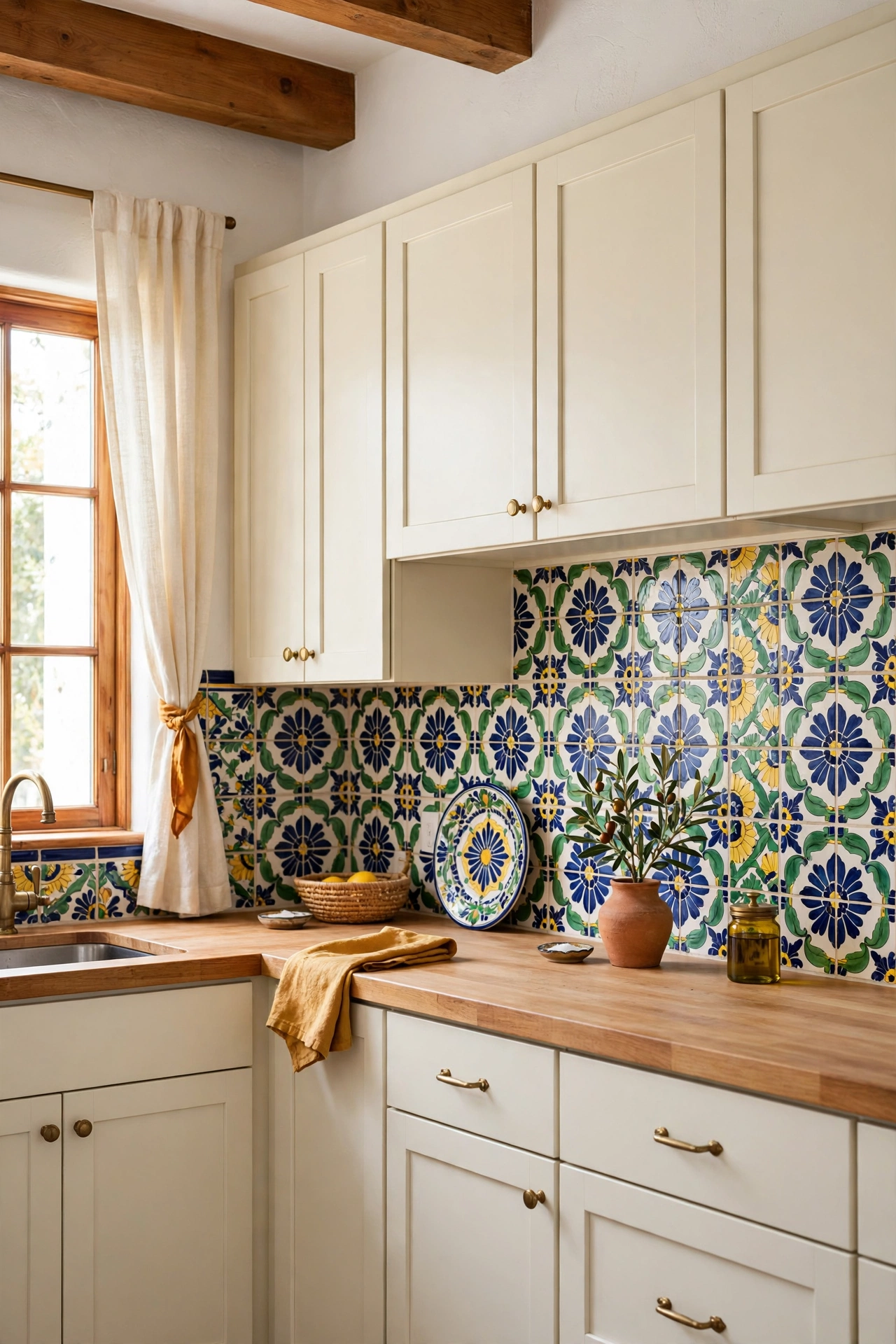
8. Create a Courtyard-Style Entryway
A courtyard-style entryway brings the outdoors into the heart of the home. Place a small fountain or a large terracotta planter near the front door, and let natural light pour in from above. The entry feels like a private garden rather than a plain hallway.
Add a wrought iron bench and a woven rug to make the space welcoming. Potted olive trees or citrus plants in clay pots complete the courtyard feeling. For more Mediterranean outdoor ideas, see these Mediterranean porch ideas.
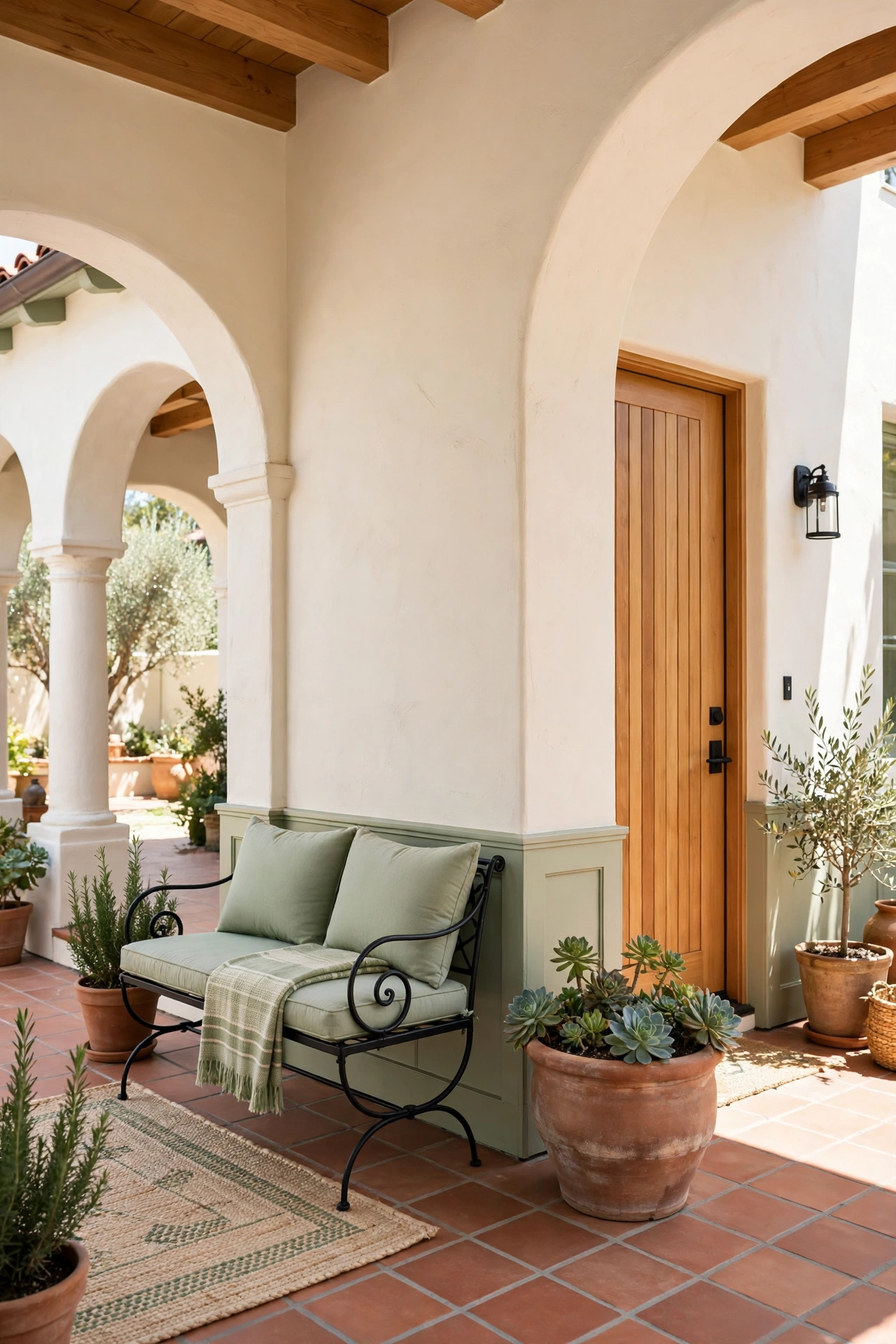
9. Choose a Carved Wooden Front Door
A carved wooden front door sets the tone for the entire home before anyone steps inside. Heavy planks, hand-carved panels, and black iron hardware give the entrance a sense of history and strength. A tall arched door makes the strongest statement of all.
Choose a rich dark stain that shows off the wood grain. Add a wrought iron handle and studs for an authentic finish. The front door is the first detail guests see, so make it one worth remembering.
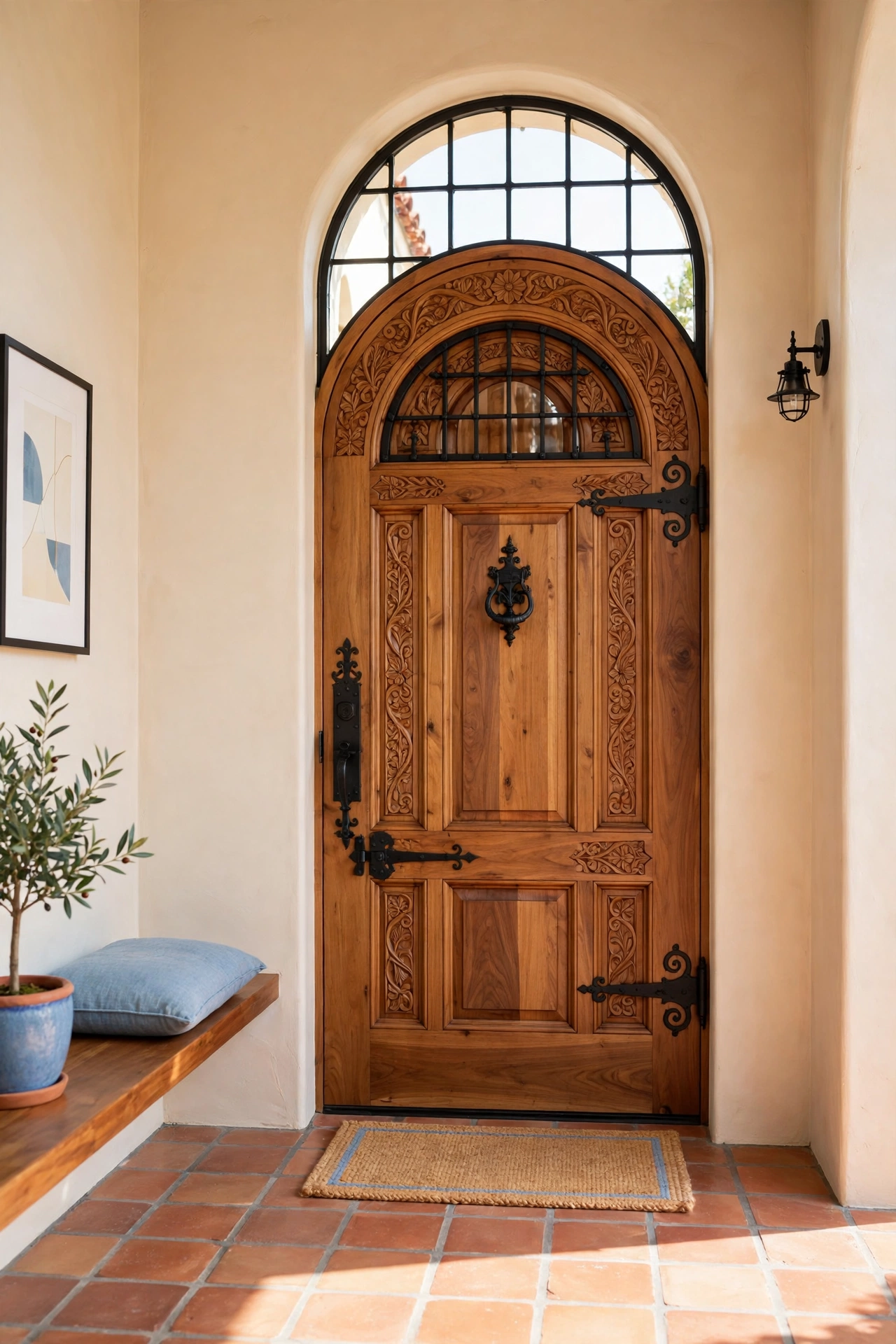
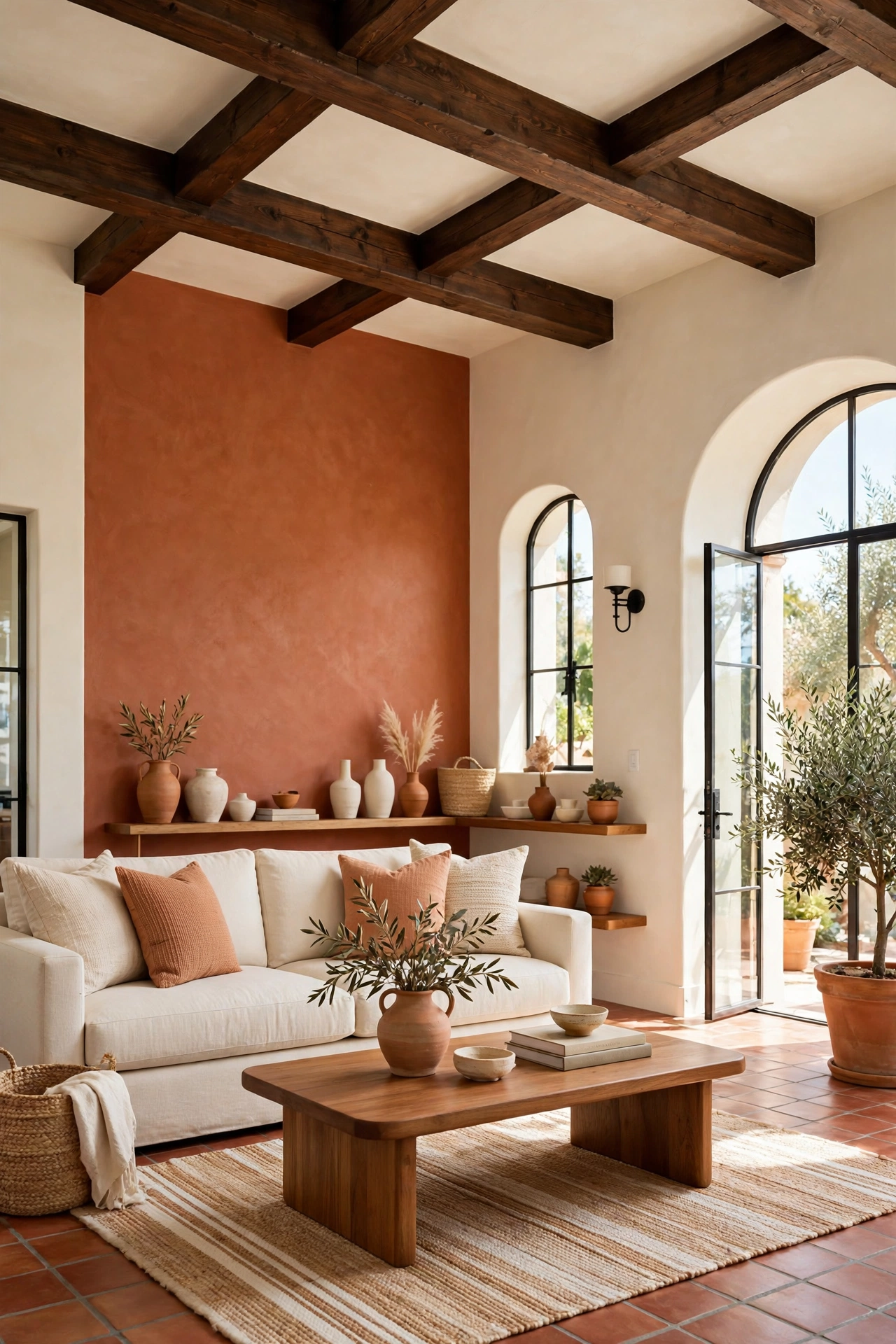
10. Use Warm Earthy Paint Colors
Warm earthy paint colors are the heart of the Spanish Revival palette. Terracotta, ochre, warm gold, and soft sage sit beautifully beside cream plaster and dark wood. Use the deepest colors on one accent wall and keep the rest light.
Test paint samples in daylight and lamplight before you commit, since warm colors shift a lot between the two. A single terracotta accent wall behind the sofa can warm a whole living room. The goal is a room that feels sunlit even on a cloudy day.
11. Add a Spanish-Style Fireplace
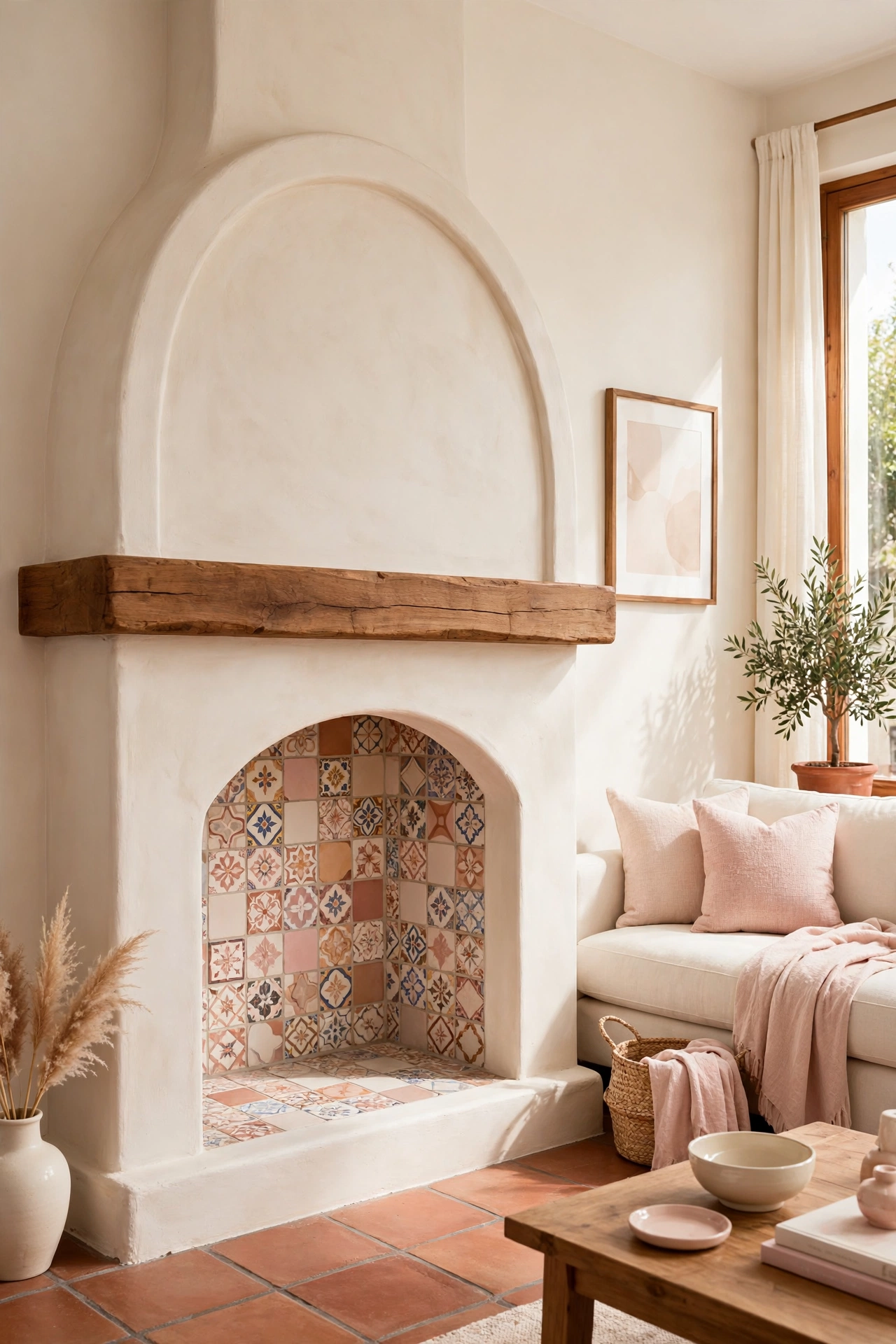
A Spanish-style fireplace becomes the natural heart of the living room. A wide plaster surround with a rounded arch, a thick wooden mantel, and handmade tiles inside the firebox create a focal point full of character. The fireplace should feel solid and hand-built.
Decorate the mantel simply with a pair of candlesticks and a ceramic vase. Avoid covering the plaster with heavy ornament, since the shape itself is the decoration. A fire crackling in a Spanish fireplace makes the whole room feel like a retreat.
12. Choose Leather Furniture in Rich Tones
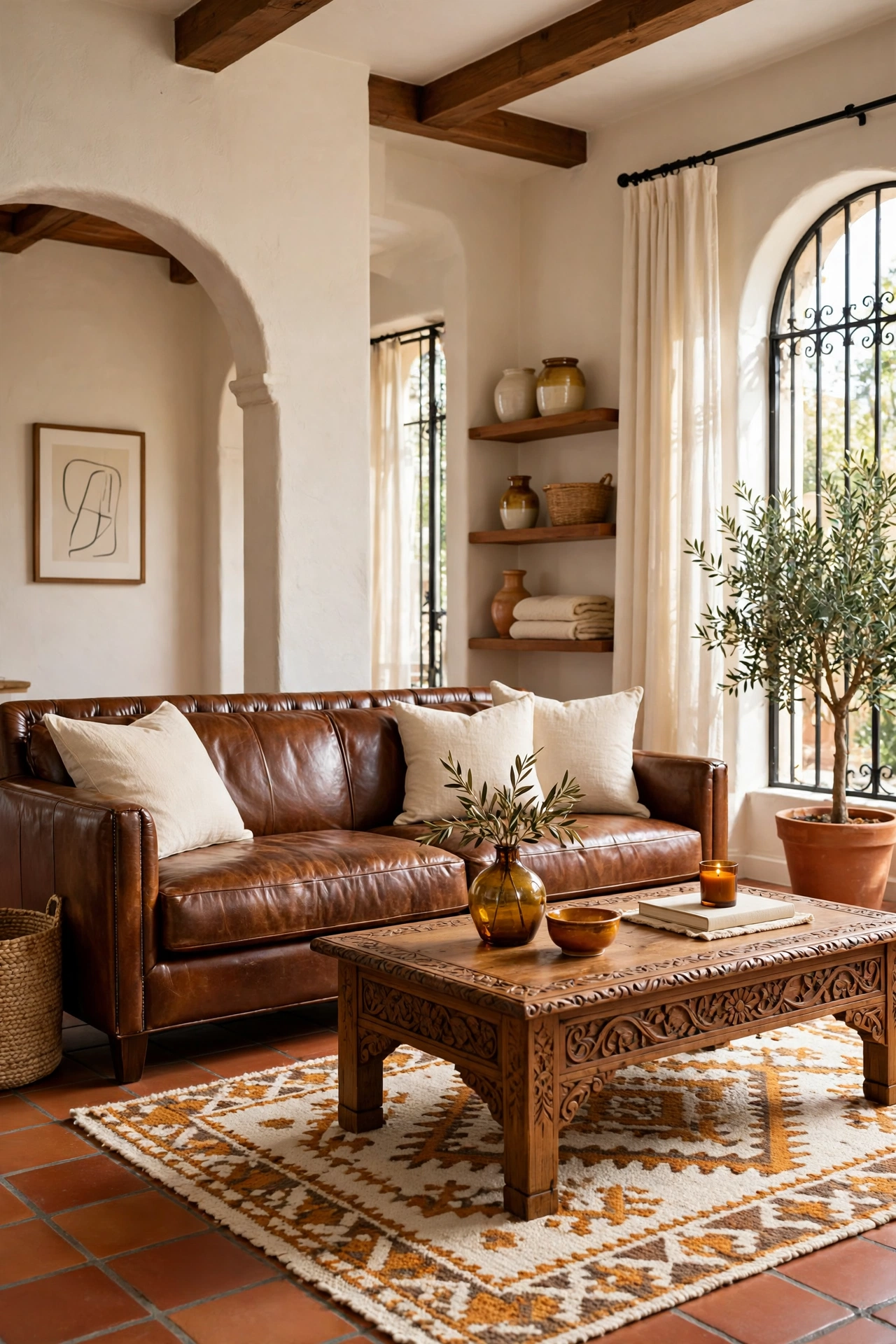
Leather furniture in rich tones suits Spanish Revival rooms perfectly. A deep brown or cognac leather sofa ages beautifully and grows more comfortable with use. The smooth leather contrasts nicely with rough plaster and woven textiles.
Pair the sofa with a carved wooden coffee table and a woven wool rug. Add cushions in warm linen and muted patterns to soften the leather. For more ideas on styling classic furniture, see these antique furniture styling ideas.
13. Hang Wrought Iron Wall Sconces
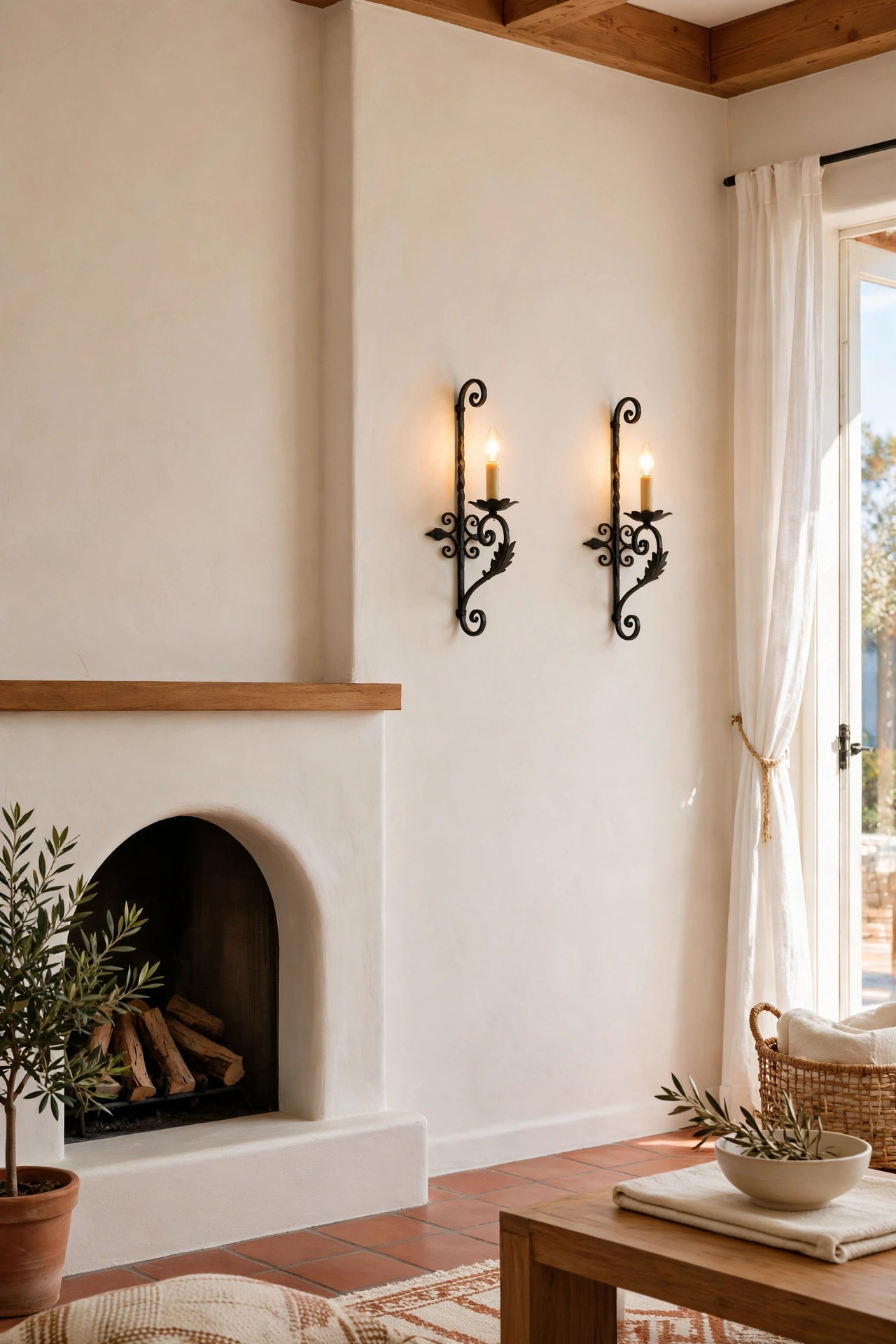
Wrought iron wall sconces add warm, flickering light to hallways and living rooms. Their dark metal curves echo the chandelier and the window grilles, tying the whole home together. Candle-style bulbs give the softest, most flattering glow.
Place sconces in pairs on either side of a fireplace, a mirror, or a large piece of art. Keep them at eye level so the light washes the plaster walls gently. Sconces are a small detail that makes a big difference after dark.
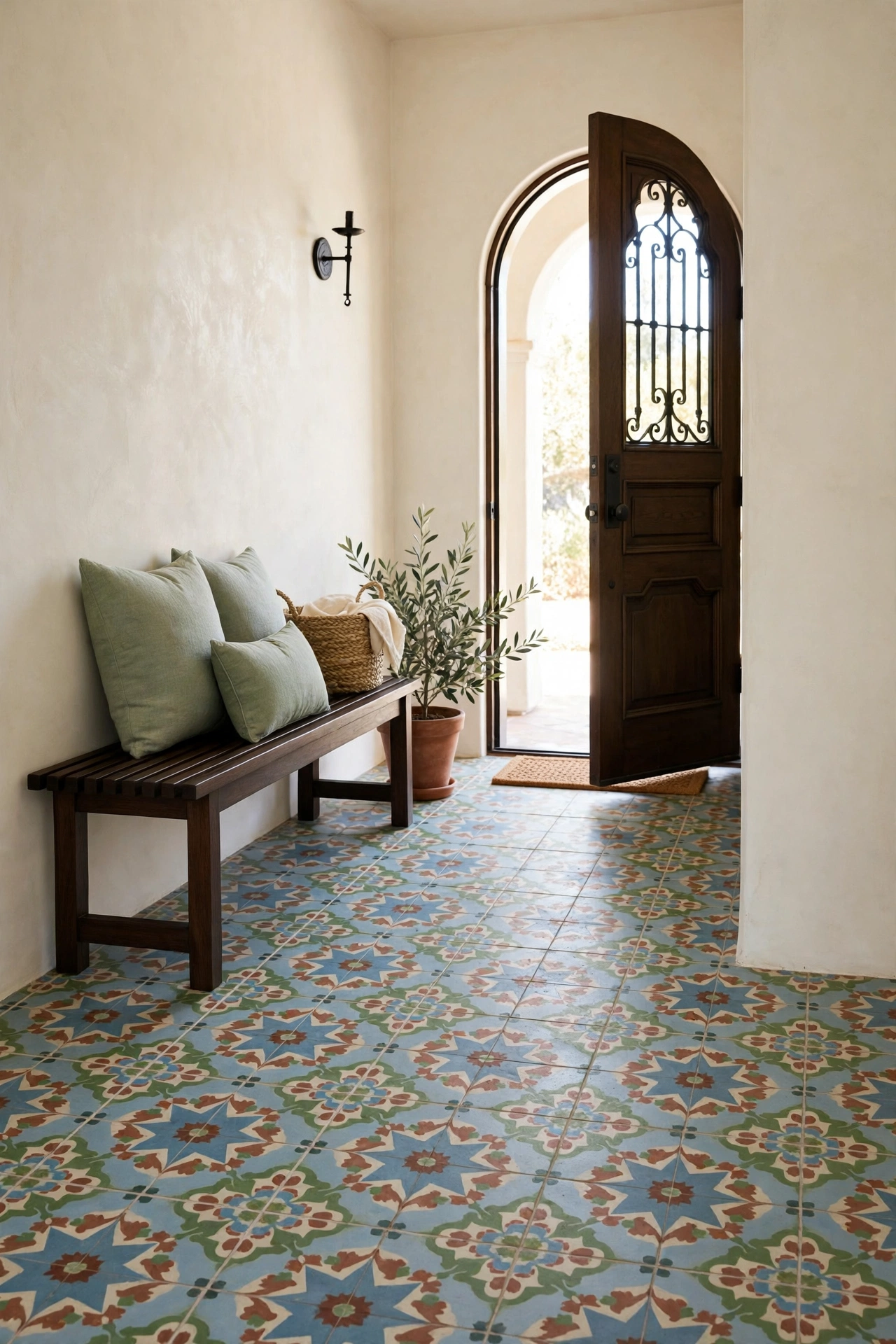
14. Use Patterned Cement Tiles
Patterned cement tiles bring bold geometry to Spanish Revival floors. Classic star, cross, and floral patterns in muted blues, greens, and terracotta look stunning in entryways, bathrooms, and kitchens. The patterns feel historic yet fresh.
Use patterned tile in one area only, such as the entryway floor, and keep the surrounding floors plain. Seal cement tiles carefully, since they are porous and can stain. A patterned floor becomes a piece of art you walk on every day.
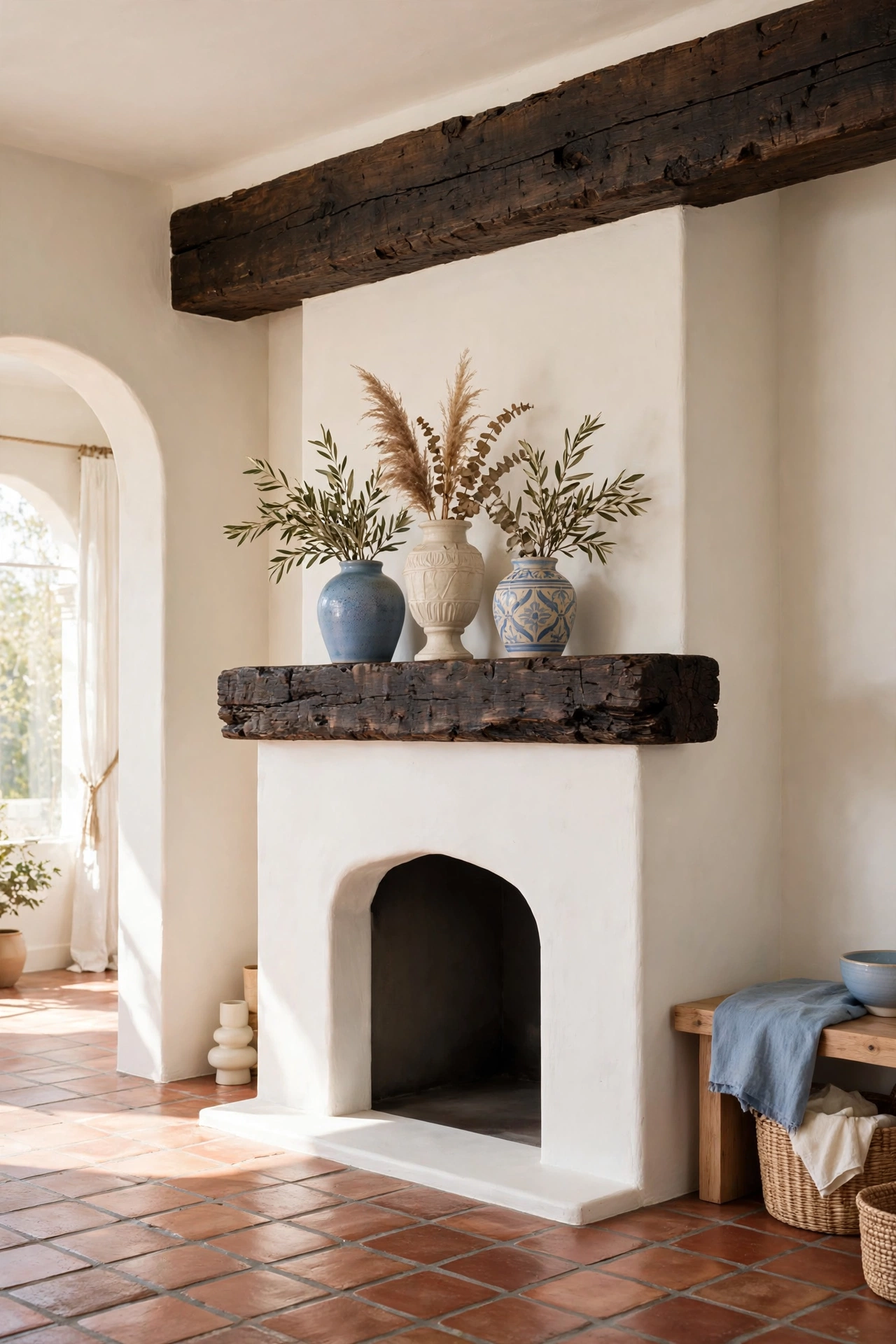
15. Add a Wooden Beam Mantel
A thick wooden beam mantel gives a fireplace a rustic, handcrafted crown. A single rough-hewn beam, dark stained and slightly uneven, suits the Spanish Revival style better than a polished modern shelf. The beam should look like it came from an old barn.
Mount the beam securely into the wall studs so it can hold heavy decor. Keep the mantel styling simple with a few ceramic pieces or a row of books. The natural wood grain and warm color anchor the whole fireplace wall.
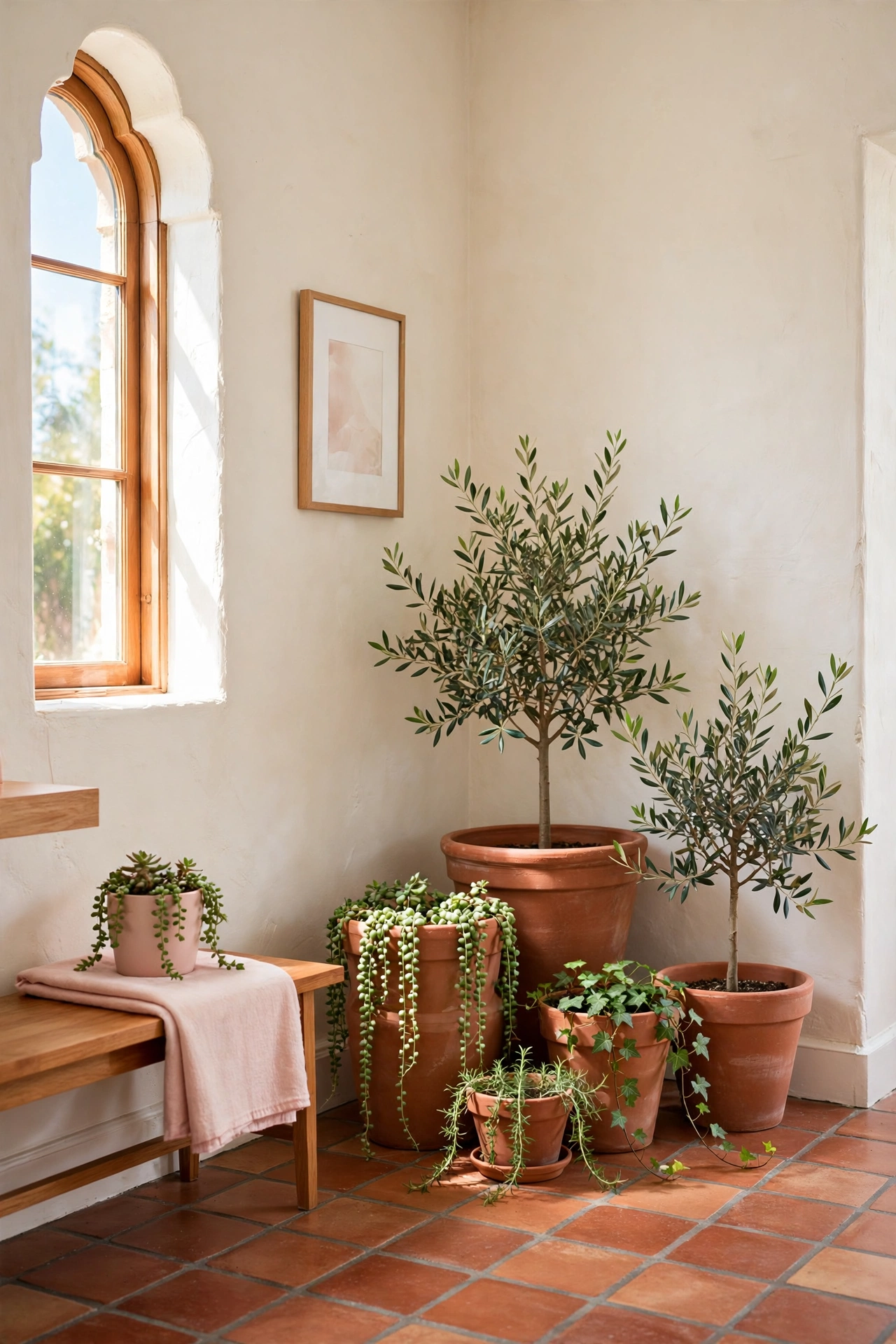
16. Style with Terracotta Pots and Plants
Terracotta pots filled with green plants bring life and color to every room. Olive trees, citrus plants, and trailing vines look at home in simple clay pots. Group pots of different sizes in a sunny corner for a garden feel.
Choose unglazed terracotta so the pots develop a soft patina over time. Place a large pot beside the front door, a medium one by the fireplace, and small ones on windowsills. Plants soften the strong lines of beams and iron while adding fresh air.
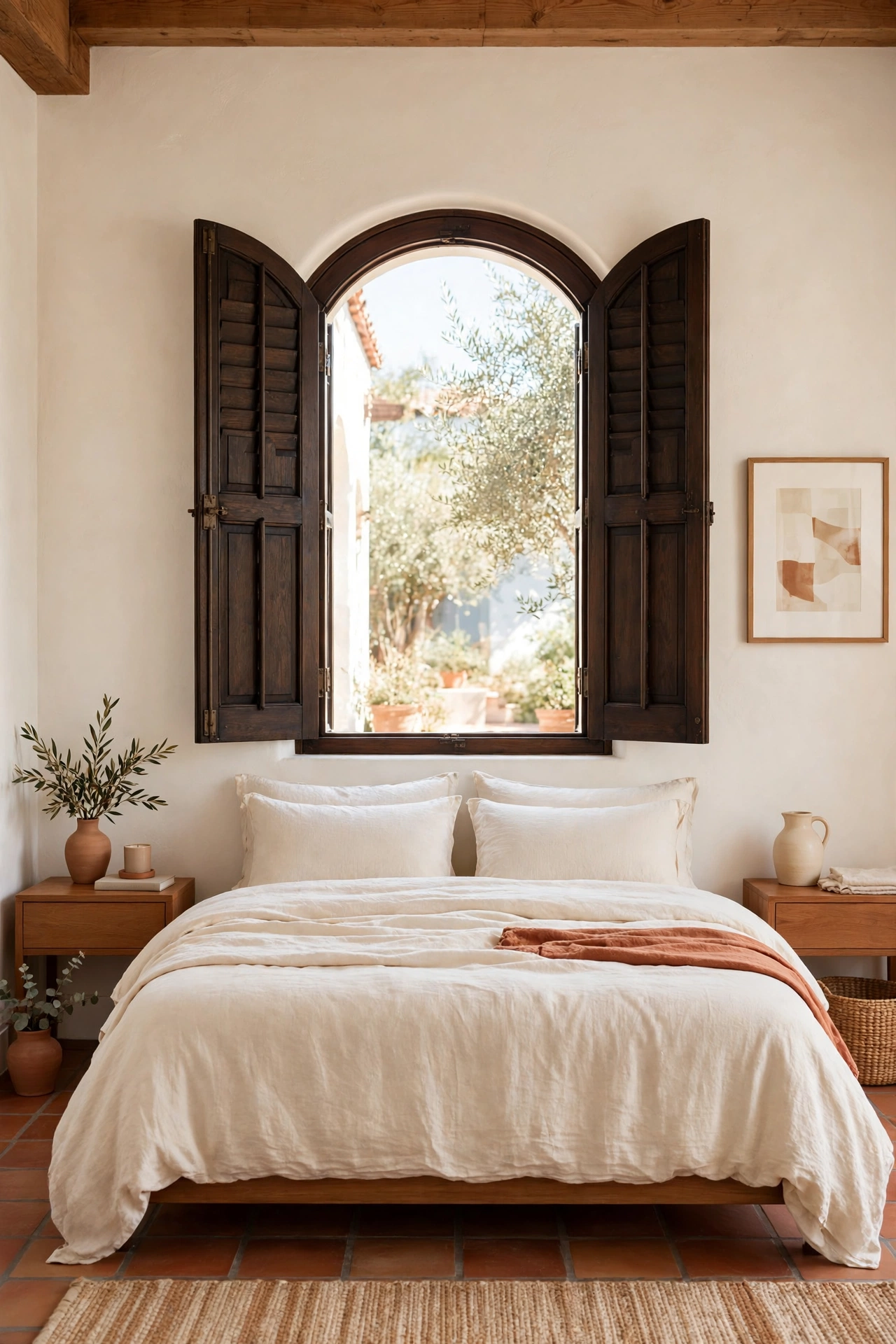
17. Choose Arched Windows with Wooden Shutters
Arched windows with wooden shutters are a signature Spanish Revival detail. The curved top softens the room and frames the view like a picture. Dark wood shutters add warmth and give you control over light and privacy.
Keep the window treatments simple so the arch shape stays visible. A linen curtain hung high above the arch can add softness without hiding the curve. Arched windows work best in living rooms and bedrooms where the view deserves a beautiful frame.
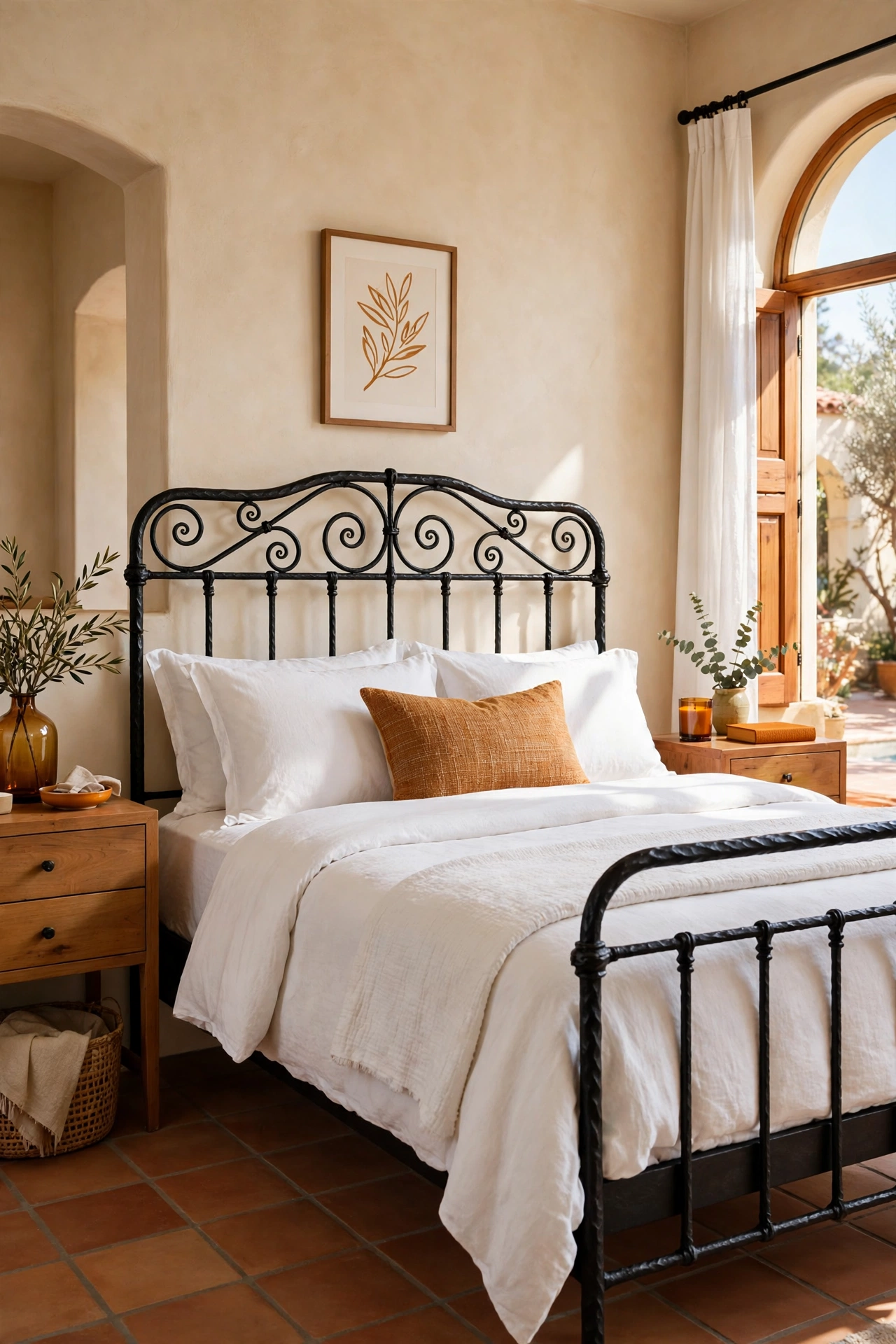
18. Add a Hand-Forged Iron Bed Frame
A hand-forged iron bed frame gives a Spanish Revival bedroom a romantic, old-world feel. Scrolled headboards and dark metal curves contrast beautifully with crisp white linen and warm plaster walls. The iron feels light yet strong.
Dress the bed with natural linen bedding in cream and soft sage. Add a woven throw at the foot and a pair of wooden nightstands with iron handles. The bed becomes the quiet centerpiece of a calm, classic bedroom.
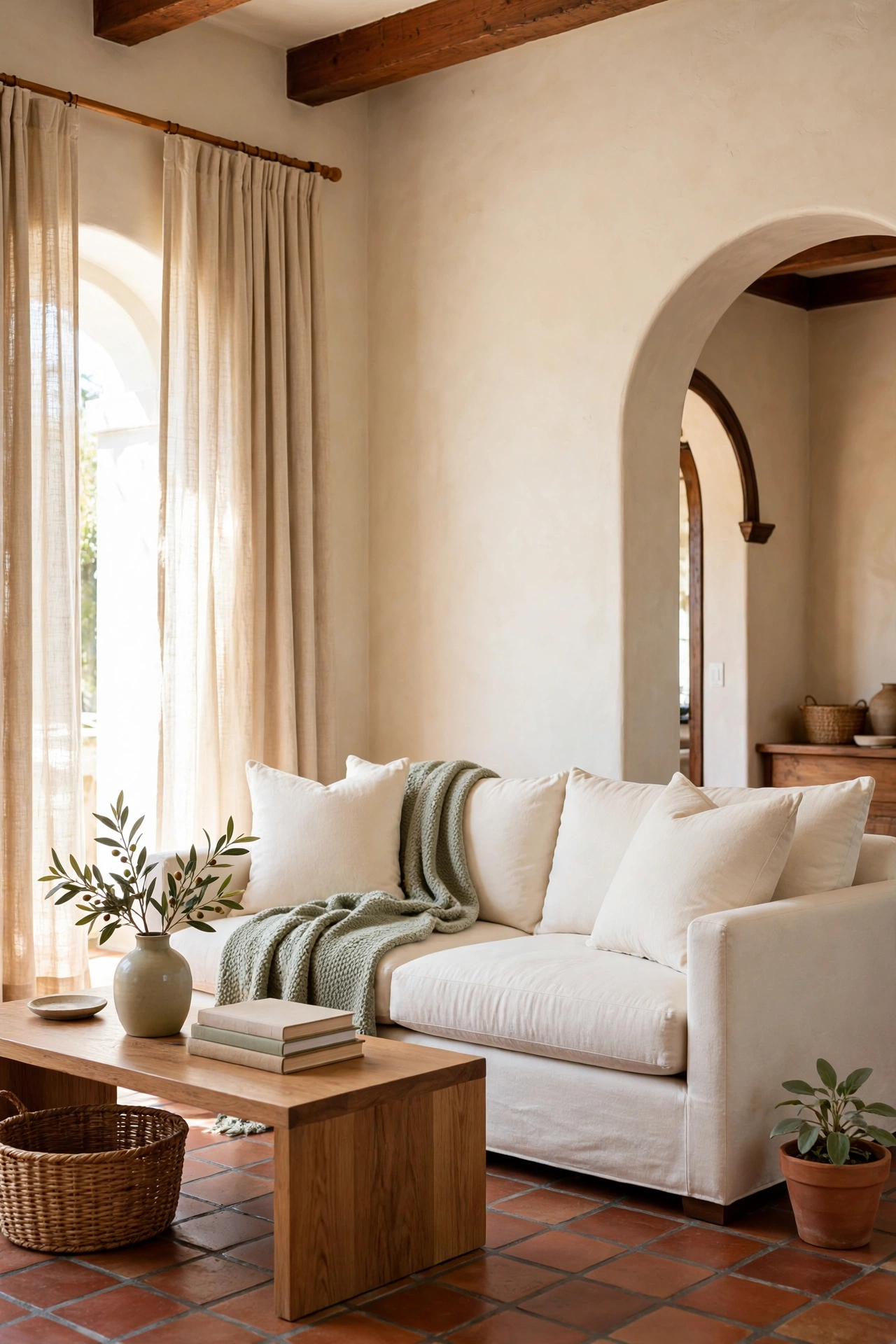
19. Use Natural Linen and Cotton Textiles
Natural linen and cotton textiles soften the strong materials of a Spanish Revival home. Linen curtains, cotton cushions, and wool throws add texture without competing with the wood, tile, and iron. Choose fabrics in cream, sand, and soft earth tones.
Layer textures rather than patterns for a calm, collected look. A linen sofa cover, a cotton table runner, and a wool rug can share one room without clashing. Natural fibers also breathe well, which suits the warm Mediterranean feeling of the style.
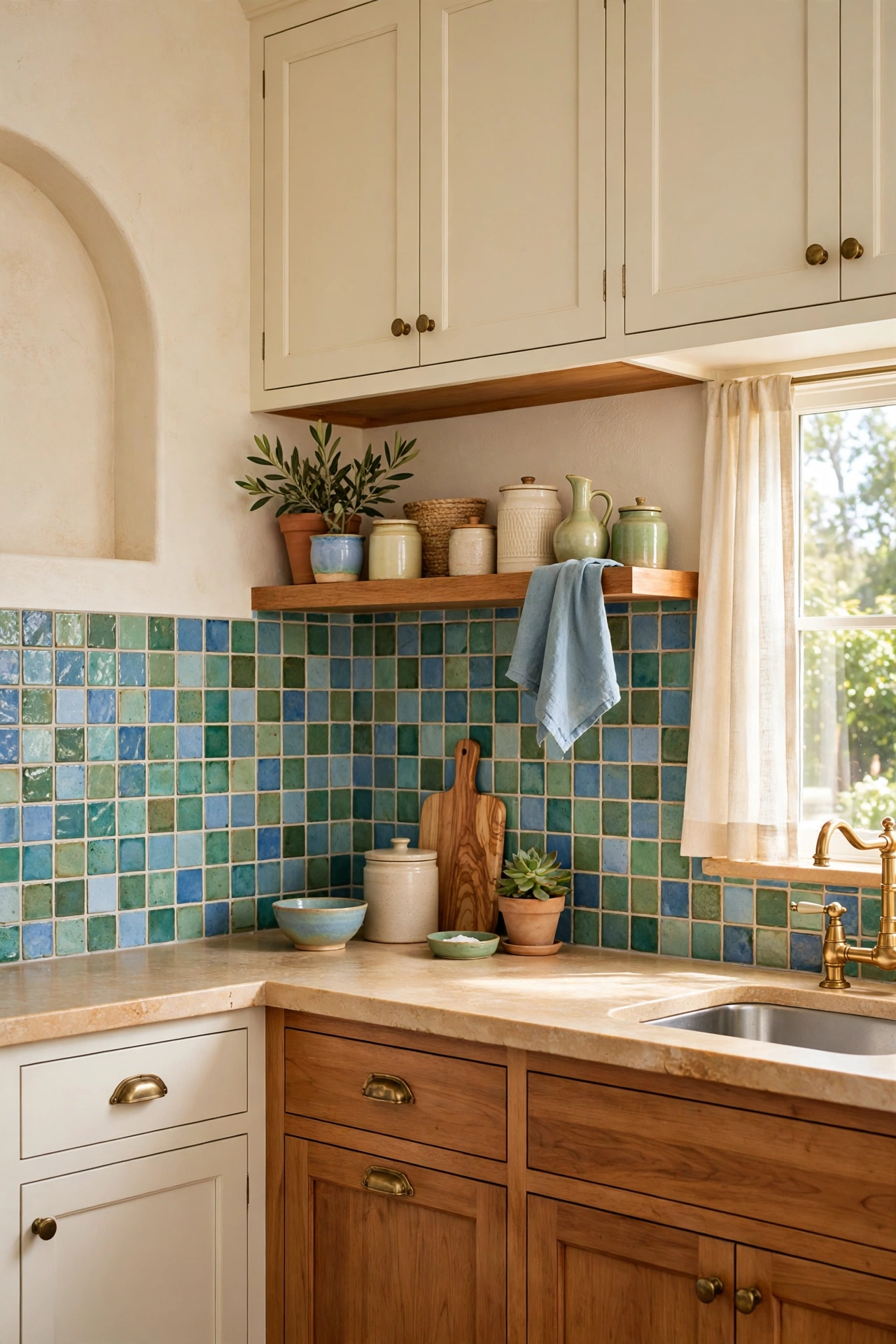
20. Create a Tiled Kitchen Backsplash
A tiled kitchen backsplash is a chance to add handmade color to the hardest working room in the house. Small square tiles in warm blues and greens, or a band of Talavera tiles, protect the wall while adding craft and charm. The backsplash becomes the kitchen jewelry.
Keep the countertops simple in warm stone or butcher block so the tile stands out. Extend the tile to the ceiling behind the range for a dramatic focal point. A tiled backsplash is easy to clean and never goes out of style.
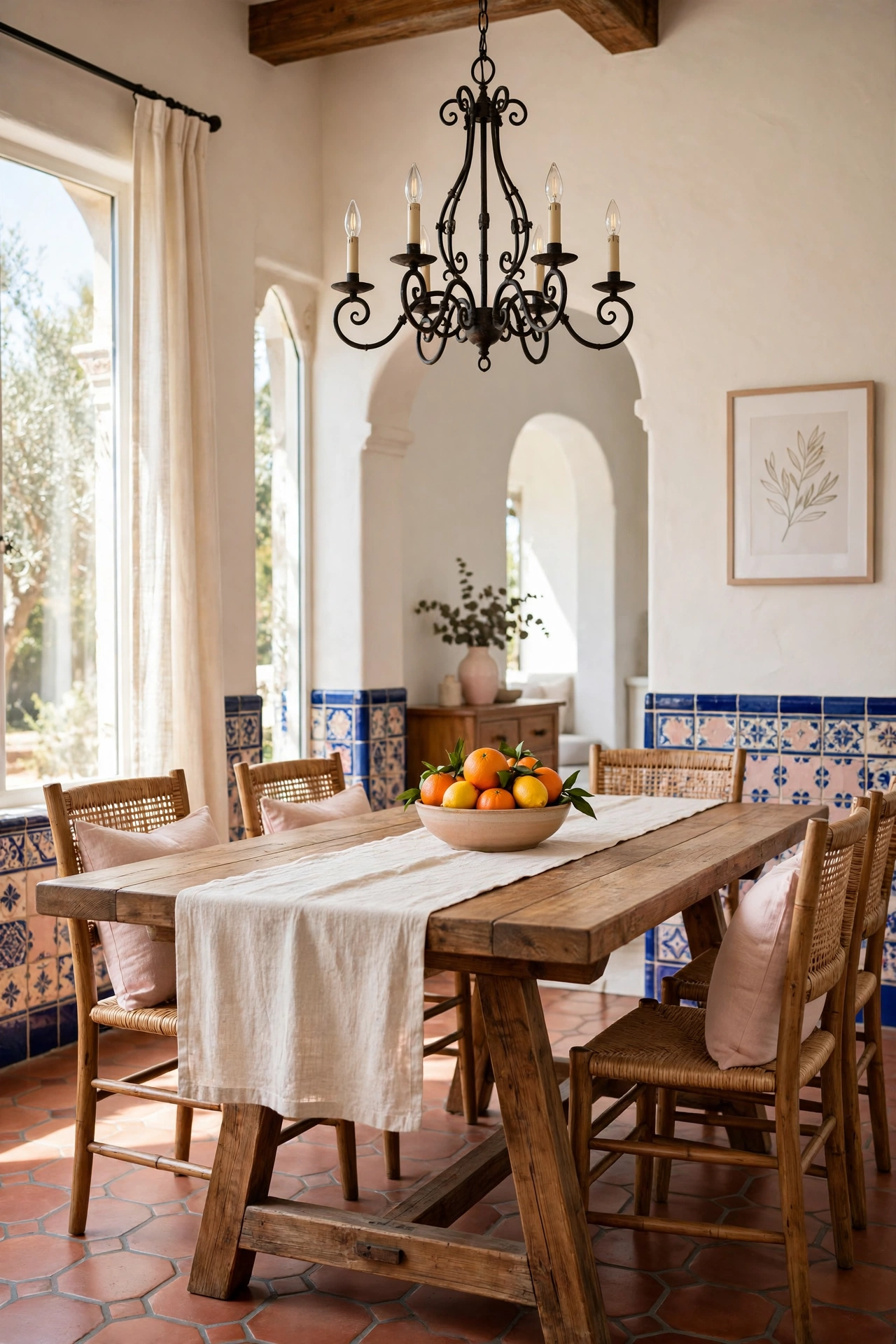
21. Add a Rustic Wooden Dining Table
A rustic wooden dining table is the gathering place of a Spanish Revival home. A thick plank top on sturdy trestle legs seats a crowd and invites long, slow meals. The wood should show its grain, knots, and honest wear.
Pair the table with simple wooden chairs and a long linen runner. Add a wrought iron chandelier above and a bowl of citrus fruit as a centerpiece. A table like this turns every dinner into a small celebration.
22. Use Decorative Iron Grilles on Windows
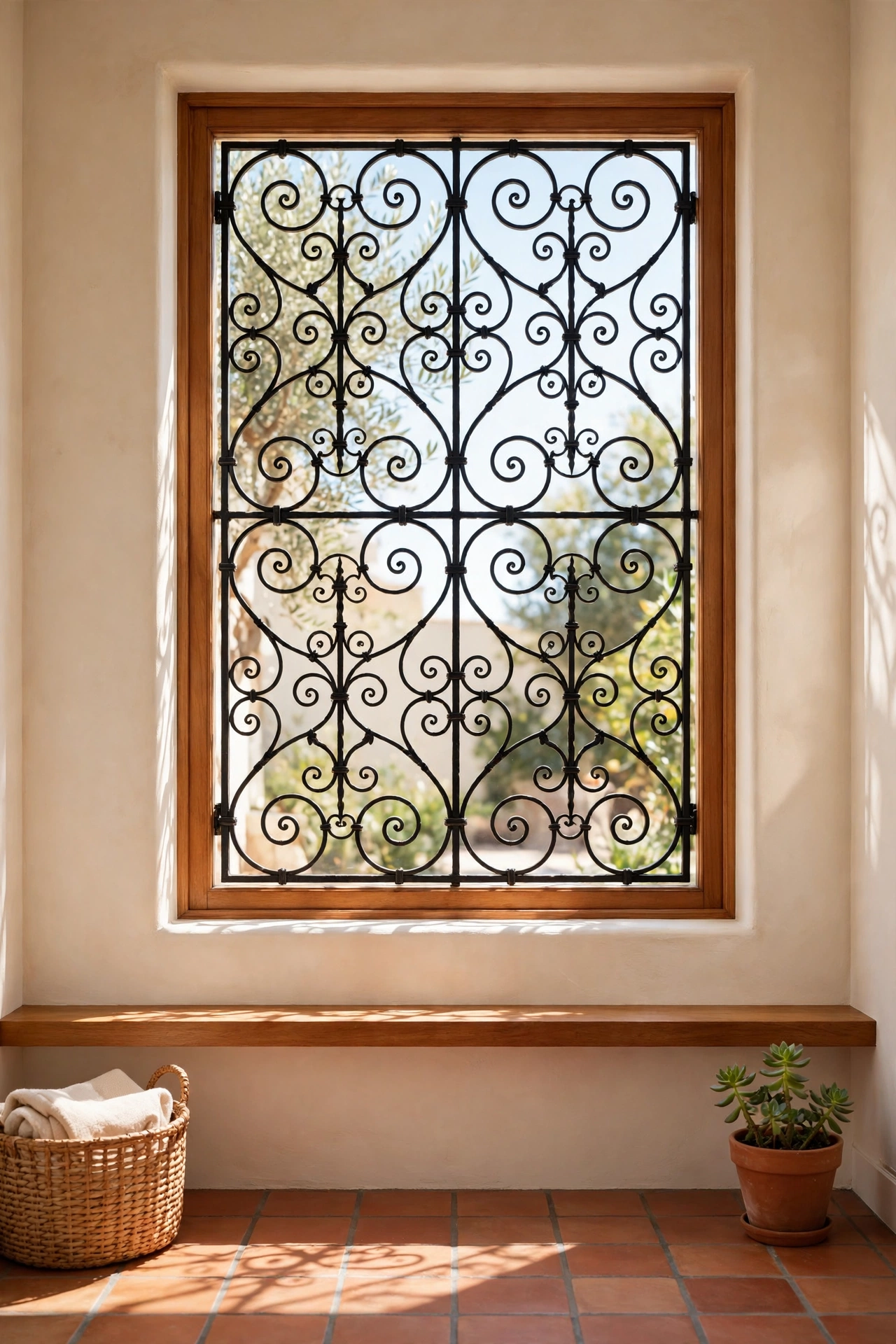
Decorative iron grilles on windows add security, shade, and beauty in one detail. Scrolled ironwork in front of a window casts lovely shadows on the plaster wall inside. The grilles also echo the wrought iron used elsewhere in the home.
Choose a simple scroll pattern that lets in plenty of light. Paint the iron a matte black so it reads as a clean graphic line against the wall. Iron grilles are a small architectural detail that makes a home feel truly Spanish Revival.
23. Style with Vintage Spanish Artwork
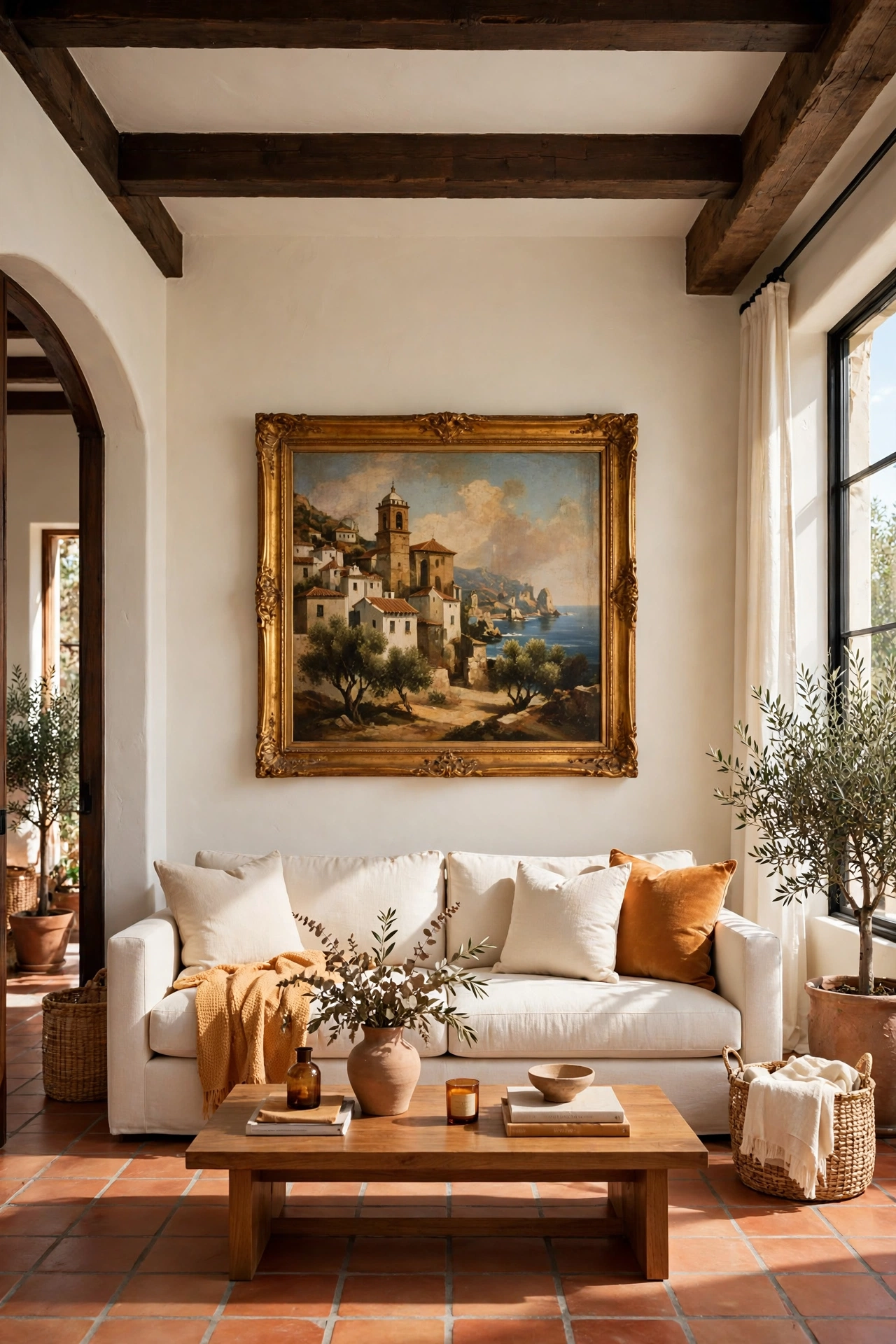
Vintage Spanish artwork adds soul and history to plaster walls. Look for oil paintings of landscapes, religious scenes, or still life in warm gold frames. Even a single large painting can set the mood for an entire room.
Hang artwork at eye level and give it space to breathe. A large painting above the fireplace or the sofa works better than many small pieces scattered around. The warm colors of old Spanish art tie together the terracotta, wood, and iron in the room.
24. Add a Cozy Reading Nook with an Arch
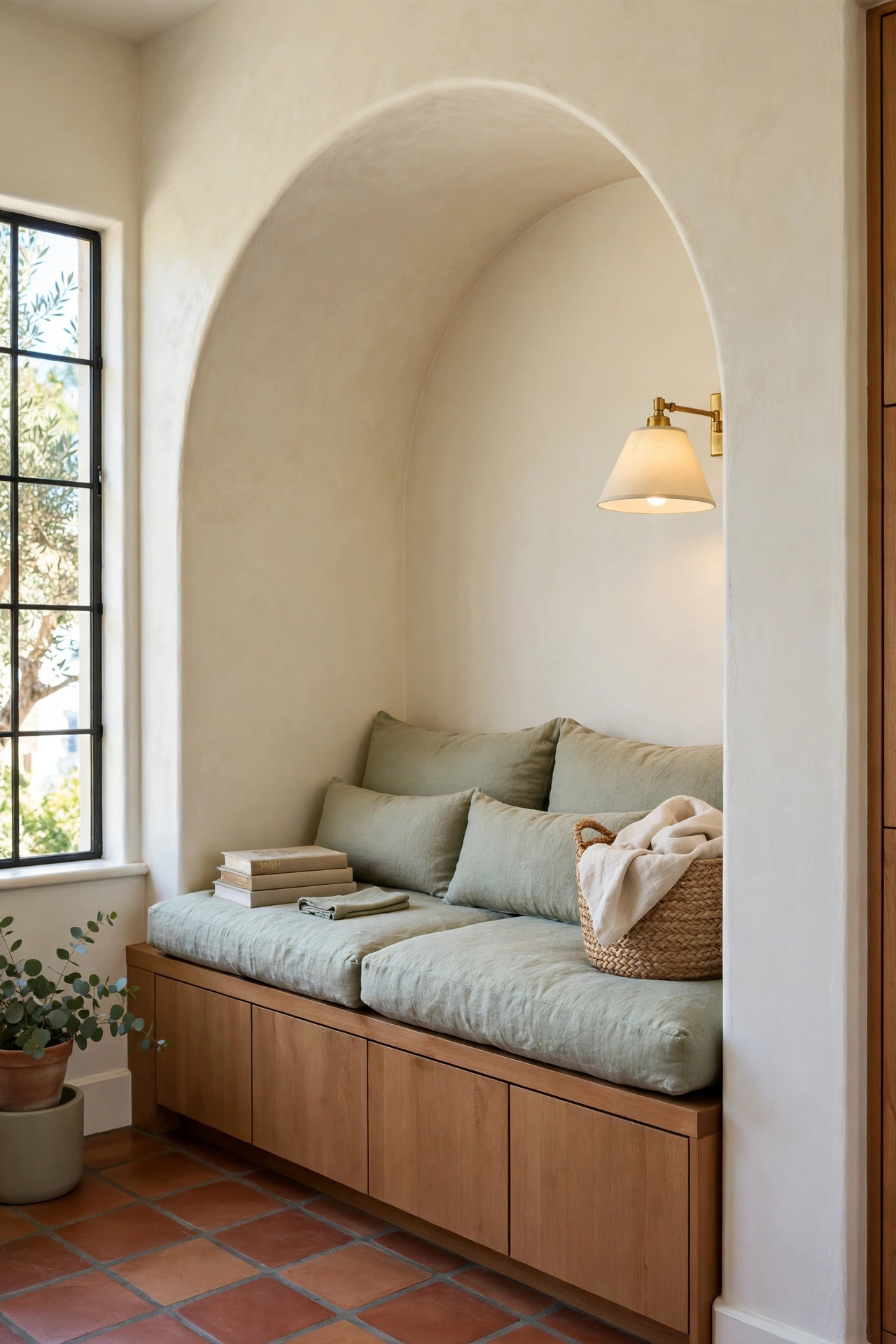
A cozy reading nook tucked under an arch turns an unused corner into the favorite spot in the house. Build a small bench seat into the arch, add thick cushions in warm linen, and place a reading lamp nearby. The curved wall wraps around you like a quiet embrace.
Keep a small stack of books and a woven basket for throws beside the bench. The nook needs nothing more than good light and a comfortable seat. An arched reading nook is a small luxury that makes a home feel deeply personal.
25. Choose Terracotta and Ochre Accents
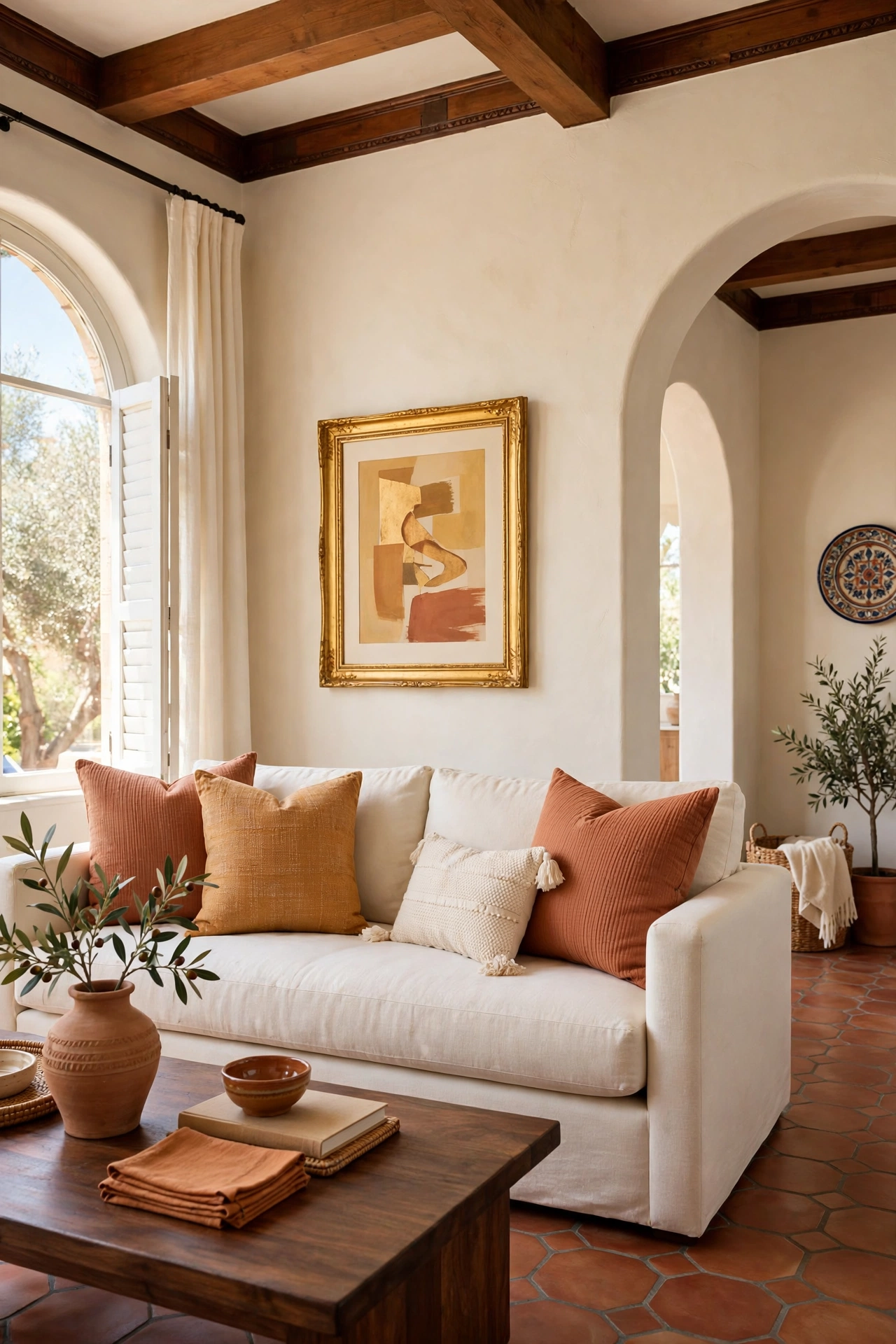
Terracotta and ochre accents warm up a room without a full repaint. Cushions, throws, vases, and candles in these sun-baked colors echo the tile floors and plaster walls. A few well-placed accents can shift a whole room toward the Spanish Revival palette.
Repeat the accent color in three places, such as a cushion, a vase, and a piece of art, so the room feels intentional. Balance the warm accents with cream and soft green to keep the space fresh. Small accents are the easiest way to test the style before a bigger change.
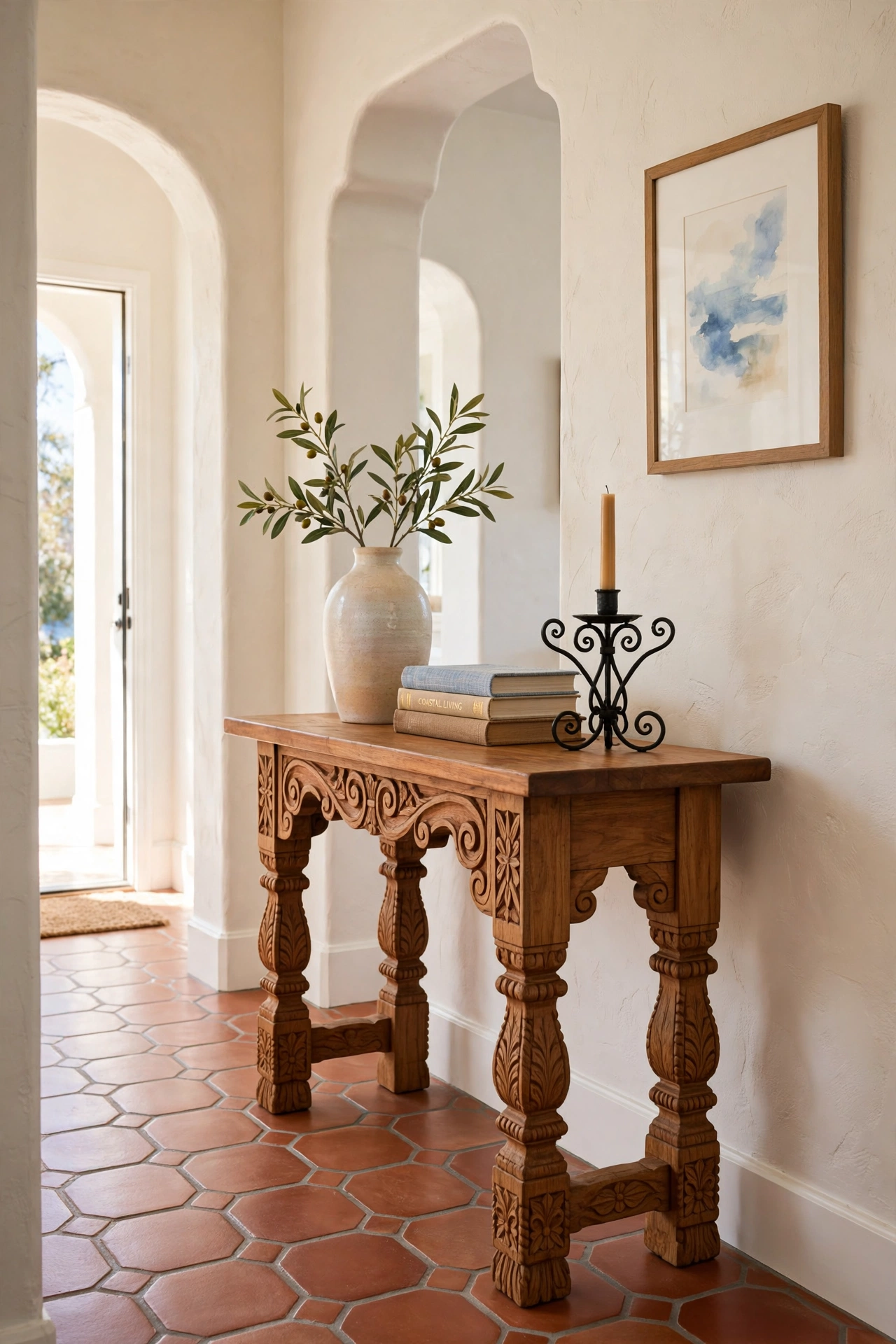
26. Use a Carved Wooden Console Table
A carved wooden console table adds craft and storage to a hallway or living room wall. Hand-carved legs and aprons show the skill of the maker, while the dark wood grounds the space. The table is both furniture and sculpture.
Style the console with a ceramic vase, a small stack of books, and a wrought iron candle holder. Keep the surface mostly clear so the carving stays visible. A console table fills a blank wall with warmth and purpose.
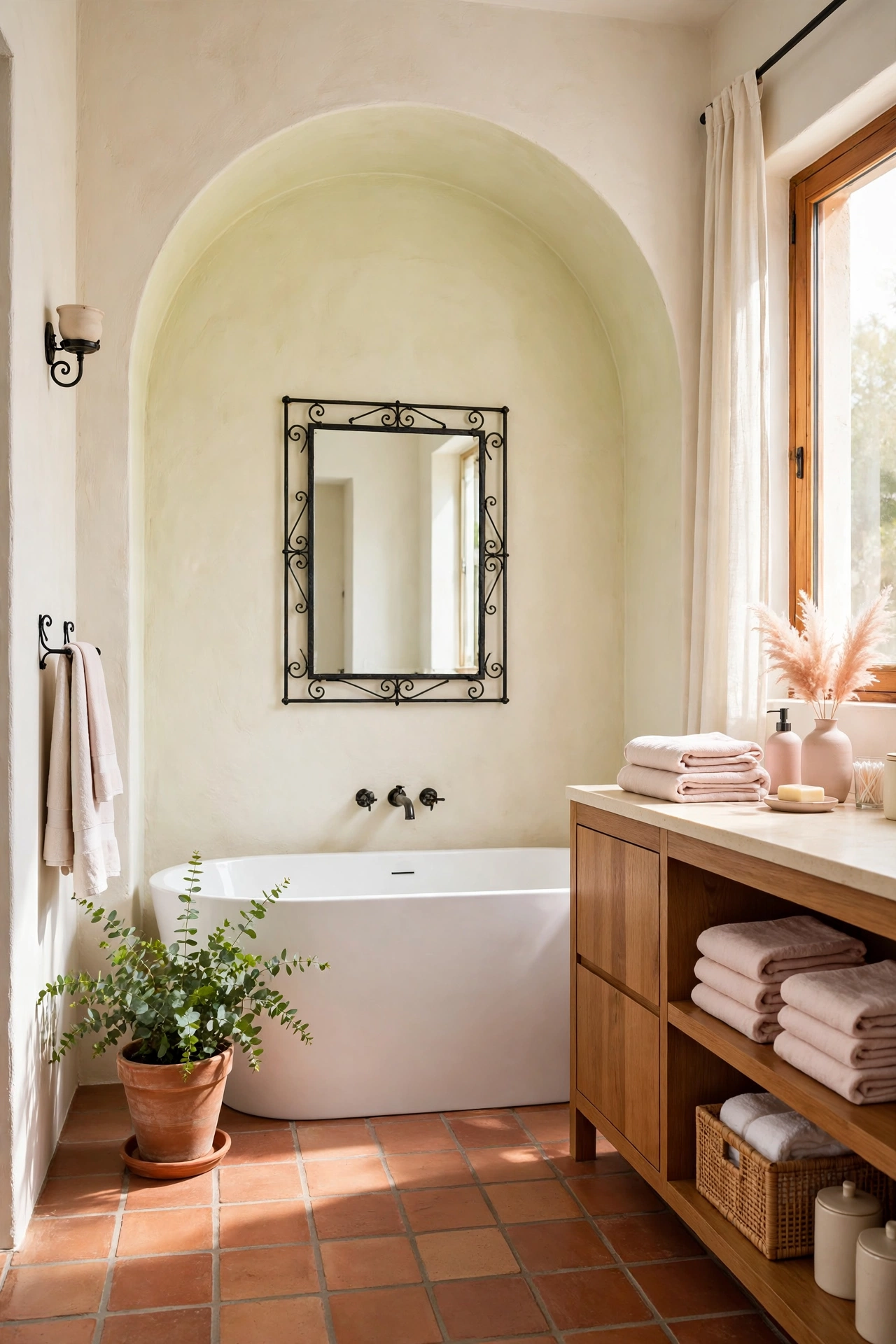
27. Add a Spanish-Style Bathroom with a Soaking Tub
A Spanish-style bathroom with a soaking tub feels like a private spa. Terracotta or patterned cement tiles on the floor, a plaster arch over the tub, and a wrought iron mirror frame create a calm, old-world retreat. A freestanding tub is the perfect centerpiece.
Choose warm brass or dark iron fixtures to match the style. Add folded linen towels and a terracotta pot with a green plant for softness. The bathroom should feel warm and serene, never cold or clinical.
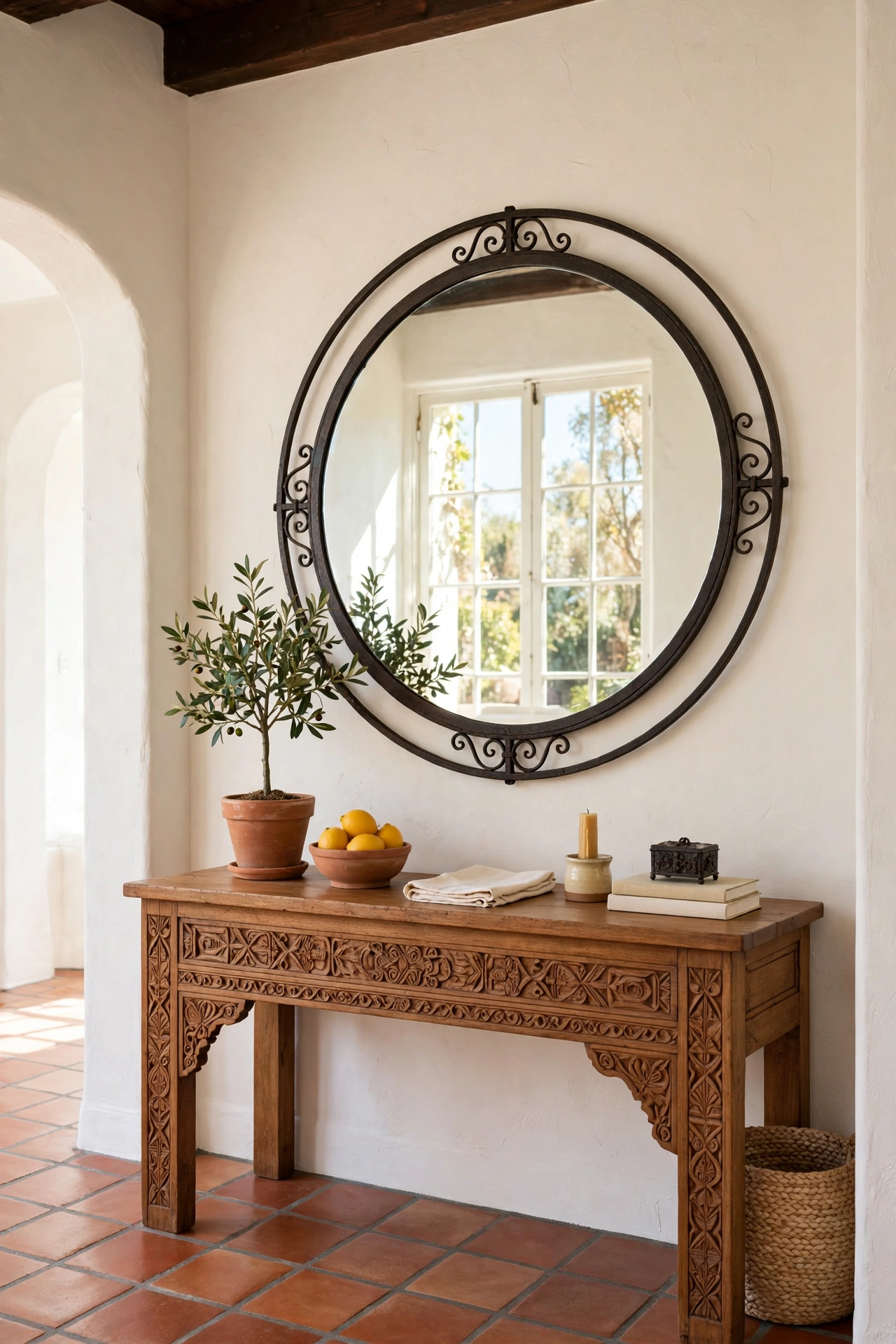
28. Hang a Large Round Mirror with an Iron Frame
A large round mirror with an iron frame brightens a Spanish Revival room while echoing its curves. The dark iron frame ties in with the chandelier and sconces, and the round shape softens the straight lines of beams and doorways. Place it where it can reflect a window or a garden view.
Hang the mirror above a console table or a fireplace mantel. Keep the frame simple so the mirror itself stays the focus. A well-placed mirror makes a room feel larger and brings in twice the light.
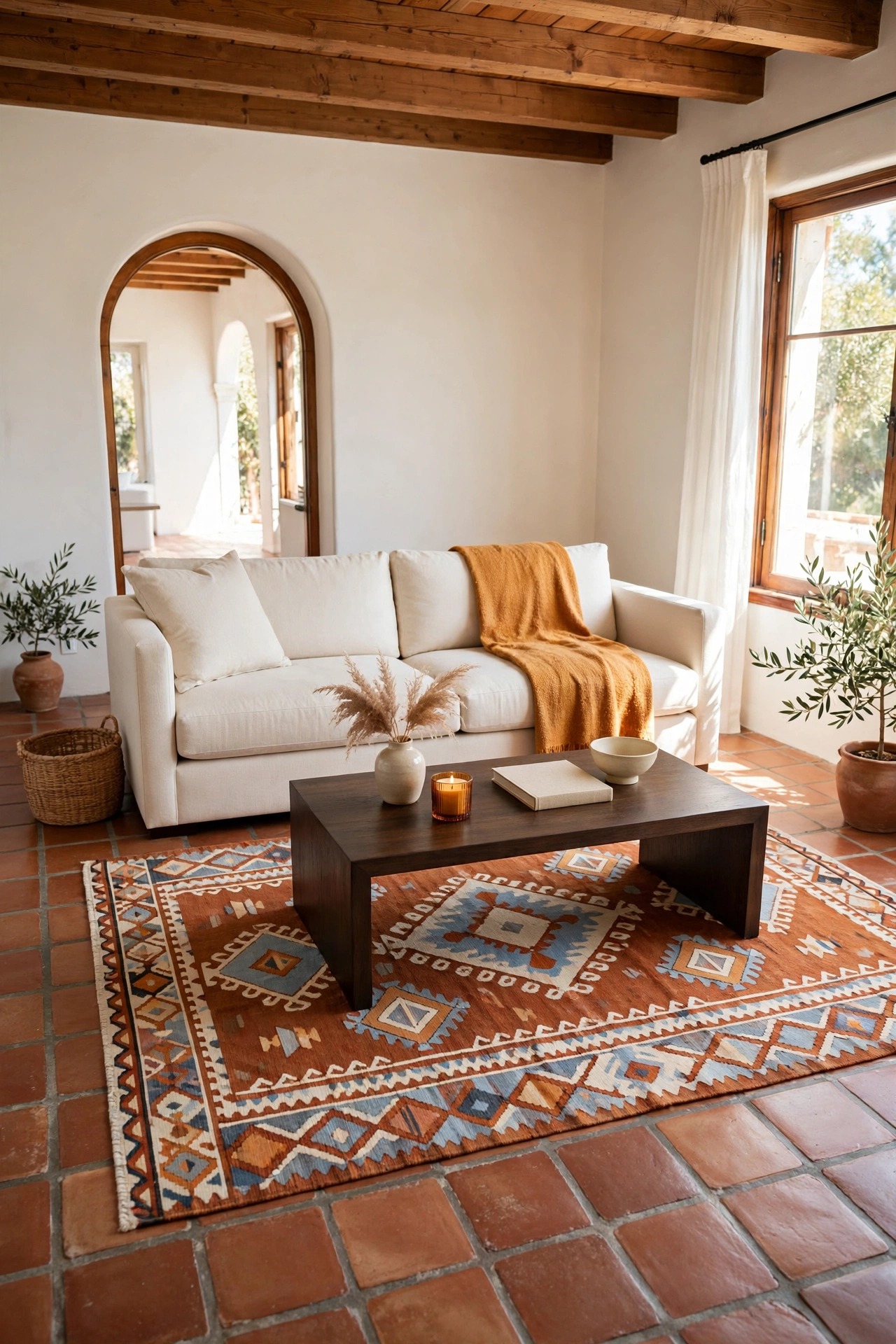
29. Use Woven Rugs in Warm Patterns
Woven rugs in warm patterns soften terracotta tile floors and add comfort underfoot. Kilim-style rugs in rust, cream, and soft blue bring pattern without overwhelming the room. A large rug also defines the seating area in an open living room.
Choose a rug big enough that the front legs of the sofa and chairs rest on it. Layer a smaller rug over a larger plain one for extra texture. Woven rugs are durable, easy to clean, and full of handcrafted charm.
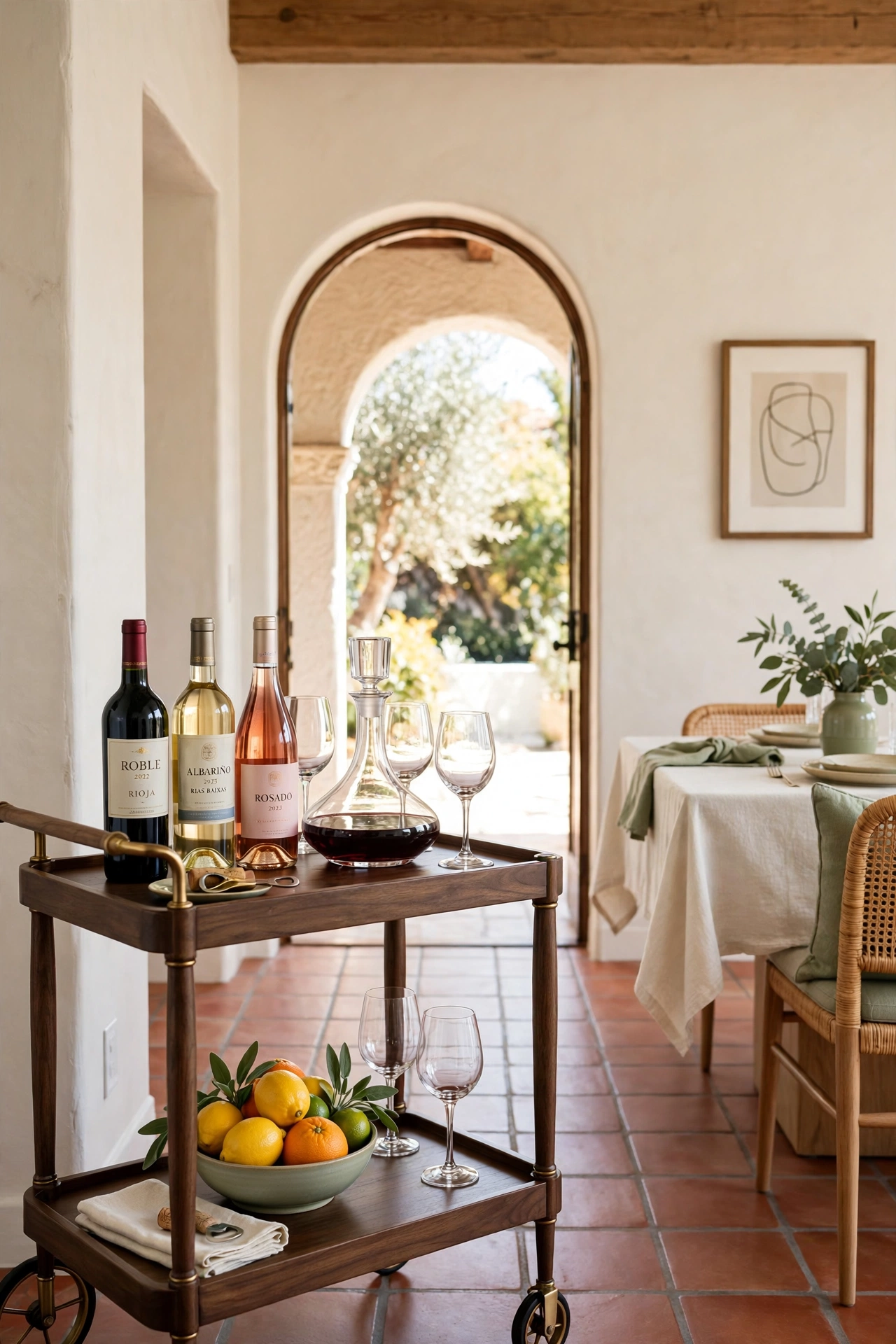
30. Add a Wine Storage Nook or Bar Cart
A wine storage nook or a dark wood bar cart adds a touch of old-world hospitality to a Spanish Revival home. A small arched niche in the dining room wall can hold a few bottles and glasses, while a rolling cart moves the party wherever it is needed.
Style the cart with a decanter, a few glasses, and a bowl of citrus fruit. Keep the bottles neatly arranged and the labels facing out. A wine nook is a small detail that makes entertaining feel effortless and elegant.
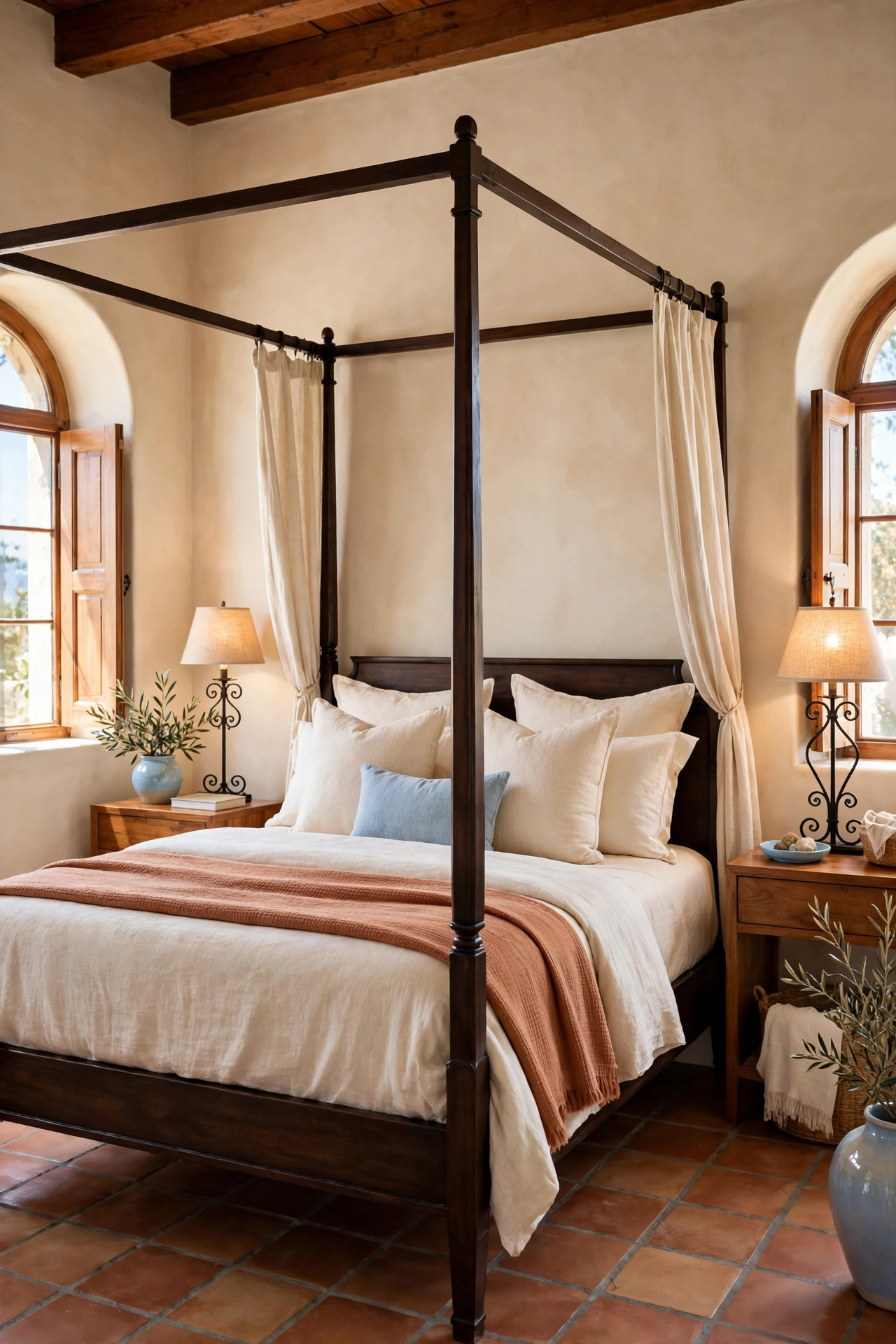
31. Style the Bedroom with a Canopy Bed
A canopy bed brings drama and romance to a Spanish Revival bedroom. A dark wood frame with simple posts and a linen canopy creates a cozy shelter within the room. The canopy softens the space and adds a sense of privacy.
Keep the bedding in cream linen with a terracotta throw at the foot. Add wooden nightstands and a wrought iron lamp on each side. The canopy bed turns an ordinary bedroom into a restful retreat.
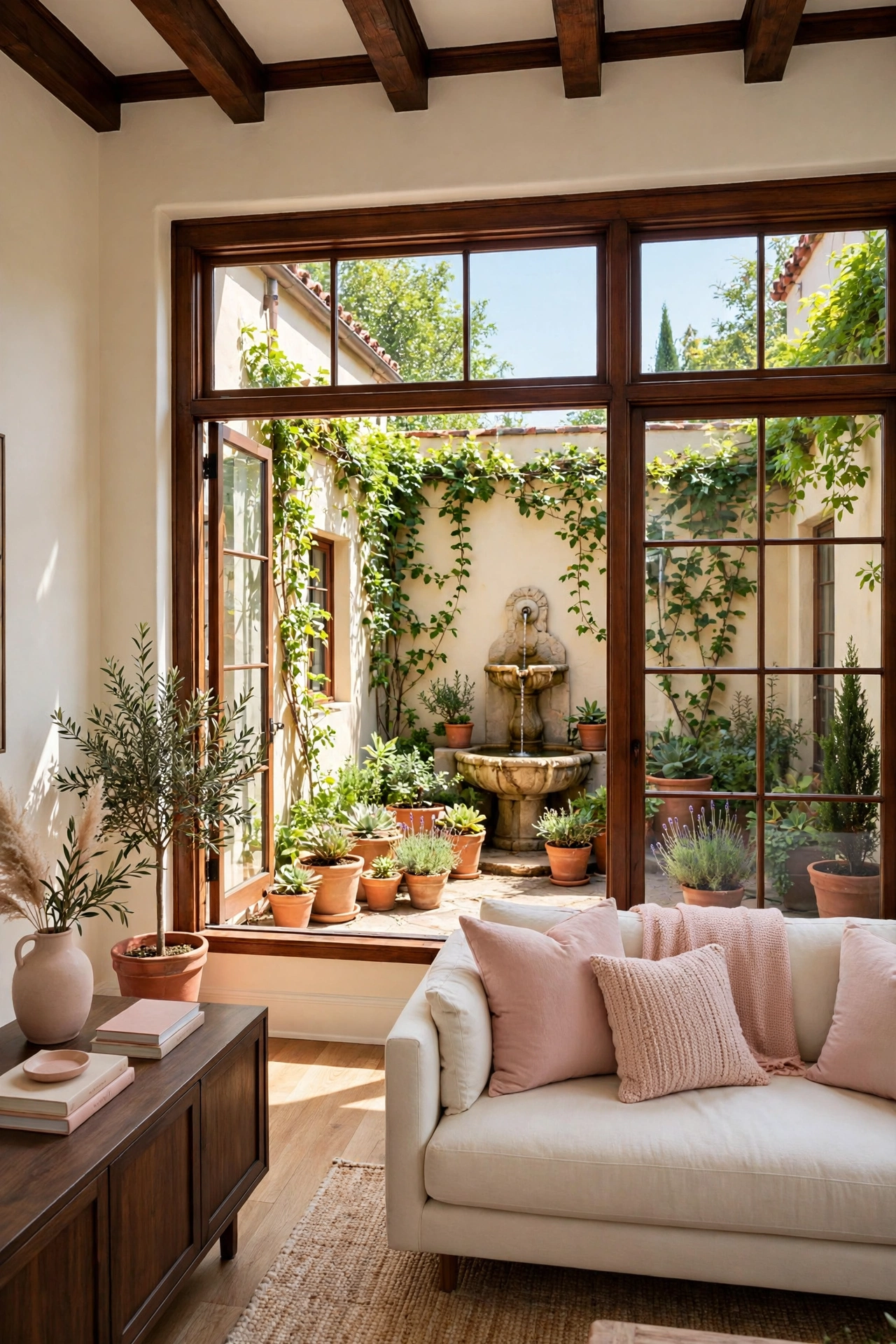
32. Finish with a Courtyard Garden View
A courtyard garden view is the final touch that completes a Spanish Revival home. Frame a window or a glass door so it looks out onto a small garden with terracotta pots, a stone fountain, and climbing vines. The garden becomes living art for the rooms inside.
Keep the garden simple with a few strong plants and one water feature. The view connects the interior with the outdoors and fills the home with green life. Every room feels calmer when it opens onto a garden.
Conclusion
Spanish Revival interior design does not have to be expensive or complicated. From warm plaster walls and terracotta floors to arched doorways and wrought iron details, there is an idea here for every home and every budget. The best rooms are the ones that mix these classic elements with your own life and taste.
Pick one or two ideas that fit your home and start today. Warm up a wall, add a handmade tile, or hang a wrought iron light, and enjoy the old-world charm that follows. For a calm home beyond the living room, these nightly reset routine ideas will help you keep every room organized with just a few minutes each evening.
Frequently Asked Questions About Spanish Revival Interior Design Ideas for Classic Homes
What colors define Spanish Revival interior design?
Warm white plaster, terracotta, ochre, and deep wood brown are the core colors of Spanish Revival design. Accents in sage green, soft blue, and muted gold add variety without breaking the warm palette. The overall feeling should be sunlit and earthy, like a courtyard in late afternoon light.
How can I add Spanish Revival style on a budget?
Start with paint, textiles, and small decor before any building work. A terracotta accent wall, linen cushions, terracotta pots, and a wrought iron mirror can shift a room toward the style for very little money. Add handmade tile or a carved door later, one project at a time.
What kind of tiles work best in a Spanish Revival home?
Saltillo terracotta tiles are the classic floor choice, while hand-painted Talavera tiles suit backsplashes and stair risers. Patterned cement tiles work well in entryways and bathrooms. Seal all handmade tiles properly so they stay beautiful and easy to clean.
Does Spanish Revival style work in a small home?
Yes, the style works in small homes when you choose the right scale. Use slimmer ceiling beams, one arched doorway, and a few strong details instead of filling every wall. Light plaster walls and mirrors keep small rooms bright while the warm wood and tile add character.
How do I mix Spanish Revival with modern furniture?
Keep the architecture and the main materials classic, then add modern furniture in simple shapes and warm colors. A clean-lined sofa in cream linen looks at home beside a carved wooden table. The mix works best when modern pieces share the same warm palette as the classic elements.

Hi, I’m Emily! I turn messy corners into cozy, organized spots. DreamNestDecor is where I share simple, practical home ideas — decor, organization, and small-space solutions that work in real life, not just in photos. Every idea here is carefully researched before it’s shared.