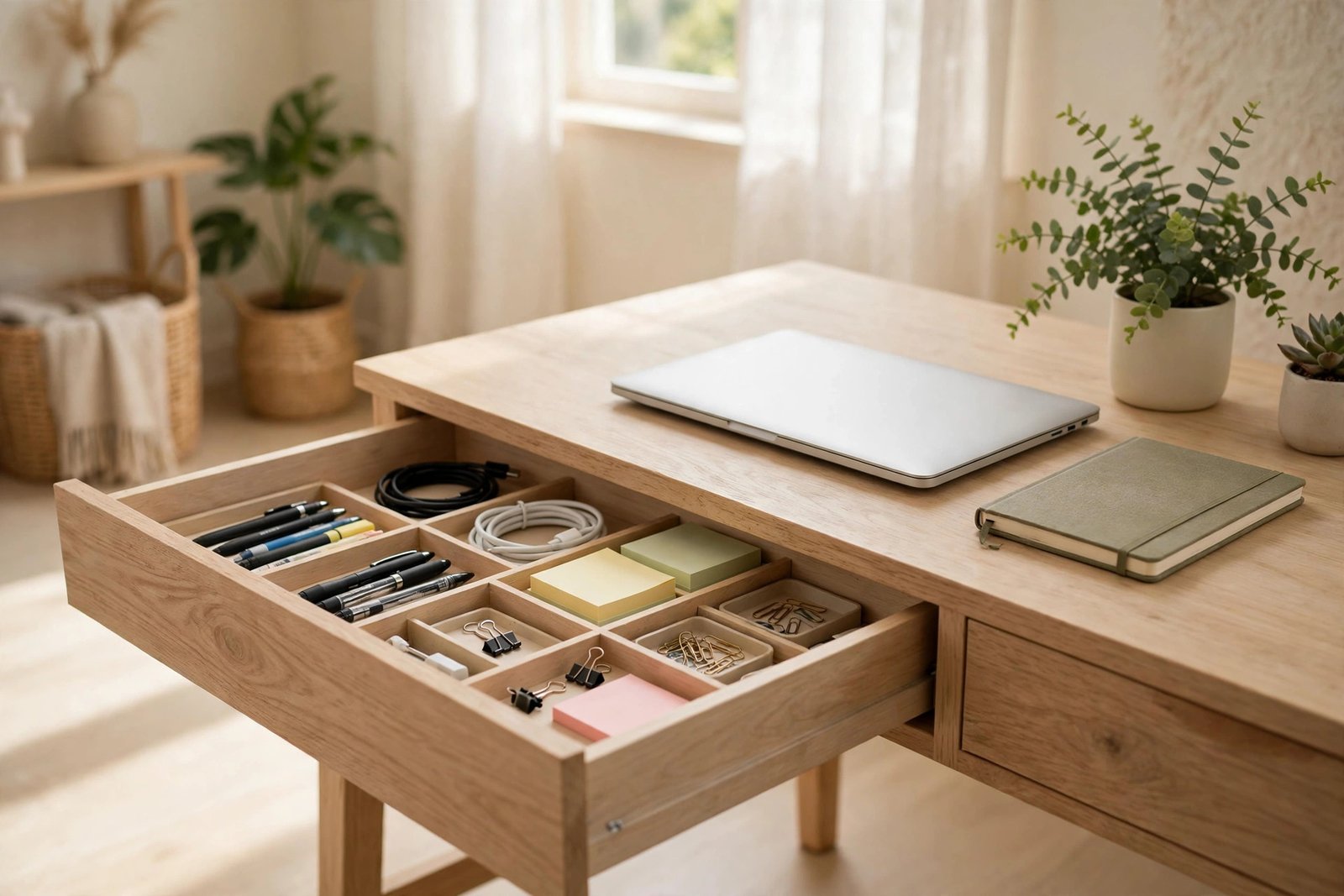
Picture this: you sit down to work, pull open your desk drawer, and everything you need is right where you left it. Pens stand in a neat row, cables coil in tidy loops, and there is no frantic digging for a paper clip or a charger. The drawer feels calm, and your whole workday starts easier.
A messy drawer does the opposite. It swallows supplies, tangles every cable, and turns a quick task into a long hunt. You do not need a new desk to fix it, just a few smart zones and habits. These 34 ideas will help you sort cables, stationery, and office supplies so the drawer stays tidy and everything is easy to find.
1. Coordinate Your Stationery in Pastel Sets
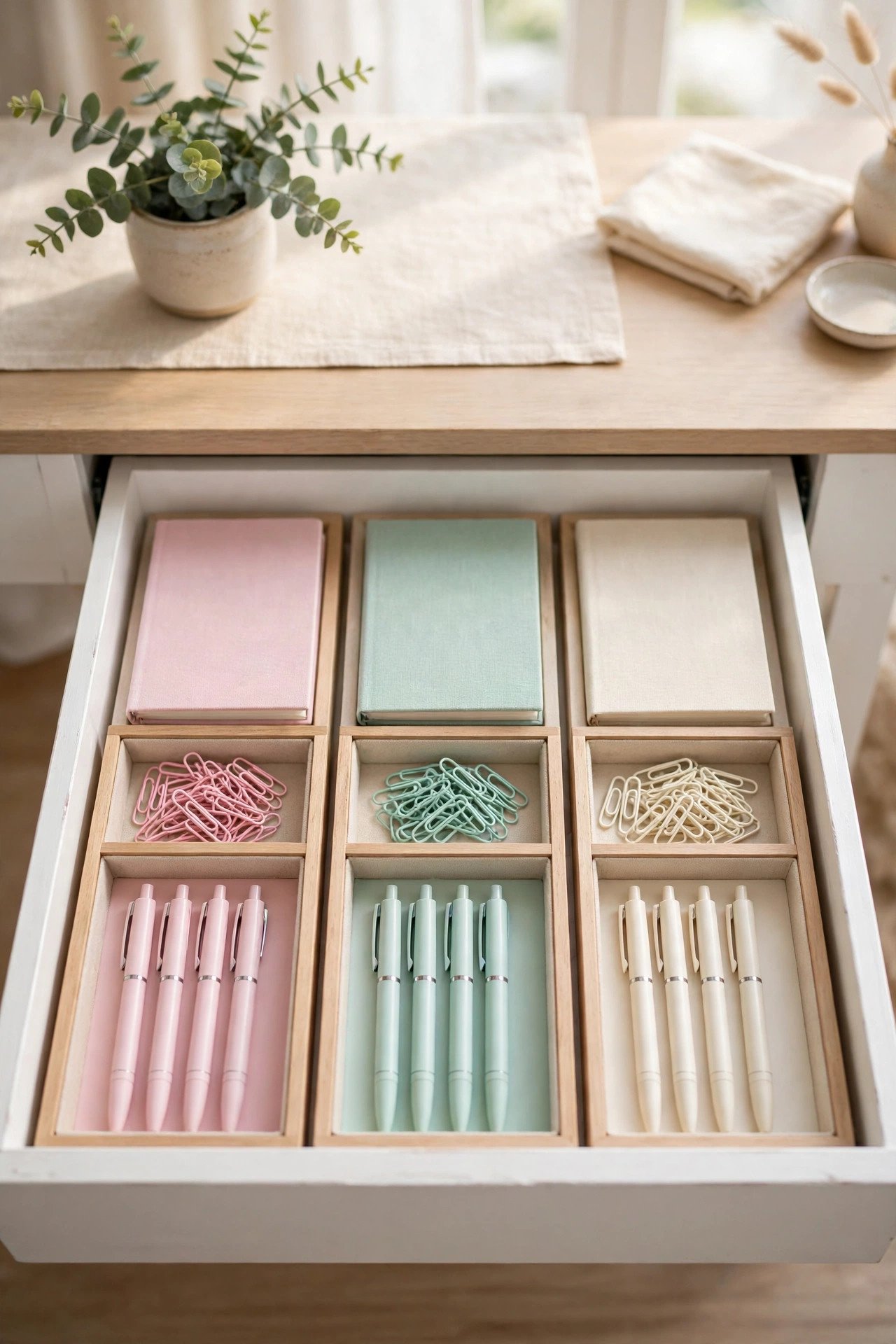
A drawer full of matching stationery feels calm the moment you open it. Choose pens, notebooks, and clips in soft pastel shades, and group them by colour so each section looks planned. The gentle colours make the drawer feel pretty instead of busy, and you will actually enjoy reaching inside for a pen.
Start with the pens you use every day, then add matching sticky notes and paper clips in the same shades. Keep one colour family per section so nothing clashes or looks random. When everything matches, the drawer stays tidy longer because you can see at a glance when something is out of place.
2. Divide the Drawer With Bamboo Dividers
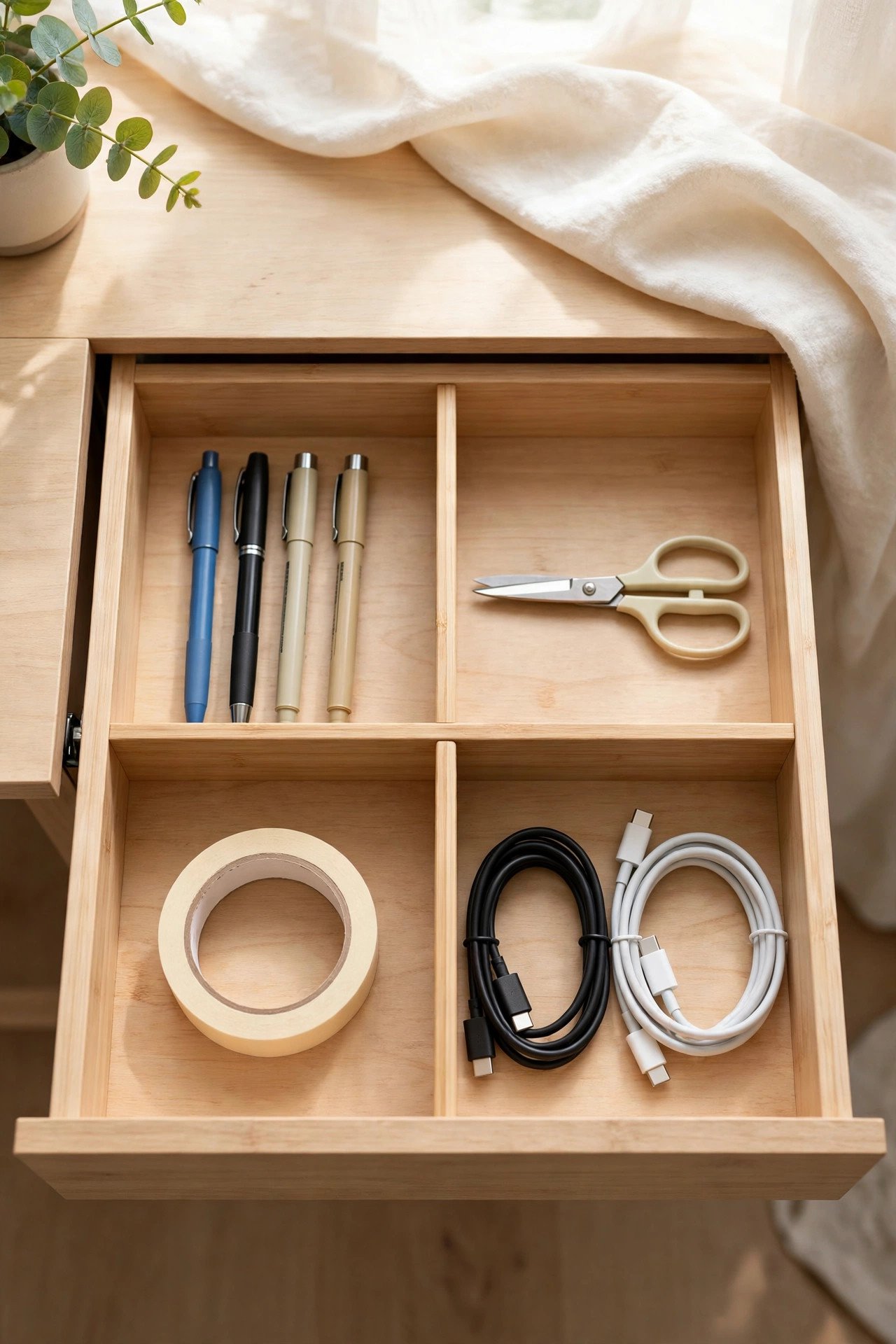
Bamboo dividers are a classic for a reason, and they suit almost any desk drawer. Their warm wood tone looks calm next to white or grey stationery, and the separate sections stop pens and cables from sliding into one pile. They feel sturdy, they last for years, and they make the drawer look finished.
Measure your drawer before you buy, and choose dividers that fit snugly without gaps. Leave one section empty on purpose, because a little spare room keeps the system flexible. When a new gadget arrives, you will have a home ready for it instead of a fresh pile.
3. Label Clear Acrylic Organizers at the Base
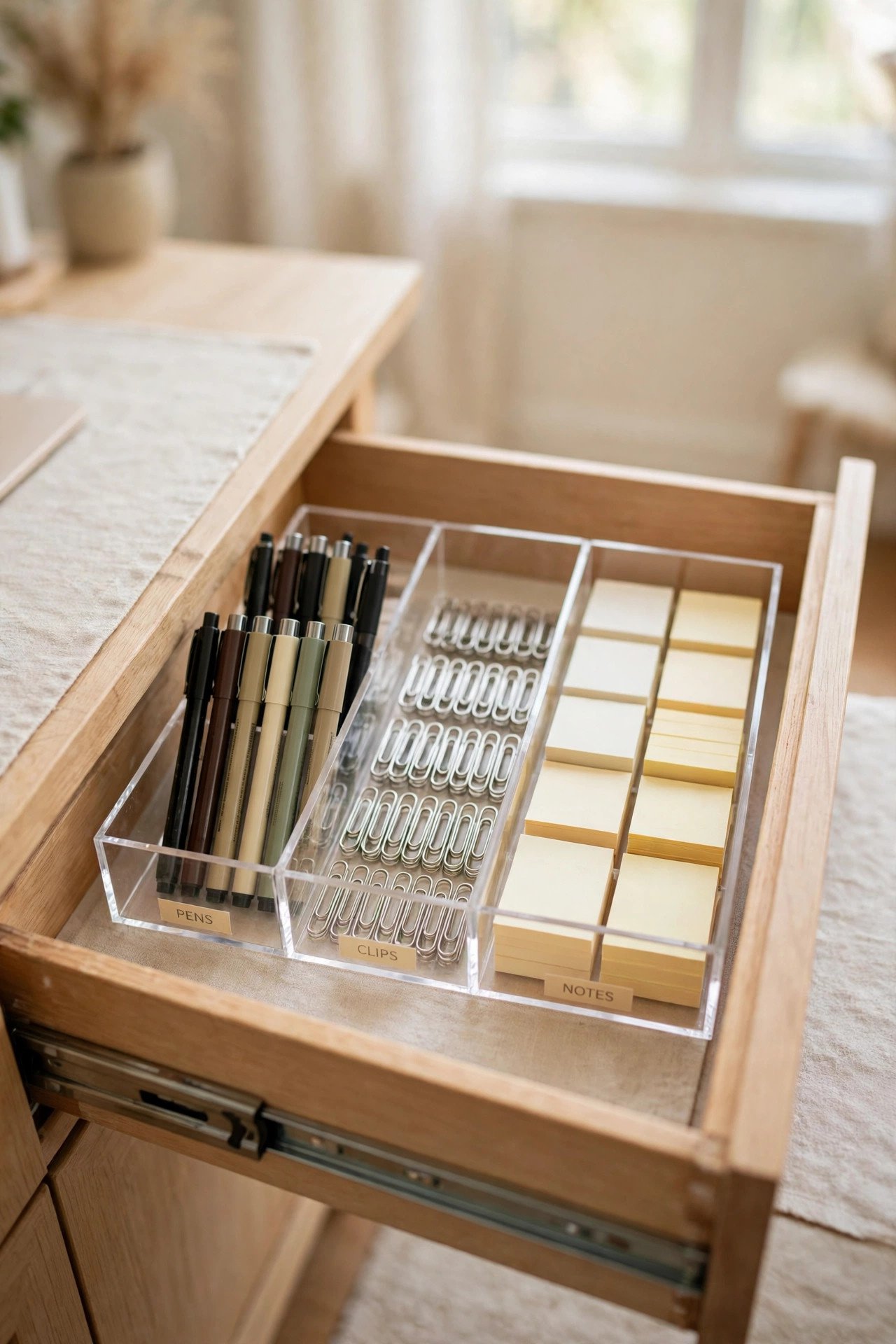
Clear acrylic organizers already bring order to a drawer, but labels on their bases make the system even better. You can see everything inside, and the label tells you exactly what belongs there. The drawer looks neat from above, and every item has a clear home.
Write short labels like pens, cables, and clips, and stick them on the base of each organizer where they stay visible. Use a label maker or neat handwriting on plain tape. When a section is empty, the label reminds you what goes back, so the drawer resets itself almost without effort.
4. Sort Supplies in Simple White Containers
White containers are the simplest way to bring order to a desk drawer, and you may already own them. Small tubs, cups, and boxes from around your home can sort pens, clips, and cables just as well as anything new. Their plain colour keeps the drawer looking calm and clean.
Gather every white container you can find, then match one to each type of supply in your drawer. Keep the tallest items at the back and the smallest at the front so you can see everything. A drawer full of matching white containers looks tidy even before you add a single label.
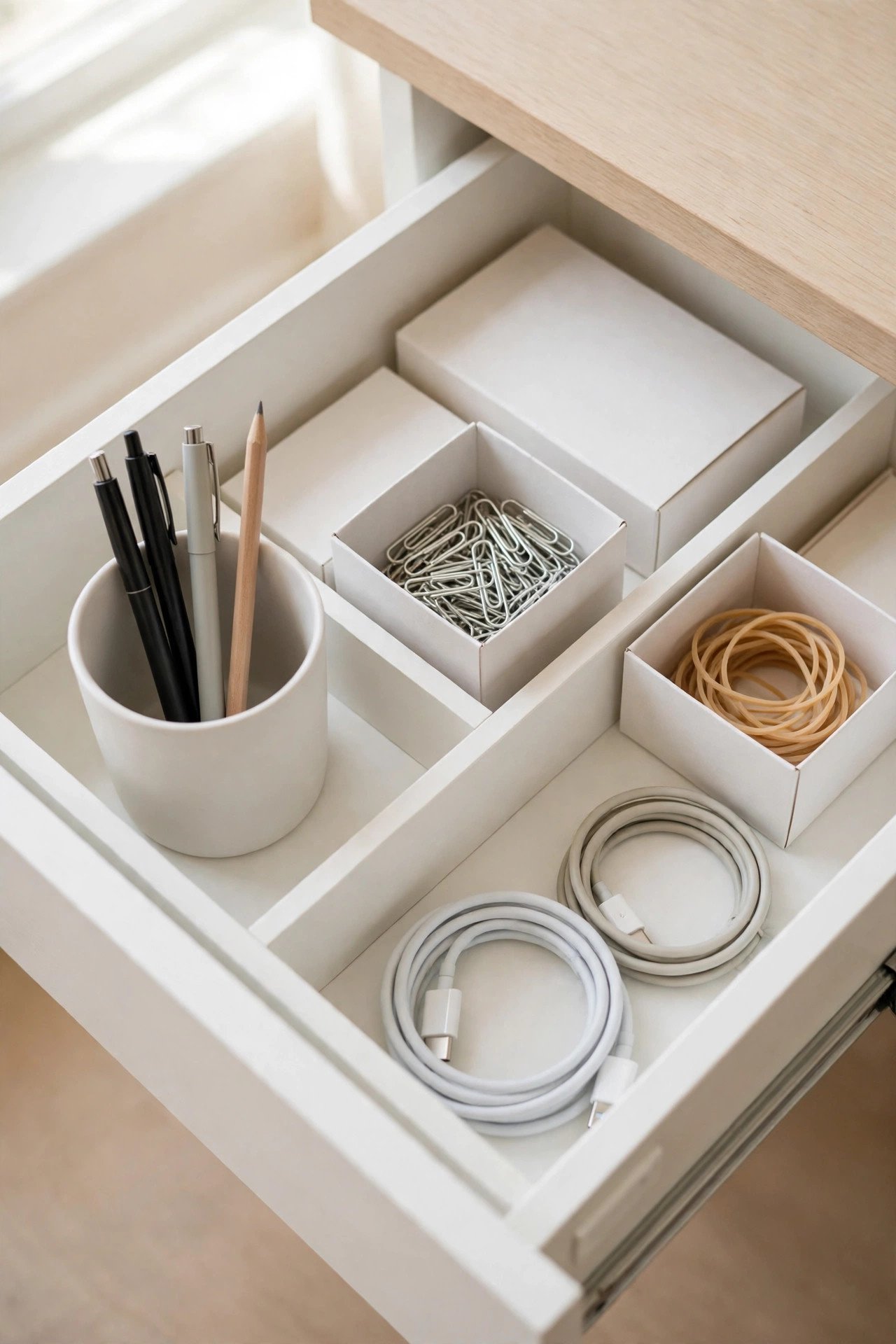
5. Build a System With Plastic Modular Organizers
Plastic modular organizers let you build a drawer system that fits your exact supplies. The pieces snap together in different shapes, so you can make long slots for pens, square bins for clips, and wide trays for cables. The system grows or shrinks as your needs change.
Plan what goes in the drawer before you buy, and sketch the layout on paper first. Measure the longest items so the slots fit them without bending. Once the pieces click into place, the drawer feels custom made, and every supply has a spot that makes sense.
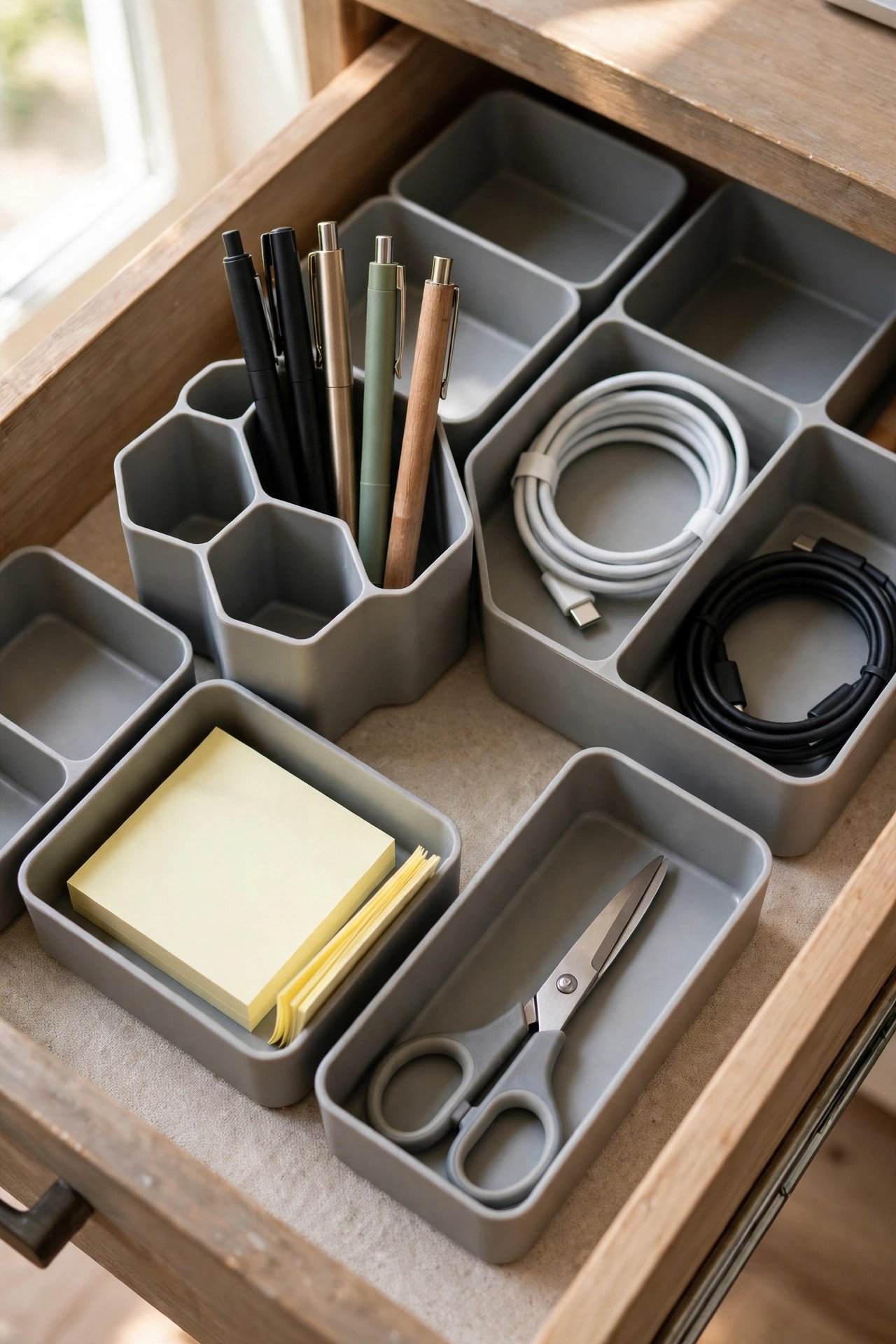
6. Stack Slim Acrylic Bins for Small Supplies
Slim acrylic bins stack neatly and keep small supplies visible without taking up much room. They are perfect for paper clips, pins, and rubber bands that disappear in a deep drawer. Because the bins are clear, you can see at a glance what needs refilling.
Resist the urge to fill every bin to the brim, because a half-full bin is easier to use and looks calmer. Keep one bin empty for new supplies, and stack the rest in a single layer. A tidy stack of bins turns the smallest drawer into a proper little storage system.
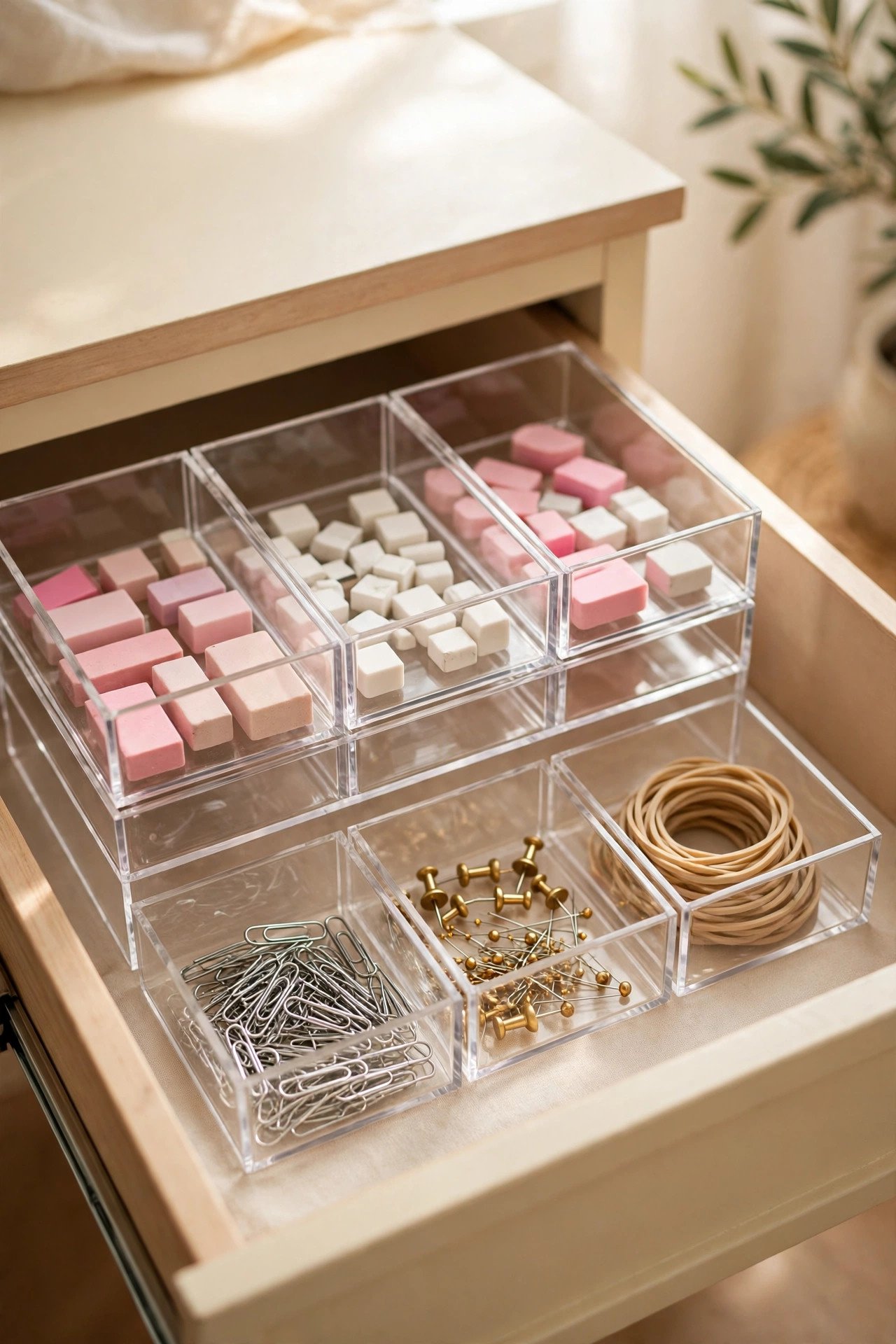
7. Sort Tiny Items in Divided Containers
Divided containers with lots of tiny compartments are perfect for the smallest drawer supplies. Craft boxes and bead organizers work beautifully for paper clips, pushpins, and spare screws. Each little item gets its own pocket, so nothing mixes or vanishes, and you can see everything at a glance.
Choose a container with a sturdy lid that closes firmly, so the contents stay put when you slide the drawer open and shut. Keep the container near the front for easy access, and sort everything by type so you never hunt twice. This one small box can end the daily search for a single paper clip.
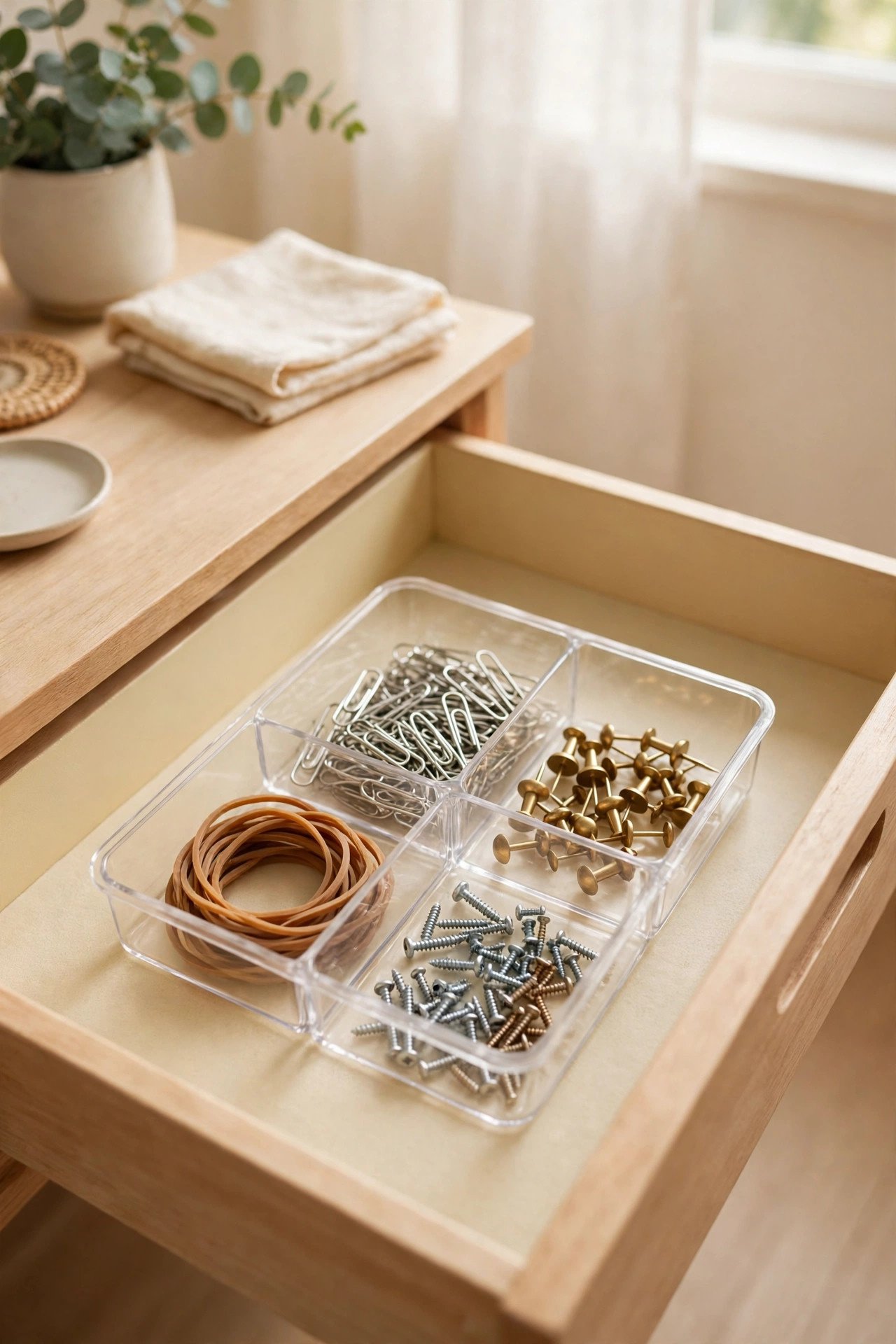
8. Label Boxes So You Can Read Them From Above
Labels on the sides of boxes are useless when you look down into a drawer. Labels on the top edge or facing upward are the ones you actually read. This small change makes every single box findable in seconds, even when the drawer is full and crowded.
Write short, clear labels and place them exactly where your eyes land first when the drawer opens. Use the same label style on every box so the whole drawer looks calm and consistent. When you can read every label from above, you stop opening the wrong box and the drawer stays tidy.
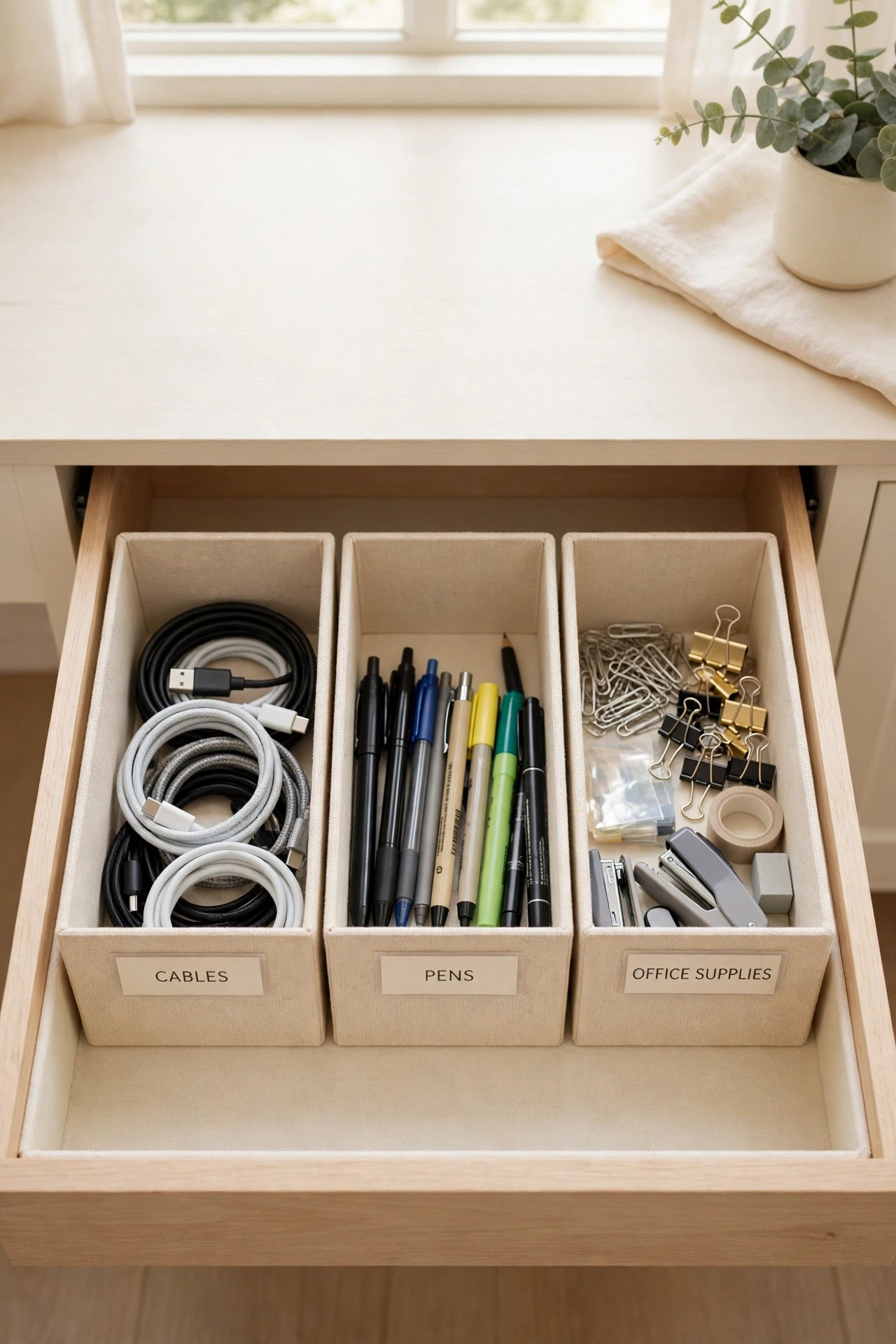
9. Turn the Junk Drawer Into a Useful Drawer
Every home has a junk drawer, and the desk version is no different. Instead of fighting it, give it a purpose. Keep only the useful everyday items inside, like pens, tape, and spare batteries, and move the rest somewhere else. An honest junk drawer with clear zones works better than a drawer pretending to be tidy.
Leave plenty of empty space inside, because a crowded drawer turns back into a junk pile overnight. Use small modular boxes so each item has a home that can move if needed. For the same zone logic in the kitchen, see these kitchen junk drawer organization ideas, and your desk drawer will finally earn its keep.
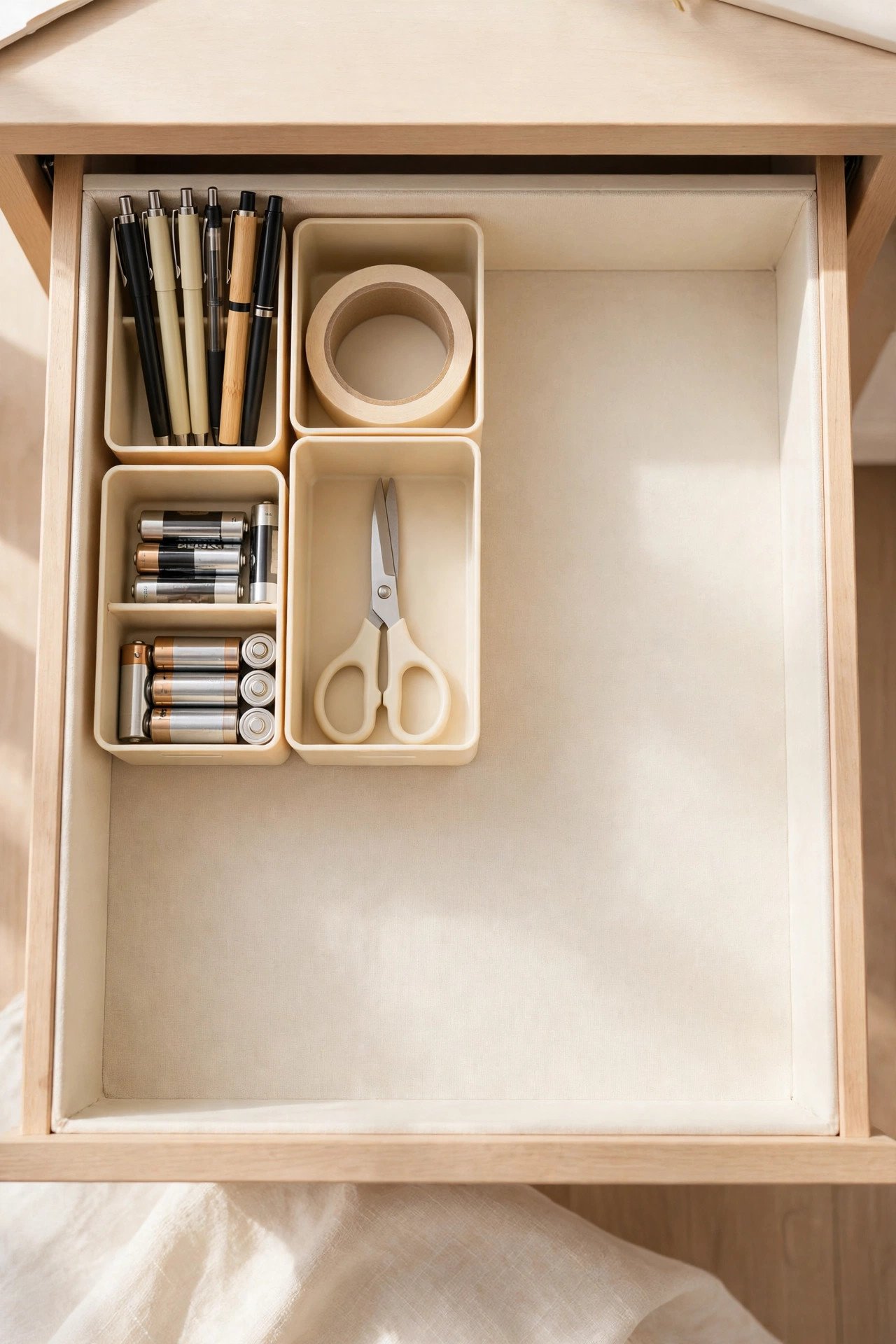
10. Give Every Pen Its Own Home
Pens vanish fastest when they have no fixed home. A dedicated pen drawer ends the daily hunt, because every pen lives in its own slot and you can see which ones still work. Keep the pens you love most at the front, and test each one as you load the drawer.
Sort pens by type, with ballpoints in one row, gel pens in another, and markers standing upright in a small cup. Toss dried-out pens straight away instead of putting them back in the drawer. When every pen has a home, you will always find one that writes on the first try.
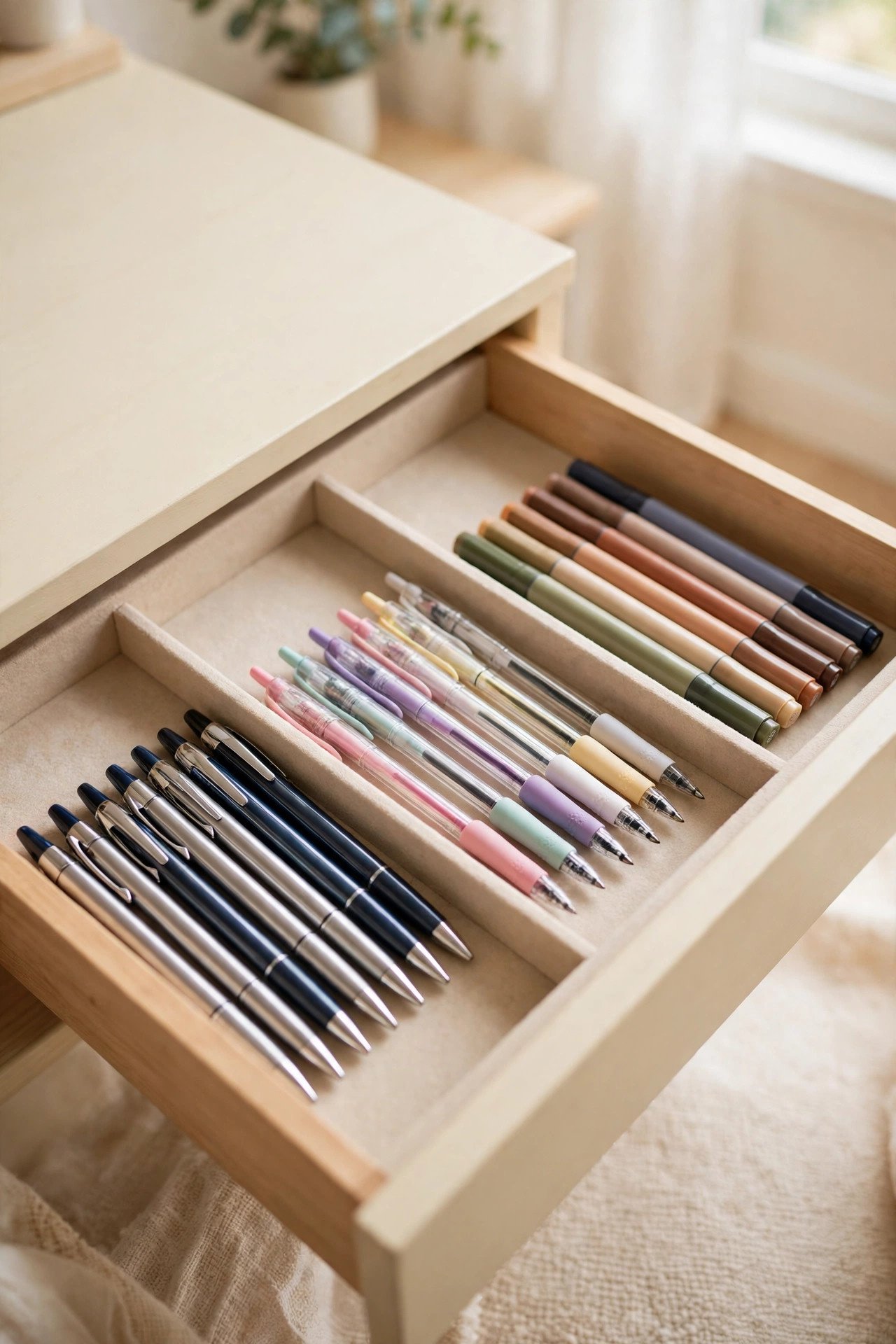
11. Keep Markers Together in a Tilted Tray
Markers dry out and roll away when they lie flat in a messy drawer. A tilted tray keeps them together, visible, and ready to grab. The slight angle stops them from rolling, and you can see every colour at a glance. This is a small change that makes a big difference.
Pick a tray with low sides so the marker caps stay easy to reach. Sort the markers by colour family, and store them cap-down so the ink stays at the tip. A tidy marker tray turns brainstorming and planning into a pleasure instead of a hunt.
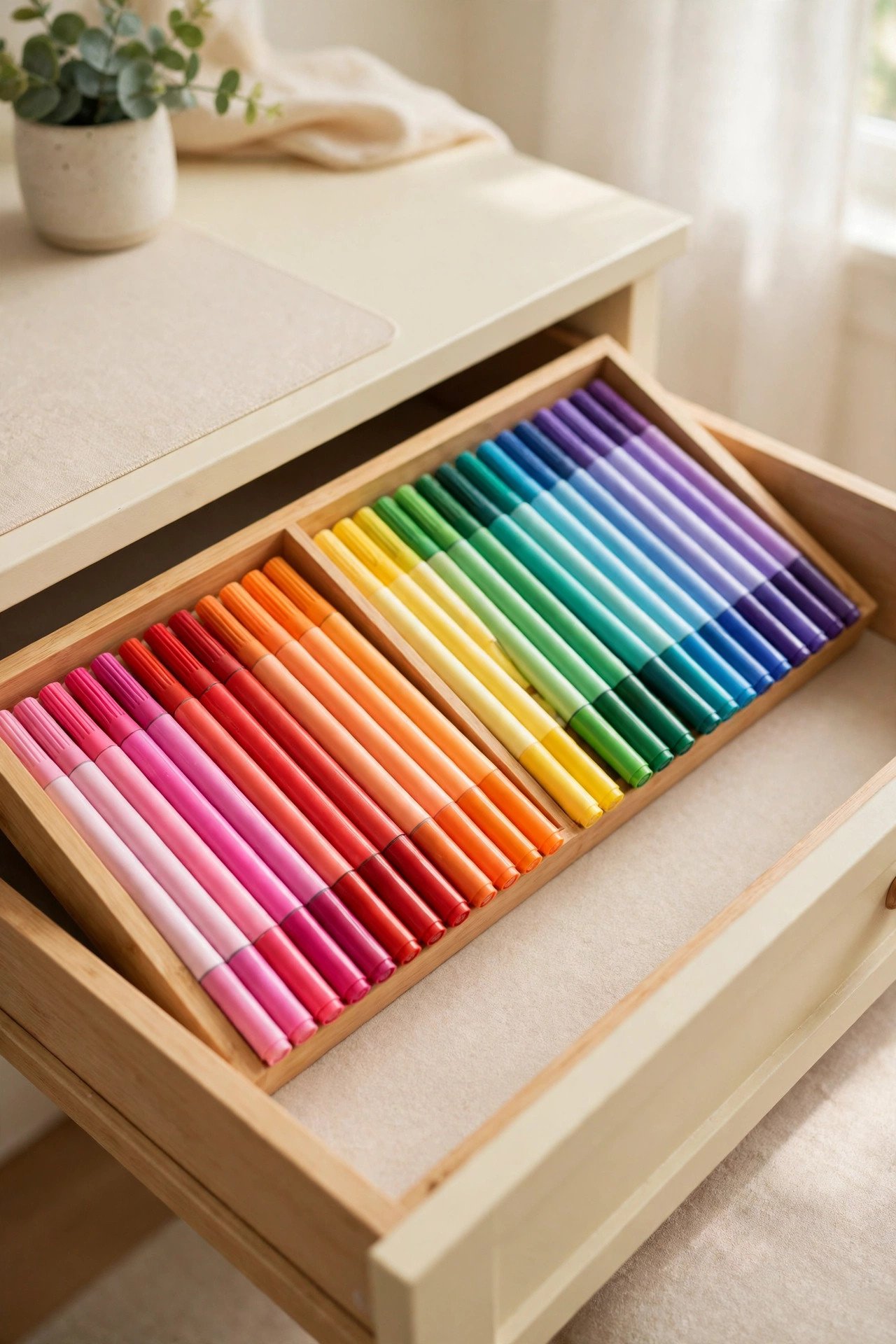
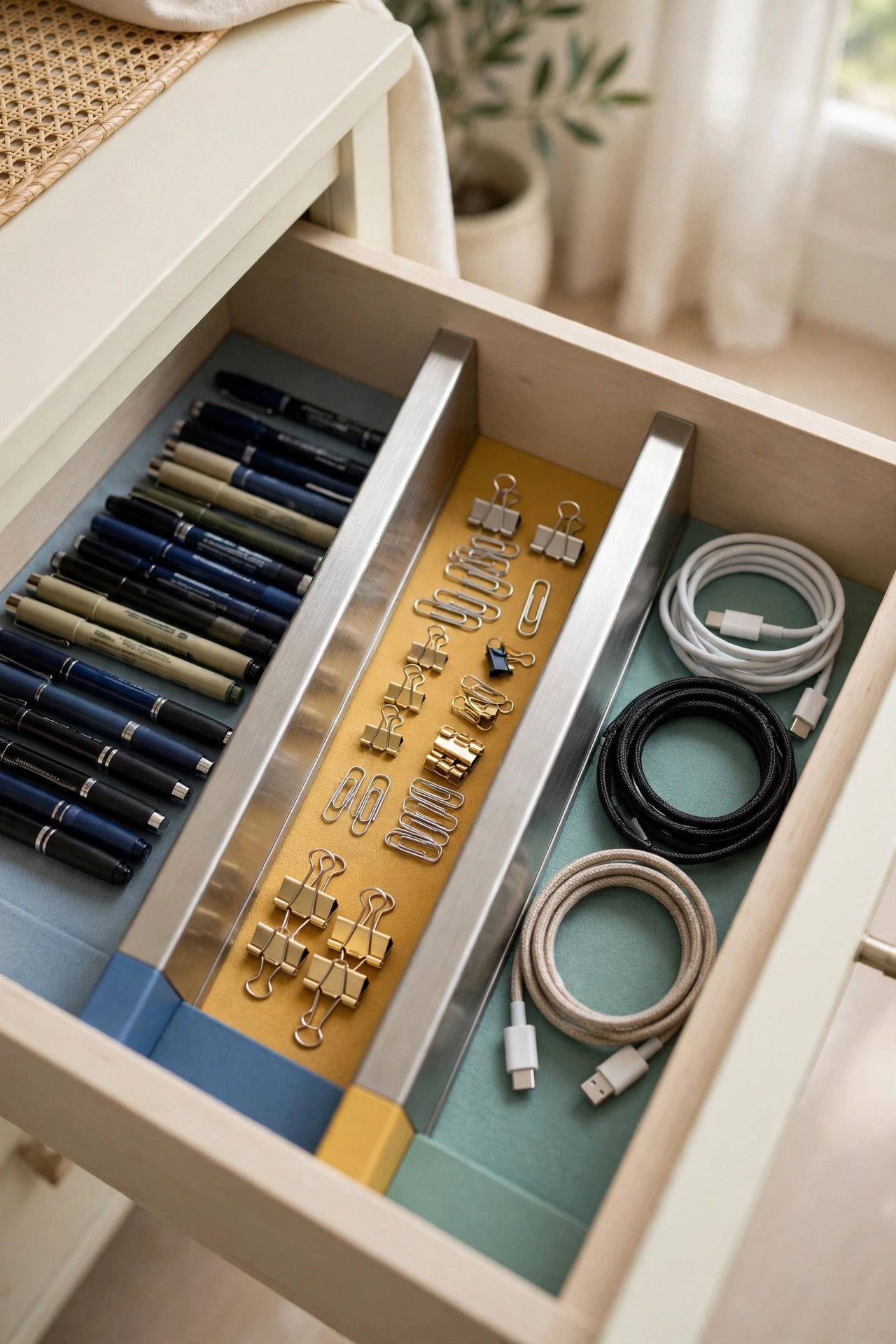
12. Style the Drawer With Metal Dividers
Drawer dividers do not have to be plain or boring. Metal dividers with coloured bases add a stylish touch that matches the rest of your office. They keep supplies sorted just as well as wooden ones, and they look sharp every time you open the drawer.
Choose a metal finish that suits your desk, like brushed silver for a modern look or warm brass for a softer feel. Keep the dividers in the same finish throughout the drawer so it looks planned. A stylish drawer is one you will want to keep tidy, which is half the battle.
13. Fit Built-In Organizers for a Permanent Fix
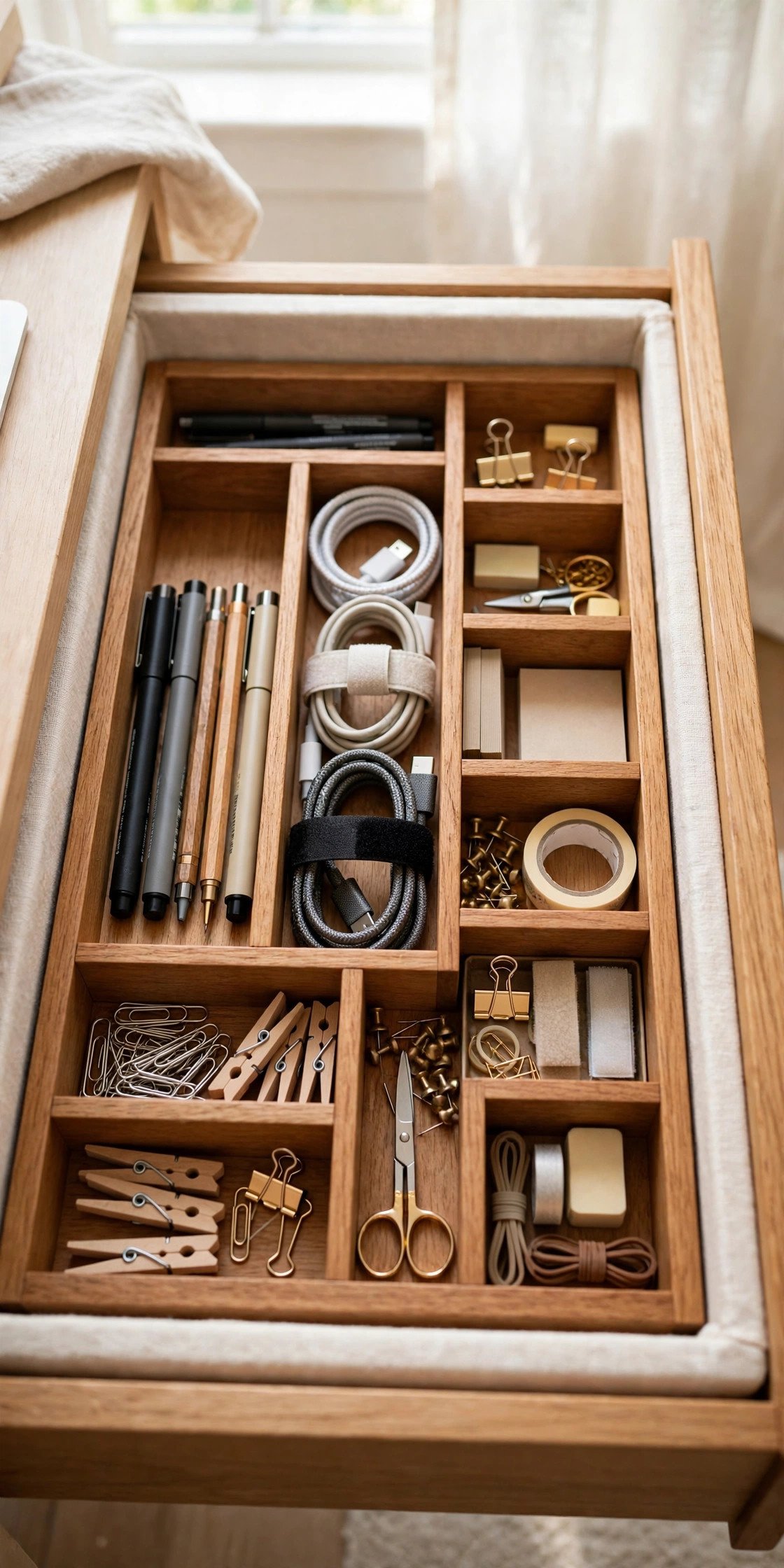
If you want a drawer that stays organized for good, built-in organizers are the answer. They fit the drawer exactly, with no sliding or gaps, and they give every supply a permanent home. Once they are in, the system runs itself without any daily effort from you.
Measure the drawer carefully, then choose organizers that fill the space edge to edge without leaving gaps. Add small acrylic bins inside the built-in sections for tiny items like clips and pins. A permanent setup costs a little more effort up front, but it saves you from reorganizing the whole drawer every few months.
14. Colour-Code Supplies So You Can Find Them Fast
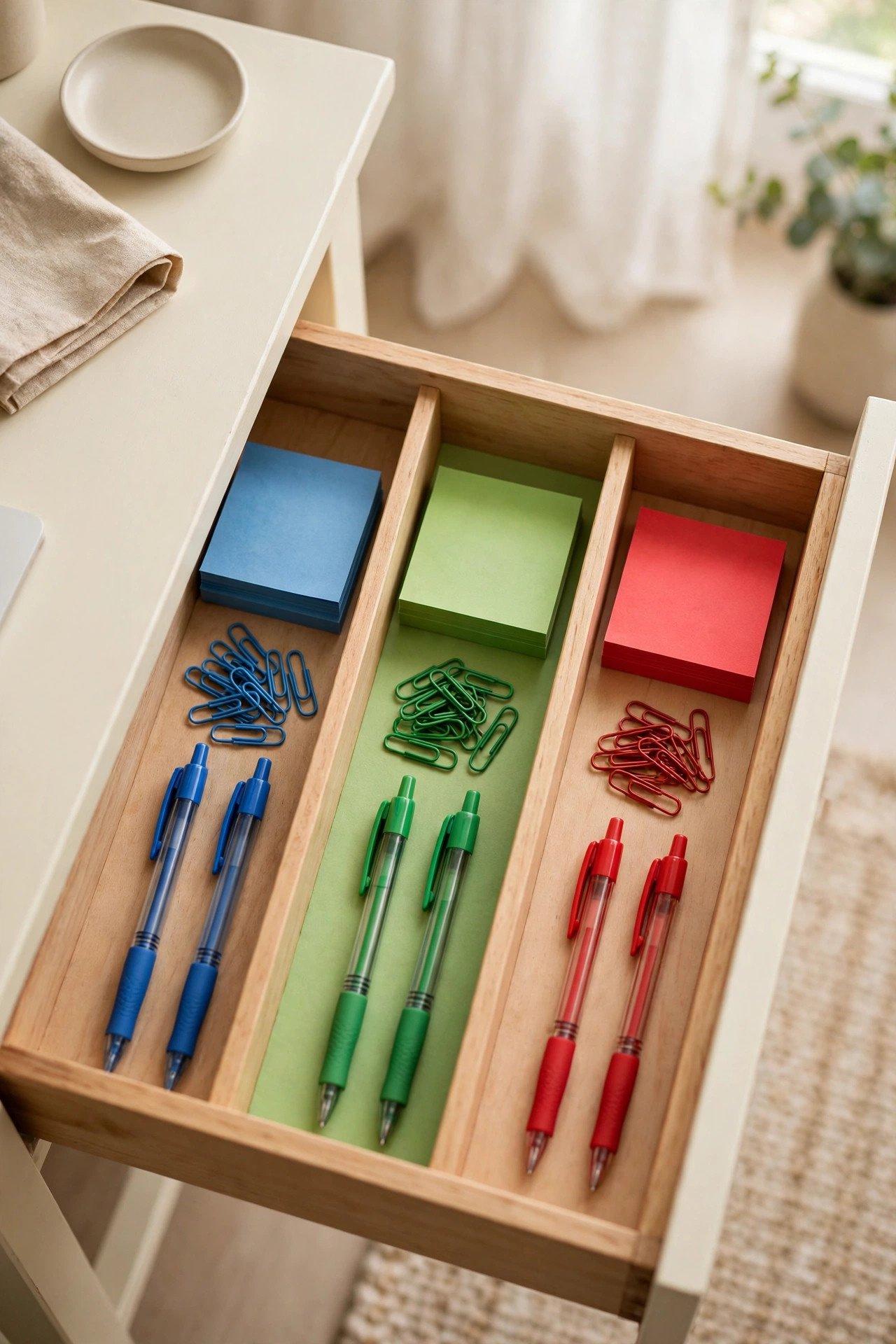
Colour coding is a joy for visual people, and it makes a drawer faster to use. Assign one colour to each type of supply, like blue pens for notes, green clips for filing, and red markers for urgent tasks. Your eyes find the right colour before your brain even reads a label.
Start with the supplies you grab most often, and colour code those first before you touch the rest. Keep the system simple with three or four colours at most, so it stays easy to remember. When every colour means something, the drawer feels like it was designed just for you.
15. Line the Drawer With a Fitted Stationery Inlay
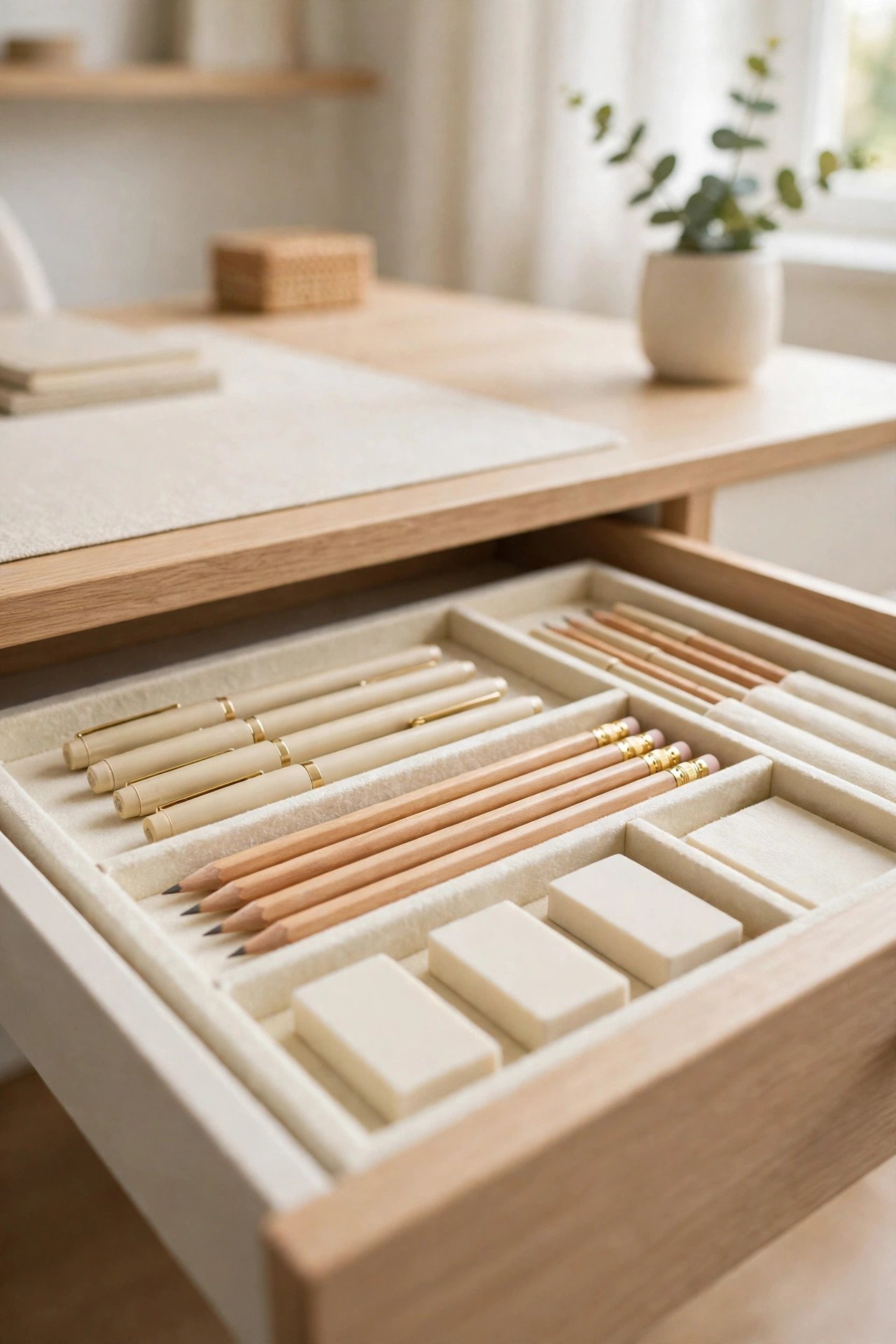
A fitted drawer inlay is a single tray shaped to hold your stationery in perfect rows. It drops into the drawer and stays put, so pens, pencils, and erasers never slide around. The drawer looks calm and finished, like it was made for your exact supplies.
Choose an inlay that matches your drawer size, and check that your longest pens fit without bending. Keep the layout simple, with one slot per item type, and leave a spare slot for new supplies. A good inlay makes the drawer feel expensive, even when the tray itself costs very little.
16. Upcycle Jars and Boxes Into Drawer Organizers
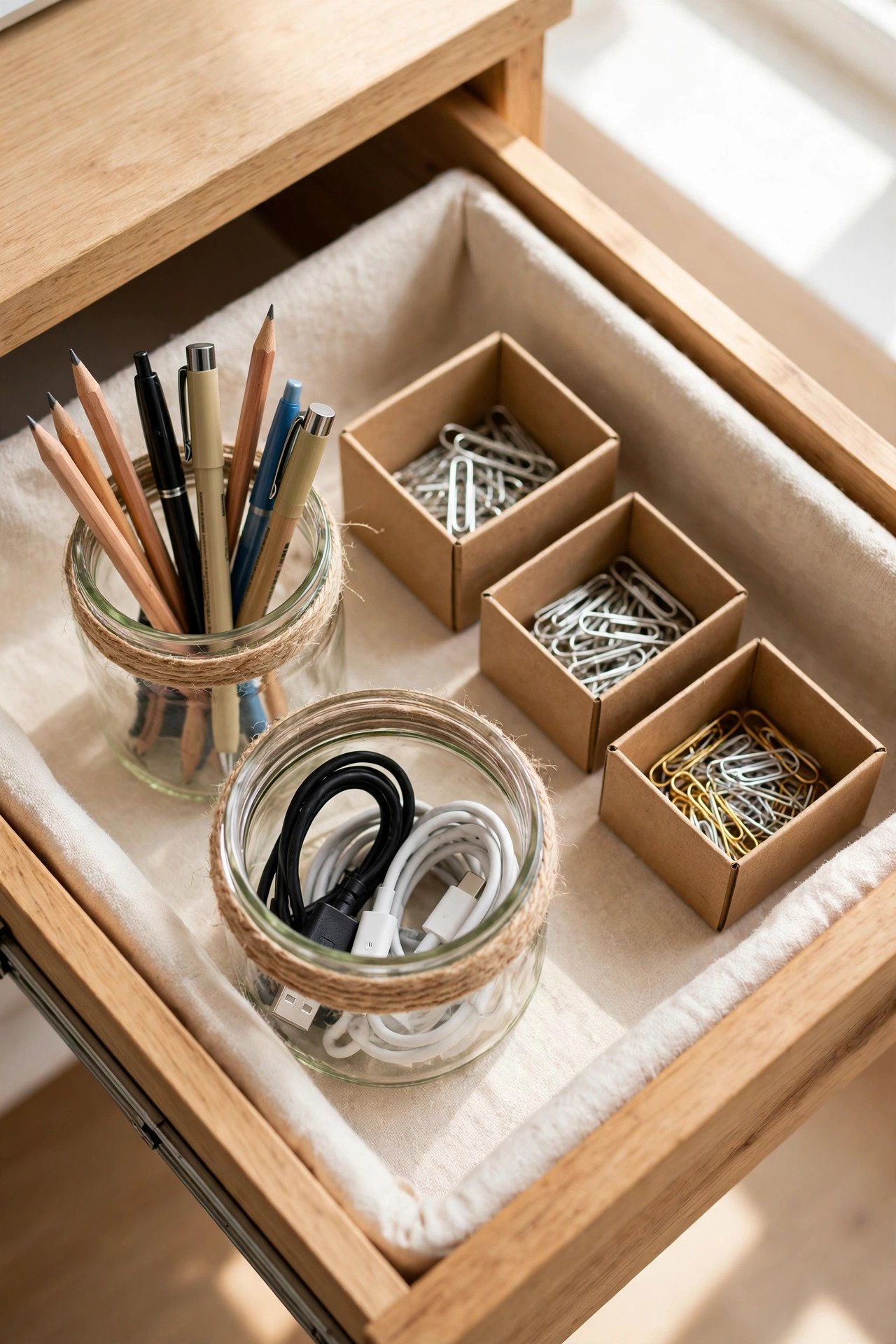
You do not need to buy new organizers to sort a desk drawer. Old jars, small boxes, and electronics packaging can become perfect drawer bins for free. A glass jar holds pens beautifully, and a sturdy phone box makes a neat tray for cables, chargers and small tools.
Look around your home for containers that fit the drawer well, and test them before you commit to the layout. Wash glass jars well, and trim boxes to the right height so the drawer still closes. Upcycling saves money and keeps useful containers out of the bin, which makes the tidy drawer feel even better.
17. Sort Small Supplies With Cutlery Dividers
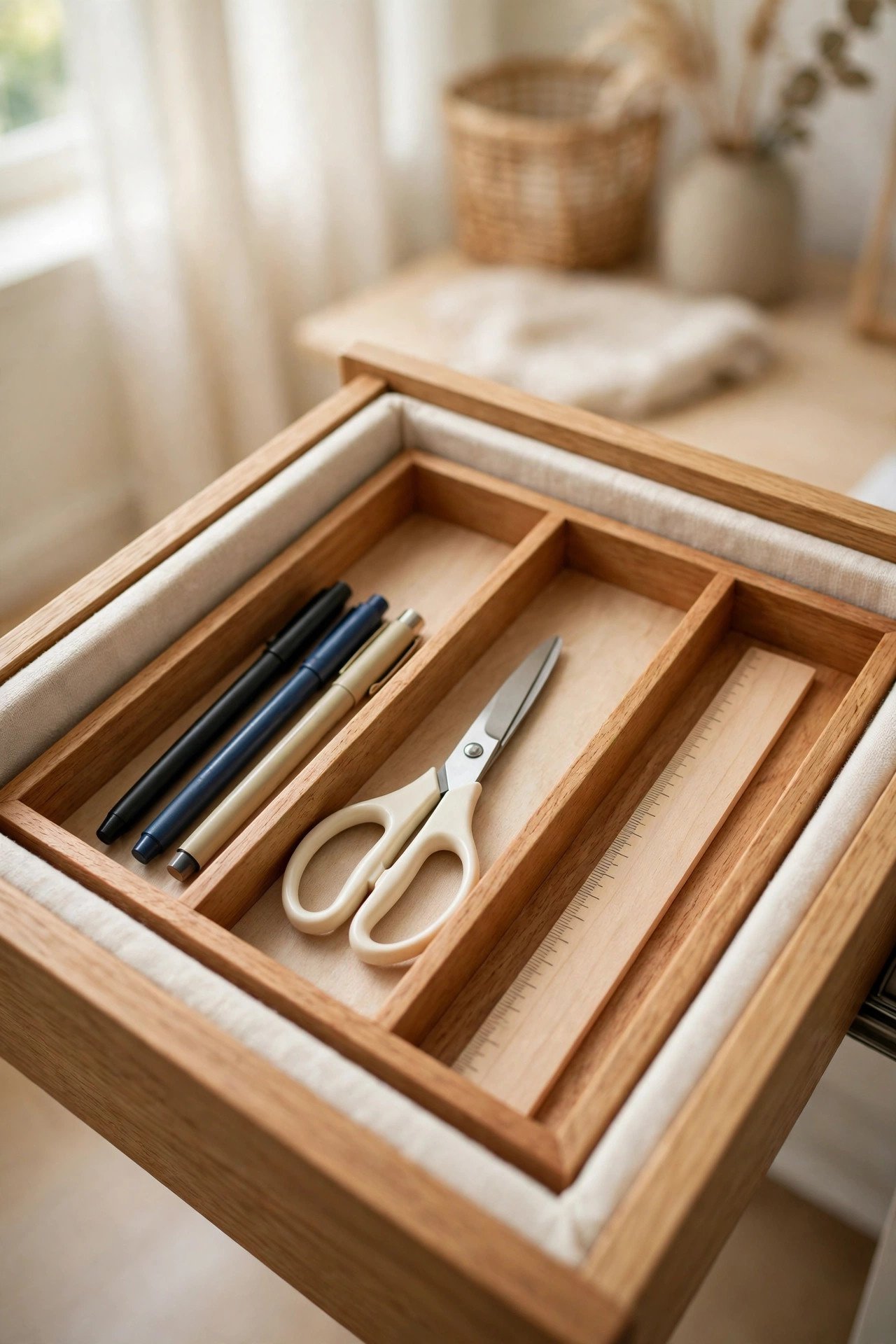
Cutlery dividers are made for forks and knives, but they work brilliantly in a desk drawer too. Their long, narrow slots fit pens, scissors, and rulers perfectly, and the separate sections keep everything from sliding together. It is a clever reuse that costs very little.
Pick a divider that fits your drawer width, and place it near the front where you reach most. Keep long items in the long slots and small items in the short ones. A cutlery divider turns a plain drawer into a sorted workspace in under a minute.
18. Coil Charging Cables With Reusable Ties
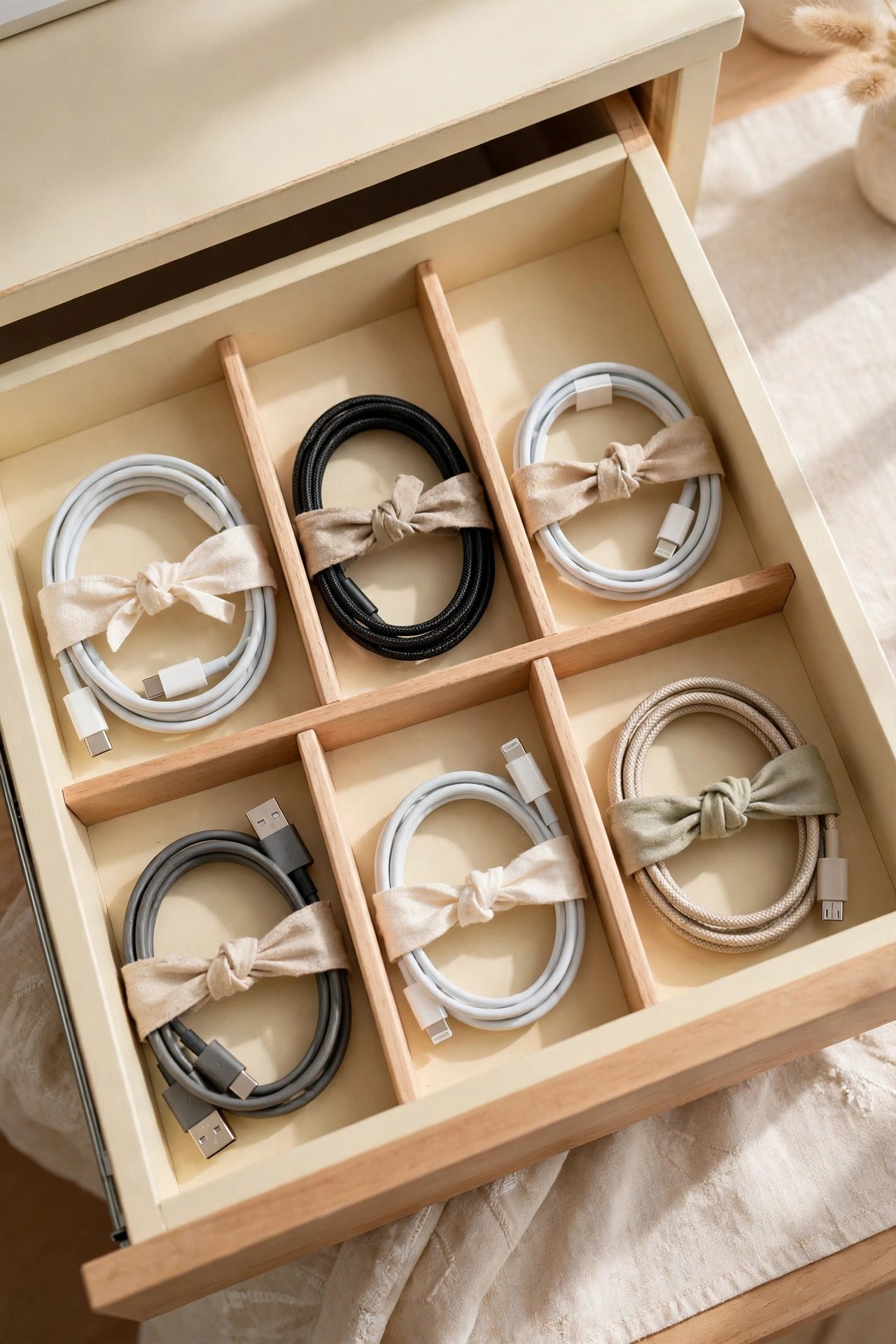
Charging cables are the worst tangle in any desk drawer. A loose cable wraps around pens, knots with other cords, and wastes minutes every day. Coiling each cable into a neat loop and securing it with a reusable tie ends the mess completely. Each cable becomes a small, tidy bundle you can grab in seconds.
Keep the loops loose rather than tight, because sharp bends can damage wires over time. Store one tie with each cable so the pair never separates. For the full cable system beyond the drawer, see these cable management ideas, and your charging cables will finally behave.
19. Store Cables by Device in Small Pouches
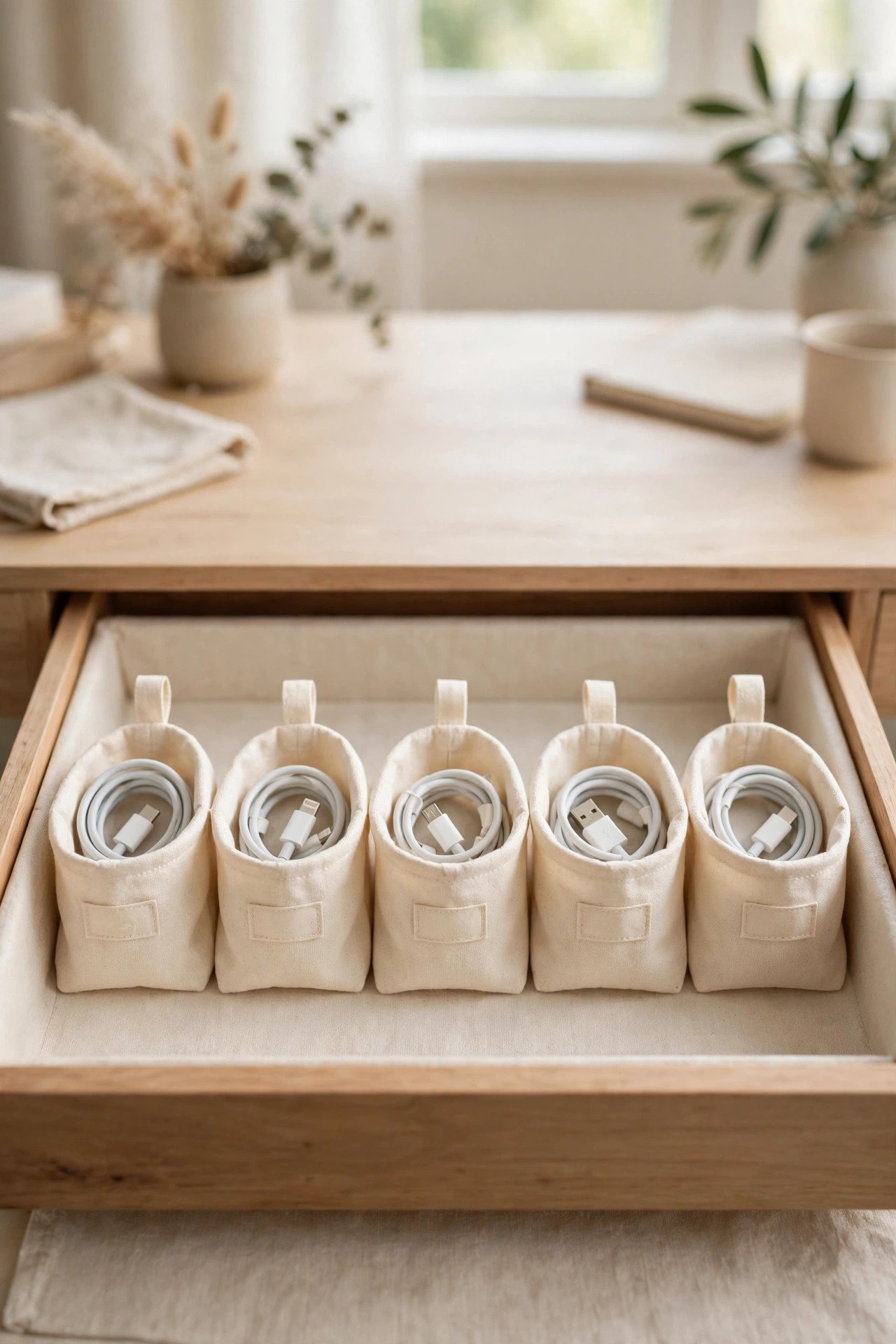
When every cable looks the same, you waste time guessing which one fits your phone, tablet, or earbuds. Small pouches solve this by giving each device its own home. Label each pouch with the device name, and the right cable is always one grab away.
Use soft fabric pouches or small zip bags, and keep one cable plus its adapter together in each pouch. Line the pouches in a row so you can see every label at once. A drawer of neat pouches turns cable chaos into a calm little library of cords.
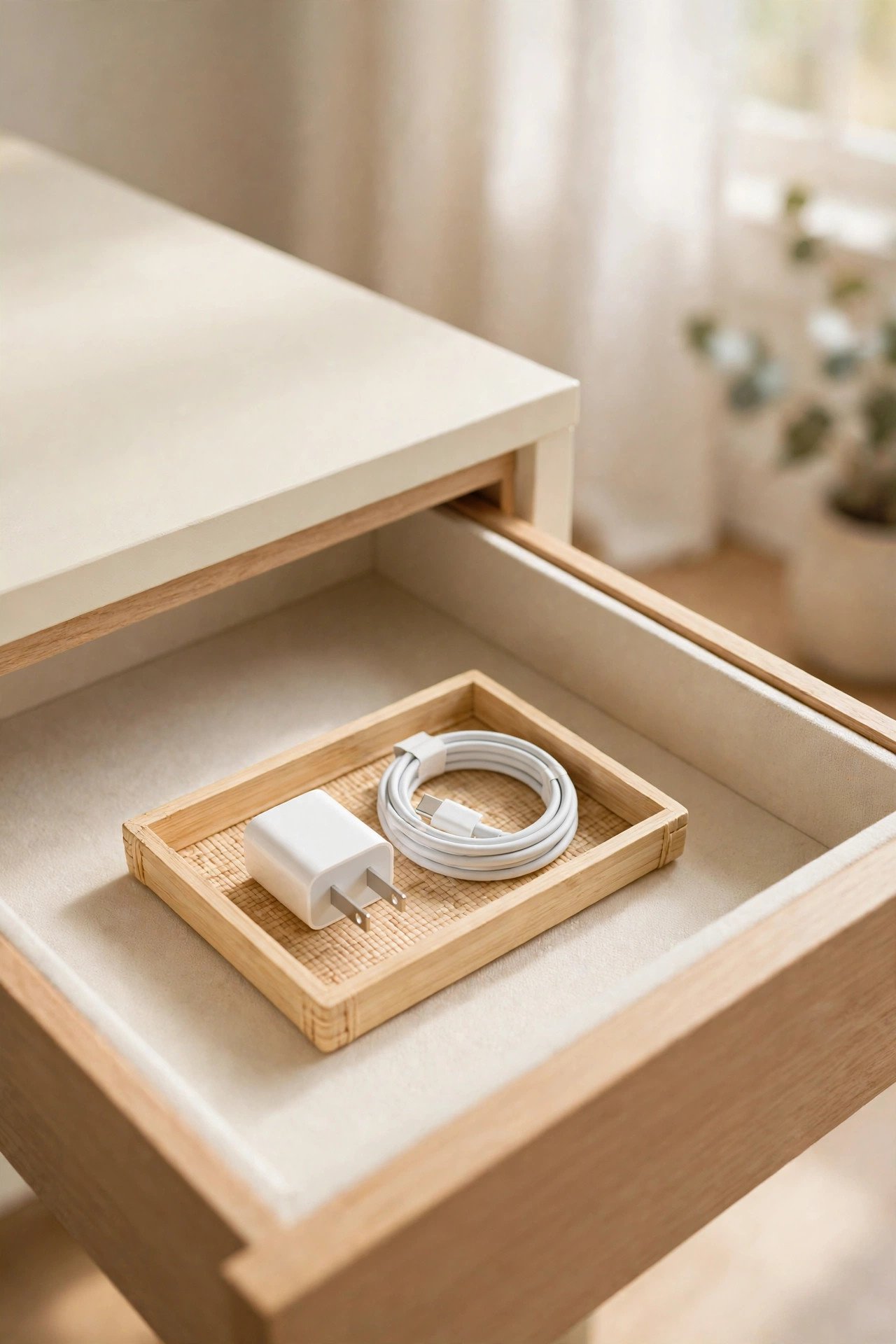
20. Keep a Spare Charger in the Top Drawer
A dead phone at the wrong moment is stressful, and hunting for a charger makes it worse. Keeping one spare charger in the top drawer means help is always within reach. You will never have to dig through bags or borrow a cable from another room again.
Choose a charger that fits your most-used device, and coil its cable neatly beside it. Check the charger once a month to make sure it still works, and replace it if it feels warm or loose. One reliable spare in the top drawer buys you peace of mind every single day.
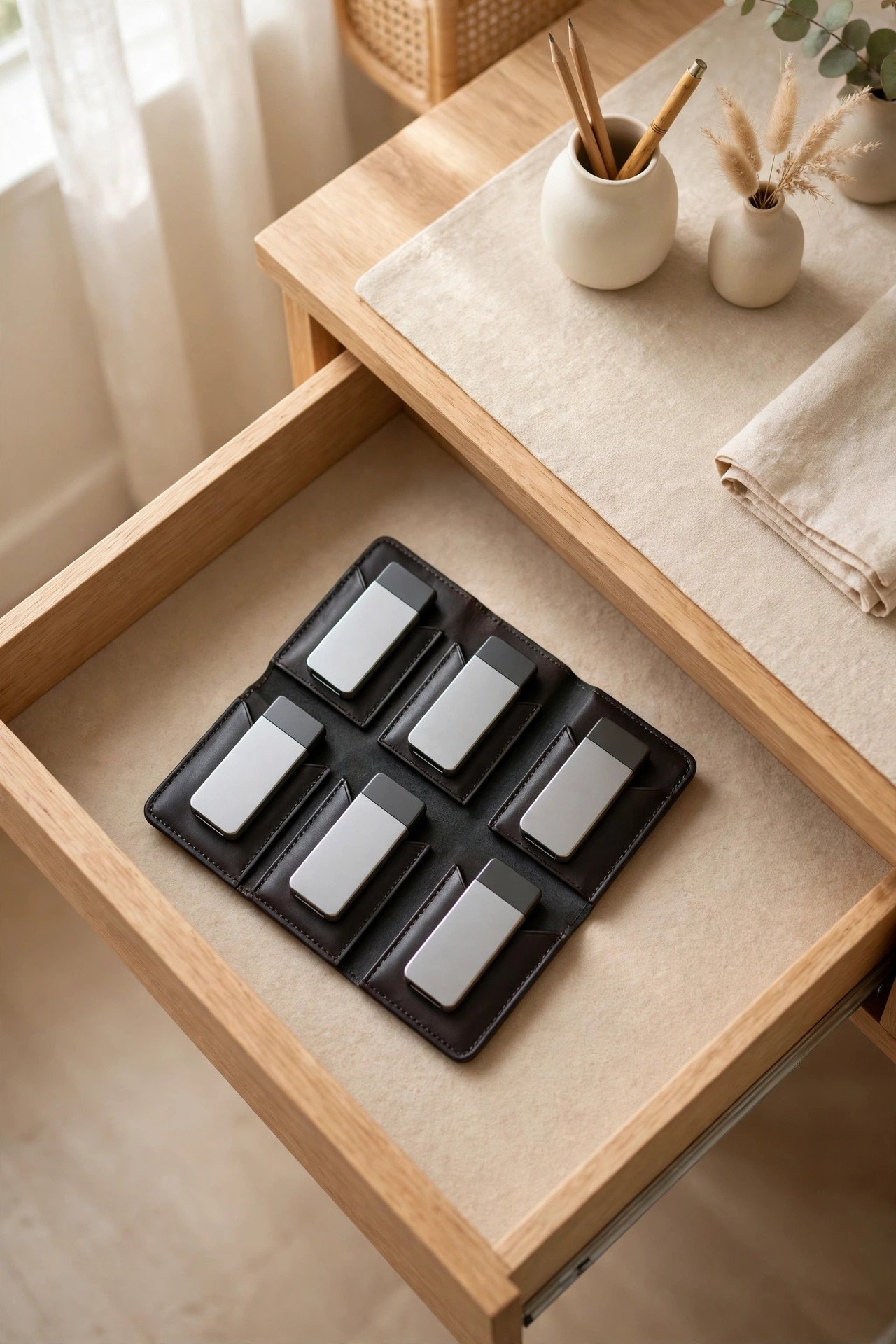
21. Park USB Drives in a Slim Card Case
USB drives are small, easy to lose, and always needed at the worst moment. A slim card case with individual slots keeps each drive safe, visible, and sorted. You can label the slots by what each drive holds, so the right one is always easy to find.
Pick a case that fits flat in the drawer, and keep it near the front for quick access. Store only the drives you actually use, and move old ones to a labelled box elsewhere. A tidy case ends the daily hunt for a tiny drive in a deep drawer.
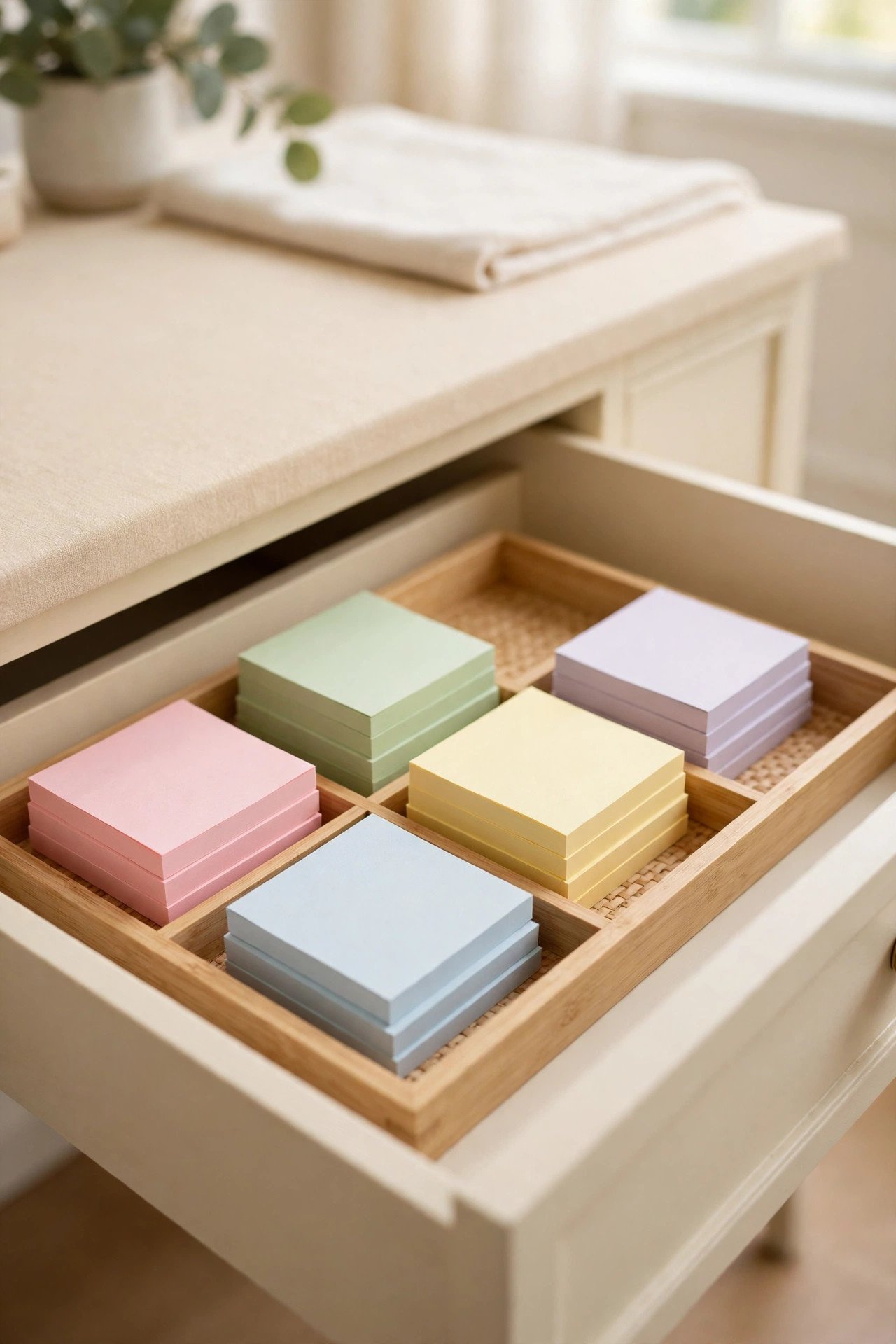
22. File Sticky Notes in a Shallow Tray
Sticky notes scatter everywhere when they have no home. A shallow tray keeps every pad stacked, visible, and ready to grab. You can sort the pads by colour or size, and the tray stops them from sliding under other supplies. One tray ends the sticky-note drift for good.
Keep the tray near the front of the drawer, and store only two or three pads in it at a time. Refill from a backup stash kept elsewhere in the drawer. When the pads are stacked neatly, you will reach for them more often and your notes will stay where you put them.
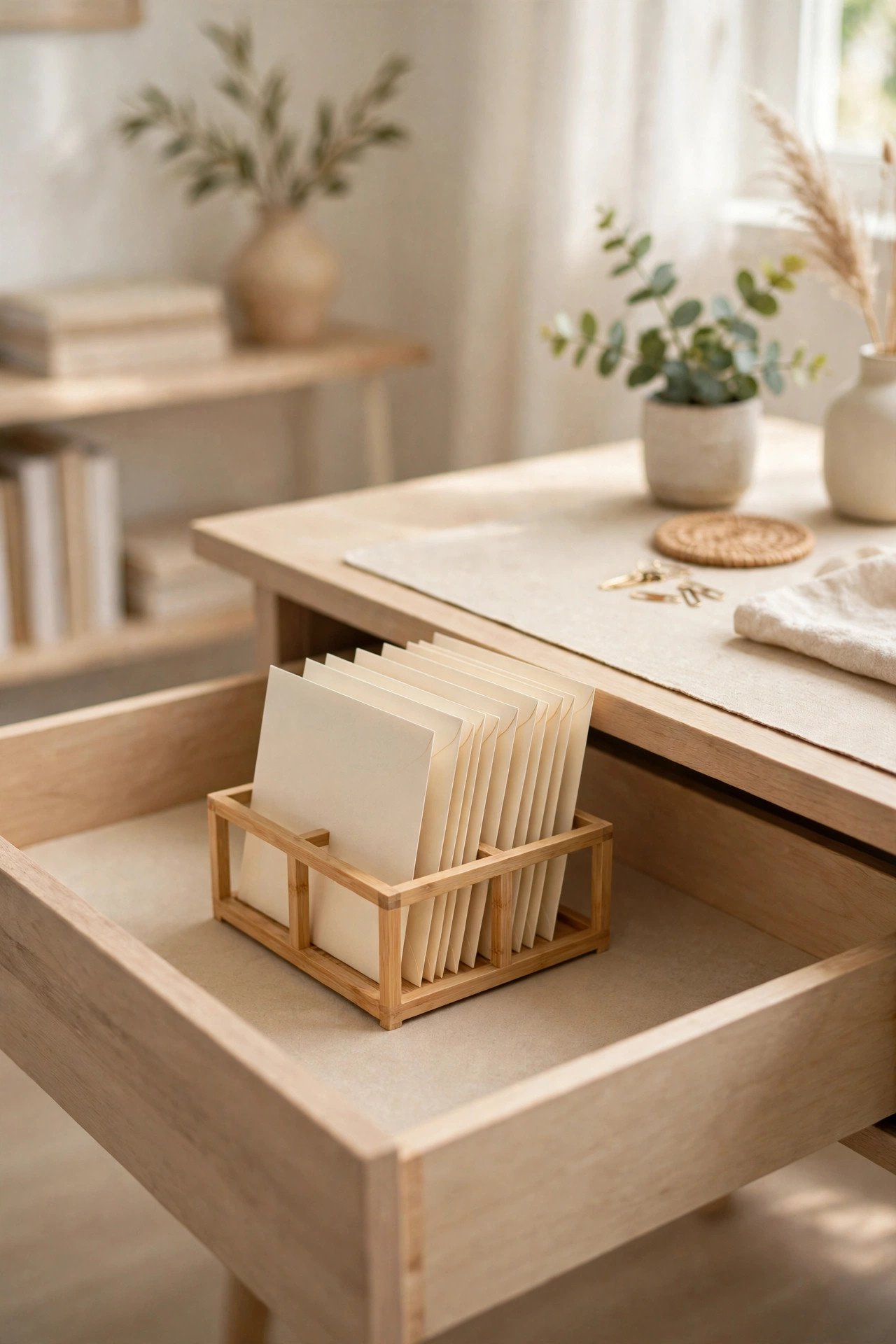
23. Keep Envelopes Upright in a Small Sorter
Envelopes bend, tear, and vanish when they lie flat under other supplies. A small upright sorter keeps them standing, visible, and easy to count. You can sort them by size, with small envelopes in front and large ones at the back. The drawer looks tidy and the envelopes stay crisp.
Choose a sorter that fits the drawer height so the drawer still closes smoothly without catching. Keep only the envelopes you use regularly, and store bulk packs elsewhere in the house. Upright storage makes it easy to quickly grab one envelope without disturbing the rest.
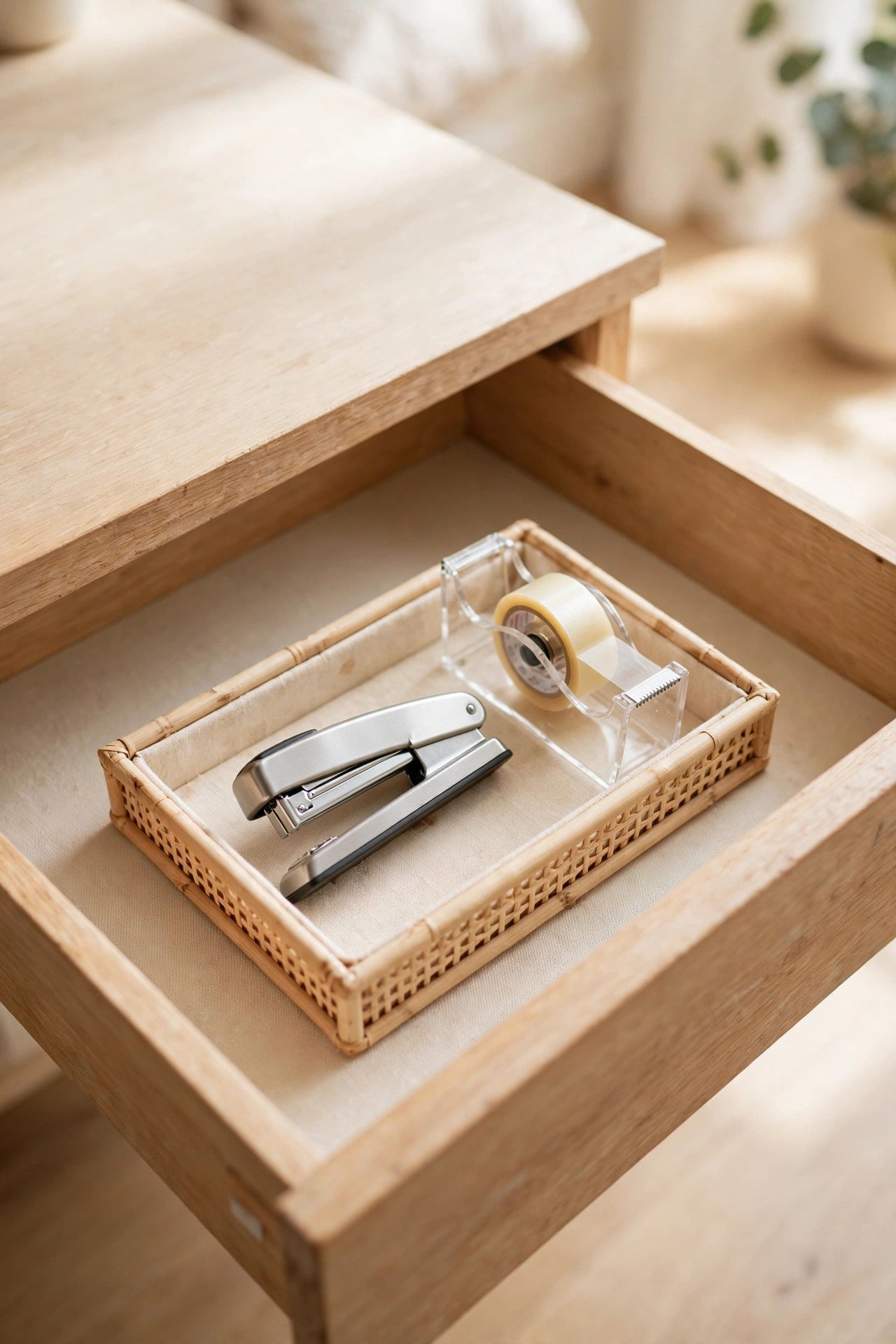
24. Tuck a Stapler and Tape Dispenser Together
A stapler and a tape dispenser are used together so often that they deserve one shared home. Keeping them side by side in a single tray means you grab both in one motion. The drawer stays tidy because the pair never drifts apart into different corners.
Pick a tray that fits both items snugly without crowding them. Keep the tray near the front of the drawer, and refill the stapler and tape before they run out. Two tools that live together get used together, and your drawer stays calm because of it.
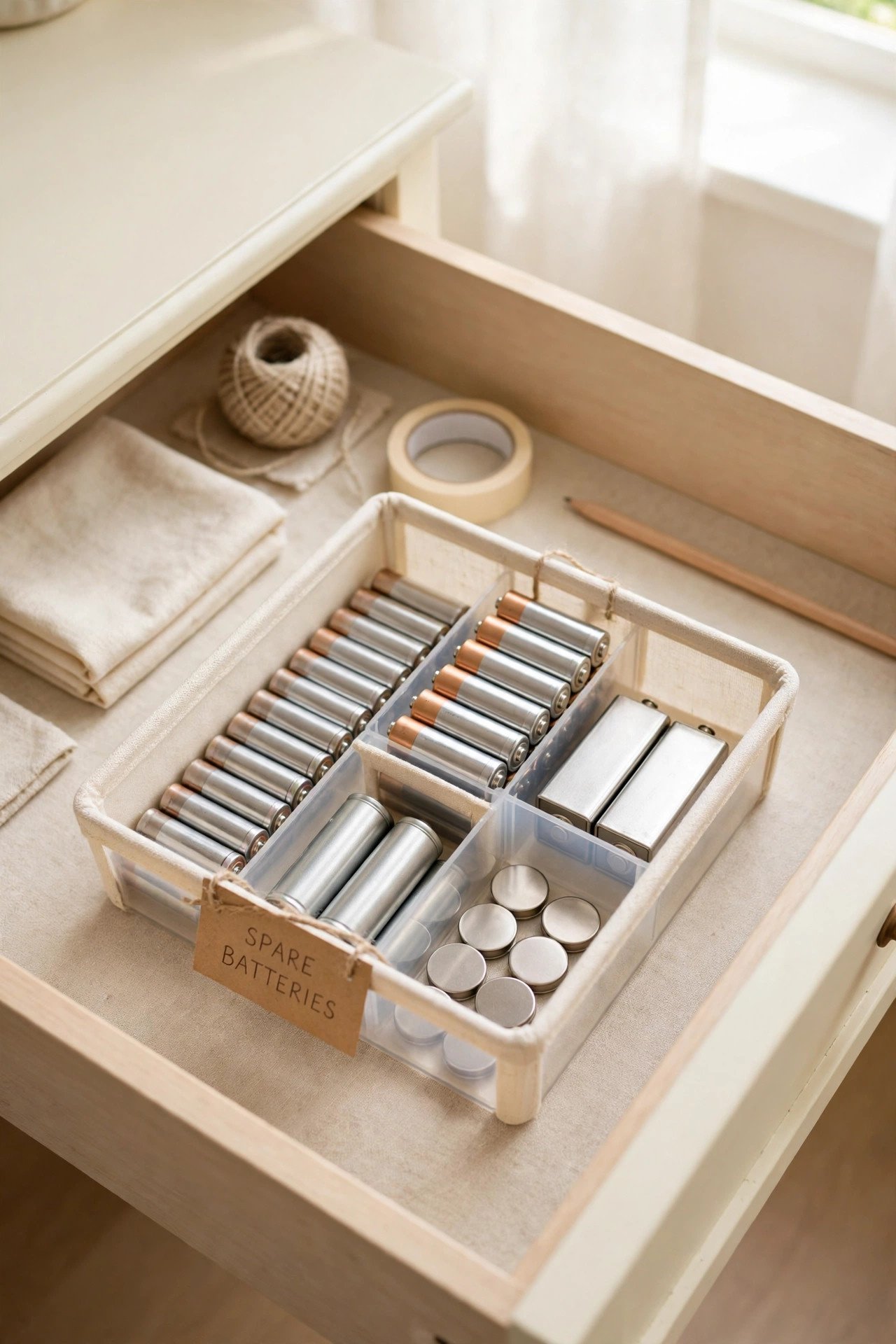
25. Store Spare Batteries in a Labeled Bin
Spare batteries roll around, mix up sizes, and hide exactly when you need them. A small labeled bin with one section per size ends the confusion. You can see your stock at a glance, and you always grab the right size on the first try.
Sort the batteries by size, and keep rechargeables separate from disposables in their own section. Test each battery before you store it, and recycle the dead ones straight away. A labeled bin turns a rolling mess into a neat little power station inside your drawer.
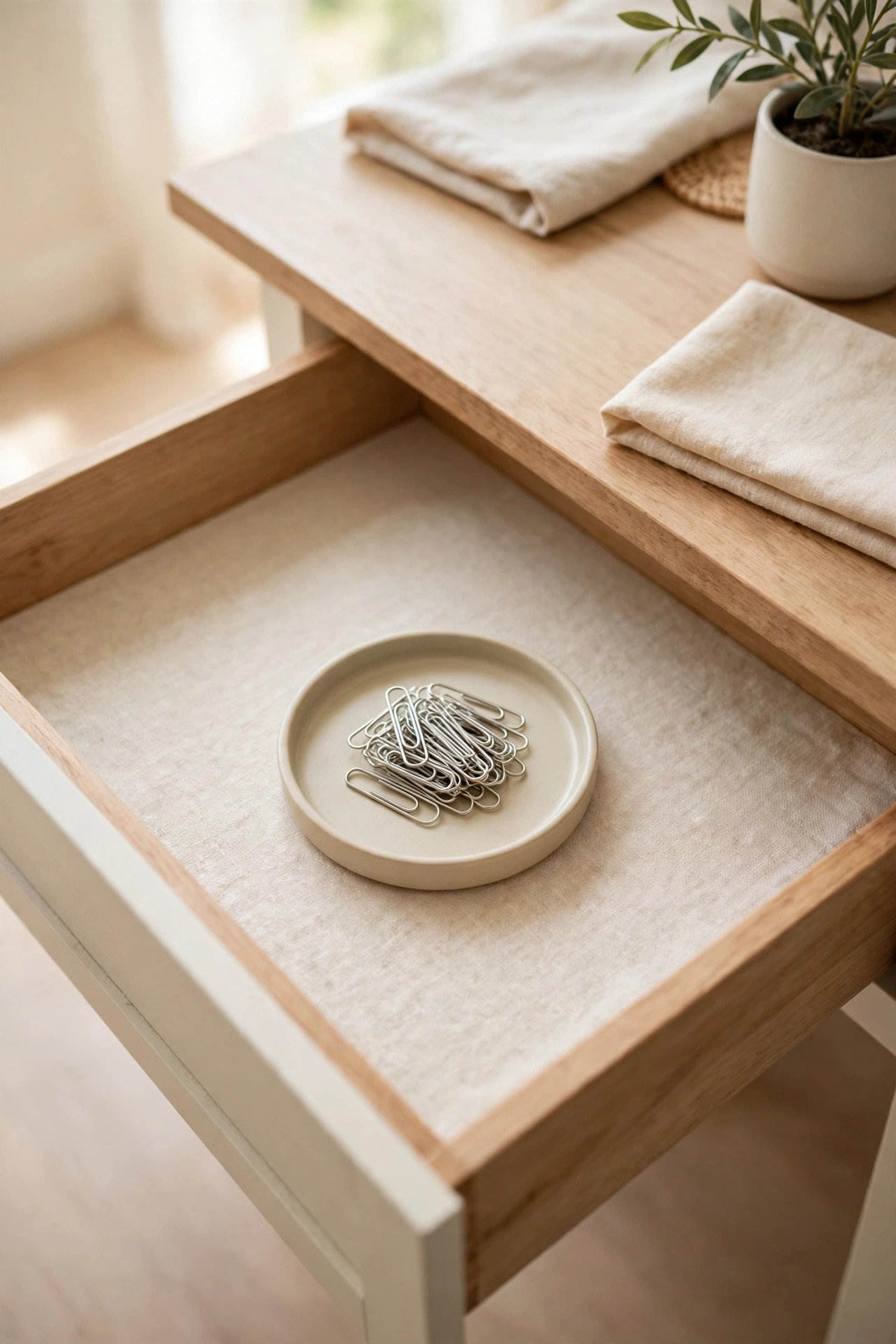
26. Give Paper Clips a Magnetic Home
Paper clips are tiny, slippery, and always escaping to the bottom of the drawer. A small magnetic strip or a magnetic dish gives them a home they cannot escape from. The clips stick together in a neat pile, and you can grab one without chasing it around the drawer.
Mount a short magnetic strip inside the drawer lid, or drop a small magnetic dish in one corner. Keep only the clips you use, and sort them by size if you own several kinds. A magnetic home turns the smallest supply in the drawer into the easiest one to find.
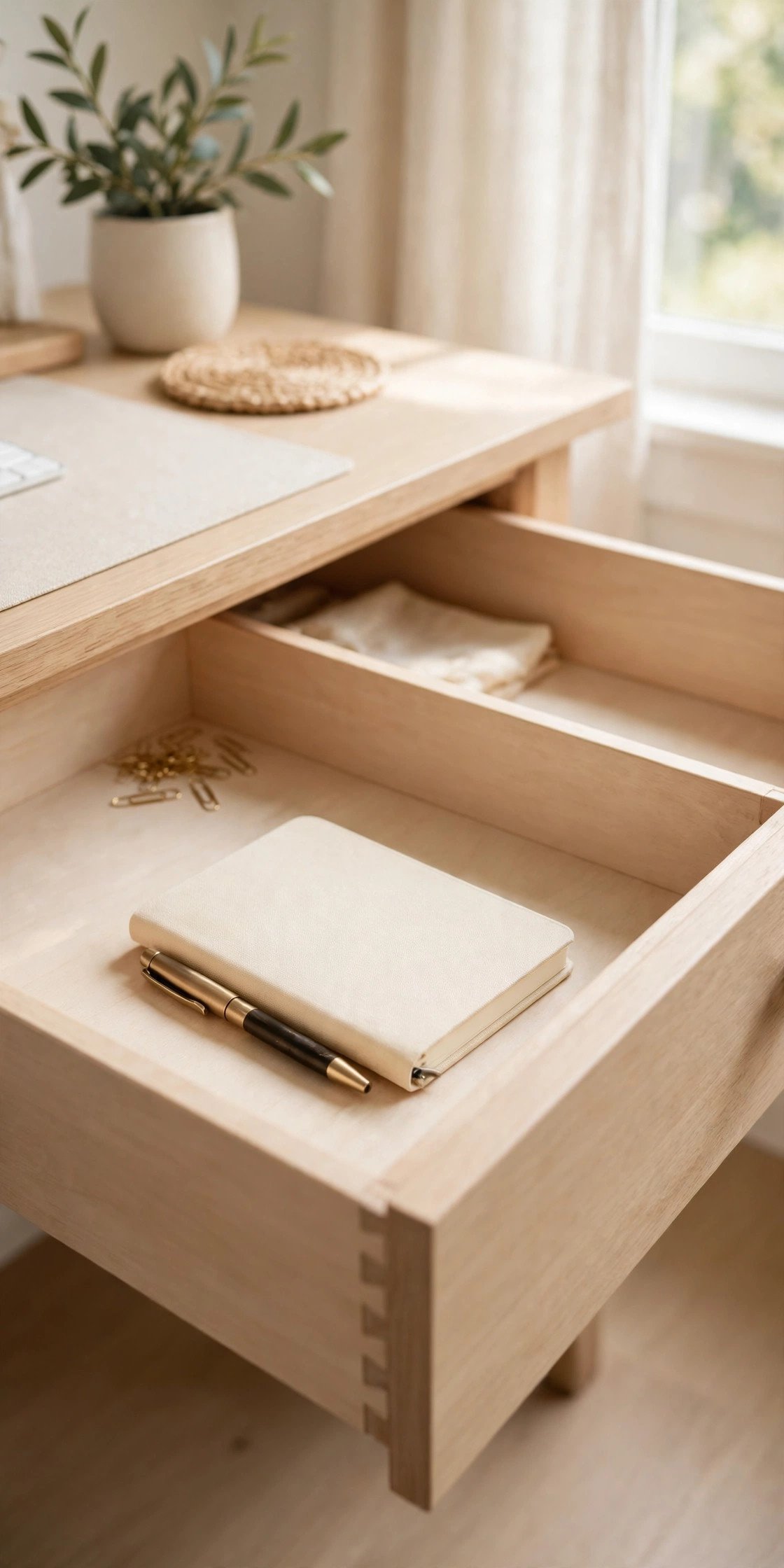
27. Keep a Small Notebook by the Front Edge
Ideas strike at odd moments, and a notebook buried at the back of the drawer is no help. Keeping one small notebook by the front edge means you can grab it and write before the thought fades. The drawer stays useful because the most reached-for item is the easiest to reach.
Choose a notebook that fits the drawer width without bending, and keep one reliable pen clipped to its cover. Replace the notebook when it fills up, and store finished ones on a shelf. A notebook at the front edge turns the drawer into a capture station for every bright idea.
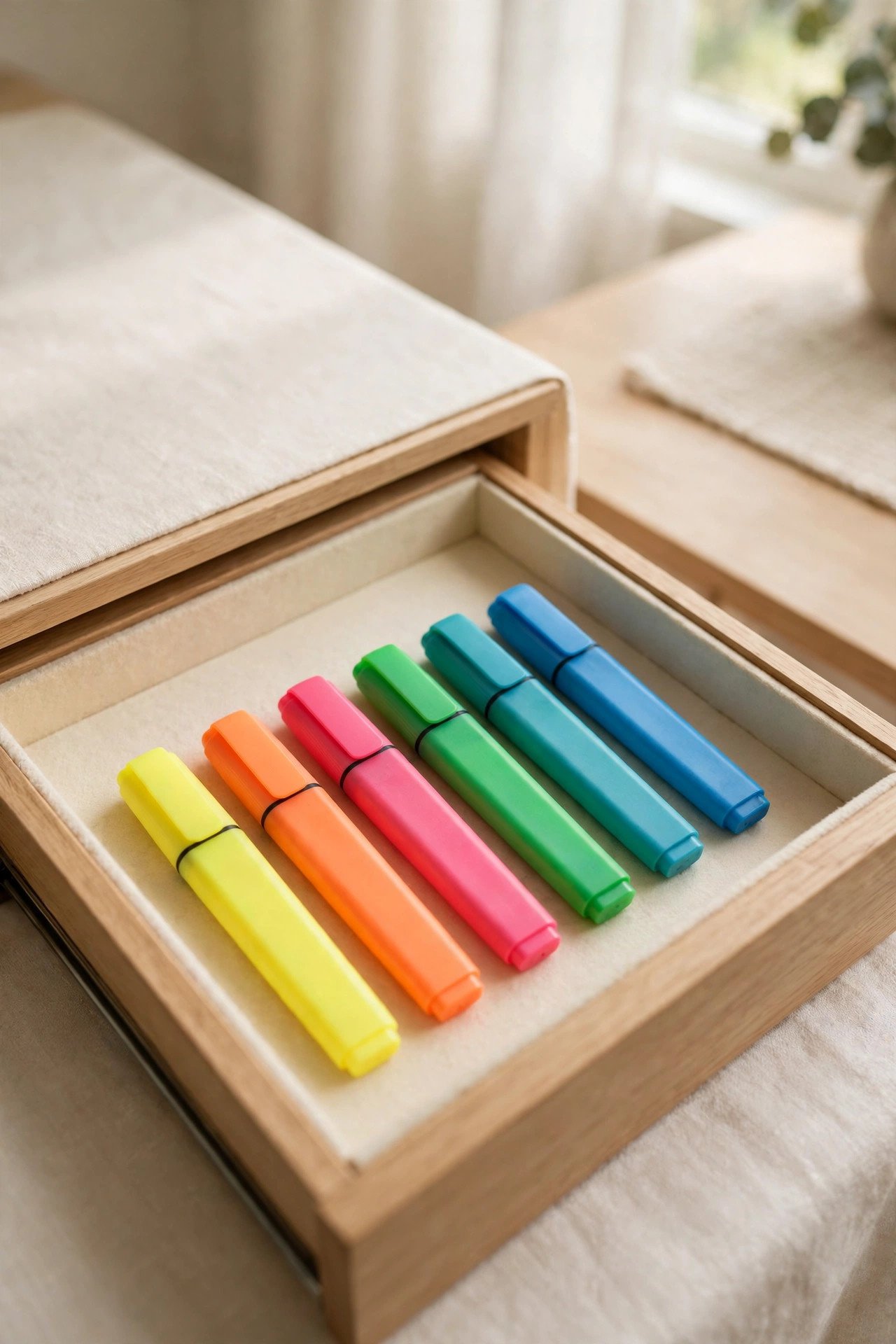
28. Sort Highlighters by Colour in One Row
Highlighters roll and hide when they lie loose, and you always need the colour you cannot find. Sorting them by colour in a single row makes the whole set visible at a glance. You can see which colours you own and which ones have run dry.
Line the highlighters up in rainbow order, with all the caps facing the same way. Keep the row near the front of the drawer, and test each highlighter once a month. A single neat row of highlighters looks cheerful and makes studying and planning feel easier.
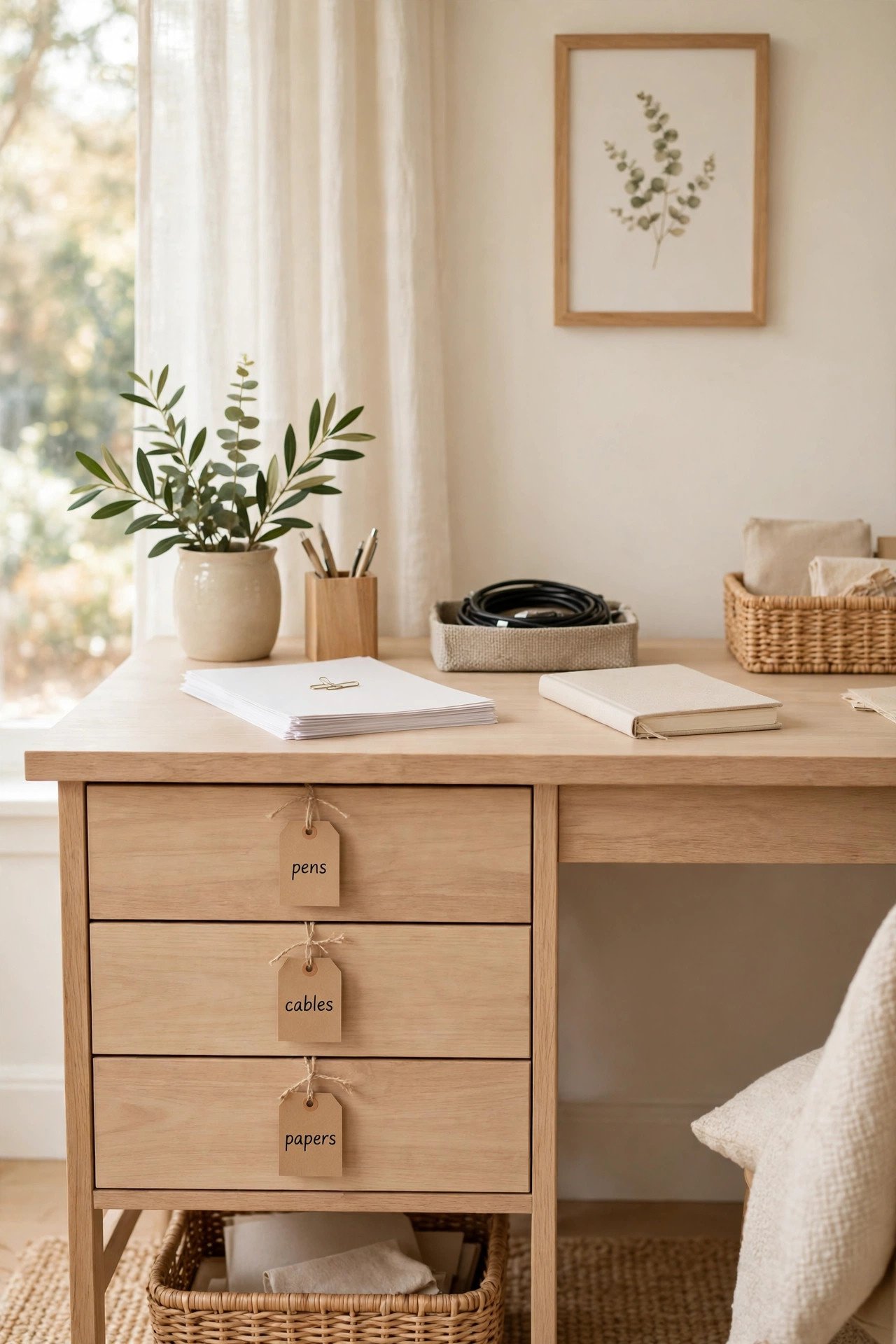
29. Label Every Drawer With a Simple Tag
Labels are the quiet hero of any organized drawer. A short tag on the drawer front tells everyone in the house what belongs inside, without a single word from you. The system survives busy weeks because nobody has to guess where things go or what belongs there.
Use the same label style on every drawer so the whole desk looks calm and consistent. Write short words like pens, cables, and papers, and update the tag the very day the contents change. A labeled drawer stays honest, and an honest drawer stays tidy far longer than an unlabeled one.
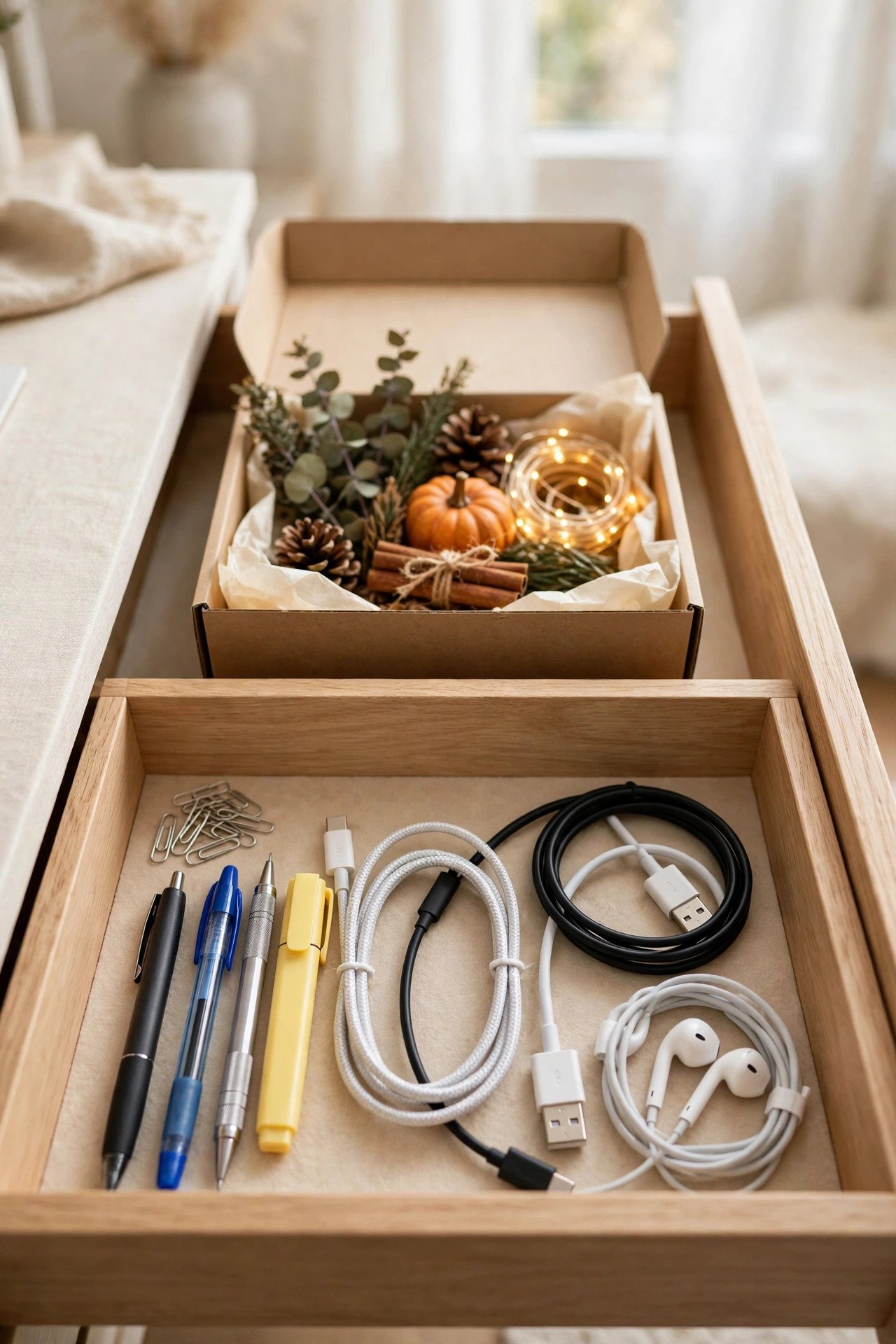
30. Rotate Seasonal Supplies to the Back
Some supplies matter only in certain seasons, like holiday cards in winter or garden plans in spring. Keeping them at the front all year wastes your best drawer space. Rotating them to the back when their season ends frees the front for what you use right now.
Set a reminder at each season change to swap the front and back sections. Move the out-of-season items into a labeled box at the back, and bring the current ones forward. A drawer that changes with the seasons always feels fresh and never feels crowded.
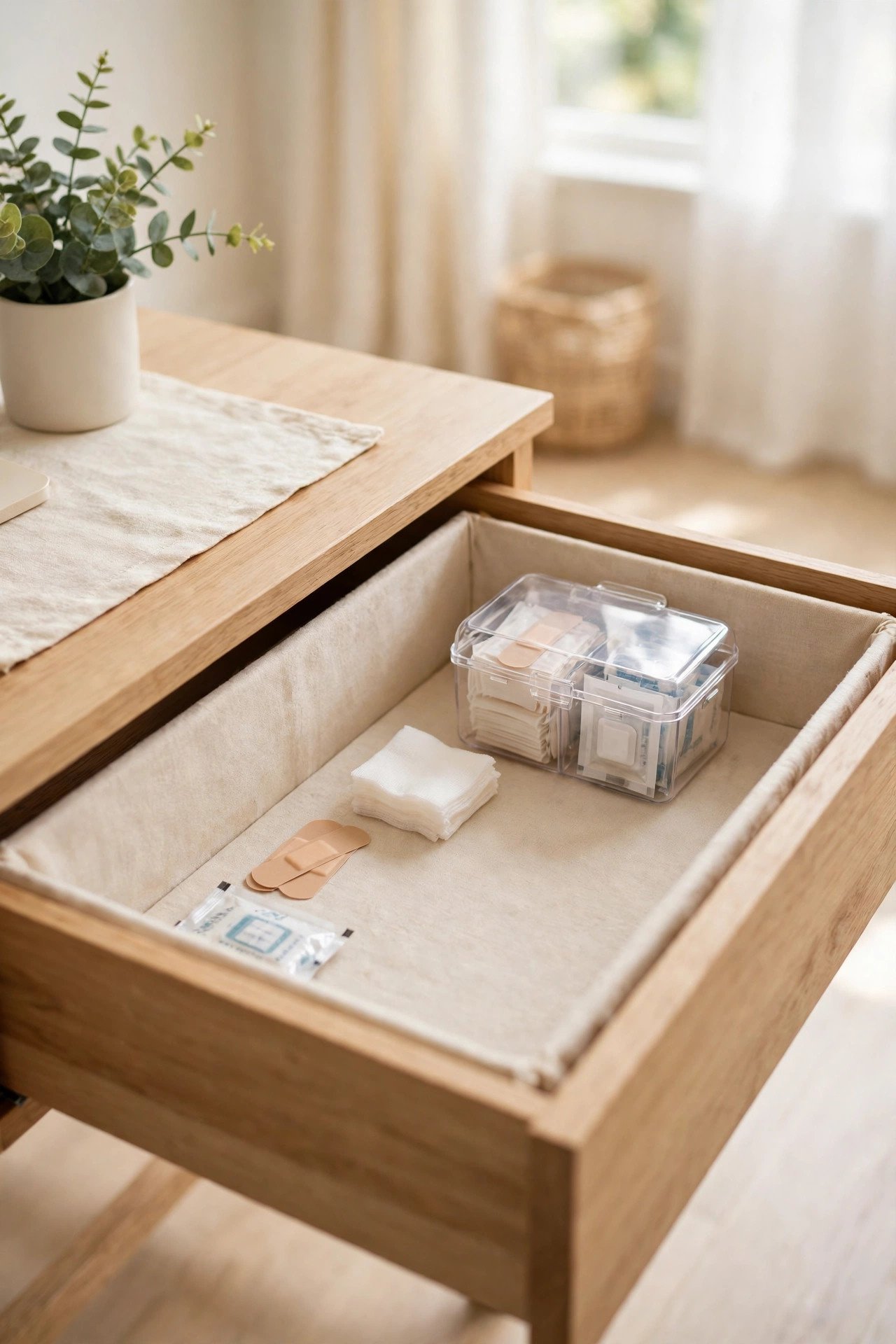
31. Keep a Mini First Aid Kit in the Back Corner
Paper cuts and small scrapes happen at every desk, and a first aid kit buried in another room is no help. A mini kit in the back corner of the drawer means bandages are always within reach. You will be glad it is there on the day you need it most.
Use a small clear box with a snap lid, and stock it with bandages, antiseptic wipes, and pain relievers. Check the kit every few months and replace anything expired. A tiny kit in the corner costs almost no space and saves a trip across the house.
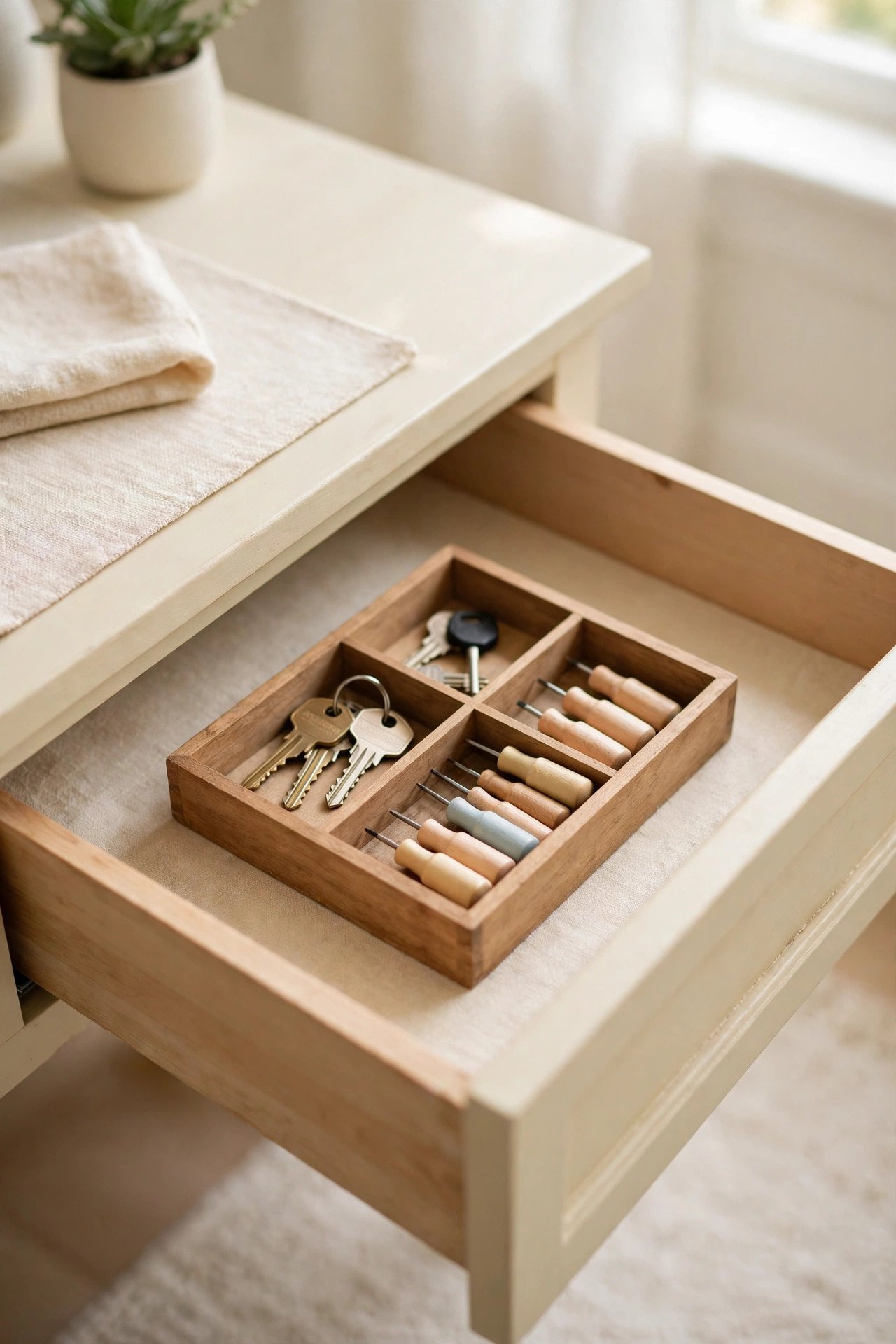
32. Store Spare Keys and Small Tools Together
Spare keys and small tools like tiny screwdrivers always end up scattered, and you need them exactly when you cannot find them. Keeping them together in one labeled section ends the search. The keys stay with the tools that use them, and everything is in one place.
Use a divided box for the keys and tools, and label it so nobody borrows from it by mistake. Keep only the keys you still use, and remove any that match no lock. This same habit works by the front door too, and these entryway organization ideas show how a landing zone keeps keys and gear tidy.
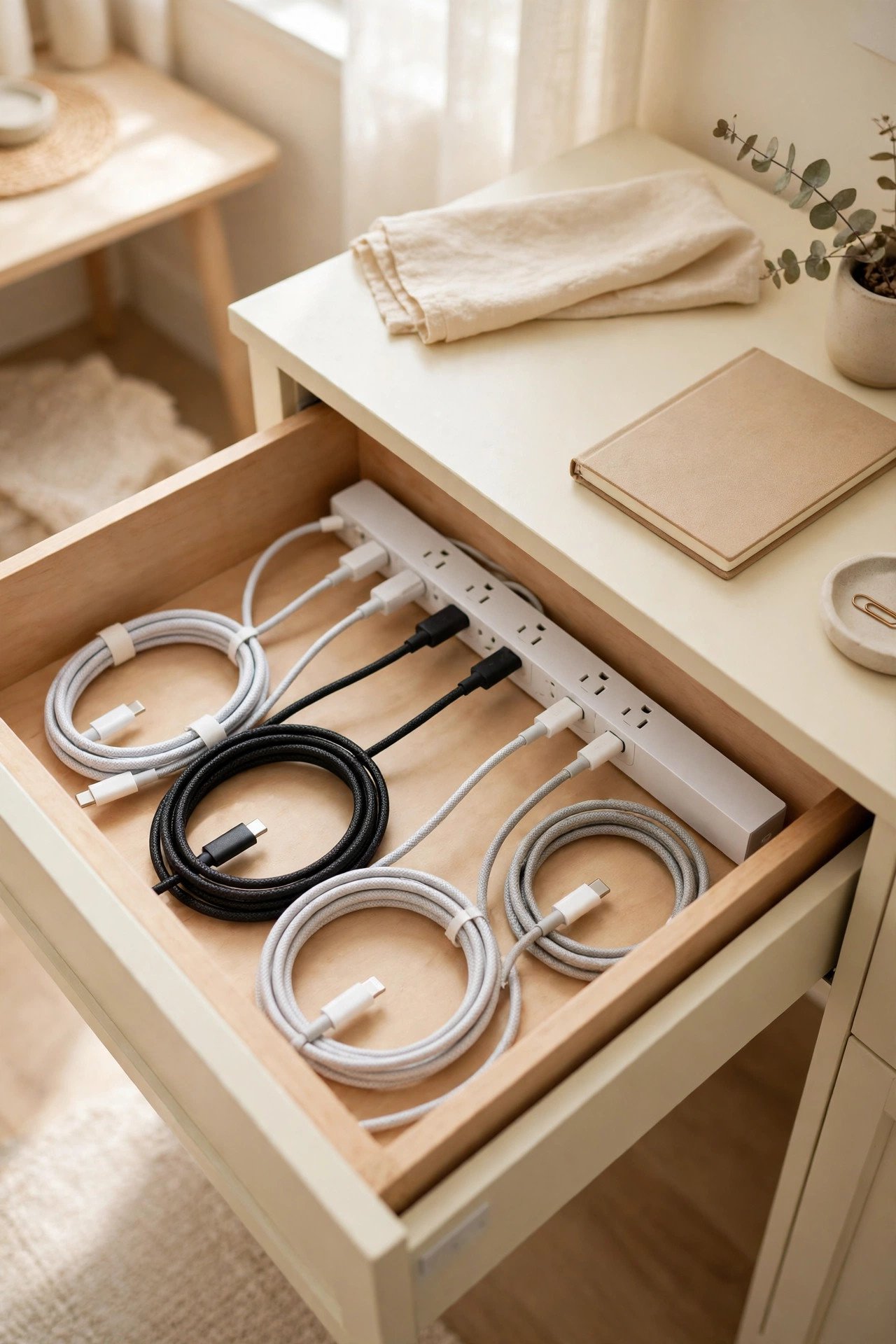
33. Hide a Small Power Strip in a Deep Drawer
A power strip on the desk looks messy, but one hidden in a deep drawer keeps charging close and out of sight. Cables plug in inside the drawer, and only the device ends come out when you need them. The desktop stays clear while everything still charges.
Choose a slim strip that fits the drawer, and drill or cut a small cable hole at the back if your drawer allows it. Keep the strip away from paper and fabric, and leave space around it for air. A hidden strip turns a deep drawer into a secret charging station.
34. Do a Five-Minute Drawer Reset Every Month
Even the best drawer system drifts back toward chaos without a little care. A five-minute reset once a month keeps it working all year. Empty the drawer, toss the trash, wipe it down, and return each item to its zone. The whole job takes less time than one coffee break.
Toss dried-out pens, dead batteries, and cables for devices you no longer own without any guilt. Notice which zones overflow and resize them to fit how you really use the drawer every day. A short monthly reset is the habit that makes all 33 other ideas last.
Conclusion
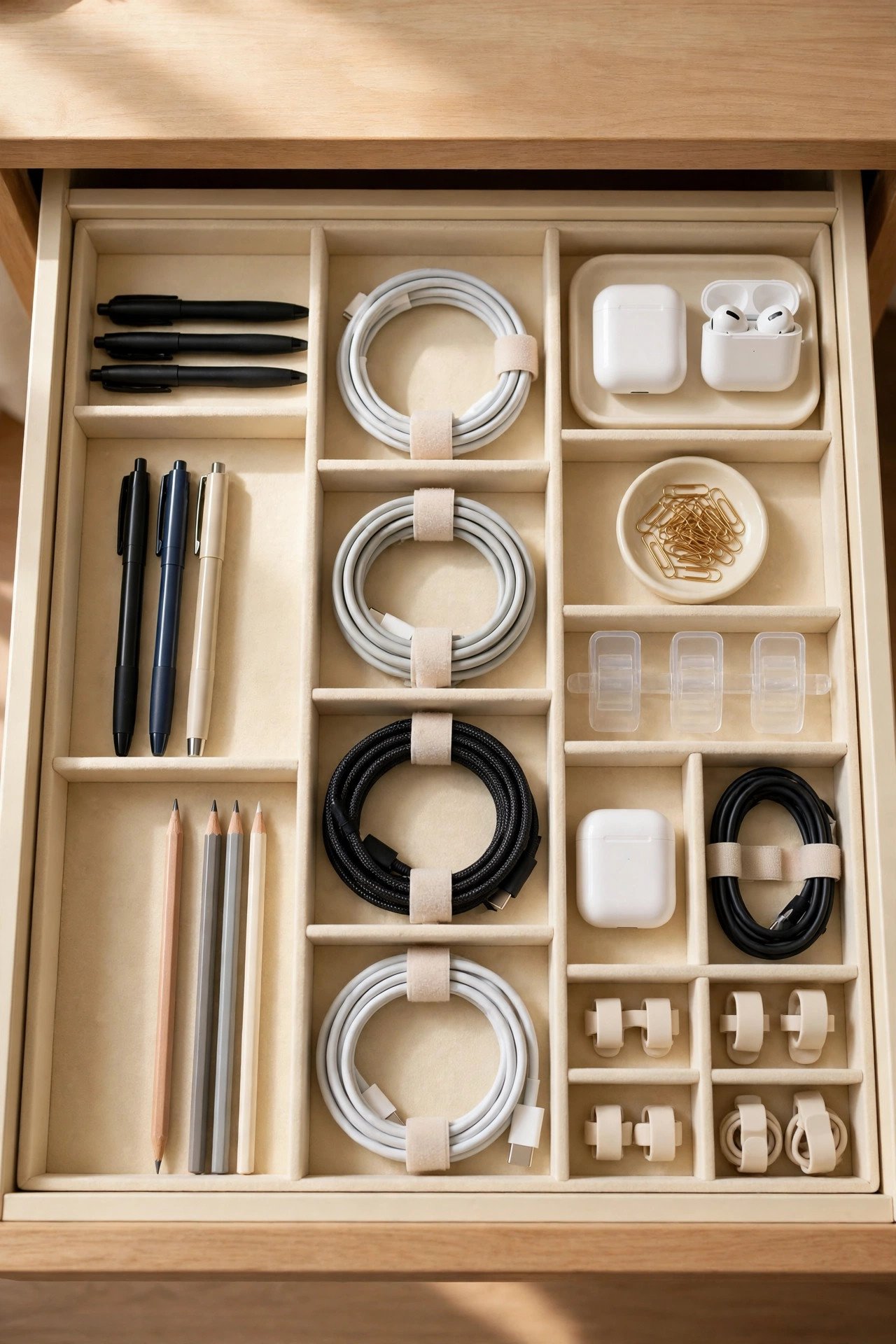
A tidy desk drawer is not about buying more organizers. It is about giving every cable, pen, and paper clip one clear home and keeping that home easy to use. When the drawer works, your whole desk works, and your workday feels calmer from the first minute.
Start with one idea that fixes your biggest annoyance, like coiling the cables, and build from there. Clear the drawer tonight, set up a few zones, and enjoy the moment when everything has a place. For a tidy home beyond the desk, see these nightly reset routines. Your desk drawer is waiting, and it will be beautiful.
Frequently Asked Questions About 34 Desk Drawer Organization Ideas for Cables and Office Supplies
How do I keep cables from tangling in a desk drawer?
Coil each cable into a loop and secure it with a reusable tie, then store one cable per pouch or section. Keep the loops loose so wires stay healthy, and label each pouch by device. This stops cables from knotting around pens and makes the right cord easy to grab.
What is the best way to organize a small desk drawer?
Start by emptying the drawer completely and sorting everything into piles by type. Add small dividers or trays so each type has its own zone, keep daily items at the front, and leave a little empty space. A zoned drawer with labels stays tidy far longer than a full one.
Should I use dividers or containers in a desk drawer?
Use both, because they solve different problems. Dividers create fixed zones that stop items from sliding, while containers hold tiny supplies like clips and pins together. Measure the drawer first, then mix dividers for large zones and small containers for the little things.
How do I stop my desk drawer from getting messy again?
Label every section and do a five-minute reset once a month. Return items to their zones after use, toss dried-out pens and dead cables without guilt, and resize any zone that keeps overflowing. Labels plus a short monthly reset keep the system working all year.
What should I keep in my top desk drawer?
Keep only what you reach for every day: a few pens, a notebook, sticky notes, one spare charger, and paper clips. Move rarely used items to a deeper drawer or a box elsewhere. A top drawer with just the daily essentials stays tidy and makes every workday start smoothly.

Hi, I’m Emily! I turn messy corners into cozy, organized spots. DreamNestDecor is where I share simple, practical home ideas — decor, organization, and small-space solutions that work in real life, not just in photos. Every idea here is carefully researched before it’s shared.