Introduction
Picture this. You walk through the front door with your arms full of grocery bags, and you have nowhere to put your keys. The mail from yesterday is still sitting on the nearest chair, and a pair of shoes blocks the doorway. You drop everything on the first flat surface you see, and you promise yourself that you will deal with it later. Later never comes, and the pile by the door grows a little bigger every day.
That small pile is the reason the entryway feels stressful. The entryway is the first place you see when you come home, and it is the last place you see when you leave. When it is messy, your whole home feels messy, even if the rest of the house is clean. When it is tidy, you feel calm the moment you step inside, and leaving the house in the morning feels easy instead of rushed.
The good news is that you do not need a big entryway or a big budget to fix this problem. You need a simple system that gives every single item a home. The 16 ideas in this article show you how to build that system, one small step at a time. Each idea covers keys, mail, shoes, or the gear your family drops by the door, and you can pick the ideas that fit your space. A short nightly reset routine also helps a lot, and you can read about a simple evening tidy-up plan in this guide to nightly reset routines: https://dreamnestdecor.com/nightly-reset-routine-ideas/
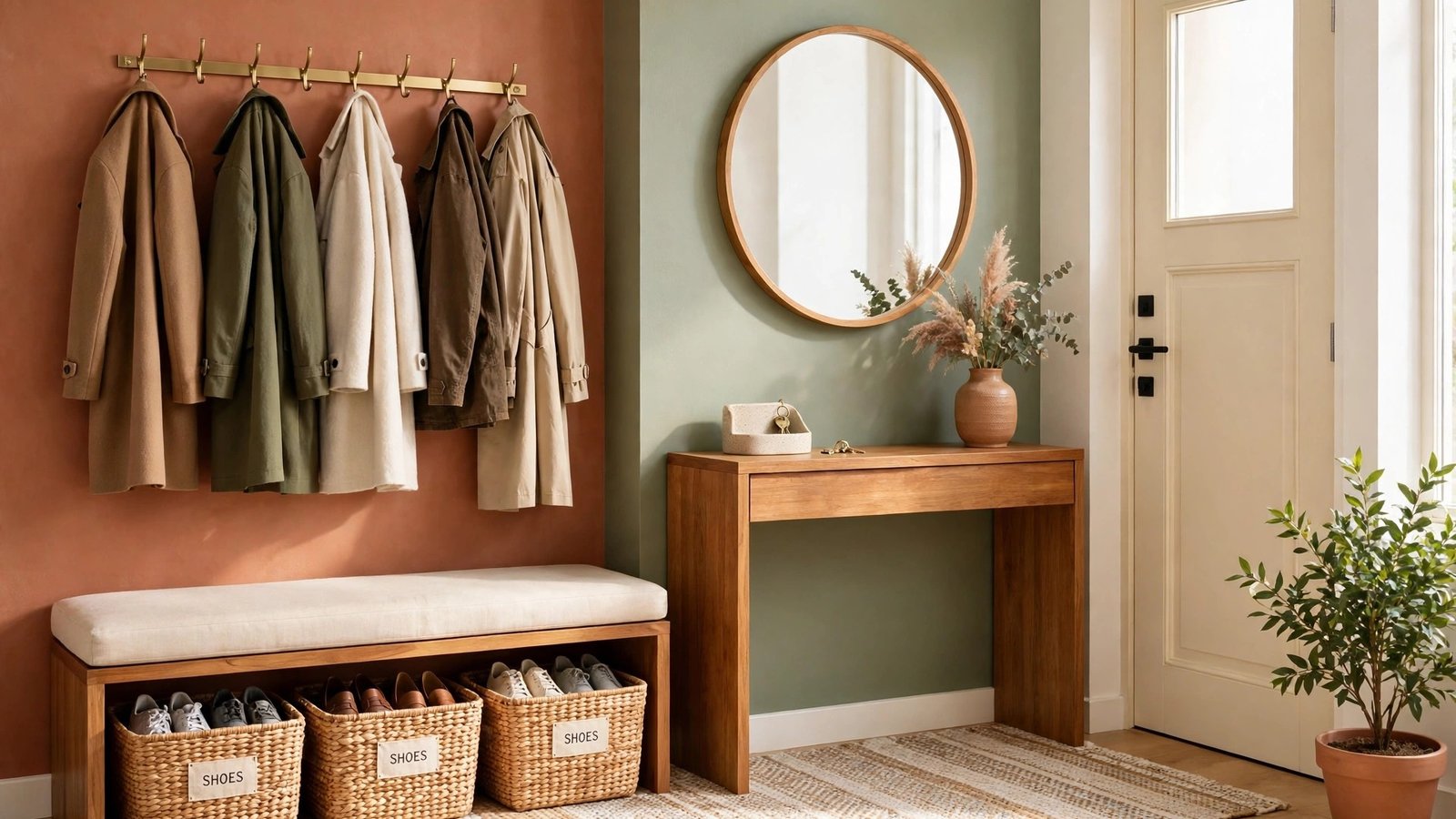
1. A hook station you will actually use every day
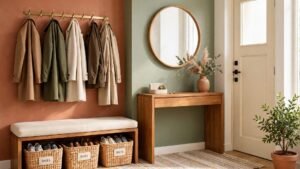
A hook station works only when it sits exactly where you stop the moment you walk in. Pick the wall beside the door, at a height where you can reach it without thinking, and mount a sturdy rail with four or five strong hooks. Hang your everyday coat on one hook and your bag on another, and leave one hook empty on purpose. That empty hook is the secret, because it gives you room for a guest coat or a rainy day jacket without breaking the system.
Keep the rail simple and keep it in use. When a hook holds three old jackets that you never wear, the station stops working, and coats start landing on chairs again. Once a month, take everything off the rail and put back only what you reach for every week. The rest belongs in a closet or in storage, far from the front door.
2. A mail station that stays tidy instead of piling up
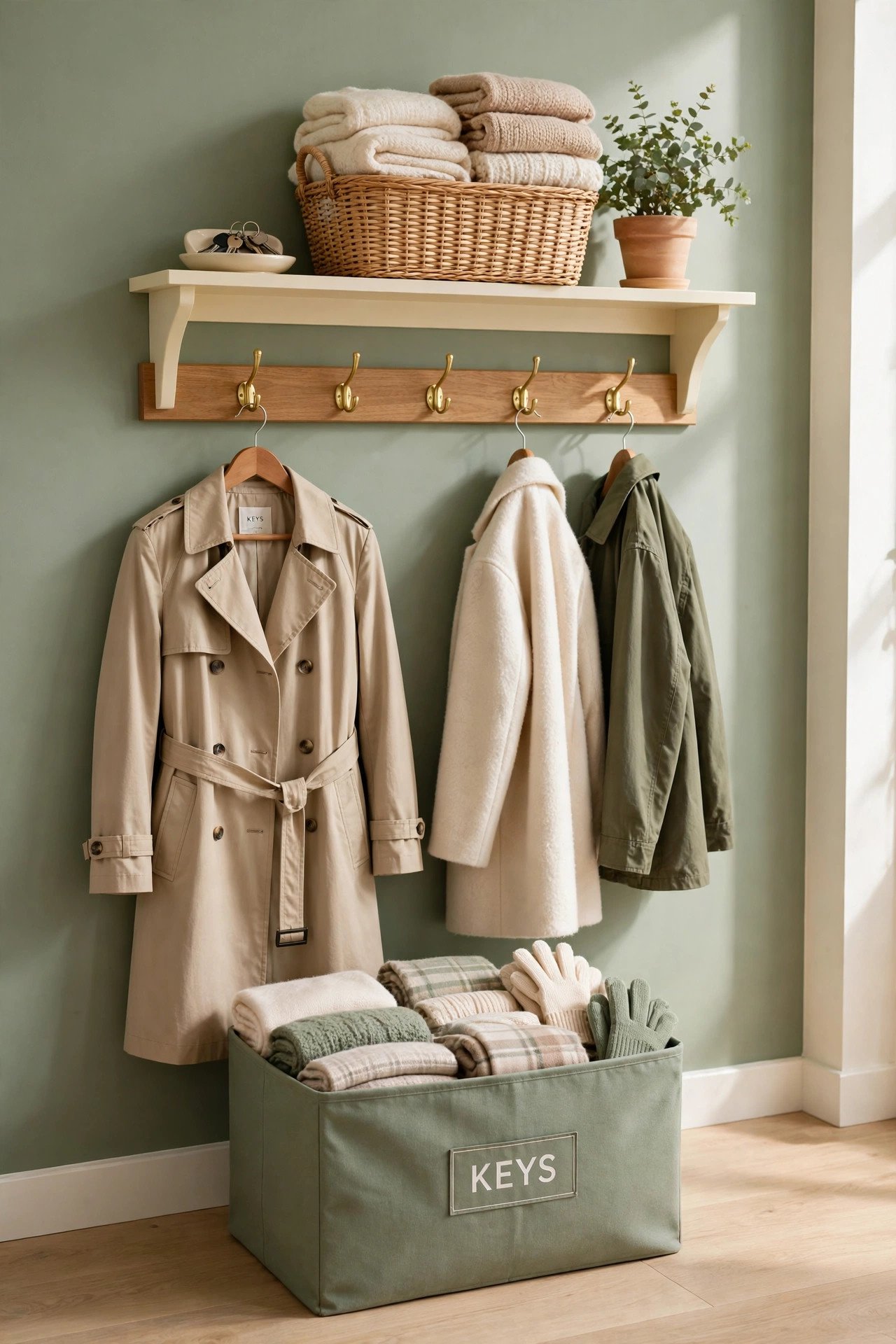
Mail piles up because it has no clear next step. When you bring the mail inside, you need one place where every envelope goes, and you need a rule for what happens next. A wall sorter with three slots solves this problem well. Label the slots for bills, letters, and papers to file, and sort each envelope the moment it enters your home. The pile disappears because every piece of mail already has a home.
Set a weekly time to clear the sorter, and keep that time short. Open the bills slot on the same day each week, pay what needs paying, and file the rest. Throw junk mail away at once instead of letting it sit in the sorter. When the sorter stays half empty, you know the system works, and the entryway stays clear.
3. A wall organizer for the dead space beside the door
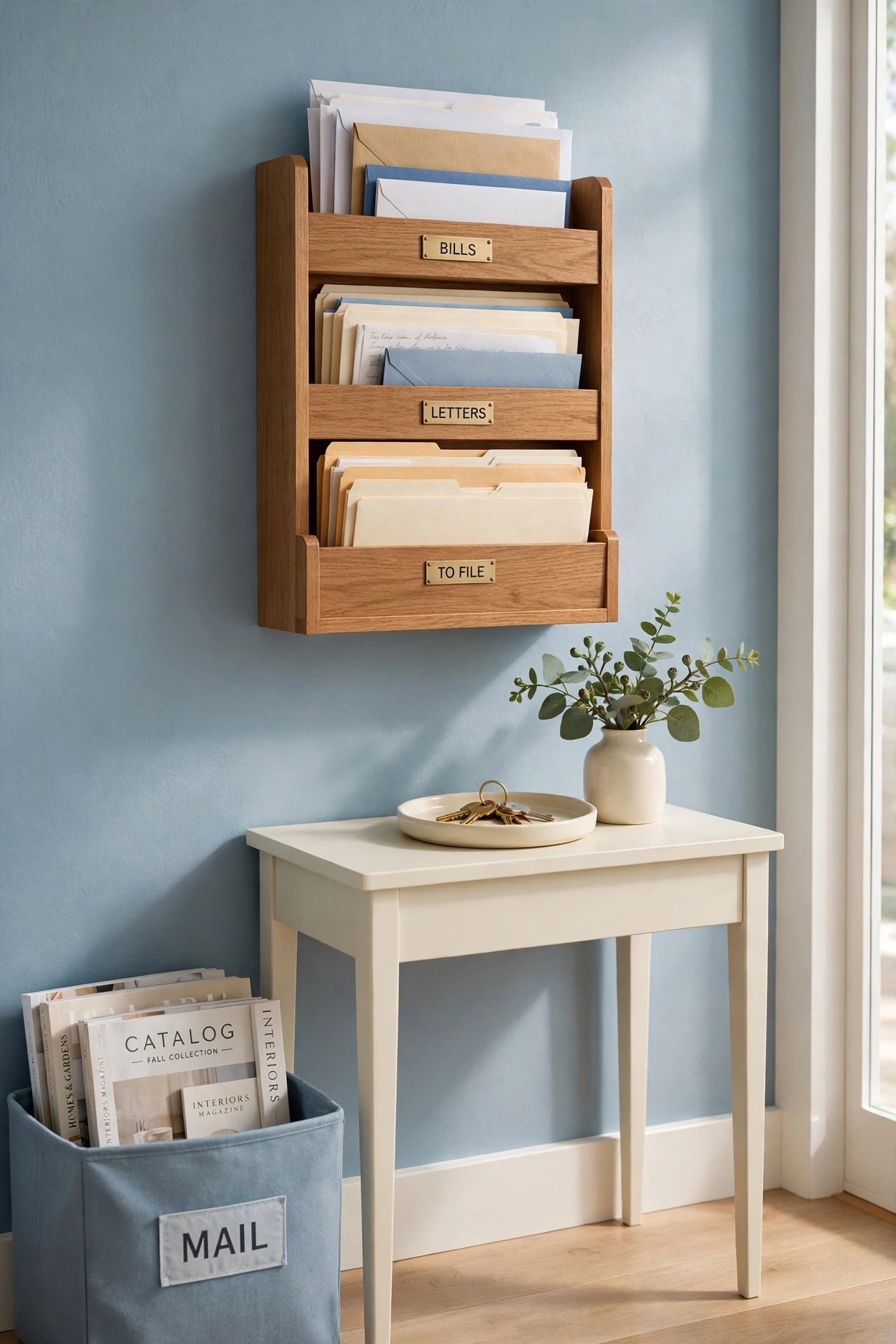
The narrow strip of wall beside the door is easy to ignore, but it is one of the most useful spots in the entryway. A tall, slim organizer fits there without blocking the walkway, and it turns dead space into working storage. Choose an organizer with pockets for letters, a small calendar, and a cup for pens, and add a row of key hooks along the bottom edge. Everything you need before you leave the house now lives in one narrow column.
The key to this idea is keeping the organizer flat against the wall. If pockets start bulging with old papers, the organizer looks messy and stops helping you. Clear one pocket each Sunday, and keep only current papers in view. A slim organizer that stays tidy beats a big one that turns into a second junk pile.
4. Shoe storage that keeps the floor clear
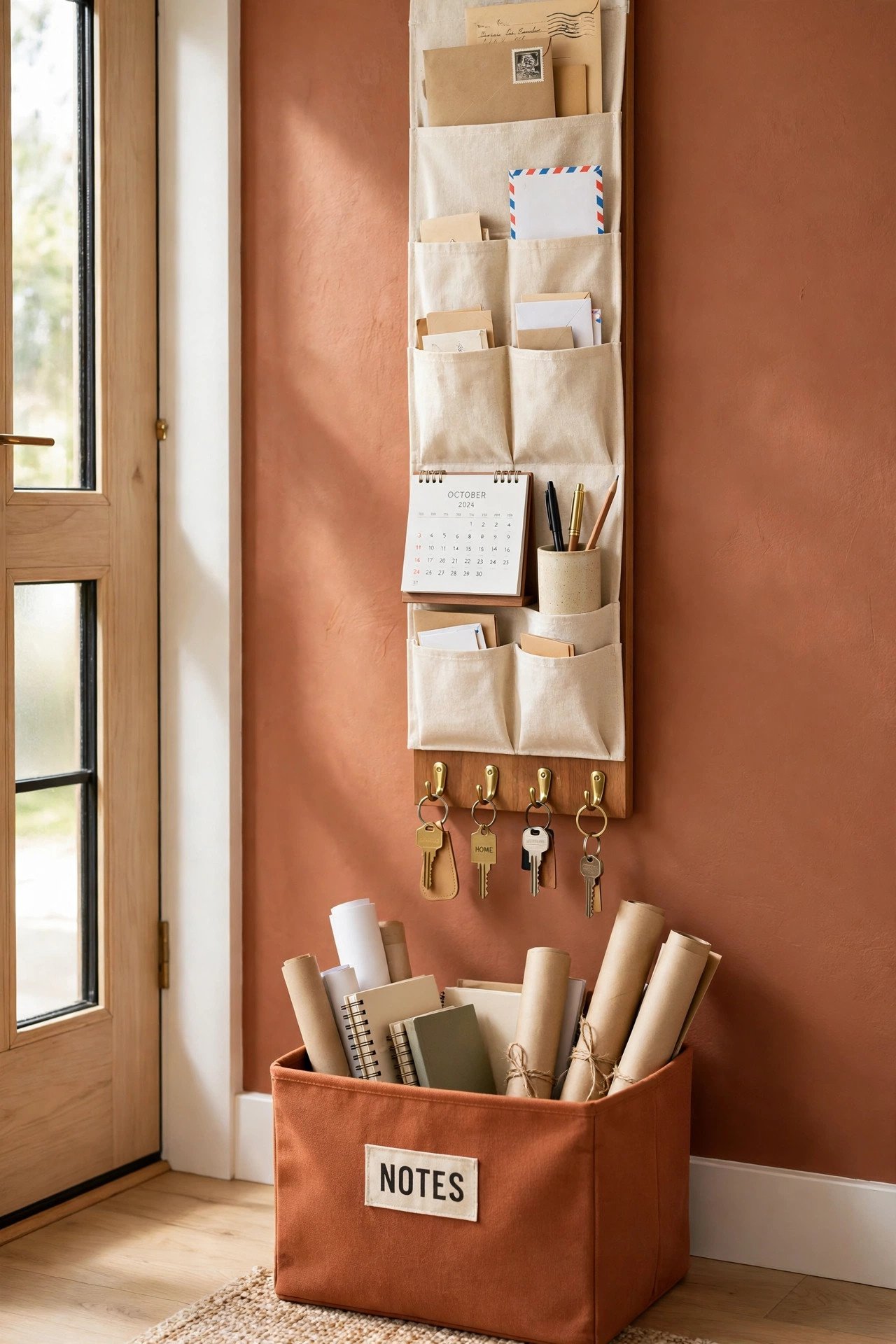
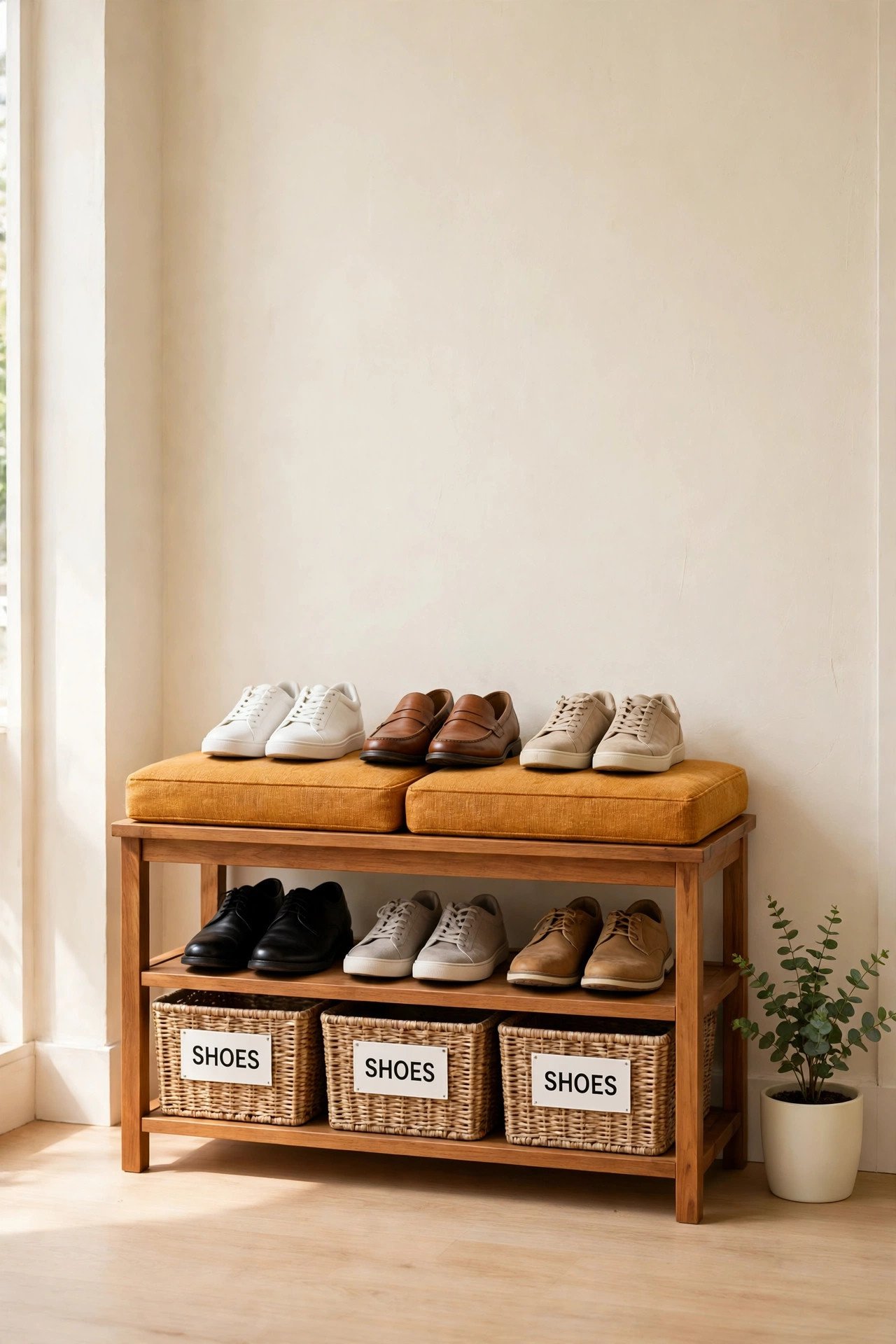
Shoes spread across the floor because taking them off is the last thing you think about when you come home. A low bench with open shelves fixes this habit, because it gives you a place to sit and a place to put shoes in one step. Sit down, slip your shoes off, and slide them onto the shelf under the bench. The floor stays clear because the shoes never touch it in the first place.
Give each person in the home one shelf or one basket for shoes, and set a simple limit. Two pairs per person by the door is plenty for daily life, and the rest belong in a closet. When a basket fills up, move the extra pairs out the same day. A clear floor makes the whole entryway look bigger, and cleaning the floor takes half the time.
5. Assigned coat hooks that work for the whole household
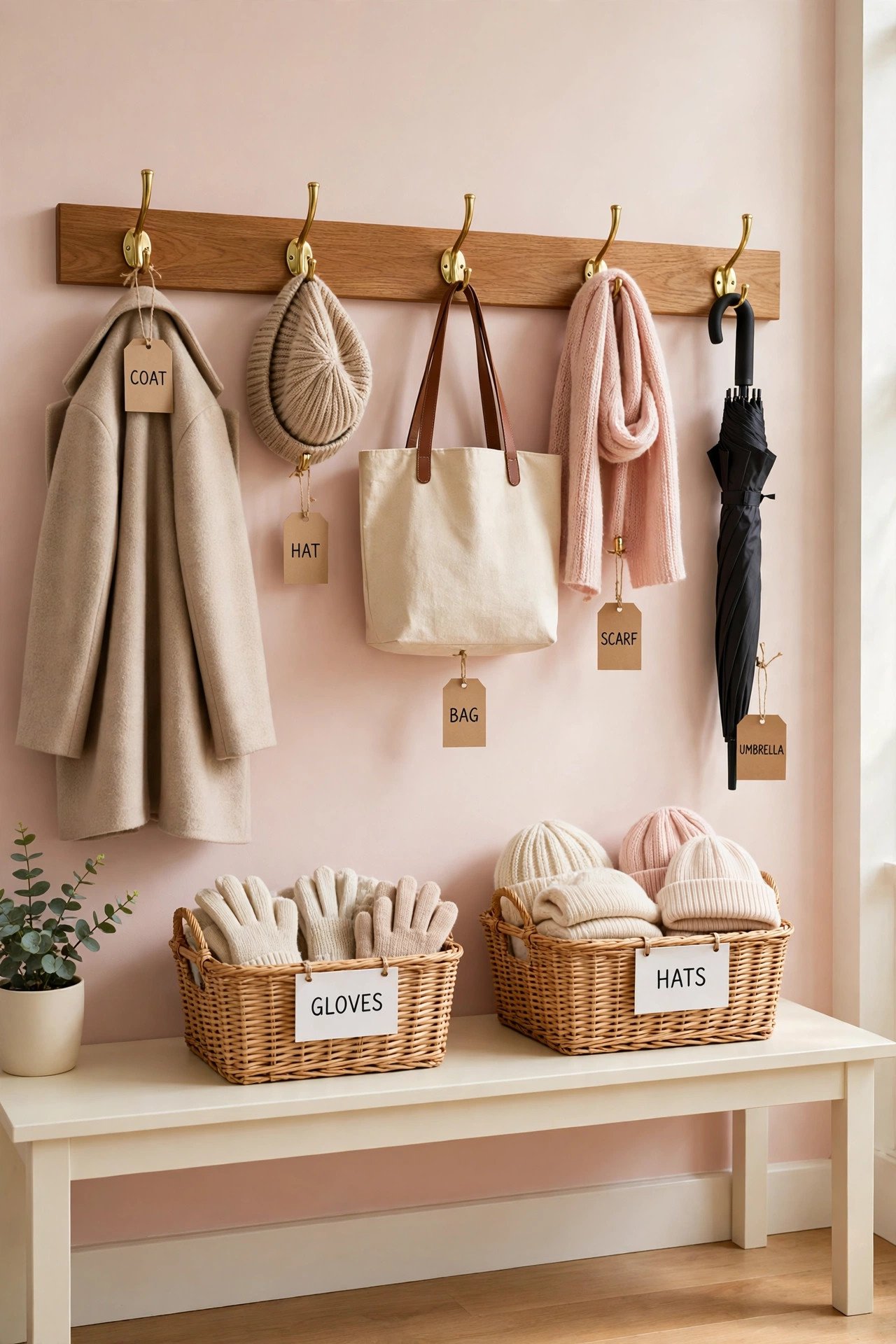
Shared hooks fail when nobody knows which hook belongs to whom. Assigned hooks fix this problem with almost no effort. Give every person in the home one hook, and mark it with a small tag that shows what belongs there. One hook holds a coat, one holds a hat, one holds a bag, and one holds a scarf or an umbrella. When everyone knows their spot, nobody has to search for a free hook.
Teach the habit once, and then keep it easy to follow. Hang the hooks at a height that works for the shortest person who uses them, and keep the area under the hooks free of clutter. If a hook stays empty for a week, that is fine, because an empty hook means the system has room to breathe. The goal is not a full wall of hooks. The goal is a wall where every item has one clear home.
6. A charging station the whole family can use by the door
Dead phones cause morning panic, and chargers scattered through the house make the problem worse. A charging station by the door solves both problems at once. Set a small shelf near the entryway with one charger for each device, and make it a rule that phones and tablets dock there when everyone comes home. By morning, every device is full, and nobody hunts for a cable.
Keep the cables tidy, or the station turns into a tangled mess. Use short cables, bundle the extra length with small clips, and keep spare chargers in a labeled basket under the shelf. Label the tray for chargers so loose adapters have a home too. A tidy charging station saves time every morning, and it keeps the entryway looking calm instead of wired and wild.
7. A small whiteboard plan that earns its place on the entry wall
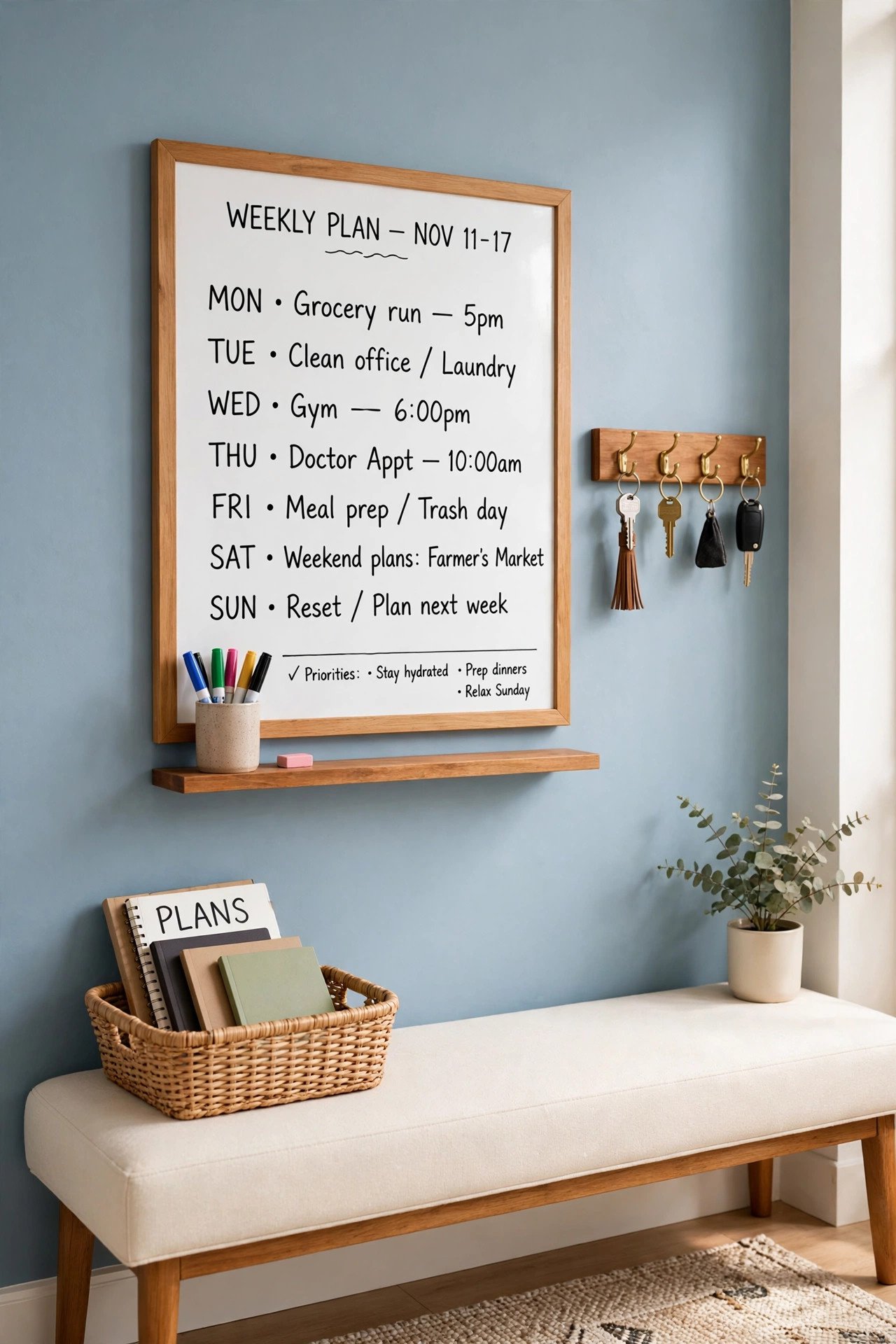
A whiteboard by the door works like a command post for your week. Write the plan for the week in large, clear letters, and put it where you see it every time you leave the house. Grocery runs, appointments, school events, and simple reminders all belong on that board. When the plan lives on the wall, you stop forgetting small tasks, and the whole household can see what the week holds.
Keep the board small and keep the writing fresh. Wipe the board clean each Sunday night, and write the new week in five minutes. Use one color for must-do tasks and another color for nice-to-do tasks, so the important items stand out at a glance. A small board that you update every week helps you far more than a large board that still shows last month.
8. A catch-all basket that stops overflow before it starts
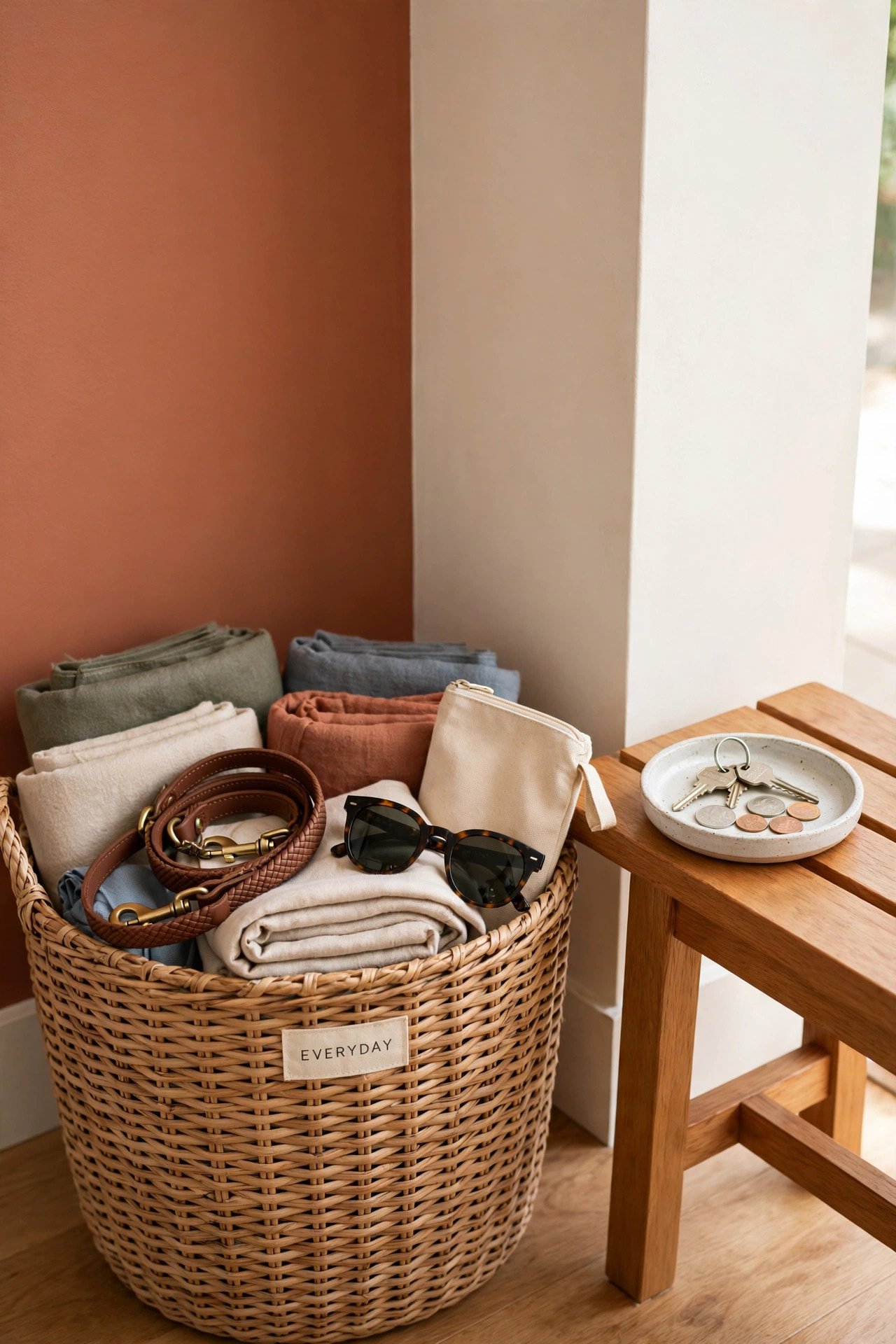
Every home has small items that belong nowhere, and those items always land by the door. A catch-all basket gives them a legal home. Choose one large, sturdy basket, place it beside the bench or under the console table, and drop in the scarves, the dog leash, the sunglasses, and the small pouch that would otherwise cover every surface. The basket holds the mess in one place, so the rest of the entryway stays clean.
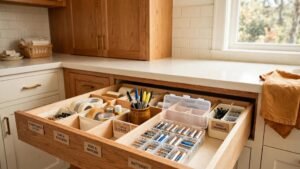
The basket only works if you empty it on a schedule. Pick one evening each week, take everything out, and put each item back where it truly belongs. Items that stay in the basket week after week probably need a real home of their own. This weekly reset is the same habit that keeps a kitchen drawer tidy, and you can see how a catch-all system works in a drawer in this guide to kitchen junk drawer organization: https://dreamnestdecor.com/kitchen-junk-drawer-organization-ideas/
9. A backpack drop zone for after-school gear
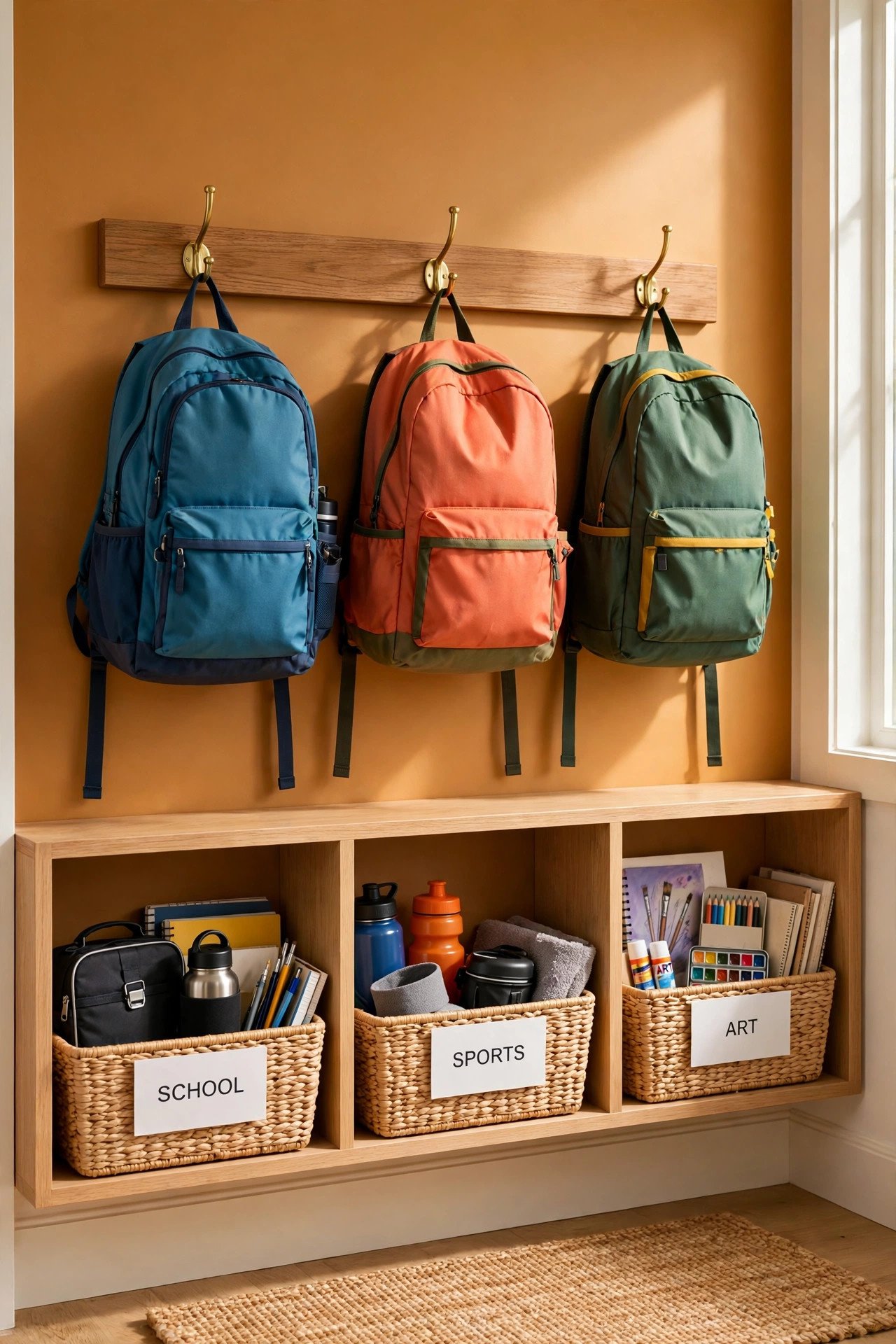
Backpacks on the floor turn the entryway into an obstacle course. A drop zone fixes this by giving each backpack a hook and each type of gear a basket. Hang the backpacks on a sturdy rail at a height kids can reach, and place labeled baskets below for school supplies, sports gear, and art materials. When a child comes home, the backpack goes on the hook and the gear goes in the basket, all in one motion.
Make the zone easy for kids to use without help. Hooks that sit too high get ignored, and baskets without labels turn into mixed piles. Show each child their hook and their basket once, and praise the habit for the first week. After that, the drop zone runs itself, and the entryway floor stays clear even on busy school days.
10. A narrow console table with storage that earns its footprint
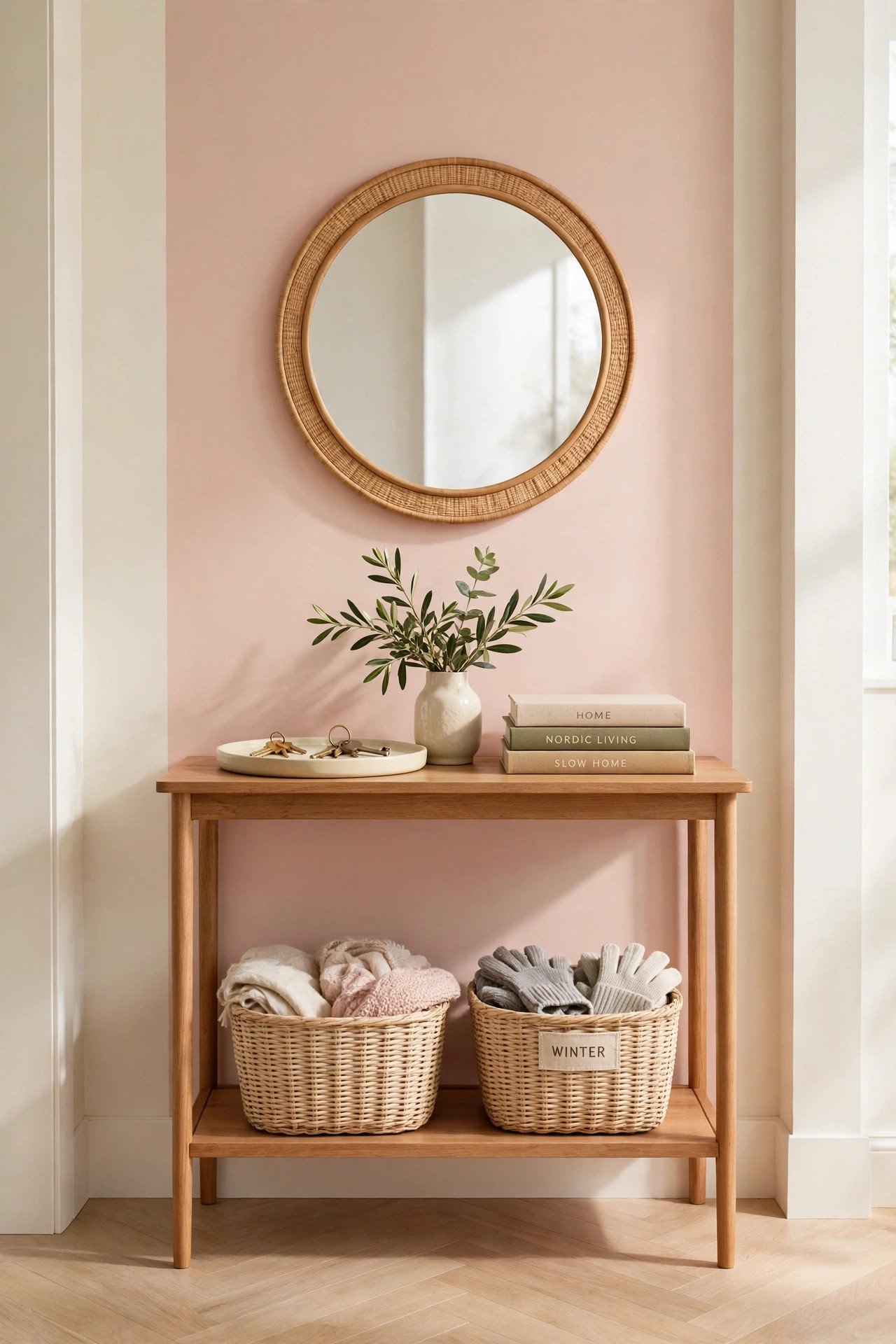
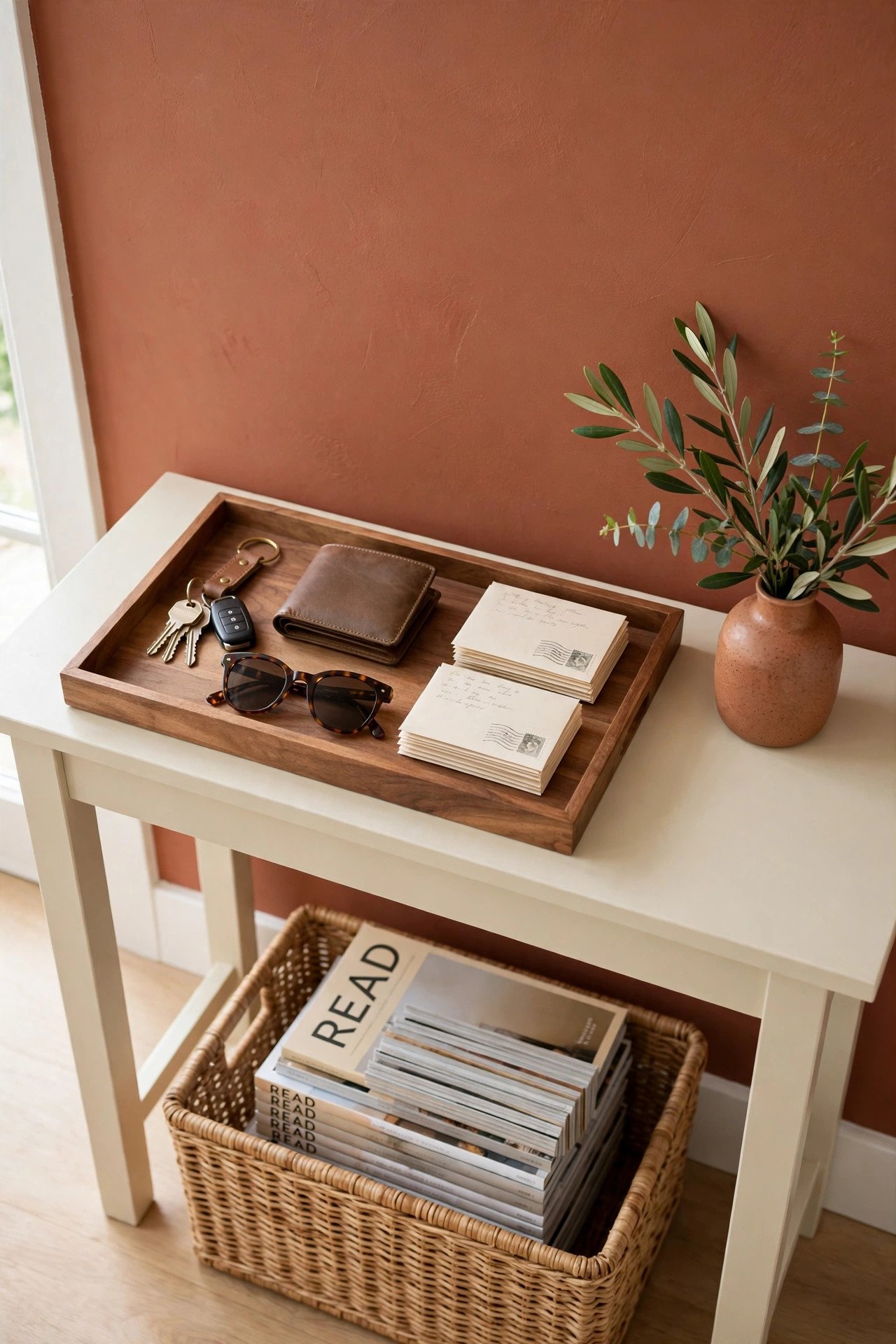
A narrow console table fits in entryways where a bench would block the path. The slim top holds a tray for keys, a small vase, and a stack of books, while the lower shelf holds baskets for scarves and gloves. The table earns its footprint because it stores a lot without sticking far out from the wall. Measure your space first, and choose a table that leaves a clear path to walk past.
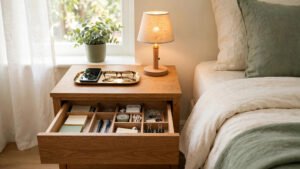
Keep the tabletop to three items at most. A tray, a vase, and a small stack of books look calm and welcoming, while a crowded top looks like another pile. The baskets below do the heavy work, so the top can stay simple. This same idea works in other small spaces too, and a slim table with hidden storage plays the same role as a tidy nightstand drawer, which you can see in this guide to nightstand drawer organization: https://dreamnestdecor.com/nightstand-drawer-organization-ideas/
11. An over-the-door organizer for small entry walls
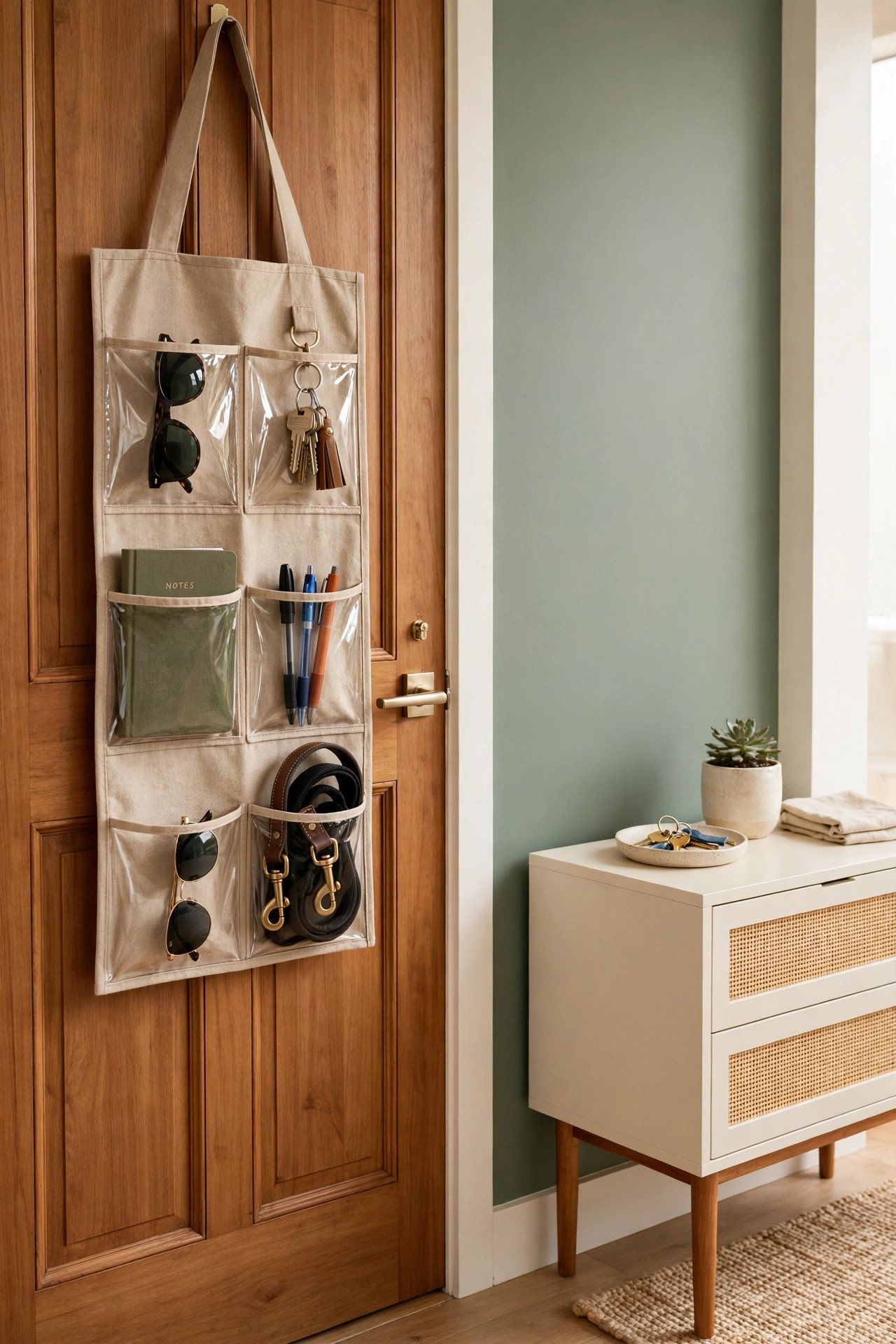
When wall space is gone, the back of the door is still free. An over-the-door organizer hangs in seconds and adds six or more pockets without a single nail. Fill the clear pockets with sunglasses, keys, a small notebook, pens, and a dog leash, so you can see everything at a glance. The door still opens and closes as normal, and the organizer stays out of the walkway.
Choose an organizer made of sturdy fabric with clear fronts, and do not overload it. Heavy pockets pull the organizer off balance and make the door hard to close. Keep one pocket free for items that arrive during the week, and clear the pockets once a month. A light, tidy door organizer adds real storage to the smallest entryway.
12. A storage bench with hidden capacity
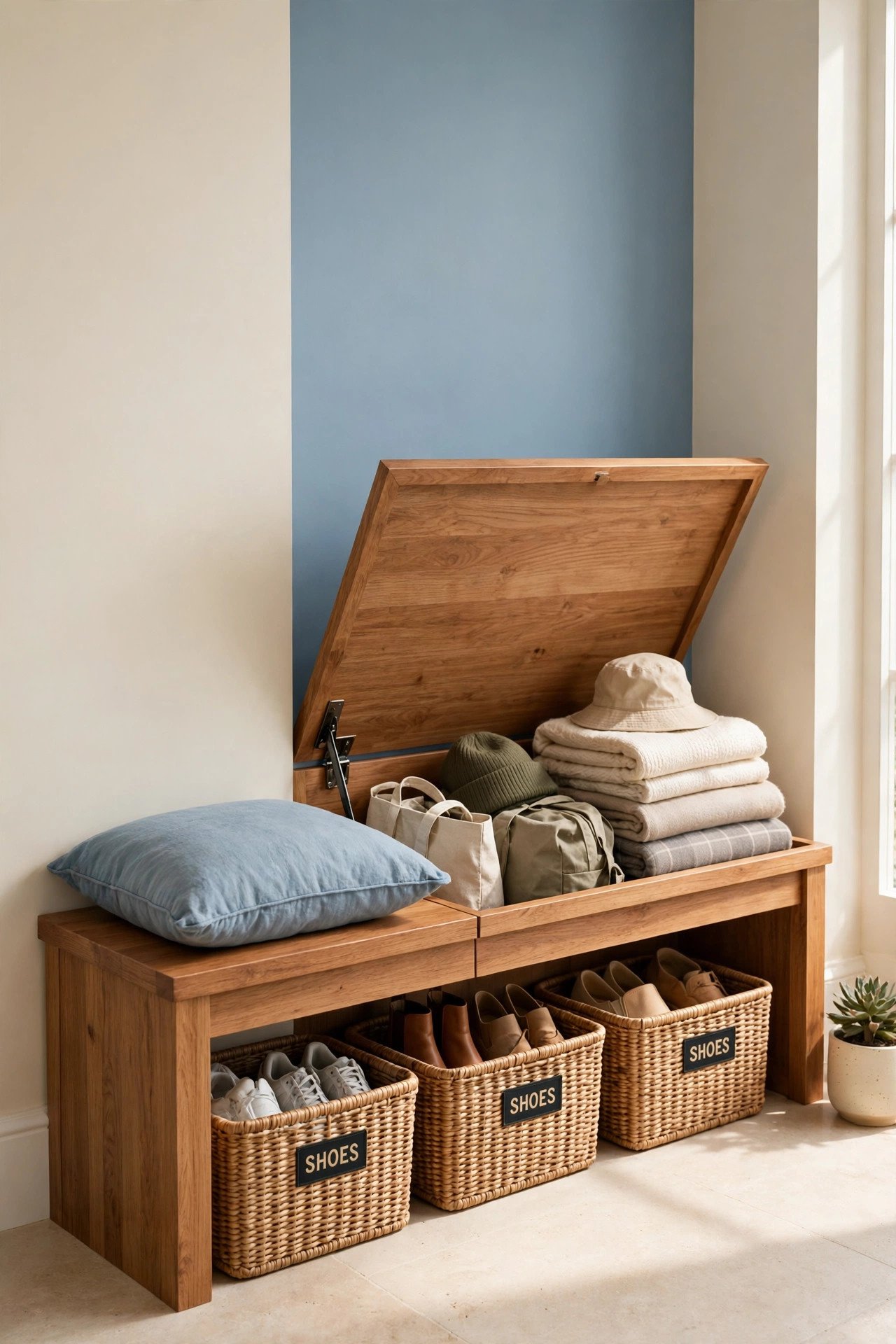
A storage bench is the hardest working piece in the entryway, because it hides clutter and gives you a seat at the same time. Lift the seat and you find room for blankets, hats, bags, and out-of-season gear, all out of sight. The cushion on top invites you to sit down and take your shoes off, and the baskets underneath hold the shoes you wear most. One piece of furniture now does the job of three.
Use the hidden space for items you need often but do not want to see. Fold blankets flat, stack hats in a row, and keep bags upright so you can grab one without emptying the bench. Check the bench once a season, and move out anything you have not touched in three months. A bench that stays half full is far more useful than a bench stuffed to the lid.
13. A tray that stops things spreading across the surface
A tray works like a fence for small items. Without a tray, keys, wallets, sunglasses, and letters spread across the whole console table within days. With a tray, those same items stay inside one neat border, and the rest of the table stays free. Choose a tray that fits your table with room to spare, and group items inside it by type, so keys sit in one corner and letters sit in another.
The tray also makes cleaning fast. Lift the tray, wipe the table, and put the tray back, all in under a minute. Keep a basket below the table for magazines and papers, so reading material has a home too. A simple tray turns a messy surface into a calm landing spot, and it costs less than any other idea in this article.
14. Vertical storage for when floor space is gone
When the floor is full, the only way left is up. A tall, narrow ladder shelf uses the wall from floor to ceiling and takes almost no floor space at all. Fold scarves on the top shelves, place labeled baskets for gloves and hats in the middle, and keep books and plants on the lower shelves. The shelf draws the eye upward, so the entryway feels taller and more open.
Keep the top shelf light, or the unit looks top-heavy and hard to reach. Heavy baskets belong at waist height or below, where you can lift them safely. Dust the shelf once a week, because tall shelves show dust fast. Vertical storage works on the same principle as a well planned drawer, where small items stay sorted in a tight space, and you can see that principle in action in this guide to sock drawer organization: https://dreamnestdecor.com/sock-drawer-organization-ideas/
15. A pet corner inside the entry drop zone
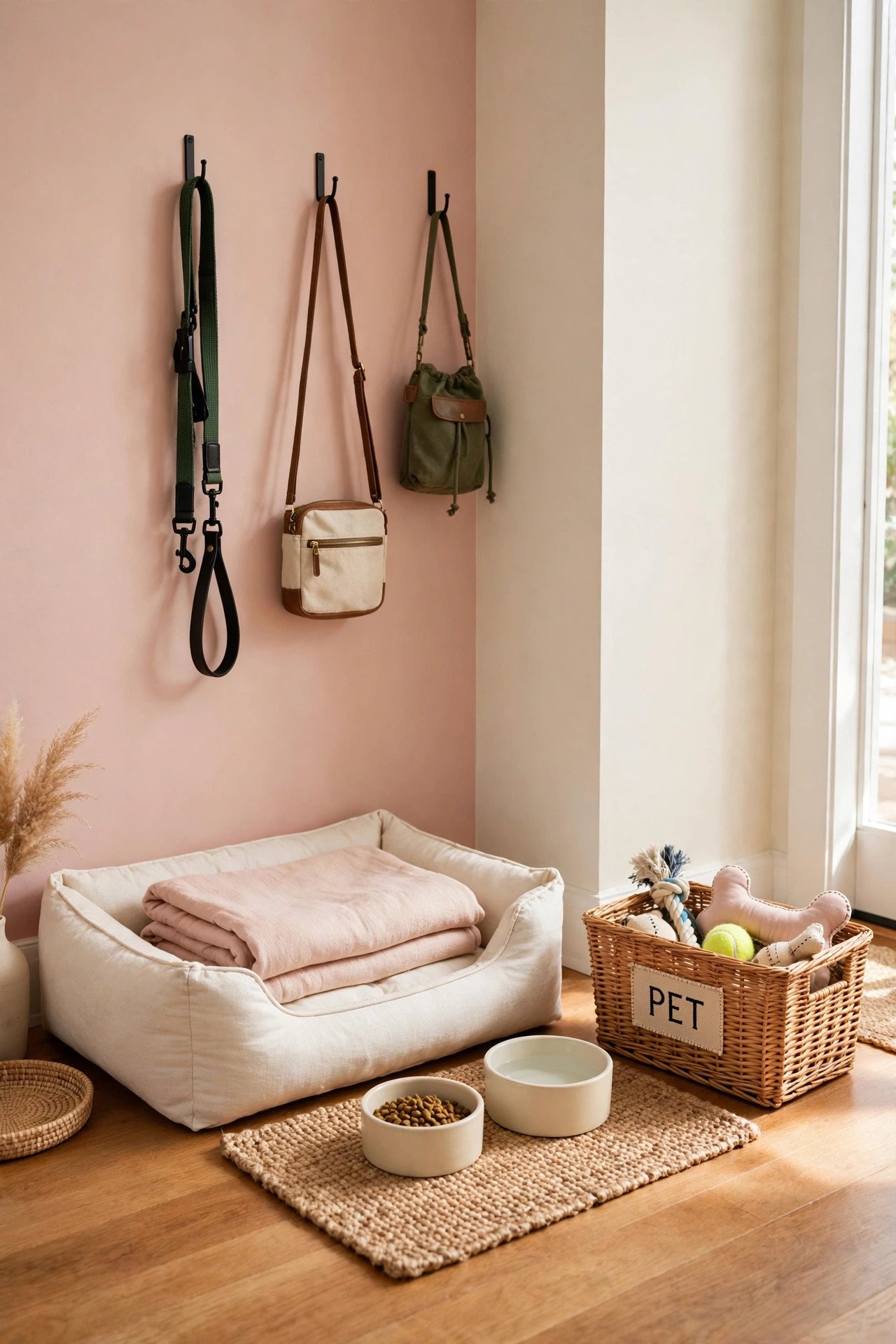
Pets have gear too, and that gear usually ends up by the door. A small pet corner keeps it tidy and keeps your pet happy. Place a pet bed in a quiet corner of the entryway, set food and water bowls on a mat nearby, and hang the leash on a hook at your height. A basket for toys completes the corner, and the whole setup takes less space than one chair.
Keep the corner clean with a simple daily habit. Rinse the bowls each morning, shake out the mat once a week, and wash the bed cover once a month. Store extra food and treats in a sealed container near the corner, so feeding time stays quick. When pet gear has its own corner, it stops mixing with shoes and bags, and the entryway feels calmer for everyone.
16. Labels that keep the whole system running
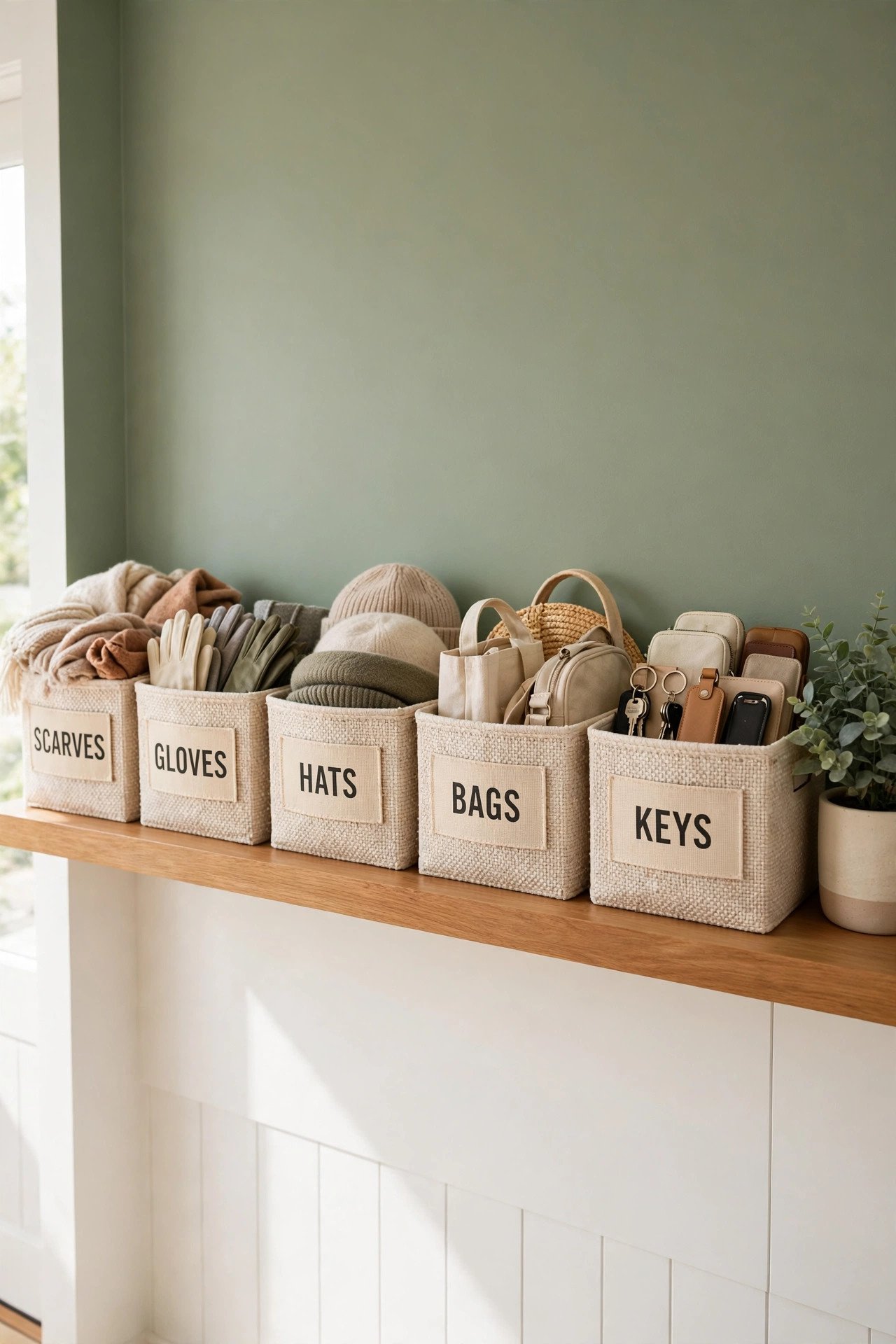
Labels are the quiet hero of every idea in this article. A label tells you where an item belongs, and it tells everyone else too, without a single word from you. Label every basket, bin, and tray in the entryway with large, clear words, and use the same style of label everywhere. Scarves, gloves, hats, bags, and keys each get their own marked home, and nobody has to guess.
Check your labels twice a year, and update any label that no longer matches what lives inside. When a basket changes from scarves to sports gear, change the label the same day, or the system starts to lie to you. Clear labels turn a set of nice baskets into a system that runs itself, and they are the cheapest upgrade you can make to any entryway.
Conclusion
A tidy entryway is not about buying more furniture. It is about giving every item one clear home and keeping that home easy to use. Start with one idea from this article, such as a hook station or a tray, and use it for a week before you add the next one. Small systems that you actually use beat big systems that look good for one day and fall apart by the weekend.
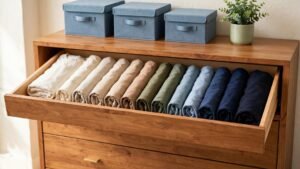
Your front door sets the tone for your whole home, so treat it with care. Sort the mail when it arrives, put shoes on the shelf, hang the coat on its hook, and reset the space for two minutes each night. These tiny habits add up fast, and within a month your entryway will stay tidy almost on its own. The same folding and sorting habits that keep a drawer neat work here too, and you can see a simple folding system in this guide to t-shirt drawer organization: https://dreamnestdecor.com/t-shirt-drawer-organization-ideas/
Frequently Asked Questions
How do I keep keys, mail, and shoes from piling up by the door?
Give each group its own fixed home, and make that home the first thing you reach when you walk in. Keys go in a tray or on a hook, mail goes in a wall sorter, and shoes go on a shelf or in a basket. Sort each item the moment it enters your home, instead of setting it down to deal with later. A two minute reset each night keeps the system working, because small piles never get the chance to grow.
What works best for a very small or narrow entryway?
Use the wall and the door, since the floor has no room to spare. A slim wall organizer, an over-the-door organizer, and a narrow console table add storage without blocking the path. Keep only daily items by the door, and move everything else to a closet. A small entryway stays tidy when it holds less, so set a strict limit of two pairs of shoes and one coat per person.
How do I stop shoes from cluttering the entry floor?
Place a low bench or a shoe shelf right where you take your shoes off, and make it easy to use in one motion. Sit down, slip the shoes off, and slide them onto the shelf at once. Give each person one basket or one shelf, and limit it to two pairs per person. Move extra pairs to a closet the same day a basket fills up, so the floor never becomes the overflow spot.
How can kids keep their backpacks and school gear in one place?
Set up a drop zone with one hook per child and one labeled basket per type of gear. Hang the hooks low enough for kids to reach without help, and label the baskets for school, sports, and art supplies. Show each child their spot once, and keep the habit alive for the first week. When the zone is easy to use, kids follow it on their own, and backpacks stop landing on the floor.
How often should an entryway system be reset so it stays tidy?
Do a two minute reset every night, and a deeper reset once a week. Each night, put stray items back in their homes and clear the tray and the mail sorter. Once a week, empty the catch-all basket, clear old papers from the organizer, and check that every basket still holds what its label says. Once a season, remove anything you have not used in three months. This rhythm keeps the entryway tidy with very little effort.

Hi, I’m Emily! I turn messy corners into cozy, organized spots. DreamNestDecor is where I share simple, practical home ideas — decor, organization, and small-space solutions that work in real life, not just in photos. Every idea here is carefully researched before it’s shared.