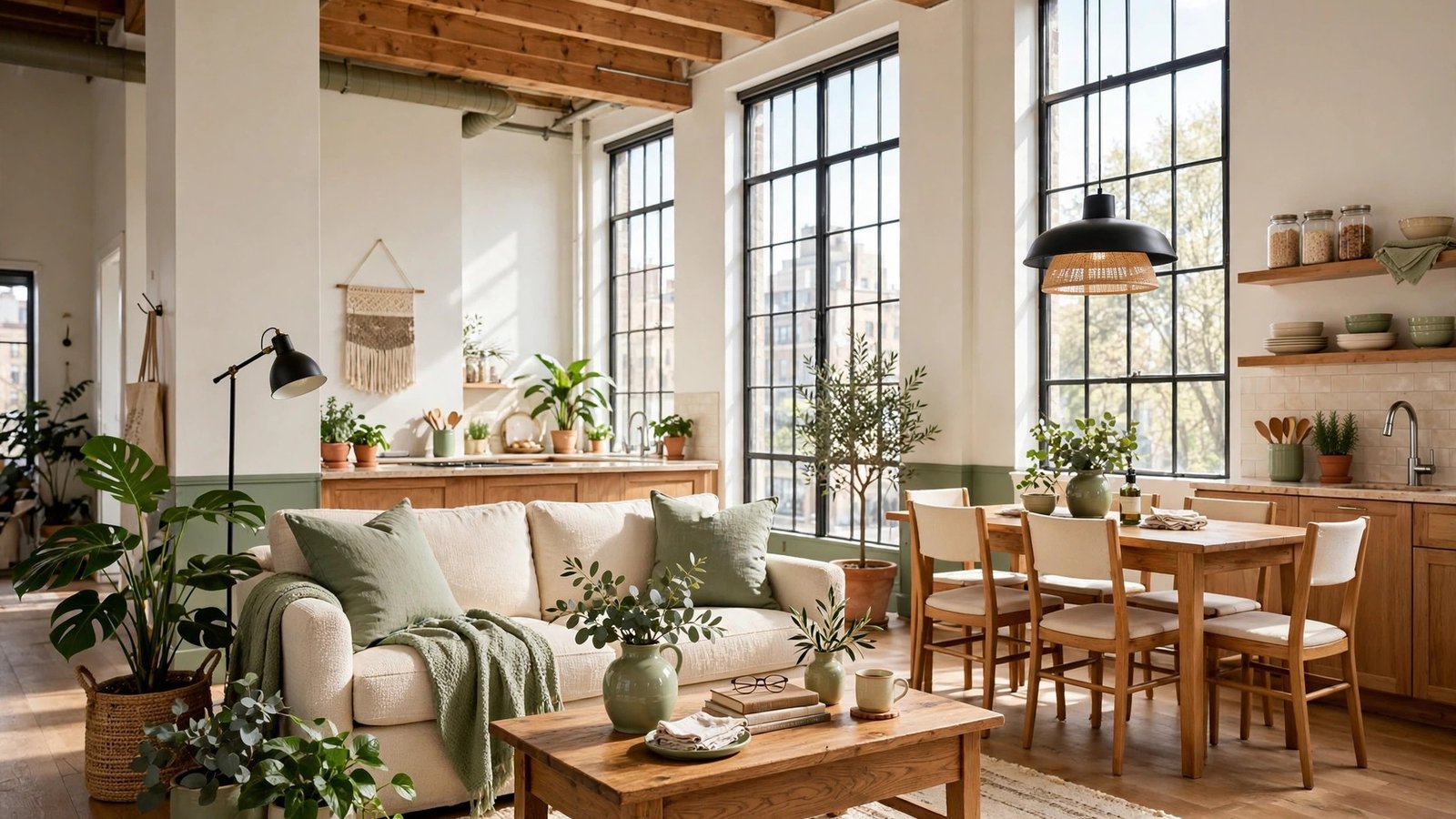
A small loft apartment gives you one open box and asks you to fit your whole life inside it. That sounds hard until you learn the real skills of a loft dweller: thinking vertically, choosing furniture that does two jobs, and drawing invisible walls with rugs and light.
These twenty-five ideas cover every corner of loft living. You will learn where to sleep, where to work, how to store everything without closets, and how to keep one open room from feeling like one messy room.
Read through and picture your own floor plan. Some ideas stack functions vertically, others carve out zones, and all of them keep traffic moving and the space feeling calm and intentional.
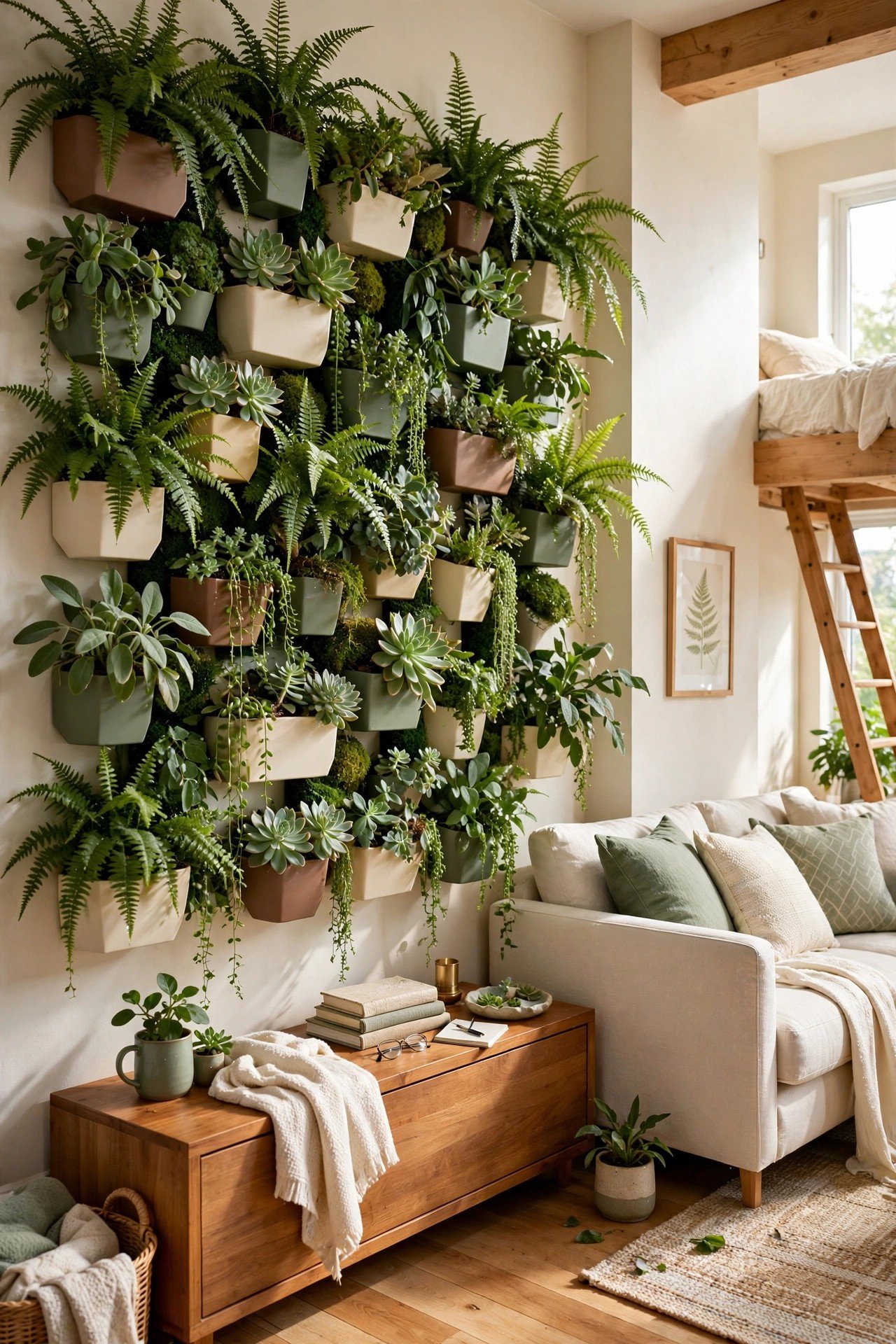
1. Living Greenery Wall
A vertical garden wall turns dead wall space into a living focal point. Wall-mounted planters or pocket panels hold ferns, pothos, and herbs without touching the floor. The greenery cleans the air and makes a small loft feel fresh and alive.
Mount the planters near a window or add a slim grow light above them, since most houseplants need real brightness. Fix a drip tray behind each row so watering never stains the wall, and choose lightweight planters the wall can hold safely.
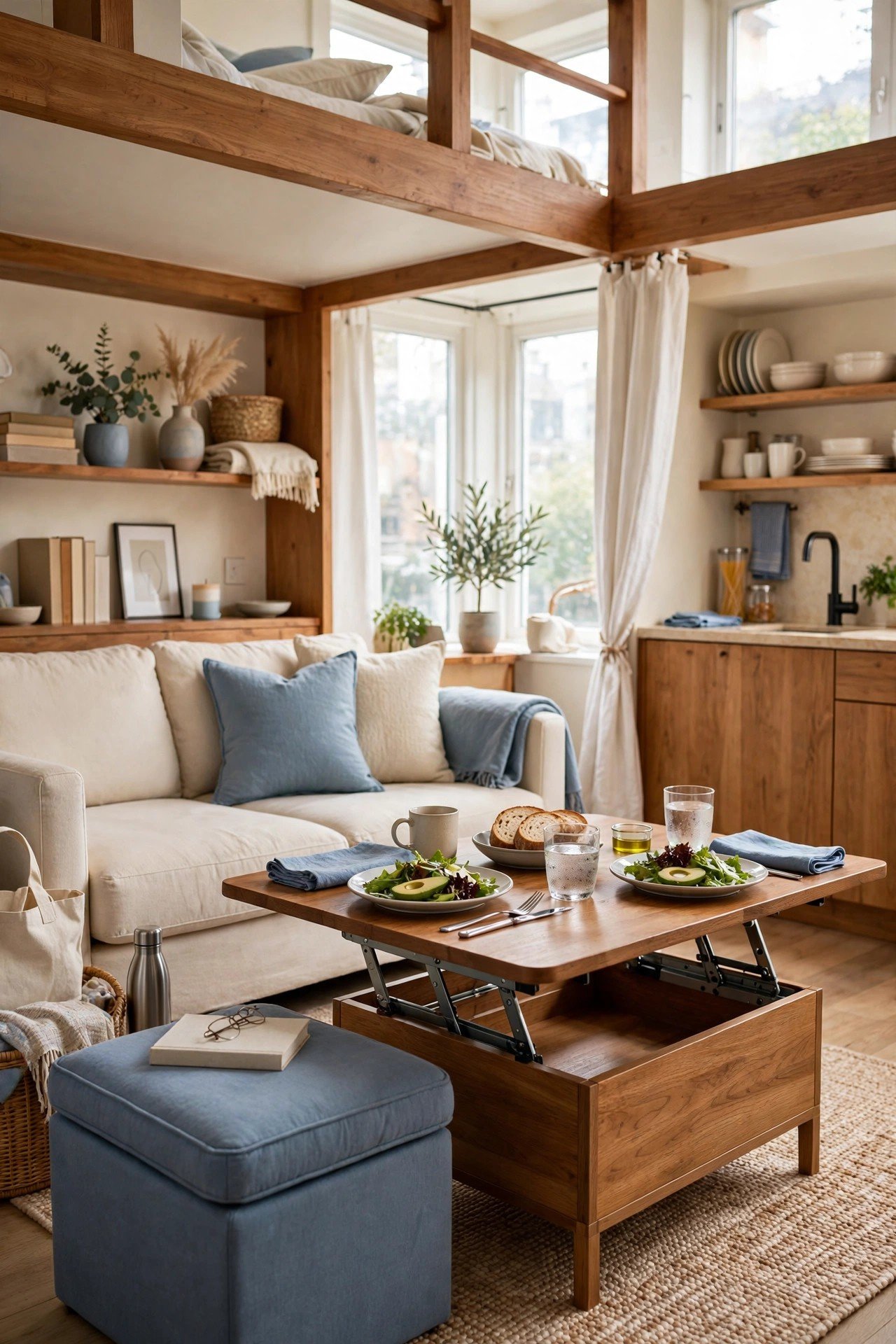
2. Furniture With Double Duty
In a loft, every piece of furniture should earn its floor space twice. A lift-top coffee table becomes a dining table for four, a sofa bed hosts overnight guests, and a storage ottoman hides blankets while giving you a footrest. One piece, two jobs, zero waste.
Before you buy, list the two jobs each piece must do and measure both modes: the coffee table must clear your knees when lifted, and the sofa bed needs a full seven feet of open floor when unfolded. Quality matters more than quantity when each piece works this hard.
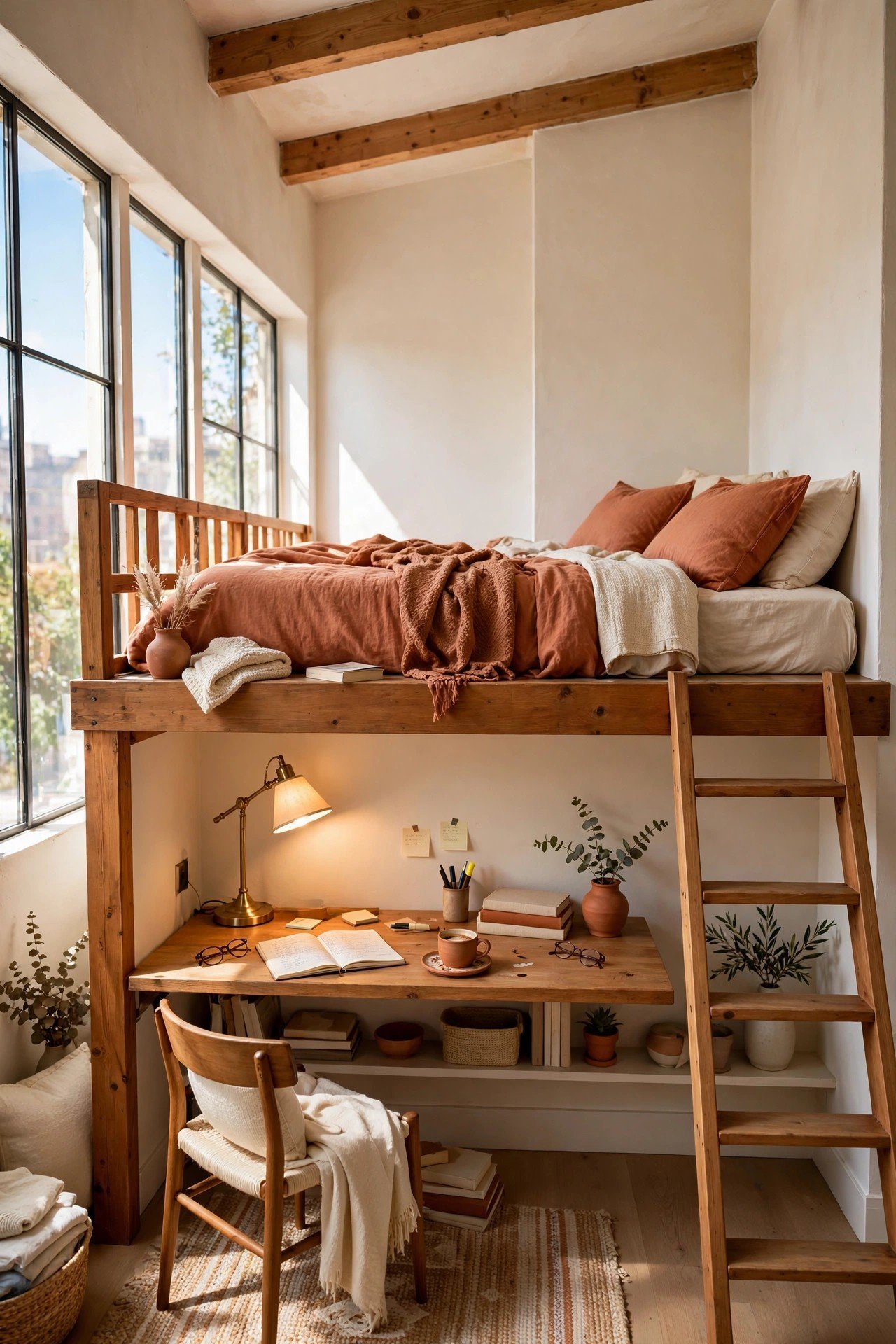
3. Raised Bed Above a Desk Zone
High loft ceilings are an invitation to sleep up high and live down low. A lofted bed frame lifts the mattress five or six feet up, freeing the entire footprint below for a desk, a reading chair, or dressers. You gain a bedroom and an office in the same square footage.
Check that you have at least thirty-three inches of sitting space above the mattress and a sturdy ladder with wide, non-slip treads. A small clip-on reading light and a bedside caddy on the rail keep the high sleeper practical, not just clever.
4. Clever Hidden Storage Spots
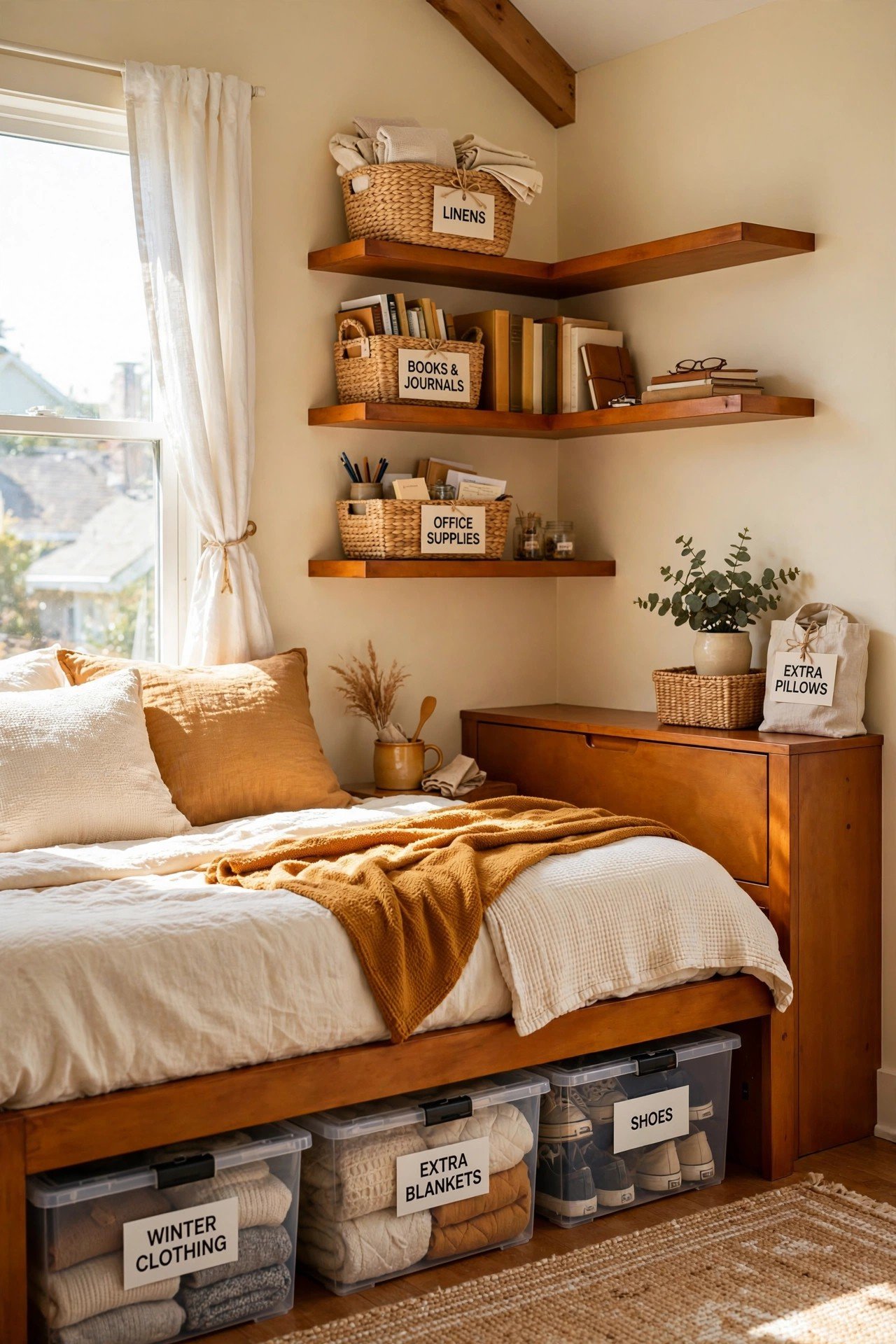
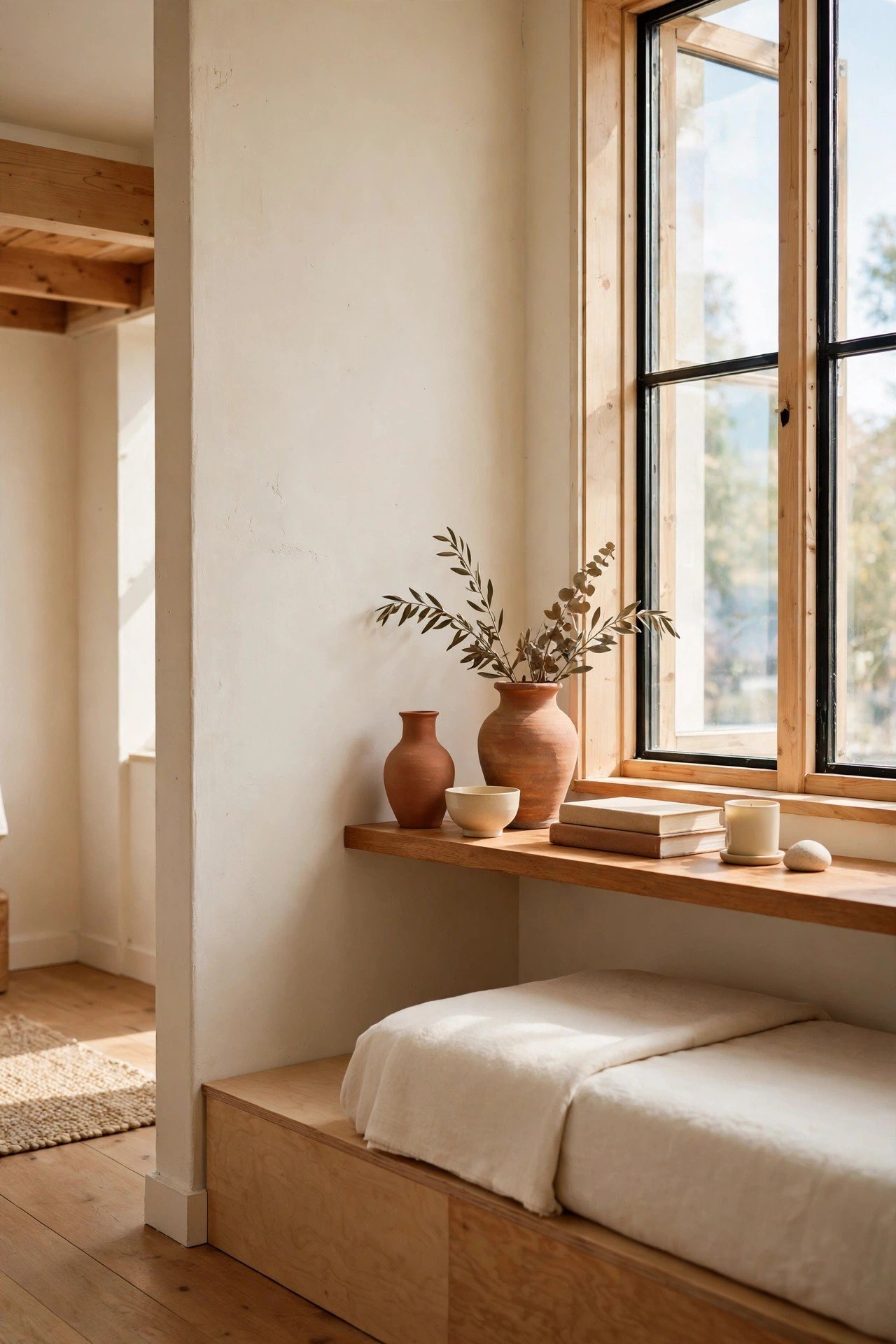
Lofts rarely come with closets, so storage must hide inside the furniture. Under-bed boxes swallow off-season clothes, a storage bench at the window holds linens, and a bed with deep drawers replaces a dresser. The room stays clean because everything has a hidden home.
Install a floating shelf above each door frame for the things you rarely touch, like luggage and holiday decor. Label every box clearly, since hidden storage only works when you can find things without digging.
5. Mirrors to Double the Light
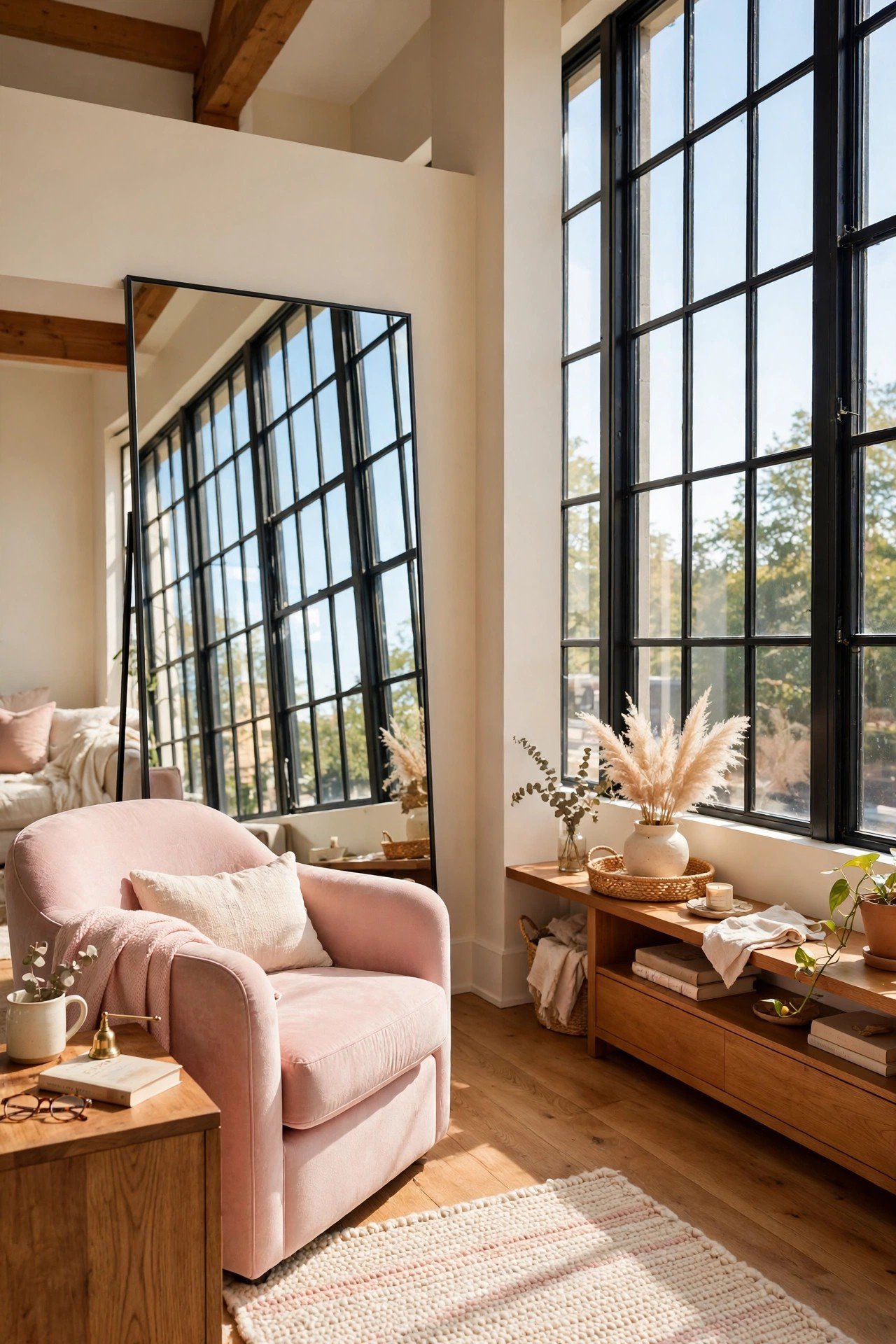
A large mirror opposite the windows bounces daylight deep into a loft and visually doubles the room. The reflection adds depth where there is only one open space. A leaning floor mirror needs no mounting and moves with you.
Place the mirror directly across from the biggest window for maximum effect. A gallery wall of smaller mirrors works too, but keep the frames in one finish so the arrangement feels calm rather than scattered.
6. Open Shelves Between Zones
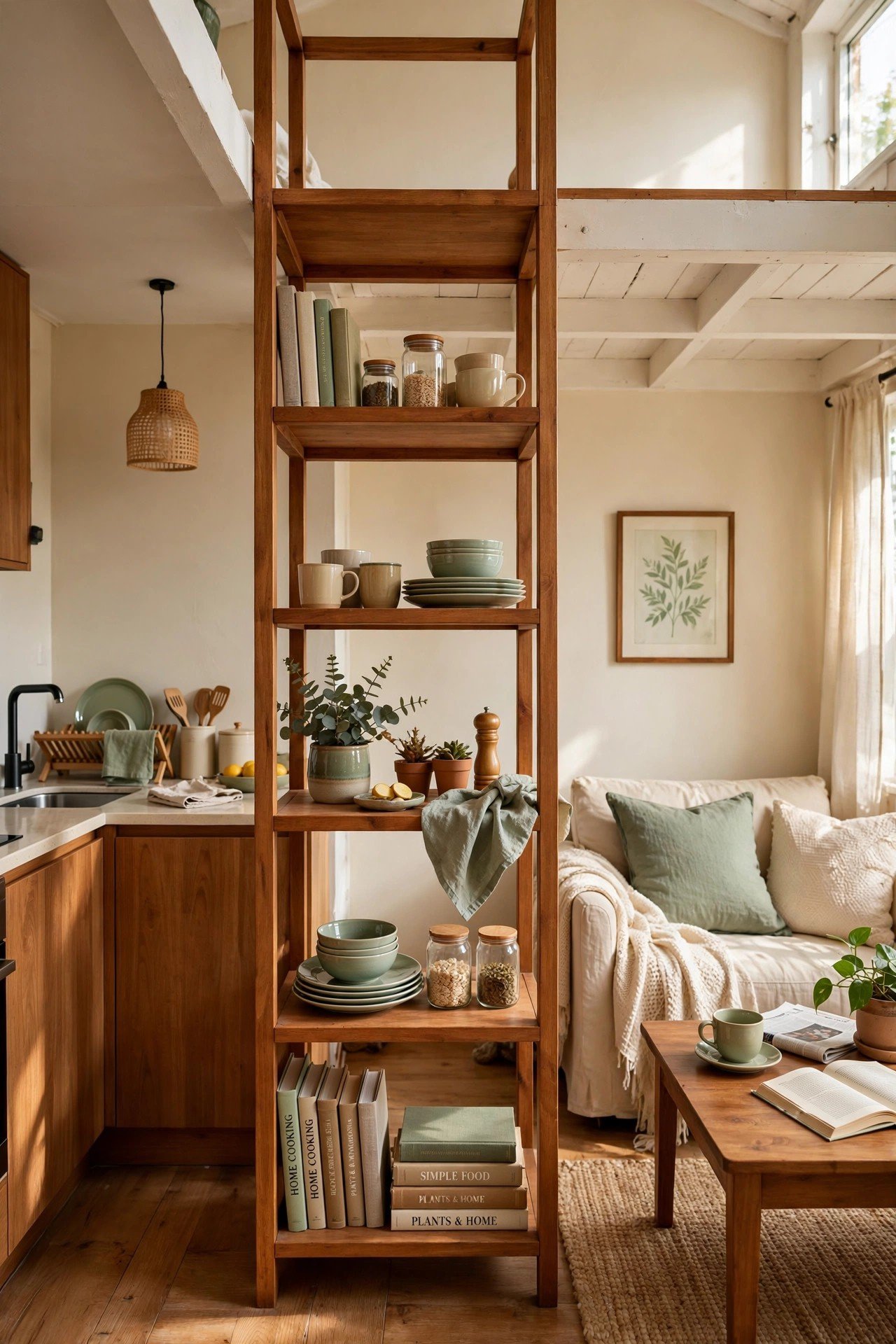
Open shelving divides a loft without blocking light or air. A low bookcase between the living area and the bed marks the boundary while keeping sightlines open. Styled with books, plants, and pretty dishes, the shelf becomes decor and divider in one.
Keep the shelf unit below waist height so the room still feels like one airy space. Anchor tall units to the wall for safety, and leave some shelves half-empty so the divider breathes instead of forming a wall.
7. Simple Minimalist Styling
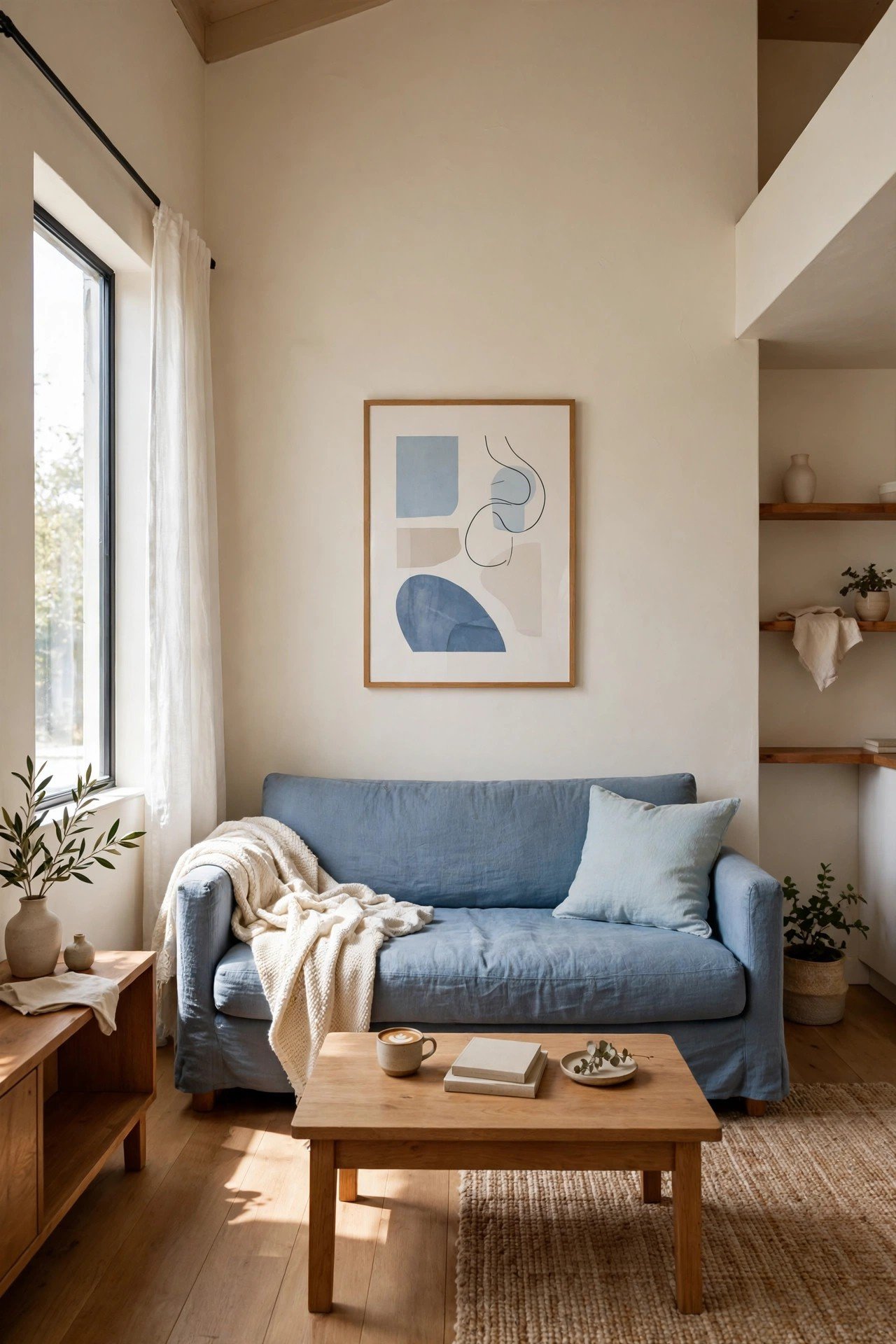
Minimalism is a survival strategy in a small loft, not just a style. Fewer, better pieces keep the single room calm and make cleaning fast. Each object earns its place by being useful or truly loved, and everything else goes.
Apply the one-in, one-out rule: every new item means an old one leaves. Choose a tight palette of neutrals with natural wood for warmth, and the small space will feel serene instead of stark.
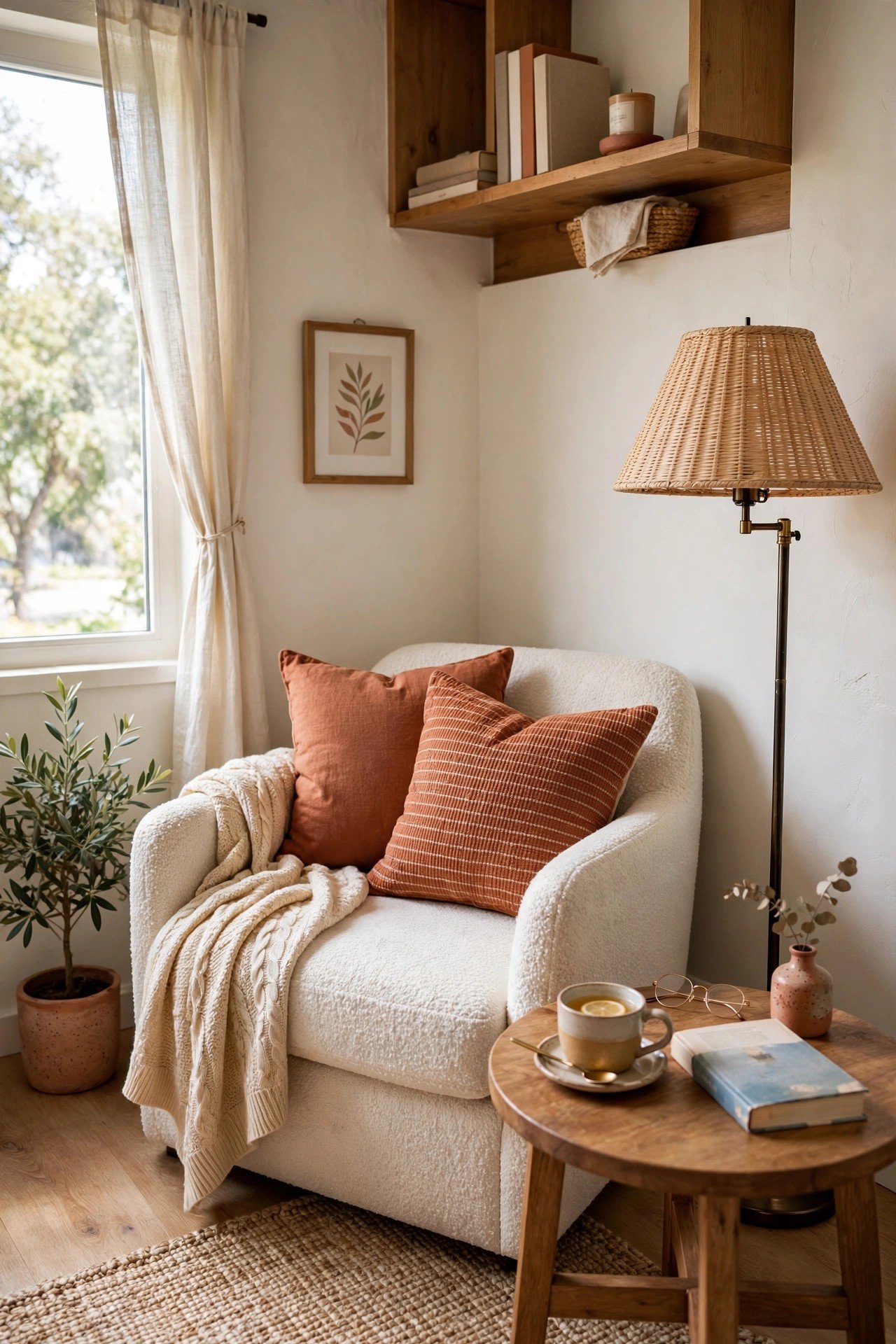
8. Soft Relaxation Corners
Every loft needs one corner that exists only for rest. A comfortable chair, a floor lamp, a small side table, and a soft throw turn an unused corner into a reading retreat. This tiny zone gives the open plan a sense of sanctuary.
Tuck the corner near a window for daylight reading, and keep the chair angled toward the room so the nook feels connected. A small rug under the chair marks the retreat without any walls.
9. Beauty Meets Everyday Function
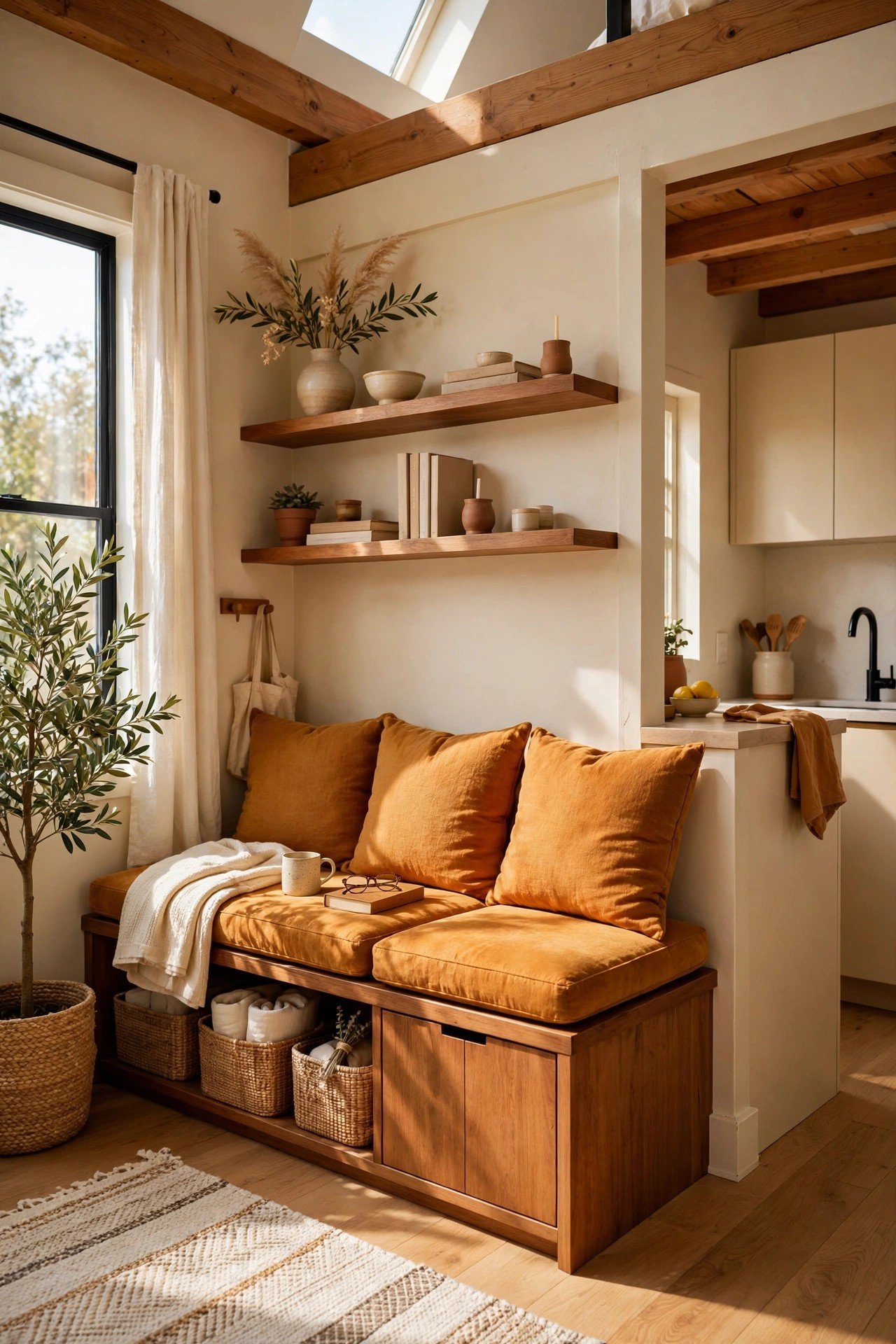
The best loft furniture is beautiful and hardworking at once. A handsome storage bench offers seating and hides winter blankets, while a pretty lidded basket corrals the clutter of daily life. Function never has to look boring.
When you shop, ask what each beautiful piece hides or converts into. A consistent wood tone across your hardworking pieces keeps the open room feeling pulled together even when every item is doing a job.
10. Pops of Bright Color
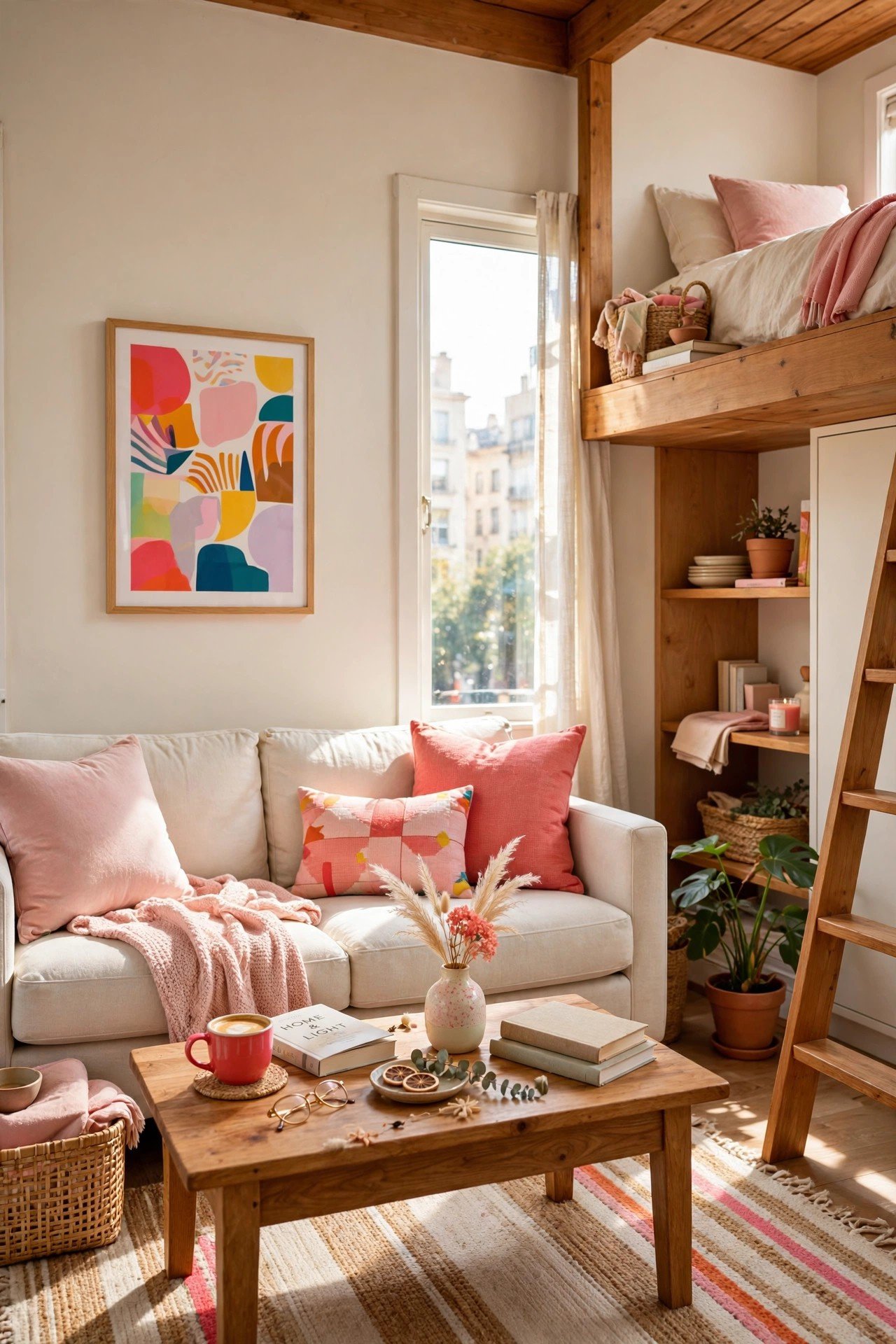
A neutral loft base keeps the small space open, but bright accents keep it from feeling flat. Two accent colors, repeated in cushions, art, and one throw, give the room energy and personality. The eye travels from pop to pop instead of seeing one beige box.
Limit yourself to two accent shades so the room stays cohesive. A two-tone wall paint treatment on one short wall can add color permanently without overwhelming the open plan.
11. Mixed Cozy Textures
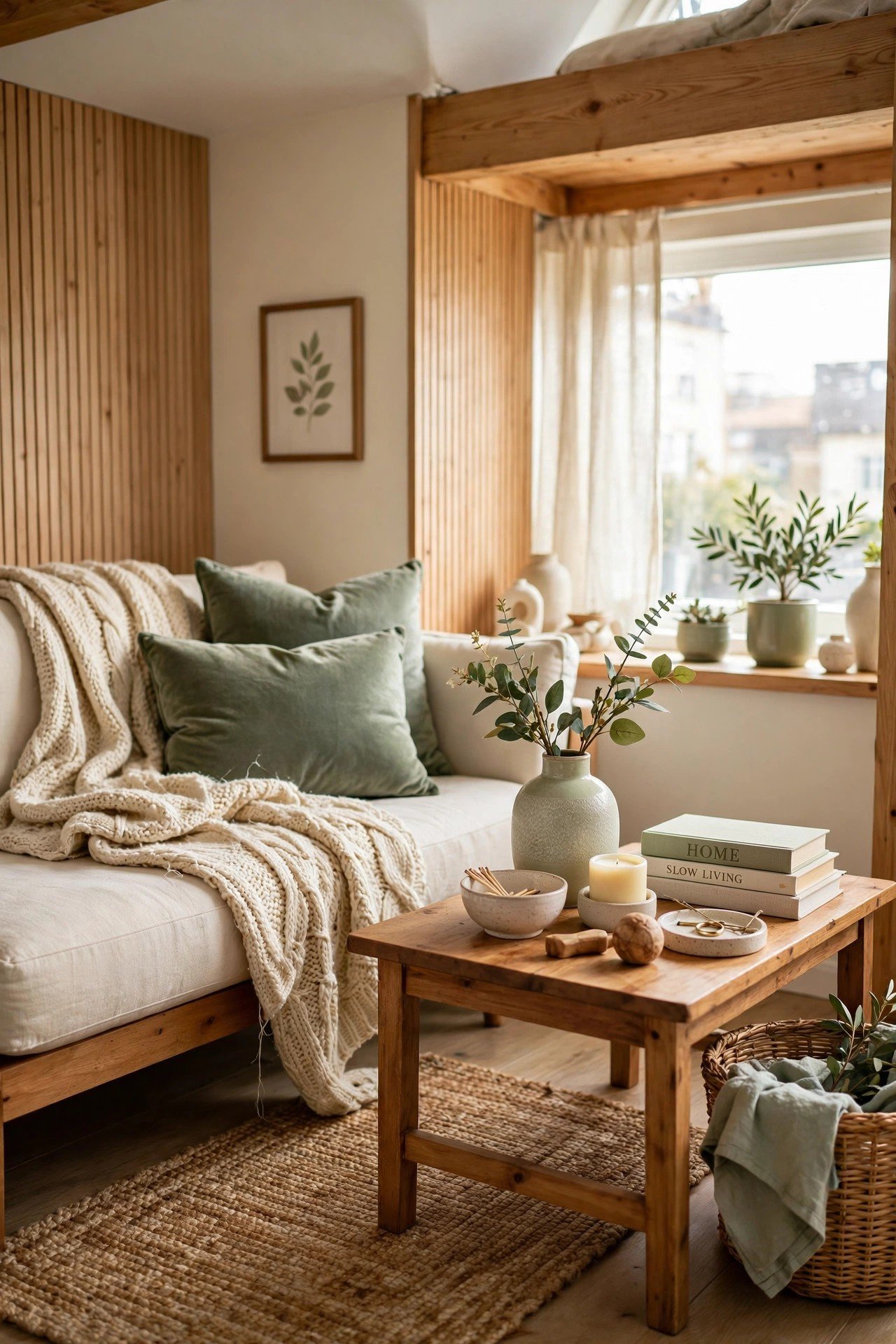
Texture adds the richness that small lofts need when color stays quiet. A chunky knit throw, velvet cushions, a jute rug, and smooth ceramics layer together to make the space feel deep and inviting. Your hands notice what your eyes might miss.
Mix at least three textures in each zone but keep the colors related. Use texture to mark zones too: a nubby rug under the reading chair and a flat weave under the dining table tell you where each area begins.
12. Discreet Smart Home Tech
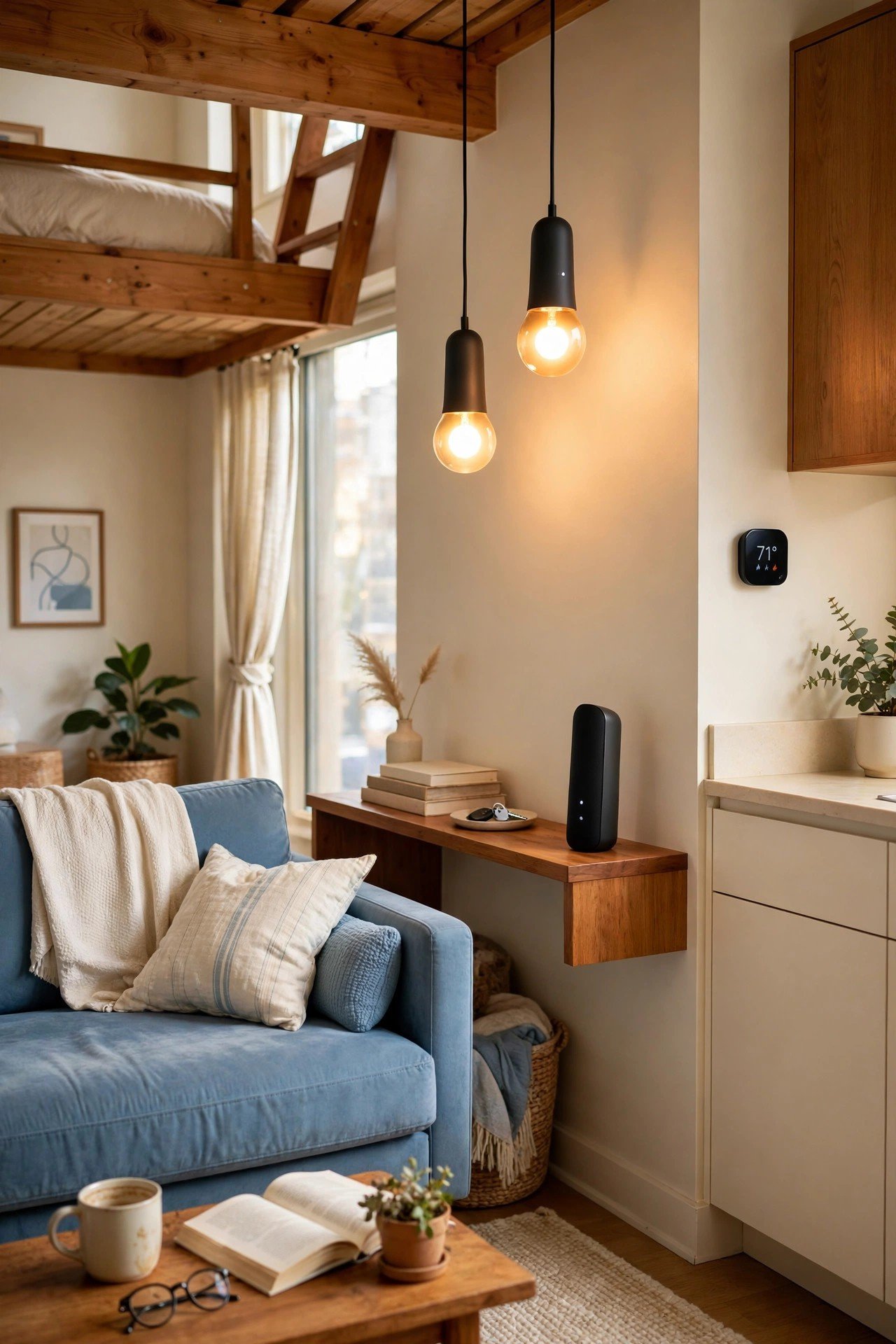
Smart tech earns its place in a loft by removing clutter, not adding it. A voice assistant replaces a shelf of remotes, smart bulbs change the mood without extra lamps, and a compact speaker tucks onto a shelf. The tech hides while the comfort shows.
Choose devices in finishes that match your decor, and run a single charging drawer so cables never sprawl. Keep the router central and elevated, since one open room still has dead spots behind big furniture.
13. Decluttering as a Design Move
In a loft, decluttering is not housekeeping; it is the design itself. With no doors to hide behind, every object is on display, so editing ruthlessly is what makes the space beautiful. A clear surface reads as intentional style.
Walk the room monthly with a donation bag and remove anything you have not used or loved recently. Give every remaining item a labeled home, and the open plan will stay serene with very little daily effort.
14. Art That Feels Personal
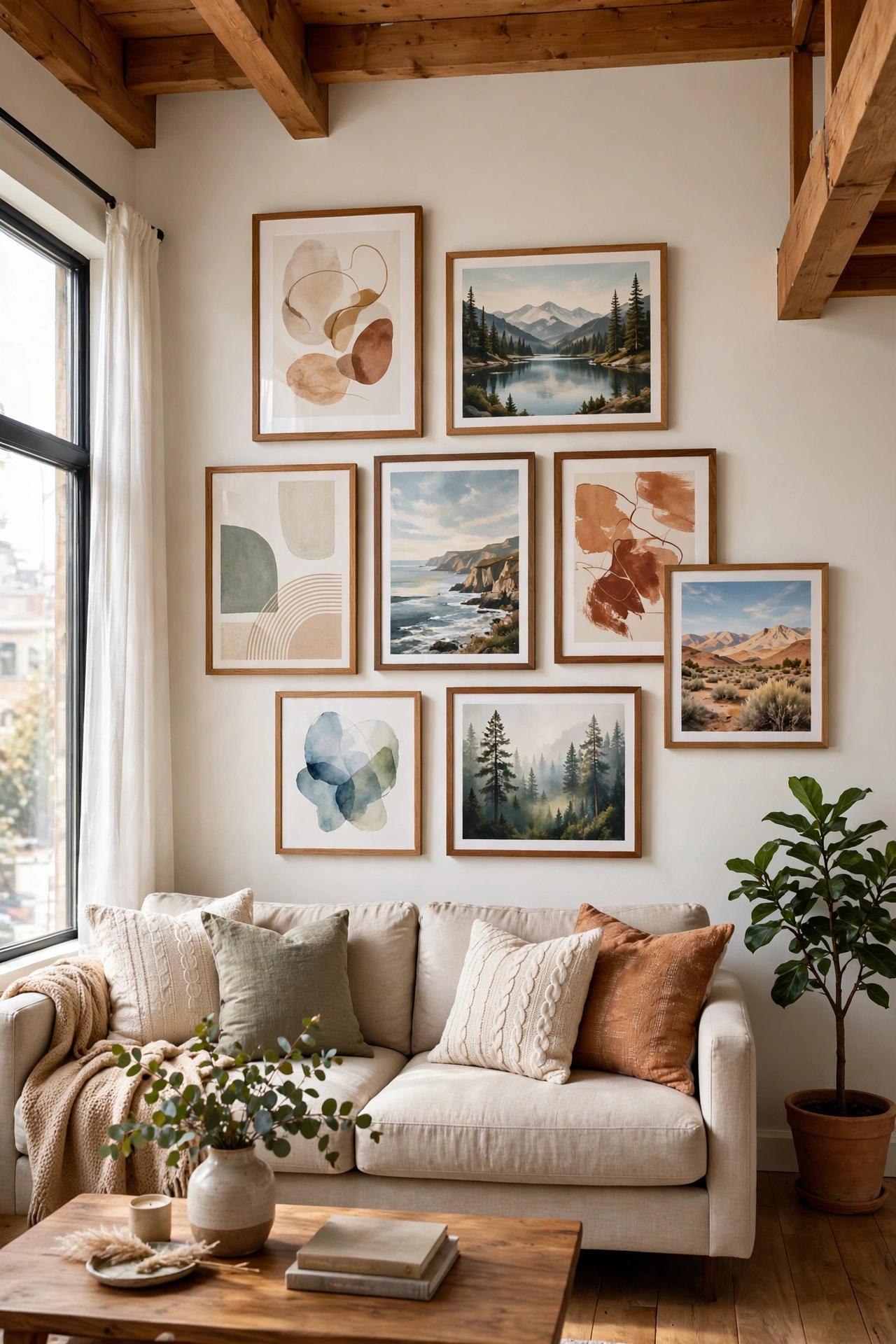
Art is how a loft stops feeling like a rental box and starts feeling like home. A gallery wall of prints, photos, and small originals adds personality at eye level without taking floor space. Large pieces work too: one big canvas can anchor a whole zone.
Hang the center of the arrangement at fifty-seven inches, standard gallery height, so it reads correctly. Mix frame styles if you like, but keep one unifying element, like all black frames or all white mats, so the wall feels curated.
15. Daylight as a Design Tool
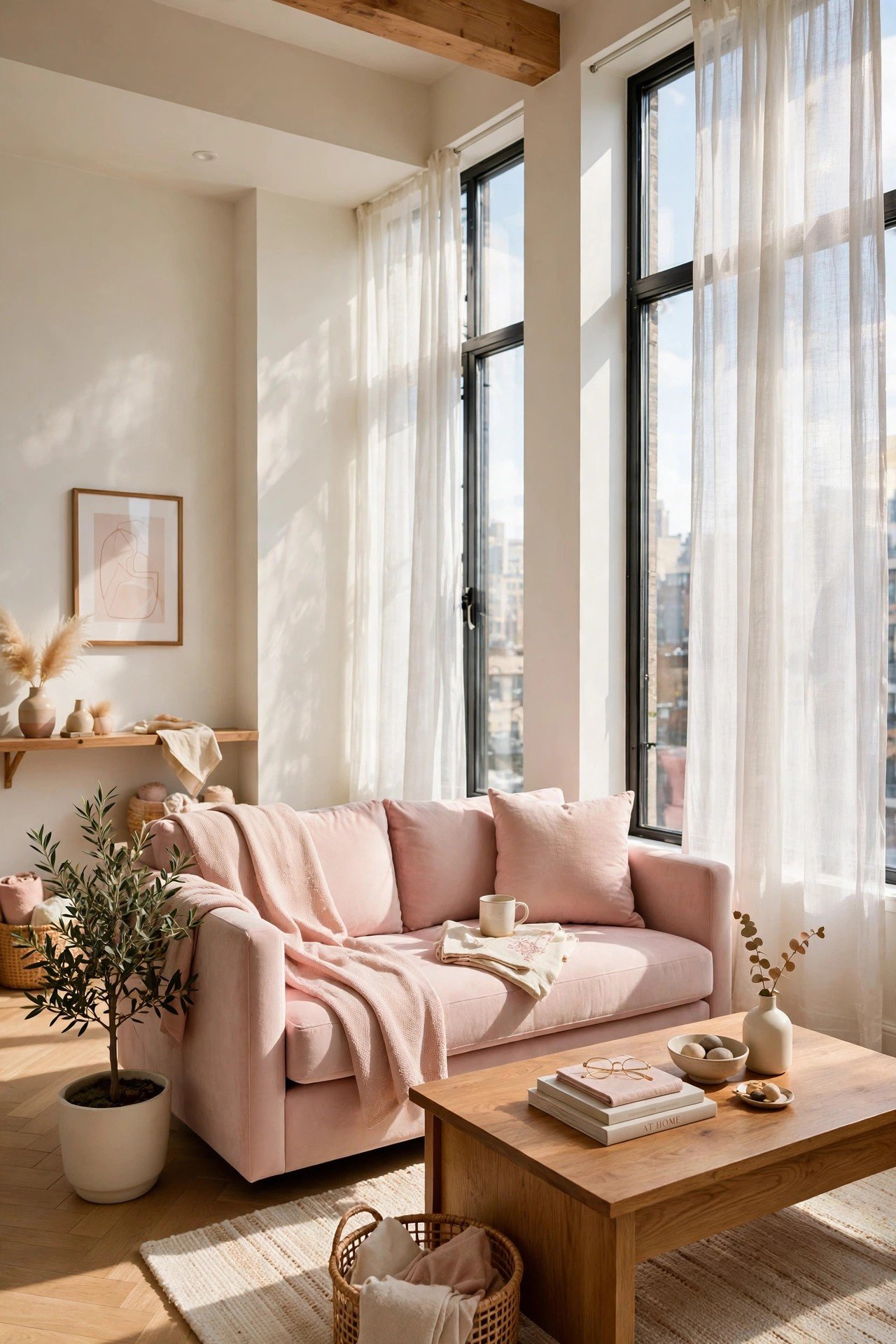
Daylight is the most powerful decorating tool a loft has, and it is free. Arrange the main living zone to face the windows, keep the glass clean and unblocked, and let the sun define the brightest, most active part of the room. Quieter zones can live in the softer light.
Use sheer curtains that glow rather than heavy drapes that block. A limewash wall paint finish bounces the daylight softly around the room instead of glaring it back.
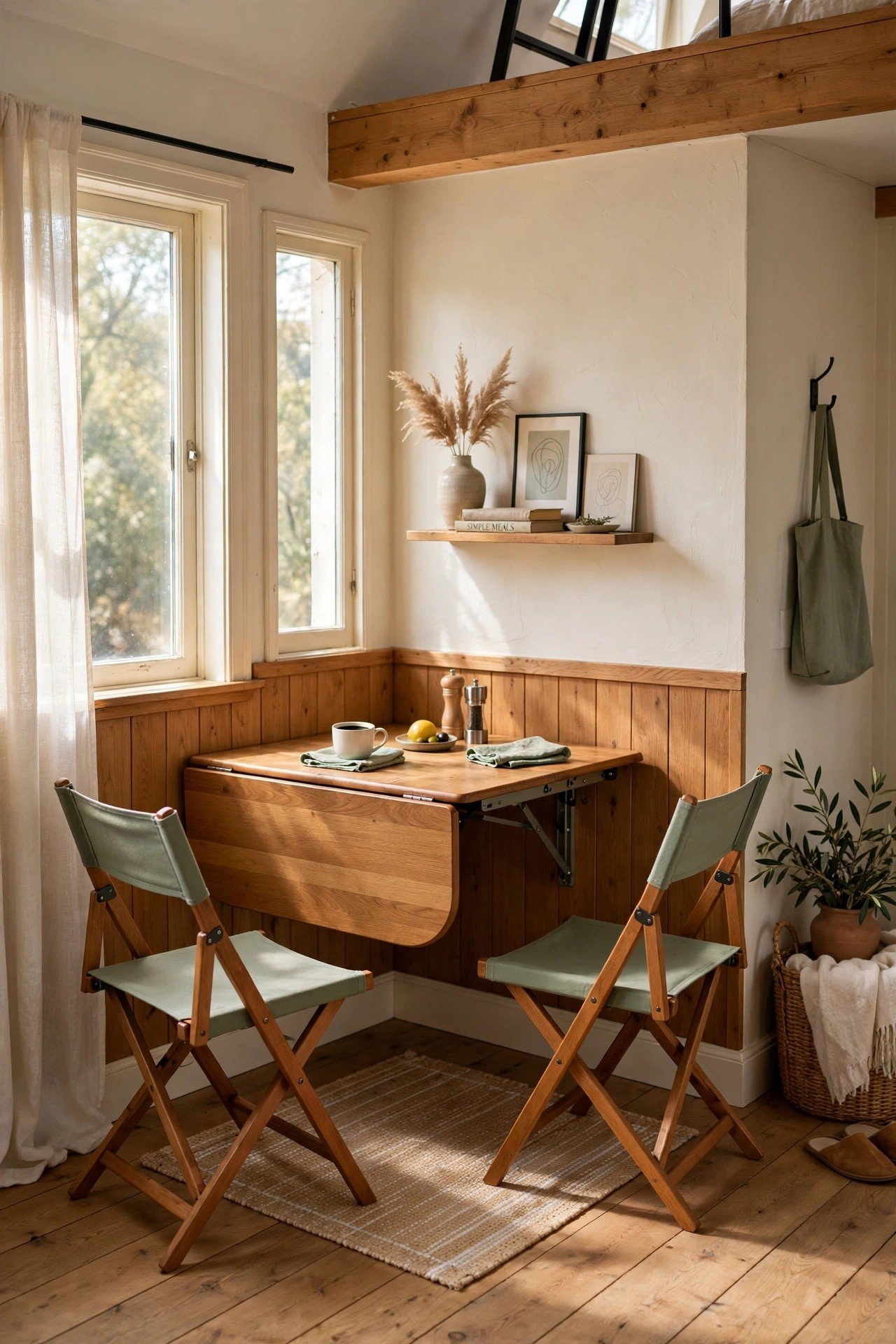
16. Fold-Away Tables and Chairs
Fold-away furniture lets a loft change shape in minutes. A wall-mounted drop-leaf table seats four for dinner and folds to a slim shelf afterward. Folding chairs hang on wall hooks when the meal is done, and the floor returns to open space.
Mount the drop-leaf at standard twenty-nine-inch dining height and test the hinge action before you commit. Store the folded chairs on sturdy hooks near the table so setup takes seconds, not a furniture hunt.
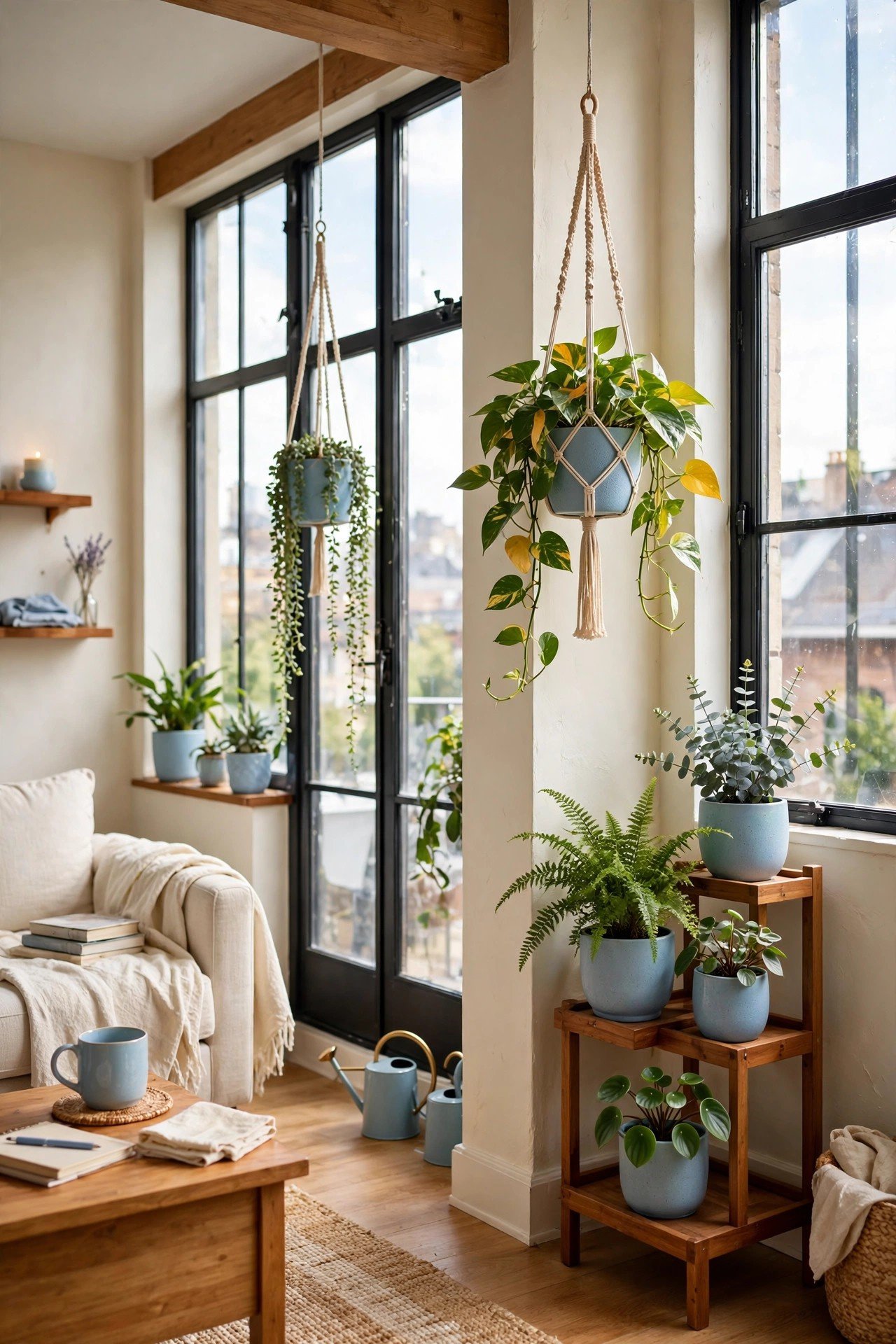
17. Thoughtful Plant Placement
Plants thrive in lofts because the open space gives them light and air, but placement decides whether they help or clutter. Hang trailing plants near windows, set a tiered stand in an empty corner, and keep the floor clear. Greenery should rise, not sprawl.
Match each plant to its light: sun-lovers on the sill, low-light varieties like pothos deeper in the room. Group plants in odd numbers and vary their heights, and a simple collection will look like a designed display.
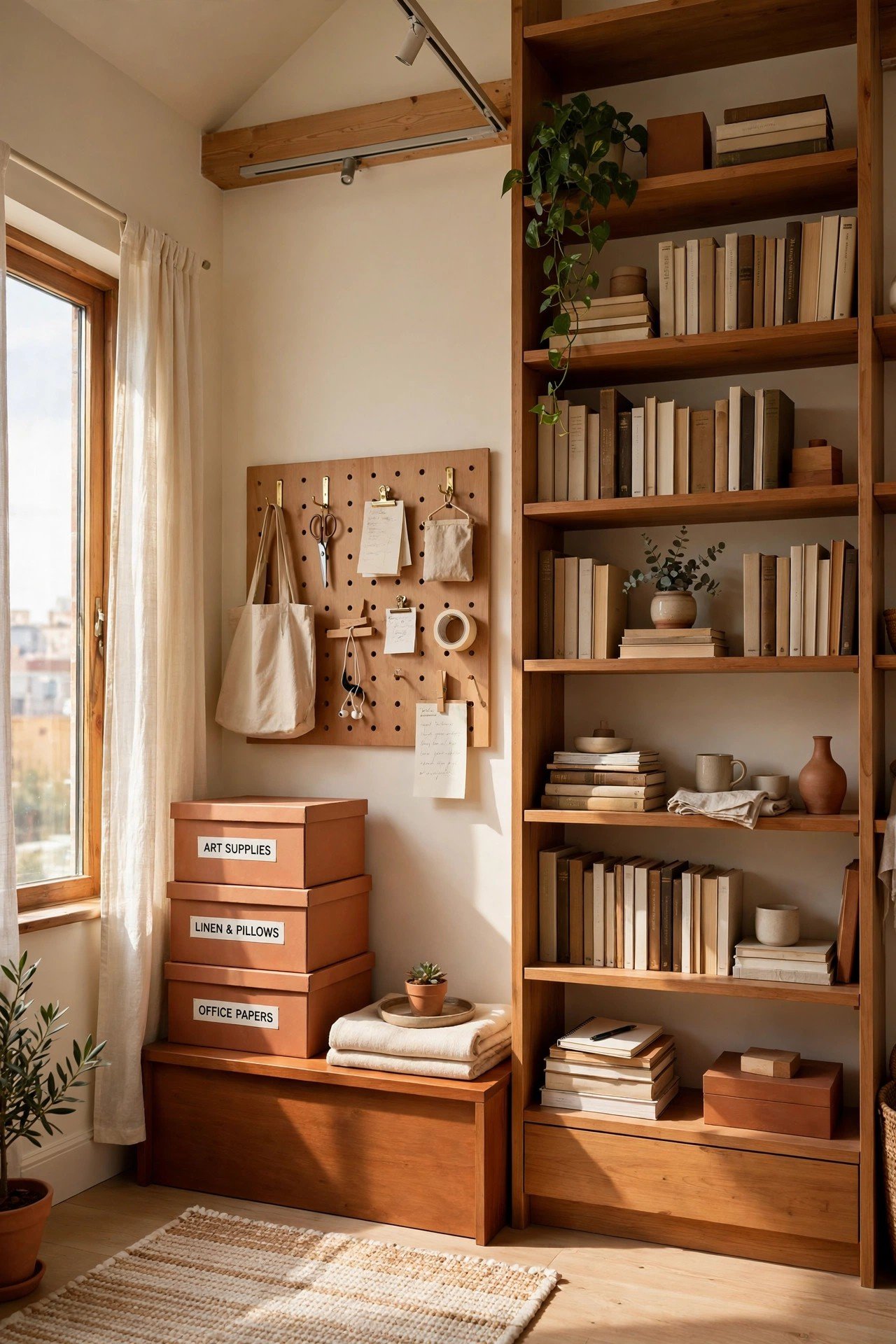
18. Shelving That Climbs the Walls
Loft ceilings are tall, and shelving should use every foot of that height. A bookcase that reaches toward the ceiling draws the eye up and makes the room feel grand. Wall hooks and a pegboard near the door catch keys, bags, and jackets.
Anchor every tall unit to a stud, since a loaded bookcase can tip. Keep daily items between knee and shoulder height, and reserve the top shelves for the things you touch twice a year. A folding step stool tucked beside the shelf makes the high storage truly usable.
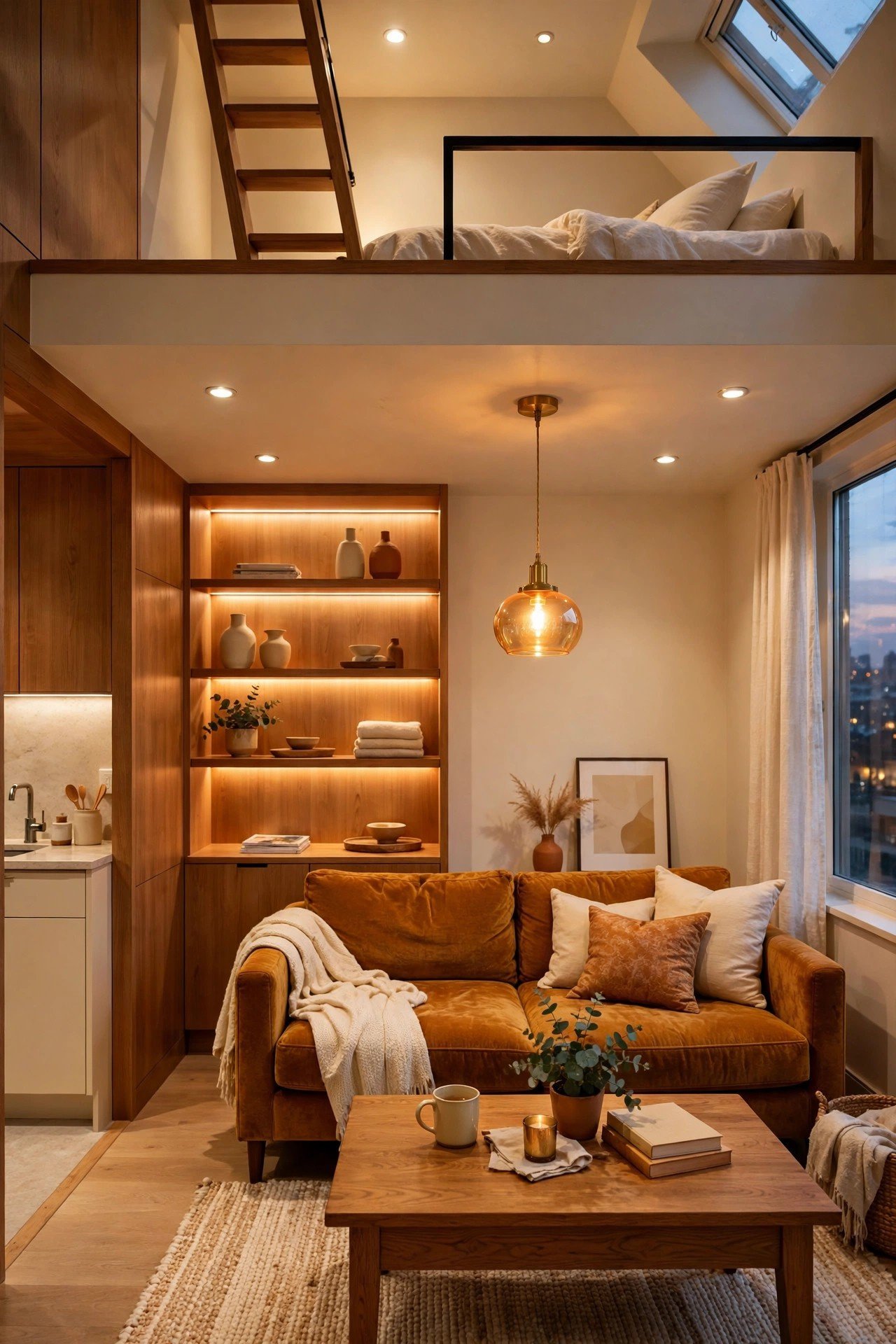
19. Built-In Layered Lighting
One ceiling light cannot serve a whole loft, but layers of light can. Combine recessed or track lighting for general glow, a pendant over the seating zone, and a task lamp at the desk. Each layer switches separately, so the room shifts from workday to evening in seconds.
Put every layer on a dimmer and aim for warm 2700K bulbs throughout. A thoughtful ceiling design with a simple track lets you aim light exactly where each zone needs it.
20. Tuck-Away Home Office
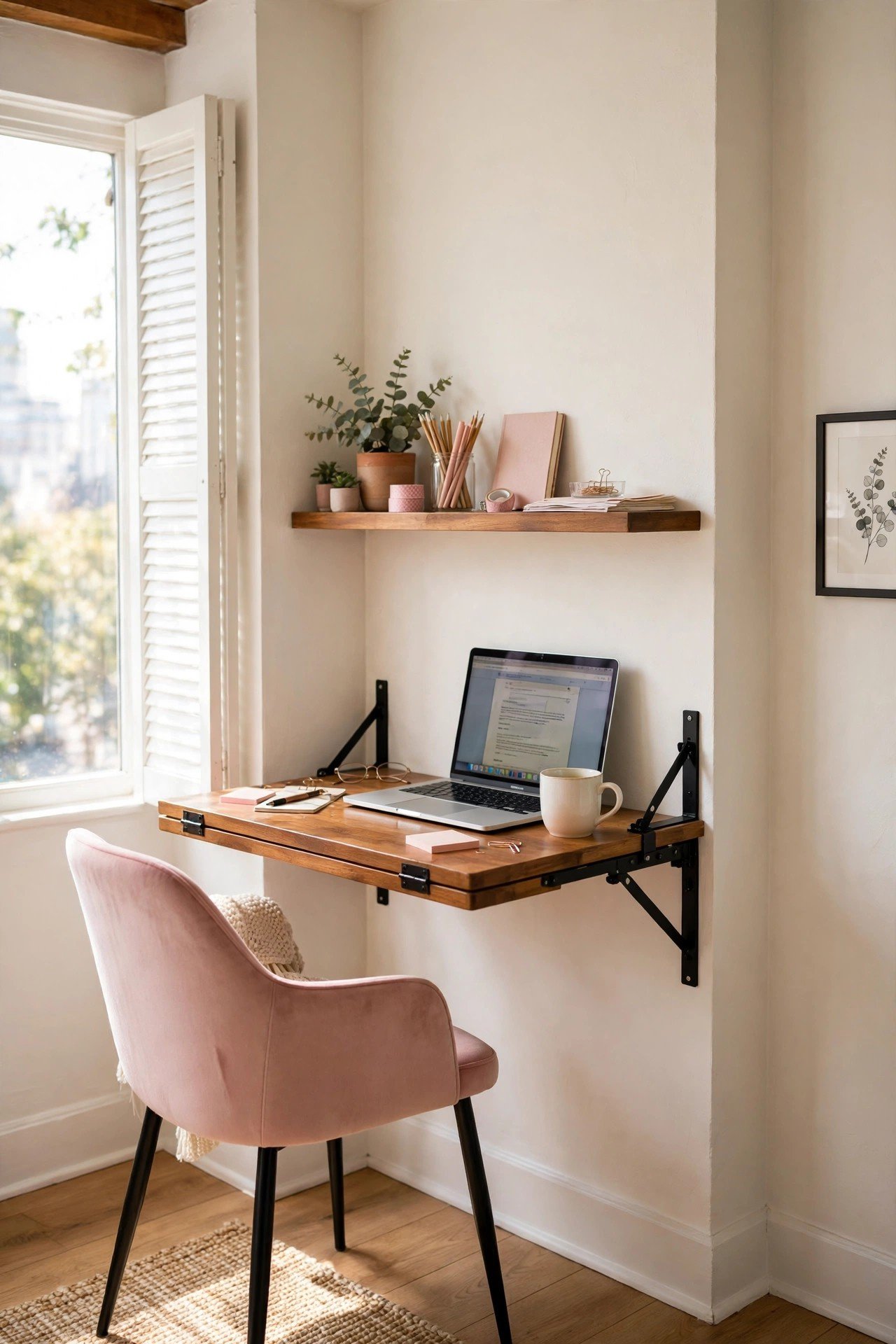
Remote work needs a real desk, but a loft cannot spare a whole room. A fold-down wall desk in a quiet corner gives you a full workstation that vanishes at five in the evening. A slim chair tucks under, and a floating shelf above holds supplies.
Mount the desk at twenty-eight to thirty inches high and fix it to studs with a french cleat. Face the desk toward the room rather than the wall if you take video calls, so your background looks intentional.
21. Seasonal Decor Refresh
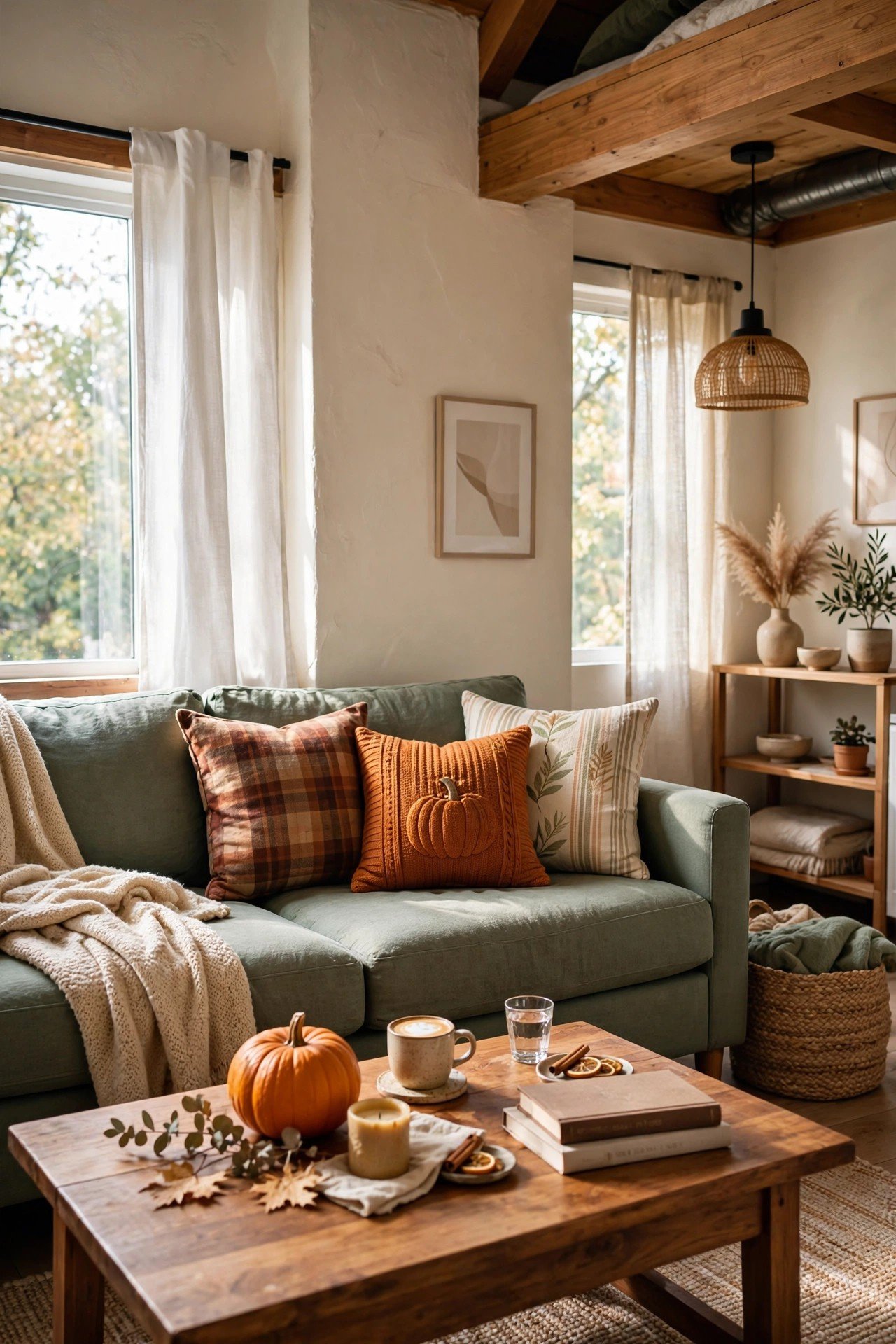
Swapping small decor with the seasons keeps a loft feeling fresh without new furniture. Autumn brings textured throws and a small pumpkin on the coffee table, winter adds candles and deep greens, and spring swaps in light linens. The room changes mood for the price of a cushion.
Store off-season decor in one labeled bin in the highest closet shelf or under the bed. Change only textiles and small objects, never the big pieces, so each refresh takes an afternoon, not a weekend.
22. Made-to-Fit Custom Furniture
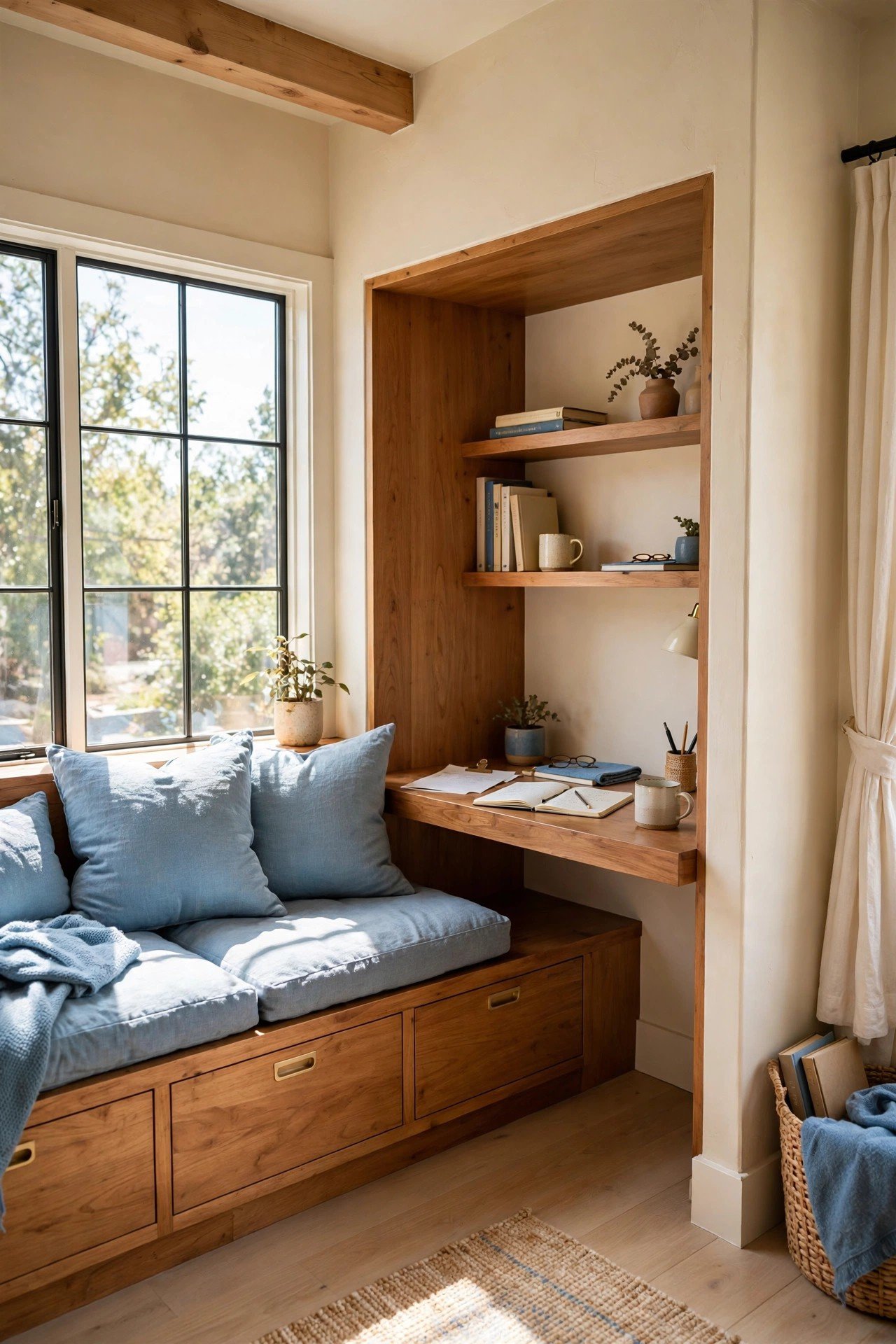
Lofts have odd alcoves and strange dimensions that stock furniture never fits. A made-to-fit bench, desk, or shelf slides into the exact space and looks built-in. Custom pieces turn architectural quirks into the best features of the room.
Measure the alcove three times and build in a half-inch of clearance for uneven walls. Match the custom piece to your existing wood tones, or add board and batten paneling around it so the whole nook reads as one designed moment.
23. Meaningful Personal Keepsakes
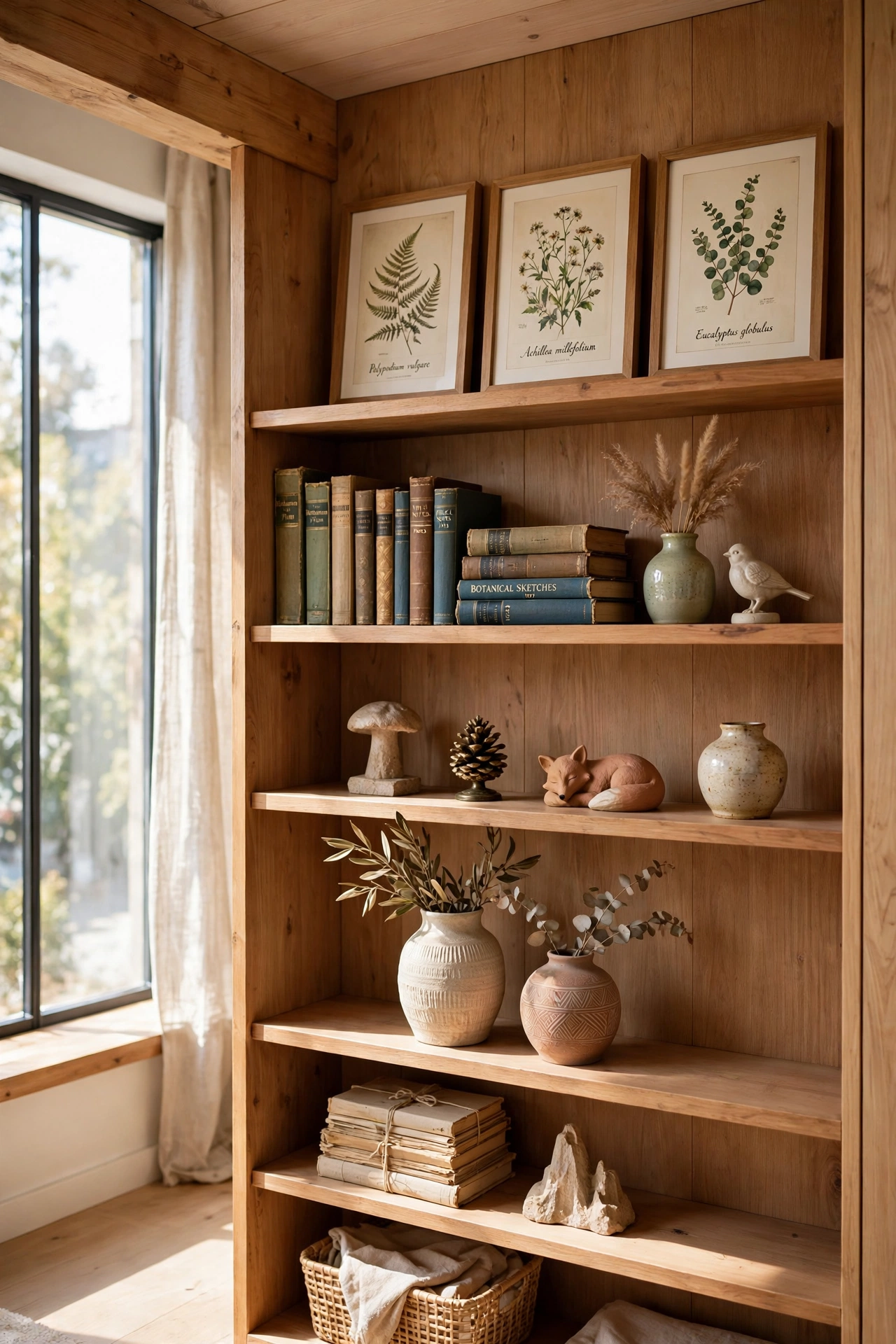
Keepsakes make a loft feel like yours, but curation keeps them from becoming clutter. Choose a single display shelf for travel souvenirs, framed photos, and handmade pieces, and let each object breathe with space around it. The shelf becomes a story, not a storage pile.
Rotate the display twice a year so it stays fresh and meaningful. If an object does not spark a memory or a smile, it belongs in a memory box elsewhere, not on the precious display shelf.
24. Vintage Finds With Character
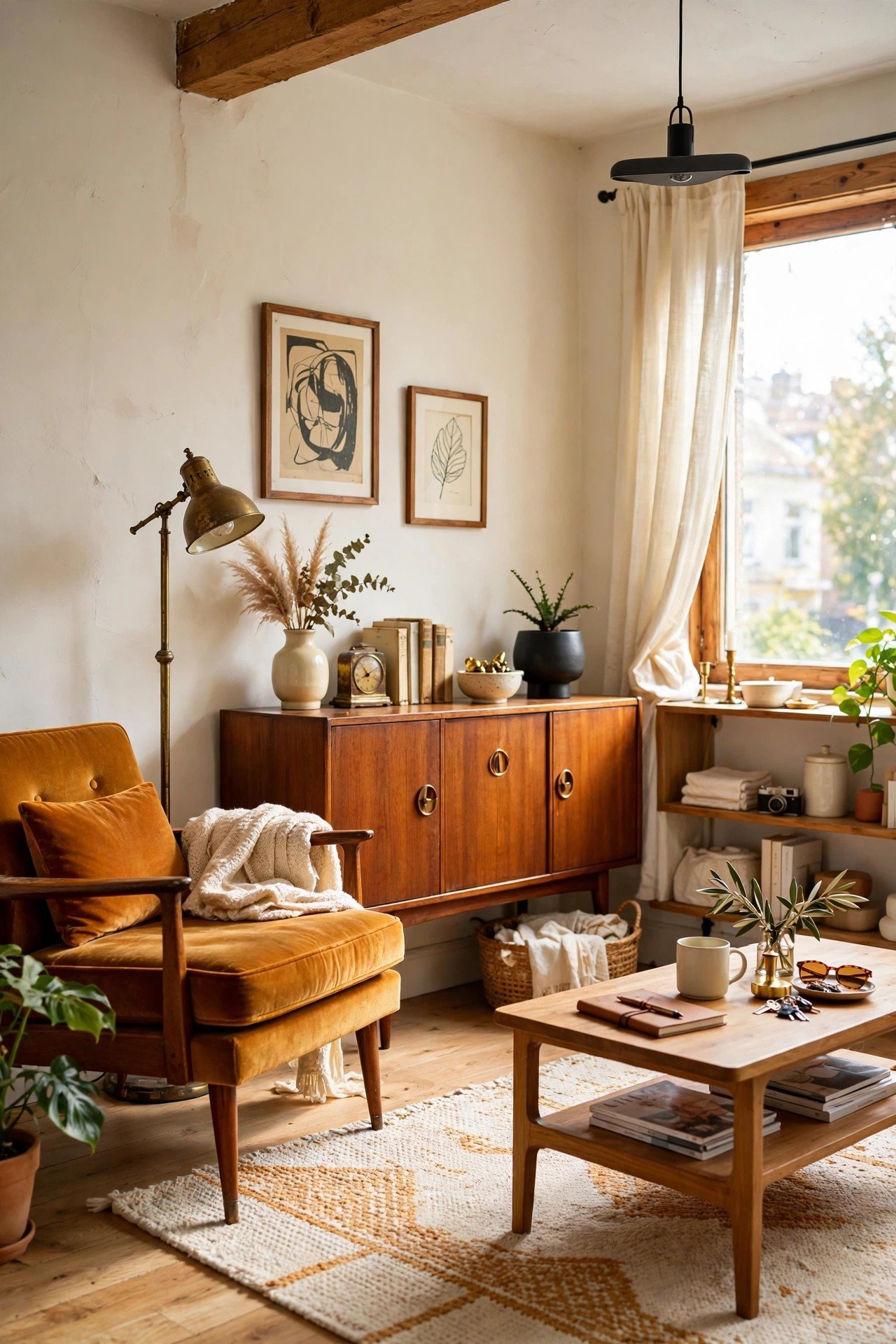
Vintage pieces give a loft the soul that new furniture cannot. A mid-century armchair, a brass floor lamp, or a retro sideboard adds history and patina. Mixed with clean modern basics, one or two vintage stars make the whole room feel collected.
Check vintage upholstery for solid frames and cleanable fabric before you buy. A wallpaper accent wall behind a vintage sideboard frames it like gallery art and ties old and new together.
25. Zones Drawn With Rugs
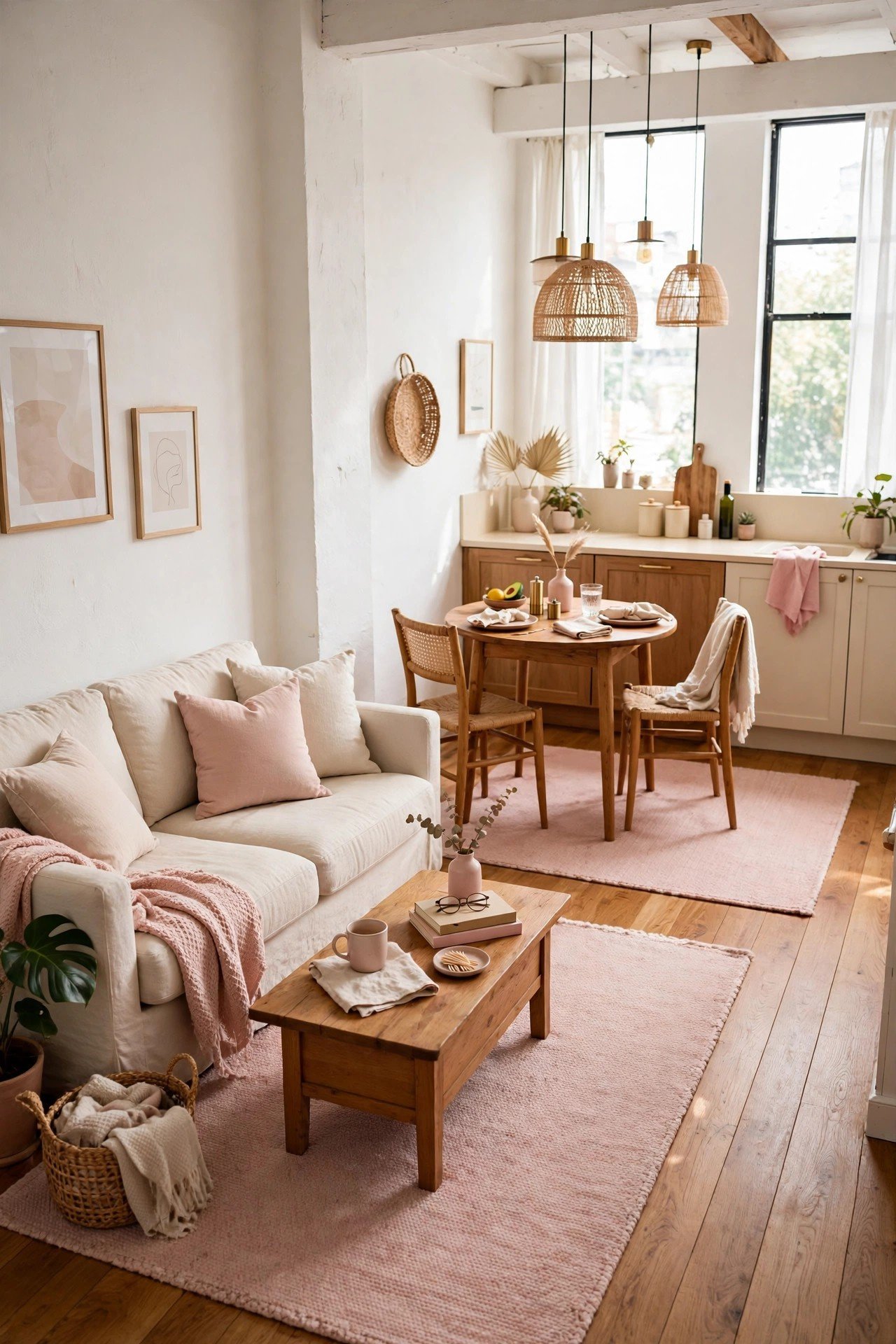
Rugs are the gentlest way to divide a loft into rooms. One rug under the sofa marks the living zone, another under the small dining table marks the eating zone, and the bare floor between them becomes the hallway. The eye reads rooms where no walls exist.
Size each rug so the front legs of the furniture sit on it, which anchors the zone properly. Leave at least eighteen inches of clear walking path between rugs so traffic flows without catching edges.
Conclusion
A small loft apartment works when every inch has a job and every zone has a boundary you can feel. Double-duty furniture, vertical storage, layered light, and rugs that draw rooms turn one open box into a complete home.
Start with your biggest daily need, whether that is sleep, work, or storage. Solve that first, then layer in the ideas that fit your plan, and enjoy a loft that lives far larger than its floor plan.
Frequently Asked Questions
How do you divide a small loft apartment into rooms without walls?
Use rugs to mark each zone, with one rug under the sofa for living and another under the dining table for eating. Add a low open bookcase between zones and hang a pendant light over each area. Keep at least eighteen inches of clear walking path between zones so traffic flows.
What furniture works best in a small loft apartment?
Choose pieces that do two jobs: a lift-top coffee table that becomes a dining table, a sofa bed for guests, and a storage ottoman for blankets. Before buying, measure both modes, since a sofa bed needs seven feet of open floor when unfolded. Fewer, better pieces beat a room full of single-use furniture.
How do you get enough storage in a loft with no closets?
Hide storage inside furniture with under-bed boxes, deep drawer beds, and storage benches. Install floating shelves above door frames for rarely used items, and run a tall bookcase toward the ceiling for books. Label every box so hidden storage stays findable.
How can I make my small loft feel bigger?
Hang a large mirror opposite the windows to double the light and the view. Keep furniture low and below waist height where possible, stick to a light neutral palette, and declutter ruthlessly since every object is visible. Vertical storage draws the eye up and frees the floor.
Where should the bed go in a studio loft?
Put the bed in the quietest, darkest corner, away from the front door and the kitchen. A lofted bed frame lifts the mattress up and frees the floor below for a desk. Use a rug, a bookcase, or a curtain track to mark the sleeping zone so the bed feels like its own room.

Hi, I’m Emily! I turn messy corners into cozy, organized spots. DreamNestDecor is where I share simple, practical home ideas — decor, organization, and small-space solutions that work in real life, not just in photos. Every idea here is carefully researched before it’s shared.