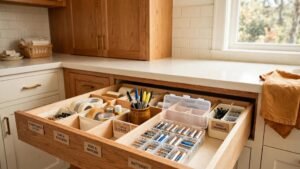
You pull open the kitchen drawer and brace for the slide. Rubber bands, dead pens, takeout menus, and three mystery keys tumble together in one tangled heap. You need a battery, but finding the right size means digging through everything else first.
Every kitchen has this drawer, and it earns the name honestly. The fix is not a bigger drawer. It is a set of small zones where each little item has a home, so the drawer works for you instead of against you.
These thirteen ideas target the exact pain points of a junk drawer. Each one is practical, cheap, and built to stay tidy long after the first weekend.
1. Adjustable Dividers to Create Zones
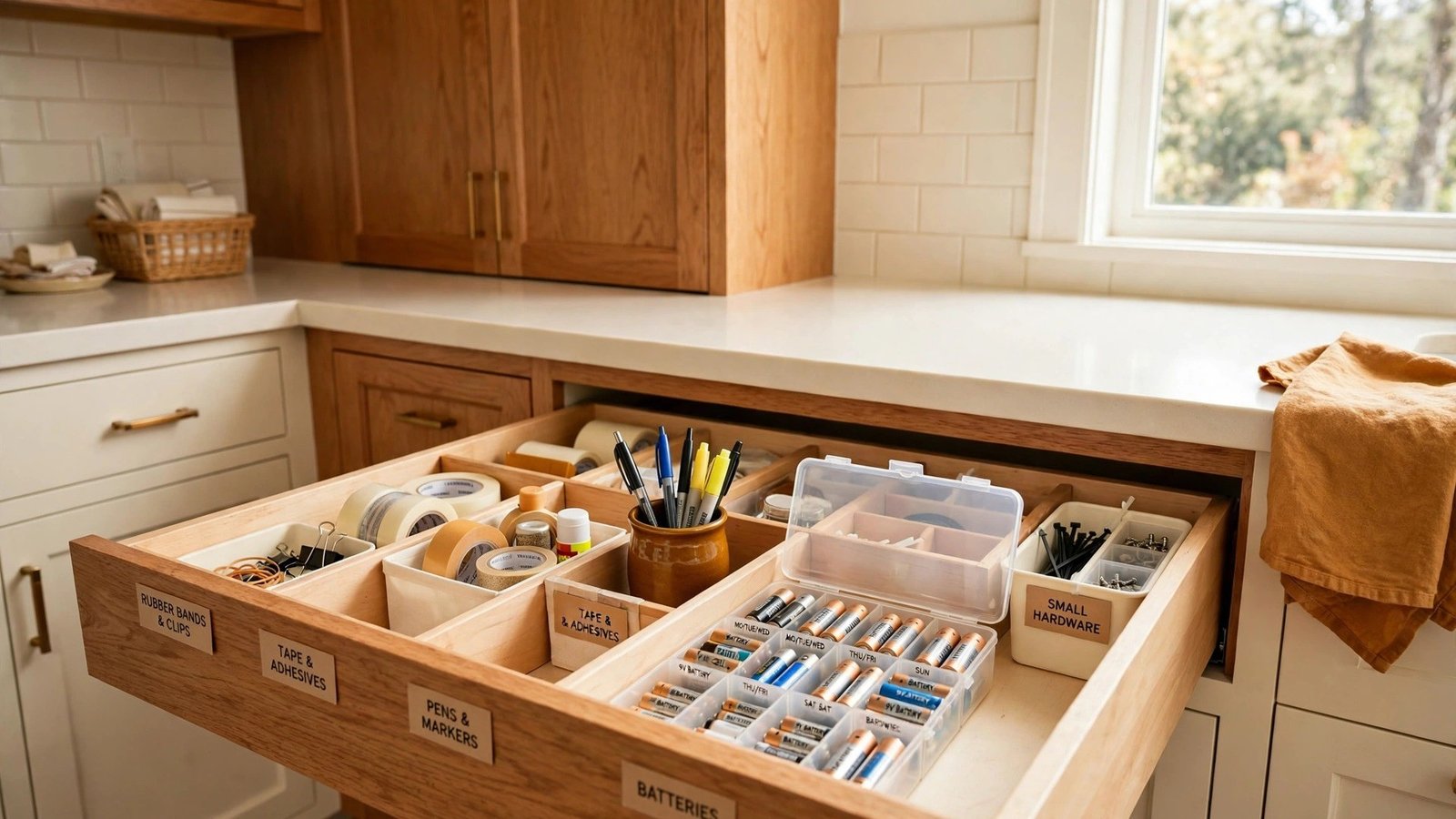
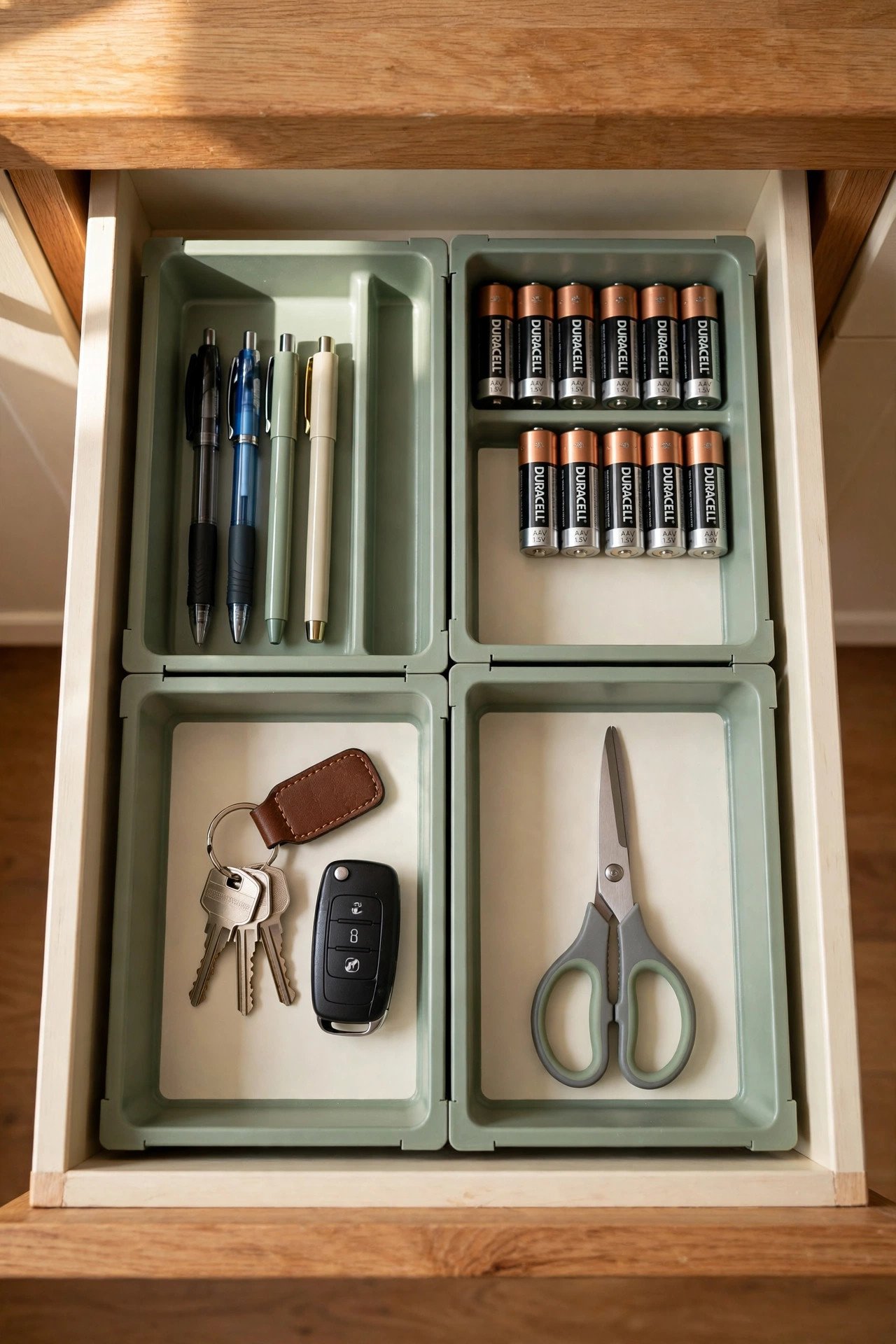
Giving every item a set spot is the fastest way to tame the drawer. Adjustable dividers carve the space into custom zones that keep pens, batteries, and keys from sliding into one heap. You can buy expandable dividers or repurpose small boxes you already own.
Empty the drawer completely before you start, then sort everything into piles by type. Place daily items like pens and scissors toward the front and rare items like spare keys at the back. A zoned drawer stays organized because every item has a visible home.
2. Ice Cube Trays for Tiny Items
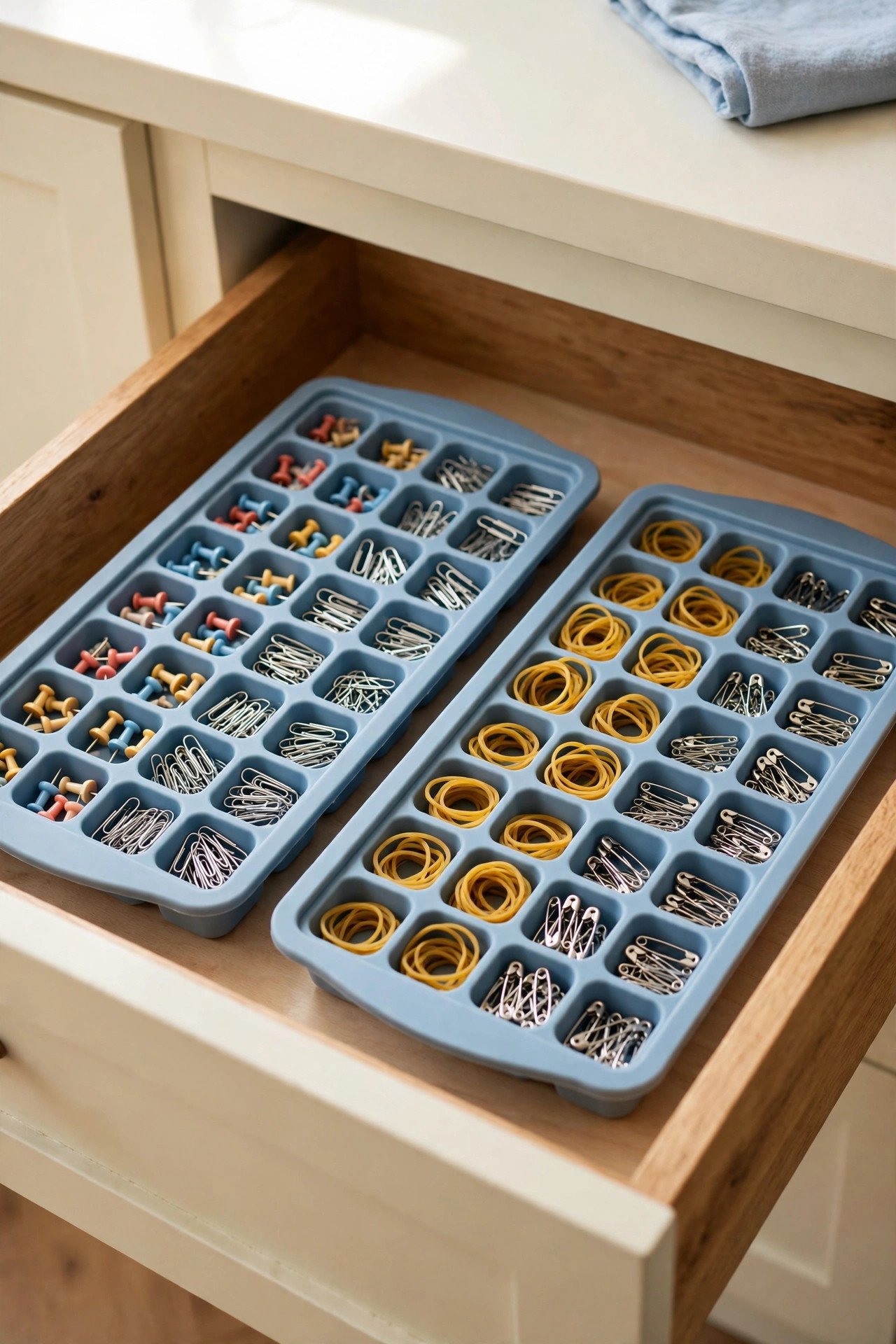
Old ice cube trays are perfect for the smallest drawer clutter. Each cube becomes a mini bin for paper clips, pushpins, rubber bands, or safety pins. The tiny compartments keep small items separated and easy to grab without digging.
Clean the trays well and let them dry before loading them. Use one tray for office bits and another for hardware bits so the categories stay logical. This free solution fits neatly into most drawer sizes.
3. Magnetic Strip for Metal Tools
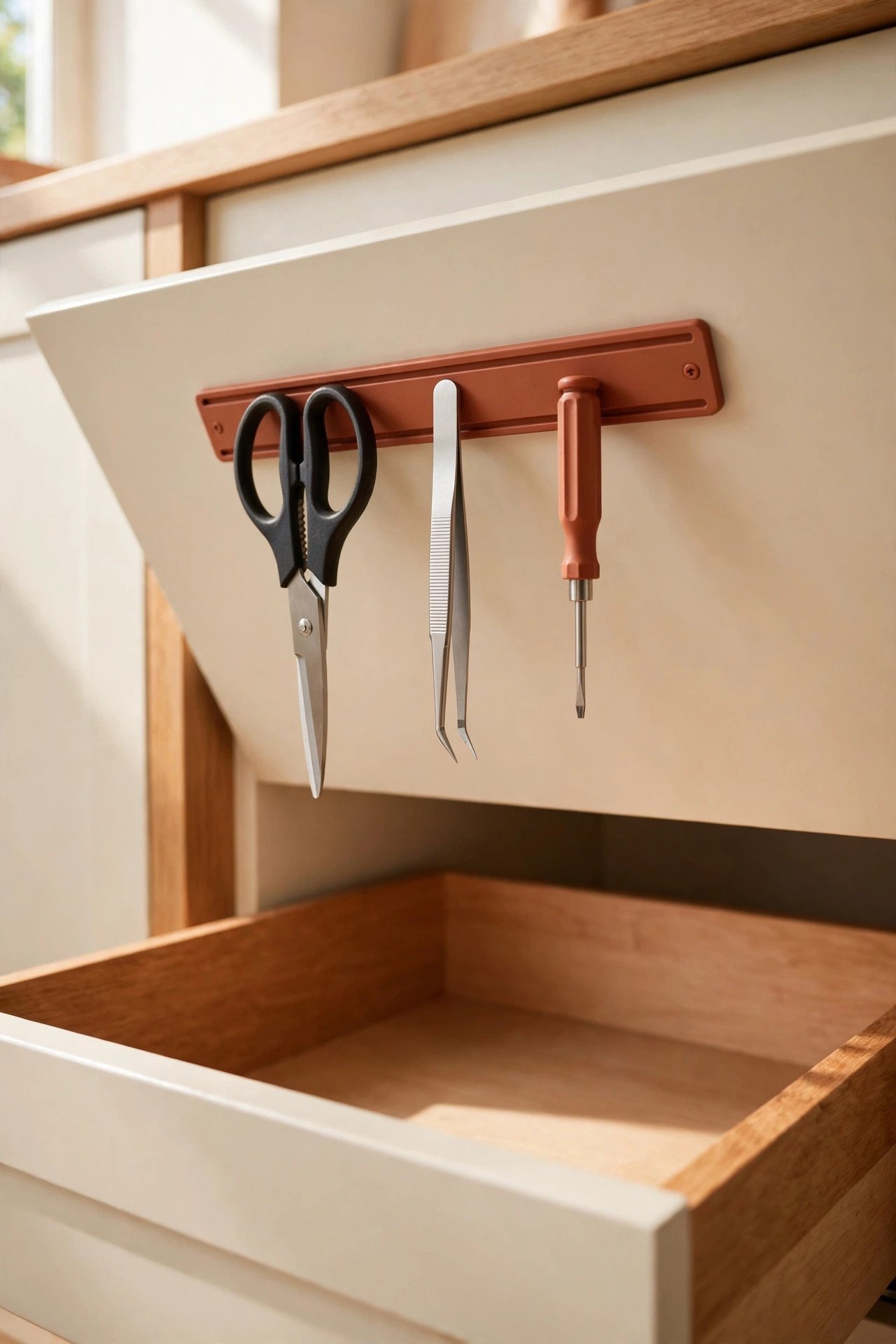
A magnetic strip mounted inside the drawer lid turns wasted space into tool storage. Scissors, tweezers, and small screwdrivers stick to the strip and stay visible. You grab what you need without rummaging through the pile below.
Peel the adhesive backing and press the strip onto a clean, dry lid surface. Keep sharp items out of reach if you have young kids. This trick works best for the metal tools you reach for every week.
4. Binder Clip to Hold Charging Cords
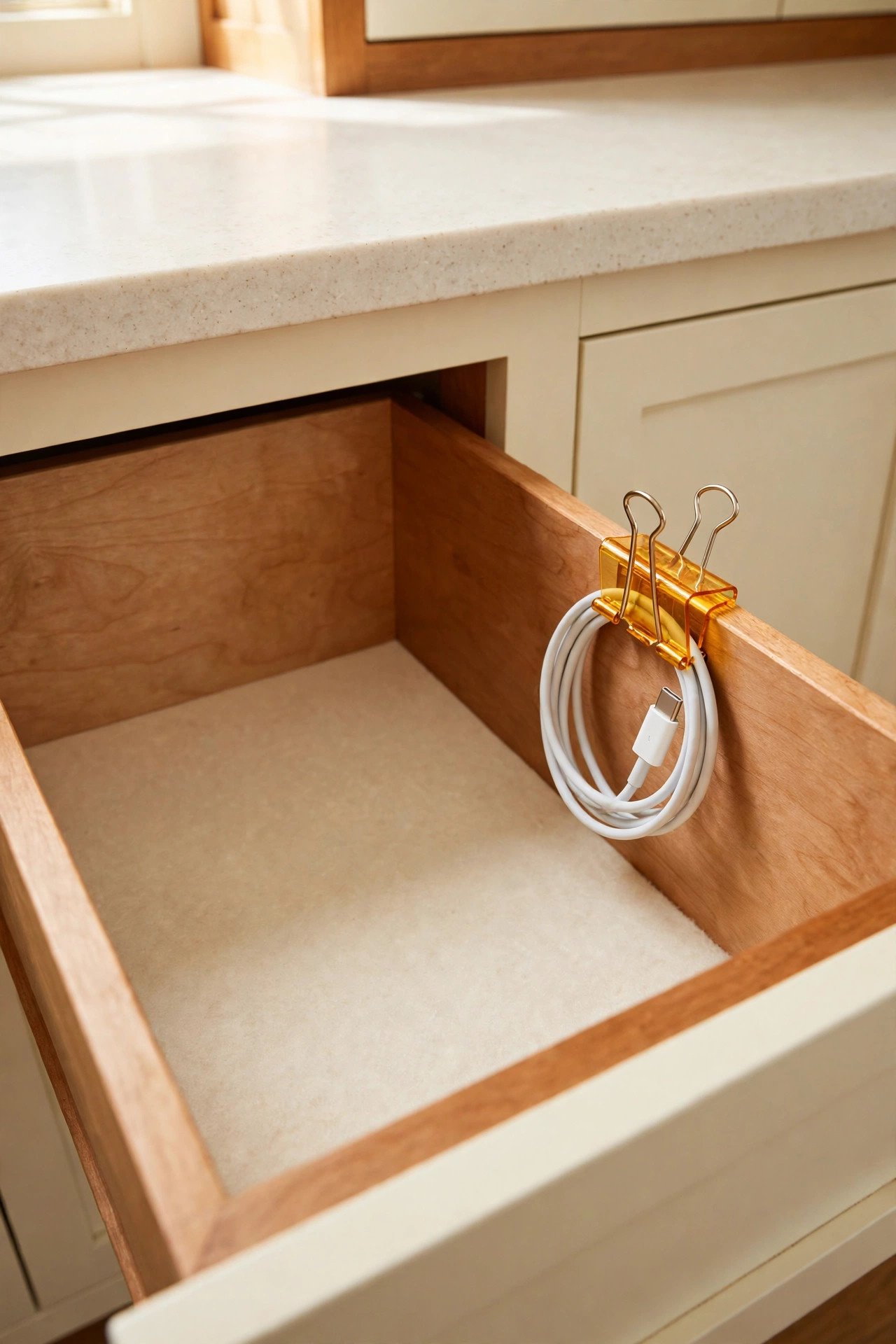
Charging cords tangle with everything in seconds. A large binder clip attached to the drawer side holds one cord neatly in place, with the plug resting against the clip. The cord stays put instead of sliding into the abyss.
Use a different colored clip for each cord type so you can spot the right one fast. Attach two or three clips along the side for multiple cords. This five-second fix ends cord tangles for good.
5. Pill Organizer for Batteries
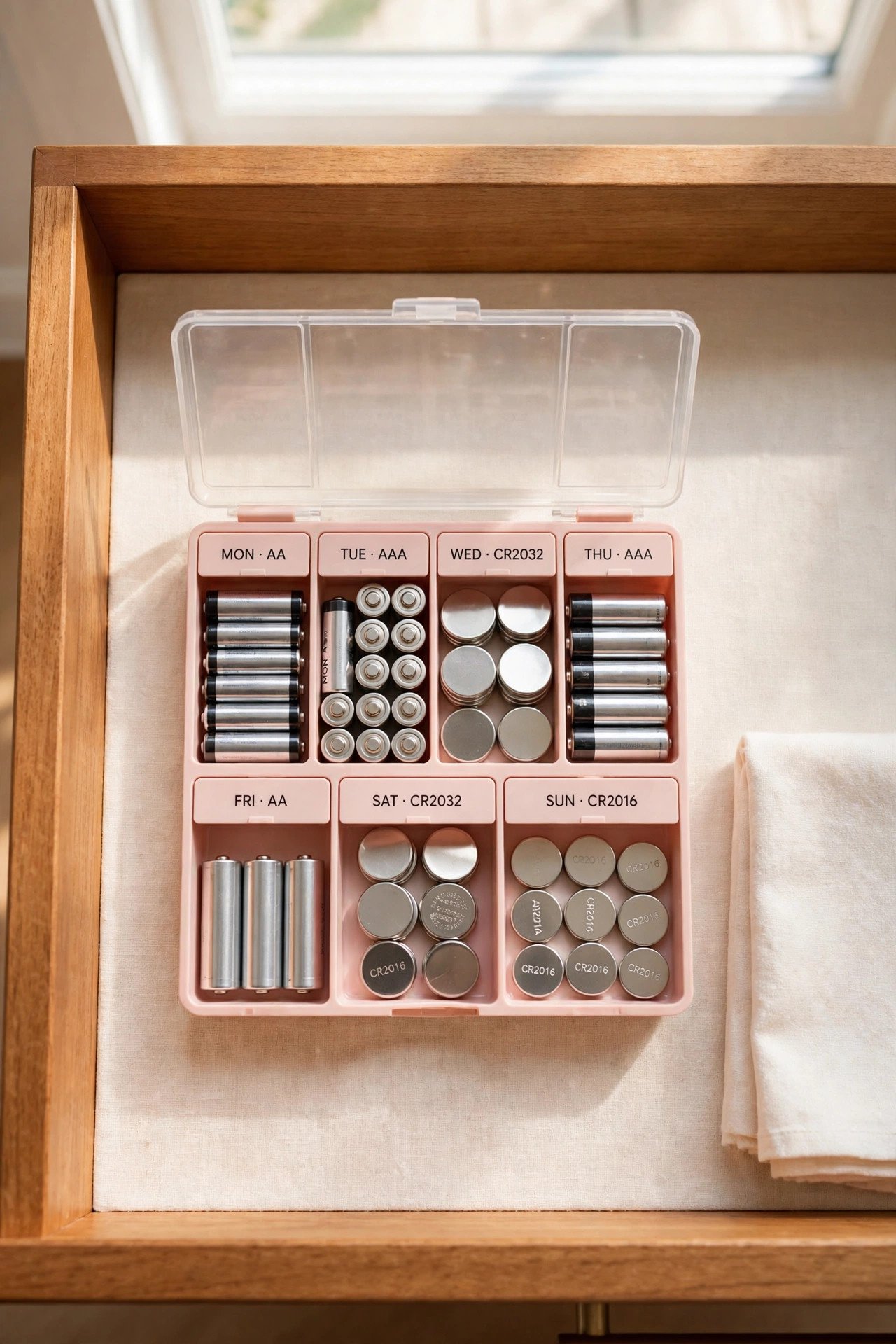
Loose batteries roll around and mix up sizes in every junk drawer. A weekly pill organizer gives each battery size its own compartment, so you always grab the right one. The clear lid lets you see your stock at a glance.
Sort by size and type, with one slot for rechargeables and one for disposables. Test batteries before storing them and recycle the dead ones. The same small-compartment logic that tidies a makeup drawer works perfectly for batteries.
6. Takeout Menu Binder
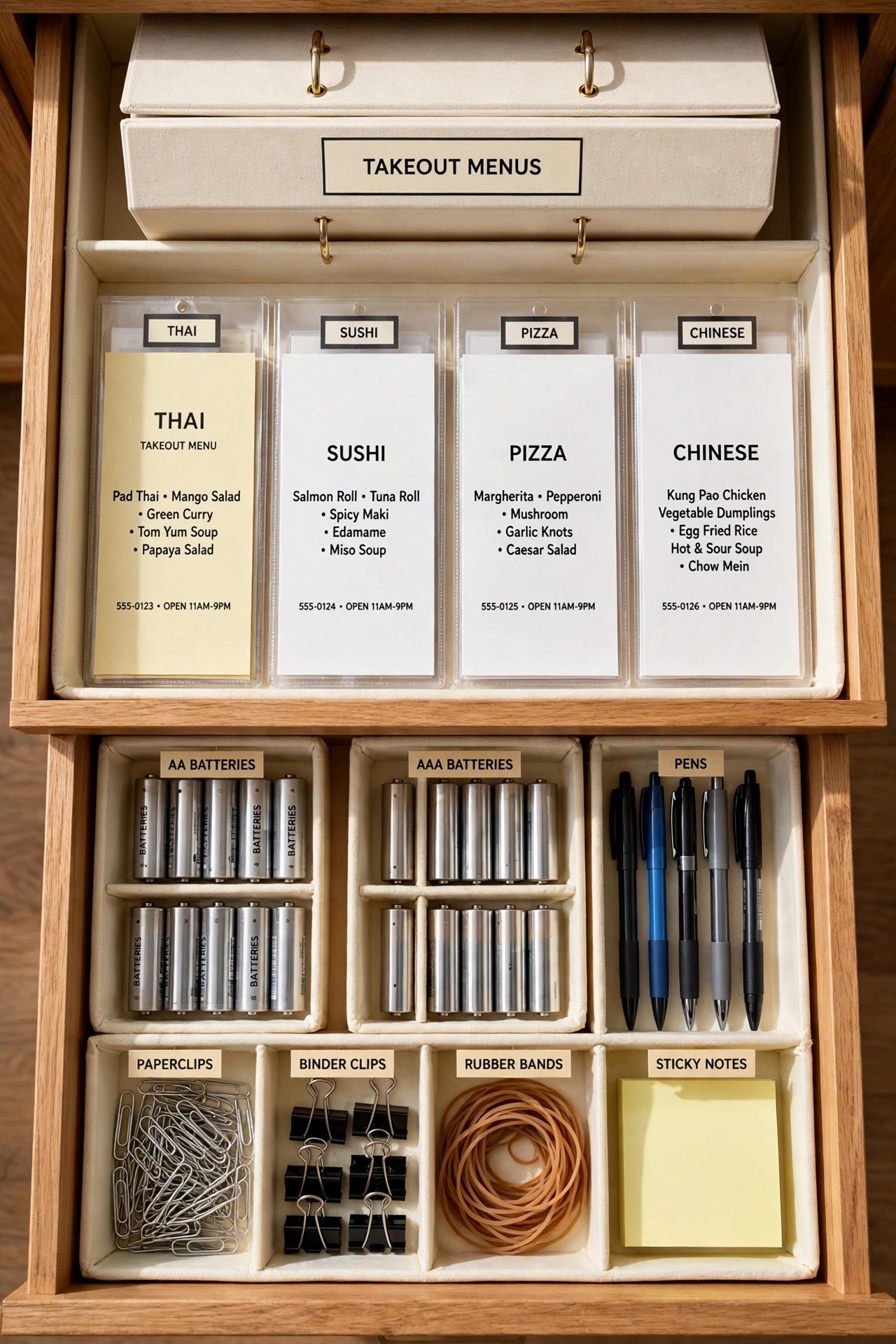
Takeout menus pile up into a crumpled, torn mess in the drawer. A slim binder with sheet protectors keeps each menu flat and sorted by cuisine. You find the pizza place in seconds instead of unfolding ten menus.
Keep only your favorites and recycle the rest. If you prefer digital, scan the menus with your phone and save them in a folder. Either way, the menus leave the drawer for good.
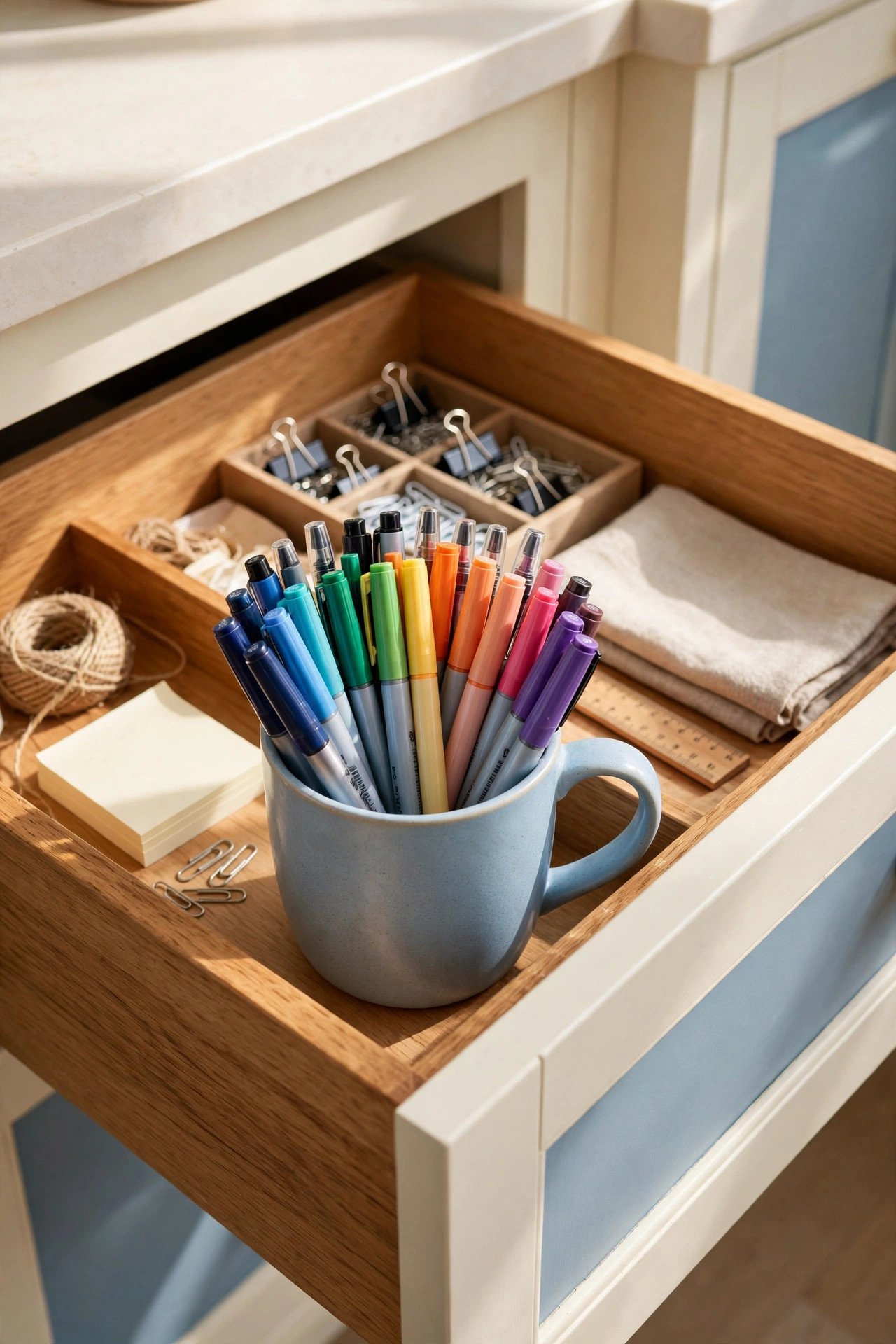
7. Vertical Cup for Pens and Markers
Pens roll, hide, and dry out when they lie loose in a drawer. A short cup or jar holds them upright and instantly reachable. You can see at a glance which pens work and which ones need tossing.
Sort by type or color if you own many, or keep it simple with one cup for all. Place the cup at the front of the drawer so you never have to move other items. Test each pen as you load the cup and throw out the dead ones.
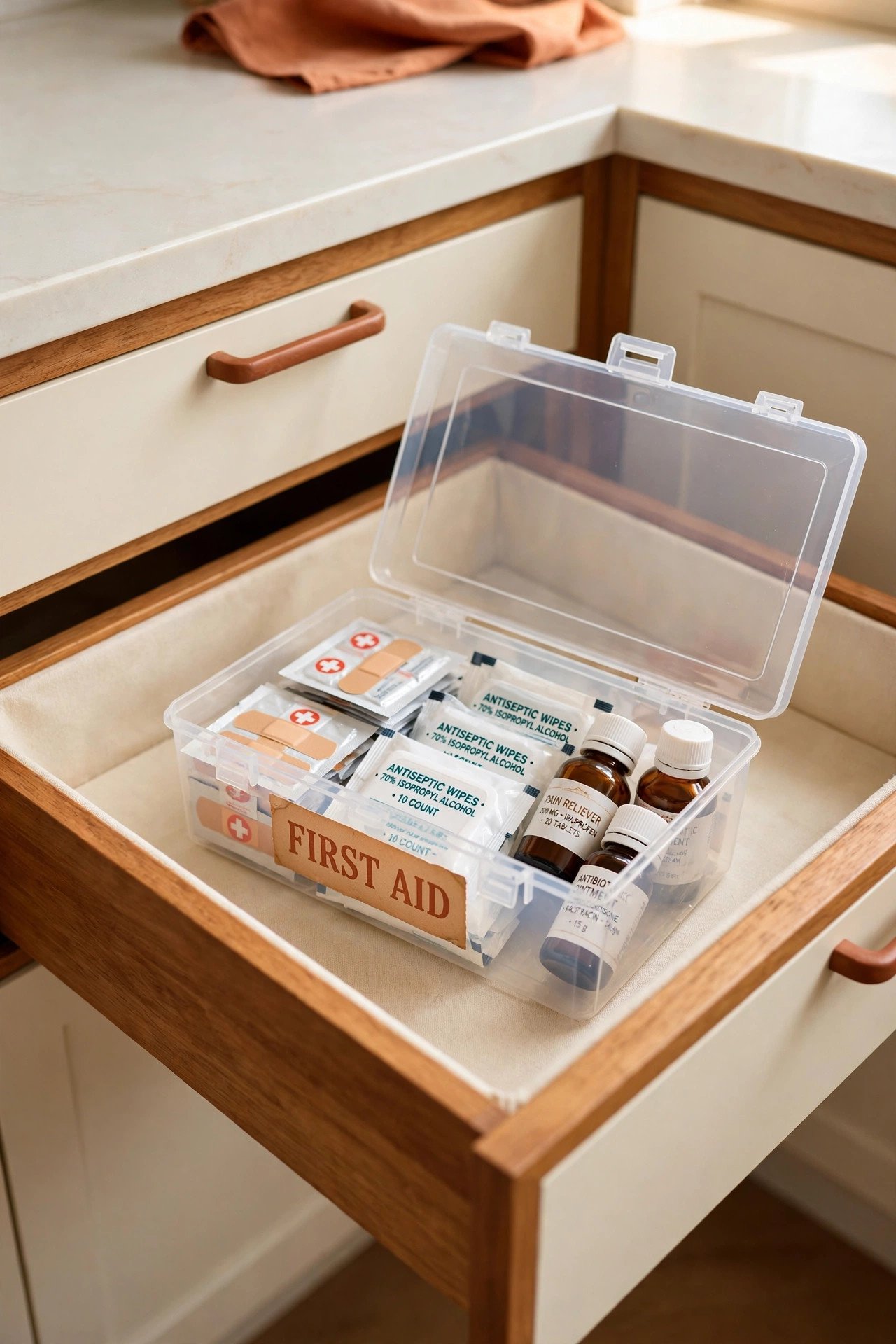
8. Clear Box for First-Aid Supplies
Bandages and pain relievers sink to the bottom of the drawer right when you need them. A small clear box with a snap lid keeps first-aid items together and visible. You grab what you need in an emergency without digging.
Stock the box with bandages, antiseptic wipes, and basic pain relievers, and keep it minimal. Store overflow first-aid supplies with your bathroom storage under the sink instead of cramming them in. Check the box every few months and replace expired items.
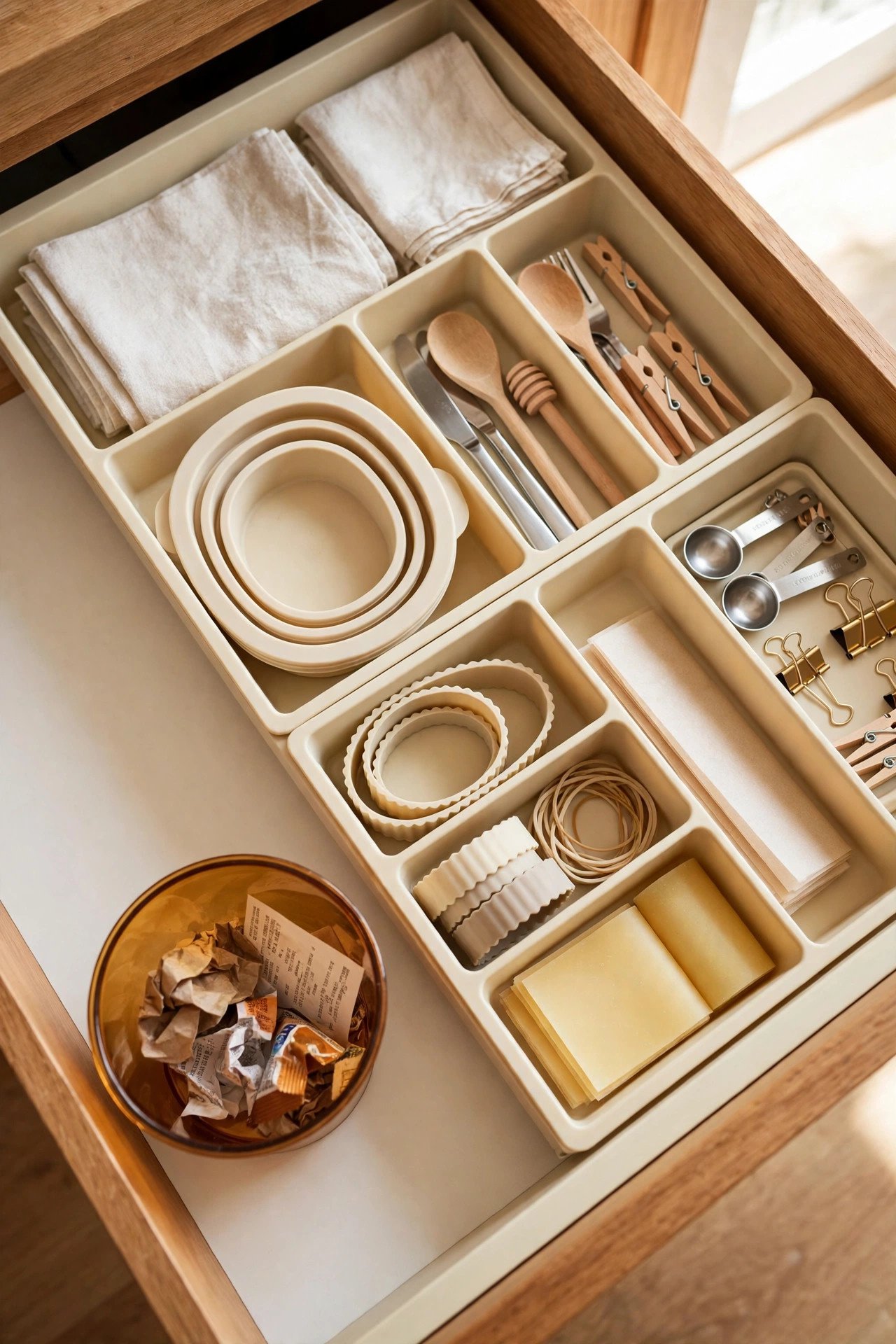
9. Mini Trash Bin for Wrappers and Receipts
Wrappers and receipts drift into the drawer and never leave. A tiny bin or a clip-on bag in one corner catches the junk before it spreads. Empty it once a week and the drawer stays clean with almost no effort.
A small silicone cup or a repurposed container works as the bin. Set a weekly reminder, perhaps on trash day, so the habit sticks. This small catcher prevents the slow creep of clutter.
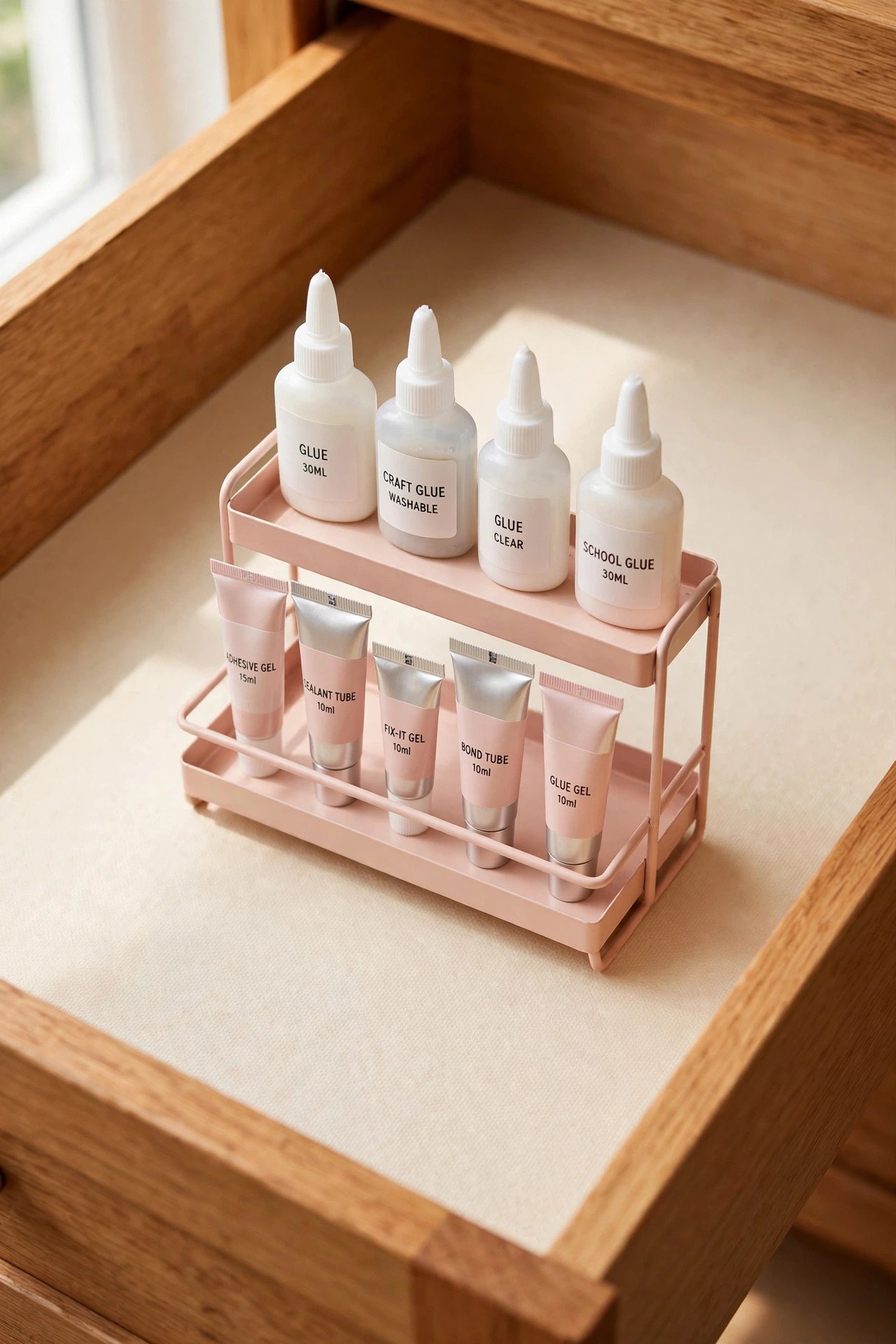
10. Spice Rack for Small Bottles and Tubes
Small bottles and tubes topple over and leak in a junk drawer. A mini spice rack or tiered shelf holds them upright and easy to grab. Glue bottles go in the back row and shorter tubes sit in front.
This borrows the same rack trick used in spice drawer organization, where every small bottle stands visible. Secure the rack with non-slip liner so it does not slide. No more sticky leaks from tipped bottles.
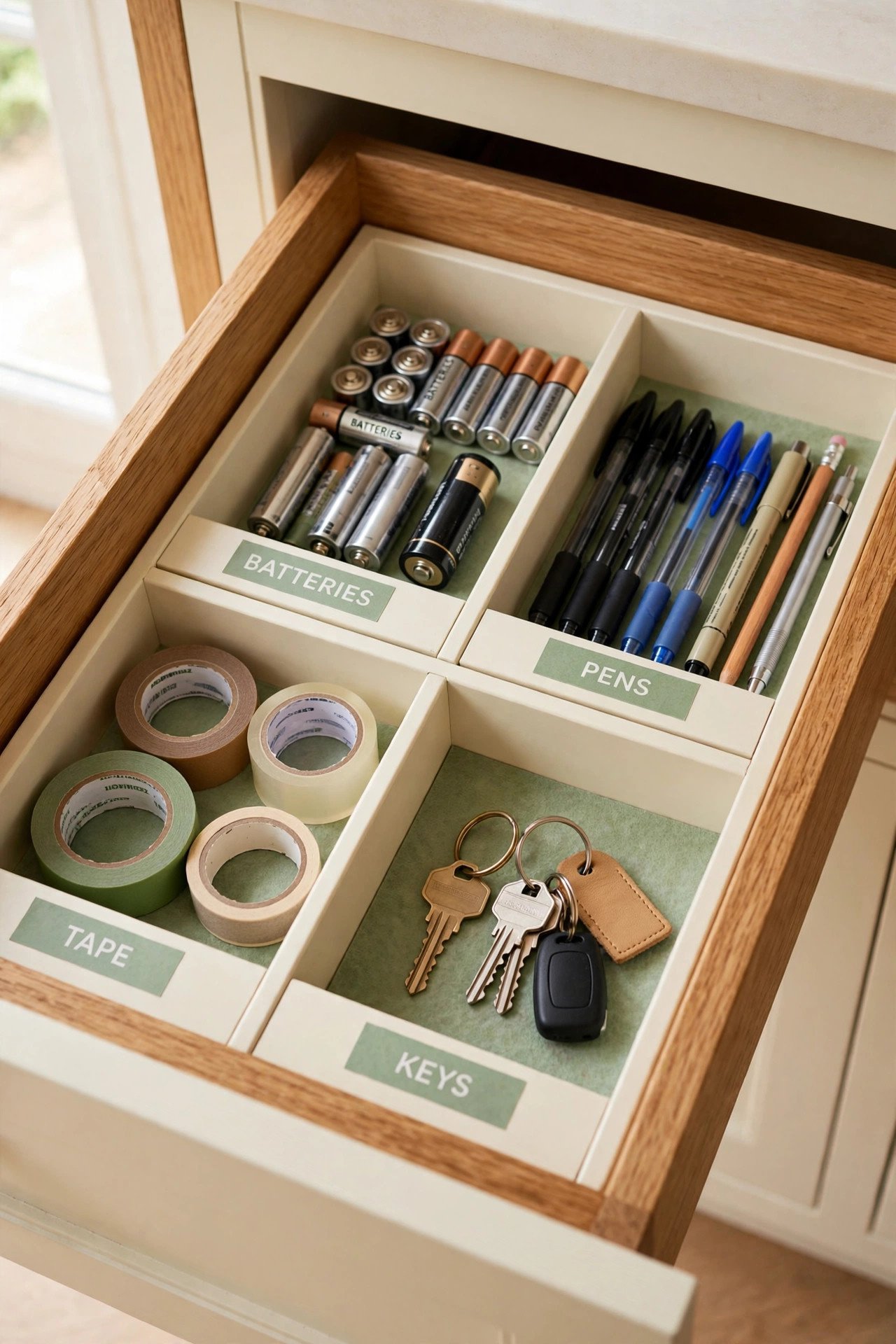
11. Label Maker for Every Compartment
Labels turn a tidy drawer into a system that lasts. When every compartment has a name, everyone in the house puts things back in the right spot. The system survives busy weeks that would wreck an unlabeled drawer.
A label maker gives clean, readable tags, but masking tape and a marker work too. Label each section, not just the drawer front, so the zones stay clear. Update labels as the contents change.
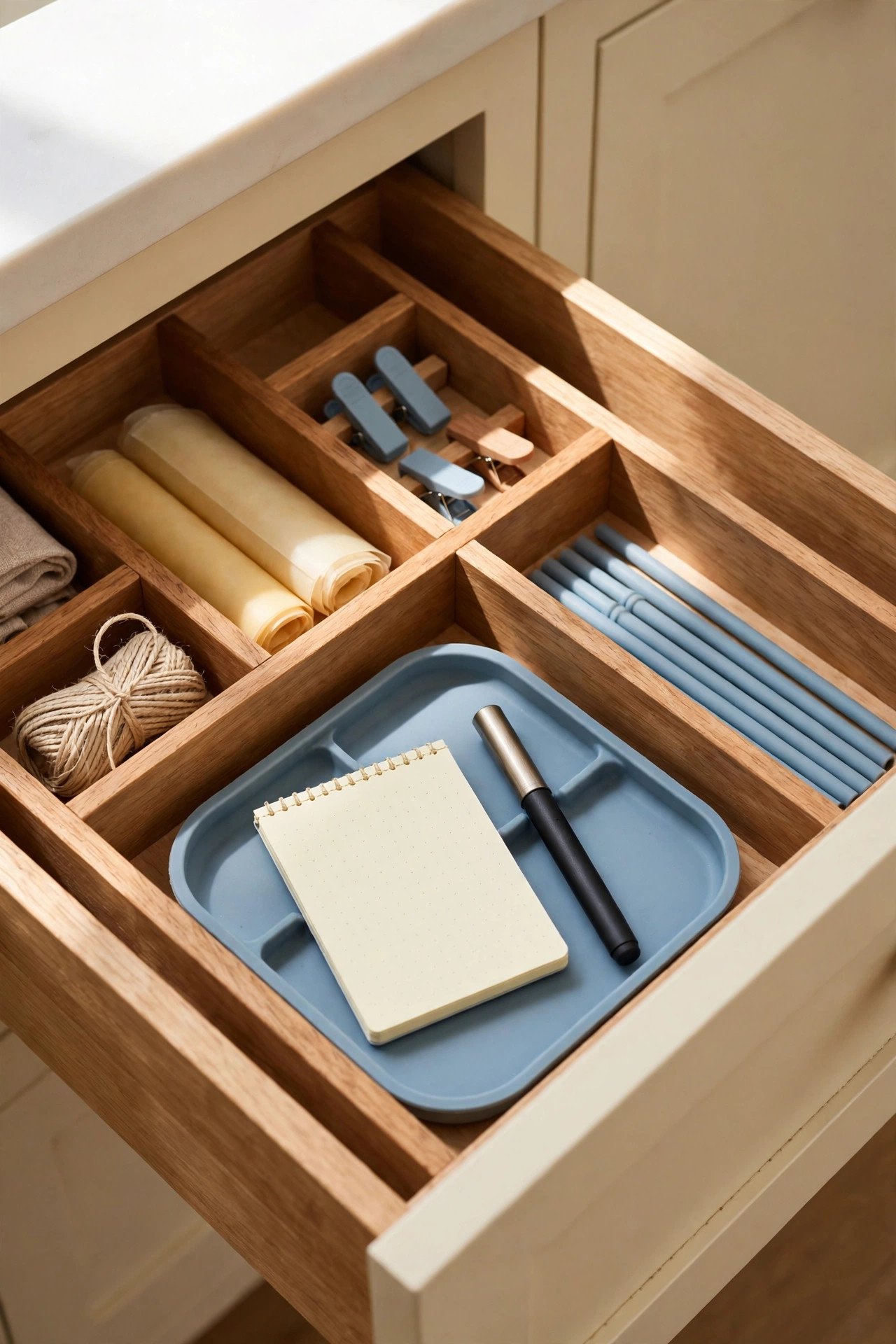
12. Small Notebook and Pen for Quick Lists
A junk drawer collects loose sticky notes and dead pens. Replace them with one small notebook and one reliable pen in a dedicated corner. You can jot grocery items and reminders without hunting for supplies.
Choose a notepad that fits the drawer, such as a 3 by 5 inch pad with a stiff back. Keep only one pen and replace it the moment it runs out. This tiny station stops paper scraps from spreading.
13. Monthly Purge to Reset the Drawer
Even the best system drifts back toward chaos without maintenance. Once a month, empty the drawer completely, toss the trash, and wipe it down. Return each item to its zone and adjust anything that has stopped working.
Toss dried-out pens, expired coupons, and keys that match no lock without guilt. Notice which zones overflow and resize them to fit reality. This fifteen-minute reset keeps the drawer working all year.
Conclusion
A junk drawer earns its name when it has no rules. Give it zones, labels, and a monthly reset, and it becomes one of the most useful drawers in your kitchen. Start with the two ideas that fix your biggest annoyance.
Small items cause the most daily friction when they have no home. Fix the drawer once, and you will feel the difference every single day.
Kitchen Junk Drawer Organization FAQs
How do you organize a junk drawer without buying anything?
Repurpose ice cube trays, small boxes, and binder clips as dividers and holders. Sort everything into zones and label them with tape and a marker.
What should you keep in a kitchen junk drawer?
Small daily items like pens, scissors, batteries, tape, and first-aid basics. Move anything large or rarely used to a cabinet or utility drawer.
How often should you clean out a junk drawer?
Do a quick purge once a month. Empty it, toss trash and dead pens, wipe it down, and return items to their zones.
How do you stop a junk drawer from getting messy again?
Label every compartment and give each item a set zone. A monthly reset and putting things back after use keeps the system working.
What is the best way to organize small items like paper clips?
Use ice cube trays or a pill organizer with one compartment per item type. The tiny sections keep small bits separated and visible.

Hi, I’m Emily! I turn messy corners into cozy, organized spots. DreamNestDecor is where I share simple, practical home ideas — decor, organization, and small-space solutions that work in real life, not just in photos. Every idea here is carefully researched before it’s shared.