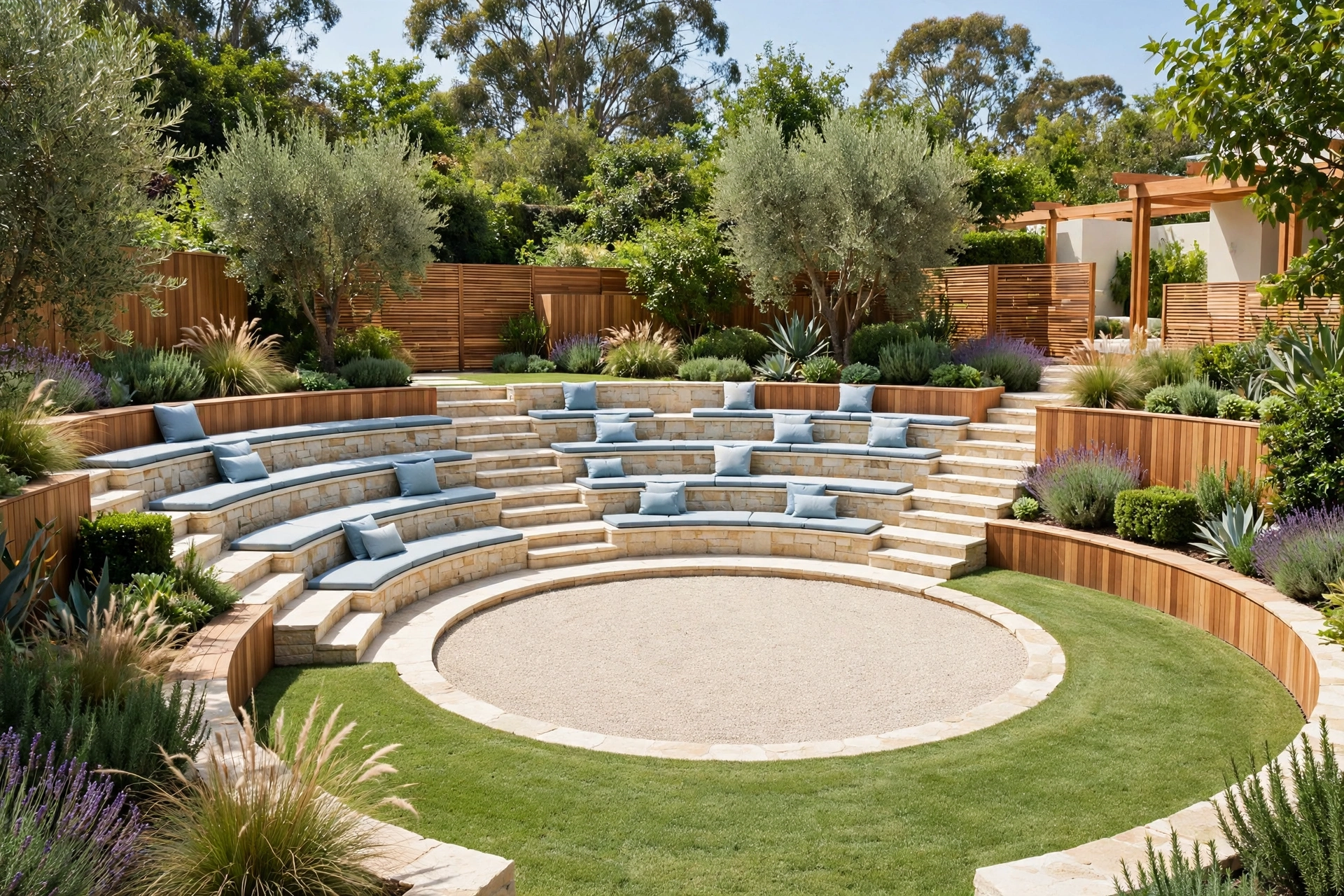
Picture this: it is a warm Saturday evening, friends and family settle onto wide stone steps in your backyard, and a small stage at the center holds a guitar, a storyteller, or a birthday speech. Nobody is dragging chairs across the lawn or hunting for a flat spot to sit. The seats are already there, built right into the yard, waiting for the next gathering.
A backyard amphitheater turns an ordinary yard into a place built for togetherness. The tiers give everyone a clear view, the stage gives every moment a focal point, and the whole space works just as well for quiet mornings as it does for lively evenings. These 16 backyard amphitheater ideas will help you shape stone, grass, timber, and brick into an outdoor room your family will use all year long.
1. Build Curved Stone Terraces Around a Round Stage
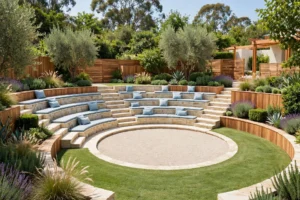
Curved stone terraces are the classic amphitheater shape, and they work beautifully in a backyard. Three or four semicircular rows of natural stone rise gently around a round gravel or stone stage, so every seat faces the center. The curve makes even a small yard feel like a real performance space, and the stone holds up to weather year after year.
Keep each terrace deep enough to sit on comfortably, with a flat top at least sixteen inches wide. A low stone edge along the front of each row keeps soil in place and gives the structure a finished look. Plant low creeping herbs between the stones and the terraces will smell wonderful every time someone brushes past them on the way to a seat.
2. Carve Grass Tiers Into a Gentle Slope
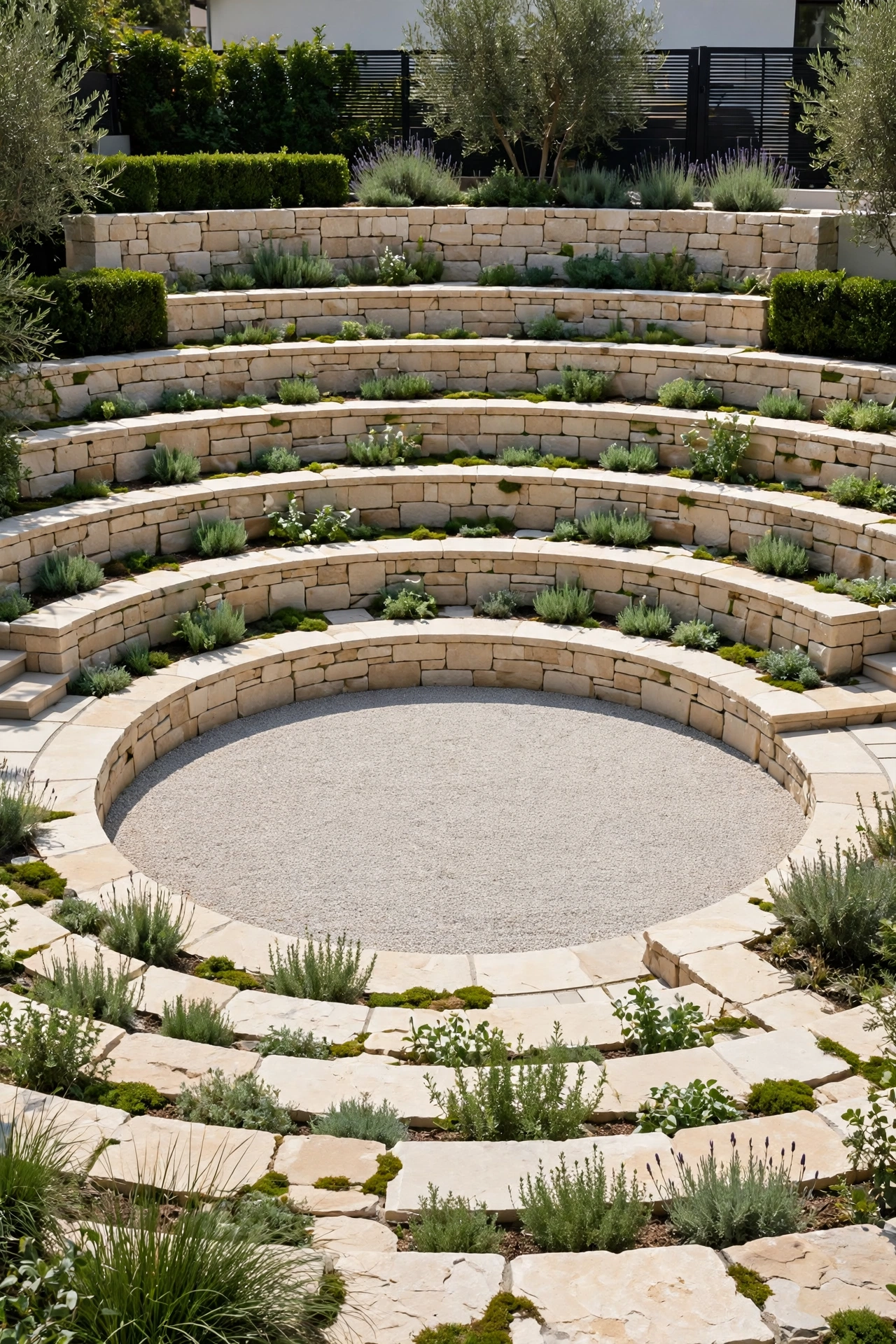
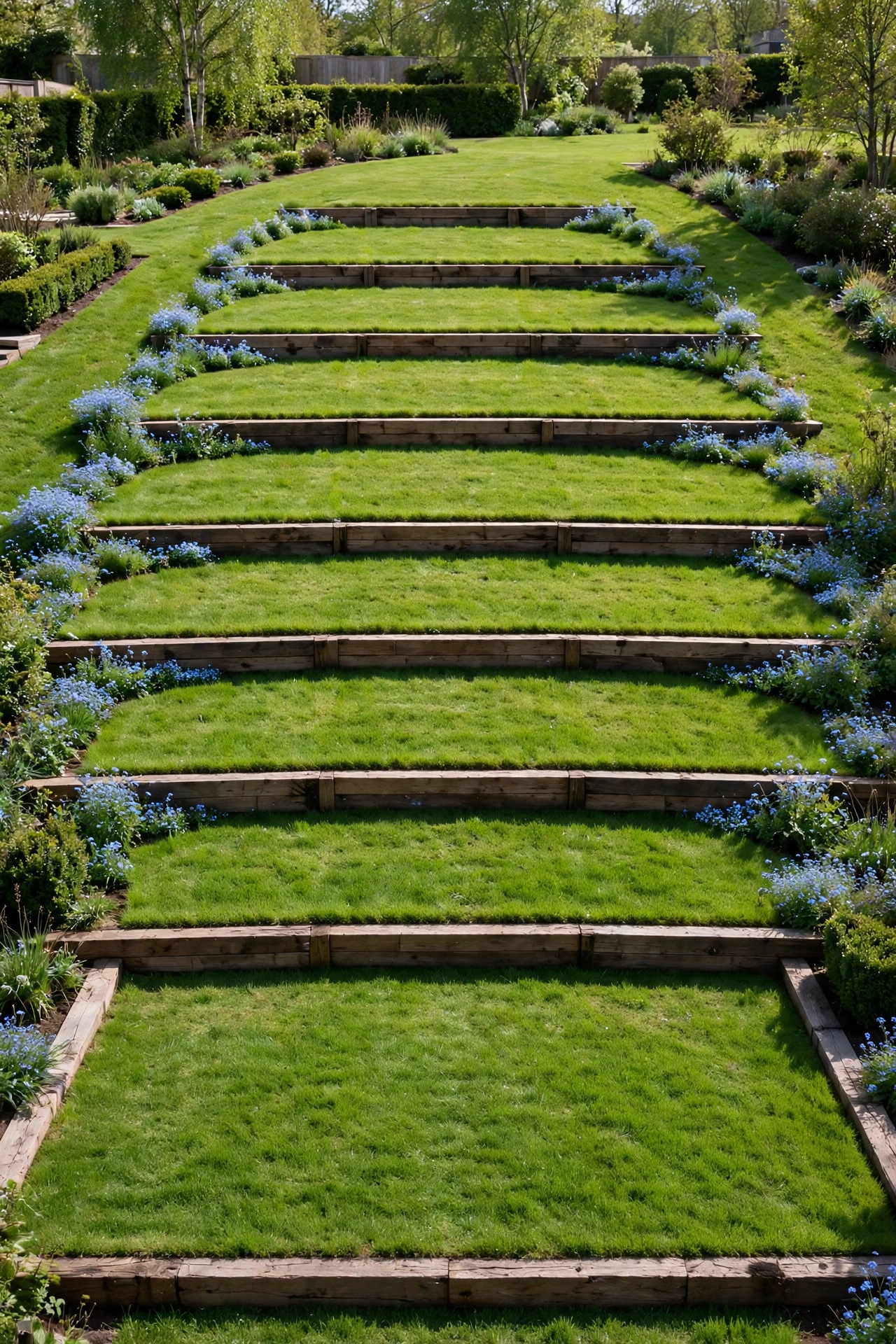
If your yard already has a gentle slope, you can shape it into grass tiers with very little building work. Cut the slope into wide, flat steps and firm the edges with soil, then let grass grow over the whole shape. The result is a soft green amphitheater that blends into the landscape and feels wonderful to sit on barefoot.
Keep the slope of each grass step gentle so the tiers stay safe and easy to mow. A simple stone or timber edge along the front of each tier stops the soil from washing downhill in heavy rain. For help shaping the slope itself, these garden steps for sloped backyards show how to work with a hillside instead of fighting it.
3. Turn Retaining Walls Into Built-In Bench Rows
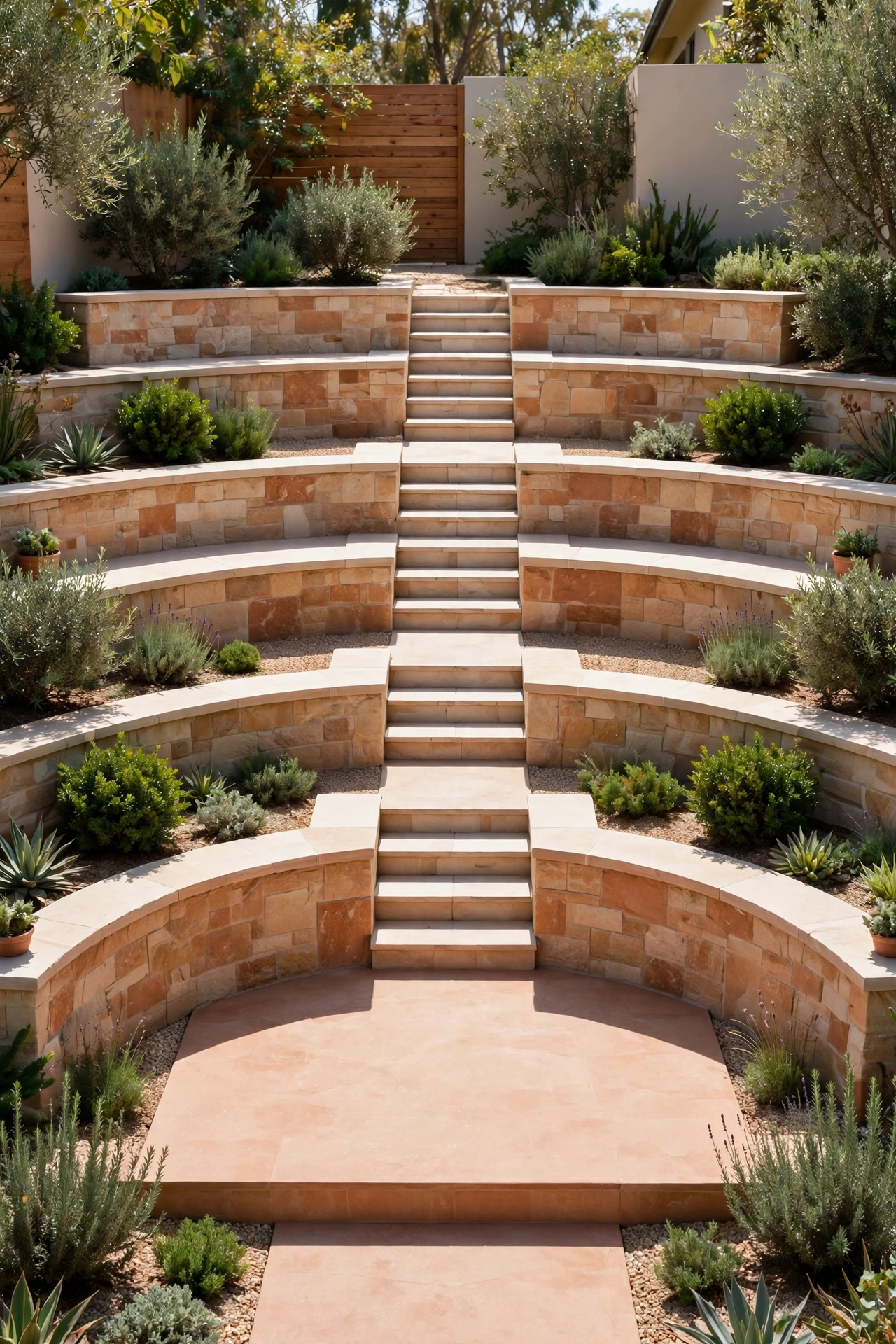
A retaining wall that holds back a slope can do double duty as amphitheater seating. Build two or three low walls across the slope, cap each one with a wide flat stone top, and the walls become long bench rows facing downhill toward a stage. The structure solves a drainage problem and creates seating in one project.
Choose cap stones with a smooth, level top so the benches feel comfortable for a long evening. Leave a gap in the middle of each wall for a step path down to the stage, and the whole amphitheater stays easy to reach. If you are planning the walls from scratch, these backyard retaining wall ideas will help you pick materials and heights that suit your yard.
4. Sink a Lawn Bowl With Ringed Seating Levels
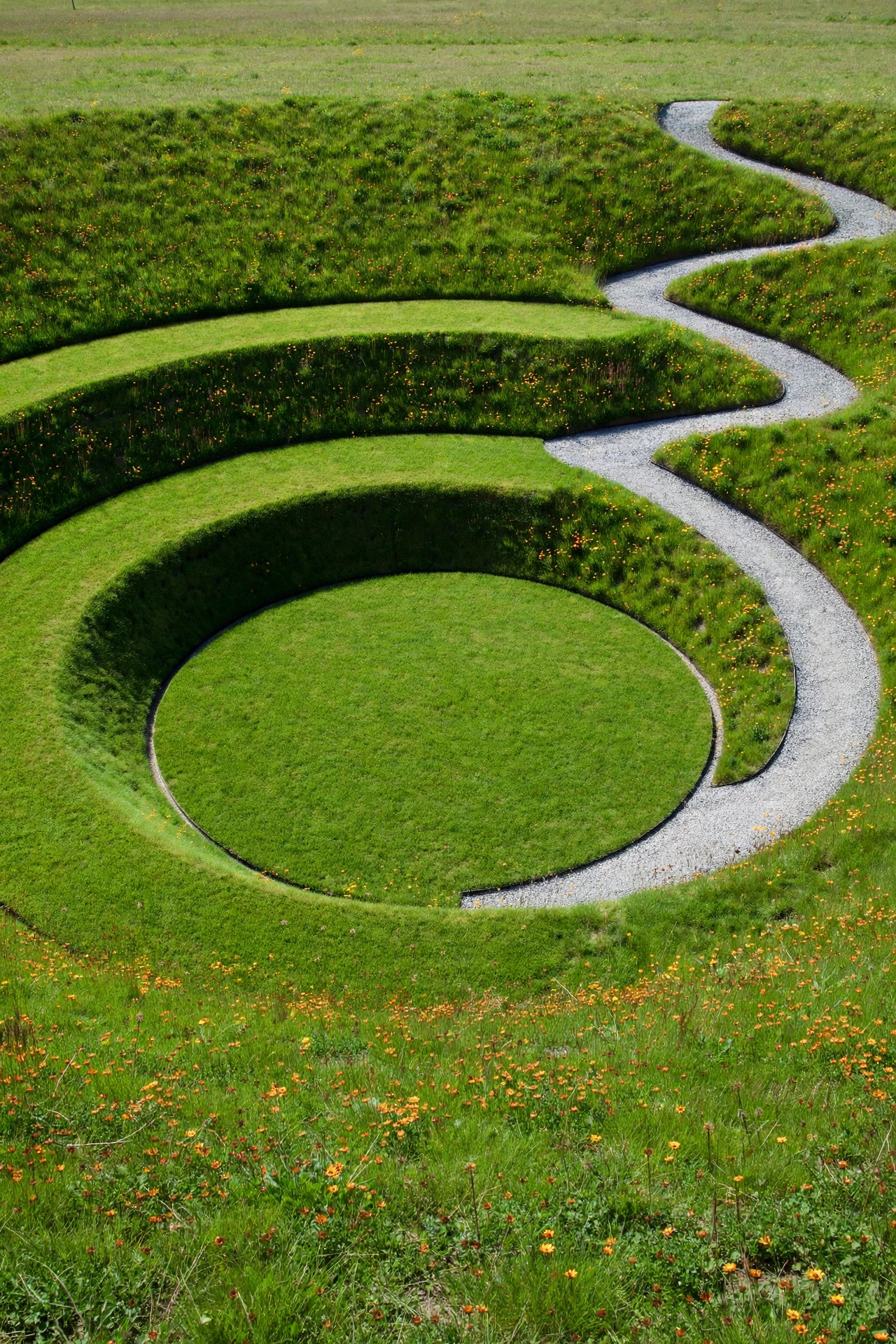
A sunken lawn bowl is an amphitheater scooped gently into flat ground. Dig a shallow dish shape, ring it with two or three levels of turf seating, and place a flat circular lawn at the bottom as the stage. The dip in the ground shelters the space from wind and makes voices carry naturally toward the seats.
Keep the bowl shallow, no deeper than three or four feet from rim to floor, so the space feels open and welcoming. A gravel path spiraling down one side gives easy access without steep steps. The lawn bowl looks like a natural dip in the garden most of the time, then comes alive as a gathering space whenever friends arrive.
5. Stack Timber Sleeper Terraces With a Wooden Stage
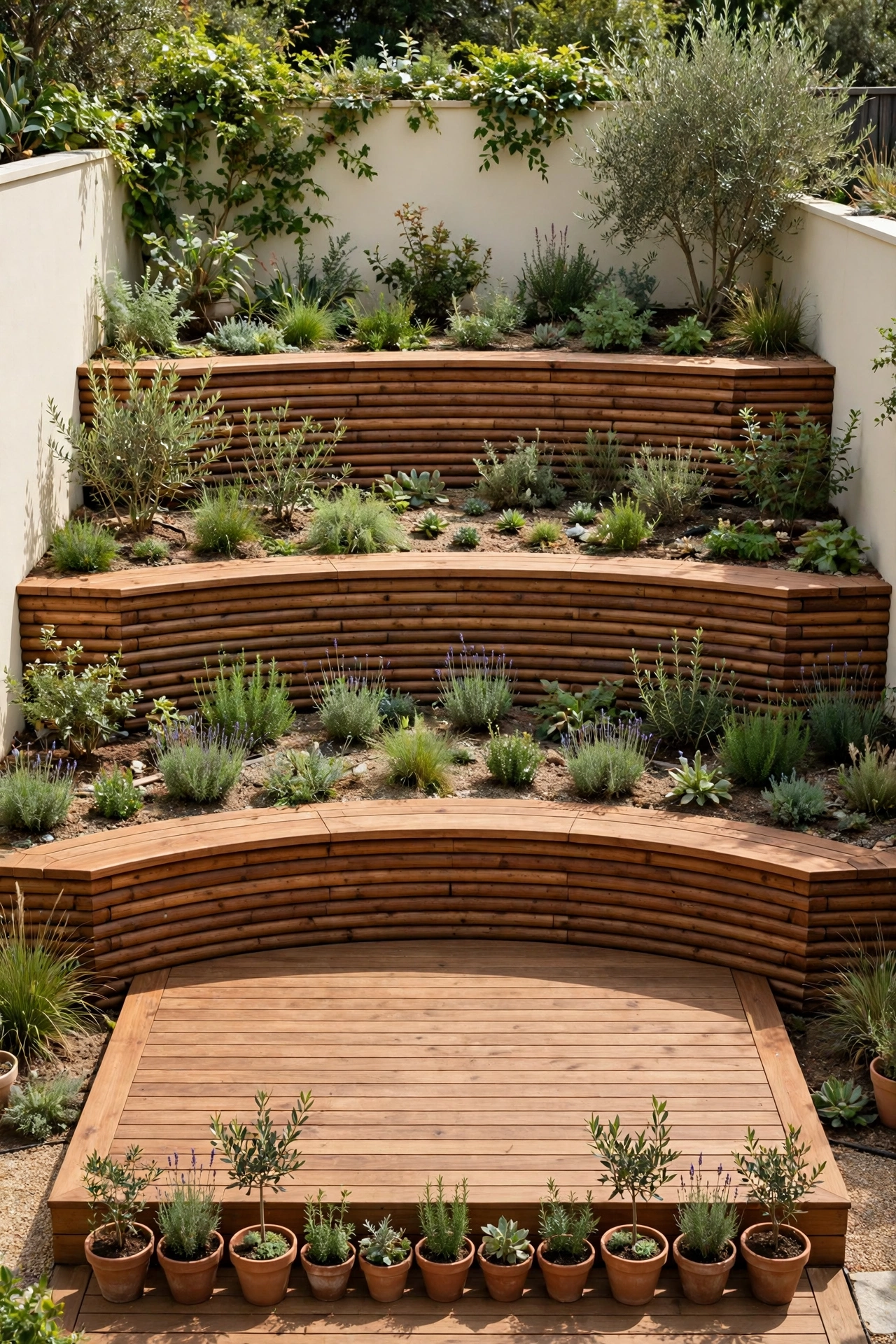
Timber sleepers give an amphitheater a warm, rustic character that suits cottage gardens and wooded yards. Stack the sleepers into three or four rising rows, fill behind each row with soil, and top the front edge of every row with a smooth timber plank for sitting. A simple wooden deck at the center serves as the stage.
Use pressure treated timber rated for ground contact so the structure lasts for years without rotting. Stagger the joints in each row like brickwork so the walls stay strong under the weight of the soil behind them. The warm wood tones pair beautifully with cream cushions and terracotta pots set along the stage edge.
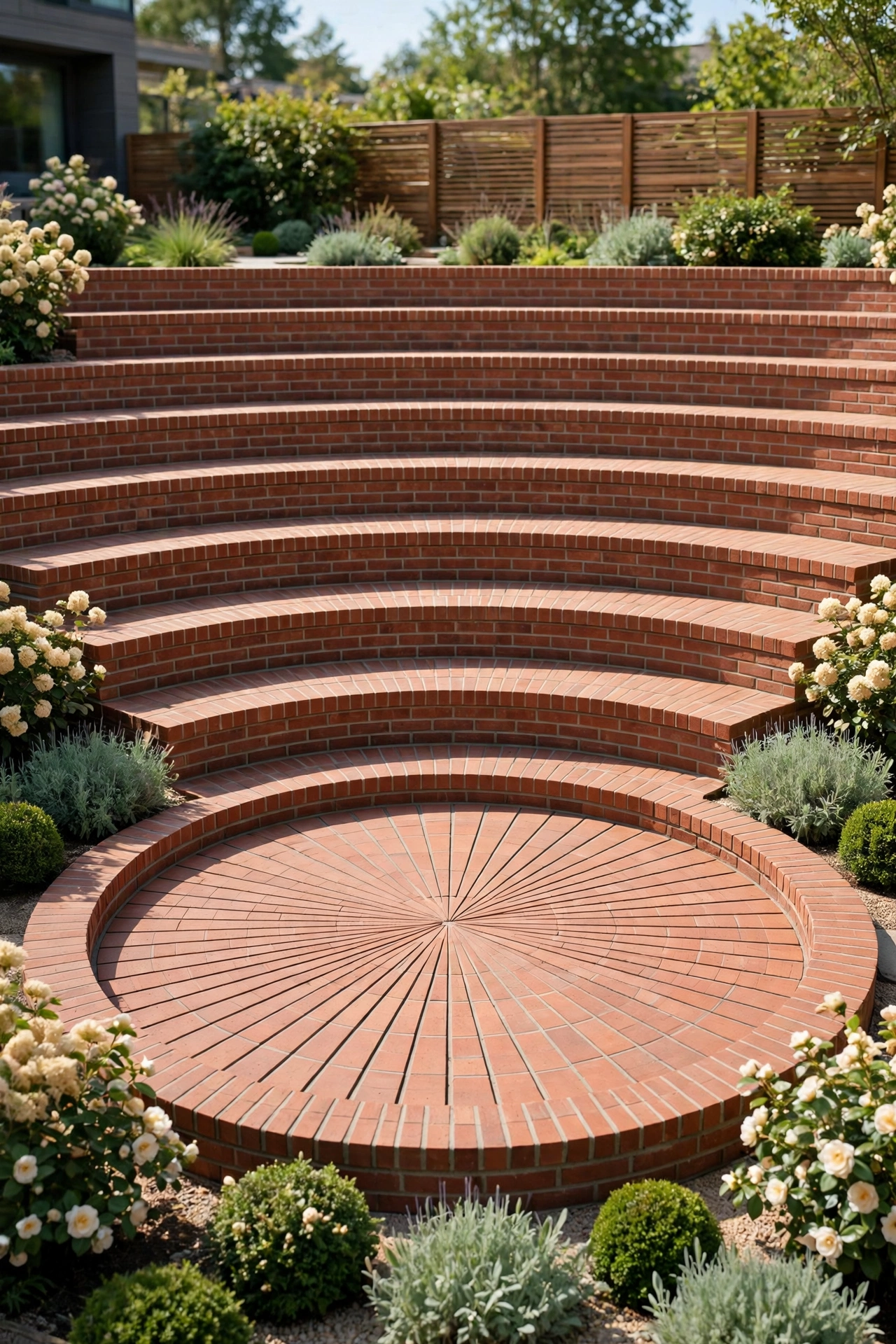
6. Lay a Brick Amphitheater With a Round Performance Floor
Brick gives an amphitheater a timeless, formal feel that suits traditional homes and walled gardens. Lay the seating rows in warm red or soft sand brick, curving them around a round brick performance floor laid in a fan or basket weave pattern. The brick warms up in the sun and holds the heat into the evening.
Set the bricks on a firm gravel base with sand joints so rain drains through instead of pooling on the seats. A low brick rim around the performance floor keeps the pattern crisp and gives the stage a clear boundary. Over time the brick will weather gently and the amphitheater will look like it has always been part of the garden.
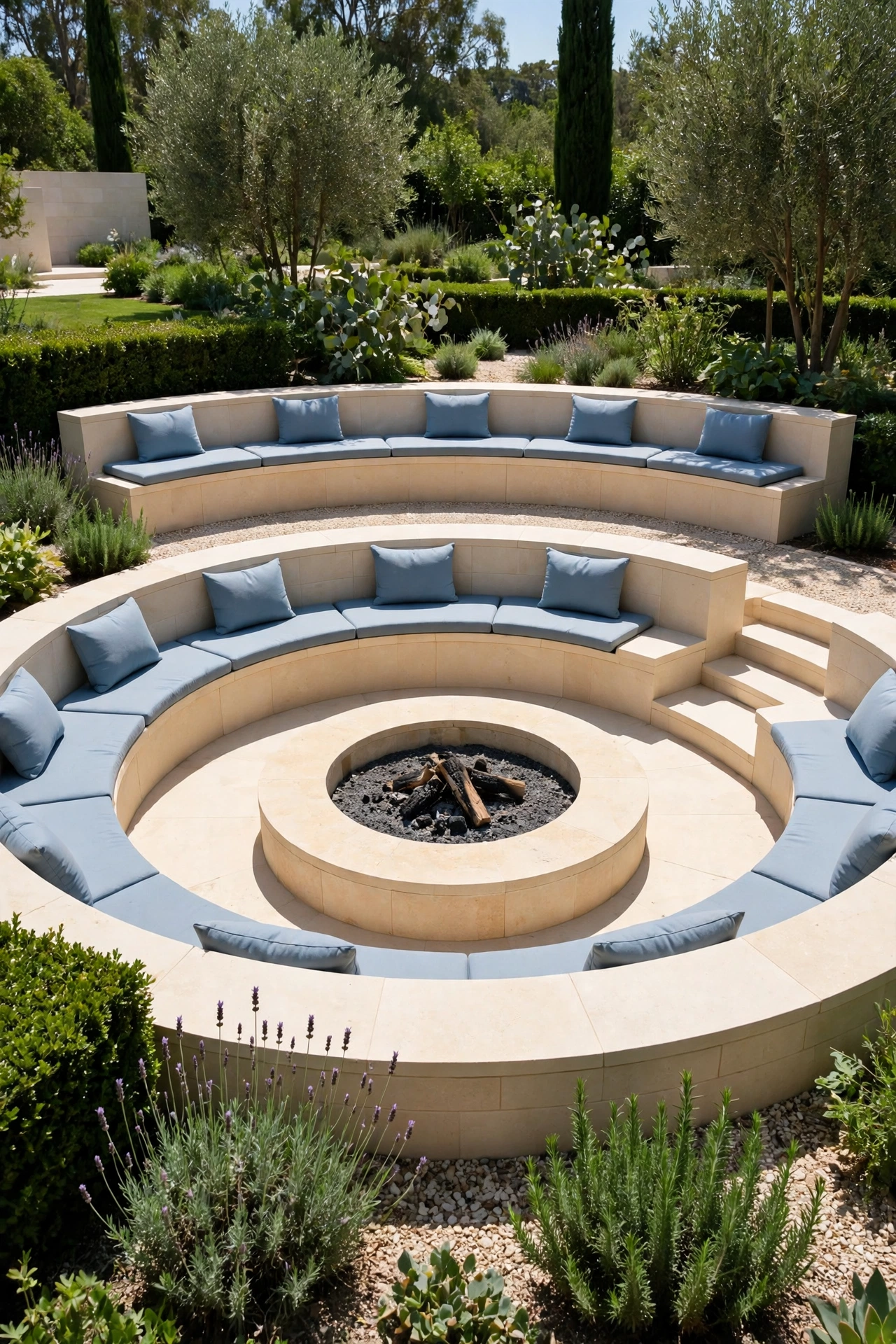
7. Ring a Fire Pit With Stone Bench Circles
A fire pit amphitheater puts a low stone fire pit at the center and rings it with circles of built stone benches. The innermost ring sits close to the warmth, while outer rings rise a step or two higher so everyone can see the flames. It is a gathering space built for stories, songs, and quiet conversation after dark.
Build the benches from the same stone as the fire pit so the whole structure reads as one piece. Keep the fire pit at least six feet across from the nearest seat front for safety, and leave a gap in each ring for easy entry. For more ways to shape the hearth itself, these outdoor fireplace ideas offer designs that pair well with ringed stone seating.
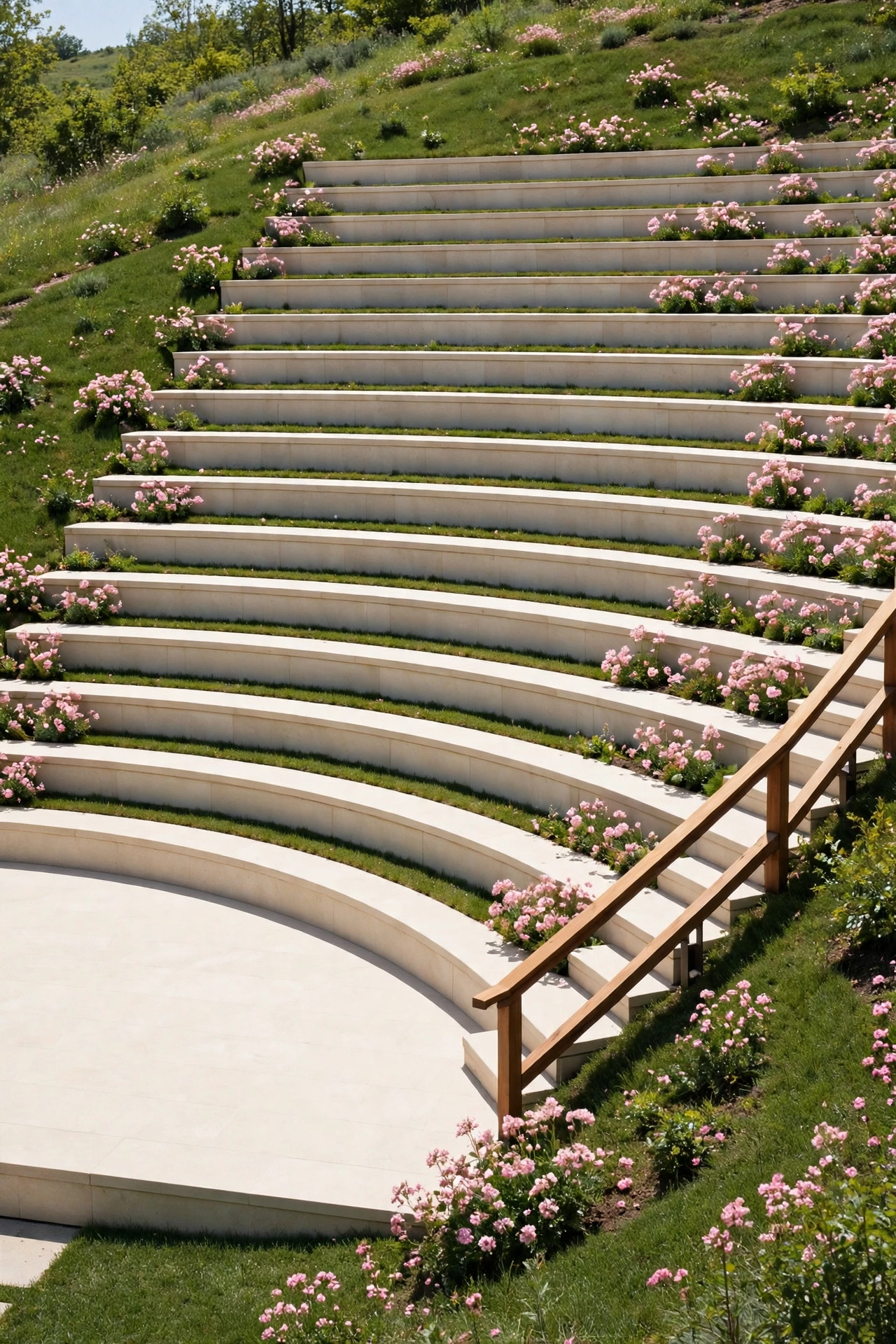
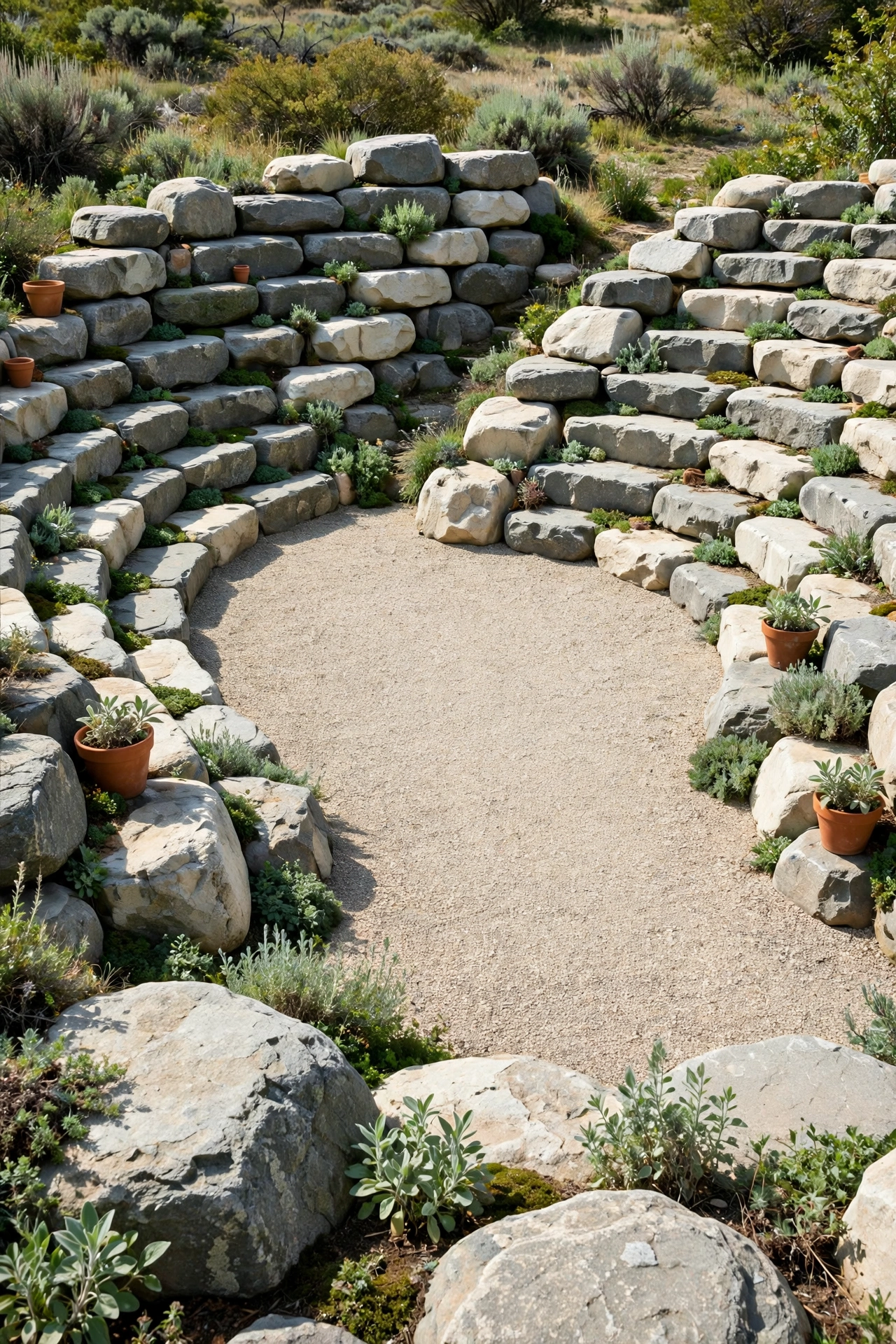
8. Shape a Hillside Into Wide Stone Steps That Double as Seats
A steep hillside can become an amphitheater with one simple move: cut wide, deep stone steps into the slope so each step is broad enough to sit on. The steps climb the hill in a gentle arc, and a flat terrace at the bottom holds the stage. Every step is both a stair and a seat, which makes the whole hillside useful.
Make each step at least twenty inches deep so sitting feels relaxed rather than perched. Use large, flat stones with a rough natural face for grip, and set them slightly tilted forward so rain runs off. A handrail of warm wood along one side helps guests climb the steps safely after sunset.
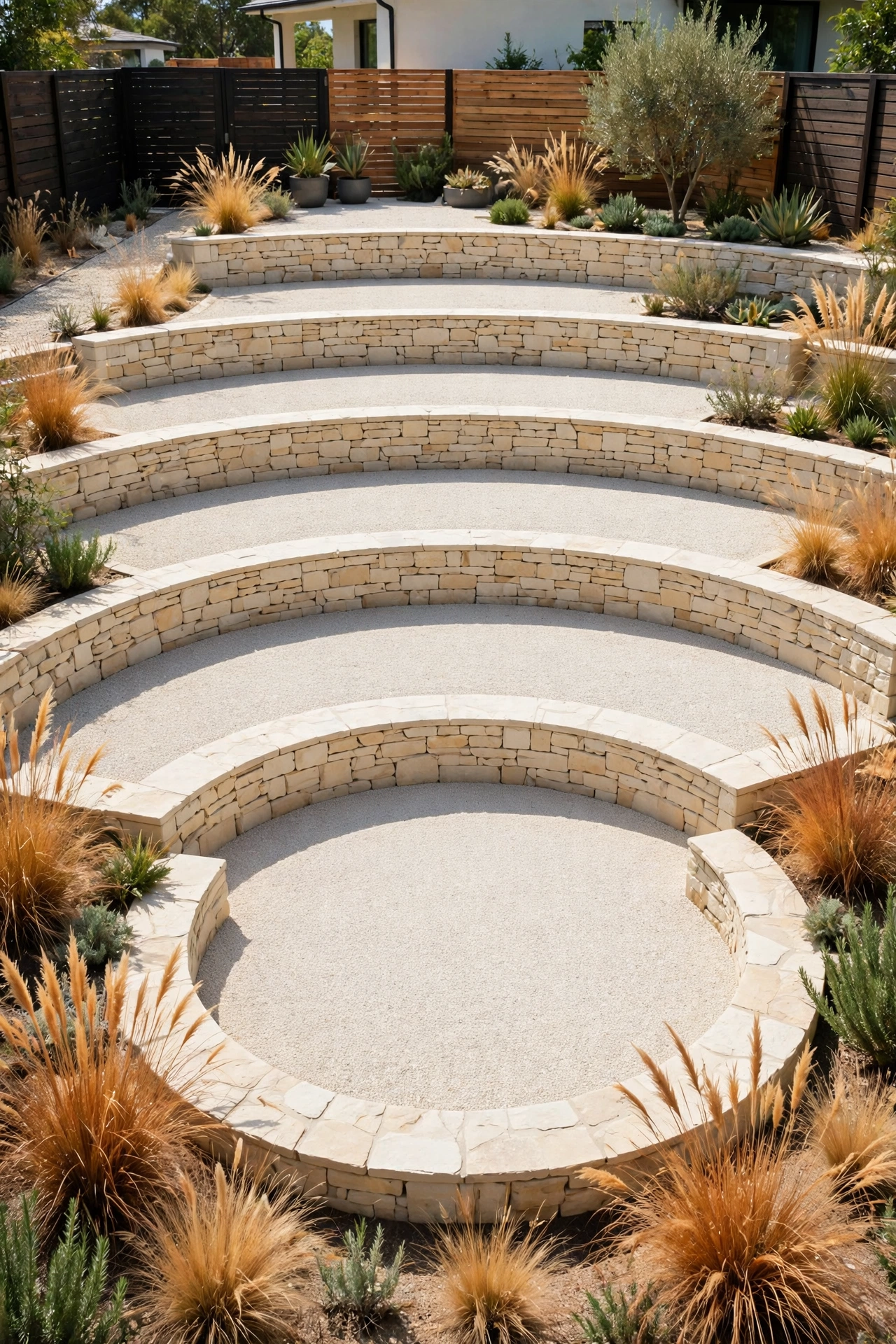
9. Set Gravel Terraces Between Low Stone Walls
Gravel terraces are a budget friendly way to build an amphitheater on flat ground. Low dry stacked stone walls hold back each level, and the flat areas between them are filled with fine gravel that drains fast and crunches pleasantly underfoot. The gravel seats stay dry after rain and need almost no maintenance.
Choose a fine, angular gravel that locks together underfoot instead of rolling loose. A timber or stone edge along the front of each terrace keeps the gravel contained and gives sitters a clear place to rest their feet. The pale gravel brightens the whole space and makes the amphitheater glow in late afternoon light.
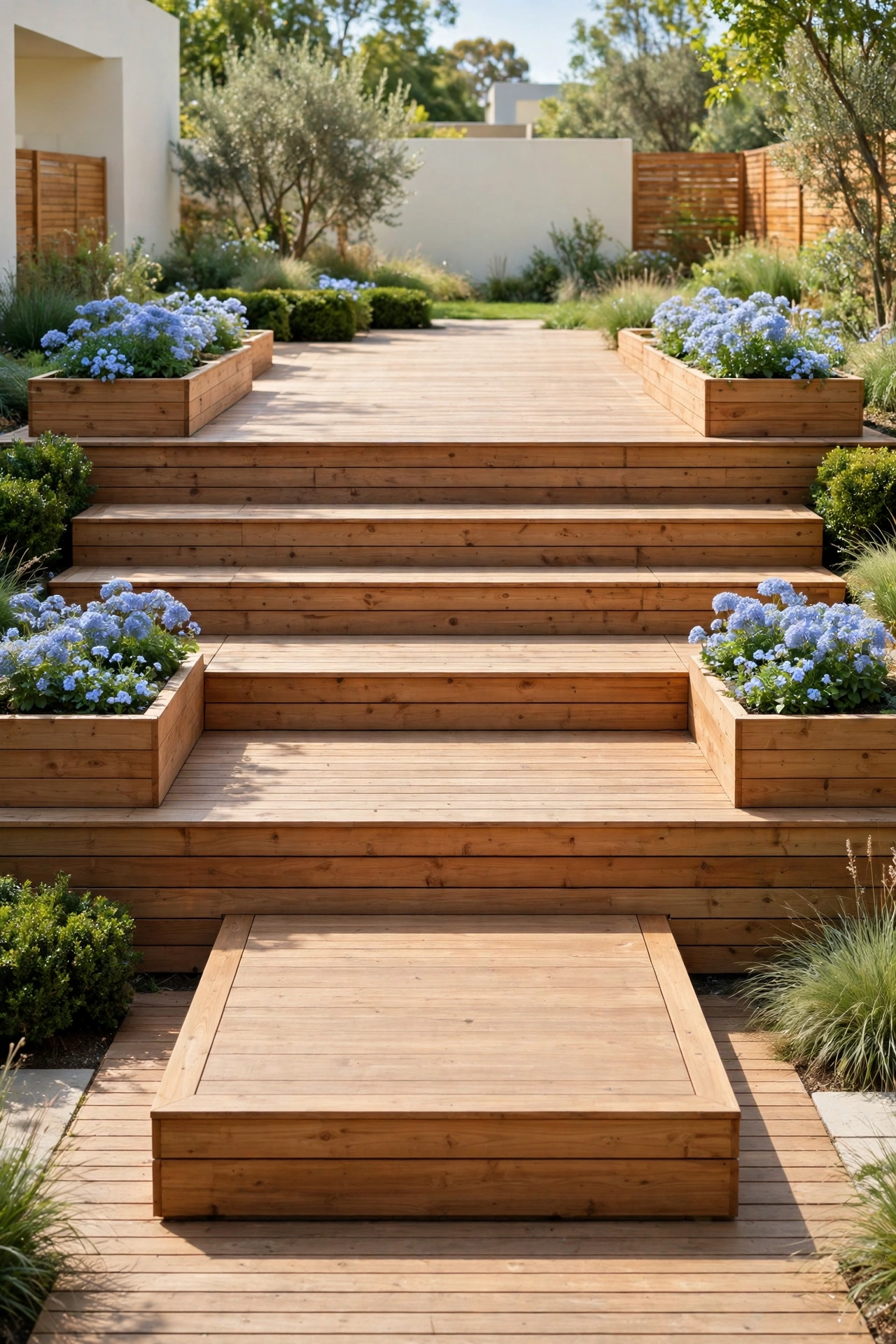
10. Build Wooden Deck Tiers With a Raised Stage
A wooden deck amphitheater brings the comfort of a porch to the middle of the yard. Build two or three deck platforms in rising tiers, each one wide enough for a row of sitters, and raise the stage platform a step above the lowest tier. The wood feels warm underfoot and the whole structure can be built over uneven ground without digging.
Use deck boards with a small gap between them for drainage, and finish the wood with an exterior oil in a warm natural tone. Built-in planters at the ends of each tier soften the edges and give the amphitheater a garden feel. The deck tiers also double as play platforms and sunning spots when no performance is planned.
11. Arrange Natural Boulders in a Seating Semicircle
Large natural boulders arranged in a semicircle make the simplest amphitheater of all, and one of the most beautiful. Set flat topped boulders in two or three rising arcs around a cleared earth or gravel stage, sinking each stone a few inches into the ground so it sits solidly. No mortar and no carpentry are needed.
Choose boulders with a naturally flat top and a comfortable sitting height, roughly eighteen inches from the ground. Space the stones with small gaps so the structure feels natural rather than regimented, and tuck low groundcover plants between them. The boulder amphitheater looks like a landscape feature first and a seating space second, which is exactly its charm.
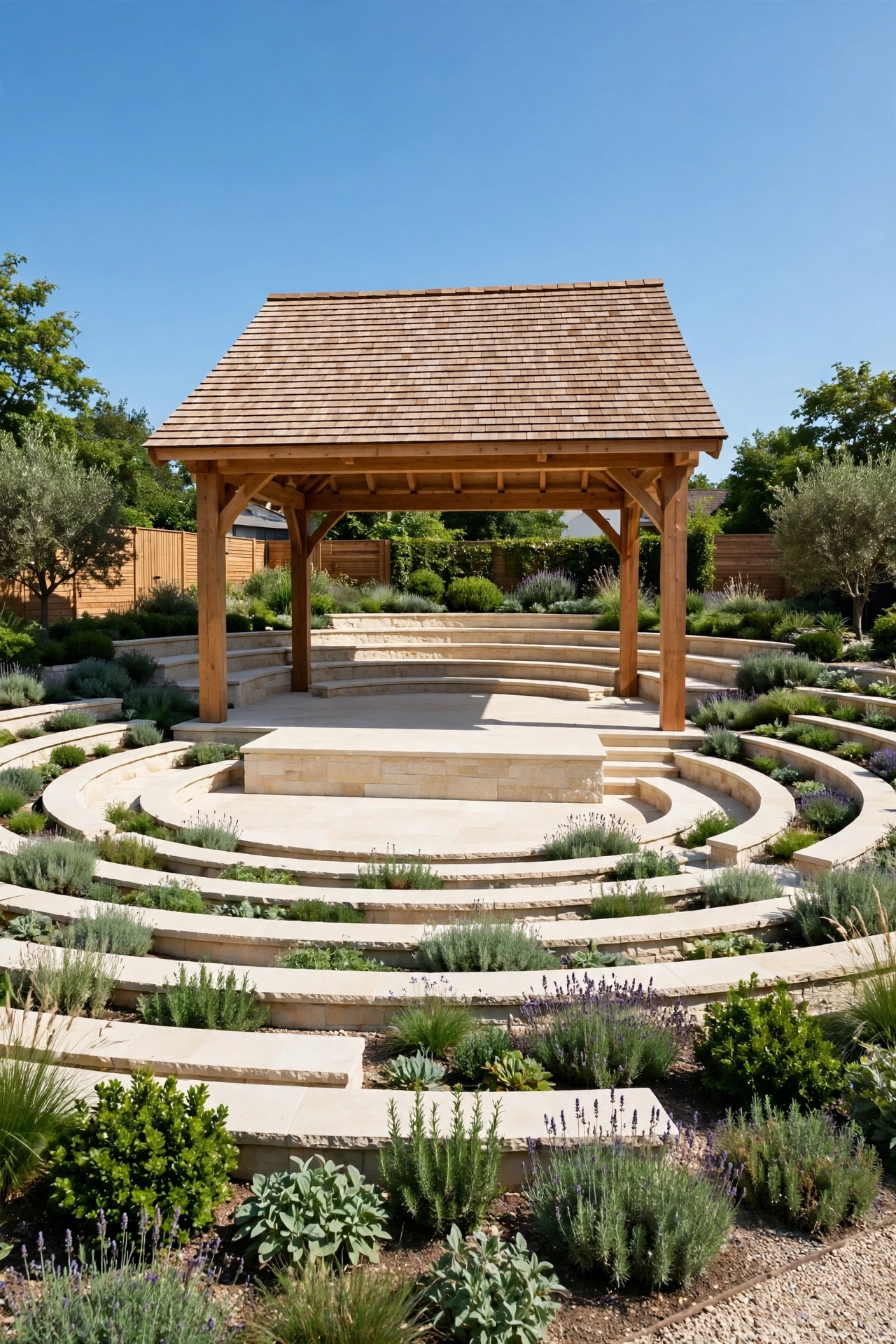
12. Cover the Stage With a Pavilion Roof
A pavilion roof over the stage turns an amphitheater into an all weather venue. Timber posts hold a simple pitched or pyramid roof above the performance area, shading musicians and speakers from sun and rain while the open sides keep the space connected to the garden. The seating tiers stay open to the sky, which keeps the amphitheater feeling airy.
Size the roof to cover the stage with a generous overhang so rain stays off the performance floor. Warm wood posts and a cedar shingle or metal roof give the structure a finished look that anchors the whole yard. If you want the covered area to feel like a true garden building, these backyard pavilion ideas show roof shapes and post styles that suit a stage setting.
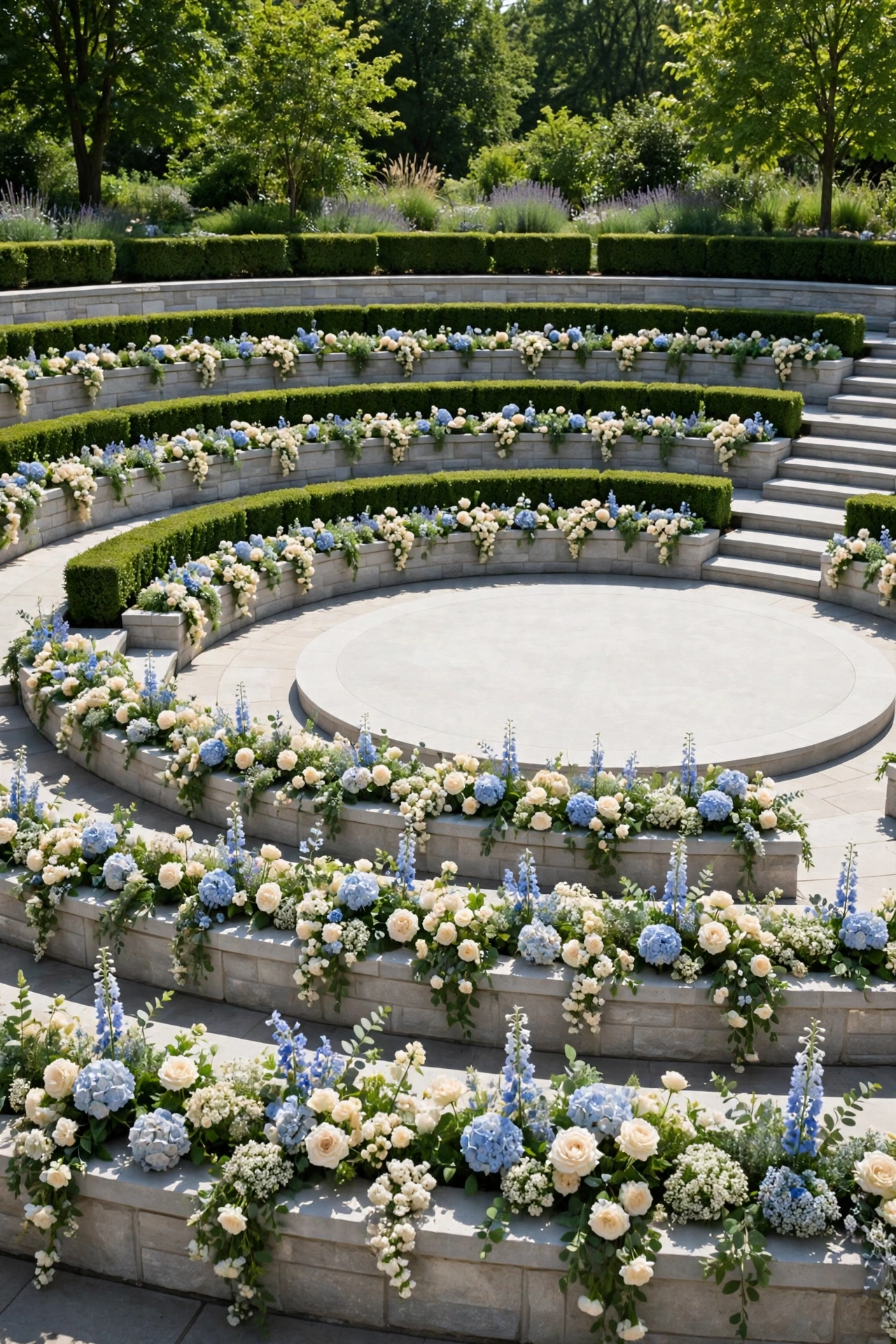
13. Frame Planted Tiers With Hedges and Flower Borders
An amphitheater framed by planting feels like a secret garden theater. Low clipped hedges run along the back of each seating tier, and flower borders spill over the front edges with color from spring through fall. The plants soften the hard lines of the stone or timber and make the space smell as good as it looks.
Keep the hedges low, no higher than knee height, so they frame the view without blocking it. Choose flowers in a simple palette, such as cream and sage with touches of soft blue, so the planting feels calm rather than busy. The garden amphitheater rewards a little regular trimming with a polished look that improves every season.
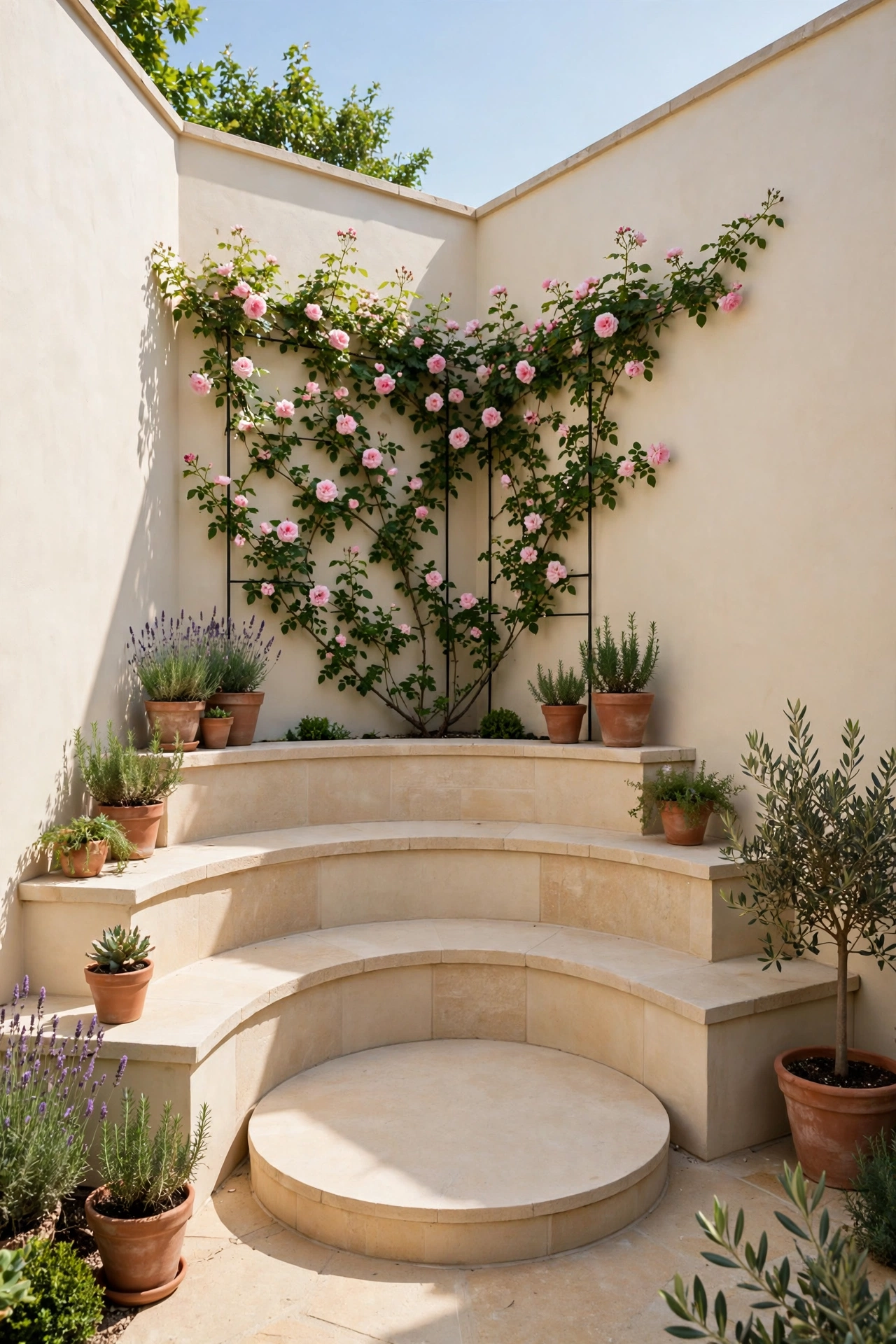
14. Fit a Courtyard Amphitheater Into a Walled Corner
A walled courtyard corner is a natural amphitheater site because two walls already provide shelter and a backdrop. Build three short tiers into the corner, curving them across the angle of the walls, and set a small round stage where the tiers meet. The walls bounce sound back toward the seats and block the wind.
Keep the tiers compact, with each row rising only a single step, so the courtyard still feels open and easy to cross. A wall fountain or a climbing rose on the back wall gives the stage a beautiful backdrop without taking up floor space. The courtyard amphitheater turns the most sheltered corner of the yard into its most sociable spot.
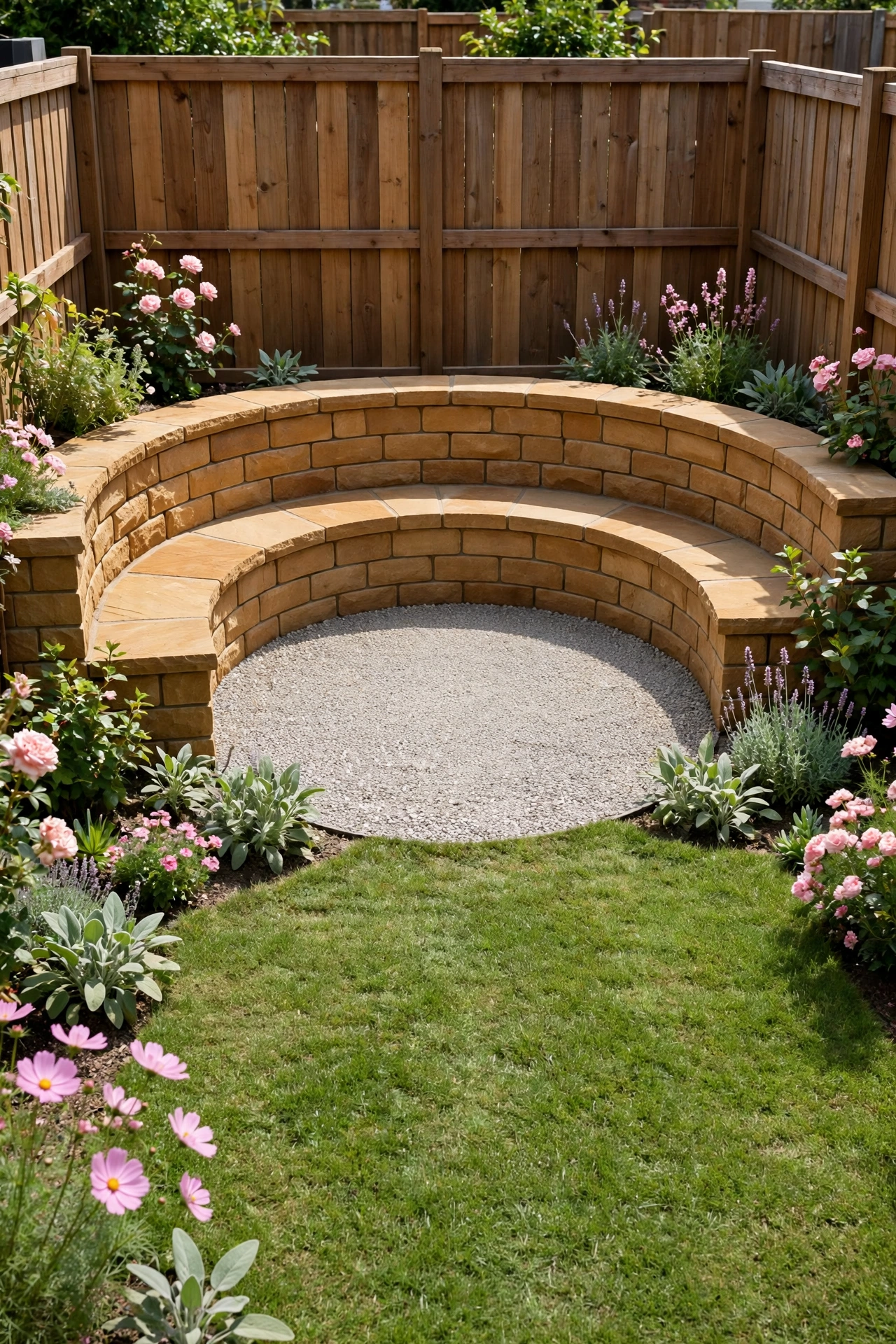
15. Shape a Small Half-Moon Amphitheater for a Compact Yard
Even a small yard can hold an amphitheater if the shape is kept tight. A half-moon of two or three short tiers, no wider than twelve feet across, fits against a fence or a hedge and seats a family comfortably. The stage is a simple round pad of stone or gravel at the center of the curve.
Build the tiers from a single material, such as warm sandstone blocks, so the small structure looks deliberate rather than cramped. Keep the area in front of the half-moon clear as a flexible lawn or gravel apron where extra guests can stand. A compact amphitheater proves that a performance space is about shape, not size.
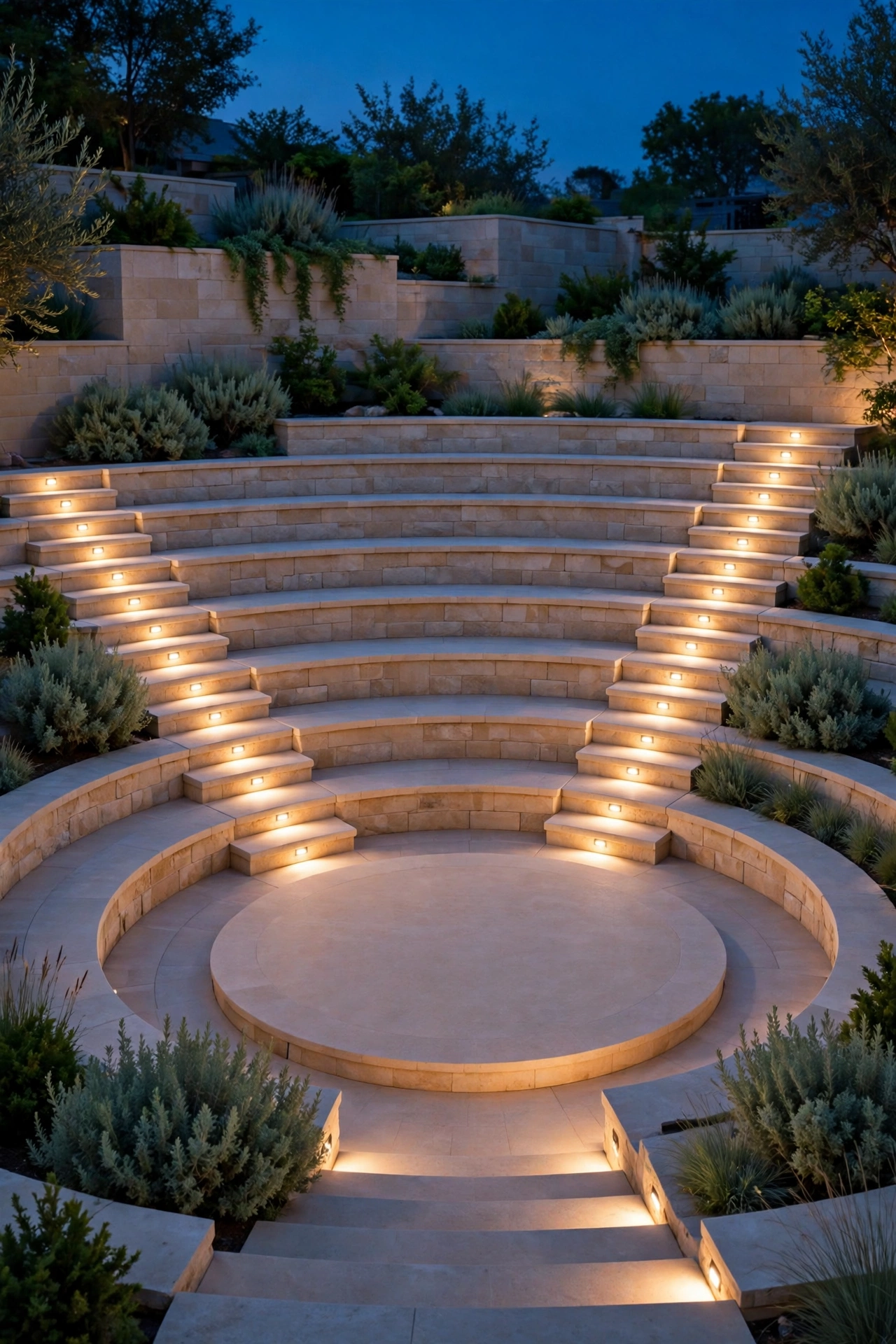
16. Light Every Tier With Built-In Step Lights
Built-in step lights turn an amphitheater into an evening venue without any loose lamps or cords. Small warm lights set into the riser of each tier wash the stone or timber with a soft glow, marking every level clearly and making the whole structure safe to climb after dark. The lighting becomes part of the architecture.
Choose warm white lights, around 2700K, so the glow feels cozy rather than harsh. A low voltage system is simple to install during construction and costs very little to run. When the lights come on at dusk, the amphitheater becomes the most inviting corner of the yard, ready for a story, a song, or a quiet evening under the stars.
Conclusion
A backyard amphitheater is more than a seating project. It is a permanent invitation to gather, perform, celebrate, and simply sit together in the open air. Whether you shape grass tiers into a slope, stack stone rings around a fire pit, or fit a small half-moon into a compact yard, the built tiers will serve your family for decades.
Start with the shape that fits your yard and your budget, and build one tier at a time if you need to. The stage can be simple and the seats can be plain stone, because the magic comes from the shape itself. For a quieter corner to balance the lively amphitheater, these outdoor reading garden ideas will help you create a peaceful retreat just a few steps away.
Frequently Asked Questions About Backyard Amphitheater Ideas for Outdoor Entertainment
How much space do I need for a backyard amphitheater?
A compact half-moon amphitheater fits in a space about twelve feet wide and eight feet deep, while a full three tier amphitheater needs roughly twenty to twenty-five feet across. Measure your yard and sketch the curve before you build. Even a small structure gives everyone a seat with a clear view of the stage.
What is the best material for amphitheater seating?
Natural stone is the most durable choice and needs almost no maintenance, while timber sleepers are warmer to sit on and easier to build with. Brick suits formal gardens, and grass tiers suit sloped yards with a soft natural look. Choose the material that matches your garden style and your budget.
How deep should each seating tier be?
Each tier should be at least sixteen to twenty inches deep so adults can sit comfortably without feeling perched on an edge. The rise between tiers works best at six to eight inches, which is a comfortable step height. Deeper tiers also give guests room to rest their feet on the level below.
Do I need a permit to build a backyard amphitheater?
Low seating tiers under three feet tall usually need no permit, but taller retaining walls, roofs, and electrical lighting often do. Check with your local building office before you start, especially if the structure includes a pavilion roof or built-in wiring. A quick call now prevents problems later.
How do I keep a sunken amphitheater from flooding?
Grade the stage floor slightly toward a gravel drain channel or a dry well, and use permeable surfaces like gravel or sand jointed stone so water drains through. Never place a sunken amphitheater at the lowest point of the yard without a drainage plan. Good drainage keeps the space usable the morning after heavy rain.

Hi, I’m Emily! I turn messy corners into cozy, organized spots. DreamNestDecor is where I share simple, practical home ideas — decor, organization, and small-space solutions that work in real life, not just in photos. Every idea here is carefully researched before it’s shared.