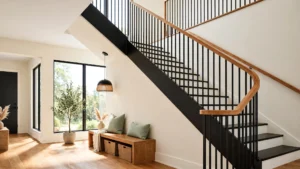
Picture this: you walk through the front door and the first thing your eye follows is the staircase. The railing sweeps upward in a clean line, its handrail warm under your hand and its balusters catching the light. That single detail sets the tone for the whole home before you have even reached the second floor.
A staircase railing is far more than a safety feature. It is the largest piece of millwork in many homes and the detail guests notice most. These 30 statement stair railing design ideas will help you choose a railing that feels intentional, beautiful, and perfectly matched to your interior style.
1. Pair Matte Black Balusters with a Warm Wood Handrail
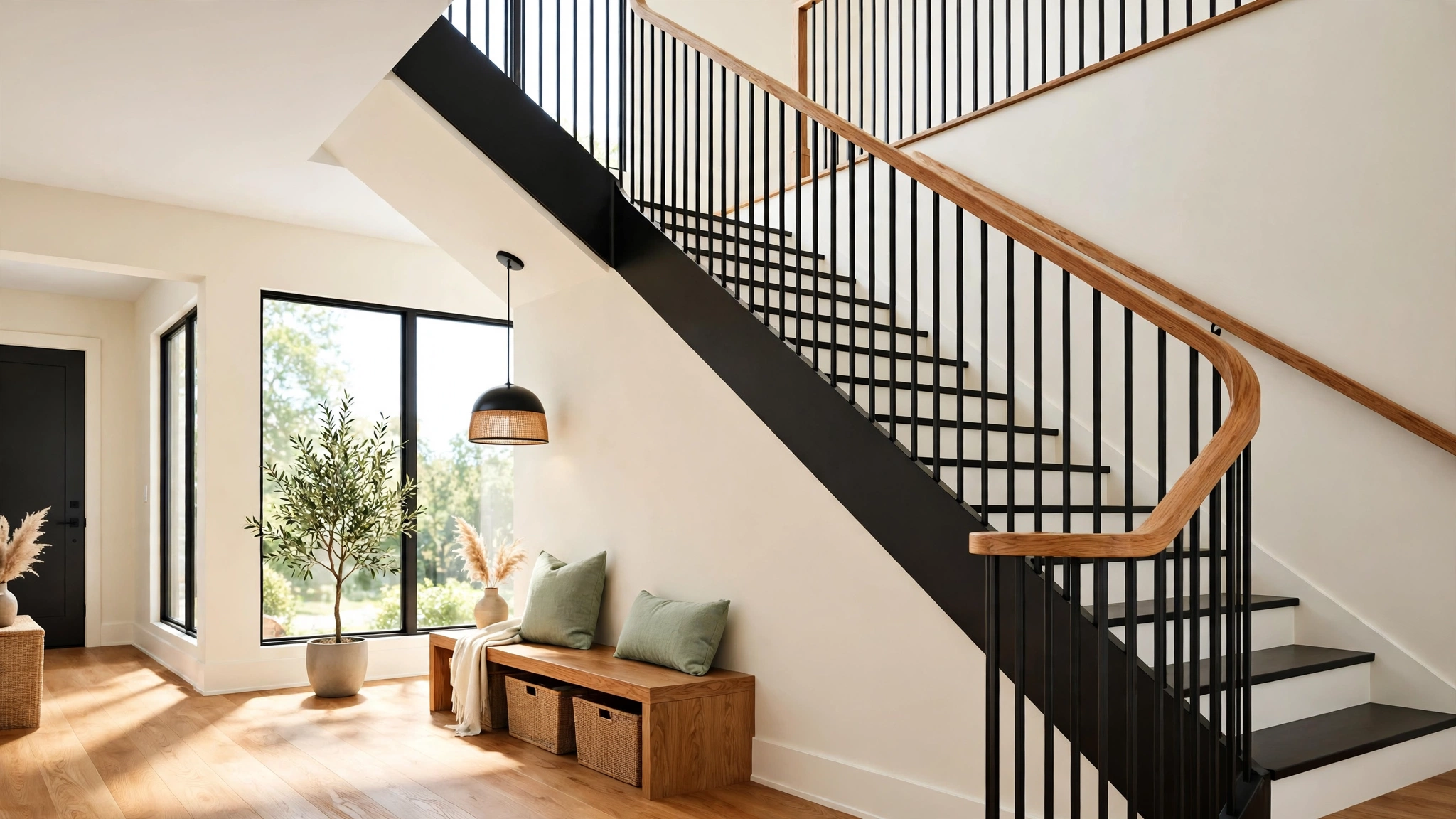
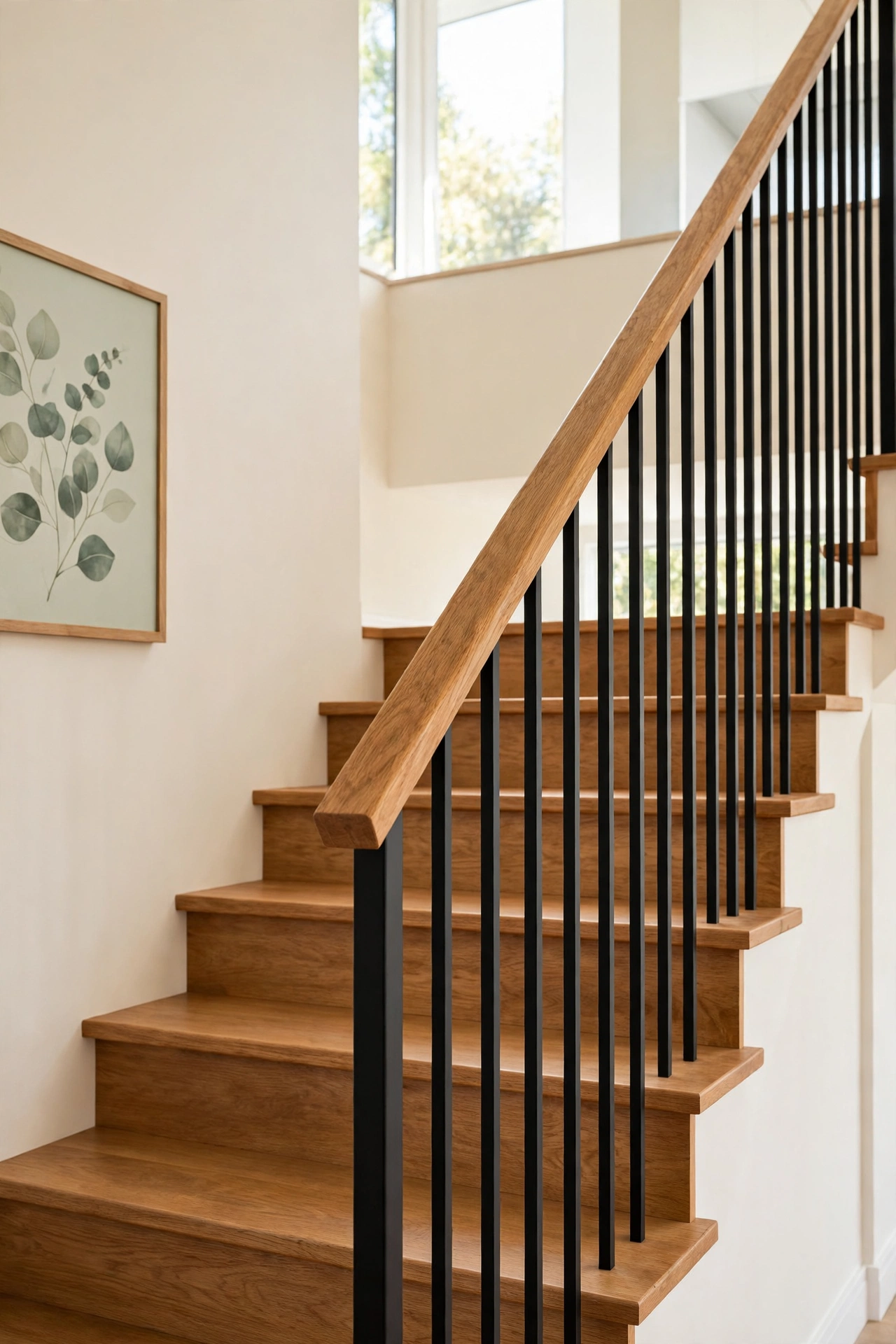
Matte black balusters paired with a warm wood handrail is one of the most reliable combinations in modern interiors. The dark metal gives the staircase crisp definition, while the wood handrail adds warmth and a soft place for your hand to rest. Together they suit farmhouse, transitional, and contemporary homes with equal ease.
Keep the wall color light so the black balusters read as a clean graphic line rather than a heavy mass. A cream or pale sage wall behind the stairs lets the railing stand out without darkening the entryway. Add a woven runner-free stair tread in natural wood to echo the handrail and tie the whole staircase together.
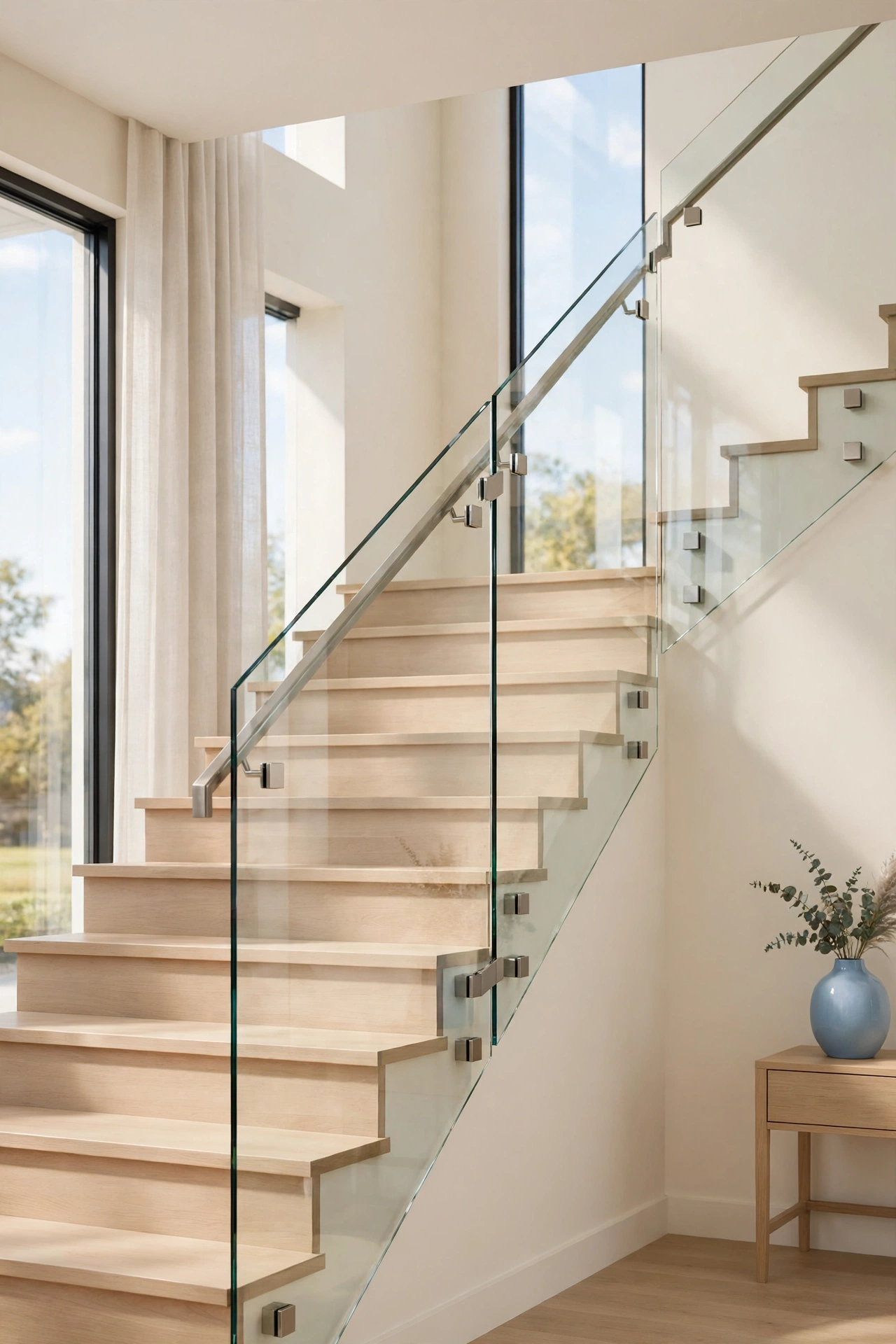
2. Choose Clear Glass Panels for an Open Feel
Clear glass panels make a staircase feel open and weightless. Light travels straight through the railing, so a dark hallway suddenly feels bright and a small entryway feels twice as large. Glass works beautifully in modern homes where clean lines and open sightlines matter most.
Choose thick tempered glass with minimal hardware so nothing interrupts the view. Slim metal clamps or a recessed channel at the base keep the panels secure while staying nearly invisible. Keep the glass spotless with a quick wipe each week, and the staircase will always look freshly finished.
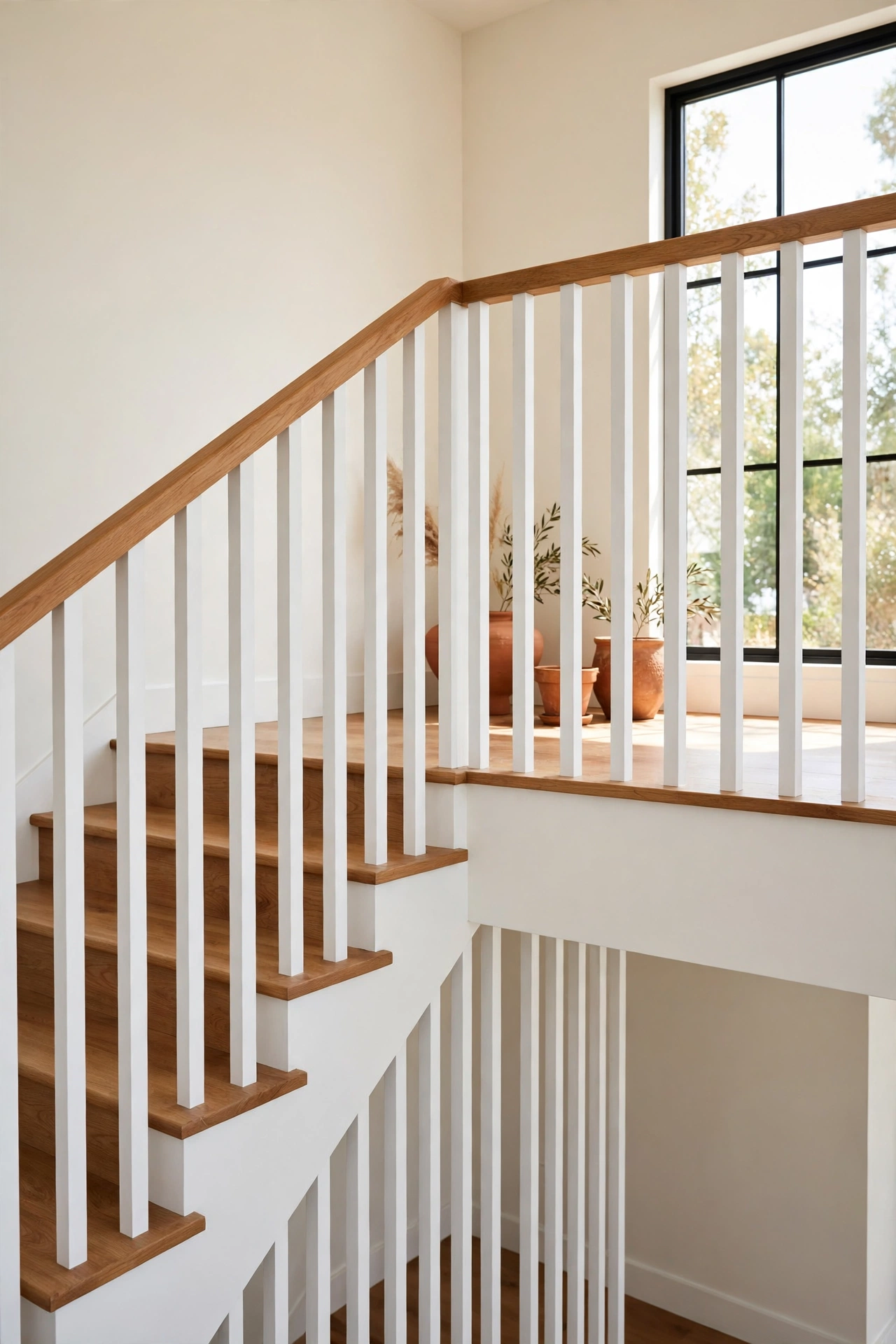
3. Paint Classic Wood Balusters Crisp White
White painted wood balusters bring a timeless, cottage fresh feeling to any staircase. The white finish reflects light and makes the staircase feel airy, even in a narrow hallway with only one window. This look pairs well with painted trim and doors throughout the home.
For a polished result, paint the balusters the same white as your window and door trim so the whole entryway reads as one careful design. A natural wood handrail on top keeps the all white railing from feeling flat. If you love painted details, these colorful ceiling trim ideas show how painted woodwork can carry color through a room.
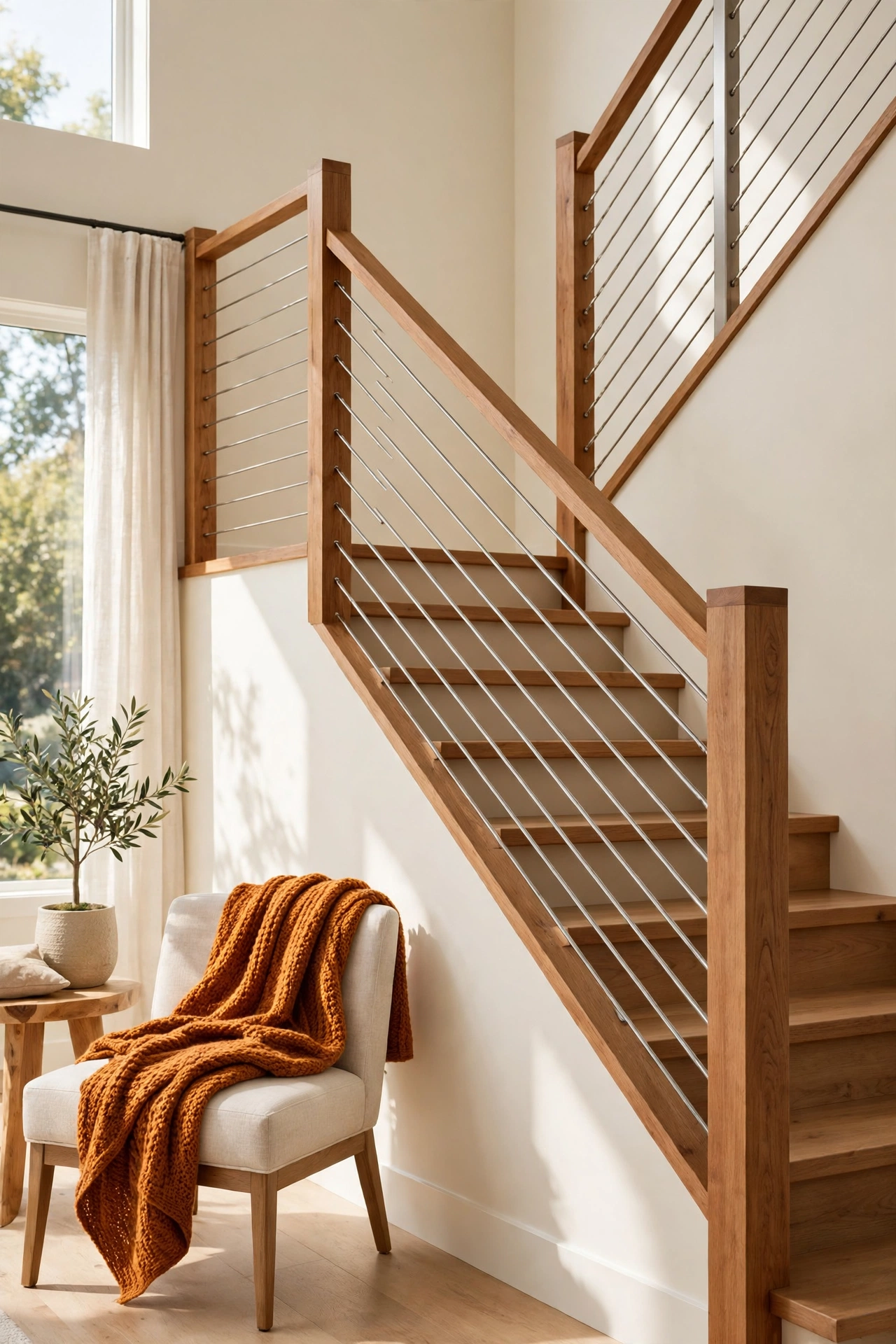
4. Run Sleek Horizontal Cables Along the Stairs
Horizontal cable railings give a staircase a sleek, contemporary edge. Thin stainless cables run parallel to the handrail and create a light, linear pattern that feels modern without being cold. The open spacing keeps the view clear from one side of the room to the other.
Cable railings work best with sturdy wood or metal posts that anchor the tension of the cables. A warm wood handrail softens the industrial feel of the steel and makes the railing comfortable to grip. This style suits open plan homes, loft spaces, and any staircase that deserves a clean modern line.
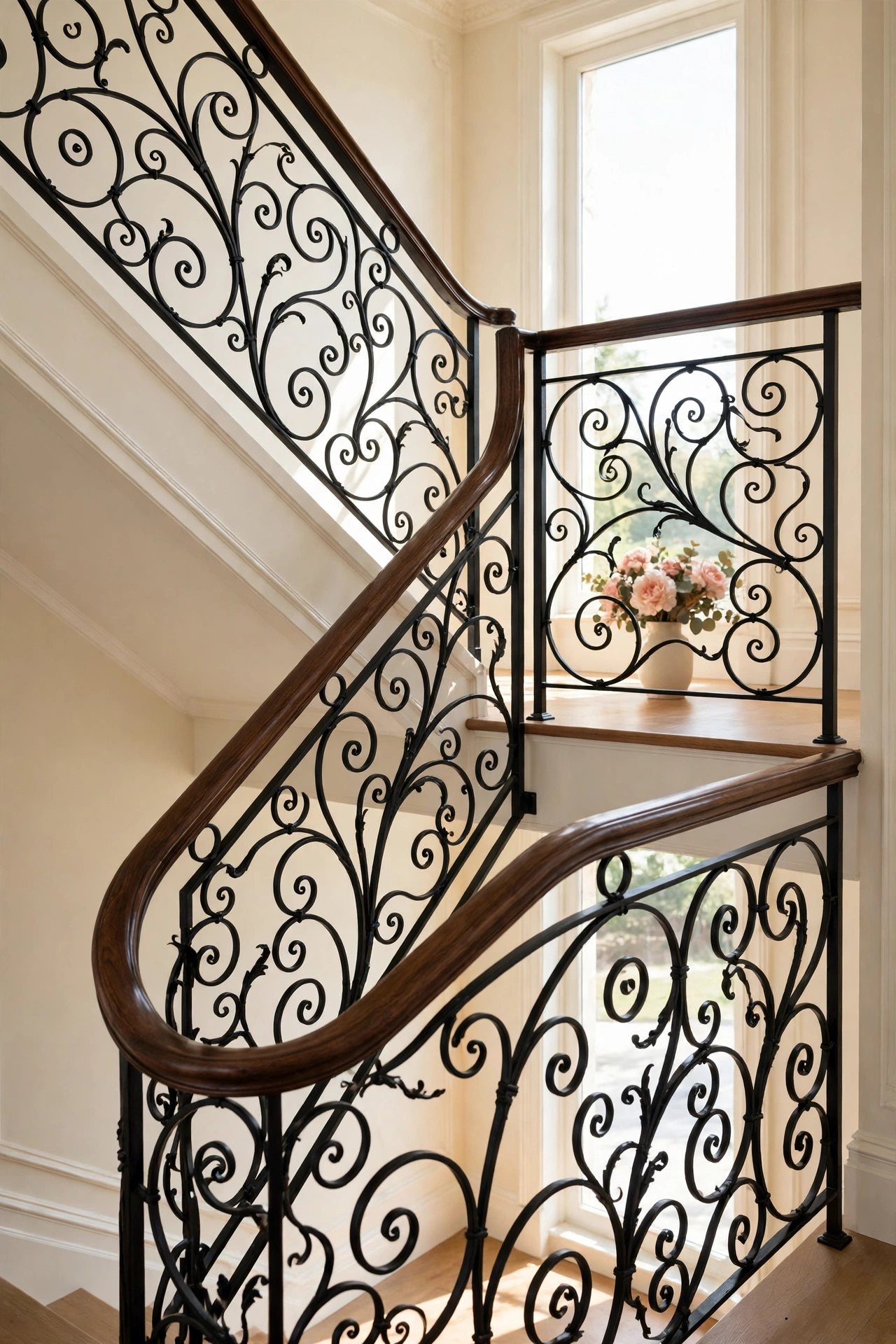
5. Add Wrought Iron Scrollwork for Old World Charm
Wrought iron scrollwork brings old world elegance to a staircase. Graceful curves and delicate twists turn each baluster into a small piece of art, and the dark iron finish feels rich against pale walls. This style suits traditional, Mediterranean, and French inspired interiors beautifully.
Mix scroll balusters with plain straight balusters so the pattern feels balanced rather than busy. A classic wood handrail in a deep walnut or warm oak finish grounds the ironwork and adds a traditional touch. The result is a staircase that feels like it has always belonged in the home.
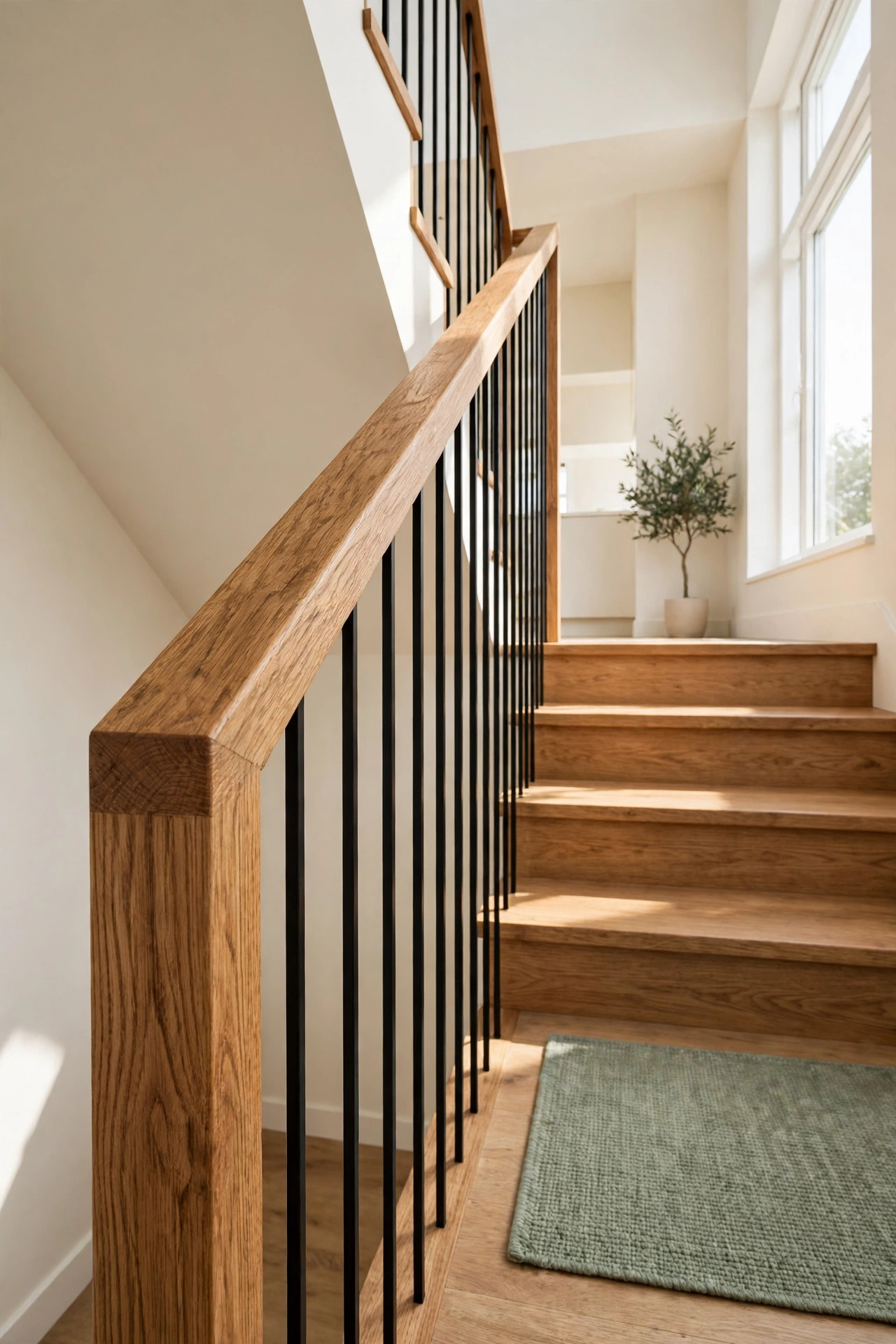
6. Combine a Chunky Oak Handrail with Slim Black Spindles
A chunky oak handrail paired with slim black spindles creates a pleasing contrast of weight and delicacy. The thick handrail feels solid and generous under your hand, while the slim spindles keep the railing light and airy. This balance works well in both modern farmhouse and Scandinavian style homes.
Choose a clear finish on the oak so the natural grain shows through and warms up the black metal. Keep the spindle spacing even and the profile simple, so the handrail remains the star of the design. A soft blue or sage accent on a nearby wall adds gentle color without competing with the wood.
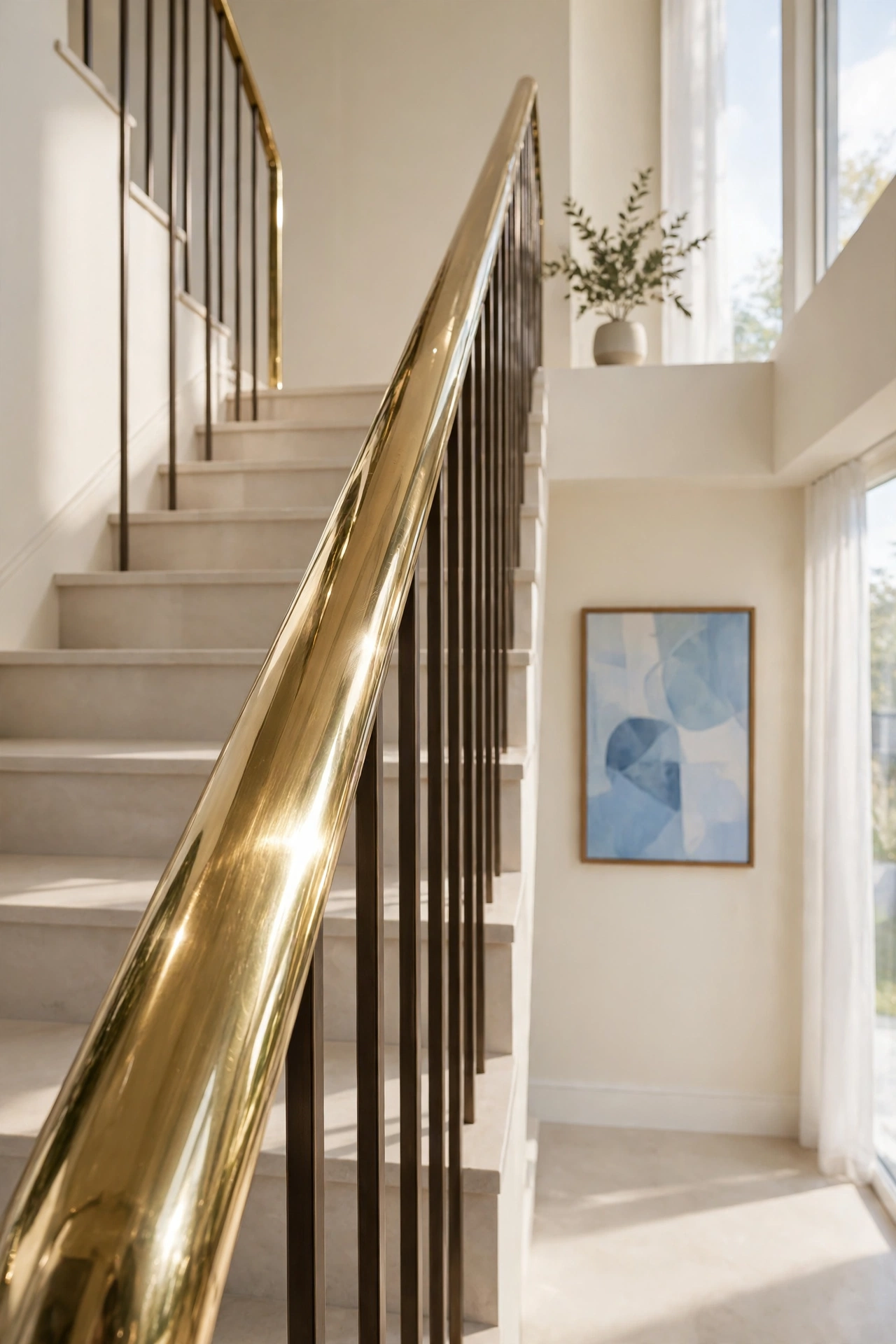
7. Finish the Handrail in Polished Brass
A polished brass handrail adds instant glamour to a staircase. The warm golden metal catches the light with every step and gives the entryway a jewelry like finish. Brass pairs beautifully with dark painted balusters, deep green walls, and marble stair treads.
Keep the rest of the railing simple so the brass handrail can shine. Slim black or dark bronze balusters let the golden rail take center stage without visual clutter. Wipe the brass regularly to keep its shine, or let it develop a soft patina for a more lived in, vintage character.
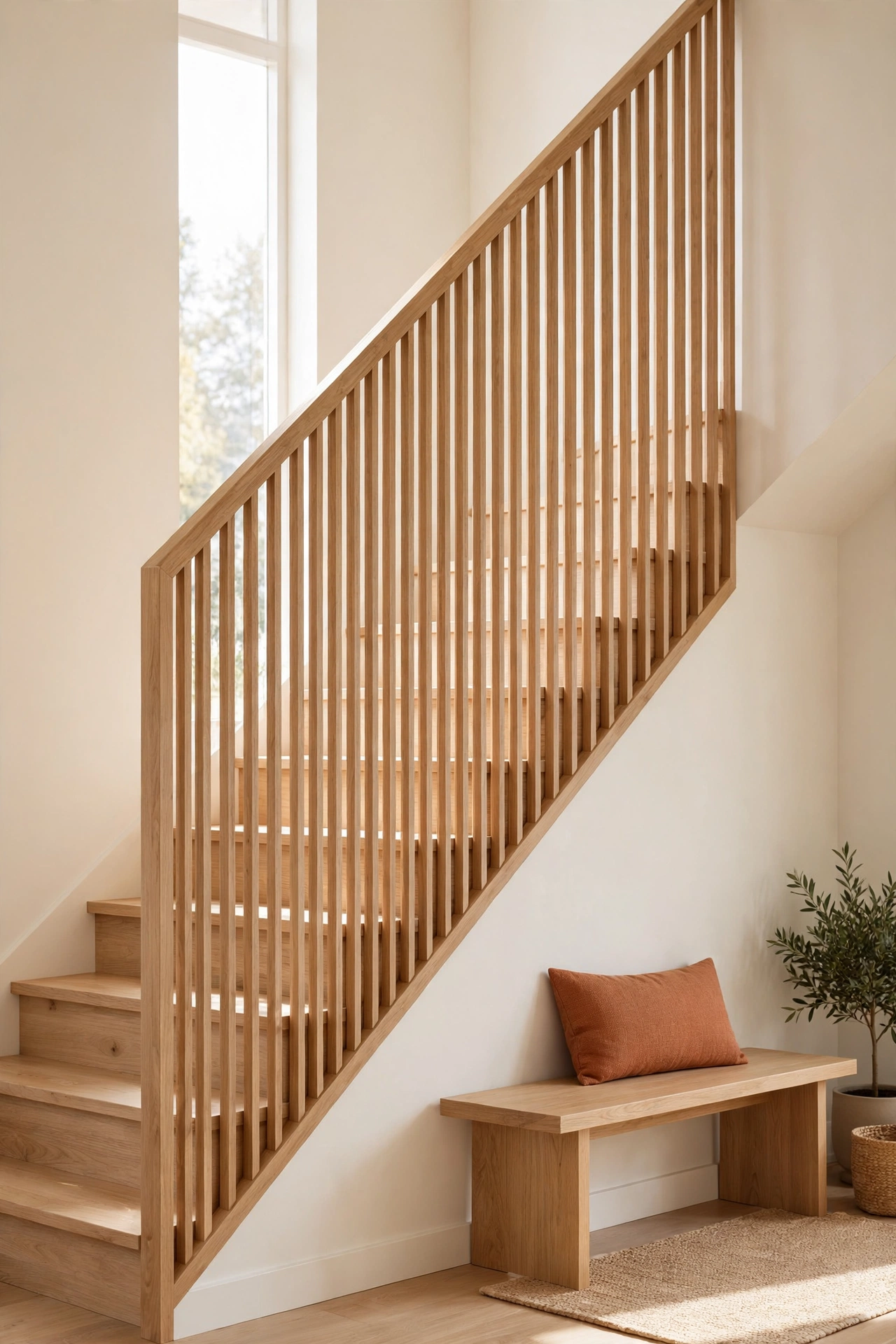
8. Build a Vertical Slat Railing in Natural Wood
A vertical slat railing in natural wood brings warmth and rhythm to a staircase. Evenly spaced wood slats run from tread to handrail, creating a screen that feels both solid and open. The natural wood tone adds an organic, calming quality that suits modern and Scandinavian interiors.
Use a light wood like white oak or ash for a fresh, airy feeling, and finish it with a matte sealant that lets the grain show. The slat pattern repeats beautifully along the staircase and echoes wood slat walls elsewhere in the home. Keep surrounding walls cream or pale terracotta so the wood tones glow in natural daylight.
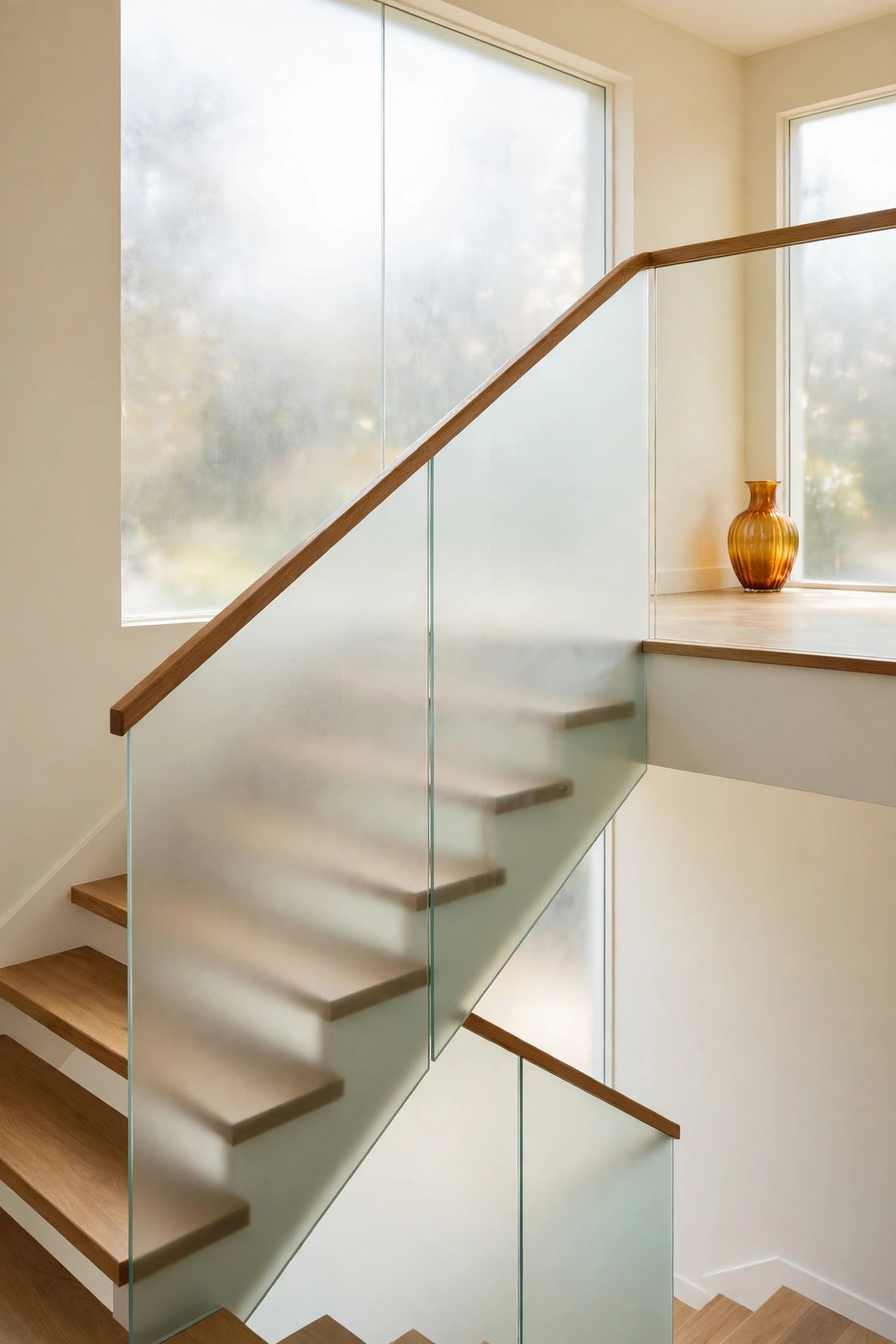
9. Soften the Look with Frosted Glass Panels
Frosted glass panels offer the openness of glass with a softer, more private feeling. The frosted surface diffuses light gently and hides fingerprints and dust far better than clear glass. This makes frosted panels a practical choice for busy family homes that still want a modern look.
Pair frosted panels with a wood handrail to warm up the cool, misty surface of the glass. The combination feels calm and spa like, especially against soft blue or pale green walls. For more ways to use patterned and textured glass at home, these decorative glass door ideas show how glass can add privacy and light in equal measure.
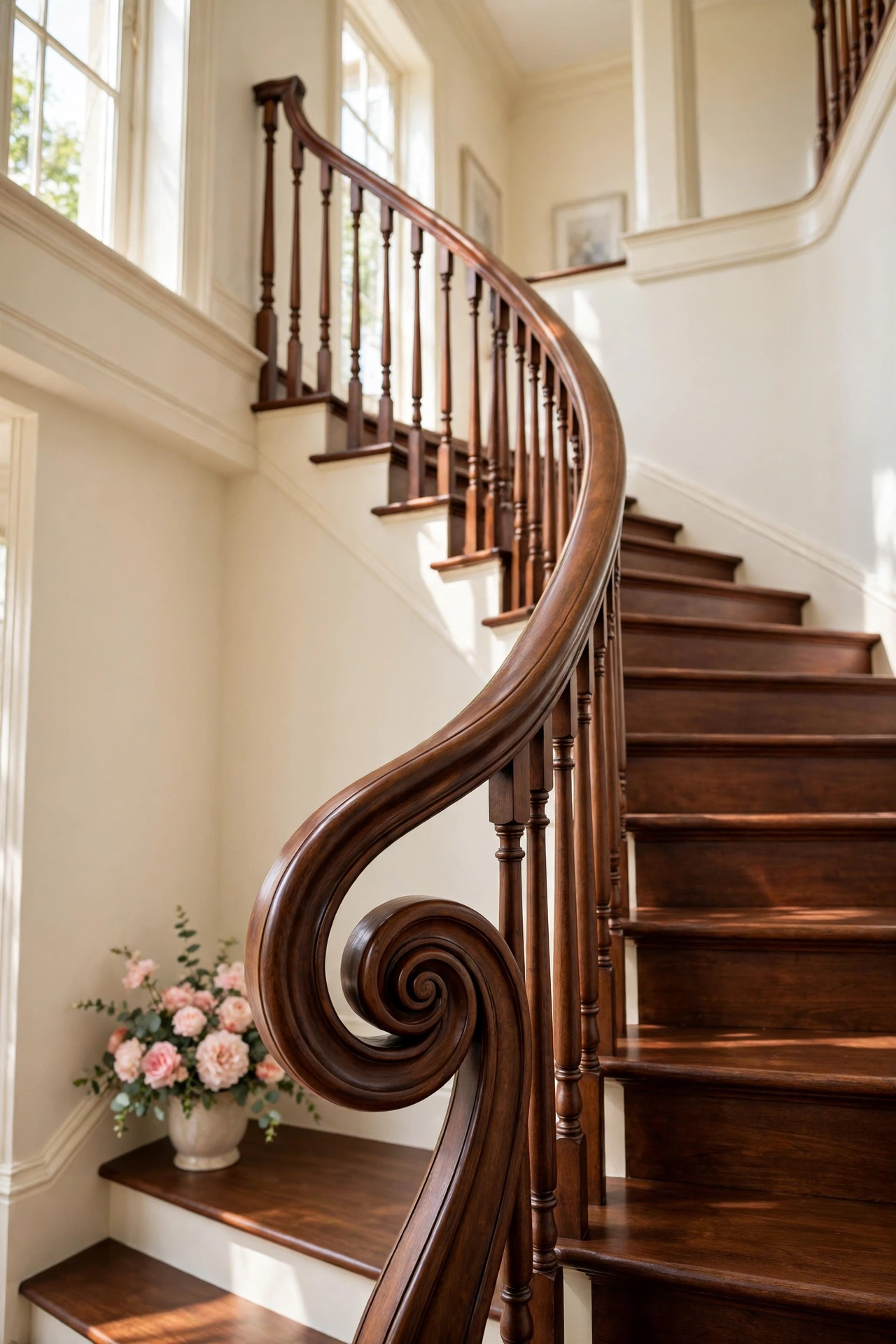
10. Crown the Stairs with a Curved Volute Handrail
A curved volute handrail is the classic finishing touch for a traditional staircase. The handrail curls into an elegant spiral at the starting step, like a scroll unfurling at the foot of the stairs. This graceful detail instantly gives a staircase a custom, high end character.
The volute works best in warm wood tones with a rich stain that shows off the curve. Pair it with turned balusters and a substantial newel post to complete the traditional look. Even in a modest entryway, a volute handrail makes the staircase feel grand and carefully crafted.
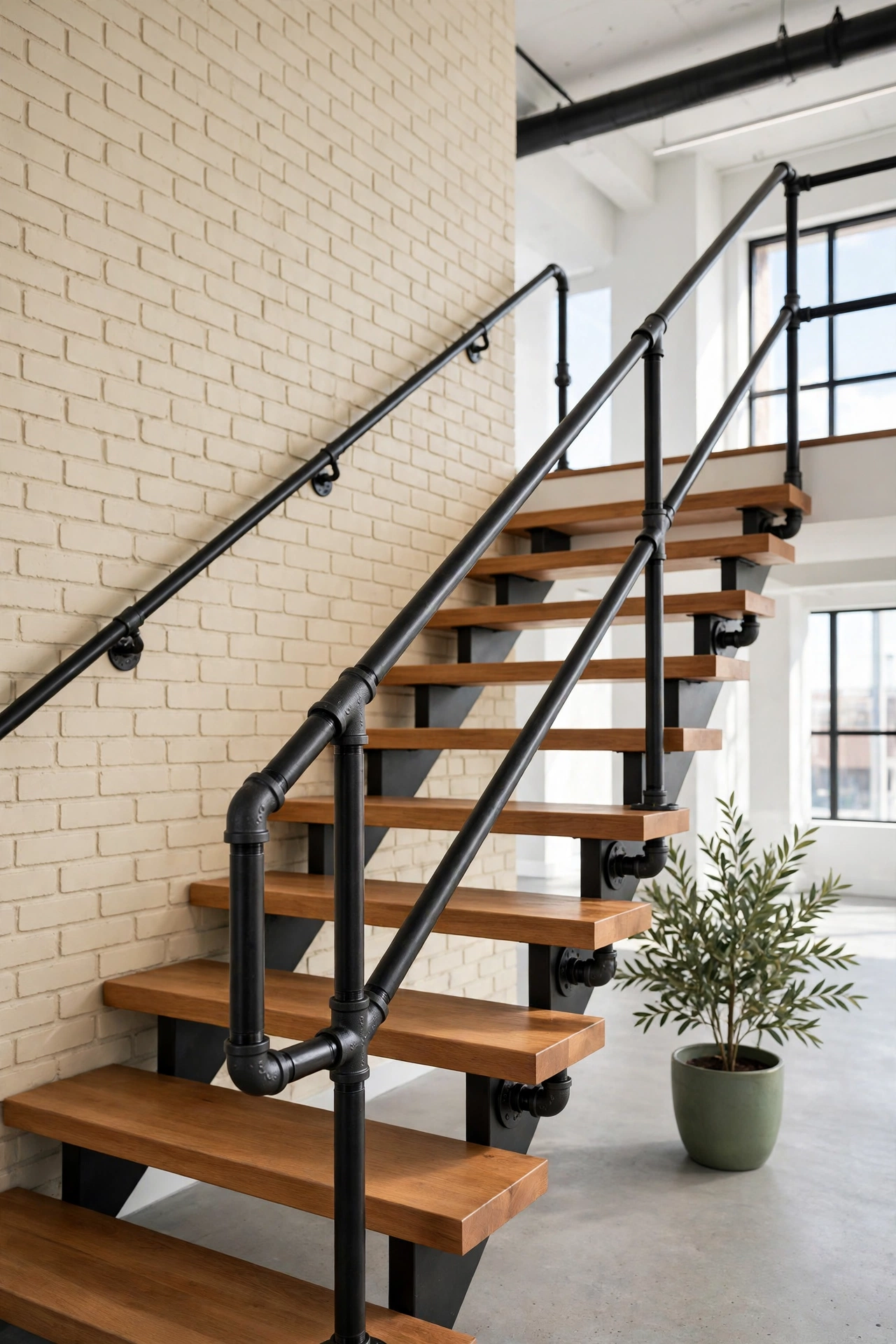
11. Go Industrial with Black Steel Pipe
Black steel pipe railings bring an industrial loft feeling to a staircase. The pipe handrail and fittings have a rugged, honest character that suits brick walls, concrete floors, and exposed structure. This style feels at home in converted lofts and modern urban interiors.
Keep the pipe finish matte black so it reads as intentional rather than unfinished. Pair it with wood stair treads to soften the metal and add warmth underfoot. A few warm wood accents nearby, like a console table or floating shelves, keep the industrial look feeling like a home rather than a warehouse.
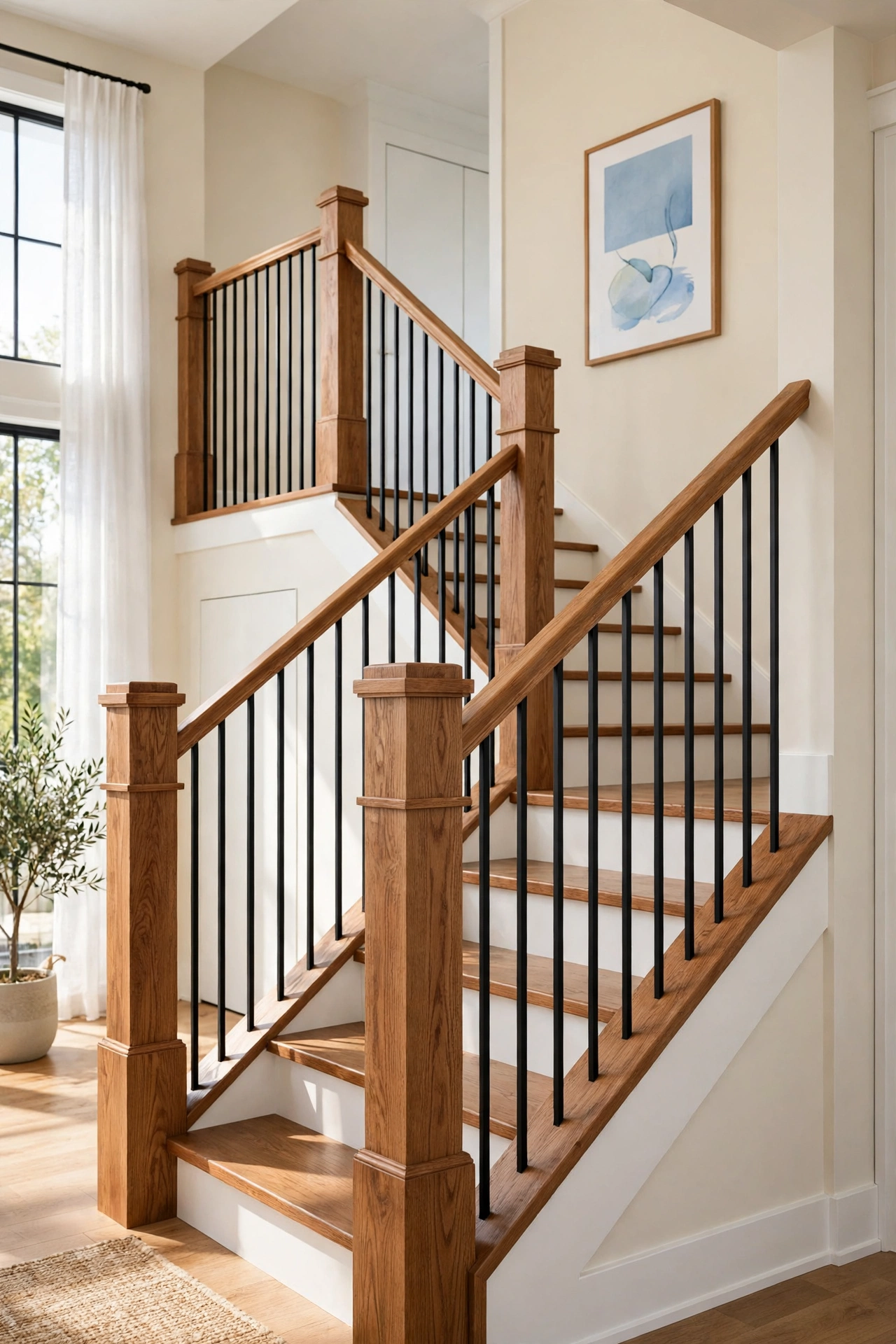
12. Mix Wood Newel Posts with Metal Balusters
Mixing wood newel posts with metal balusters gives you the best of both materials. The substantial wood posts anchor the staircase with warmth and tradition, while the slim metal balusters keep the railing feeling light and current. The mix suits transitional homes that blend classic and modern details.
Choose newel posts with a simple, clean profile so they complement rather than compete with the metal balusters. A wood handrail that matches the posts ties the whole railing together. This combination is also practical, since the strong wood posts give the railing a sturdy, solid feel.
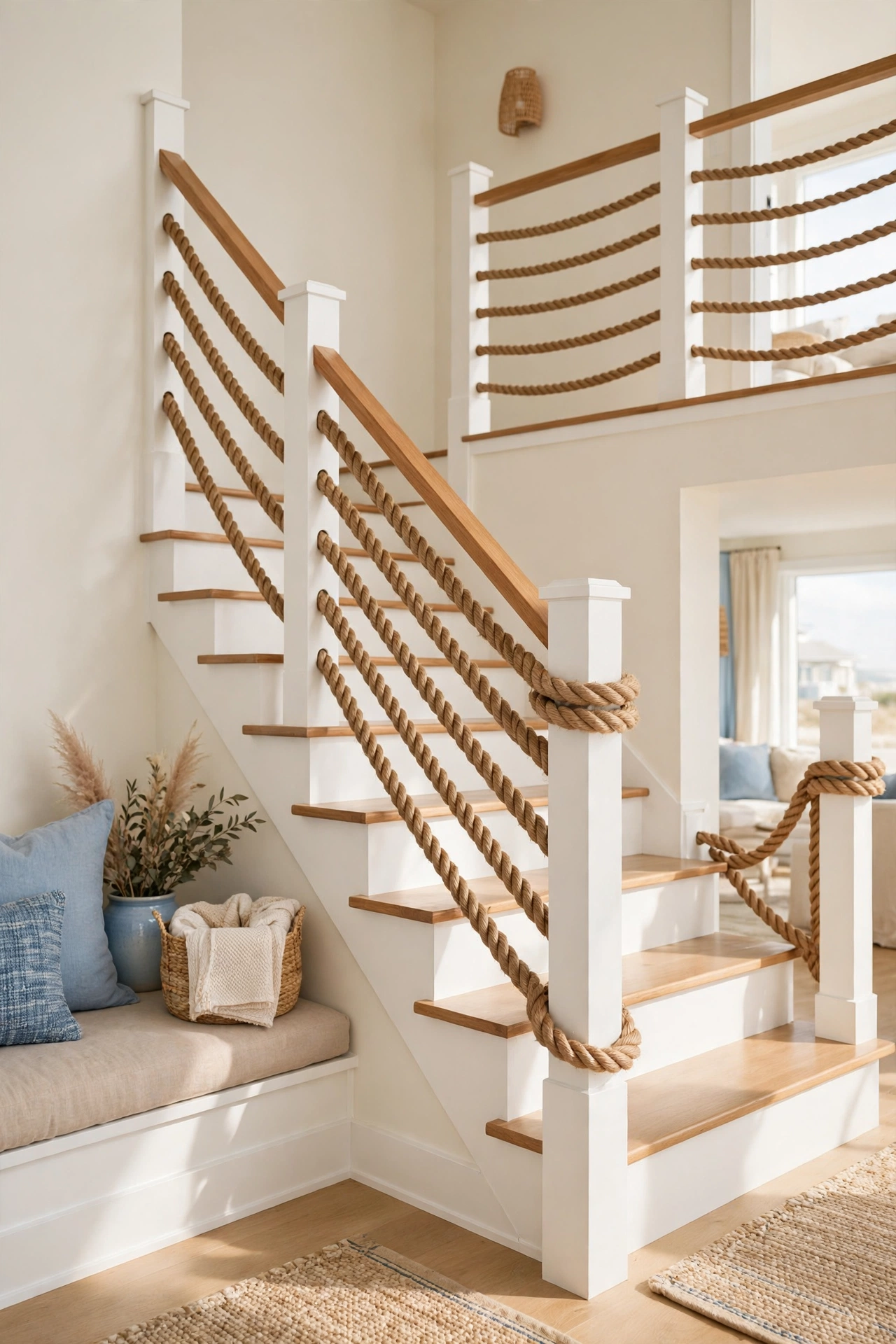
13. Try a Relaxed Rope Railing in a Coastal Home
A rope railing brings relaxed coastal charm to a staircase. Thick natural rope runs through wood posts like the rigging of a sailboat, and the soft, tactile material feels wonderfully informal. This look shines in beach houses, lake cottages, and any home with a breezy, nautical spirit.
Use sturdy wood posts and a wood handrail above the rope so the railing stays safe and secure. The rope works as a decorative infill below the handrail rather than a structural element. Pair it with soft blue walls, woven textures, and plenty of daylight for a fresh seaside feeling.
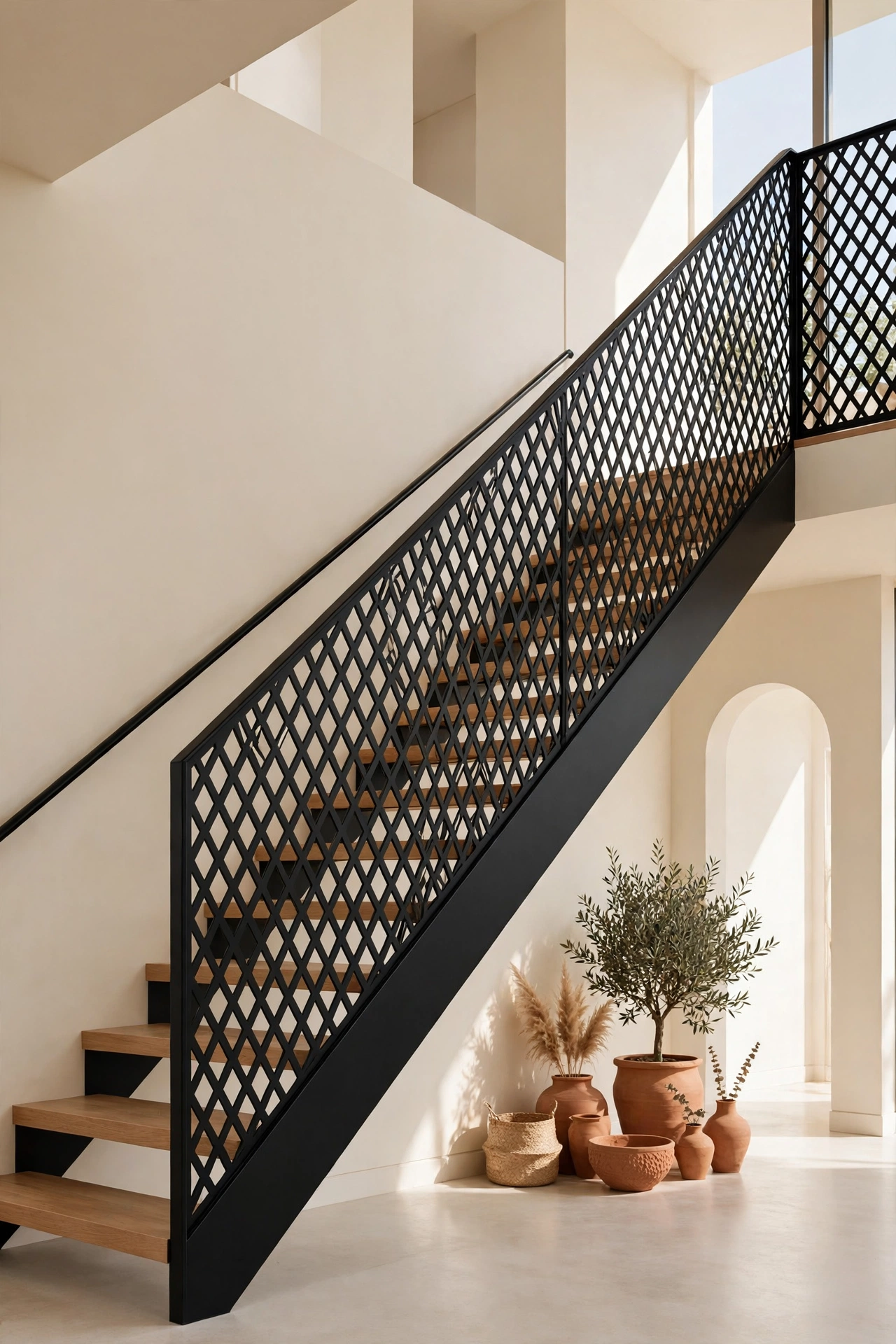
14. Install Geometric Laser Cut Metal Panels
Geometric laser cut metal panels turn a staircase railing into a work of art. Precise patterns of diamonds, hexagons, or latticework are cut into flat metal sheets that fill the space between handrail and stair. The result is bold, graphic, and completely unique to your home.
Choose a matte black or bronze powder coated finish so the pattern reads clearly against light walls. Keep the handrail simple and slim so the panel pattern remains the focus. This railing style suits modern and eclectic interiors where the staircase deserves to be a true statement piece.
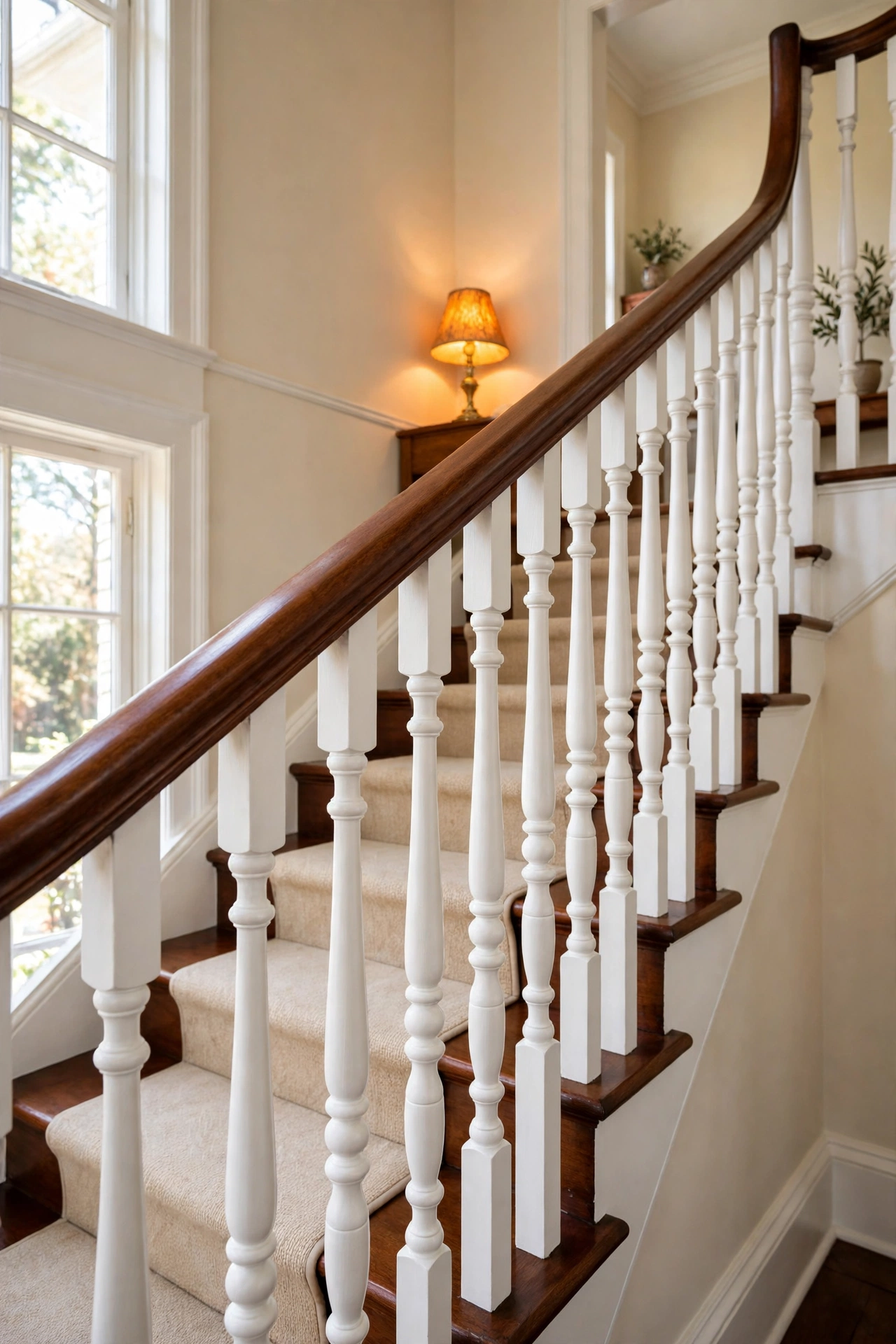
15. Turn to Classic Turned Wood Balusters
Classic turned wood balusters have graced staircases for centuries, and their appeal never fades. Each baluster is shaped on a lathe into gentle curves, beads, and tapers that catch the light beautifully. The craftsmanship shows in every detail, from the slender neck to the rounded foot.
Turned balusters shine in traditional and historic style homes, especially when paired with a rich wood handrail and paneled newel posts. Paint them white for a fresh colonial look, or stain them to match the handrail for a warm, unified finish. If you love classic millwork, these interior French door design ideas show how traditional details can elevate a whole entryway.
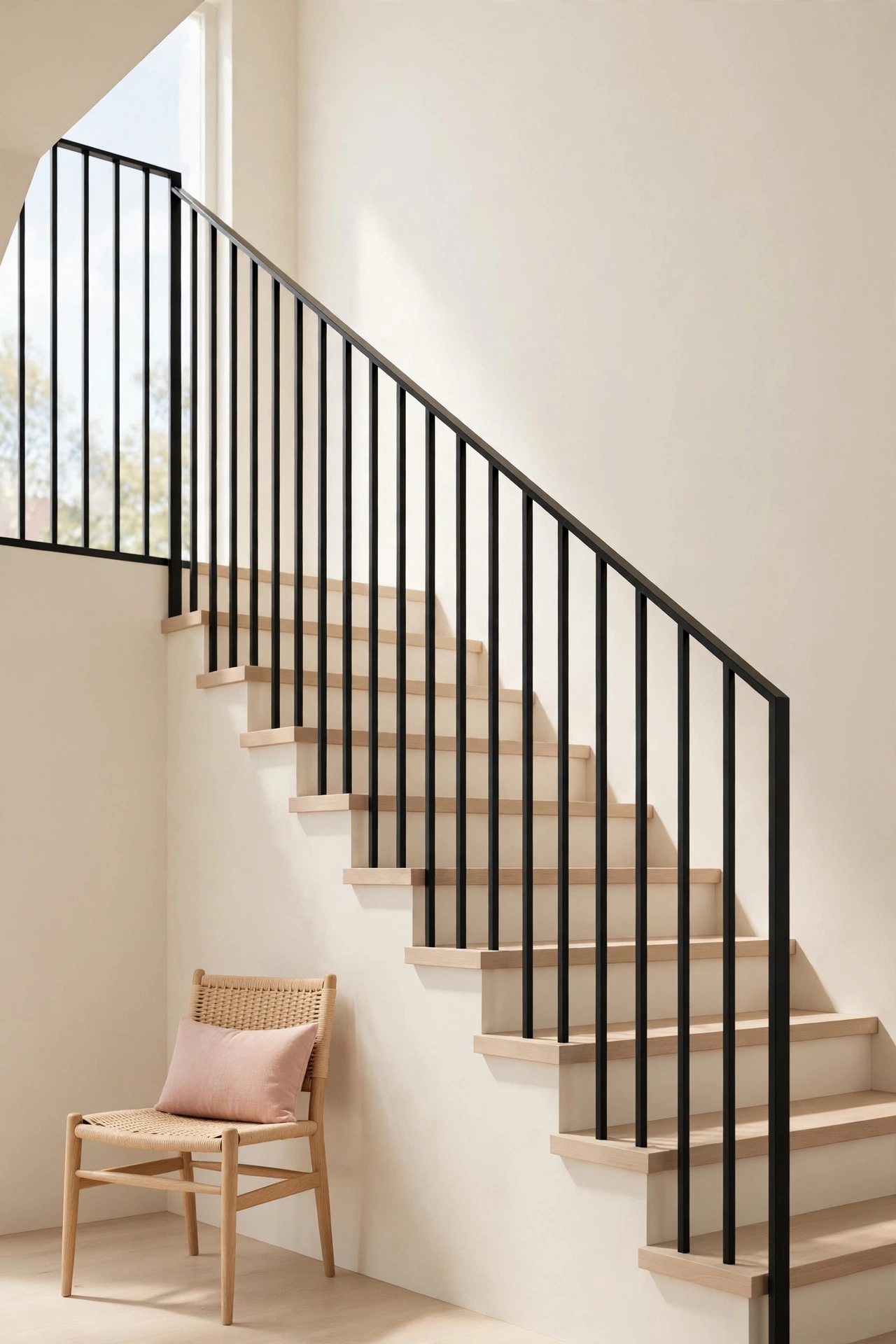
16. Keep It Minimal with Flat Steel Bar
A flat steel bar railing is minimalism at its best. Slim rectangular bars of steel run vertically from tread to handrail in a quiet, even rhythm. There is no ornament and no clutter, just clean lines and honest materials that let the architecture speak.
A matte black or brushed steel finish keeps the look calm and modern. Pair the bars with a slim wood or metal handrail that matches the profile of the bars. This railing suits minimalist interiors, modern farmhouses, and any staircase where simplicity is the statement.
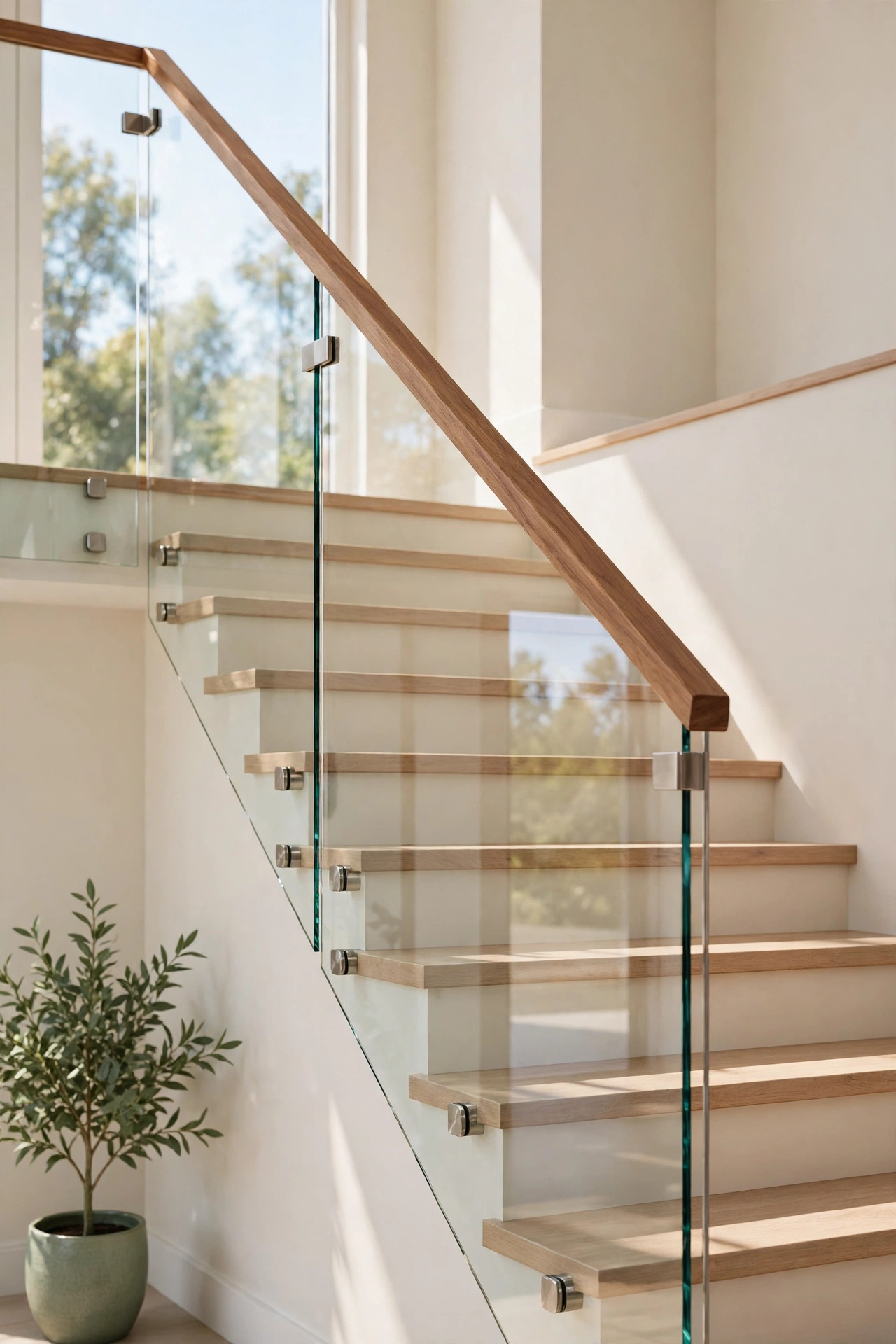
17. Clamp Glass Panels Under a Wood Top Rail
Clamping glass panels under a wood top rail combines the openness of glass with the warmth of wood. The glass panels are held by slim metal clamps, and a wood handrail caps the top to give your hand a warm, natural surface. The result feels both modern and inviting.
Choose a wood tone that matches your stair treads or flooring so the handrail feels connected to the rest of the room. The glass keeps sightlines open, which makes this railing ideal for staircases that divide a living area from a hallway. It is a refined choice for contemporary and transitional homes alike.
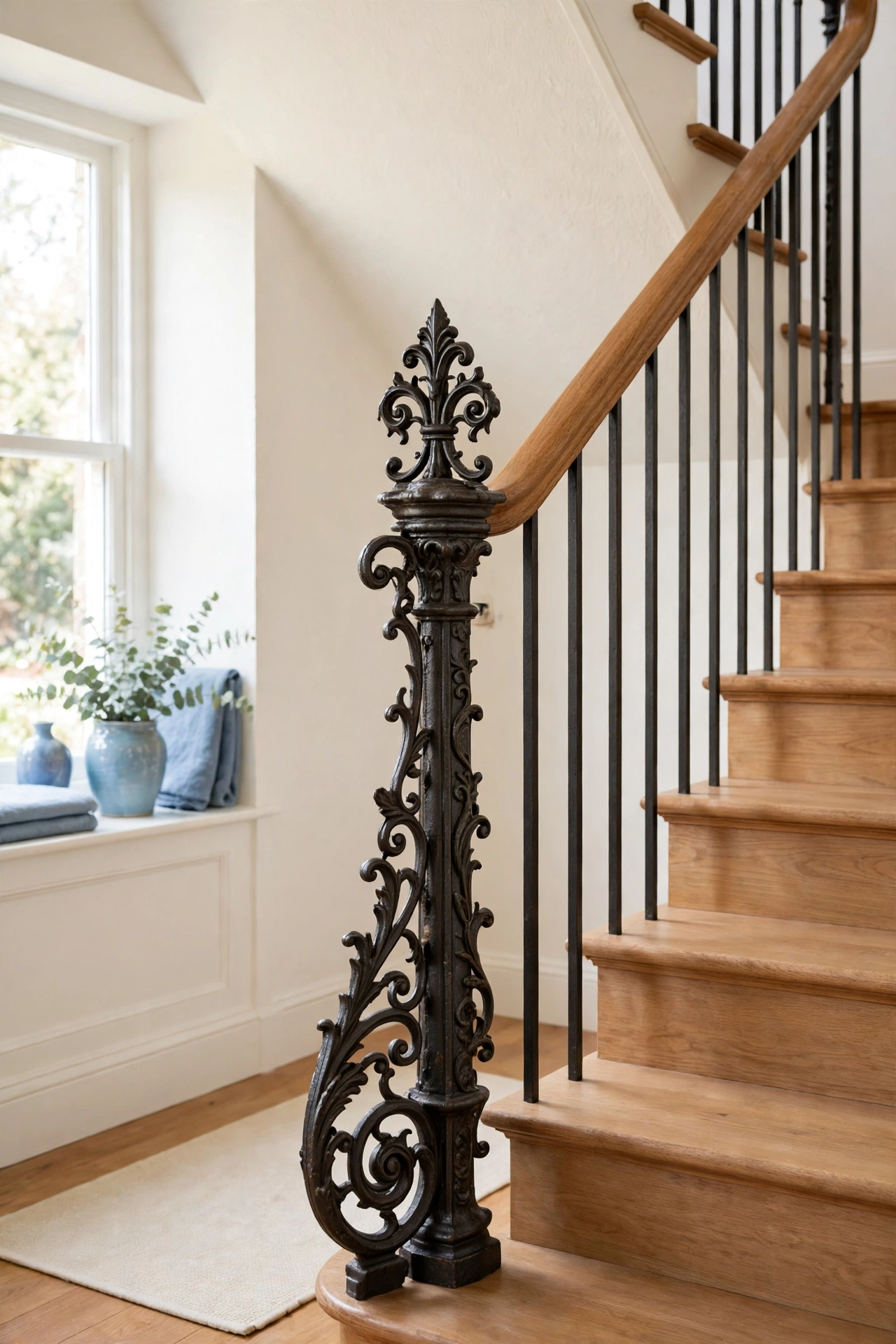
18. Make the Newel Post the Star with Cast Iron
An ornate cast iron newel post can carry the whole design of a staircase. Look for posts with detailed scrollwork, a decorative finial, or a sculptural shape that draws the eye at the foot of the stairs. The newel post becomes a piece of sculpture that anchors the entire railing.
Keep the balusters simpler than the newel post so the post remains the star. Plain iron or wood balusters in a matching dark finish let the detailed post shine without competition. A classic wood handrail completes the look and adds a warm contrast to the cool iron.
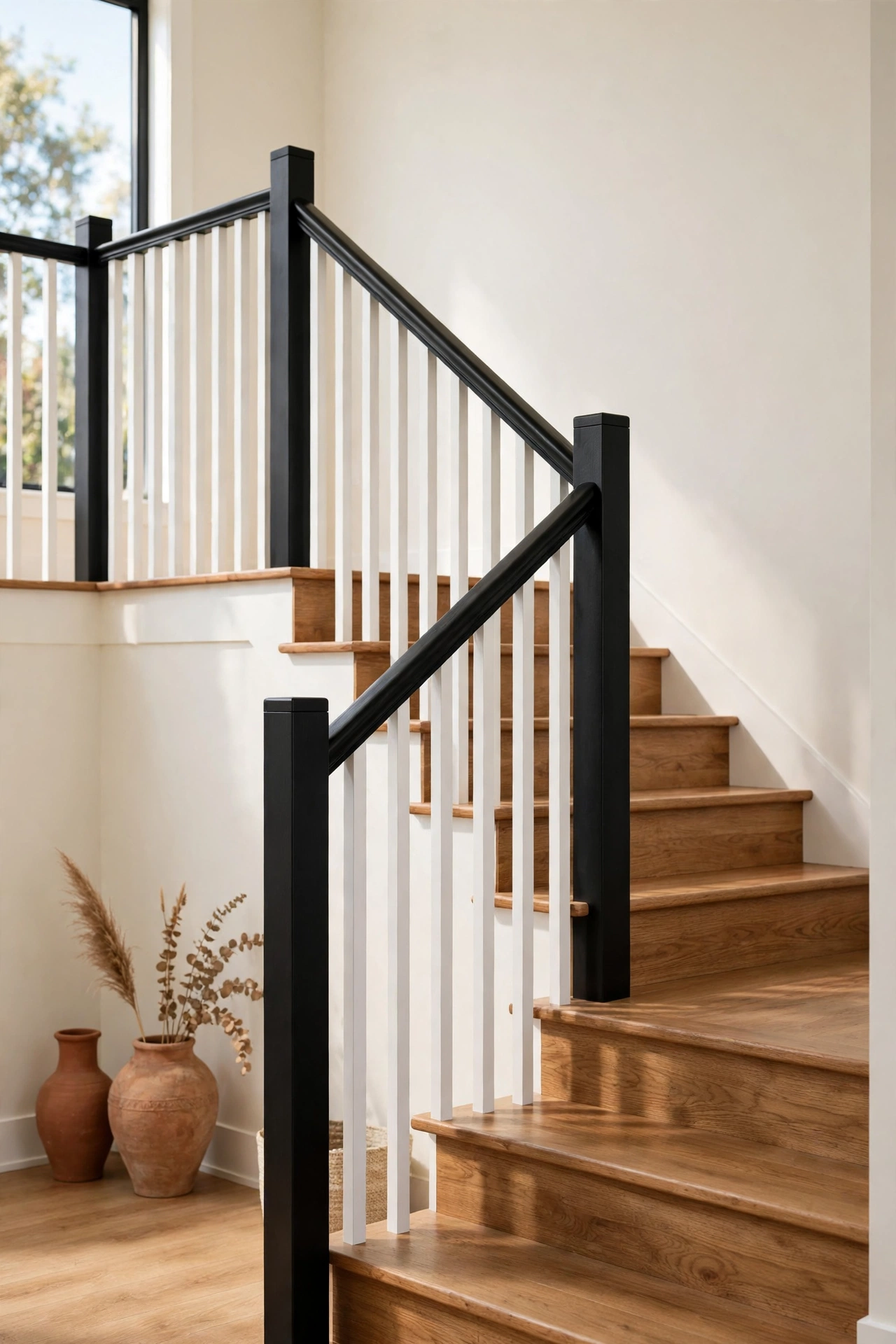
19. Use a Two Tone Black and White Scheme
A two tone black and white railing is crisp, graphic, and endlessly stylish. Paint the handrail and newel posts black while keeping the balusters white, or reverse the scheme for a lighter feel. The contrast defines every line of the staircase and makes the railing pop against pale walls.
This scheme works with almost any interior style, from modern farmhouse to classic traditional. Keep the wall color soft and neutral so the black and white contrast stays elegant rather than harsh. A cream wall with a blush or sage accent nearby adds gentle warmth to the bold graphic railing.
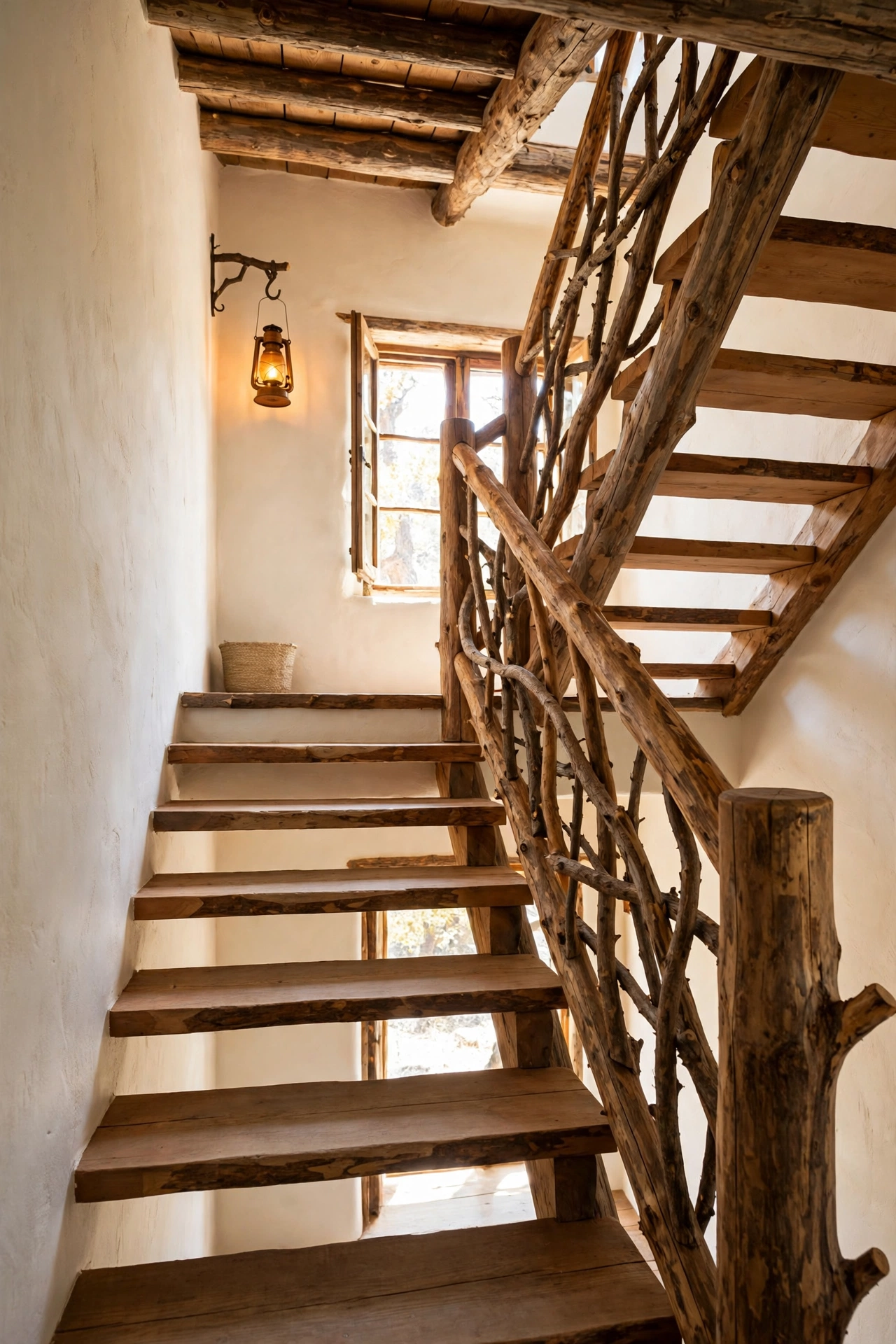
20. Bring in Rustic Character with a Natural Log Railing
A natural log railing brings the outdoors inside with rustic, handcrafted character. Rough hewn logs or branches form the handrail and posts, and every knot and curve tells a story. This style suits cabins, mountain homes, and rustic farmhouses where natural materials take center stage.
Pair the log railing with wood stair treads and stone or wood paneled walls to complete the rustic look. Keep the finish natural and matte so the wood texture stays visible and honest. For more ways to use natural wood overhead, these exposed beam interior design ideas pair beautifully with a rustic staircase.
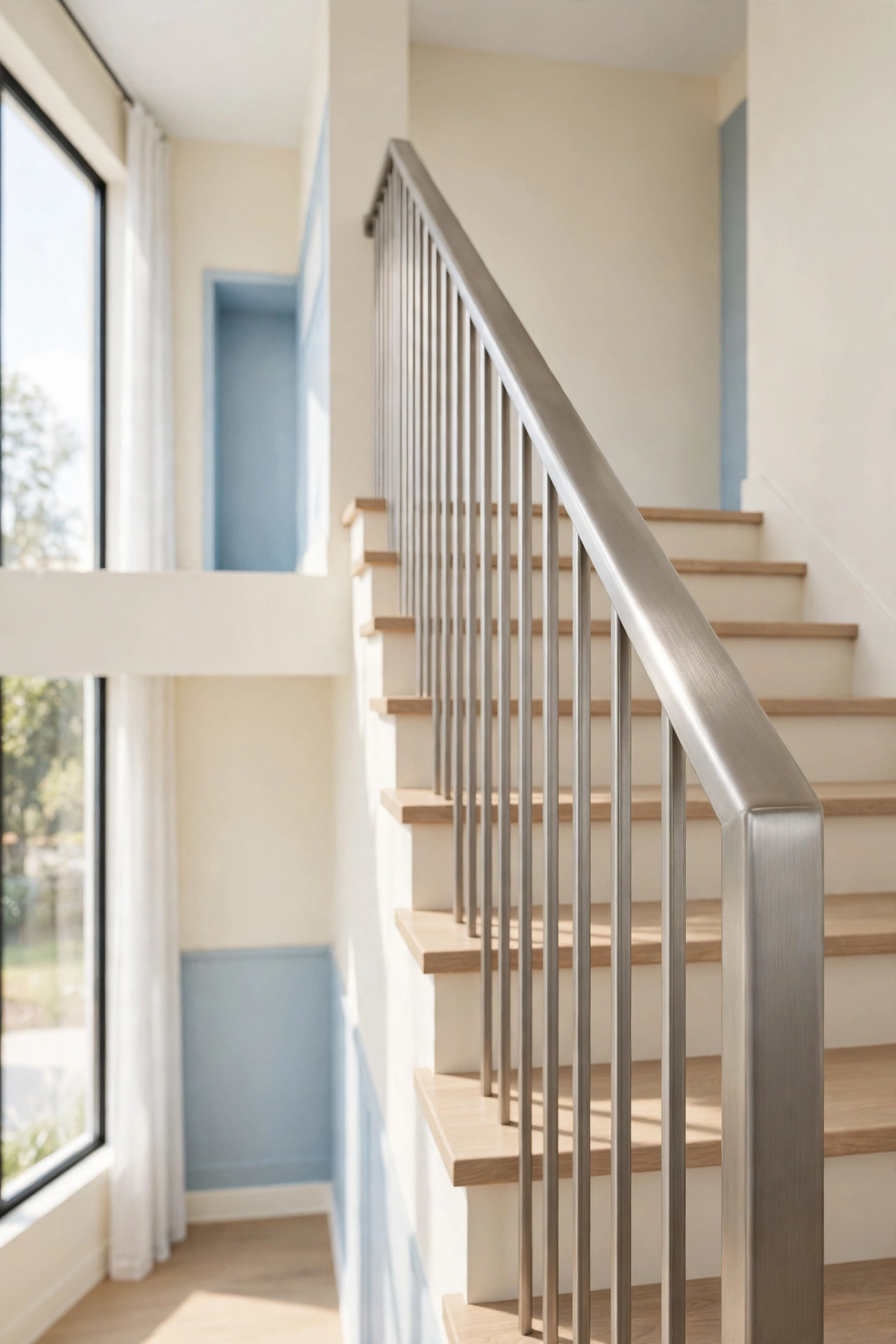
21. Choose Brushed Nickel for a Cool Modern Finish
Brushed nickel railings offer a cool, soft metallic finish that feels modern without being flashy. The muted silver tone catches light gently and pairs well with gray, white, and soft blue color schemes. Brushed nickel also resists fingerprints better than polished chrome, which keeps the railing looking clean.
Pair brushed nickel balusters and fittings with a wood or nickel handrail in a matching finish. The cool metal works beautifully in contemporary bathrooms and kitchens that open onto the staircase. Keep surrounding surfaces light and uncluttered so the soft metallic sheen can be appreciated.
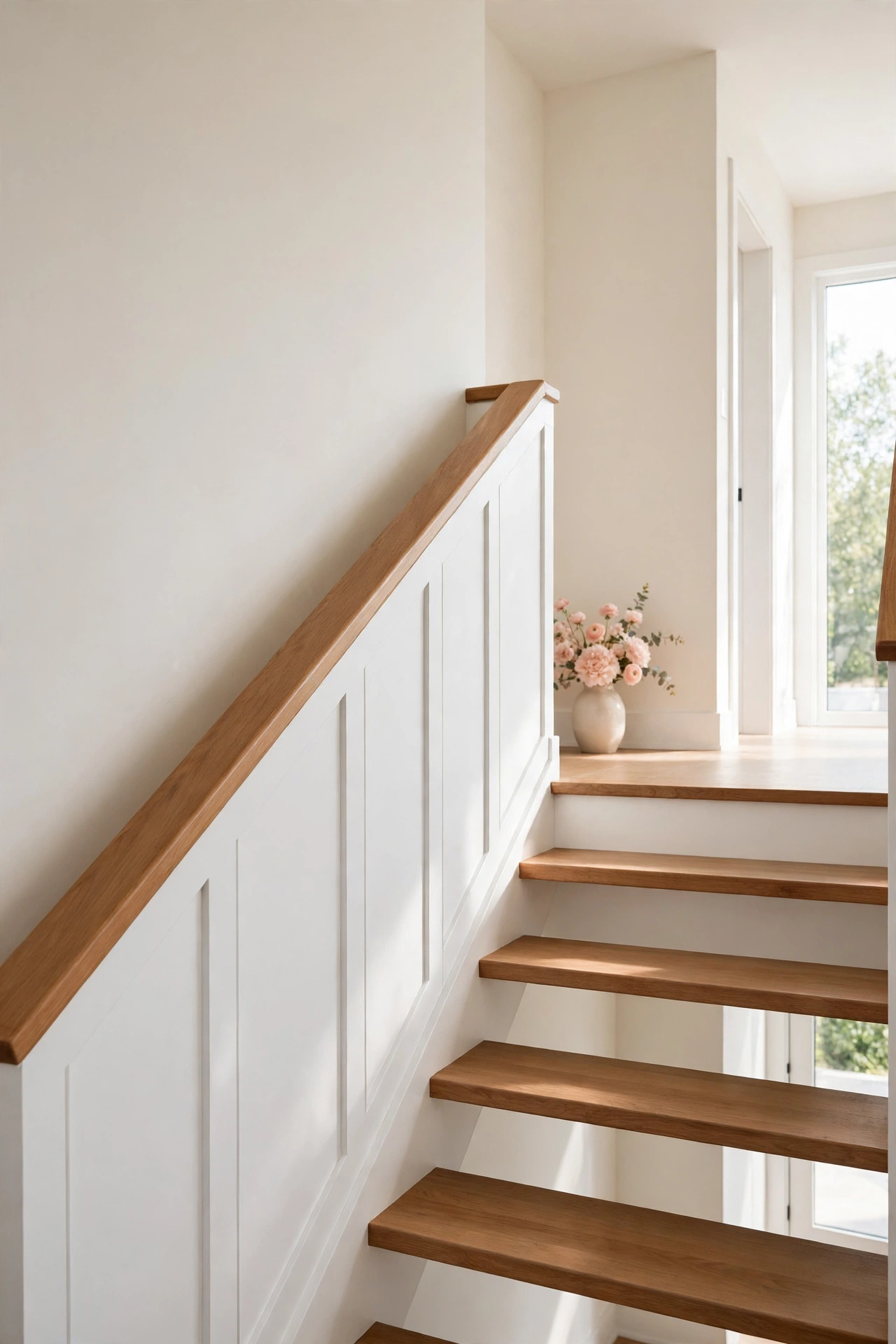
22. Build a Half Wall with a Wood Cap Rail
A half wall with a wood cap rail is a solid, architectural approach to staircase safety. The wall rises partway up the side of the stairs and is topped with a smooth wood cap that serves as the handrail. This style feels substantial and clean, and it works beautifully in modern and Craftsman style homes.
Paint the half wall the same color as the surrounding walls for a seamless look, or add beadboard or paneling for extra character. The wide wood cap is comfortable to grip and gives you a natural shelf for a small plant or a framed photo at the landing. This railing style also hides the stair structure for a tidy, finished appearance.
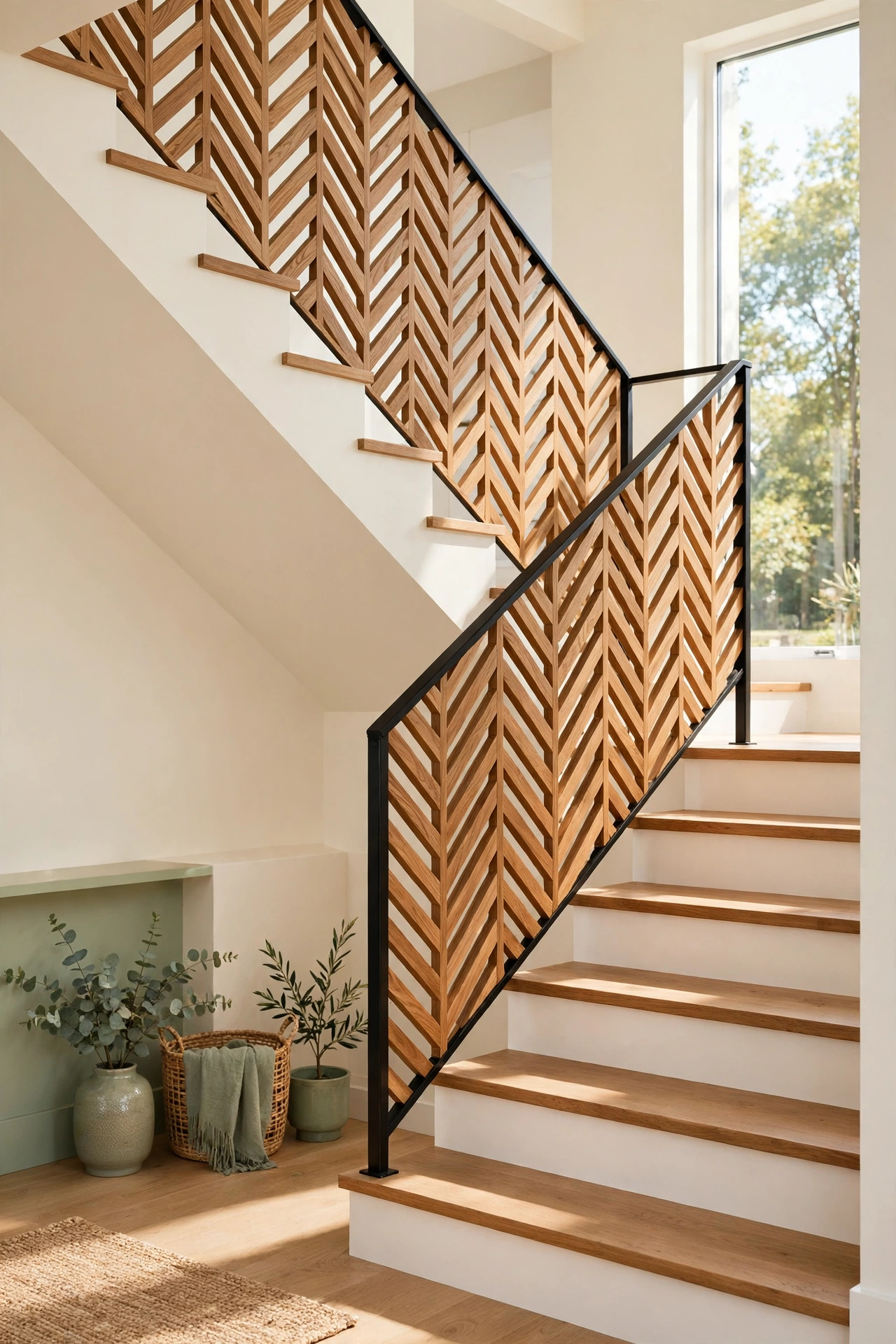
23. Add Chevron Patterned Infill Panels
Chevron patterned infill panels add energy and movement to a staircase railing. The zigzag pattern draws the eye upward along the stairs and gives the railing a dynamic, custom feel. Chevron panels in wood or metal suit mid century modern and contemporary interiors especially well.
Choose a single material and finish for the chevron so the pattern reads clearly. Warm wood chevrons feel organic and inviting, while black metal chevrons feel bold and graphic. Keep the handrail simple and straight so the zigzag pattern remains the clear focal point of the design.
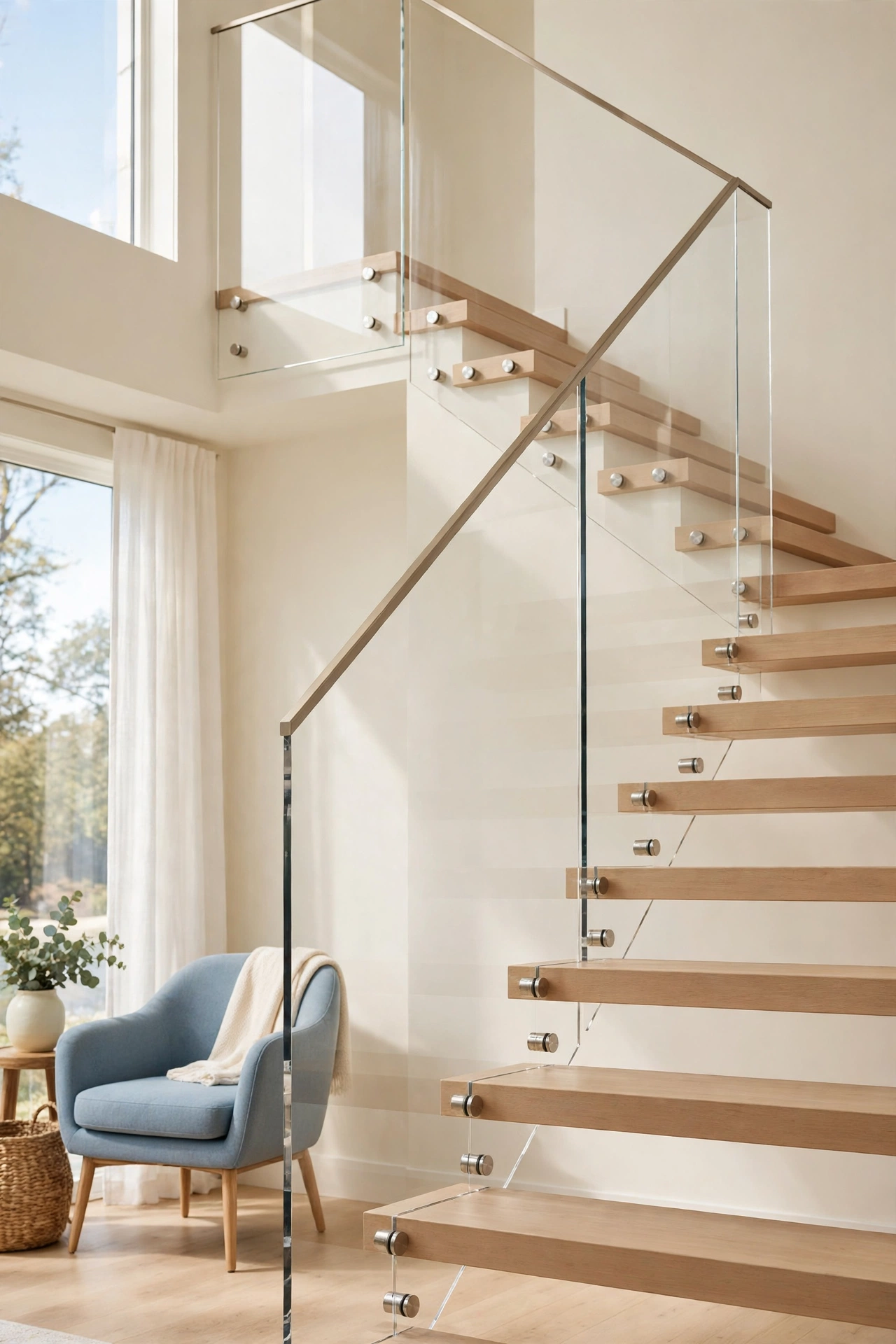
24. Use Clear Acrylic Panels for a Barely There Look
Clear acrylic panels create a railing that is barely there at all. The transparent panels disappear against the room, so the staircase seems to float and the space feels completely open. Acrylic is lighter than glass and more forgiving in homes with active kids and pets.
Pair acrylic panels with slim metal standoffs and a minimal handrail to keep the barely there effect. The panels wipe clean easily and resist shattering, which makes them a practical choice for busy households. This railing suits modern interiors where openness and light matter most.
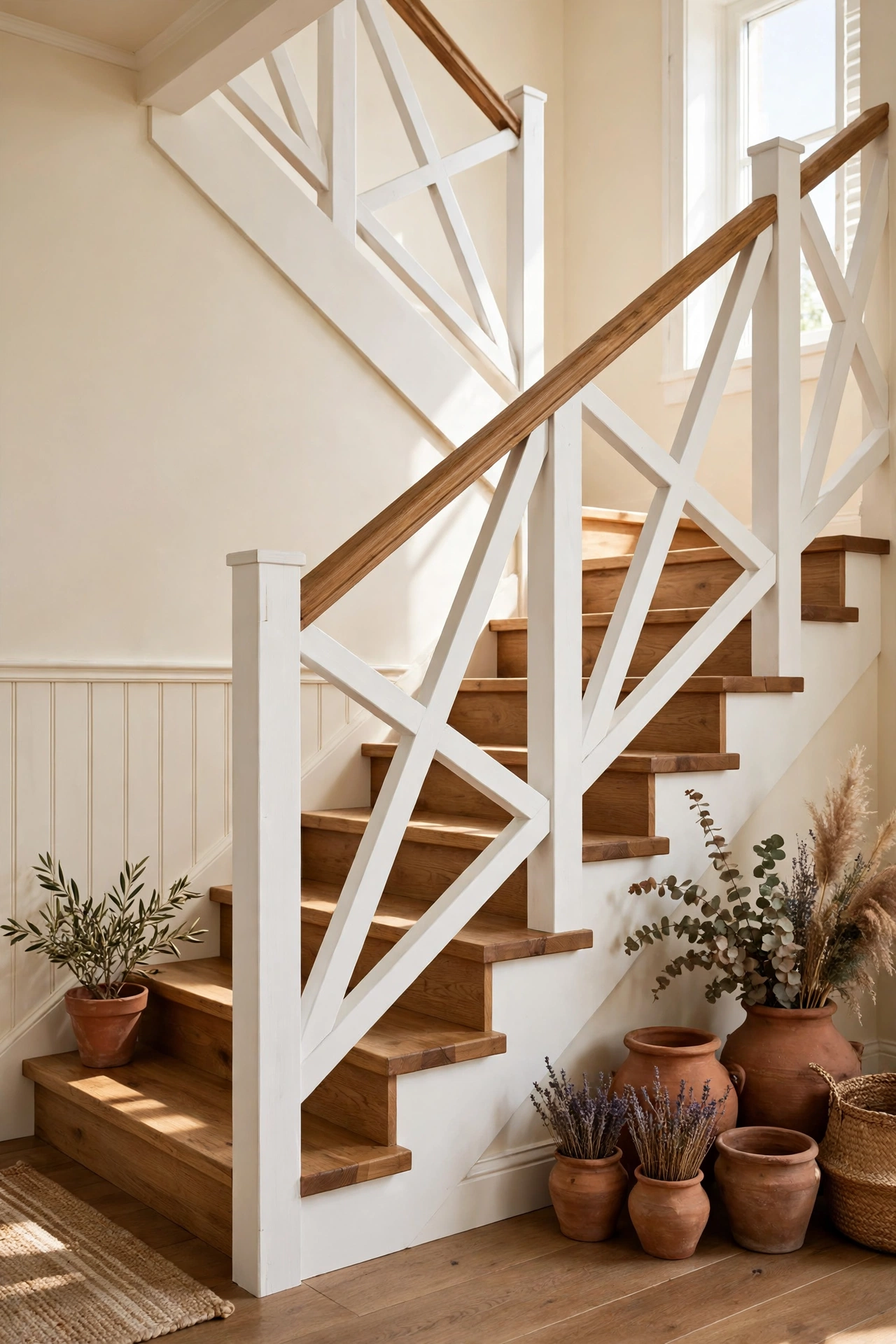
25. Frame the Stairs with a Farmhouse X Pattern
A farmhouse X pattern railing brings charming, rustic geometry to a staircase. Wood boards cross in an X shape between the posts, creating a pattern that feels handmade and welcoming. This style is a natural fit for farmhouse, cottage, and country style homes.
Paint the X pattern white or cream for a fresh farmhouse look, or leave the wood natural for a warmer rustic feel. A chunky wood handrail and square newel posts complete the design. The X pattern adds visual interest without fussy detail, which keeps the staircase feeling relaxed and honest.
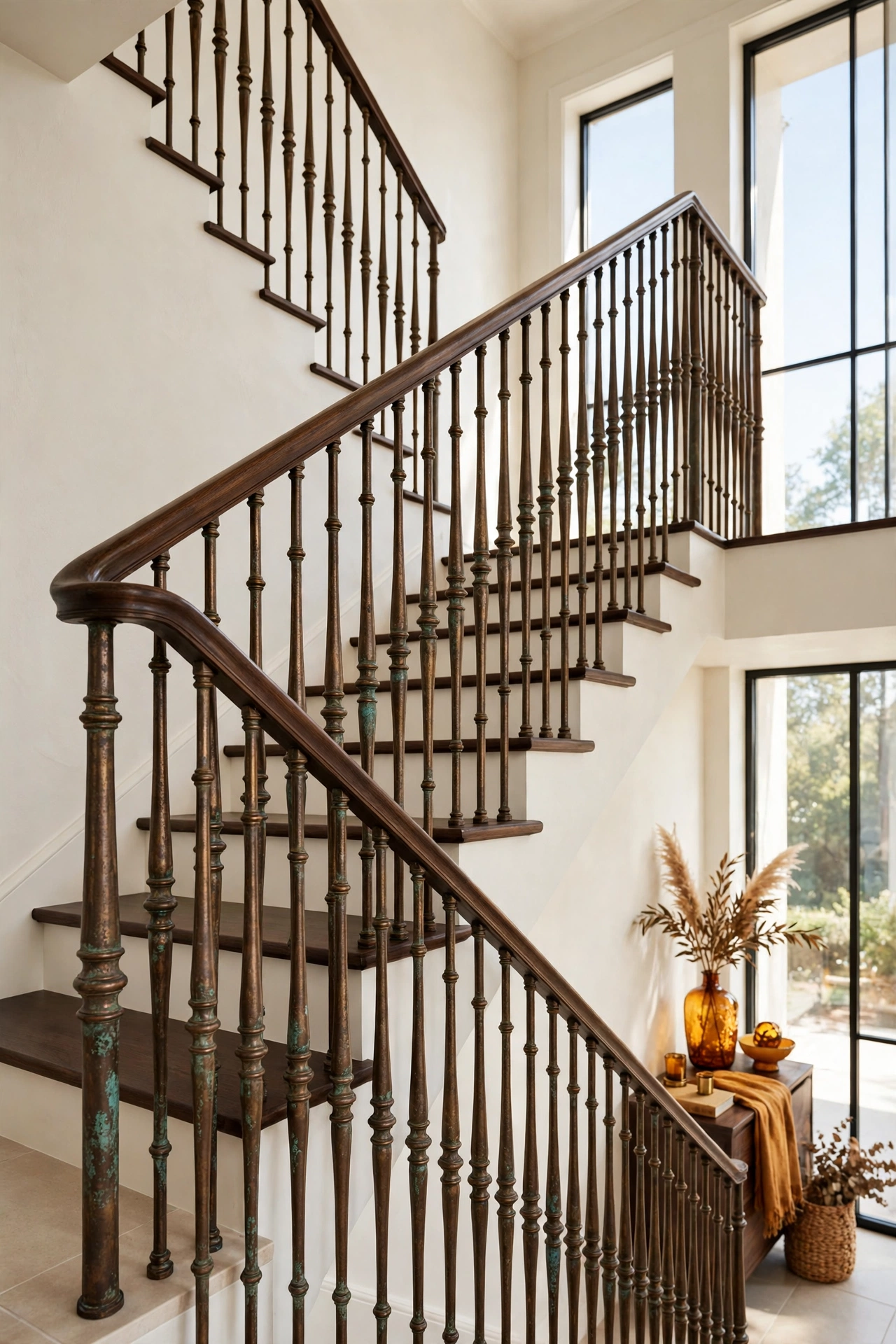
26. Warm Up Metal with an Aged Bronze Finish
An aged bronze finish gives metal railings a warm, timeworn richness that polished metals cannot match. The deep bronze tone has subtle variations that catch the light and feel collected over time. Bronze suits traditional, transitional, and Mediterranean interiors beautifully.
Pair bronze balusters with a dark wood handrail in walnut or mahogany for a rich, layered look. The warm metal also complements terracotta, amber, and cream tones in the surrounding room. This finish hides wear gracefully, so the railing looks better and better as the years pass.
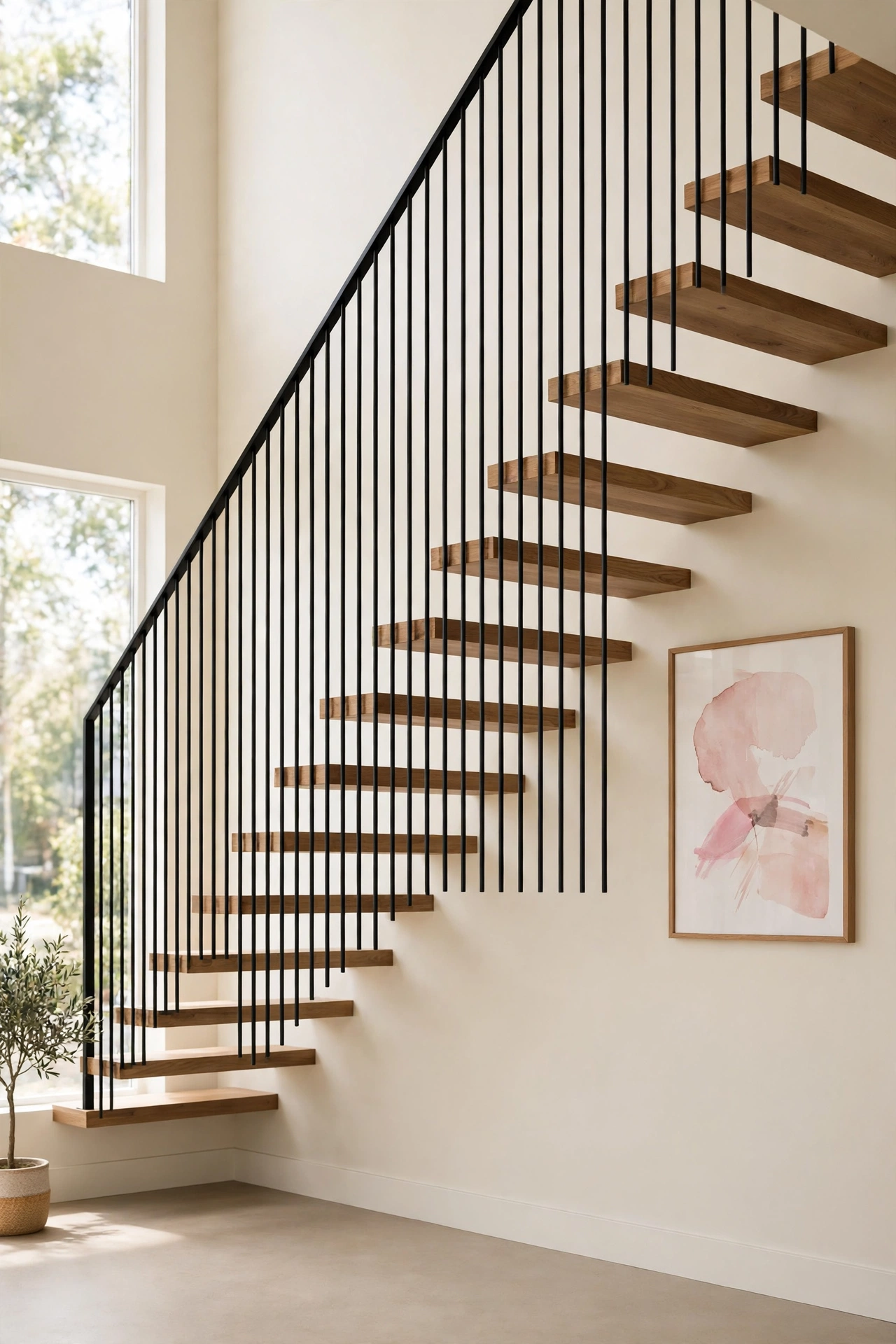
27. Line the Stairs with Slim Vertical Rods
Slim vertical rods create a railing that feels light, orderly, and modern. Thin metal rods stand in neat rows from tread to handrail, like a fine comb of lines that guides the eye upward. The tight, even rhythm feels calm and precise in a contemporary interior.
Choose rods in matte black, brushed steel, or brass to match your hardware and light fixtures. A slim handrail in the same finish keeps the whole railing unified and quiet. This style works especially well on floating staircases, where the delicate rods balance the bold open treads.
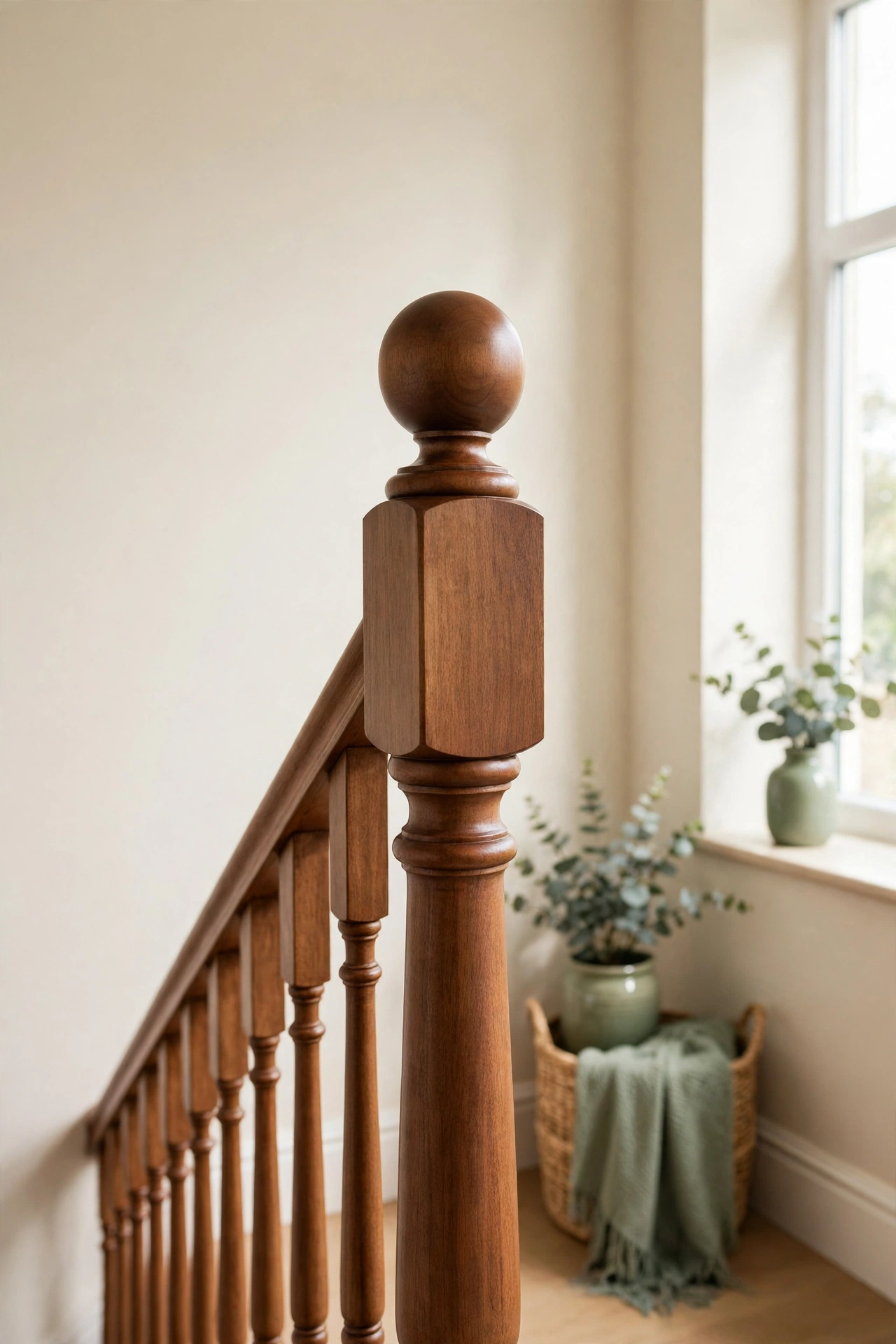
28. Top the Newel Post with a Classic Ball Finial
A classic ball finial crowns the newel post with timeless elegance. The smooth sphere sits atop the post like a jewel, and its simple round shape suits almost any traditional staircase. Ball finials feel at home in colonial, Victorian, and classic transitional interiors.
Match the finial finish to the newel post for a unified look, whether that means painted white, stained wood, or dark metal. The ball shape is also comfortable to rest your hand on as you pause at the foot of the stairs. Small details like a finial are what make a staircase feel finished and thoughtfully designed.
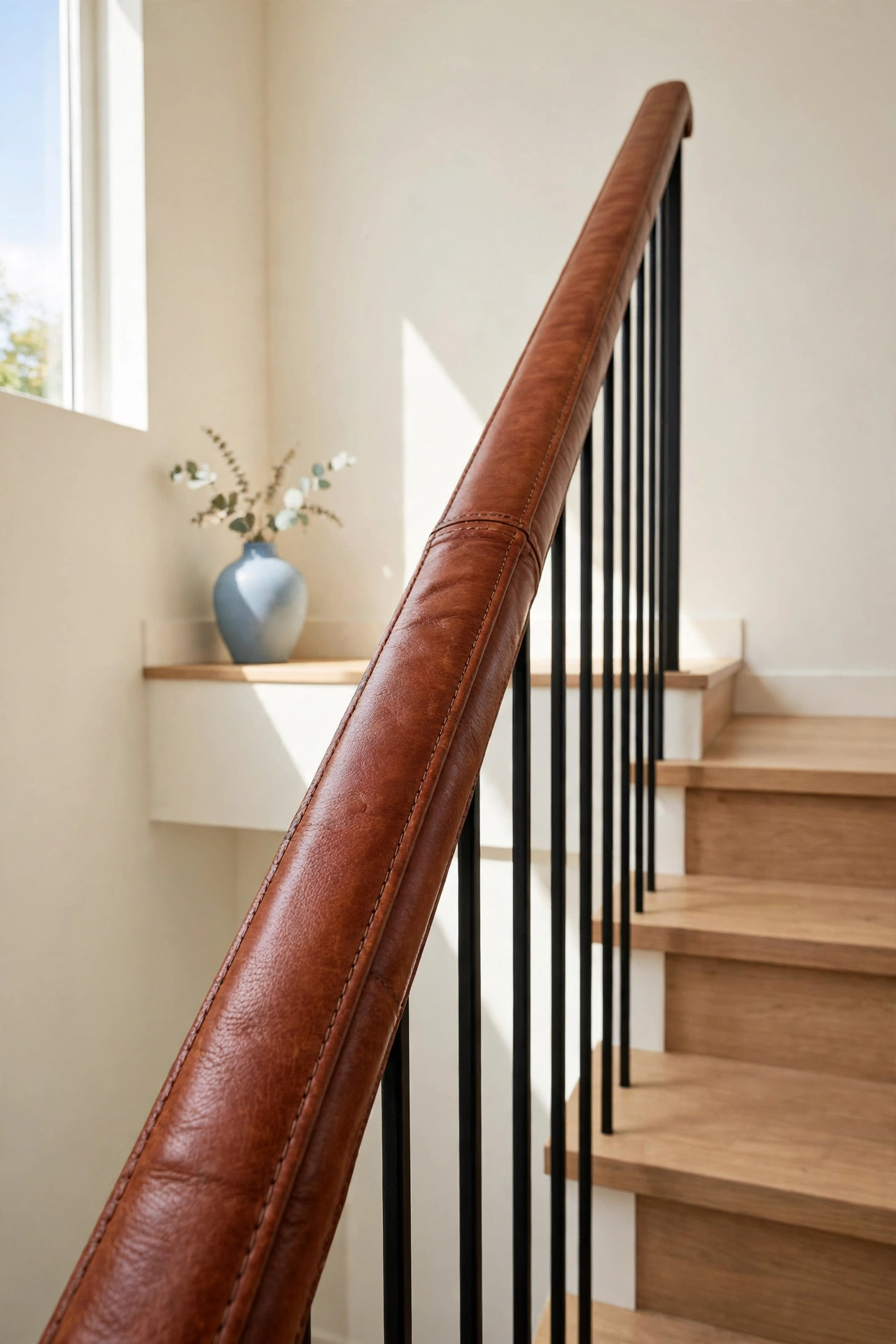
29. Wrap the Handrail in Rich Leather
A leather wrapped handrail adds unexpected luxury to a staircase. The soft, supple leather feels wonderful under your hand and develops a beautiful patina over time. Rich cognac, deep brown, or classic black leather all pair beautifully with metal balusters and wood treads.
Keep the balusters simple and slim so the leather handrail remains the tactile star of the design. This detail suits modern, equestrian inspired, and transitional interiors where texture matters as much as color. A leather handrail turns an everyday touchpoint into a small daily pleasure.
30. Paint the Railing a Bold Accent Color
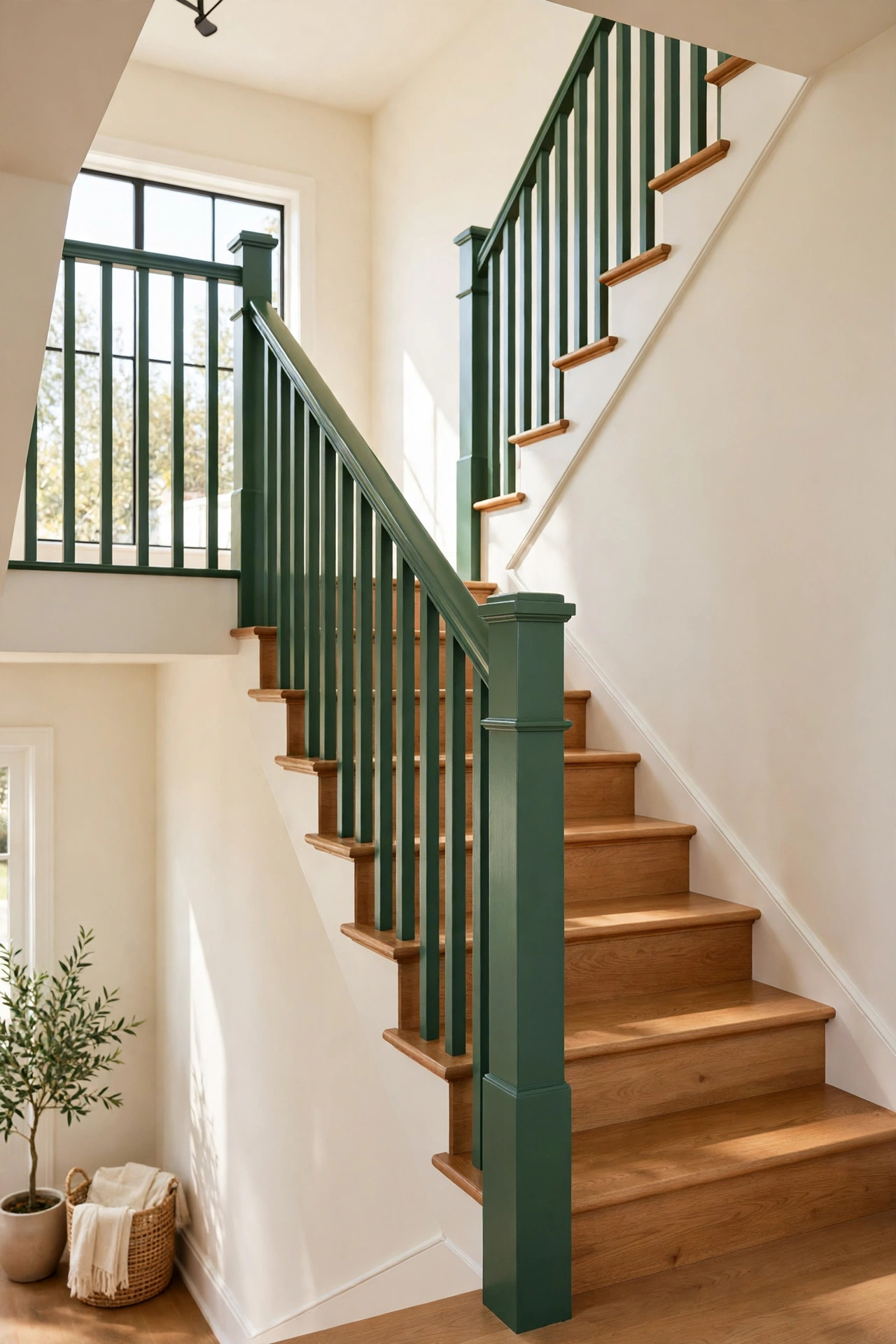
Painting the railing a bold accent color is the fastest way to make a staircase unforgettable. A deep navy, forest green, or rich terracotta railing becomes the focal point of the entire entryway. This approach works best when the rest of the room stays calm and neutral.
Choose a durable satin or semi gloss paint that can handle daily hand contact and is easy to wipe clean. Paint the handrail, balusters, and newel posts all in the same bold color for a confident, cohesive statement. A bold railing proves that the staircase deserves just as much design attention as any other feature in the home.
Conclusion
The right staircase railing does more than keep your family safe. It frames the entryway, guides the eye upward, and tells guests something about your style before they have seen another room. From glass panels to wrought iron scrollwork, there is a statement railing for every home and every budget.
Choose the idea that fits your architecture, your lifestyle, and the feeling you want when you walk through the door. For more ways to add architectural character overhead, these coffered ceiling design ideas show how ceiling details can complete the look of a beautiful entryway. Your staircase is ready to make a statement.
Frequently Asked Questions About Statement Stair Railing Design Ideas
What is the most popular stair railing style right now?
Matte black metal balusters with a warm wood handrail remain the most popular choice, thanks to their clean look and versatility. Glass panel railings are close behind for modern homes that want open sightlines and maximum light. Both styles suit a wide range of interiors and pair well with neutral wall colors.
How high should a stair railing be?
In most homes, the handrail should sit between 34 and 38 inches above the front edge of each stair tread. Local building codes can vary, so check the rules in your area before you install a new railing. A comfortable grip height matters just as much as the code minimum, so test the height before you finalize the design.
Are glass stair railings safe for families with kids?
Yes, tempered glass panels are strong, durable, and safe when installed correctly with proper hardware. Tempered glass is designed to break into small, blunt pieces rather than sharp shards if it is ever damaged. Acrylic panels are another family friendly option, since they are lighter and resist shattering.
Can I update my stair railing without replacing the whole staircase?
Yes, you can often keep the existing stair structure and replace only the balusters, handrail, and newel posts. Painting the railing, swapping wood balusters for metal ones, or adding a new handrail can transform the look at a fraction of the cost. Always make sure the updated railing meets local safety codes for spacing and height.
What color should I paint my stair railing?
White and black are timeless choices that suit nearly every interior, while a bold accent color makes the staircase a true focal point. Match the railing color to your trim for a cohesive look, or contrast it with the walls for drama. If you love warm, earthy palettes, a terracotta or deep sage railing adds richness without overwhelming the entryway.

Hi, I’m Emily! I turn messy corners into cozy, organized spots. DreamNestDecor is where I share simple, practical home ideas — decor, organization, and small-space solutions that work in real life, not just in photos. Every idea here is carefully researched before it’s shared.