Imagine a doorway that gives you back the whole swing of a door. No door bumping into furniture, no wasted corner behind a hinged panel, just a clean opening that appears and disappears into the wall. That is the quiet magic of a pocket door, and once you live with one, every hinged door in the house starts to feel like it takes up too much room.
Pocket doors are not only practical. They are a design feature in their own right, with styles that range from classic paneled wood to modern black framed glass. These 19 pocket door design ideas will help you choose the right style, material, and room for a door that slides away and lets your home breathe.
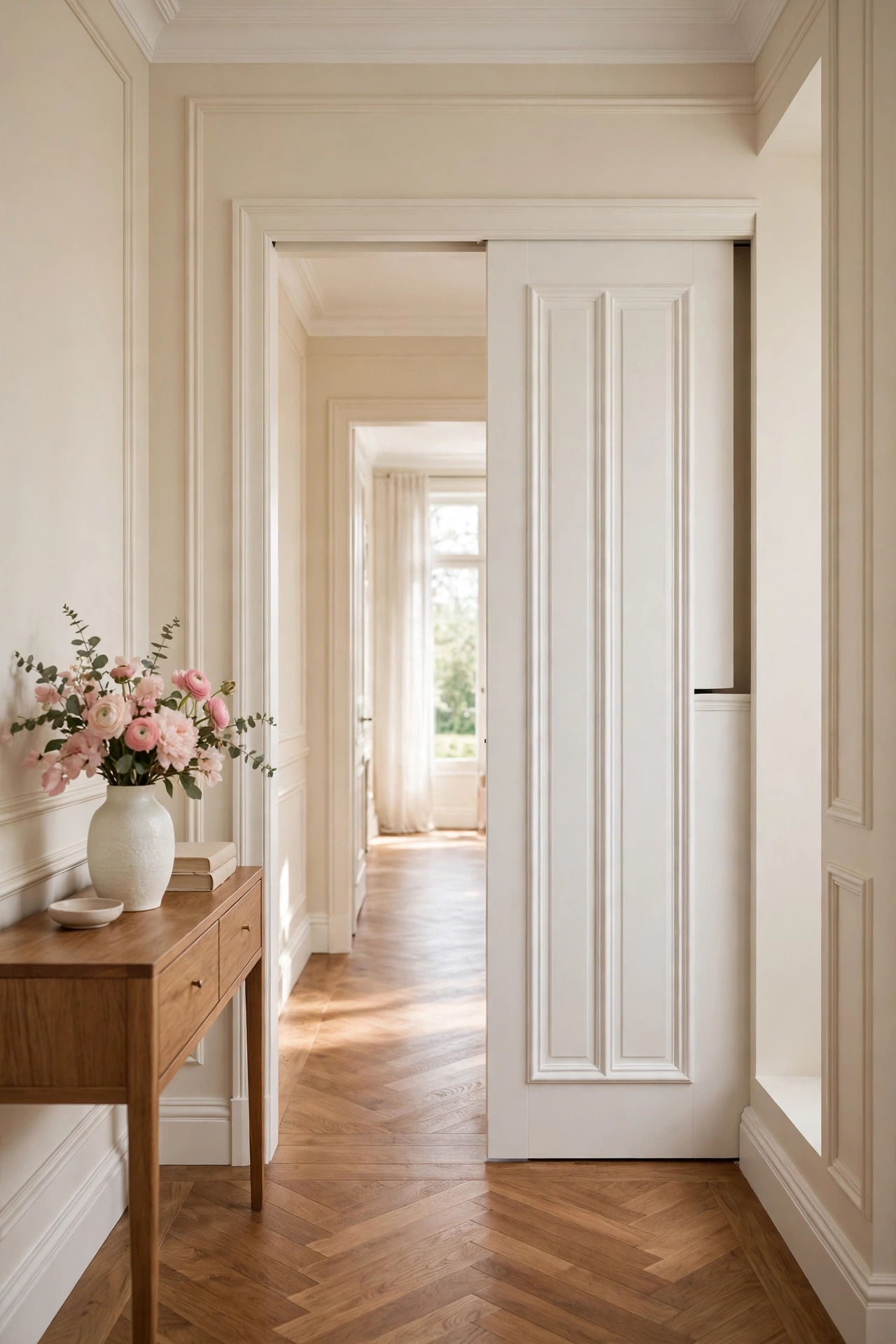
1. Choose a Classic White Panel Pocket Door for Timeless Style
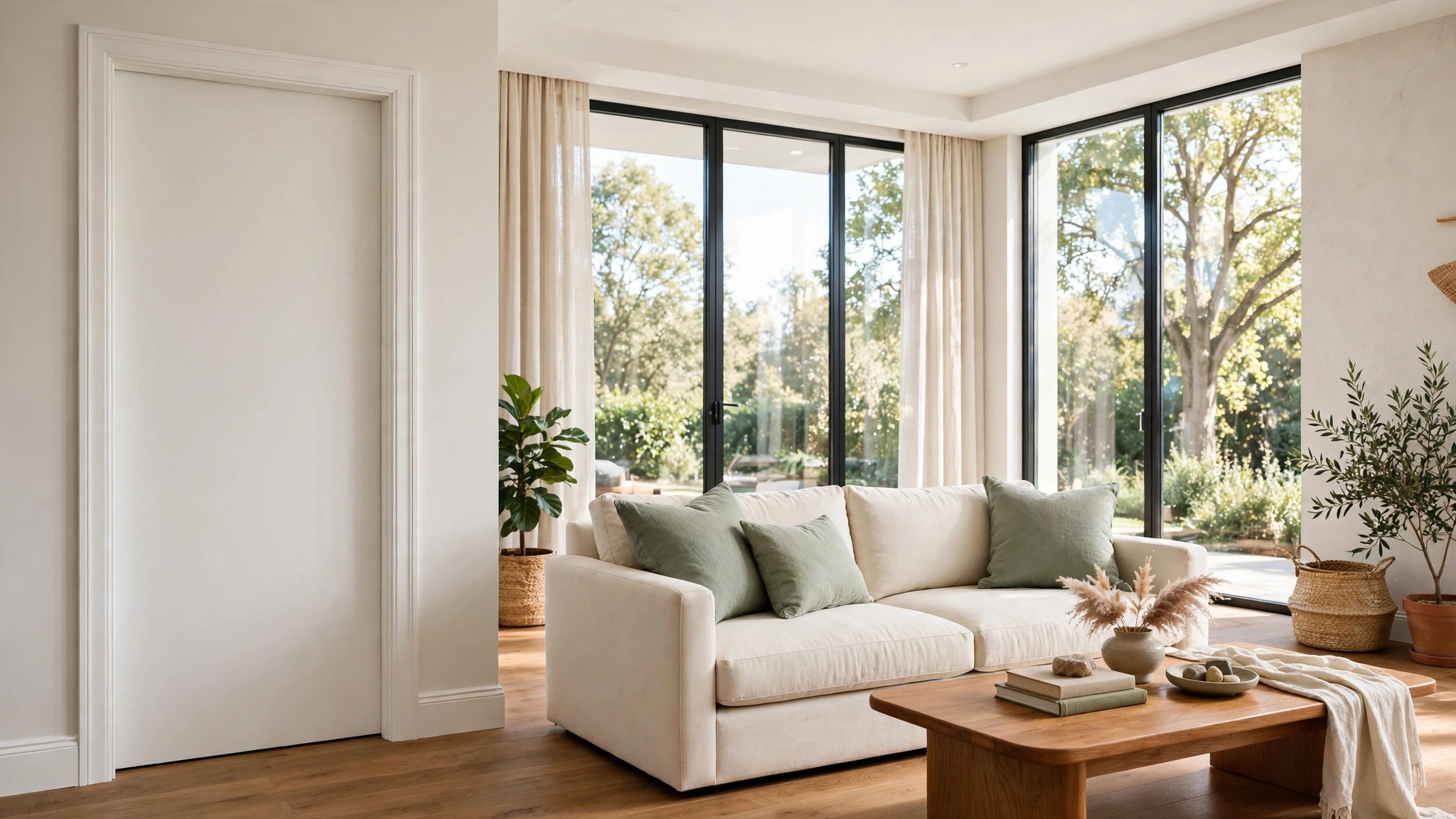
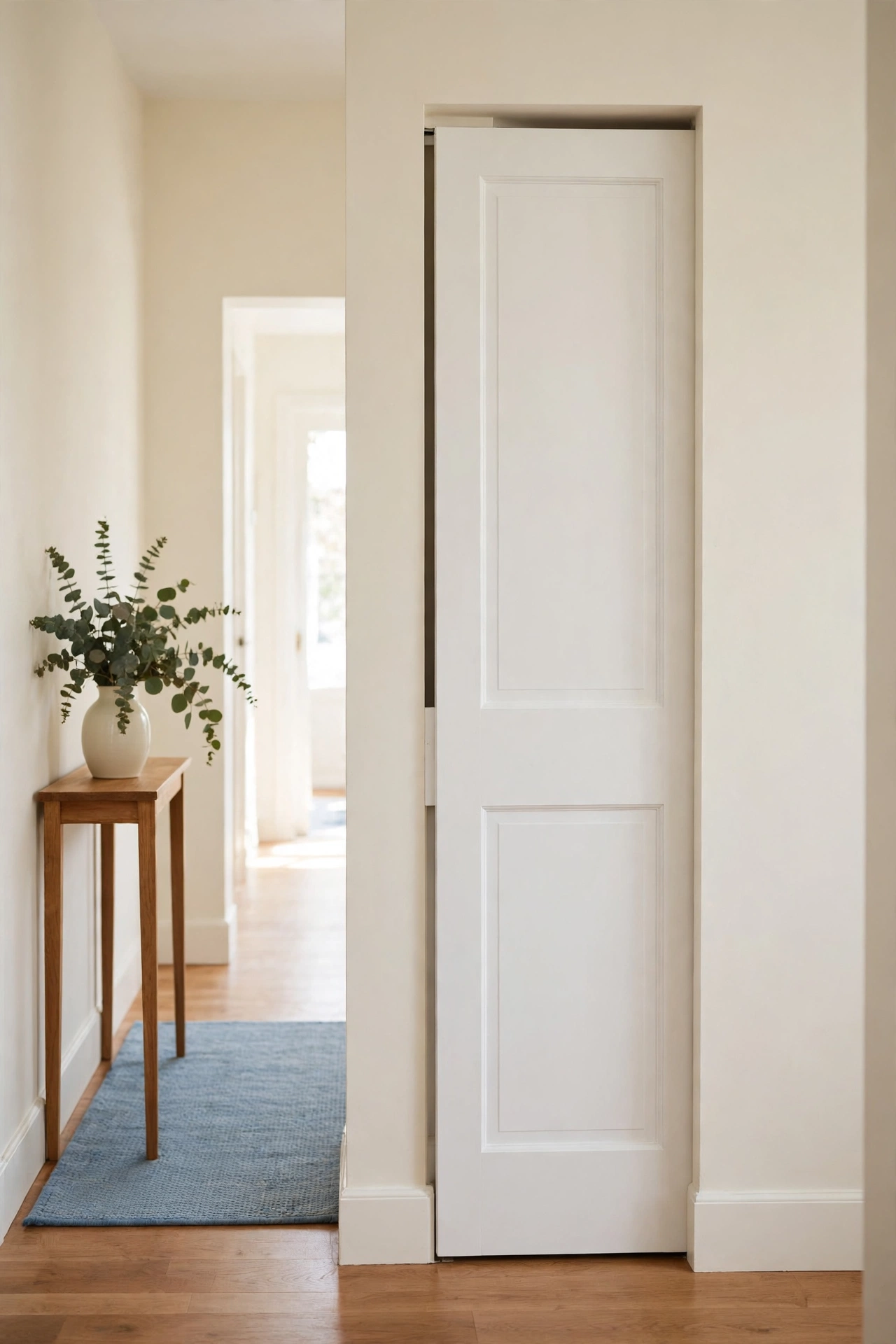
A white paneled pocket door is the safest and most versatile choice you can make. It blends with almost any trim color and works in traditional, farmhouse, and transitional homes alike. When the door slides into the wall, all you see is a clean cased opening with no hardware in sight.
Choose a two panel or four panel design to match the other doors in your home so the pocket door looks like it was always part of the plan. Paint it the same white as your trim for a seamless look, or go one shade warmer for subtle contrast. This is the style to pick when you want the door to disappear and the room to shine.
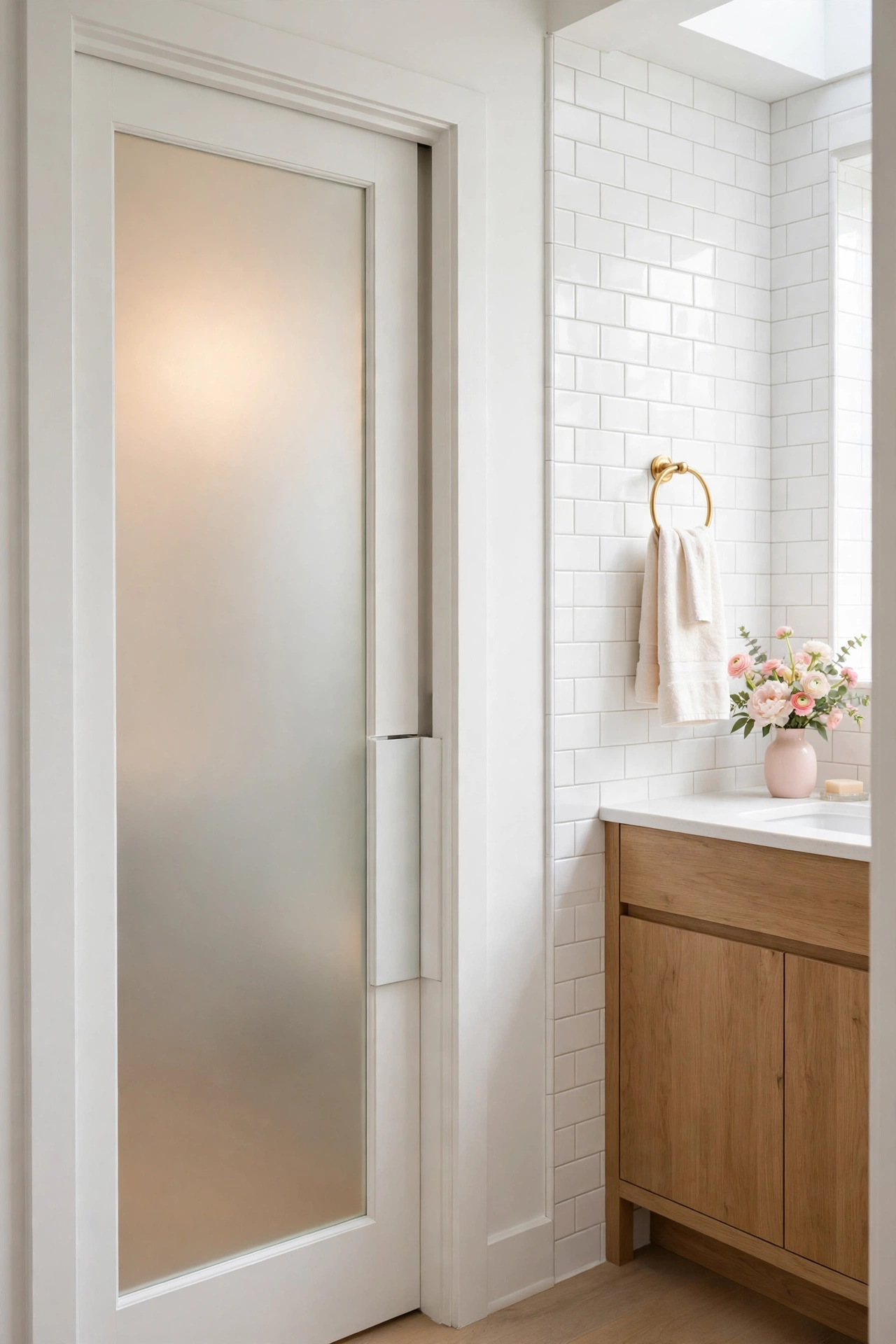
2. Add a Frosted Glass Pocket Door for Bathroom Privacy
A frosted glass pocket door solves the hardest bathroom problem: how to keep privacy while still letting light through. The frosted panel glows softly when the bathroom light is on, so a dark hallway feels brighter even with the door closed. It also signals clearly when the room is in use.
Look for a door with a full frosted panel set in a painted wood frame for a clean, tailored finish. The frame keeps the glass feeling like part of the architecture rather than a shower screen. For more ways to use glass in doorways, see these decorative glass door ideas that balance light and privacy in every room.
3. Open Up a Room with Double Pocket Doors
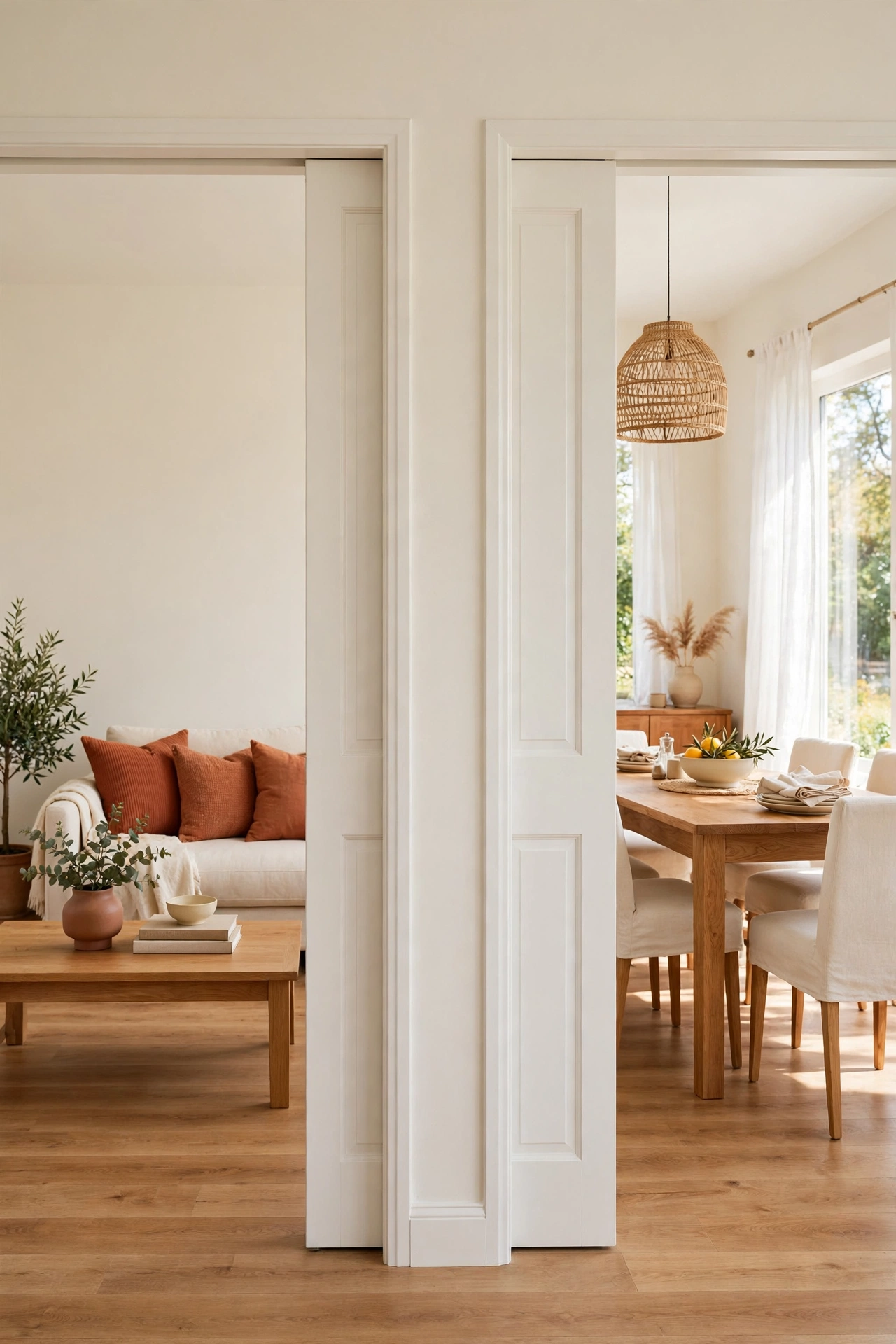
Double pocket doors are two panels that slide into opposite walls and meet in the middle. When both are open, the wall between two rooms all but vanishes, which makes them perfect for joining a living room and dining room for gatherings. When closed, each room gets its own quiet again.
This is the grandest pocket door option, so give it a wide opening and matching panels for symmetry. Painted panels with simple molding look elegant, while glass panels keep the connection between rooms even when the doors are shut. Double pocket doors turn an ordinary cased opening into an architectural moment.
4. Bring Warmth with a Natural Wood Pocket Door
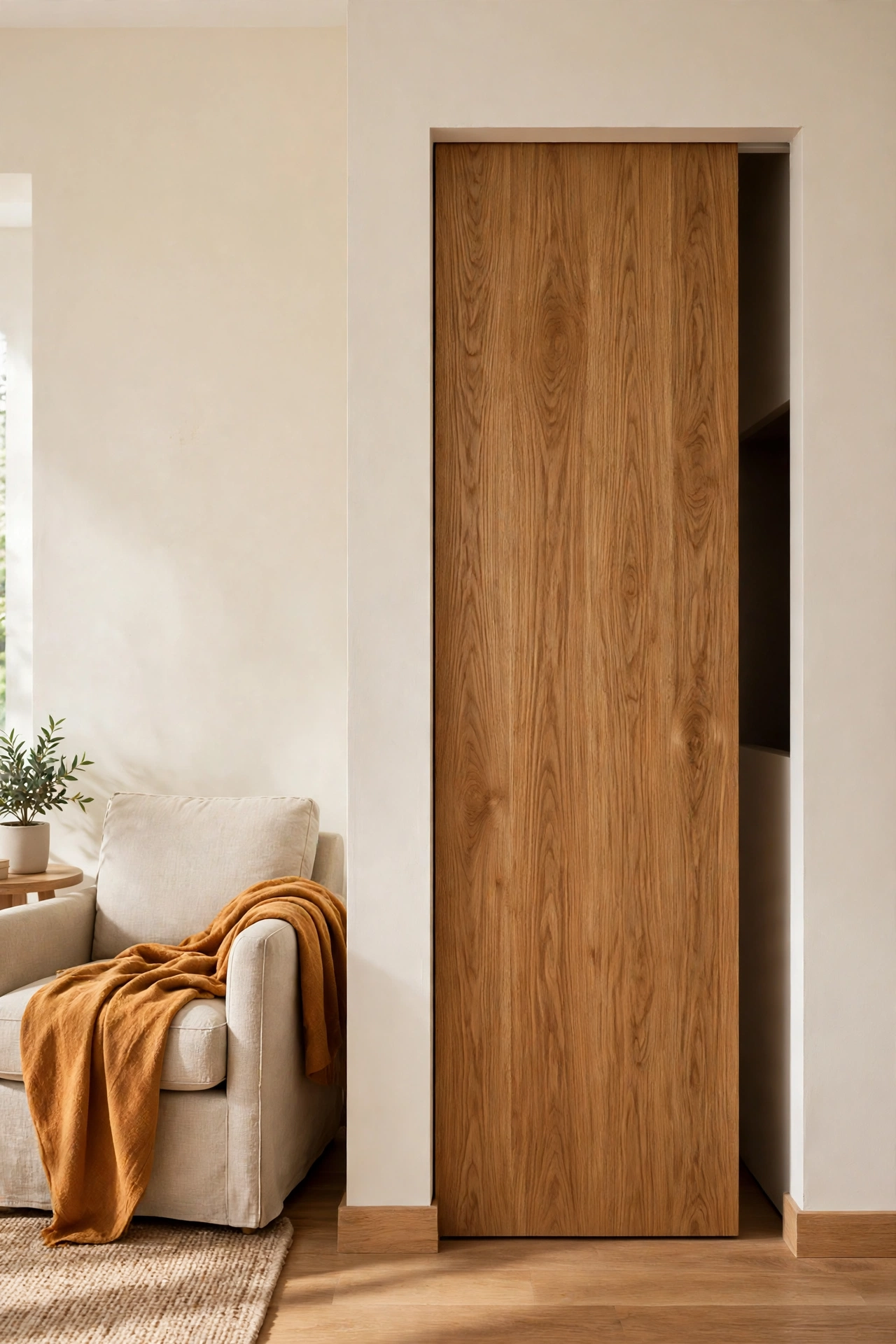
A natural wood pocket door adds instant warmth to a hallway or bedroom entrance. The wood grain becomes the decoration, so you do not need bold color or fancy hardware to make the doorway feel special. Warm oak, walnut, and honey toned pine all work beautifully against cream walls.
Keep the finish matte or satin so the door looks like furniture rather than a shiny fixture. Pair it with warm wood floors and cream trim for a calm, cohesive look. A wood pocket door is especially lovely in farmhouse and rustic style homes where natural materials do the talking.
5. Frame Light with a Black Framed Glass Pocket Door
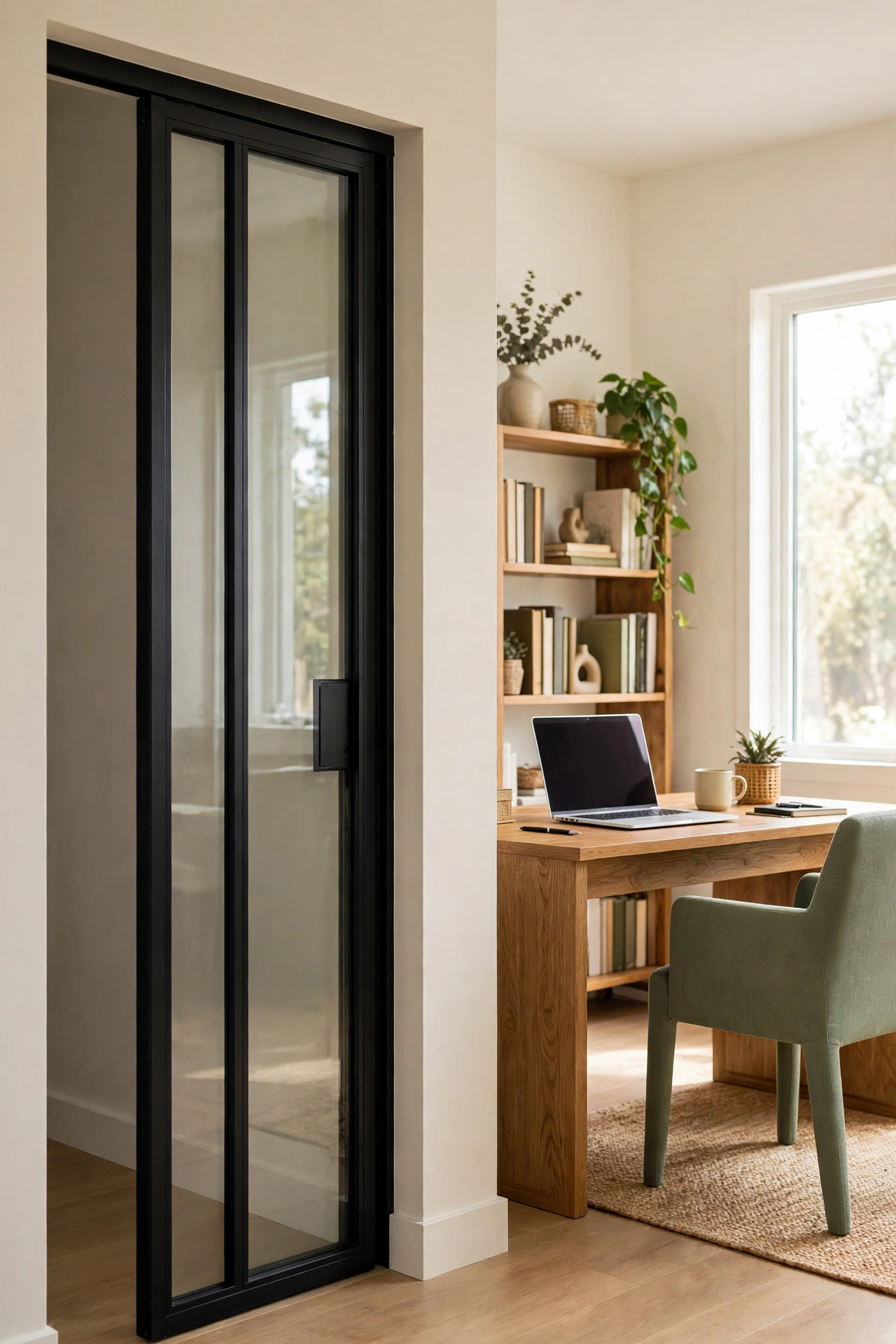
A black framed glass pocket door brings a modern, gallery like feel to any interior. The slim black frame outlines the glass panels and creates a strong graphic line against light walls. It divides a space without blocking light, which makes it ideal for home offices and studios.
Use clear glass when you want a fully open feeling, or switch to reeded or frosted glass for a softer division. The black frame pairs well with black window frames, matte black faucets, and dark furniture accents. This is the pocket door to choose when you want the door itself to be the design statement.
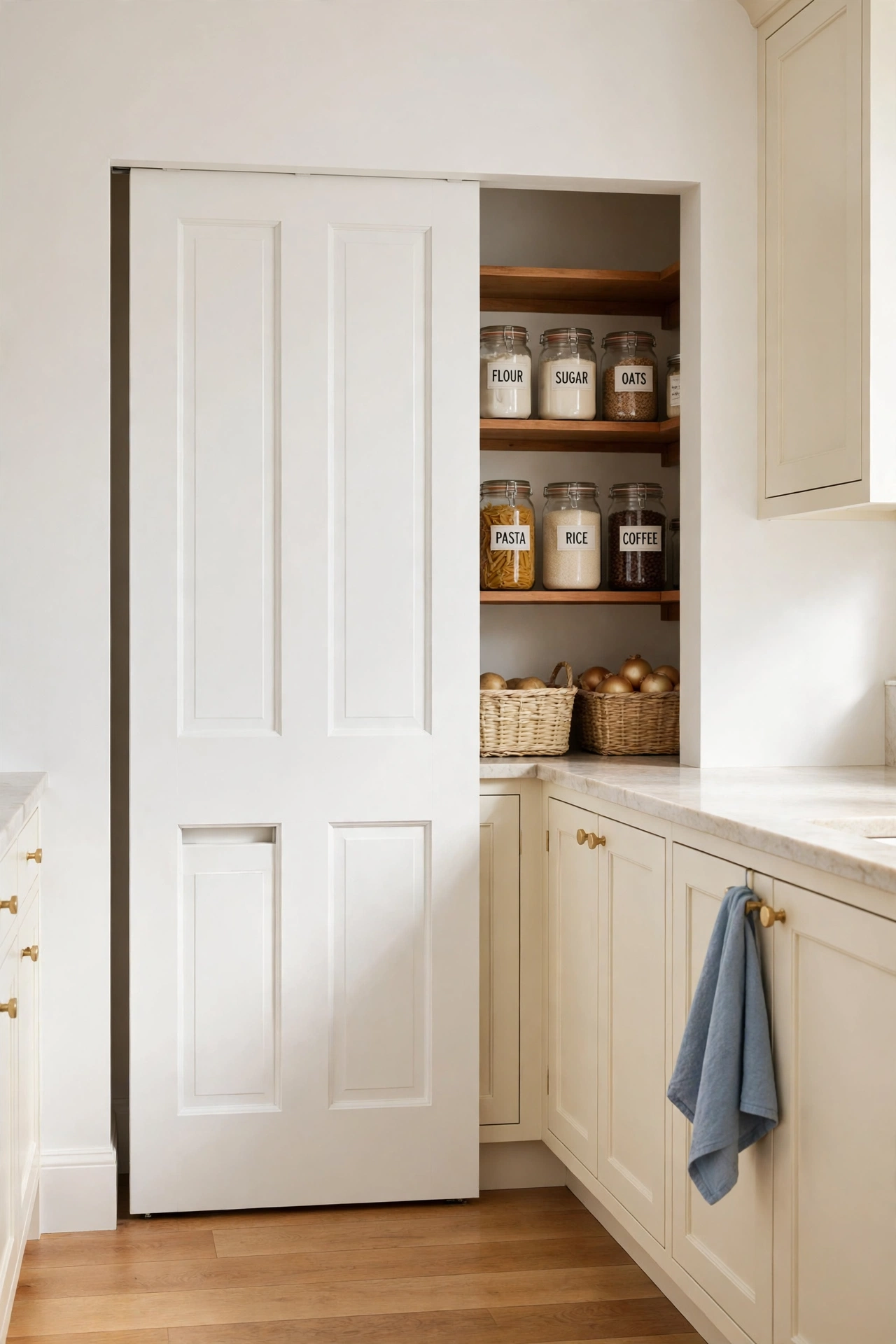
6. Hide the Pantry Behind a Pocket Door
A kitchen pantry with a hinged door often fights with cabinets, islands, and foot traffic. A pocket door removes that fight entirely. The door slides into the wall beside the pantry opening, so you can walk in and out with armfuls of groceries without maneuvering around a swinging panel.
Choose a panel style that matches your kitchen cabinets so the pantry entrance reads as part of the cabinetry wall. Add a small label or a simple round pull in a finish that matches your cabinet hardware. For a pantry that stays tidy behind its door, these pantry can organization ideas will help you keep every shelf in order.
7. Save Space with a Laundry Room Pocket Door
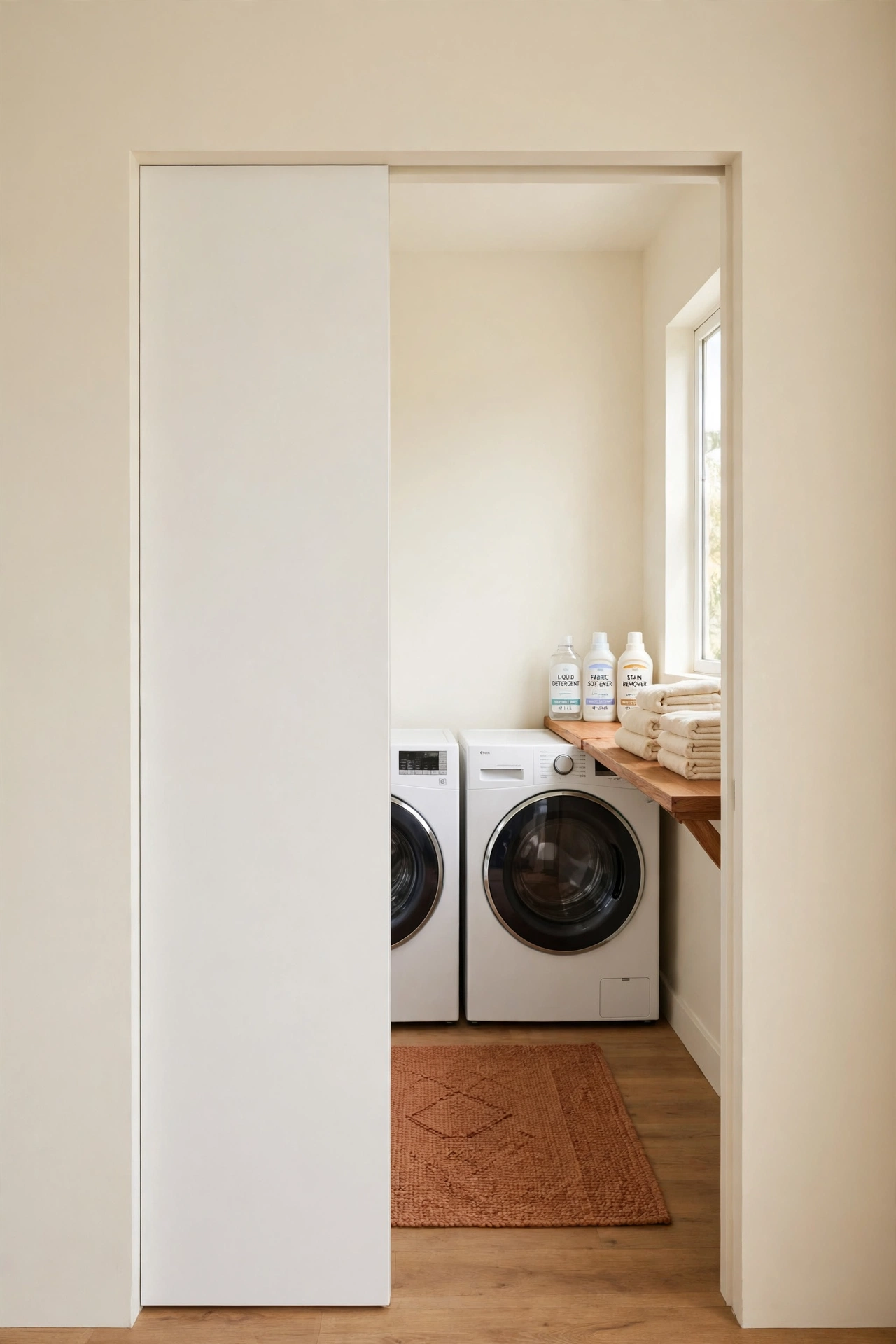
Laundry rooms are often the tightest rooms in the house, and a swinging door can eat up the very floor space you need for sorting and folding. A pocket door gives that space back. You can place a folding counter or a laundry basket right where a hinged door would have swung.
A louvered or frosted glass panel works well here because laundry rooms benefit from airflow and borrowed light. Keep the door painted the same color as the surrounding walls so the small room feels larger. It is a small change that makes laundry day noticeably easier.
8. Fit a Pocket Door in a Small En Suite Bathroom
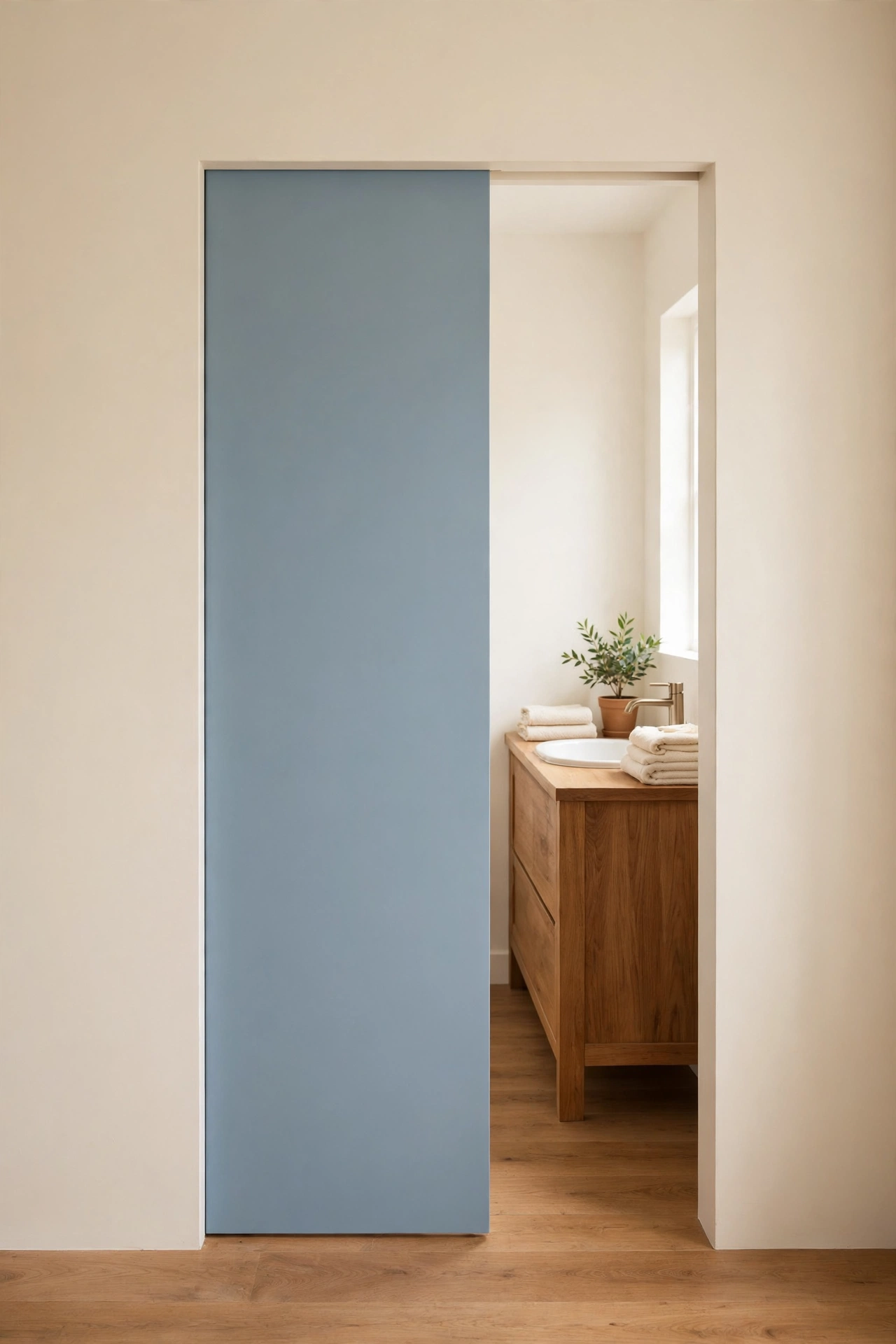
In a small en suite bathroom, every inch matters, and a pocket door can be the difference between a cramped room and a comfortable one. Without a door swing, you gain space for a wider vanity, a towel hook, or simply room to move. The door slides into the bedroom wall and stays completely out of the way.
Choose a solid panel for full privacy and add a privacy lock with a flush pull that sits flat against the door face. Soft blue or sage painted walls around the opening keep the small space feeling calm and fresh. Your en suite will feel larger the moment the swinging door is gone.
9. Close Off a Home Office with a Pocket Door
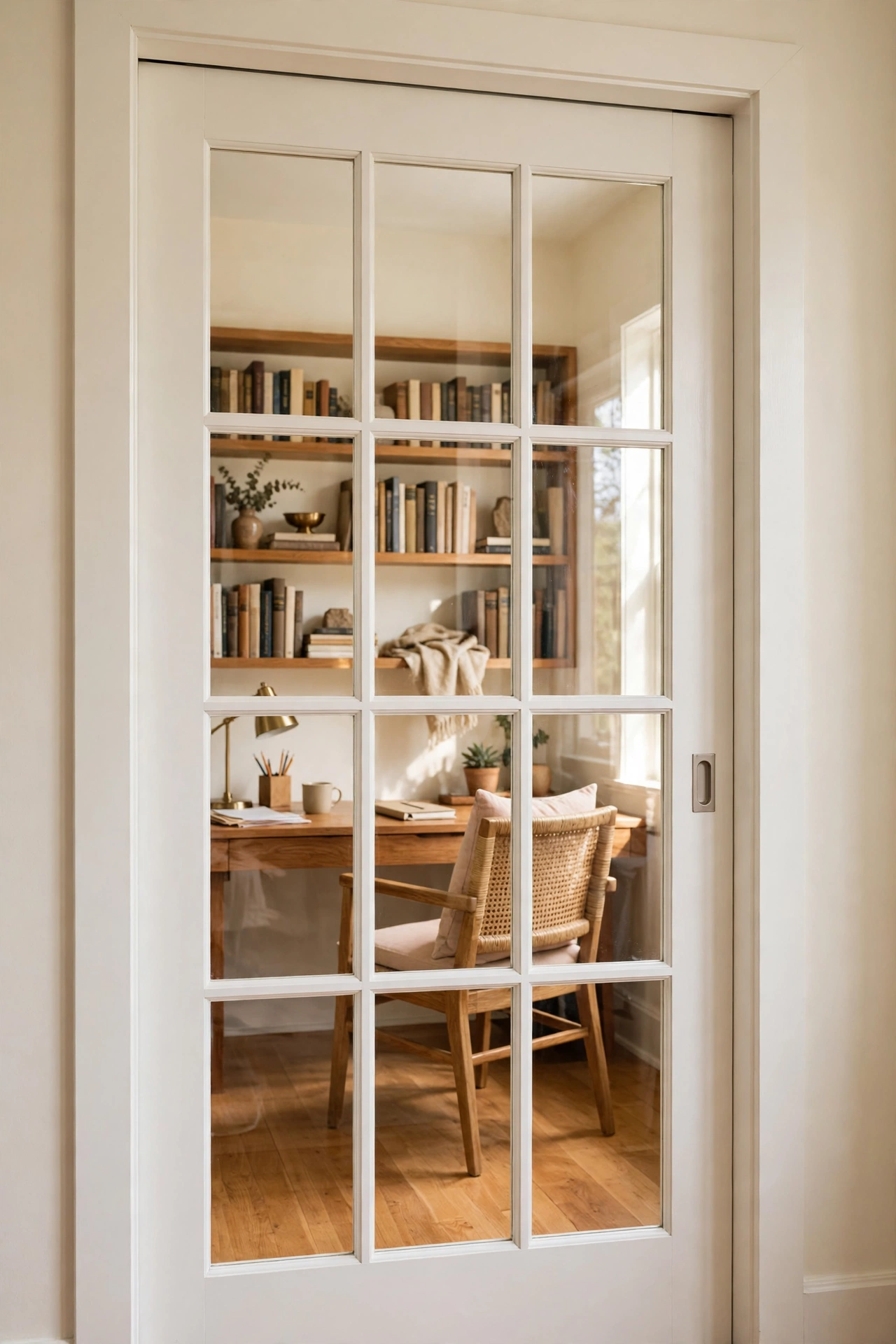
Working from home is easier when you can close a door at the end of the day, but a hinged door in a small office steals wall space you need for a desk and shelves. A pocket door gives you the boundary without the swing. Slide it shut for focus, slide it open when the workday ends.
A glass pocket door is a smart choice here because it keeps the office connected to the rest of the home while still marking a clear edge. Pair it with a wall of bookshelves for a studious, finished look. These small home library layout ideas show how shelving and seating can turn a small office into a room you love to spend time in.
10. Replace a Closet Door with a Sliding Pocket Door
Closet doors that swing outward can block dressers, chairs, and walkways in a bedroom. A pocket door solves the problem by sliding into the wall, which frees the full width of the closet opening. You can stand right in front of your clothes without a door panel in the way.
This works best for reach in closets with enough wall space on one side for the door to slide into. Choose a panel that matches the bedroom doors so the closet blends in. The result is a bedroom that feels calmer, because the closet door is never left half open and in the way.
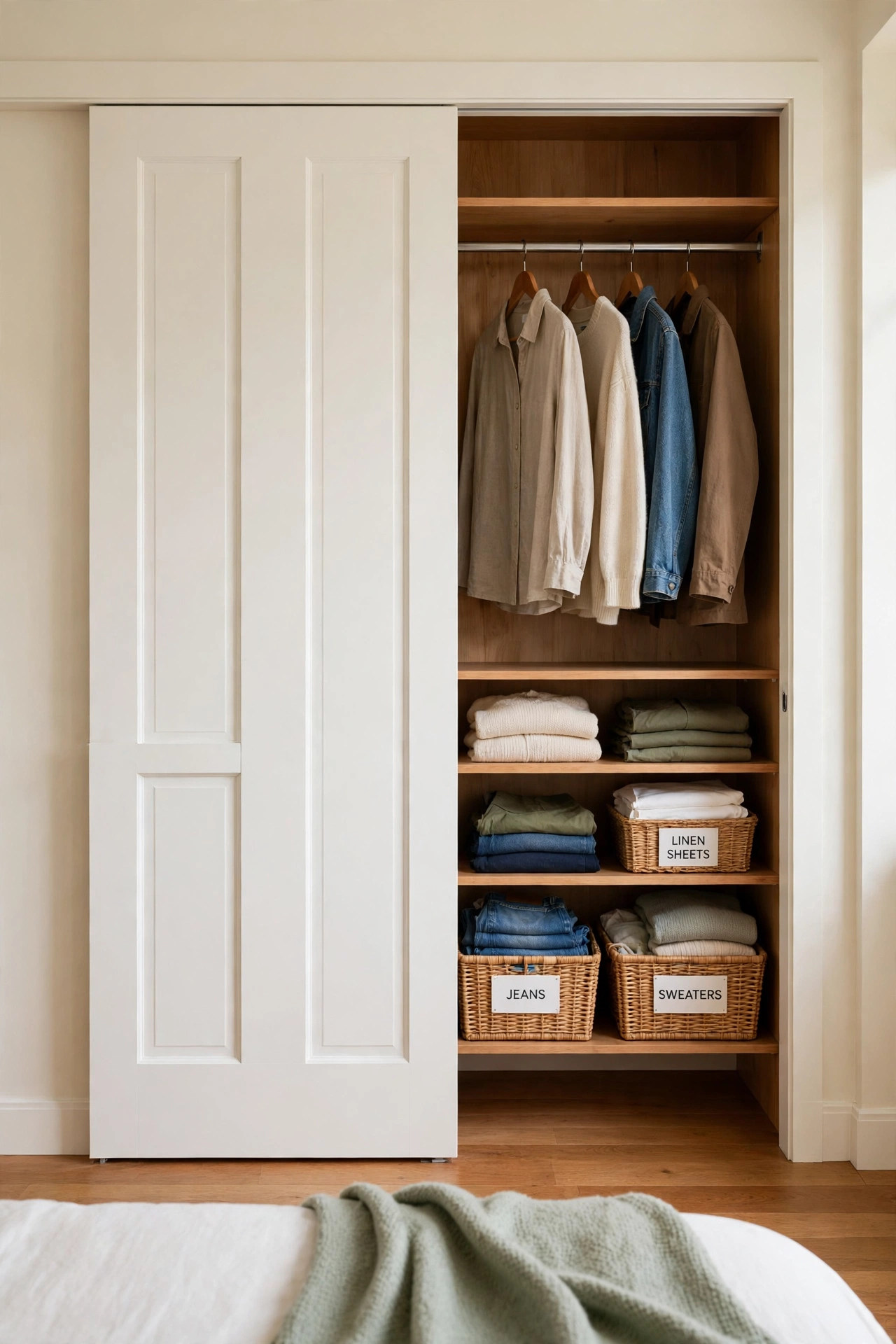
11. Let Air Flow with a Louvered Pocket Door
A louvered pocket door has angled slats that let air move through while the door stays closed. That makes it a natural fit for closets, laundry rooms, and utility spaces where ventilation matters. The slats also add a classic shutter like texture that suits coastal and traditional homes.
Paint the louvers the same color as the trim for a quiet look, or choose a soft sage or pale blue for a gentle pop of color. Keep the slats clean with a quick pass of a duster, since the angled blades can collect dust. It is a practical door that looks charming at the same time.
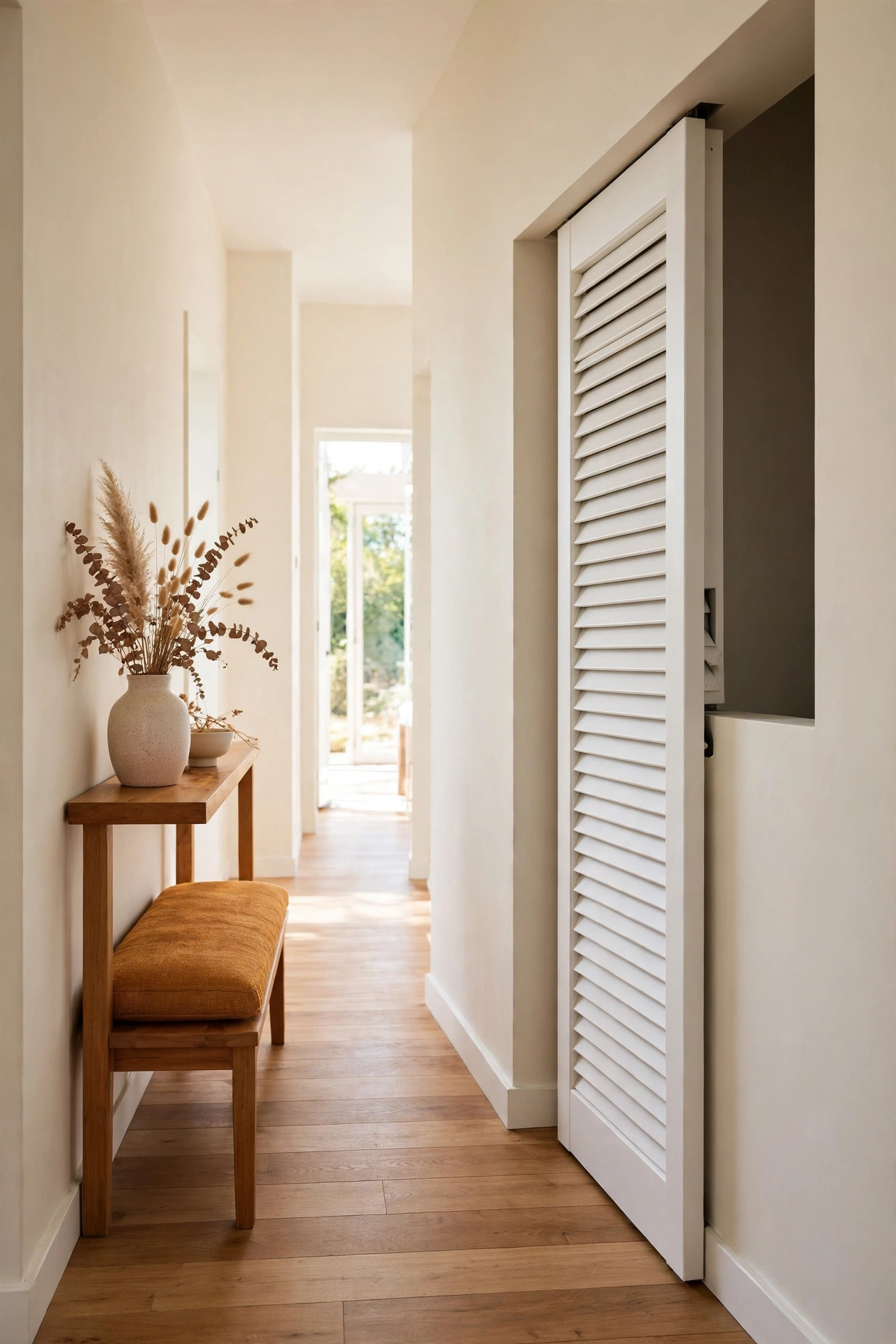
12. Double the Function with a Mirrored Pocket Door
A mirrored pocket door does two jobs at once: it closes off a room and gives you a full length mirror. It is a brilliant choice for a dressing area, a walk in closet entrance, or a bedroom doorway where wall space for a separate mirror is scarce. The mirror also bounces light around and makes the room feel larger.
Frame the mirror in painted wood or slim metal so it looks intentional rather than like an afterthought. Keep the mirror clean and the floor in front of it clear so the reflection stays bright. This is one of those ideas that feels like a clever secret once you live with it.
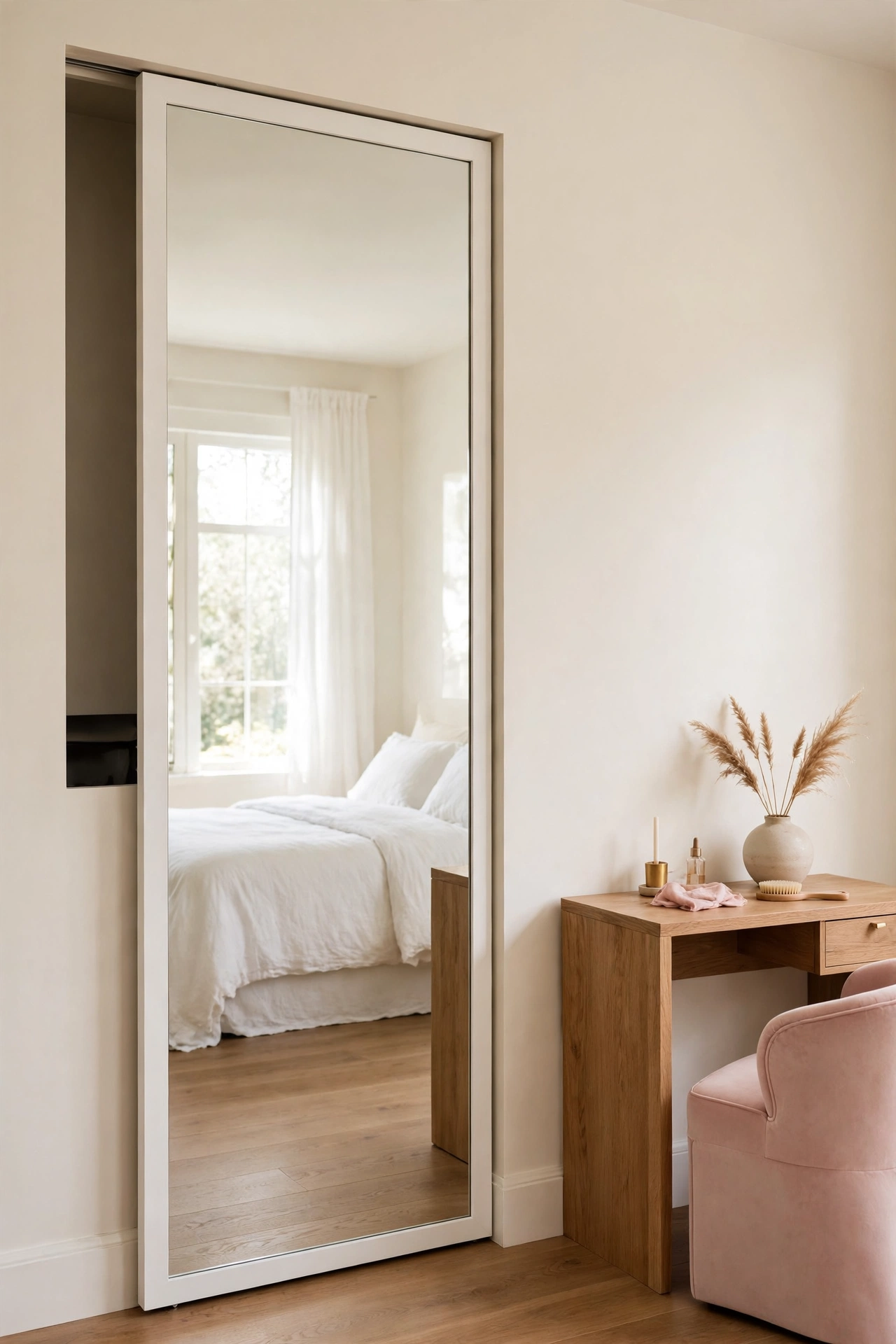
13. Soften Light with a Reeded Glass Pocket Door
Reeded glass has narrow vertical ridges that blur shapes while letting soft light pass through. A reeded glass pocket door gives you privacy with a gentle glow, and the vertical lines add a subtle texture that plain frosted glass cannot match. It is a favorite in modern and Scandinavian style homes.
Set the reeded panel in a slim frame painted white, black, or warm wood tone to suit your home. The door works beautifully between a bedroom and a bathroom, or between a hallway and a home office. Light comes through, details stay private, and the door looks refined from every angle.
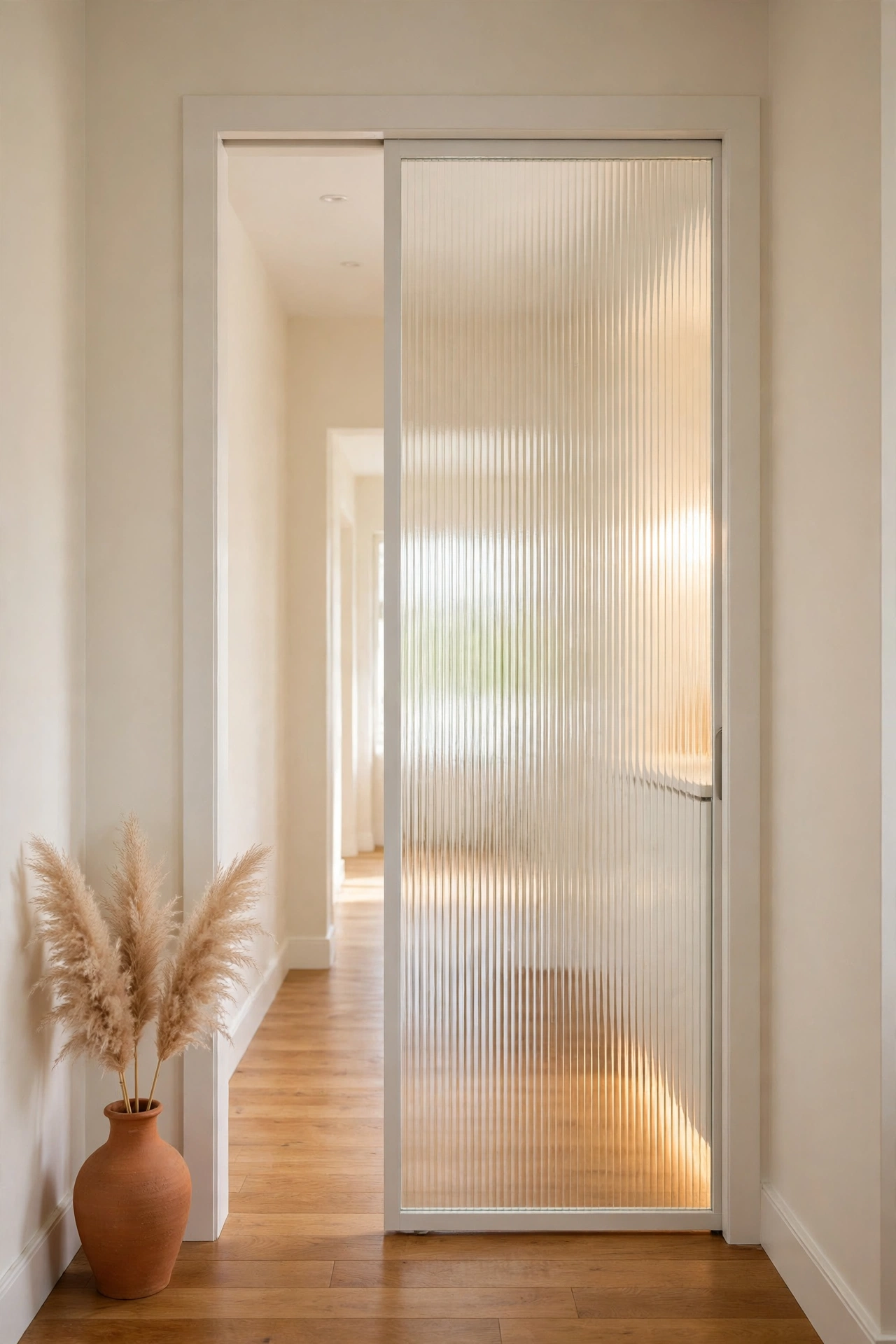
14. Paint a Pocket Door in a Bold Accent Color
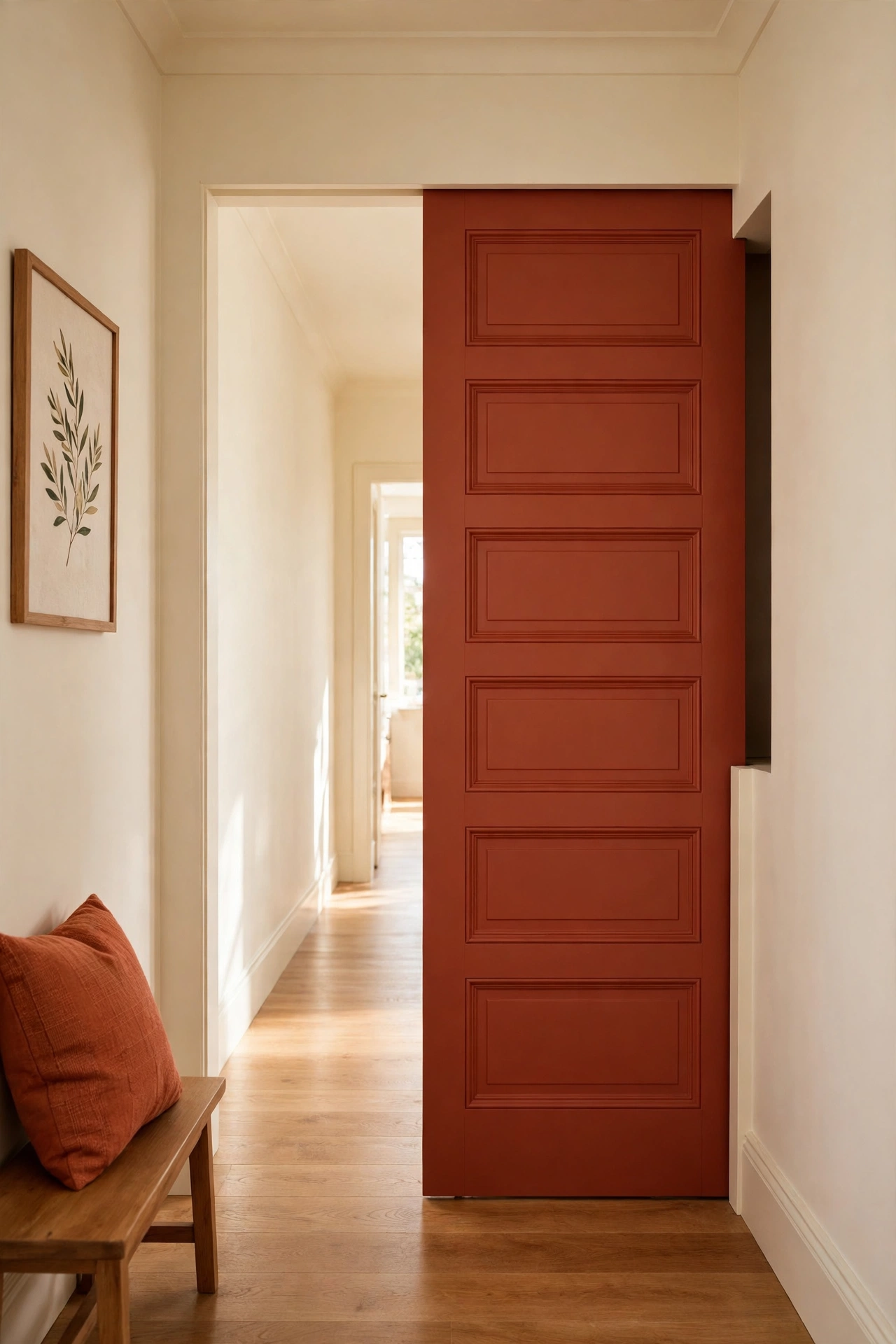
Most pocket doors are painted to blend in, but a bold color turns the door into a focal point. Deep terracotta, navy blue, forest green, or blush pink can all make a pocket door feel like a deliberate design choice. The color shows only when the door is closed, which makes it a delightful surprise.
Keep the surrounding walls light and neutral so the colored door gets all the attention. Repeat the accent color in small doses nearby, like a cushion, a vase, or a piece of art, so the door feels connected to the room. This is an easy, low cost way to add personality to a hallway or bedroom.
15. Elevate a Pocket Door with Brass Hardware
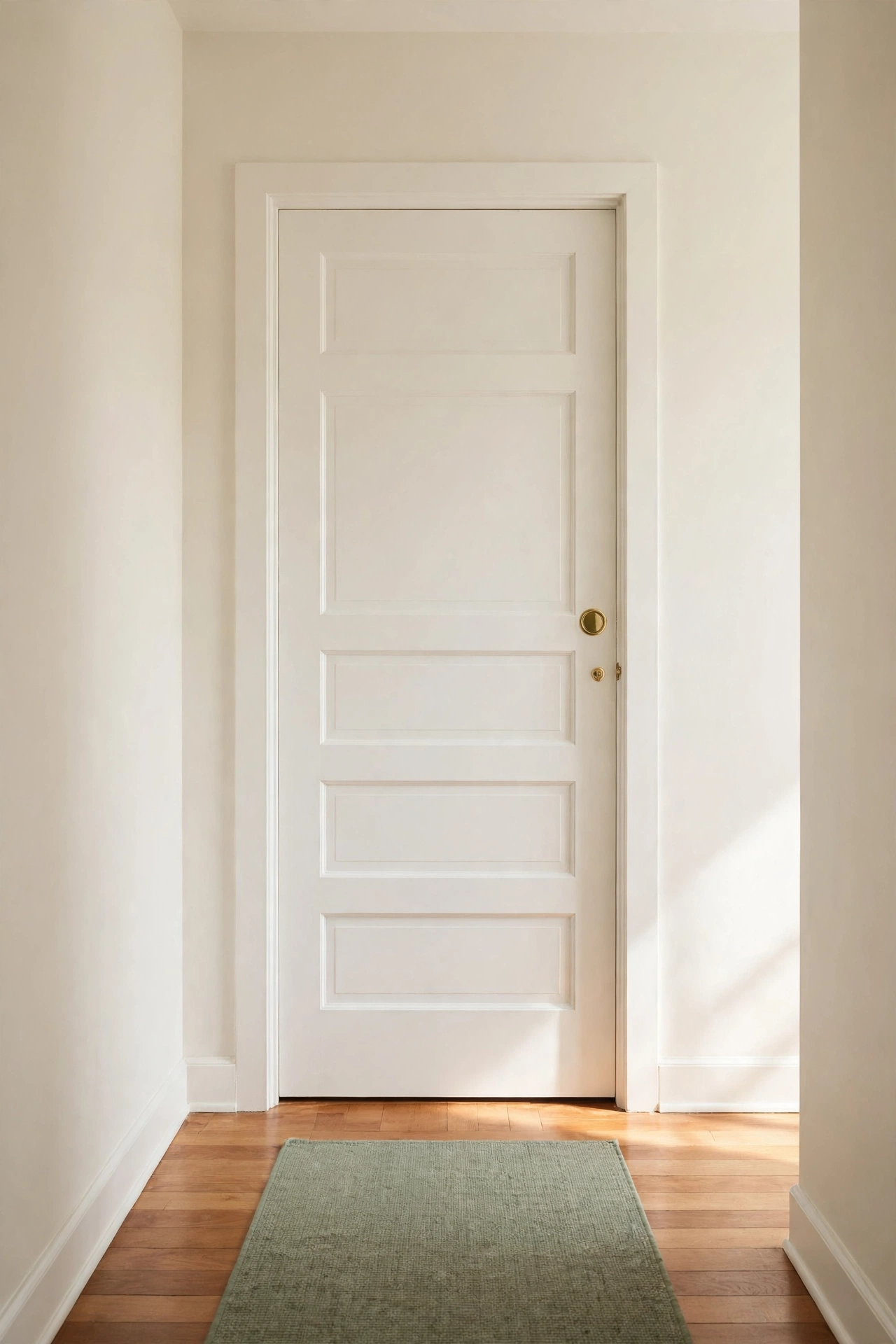
Pocket door hardware is usually hidden, but the pull and lock are always visible, so they deserve attention. A brass flush pull and matching privacy lock add a jewelry like detail to an otherwise plain door. Warm brass pairs beautifully with cream walls, wood tones, and marble accents.
Choose hardware in the same finish as your door handles elsewhere in the home for a coordinated look. Round pulls feel classic, while rectangular pulls feel more modern. This small upgrade costs little and makes the door feel considered and finished every time you slide it.
16. Give a Playroom a Pocket Door That Disappears
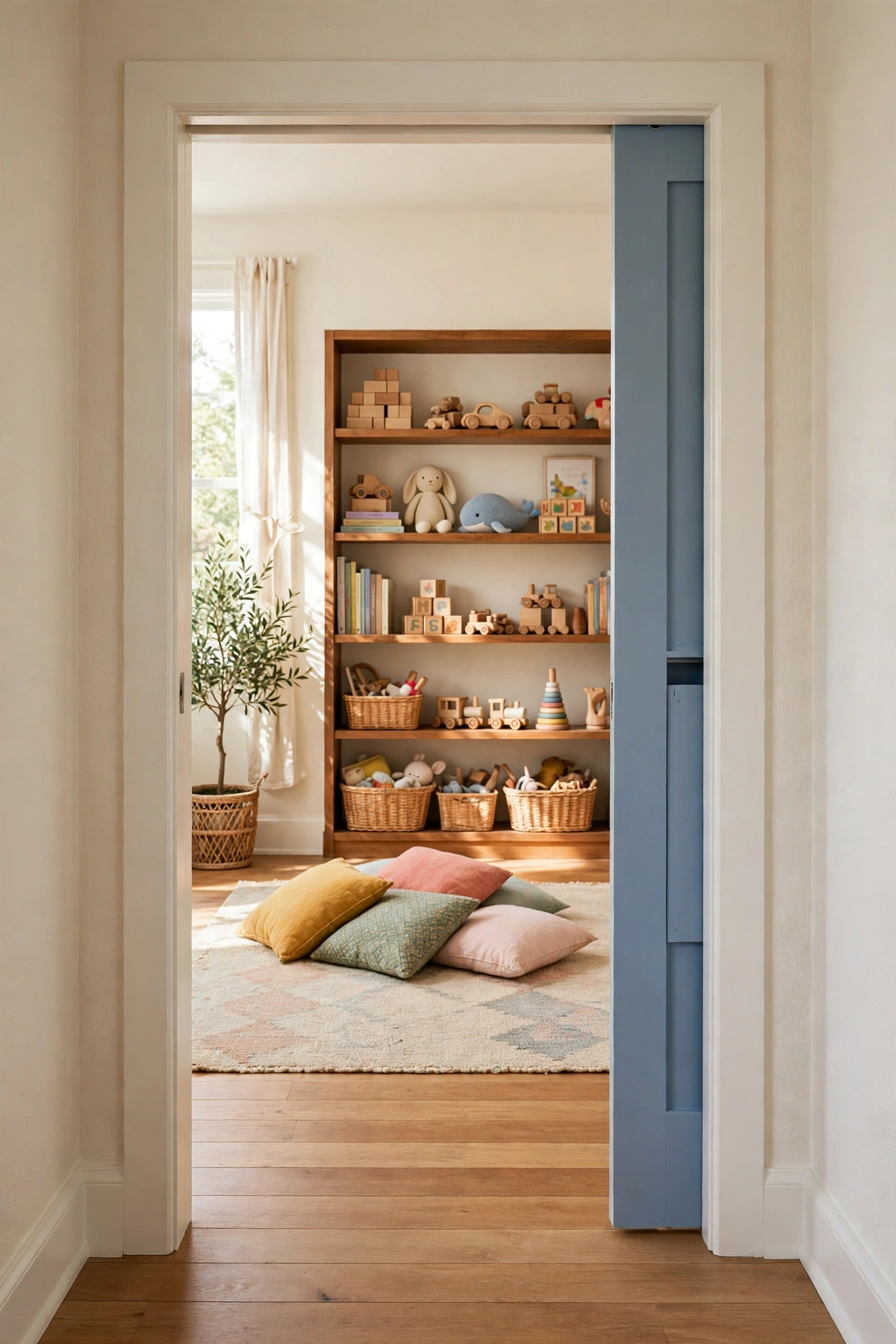
A playroom needs to open up for supervision and close up for containing toy chaos. A pocket door does both without a swinging panel that little ones can run into. When the door slides away, the playroom joins the living area for easy watching. When it closes, the mess stays put.
Choose a sturdy solid panel that can handle daily use and the occasional bump from a toy. A cheerful color like soft blue or sage keeps the doorway friendly, and a simple round pull is easy for small hands. It is a door that works as hard as the room does.
17. Tame the Mudroom with a Pocket Door
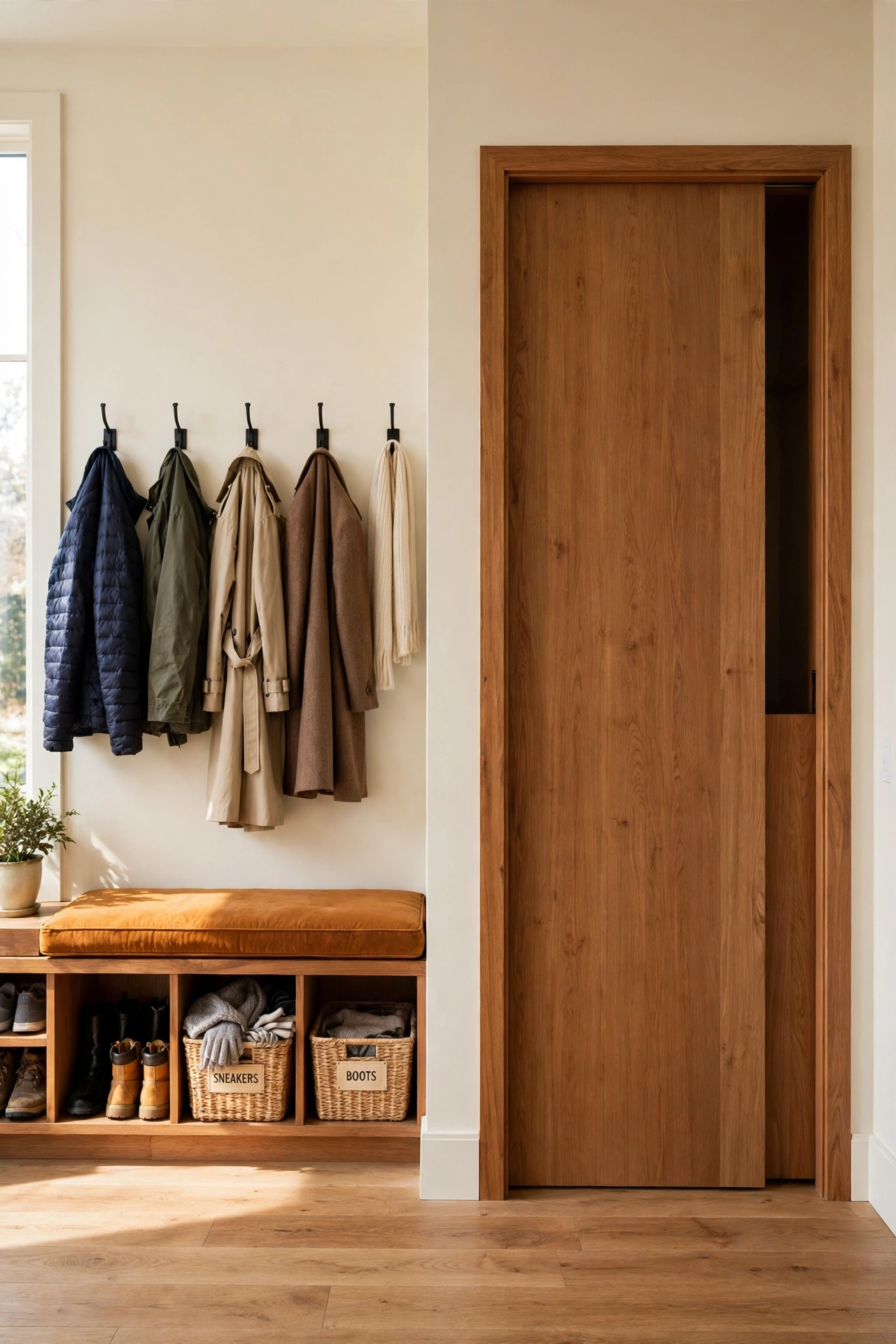
Mudrooms collect coats, shoes, bags, and clutter, and a hinged door only adds to the congestion at the entrance. A pocket door slides out of the way so the whole family can pass through without a bottleneck. When guests arrive, slide it shut and the mudroom mess disappears from view.
Pair the door with hooks, cubbies, and a bench for a complete entry system. A durable painted panel in a warm wood tone or a classic white will stand up to daily traffic. These mudroom bench organization ideas will help you build the storage that makes the doorway work even harder.
18. Add Character with Decorative Panel Molding
Decorative panel molding turns a flat pocket door into a piece of millwork. Applied molding frames, picture frame trim, or beadboard panels give the door depth and shadow, which makes it feel like part of the architecture. This treatment suits traditional, French inspired, and classic style homes.
Keep the molding profile simple and in scale with the door size so it looks refined rather than busy. Paint the door and molding the same color for a unified, custom look. When the door slides open, the molding catches the light and adds a quiet layer of elegance to the hallway.
19. Create a Media Room Retreat with a Pocket Door
A media room or TV den benefits from a door that can close for movie nights and open for everyday living. A pocket door with a solid core helps muffle sound better than a hollow panel, so dialogue stays in the room and the rest of the house stays quiet. It is the easiest way to give a media room a theater feeling.
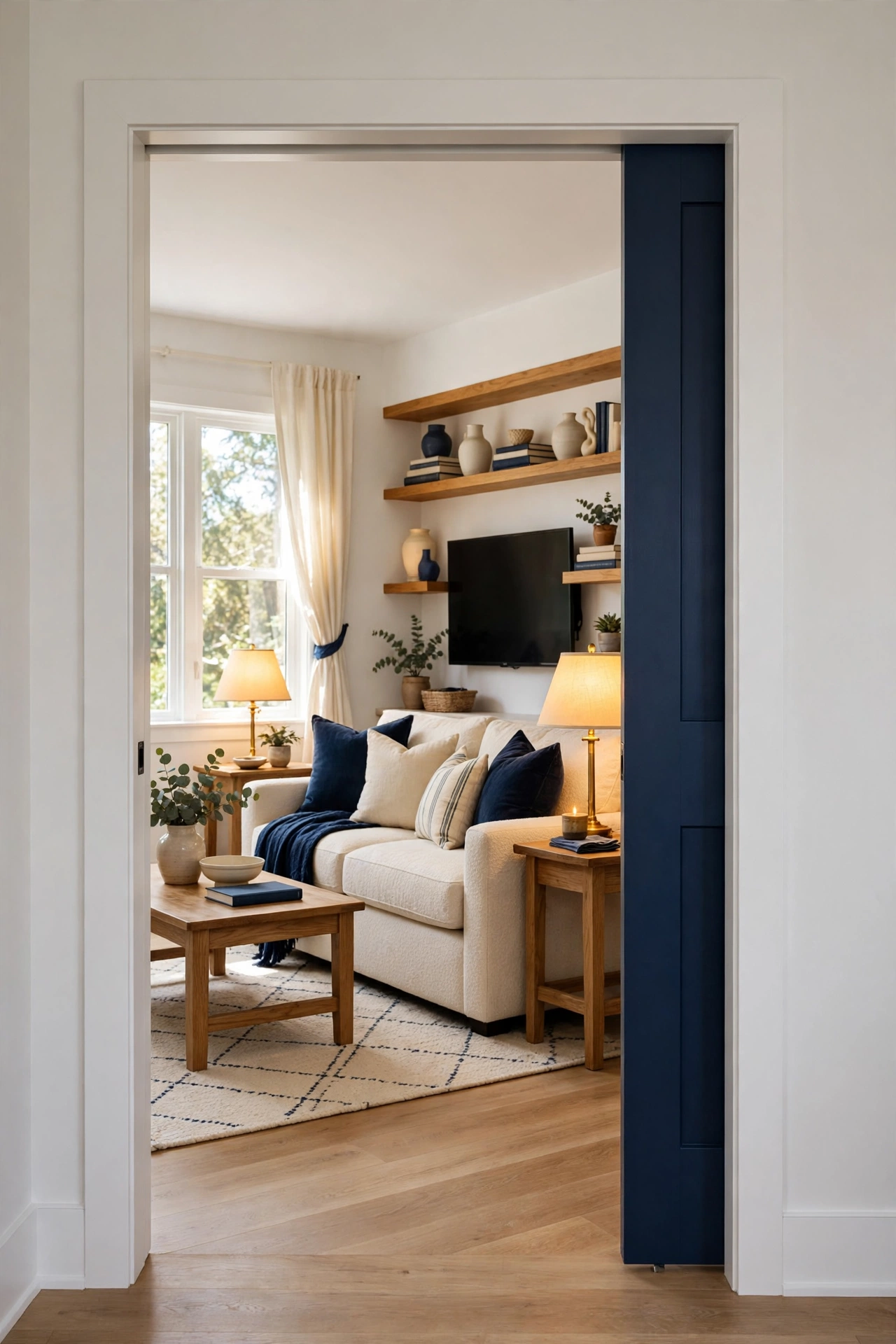
Choose a deep, moody color like charcoal or navy for the door and surrounding trim to set the cinema mood. Add soft seating, warm lighting, and blackout friendly window treatments inside. When the door slides shut, the room becomes a retreat. When it opens, the space flows back into the home.
Conclusion
A pocket door is one of the hardest working upgrades you can make in a home. It returns floor space, removes awkward swings, and adds a layer of polish to every doorway it touches. From a simple white panel to a bold colored statement, there is a pocket door style for every room and every budget.
Start with the room where a swinging door causes the most trouble, and plan from there. Measure carefully, choose a style that matches your home, and enjoy the extra space you gain. For a calmer home every evening, these nightly reset routines will help you keep each room tidy once your new door is in place.
Frequently Asked Questions About Pocket Door Design Ideas
Do pocket doors need a special wall to work?
Yes, a pocket door slides into a hollow section of wall, so the wall must be free of plumbing, wiring, and load bearing studs in the pocket area. A standard framed wall with a pocket door kit usually works well. If the wall carries electrical switches or pipes, they may need to move before installation.
Are pocket doors less private than regular doors?
A solid core pocket door with a good privacy lock offers privacy very close to a regular door. Hollow core panels and glass panels let more sound through, so choose a solid panel for bathrooms and bedrooms. Adding weather stripping around the opening also helps reduce sound and light gaps.
Can a pocket door be added to an existing wall?
Yes, but it requires opening the wall to install the pocket frame and track. The project is more involved than swapping a hinged door, and it works best when the wall has no pipes or wires in the way. Many homeowners hire a carpenter for this job to make sure the track is level and the door slides smoothly.
How do you fix a pocket door that sticks or comes off its track?
Most sticking comes from a dirty track, a loose roller, or a door that has settled out of level. Clean the track, tighten the hanger bolts, and adjust the roller height until the door glides evenly. If the door has come off the track, lift it back onto the rollers and check that the floor guide is in place.
Are pocket doors good for small rooms?
Pocket doors are one of the best choices for small rooms because they remove the door swing entirely. That frees floor space for furniture, storage, and movement in bathrooms, closets, laundry rooms, and small bedrooms. In a tight layout, the gained space can make the room feel noticeably larger.

Hi, I’m Emily! I turn messy corners into cozy, organized spots. DreamNestDecor is where I share simple, practical home ideas — decor, organization, and small-space solutions that work in real life, not just in photos. Every idea here is carefully researched before it’s shared.