Picture this: you reach for hand soap, laundry detergent, or rice, and instead of a half empty store bottle or a torn bag, you find a full, clearly labeled container waiting in its own spot. The shelf looks calm, every product is easy to pour, and you always know when a refill is running low. That small moment of order is exactly what a well organized refill station gives you every single day.
You do not need a large home or a big budget to get there. All you need is a clear plan for each product, the right containers, and labels you can read at a glance. These 19 household product refill station organization ideas will help you set up refill spots for soap, shampoo, detergent, pantry staples, and cleaning concentrates, so your home stays tidy and your products stay ready to use.
1. Mount Refillable Shower Dispensers for Shampoo and Body Wash
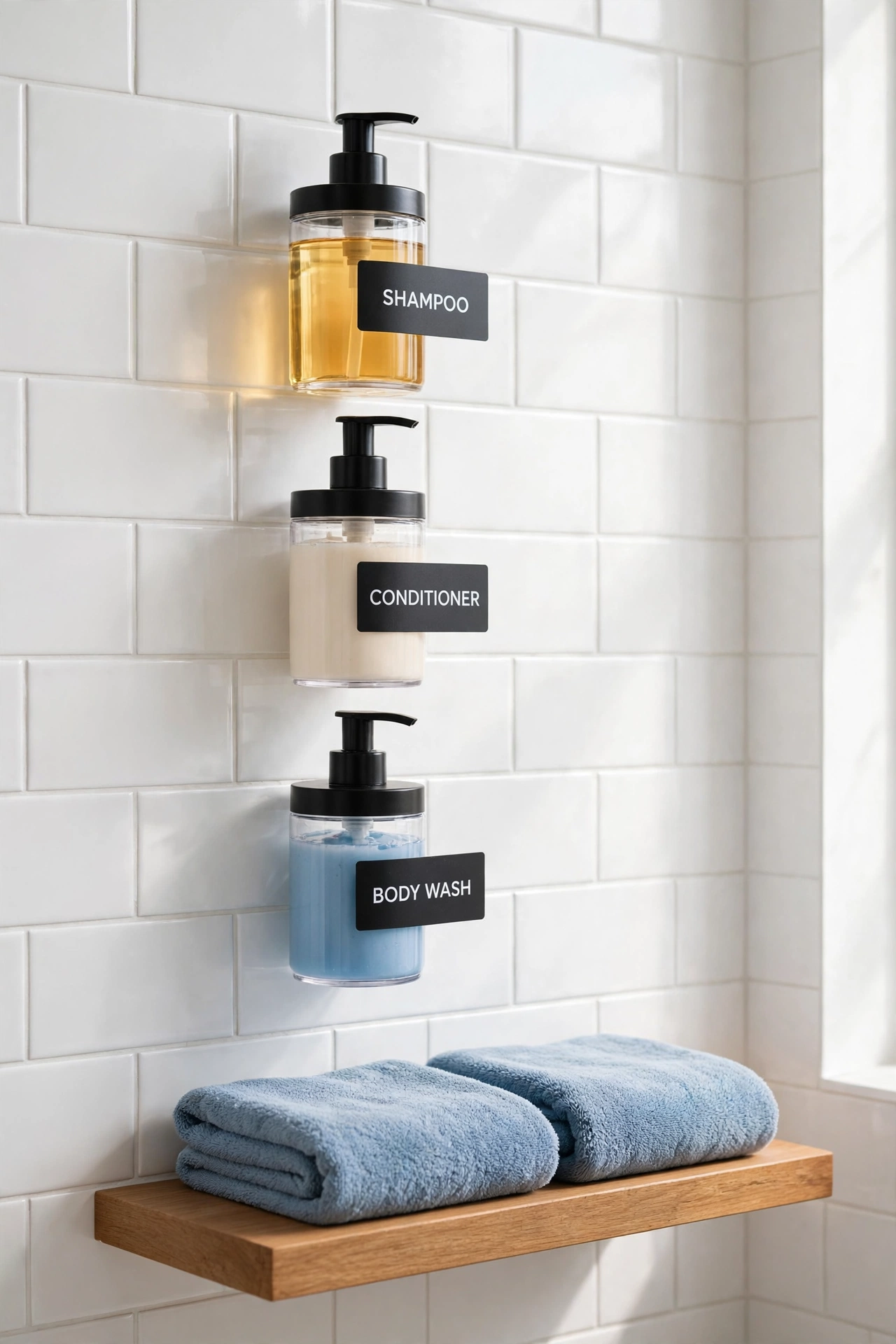
Wall mounted shower dispensers turn loose shampoo and body wash bottles into one neat refill station inside the shower. Each chamber holds a single product, and a simple pump or press lever gives you the right amount without fumbling with caps and wet hands. The shower shelf stays clear, and the bottles on the floor disappear for good.
Choose dispensers with clear printed labels for shampoo, conditioner, and body wash, and fill each chamber to the top so the station always looks ready. Refill the chambers from large bulk bottles stored nearby, and wipe the dispensers clean each week to keep soap residue from building up. A mounted station also keeps products off the shower floor, where puddles and damp corners can make bottles slippery.
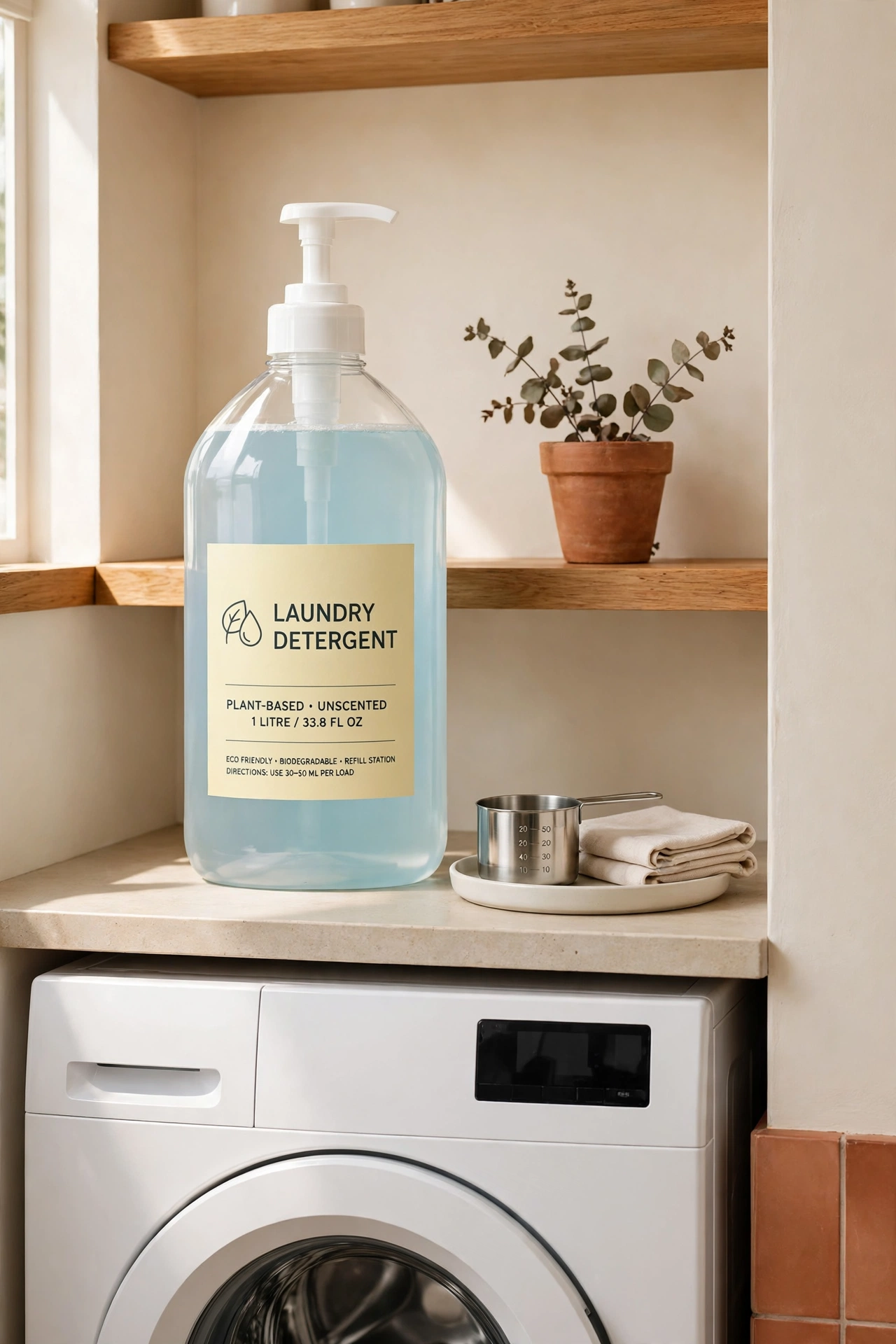
2. Set Up a Laundry Detergent Refill Station With a Pump Dispenser
A laundry detergent refill station replaces a heavy bulk jug with a sturdy pump dispenser that sits neatly beside the washing machine. The pump gives you a measured amount with one press, so you stop guessing, stop spilling, and stop lifting a heavy container over the machine with every load. The laundry shelf stays dry and tidy because the detergent has one fixed home.
Place the dispenser on a small tray to catch drips, and keep a measuring cup beside it for loads that need an exact amount. Store the large refill jug on a lower shelf, out of the way but close enough for easy topping up. For more ways to keep detergent neat and within reach, these laundry detergent storage ideas will help you plan the whole laundry shelf around your refill station.
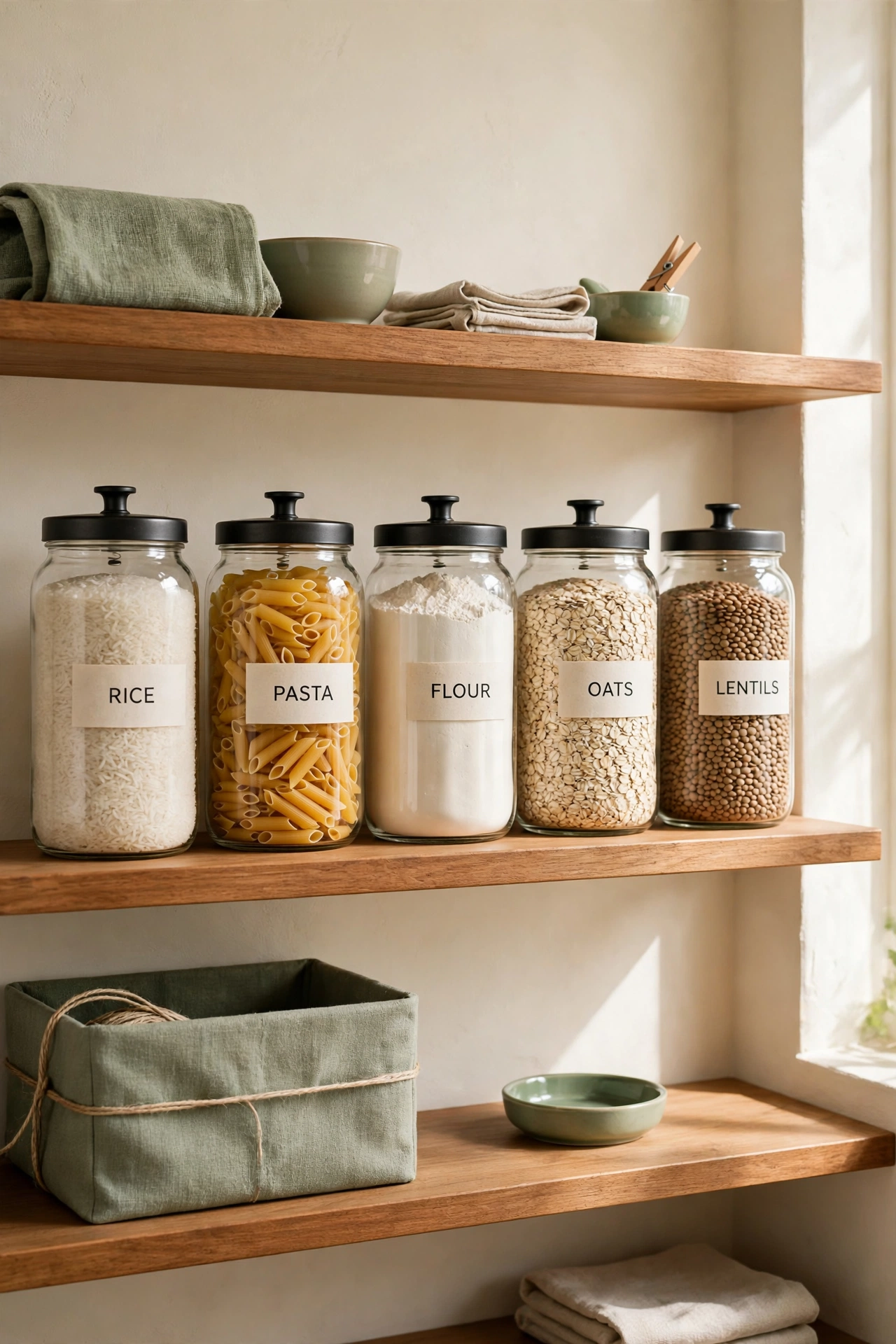
3. Decant Pantry Staples Into Labeled Glass Refill Jars
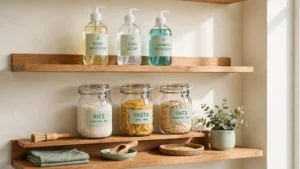
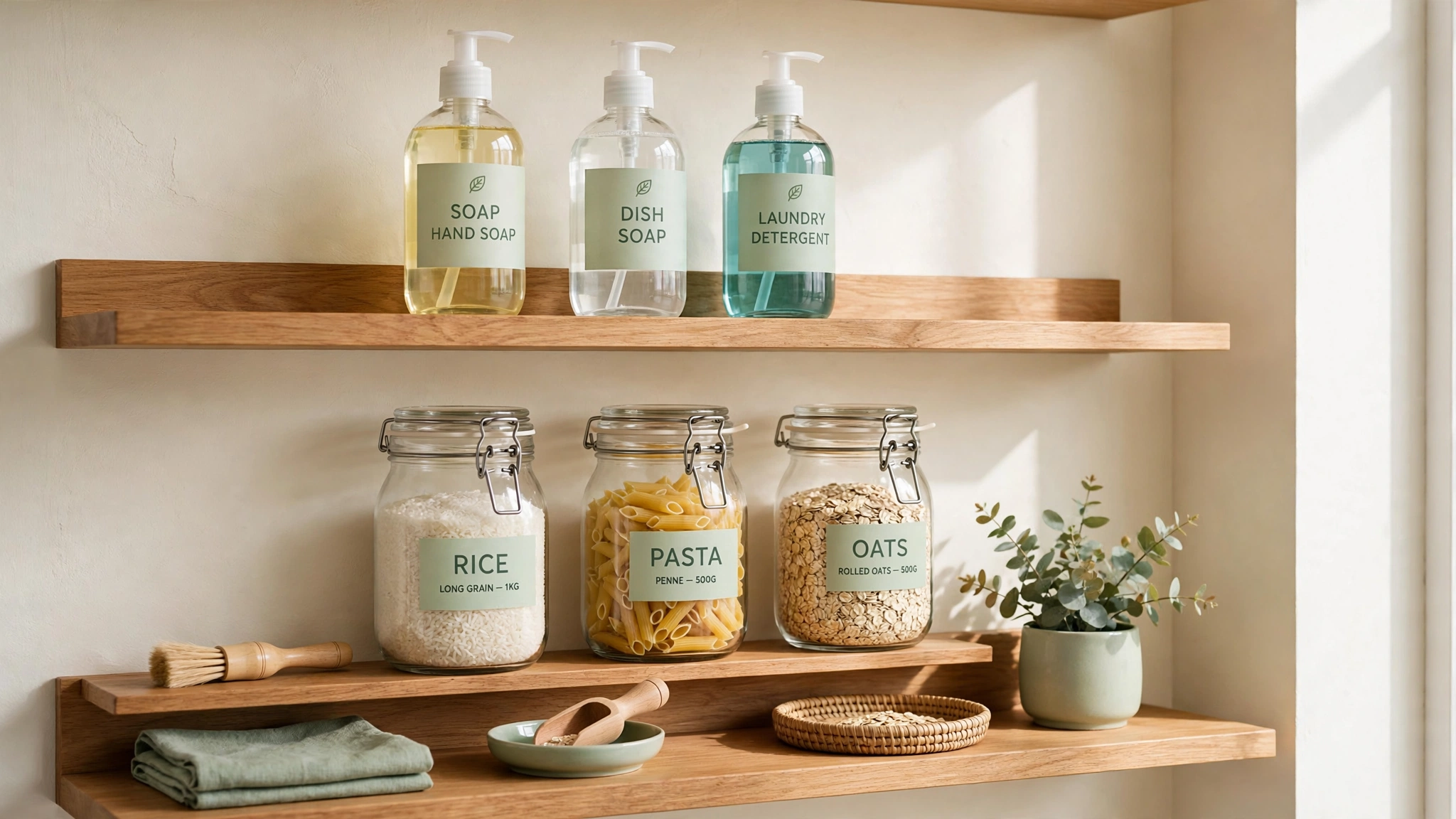
Glass refill jars turn pantry staples like rice, pasta, flour, oats, and lentils into a clean, uniform display that is easy to scan and easy to use. Each jar holds one staple, filled to the top, with a printed label you can read from across the room. You can see at a glance what is running low, and you never have to dig through torn bags again.
Choose jars with airtight lids and wide mouths so scooping and pouring stay simple. Keep the bulk refill bags in a separate bin on a lower shelf, and top up each jar as soon as it drops below half full. If your pantry also holds cans and tins, these pantry can organization ideas will help you arrange the rest of the shelves so the refill jars stay front and center.
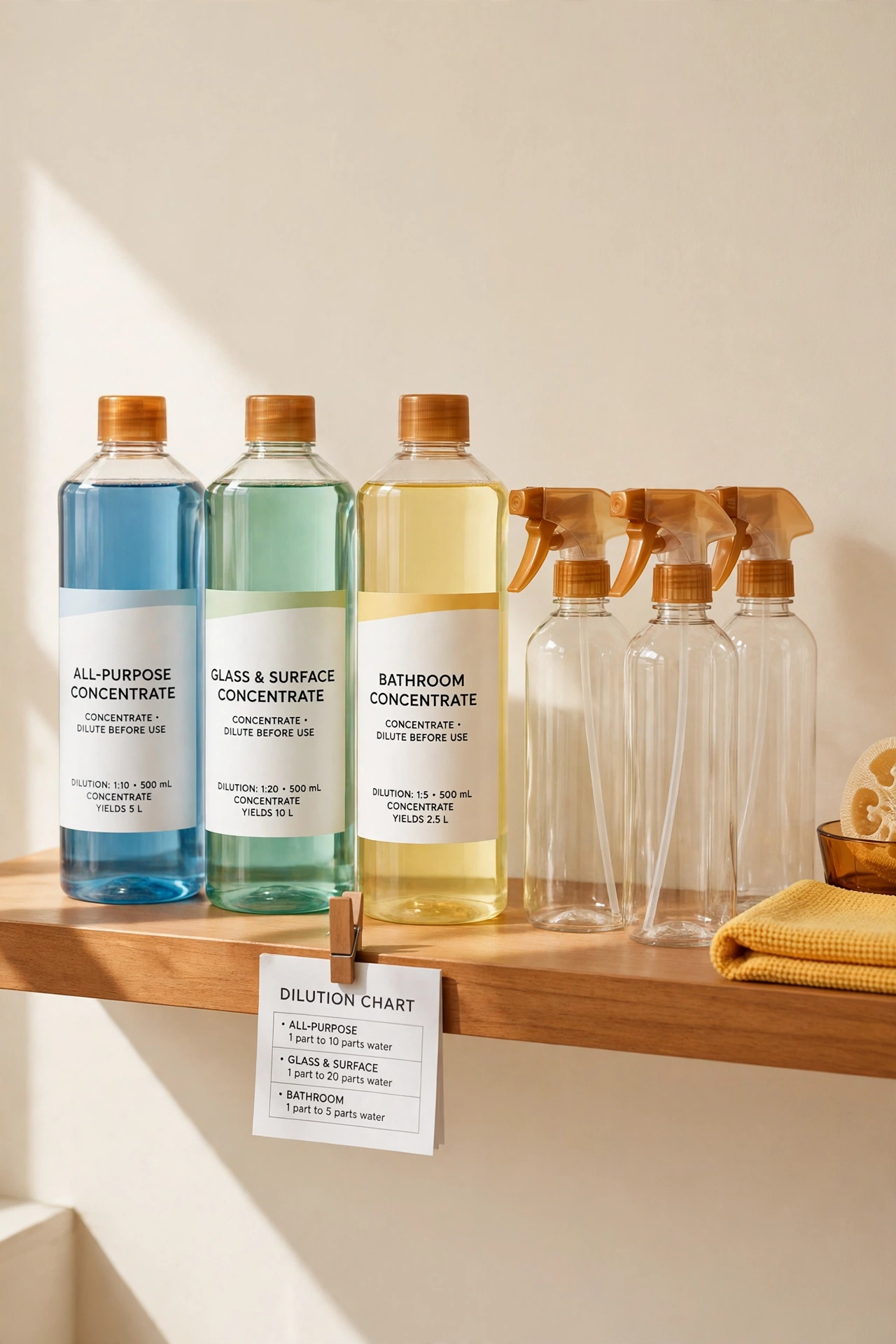
4. Organize Cleaning Concentrate Refills on a Dedicated Shelf
Cleaning concentrates save space and money, but they only stay useful when the refills have a dedicated shelf with clear order. Keep each concentrate in its own labeled bottle, grouped by purpose, with the refill bottles standing upright and filled to a consistent level. A single shelf for concentrates means you always know what you have, and you never buy a duplicate by mistake.
Add a small printed dilution chart on the shelf edge so anyone in the home can mix a fresh spray bottle correctly. Keep empty dilution bottles beside the concentrates, clean and ready, with labels that match the concentrate shelf. Store the shelf high and dry, away from food and away from young children, and check the levels once a month so a concentrate never runs out in the middle of a cleaning day.
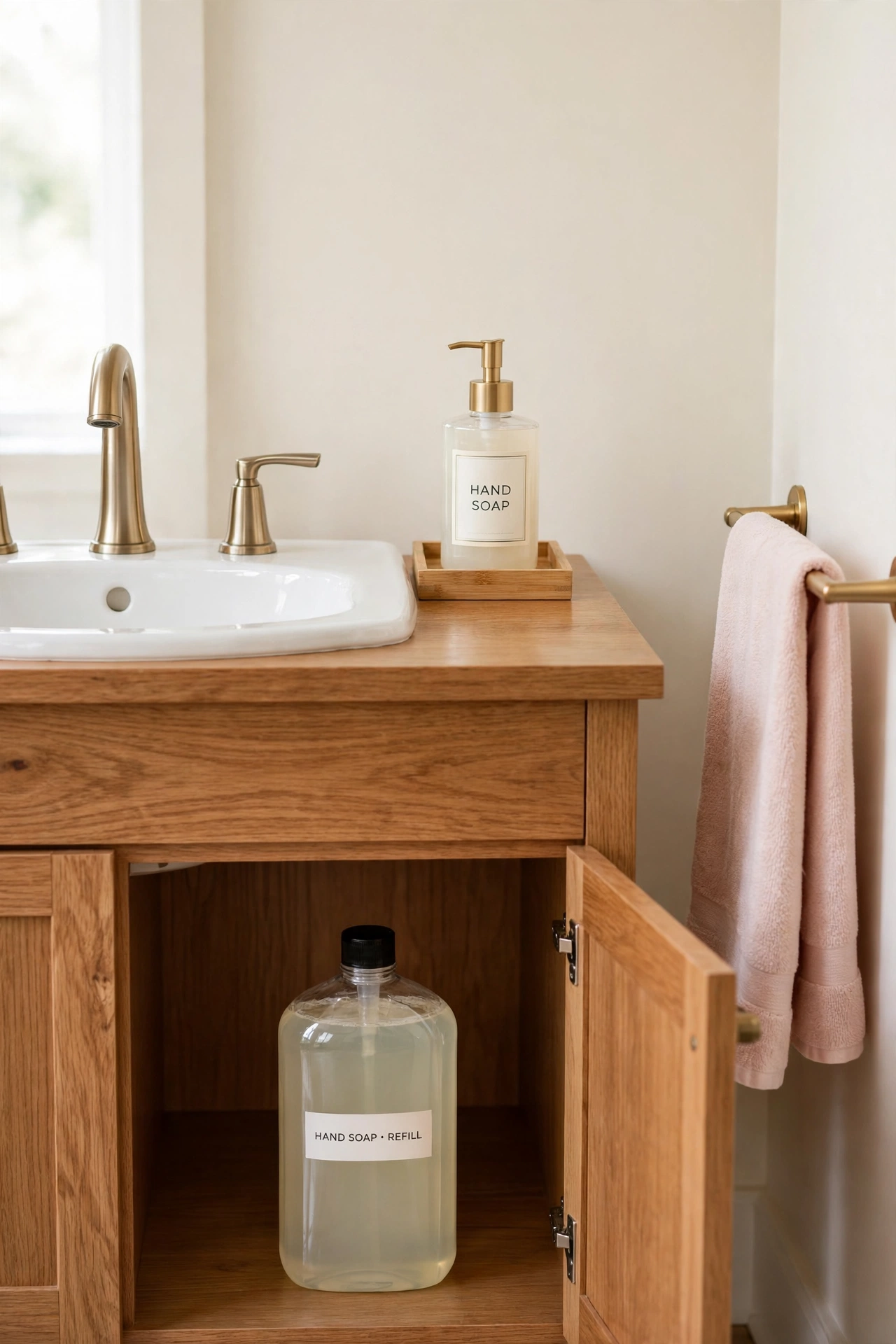
5. Create a Hand Soap Refill Station at Every Bathroom Sink
A hand soap refill station at each bathroom sink keeps the counter tidy and the soap always full. A matching pump bottle sits beside the faucet, filled with liquid soap from a large refill bottle stored in the cabinet below. The counter holds only the pump bottle and a small tray, so wiping the surface takes seconds.
Refill the pump bottle before it runs dry, and choose one soap for the whole home so a single large refill bottle serves every sink. Keep a spare refill bottle in the linen closet so you are never caught with an empty pump when guests arrive. Matching pump bottles in every bathroom also give the home a calm, coordinated look that feels intentional rather than improvised.
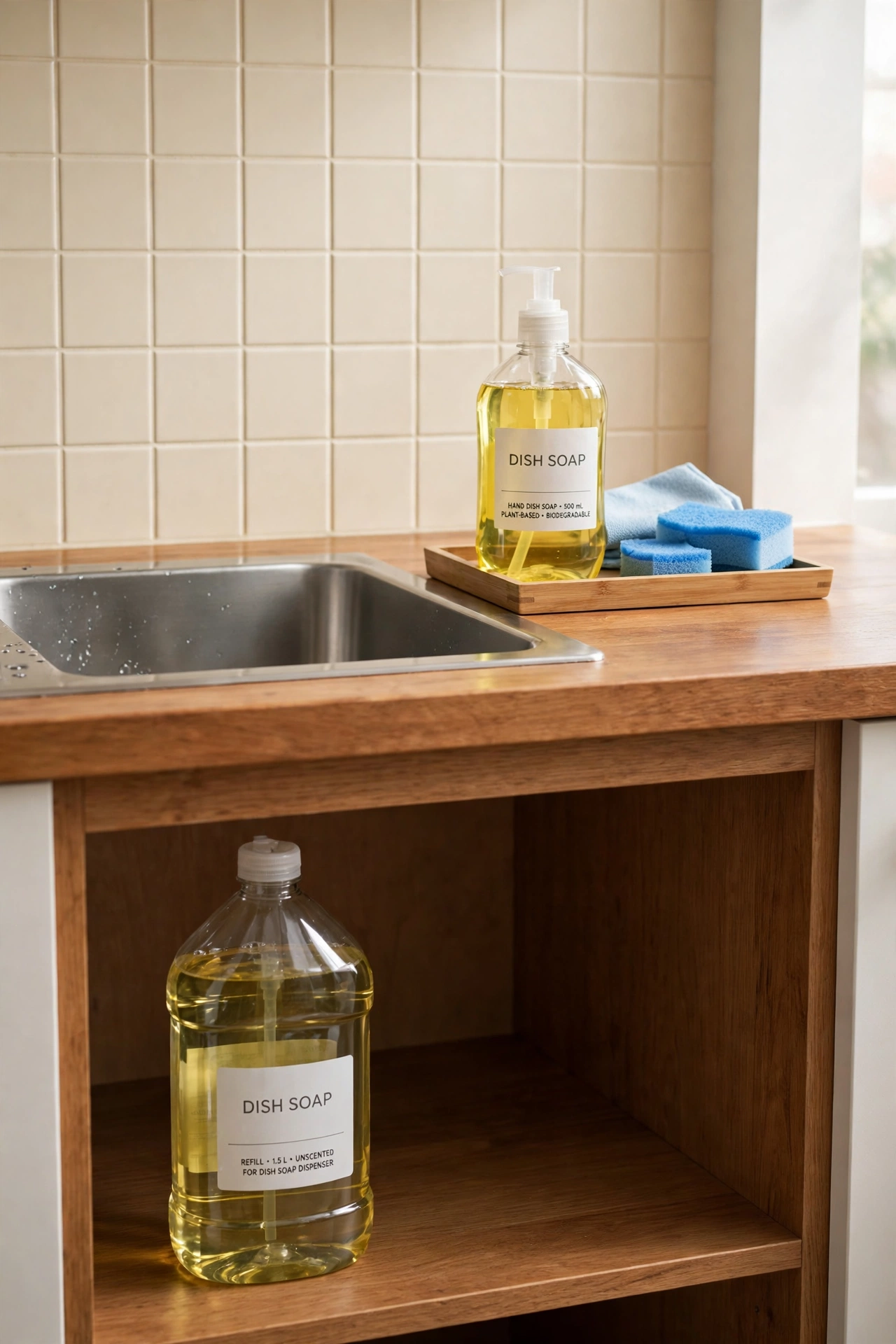
6. Place a Dish Soap Refill Station Beside the Kitchen Sink
A dish soap refill station beside the kitchen sink keeps washing up simple and the sink area free of clutter. A neat pump bottle holds the daily dish soap, and a large refill bottle stands in the cabinet below, ready to top it up. The sink ledge stays clear for sponges and drying dishes, and the soap is always within easy reach.
Choose a pump bottle that matches your kitchen style, with a clear label that reads dish soap, and fill it to the top each week. Keep a small tray under the pump to catch drips, and wipe the tray clean when you refill. A fixed refill spot also stops family members from leaving half empty soap bottles on different counters around the kitchen.
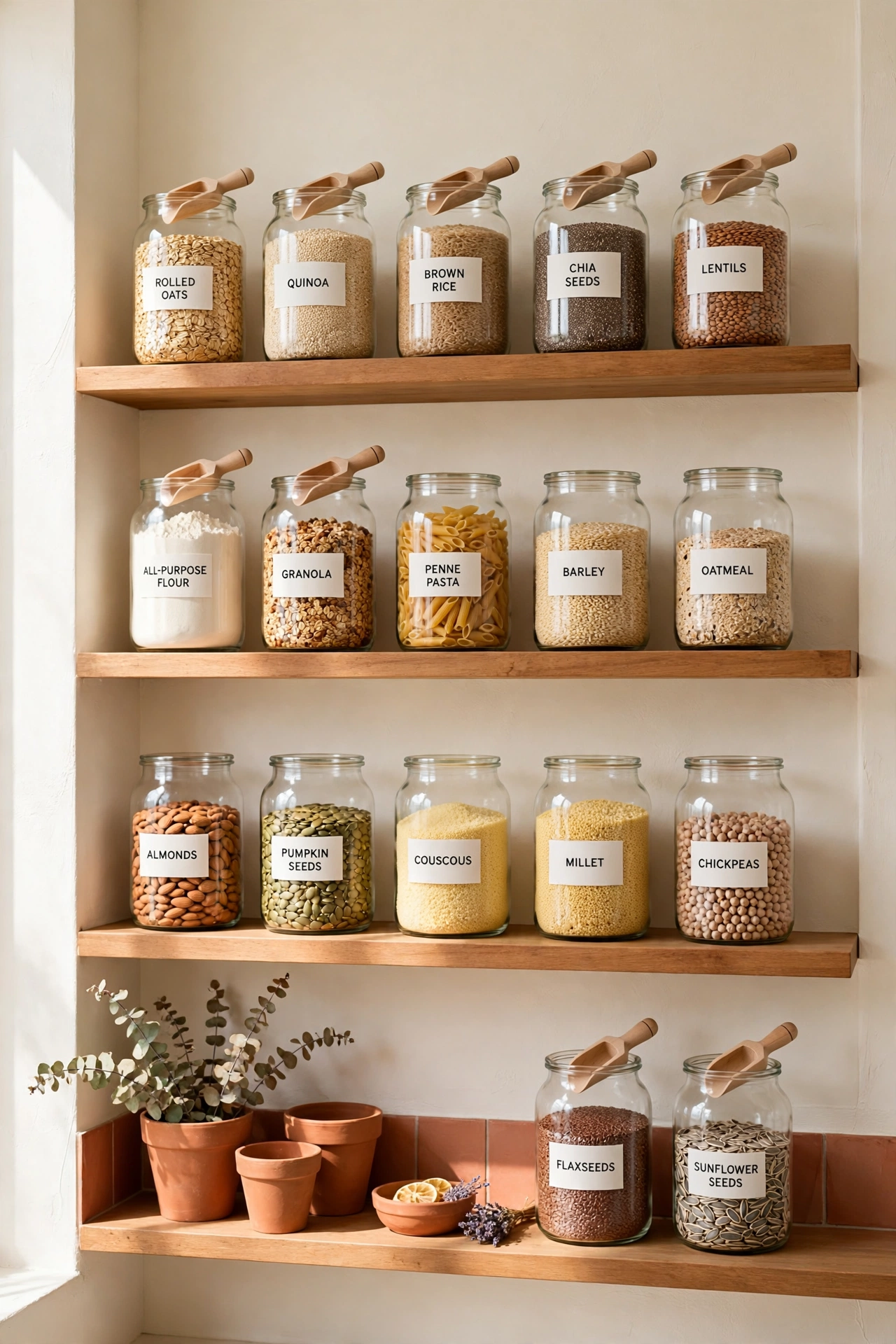
7. Build a Bulk Dry Goods Refill Wall With Scoops and Jars
A bulk dry goods refill wall turns one pantry wall into a complete station for grains, cereals, and baking staples. Rows of uniform jars line the shelves, each with its own scoop resting on top or hanging from a small hook beside the jar. The wall looks like a small shop display, and filling a measuring cup becomes quick and pleasant.
Group the jars by use, with breakfast grains on one shelf, baking staples on another, and pasta and rice on a third. Label every jar with the product name and the date you filled it, and keep the scoops dry and clean at all times. A refill wall works best when the jars are all filled to a similar level, so top them up from bulk bags on the same day each week.
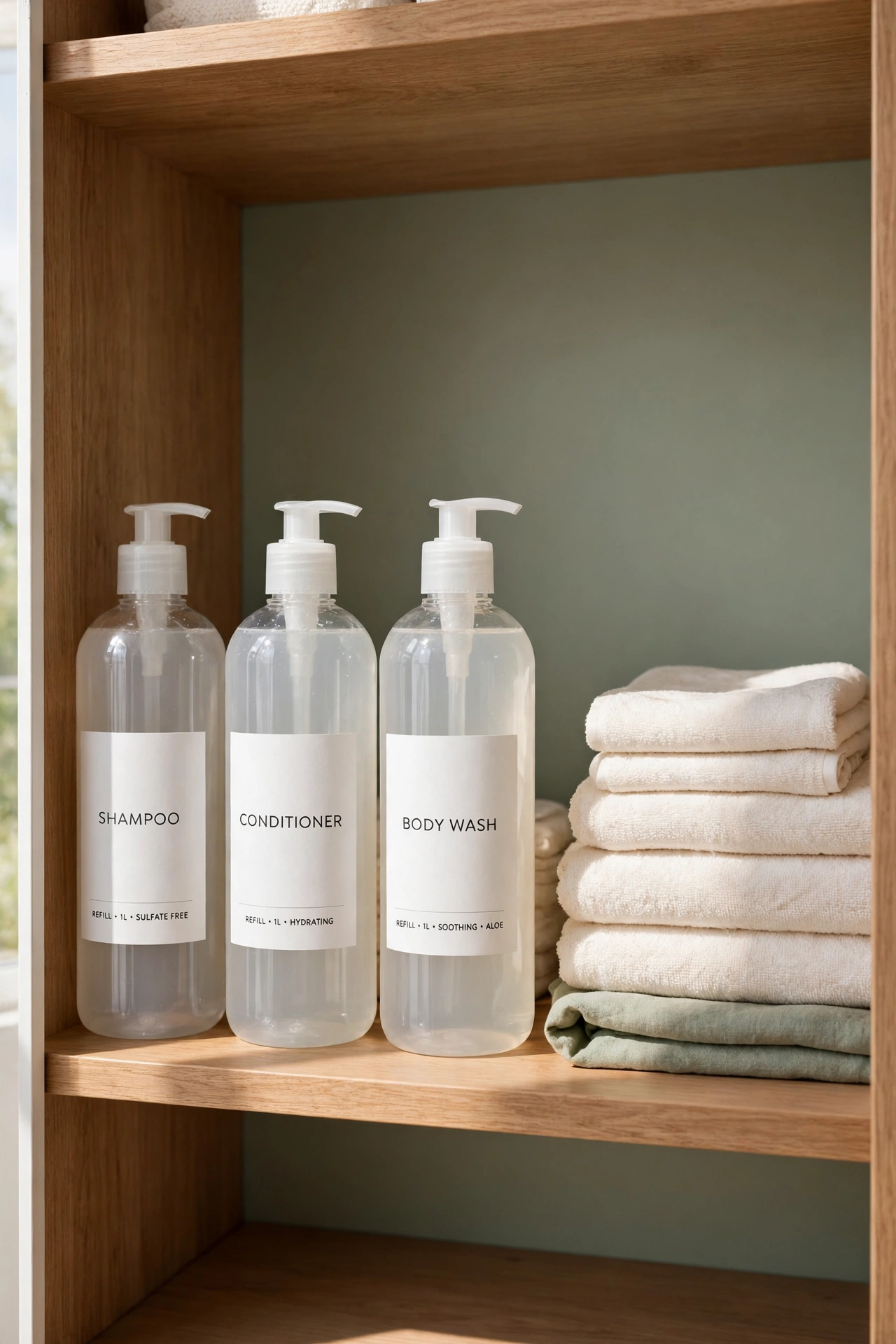
8. Keep a Refill Reserve Shelf in the Linen Closet
A refill reserve shelf in the linen closet holds spare bottles and bulk refills for the whole bathroom, so every sink and shower station can be topped up from one place. Large refill bottles of shampoo, conditioner, body wash, and hand soap stand in a neat row, labeled and upright, with space between each bottle so you can lift one out without disturbing the rest.
Keep the reserve shelf separate from towels and bedding, ideally on its own shelf near the bottom of the closet where heavy bottles are easy to lift. Check the reserve once a month and add any low product to the shopping list before it runs out. For a closet that holds towels, bedding, and refills without crowding, these linen closet organization ideas will help you divide the shelves with a clear purpose for each one.
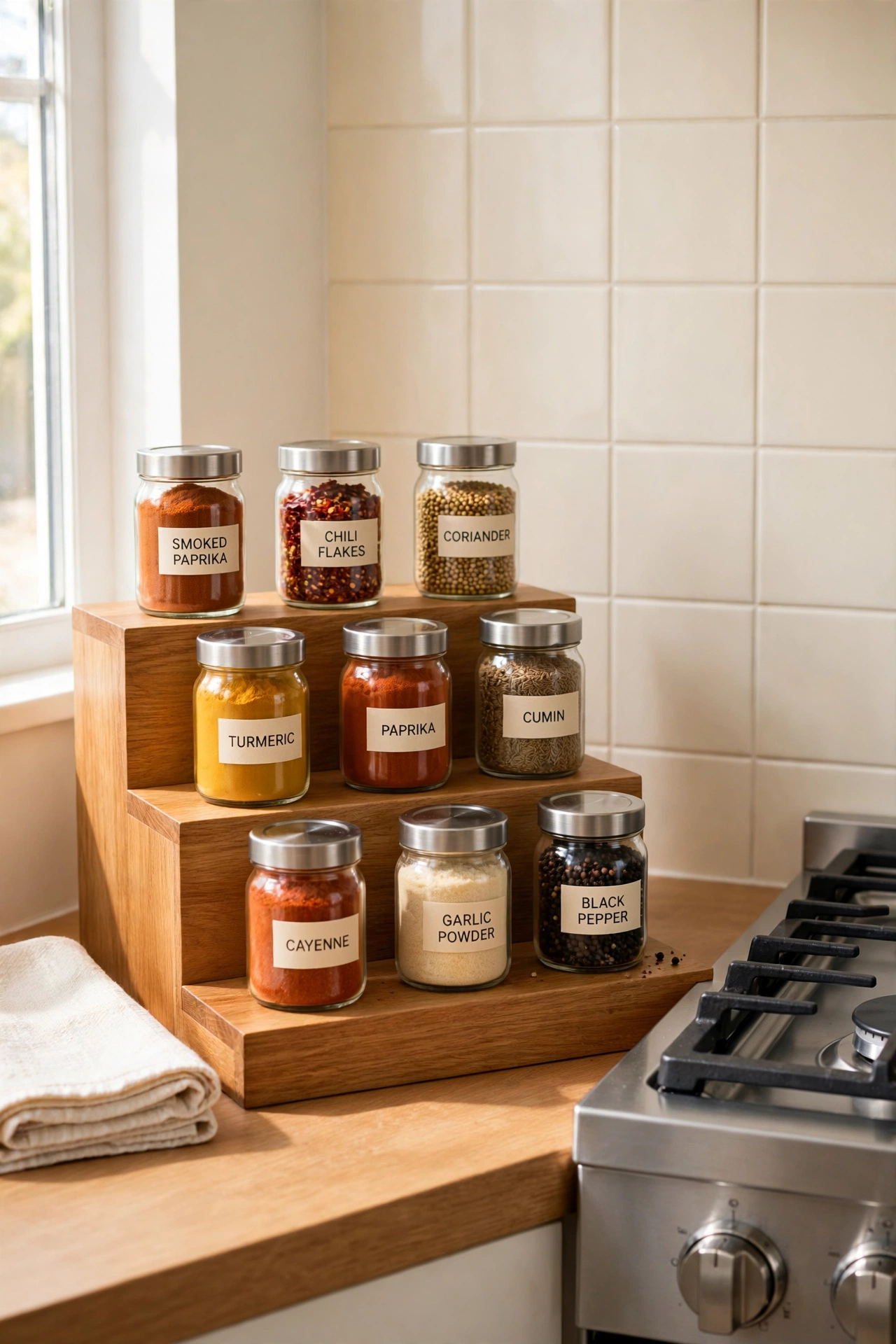
9. Arrange a Spice and Seasoning Refill Station With Small Jars
A spice and seasoning refill station keeps small jars full, labeled, and ready beside the stove, while bulk refill pouches stay organized in a drawer or bin nearby. Each small jar holds one spice, filled to the top, with a printed label on the front and a matching label on the lid. Cooking becomes faster because you can find the right spice without opening and sniffing half a dozen containers.
Refill the small jars from the bulk pouches as soon as a jar drops below half, and keep the pouches sealed and upright so the spices stay fresh. Arrange the jars in a single row or on a stepped riser so every label stays visible. If you want the whole spice area to feel as tidy as the refill station, these kitchen spice organization ideas will help you plan drawers, racks, and jars as one complete system.
10. Store Bulk Refill Pouches in Labeled Bins Under the Sink
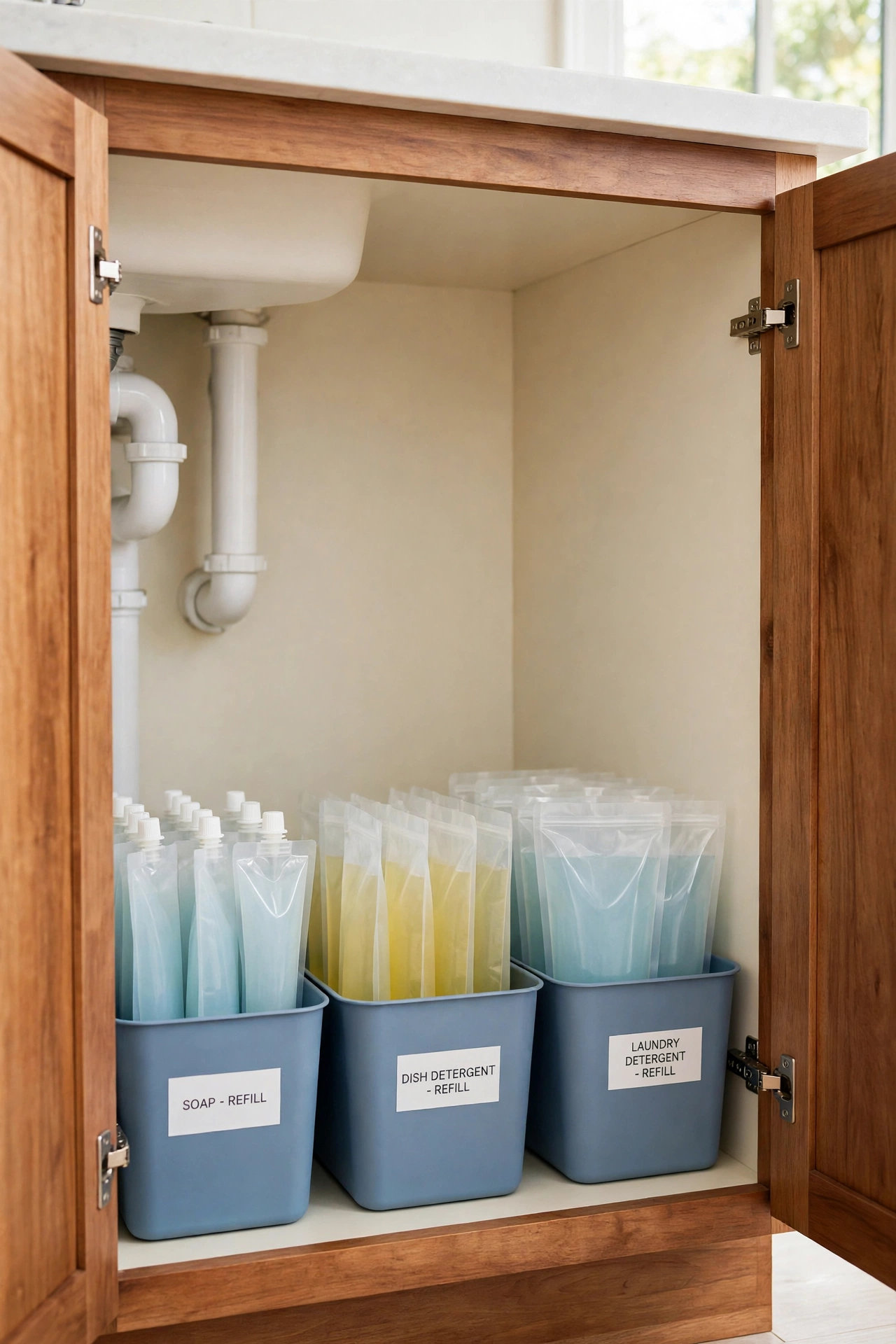
Bulk refill pouches for soap, detergent, and household liquids are light and flexible, but they can turn into a tangled pile under the sink without a clear system. Labeled bins solve the problem by giving each product family its own container, with pouches standing upright and labels facing forward. You can pull out one bin, find the pouch you need, and slide it back without disturbing anything else.
Use waterproof bins with handles, and label each bin with the product group it holds, such as hand soap refills or laundry refills. Keep the bins on the cabinet floor, away from pipes and leaks, and check the cabinet monthly for dampness. For the rest of the cabinet, these under sink organization ideas will help you use every inch around the bins without creating new clutter.
11. Set Up a Garage Decanting Station for Large Bulk Containers
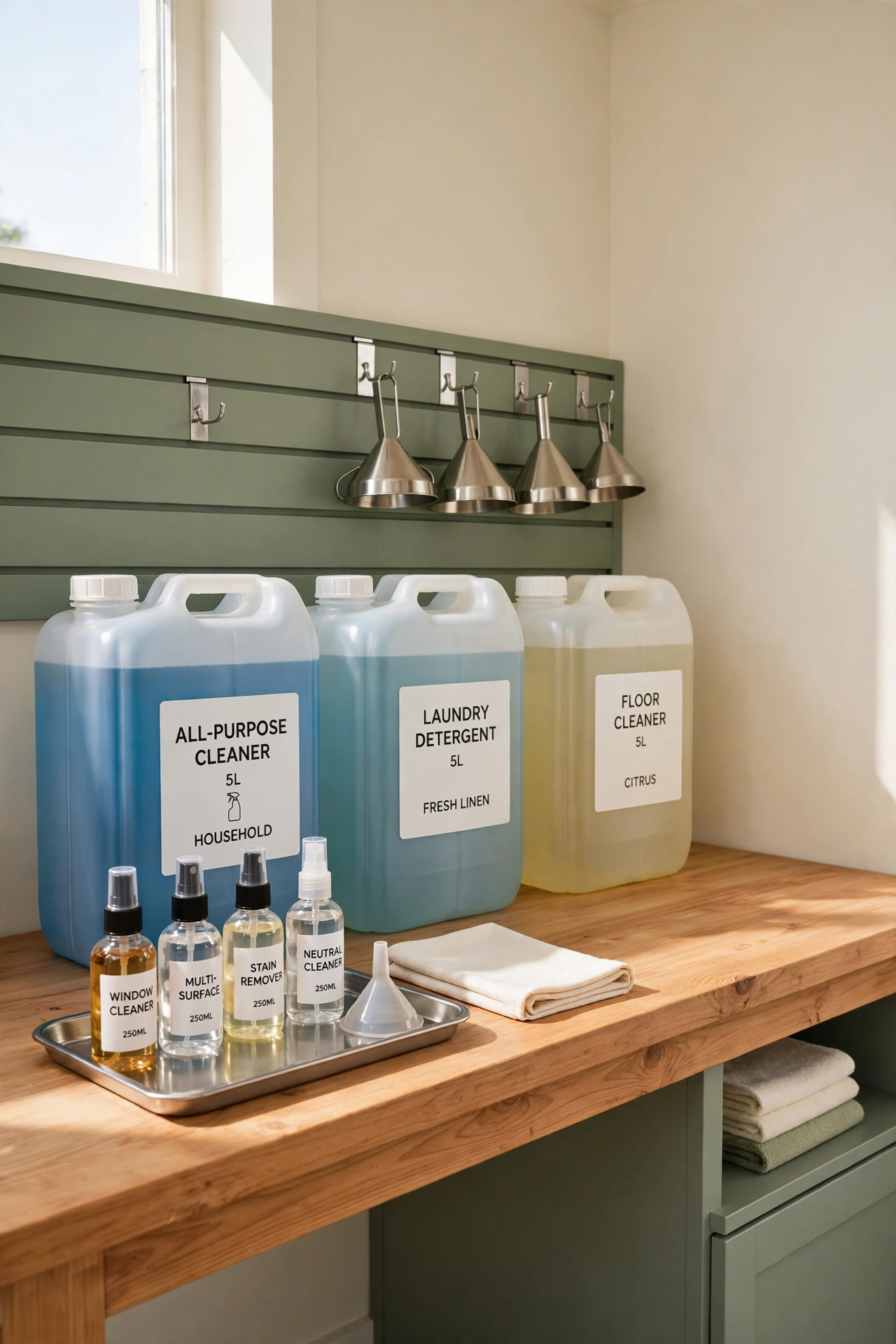
A garage decanting station gives large bulk containers a safe, level home and a clean surface for pouring refills into smaller bottles. A sturdy shelf or workbench holds the bulk jugs, with a tray underneath to catch drips and a funnel hanging on a hook beside the shelf. Decanting in the garage keeps heavy lifting out of the kitchen and bathroom, and keeps spills on a surface that is easy to clean.
Label each bulk jug with the product name and the date you opened it, and keep a clean funnel for each product family so scents and formulas never mix. Store the smaller refill bottles on the same bench, filled and ready to carry inside. A garage station also keeps bulk stock out of sight, so the refill stations inside the home stay slim and beautiful.
12. Label Every Refill Bottle With Product Name and Dilution Ratio
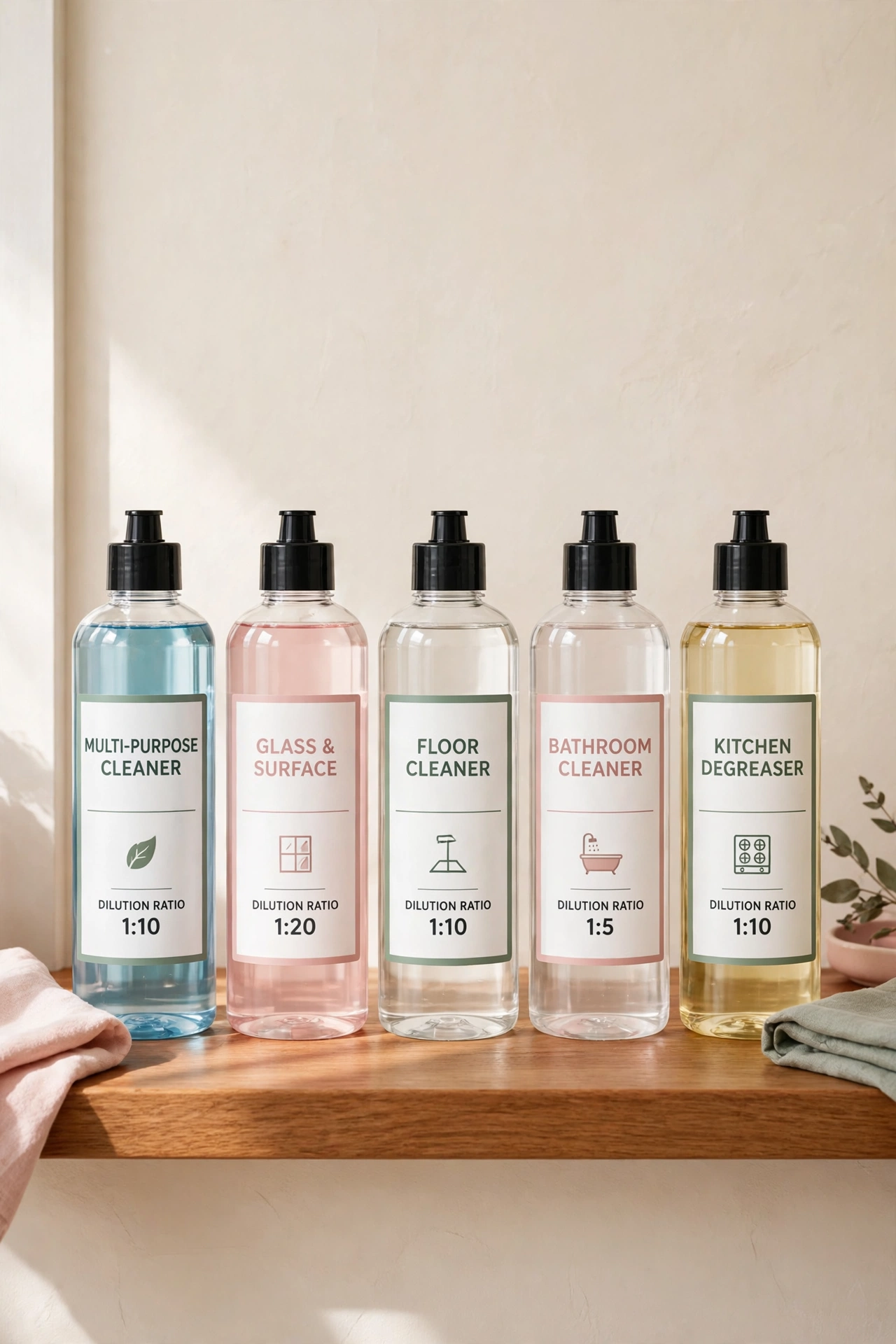
Clear labels are the heart of every refill station, and the most useful labels carry both the product name and the dilution ratio where one applies. A label that reads clearly from a step away stops mix ups, protects your surfaces, and lets any family member refill a bottle correctly. Printed labels beat handwritten notes because they stay readable even when bottles get damp or dusty.
Use waterproof labels with large, simple lettering, and place each label at the same height on every bottle so the shelf reads as one tidy row. Include the dilution ratio for concentrates, the product name for everything, and a refill date for products that lose strength over time. Replace any label that peels or fades, because a missing label turns a safe refill station into a guessing game.
13. Create a Fabric Care Refill Row for Softener and Stain Remover
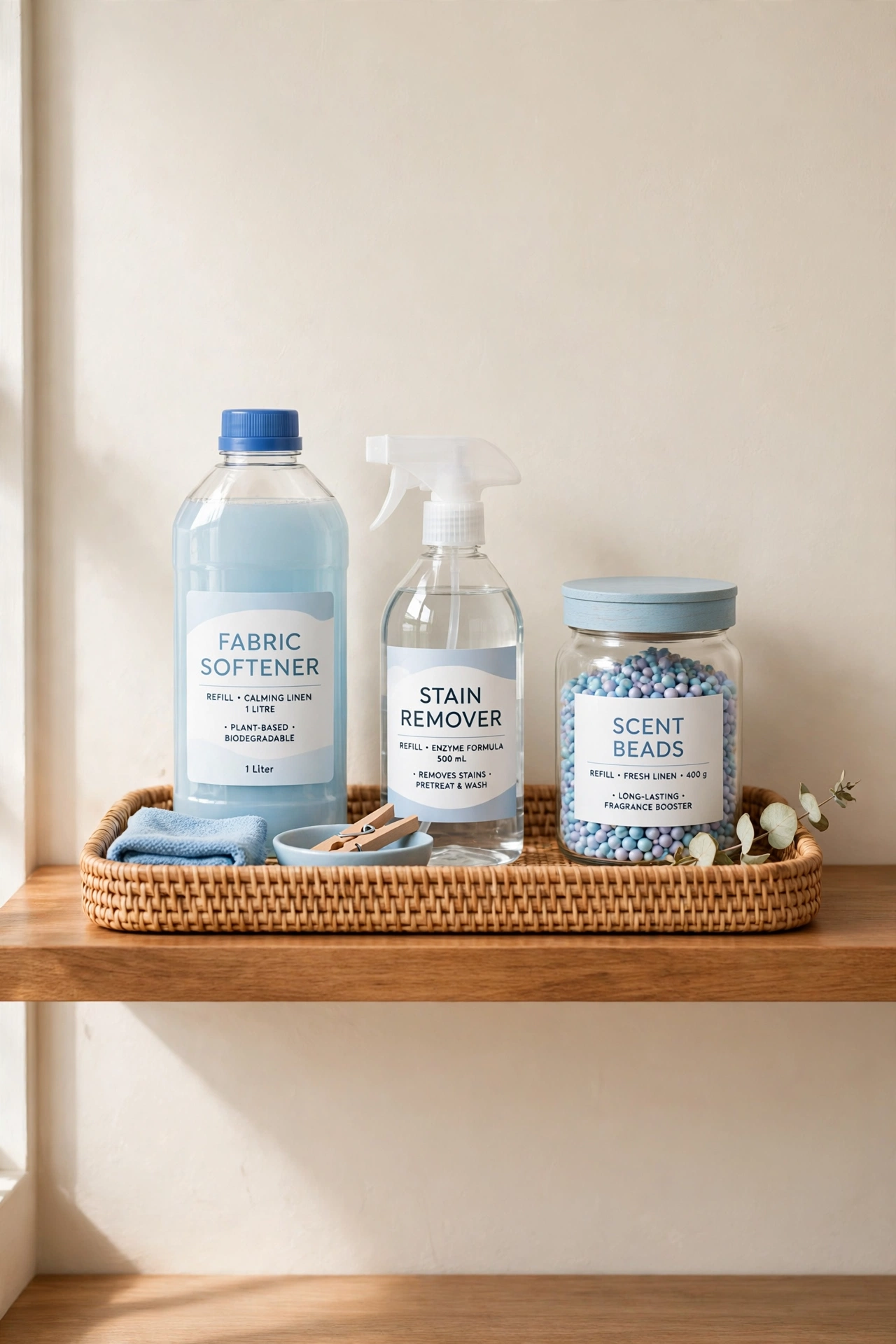
A fabric care refill row groups softener, stain remover, scent beads, and other laundry liquids into one neat line on the laundry shelf. Each product has its own refillable bottle or jar, filled to the top and labeled, standing in the order you use them during a wash cycle. The row makes laundry day smoother because everything you need is visible and in sequence.
Keep the row on a tray or a washable shelf liner so drips never reach the shelf itself. Refill each bottle from bulk containers stored below, and keep the caps tight so scents stay fresh and liquids stay clean. A dedicated fabric care row also stops laundry products from drifting onto kitchen or bathroom shelves, where they do not belong.
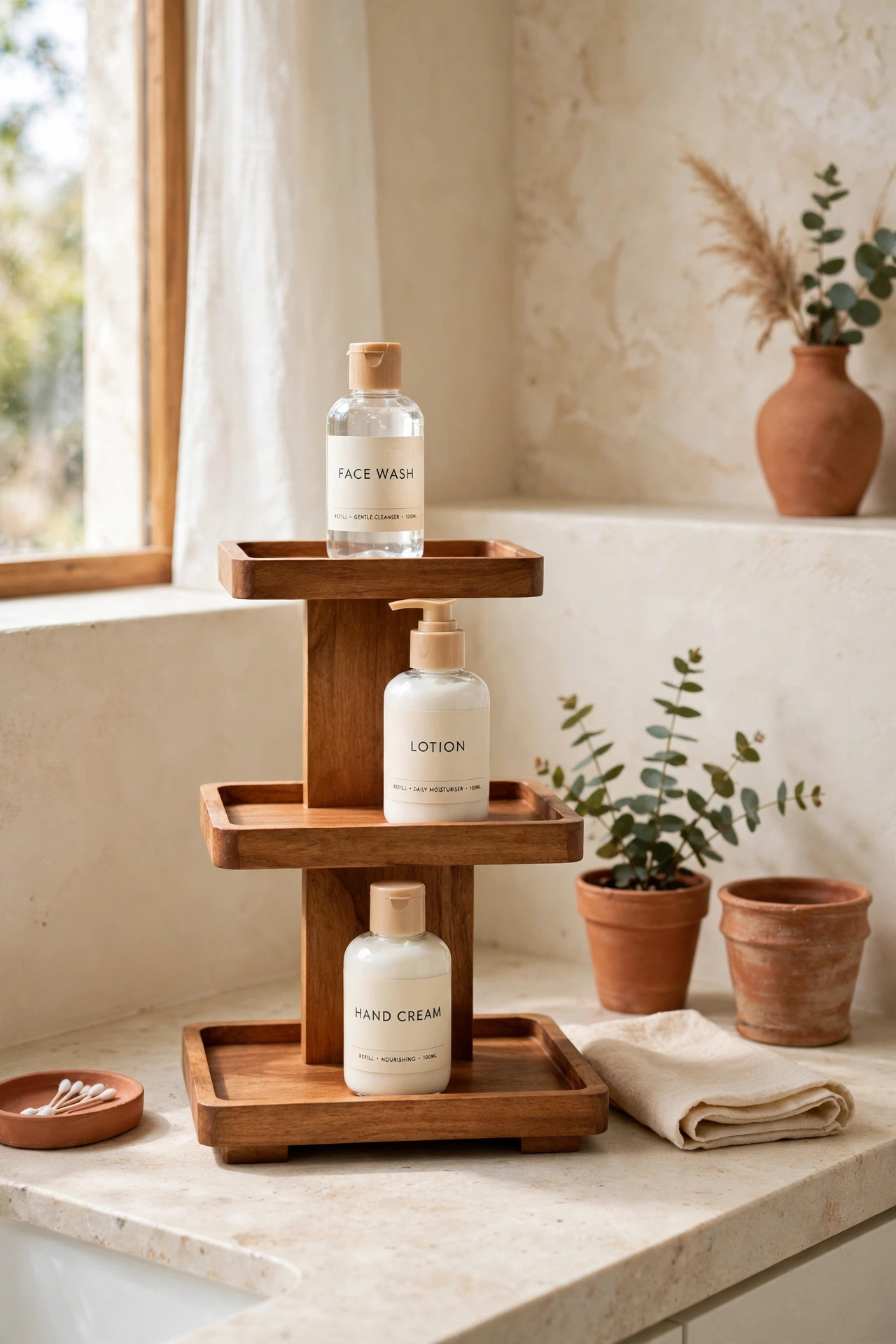
14. Use a Tiered Tray Refill Station for Daily Bathroom Products
A tiered tray turns a bathroom counter into a compact refill station for the products you use every day. Small refillable bottles of face wash, toner, lotion, and hand cream stand on two or three levels, with the most used products on the lowest tier and the rest above. The tray contains the bottles in one footprint, so the counter around it stays clear for a toothbrush and a glass.
Refill the small bottles from larger containers stored in the cabinet, and wipe the tray clean each week to stop product rings from building up. Choose bottles in matching colors with printed labels, so the tray looks like a styled display rather than a collection of random containers. A tiered tray also makes it easy to lift the whole station aside when you clean the counter.
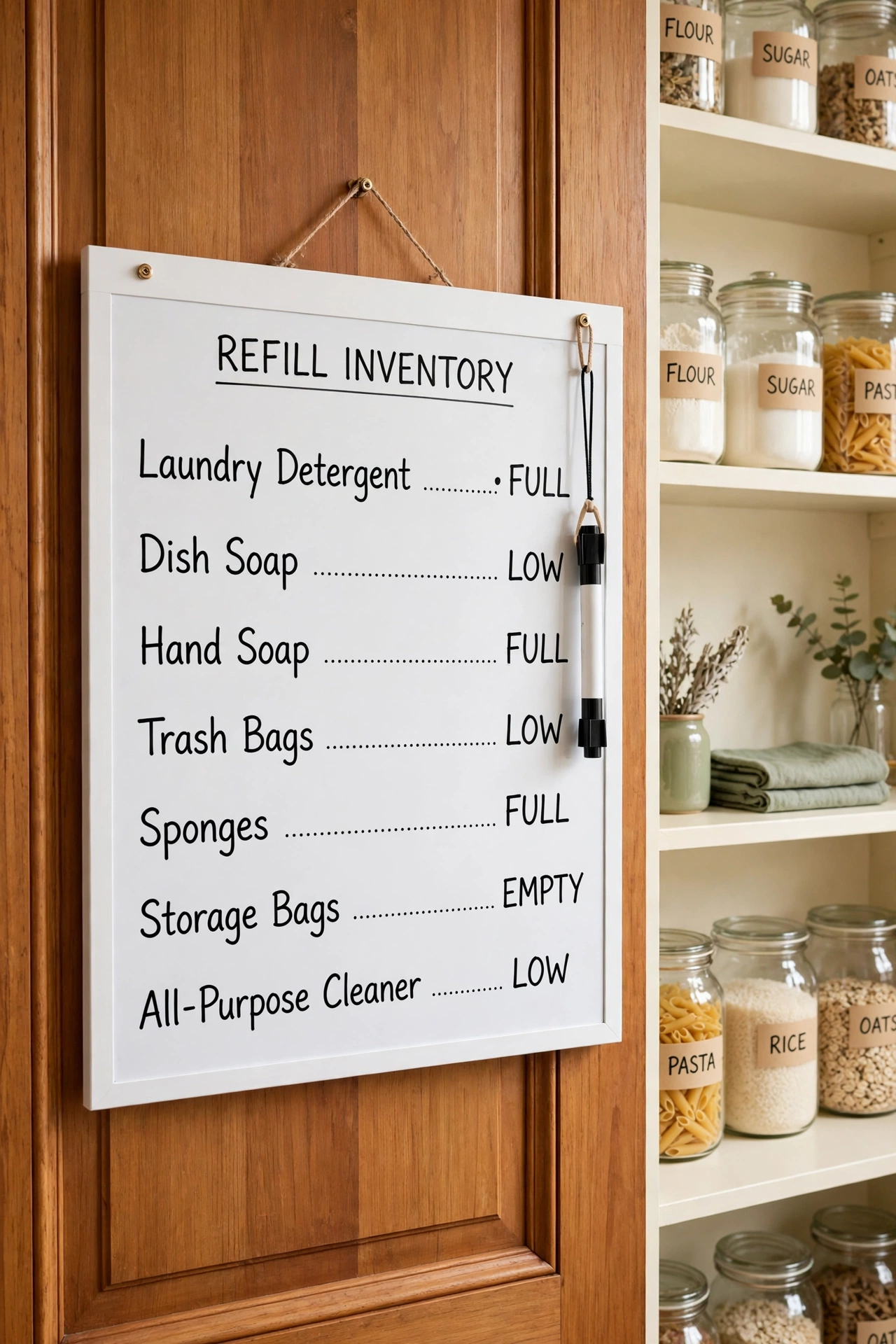
15. Add a Refill Inventory Board to Track Low Supplies
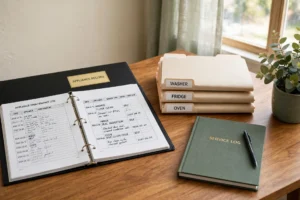
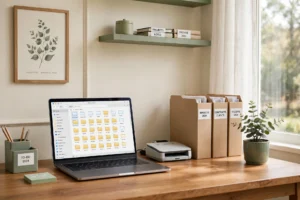
A refill inventory board keeps every station in the home topped up without constant checking. A small whiteboard or printed chart hangs inside a pantry or laundry room door, with a row for each refill product and a simple marker for full, low, or empty. One glance tells you what needs refilling, and one glance tells you what to add to the shopping list.
Update the board on the same day you refill the stations, and keep a marker or pen hanging beside it so updating takes only a moment. List products by room, so bathroom refills, laundry refills, and pantry refills each have their own section. A simple board prevents the common problem of discovering an empty soap dispenser at the worst possible moment.
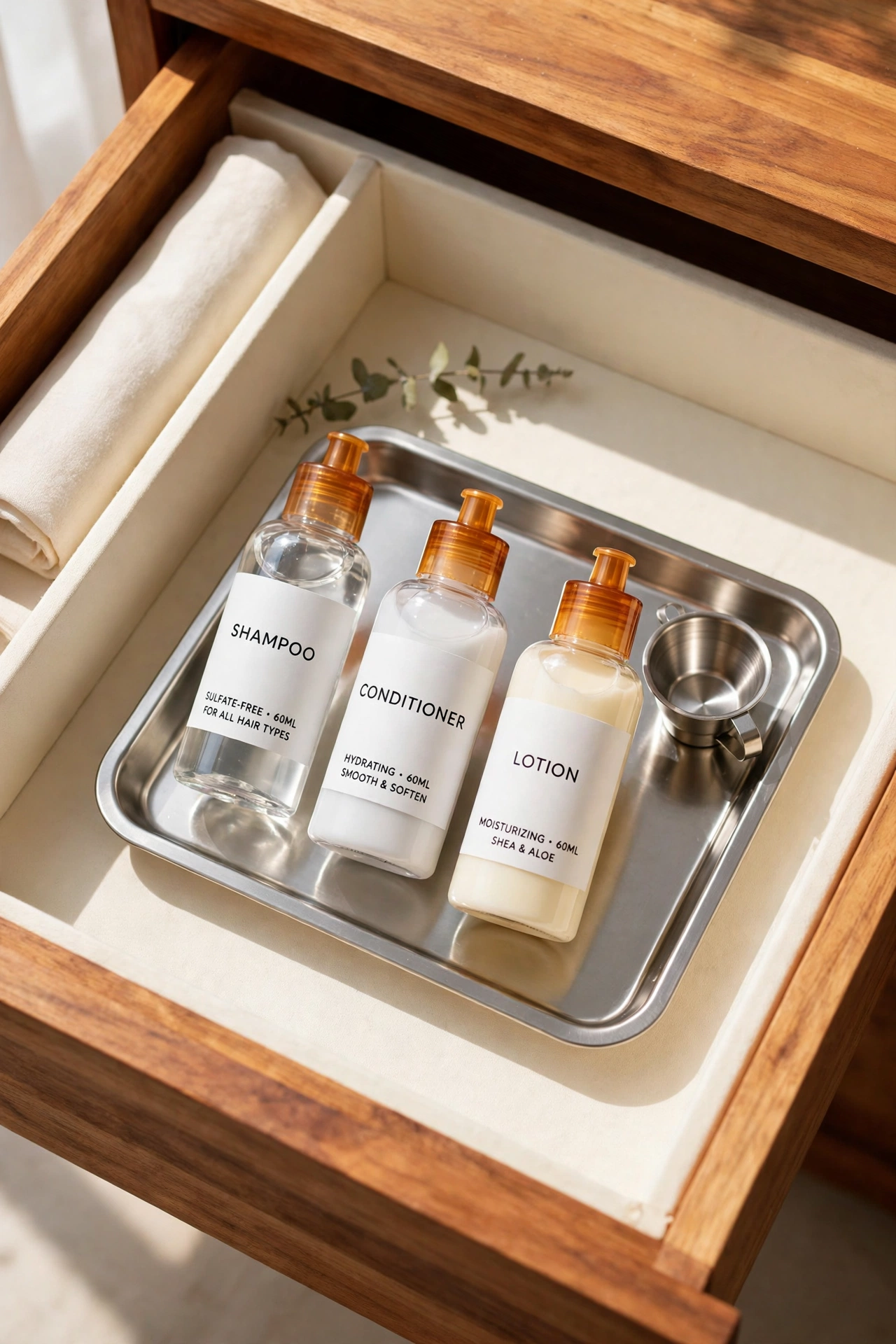
16. Keep a Travel Size Refill Station With Small Bottles and a Funnel
A travel size refill station keeps small bottles, a funnel, and a tray together in one drawer or box, ready for packing at a moment notice. The small bottles hold shampoo, conditioner, lotion, and soap in travel friendly amounts, and the funnel makes filling them from large refill bottles quick and spill free. No more hunting for tiny bottles the night before a trip.
Label each travel bottle with its product name, and keep the bottles clean and dry between trips. Store the station near the main refill shelf so topping up the travel bottles becomes part of your regular refill routine. A dedicated travel station also stops travel bottles from cluttering bathroom drawers for the rest of the year.
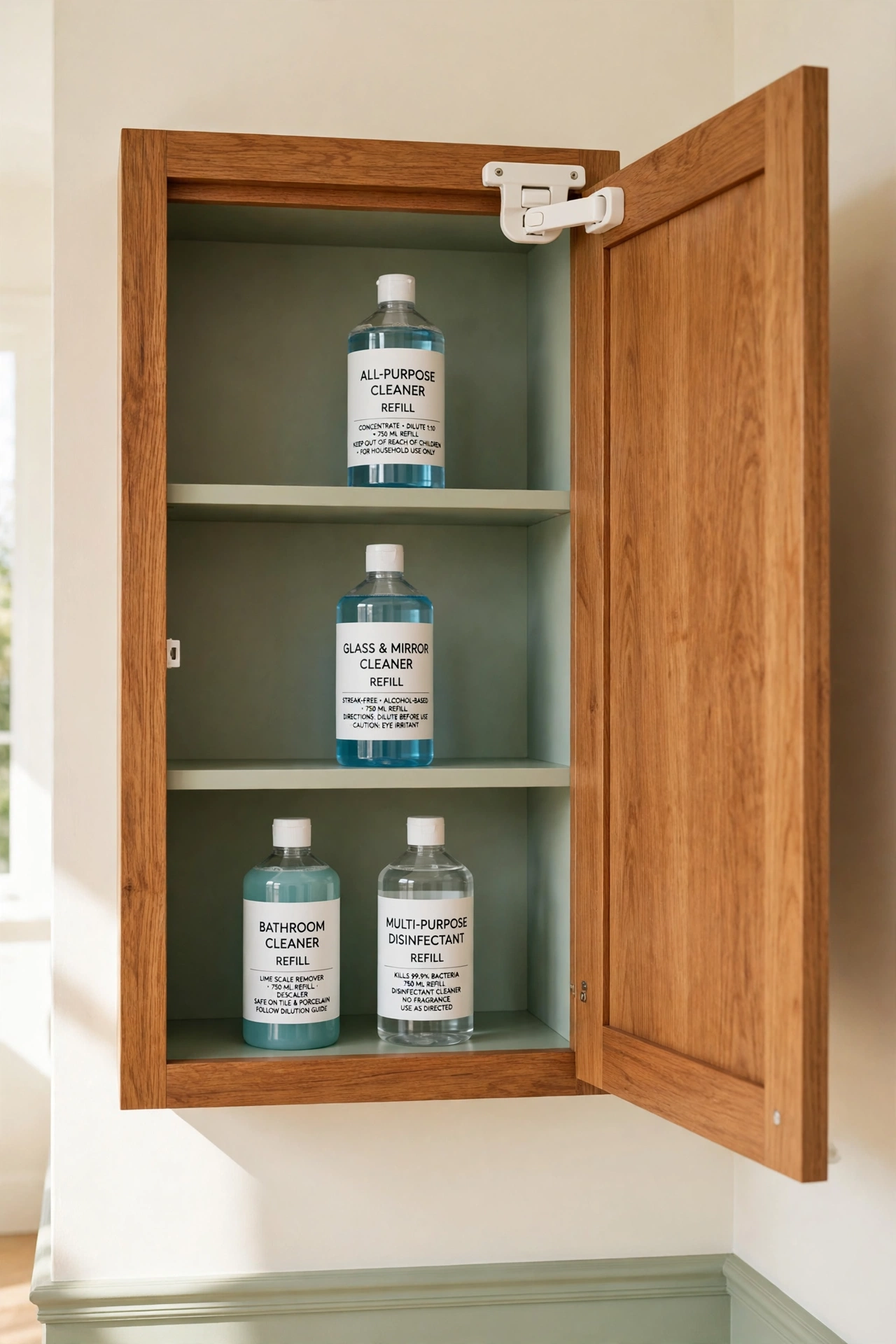
17. Lock Household Chemical Refills in a Child Safe Cabinet
Household chemical refills, including concentrates and strong cleaning liquids, belong in a locked cabinet that children cannot open. A cabinet with a child safe latch holds the refill bottles upright, labeled, and separated from food, medicines, and everyday products. The lock gives you peace of mind, and the separation keeps the rest of the home safe and organized.
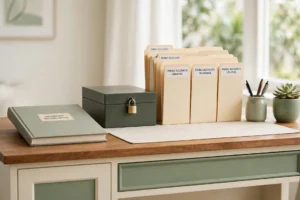
Keep the cabinet key or latch combination in a place adults can reach easily but children cannot. Store the most hazardous refills on the highest shelf inside the cabinet, and keep a printed list of contents on the inside of the door. Check the latch every month to make sure it still closes firmly, and never store chemical refills in food containers or drink bottles.
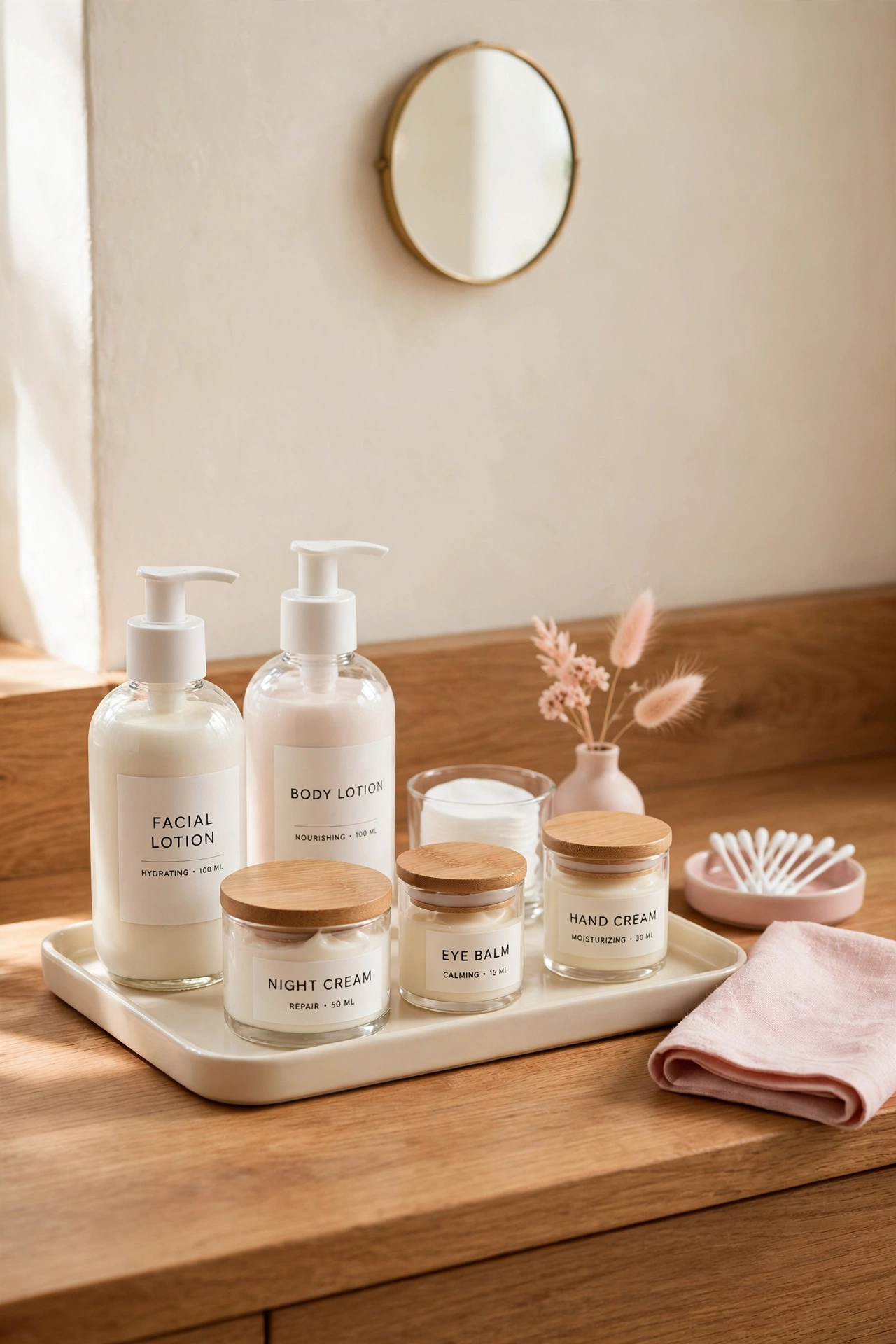
18. Arrange Lotion and Skin Care Refills on a Vanity Refill Tray
A vanity refill tray gives lotion, serum, and skin care refills a beautiful home on the dressing table or bathroom vanity. Refillable pump bottles and small jars stand on a single tray, grouped by morning and evening routines, with labels facing forward. The tray keeps products contained, protects the vanity surface, and makes the daily routine feel calm and luxurious.
Refill the bottles from larger containers stored in a drawer below, and keep the tray free of products you no longer use. Choose bottles with pumps for lotions and wide mouth jars for creams, so every product is easy to reach to the last drop. A vanity tray also makes it simple to see when a favorite product is running low, before it runs out completely.
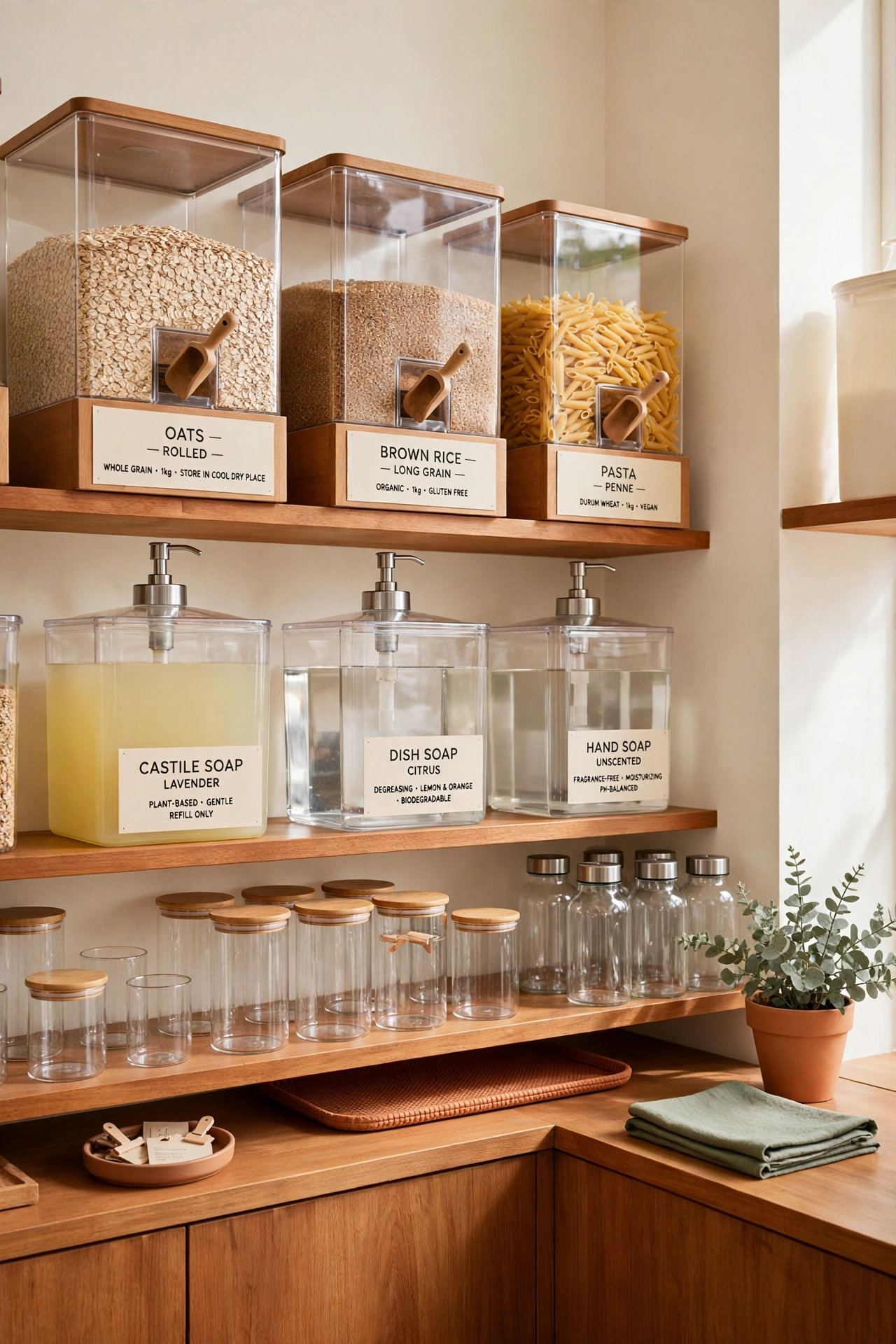
19. Design a Zero Waste Refill Corner With Bulk Bins and Reusable Containers
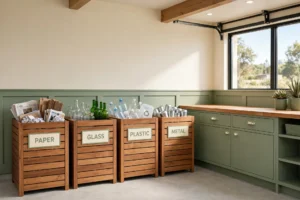
A zero waste refill corner brings the whole refill system together in one dedicated spot, with bulk bins for dry goods, large dispensers for liquids, and a shelf of clean reusable containers ready to fill. The corner reduces packaging waste, saves money on bulk buying, and turns refilling into a simple weekly habit. Everything has a place, from the bulk bins at the back to the clean containers at the front.
Keep the reusable containers washed, dried, and labeled before each refill session, and weigh or measure bulk goods with a scoop or scale kept at the station. Add a small sign with the refill routine, so every family member follows the same steps. A zero waste corner works best in a pantry, utility room, or garage nook, where bulk bins and dispensers can stay in place all year round.
Conclusion
A household refill station does not need to be large or complicated to change the way your home feels. From a shower dispenser and a laundry pump to pantry jars and a labeled concentrate shelf, each idea in this list gives one product a clear home and a simple refill routine. The result is less clutter, less waste, and fewer moments when a bottle runs dry at the wrong time.
Start with the station you will use most, perhaps the hand soap at the bathroom sink or the detergent beside the washer, and build from there one product at a time. Keep labels clear, containers filled, and bulk stock organized, and the whole system will run itself with very little effort. Your home will feel calmer, your shelves will look tidier, and refilling will become a habit you barely notice.
Frequently Asked Questions About Household Product Refill Station Organization Ideas
What containers work best for a household refill station?
Glass jars with airtight lids work best for dry pantry goods, while sturdy pump bottles and squeeze bottles suit liquid soap, shampoo, and detergent. Choose containers with wide mouths for easy filling, printed labels for clear identification, and sizes that match how quickly your household uses each product.
How often should refill stations be topped up?
Check refill stations once a week and top up any container that has dropped below half full. Weekly checks keep dispensers working smoothly and stop products from running out unexpectedly. Bulk stock in a garage or reserve shelf can be checked once a month.
Are refill stations safe for homes with young children?
Yes, when chemical refills and concentrates are stored in a locked cabinet with a child safe latch, out of reach and away from food. Keep everyday refills like hand soap and shampoo in their normal stations, and store anything hazardous separately with clear labels. Never reuse food or drink containers for chemical products.
How do I keep refill bottles clean between refills?
Wash refill bottles with warm soapy water and dry them fully before each refill, especially bottles that hold soap, lotion, or food staples. For pantry jars, wipe the rims clean and check the seals each time you top them up. Clean bottles keep products fresh and stop residue from building up inside dispensers.
Can a refill station really save money?
Yes, buying in bulk usually costs less per ounce than buying small individual bottles, and refillable containers cut down on packaging waste over time. The savings grow when you combine bulk buying with a clear inventory system, because you stop buying duplicates and stop throwing away products that expired in a forgotten corner.

Hi, I’m Emily! I turn messy corners into cozy, organized spots. DreamNestDecor is where I share simple, practical home ideas — decor, organization, and small-space solutions that work in real life, not just in photos. Every idea here is carefully researched before it’s shared.