Picture this: you walk into the garage with an armful of empty jars, flattened boxes, and old magazines, and every item has a clear home waiting for it. No piles spill onto the floor, no bags lean against the wall, and no guessing slows you down. The station looks calm and tidy, and sorting takes only a minute because each material has its own labeled place.
You do not need a large garage or expensive built-in units to get there. All you need is a station that sorts by material and sits where your family naturally drops items on the way in or out. These 24 home recycling station organization ideas will help you build a system for paper, cardboard, glass, plastic, metal, electronics, batteries, textiles, and more, in garages, mudrooms, utility rooms, laundry rooms, and entryways.
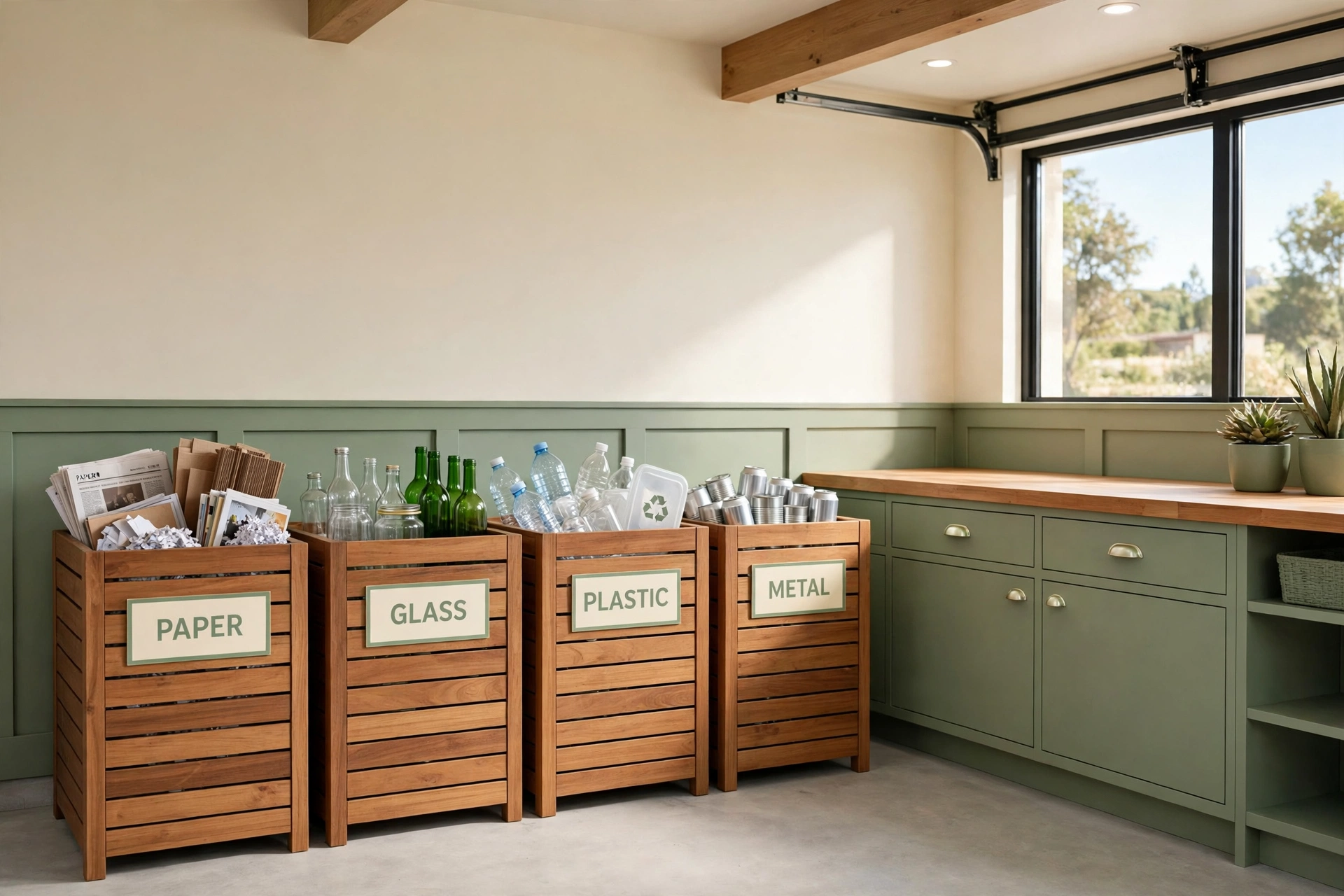
1. Build a Garage Wall Station With Color Coded Bins for Every Material
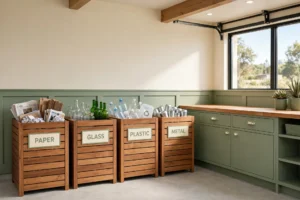
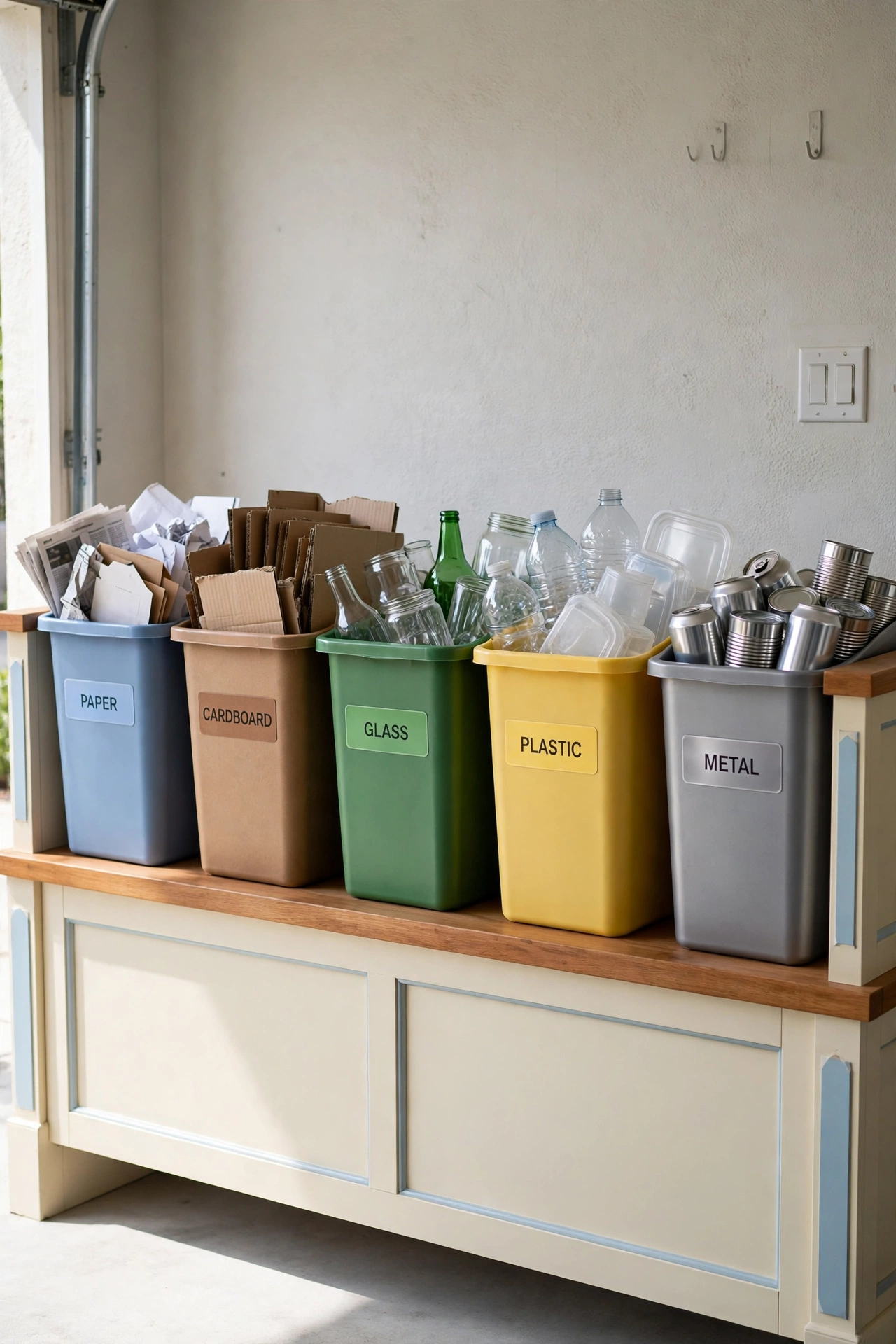
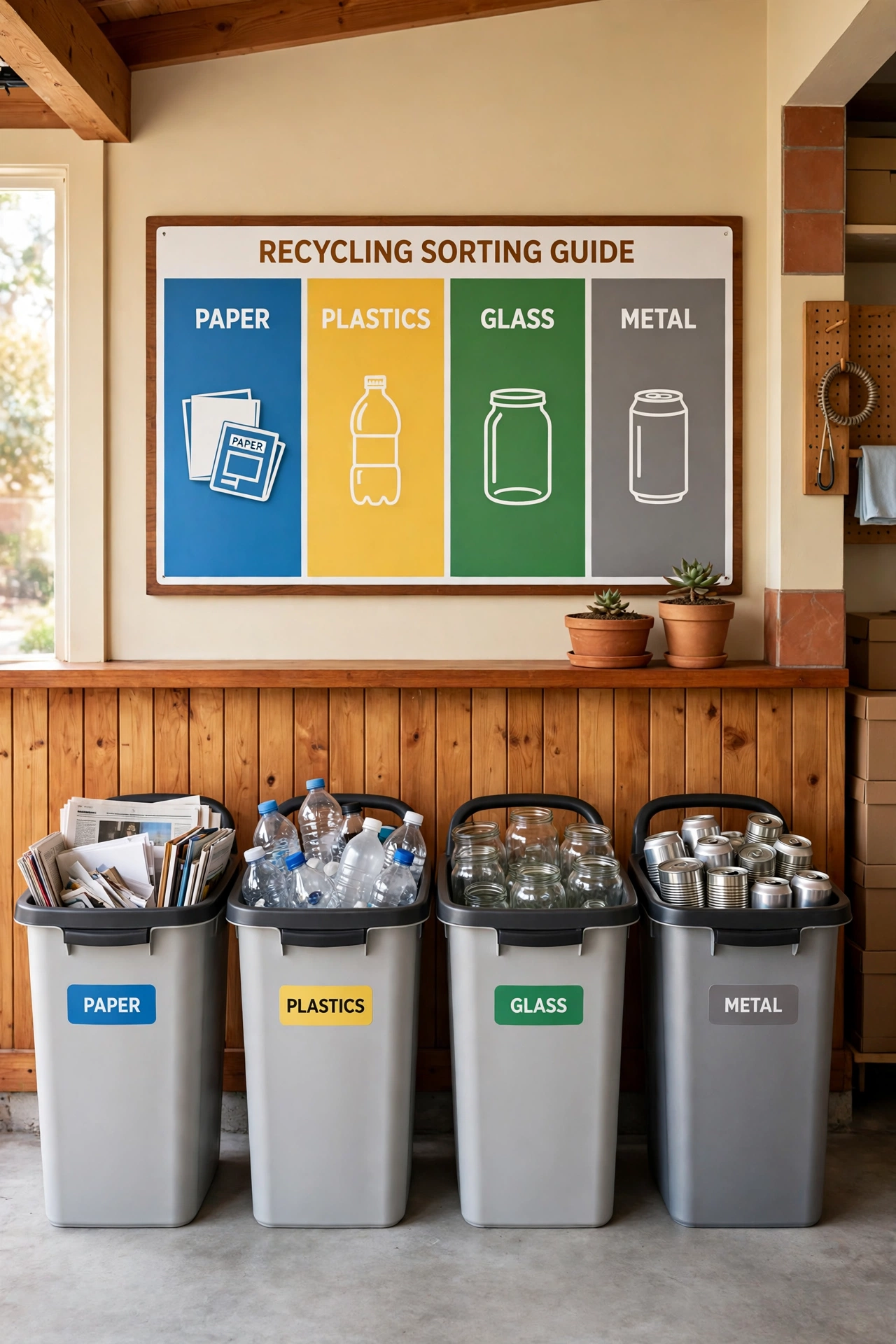
A wall station in the garage keeps every material separate and visible at a glance. Line up sturdy bins along one wall, with one bin for paper, one for cardboard, one for glass, one for plastic, and one for metal. Color coded labels on the front of each bin help every member of the household sort correctly without asking questions.
Choose bins with lids to keep dust and pests away, and place the bins you fill fastest closest to the door from the house. Add a small shelf above the bins for tape, scissors, and extra bags so flattening and bundling stay easy. A wall station turns a bare garage wall into the hardest working corner of the whole home.
2. Set Up a Mudroom Sorting Bench With Labeled Cubbies
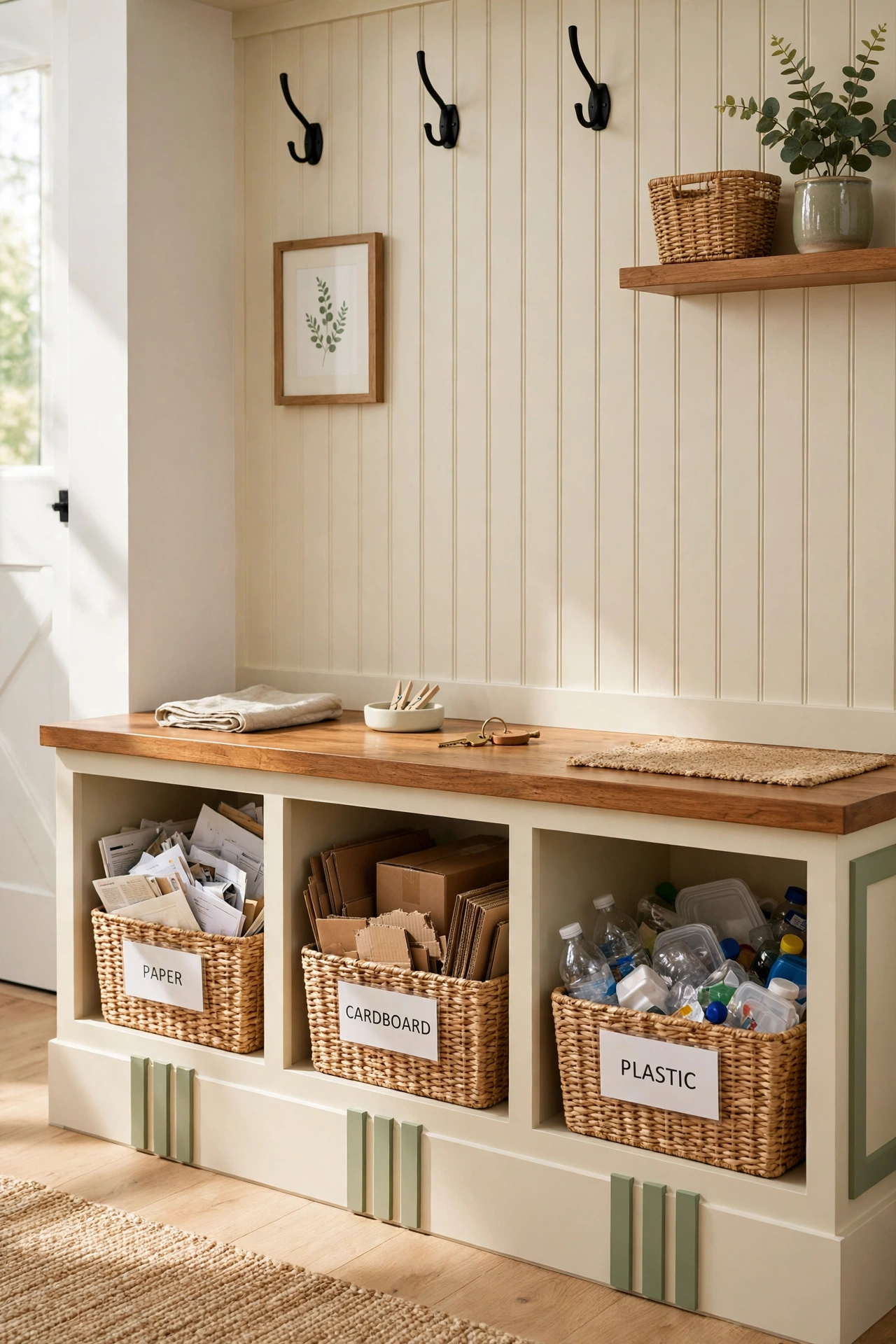
A mudroom bench with open cubbies makes sorting part of the daily routine. As bags and packages come through the door, paper, cardboard, and plastic can go straight into their own cubby instead of landing on the floor. The bench top stays clear for shoes and bags, while the cubbies below hold each material in a neat, separate space.
Label each cubby with a large printed sign and a simple picture of the material inside, so children and guests can sort with confidence. Line each cubby with a removable bag or bin that lifts out easily on collection day. For a mudroom that works hard in a small footprint, these mudroom bench organization ideas show how bench seating and storage can share one tidy unit.
3. Create a Tall Utility Cabinet Station for Sorted Materials
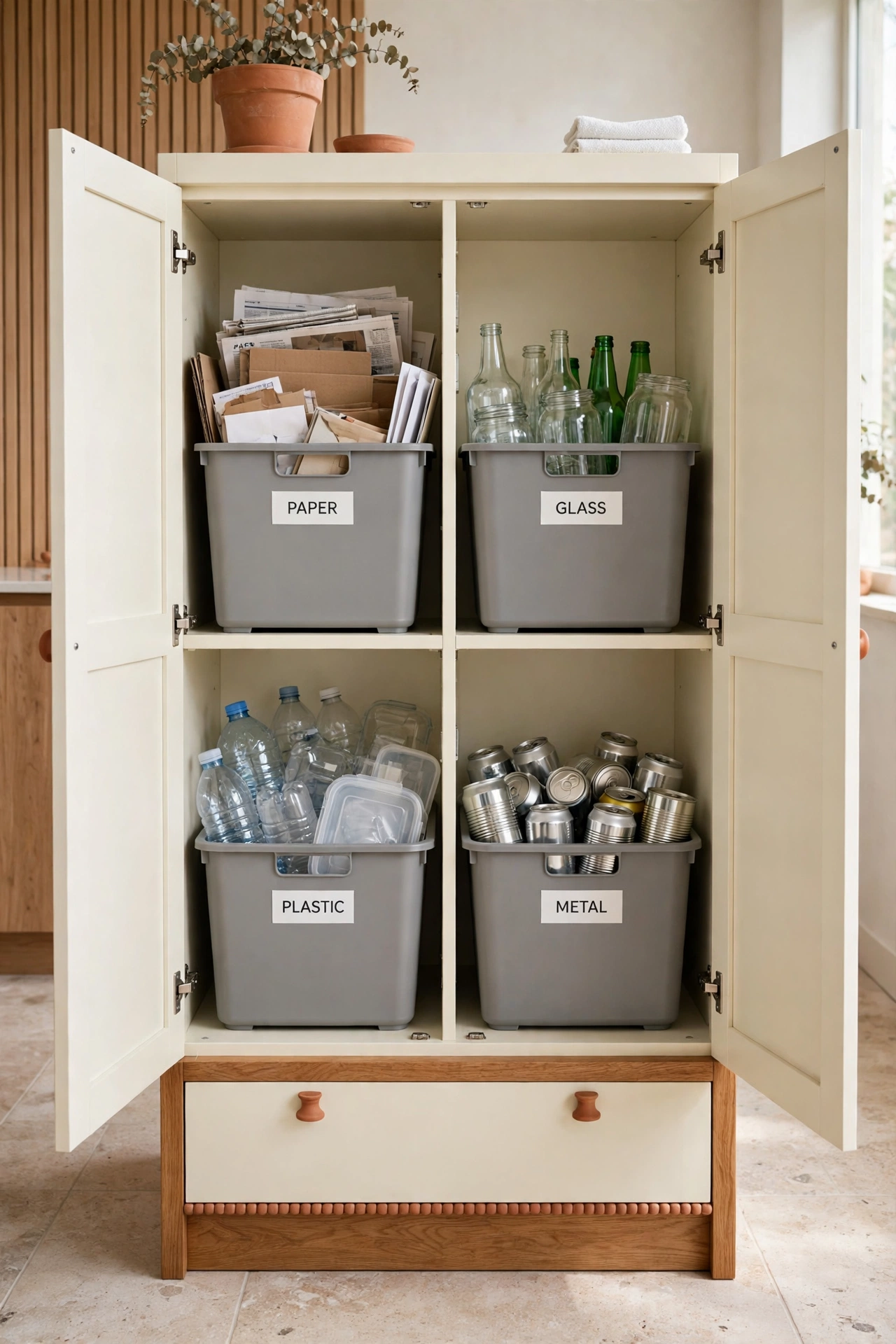
A tall cabinet in the utility room hides sorting bins behind closed doors and keeps the room looking calm. Inside the cabinet, stack labeled bins by material, with paper and cardboard on the upper shelves and heavier glass and metal bins on the floor of the cabinet. Doors keep dust away and keep the station out of sight when guests visit.
Add a printed label on the inside of each door so anyone who opens the cabinet can see the sorting plan at once. Keep a small step stool nearby if the upper shelves sit high, and empty the bins on a fixed day each week so the cabinet never overflows. A closed cabinet station suits homes where the utility room doubles as a laundry or cleaning space.
4. Dedicate a Laundry Room Corner to Cardboard Breakdown
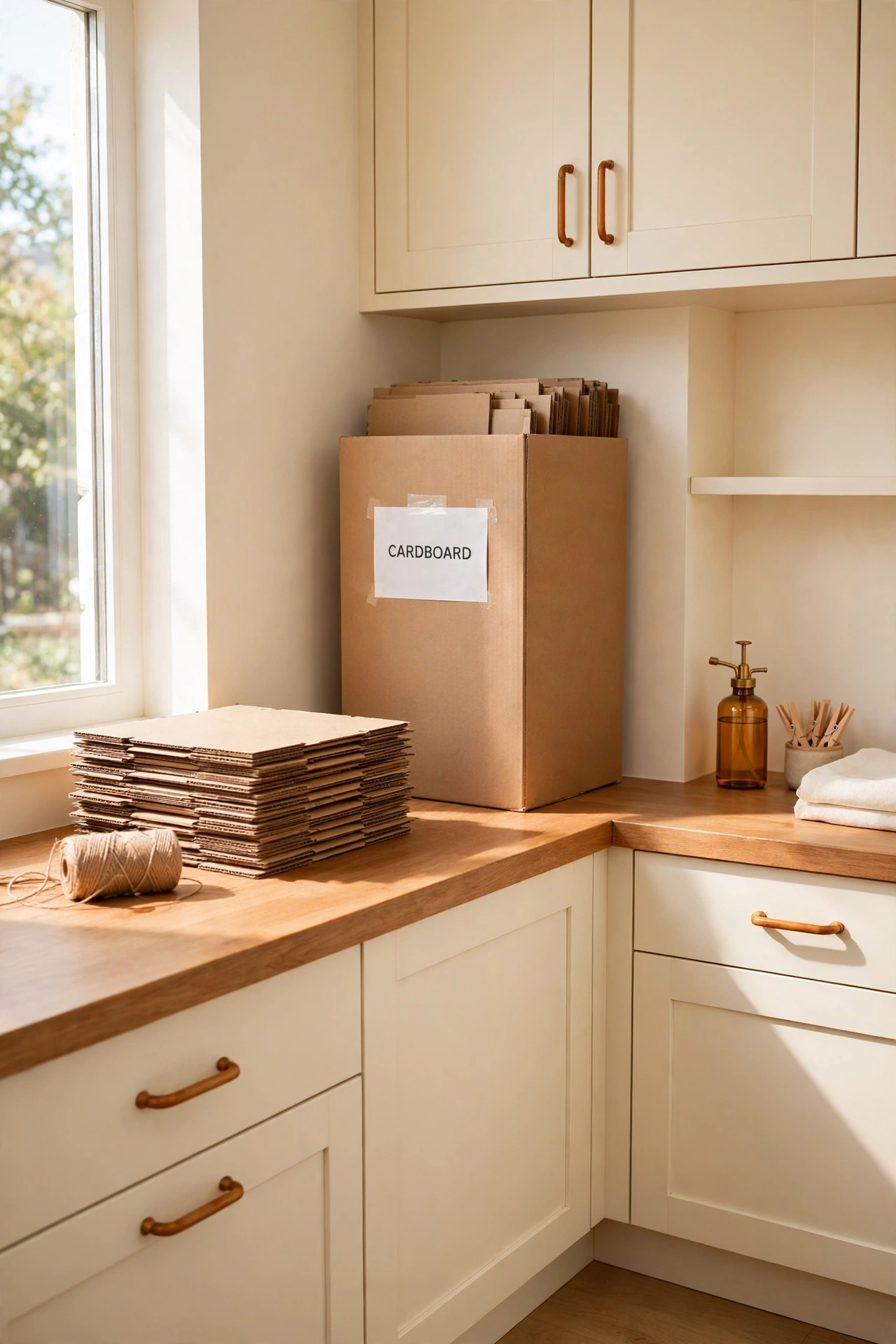
Cardboard boxes arrive constantly, and a dedicated breakdown corner stops them from piling up in hallways and entryways. Choose one corner of the laundry room for a flat work surface, a box cutter stored safely out of reach, and a tall bin for flattened cardboard. Boxes get broken down the moment they arrive, and the flat pieces stack neatly until collection day.
Place a bundle of twine and a pair of scissors on a small wall hook so flattened pieces can be tied into tidy bundles. Keep the corner clear of laundry baskets and cleaning supplies so cardboard never mixes with other items. A single purpose corner makes a messy material feel simple and controlled.
5. Place a Paper and Mail Drop Station by the Entryway
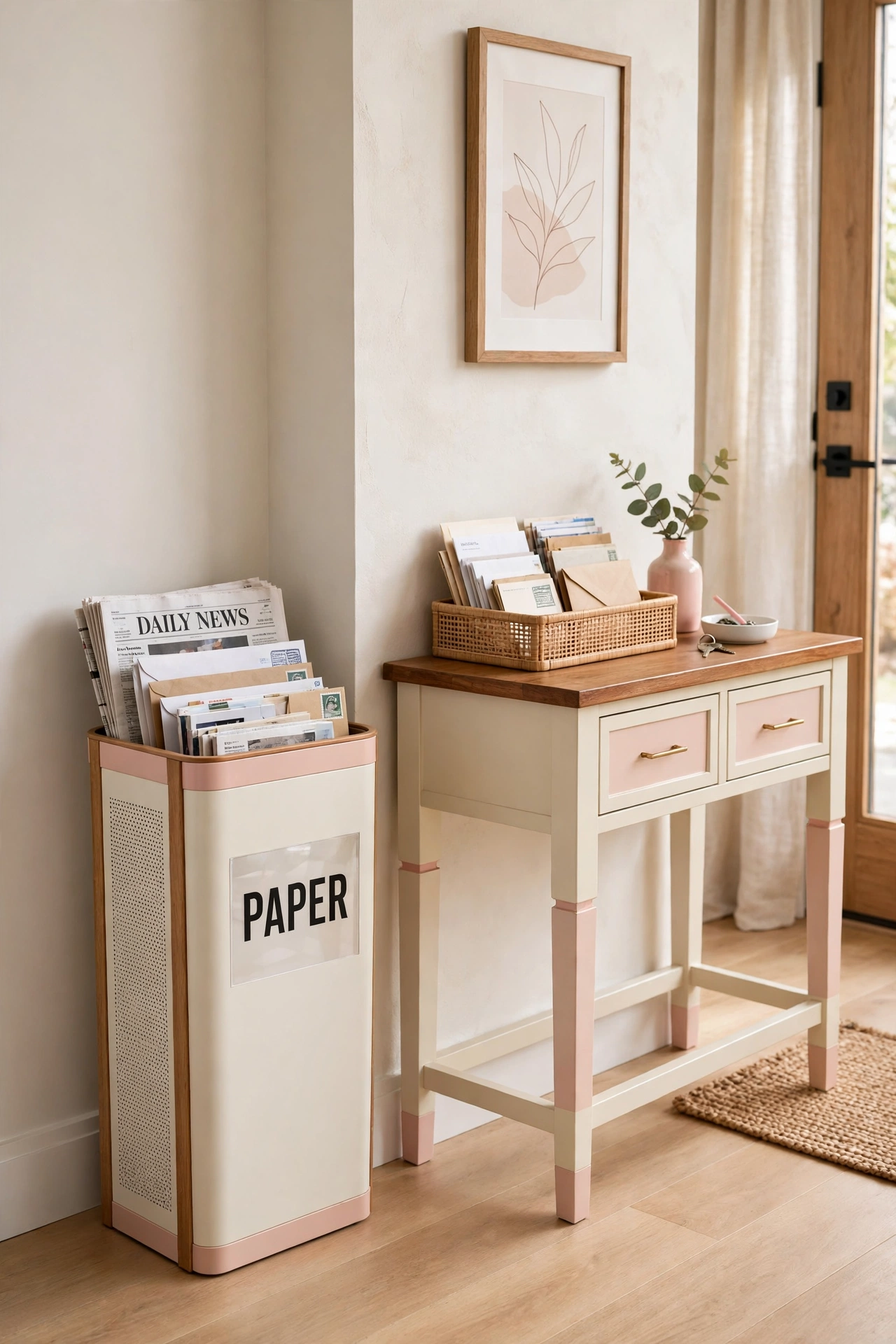
Paper enters the home through the front door, so a paper station by the entryway catches it at the source. A slim labeled bin for junk mail, envelopes, catalogs, and newspapers sits beside a small table or wall shelf. Mail gets sorted the moment you walk in, and paper never spreads across counters and tables in other rooms.
Add a small tray on top for items that need action, such as bills and letters to answer, and keep the recycling bin below for everything else. Empty the bin into the main garage paper bin once a week. For entry spaces that stay tidy with daily traffic, these entryway organization ideas show how a small drop zone can prevent clutter from reaching the rest of the house.
6. Sort Glass by Color in Stacked Garage Crates
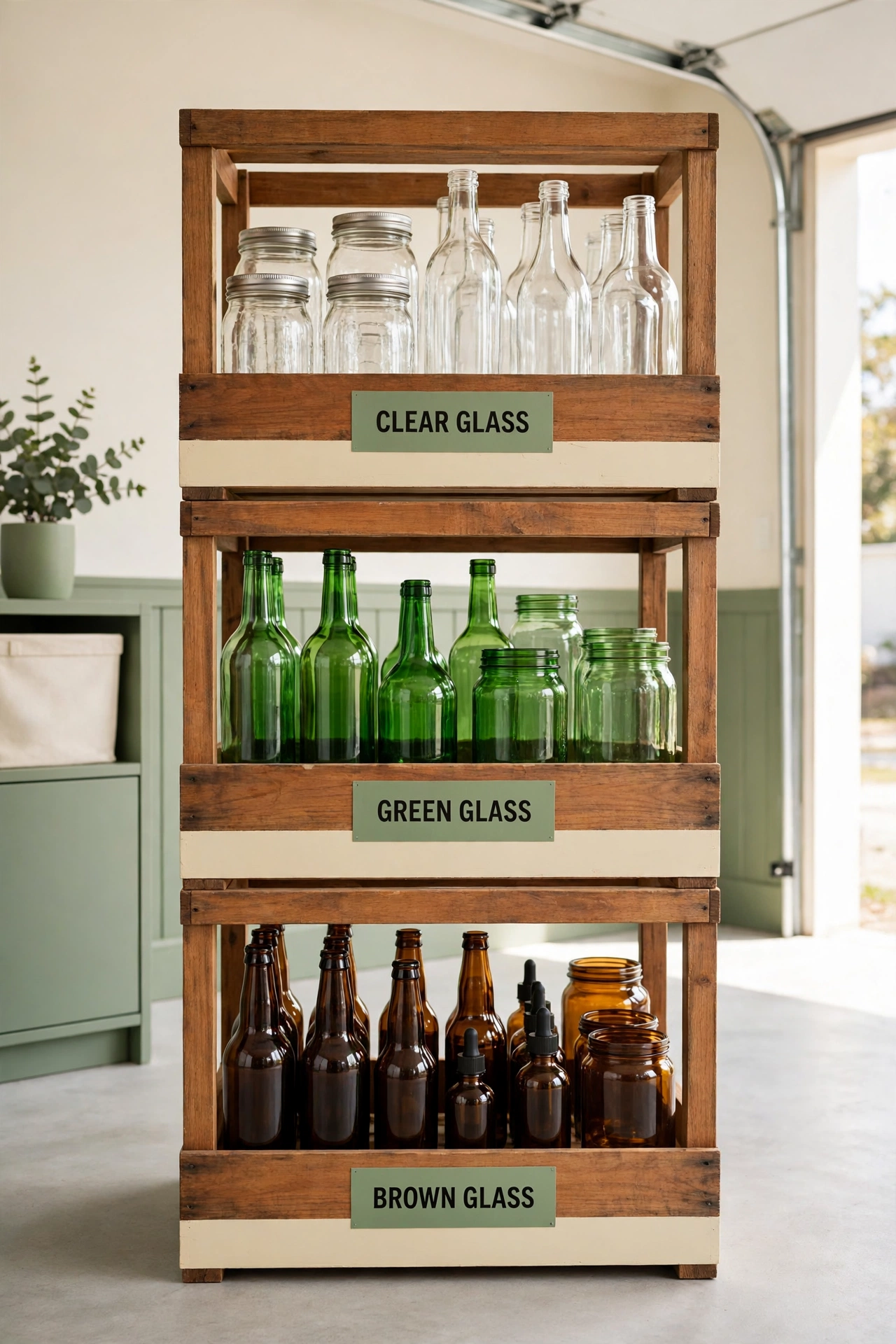
Glass sorting works best in sturdy crates that protect jars and bottles from chipping. Stack three labeled crates in the garage, one for clear glass, one for green glass, and one for brown glass, with a soft liner at the bottom of each crate. The crates stay on the floor where heavy glass is easy to lift in and out without strain.
Rinse jars and bottles before they go into the crates, and remove lids and caps into the metal bin so each material stays pure. Label the front of each crate in large letters so sorting stays fast even on a busy evening. Stacked crates use vertical space well and keep fragile glass safely contained.
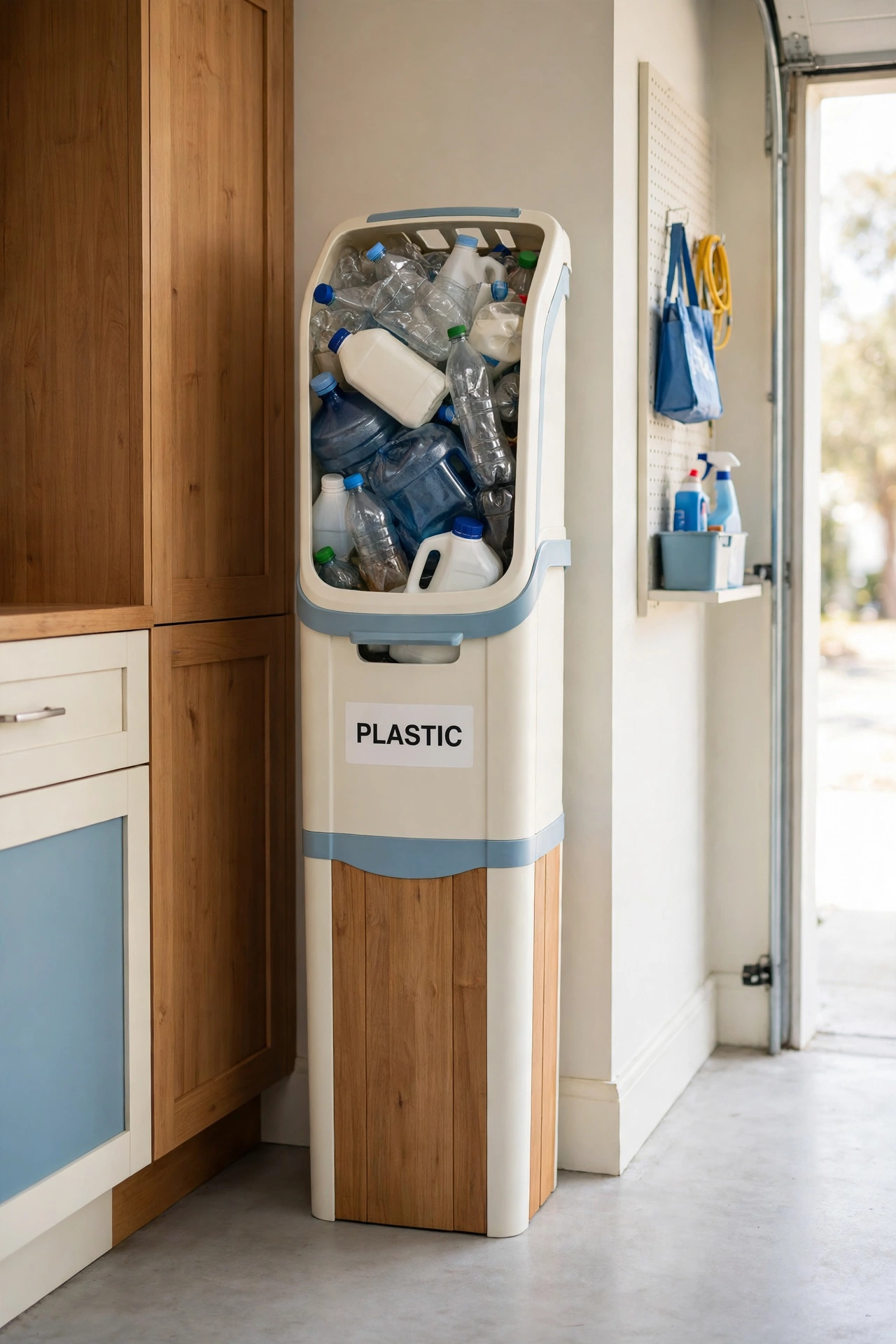
7. Collect Plastic Bottles and Jugs in a Tall Tower Bin
Plastic bottles and jugs take up a lot of space when they stay round and full of air. A tall tower bin with a wide opening invites the whole family to toss bottles in quickly, and a simple habit of flattening each bottle before it goes in doubles the capacity. The tower shape fits neatly in a garage corner or beside a utility room door.
Label the tower clearly for plastic bottles and jugs only, and keep a separate holder nearby for soft plastics and film. Empty the tower into a large bag on collection day, and wipe the inside of the bin each month to keep it fresh. A tall tower keeps lightweight plastic from blowing around the garage.
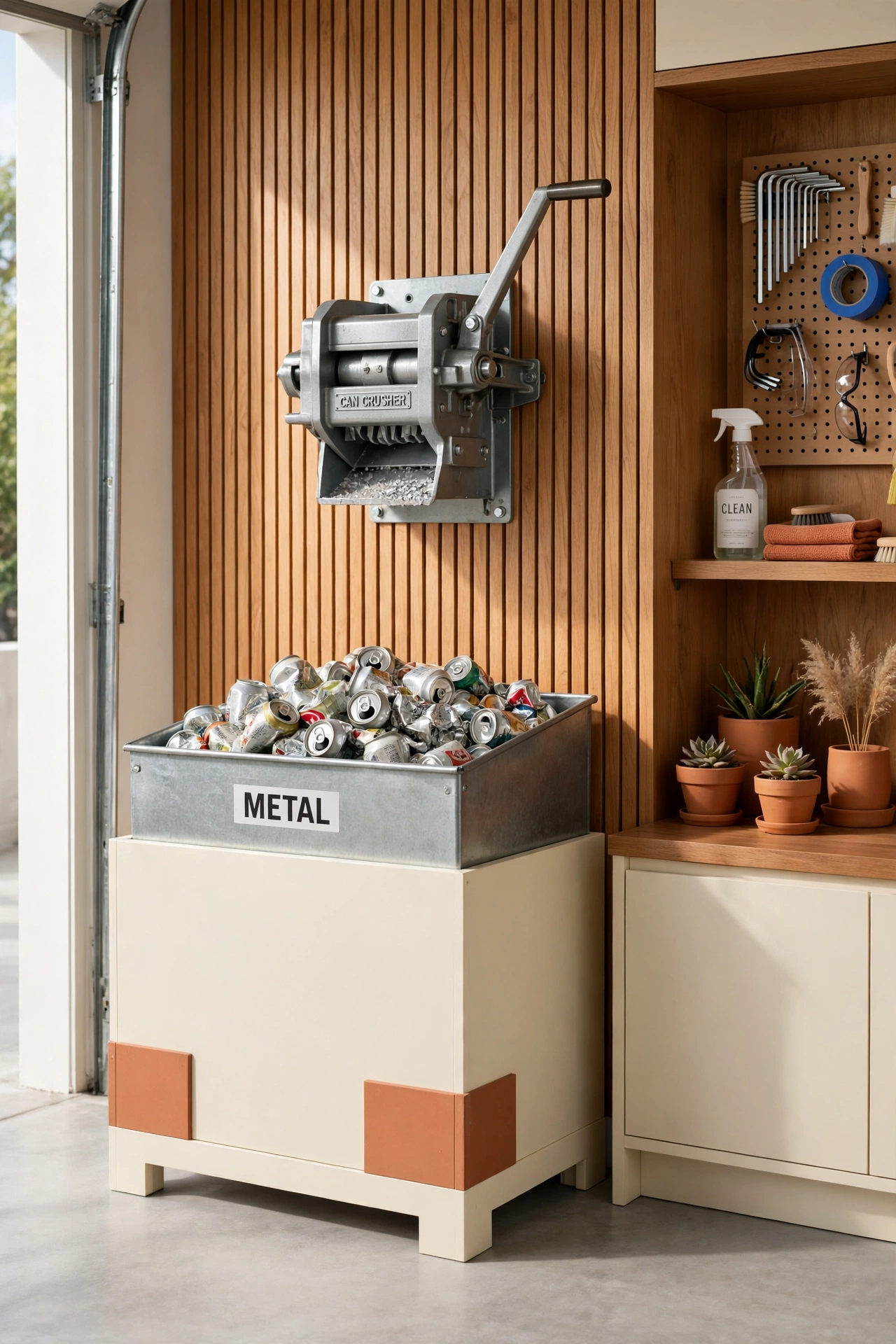
8. Crush and Sort Metal Cans in a Garage Work Zone
Metal cans shrink to a fraction of their size when they are crushed, so a small work zone for cans saves a surprising amount of space. Mount a wall can crusher beside a labeled metal bin in the garage, and rinsed cans can be crushed and dropped into the bin in seconds. The zone stays tidy because crushing happens in one fixed place.
Keep a second small bin beside the crusher for aluminum foil, metal lids, and small scrap metal, so nothing gets mixed into the can bin by mistake. For garage work areas that stay organized around tools and projects, these garage workbench organization ideas show how a defined zone keeps each task separate and easy to find. A can crushing zone turns a bulky material into a compact, easy load.
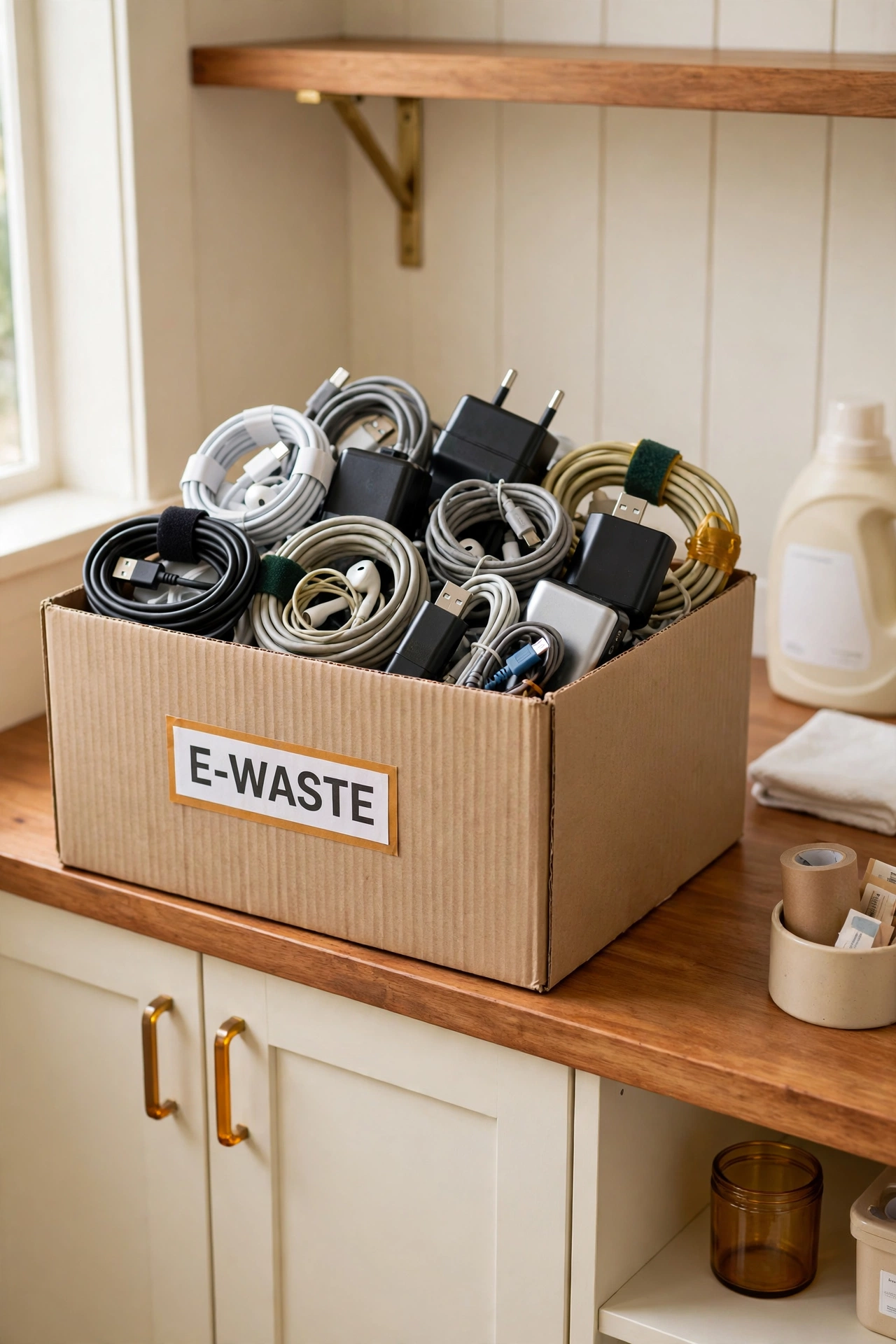
9. Keep an E-Waste Holding Box in the Utility Room
Old chargers, cables, phones, and small electronics need a safe holding place until the next e-waste collection day. A sturdy labeled box in the utility room keeps these items together and out of the regular trash. The box sits on a high shelf or inside a cabinet, away from damp floors and busy walkways.
Add a small printed list taped to the lid showing what belongs in the box, such as chargers, batteries in a separate bag, old phones, and small gadgets. Check the box every few months and take the full box to a local e-waste drop off point. A single holding box stops old electronics from hiding in drawers all over the house.
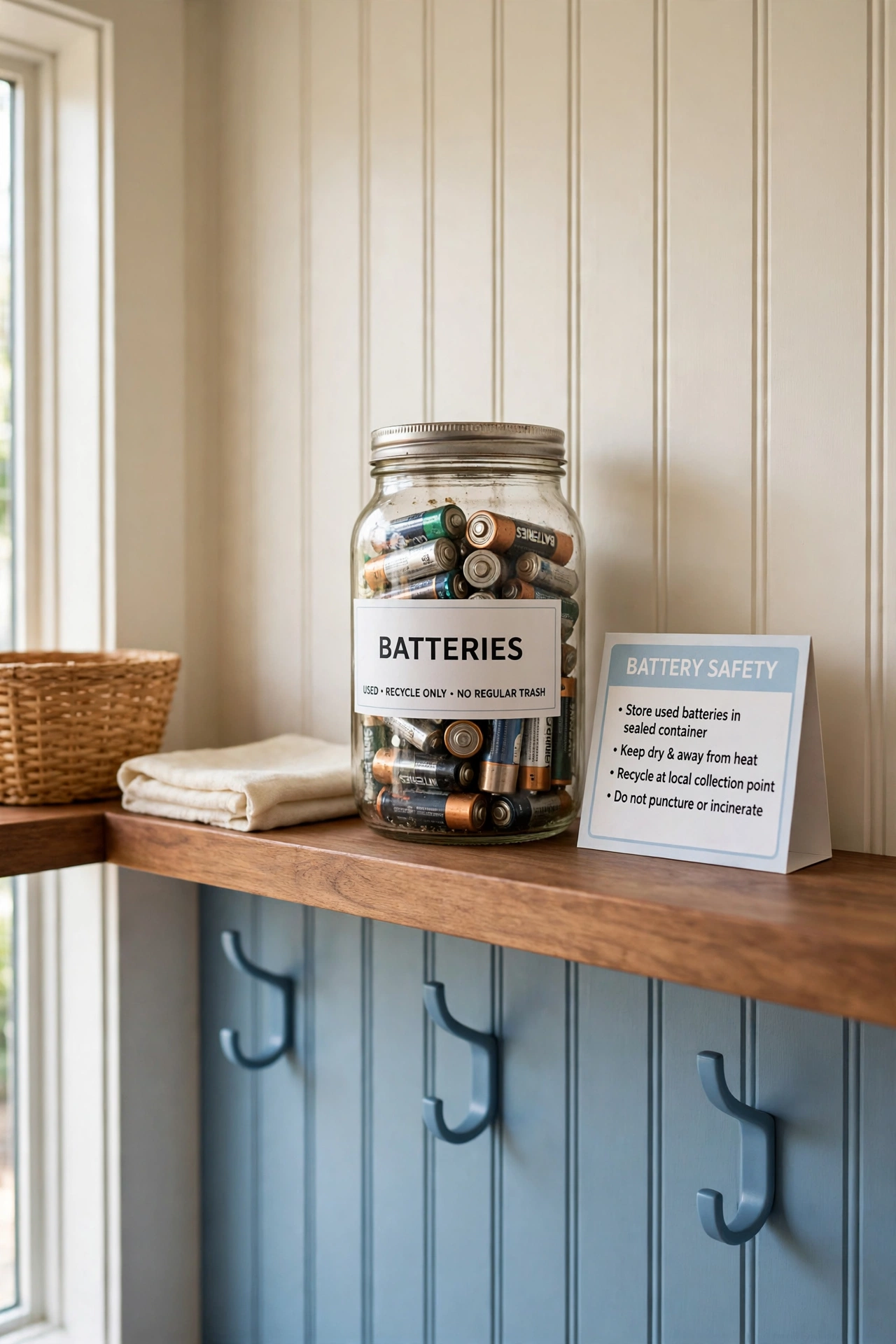
10. Store Used Batteries Safely in a Labeled Mudroom Jar Station
Used batteries need their own safe station, separate from every other material. A small labeled jar or lidded container on a high mudroom shelf collects spent batteries from remotes, toys, and flashlights until they can go to a proper battery collection point. The lid keeps the batteries dry and contained.
Tape the ends of each battery before it goes into the jar, and keep the jar away from heat and out of reach of small children. Label the jar clearly and empty it at a battery drop off point before it fills completely. A tiny station for batteries prevents a hazardous item from ending up in the wrong bin.
11. Gather Worn Textiles in a Donation and Recycling Bin
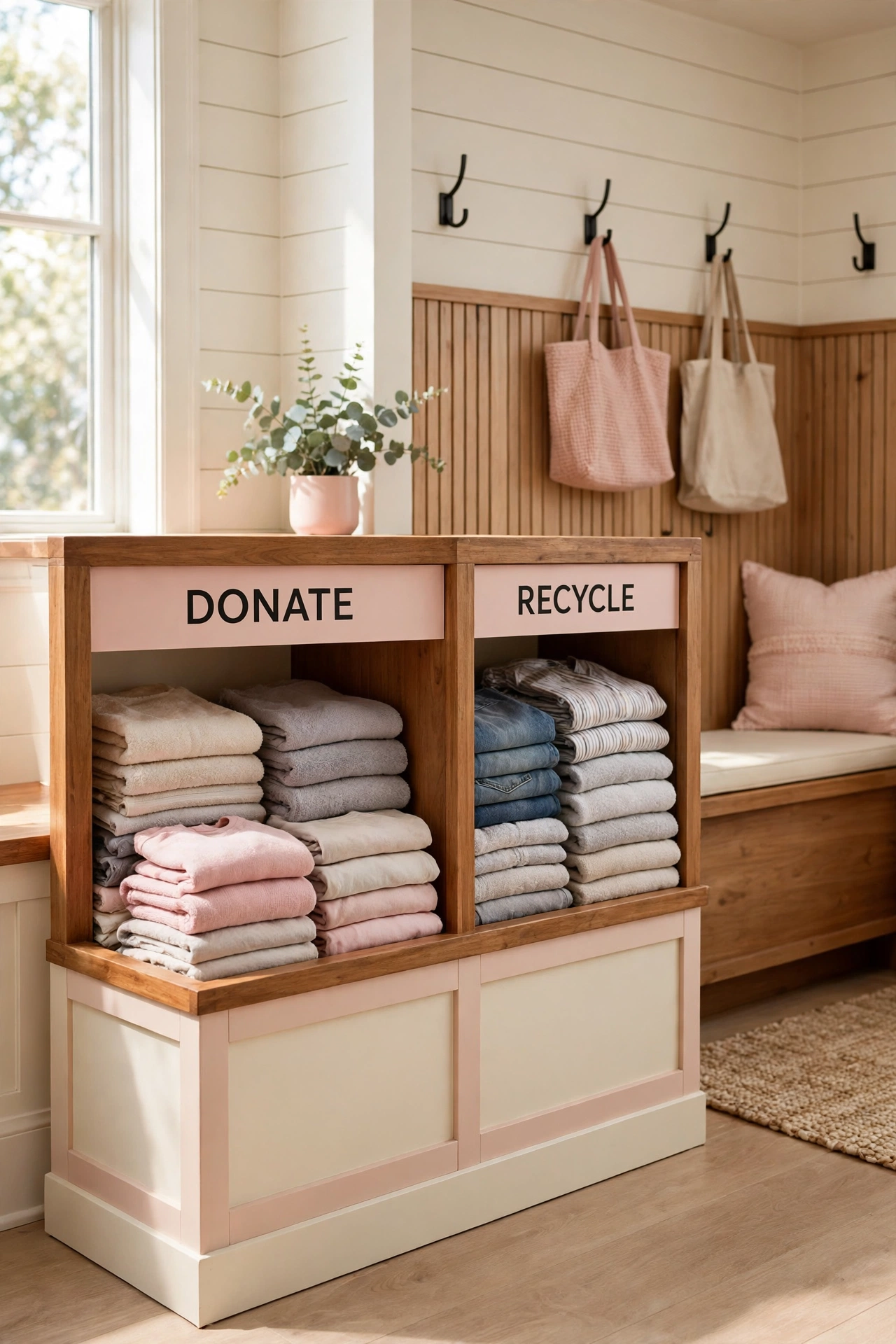
Worn clothing, old towels, and tired linens deserve a station of their own, separate from paper and containers. A large labeled bin in the mudroom or garage collects textiles in two sections, one for items still good enough to donate and one for worn items bound for textile recycling. Sorting at the bin saves a second sort later.
Keep the bin closed with a lid to keep dust away, and empty the donation side as soon as it fills so good items reach a charity shop quickly. Wash and dry textiles before they go into the bin, and fold each item flat so the bin holds more. A textile station keeps old fabric out of the trash and gives every item a second life.
12. Flatten and Bundle Cardboard in a Garage Bundling Zone
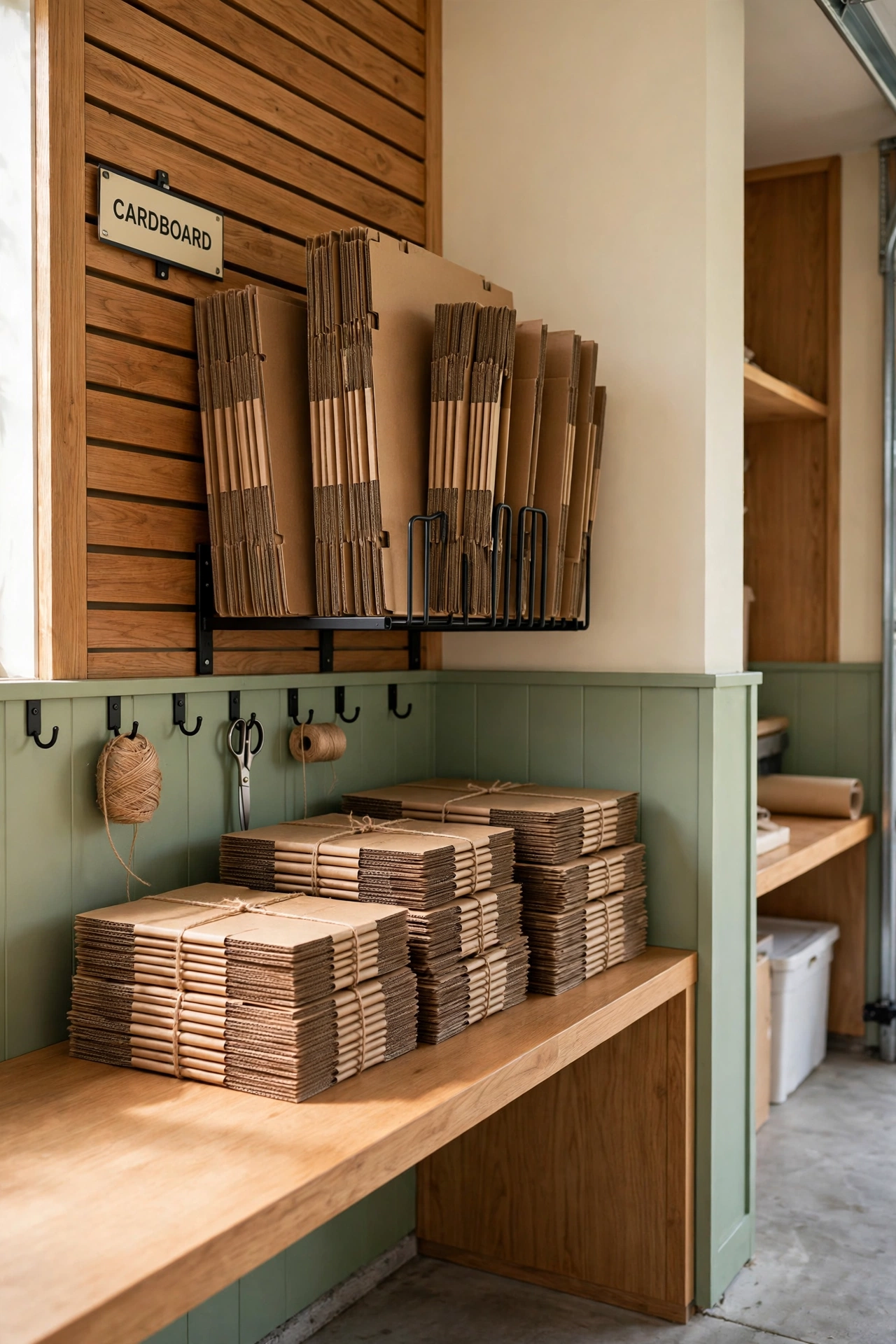
A bundling zone in the garage turns a loose pile of cardboard into neat, tied stacks ready for the curb. A wall mounted rack holds flattened boxes upright, while a roll of twine and a pair of scissors hang on hooks nearby. Boxes get flattened, stacked, and tied in one smooth routine.
Size each bundle so one person can carry it easily, and stack finished bundles against the wall in a single row. Keep the zone away from the car parking space so bundles never block a door or a walkway. For garage storage that keeps bulky items off the floor, these garage shelf organization ideas show how wall racks and shelves keep large materials tidy and accessible. Bundling as you go means collection morning takes minutes, not a frantic search.
13. Run a Dual Stream Station for Paper and Containers
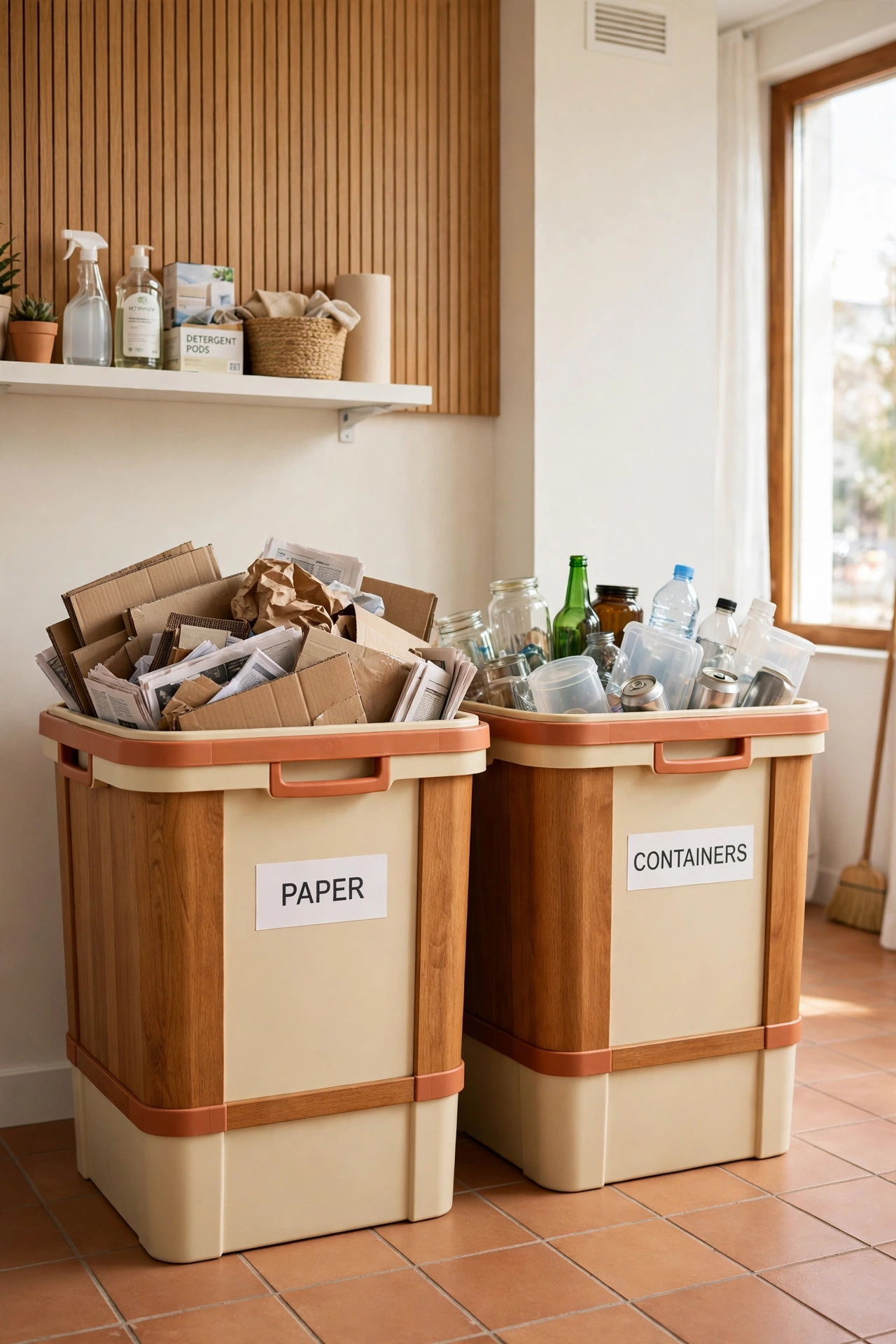
Some collection services ask for paper in one stream and containers in another, and a dual stream station matches that rule exactly. Two large labeled bins stand side by side in the garage or utility room, one marked for paper and cardboard and one marked for glass, plastic, and metal containers. The simple two bin rule is easy for every member of the household to remember.
Post a small chart above the bins showing which items belong in each stream, with pictures for quick checking. Empty both bins on the same day each week, and wipe the container bin after each emptying to keep it clean. A dual stream station removes confusion and keeps sorting consistent all year.
14. Roll a Mobile Sorting Cart From Garage to Curb
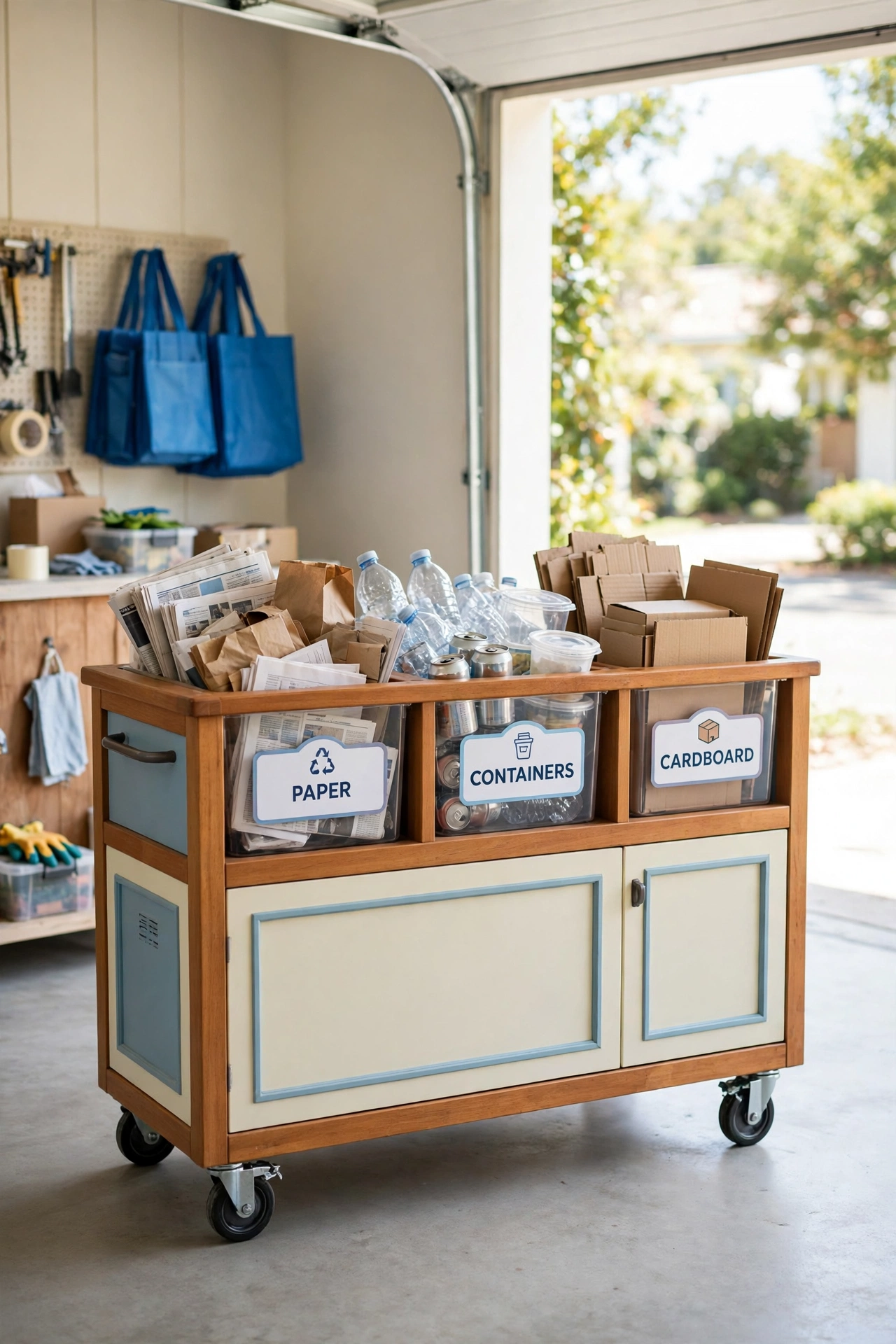
A mobile cart with labeled bins brings the sorting station to the curb on collection day. The cart rolls on sturdy wheels, with separate compartments for paper, containers, and cardboard, and a handle that makes it easy to push. On collection day, you roll the whole station out in one trip instead of carrying bag after bag.
Park the cart in the garage between collection days, with the brake on and the bins labeled facing outward. Choose a cart with a lid or cover to protect paper from rain on the way to the curb. A rolling station is a kind solution for anyone who finds heavy lifting difficult.
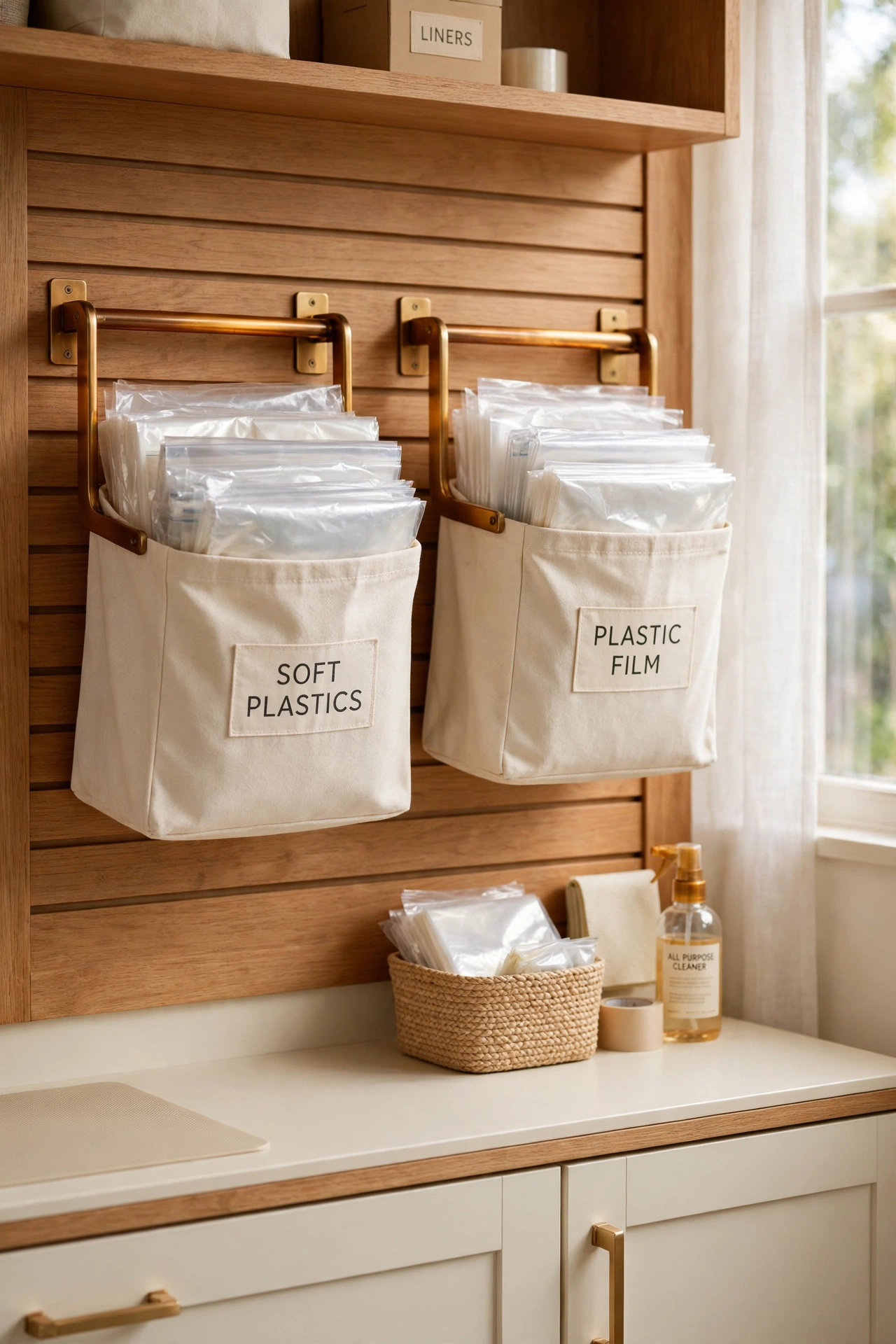
15. Hang Bag Holders for Soft Plastics and Plastic Film
Soft plastics and plastic film need a different home from rigid bottles and jugs. Wall mounted bag holders in the garage or utility room keep a bag open and ready for bread bags, produce bags, and delivery packaging film. The bag hangs at waist height, so filling it takes only a second.
Label the holder clearly for clean, dry soft plastics only, and tie the bag closed when it fills. Take full bags to a store drop off point that accepts plastic film, since many curbside services do not collect it. A hanging holder keeps flimsy film from escaping and cluttering other bins.
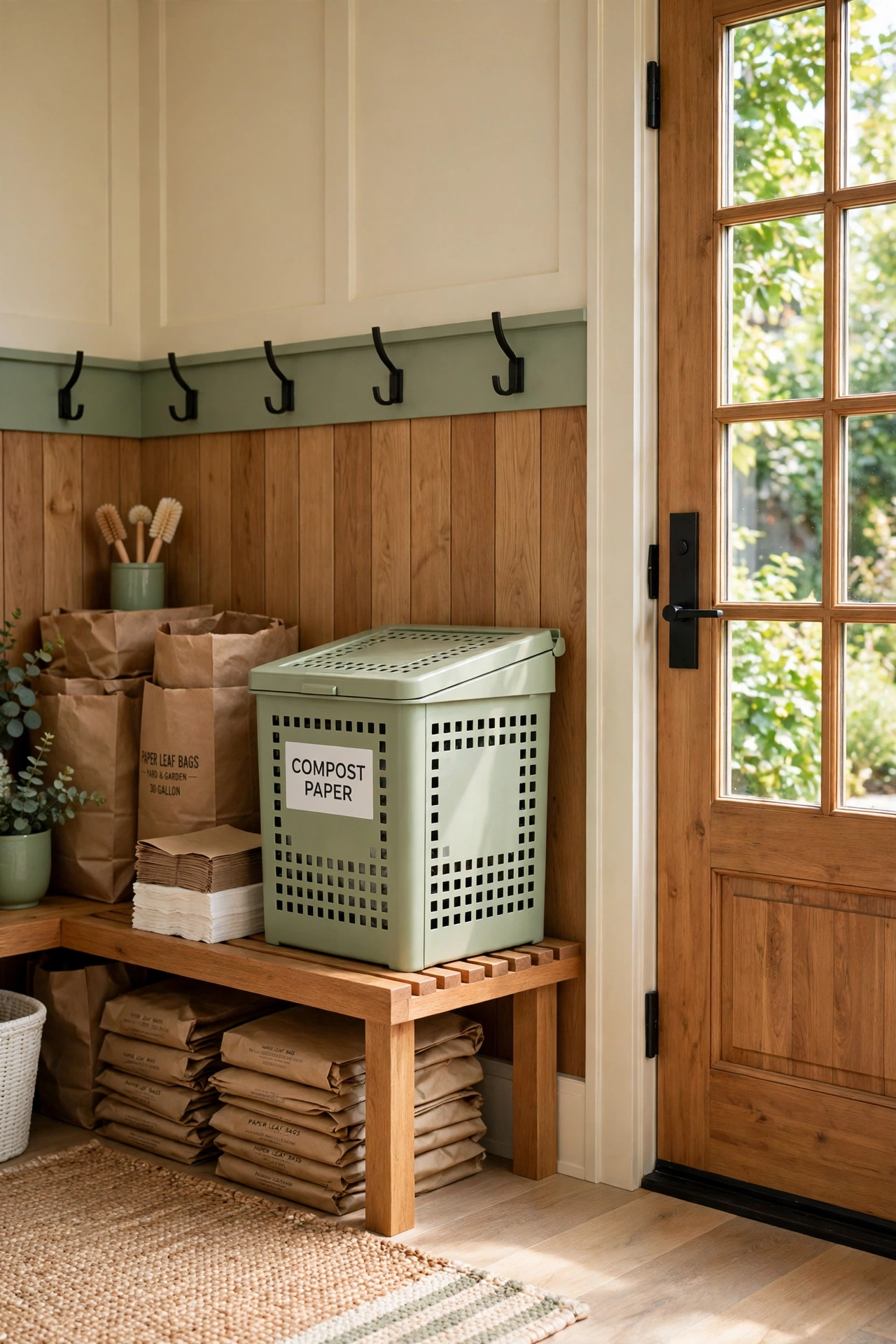
16. Place a Compost Adjacent Station for Food Soiled Paper and Yard Paper
A compost adjacent station sits near the garden door in the garage or mudroom and collects paper that belongs with compost rather than recycling. Food soiled paper napkins, paper towels used for garden work, and paper leaf bags go into a labeled ventilated bin, separate from clean paper recycling. The station keeps compostable paper dry and ready for the compost pile.
Line the bin with a paper bag that can go straight into the compost with its contents, and empty the bin often so damp paper never sits long. Label the bin clearly so clean office paper and cardboard stay in the recycling bins instead. A compost adjacent station closes the loop for paper that recycling cannot accept.
17. Teach Sorting With a Family Friendly Mudroom Learning Station
A learning station in the mudroom turns sorting into a habit children enjoy. Low labeled bins at child height, each with a large picture of its material, invite children to sort their own lunch packaging, school papers, and craft scraps. A star chart on the wall above the bins celebrates a week of correct sorting.
Keep the bins shallow and light so small hands can lift them out, and review the sorting rules together once a month. Praise correct sorting and gently correct mistakes without turning the station into a chore. A family friendly station builds a lifelong habit in a few minutes a day.
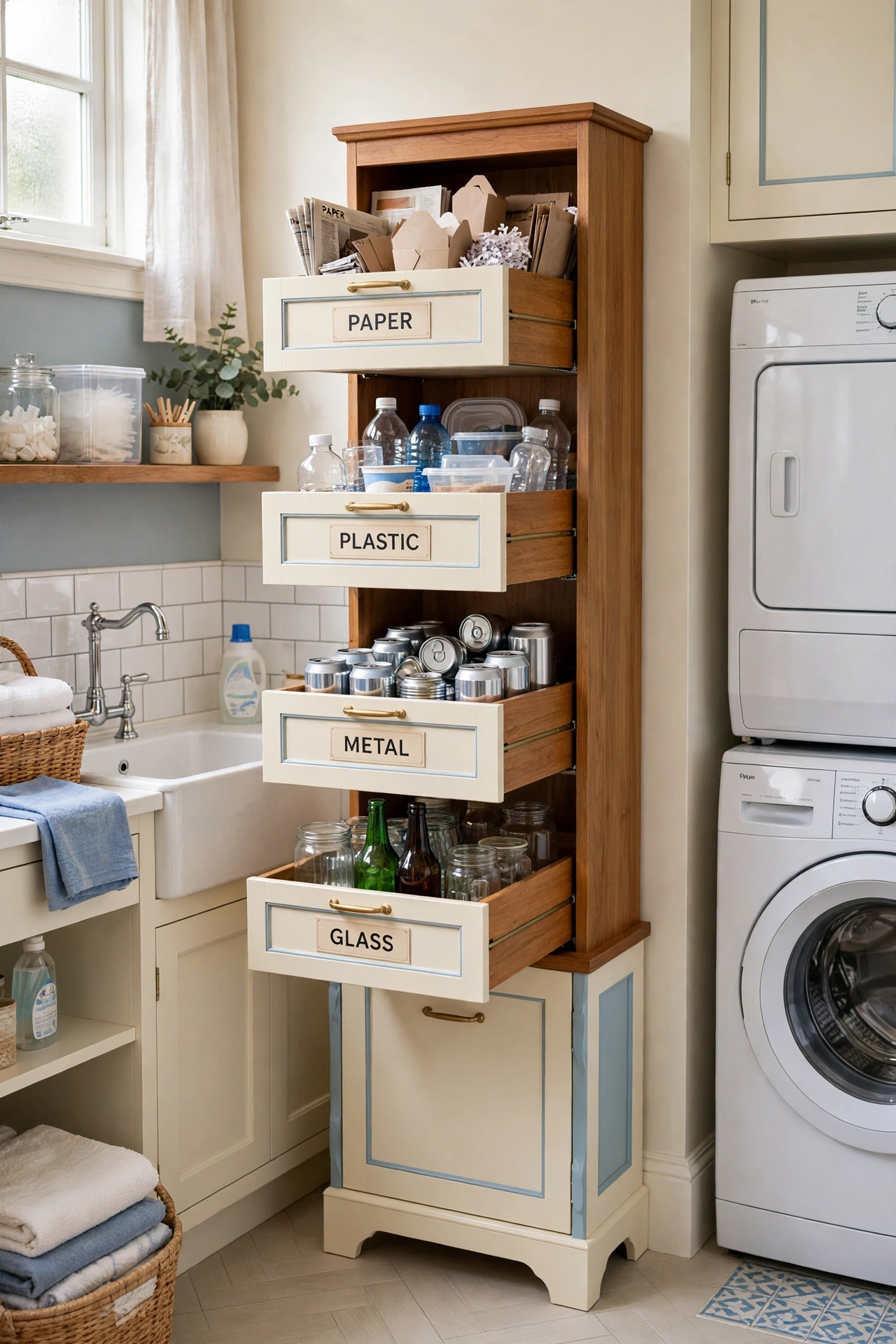
18. Stack a Vertical Sorting Tower in a Small Laundry Room
A small laundry room can still hold a full sorting station when the bins stack vertically. A tall tower unit with four or five pull out drawers, each labeled for one material, uses floor space the size of a single bin. Paper sits at the top, containers in the middle, and heavier glass at the bottom.
Choose a tower with smooth gliding drawers and sturdy handles, and label the front of each drawer in large print. Keep the tower beside the washer or dryer, where empty detergent bottles and cardboard boxes already appear. For laundry spaces that juggle many supplies at once, these laundry detergent storage ideas show how vertical storage keeps a small room calm and functional. A vertical tower proves that a small room can sort just as well as a large garage.
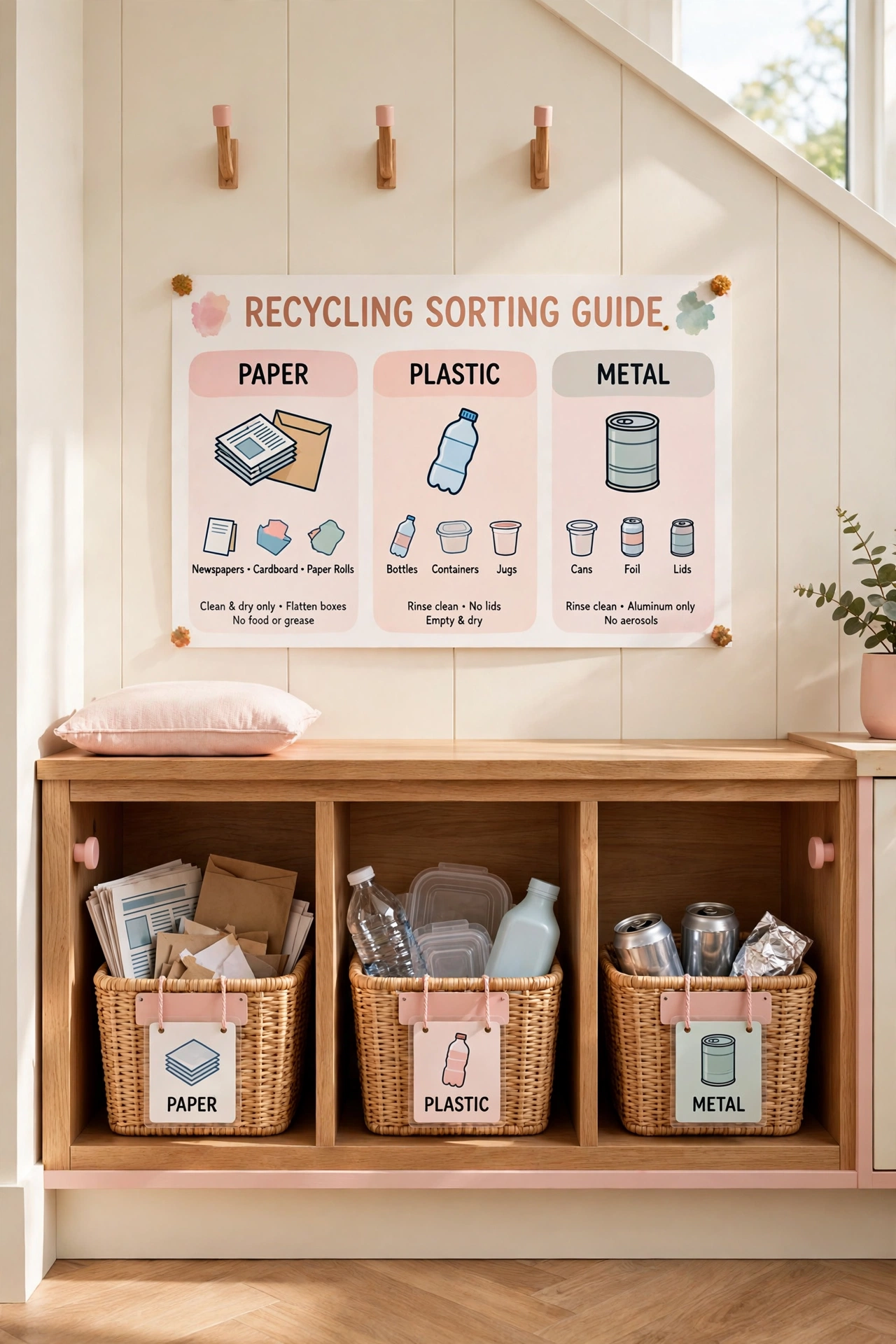
19. Post a Sorting Chart Above a Labeled Bin Station
A clear chart above the bins answers sorting questions before they get asked. The chart lists each material with pictures of common items, plus a short note on what to rinse, what to flatten, and what to keep out. The chart hangs at eye level above a row of labeled bins in the garage or utility room.
Print the chart on sturdy laminated paper so it survives dust and damp air, and update it when local collection rules change. Use the same colors on the chart as on the bin labels, so matching an item to a bin feels instant. A good chart makes the station work for guests, babysitters, and new household members too.
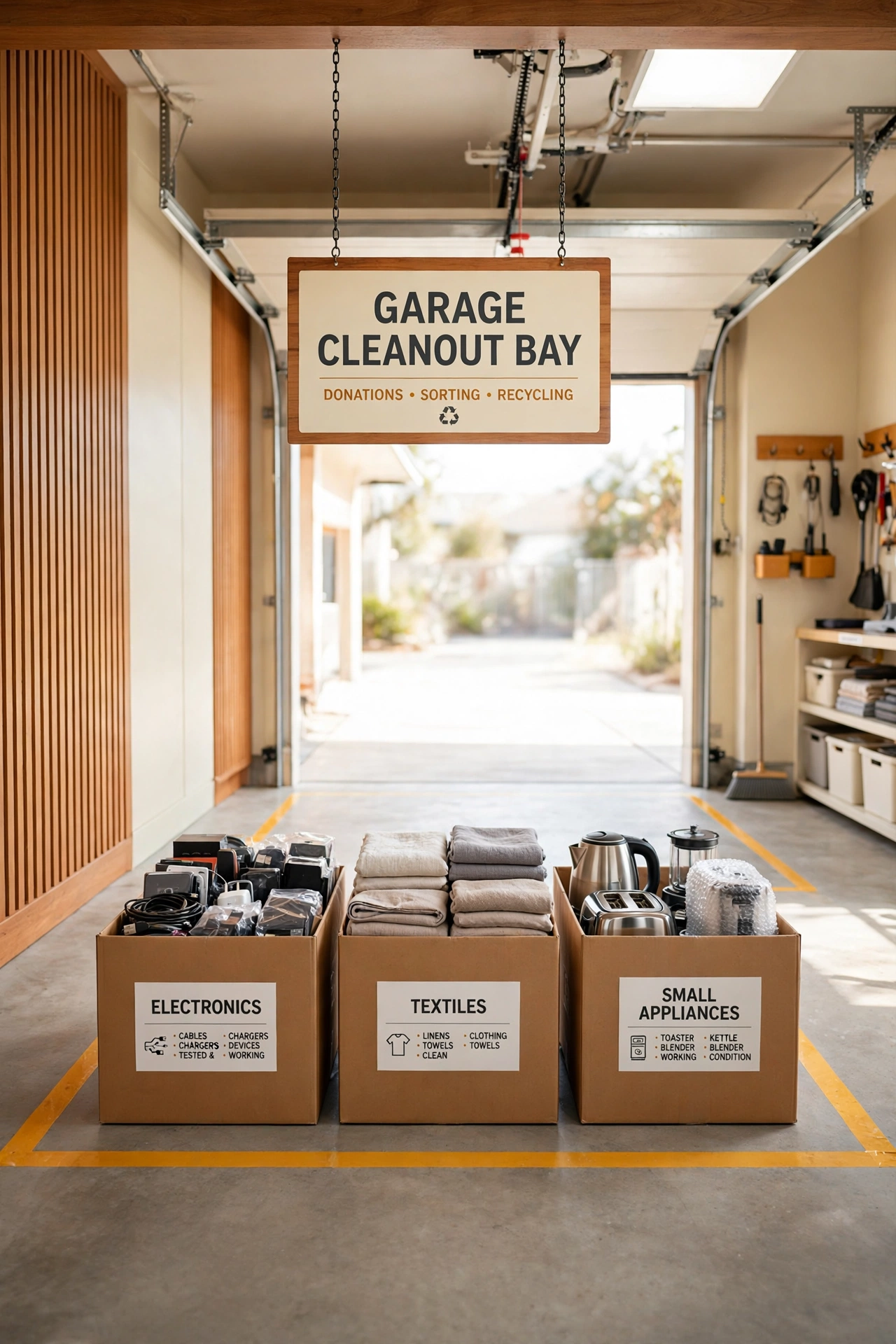
20. Reserve a Seasonal Cleanout Bay in the Garage
A seasonal cleanout bay gives large or unusual items a temporary home until the next special collection day. Mark one bay of the garage with tape on the floor and a hanging sign, and use it for old electronics, worn textiles, broken small appliances, and other items that need a special trip. The bay keeps cleanout items from mixing with weekly recycling.
Set a date for the cleanout trip when the bay fills, and take everything in one load. Keep the bay clear between cleanouts so it stays ready for the next round. A reserved bay turns a dreaded whole house cleanout into a calm, steady routine.
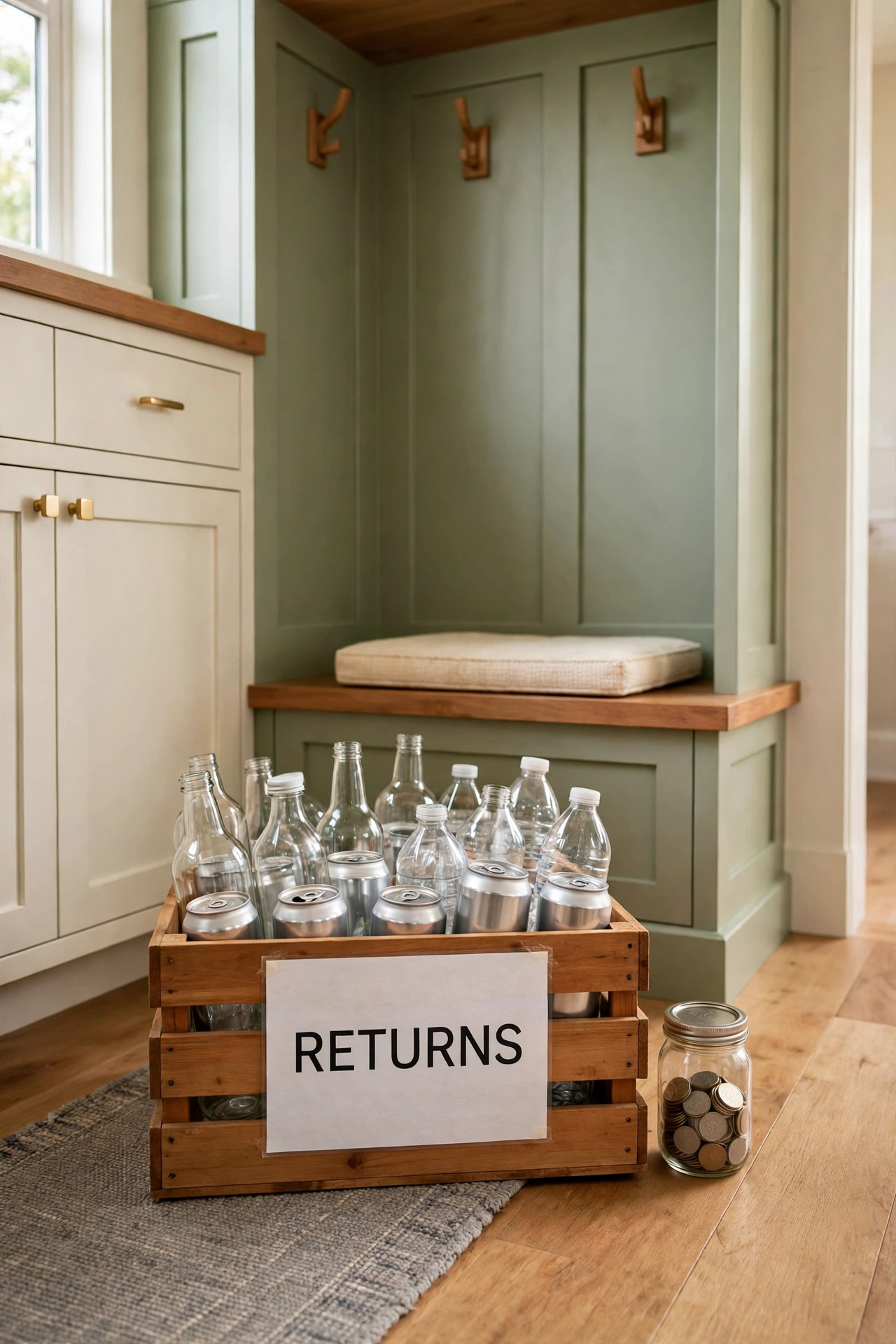
21. Collect Deposit Return Bottles in a Separate Station
Deposit return bottles and cans earn money back, so they deserve a station separate from regular recycling. A labeled crate or bin in the mudroom or garage collects returnable bottles and cans only, kept clean and dry until the next return trip. The separate station stops valuable returns from being mixed into the curbside bin by mistake.
Count or weigh the returns before each trip, and keep a small jar beside the crate for the refund coins if your household likes to track the savings. Rinse each bottle before it goes into the crate, and keep caps in a small labeled bag beside it. A deposit station turns a small habit into a visible reward.
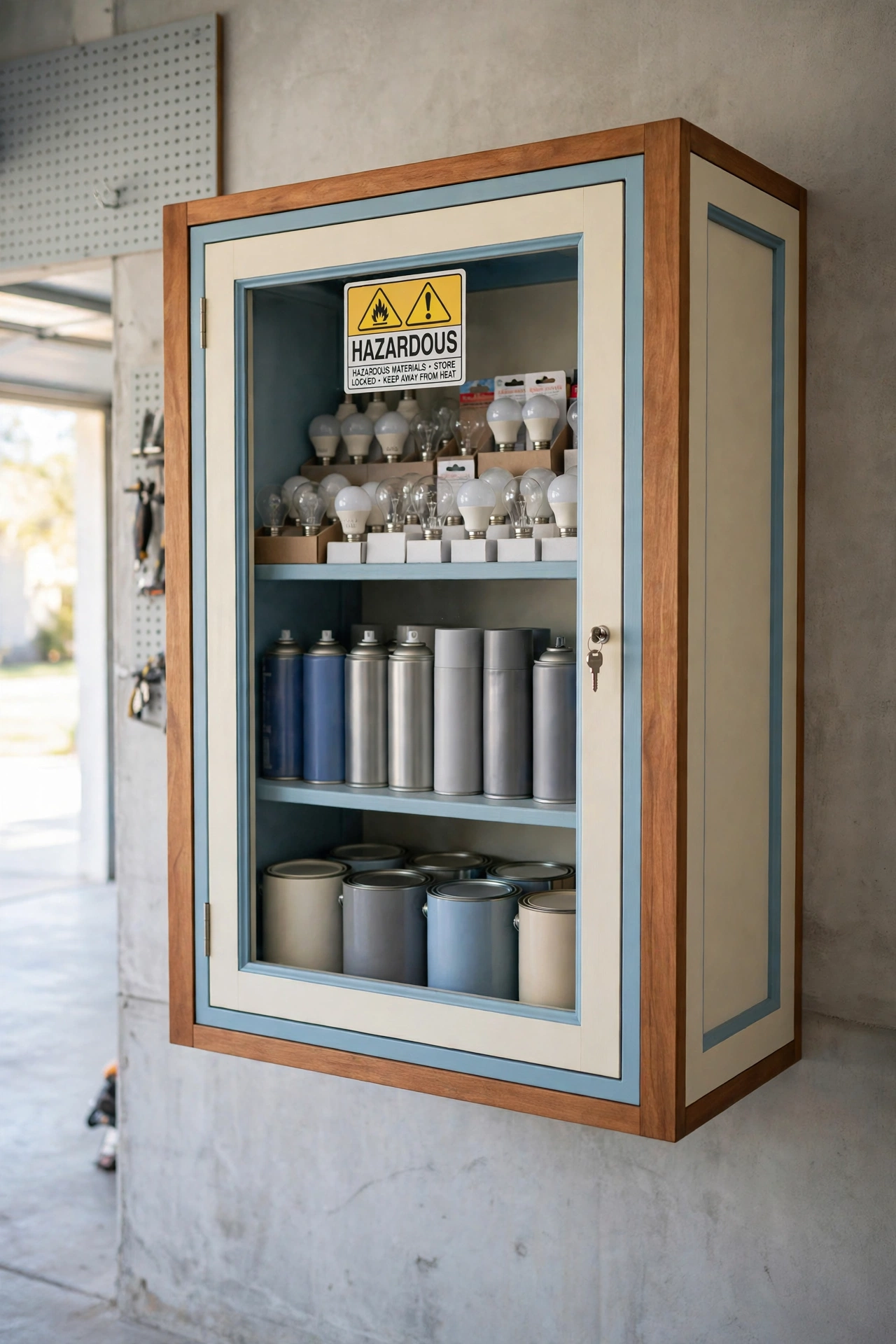
22. Lock Away Hazardous Household Items in a Garage Cabinet Station
Old paint cans, spray cans, light bulbs, and household chemicals need a locked cabinet, separate from everyday recycling. A sturdy wall cabinet in the garage with a latch and a clear hazard label holds these items safely until the next hazardous waste collection day. The lock keeps children and pets away from items that need special handling.
Keep original labels facing outward, never mix different chemicals in one container, and check the cabinet every few months for leaks or rust. Write the next collection date on a note taped inside the door so the cabinet empties on schedule. A locked station keeps a serious category safe and simple.
23. Shred and Sort Sensitive Paper in a Utility Room Paper Station
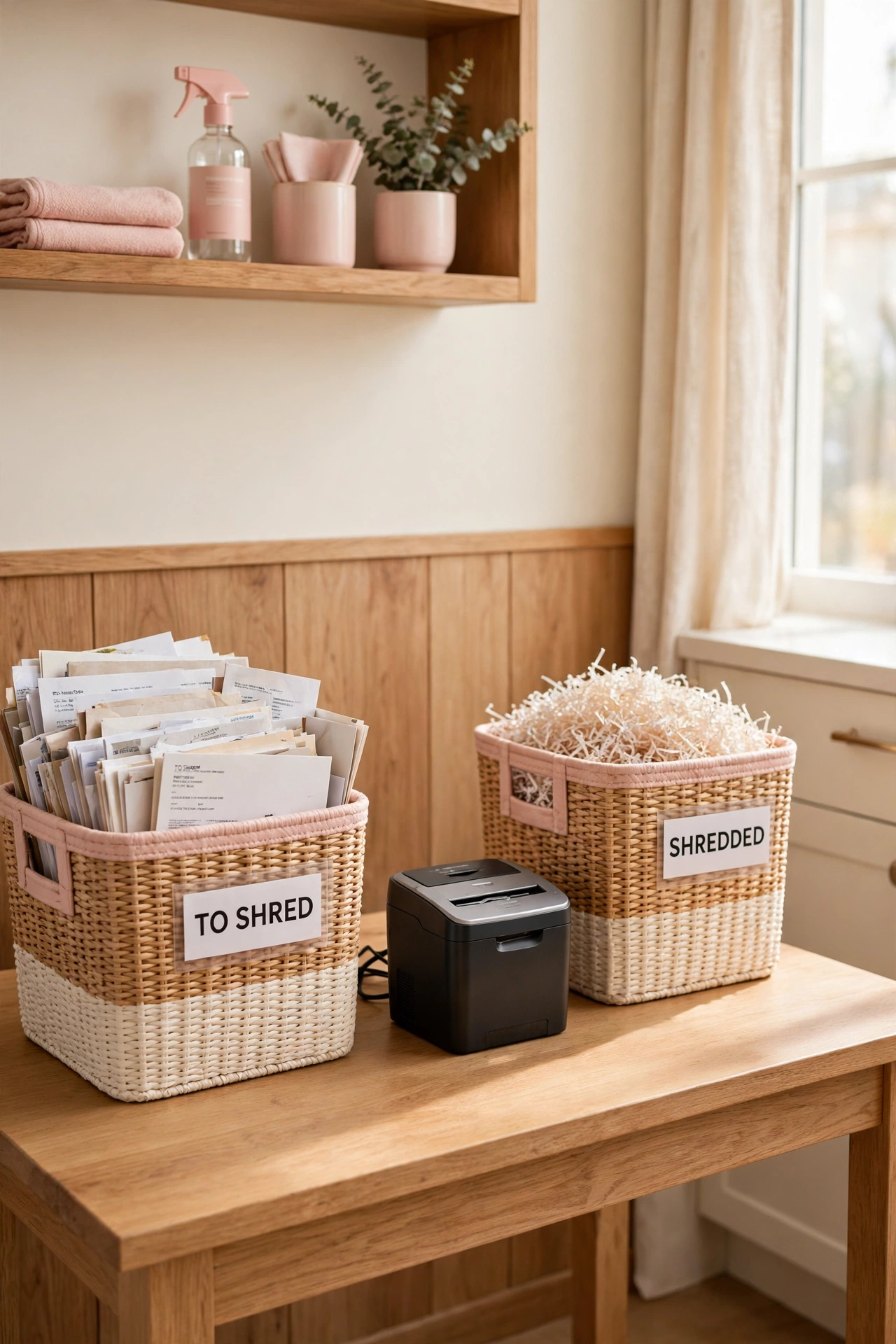
Sensitive paper needs shredding before recycling, and a paper station in the utility room handles the whole flow. A small shredder sits on a sturdy table beside two labeled bins, one for paper waiting to be shredded and one for shredded paper ready for collection. Envelopes with windows, old statements, and junk mail with personal details go into the waiting bin first.
Shred in small batches once a week, and bag shredded paper in a paper bag so it does not blow around in the collection bin. Keep the shredder unplugged when it is not in use, and empty the shredder bin before it overfills. A dedicated paper station protects privacy and keeps sensitive paper out of open bins.
24. Prepare Curbside Bins at a Weekly Rotation Station
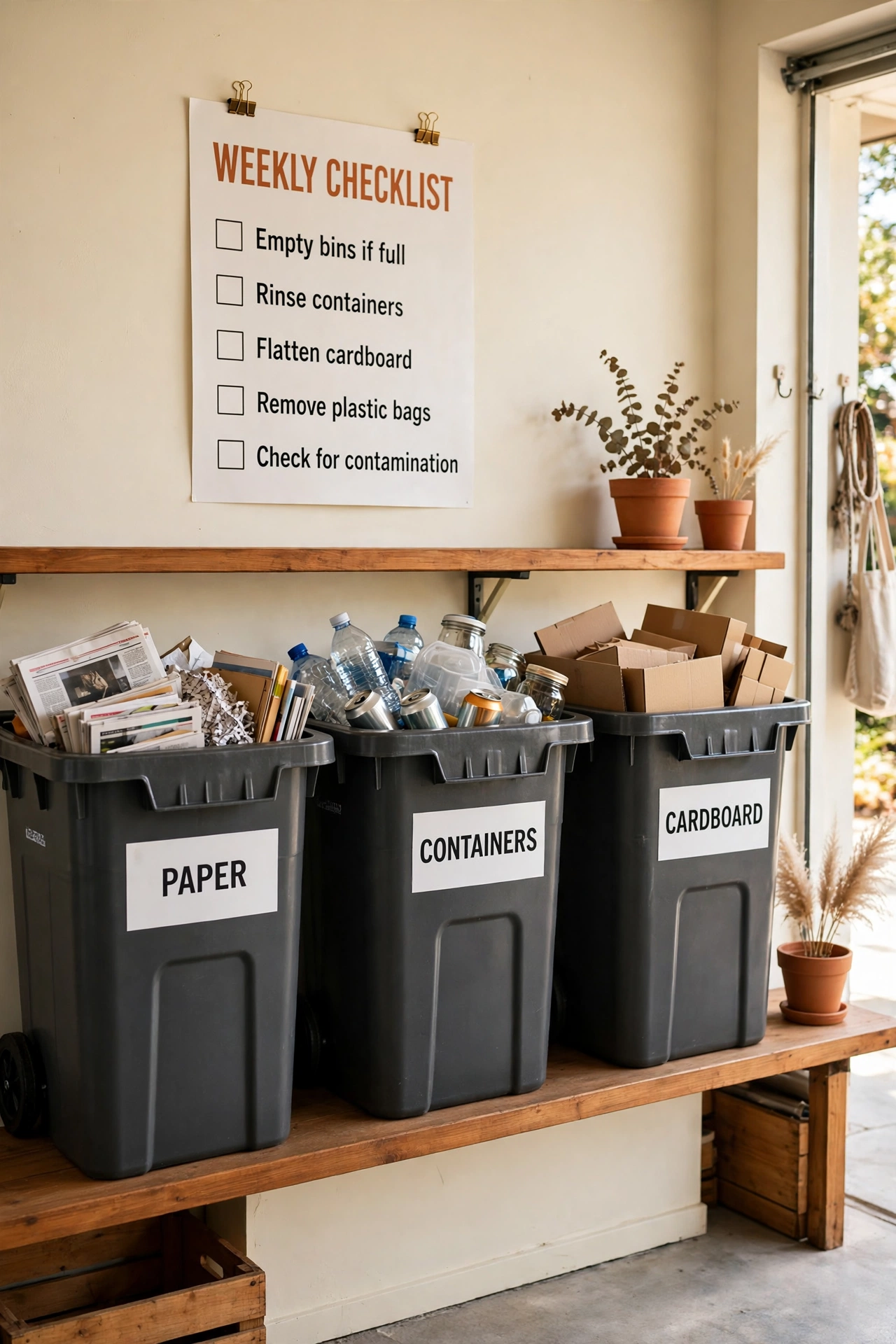
A weekly rotation station is the final step of the whole system, where sorted materials move into curbside bins in the right order. A labeled shelf in the garage holds the curbside bins, a printed weekly calendar, and a checklist for what goes out each week. On the evening before collection, each sorted bin empties into its matching curbside bin.
Mark the calendar with alternating weeks if paper and containers go out on different days, and place the bins by the curb the night before collection. Rinse the curbside bins after they return, and park them back on the shelf in the same order. A rotation station means collection morning runs on autopilot.
Conclusion
A home recycling station works best when each material has its own labeled place and each place sits where that material naturally appears. From a garage wall of color coded bins to a mudroom bench, a utility cabinet, and a laundry room tower, the ideas in this list cover every room and every material a busy household produces. The best station is the one your family will use without thinking twice.
Start with the materials you produce most, set up one station this week, and add the next station when the first one feels easy. Label everything clearly, empty bins on a fixed schedule, and watch the piles disappear. Your home will feel calmer, your collection days will run smoothly, and every material will reach the right place.
Frequently Asked Questions About Home Recycling Station Organization Ideas for Different Materials
How many bins does a home recycling station need?
Most homes do well with five bins for paper, cardboard, glass, plastic, and metal, plus separate small containers for batteries, e-waste, and textiles. Start with the five main bins and add special containers only when you see a material piling up without a home. A station with too many bins can feel confusing, so keep the main set simple.
Where is the best place for a recycling station at home?
The garage is the best main location for most homes because it holds large bins and sits close to the curb. Add small satellite stations where materials appear, such as a paper bin in the entryway, a cardboard corner in the laundry room, and a sorting bench in the mudroom. The main station and the small stations work together as one system.
Should recycling be rinsed before it goes into a sorting bin?
Yes, a quick rinse removes food residue that can attract pests and spoil paper in the same load. Rinse jars, bottles, and cans, let them dry briefly, and then place them in the correct bin. You do not need to scrub items clean, and a light rinse is enough for most collection services.
How do I keep a recycling station from smelling bad?
Rinse containers before sorting, empty bins on a fixed weekly schedule, and wipe bins with warm soapy water once a month. Keep lids closed, keep paper dry, and never store food waste in a recycling bin. A clean, dry station with regular emptying stays fresh all year.
What should never go into a home recycling station?
Keep plastic bags, greasy pizza boxes, broken ceramics, mirrors, and hazardous chemicals out of regular recycling bins. Soft plastics go to a store drop off point, hazardous items go to a special collection day, and broken glass should be wrapped safely and handled according to local rules. Check your local collection guide when you are unsure about an item.

Hi, I’m Emily! I turn messy corners into cozy, organized spots. DreamNestDecor is where I share simple, practical home ideas — decor, organization, and small-space solutions that work in real life, not just in photos. Every idea here is carefully researched before it’s shared.