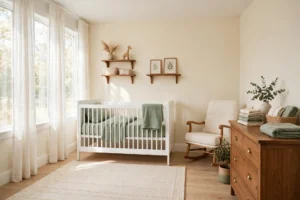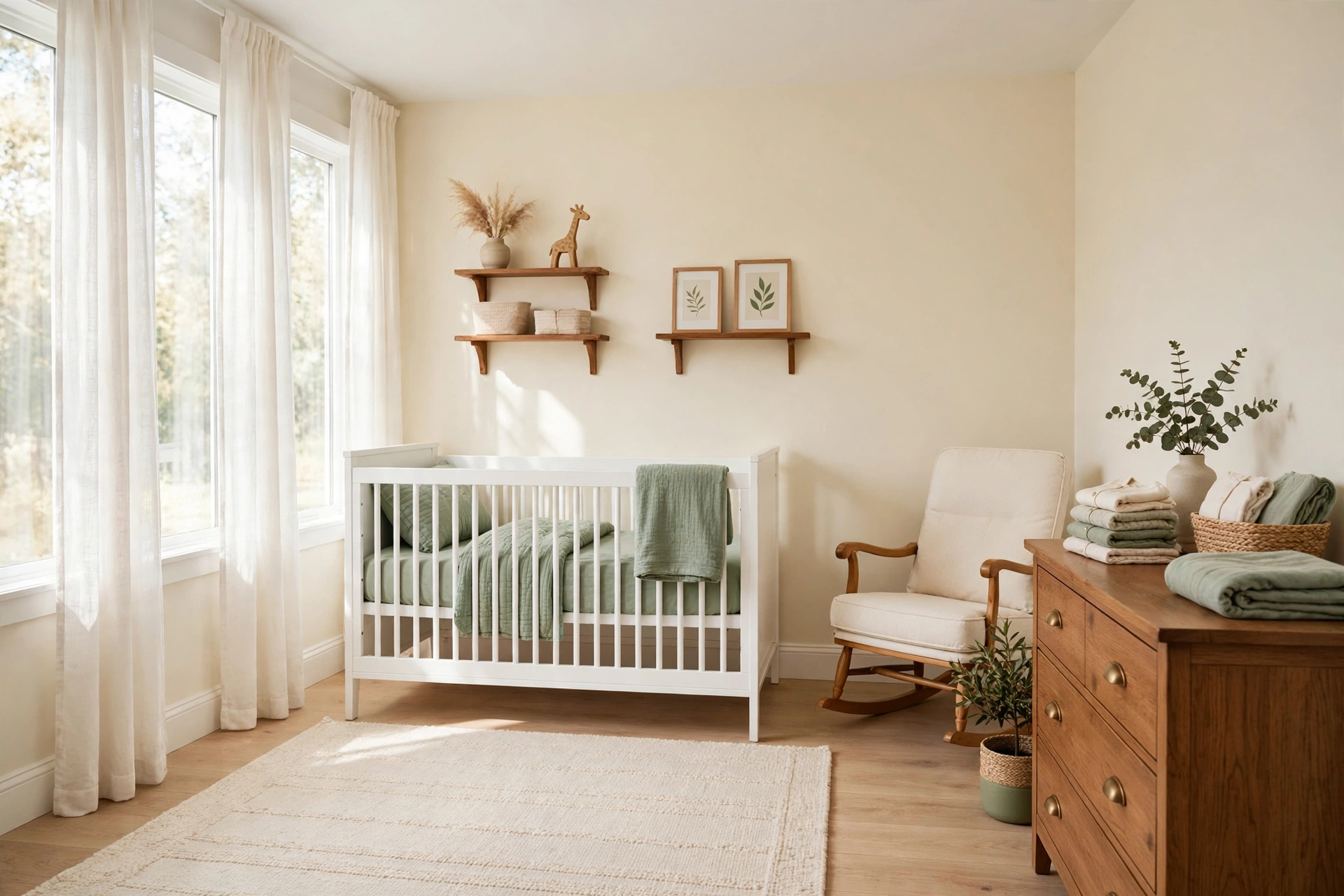
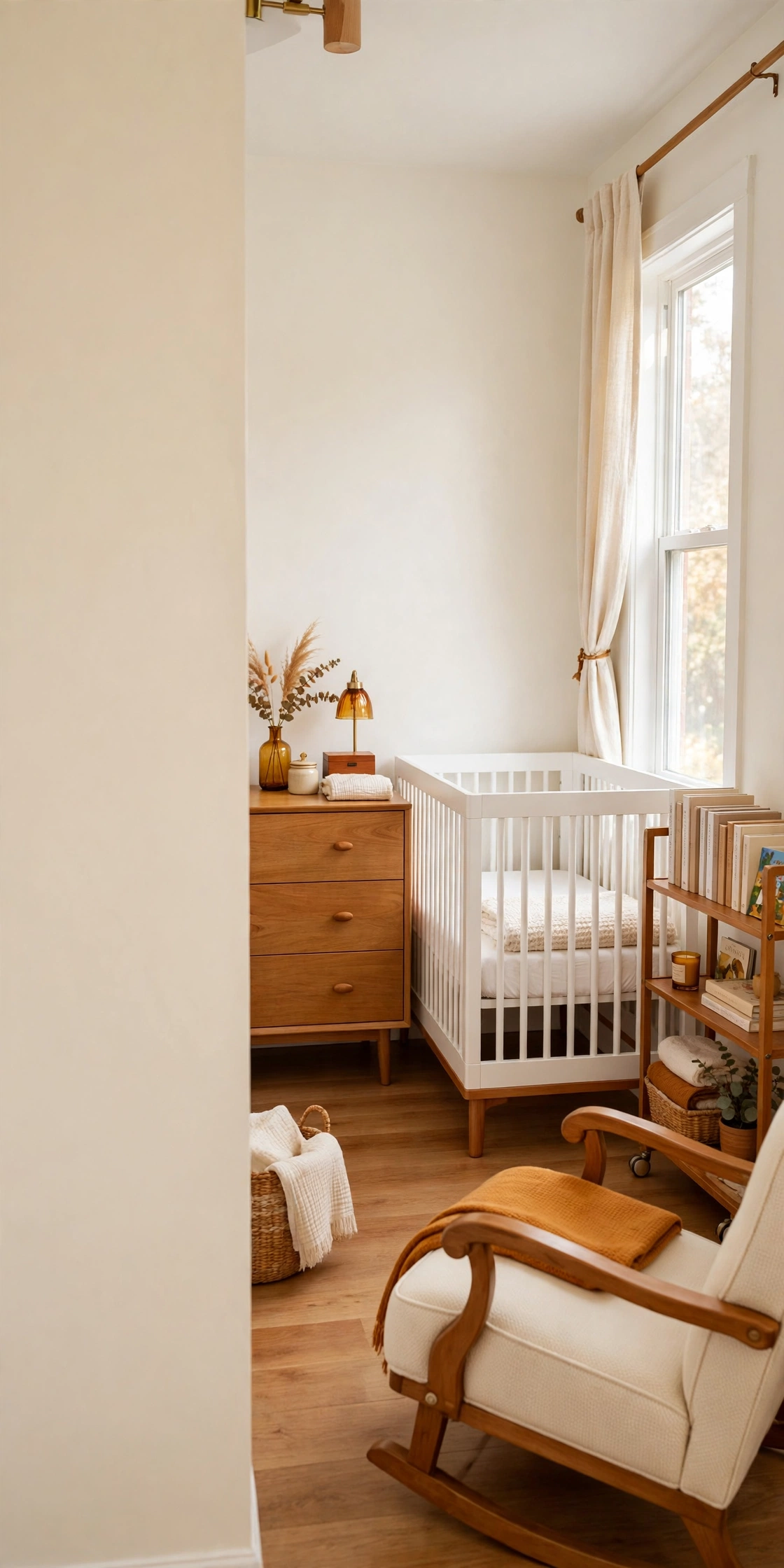
Picture this: you walk into a small nursery and everything has a place. A white convertible crib stands against the longest wall, a warm wood dresser holds folded clothes and diapers, and a soft rug marks the sleep zone in the middle of the floor. The room feels calm, not crowded, because every piece of furniture earns its spot. That peaceful feeling is exactly what a good nursery layout gives you, even when the room is tiny.
You do not need a large room or expensive furniture to make it work. All you need is a convertible crib and a plan that lets the room grow with your baby. These 19 small nursery layout ideas with a convertible crib will help you place the crib, the dresser, the chair, and the storage so the room works from the first night home through the toddler years.
1. Place the Convertible Crib Against the Longest Wall
The longest wall is the best home for a convertible crib in a small nursery. The crib sits flat against the wall with no wasted space on either side, and the rest of the room stays open for the dresser and the chair. A crib on the longest wall also gives you a clear view of your baby from the doorway.
Measure the wall first and leave at least a small gap between the crib and any corner so you can reach around it to change sheets. Keep the wall above the crib free of shelves and heavy frames for safety. A simple framed print on the wall beside the crib adds warmth without crowding the sleep space.
2. Start with the Crib in Newborn Mode, Then Lower the Mattress
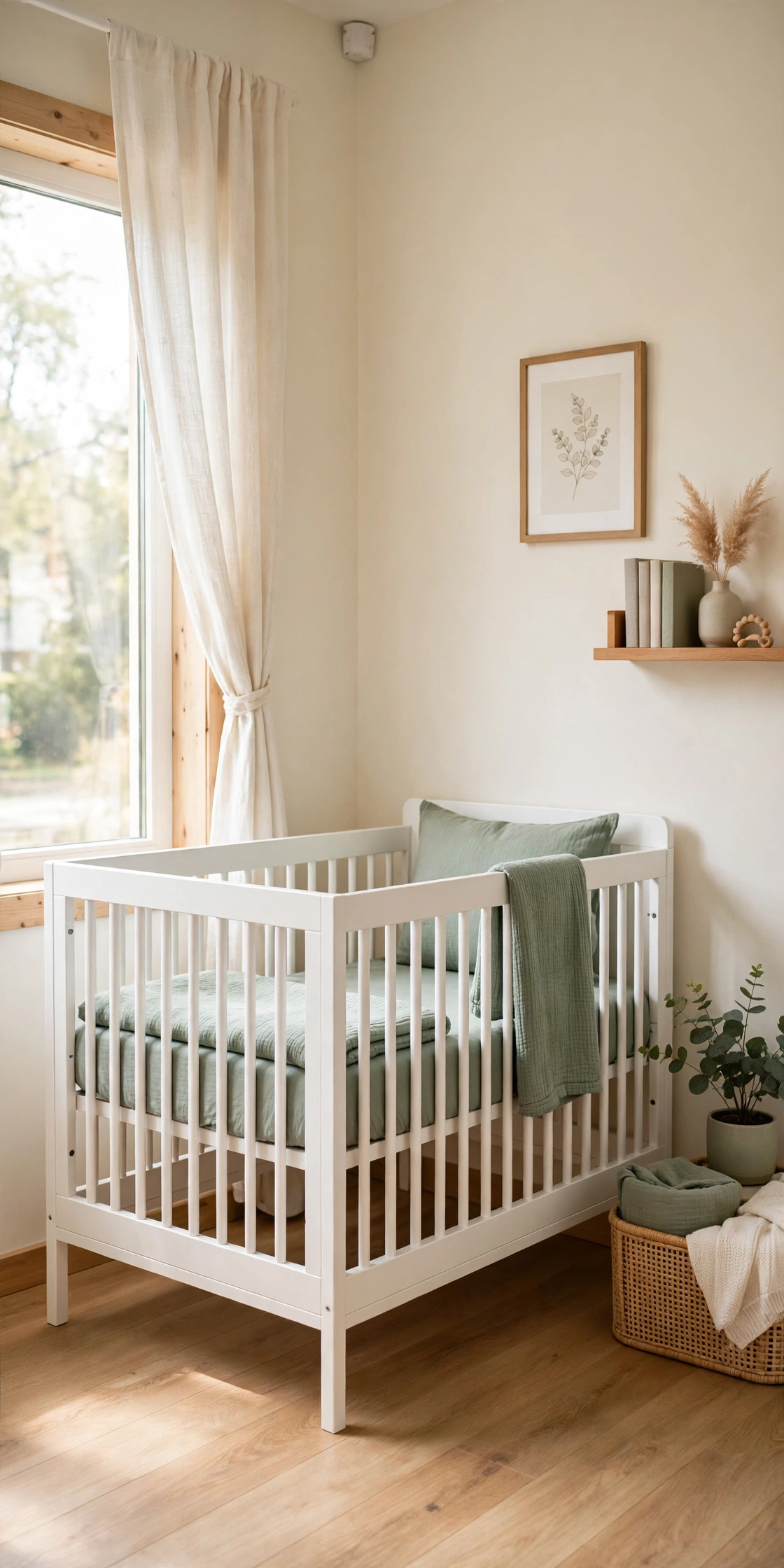
A convertible crib starts life with the mattress at its highest setting, so you can lift a newborn in and out without bending deep into the crib. As your baby grows and starts to sit up, you lower the mattress one level at a time. This simple change keeps the crib safe at every stage without buying new furniture.
Plan the layout around the lowest mattress setting from the start, because that is where the crib will spend most of its life. Leave enough floor space in front of the crib for you to stand and reach in comfortably. For more ideas on planning a nursery inside a small home, see these small nursery layout ideas for a one bedroom home. The rest of the room can stay exactly the same while the crib changes with your baby.
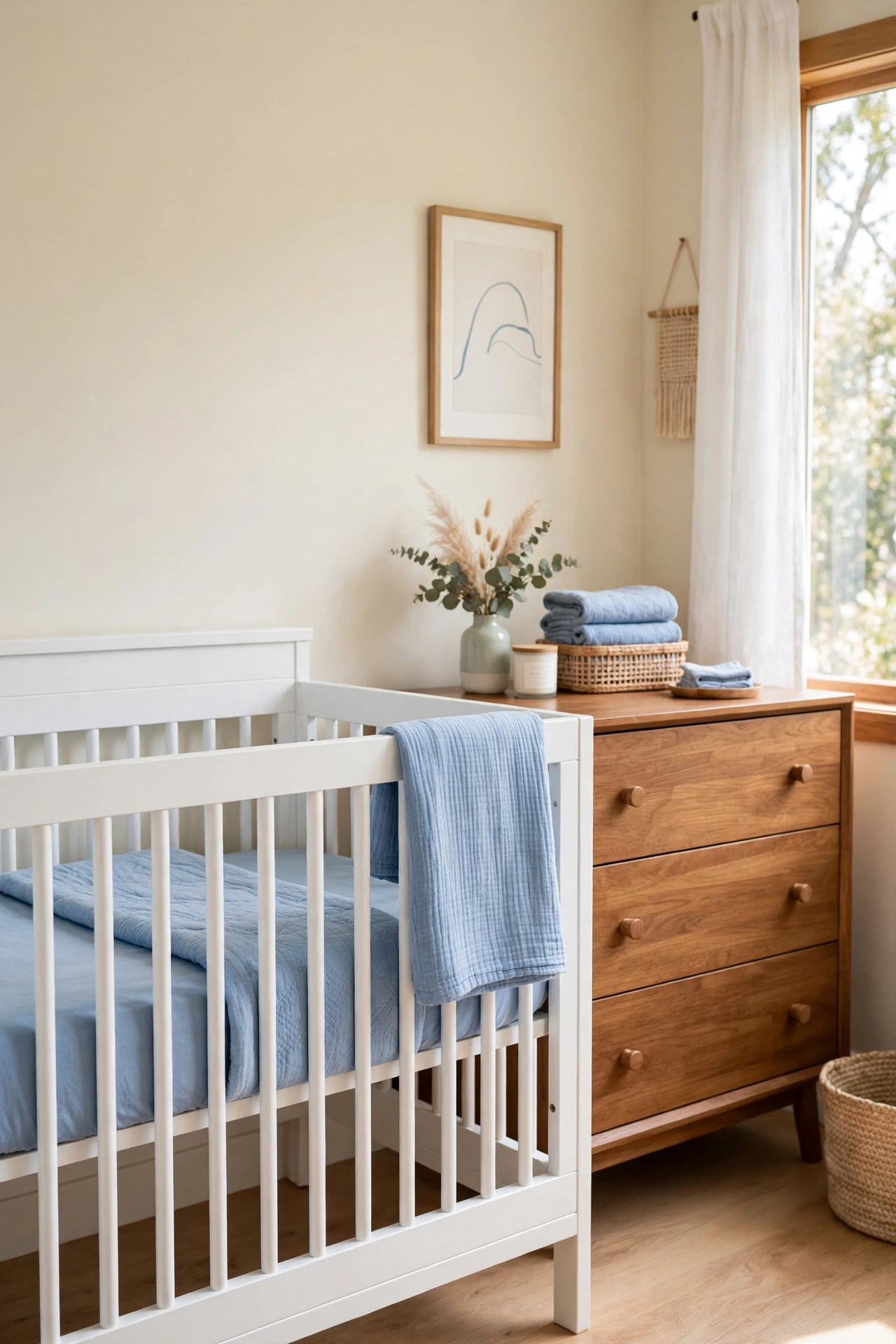
3. Let the Crib Grow into a Toddler Bed
The best part of a convertible crib is the day it becomes a toddler bed. You remove one side rail, add a small guard rail, and the same crib your baby slept in becomes a big kid bed. Your child keeps a familiar sleep space, and you save the cost and the floor space of a whole new bed.
When you plan the layout, leave room on the open side of the crib for a small step stool and a soft rug, because your toddler will climb in and out alone. Keep the dresser and the chair where they are so the room still feels familiar on the first night in the new bed. The layout you choose today should still work on that day.
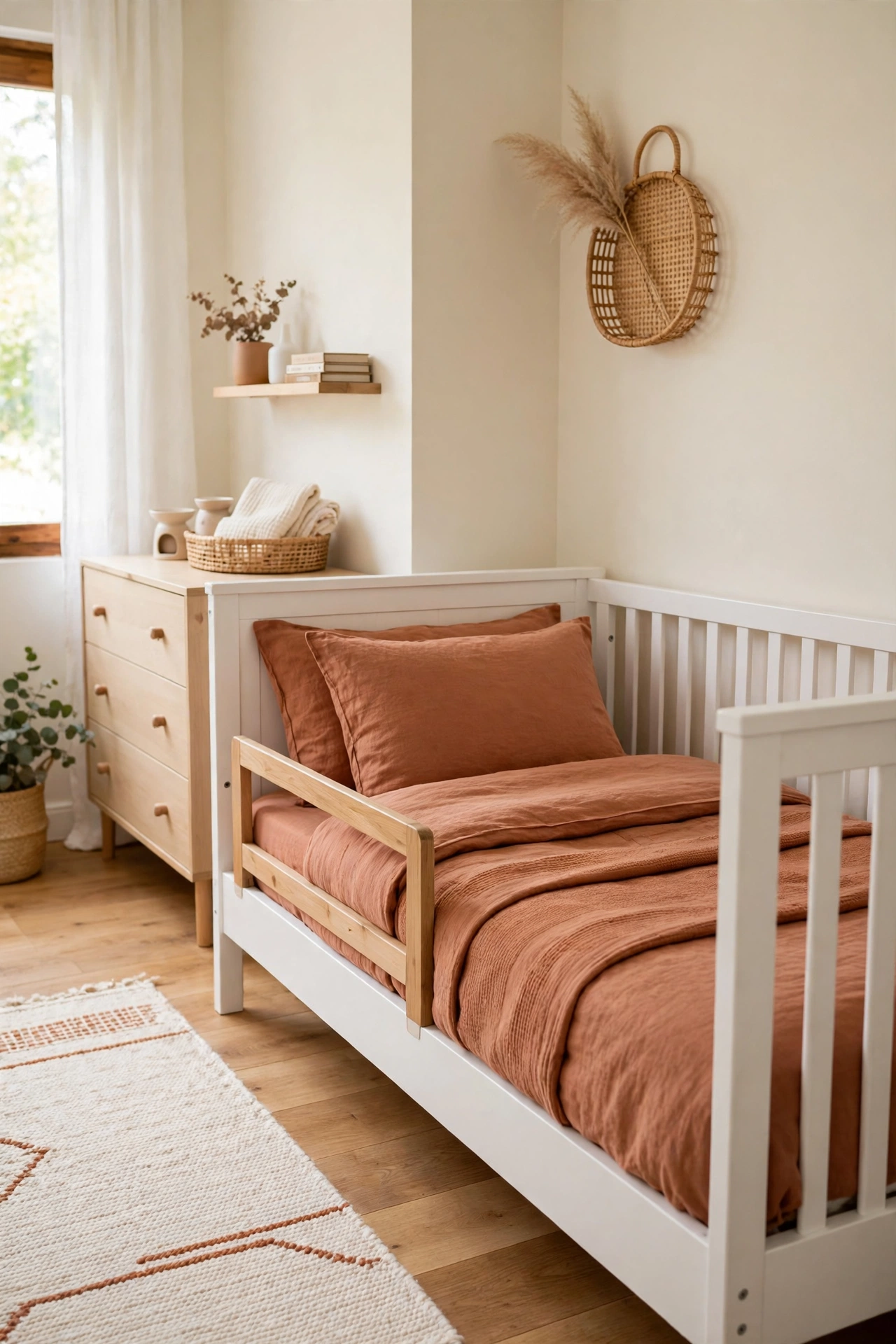
4. Add a Dresser That Doubles as a Changing Table
A sturdy dresser with a changing pad on top does two jobs in a small nursery and saves the space a separate changing table would take. The top drawer holds diapers, wipes, and creams within arm reach, while the lower drawers hold clothes sorted by size. When diaper days end, you remove the pad and the dresser stays useful for years.
Choose a dresser that is waist high so changing feels comfortable, and anchor it to the wall so it can never tip. Place it beside the crib so you can move your baby from the crib to the changing pad in two steps. A dresser that does two jobs is one of the smartest buys for a small nursery.
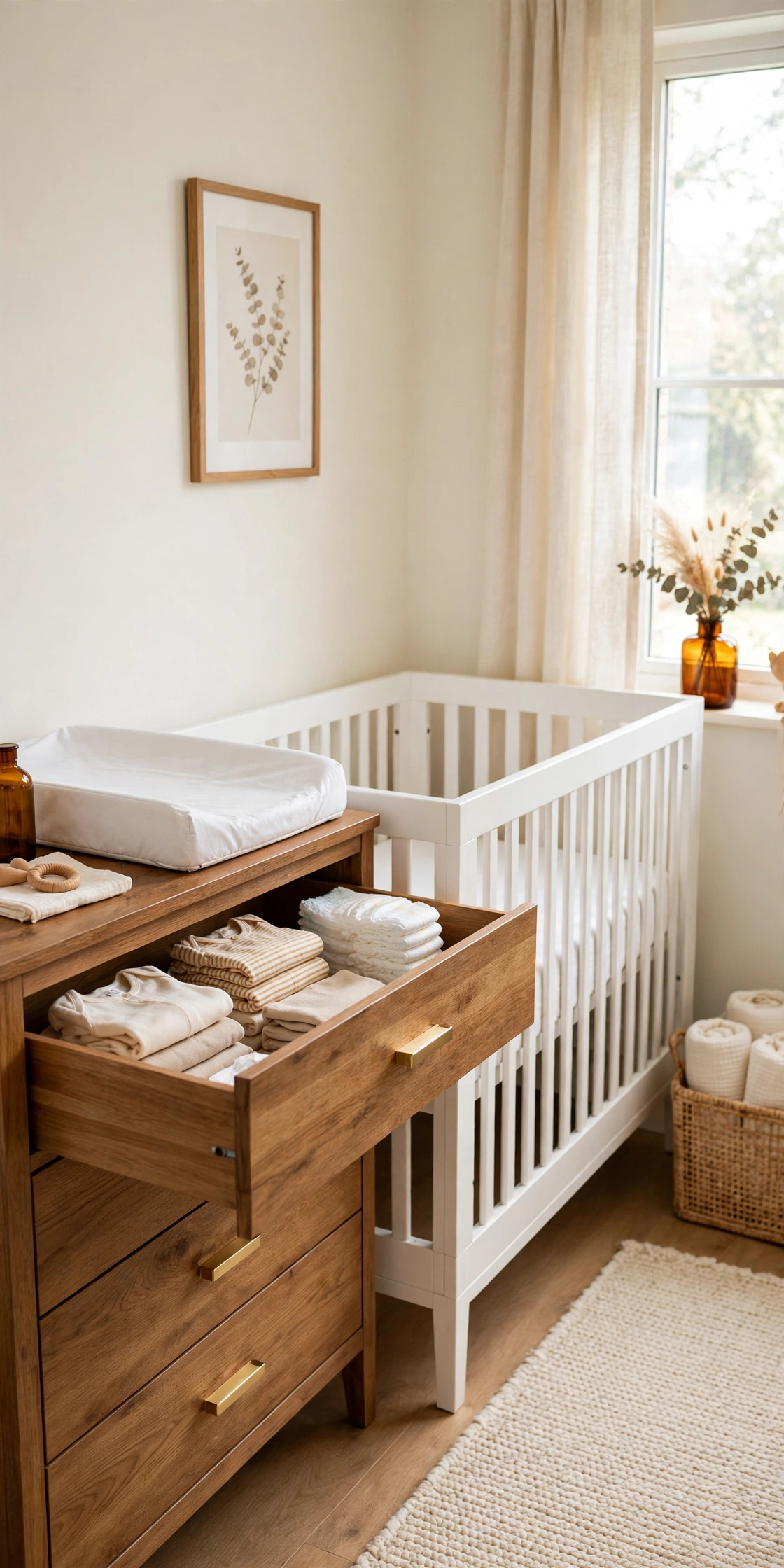
5. Keep a Rocking Chair in the Corner for Night Feeds
A rocking chair in the corner turns night feeds into a quiet ritual instead of a struggle. The chair faces into the room so you can see the crib, and a small footstool in front of it keeps your feet up while you rock. A soft cushion and a folded blanket on the arm make the chair inviting at three in the morning.
Pick a chair with arms wide enough to hold your baby and a pillow at the same time. Leave a small space behind the chair so it can rock freely without hitting the wall. The corner chair becomes the warmest spot in the nursery, and it stays useful as a reading chair when your child grows older.
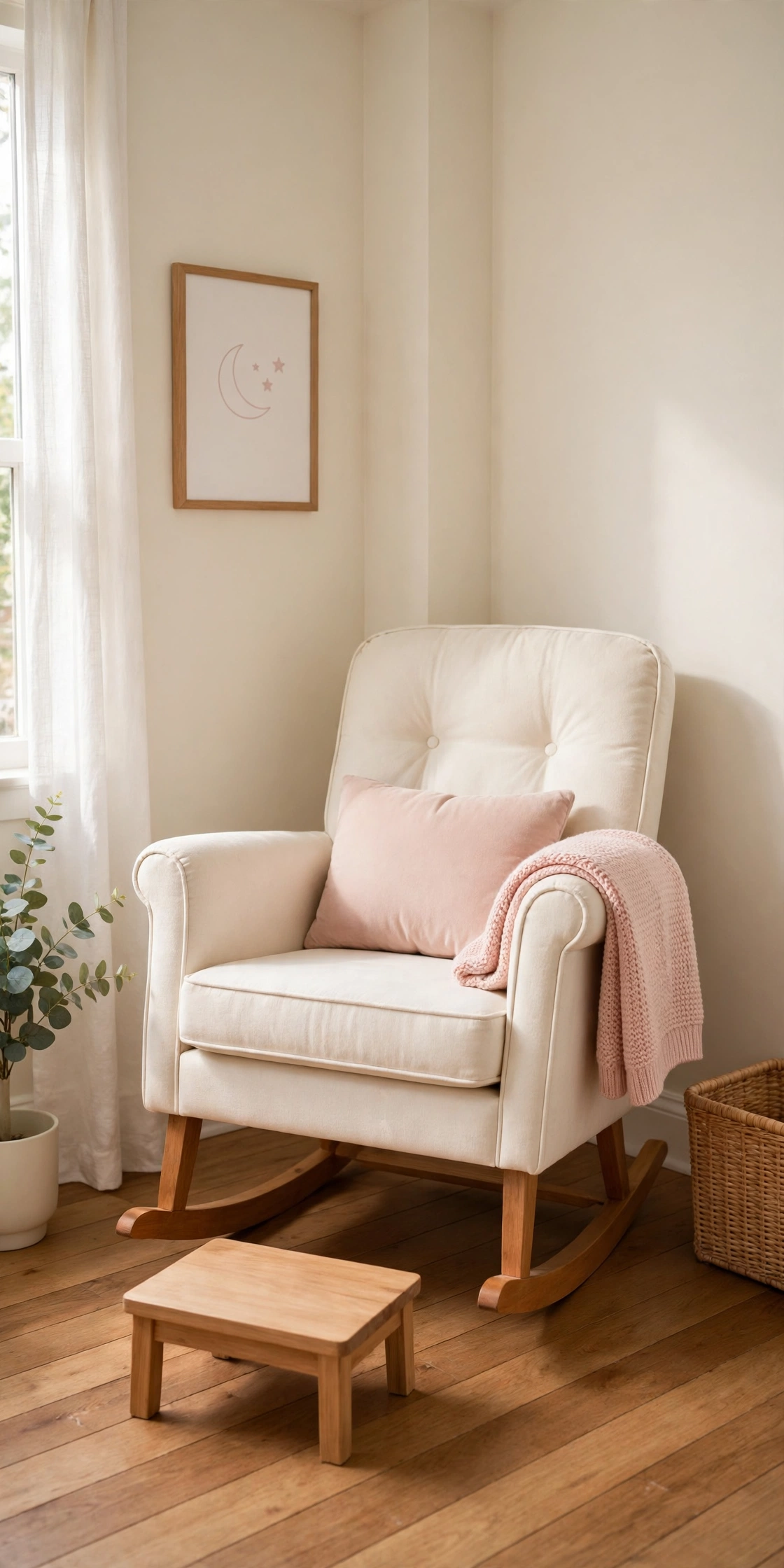
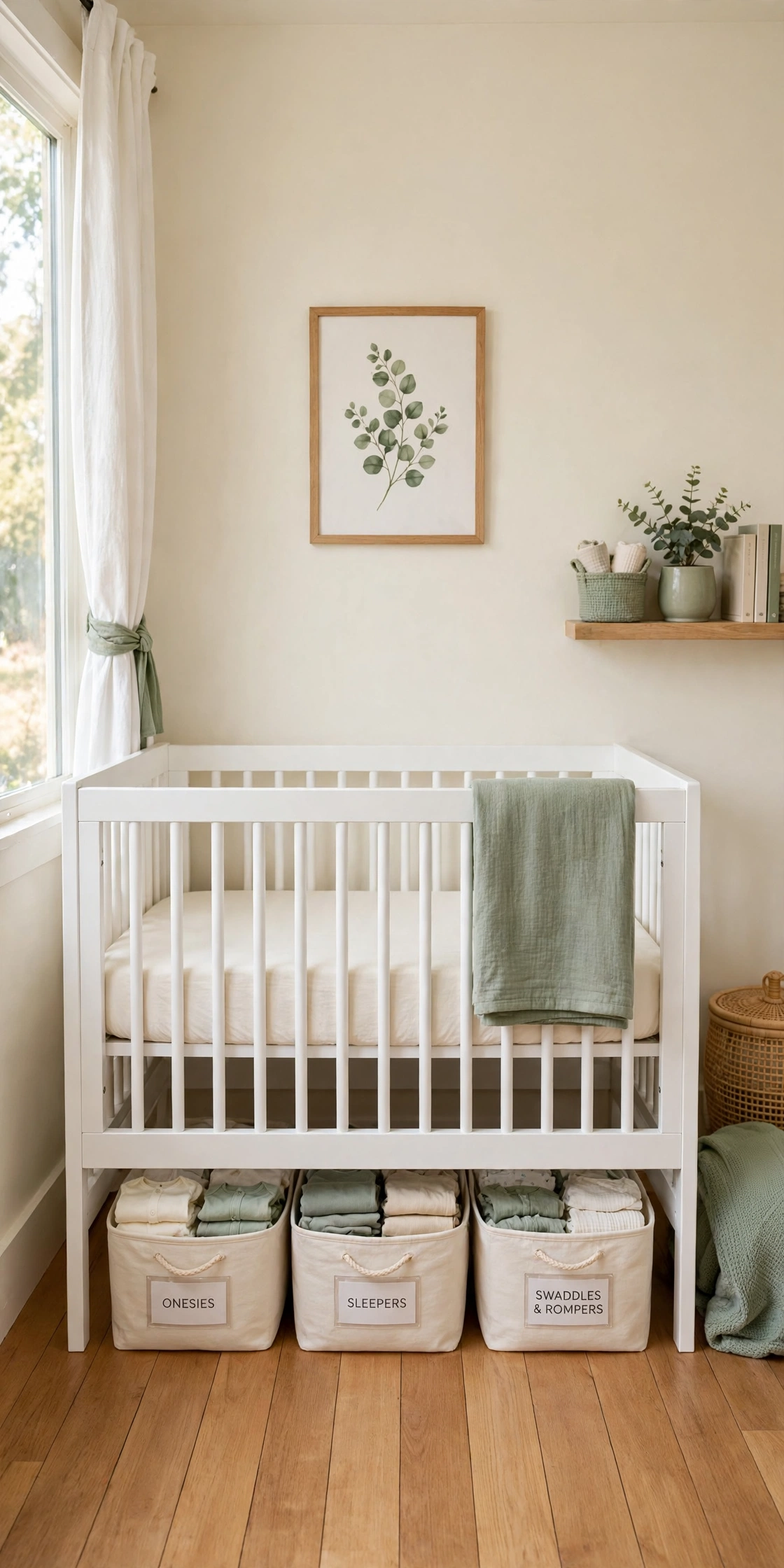
6. Use the Space Under the Crib for Storage Bins
The space under a convertible crib is perfect for flat storage bins that hold outgrown clothes, extra sheets, and seasonal blankets. The bins slide in and out easily, and the crib skirt or the low frame keeps them out of sight. This hidden storage costs nothing extra and uses space that would otherwise go to waste.
Choose bins with labels on the front so you can find the right size of clothes without pulling every bin out. Keep only items you need in the room, and store the rest elsewhere so the bins stay easy to slide. For more ideas on using hidden space around a bed, see these under bed storage organization ideas. The nursery stays tidy because everything has a hidden home.
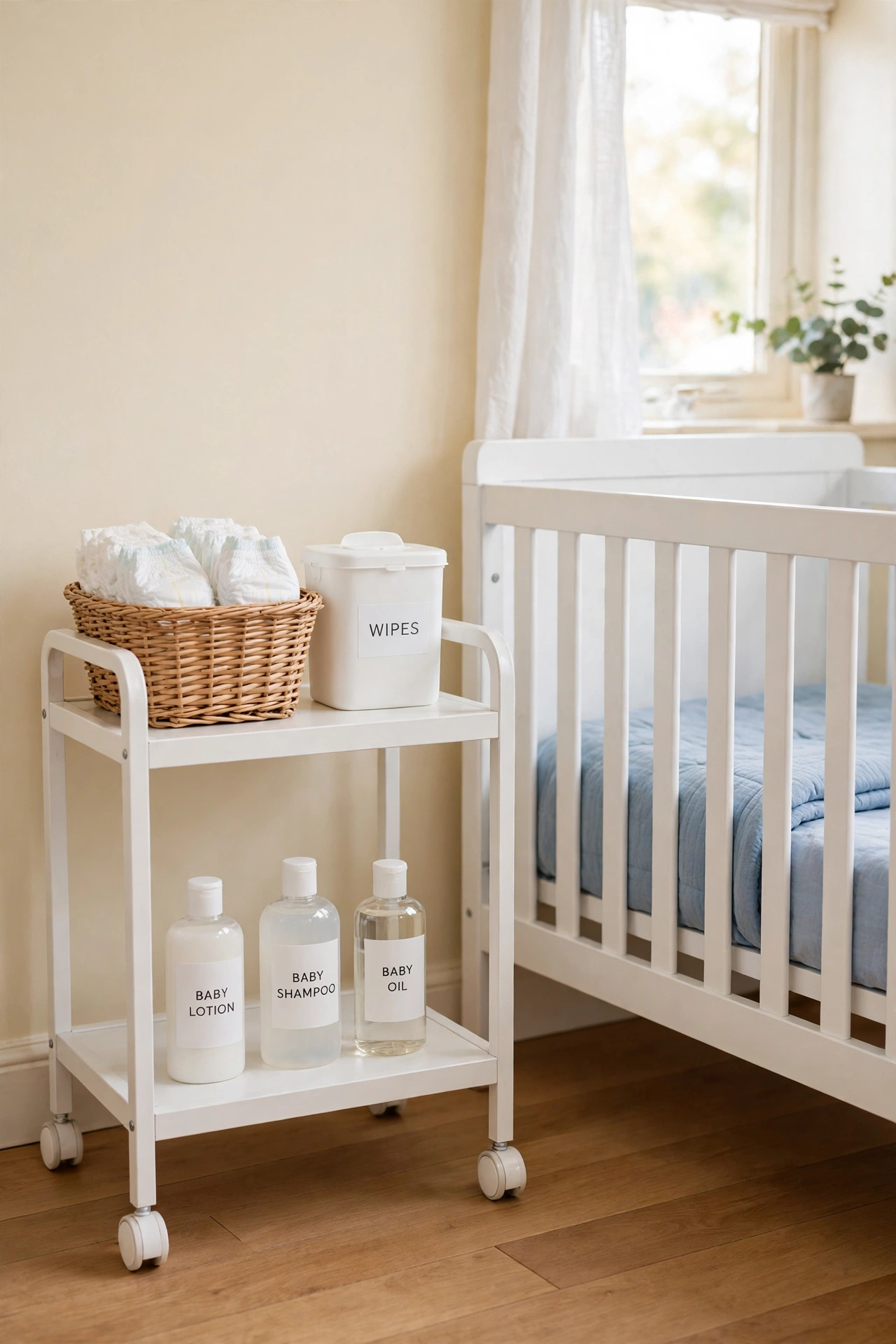
7. Build a Diaper Station Right Beside the Crib
A diaper station beside the crib means you never leave your baby alone on the changing pad to fetch supplies. A small rolling cart or a shelf on the dresser holds diapers, wipes, cream, and a spare outfit in one neat row. Everything sits within arm reach of the changing pad, and the station moves with you if the layout changes.
Keep the station simple and restock it every evening so it is always ready. A small basket on the cart holds dirty clothes until laundry day. When the station lives beside the crib, diaper changes take half the time and feel much calmer for you and your baby.
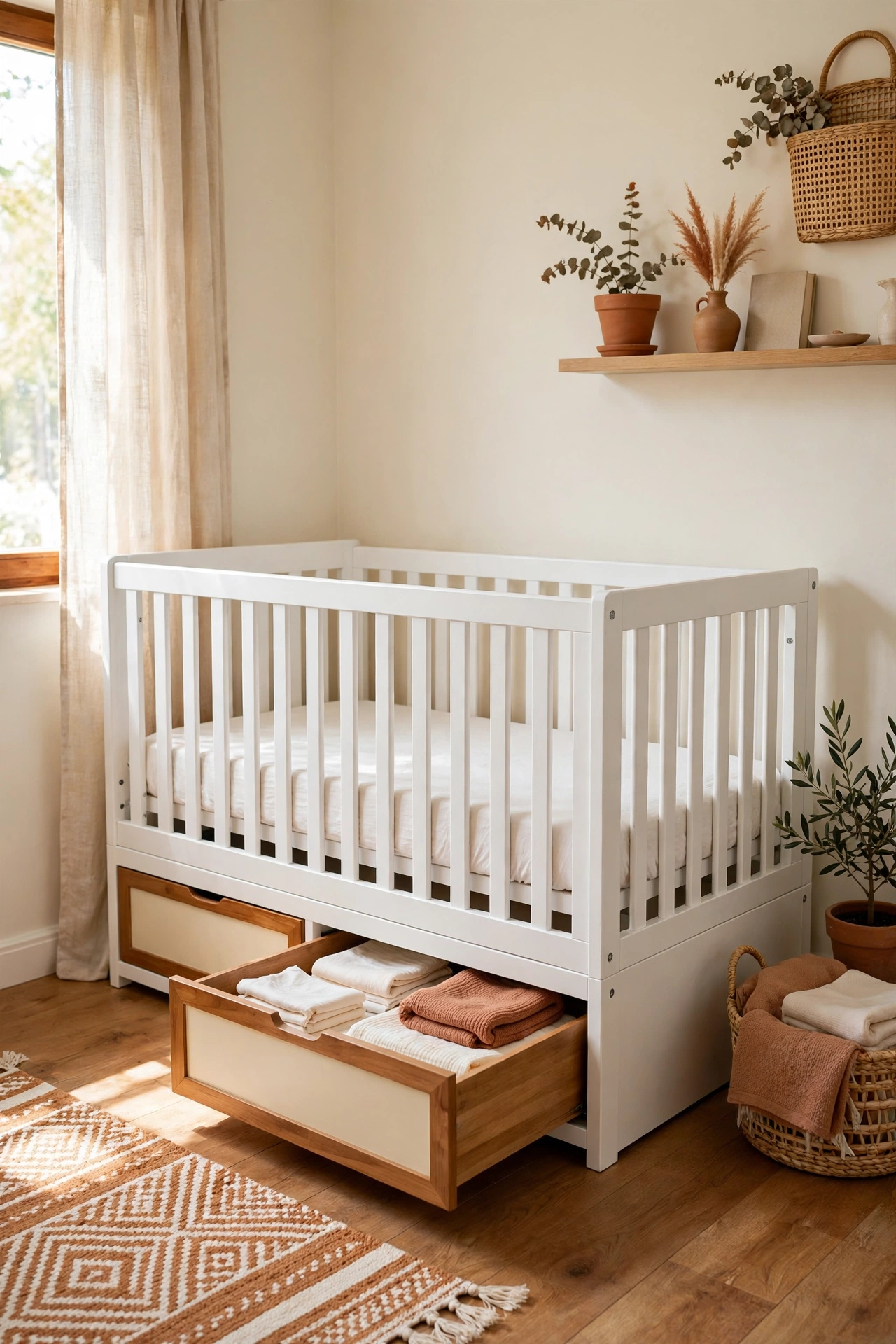
8. Choose a Crib with Built-In Drawers
A convertible crib with drawers built into the base gives you storage without adding another piece of furniture to the room. The drawers hold sheets, sleep sacks, and blankets right where you need them at bedtime. In a small nursery, every drawer you gain is floor space you keep.
Check that the drawers open smoothly and fully, even with the crib against the wall. Keep the top drawer for the items you use every night, and the lower drawer for spare bedding. A crib with built-in drawers is a smart choice when the nursery has room for a crib and a dresser, but not much more.
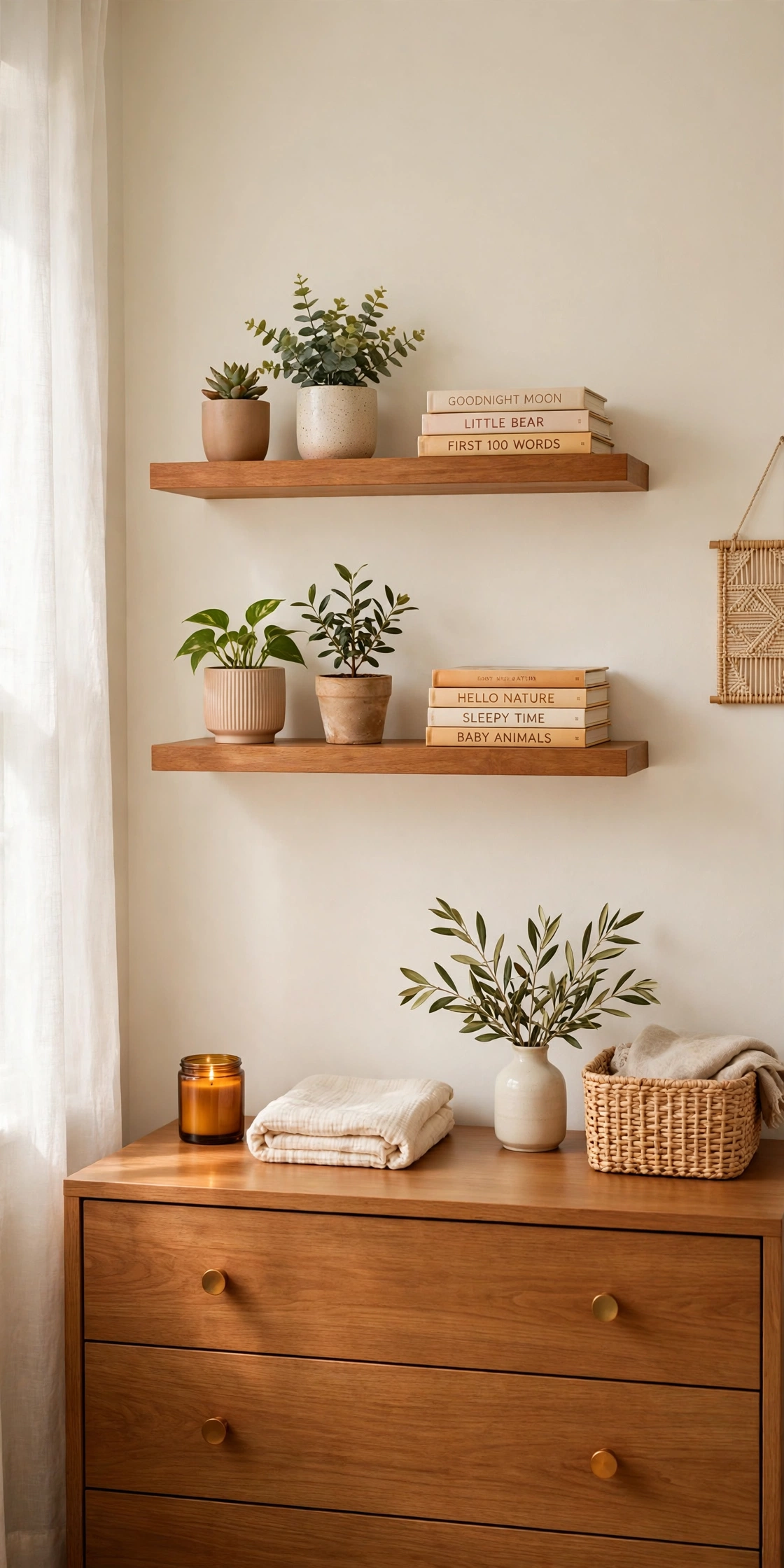
9. Use Floating Shelves Above the Dresser, Not the Crib
Floating shelves above the dresser give you display space for books, small plants, and keepsakes without taking any floor space. The dresser anchors the shelves, and the items stay far from the crib where nothing can fall into the sleep space. This is the safe place for shelves in a small nursery.
Hang the shelves at a height you can reach easily but a toddler cannot. Keep heavy items on the dresser itself and light items on the shelves. Two short shelves look better than one long one, and they leave room on the wall for a framed print or a growth chart beside them.
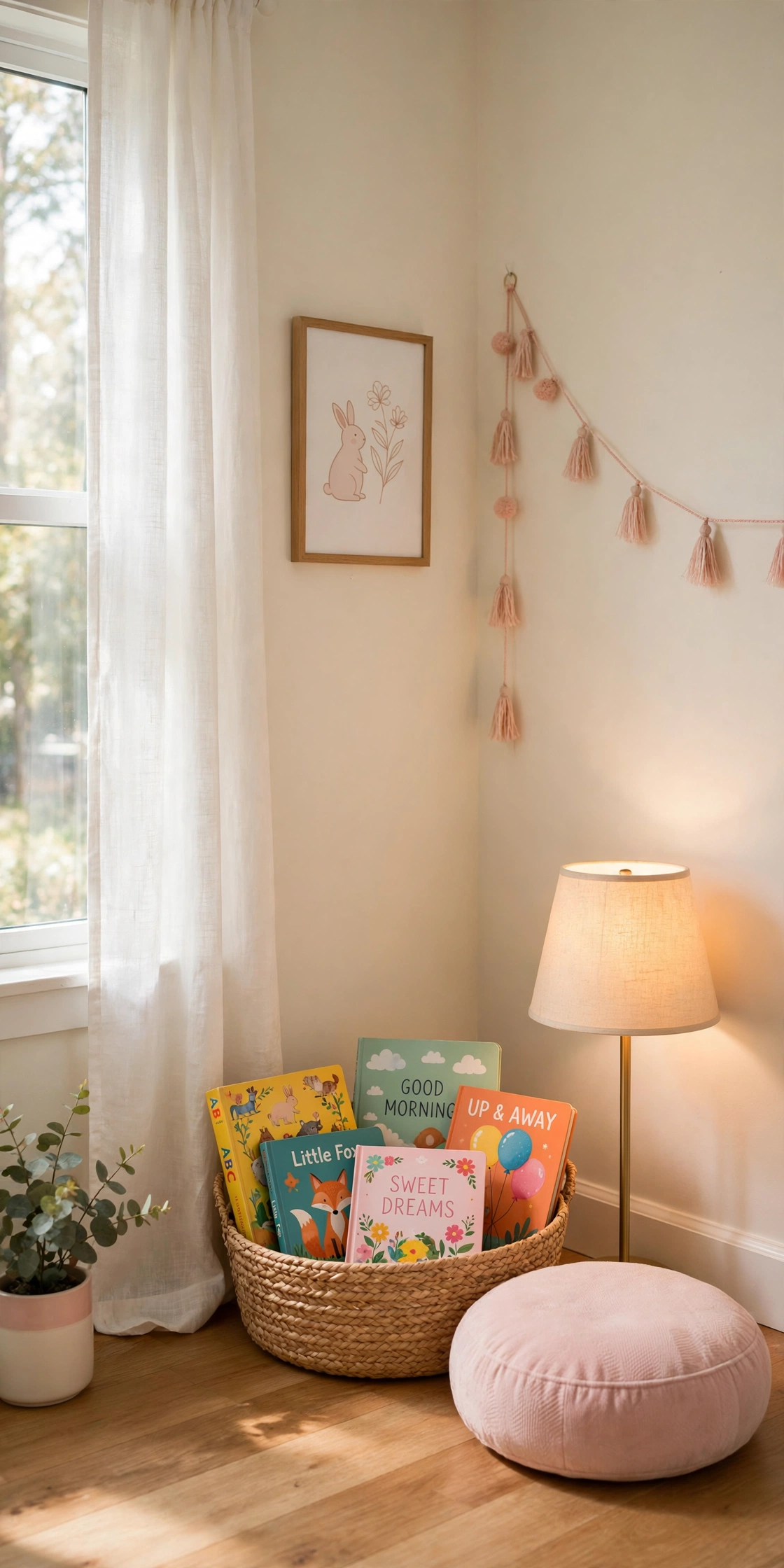
10. Create a Reading Nook That Grows with Your Child
A reading nook starts as a soft spot beside the rocking chair where you read to your baby, and it grows into your child favorite corner. A low basket of board books, a small cushion on the floor, and a soft light are all it takes. The nook uses a corner that would otherwise sit empty.
Choose books with thick pages and bright pictures for the early years, and swap them for storybooks as your child grows. Keep the basket low so your toddler can reach the books alone one day. A reading nook that grows with your child turns a small nursery into a room full of stories.
11. Use Blackout Curtains to Protect Nap Time
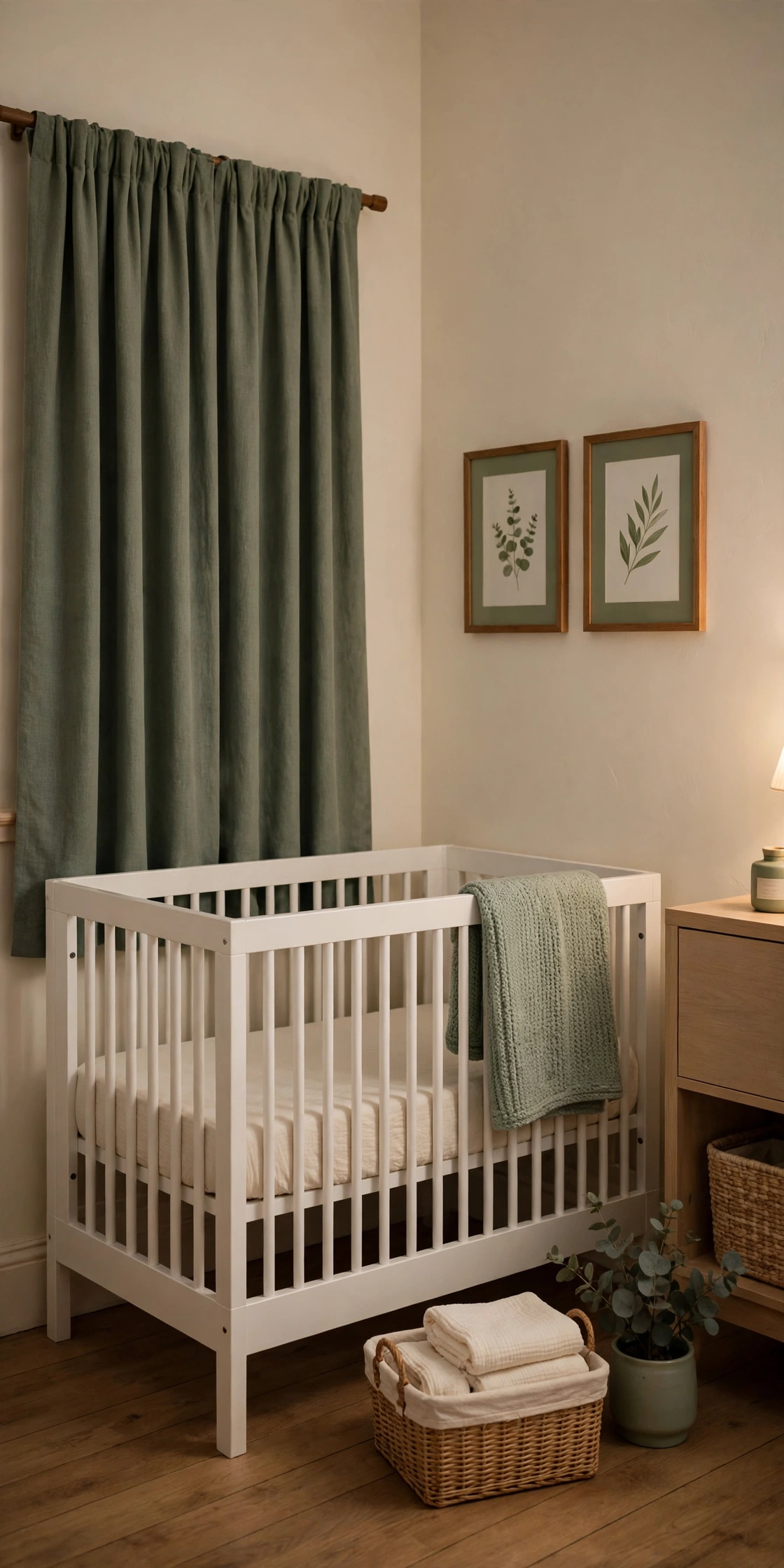
Blackout curtains turn a bright nursery into a calm sleep space at any hour of the day. The curtains block daylight during naps and street light at night, so your baby sleeps longer and wakes less often. In a small nursery, good sleep matters more than almost anything else.
Hang the curtains on a rod that extends past the window frame so no light leaks in at the edges. Choose a soft color that matches the room, such as cream or pale sage, so the curtains feel gentle even when closed. A dark room and a comfortable crib are the two best gifts you can give a tired baby.
12. Add a Soft Rug to Define the Sleep Zone
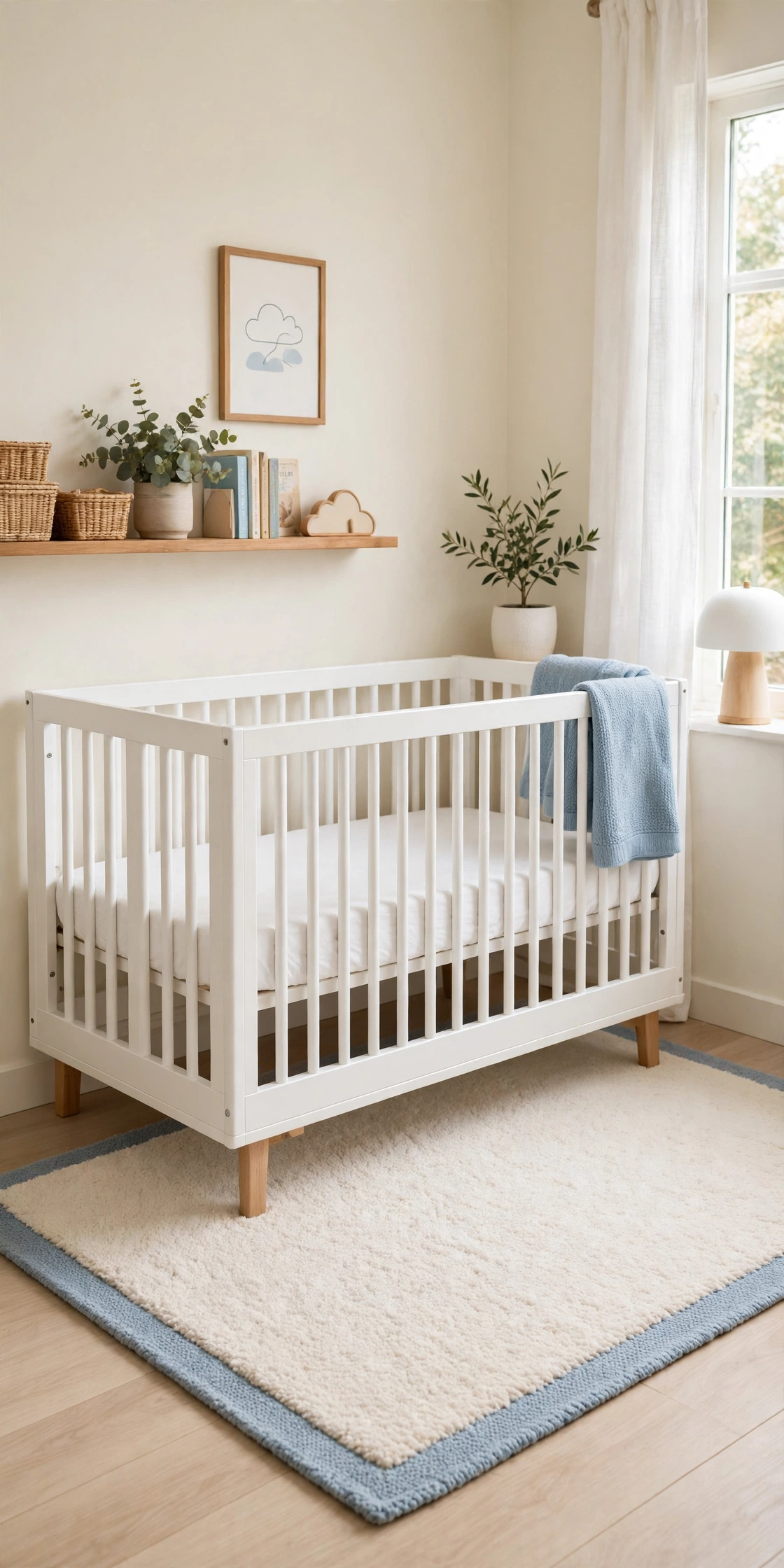
A soft rug under and around the crib marks the sleep zone and keeps the floor warm under your feet during night wakes. The rug softens the sound of footsteps, cushions the floor for tummy time, and makes the nursery feel cozy the moment you step in. Choose a rug large enough to extend past the crib on all open sides.
Pick a low pile rug in a washable fabric so spills and accidents clean up easily. A rug in a calm color, such as cream with a soft blue border, ties the crib, the dresser, and the chair together. The rug turns a bare floor into the heart of the nursery.
13. Keep a Small Side Table Within Arm Reach of the Chair
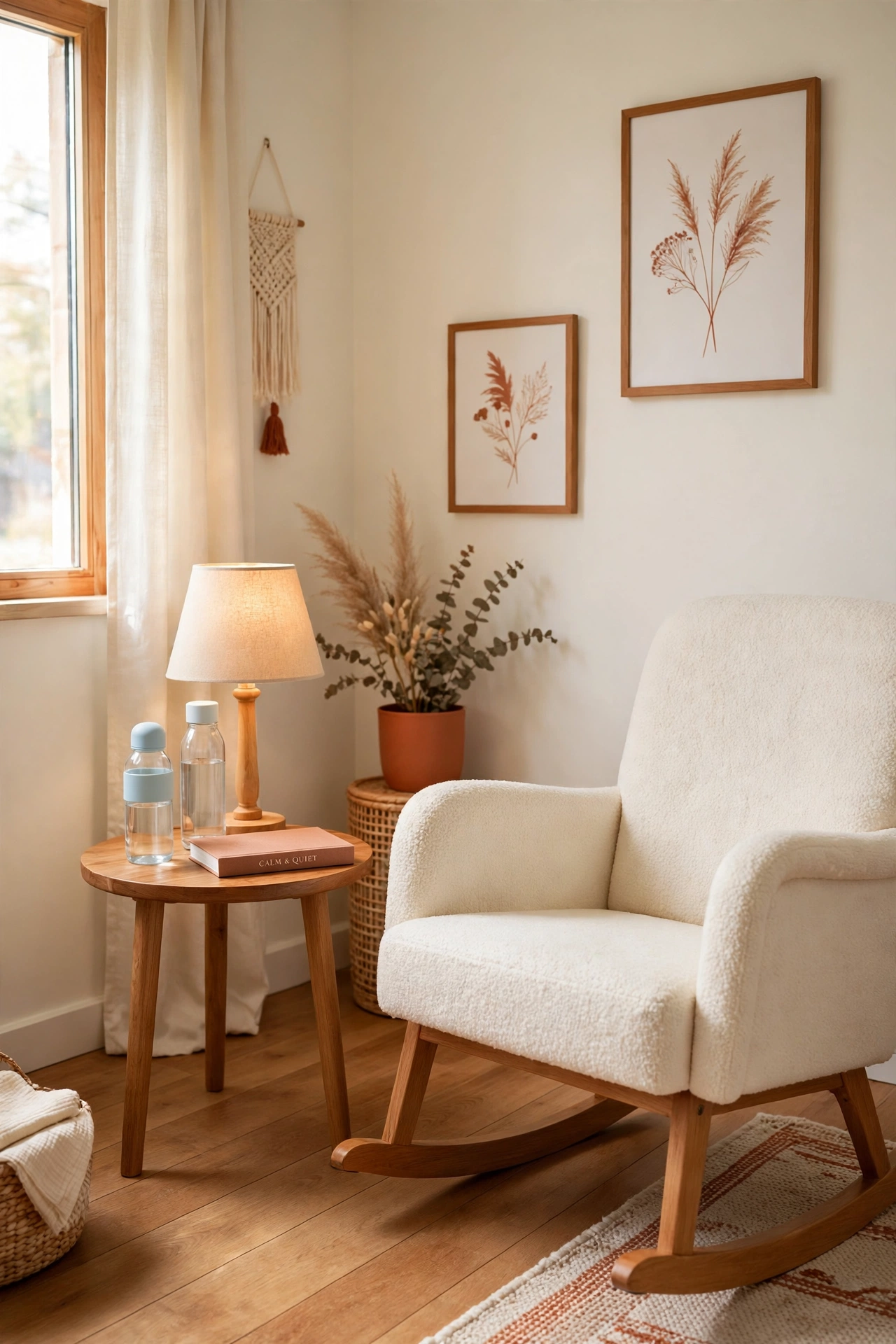
A small side table beside the rocking chair holds a water bottle, a phone, a book, and a small lamp, all within arm reach while you feed or rock your baby. Without it, you end up balancing things on the chair arm or the floor. A side table is a small piece of furniture that makes long nights much easier.
Choose a table with a round top and no sharp corners, and keep it low so it does not block your view of the crib. A small drawer in the table holds pacifiers and a spare muslin cloth. The side table stays useful for years as a nightstand beside the toddler bed.
14. Plan a Daybed Layout for the Toddler Years
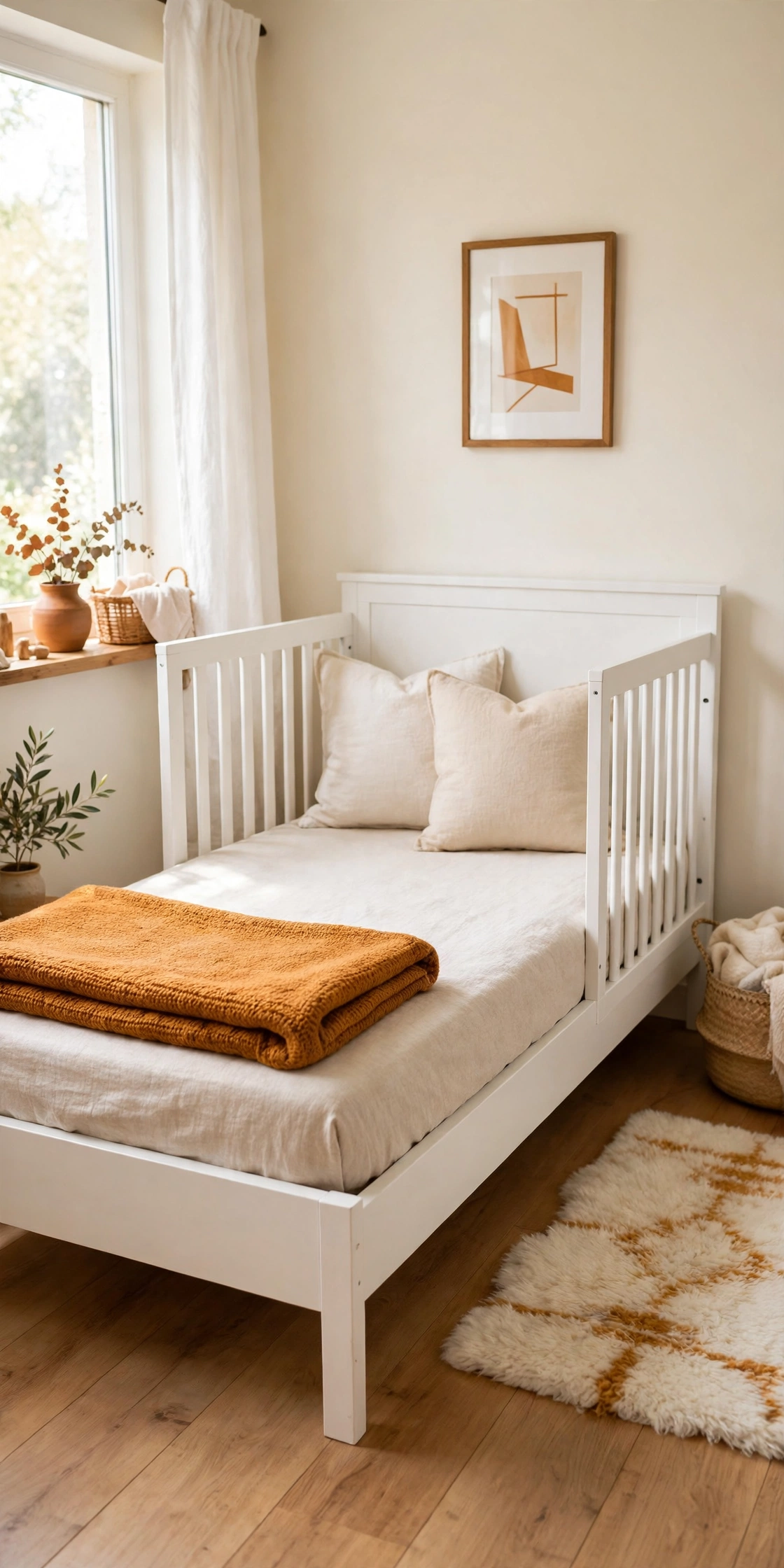
Many convertible cribs change into a daybed before they become a full toddler bed, with the front rail removed and the mattress lowered. Plan for this stage now by leaving the wall beside the crib free, so the daybed has room for pillows and a small blanket. Your toddler can climb in and out safely, and the room still has space for play.
Place a soft rug beside the daybed so little feet land on something warm in the morning. Keep the dresser in the same spot so the room feels familiar during the change. For more ideas on rooms that grow with a child, see these small teen bedroom layout ideas. A layout that plans ahead saves you from rearranging the whole nursery later.
15. Use the Closet for Clothes and the Dresser for Daily Items
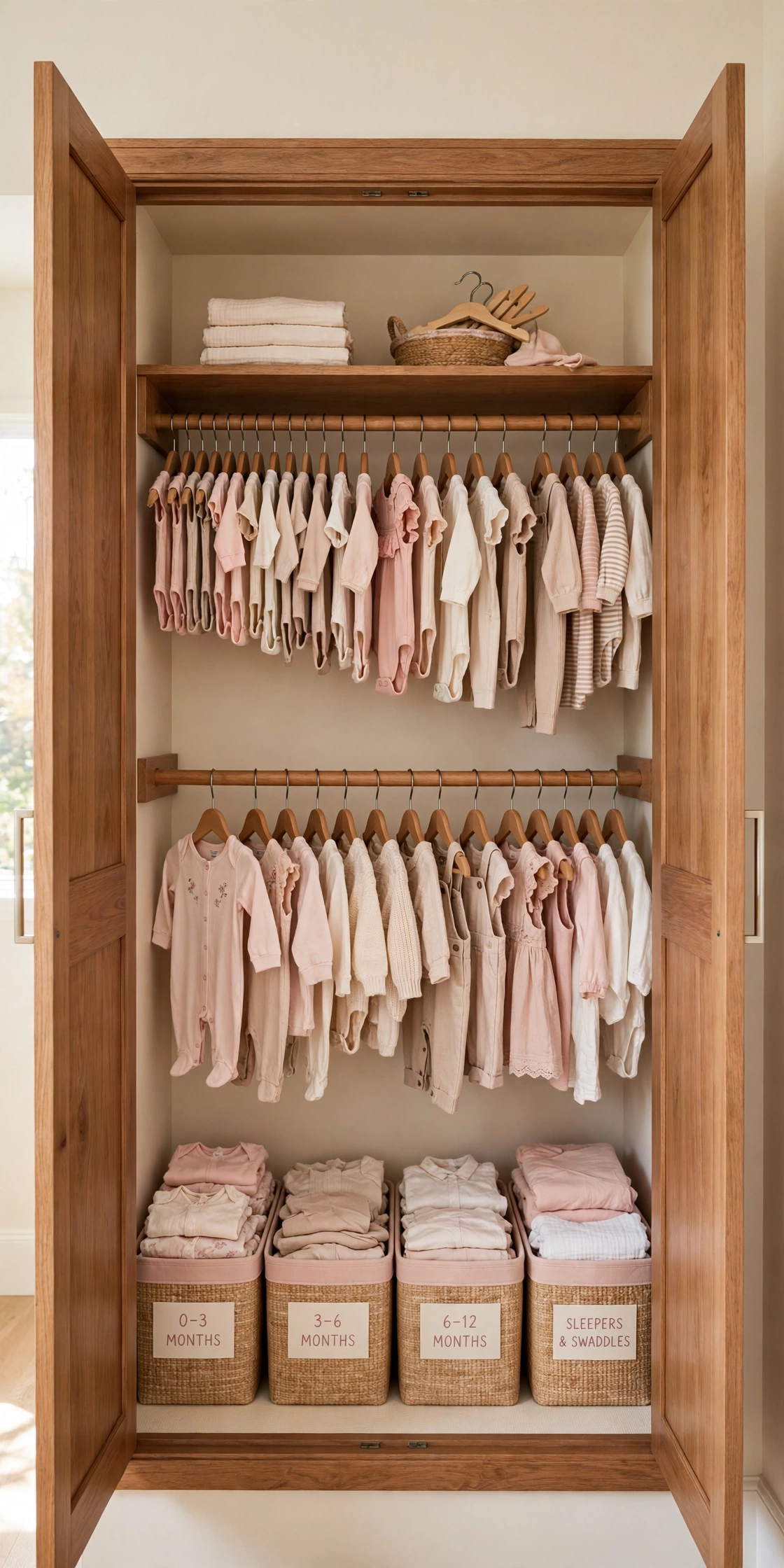
A clear rule keeps a small nursery organized: the closet holds clothes, and the dresser holds daily items. Hang outfits in the closet by size, with the smallest sizes in front, and keep diapers, wipes, and creams in the dresser drawers. When every item has one home, you always know where to look.
Add a second hanging rod low in the closet for baby clothes, which are short and leave wasted space below a single rod. Use the space under the lower rod for shoes and storage bins. A closet with a simple system works harder than a closet full of random piles.
16. Add a Mobile That Comes Down When Baby Starts to Stand
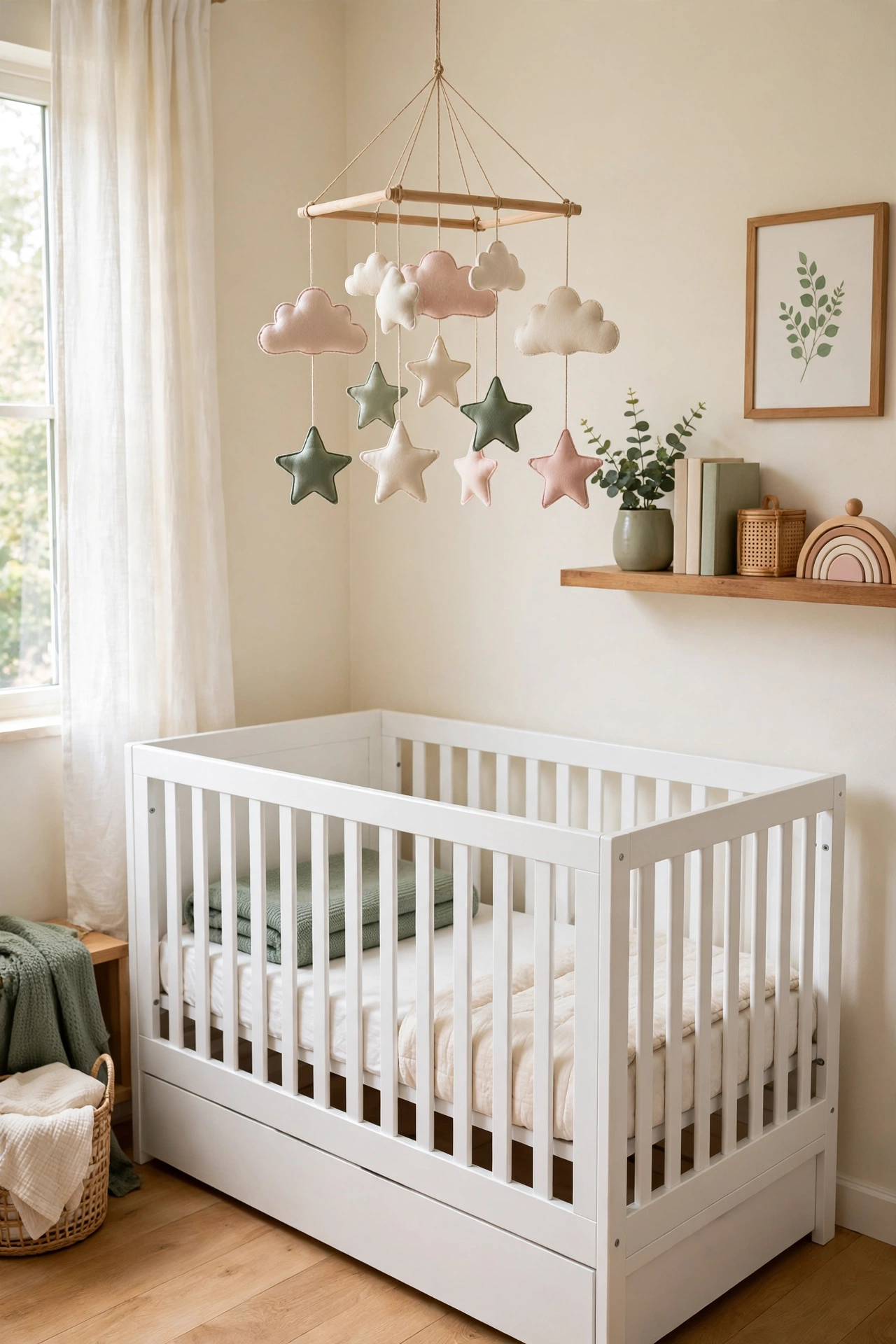
A mobile above the crib gives a newborn something gentle to watch while falling asleep, and it adds color and movement to the nursery. Hang it from the ceiling or from a crib arm so it sits well above your baby reach. Soft shapes in cream, sage, and blush pink keep the mobile calm rather than busy.
Plan to remove the mobile as soon as your baby can pull up to stand, because a standing baby can reach it. Choose a mobile that comes down with one simple clip so removal takes seconds. The mobile is a short chapter in nursery life, so enjoy it while it lasts and store it for the next baby.
17. Keep the Crib Away from Windows and Cords
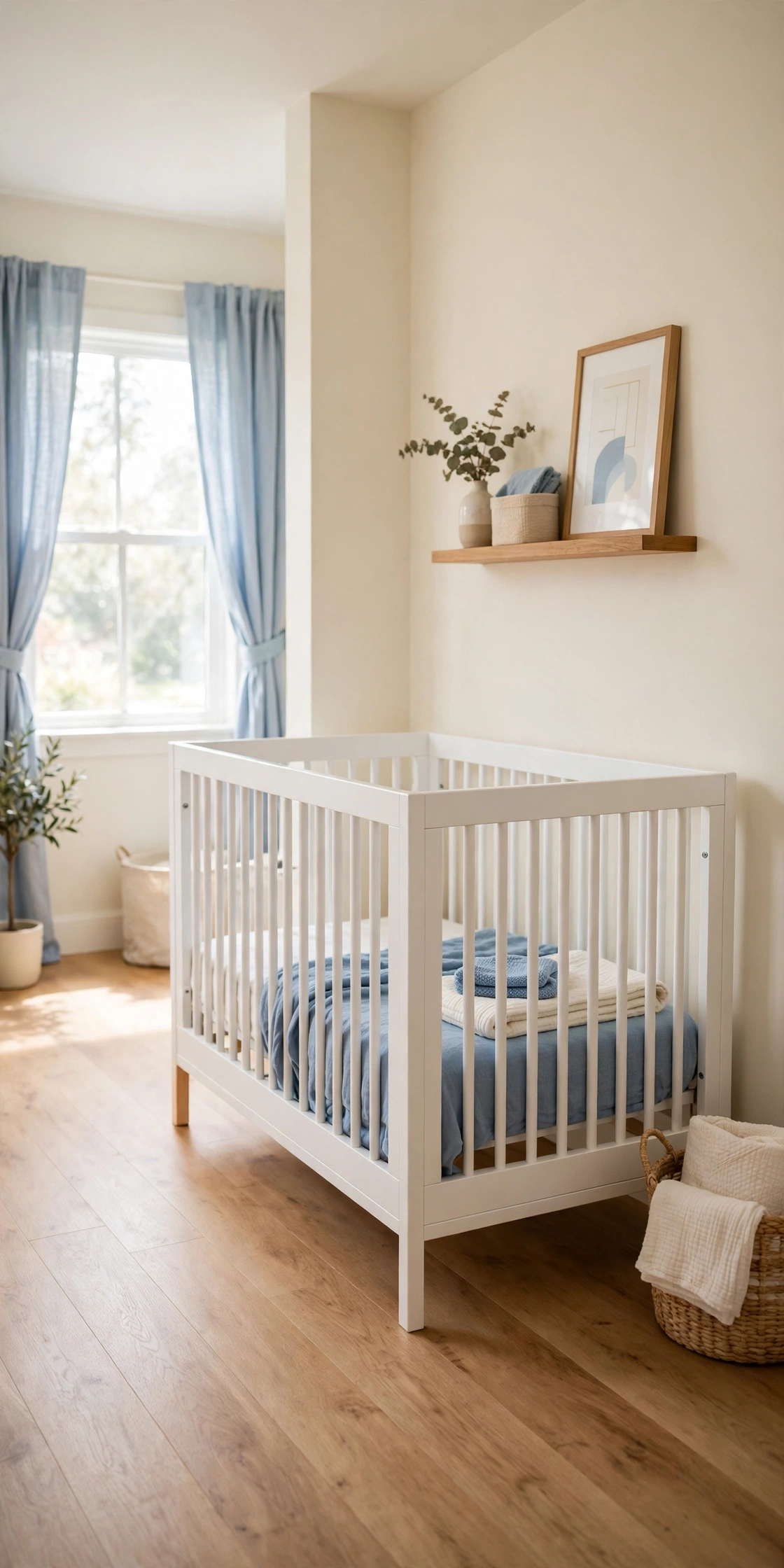
Safety shapes the best nursery layouts more than style does. Keep the convertible crib away from windows, where drafts and bright light disturb sleep, and far from blind cords, lamps, and wall outlets. A crib on an inside wall is warmer, darker, and safer than a crib under a window.
Check the wall behind the crib for outlets and cover any you do not use. Run lamp cords behind furniture so they never dangle near the crib. A safe layout is a calm layout, because you sleep better knowing your baby sleeps in the safest spot in the room.
18. Use Wall Decals That Peel Off When the Room Changes
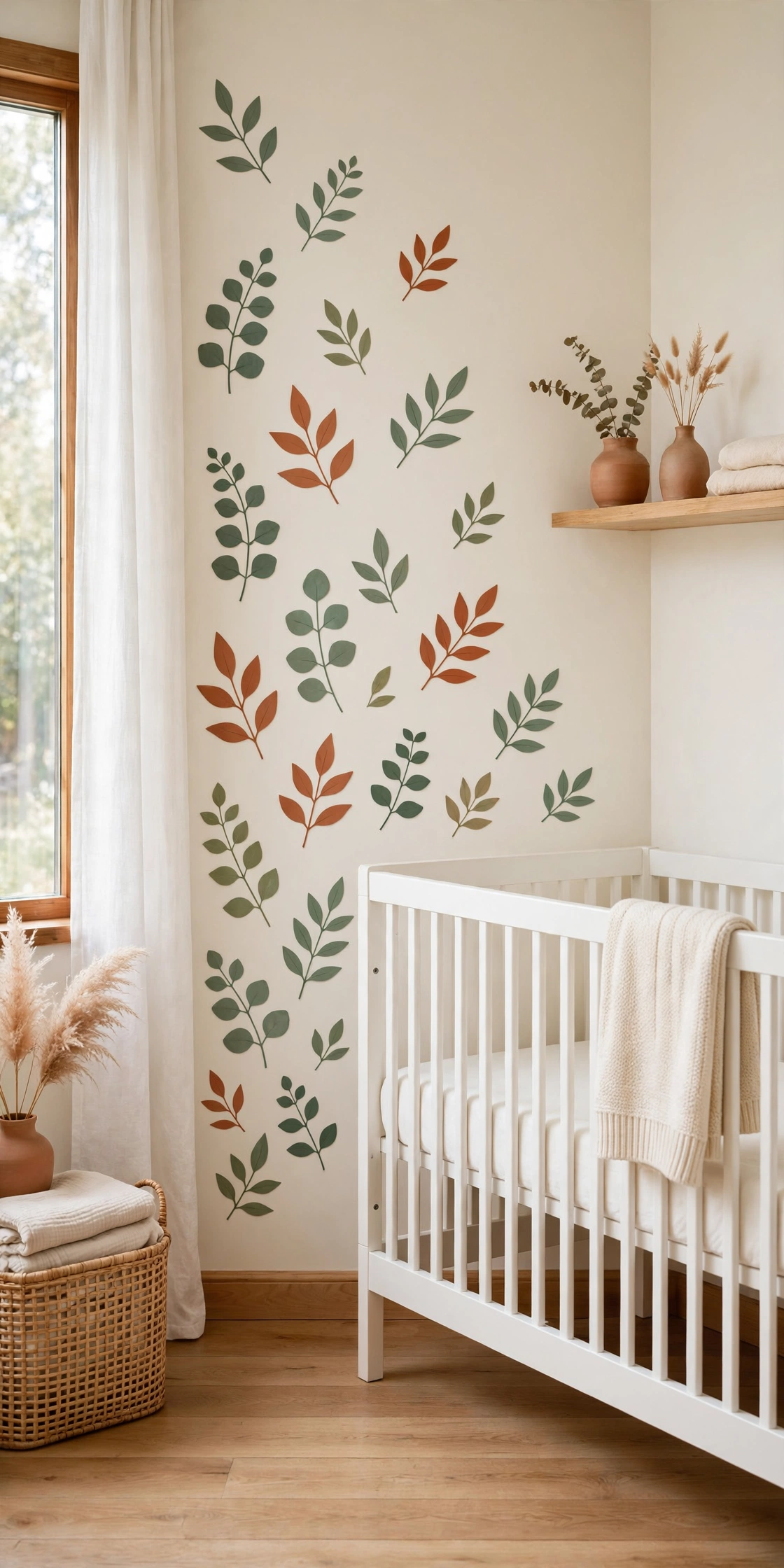
Peel and stick wall decals add personality to a nursery without paint, nails, or damage to the walls. Soft stars, leaves, or animals in gentle colors bring the room to life, and they peel off cleanly when your child outgrows them. Decals are perfect for a rented home or a room you plan to change.
Place decals on the wall beside the crib, never directly above it, so nothing can fall into the sleep space. Keep the design simple with one theme and two or three colors. When the toddler bed years arrive, you can swap the decals in minutes and the room feels brand new.
19. Leave One Wall Free for a Future Big Kid Bed
The smartest small nursery layout leaves one wall free for the future. A convertible crib becomes a toddler bed, and a toddler bed becomes a twin bed one day. If you keep one wall clear of heavy furniture now, the twin bed slides into place later without moving the dresser or the chair.
Use the free wall for something light and movable today, such as a small bookshelf or a floor cushion. When the big kid bed arrives, the bookshelf moves to another wall and the room grows up with your child. A layout that leaves room for the future is a layout that lasts for years.
Conclusion
A small nursery with a convertible crib proves that a tiny room can do a big job. From the first night home to the first night in a toddler bed, one crib and a thoughtful layout carry your baby through years of sleep, play, and growth. The best layout is the one that keeps everything within reach and leaves room for what comes next.
Pick one or two ideas that fit your room and start today. Place the crib on the longest wall, set up the dresser as a changing table, and keep the chair in the corner ready for night feeds. For a calm home beyond the nursery, these nightly reset routine ideas will help you keep every room tidy with just a few minutes each evening.
Frequently Asked Questions About Small Nursery Layout Ideas With a Convertible Crib
How much space does a convertible crib need in a small nursery?
A standard convertible crib is about 55 inches long and 30 inches wide, and it needs at least 24 inches of clear floor space on one long side so you can reach in and change sheets. Leave the wall behind the crib free and keep the dresser and chair on other walls so the room still feels open.
When should I convert the crib into a toddler bed?
Most children move to a toddler bed between 18 months and 3 years old, or when they start climbing out of the crib. Lower the mattress to the lowest setting first, and only remove the side rail when your child climbs out or reaches 35 inches tall. A familiar bed makes the change easier for your child.
Is a convertible crib safe for a newborn?
Yes, a convertible crib is safe for a newborn when it meets current safety standards and the mattress fits snugly with no gaps at the edges. Use a firm mattress, a fitted sheet, and nothing else in the crib. Keep the crib away from windows, cords, and shelves, and check the hardware every month.
What furniture fits in a small nursery with a convertible crib?
A convertible crib, a dresser that doubles as a changing table, and a rocking chair are the three pieces every small nursery needs. Add a small side table and storage bins under the crib if space allows. Even in a small loft apartment, this trio fits when the crib sits on the longest wall and the dresser stays beside it.
How do I arrange a small nursery so it still feels calm?
Keep the color palette soft with cream walls, warm wood, and one or two accent colors. Leave one wall mostly empty, hide clutter in bins and drawers, and let natural light in during the day. A calm nursery comes from empty space as much as from furniture, so resist the urge to fill every corner.

Hi, I’m Emily! I turn messy corners into cozy, organized spots. DreamNestDecor is where I share simple, practical home ideas — decor, organization, and small-space solutions that work in real life, not just in photos. Every idea here is carefully researched before it’s shared.