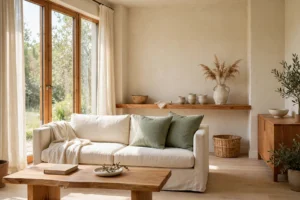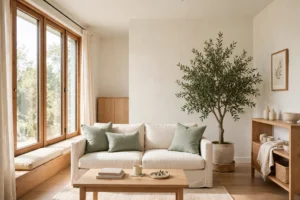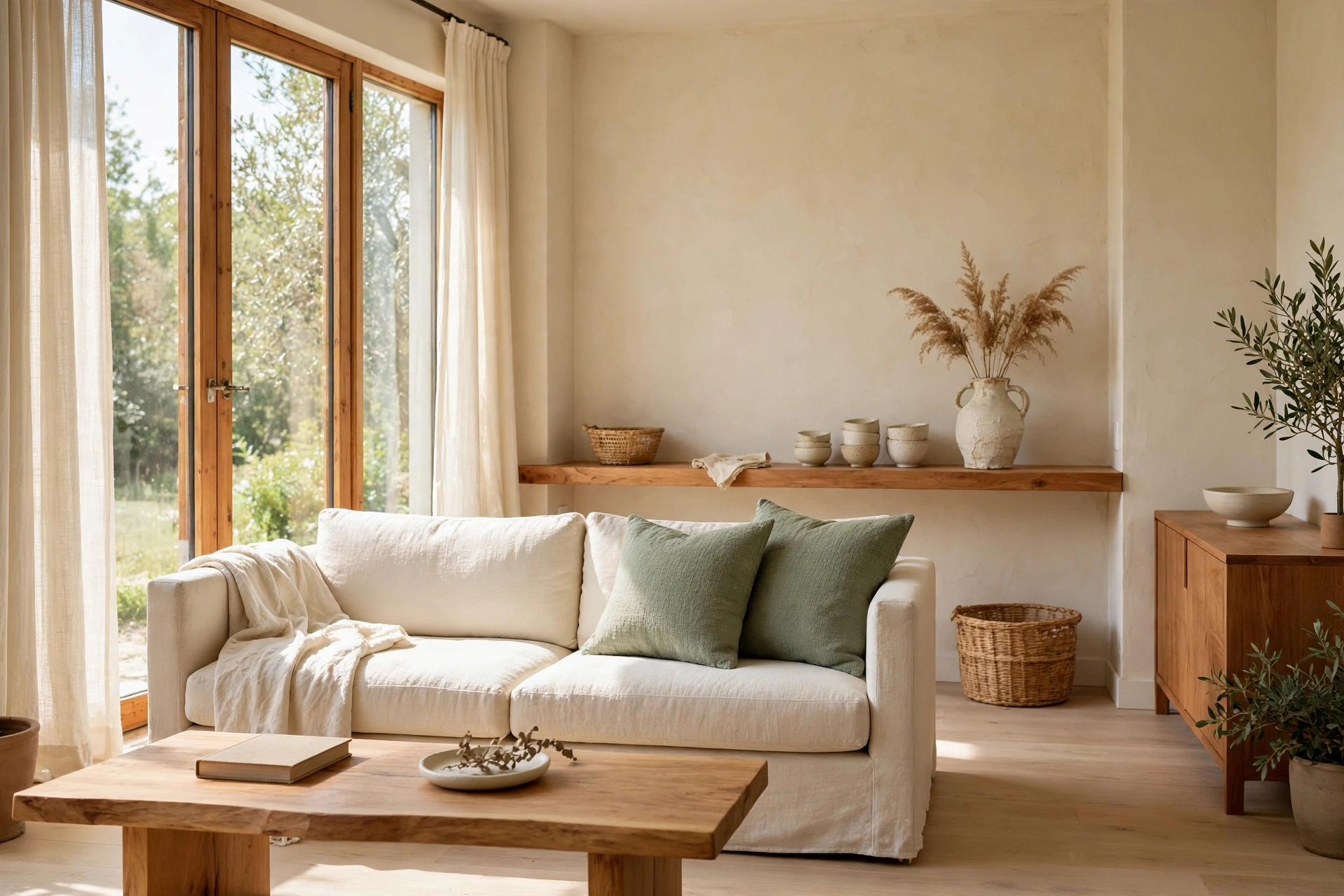
Picture this: you walk into a living room where nothing shouts for attention, yet everything feels warm and honest. A wooden table shows its grain and a few small marks from years of use, a linen sofa holds soft wrinkles, and one handmade vase sits on the shelf like a quiet treasure. That calm feeling is exactly what wabi sabi interior design gives a home.
You do not need a large budget or a perfect house to bring this look home. All you need is an eye for natural materials, a willingness to let things be a little imperfect, and a simple plan that favors less over more. These 18 wabi sabi interior ideas will help you fill every room with imperfect beauty, quiet texture, and a calm that grows more lovely with time.
1. Understand the Look: Simple, Natural, and Slightly Lived In
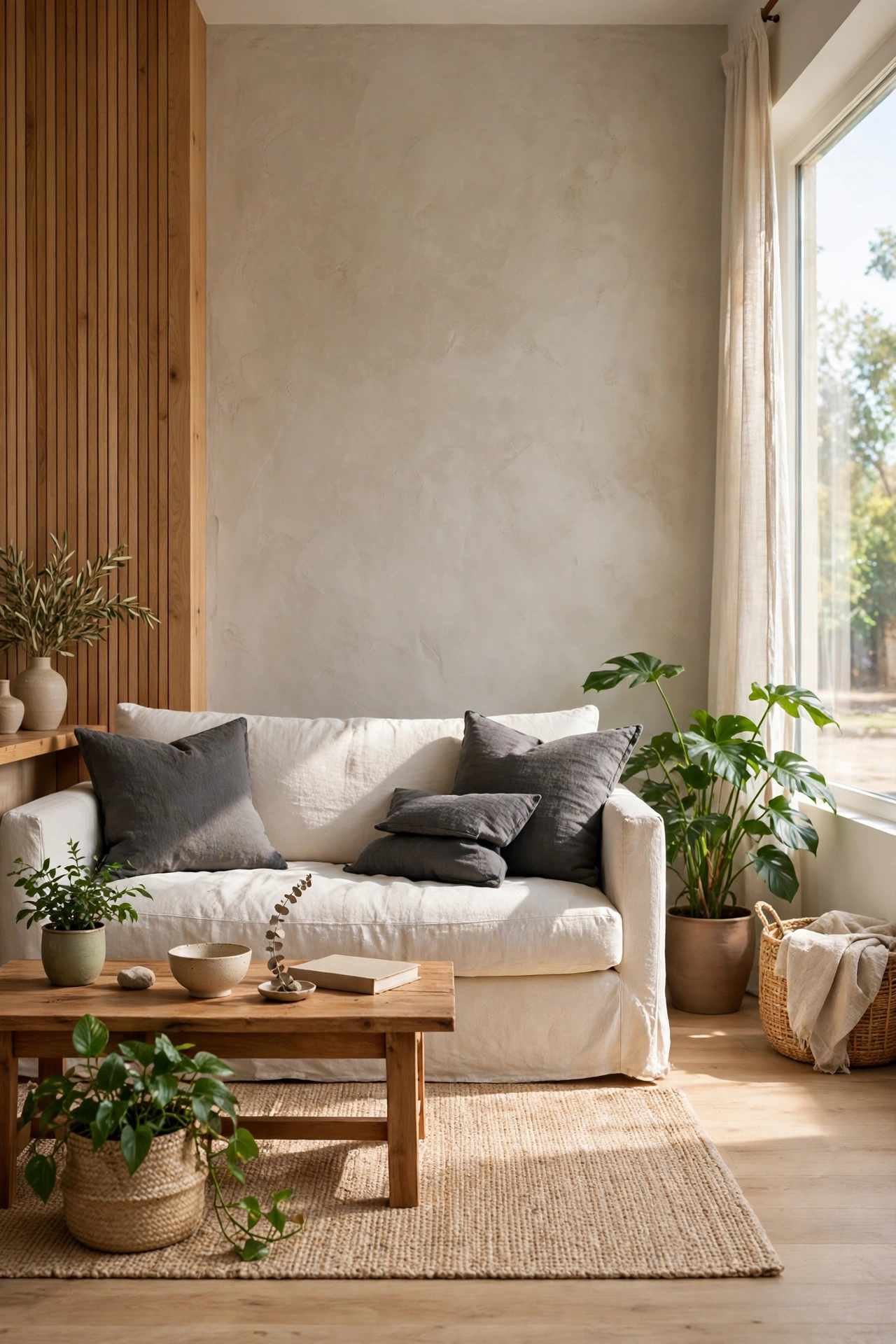
Wabi sabi style is simple, natural, and slightly lived in, which means it welcomes marks, patina, and soft wear instead of hiding them. The look rests on soft colors, raw textures, and fewer items, with nothing too shiny or too perfect. Wood, linen, clay, and stone do most of the work, while each piece earns its place by being useful or truly loved.
This style suits people who want calm, dislike clutter, and do not want a home that looks like a catalog page. It also suits homes with kids and pets, since scratches and scuffs become part of the story instead of flaws to hide. One or two meaningful pieces beat ten random ones every time, so start by choosing what matters and letting the rest go.
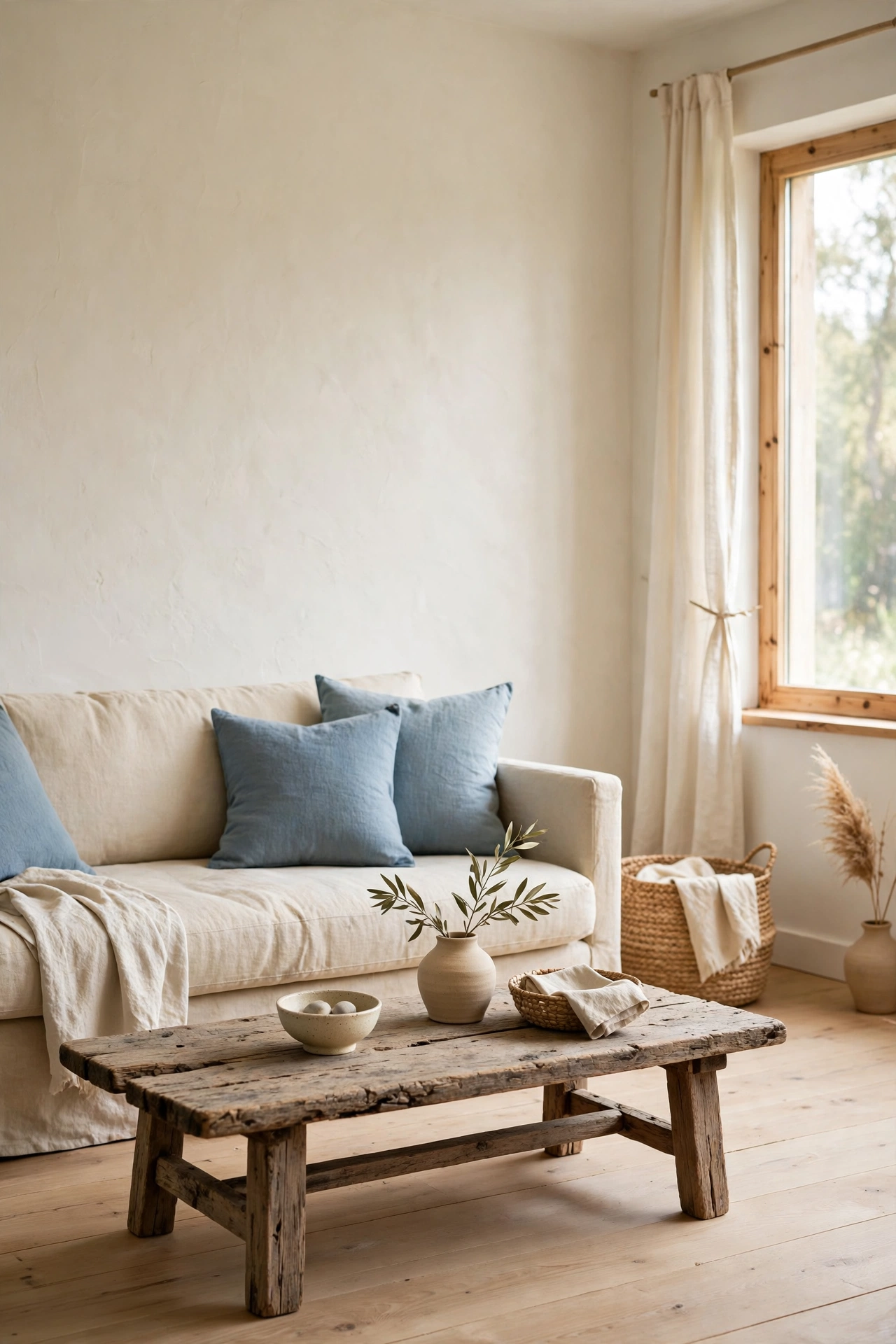
2. Plan First: Measure, Budget, and Name What the Room Must Do
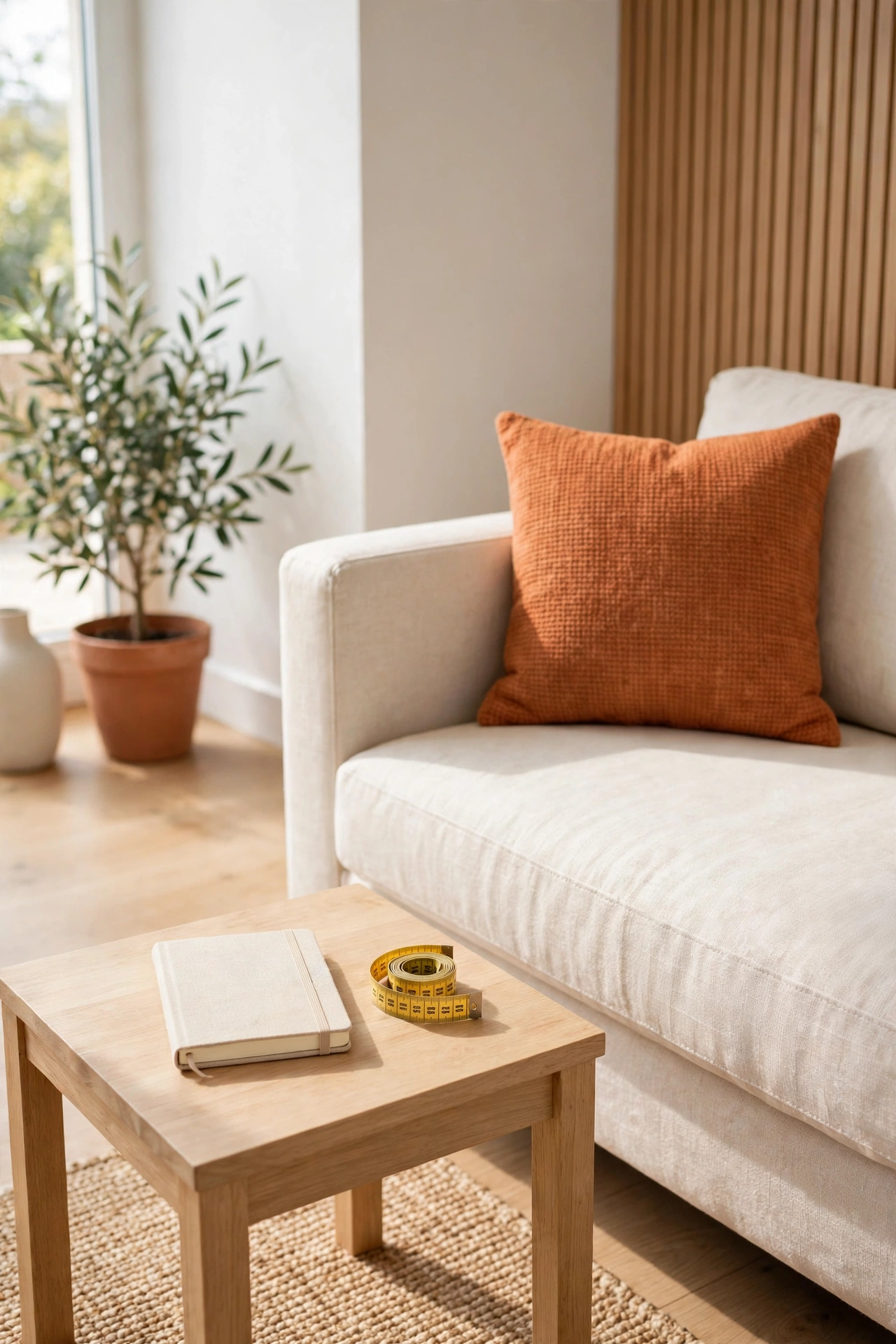
A short plan saves you from purchases you will regret later. Measure the basics first, such as the sofa wall, the rug size, and the main walkways, and keep a small note of those numbers on your phone. Then pick an honest budget range and name the top two jobs the room must do, like reading, hosting, napping, or working.
Decide what stays before you buy anything new. Anything comfy, sturdy, and quiet can probably work in the new scheme. When the plan is clear, every choice becomes easier, and the room grows calm one thoughtful step at a time instead of turning into a pile of impulse buys.
3. Choose a Warm Neutral Palette with Earthy Depth
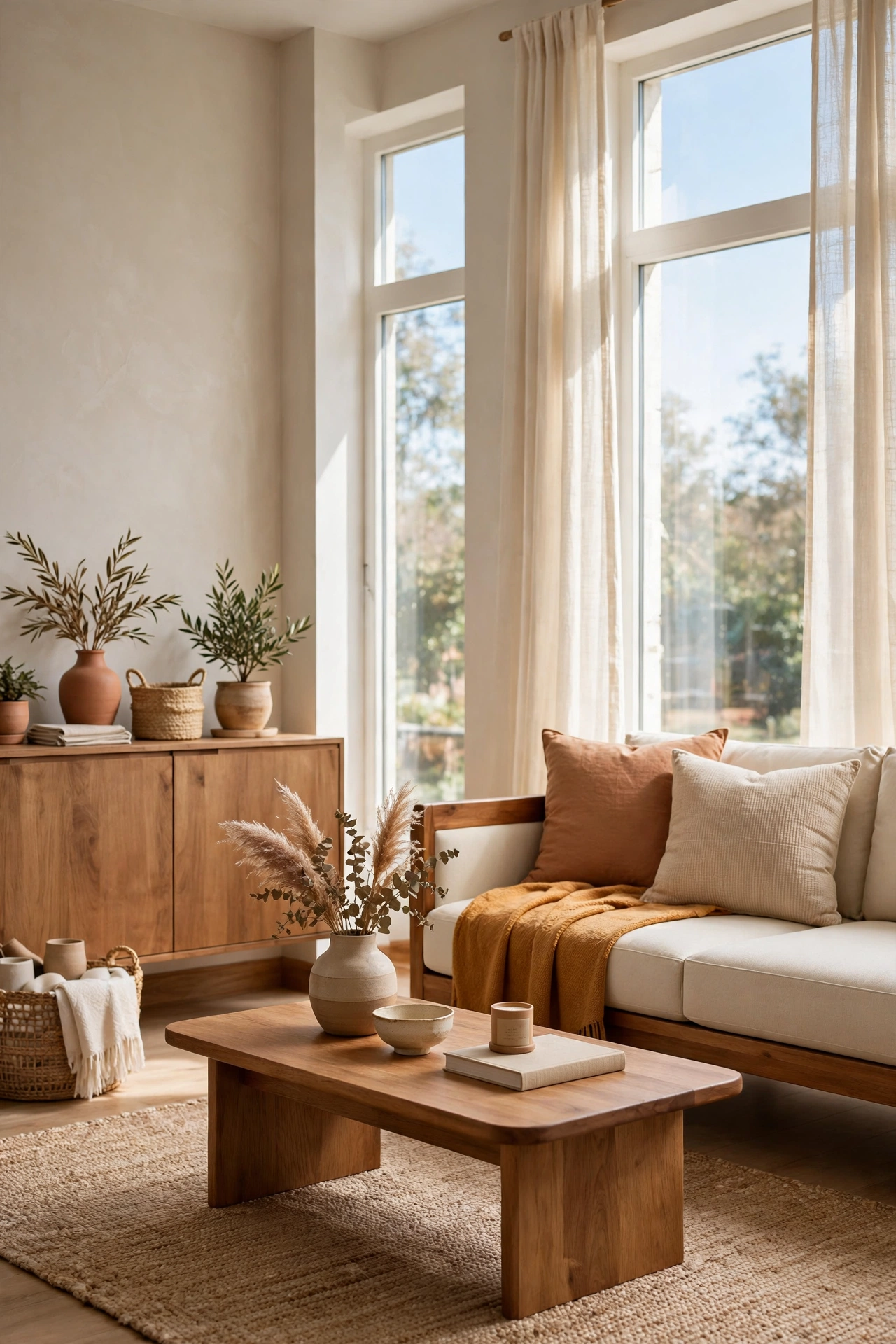
Color in wabi sabi works like soup broth. It is not the main event, yet it makes everything else feel good. Warm neutrals such as oatmeal, sand, clay, and soft white form the base, while earthy greens and browns like olive, moss, and walnut add depth. A little charcoal or deep gray grounds the room, but only a little.
Match the palette with materials that carry the same mood, such as limewash style paint, linen curtains, jute rugs, and unglazed pottery. A guest room repainted in muted warm white with flax colored bedding can feel calm in a single weekend. Keep the colors soft and earthy, and the room will feel like a quiet morning in every season.
4. Pick Low, Grounded Furniture and One Quiet Focal Point
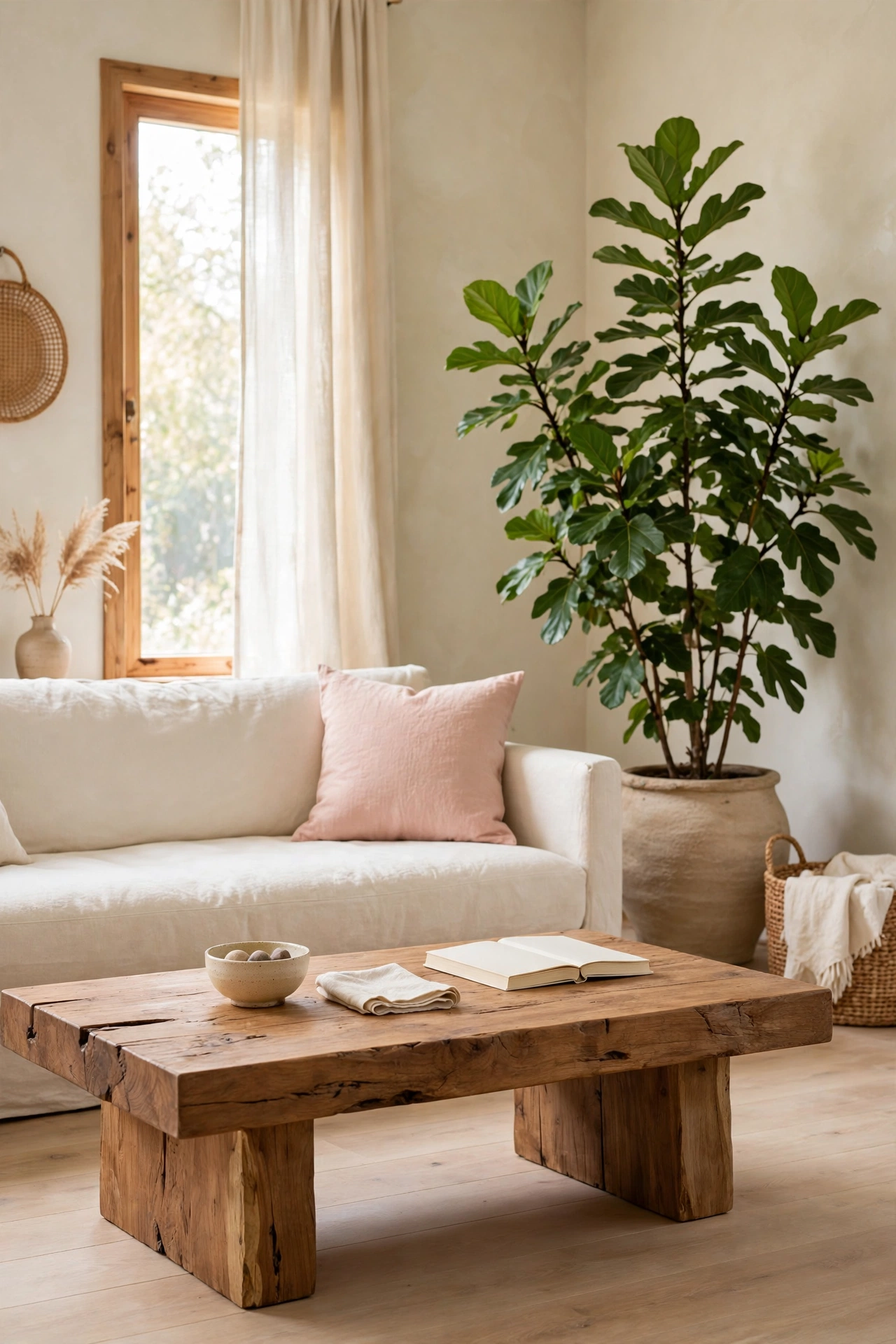
Wabi sabi rooms do not need more furniture. They need better placement and pieces that sit low and grounded. A simple sofa, a chunky wood coffee table, or a plain bench can anchor the whole room, while one quiet focal point gives the eye a place to rest. A fireplace, a large plant, a textured wall, or a single piece of art all work well.
Leave breathing space around each piece, because empty space is not unfinished. It is the whole point of the style. For more ways to soften a room with gentle shapes, see these curved furniture ideas. If a room still feels fussy, try removing one side table for a week and notice how much calmer the space becomes.
5. Layer Linen, Wool, and Wood for Warmth
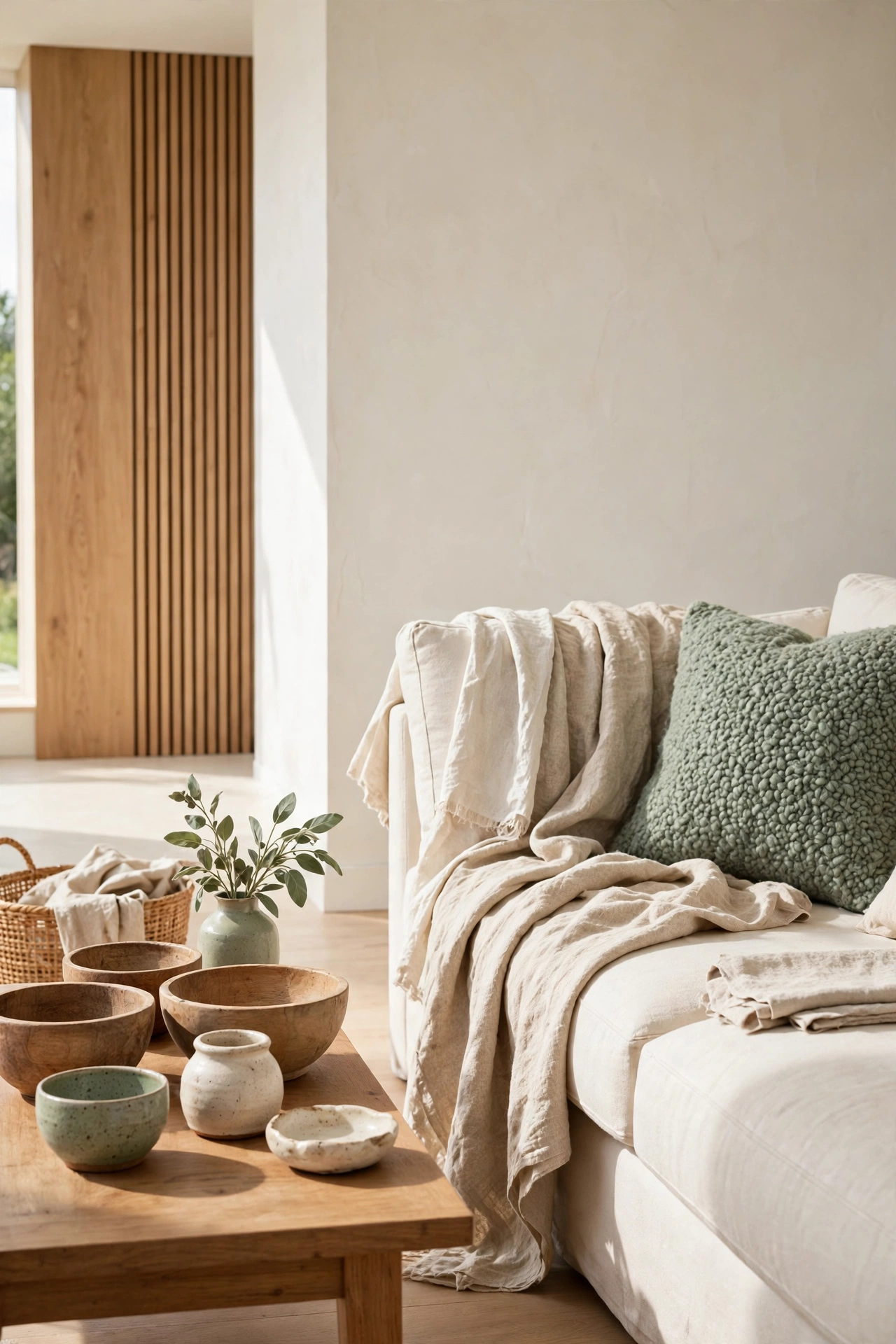
Texture is where a calm room becomes cozy. When the colors stay quiet, layers of linen, wool, and wood add all the flavor the room needs. A nubby throw, handmade ceramics, and a basket with a little wobble bring life to a plain corner without adding clutter.
Mix matte finishes and avoid too much gloss, since shiny surfaces tend to feel louder in a quiet room. Let nature guide your choices with stone, branches, dried grasses, driftwood, or even a bowl of lemons on the table. If a room feels too plain, texture fixes it faster than any new decoration.
6. Hang One Larger Art Piece and Keep Surfaces Nearly Bare
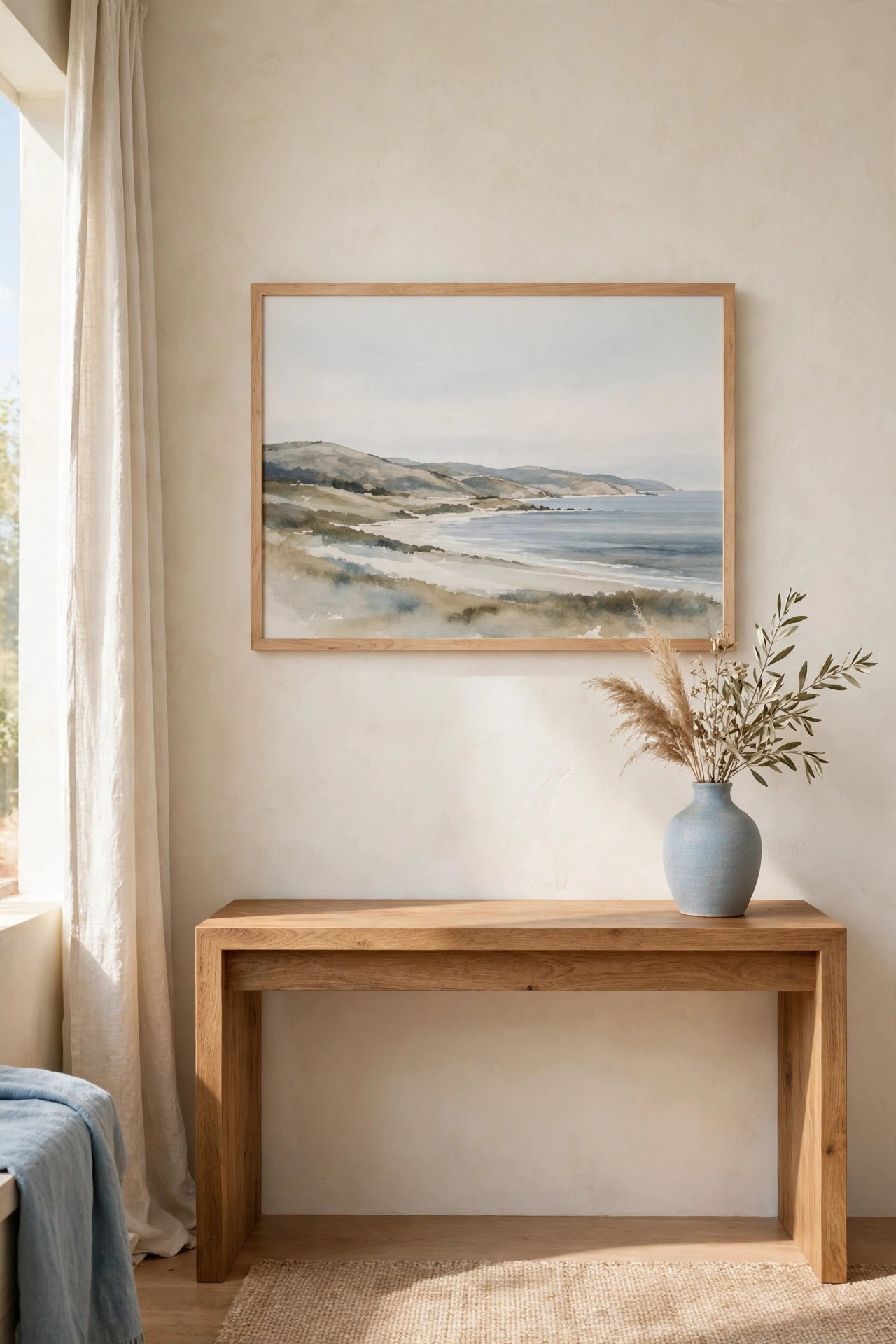
Accessories are where clutter sneaks in wearing a cute outfit, so choose with care. One larger art piece beats a gallery wall of random prints in a wabi sabi home. Look for handmade or vintage work, such as charcoal sketches, landscape photos, or simple ink art, and let it hold the wall on its own.
Keep three to five items per surface at most, and make sure each one earns its spot. A ceramic vase, a wooden bowl, a linen runner, and a worn stack of books are all you need. For more ideas on arranging art with a classic feel, see these antique gallery wall ideas. If a shelf feels too styled, remove one item. If it feels too bare, add one natural element, and a plant counts.
7. Warm the Room with Soft Layered Lighting
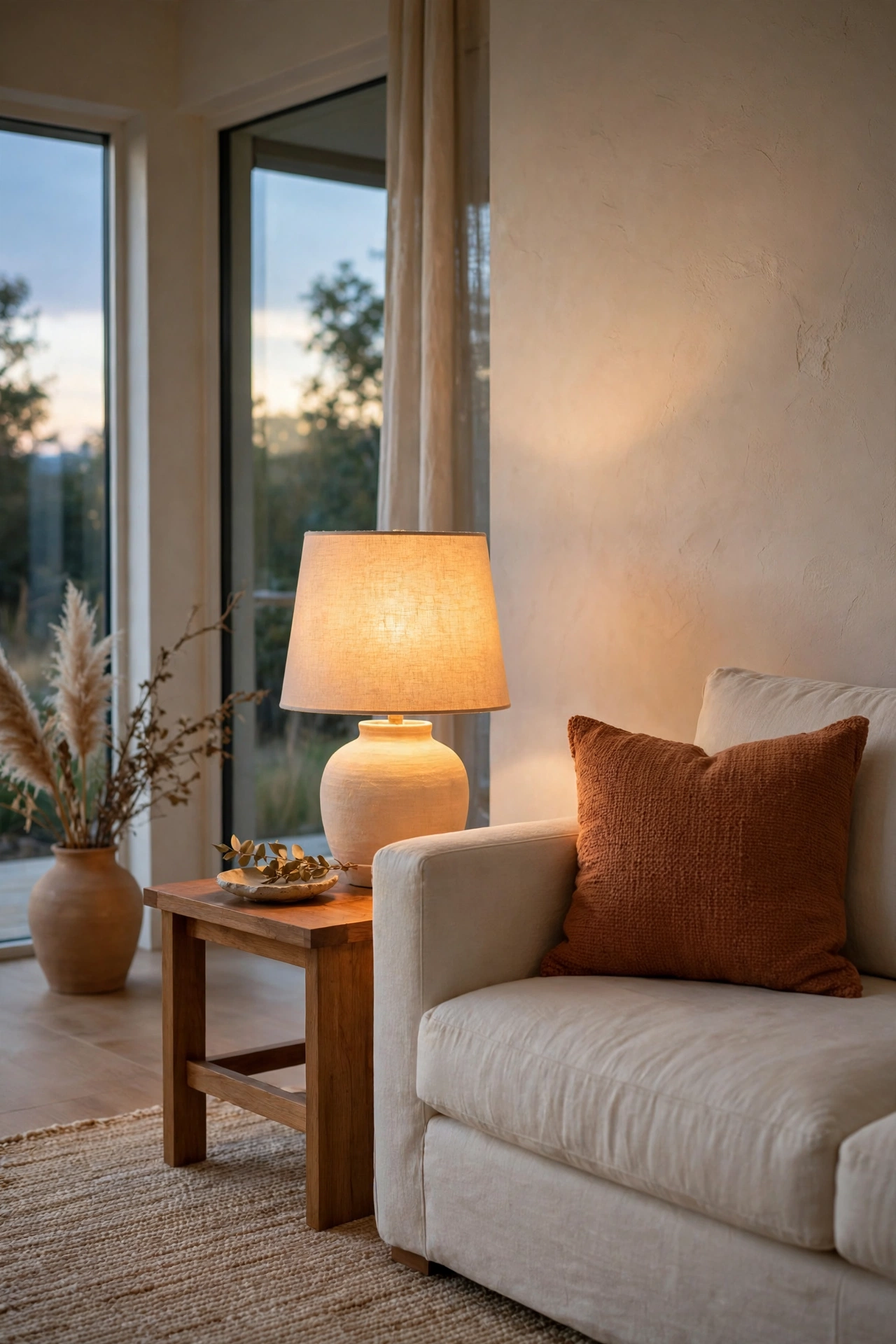
Lighting is the quickest mood change you can make without painting a single wall. Warm bulbs near 2700K give a gentle golden glow, while cool white light can make a room feel like a waiting room. Aim for two or three light sources, such as a table lamp, a floor lamp, and a soft wall sconce.
Choose shades in linen, paper, or frosted glass so the light stays soft and kind. Finish with small details that keep the room calm, like hidden cords, a basket for clutter, and one scent you love, such as cedar, hinoki, or clean laundry. A warm lamp can make an ordinary room look intentional in one evening.
8. Make It Yours with Sentimental Pieces and Natural Finds
Wabi sabi is not meant to look copied from a photo. It should feel like you live there, because you do. Keep one sentimental thing out where you see it daily, such as a favorite mug, a framed note, or an inherited bowl. That single piece tells your story better than a shelf full of new decor.
Use your own colors too. If you love soft blue, use it, since wabi sabi is not a beige cult. Add something from outdoors, like a stone, a branch, or dried flowers, and let time show in the room. Patina on wood, wrinkles in linen, and small scuffs on floors are character, not failure.
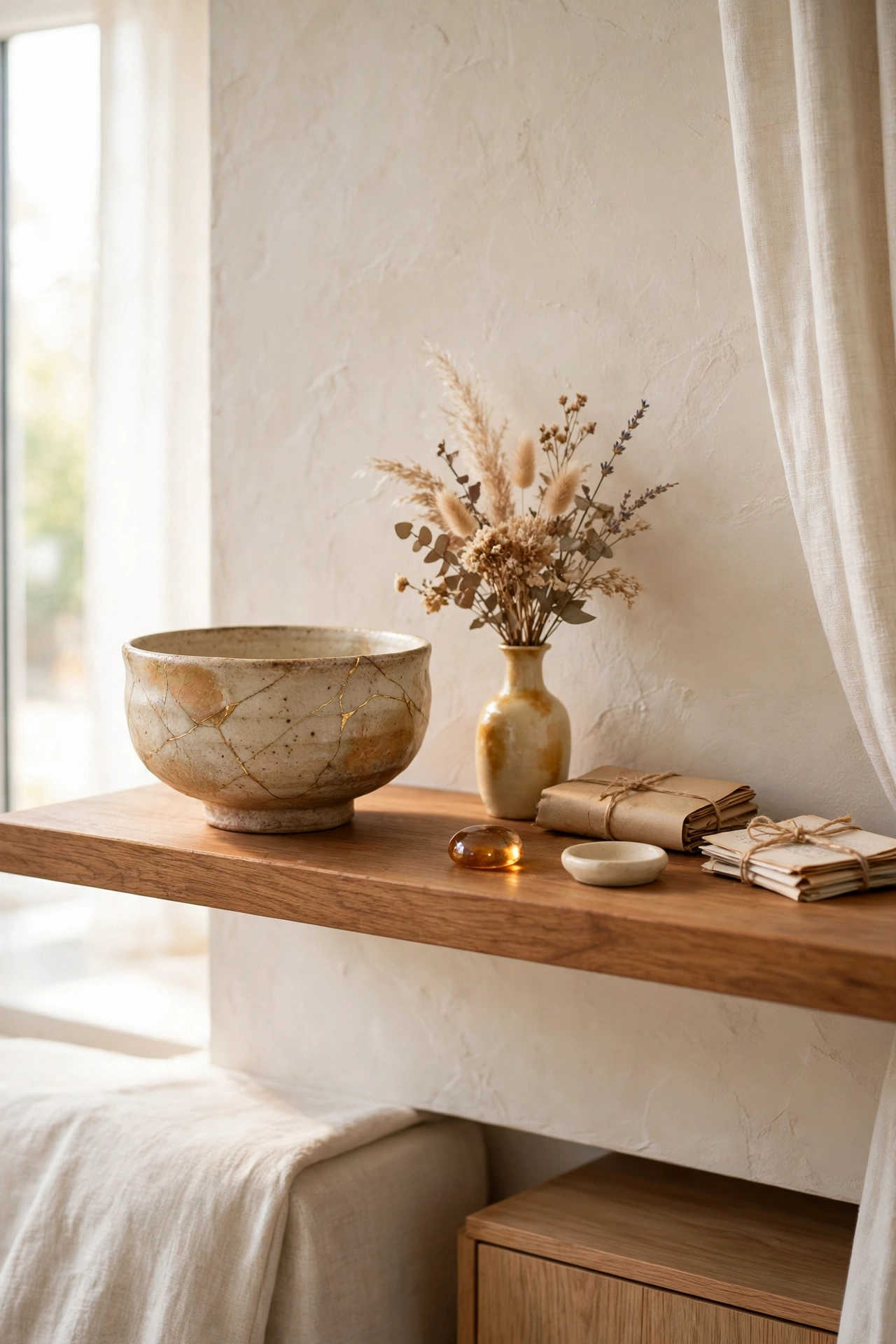
9. Use Less but Better in Small Spaces and Apartments
Small spaces can look amazing in this style, because the whole point is less but better. Choose furniture with legs so the room feels lighter, or pick one low piece that opens up the floor. Use one rug that fits the room properly instead of two tiny ones that look confused, and keep surfaces mostly clear, since small rooms turn chaotic fast.
A simple setup works wonders: a neutral sofa, a jute rug, one wood coffee table, linen curtains, and one big plant. That is the whole room, and it still feels cozy, since cozy does not require piles. For more small home layout ideas, see these small loft apartment layout ideas.
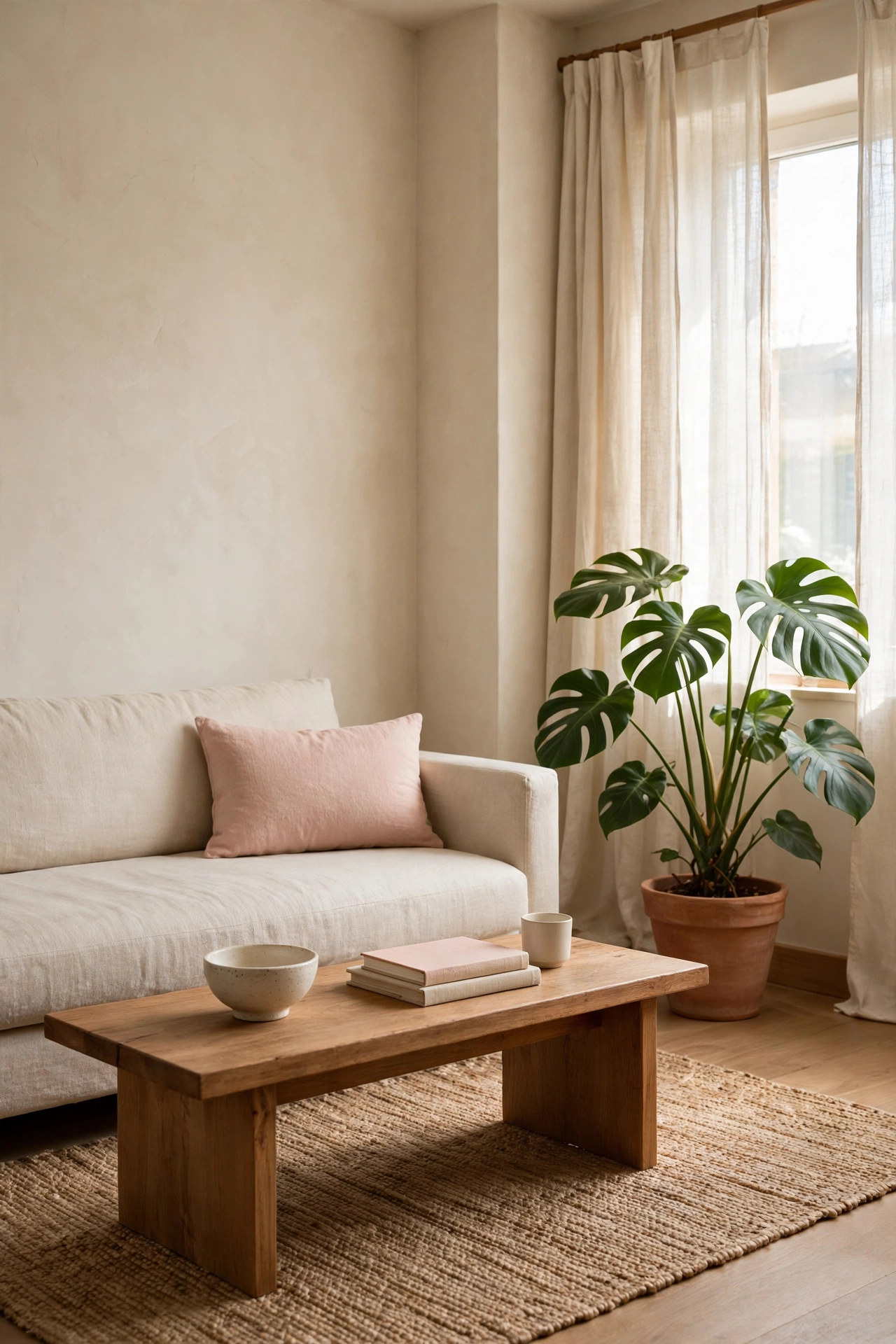
10. Refresh on a Budget with Thrifted Finds and Simple DIY
You do not need a large budget for this style. You need patience, which is annoying but true. Thrift stores are gold for solid wood, baskets, and ceramics, and chips are on theme here, so do not pass over a piece with a small flaw. A cotton curtain in warm white can give a linen look when real linen costs too much.
Try slow decor and buy one good item per month instead of panic buying a cart full of things. An easy project is to sand and oil a scratched wood table, which will look intentionally rustic instead of tragic. For more eco friendly ideas that save money, see these sustainable home decor ideas. Even simple air dry clay bowls can look surprisingly expensive when they are handmade.
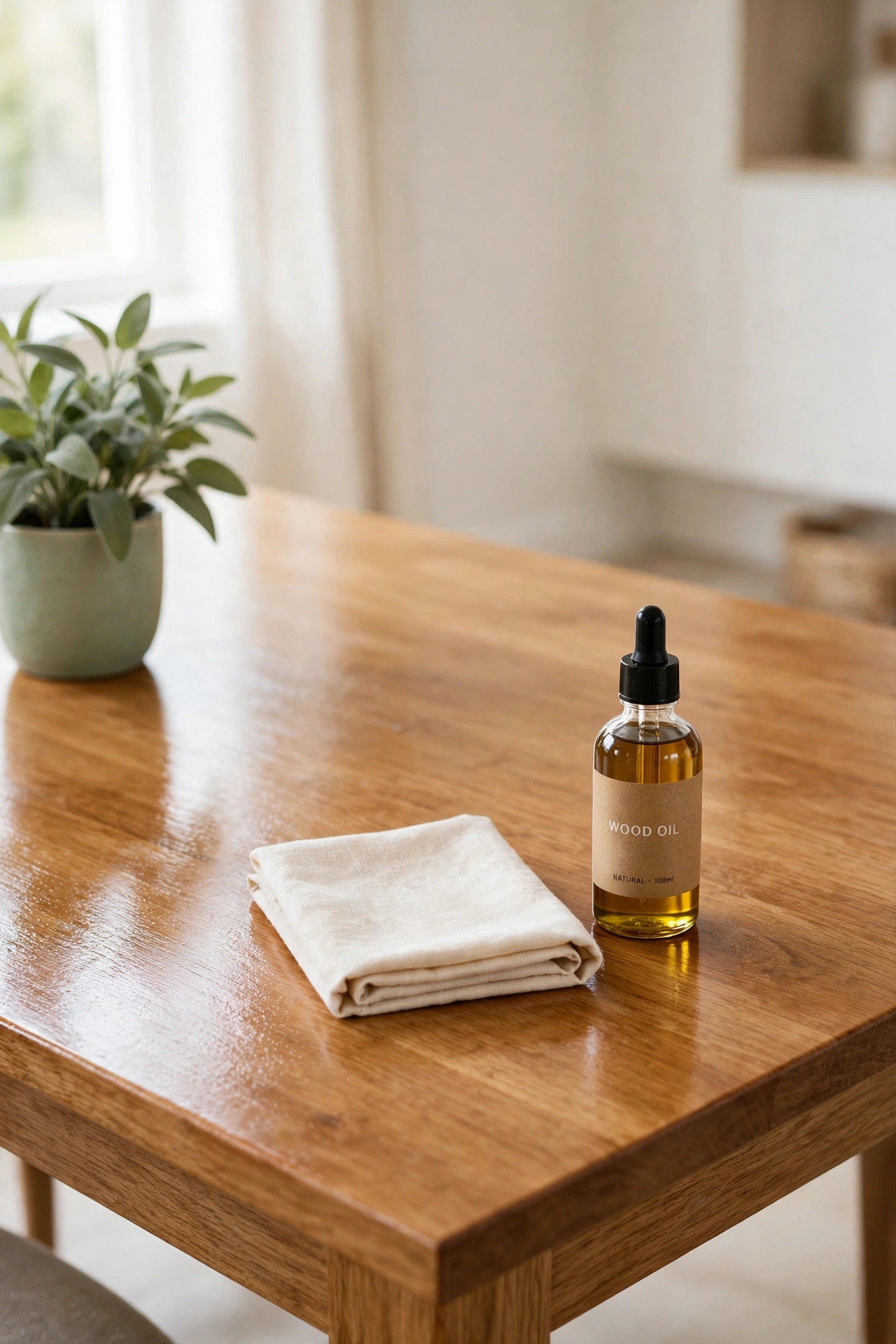
11. Keep It Renter Friendly with No-Drill Changes
Renters deserve calm homes too, and this style needs no drilling or very little of it. Peel and stick hooks hold light art and simple hangings without marks on the wall. Soft textiles do most of the work, so swap in new curtains, bedding, pillow covers, and a better bath mat.
Add floor lamps instead of fighting with overhead lighting, and try removable wallpaper in a subtle texture instead of loud patterns. One big mirror leaned against a wall looks chic and asks for no commitment at all. With light, textiles, and furniture layout alone, you can change the whole mood without changing the walls.
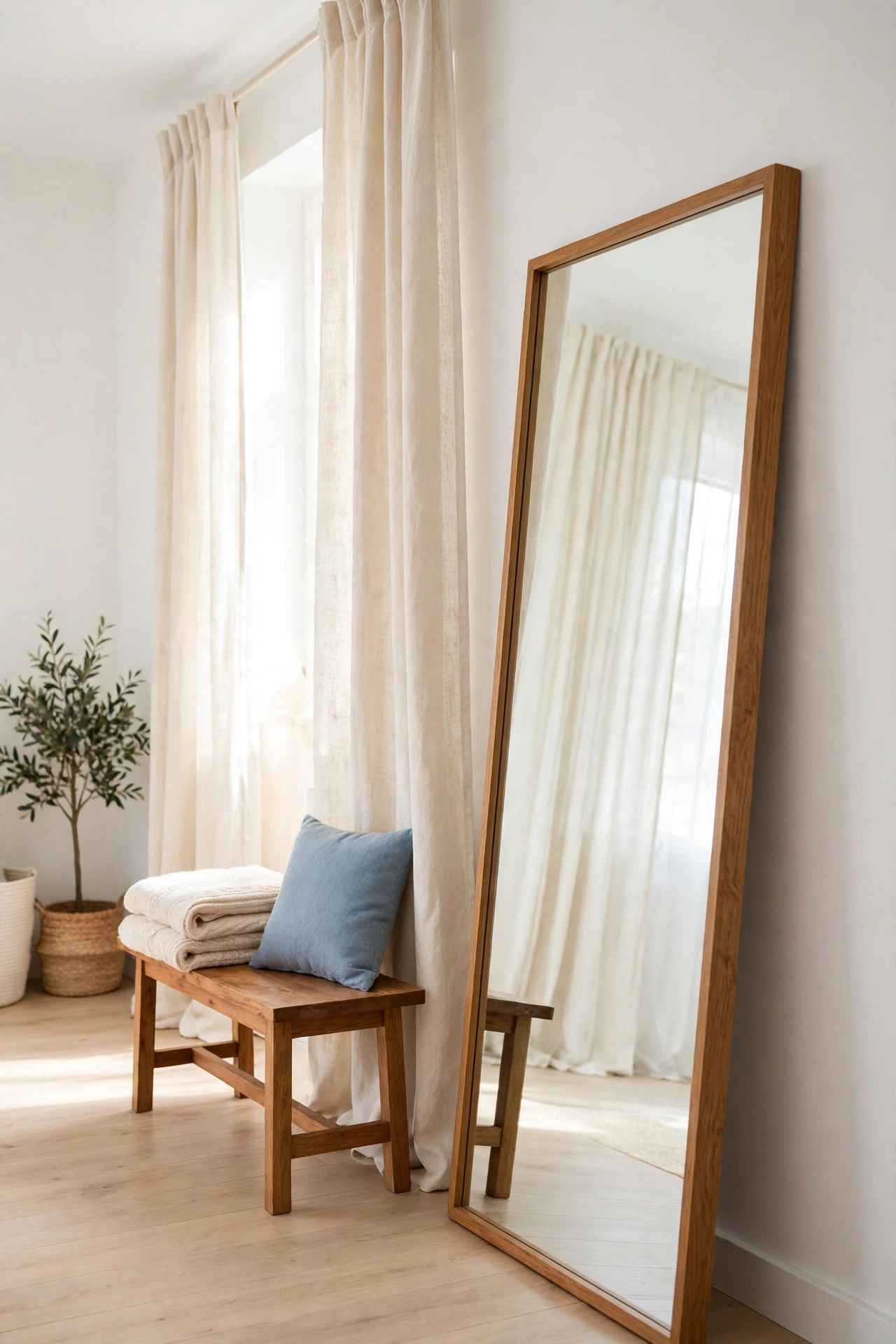
12. Avoid the Common Wabi Sabi Mistakes
A few mistakes can spoil an otherwise calm room, and they are easy to avoid once you know them. The first is buying wabi sabi decor while keeping all your old clutter, since this style needs space to work. The second is going too beige and forgetting contrast, so add wood tones, charcoal, or greenery to keep the room alive.
The third mistake is making everything match perfectly, since the charm lives in the mix. The fourth is ignoring comfort, because a room can be minimal and still feel like a hug. If a room looks cold, add texture and warmer lighting first, and the warmth will follow.
13. Refresh with the Seasons and Style for the Long Term
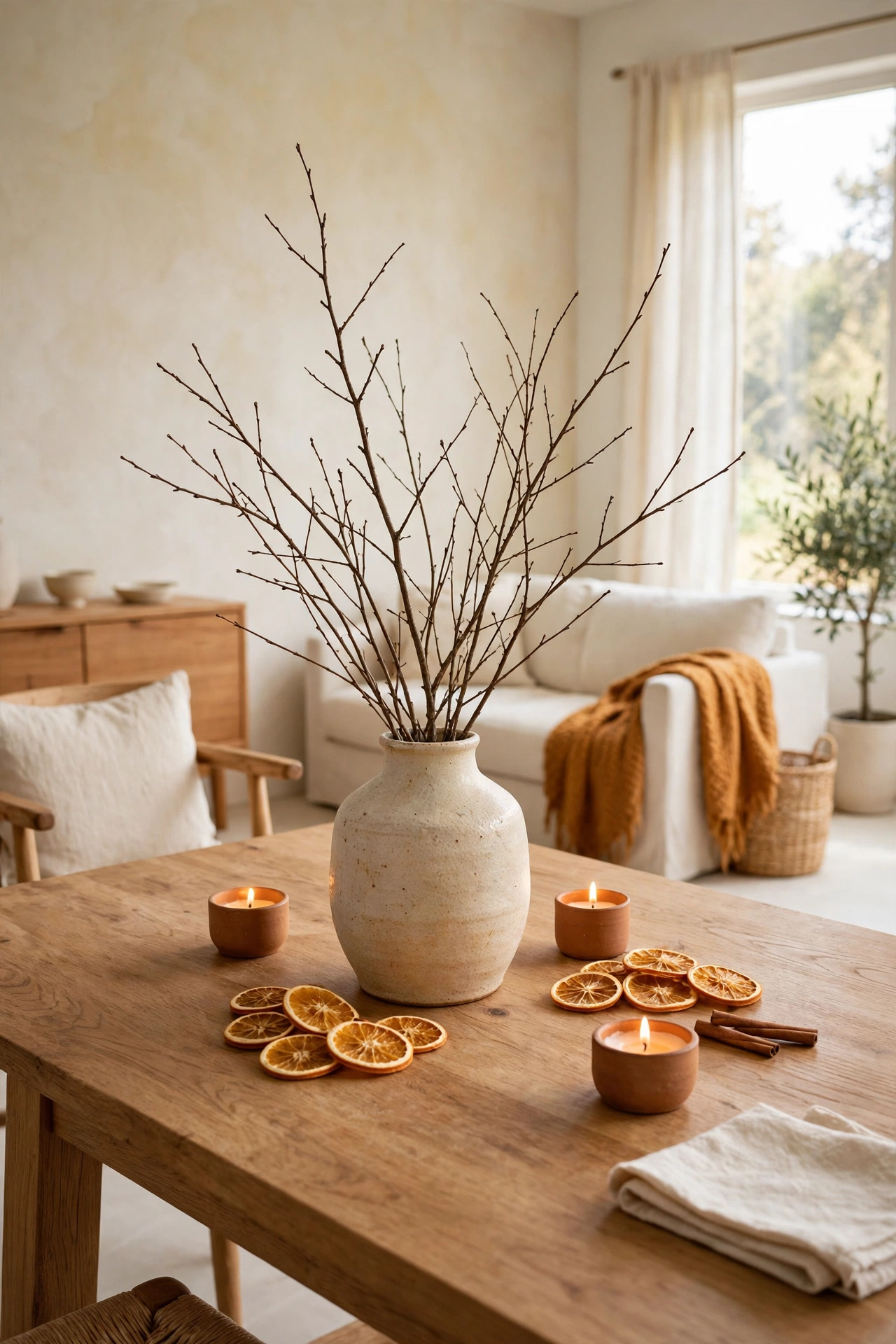
This style is perfect for the seasons because it stays flexible and asks for no new bins of decor every time. Swap textiles as the year turns, with lighter linen in summer and wool throws in winter. Use nature as your guide and bring in branches, dried oranges, pine, or even a bowl of nuts on the table.
Keep holiday decor simple and natural, and a few candles with a wreath near the window is plenty for winter light. The long term rule is simple: if you do not love a piece next year, you probably did not love it this year either. Buy slowly, keep what lasts, and let the home grow calmer with every season.
14. Display Handmade Ceramics with Visible Flaws and Gold Repairs
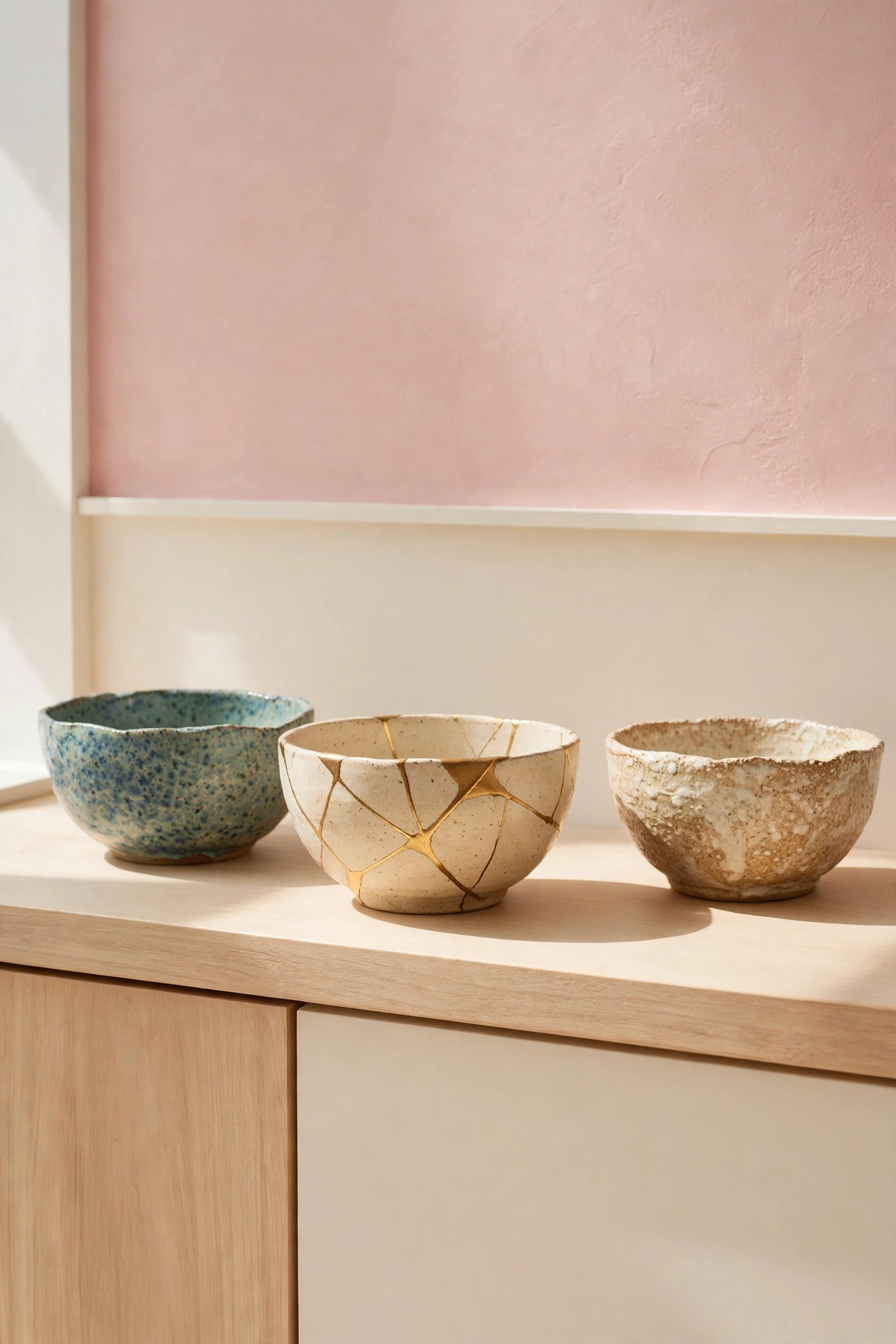
Handmade ceramics are the heart of wabi sabi, because no two pieces ever come out the same. A bowl with an uneven rim, a glaze that pools in one corner, or a thumbprint left by the maker carries the story of its making. Display these pieces where you see them daily, on an open shelf or beside the sink, instead of hiding them in a cupboard.
When a favorite bowl cracks, repair it with gold using the kintsugi method instead of throwing it away. The gold seam turns the break into the most beautiful part of the piece. A small collection of flawed and mended ceramics tells guests that your home values history over perfection.
15. Choose a Live-Edge Wood Table That Shows Knots and Grain
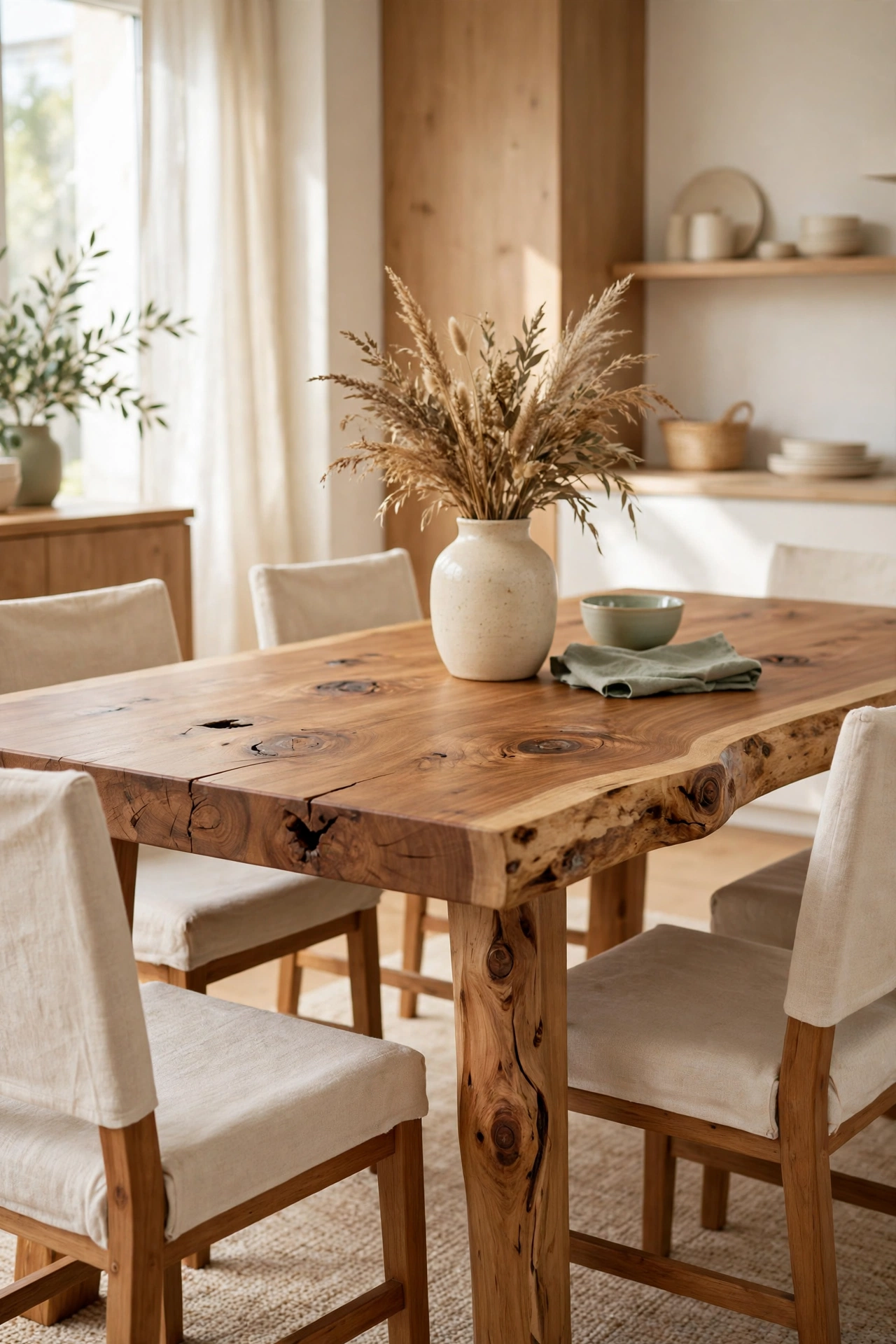
A live-edge wood table keeps the natural edge of the tree, with knots, grain, and gentle curves that no factory can copy. The slab becomes the centerpiece of the dining room or living room, and every meal or quiet evening happens around a piece of nature. Sand the surface smooth enough for daily use, then oil it so the grain glows.
Pair the table with simple chairs in linen or plain wood so nothing competes with the slab. Over time the wood will darken and gain small marks from daily life, and each one adds to its beauty. A live-edge table is wabi sabi at its best, because it celebrates the tree exactly as it grew.
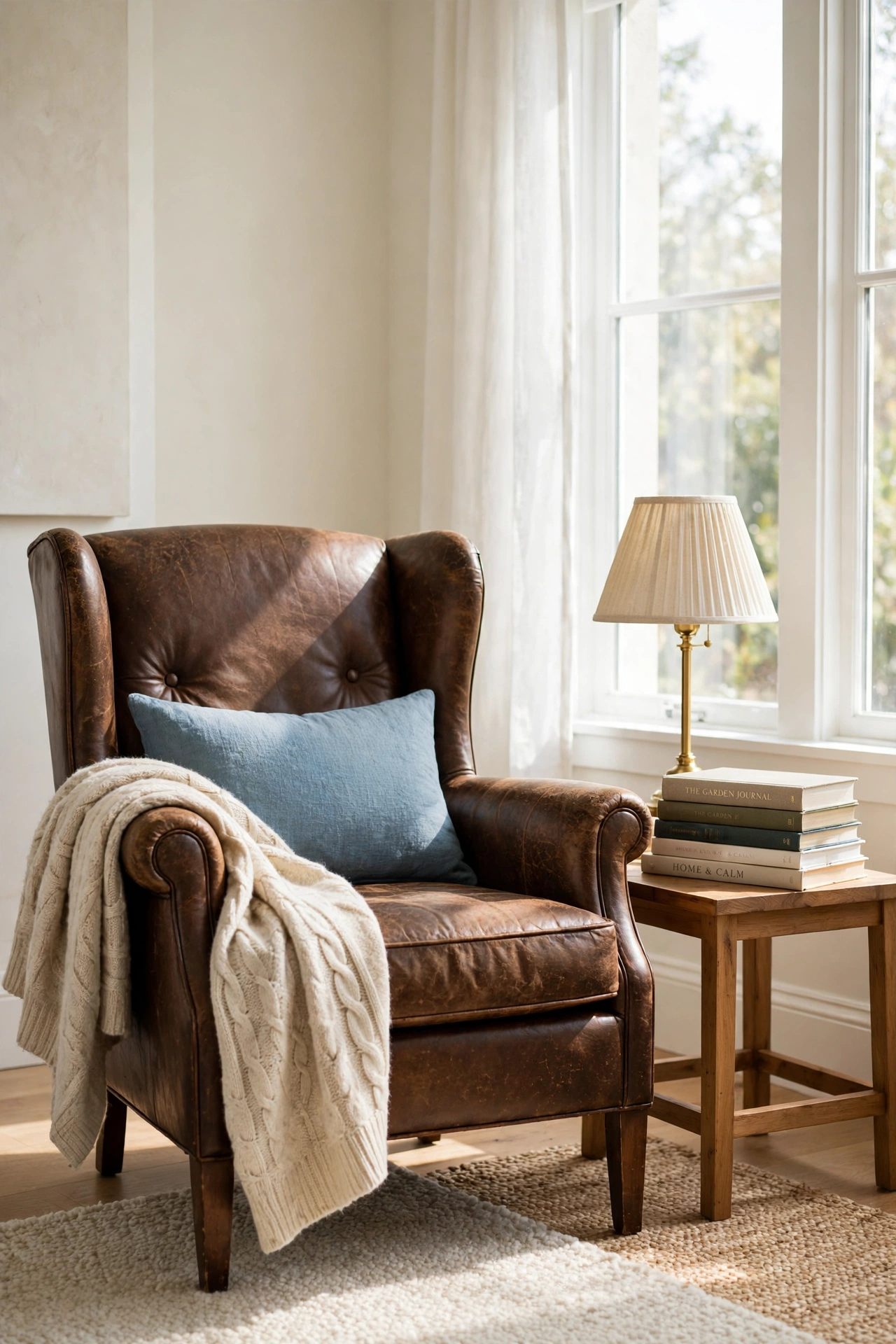
16. Create a Quiet Reading Corner with a Worn Chair and Wool Throw
A quiet reading corner needs very little to feel complete. Place a worn leather or linen chair near a window, add a small side table and a reading lamp, then drape a soft wool throw over the arm. The worn seat and the creased leather show years of comfortable use, which is exactly the feeling this style loves.
Keep a small stack of books on the side table and nothing else. The corner works in a bedroom, a living room bay window, or a quiet hallway, and it asks for no new furniture at all. One calm chair in good light can become the favorite spot in the whole house.
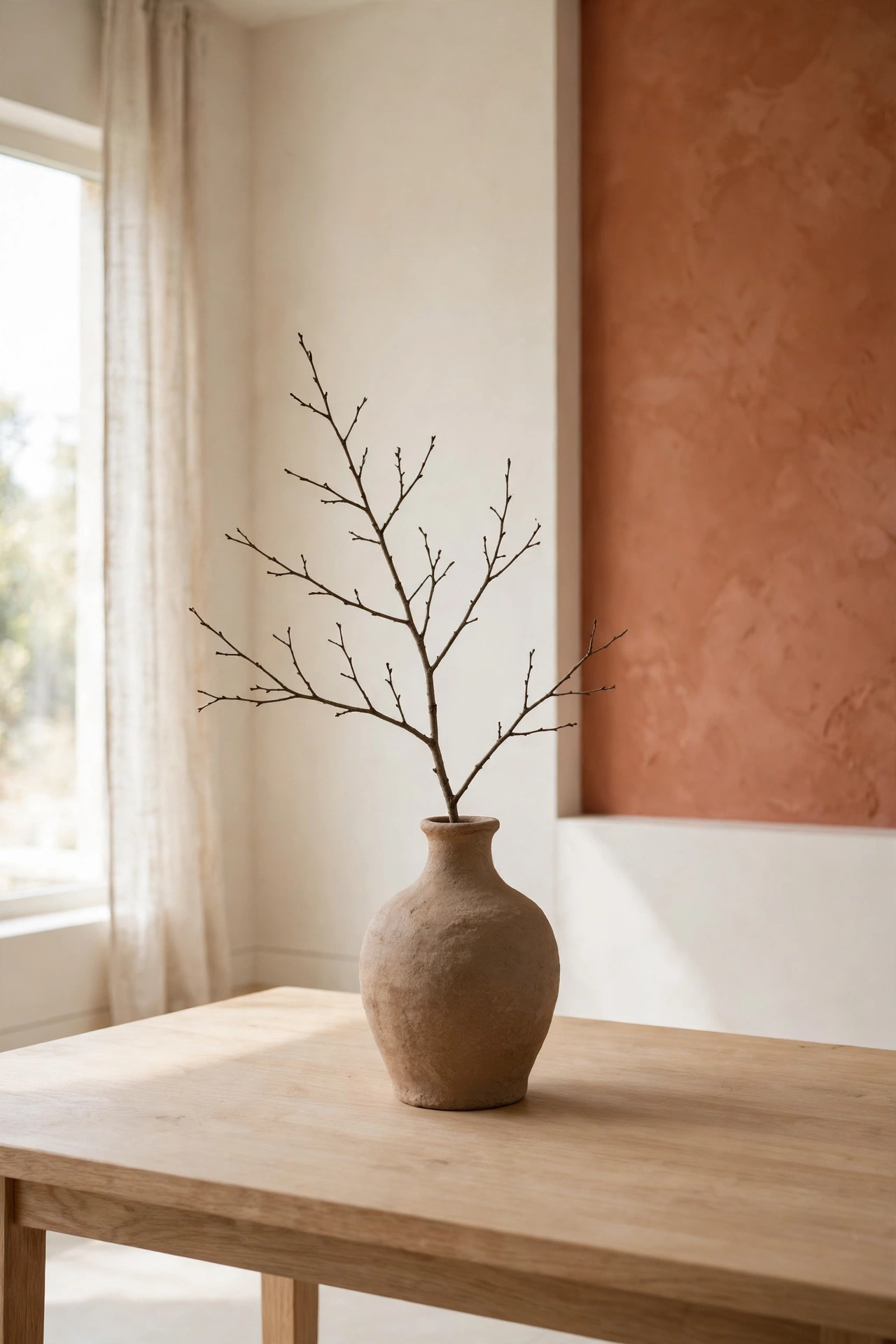
17. Style a Single Branch in a Clay Vase
One branch in a clay vase can hold a whole room together. Choose a bare branch, a flowering stem, or a sprig of eucalyptus, and place it in a simple unglazed vase on a table or shelf. The empty space around the stem matters as much as the stem itself, so do not crowd it with other objects.
Change the branch with the seasons and let the arrangement stay simple all year. A cherry branch in spring, a maple stem in autumn, and a pine sprig in winter each bring the outdoors inside without any fuss. This single stem is the purest form of wabi sabi decor.
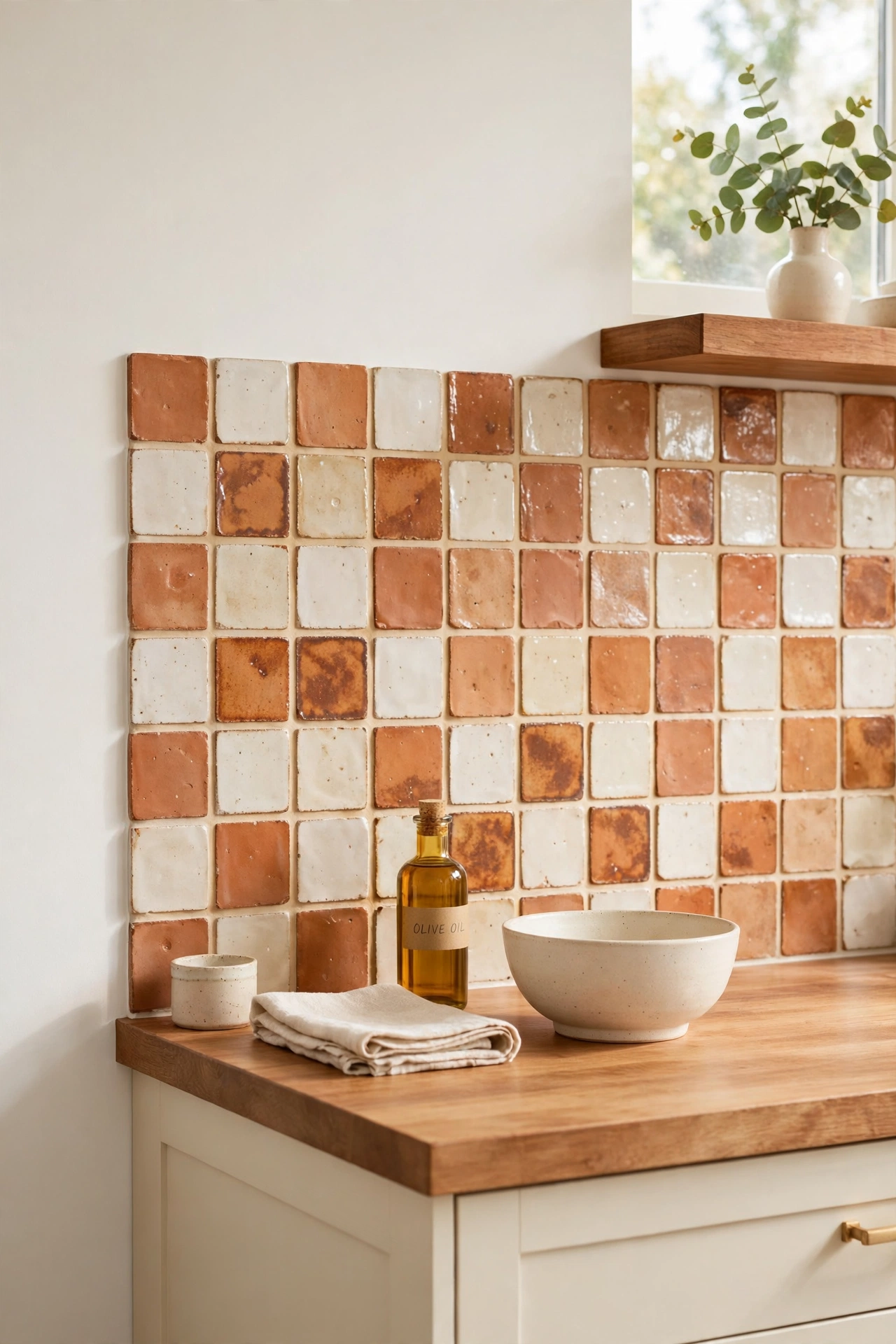
18. Add Handmade Clay Tiles to the Kitchen Backsplash
Handmade clay tiles bring wabi sabi into the hardest working room in the house. Each tile differs slightly in color, thickness, and glaze, so the finished backsplash shimmers with quiet variation instead of flat perfection. Warm terracotta, cream, or soft sage tiles all suit the style.
Use the tiles as a full backsplash or as a single band behind the stove, and keep the counters simple in warm wood or stone so the tiles stay the star. Seal the tiles well so they resist stains and stay easy to clean. A handmade tile backsplash turns daily cooking into a small pleasure.
Conclusion
Wabi sabi interior design does not have to be expensive or complicated. From a warm neutral palette and low wooden furniture to handmade ceramics and a single branch in a clay vase, there is an idea here for every home and every budget. The best rooms grow slowly, one loved piece at a time, until the whole home feels settled and calm.
Pick one or two ideas that fit your home and start today. Clear one surface, add a natural texture, or hang one piece of art that you truly love. For a calm home beyond the decor, these nightly reset routine ideas will help you keep every room organized with just a few minutes each evening.
Frequently Asked Questions About Wabi Sabi Interior Ideas for Imperfect Beauty
What is wabi sabi interior design?
Wabi sabi interior design is a Japanese inspired style that finds beauty in imperfection, age, and natural materials. It uses warm neutrals, wood, linen, clay, and stone, with few items and plenty of empty space. The style values calm, honesty, and pieces that grow more beautiful as they age.
Which colors work best in a wabi sabi home?
Warm whites, beige, clay, olive, brown, and soft charcoal work best in a wabi sabi home. Keep the palette soft and a little earthy, like a foggy morning, with one dark accent for contrast. The colors should feel gentle together and let the texture of wood and fabric shine.
Can wabi sabi style work in a small apartment?
Yes, wabi sabi style suits small spaces very well, since the whole idea is less but better. Choose fewer and larger pieces, keep surfaces mostly clear, and use one rug that fits the room properly. A neutral sofa, a jute rug, one wood table, and one large plant can fill a small home with calm.
How do I add wabi sabi style on a budget?
Start with thrift stores for solid wood, baskets, and ceramics, since chips and wear are part of the look. Spend money on the things you touch daily, like a good rug, curtains, or bedding. Sand and oil a scratched table, swap in warm light bulbs, and add one natural element at a time.
How do I keep a wabi sabi room from looking unfinished?
Balance the empty space with warmth and contrast. Add wood tones, a charcoal accent, or greenery so the room does not turn flat beige. Layer linen and wool for texture, use warm lighting, and keep one meaningful focal point. Comfort is the test: if the room feels like a hug, it is finished.

Hi, I’m Emily! I turn messy corners into cozy, organized spots. DreamNestDecor is where I share simple, practical home ideas — decor, organization, and small-space solutions that work in real life, not just in photos. Every idea here is carefully researched before it’s shared.