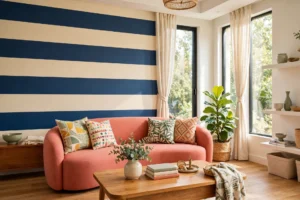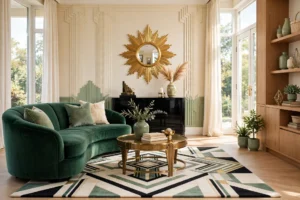
Picture this: you walk into your living room after a long day, and the room greets you with soft light, warm wood, and clean open space. Nothing shouts for attention, yet every piece feels chosen with care. That quiet calm is exactly what Japandi style gives a home, and it works in every room from the kitchen to the bedroom.
You do not need a full renovation or a big budget to get there. All you need is a simple plan built on natural materials, soft neutrals, and furniture that earns its place. These 29 Japandi interior design ideas will help you bring the calm of Japanese minimalism and the warmth of Scandinavian comfort into your home, one thoughtful change at a time.
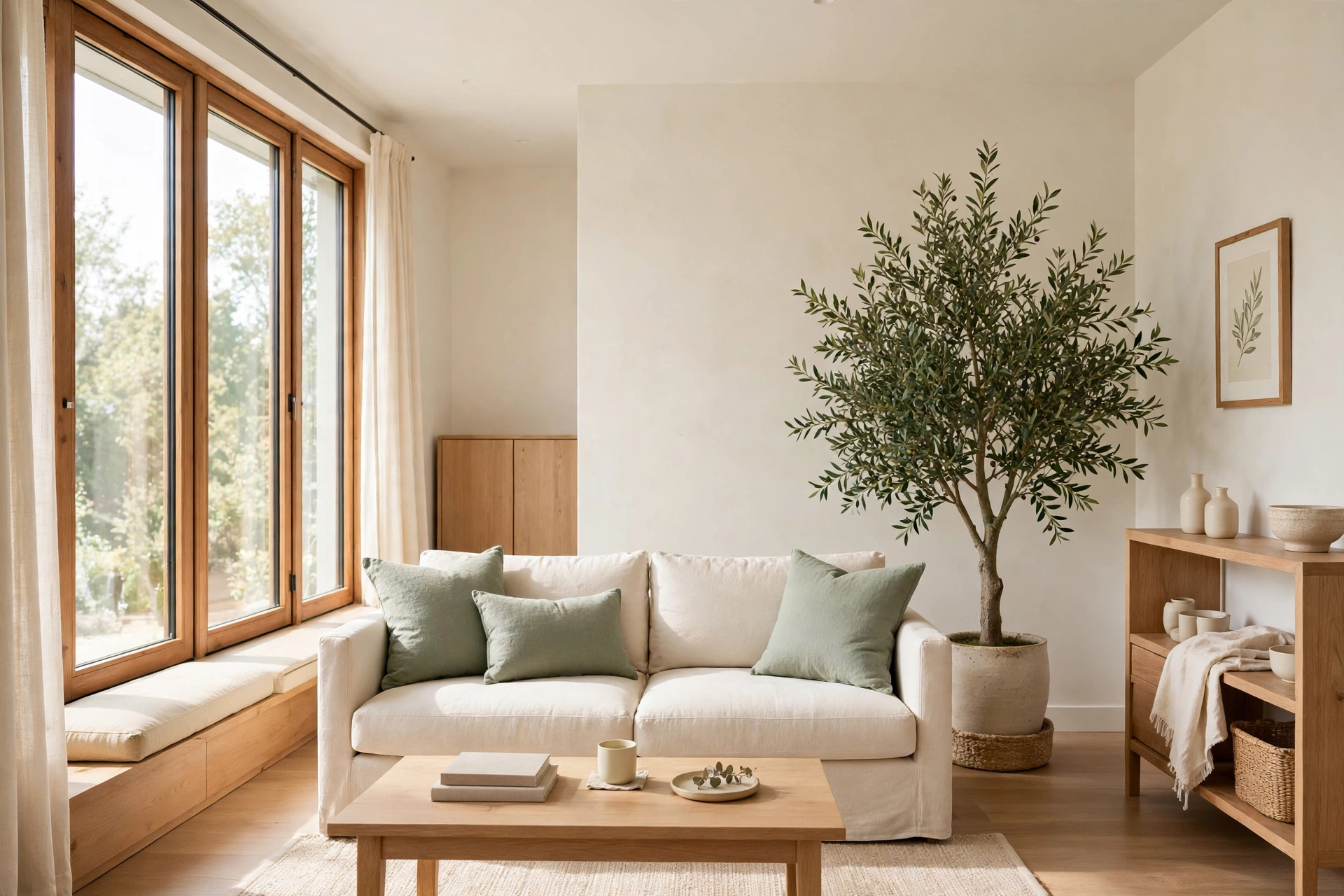
1. Create a Calm Neutral Living Room
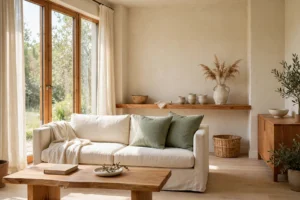
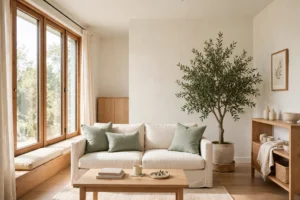
A neutral living room is the perfect foundation for a Japandi home. Start with soft beige, warm white, and muted gray tones on the walls and the largest pieces of furniture. These quiet colors make the room feel open and calm, and they let the beauty of wood grain and fabric texture do the talking.
Choose a light oak coffee table and a cream sofa with clean lines, then keep the rest of the room simple. Leave windows free of heavy curtains so natural light fills the space all day. A neutral base also makes it easy to change small details with the seasons without repainting a single wall.
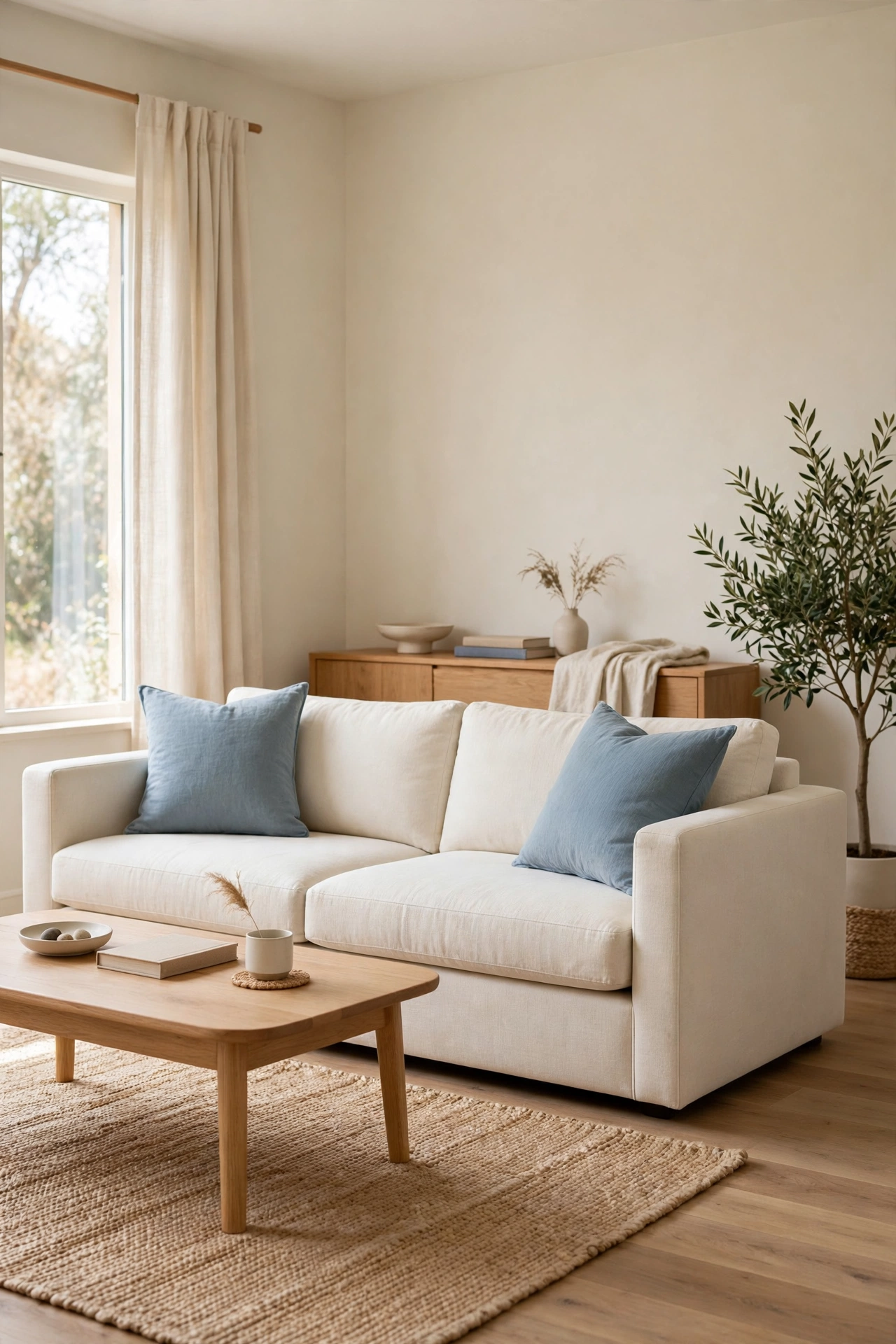
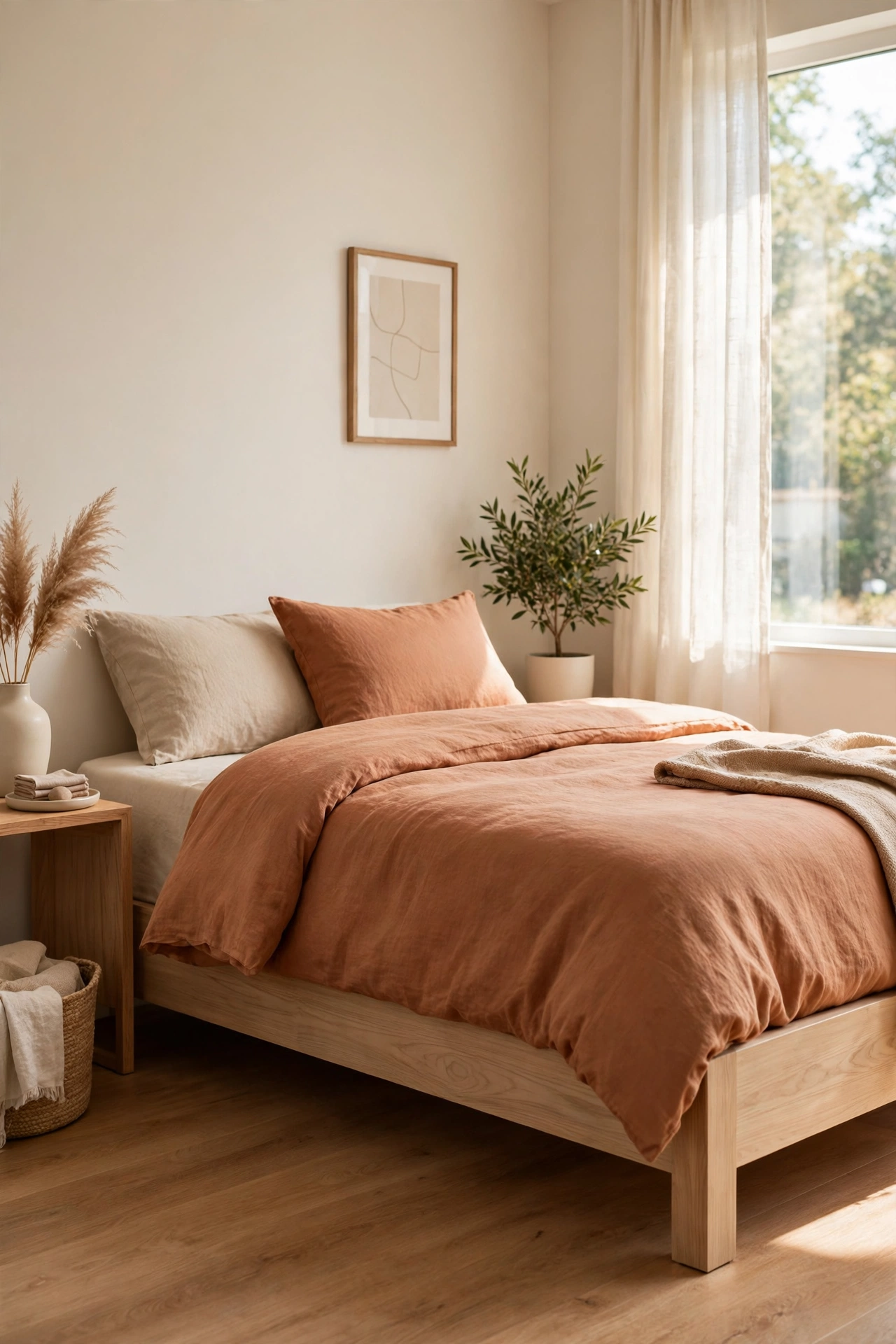
2. Choose a Low Profile Bed Frame
A low profile bed brings the whole bedroom closer to the ground, which makes the room feel larger and more peaceful. Pick a solid wood frame in walnut or light ash with a simple shape and no tall headboard. The low silhouette clears visual clutter at eye level and helps the mind rest in the evening.
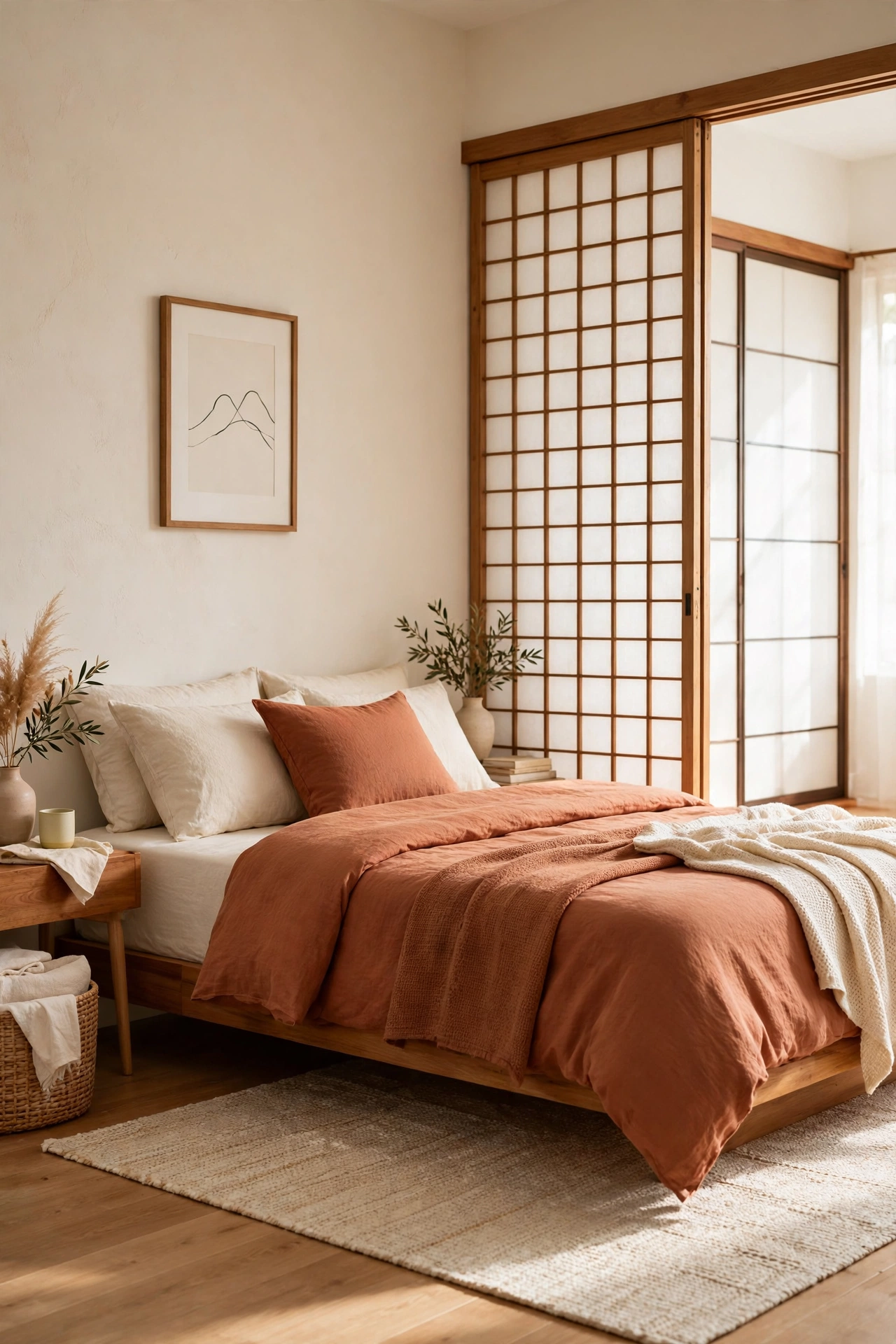
Pair the frame with plain linen bedding in earthy tones like sand or soft terracotta. Keep the bedside tables small and free of clutter, with only a lamp and a book on top. When the bed sits low and the room stays simple, sleep comes easier every single night.
3. Add a Slatted Wood Feature Wall
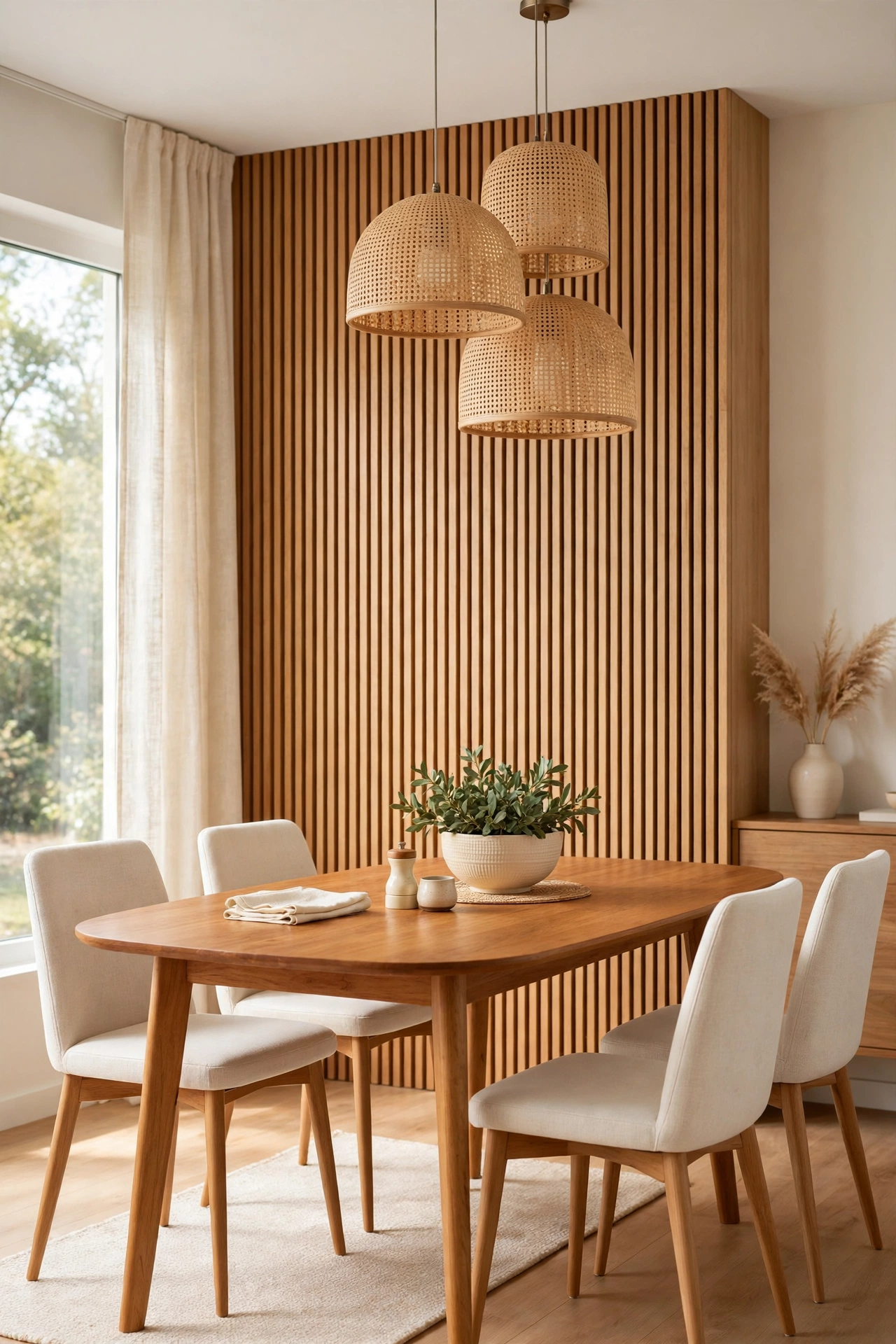
A slatted wood wall adds depth and texture to a room without adding a single decorative object. Vertical wood strips create a gentle rhythm that draws the eye upward and makes the ceiling feel taller. Light colored wood keeps the look warm and natural.
Place the slats behind a dining table or use them as a headboard wall in the bedroom. The small gaps between the strips catch soft shadows that shift as the sun moves through the day. This one feature makes a plain wall feel custom and high end, yet it stays true to the Japandi love of simple materials.
4. Design a Minimalist Dining Space
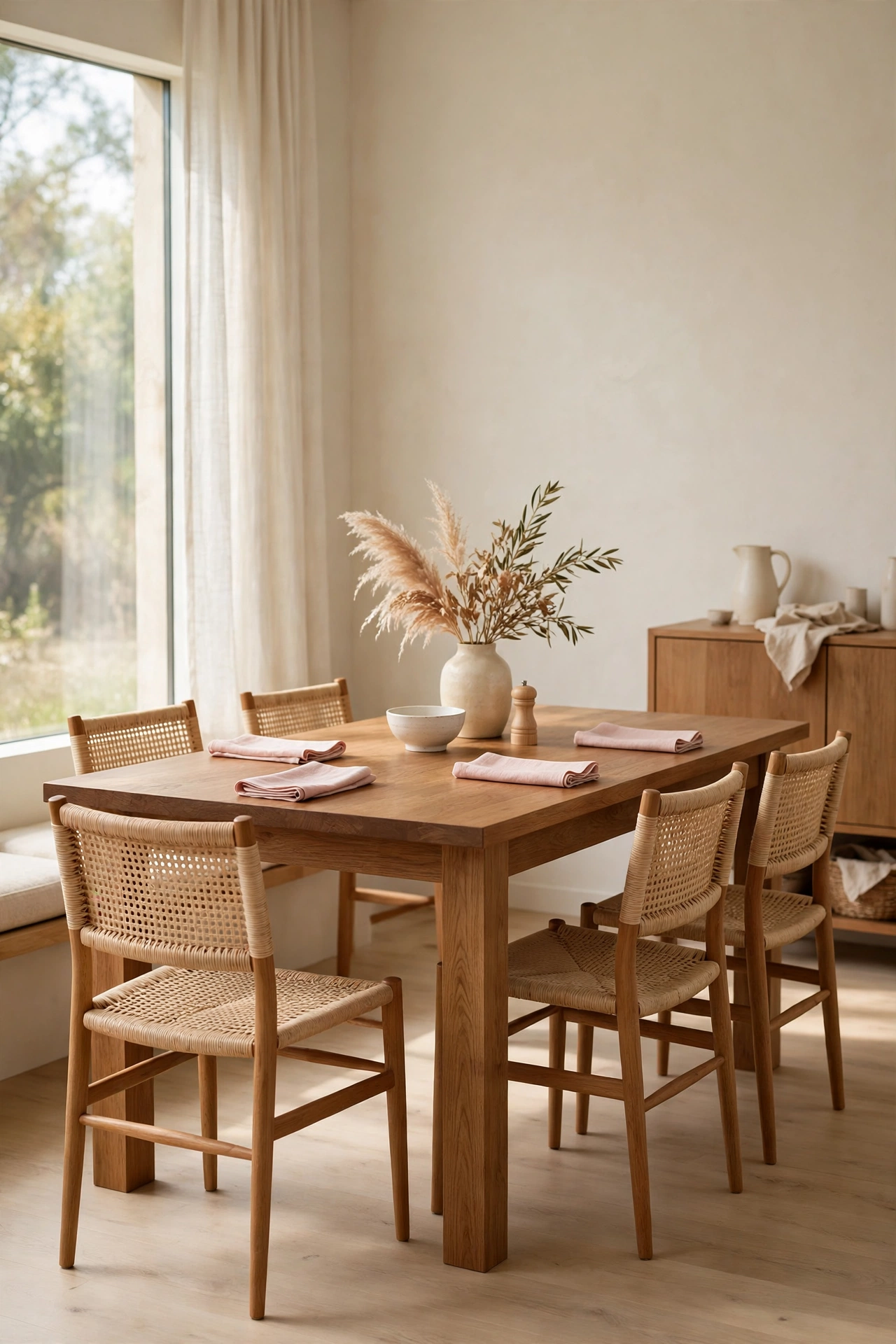
A minimalist dining area puts the focus on the meal and the people around the table. Choose a large solid wood table with a matte finish as the centerpiece, then surround it with chairs that have simple shapes and woven seats. The mix of smooth wood and natural fiber gives the room warmth without any fuss.
Keep the table clear of heavy centerpieces and skip the large rug underneath. A single piece of abstract art or a plain wall clock is all the wall needs. When the room stays quiet and open, every dinner feels slower, calmer, and more mindful.
5. Build a Zen Bathroom Retreat
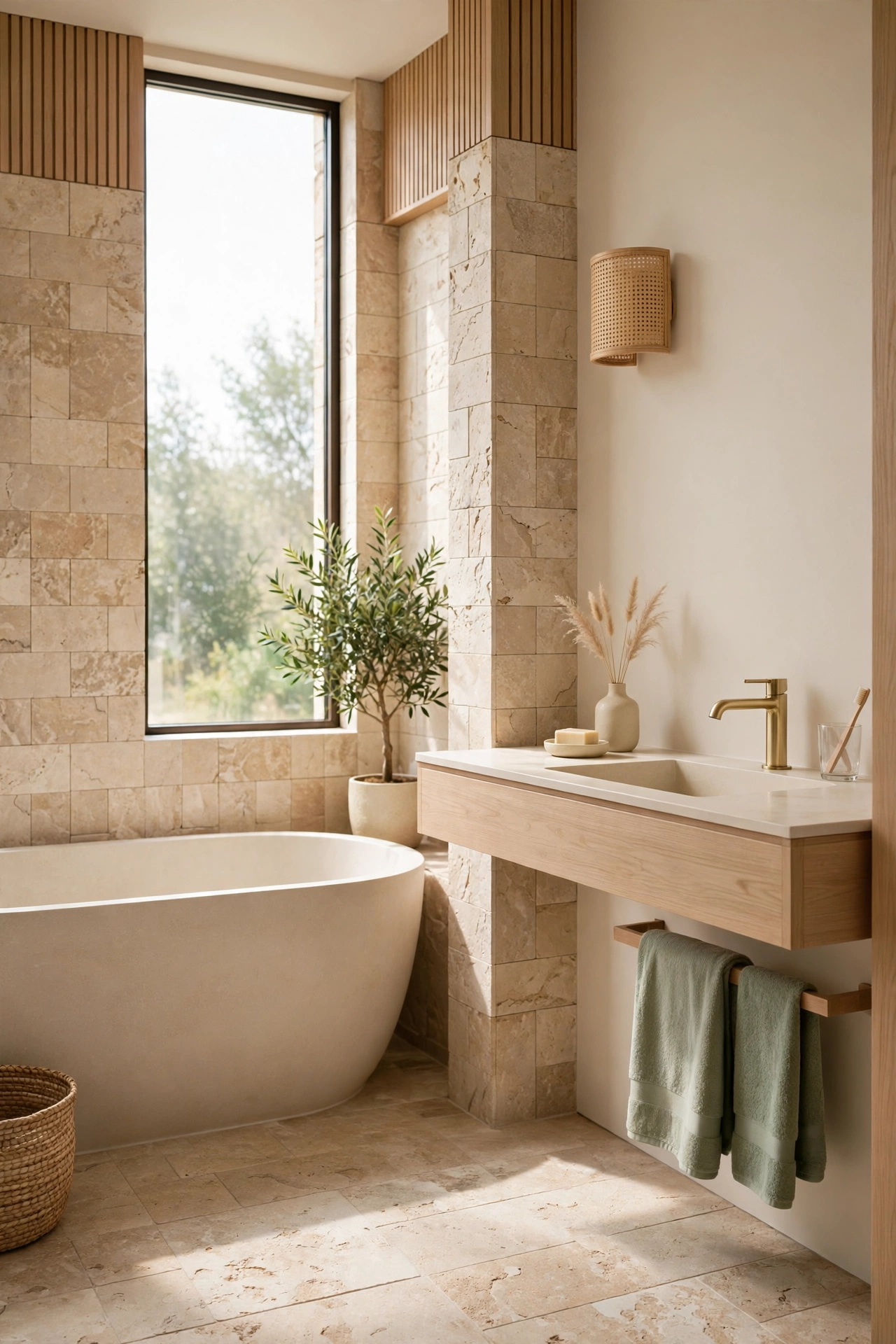
A zen bathroom turns a daily routine into a small spa visit. Use natural stone tiles, light wood, and a floating vanity to keep the layout open and clean. A deep soaking tub and a frameless glass shower keep the room feeling light and uncluttered.
Add pebble tiles on the floor for a gentle natural texture underfoot. Keep towels in neutral tones and store toiletries behind closed doors so the counters stay clear. Wooden bath accessories and a single green plant finish the look. The result is a quiet room that helps you slow down at the start and the end of each day.
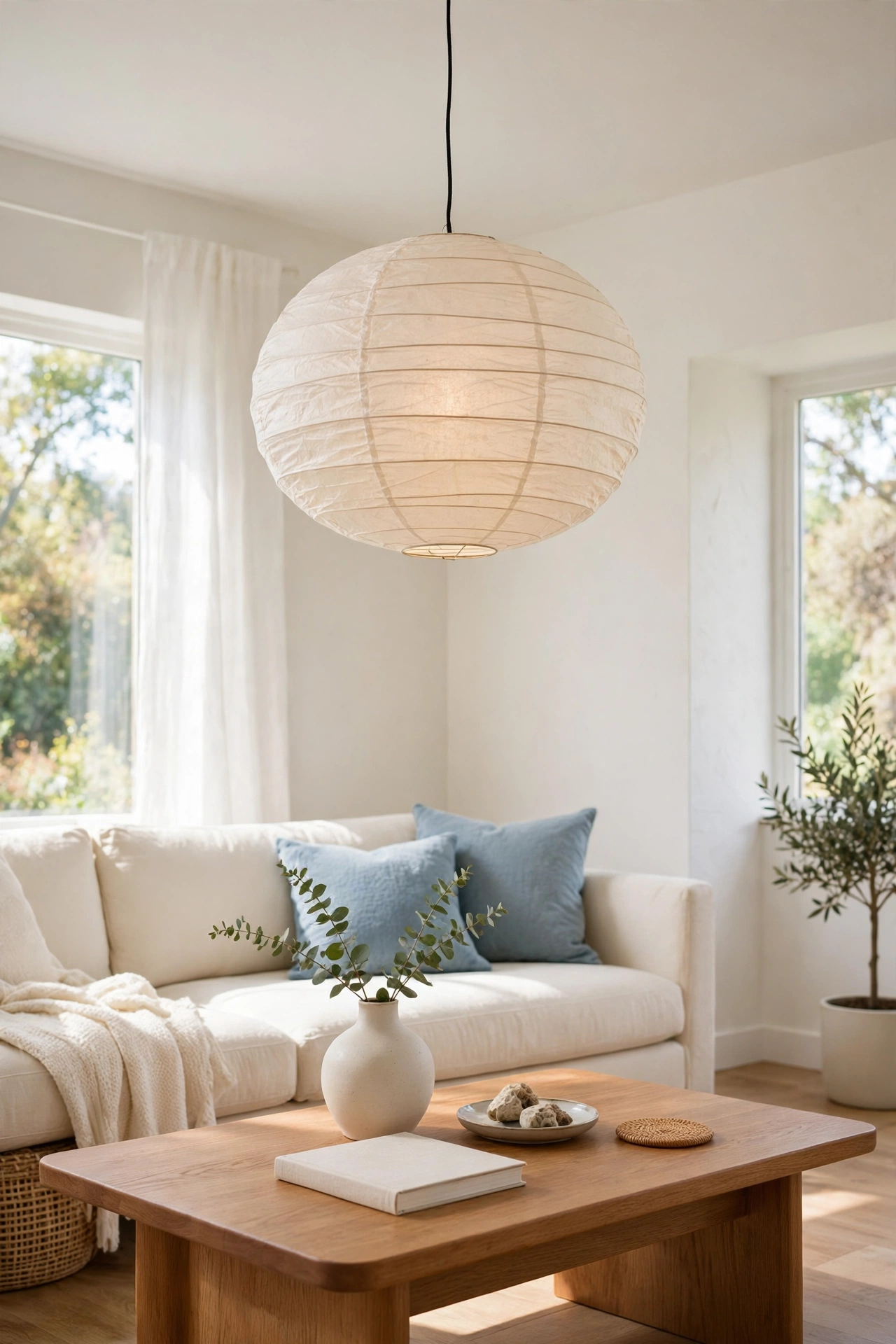
6. Hang Paper Lantern Lights
Paper lantern lighting is the most iconic way to bring a soft glow into a Japandi home. These large round fixtures are made from rice paper and bamboo, and they spread a gentle diffused light with no harsh shadows. One lantern over a coffee table or above the bed changes the whole mood of a room.
The round organic shape of the lantern contrasts beautifully with the straight lines of modern furniture. It adds a traditional Japanese touch that still feels fresh and current. A paper lantern is also an affordable change, yet it makes the room feel cozy, artistic, and balanced in a single step.
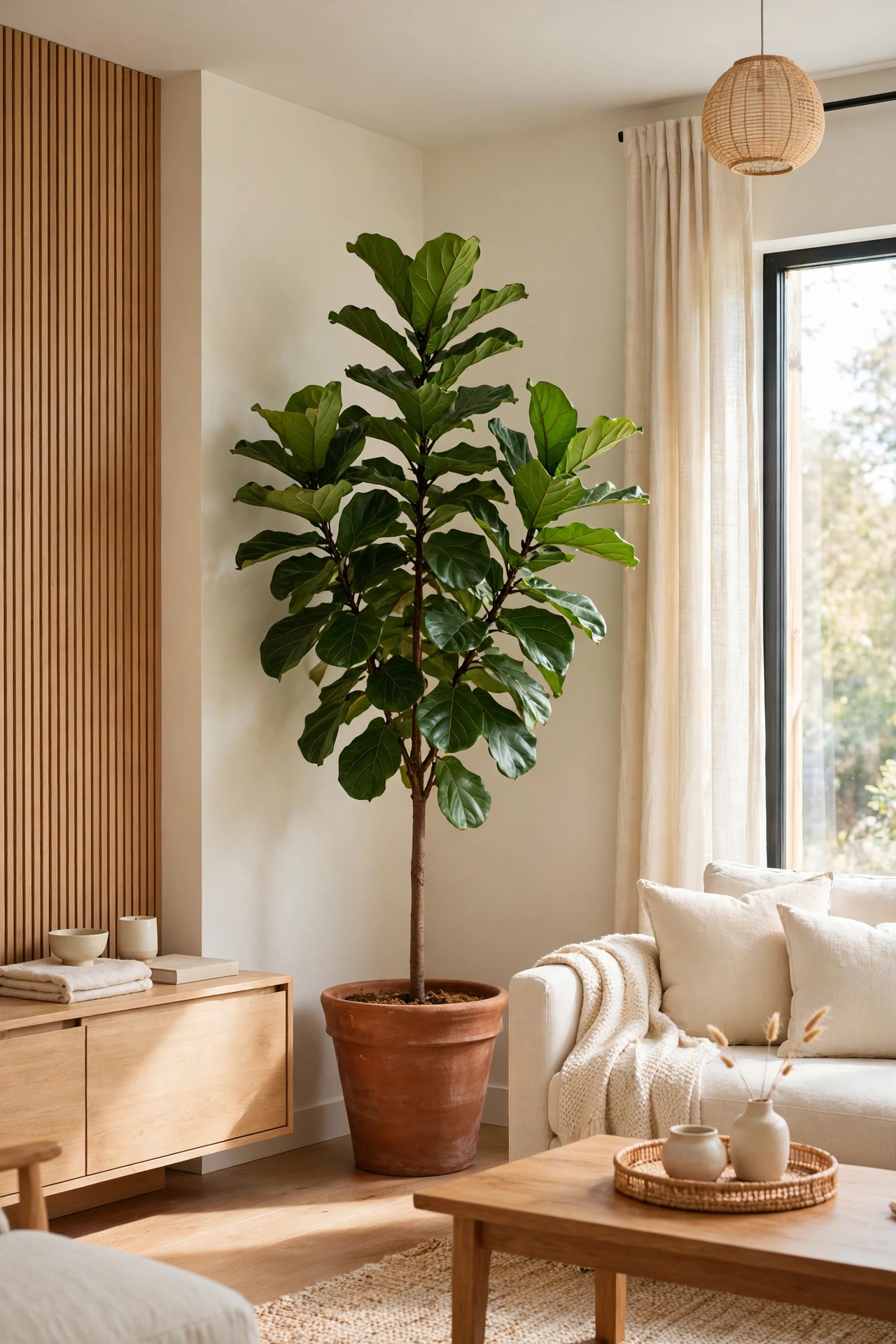
7. Bring in a Large Indoor Tree
A large indoor tree is the simplest way to bring nature into a minimalist home. A tall olive tree or a fiddle leaf fig in a corner fills empty vertical space and adds living green to a neutral palette. Set it in a large ceramic or terracotta pot that matches the earthy tones of the room.
This one bold plant acts like a living sculpture and needs no other decoration around it. Indoor greenery also helps the air feel fresher and the room feel more alive. It is the perfect bridge between the calm interior and the natural world outside the window.
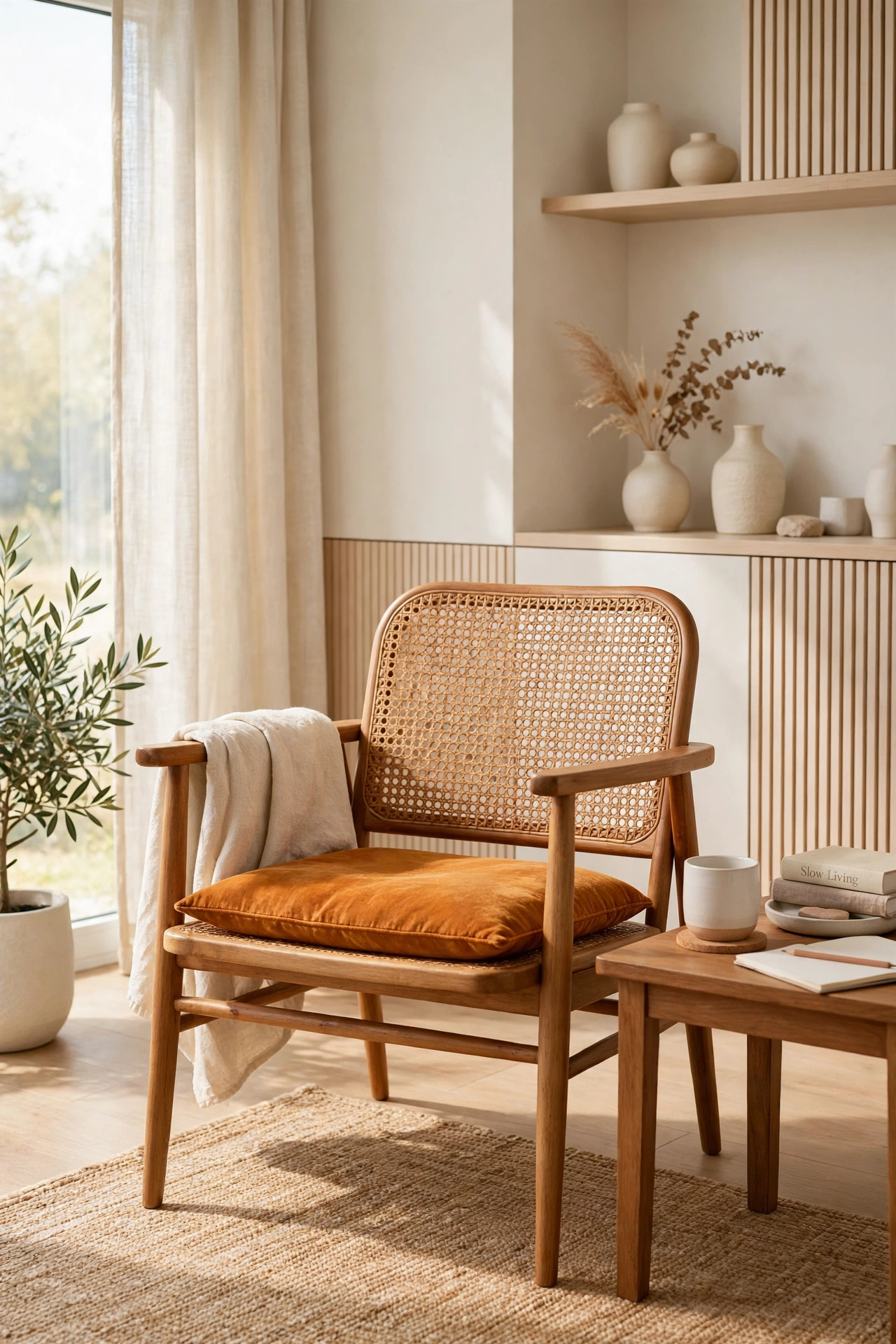
8. Add Woven Rattan and Cane Seating
Woven seating brings warmth and craft into a room full of smooth surfaces. A rattan armchair or a cane back bench adds texture that you can see and feel, and the natural fibers pair perfectly with wood tones. These pieces are light enough to move, which suits the Scandinavian focus on flexible living.
Place a pair of woven chairs in a reading nook or set a long bench at the foot of the bed. The open weave keeps the furniture looking light instead of heavy. Woven seating softens strict minimalism and makes the room feel lived in and welcoming.
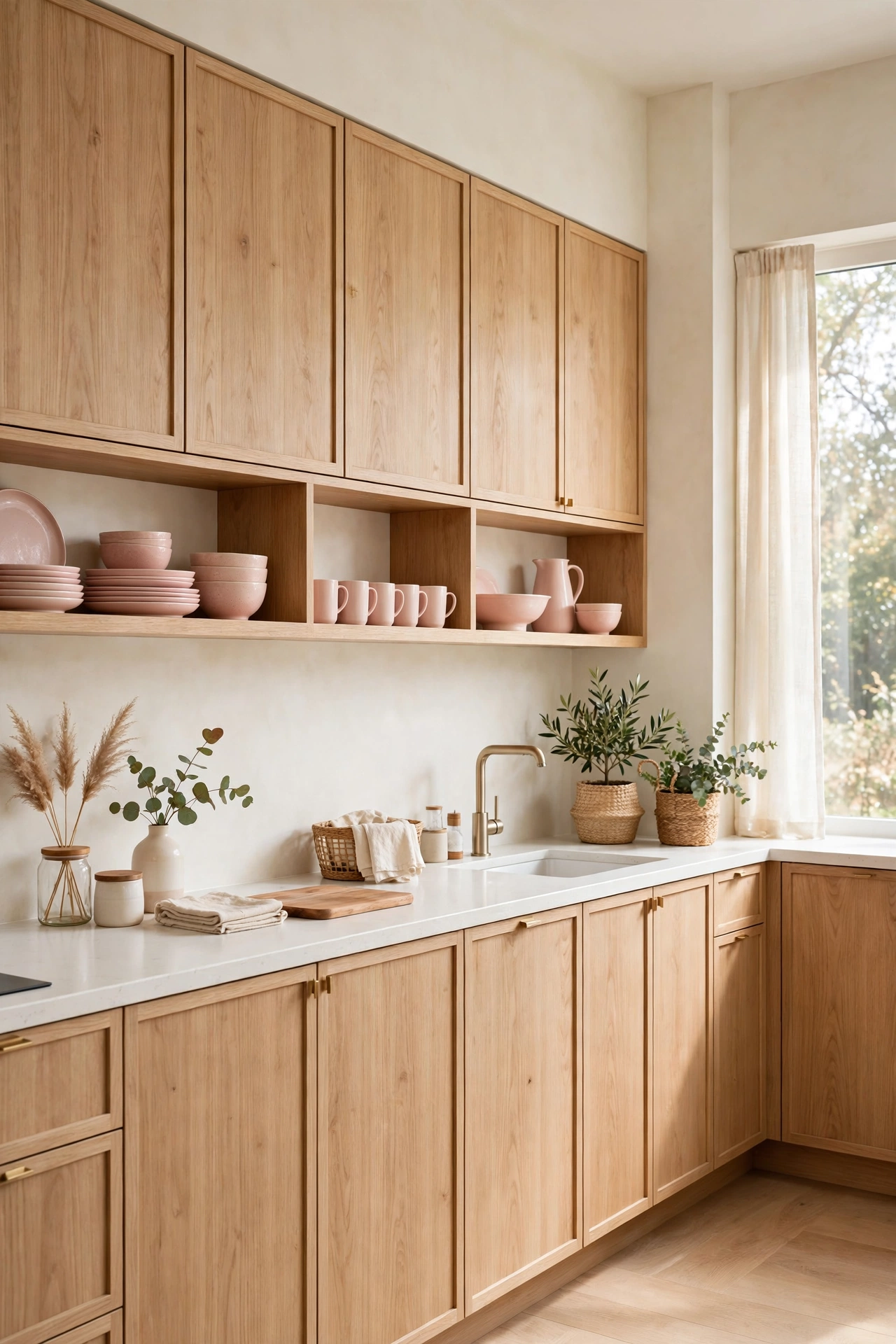
9. Warm Up the Kitchen with Natural Wood
A natural wood kitchen celebrates the grain and warmth of real timber instead of hiding it behind glossy paint. Choose flat panel cabinets in light oak or ash for a seamless modern look. Pair the wood with white quartz counters and a simple tile backsplash to keep the room bright and clean.
Use open shelves to display a few pieces of handmade ceramic dinnerware, and pick integrated handles so the cabinets stay smooth and quiet. The kitchen becomes the warm heart of the home, organic and peaceful, with every surface chosen for beauty and for daily use.
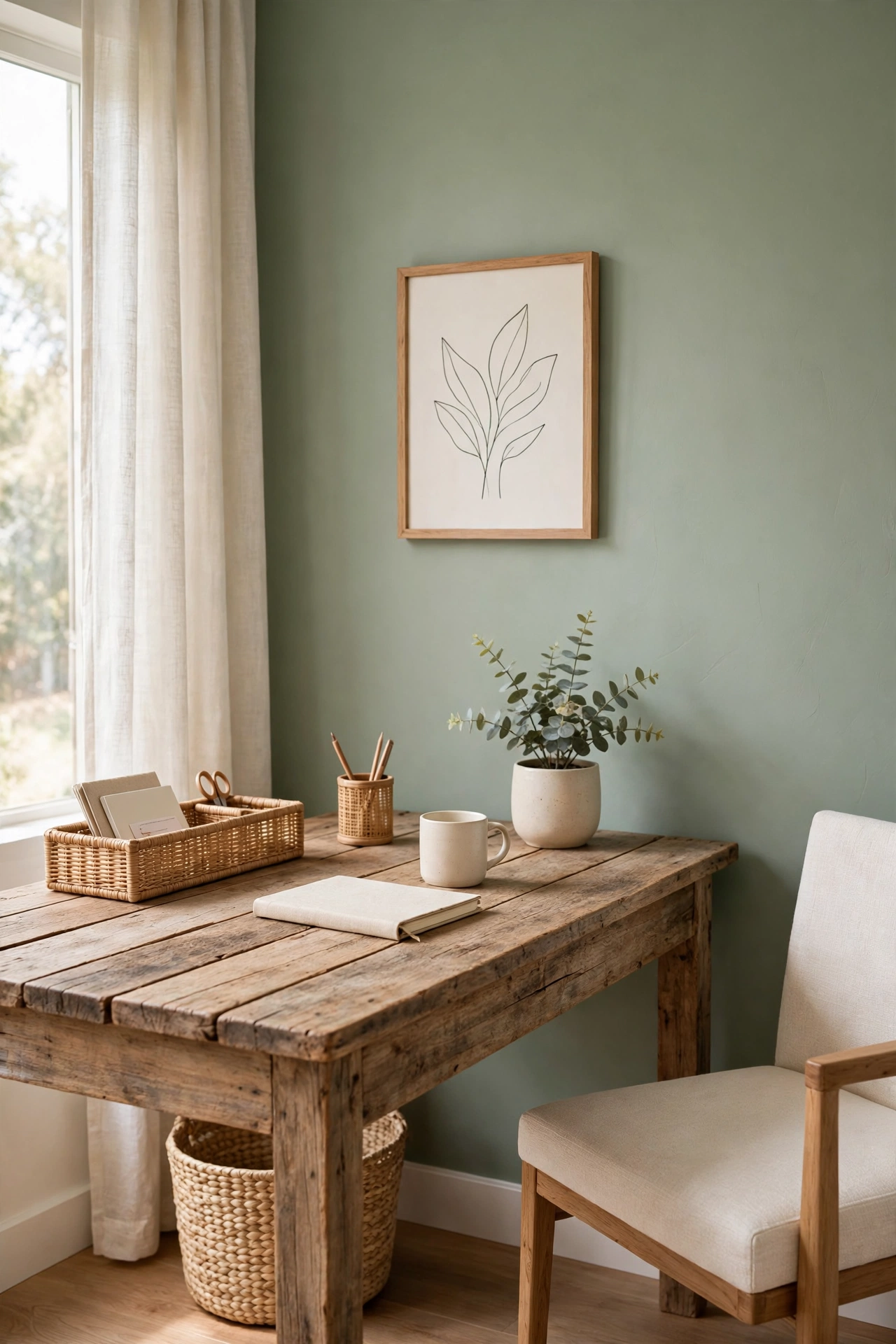
10. Set Up an Earthy Home Office
An earthy home office helps you focus by removing visual noise and using calm colors. A simple desk made from reclaimed wood and a comfortable chair create a workspace that feels like part of the home instead of a cold office corner. Sage green, clay, or soft charcoal on one wall grounds the room.
Add floating shelves for a few books and a small plant, and keep the desk surface clear of clutter. Place the desk near a window so natural light does the heavy lifting during the day. A calm workspace makes the whole workday feel lighter and more productive.
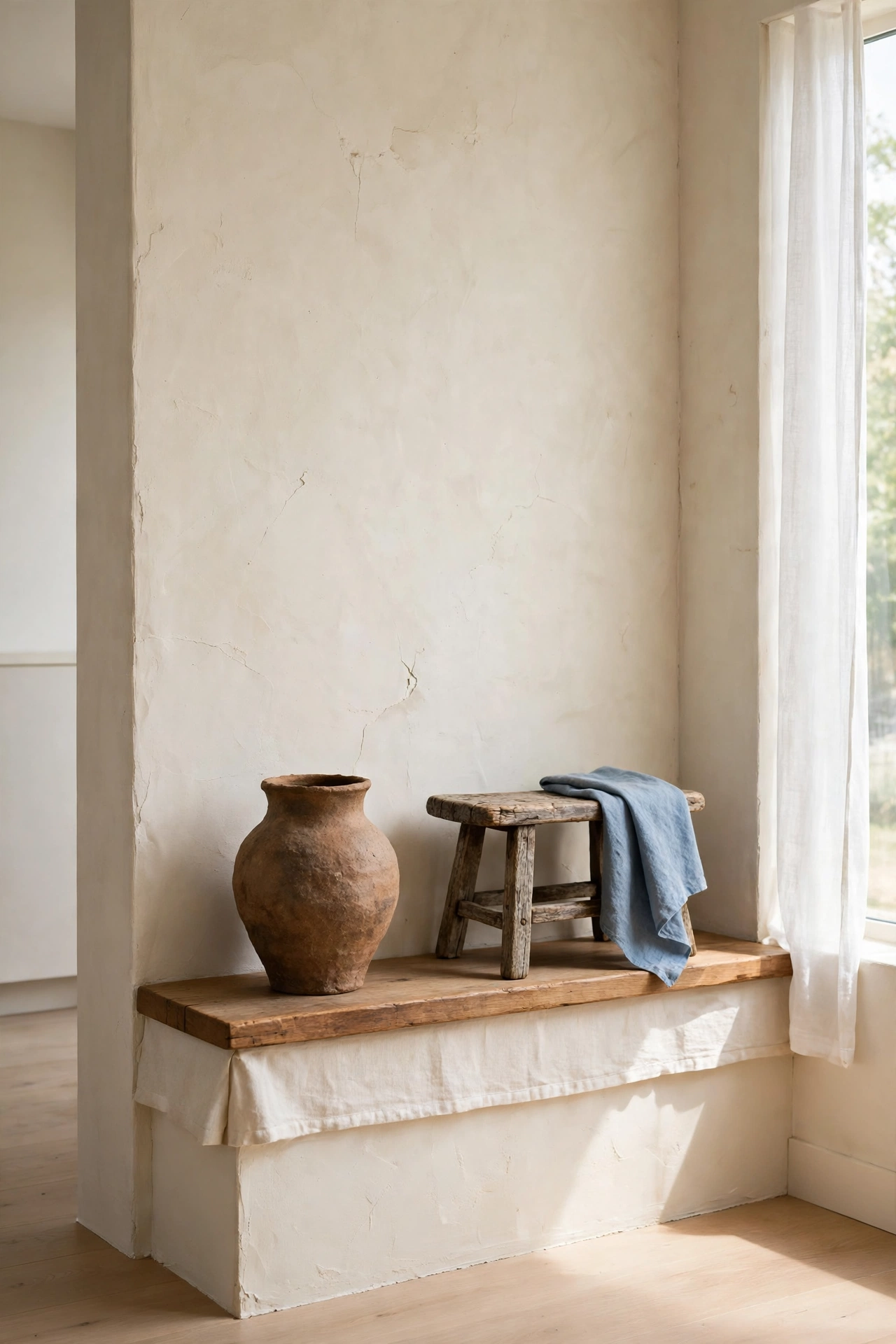
11. Style a Wabi Sabi Corner
A wabi sabi corner celebrates the beauty of imperfection and the passage of time. Display a handmade pottery vase with a small crack or a weathered wooden stool on a low shelf. The mix of aged materials and organic shapes tells a story that a perfect new object never could.
Keep the vignette small and personal, with only two or three pieces in one quiet corner. For more ideas on this gentle philosophy, see this wabi sabi bathroom that brings the same calm into a small space. A wabi sabi corner adds soul to a pristine room and makes the whole home feel more honest and lived in.
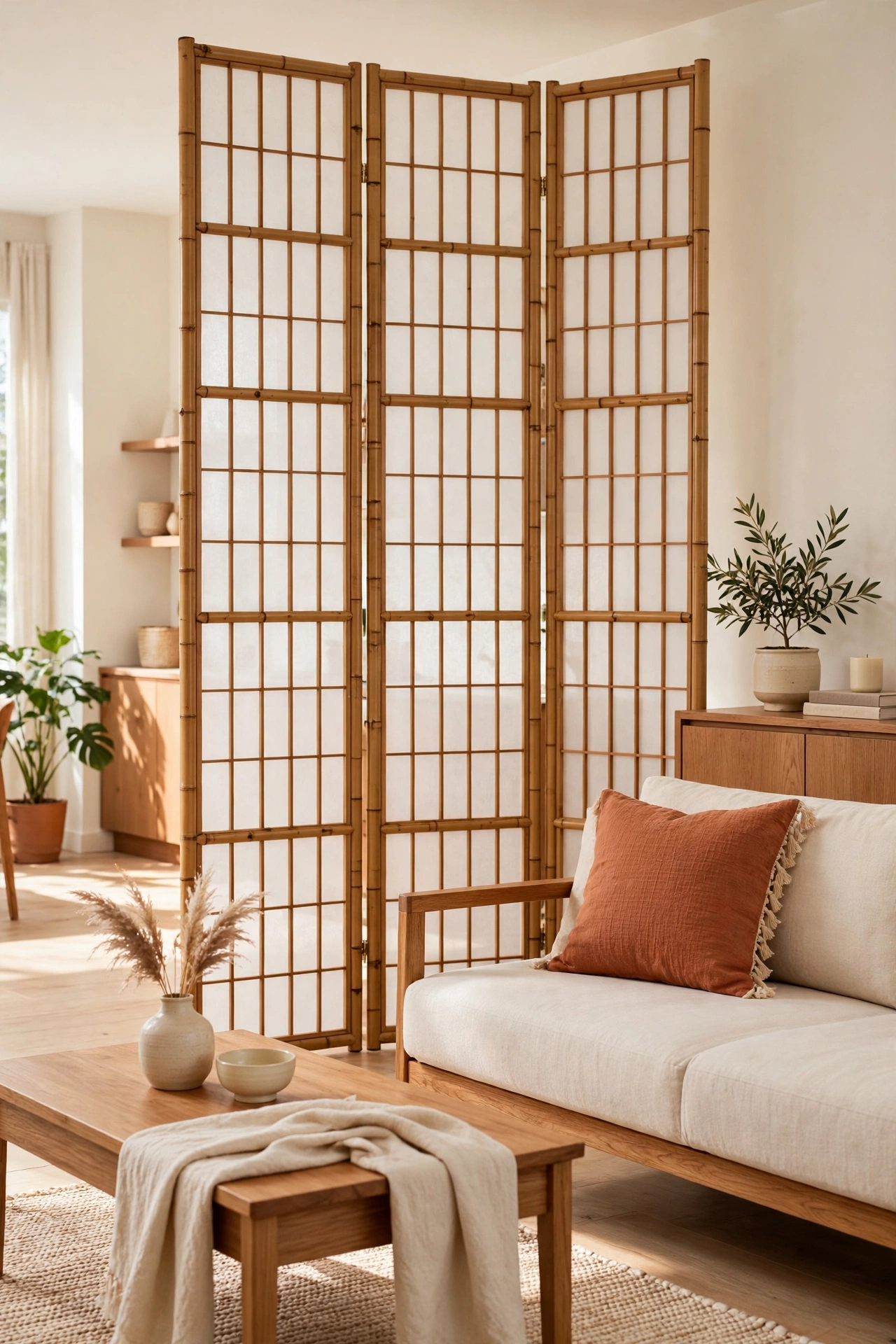
12. Use a Bamboo Room Divider
A bamboo room divider defines zones in an open plan home without building a wall. These screens, inspired by traditional shoji panels, let light filter through while giving a sense of privacy. They work well to separate a sleeping area from a living room or to hide a small work nook.
The vertical lines of the bamboo add a rhythmic texture that fits the Japandi theme perfectly. Because the divider is light, you can move it in minutes when your needs change. It gives structure to an open space while keeping the air and the light flowing freely.
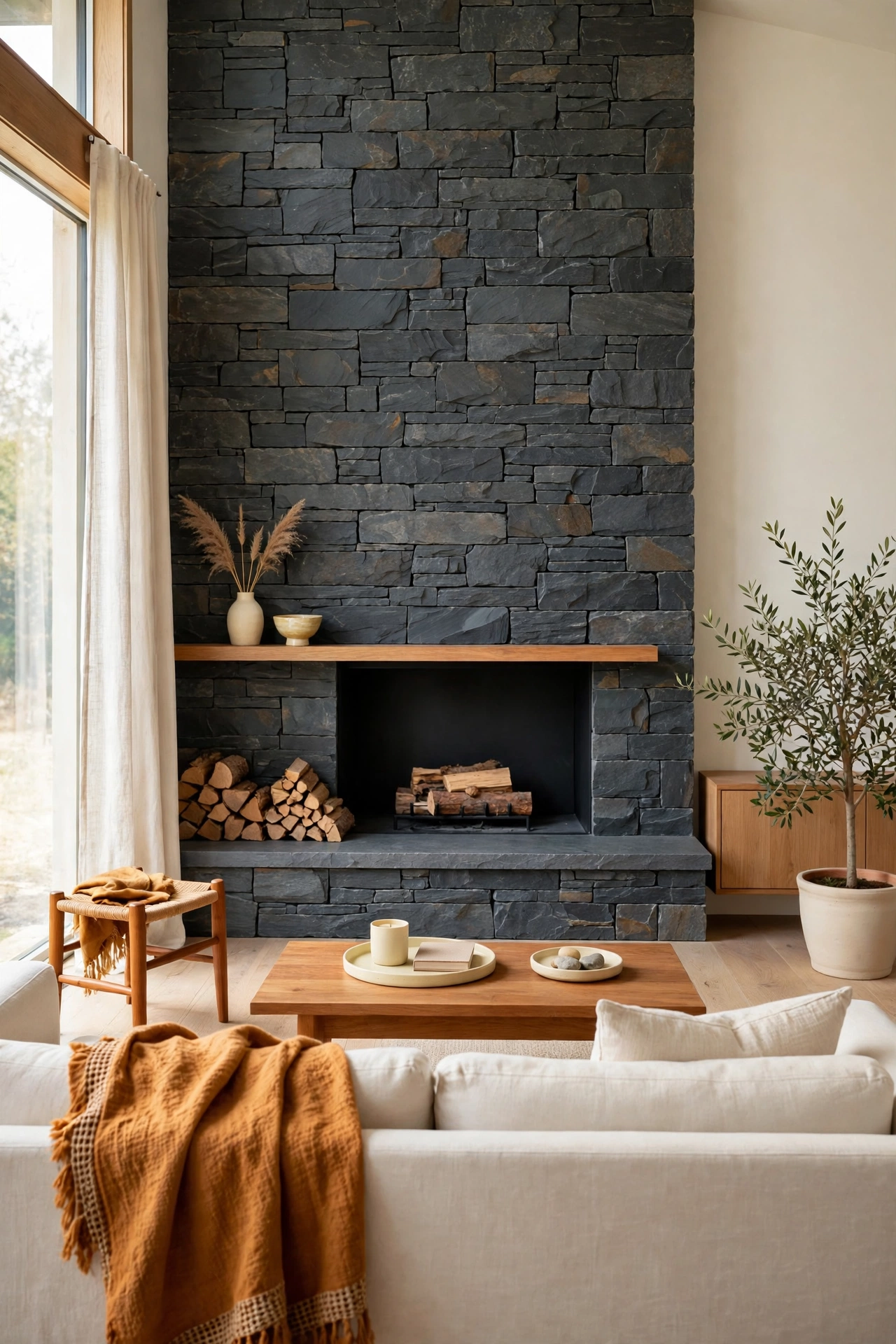
13. Make a Stone Accent Wall
A stone accent wall brings a rugged natural element into a room full of soft textiles and smooth wood. Slate, limestone, or large river rocks create a focal point that feels grounded and permanent. The wall works beautifully behind a fireplace or as a backdrop in a modern entryway.
The variation in color and texture adds visual interest with no extra decoration at all. Cool stone also balances the warmth of wooden furniture in a pleasing way. One stone wall can anchor an entire room and connect the interior to the earth outside.
14. Try a Dark Japandi Palette
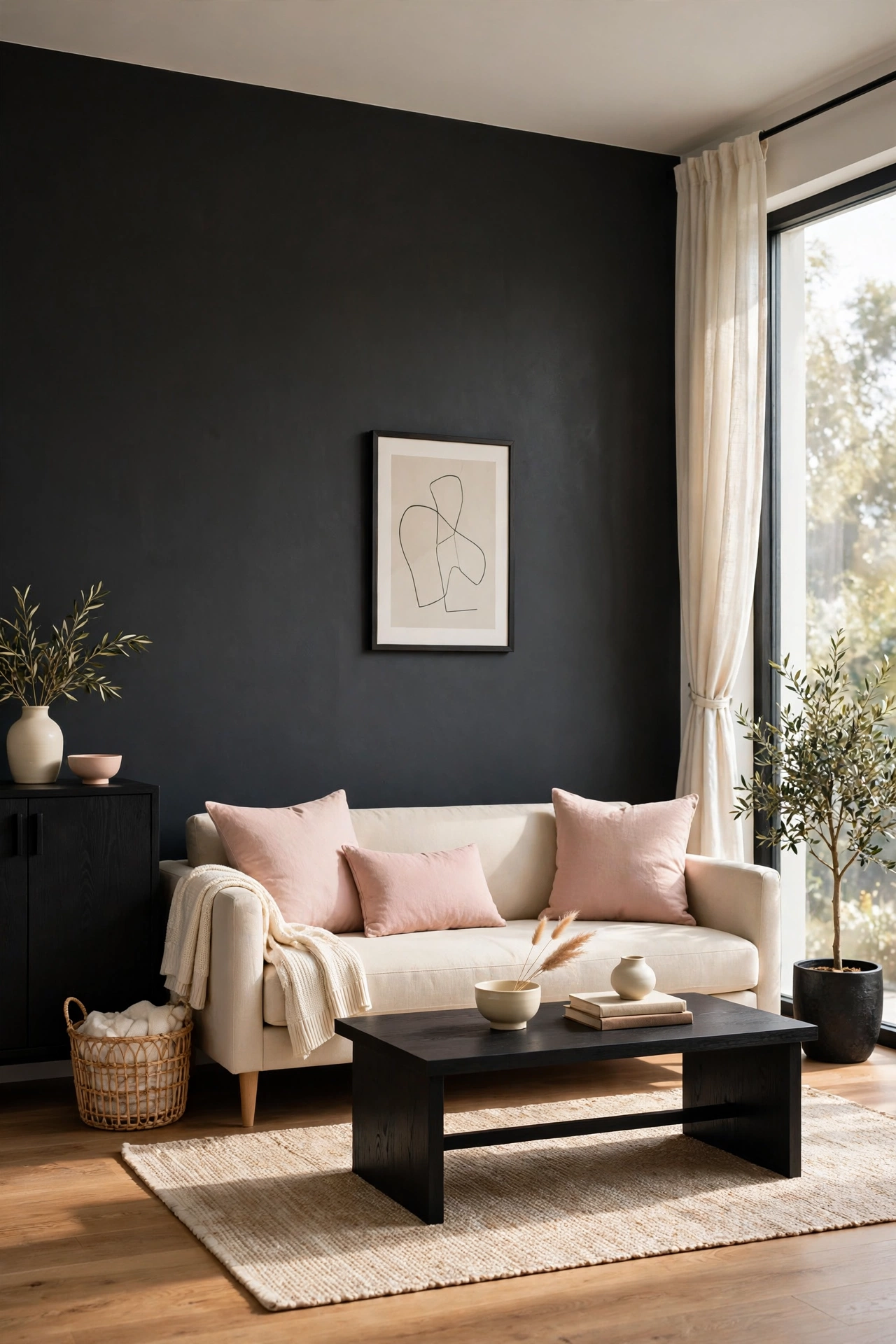
Most Japandi homes are light and airy, yet a dark palette brings a moody depth that feels just as calm. Paint a single wall in deep charcoal matte or choose black stained wood furniture for a strong anchor. Then balance the dark tones with light textiles and warm wood accents.
This high contrast look feels sophisticated and modern without losing the quiet restraint of Japandi style. It works well in a large living room that needs depth or in a small bedroom that should feel cozy and private. Dark tones prove that minimalism can be dramatic and still peaceful.
15. Arrange a Curved Sofa Layout
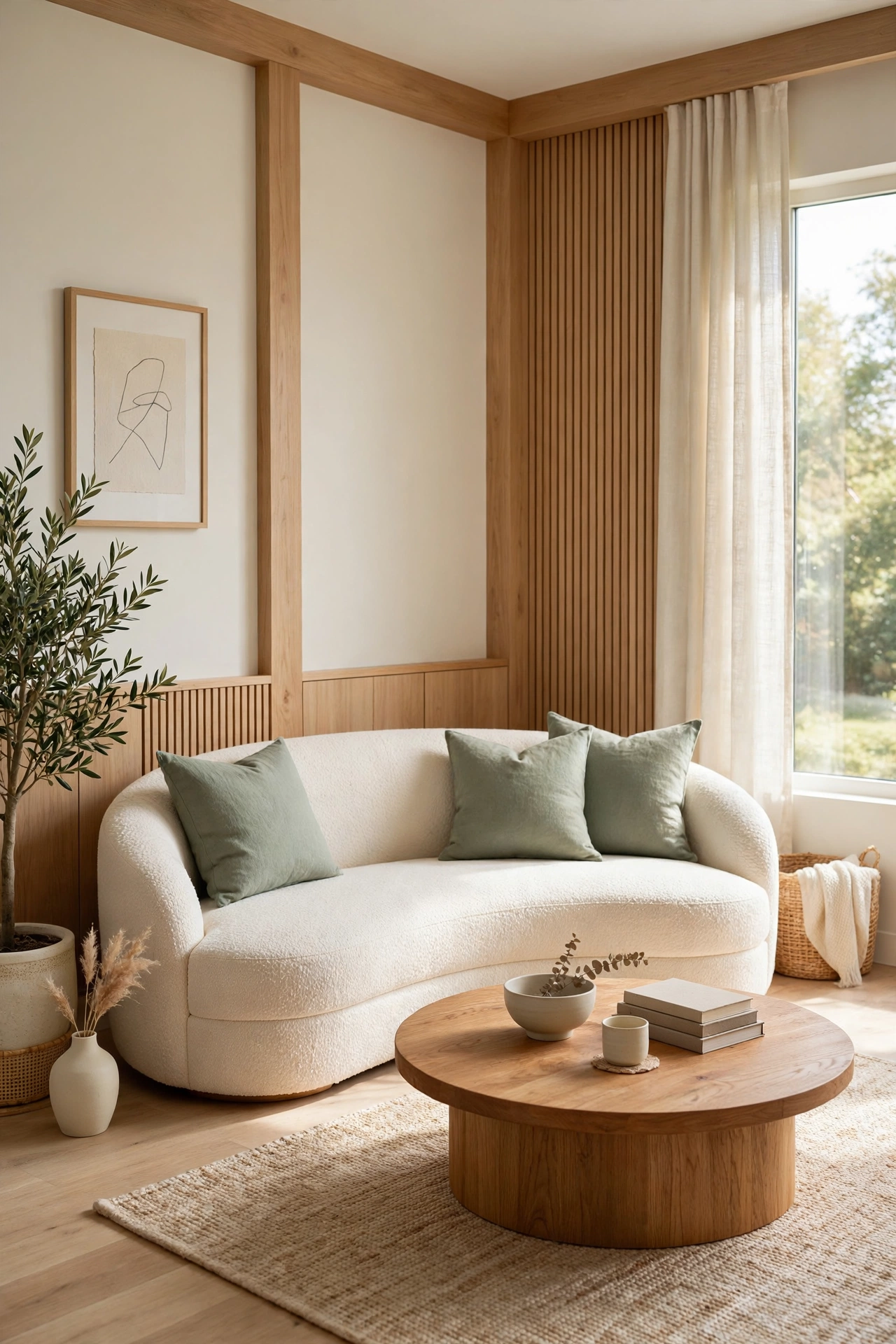
A curved sofa breaks up the straight lines of minimalist design and adds softness to the room. The gentle arc invites conversation and makes a large living room feel more intimate. Choose a sofa in boucle or linen in soft cream or light gray for a cloudlike feel.
Pair the curved sofa with a round wooden coffee table to carry the circular theme through the seating area. The lack of sharp corners makes the room feel safer and more relaxed. For more curved shapes that soften a room, see these curved furniture ideas. A curved layout helps people move through the space in a natural, easy flow.
16. Lay Tatami Mat Flooring
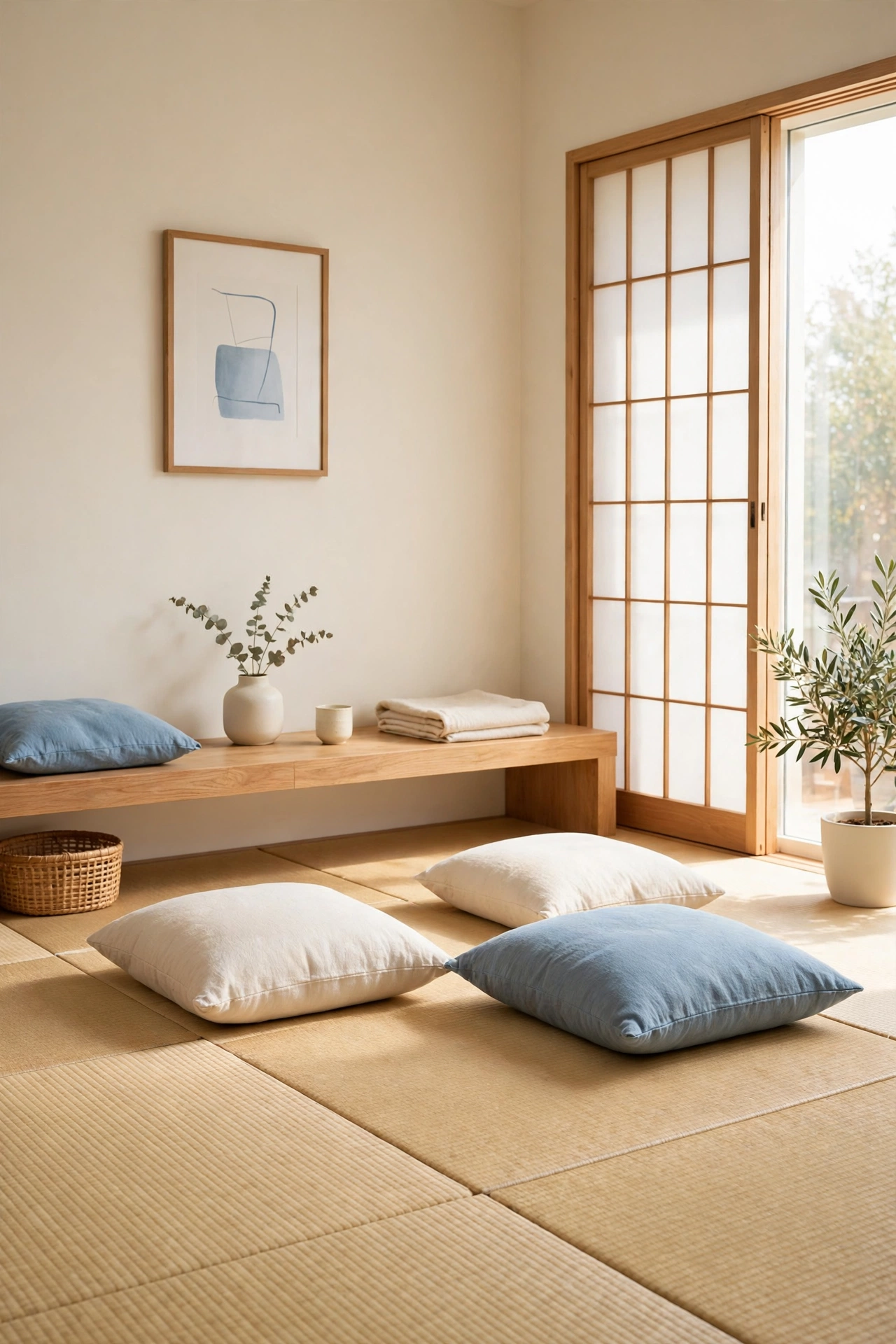
Tatami mats bring a traditional Japanese texture into a modern home. Made from woven rush grass, they feel soft underfoot and carry a faint earthy scent that adds to the calm of the room. Use a few mats in a meditation corner or as a large area rug in the bedroom.
The natural green beige color of the grass fits the Japandi palette perfectly. Tatami also adds a layer of cultural heritage and sensory comfort that a plain rug cannot match. It is a simple change that makes a quiet room feel even more grounded.
17. Build a Flexible Modular Seating Area
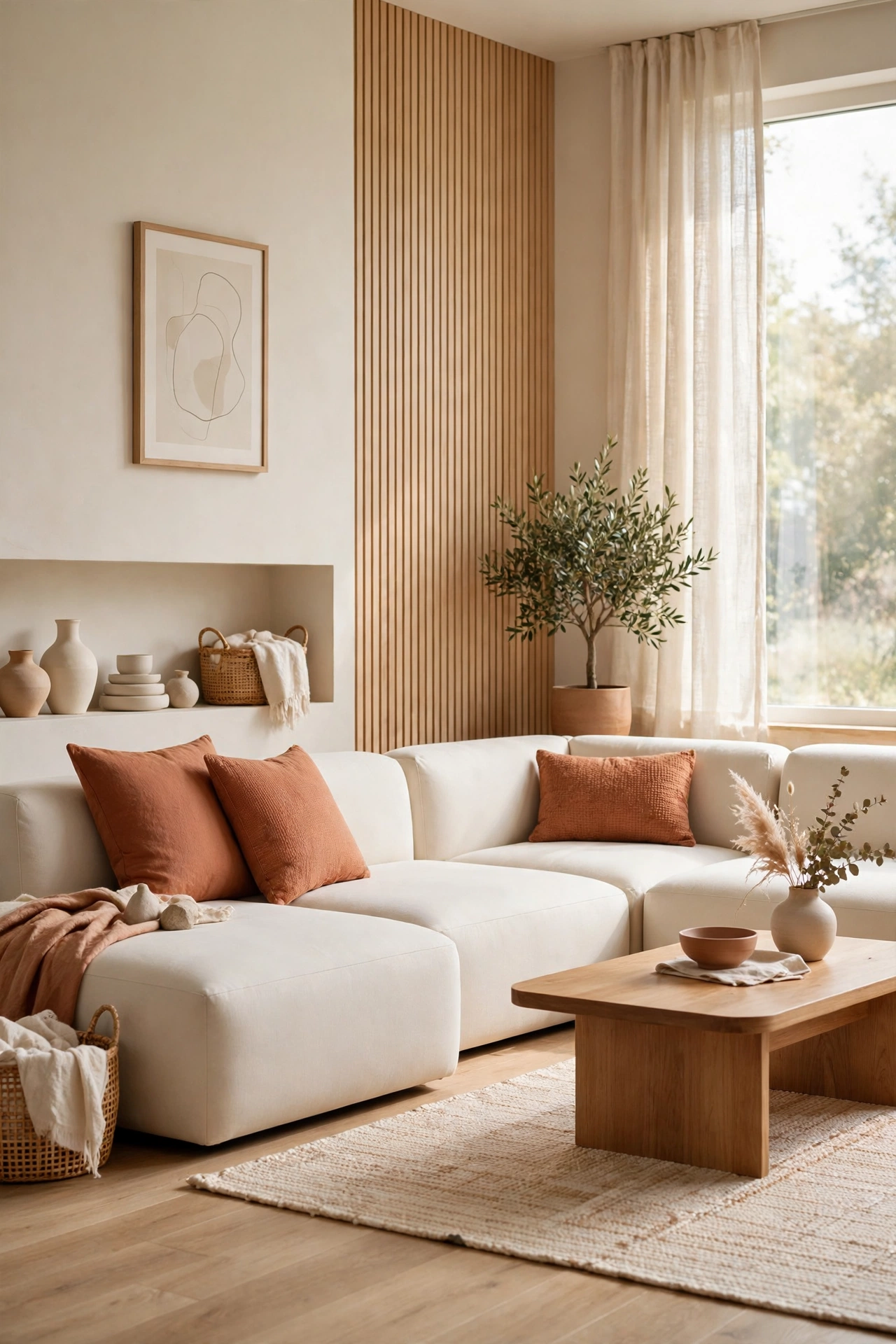
Modular seating gives you furniture that changes with your life. Low profile sectional pieces can join into one large unit for movie nights or split into smaller seats for guests. Choose clean lines, hidden feet, and a single neutral color so the whole set stays calm and cohesive.
This approach focuses on function and long term value, since the pieces can grow with your home. It works in a small apartment and in a large open living room alike. Flexible seating is the practical heart of Japandi living, where every piece earns its place by being useful.
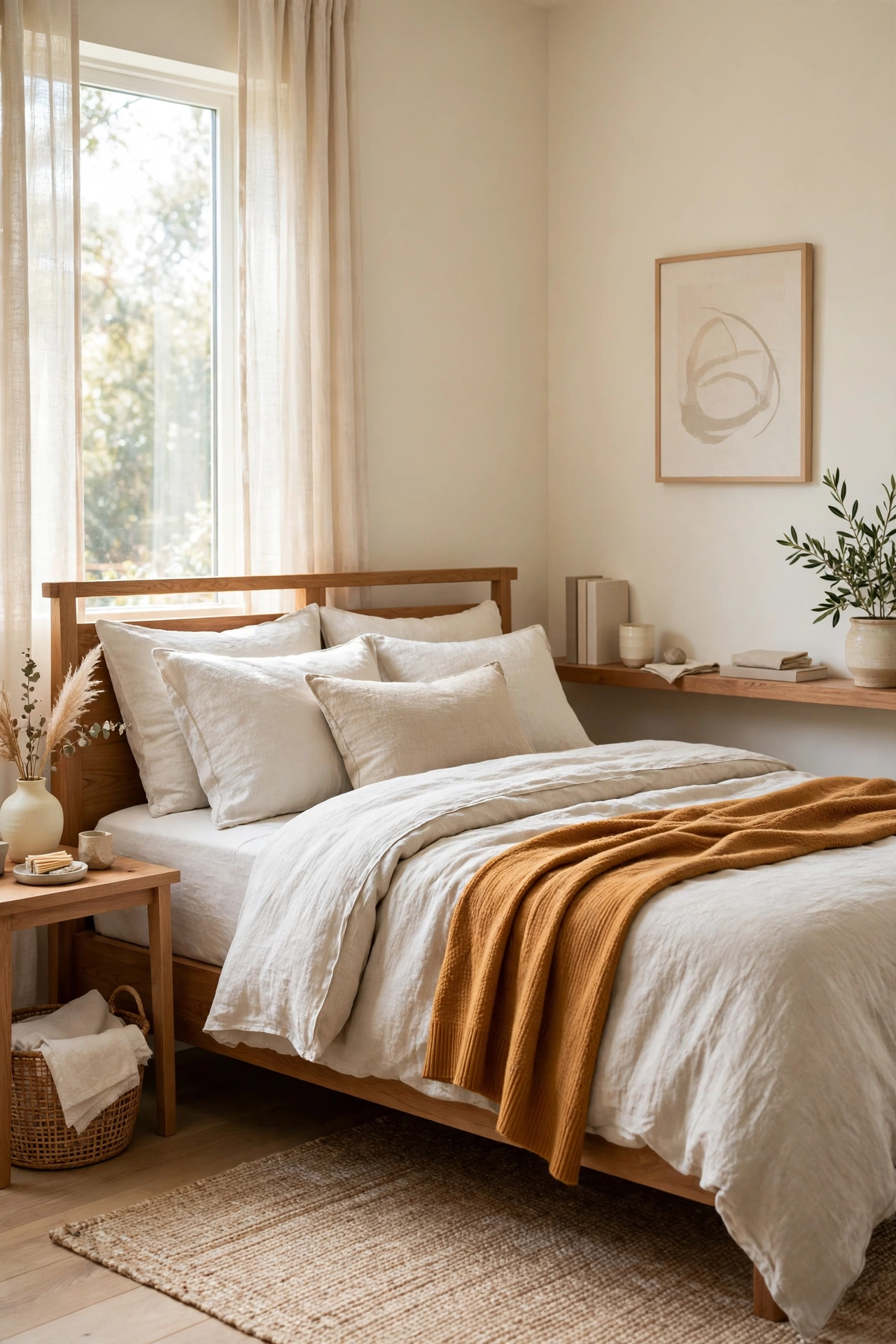
18. Dress the Bedroom in Linen Textiles
Linen is the essential fabric for a Japandi bedroom. It breathes well, and its slightly wrinkled texture fits the wabi sabi love of natural imperfection. Layer a linen duvet with cotton throws and wool pillows for a bed that looks luxurious without feeling formal.
Stick to a soft monochromatic palette of white, oatmeal, and sand to keep the room bright and clean. Linen improves with age and washing, so it is a sustainable choice that only gets better. These soft layers balance the hard wood furniture and make the bedroom a true retreat.
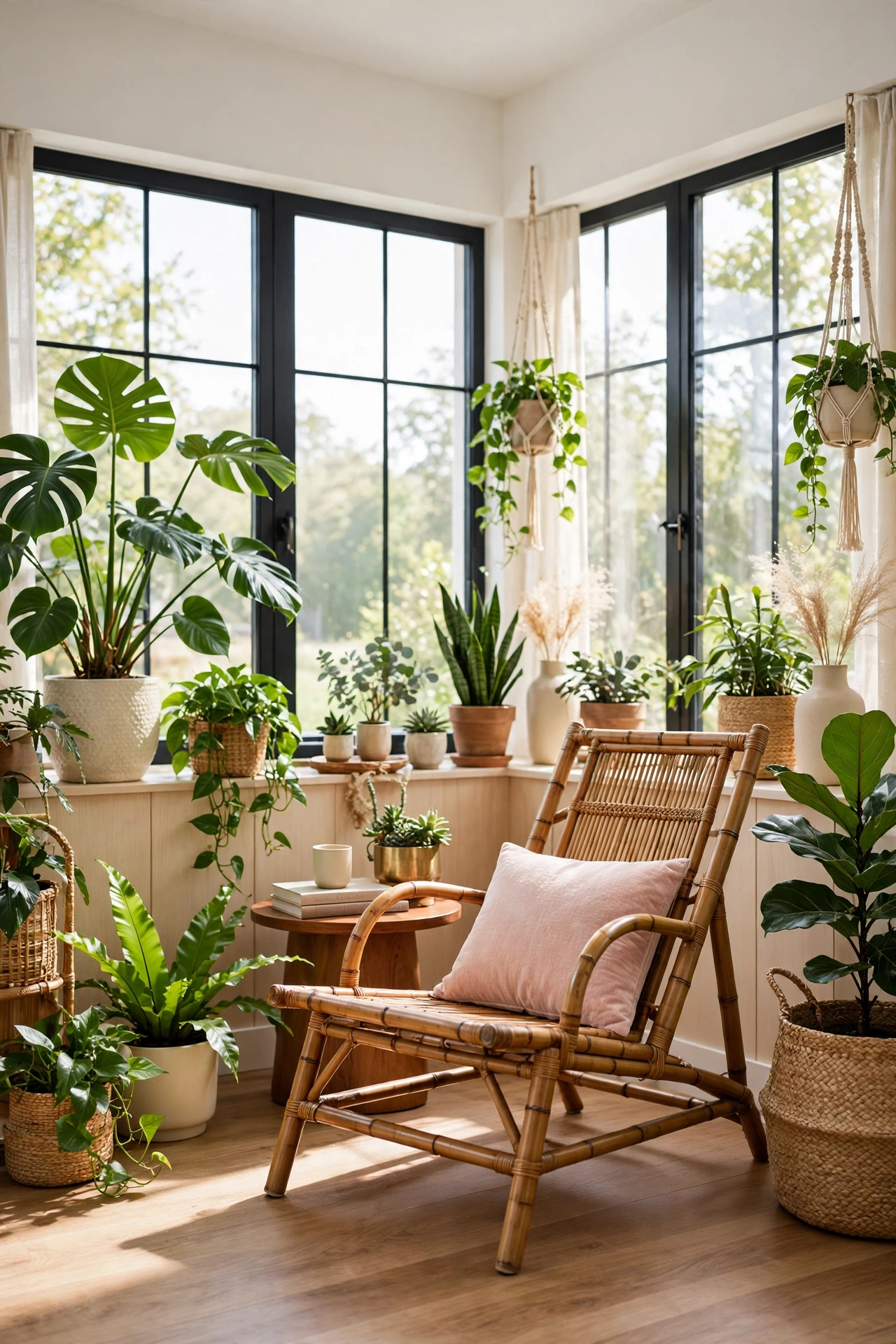
19. Design a Biophilic Sunroom
A biophilic sunroom connects the home to the outdoors through large windows and generous planting. Fill the room with light and greenery so it feels like an indoor garden. Choose furniture made from bamboo or recycled wood to keep the space gentle on the planet.
A comfortable lounge chair or a small daybed gives you a spot to read or rest in the afternoon sun. The sunroom becomes a peaceful transition zone between the house and the garden, and it lifts your mood in every season. It is the most joyful room in a Japandi home.
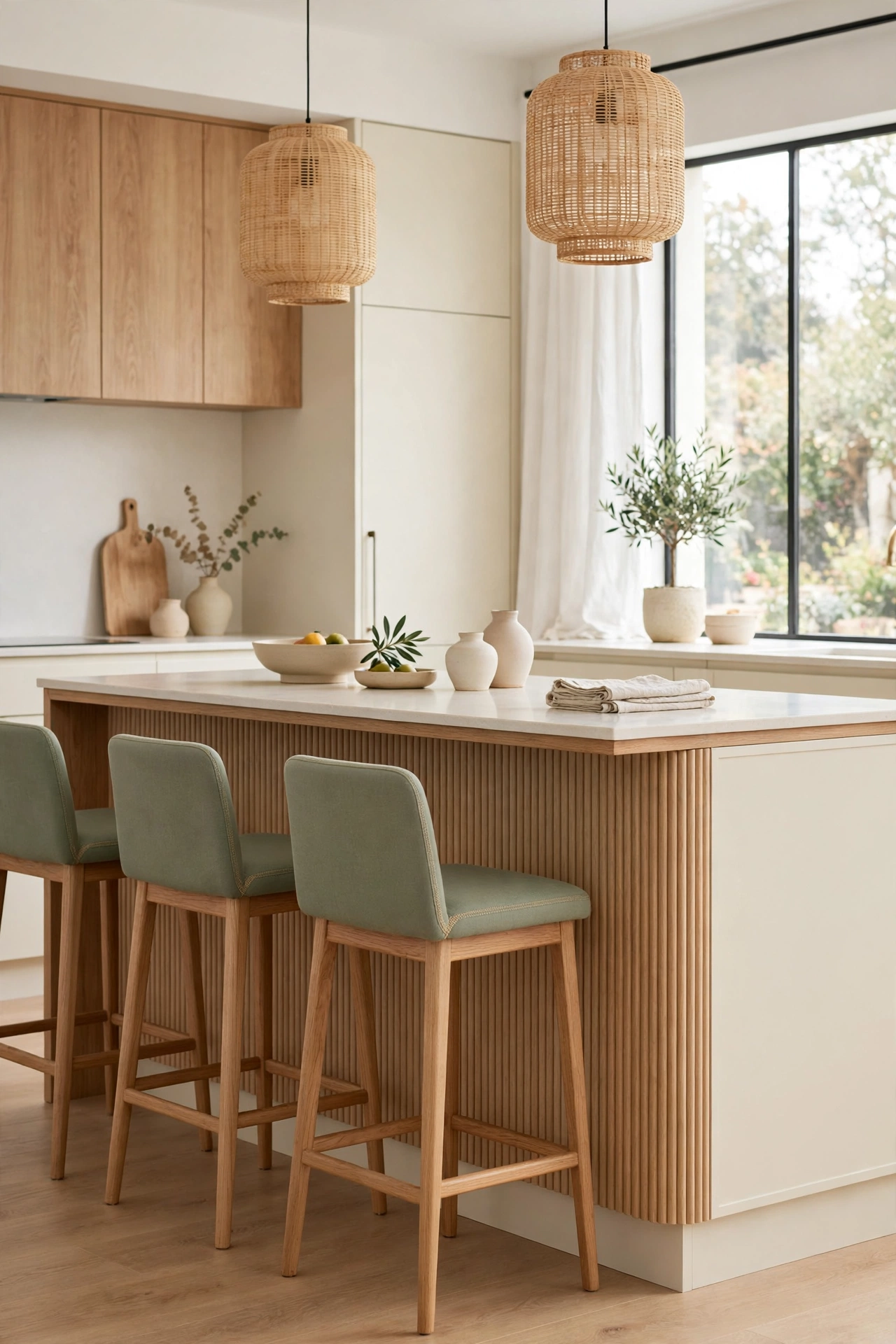
20. Install Fluted Wall Panels
Fluted wall panels add a three dimensional texture that makes any room feel more refined. The repeating vertical grooves catch light and shadow, which gives a flat wall real depth. Use them on a kitchen island, in a hallway, or as a backdrop around a fireplace.
A light wood finish keeps the look natural and warm, while a painted matte finish feels more modern. For more ways to use vertical wood on a wall, see these fluted wood wall ideas. Fluted panels add architectural interest without a single extra object, which is exactly the Japandi way.
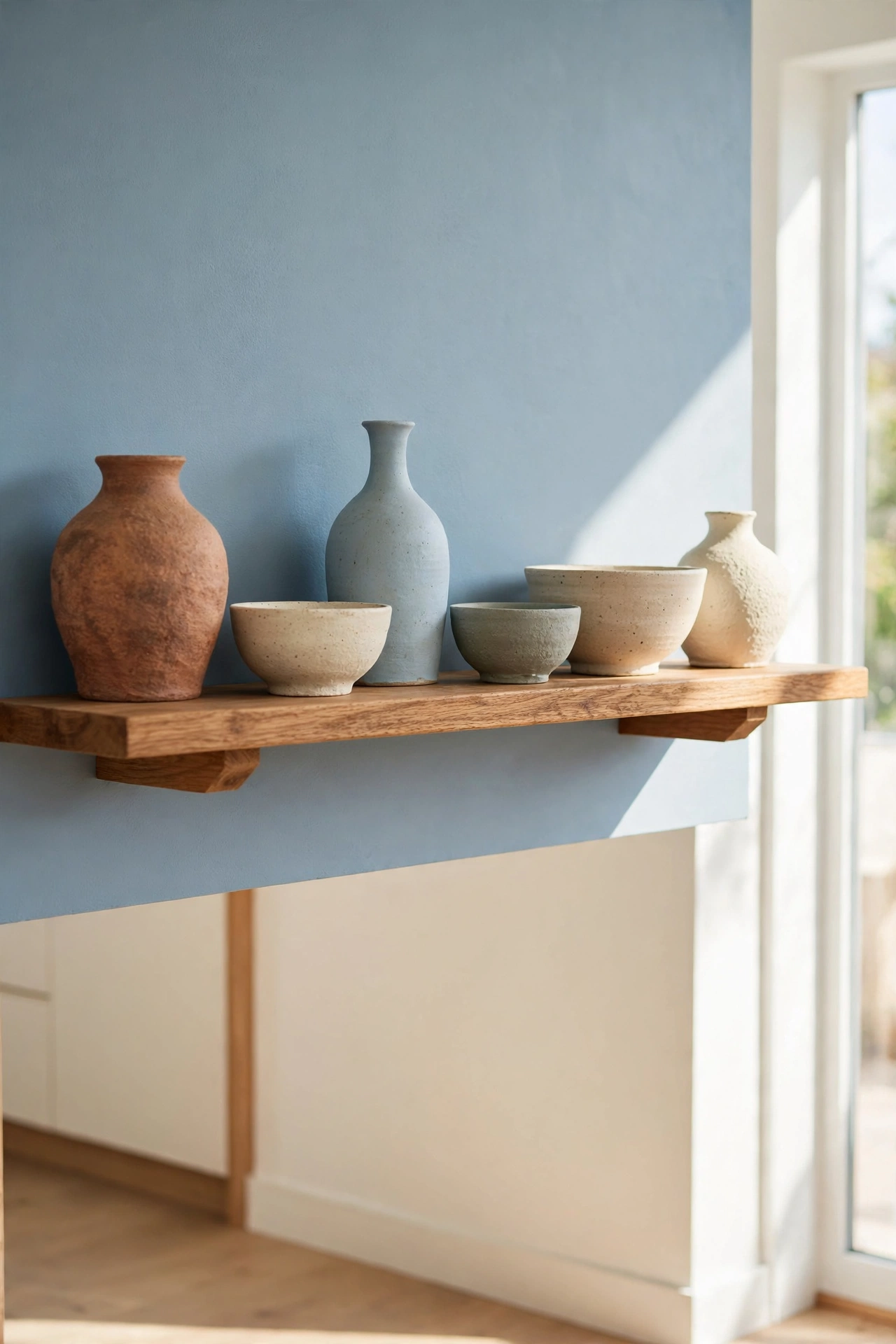
21. Display Handmade Clay Pottery
Handmade clay pottery brings the warmth of the earth onto a shelf or a low console table. Arrange a few vases, bowls, and plates with matte glazes and slightly irregular shapes. The small imperfections are the whole point, since they show the hand of the maker.
Group the pieces in odd numbers, like three or five, for a balanced arrangement that feels natural. These functional art pieces add personality without clutter, and they remind you every day that natural materials carry their own quiet beauty. A pottery display is one of the easiest ways to make a room feel personal.
22. Fit a Shoji Screen Door
A shoji screen door is a classic Japanese feature that suits a modern Japandi home beautifully. The wooden lattice and translucent paper or frosted glass let light pass between rooms while keeping privacy. Because the door slides instead of swinging, it saves space in small rooms.
The geometric pattern of the lattice adds a subtle rhythm to the interior. Use a shoji door for a closet, a bedroom, or a home office to give the room an airy elegant feel. It is a timeless piece of craftsmanship that makes a contemporary layout feel warmer and more thoughtful.
23. Create a Sustainable Living Room
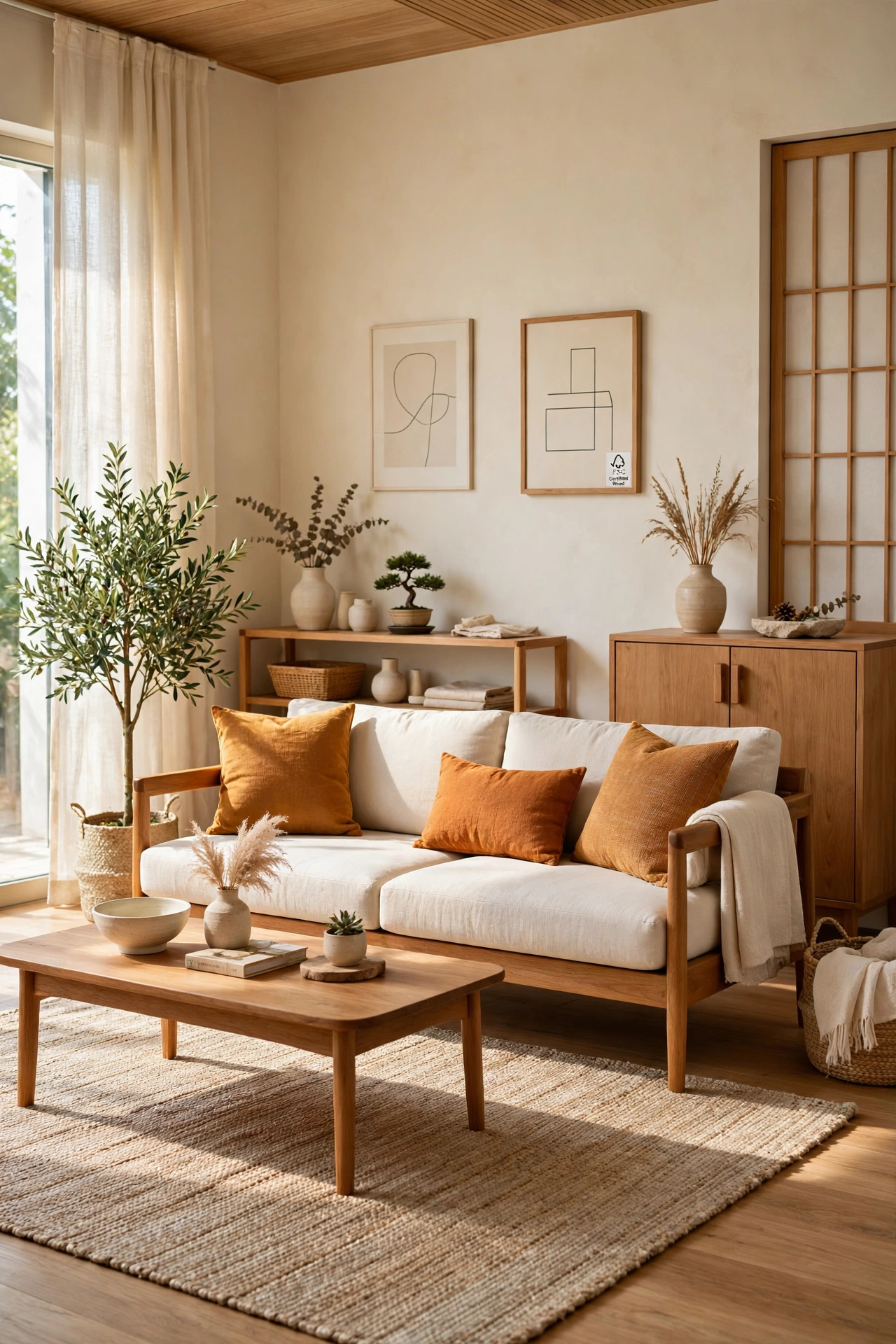
A sustainable living room chooses materials that are kind to the planet and built to last. Pick furniture made from certified wood, rugs woven from recycled fibers, and cushions filled with organic cotton. The room stays free of harsh chemicals and supports responsible making.
Japandi style suits sustainability naturally, since it values quality over quantity and timeless design over trends. For more eco friendly decor that lasts for years, see these sustainable home decor ideas. Investing in well made pieces means less waste and a home that feels meaningful every single day.
24. Paint a Sage Green Bedroom
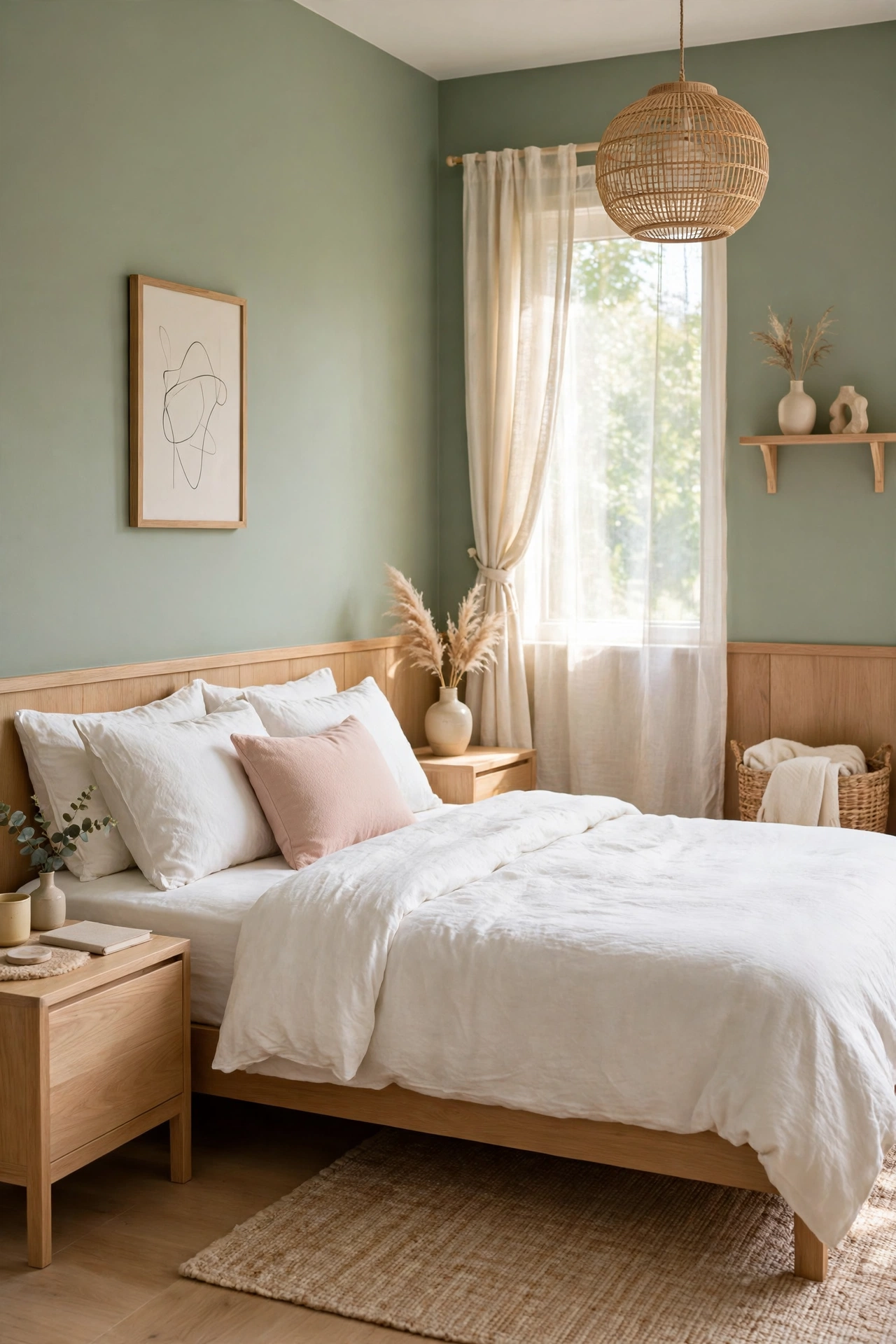
Sage green is a soft natural color that makes a bedroom feel restful and connected to the earth. It works as a neutral, pairing beautifully with light oak furniture and white linen bedding. Paint all four walls for a cocoon effect, or use it on one accent wall behind the bed.
The color brings the feeling of a forest or a quiet garden into the room, which helps lower stress before sleep. Add a botanical print or a single potted plant to complete the theme. Sage green adds color without breaking the minimalist harmony of the room.
25. Add a Charcoal Accent Space
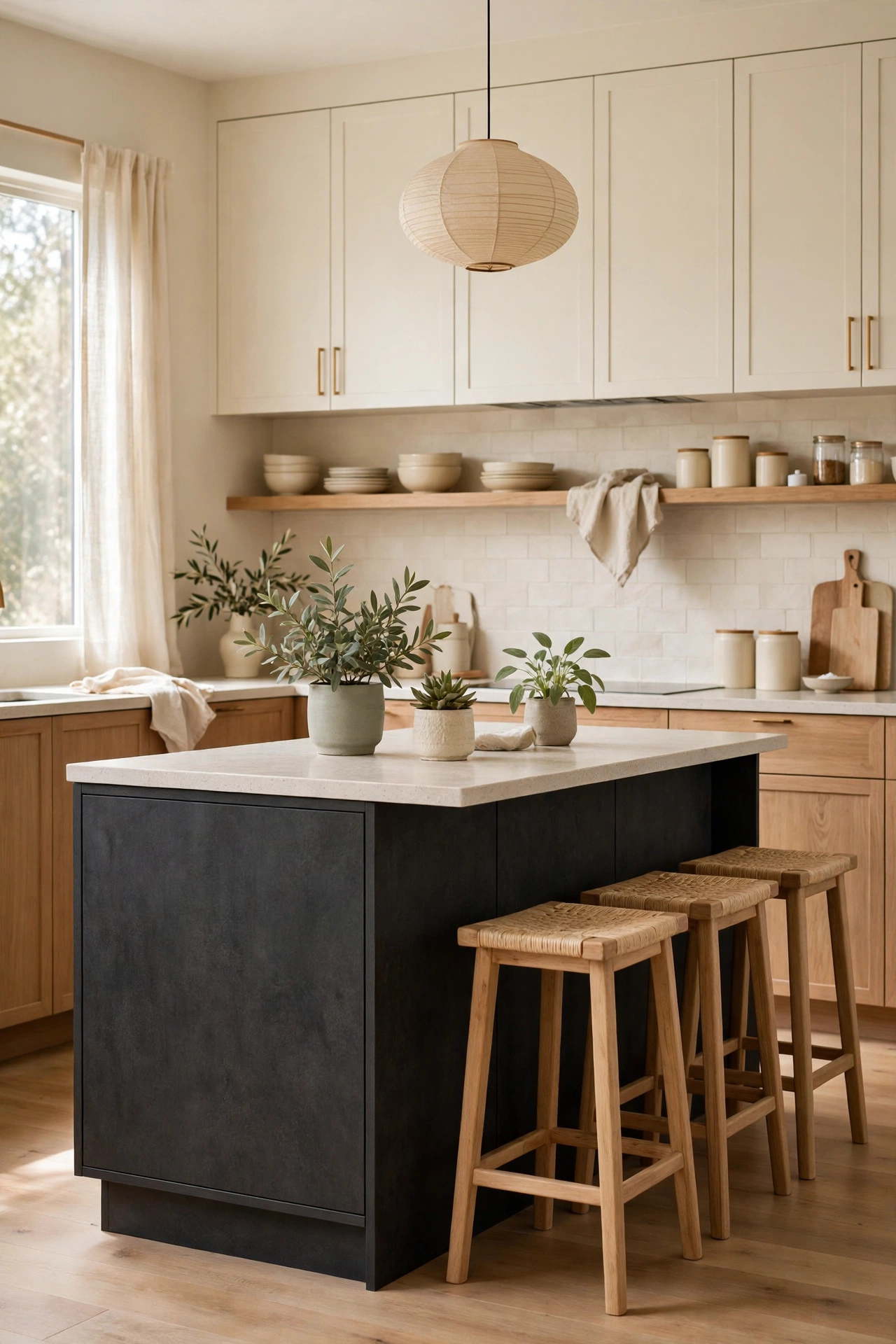
A charcoal accent gives a light Japandi home a bold sophisticated contrast. Use deep gray on a kitchen island, a fireplace surround, or a large rug to ground the room. The dark tone works best with plenty of natural wood and warm lighting so it never feels cold.
Charcoal creates a clear focal point and gives the room structure. It feels more modern than pure black and suits a contemporary living room or a high end home office. One strong dark element can make the whole room feel more considered and complete.
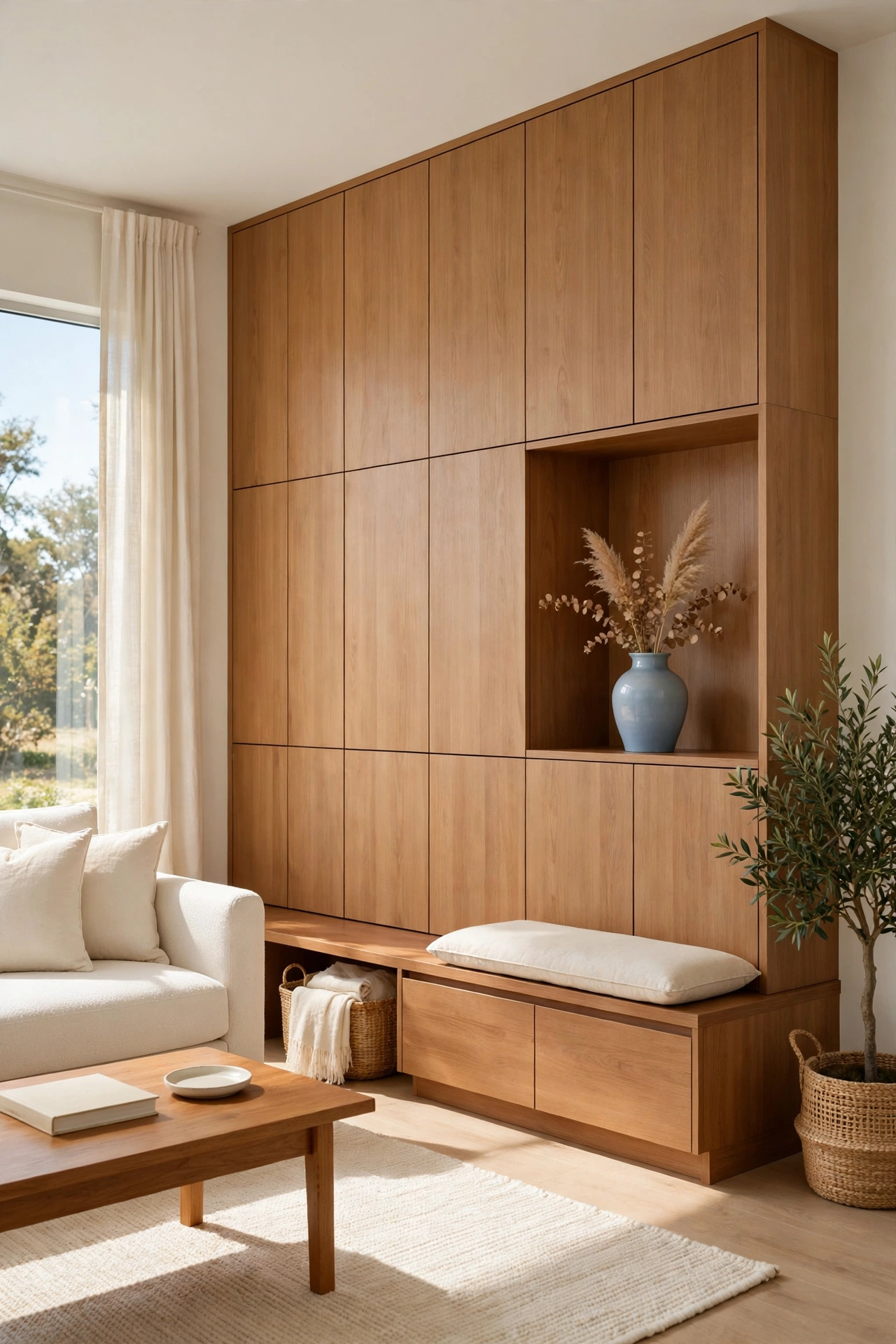
26. Hide Clutter with Built In Storage
Built in storage is the secret behind every calm Japandi home. Custom cabinets that blend into the walls hide everyday items behind seamless panels, so the room stays clean with little effort. A full wall of hidden storage can hold electronics, toys, and books while only a few beautiful objects stay on display.
This focus on order is a core part of the Japanese influence, and it keeps the home feeling tranquil. When everything has a dedicated place, the space looks pristine without constant tidying. Built in storage turns a busy family home into a peaceful retreat.
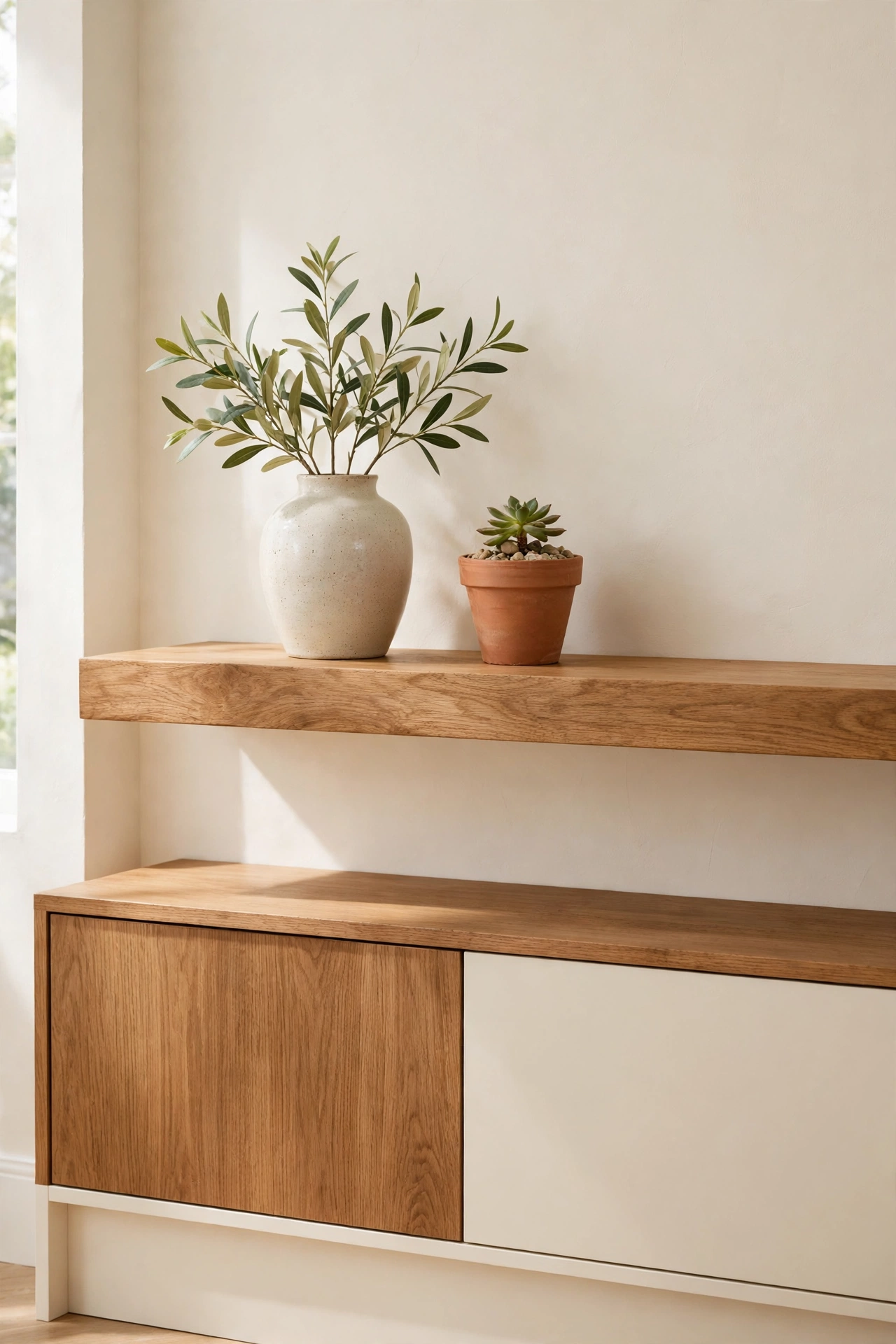
27. Hang a Floating Wood Shelf
A floating wood shelf displays a few chosen objects while keeping the floor clear. With no visible brackets, the shelf looks clean and minimal. Choose a thick piece of solid oak or walnut to add weight and quality to the wall.
Place only two or three items on the shelf, like a ceramic vase, a small plant, or a stack of favorite books. Limiting the display keeps the less is more philosophy alive. A floating shelf adds character and warmth without overwhelming the senses.
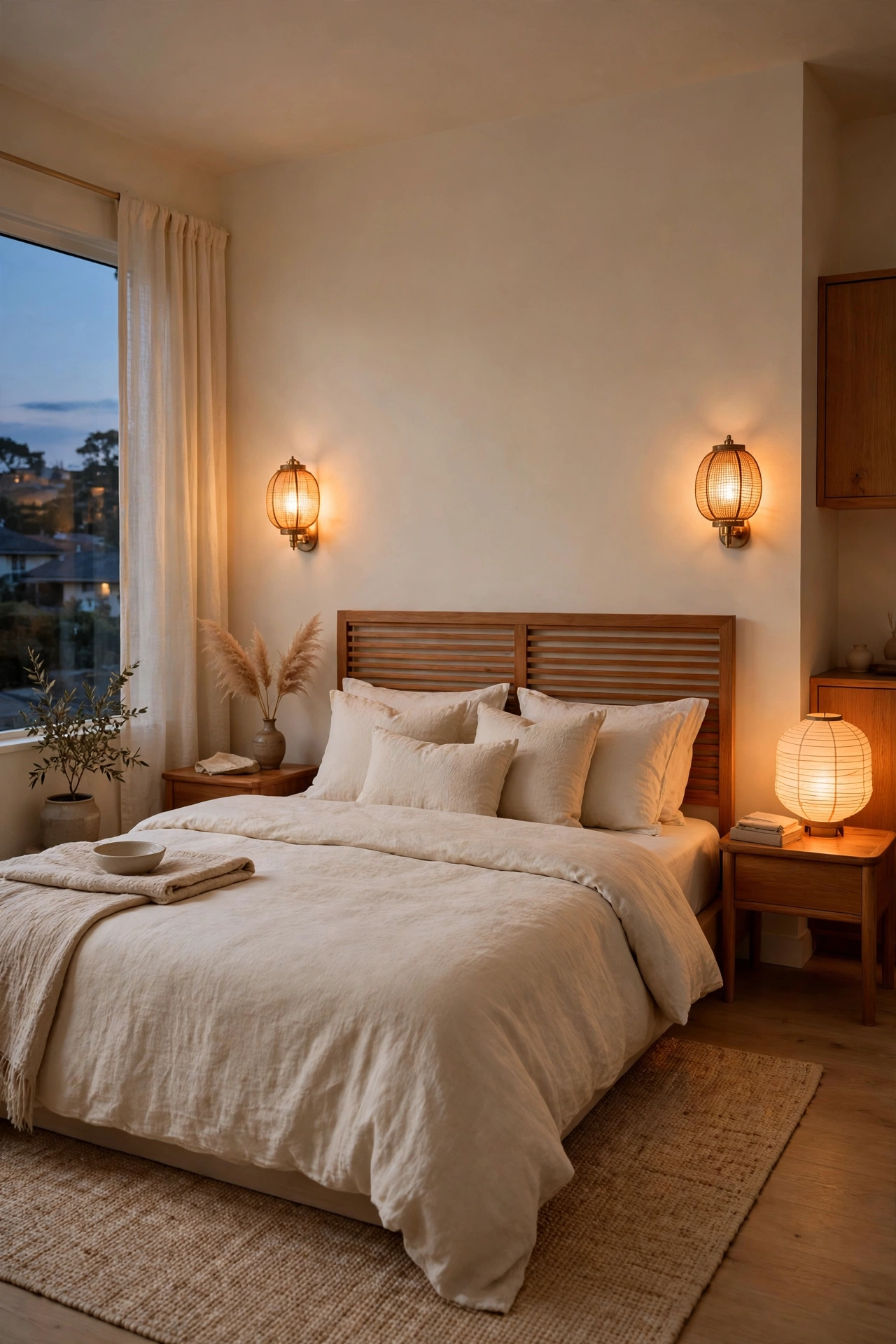
28. Layer Ambient Light in the Bedroom
An ambient light bedroom uses soft indirect light to create a warm cozy atmosphere. Skip harsh overhead lights and use floor lamps, table lamps, and wall sconces with warm toned bulbs instead. Dimmable switches let you adjust the brightness to match your mood through the evening.
Soft light enhances the texture of linen bedding and the grain of wooden furniture, making the whole room feel more inviting. This layered lighting follows the Scandinavian idea of hygge, which puts comfort first. Your bedroom becomes a true sanctuary where you can unwind completely.
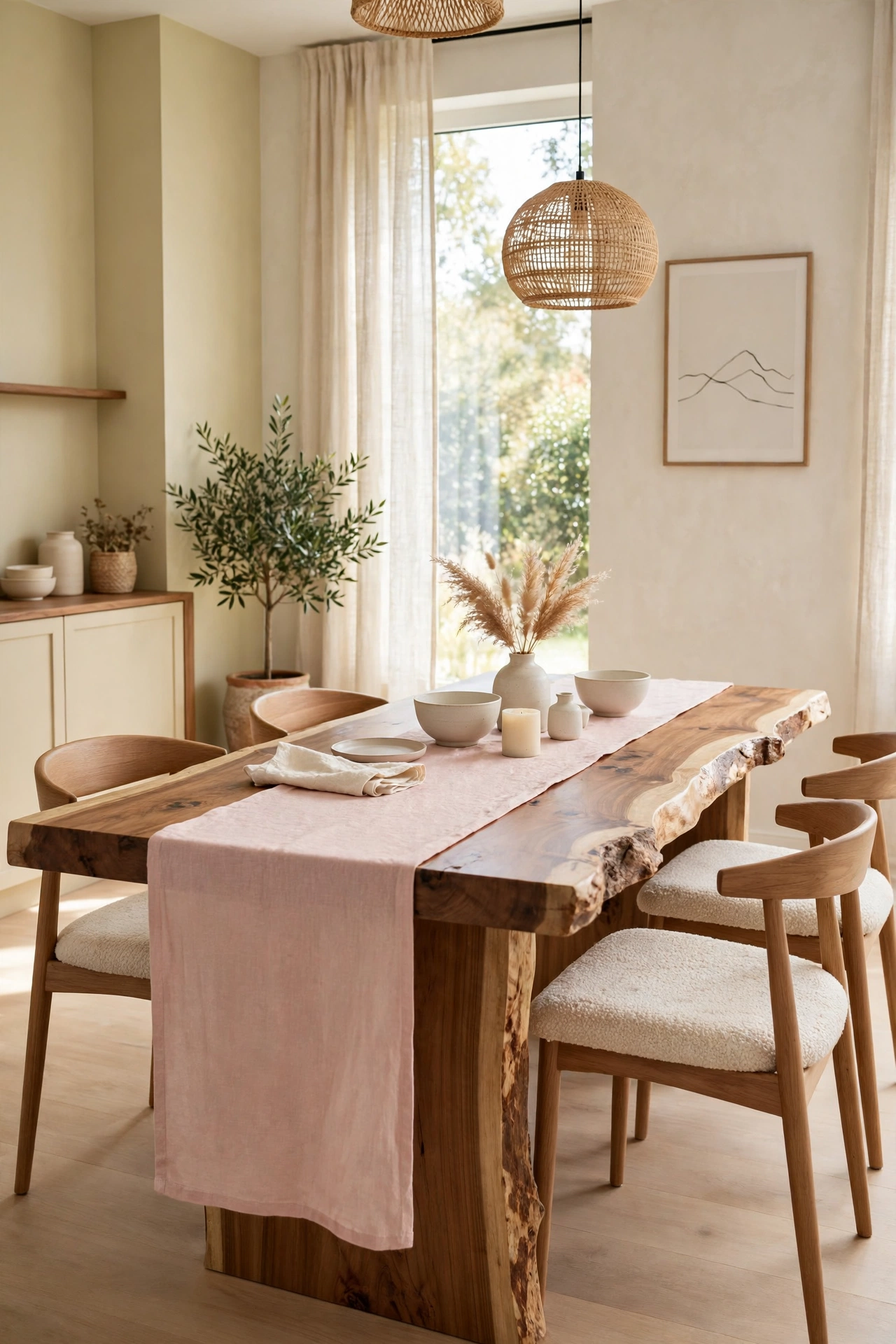
29. Choose a Raw Timber Dining Table
A raw timber dining table is a powerful statement piece that celebrates the natural beauty of real wood. Choose a live edge table or a piece with visible grain and natural knots to embrace the wabi sabi love of imperfection. The rugged wood contrasts beautifully with clean modern chairs and simple lighting.
Over time the timber develops a unique patina that tells the story of the meals shared around it. It is a durable timeless investment that becomes the heart of the home. Every dinner feels more grounded when the table itself is a piece of nature.
Conclusion
Japandi interior design is more than a trend. It is a way of living that values calm, quality, and intention in every room. From a neutral living room to a raw timber dining table, these ideas show how natural materials and simple shapes can turn an ordinary home into a peaceful retreat.
Pick one or two ideas that fit your home and start today. Clear a surface, add a plant, or swap a heavy curtain for soft light, and notice how the room changes. For a calm home beyond the living room, these nightly reset routine ideas will help you keep every room organized with just a few minutes each evening.
Frequently Asked Questions About Japandi Interior Design Ideas With Natural Materials
What is Japandi interior design?
Japandi interior design blends Japanese minimalism with Scandinavian comfort. It uses natural materials like wood, stone, linen, and bamboo, plus a soft neutral palette and clean simple lines. The goal is a calm home where every piece is useful and beautiful at the same time.
What colors work best in a Japandi home?
Soft neutrals work best, such as warm white, beige, light gray, and oatmeal. Muted accents like sage green, soft terracotta, and charcoal add depth without breaking the calm. The palette stays quiet so the texture of wood and fabric can shine.
What natural materials are used in Japandi decor?
Light oak, ash, and walnut wood are the main materials, along with linen, cotton, rattan, bamboo, stone, and handmade clay. These materials age gracefully and bring warmth into a minimalist space. Choose solid natural pieces over glossy plastic or synthetic finishes.
How do I start with Japandi style on a small budget?
Start by decluttering one room and keeping only the pieces you love. Add a low wooden shelf, a paper lantern, or a large plant for a small cost. Neutral bedding and a simple wooden tray can change a room without a renovation.
Can Japandi style work in a small apartment?
Yes, Japandi style suits small spaces very well. Low profile furniture, built in storage, and a bamboo divider make a small home feel larger and calmer. Keep the palette light and the furniture flexible so every inch works hard.

Hi, I’m Emily! I turn messy corners into cozy, organized spots. DreamNestDecor is where I share simple, practical home ideas — decor, organization, and small-space solutions that work in real life, not just in photos. Every idea here is carefully researched before it’s shared.