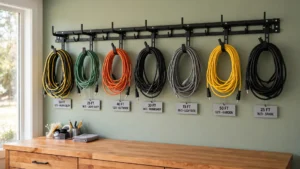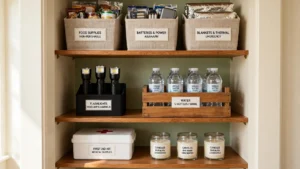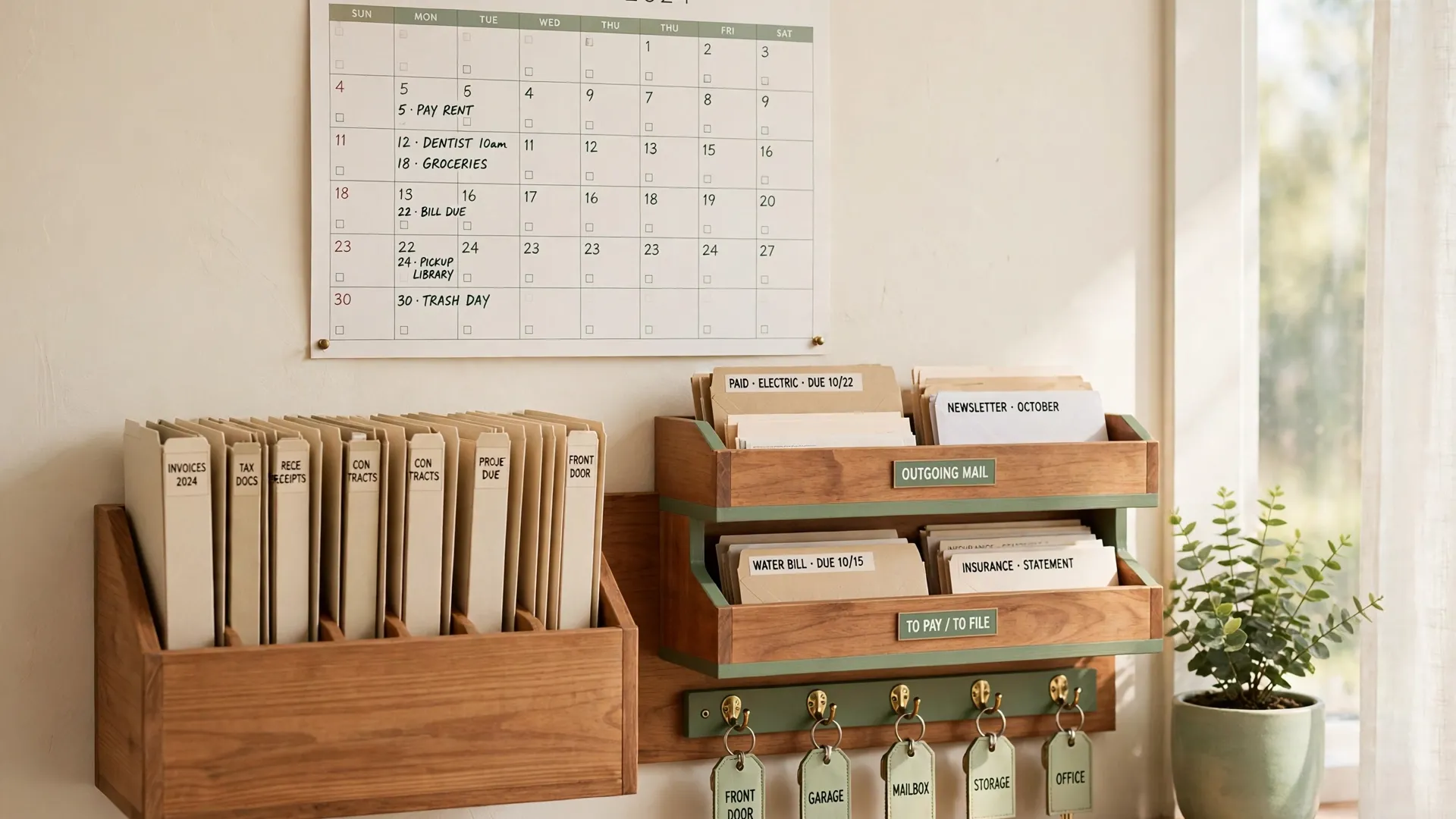
Picture this: it is Monday morning, everyone knows where they need to be, and not a single permission slip is lost in a pile on the kitchen counter. That calm start is exactly what a good family calendar and paperwork system gives you every single day. When dates and documents have a proper home, your whole household runs more smoothly.
You do not need fancy tools or a bigger house to get there. All you need is a simple system that the whole family can follow. These 18 family calendar and paperwork organization ideas will help you keep every date visible, every paper sorted, and every important document easy to find.
1. One Wall Calendar for the Whole Family
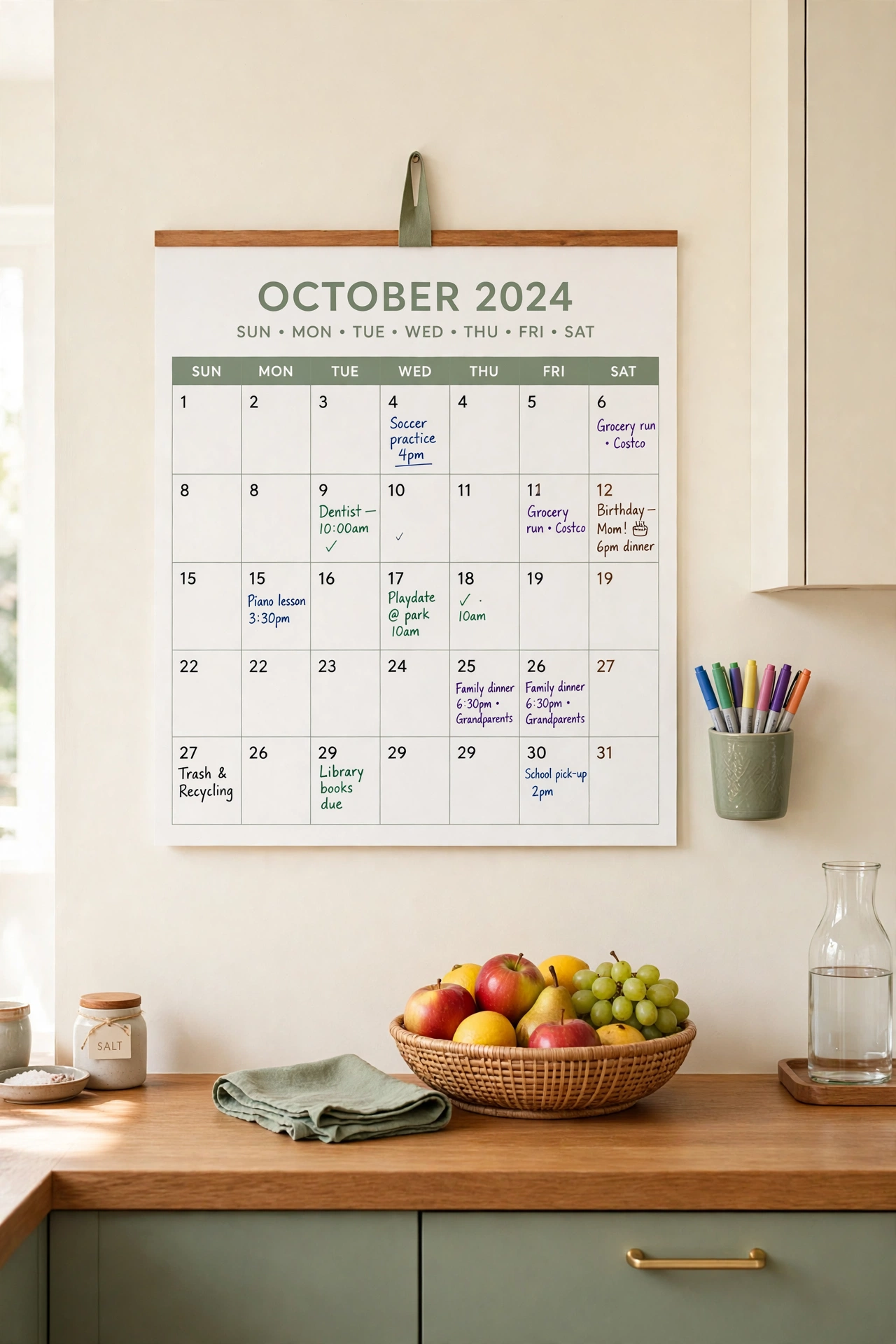
A single wall calendar in a busy spot is the heart of a family schedule. Choose a large calendar and hang it where everyone passes daily, like the kitchen wall or the hallway near the front door. Write every event on it as soon as you learn about it, from school trips to work meetings to birthday parties.
One shared calendar stops the confusion of separate planners and phone apps that nobody else can see. Everyone in the house can check the calendar before making plans. Pick a calendar with large boxes so there is room to write times and details clearly.
2. Color-Code Each Family Member
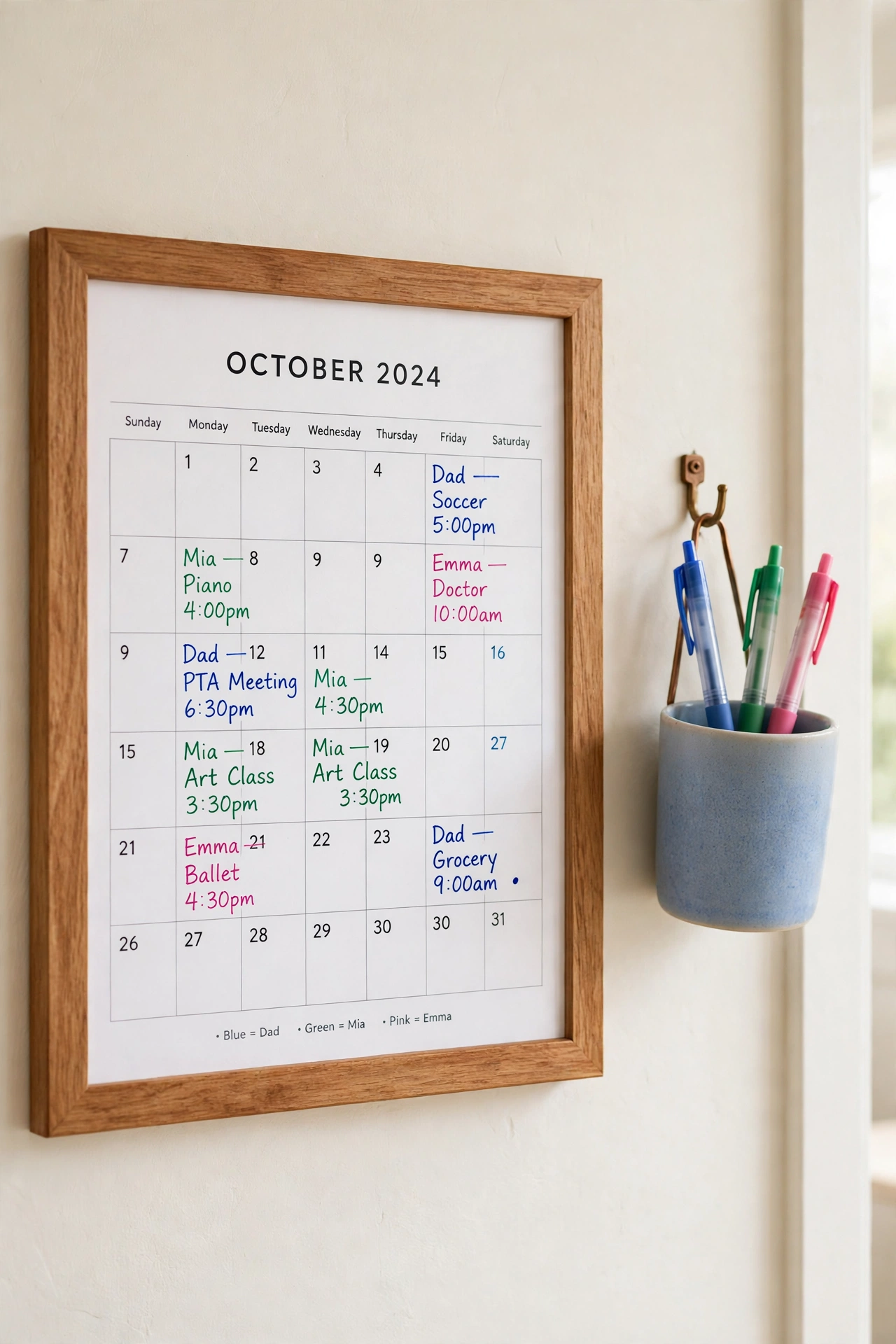
Color coding turns a crowded calendar into a schedule you can read at a glance. Give each family member one color and use a matching pen or marker for all of their events. Blue for one child, green for another, and pink for you makes it easy to see who has what on any given day.
This simple trick also helps children take ownership of their own schedule. A child can look at the calendar and spot their color without reading every word. Keep the pens in a small cup beside the calendar so the color system stays easy to use.
3. A Command Center by the Door
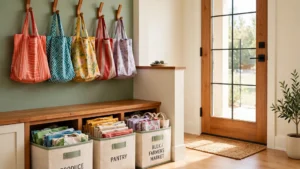
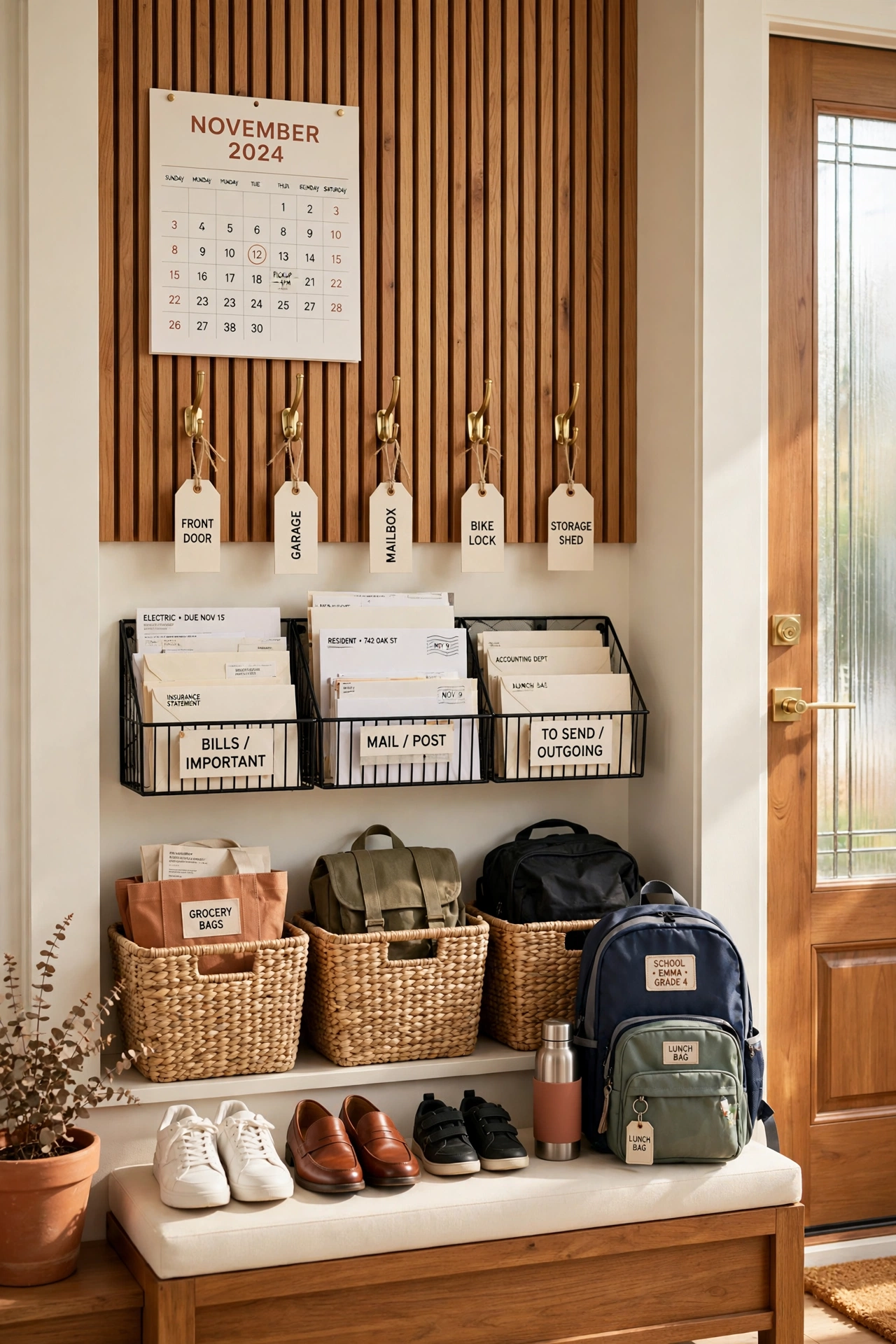
A command center by the front door keeps the whole family system in one place. Set up a small wall area with the calendar, a few hooks for keys, and a basket for bags and lunch boxes. Everything the family needs in the morning waits in the same spot, so nobody rushes around searching.
This area also gives paperwork a landing zone the moment it comes through the door. School letters go straight into the tray instead of onto the kitchen table. For more ways to set up this spot, see these entryway organization ideas that keep the busiest corner of the house tidy.
4. Weekly Meal Plan on the Calendar
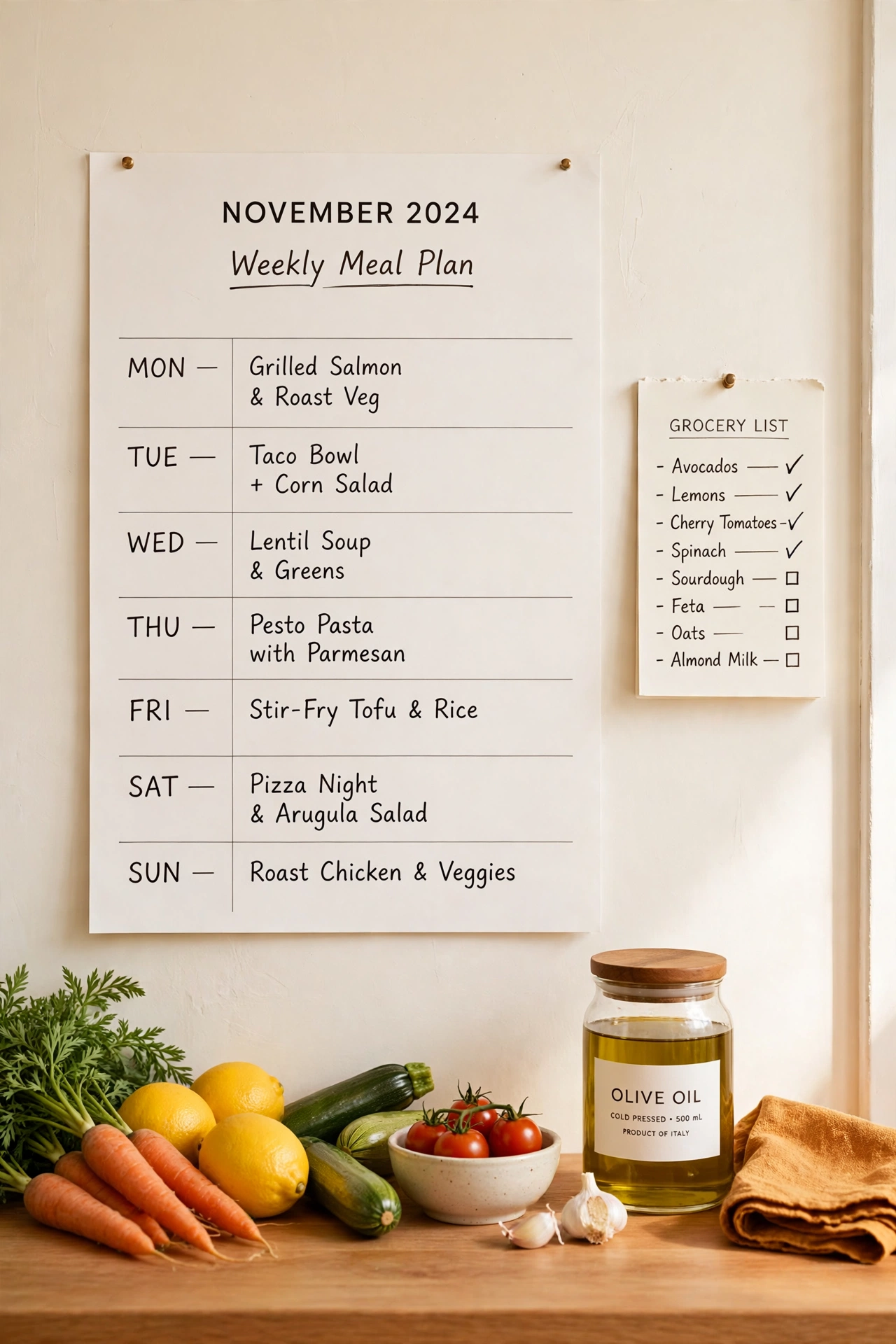
Writing the weekly meal plan on the family calendar saves time and stops the daily question of what to cook. Pick one evening each week to plan seven dinners, then write them on the calendar so everyone knows what to expect. This also makes the grocery list easy to write, because you shop from the plan.
A meal plan on the calendar helps you use up food before it goes bad and keeps shopping trips short and focused. Let children pick one dinner each week so they feel part of the plan. Over time, the calendar becomes a record of the meals your family enjoys most.
5. School Dates and Deadlines in One Place
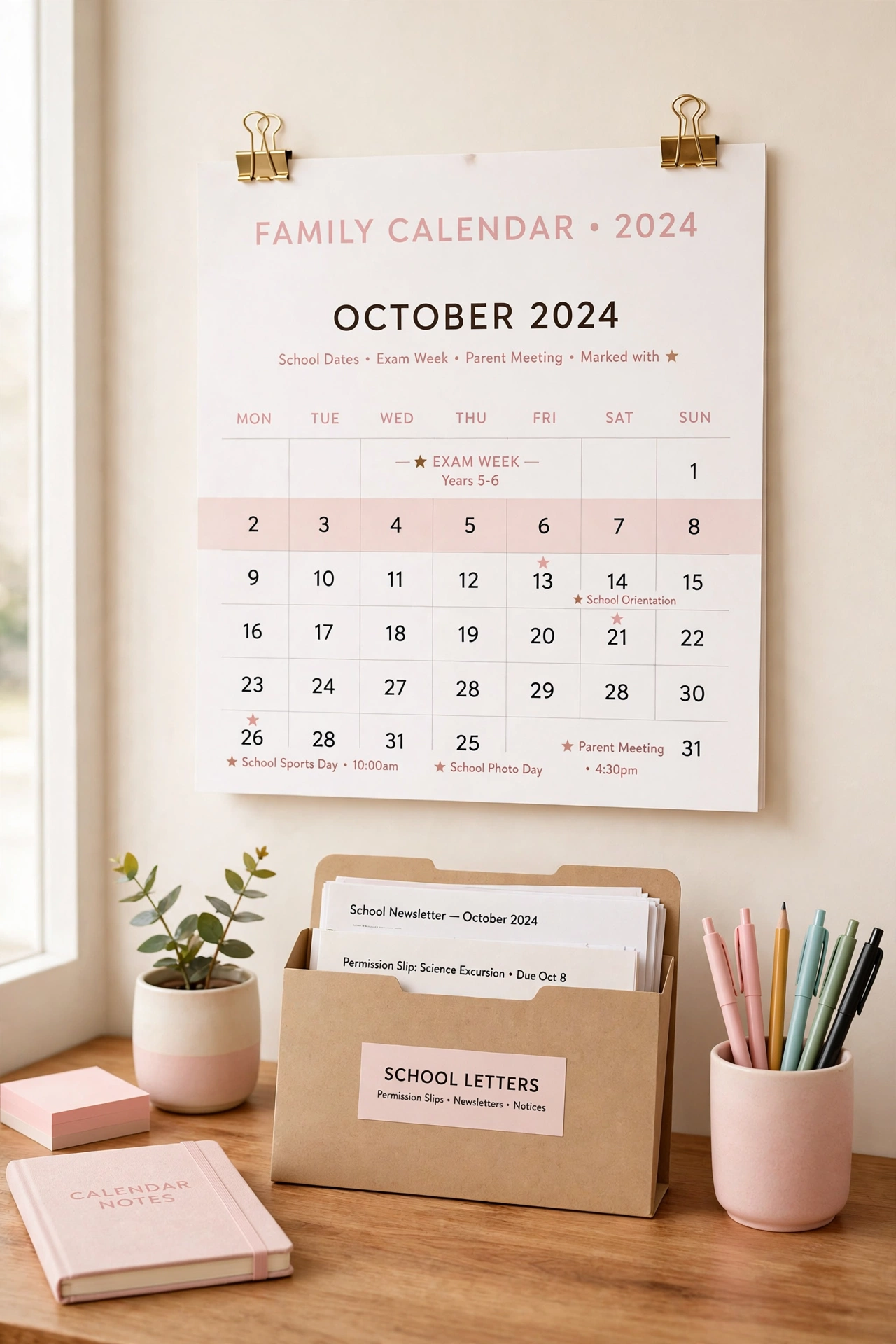
School dates pile up fast, from exam weeks and project deadlines to sports days and parent meetings. Write every school date on the family calendar the day the notice arrives, and add a small star next to the ones that need preparation. This keeps surprises away and gives everyone time to get ready.
Keep a small folder of school letters beside the calendar so you can check details when you need them. At the start of each school term, sit down with the school calendar and copy all the key dates at once. This one habit protects the whole family from missed deadlines.
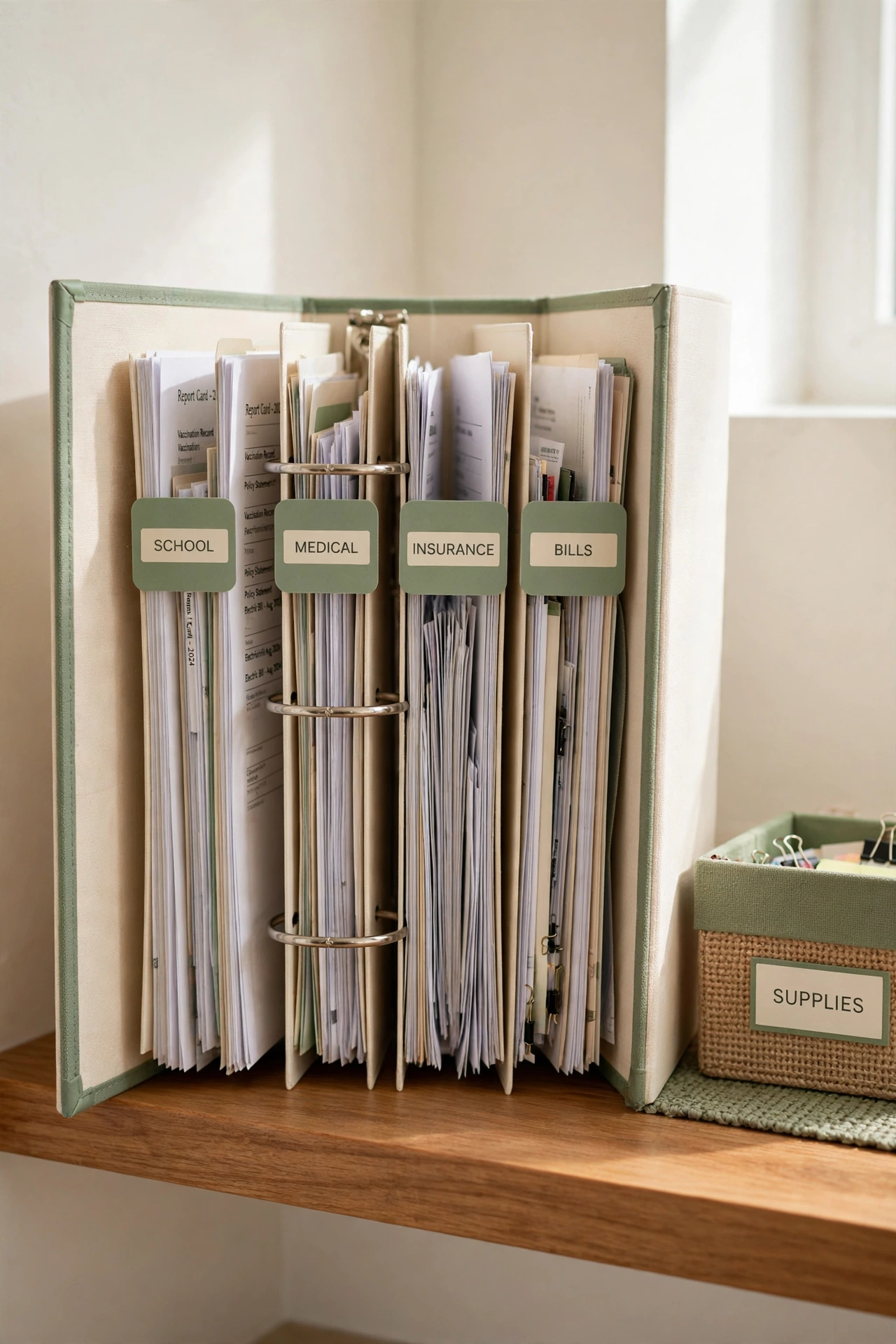
6. A Binder for Important Papers
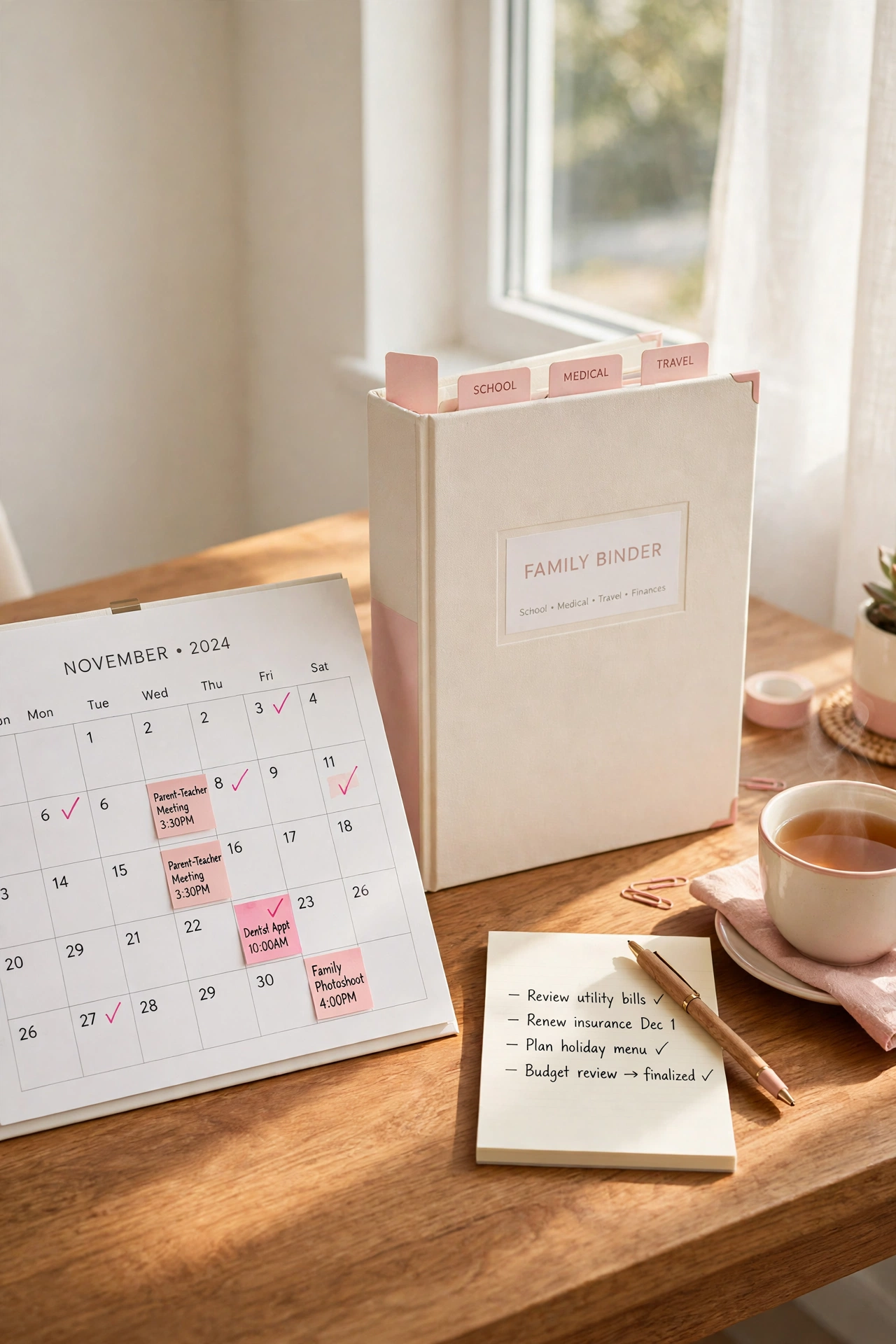
A sturdy binder with labeled dividers is the safest home for the papers your family cannot afford to lose. Use one binder for the whole household and divide it into sections for birth certificates, insurance, medical records, and school documents. Every important paper goes straight into the binder instead of into a drawer.
Keep the binder in a fixed spot, like a shelf in the office or a cupboard near the front door. Tell every family member where it lives so anyone can find it in an emergency. A binder you can grab in one hand is far better than a pile of papers scattered through the house.
7. Labeled Folders by Category
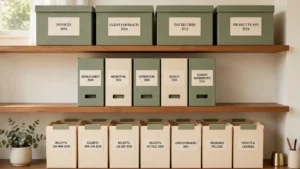
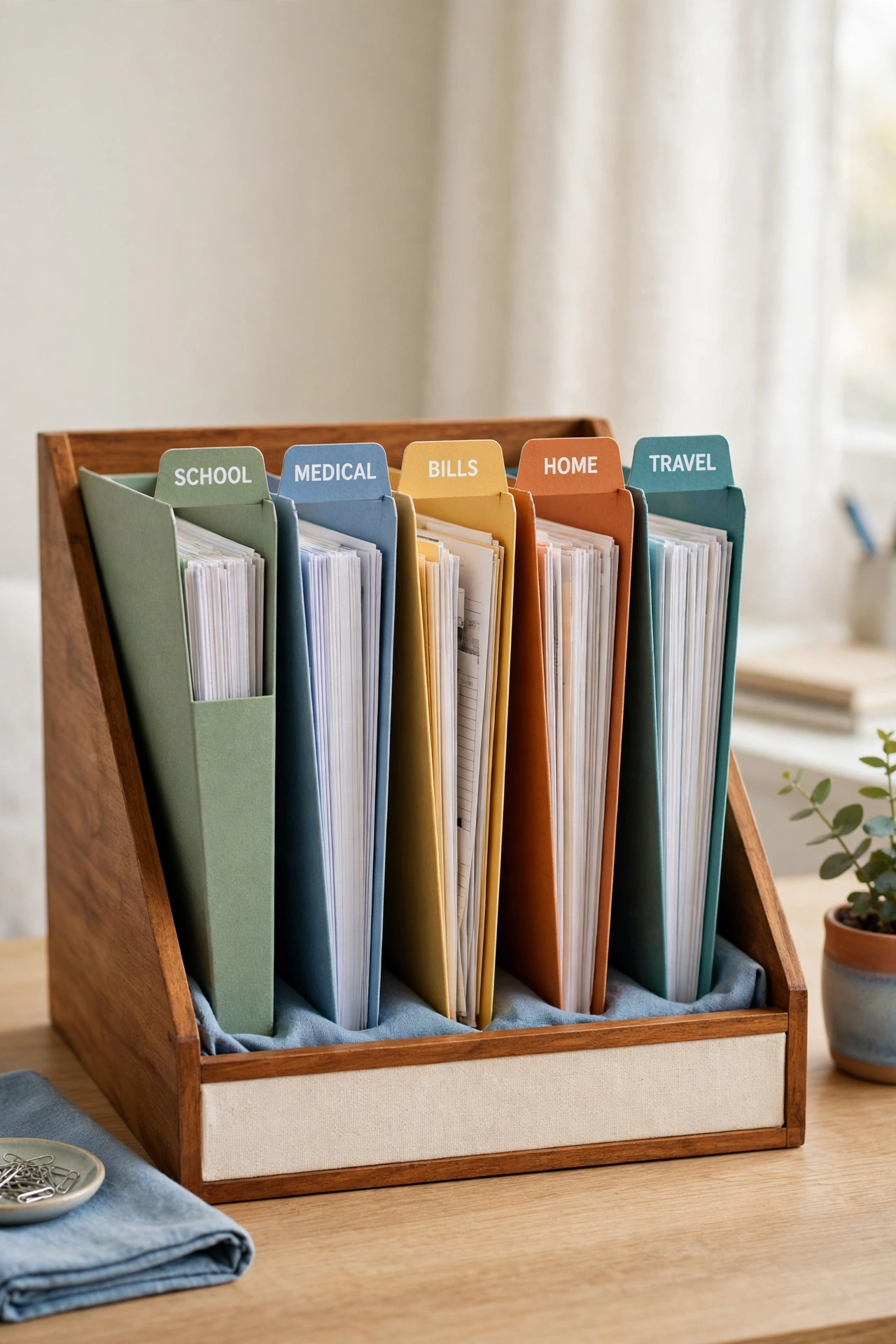
Labeled folders by category turn a messy stack of papers into a filing system anyone can use. Create a folder for each category, like school, medical, bills, home, and travel, and label each one clearly on the front tab. When a paper arrives, it takes only a few seconds to slip it into the right folder.
Use the same color for each category as you use on the calendar, so the whole system matches. Store the folders upright in a file box or a drawer so you can flip through them fast. Clear labels mean even a child can file a paper in the correct place.
8. A Tray for Incoming Mail
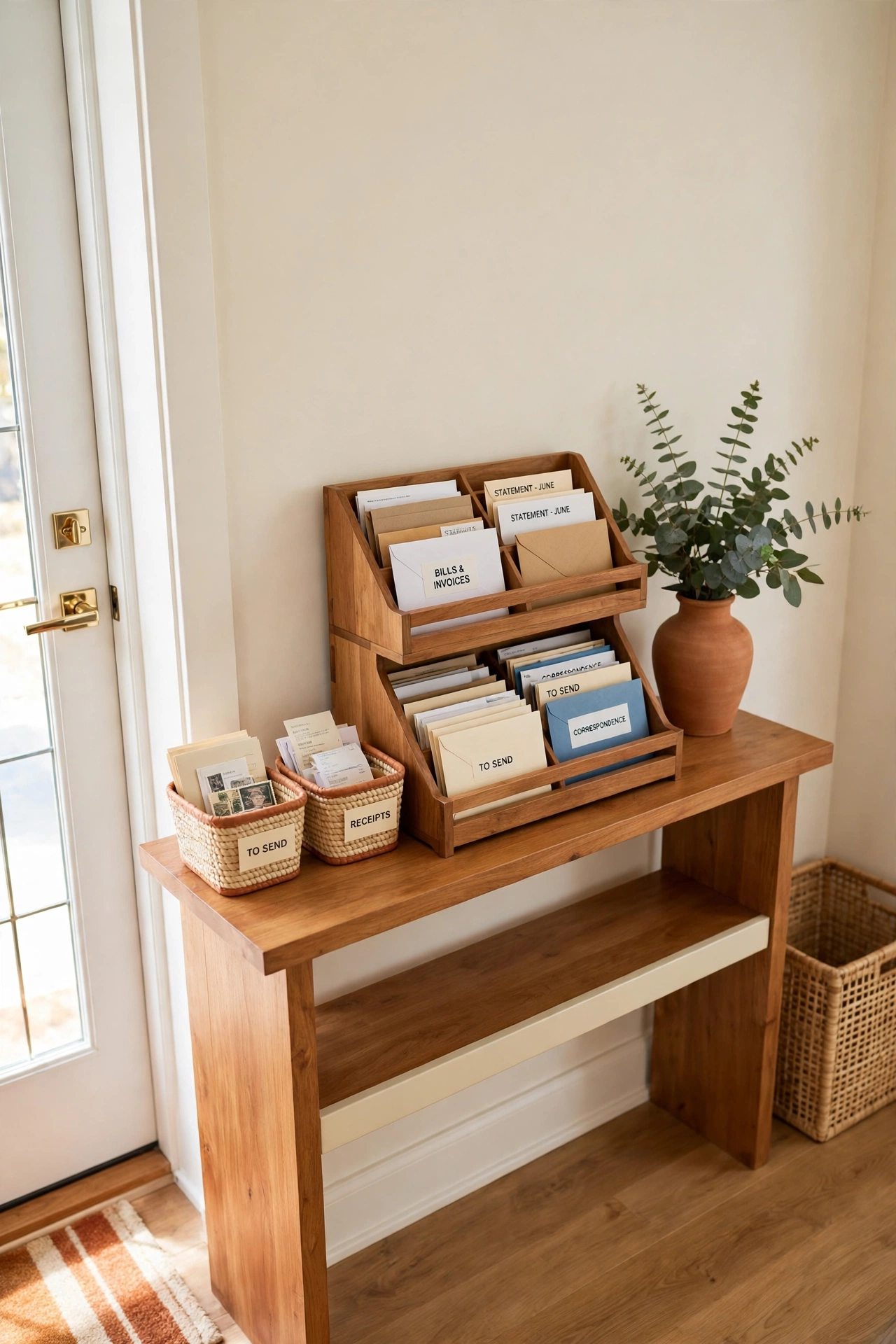
An incoming mail tray catches every letter the moment it enters the house. Place a tray on the table by the front door or on the kitchen counter, and make it a rule that all mail goes there first. This one habit stops mail from spreading across every surface in the home.
Sort the tray every evening or every second day, and move each piece to its folder, its binder, or the recycling bin. A tray with two levels works well, one for mail that needs action and one for mail that only needs filing. Your counters stay clear and nothing important gets buried.
9. Sort Paper Every Sunday
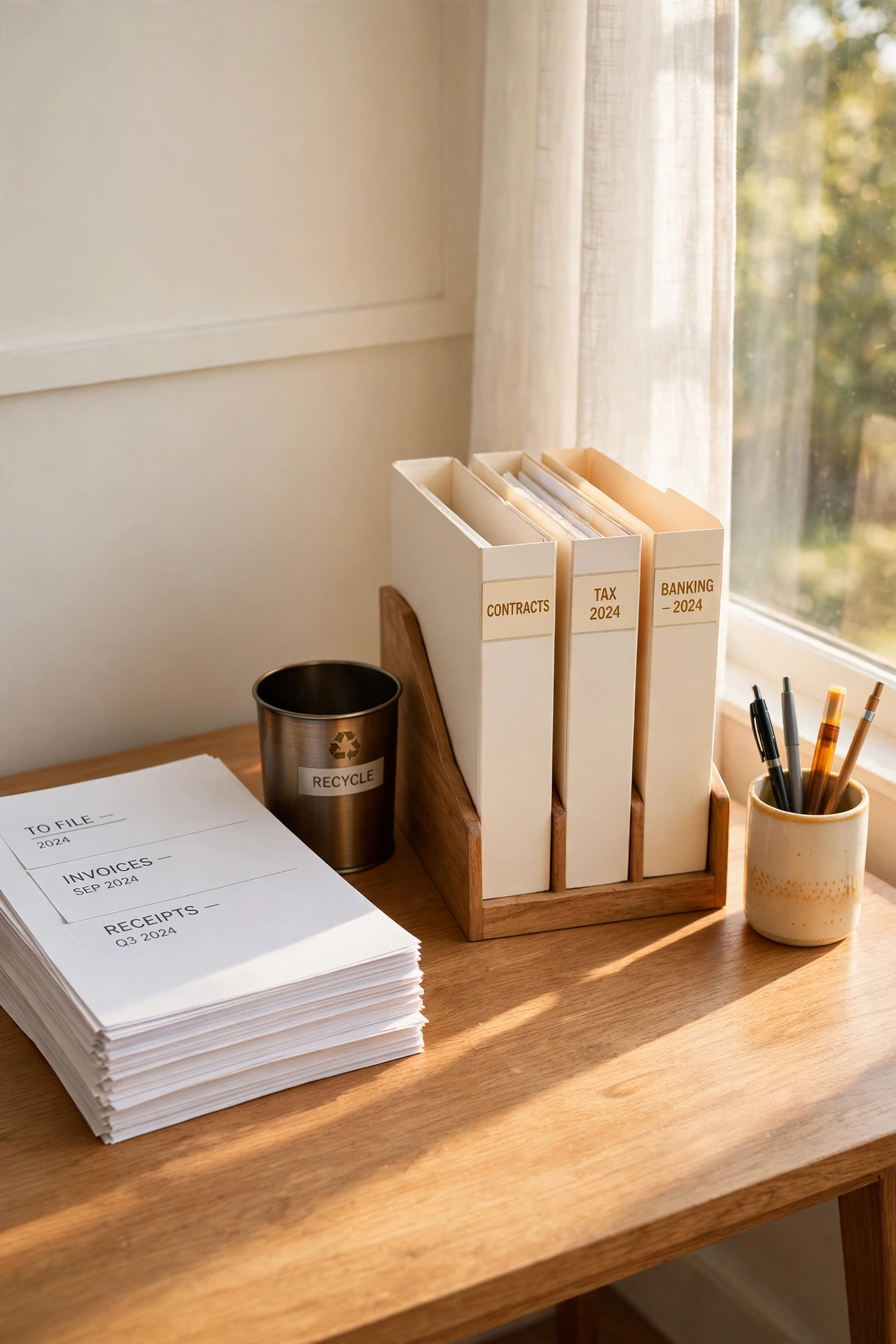
A weekly paper sort takes only ten minutes and keeps the whole system from falling apart. Pick Sunday evening as your paper time, and go through the mail tray, the school bags, and any papers left on the counter. File what you need, act on what is urgent, and recycle the rest.
This small weekly habit is the secret behind every tidy home. Papers never pile up because they never get more than a week old. For help with the piles that already exist, these paper clutter organization ideas show how to clear them for good.
10. Keep a Birthday and Anniversary List
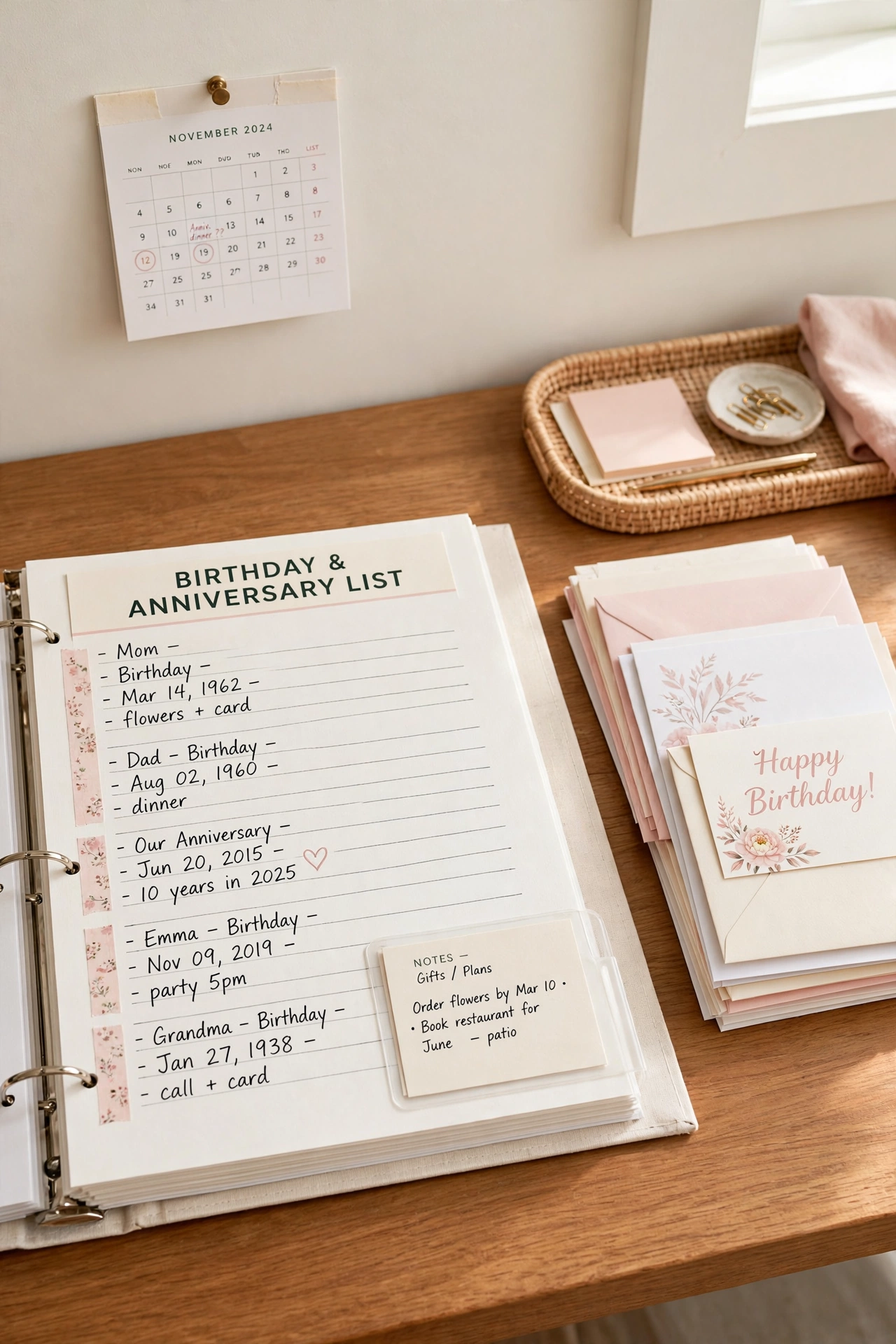
A birthday and anniversary list keeps every special date in one place so you never miss one. Write all the birthdays and anniversaries on a single sheet at the front of your family binder, and copy them onto the wall calendar at the start of each year. Add a reminder two weeks before each date so there is time to buy a gift or a card.
Update the list once a year, usually in January, when you set up the new calendar. Include the birthdays of close friends and relatives as well as family. This simple list turns last-minute panic into calm, planned celebrations.
11. Appointment Cards in One Spot
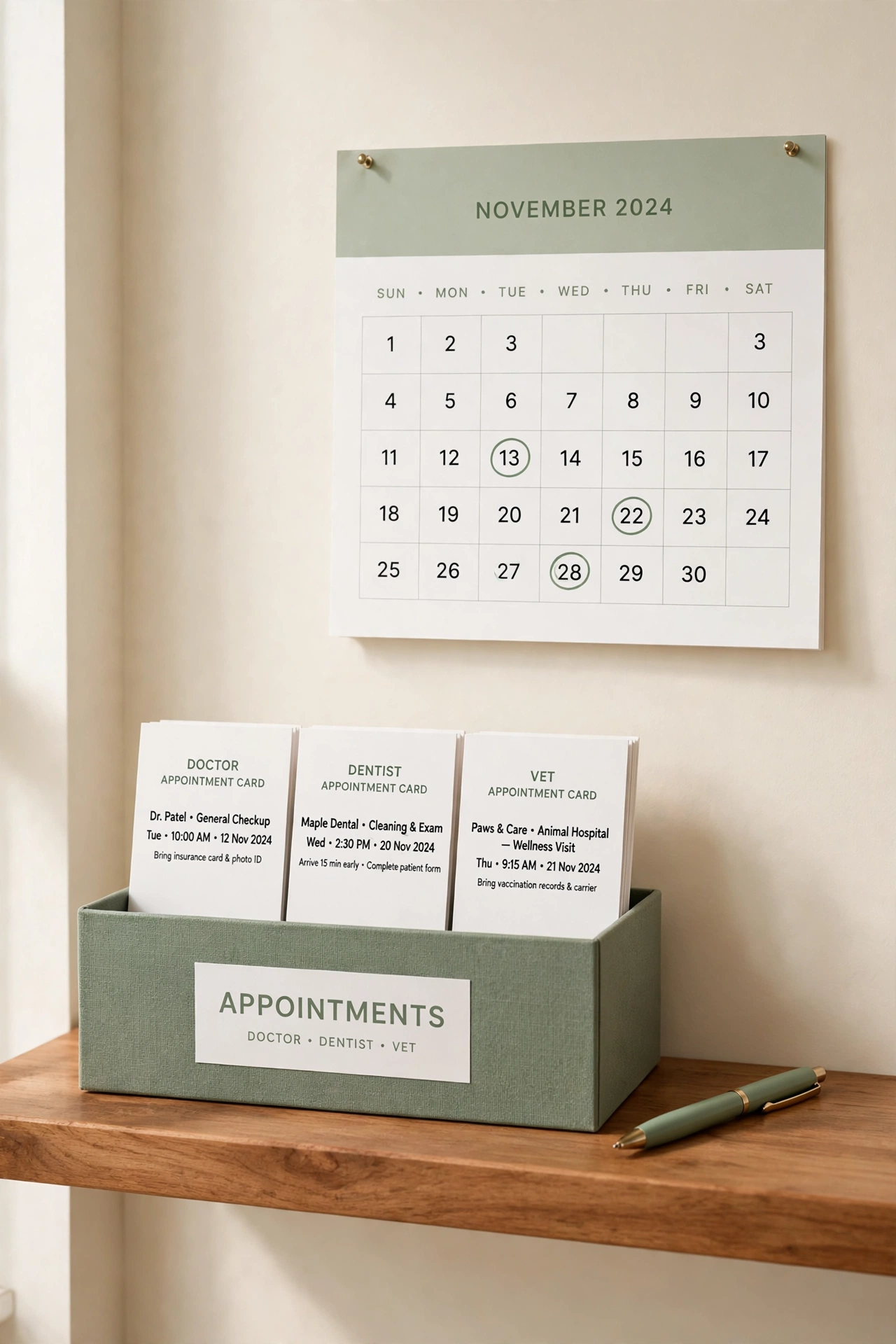
Appointment cards for the doctor, the dentist, and the vet have a habit of vanishing just when you need them. Keep all of them in one small box or one pocket of the family binder, and write each appointment on the wall calendar the moment you book it. The card and the calendar then back each other up.
When an appointment is over, move the card to a folder for that family member or throw it away if it is no longer needed. A single spot for appointment cards means you can check the time and the address in seconds. This saves phone calls and missed appointments.
12. A Homework Folder for Each Child
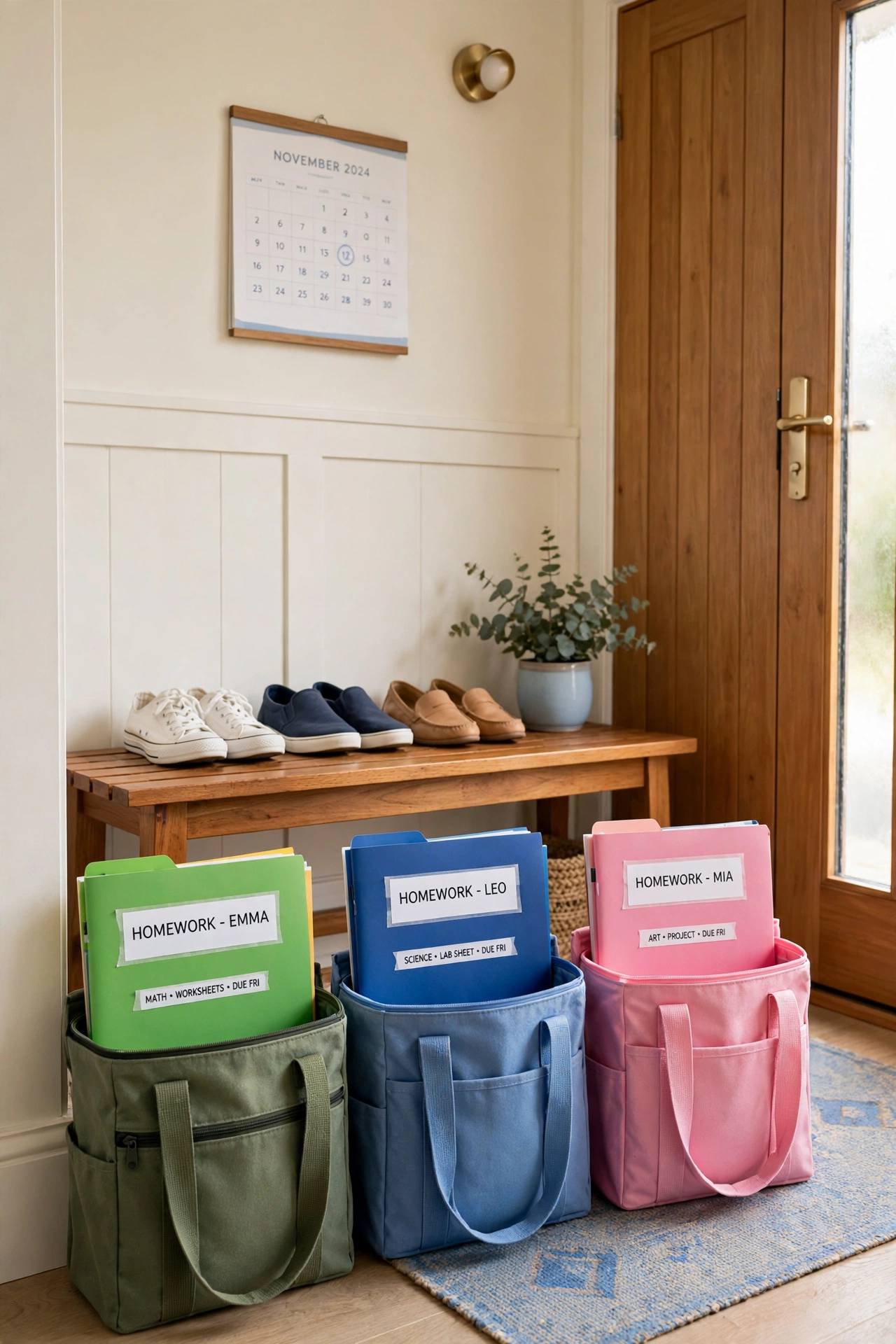
A homework folder for each child keeps schoolwork separate and easy to track. Give every child a folder in their own color, and use it for homework sheets, reading logs, and permission slips. The folder travels between school and home in the school bag, so nothing gets lost on the way.
Check the folder each evening and sign anything that needs a signature. When homework is done, it goes straight back into the folder. For a full system for school papers at home, see these school paper organization ideas that keep every sheet in its place.
13. Store Medical Records Together
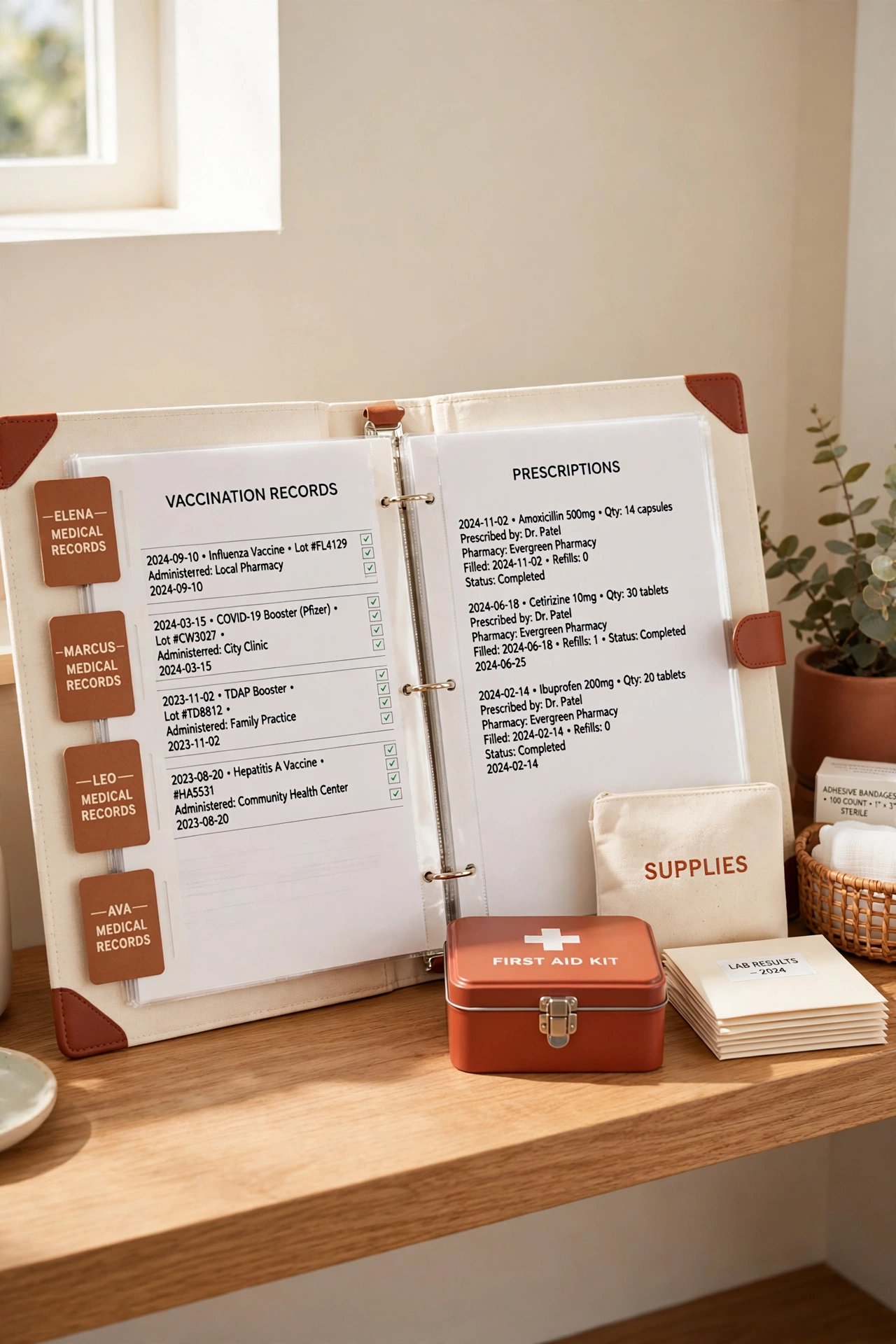
Medical records belong together in one section of the family binder, with a separate divider for each person. Keep vaccination records, prescriptions, allergy notes, and test results in that section, in date order with the newest paper at the front. When a doctor asks for a record, you can find it in seconds.
Bring the relevant section to medical appointments instead of the whole binder. After each visit, file the new papers the same day so the records never fall behind. A complete medical section saves time in emergencies and gives every doctor a clear history.
14. A Digital Backup of Key Documents
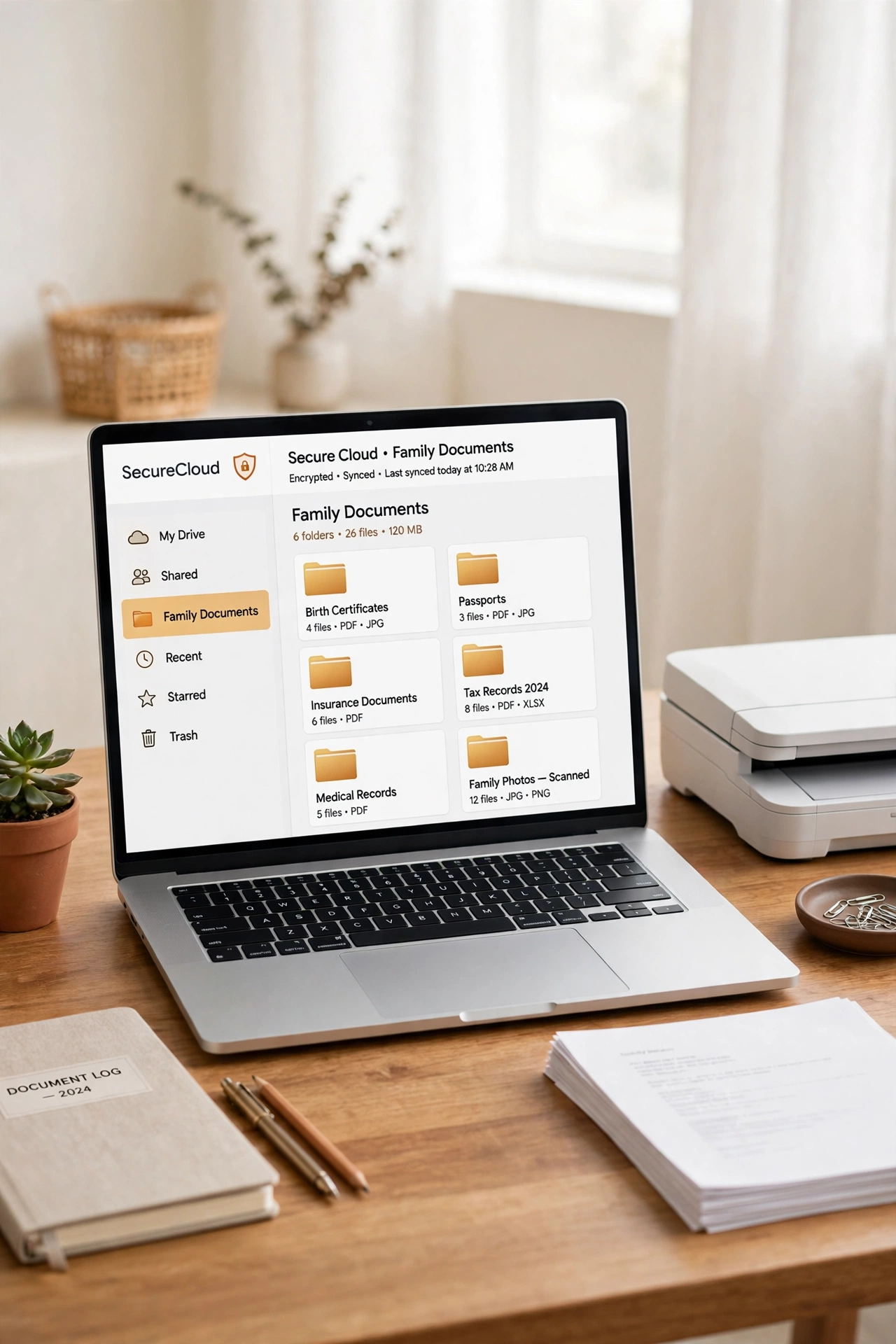
A digital backup protects your family if paper documents are lost or damaged. Scan or photograph the most important papers, like passports, birth certificates, and insurance policies, and store the copies in a secure cloud folder. Keep the folder organized with the same categories as your paper binder.
Update the digital copies whenever a paper document changes, and protect the folder with a strong password. A backup does not replace the original papers, but it gives you proof and peace of mind when you need it most. Check the folder once a year to make sure every file still opens.
15. A Monthly Review Routine
A monthly review routine keeps the family system fresh and working. On the first Sunday of each month, sit down with the calendar and the binder for fifteen minutes. Check the dates for the month ahead, move completed papers to long-term storage, and clear out anything that is no longer needed.
This short review also lets you spot patterns, like a busy week that needs extra planning. Add any new school dates or appointments to the calendar while you review. A monthly check-in stops small problems from growing into big piles.
16. Use a Magnetic Board for Reminders
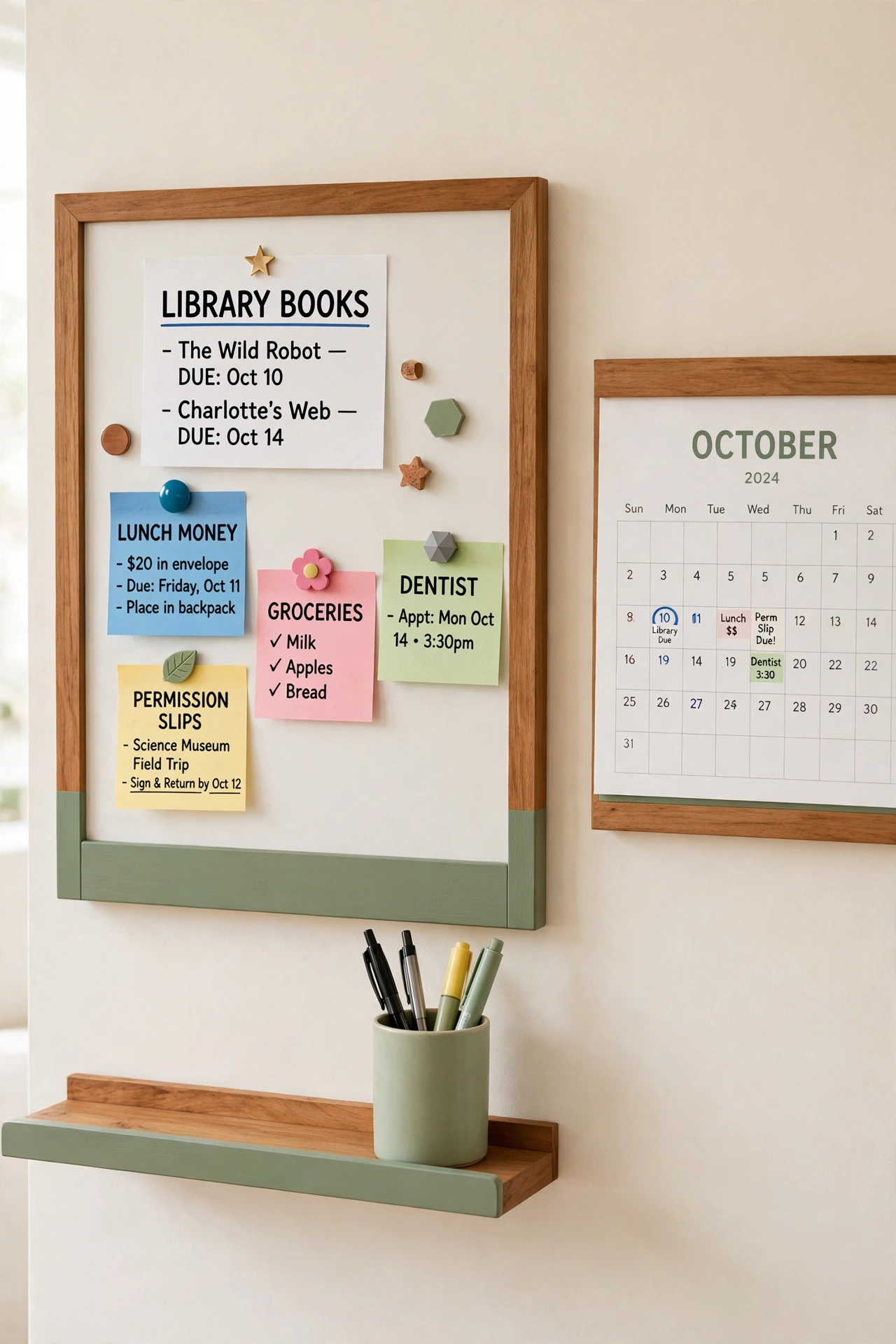
A magnetic board beside the calendar is perfect for reminders that change every day. Stick up notes about library books due back, lunch money, permission slips, and after-school pickups. The board holds the short-term reminders, while the calendar holds the long-term dates.
Clear the board every Sunday during your paper sort so old notes do not pile up. Use colorful magnets so each family member can spot their own notes fast. A board that is always current becomes a habit the whole family checks before leaving the house.
17. Keep Receipts in a Dated Envelope System
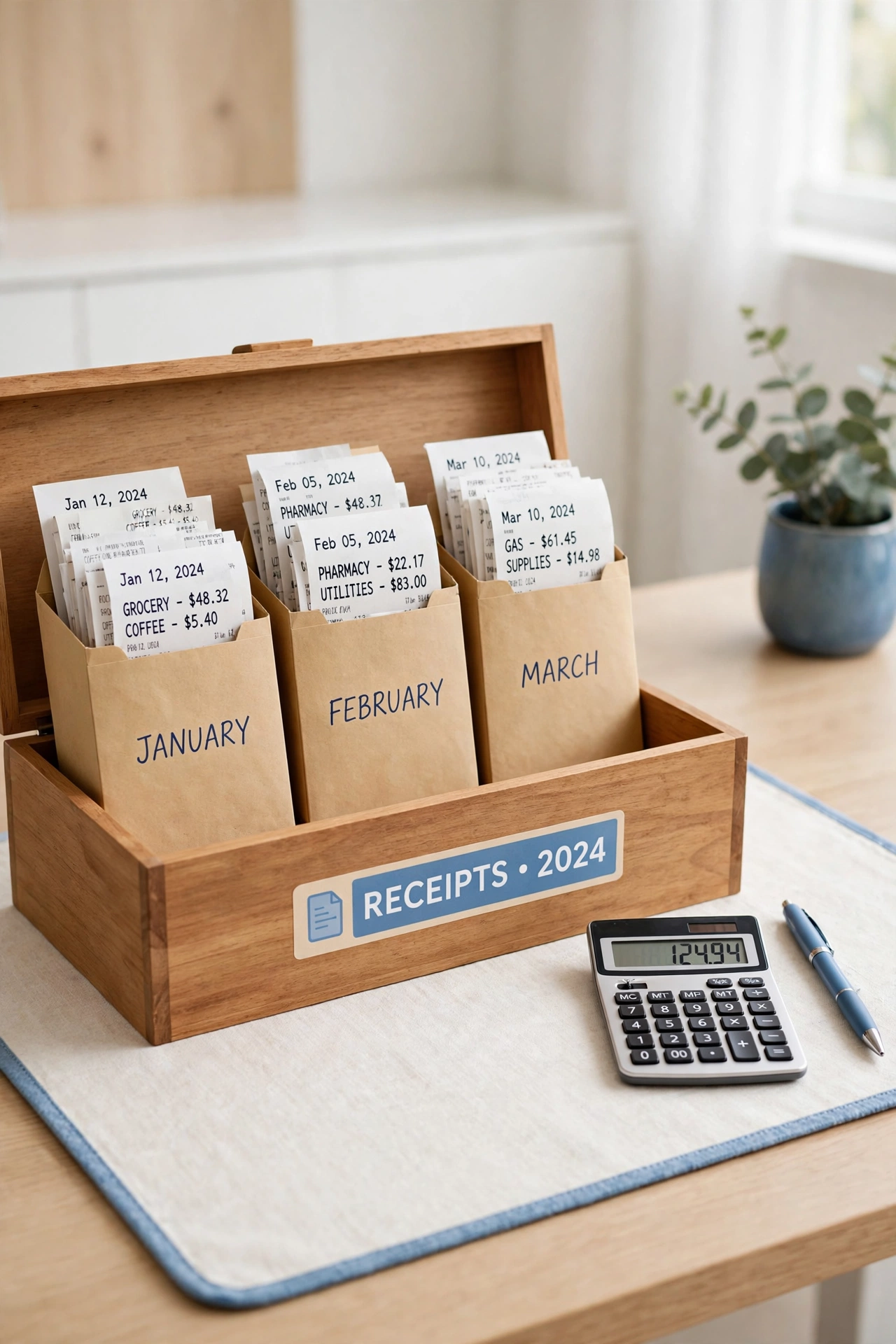
A dated envelope system keeps receipts organized without any fancy tools. Label one envelope for each month and drop every receipt into the envelope for that month. At the end of the year, you have twelve envelopes in order, ready for tax time or for checking a purchase.
Keep the current month envelope in the mail tray or in a small box near the front door, so receipts go in the moment you come home. Throw away receipts you no longer need during your monthly review. For more ideas on handling receipts, these receipt organization ideas show simple systems that work for any household.
18. Shred or File — Nothing Piles Up
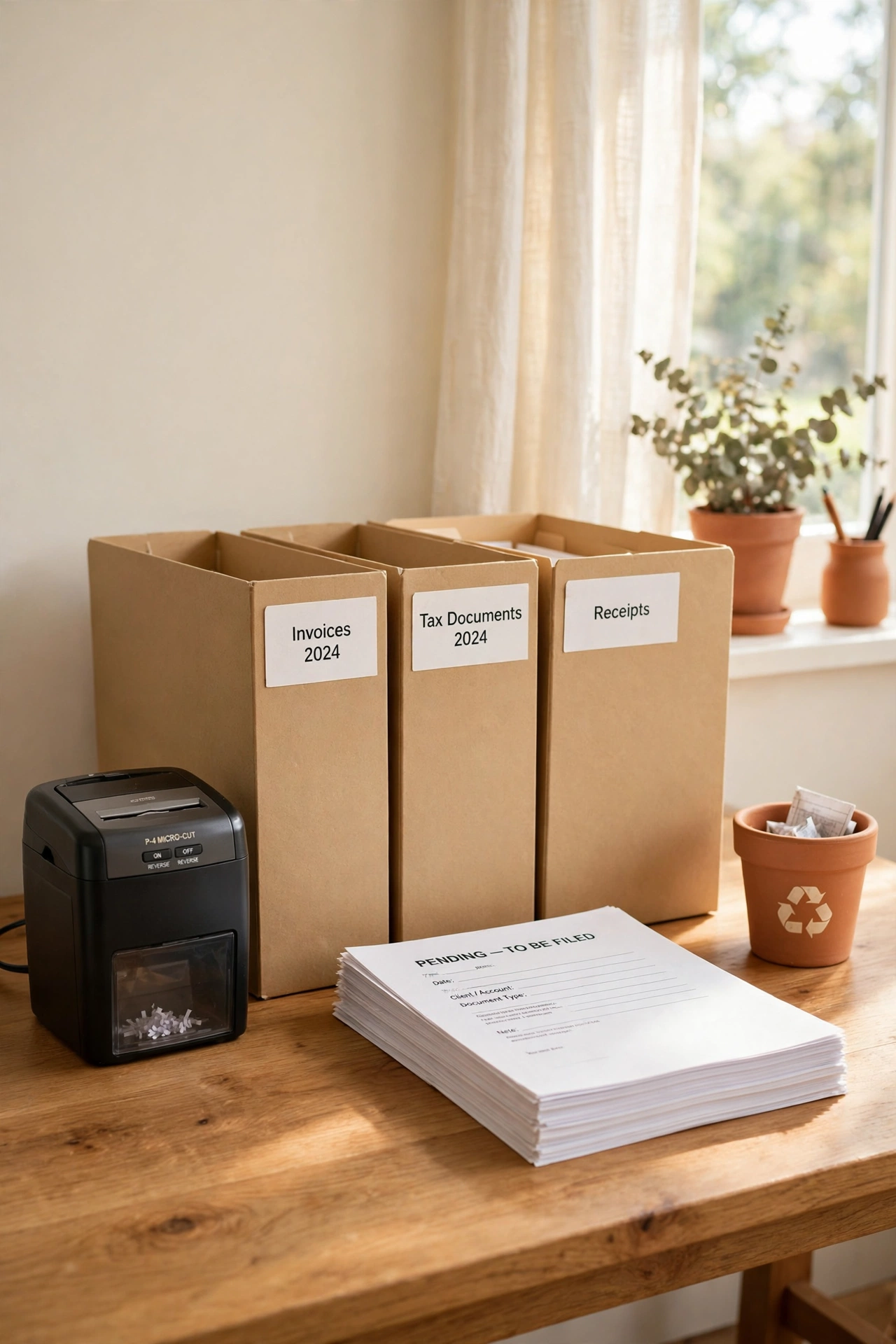
The final rule is simple: every paper gets shredded or filed, and nothing piles up. When a paper arrives, decide at once whether it needs keeping. If it does, file it in the right folder. If it does not, shred it or recycle it the same day.
This rule only works if the whole family follows it, so teach children to file their own school papers and to throw away old worksheets. Keep a small shredder near the filing area so the decision takes seconds. A home where every paper has a destination is a home that stays tidy without effort.
Conclusion
A family calendar and a paperwork system do not have to be complicated. From one wall calendar to a dated envelope for receipts, there is an idea here for every household and every schedule. The best system is the one your whole family will actually use every day.
Pick one or two ideas that fit your home and start today. Put up the calendar, label the folders, and enjoy a calmer household. For a tidy home beyond the paperwork, these nightly reset routine ideas will help you keep every room organized with just a few minutes each evening.
Frequently Asked Questions About Family Calendar and Paperwork Organization Ideas
How do I start organizing family paperwork?
Start with one wall calendar and one binder. Put every important date on the calendar and every important paper in the binder. Once those two tools are in place, add folders, a mail tray, and a weekly sort. A simple start that you keep up beats a perfect system that you abandon.
What is the best way to organize a family calendar?
Use one large wall calendar in a busy spot and color-code each family member. Write every event on the calendar as soon as you learn about it, and review the month ahead during your weekly paper sort. A single shared calendar keeps everyone on the same page.
How long should I keep family paperwork?
Keep birth certificates, passports, and property papers forever. Keep tax records and medical records for at least seven years. Keep school papers for the current school year, then keep only the best pieces. Shred anything with personal details before you recycle it.
How can I get my children to follow the system?
Give each child their own color on the calendar and their own homework folder. Let them write their own events and file their own papers. Children follow a system more willingly when they have a part in it and when they can see their own color and folder every day.
What should I do with old papers I no longer need?
Shred papers with personal details like account numbers and addresses. Recycle plain papers like old worksheets and flyers. Scan anything you might need later before you shred it, and store the scan in your digital backup folder.

Hi, I’m Emily! I turn messy corners into cozy, organized spots. DreamNestDecor is where I share simple, practical home ideas — decor, organization, and small-space solutions that work in real life, not just in photos. Every idea here is carefully researched before it’s shared.