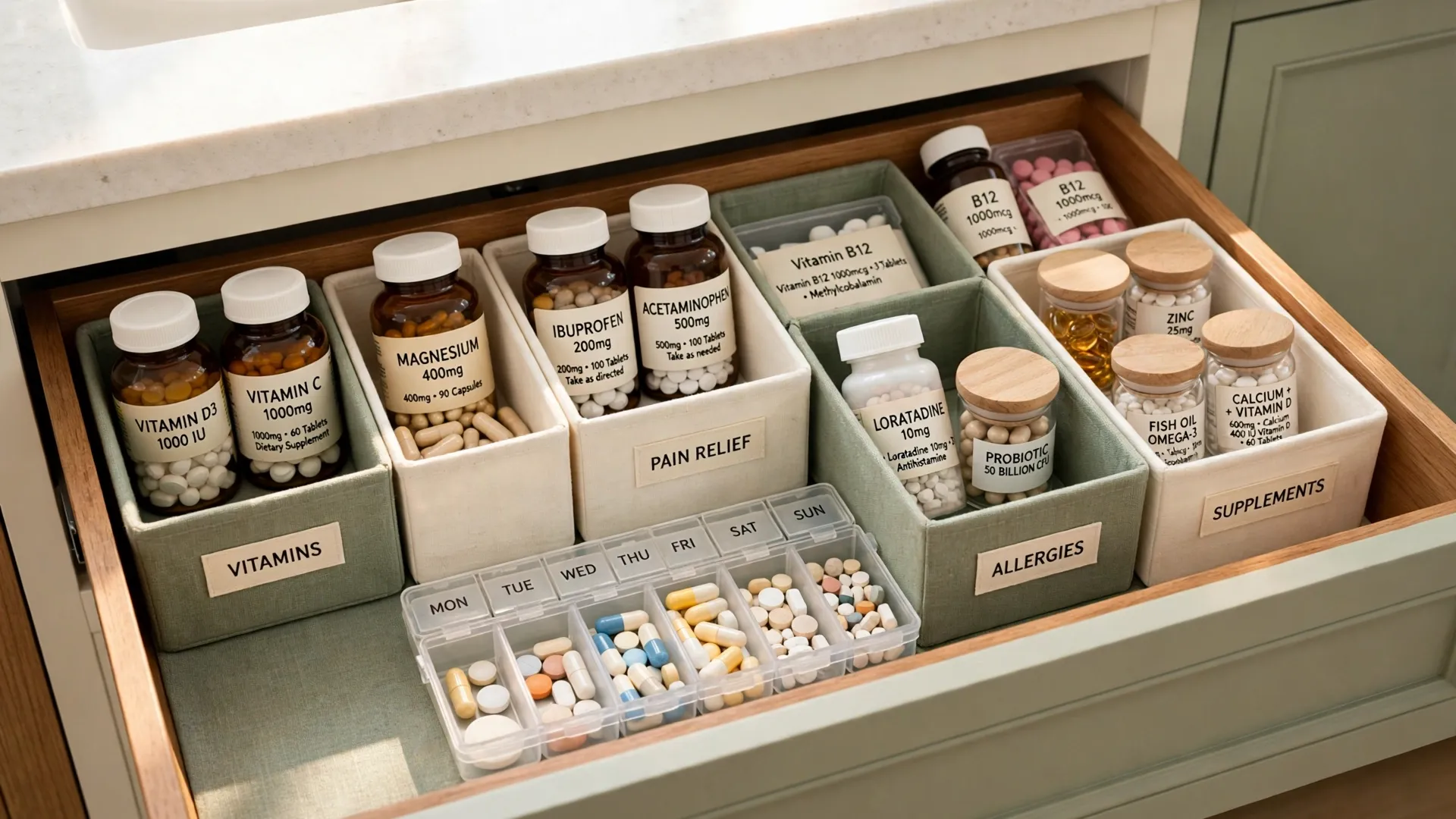
Picture this: it is late at night, someone in your home needs medicine, and you open the drawer to find exactly what you need in seconds. No digging through loose bottles, no expired packets hiding at the back, no panic. That small moment of calm is exactly what a well organized medicine drawer gives you every single day.
You do not need a bigger bathroom or expensive storage products to get there. All you need is the right system for your drawer and your family. These 21 medicine drawer organization ideas will help you keep every bottle, packet, and tool tidy, safe, and easy to find.
1. Clear the Drawer and Declutter First
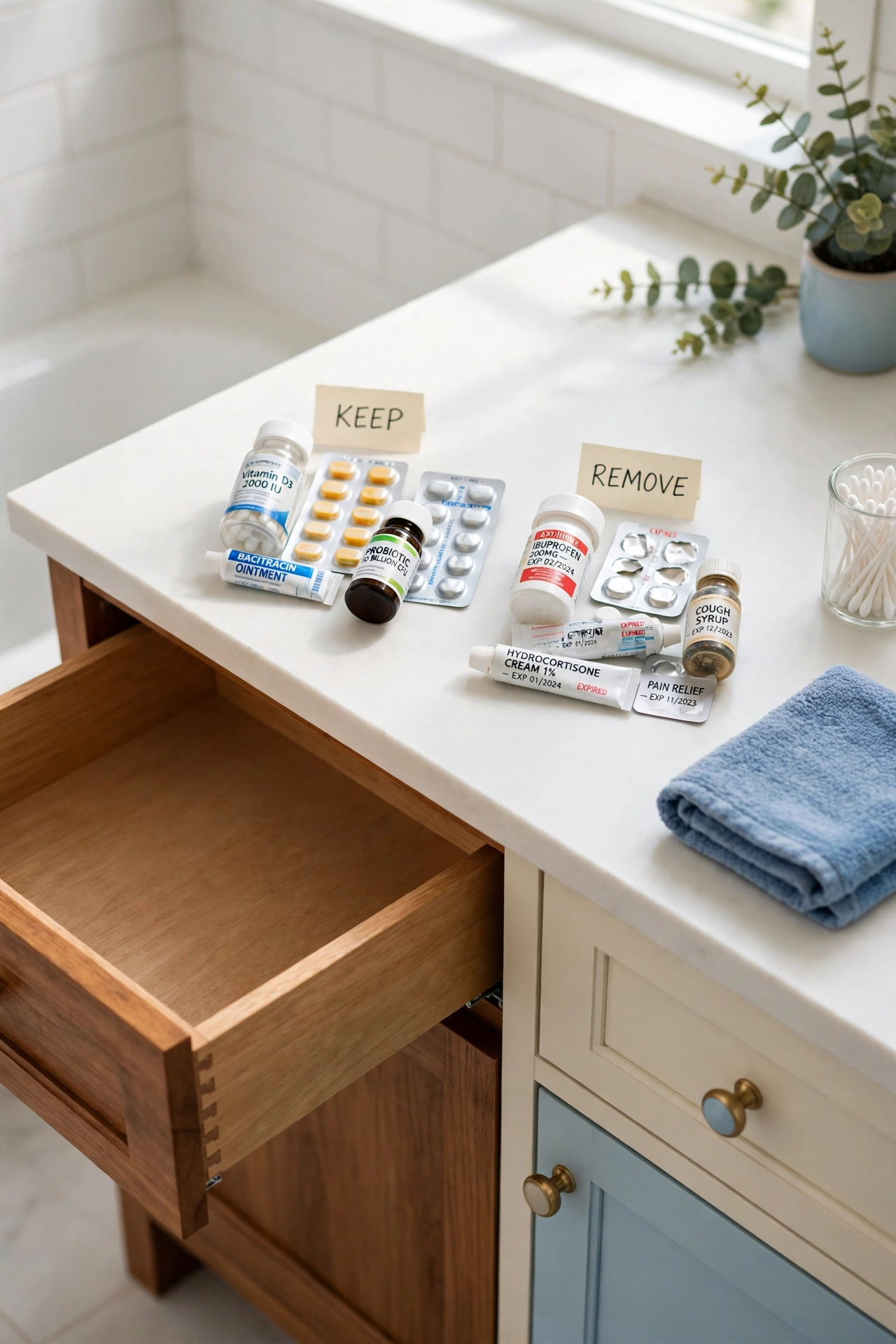
Before you buy a single bin or divider, empty the drawer completely and sort everything on a clean counter. Group the medicines into keep, toss, and return piles. Expired medicines, empty boxes, and items you no longer use should leave the drawer right away.
This fresh start shows you exactly how much space you really have and what you actually need to store. Wipe the drawer clean while it is empty so your new system starts on a spotless base. A clear drawer is the first step toward a system that stays tidy for months.
2. Adjustable Drawer Dividers
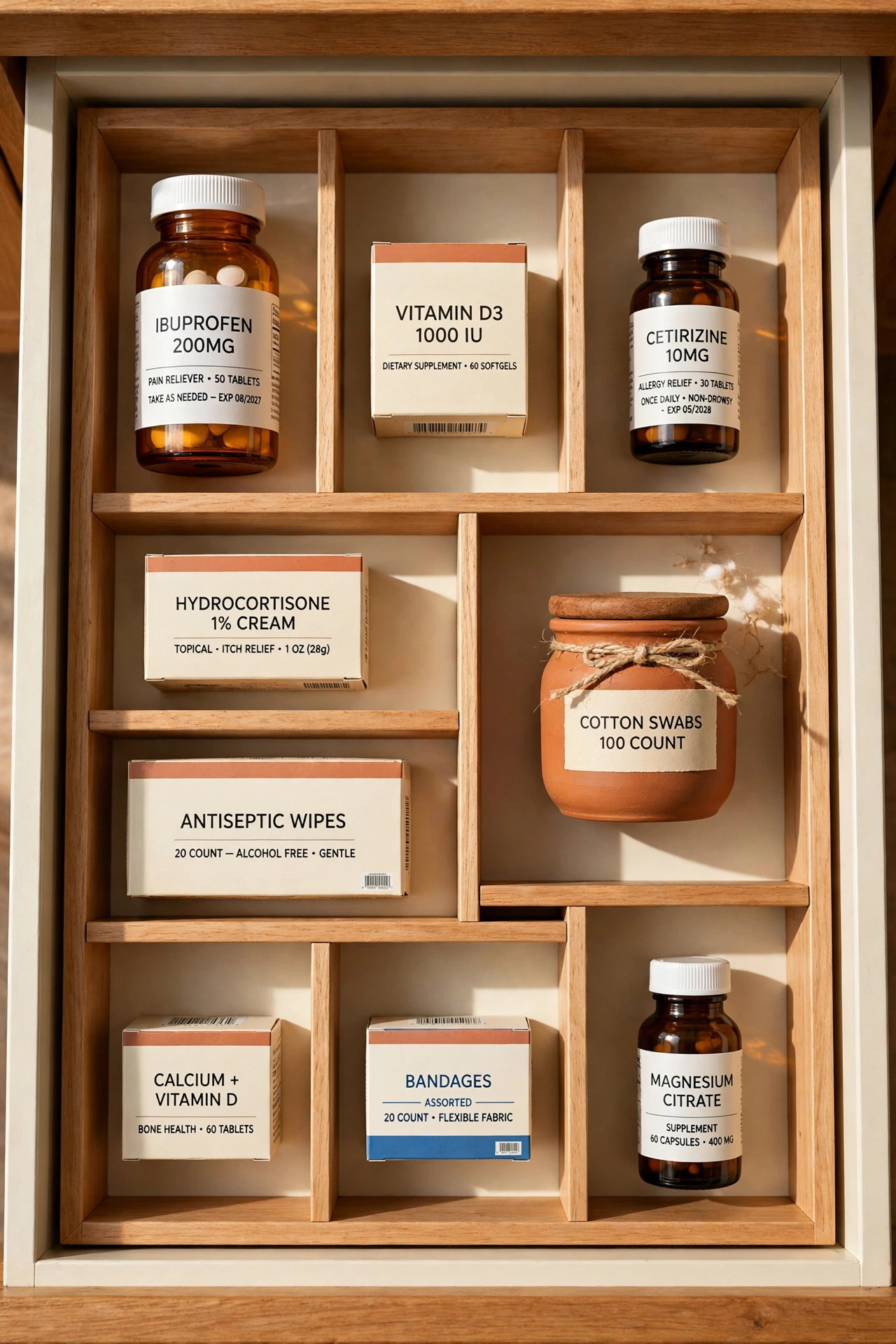
Adjustable dividers are the simplest way to give a medicine drawer real structure. Slide the dividers into place to create sections that match the size of your bottles and boxes. When your collection changes, you can move the dividers in minutes without buying anything new.
Choose dividers in wood or sturdy plastic that fit your drawer depth. For more ways to keep drawers tidy, see these bathroom drawer organization ideas. A divided drawer stops bottles from sliding into a jumbled pile every time you open and close it.
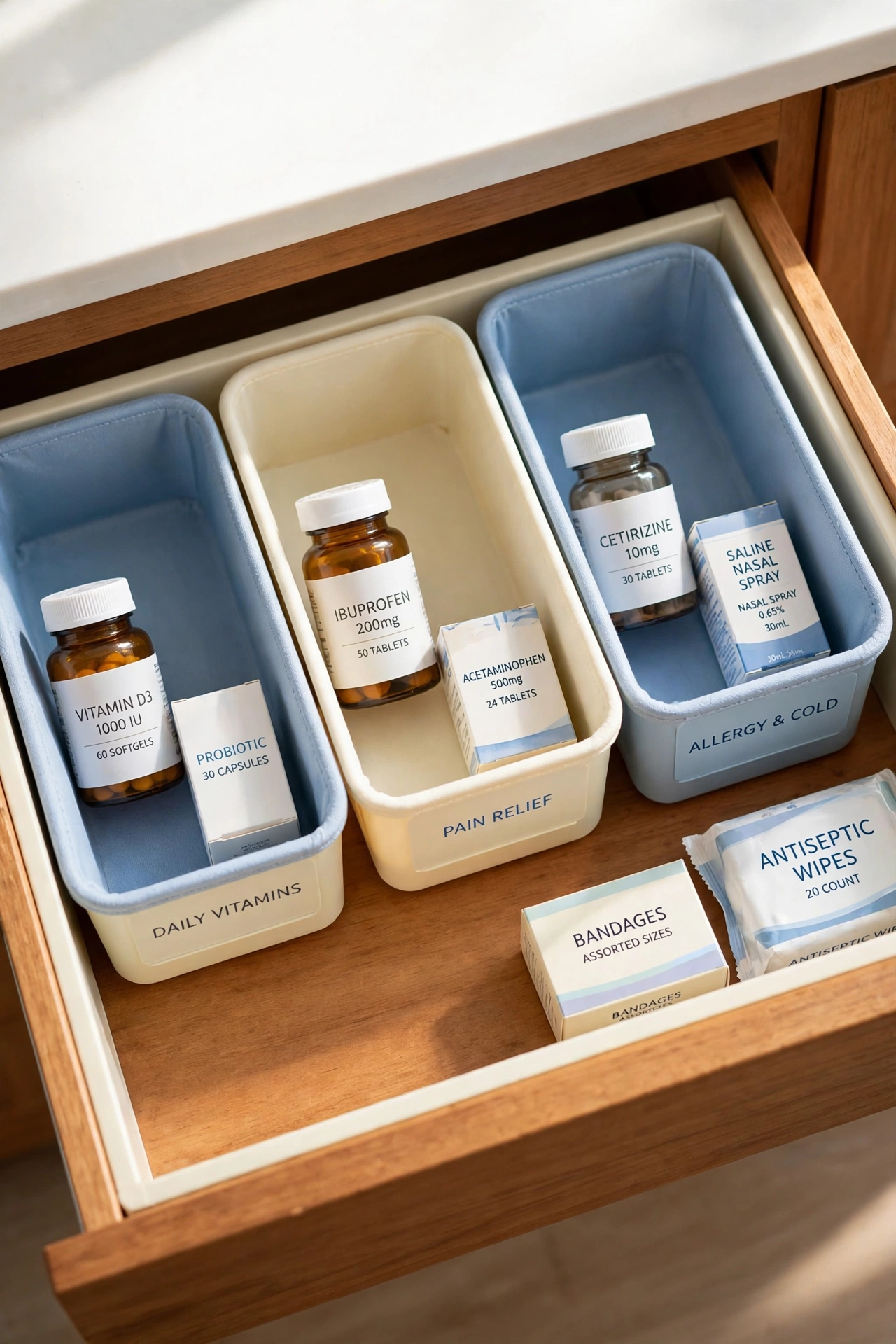
3. Small Bins for Pill Bottles
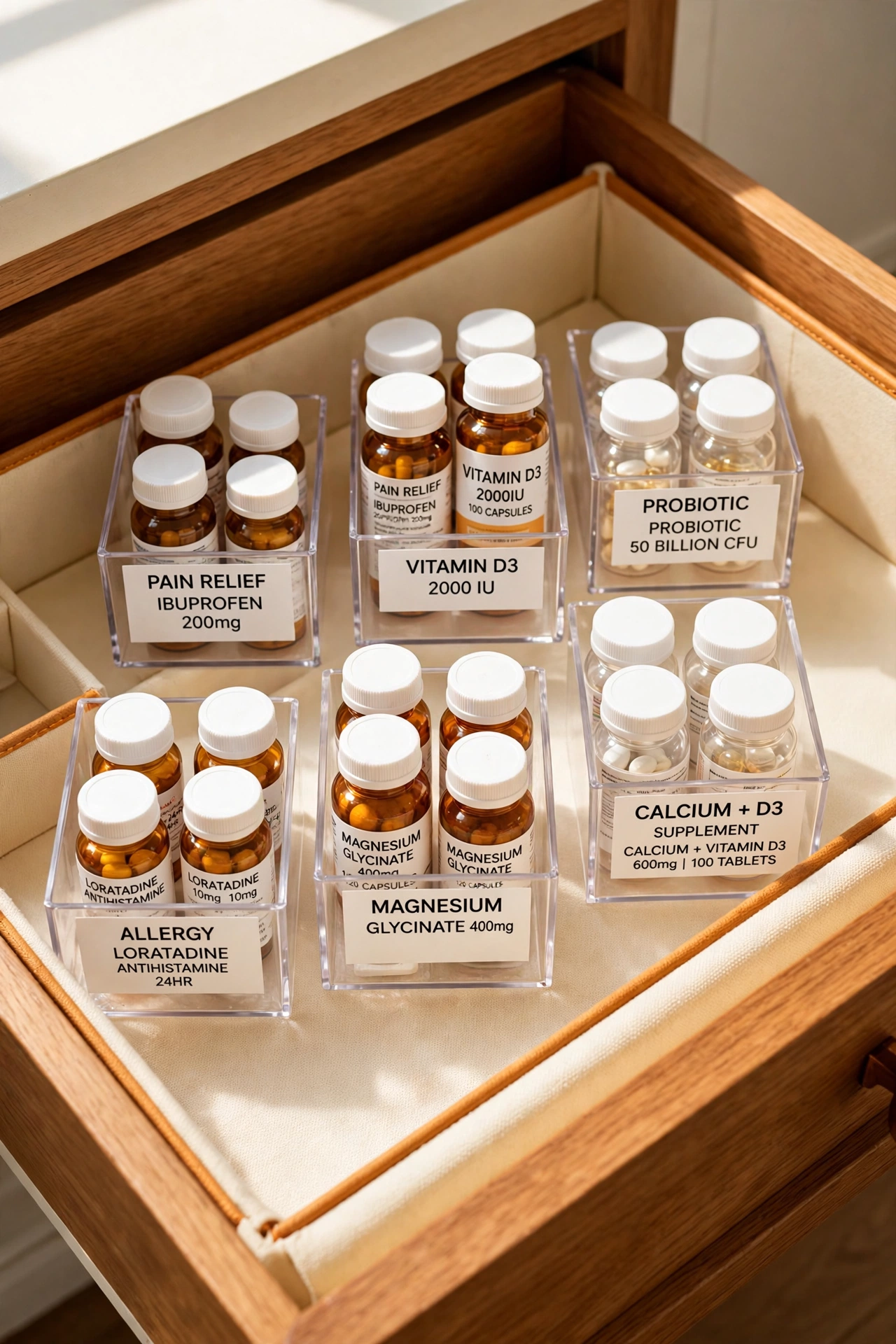
Small bins keep pill bottles upright and grouped together instead of rolling loose across the drawer. Each bin can hold one type of medicine, so you can see at a glance which bottles belong together. Clear bins work best because you can read every label without lifting anything out.
Measure your drawer before you buy bins so they fit side by side with no wasted space. Short bins are ideal because tall bottles still stand upright while the drawer closes easily. This simple container system turns a messy drawer into a tidy little pharmacy.
4. Sort by Family Member
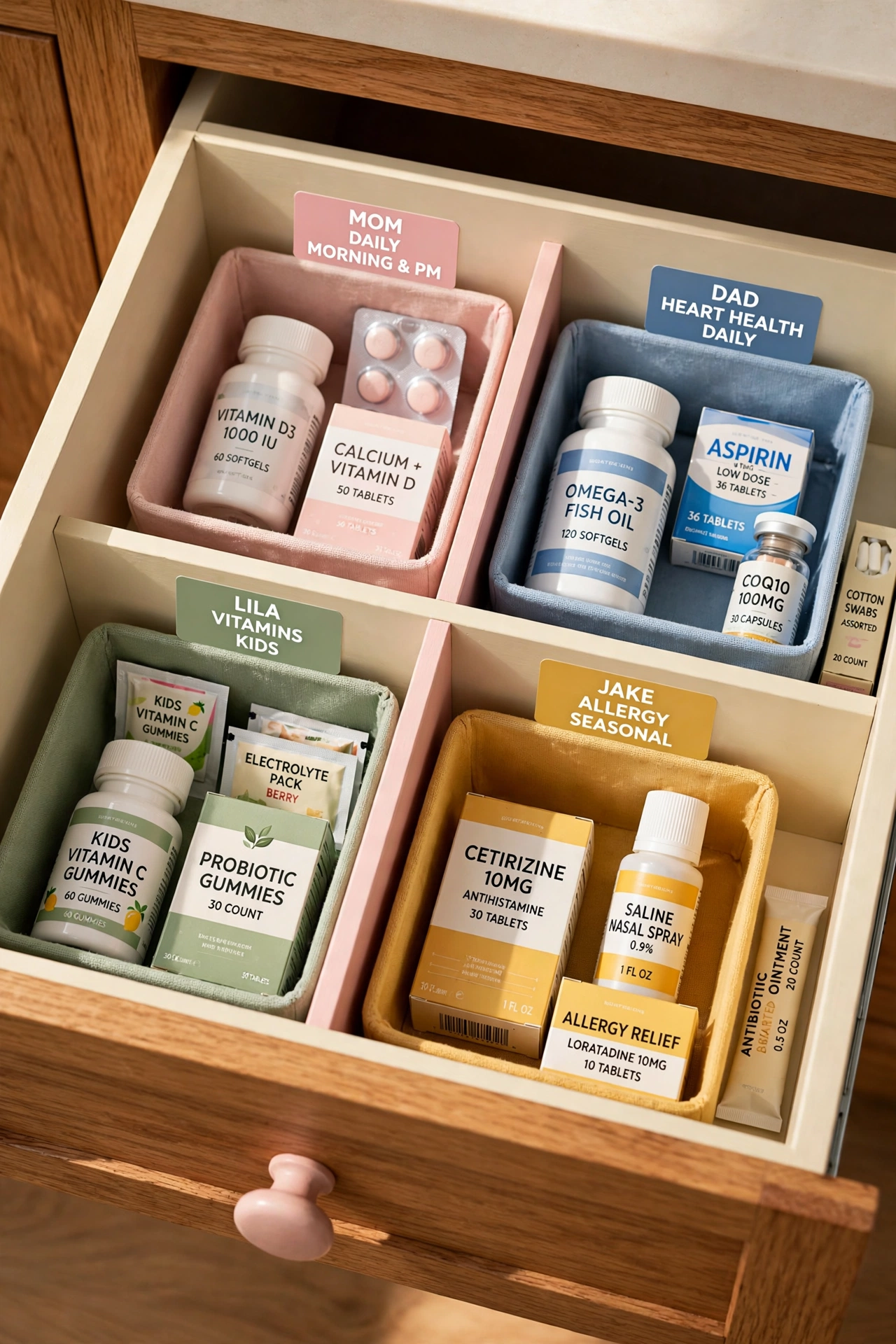
When several people share one medicine drawer, give each person a clearly marked section. One section holds your medicines, another holds your partner’s, and a third holds the children’s medicines. Everyone knows exactly where to look, and nobody grabs the wrong bottle by mistake.
Use a different colored bin or label for each family member so the sections are easy to tell apart. Keep the children’s section at the back of the drawer or in a separate bin with a lid. This system is especially helpful in busy households where mornings move fast.
5. Sort by Use — Daily, Weekly, As Needed
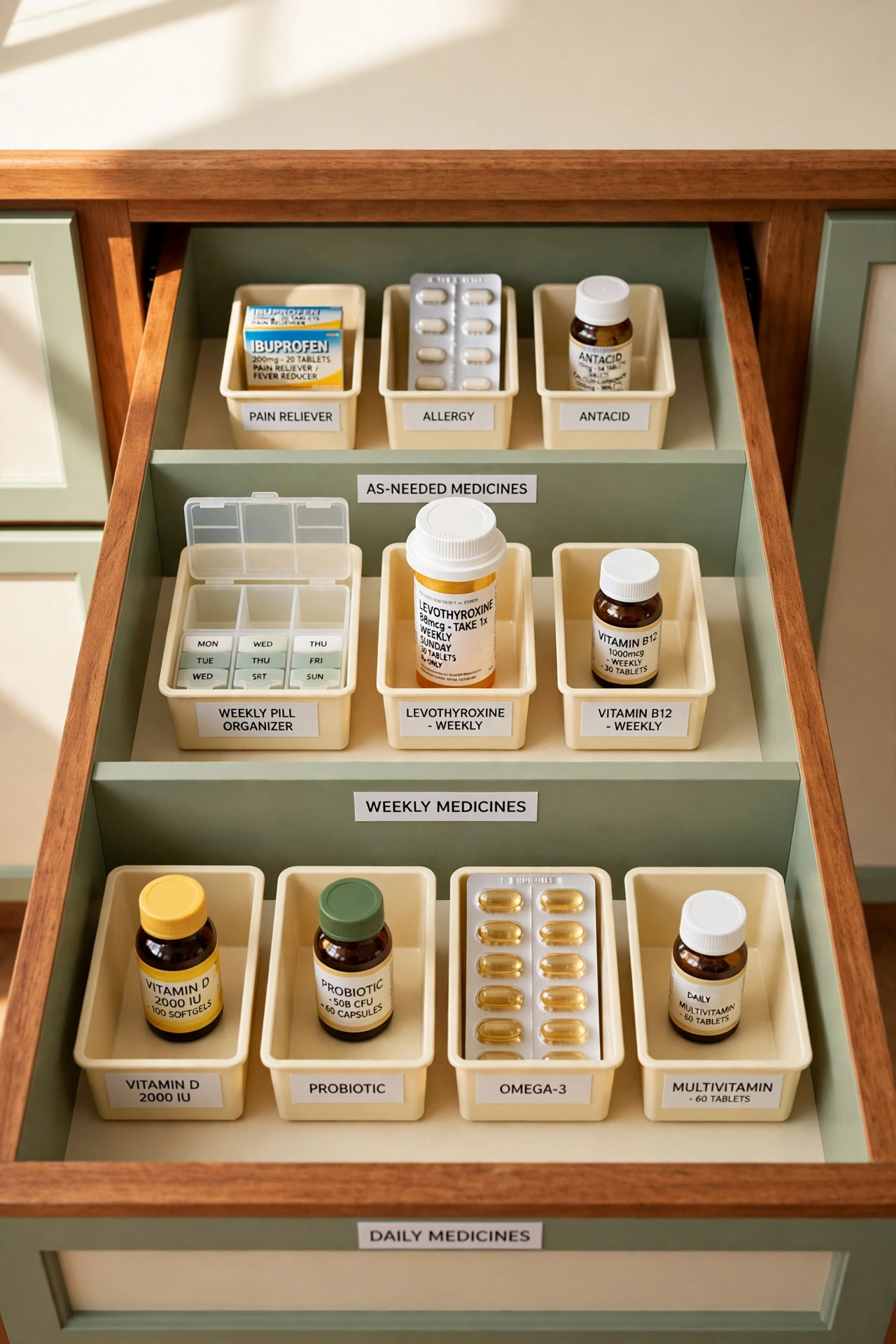
Sorting medicines by how often you use them saves time every single day. Daily medicines go in the front section where your hand reaches first. Weekly medicines sit in the middle, and as-needed medicines like pain relief or allergy tablets live at the back.
This method works because it matches the way you actually reach into the drawer. You stop searching through everything and start grabbing the right bottle on the first try. Review the sections once a season and move items around as your routine changes.
6. Weekly Pill Organizer Tray
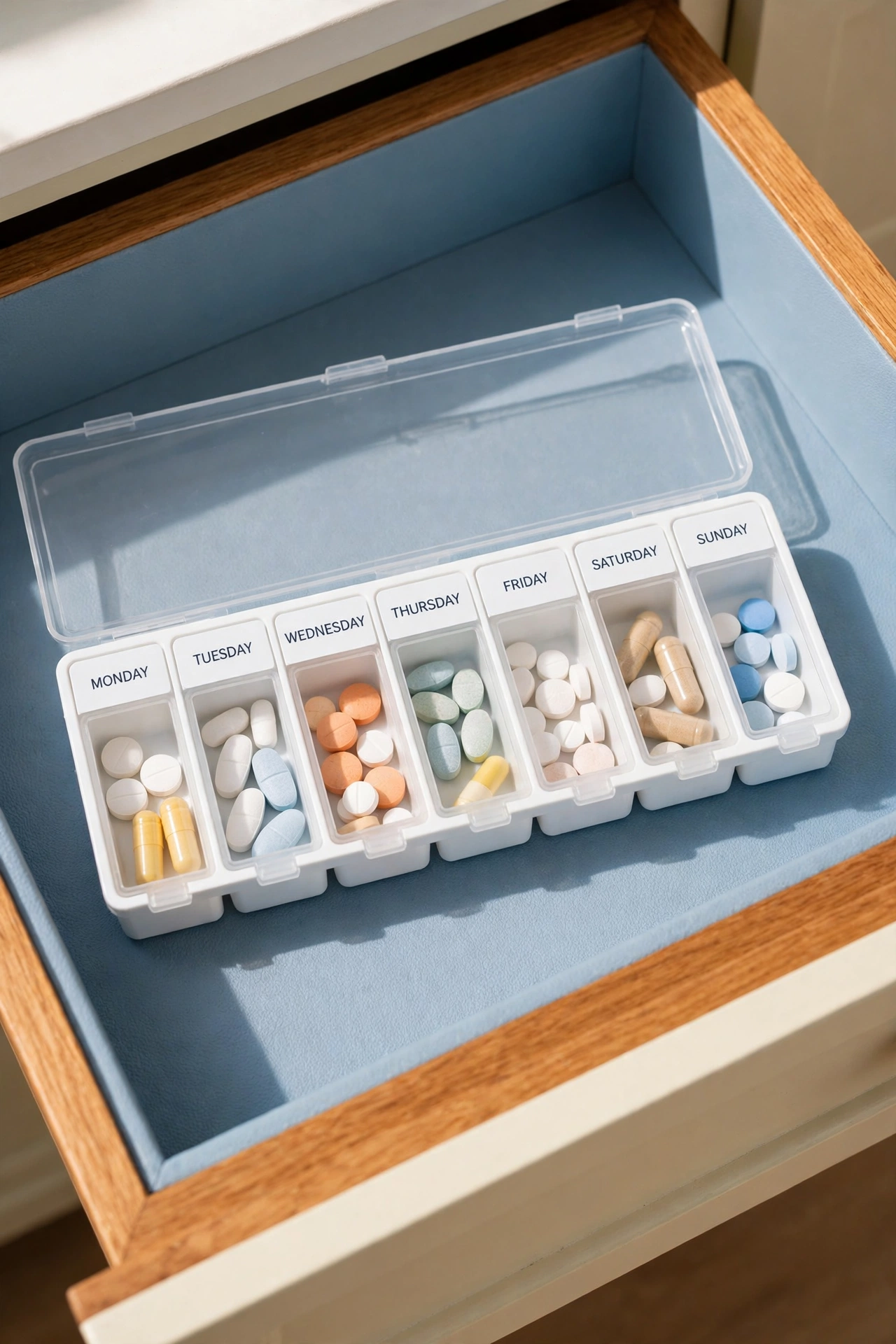
A weekly pill organizer tray holds seven days of doses in small labeled compartments. Fill the tray once a week and you never have to count pills from bottles in a rush again. The tray also shows you at a glance whether you already took today’s dose.
Choose a tray with large compartments if you take several tablets each day, and keep it in the front of the drawer for easy access. A sturdy tray with a snap-shut lid keeps pills safe even if the drawer gets bumped. This one tool can remove a daily source of stress completely.
7. Label Every Bin Clearly
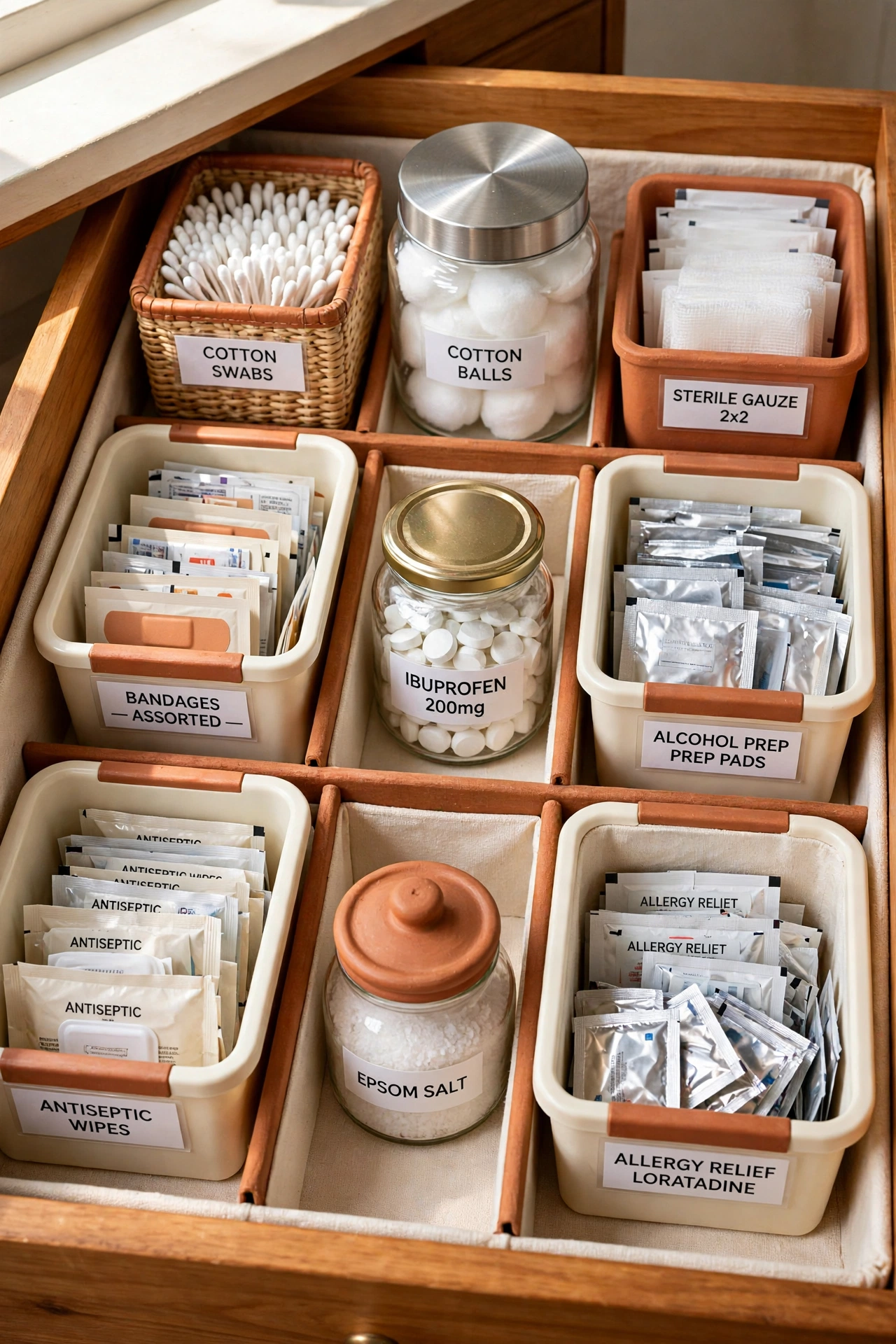
Labels turn a drawer full of bins into a system anyone in the family can use. Write the contents on each label in clear printed letters, such as Pain Relief, Allergy, or Cold and Flu. A label maker gives the neatest result, but neat handwriting on white labels works just as well.
Place each label on the front edge of its bin so you can read it the moment you open the drawer. Replace labels when the contents of a bin change so the system stays accurate. Good labels mean you never have to open five bins to find one small bottle.
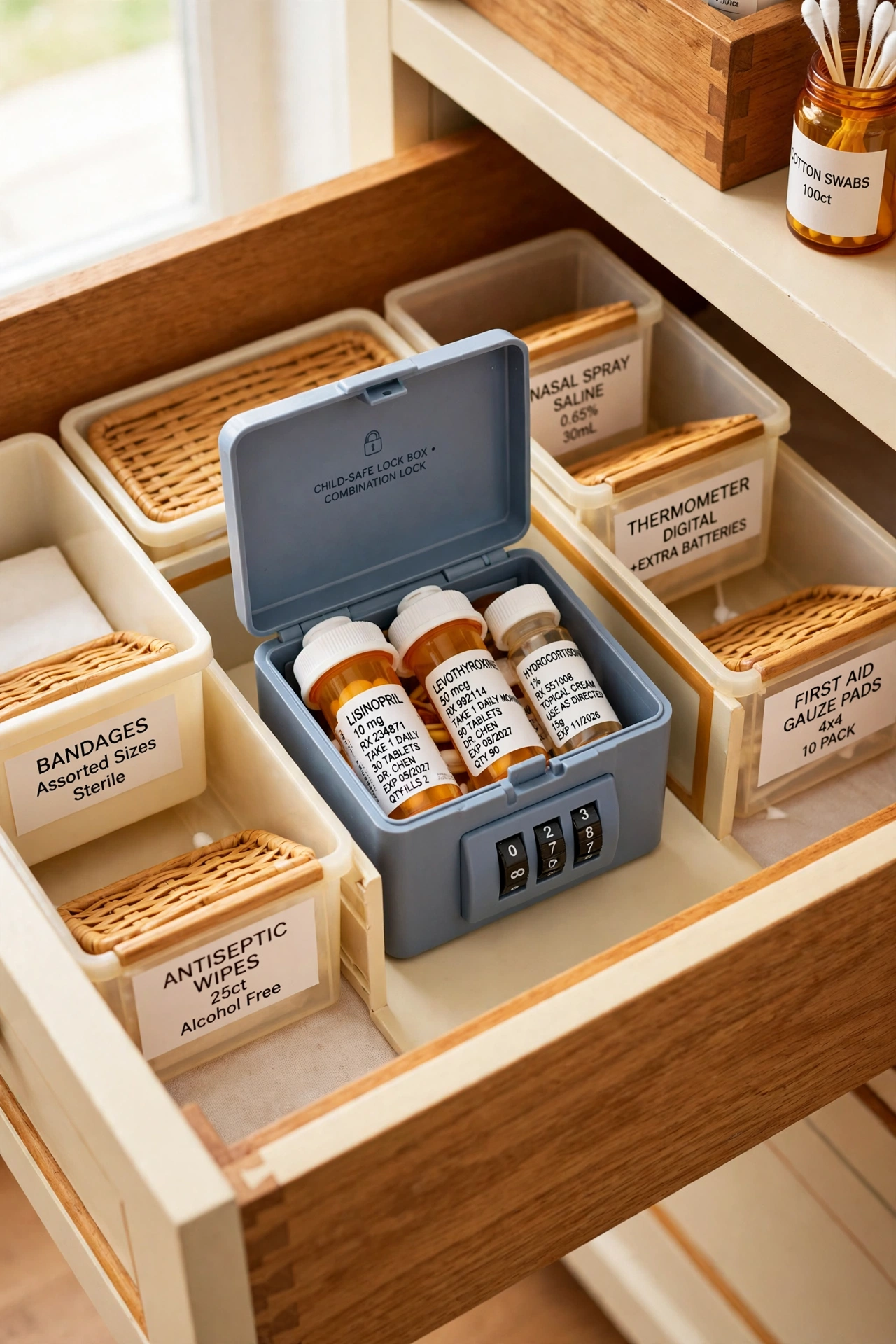
8. Child-Safe Lock Box Inside the Drawer
A small lock box inside the drawer keeps strong medicines out of curious little hands. The box holds prescription medicines and anything else that needs extra care, while the rest of the drawer stays open for everyday items. A combination lock or a key lock both work well.
Choose a box that fits neatly inside the drawer without crowding out your other bins. Keep the key or code somewhere adults can reach it quickly but children cannot. This simple layer of safety gives you real peace of mind every day.
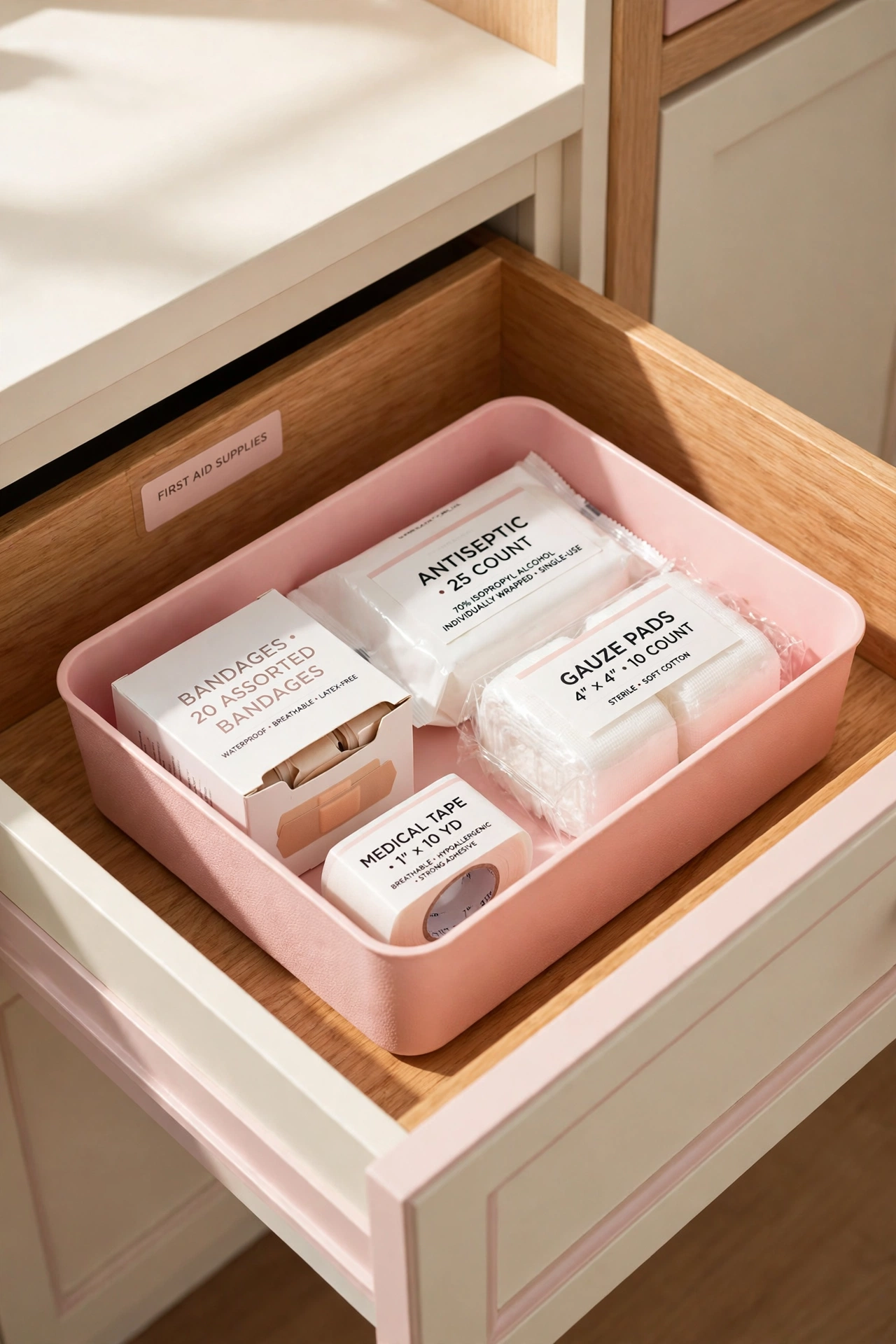
9. Keep a First Aid Section
Set aside one corner of the drawer as a first aid section with the basics you reach for after a small cut or scrape. Bandages in several sizes, antiseptic wipes, gauze, and medical tape fit easily into one small bin. Keep this section near the front so you can find it fast in a hurry.
Check the first aid bin every few months and replace anything that is used up or expired. A bright colored bin helps you spot it quickly when you are in a rush. This small kit turns your medicine drawer into a little safety net for the whole family.
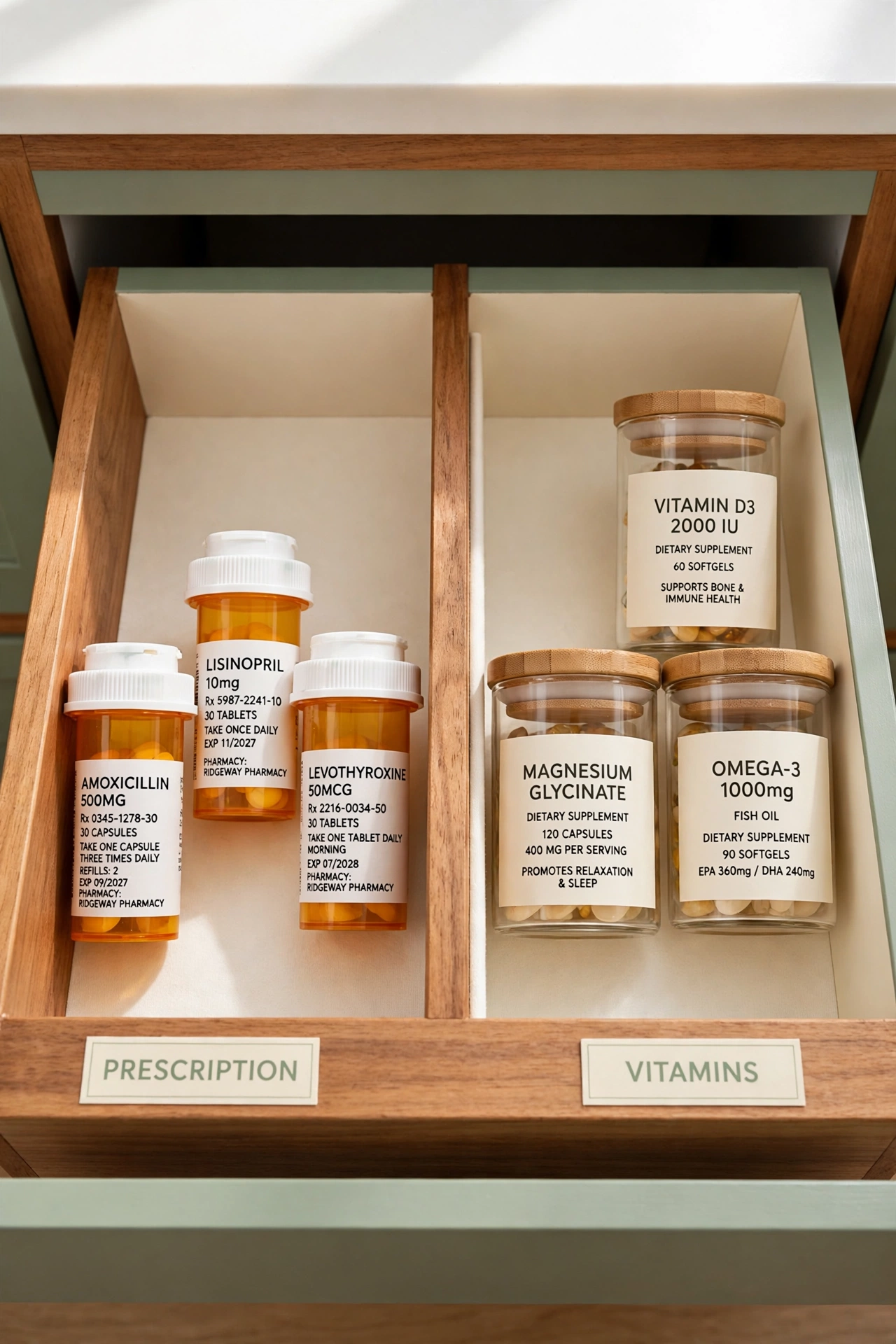
10. Store Prescriptions Separately from Vitamins
Prescription medicines and vitamins should live in separate bins, even if they sit in the same drawer. Mixing them together makes it easy to grab the wrong bottle, especially early in the morning. A clear divide keeps daily routines simple and safe.
Put prescriptions in one labeled bin and vitamins in another, with a divider between them. For a full plan for your supplements, these vitamin supplement organization ideas will help you sort every bottle. When the two groups stay apart, you will never confuse a vitamin with a prescription again.
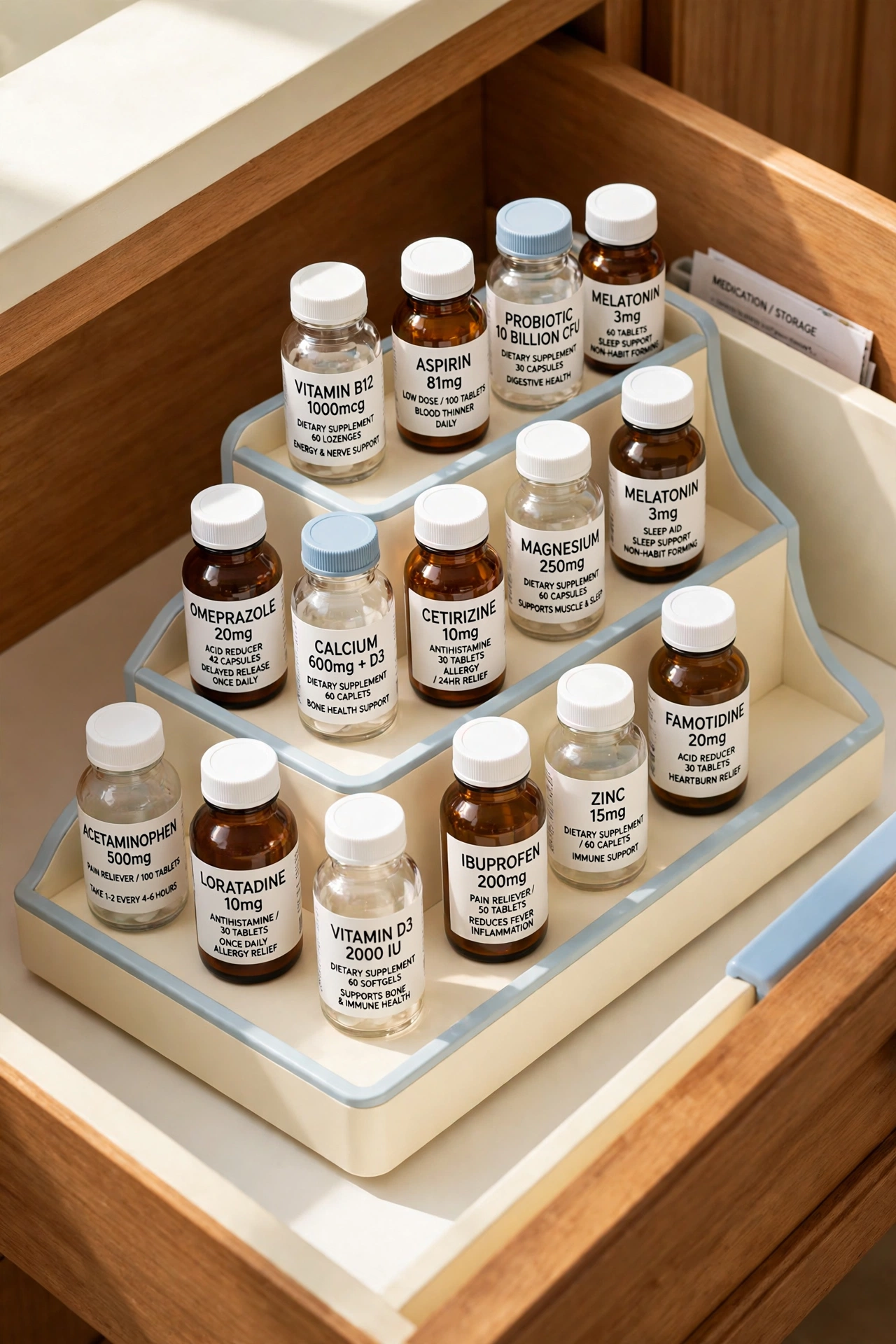
11. Upright Bottle Storage with a Small Rack
A small rack inside the drawer holds bottles upright so labels face forward and nothing tips over. Step-style racks work well because each row sits slightly higher than the one in front, so you can read every label at a glance. This is especially useful when you store many small bottles.
Choose a rack that fits your drawer width and leaves room for a few bins beside it. Keep the tallest bottles at the back of the rack so the drawer closes without a struggle. Upright storage also stops leaks, since bottle caps stay on top where they belong.
12. Use a Drawer Liner to Stop Sliding
A non-slip drawer liner keeps bins and bottles exactly where you put them. Without a liner, every open and close of the drawer shifts your careful system a little further out of place. The liner grips the bottom of each container and stops the slow slide.
Cut the liner to fit your drawer and lay it flat before you put anything back. Choose a liner that wipes clean with a damp cloth, since medicine drawers sometimes collect dust or small spills. For ideas on the space below the sink, these under bathroom sink organization ideas pair well with a lined drawer. This cheap layer makes the whole system last much longer.
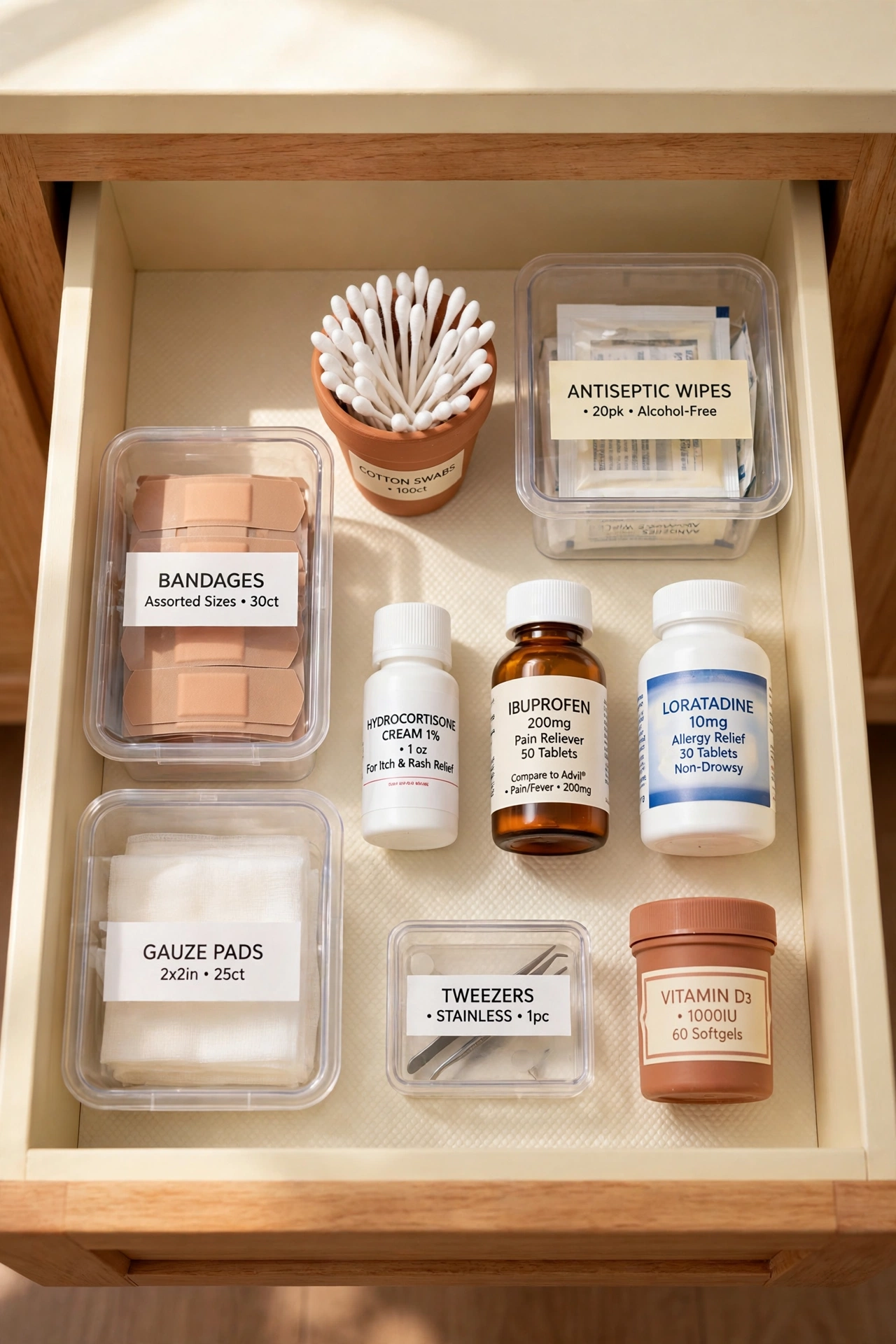
13. Keep a Medicine List and Expiry Log
A simple written list of every medicine in the drawer, with its expiry date, saves you from guessing later. Keep the list on a small card or in a slim notebook tucked at the back of the drawer. Update the list whenever you add a new medicine or finish an old one.
An expiry log is just as important as the list itself, because expired medicines can lose their strength or become unsafe. Write the earliest expiry date at the top of the list so you see it first. This five-minute habit protects your whole family and keeps the drawer honest.
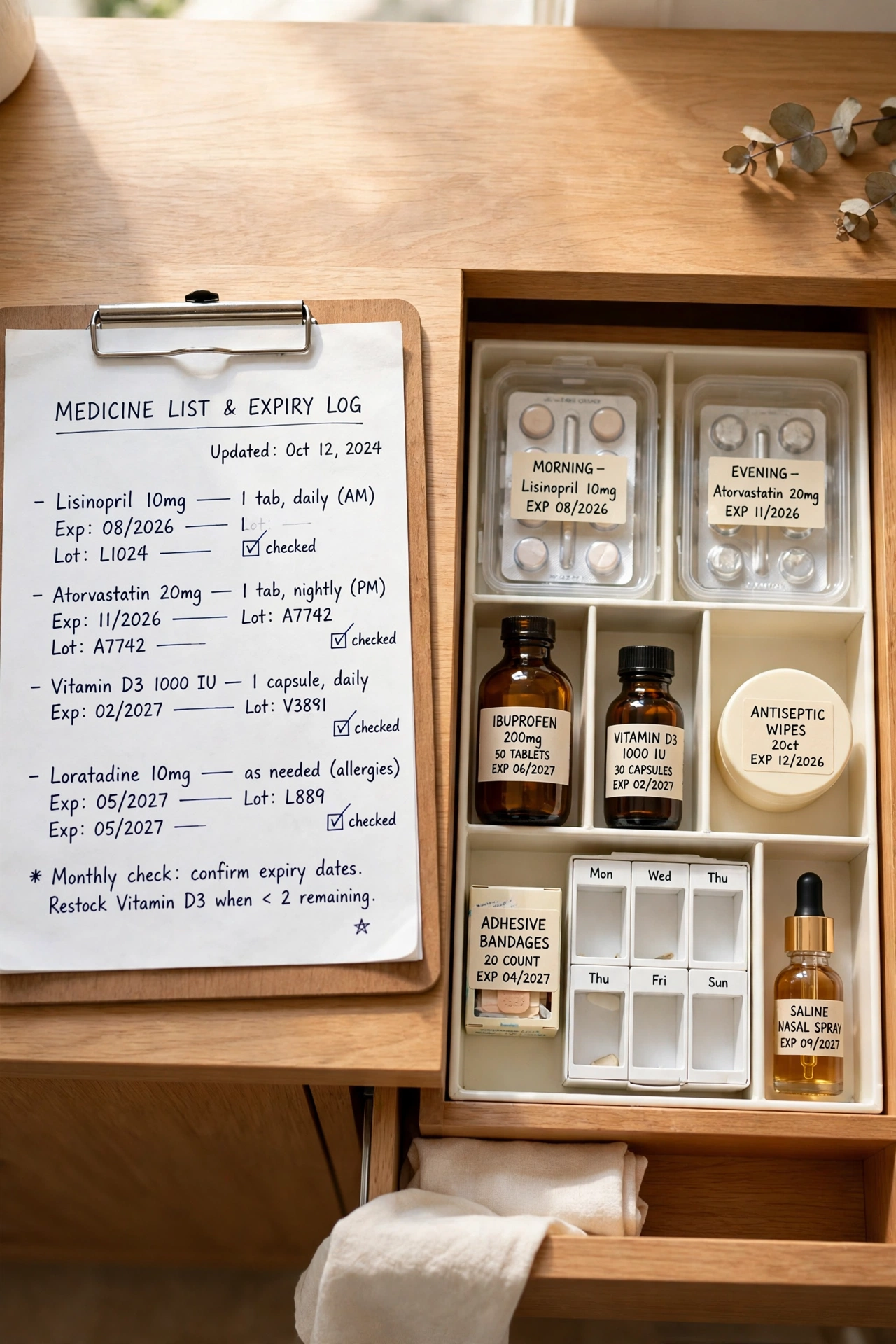
14. Store Thermometer and Tools in One Pocket
A thermometer, tweezers, small scissors, and a medicine dropper belong together in one narrow pocket of the drawer. When these tools share a home, you never hunt through bottles to find the thermometer during a fever. A slim tray or a small fabric pouch keeps them together.
Keep the pocket near the front of the drawer so the tools are easy to grab in a hurry. Wipe the thermometer clean after each use and return it to the same spot every time. A dedicated pocket for tools keeps the drawer calm and ready for any small health need.
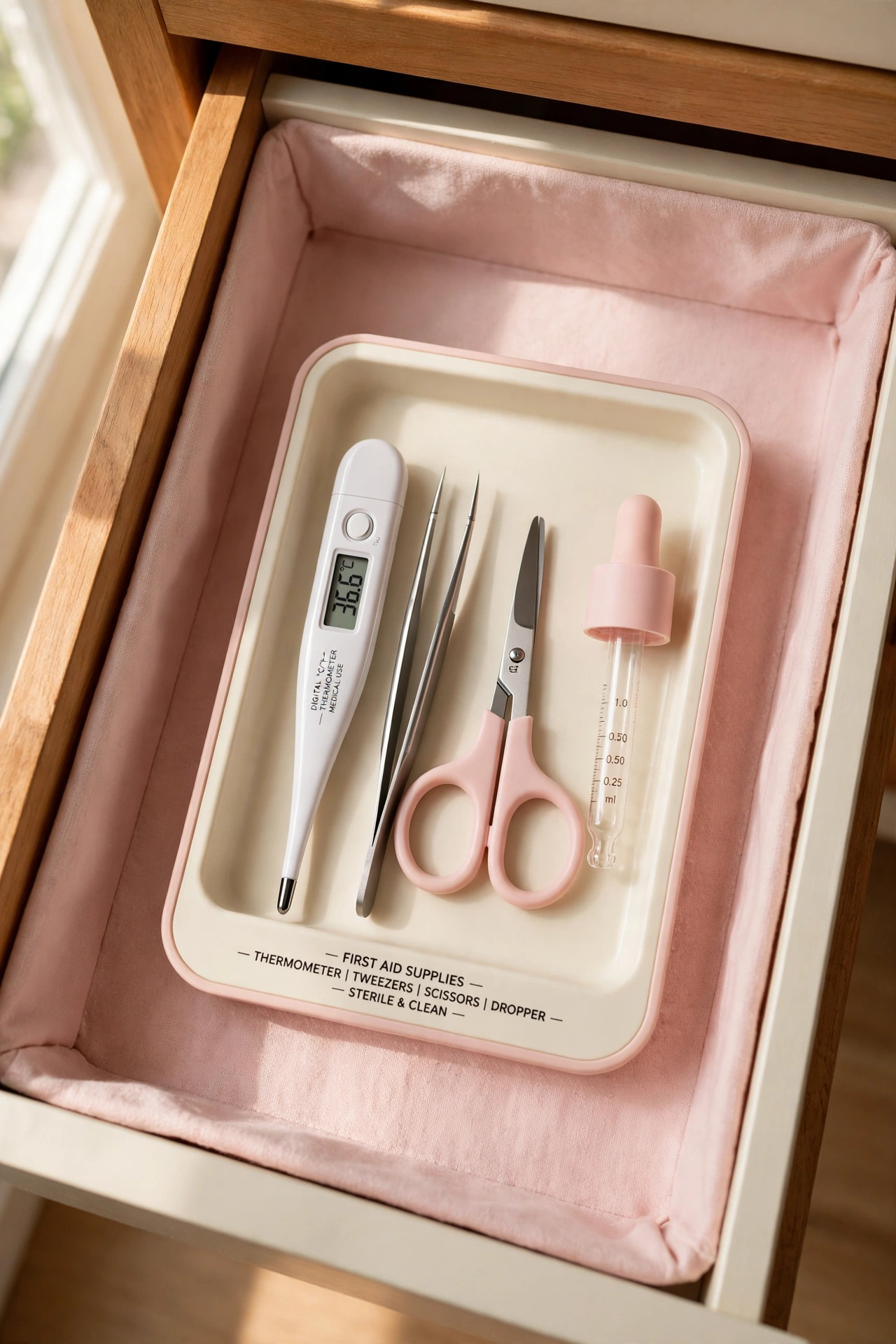
15. Separate Adult and Child Medicines
Adult medicines and child medicines must never share the same bin. Children need different doses and different formulas, and mixing them together creates a real risk of a wrong dose. Give each group its own labeled bin with a clear divider between them.
Use different colored bins or labels to make the separation obvious at a glance. Keep child medicines in the bin furthest from the front, or in a bin with a lid that small hands cannot open easily. This separation is one of the most important safety rules for any family medicine drawer.
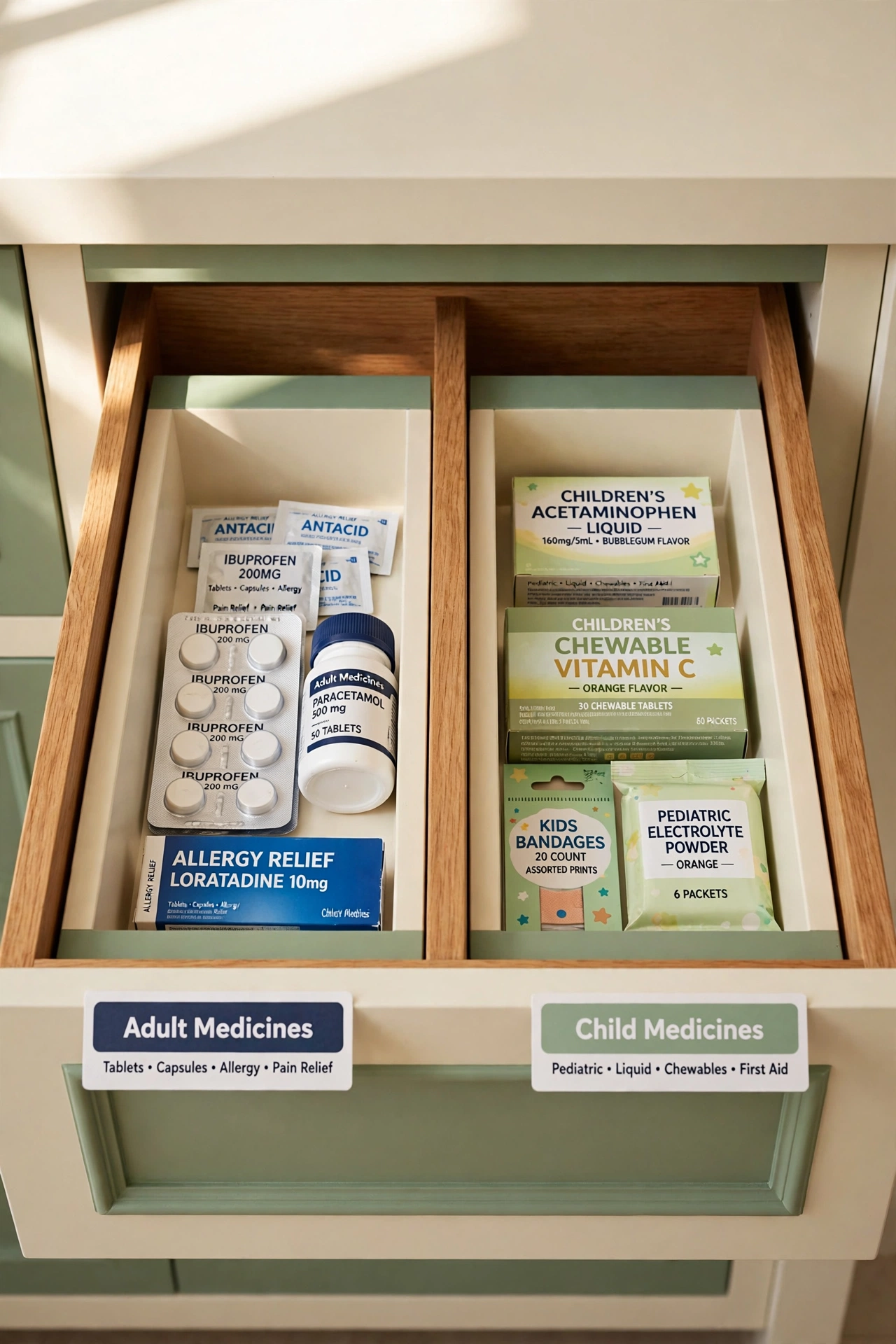
16. Keep Daily Vitamins in a Front Tray
Daily vitamins deserve the easiest spot in the drawer, right at the front in a shallow tray. When your vitamins sit in a front tray, your morning routine takes seconds instead of minutes. You open the drawer, take what you need, and close it again.
Keep only the vitamins you take every day in the front tray and store the rest in a back bin. A small tray with low sides works best, since it keeps bottles visible while stopping them from rolling. This front-and-center spot turns a healthy habit into an easy one.
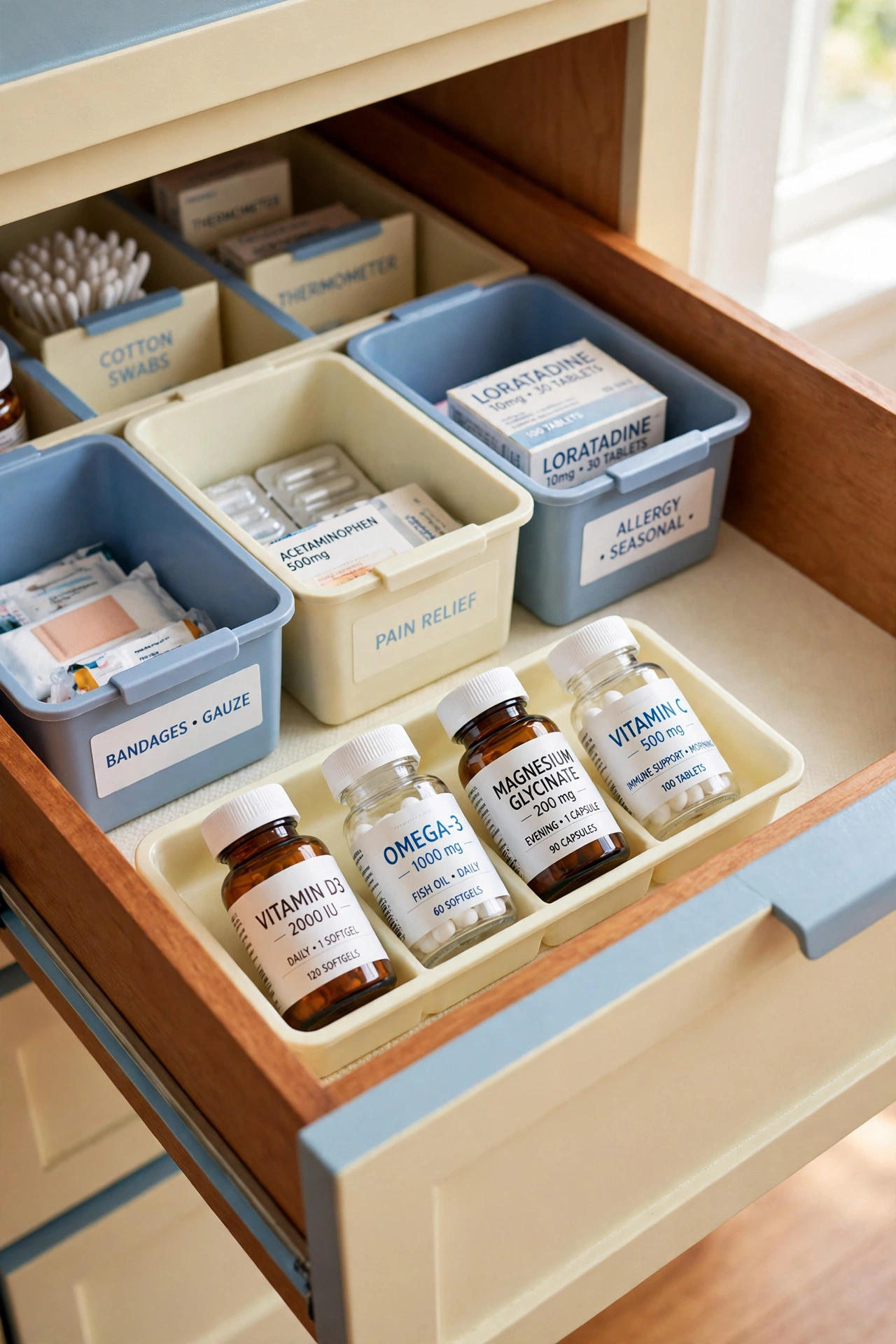
17. Use Stackable Trays for Deep Drawers
Deep drawers waste space when everything sits in one flat layer at the bottom. Stackable trays solve this by creating a second level inside the drawer. Everyday items live on the top tray, while less-used medicines stay in the lower level.
Choose trays with handles or finger holes so you can lift the top layer out easily. Keep heavy bottles on the bottom level so the stack stays stable. For deep drawer ideas in the kitchen, these deep kitchen drawer organization ideas use the same stacking trick. Two levels of storage can double what a deep drawer holds.
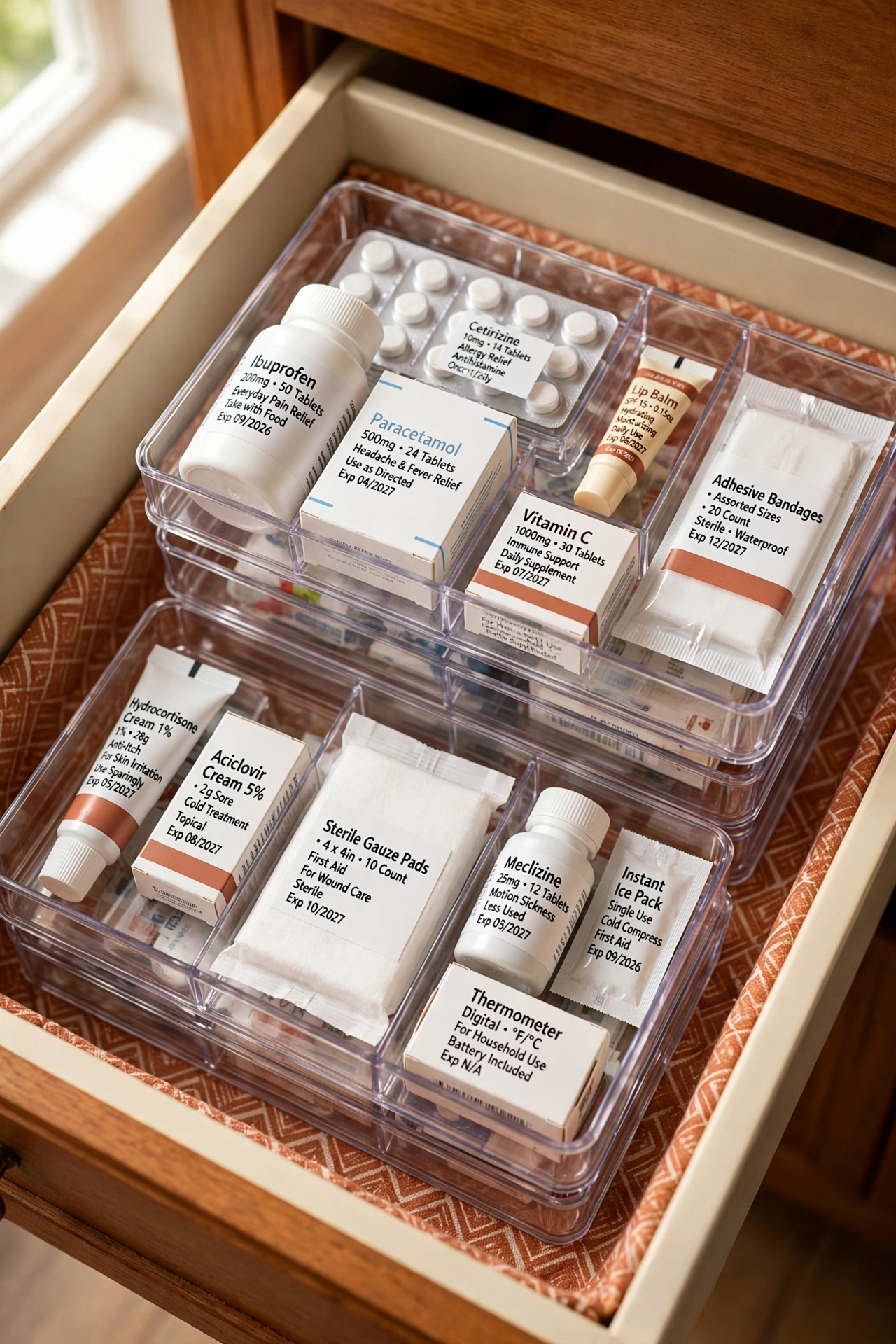
18. Keep Emergency Medicines at the Front
Emergency medicines, such as an inhaler or an allergy pen, must sit at the very front of the drawer where any adult can grab them in seconds. Do not bury them behind daily vitamins or first aid supplies. In an emergency, every second counts.
Mark the front section with a clear label so babysitters and guests can find it too. Tell every adult in the home where the emergency medicines live and show them the exact spot. This one placement choice can make a real difference when it matters most.
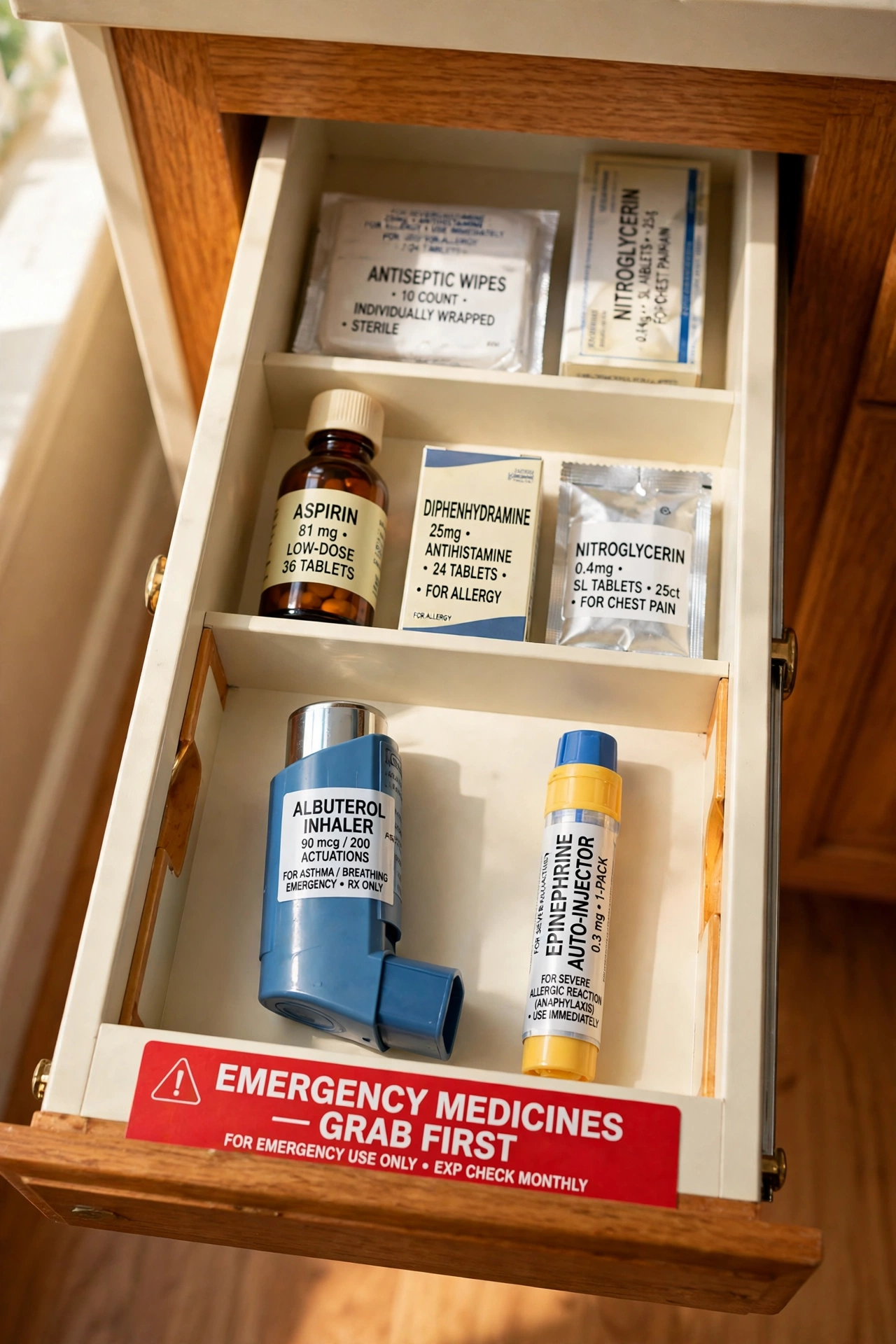
19. Check Expiry Dates Every Month
A monthly expiry check keeps your medicine drawer safe and honest. Pick one day each month, such as the first Sunday, and spend five minutes checking the dates on every bottle and box. Pull out anything that is expired or close to expiring and replace it right away.
Set a phone reminder so the check becomes a habit instead of a chore you forget. When you buy new medicines, place them behind the older ones so you always use the oldest stock first. This simple monthly routine keeps the whole drawer trustworthy.
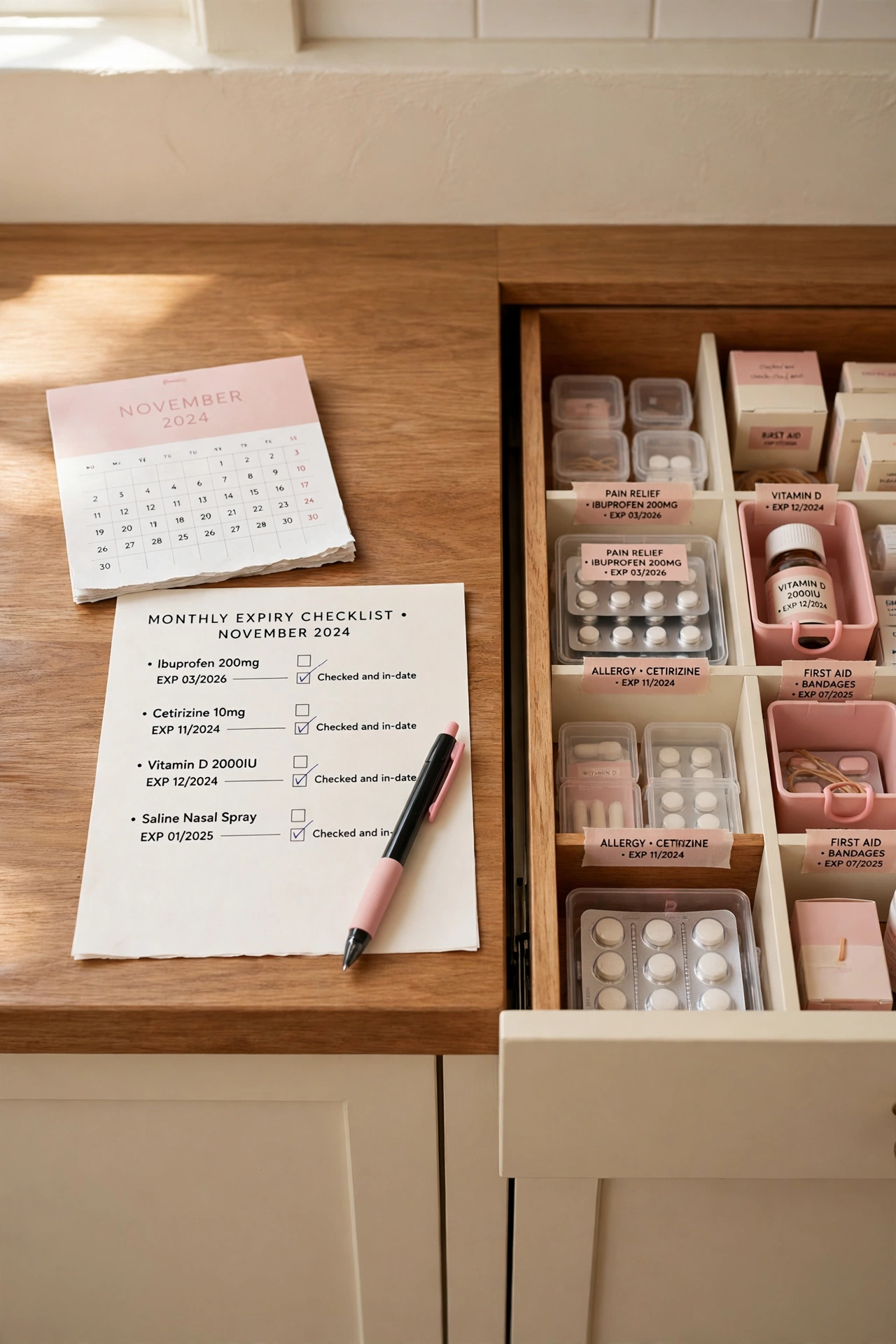
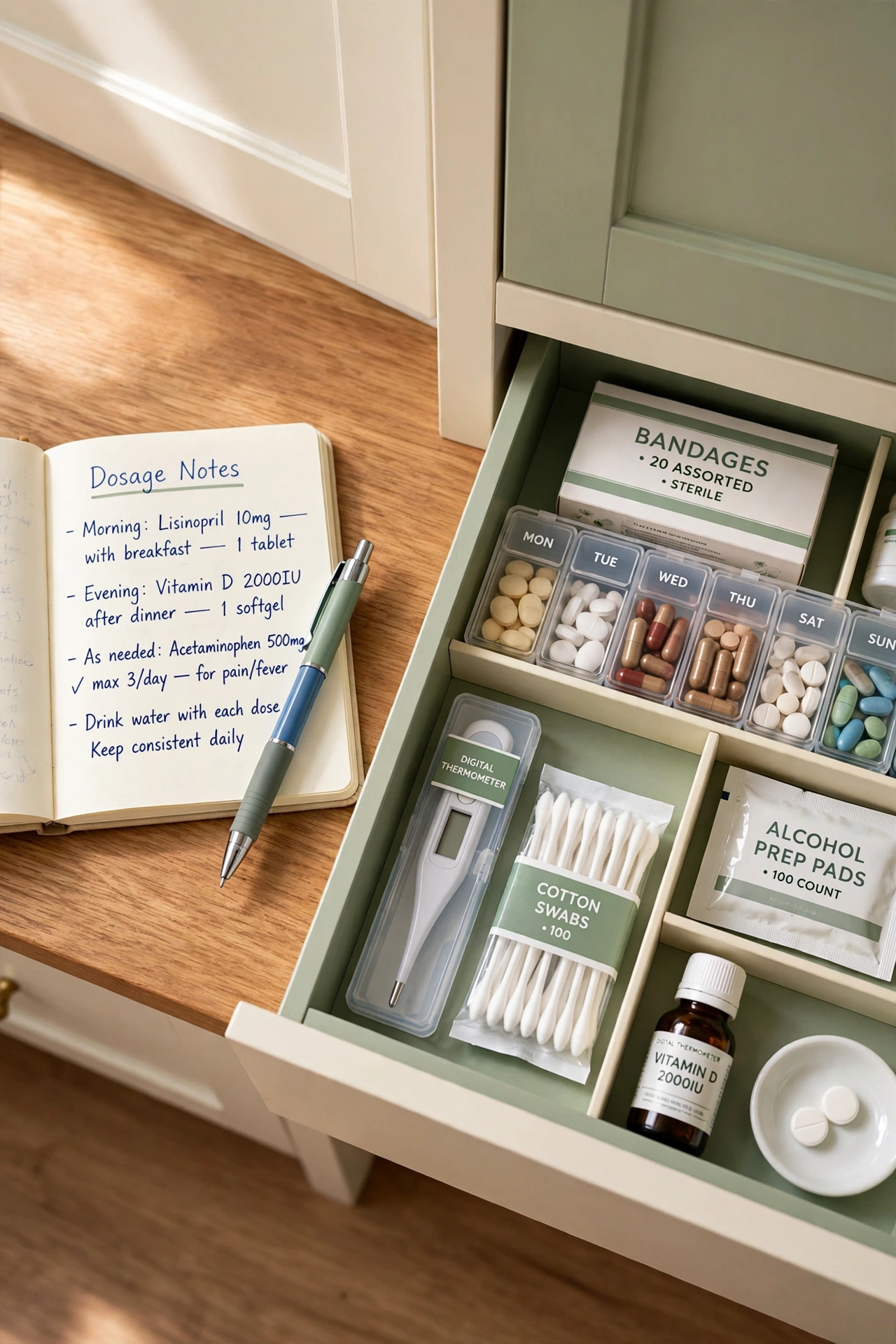
20. Keep a Small Notebook for Dosage Notes
A small notebook in the drawer holds dosage notes, doctor instructions, and the dates you started a new medicine. When you cannot remember a dose or a schedule, the notebook gives you the answer in seconds. It also helps when a different family member needs to give a dose.
Write each note in clear printed letters with the date beside it. Keep the notebook and a pen in a slim pocket at the side of the drawer so they are always together. This little record turns guesswork into confidence for the whole family.
21. Leave Breathing Room — Never Overfill
The final rule is the simplest one: leave breathing room in the drawer and never overfill it. A drawer packed to the edges looks tidy for a day, then turns into a jumble the first time you pull something out. Space between bins lets you lift items out without disturbing everything else.
If the drawer feels crowded, move rarely used medicines to a linen closet or a hall cabinet. A drawer that is three quarters full works far better than one that is stuffed to the top. Breathing room is what keeps your whole system working for months, not just days.
Conclusion
A medicine drawer does not have to be a source of stress. From adjustable dividers and labeled bins to a monthly expiry check and a safe spot for emergency medicines, there is an idea here for every home and every family. The best system is the one that keeps everyone safe and makes daily routines simple.
Pick one or two ideas that fit your drawer and start today. Clear the clutter, sort what is left, and give every bottle a home. For a calm home beyond the bathroom, these nightly reset routine ideas will help you keep every room organized with just a few minutes each evening.
Frequently Asked Questions About Medicine Drawer Organization Ideas for Household Essentials
Where is the best place for a medicine drawer in the home?
A cool, dry drawer in the bathroom or bedroom works best for most medicines. Avoid drawers near a shower or a sunny window, since heat and moisture can damage medicines. Keep the drawer easy for adults to reach but out of the path of small children.
How do I keep medicines safe from children?
Use a lock box inside the drawer for strong medicines and keep child medicines in a separate labeled bin. Store the drawer itself out of easy reach if you have toddlers in the home. Teach older children that medicines are for adults only and that they must always ask first.
How often should I check medicine expiry dates?
Check expiry dates once a month and remove anything that is expired right away. Expired medicines can lose their strength or become unsafe, so do not keep them just in case. When you buy new medicines, place them behind older stock so you use the oldest ones first.
Can I store vitamins and prescriptions in the same drawer?
Yes, you can store them in the same drawer as long as they stay in separate labeled bins. A clear divide stops you from grabbing the wrong bottle, especially in the morning. Keep prescriptions in one bin and vitamins in another, with a divider between them.
What should I do with expired medicines?
Do not throw expired medicines in the regular trash or flush them down the toilet. Take them to a pharmacy take-back program or a medicine disposal point in your area. If no program is available, follow your local health authority guidance for safe disposal at home.

Hi, I’m Emily! I turn messy corners into cozy, organized spots. DreamNestDecor is where I share simple, practical home ideas — decor, organization, and small-space solutions that work in real life, not just in photos. Every idea here is carefully researched before it’s shared.