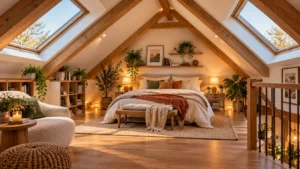

That forgotten attic full of boxes and cobwebs is sitting on more potential than you think. Underneath the dust is one of the most charming rooms your home could ever have.
Turning an attic into a cozy loft is not about a massive construction project. It is about working with the space you already have, the slanted walls, the quiet corners, the hidden charm, and this guide will walk you through exactly how to do it.
1. Clear Out and Deep Clean First:
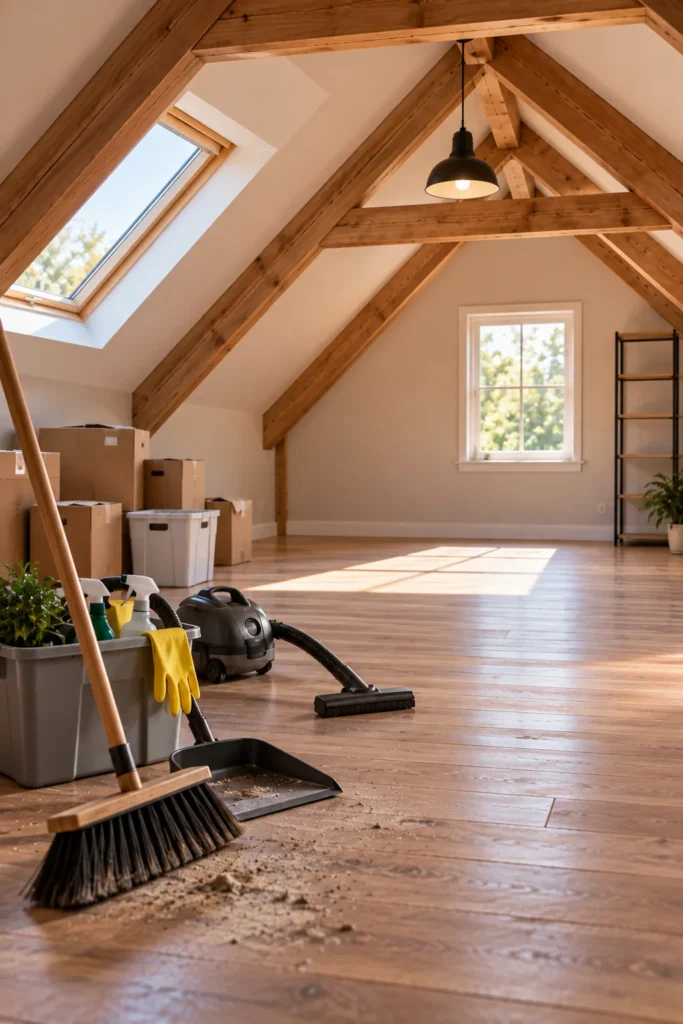
Before any styling can happen, remove everything from the attic and sort it into keep, donate, or throw away piles. A cluttered attic full of old boxes will never feel cozy no matter how much decor you add on top of it.
Once it is empty, sweep, vacuum, and wipe down every surface, including the rafters and corners where dust tends to settle the most. This step might feel tedious, but it gives you a completely fresh canvas to actually see the room’s real potential for the first time.
2. Check and Improve Insulation:
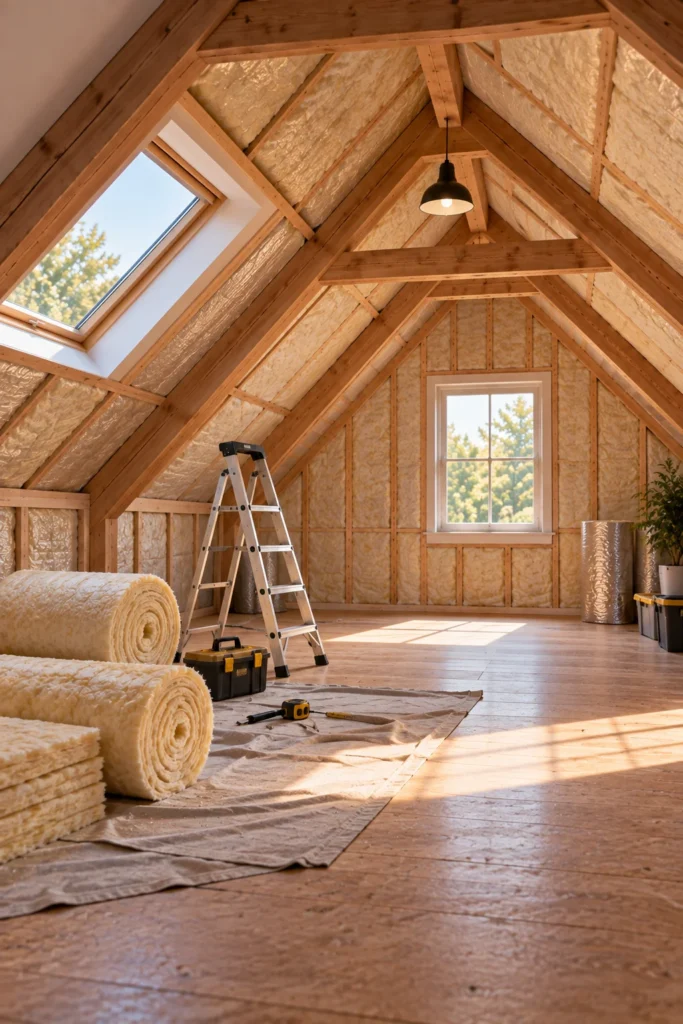
Attics are often poorly insulated, which makes them either too hot in summer or too cold in winter. Adding proper insulation to the walls and roofline is one of the most important steps if you want this space to actually feel comfortable year round.
This step is not the most exciting part of the process, but it directly affects whether you will actually want to spend time up there later. A well insulated attic feels noticeably calmer and quieter too, since it blocks out a lot of outside noise.
3. Add a Skylight or Roof Window:
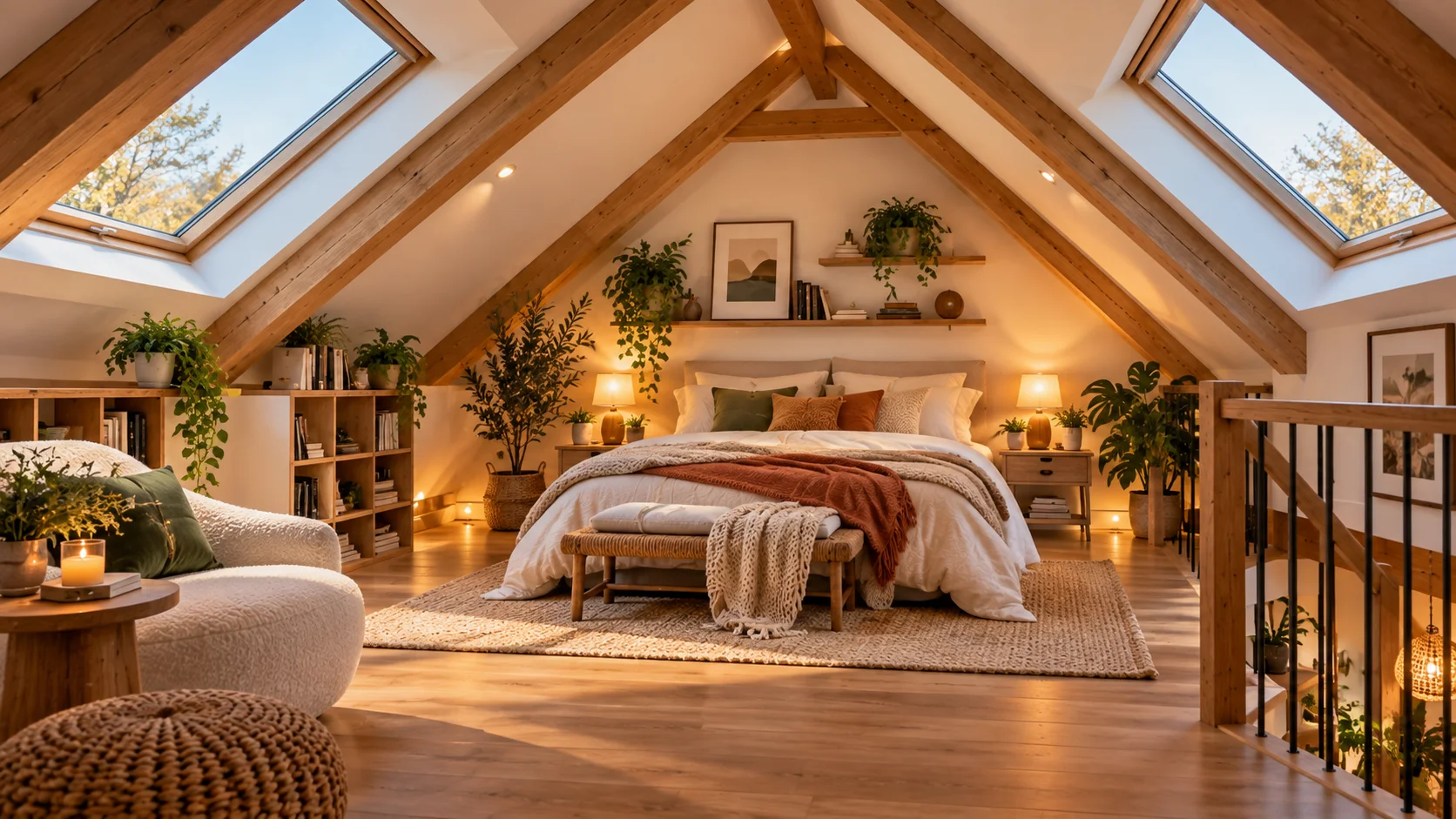
A skylight brings in natural daylight from above, which is often the only real light source an attic can take advantage of. This single addition can transform a dark, gloomy space into one that feels open, bright, and genuinely pleasant to spend time in.
Beyond just brightness, a skylight also offers a unique view of the sky that no regular window can provide. Lying under it at night, watching the stars or rain, often becomes one of the most loved features of the entire room.
4. Paint the Walls and Ceiling the Same Color:
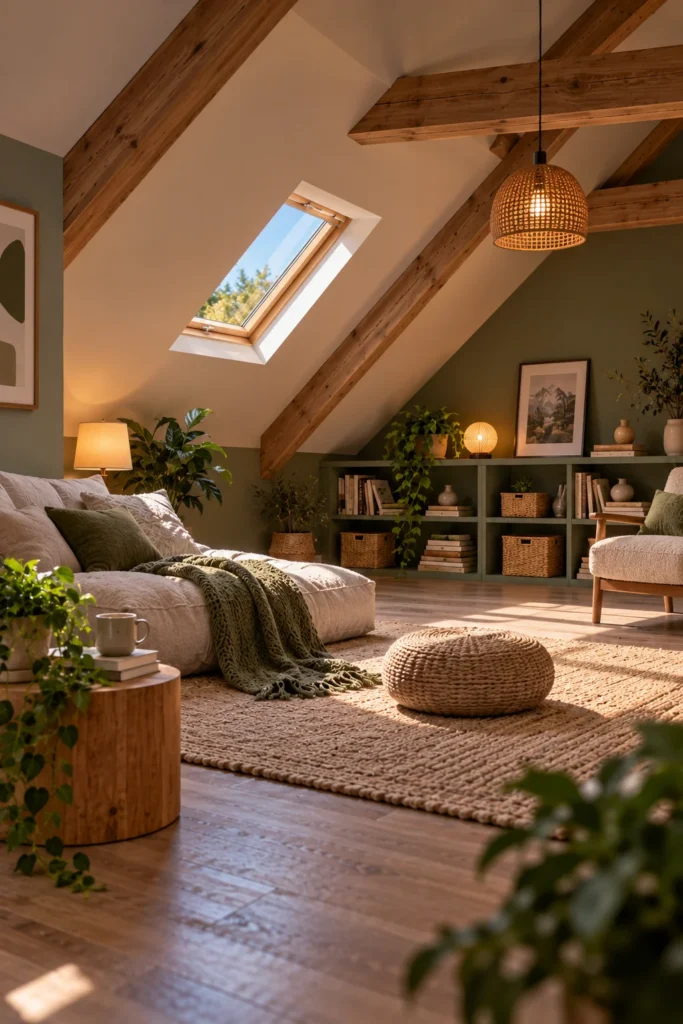
Painting the sloped ceiling the same color as the walls helps the awkward angles of an attic disappear visually. This trick makes the whole room feel taller and more open instead of choppy and broken up into odd shapes.
Choose a soft, warm white or a light neutral tone to keep the space feeling airy rather than closed in. This single decision often has the biggest visual impact of anything else you do in the entire room.
5. Use Built In Storage Under the Eaves:
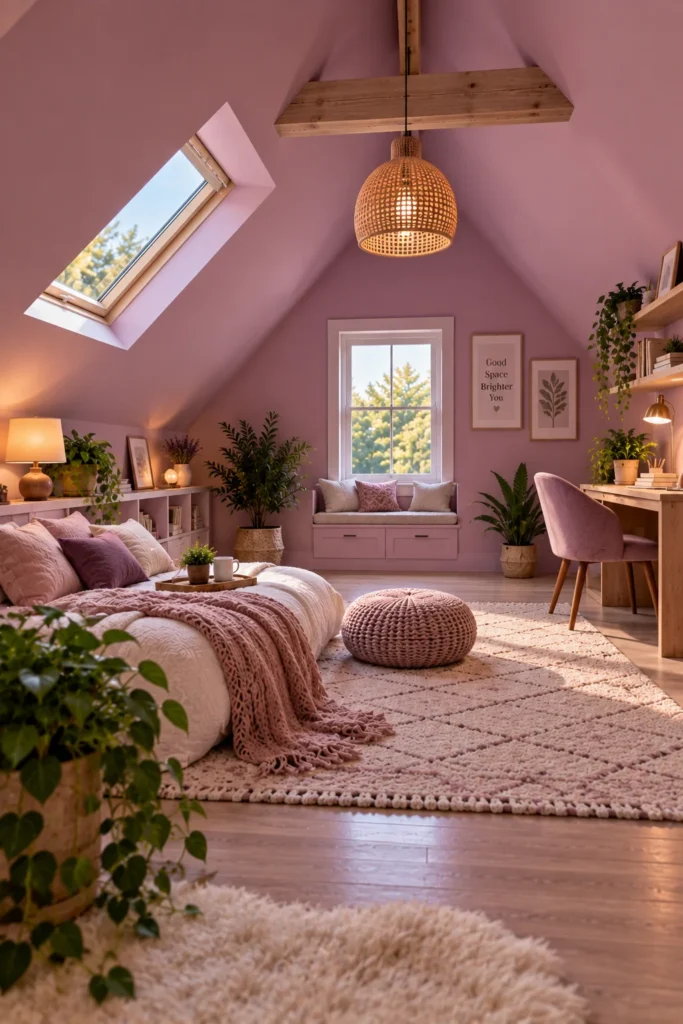
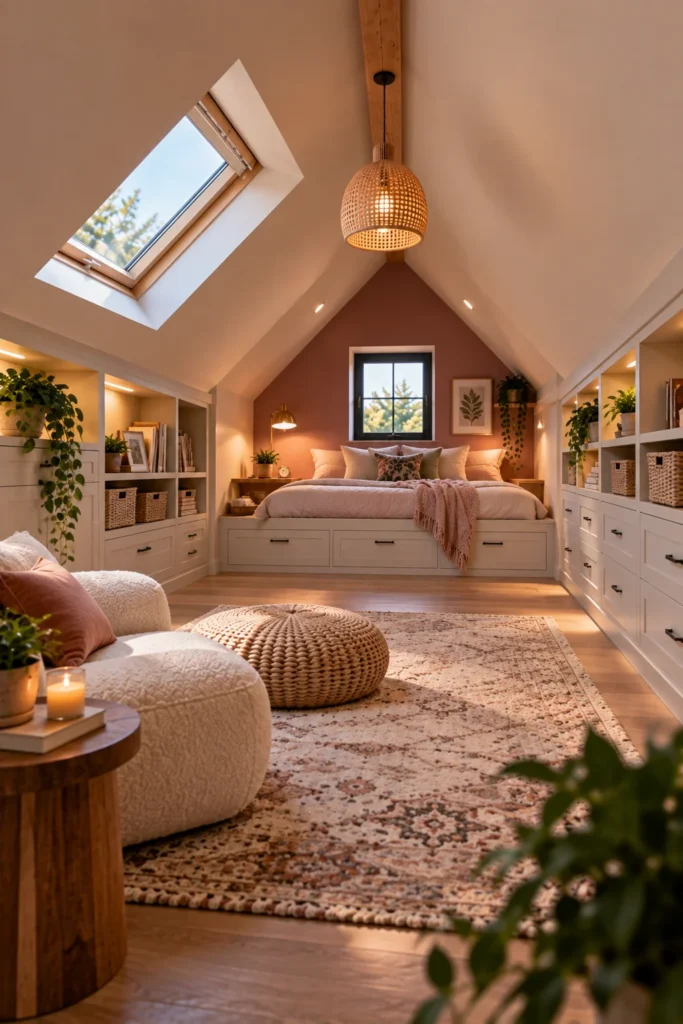
The low, sloped areas where the roof meets the floor are often wasted space, but they are perfect for built in drawers or shelving. This kind of custom storage uses every inch of the room without making the usable floor space feel smaller.
Built in storage also keeps the room looking clean and uncluttered, since everything has a specific, hidden place to go. It is one of the smartest ways to turn an attic’s biggest design challenge into one of its best features. Looking for more ways to make the most of limited storage? These 20 Vintage Wardrobe Storage Ideas for a Cozy Organized Space can help you keep everything neat without sacrificing style.
6. Choose Low Profile Furniture:
Since attic ceilings are often lowest near the walls, choosing furniture with a lower profile helps you avoid bumping your head in tight spots. A low platform bed or a low backed sofa fits naturally into the slanted areas of the room.
This kind of furniture also keeps the overall look from feeling top heavy or cramped within the limited vertical space. Sitting or lying lower to the ground actually makes the room feel more spacious, even though the furniture itself is smaller.
The right furniture can completely change how comfortable a bedroom feels. For more inspiration, check out How to Style a Vintage Bedroom With Charming Painted Accents for ideas that add character without making the space feel crowded.
7. Install a Cozy Area Rug:
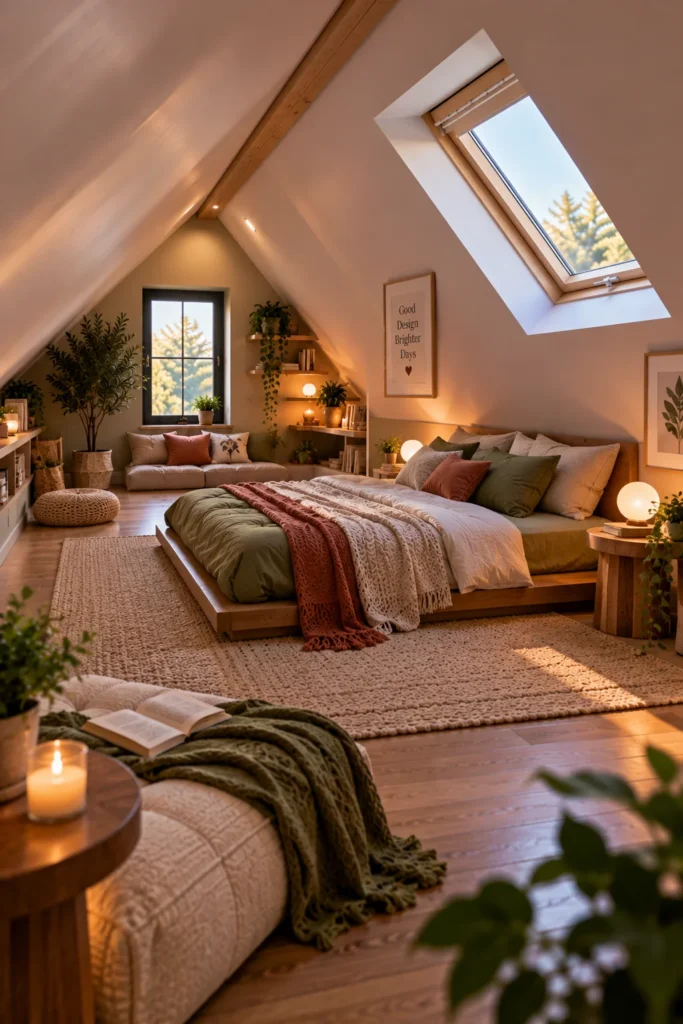
Attic flooring is sometimes just bare wood or plywood, which can feel cold and unfinished underfoot. Laying down a soft, thick area rug instantly makes the space feel warmer, both physically and visually.
Choose a rug in a warm, neutral tone that complements your wall color rather than competing with it. This single addition does more to make the room feel like a finished living space than almost anything else you could add.
8. Add Warm String Lighting Along the Beams:
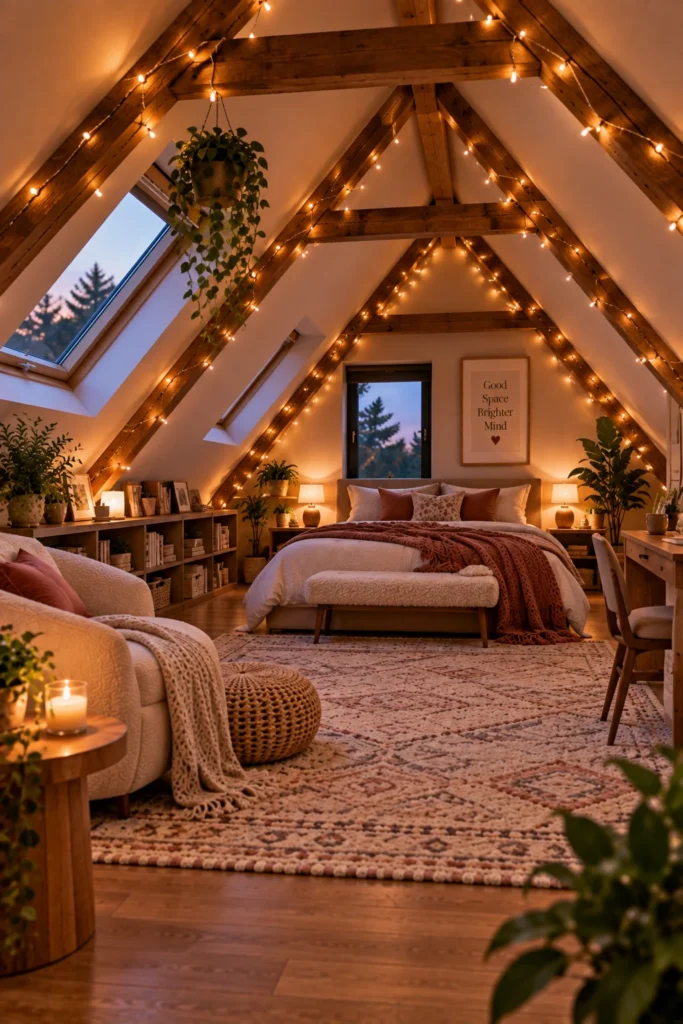
If your attic has exposed wooden beams, run warm toned string lights along them instead of relying only on a single overhead fixture. This creates soft, layered lighting that highlights the unique architecture of the space.
Exposed beams are actually one of an attic’s most charming original features, so lighting them well draws attention to something special rather than hiding it. This small touch can make the whole room feel intentional rather than makeshift.
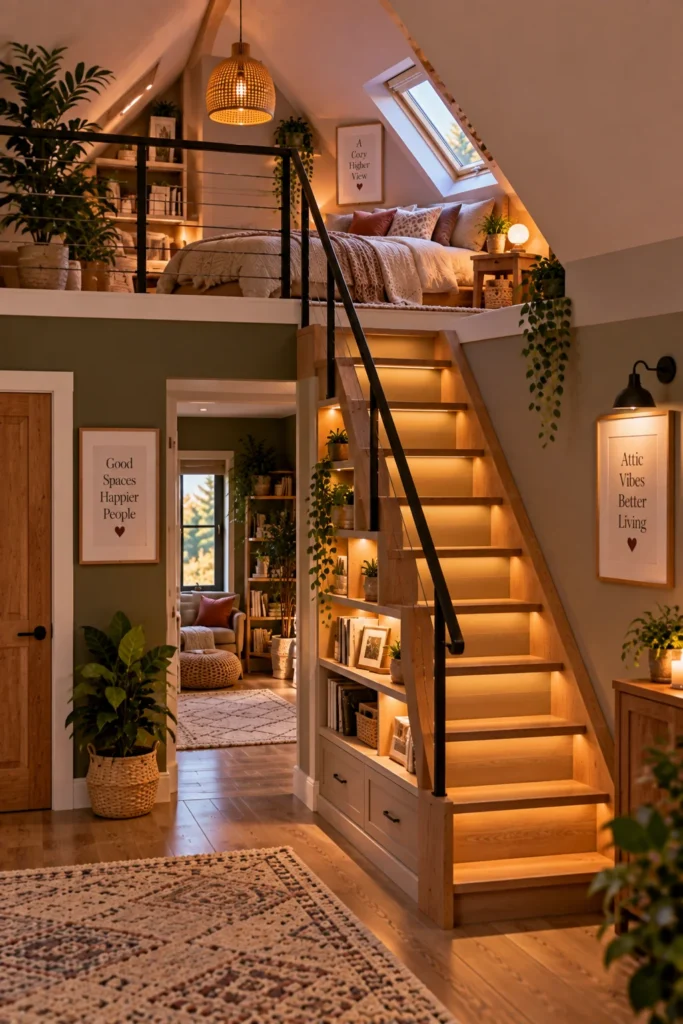
9. Use a Ladder or Compact Staircase Thoughtfully:
If your attic access is a simple ladder, consider replacing it with a proper compact staircase if your budget and space allow it. A real staircase makes the loft feel like an actual extension of your home rather than a storage afterthought.
If a full staircase is not realistic, choose a sturdy, attractive ladder instead of a flimsy folding one. Either way, the entry point sets the tone for what kind of space someone expects to find at the top.
10. Bring In Soft Textiles for Warmth:
Add layers of soft textiles like a knit throw blanket, plush pillows, and curtains if your attic has any windows. These textures help soften the hard angles and exposed materials that are common in attic spaces.
Textiles also absorb sound, which can make the room feel quieter and more peaceful compared to a space with bare wood and exposed surfaces. This layering effect is often what turns a renovated attic into a genuinely cozy retreat. Small decorating choices can make a room feel both cozy and polished. These 20 Sustainable Home Decor Ideas That Actually Look High End offer more inspiration for choosing thoughtful finishing touches.
11. Improve Ventilation:
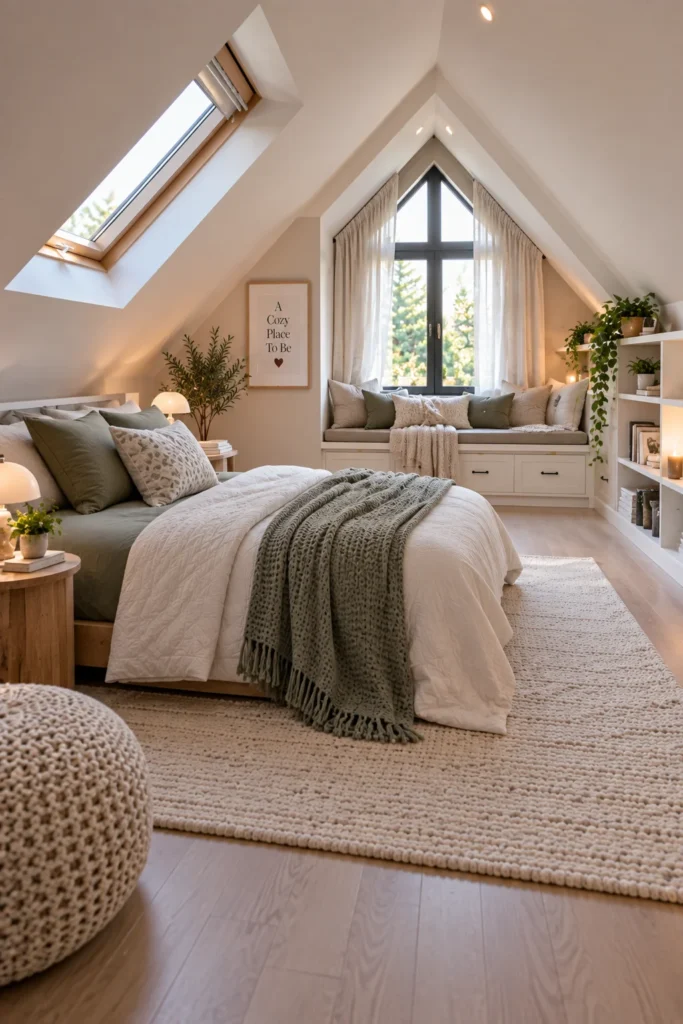
Beyond insulation, attics need proper airflow to avoid feeling stuffy, especially during warmer months. A small vent, fan, or even an openable skylight can keep air moving and prevent the space from feeling stagnant.
Good ventilation also helps protect the room and your belongings from moisture buildup over time. This step is easy to overlook, but it plays a major role in how comfortable the space actually feels day to day.
12. Create a Reading or Work Nook in the Tightest Corner:
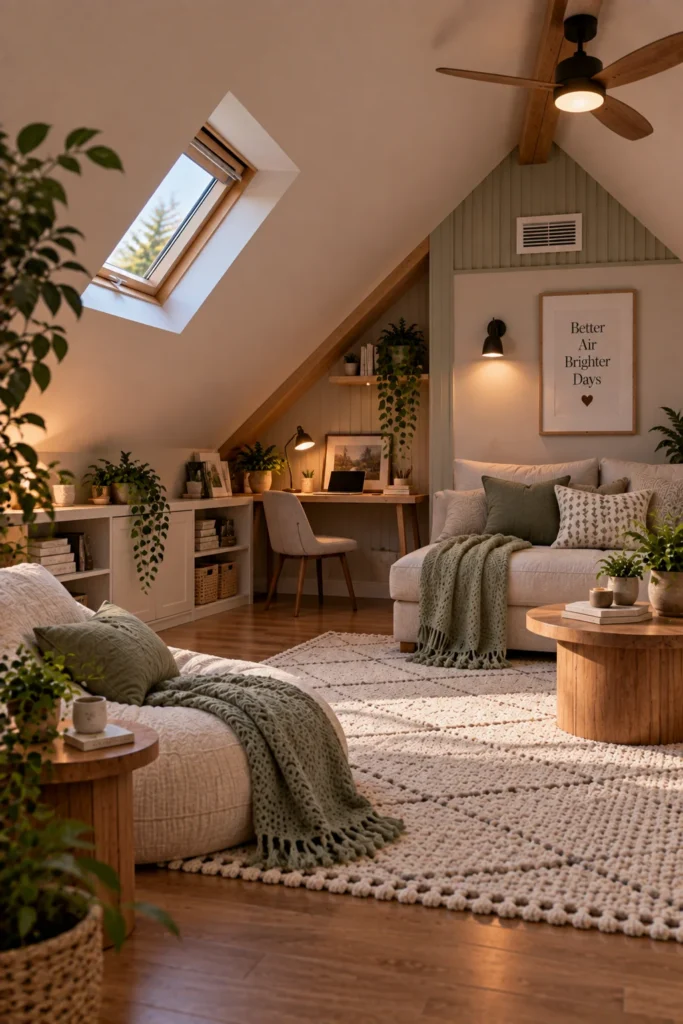
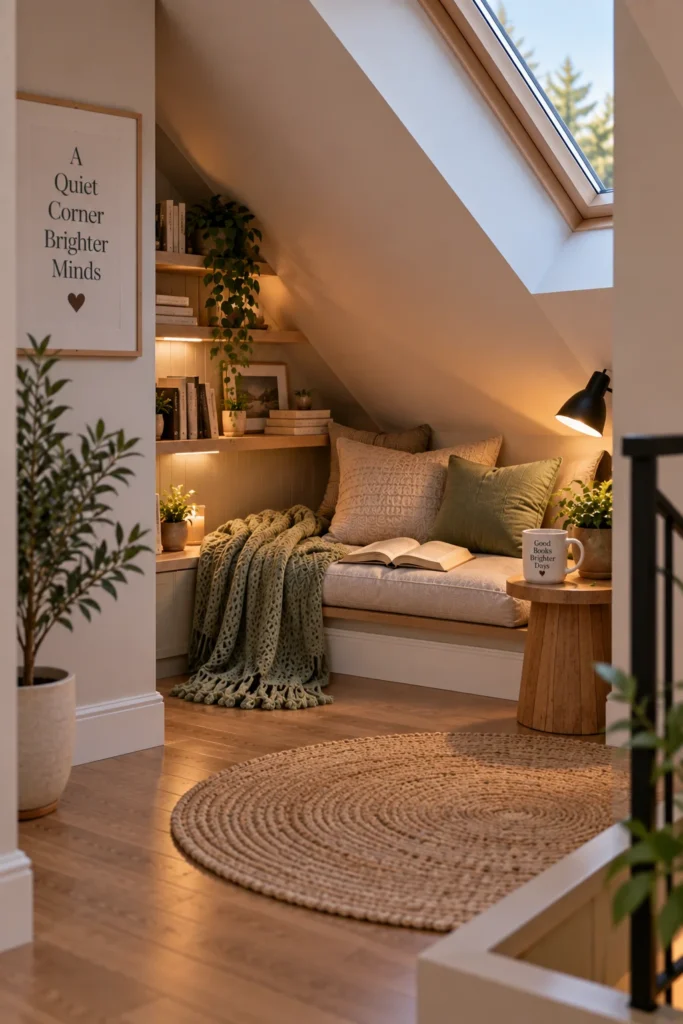
The lowest, tightest corner of an attic is often considered unusable, but it is perfect for a small reading nook or compact desk. A floor cushion, a small lamp, and a few books can turn an awkward dead space into a favorite little corner.
This approach takes a part of the room most people would ignore and gives it real purpose and charm. It is proof that even the most oddly shaped corners can become some of the coziest spots in the whole house.
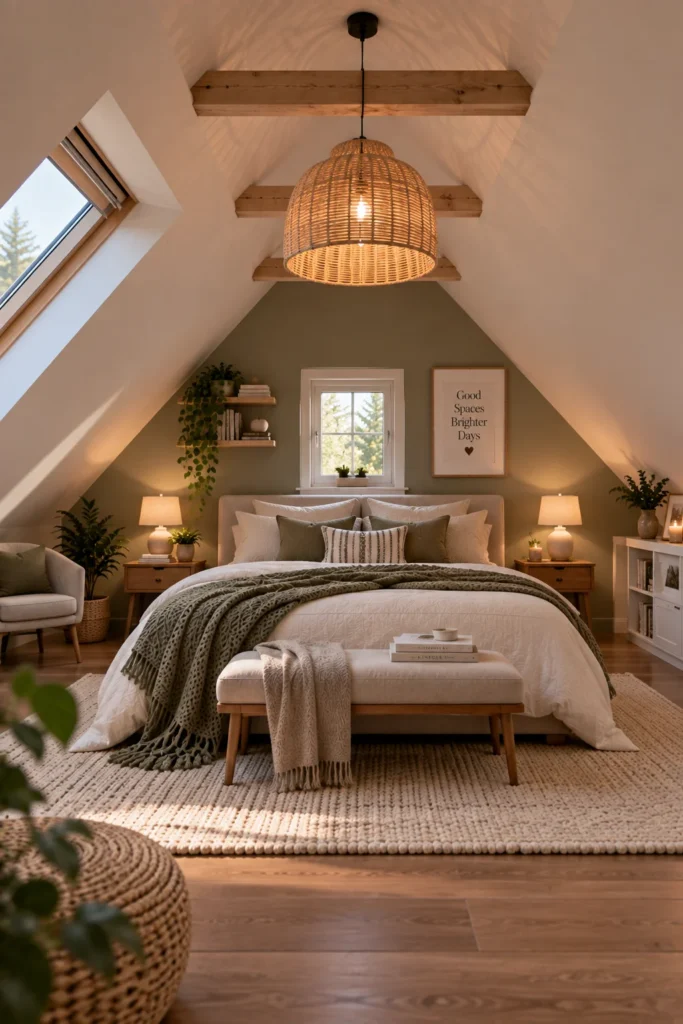
13. Add a Statement Light Fixture:
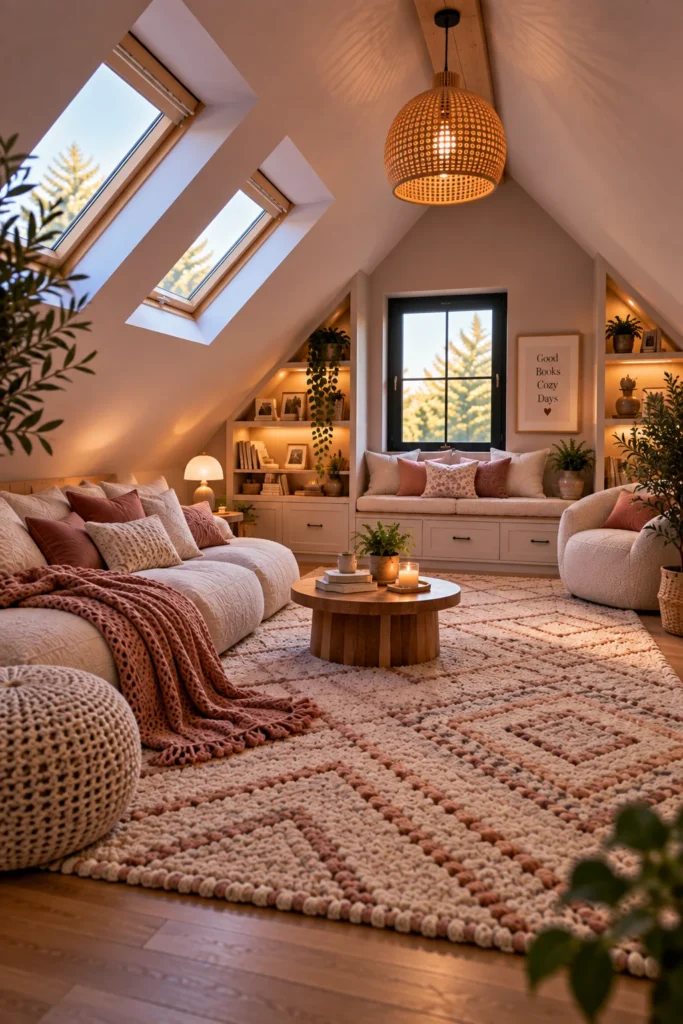
If your attic has enough headroom in the center, hang one statement light fixture as a focal point for the room. A simple pendant light or a small chandelier draws the eye upward and adds a touch of personality.
Choose a fixture with a warm, soft glow rather than anything too bright or clinical feeling. This central feature can become the visual anchor that ties the rest of your styling choices together.
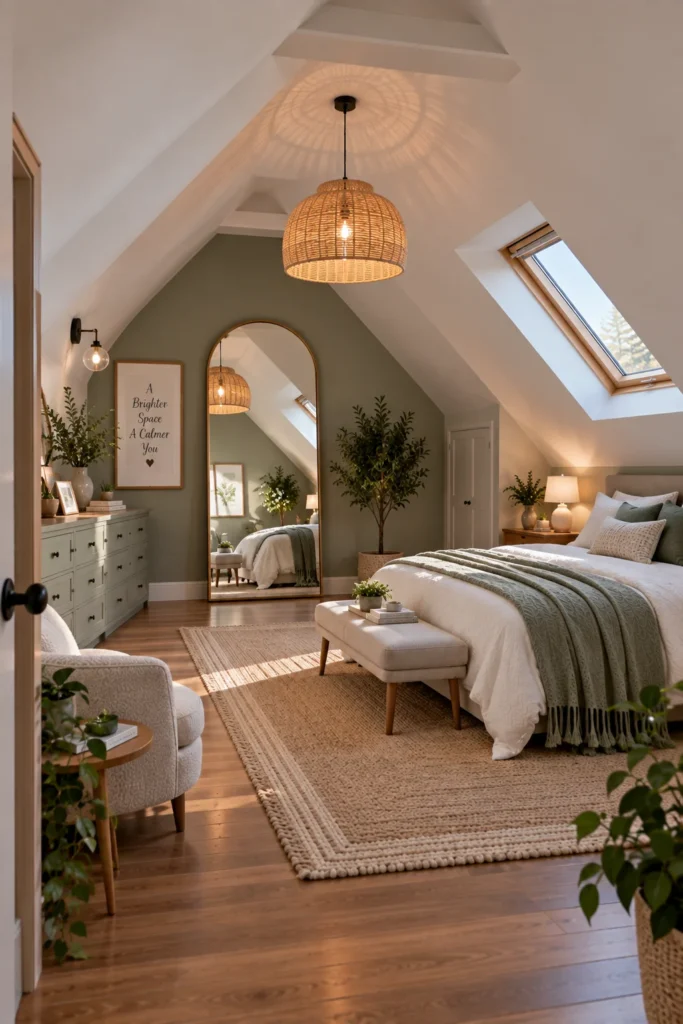
14. Use Mirrors to Open Up the Space:
Attics are often narrower than other rooms in the house, so a well placed mirror can help the space feel larger than it actually is. Position it to reflect either a window or your skylight to bounce extra light around the room.
Mirrors also add a decorative element without taking up any real floor space, which matters in a room where space is already limited. This simple trick is one of the easiest ways to make a small loft feel noticeably more open. Mirrors can be both practical and decorative in a small room. For more ideas on using statement pieces beautifully, explore these 22 Art Deco Minimalist Home Decor Ideas That Look Incredibly Expensive.
A Space Worth Climbing the Stairs For:
Your dusty, forgotten attic has more charm hiding in it than you might realize. With the right insulation, lighting, and a few thoughtful touches, those slanted walls and quiet corners can become the coziest room in your entire home.
Start with the basics, like clearing out clutter and improving insulation, before moving on to styling. Watch how quickly that overlooked space at the top of your stairs becomes the room you actually want to spend your evenings in.
Frequently Asked Questions:
Is it expensive to convert an attic into a loft?
Costs vary depending on insulation, flooring, and whether you add a skylight or staircase. Simple updates like paint, lighting, and textiles can transform the space affordably, while structural changes will increase the overall budget.
Do I need a permit to convert my attic?
This depends on your location and the extent of the changes you plan to make. Adding windows, staircases, or changing the structure often requires permits, so check with your local building authority before starting major work.
How do I make a low ceiling attic feel taller?
Paint the walls and ceiling the same light color to blur the slanted lines. Low profile furniture and a strategically placed mirror can also help the space feel more open and less cramped overall.
What is the best flooring for an attic loft?
Warm toned wood flooring or a thick area rug over plywood both work well. The right choice depends on your budget and whether you want a finished, permanent floor or a simpler, temporary solution.
Can a small attic still feel cozy?
Yes, even a small attic can feel warm and inviting with the right textiles, lighting, and color choices. Cozy spaces are about comfort and texture, not necessarily about having a large amount of square footage.
How do I deal with poor lighting in an attic?
Add a skylight if possible, since it brings in natural daylight from above. For evening hours, layer warm string lights and a statement fixture instead of relying on one harsh overhead light.
What should I do first when converting an attic?
Start by clearing out clutter and checking the insulation and ventilation. These foundational steps matter more than decor, since comfort and air quality affect whether you will actually enjoy spending time in the space.
Can an attic loft be used as a bedroom?
Yes, many attic lofts work well as bedrooms as long as insulation, ventilation, and safe access are properly addressed. A low platform bed often fits the slanted ceilings better than a standard bed frame.

Hi, I’m Emily! I love turning messy corners into cozy, organized spots. This all started years ago with my own entryway: shoes everywhere, keys always missing, and bags dumped on the floor every single day. I got tired of the chaos, so I started fixing it little by little, and I fell in love with the whole process along the way.
Now I run DreamNestDecor, where I share simple, real ideas that actually work for busy homes: not fancy, expensive makeovers, just easy changes anyone can do on a weekend. From cozy mudrooms to cute storage hacks, everything I share, I’ve tried myself first. I believe a calm, organized home shouldn’t feel like a dream: it should be something every family can have.
So grab a coffee, look around, and let’s make your home feel a little more “you.”