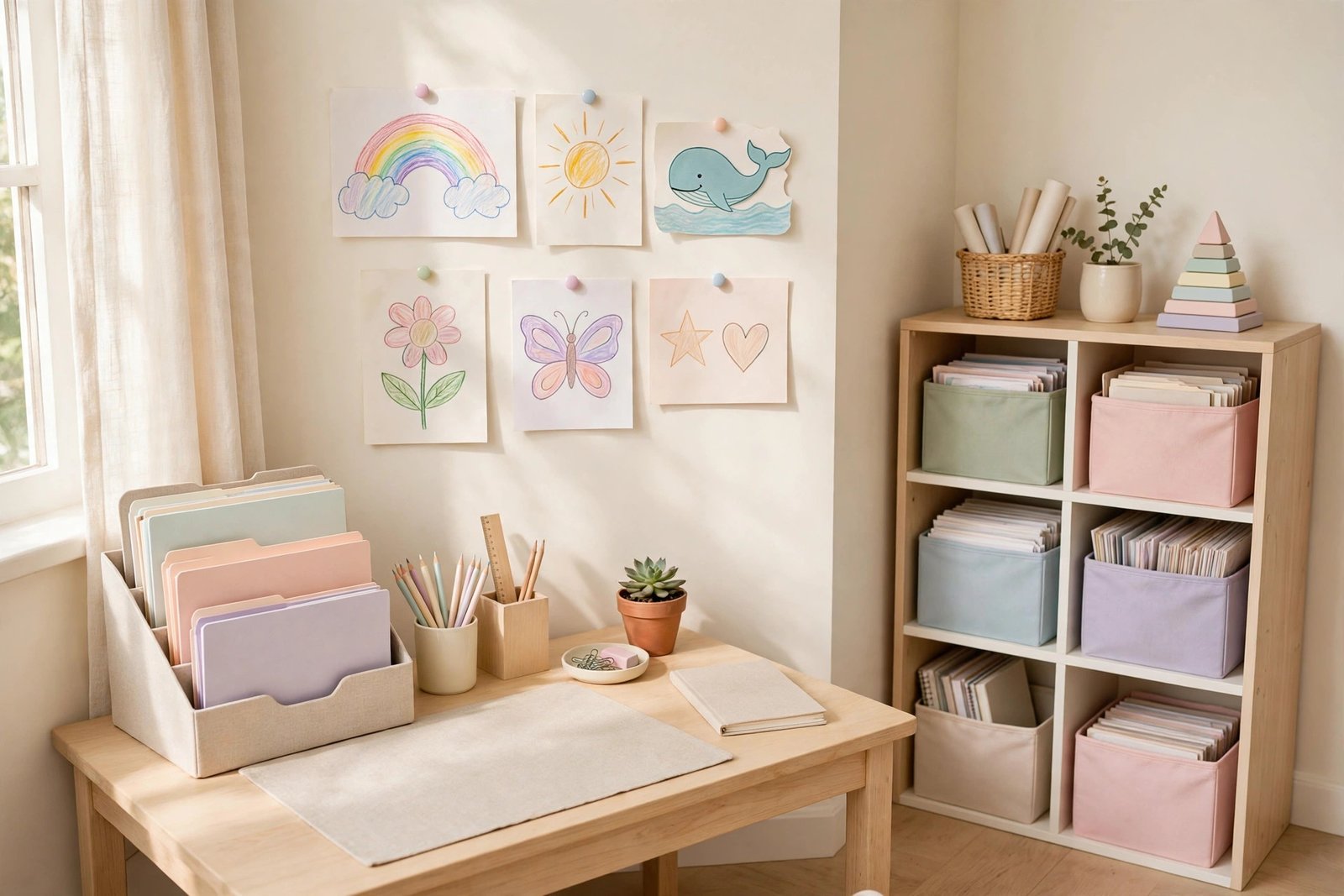
Picture this: it is the end of the school day, and your kitchen counter is covered with worksheets, permission slips, and a painting that is still a little damp. Your child drops a backpack by the door, and out comes another handful of papers that need a home before they get lost or crumpled.
You do not need a big filing cabinet or a perfect system to fix this. You only need a simple spot for every kind of school paper, from daily homework to the artwork you want to keep forever. These 17 ideas will help you sort, store, and display school papers so the pile stays small and nothing important goes missing.
1. Sort School Papers Into Cube Shelves
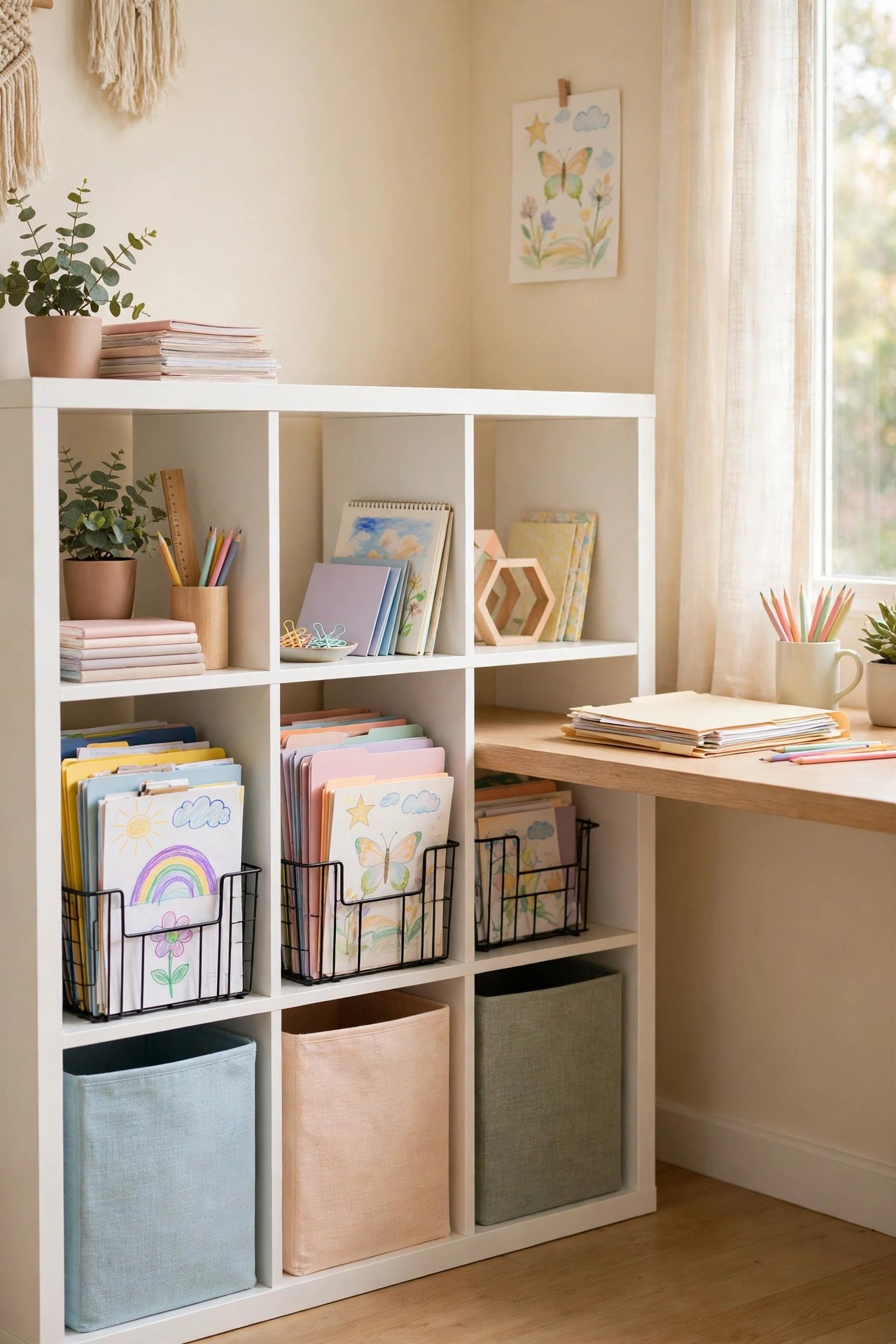
School papers pile up fast when every sheet lands in a different spot, and a cube shelf gives each kind of paper its own home. Set one cube for homework, one for artwork, and one for forms that need your signature. The open squares keep everything visible, so your child can find the right stack without digging through a pile.
Choose a cube shelf that fits your space, and add magazine holders or bins inside each square to keep papers standing tall. Label the front of every cube so homework, art, and forms never mix. Cube shelves hold more than school papers, and these board game organization ideas use the cubby system for boxes and loose pieces.
2. Set Up Paper Trays for Homework and Artwork
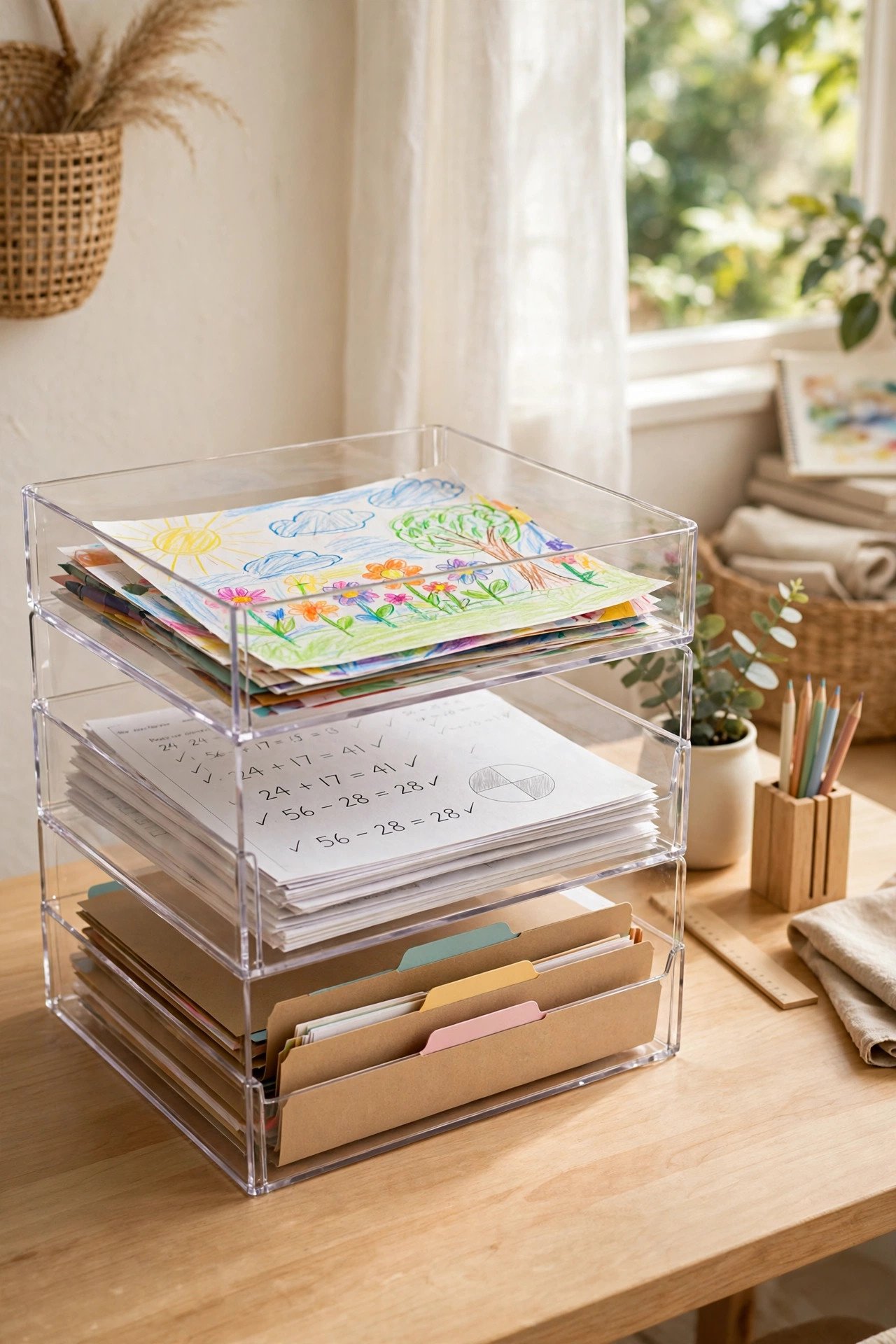
Paper trays turn a messy stack into a clear set of next steps, and they take only a few minutes to set up. Place three trays on the homework desk and give each one a job: one for work to do tonight, one for finished work, and one for artwork worth keeping. Your child always knows where to look first.
Clear trays work best because you can see what is inside without lifting the whole stack. Move finished homework from the work tray to the finished tray each evening, and file the artwork tray once a week. This tiny routine keeps the desk clear and stops important papers from hiding under a pile.
3. Slide School Papers Into Slim Paper Slots
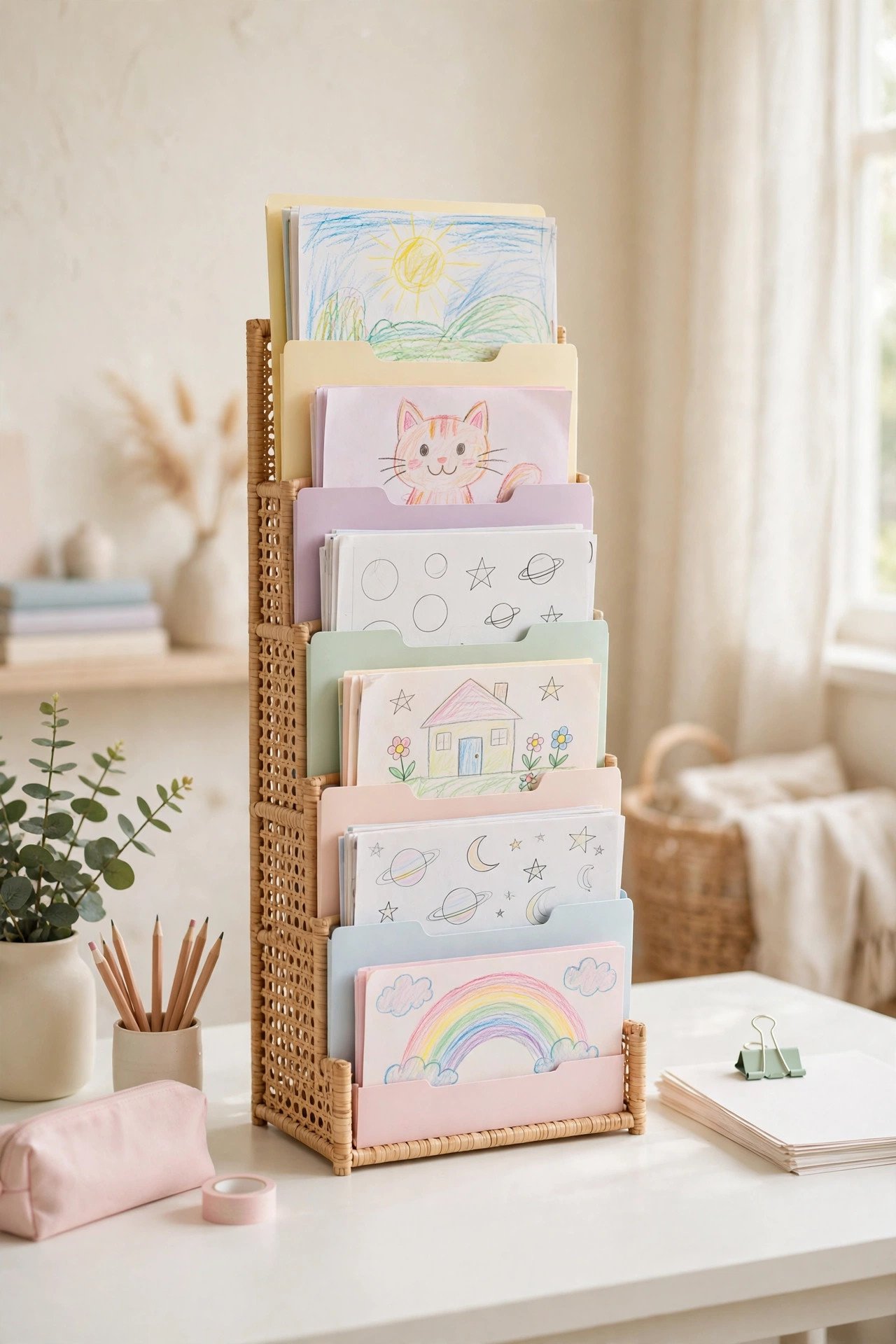
Loose sheets bend and tear when they sit in random piles, but slim paper slots keep every page flat and easy to grab. Stand homework, worksheets, and drawings upright in separate slots so nothing gets folded by accident. Color the folders by subject, and your child can pull the right one out in seconds.
Place the slot organizer on the desk or inside a cube shelf where it stays within reach during homework time. Keep current work in the front slots and finished work in the back, then clear the back slots into folders every Friday. This small habit keeps the paper flow moving instead of growing into a stack.
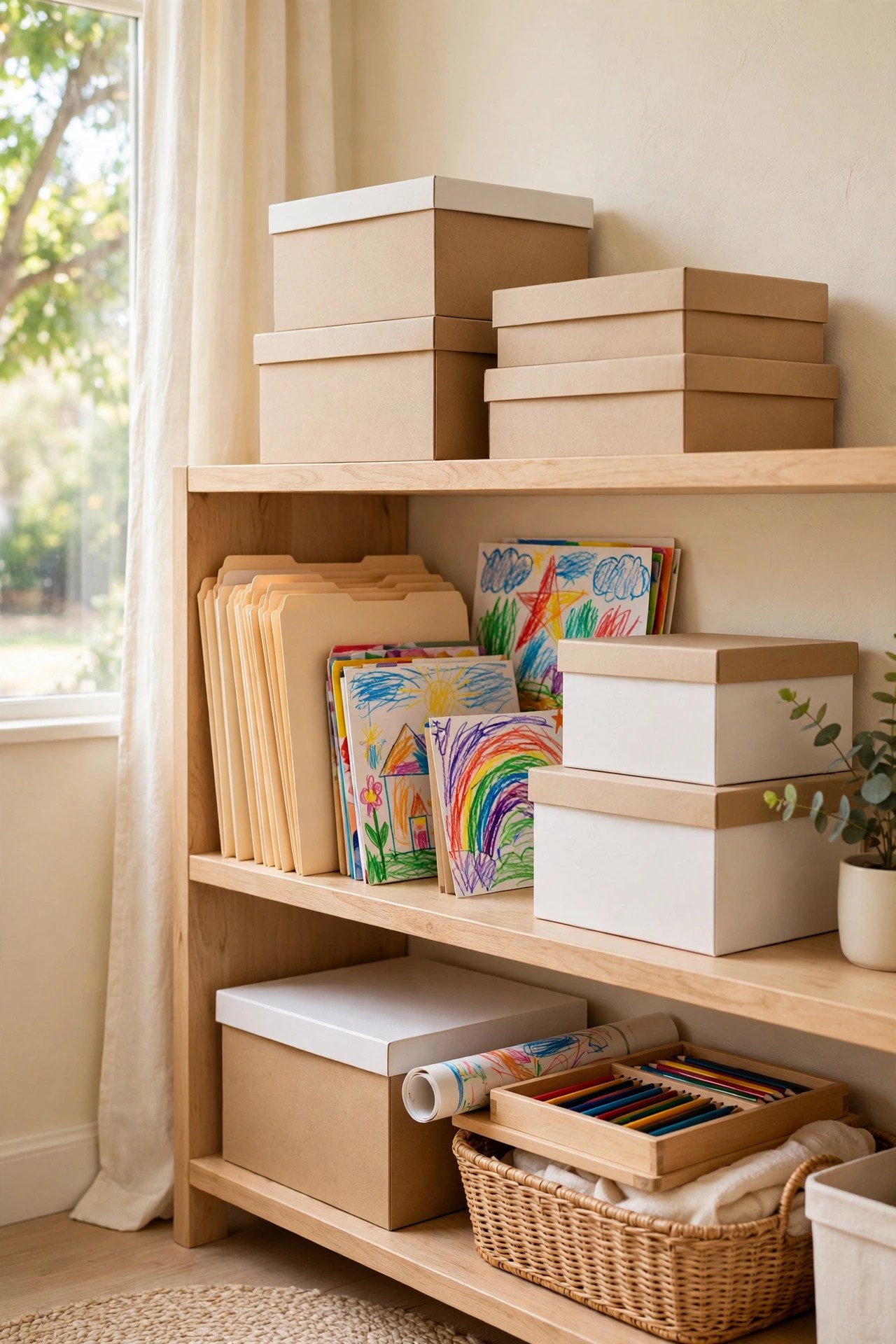
4. Store Artwork and Homework in Label Boxes
Paper chaos fades fast once every sheet lives inside a clearly labeled box. Give each box a job, such as homework, artwork, school forms, or keepsakes, and stack them on a shelf where your child can reach them. A label on the front means nobody has to open five boxes to find one drawing.
Choose sturdy boxes with lids so artwork stays flat and safe from dust and spills. Keep the homework box near the desk and the keepsake box on a higher shelf, and check both boxes at the end of each school term. Tossing out old worksheets together keeps the system honest and the boxes from overflowing.
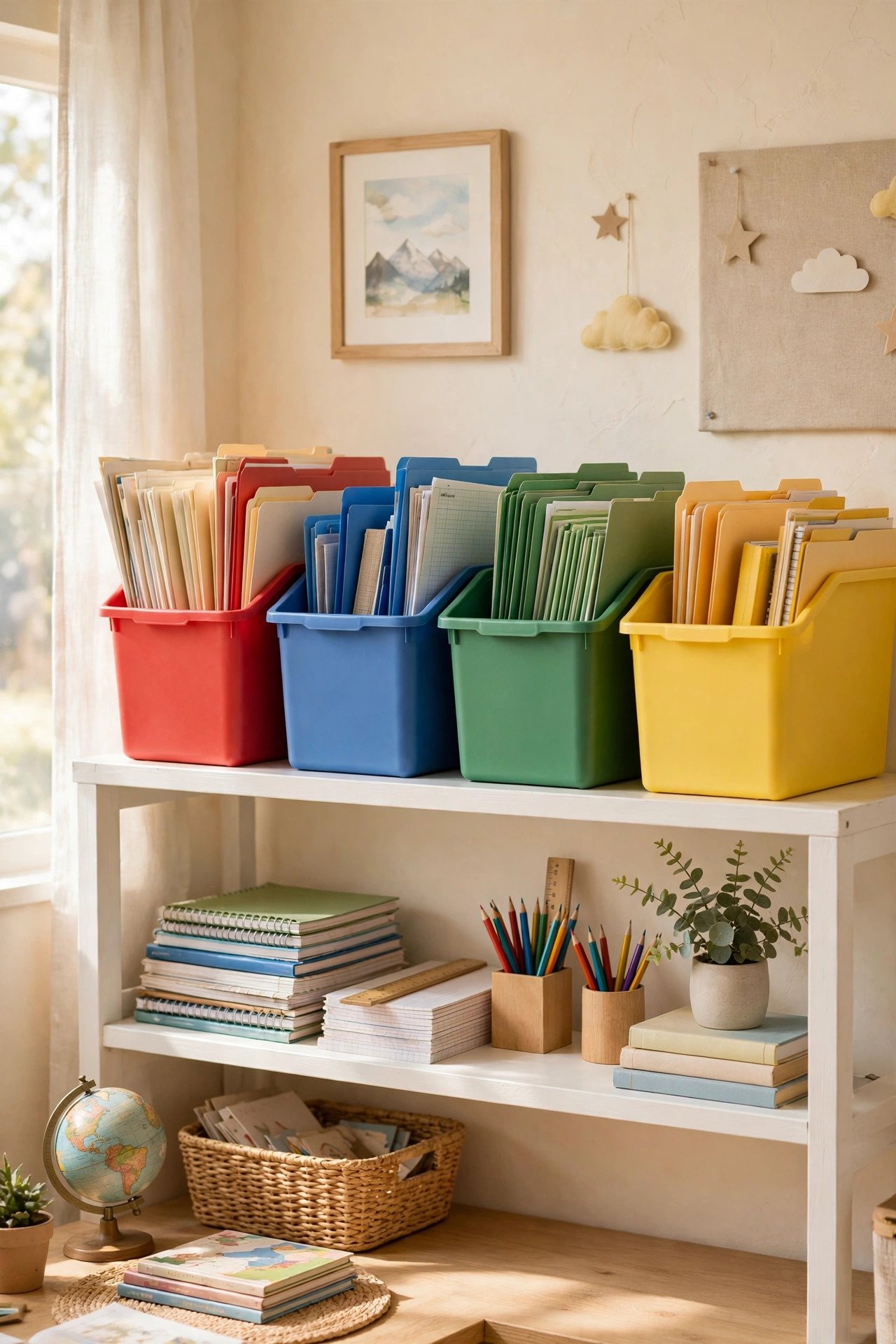
5. Sort School Papers by Color in Bright Bins
Sorting by color makes the paper system easy to understand at a single glance. Give each child a color, or give each subject its own shade, and drop matching papers into the right bin. Bright bins on an open shelf turn a boring chore into a quick game your child can win every day.
Clear bins work well here because your child can see the papers inside without pulling the bin off the shelf. Add a simple label to the front of each bin, and keep the bins at a height your child can reach alone. When the colors stay consistent, cleanup takes less than a minute after homework time.
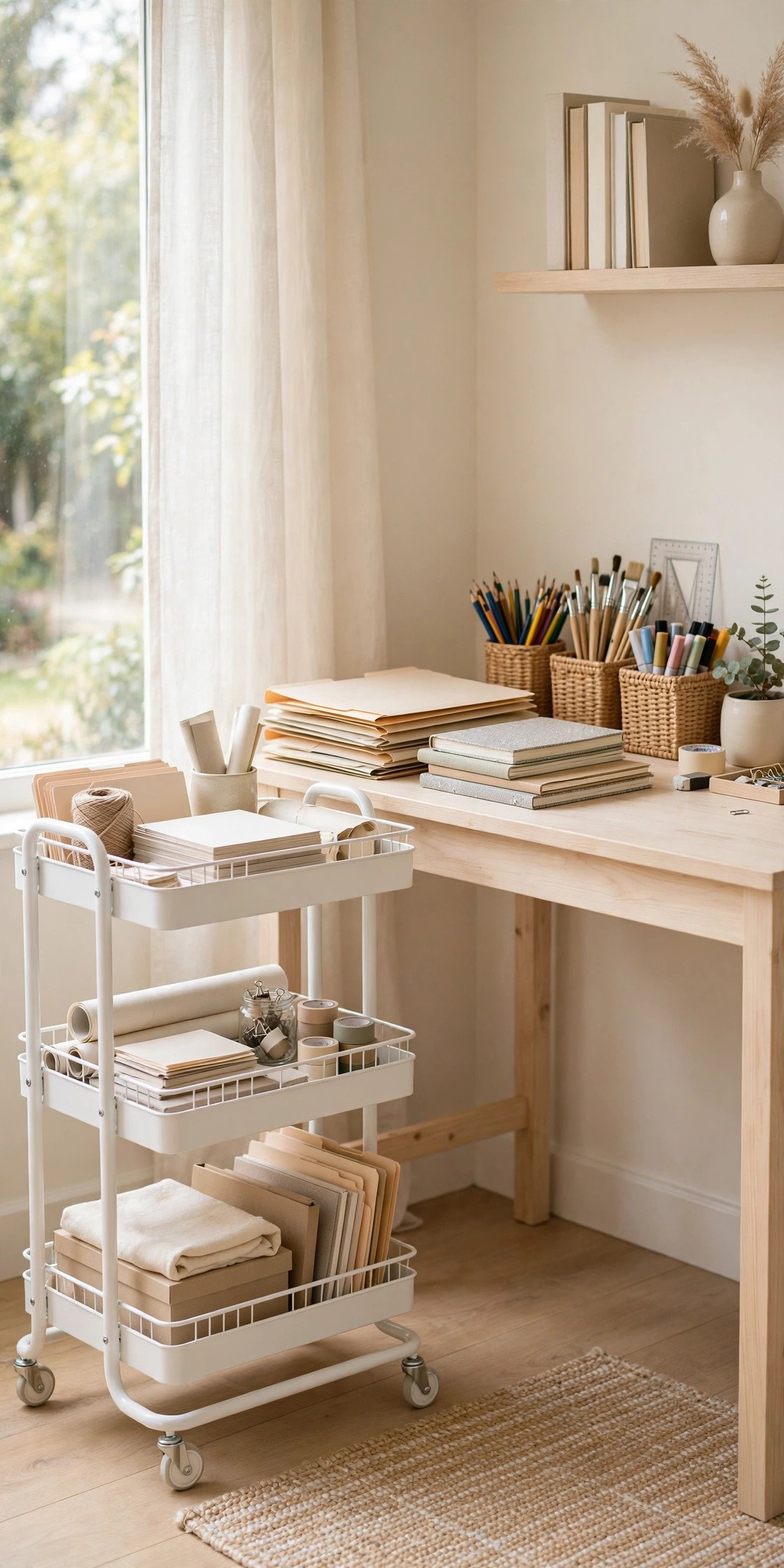
6. Roll a Cart Beside the Homework Desk
A rolling cart keeps school papers close while homework is happening and out of the way when it is done. Load the tiers with folders, notebooks, and art supplies, then wheel the cart beside the desk for study time. When homework ends, roll it into a corner and the room looks tidy again.
Give each tier a clear job so papers never mix: homework on top, art supplies in the middle, and finished work at the bottom. Small cups on the cart hold pencils and scissors, and a clip on the side keeps the current worksheet visible. This moving station works well in small rooms where desk space is tight.
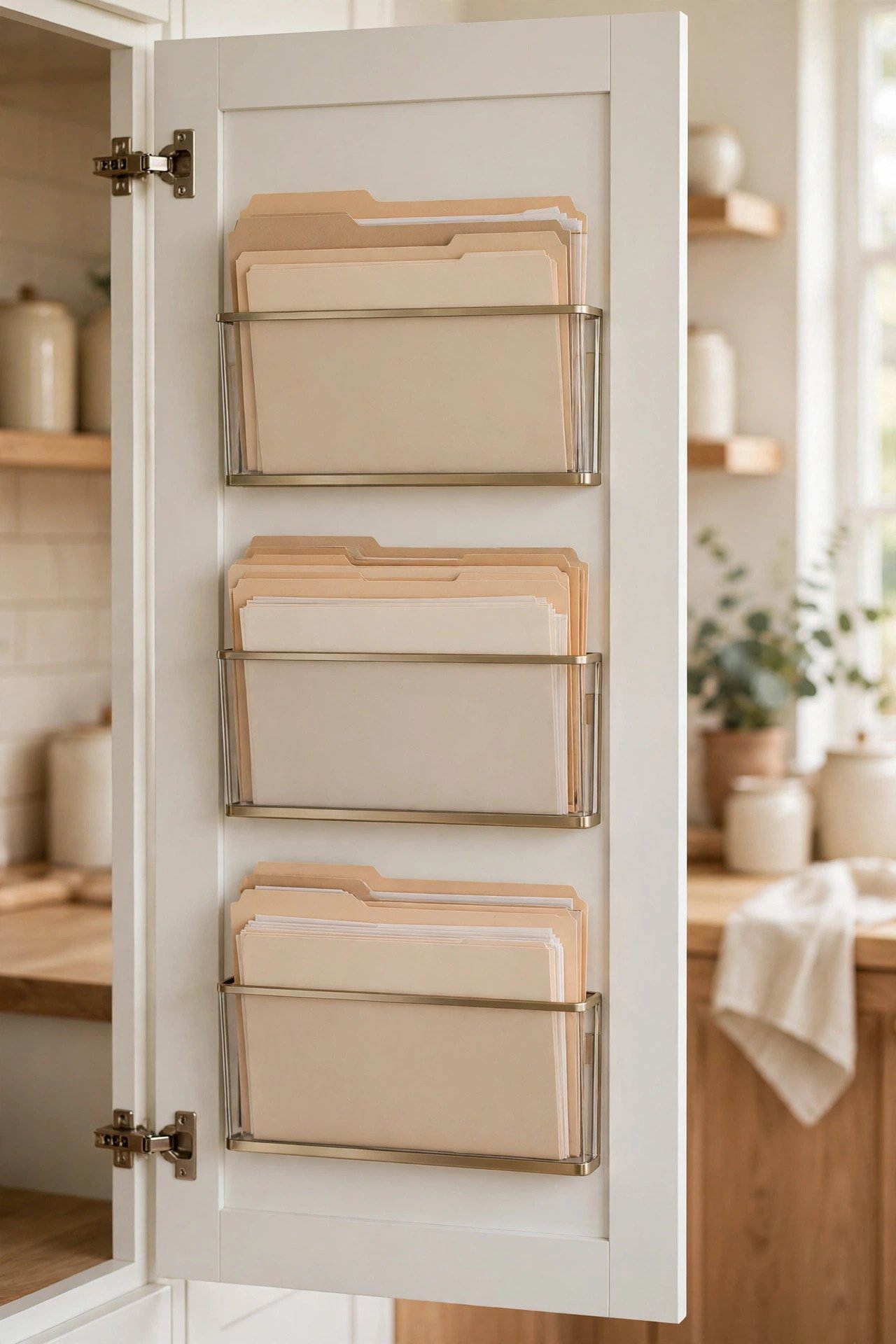
7. Hang File Holders Inside a Cabinet Door
The inside of a cabinet door hides a surprising amount of storage for school papers. Mount two or three slim file holders there, and suddenly permission slips and homework sheets have a home that takes up no desk space at all. Your child can grab what is needed without opening a drawer or a box.
Use strong adhesive hooks or small screws so the holders stay put when the door swings. Label each holder by child or by subject, and keep only current papers inside so the door still closes flat. This hidden spot works well in kitchens and small study corners where every inch of space counts.
8. Stack School Papers on Sturdy Shelf Trays
Order appears quickly once school papers move from messy piles into stacked shelf trays. Give each tray level its own job, such as homework to do, work to hand in, and artwork to keep. The layers separate the papers without needing a big filing cabinet or a whole new piece of furniture.
Place the trays on a bookshelf or inside a cupboard where your child can reach them without help. Clear the top tray every evening and move finished work into folders, so the stack never grows taller than the tray. This simple layer system suits busy families who handle school papers every single day.
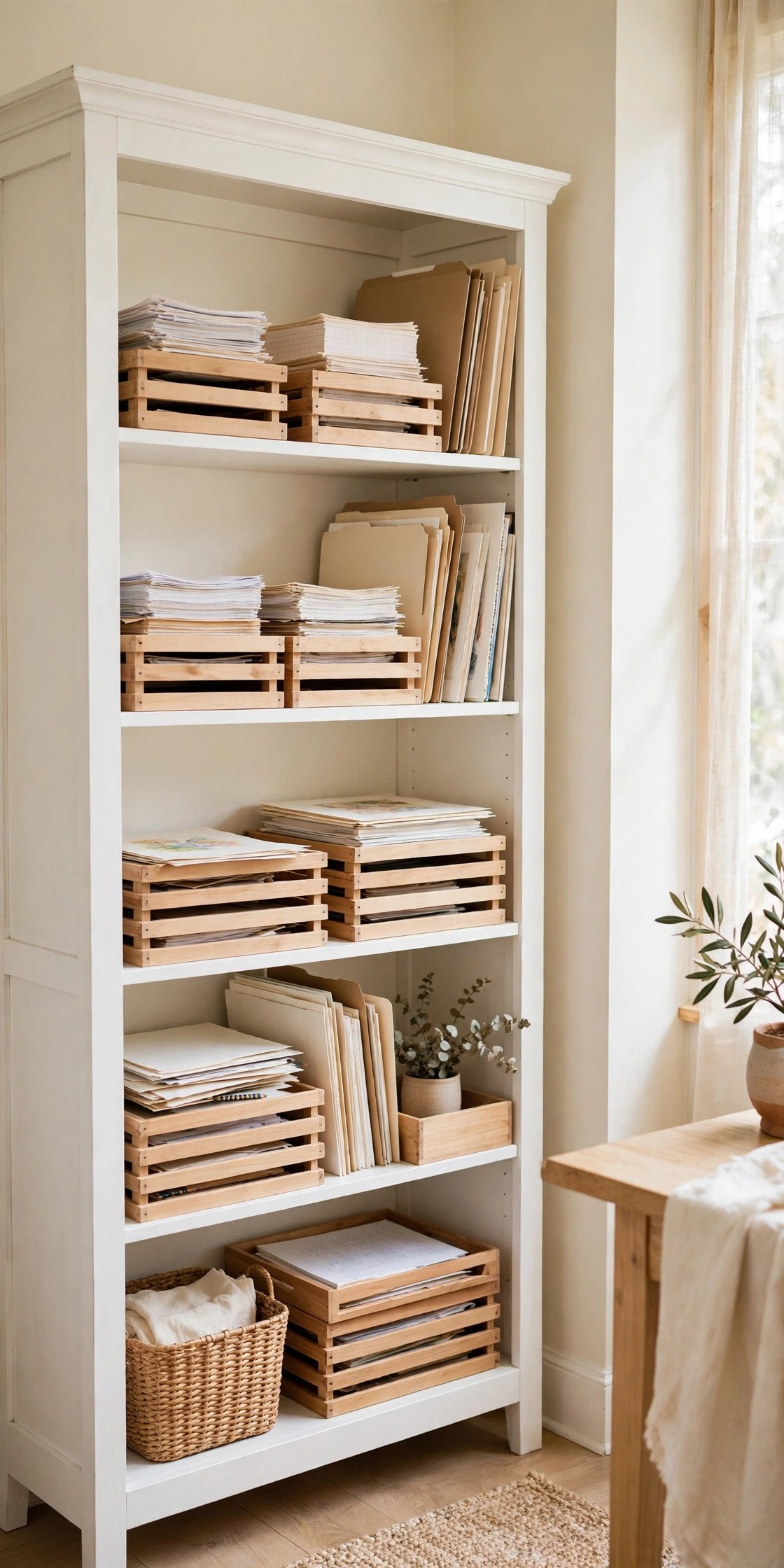
9. Keep Daily Papers in a Folder Basket
Loose papers travel around the house until one basket finally gives them a home. Stand folders upright inside a sturdy basket, and give each folder a job: homework, forms to sign, or artwork from today. Your child can flip through the folders in seconds instead of digging through a stack on the table.
Keep the basket on the homework desk or near the front door so papers land in the right folder straight away. A folder basket also works at the front door, and these entryway organization ideas show how to build a backpack drop zone for after-school gear. Empty the basket into files once a week so it never overflows.
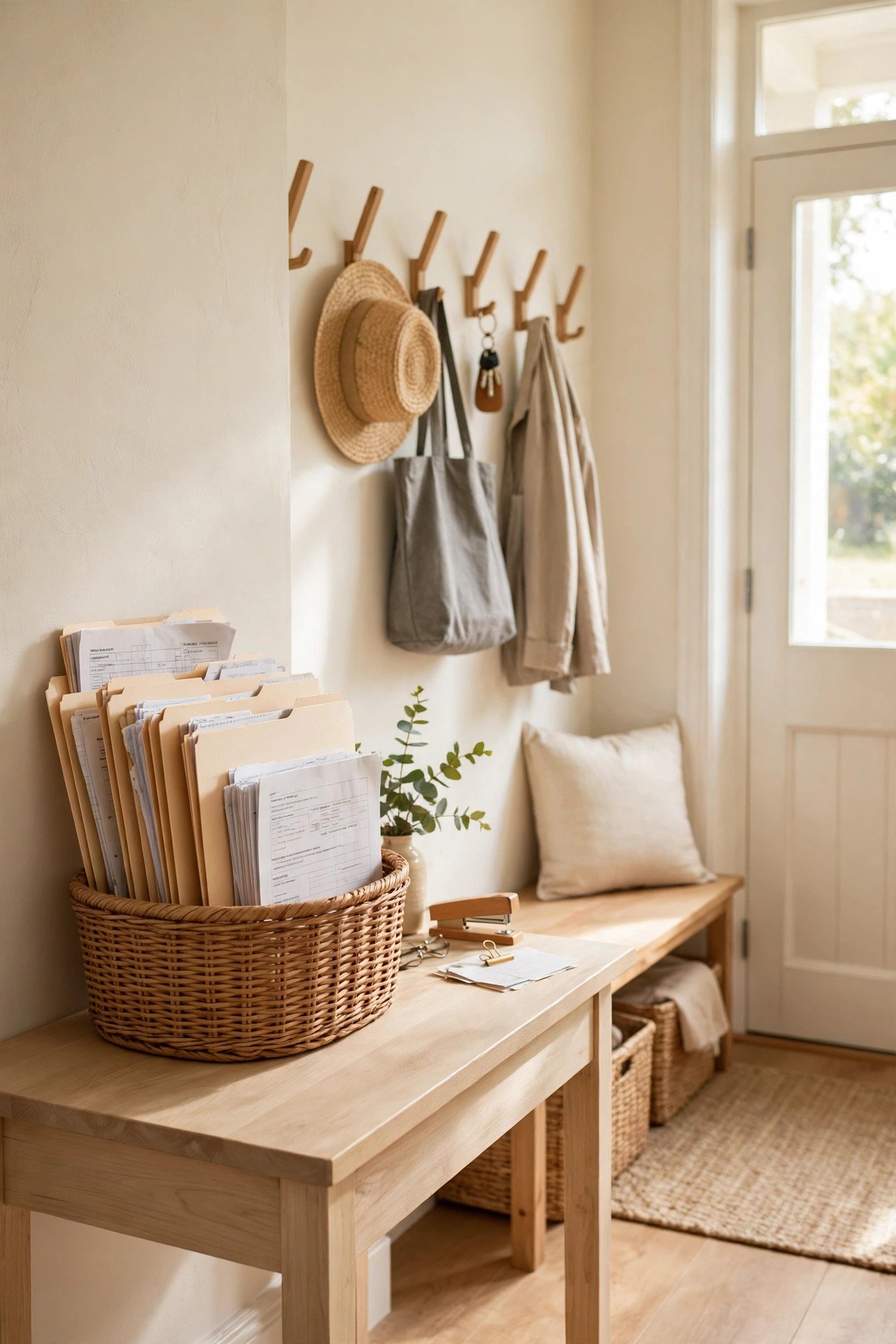
10. File School Records in a Sturdy File Bin
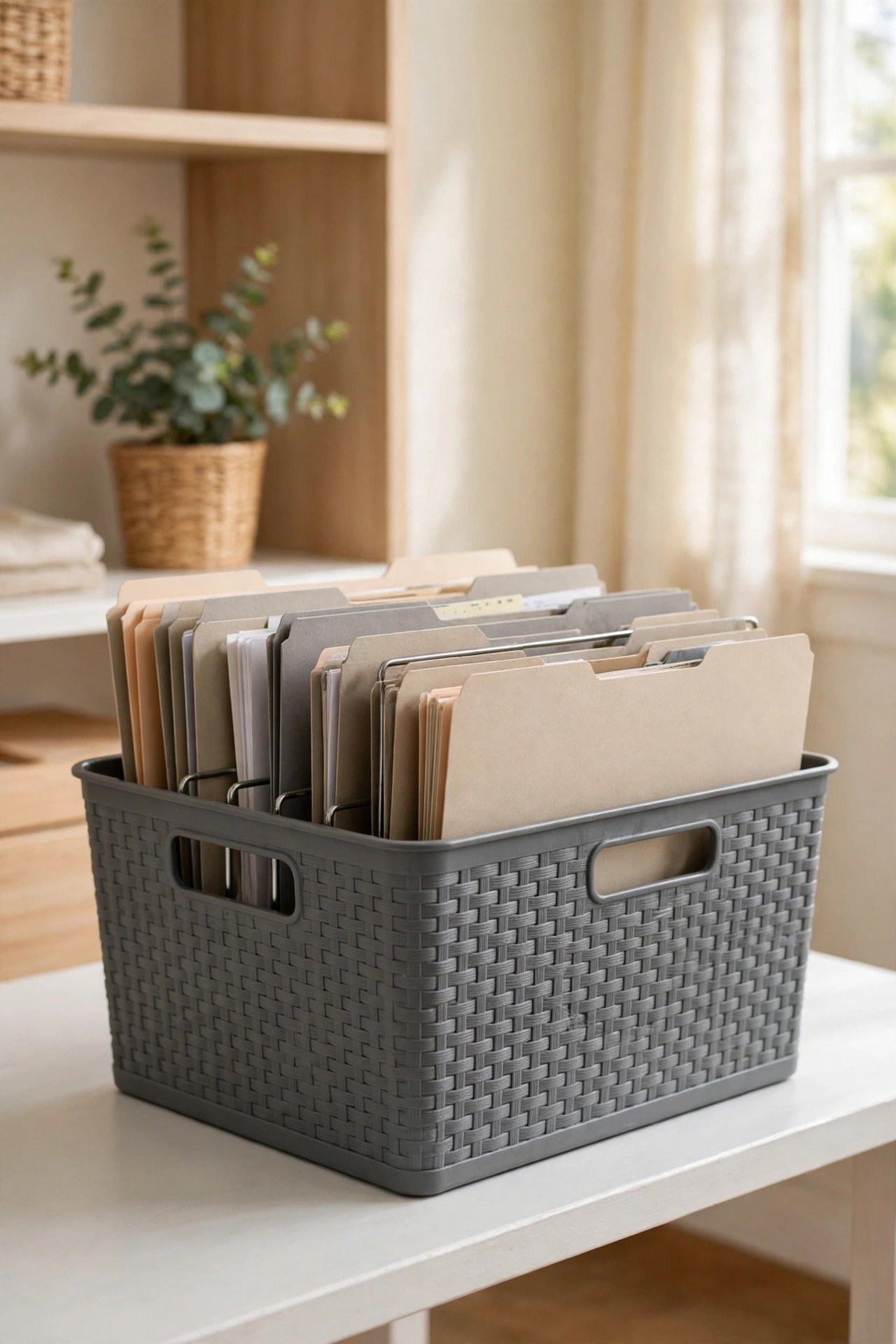
Important school records stay safer when they live together inside one dedicated file bin. Hanging folders inside a sturdy plastic bin create a simple filing system without a cabinet. Give each folder a label, such as report cards, medical forms, or school pictures, so nothing gets mixed up.
Store the bin on a closet shelf or under the desk where it stays safe but easy to reach. Add a new folder whenever a fresh category appears, and review the bin at the end of every school year. Shredding old papers together keeps the bin light and makes room for the next year of school memories.
11. Carry Current Work in a Paper Basket
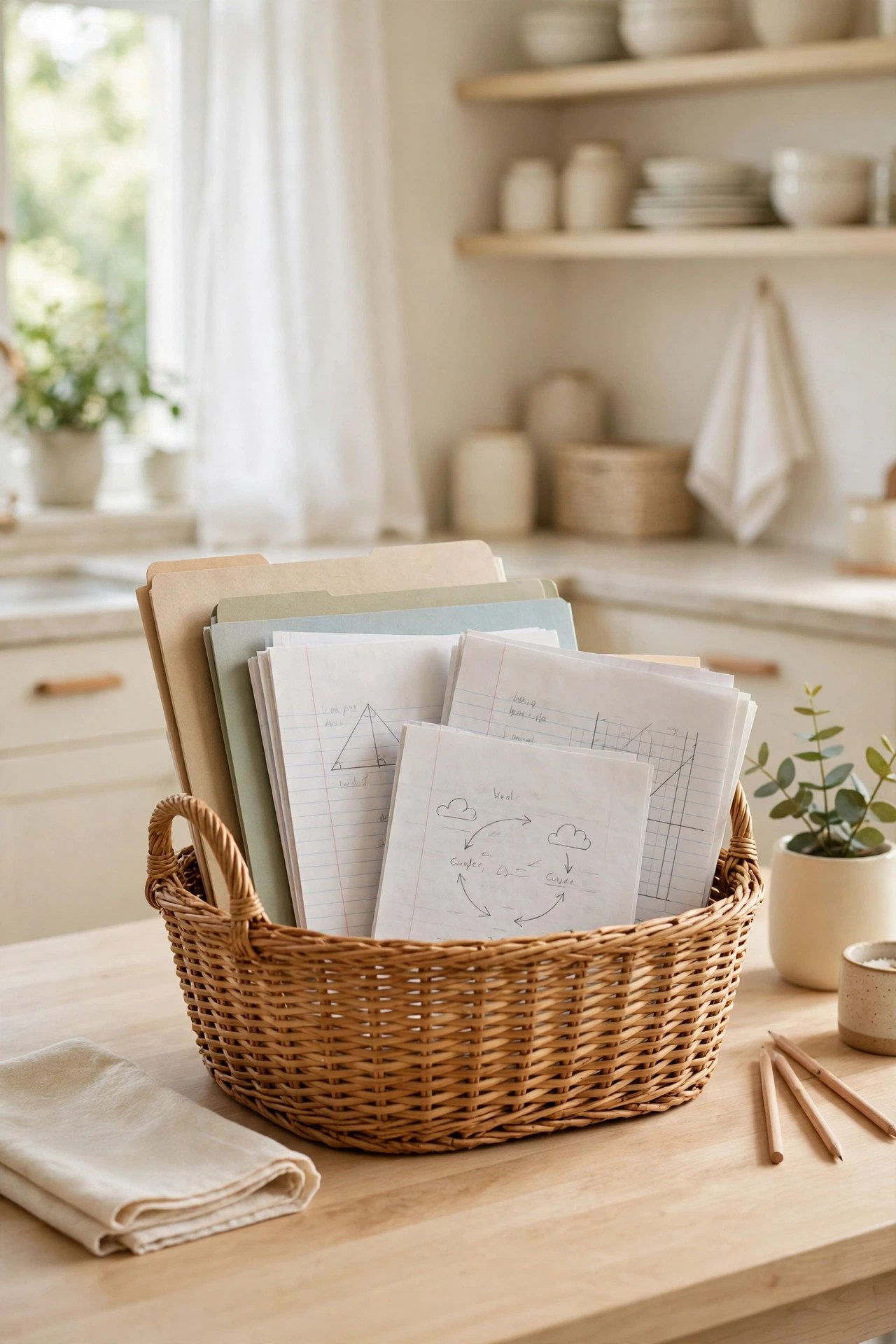
Paperwork that moves between the desk, the kitchen table, and the couch needs a flexible home rather than a fixed drawer. A medium basket with a few folders inside keeps current work together while your child moves around the house. The open top makes it easy to drop in a worksheet and grab it again later.
Keep the basket light by moving finished work into folders every evening, and leave only this week papers inside. A handle on the basket helps your child carry it from room to room without dropping sheets along the way. This portable system suits families who do homework wherever the day takes them.
12. See Everything at a Glance With Clear Bins
Small paper supplies scatter across drawers and shelves when they have no visible home. Clear bins fix that fast by giving each item its own see-through space. Your child can spot the right folder, envelope, or art paper without opening five containers to find one sheet.
Line the bins up on an open shelf and label the front of each one with the kind of paper inside. Keep the bins shallow so papers stand upright and stay easy to grab, and choose matching bins for a calm, tidy look. Clear storage works best where your child reaches for papers every day.
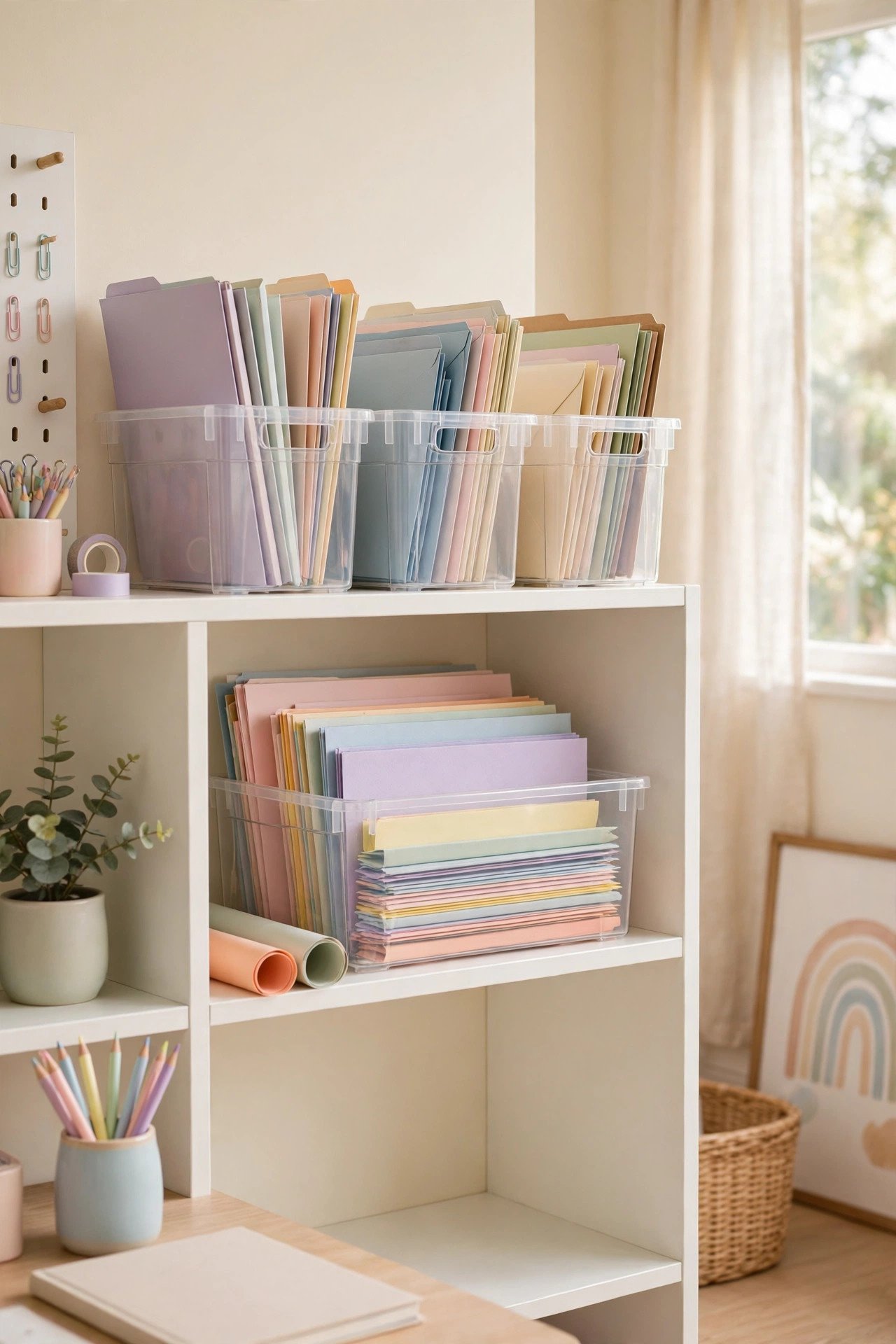
13. Divide the Shelf With Upright Dividers
Paper stacks turn messy fast when different subjects get mixed together. Shelf dividers create clear sections so homework, artwork, and forms each stand upright in their own slot. The thin dividers fit inside bookshelves and cube units, and they stop tall stacks from leaning over and sliding down.
Add magazine holders between the dividers for papers that need extra support, and color the folders so each subject is easy to spot. Keep the dividers upright and the rows snug, because loose dividers let papers flop over. This neat row system keeps schoolwork visible and easy to grab every morning.
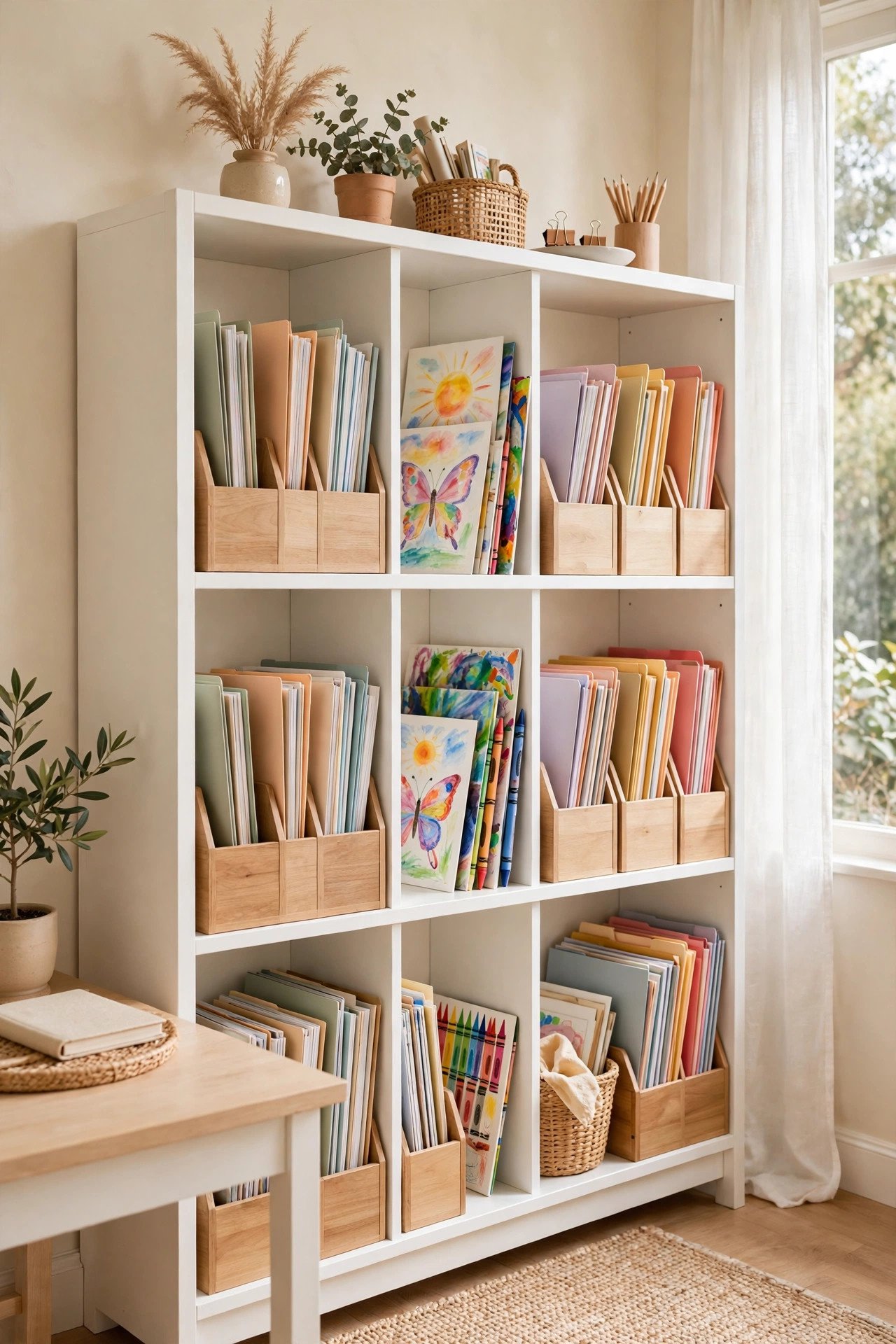
14. Stand Artwork and Homework in a Vertical Rack
Tall storage makes a real difference when the paper collection starts growing. A vertical rack keeps dozens of sheets separated without spreading them across several shelves. Each slot holds one kind of paper, so finding the right worksheet takes seconds instead of a long search through stacks.
Slim racks fit well in tight spots beside the desk or the craft table, where a wide organizer would never fit. Choose a rack with enough slots for each child, and let your child file new papers straight into the right slot. Standing papers up keeps the edges flat and stops the corners from curling.
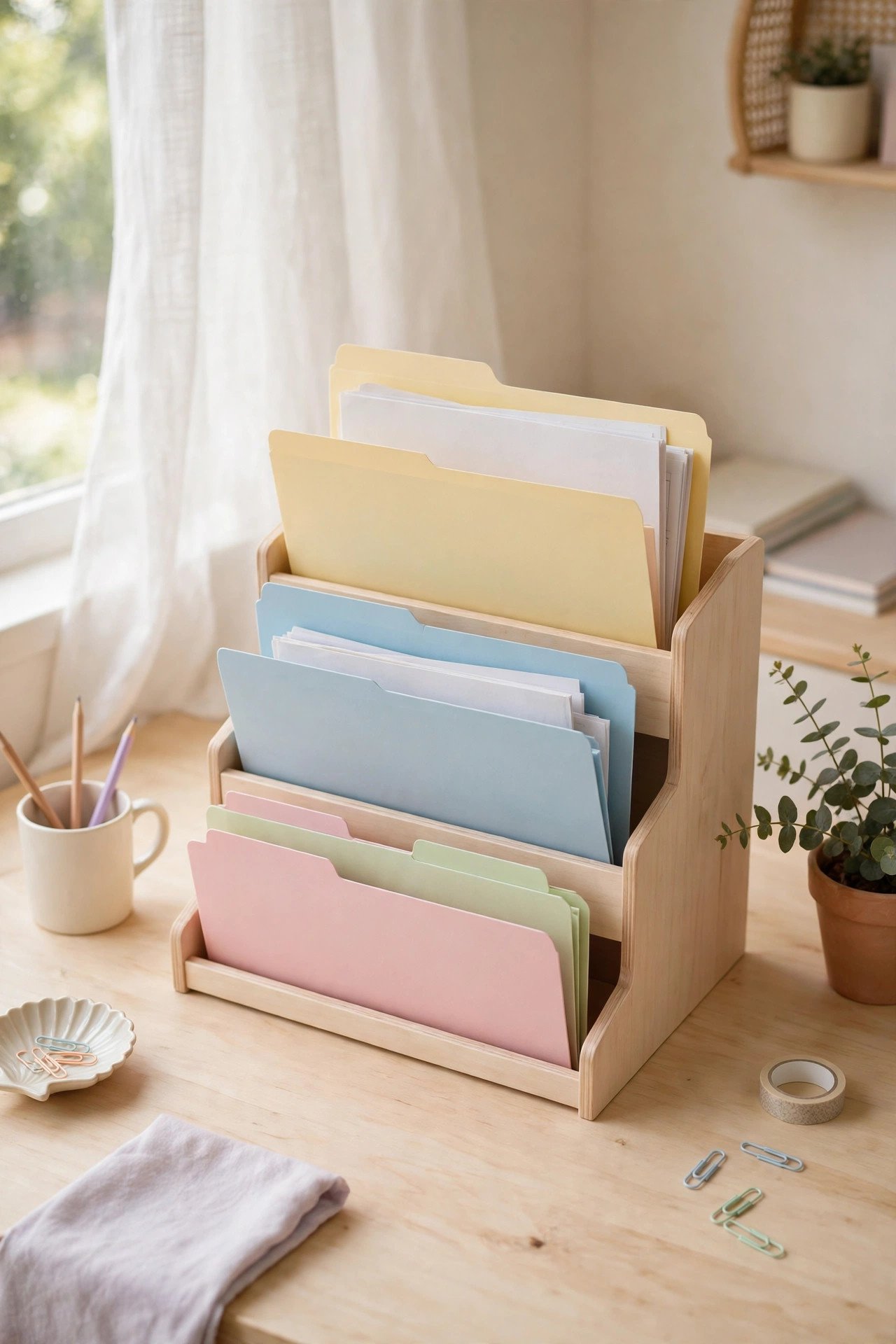
15. File Papers Upright in Tiered Files
Finding one worksheet becomes much easier once files stand upright instead of stacking on top of each other. Tiered file organizers let you see every folder at once, so nobody digs through a jumbled heap. Each slot holds a different kind of paper, from homework to permission slips.
Colored folders and labeled tabs make the tiered system even easier to use, because your child can match the color to the subject. Set the file stand on the desk or a shelf near the homework spot, and clear the finished slots into the file bin each week. Slanted sections make flipping through files quick and simple.
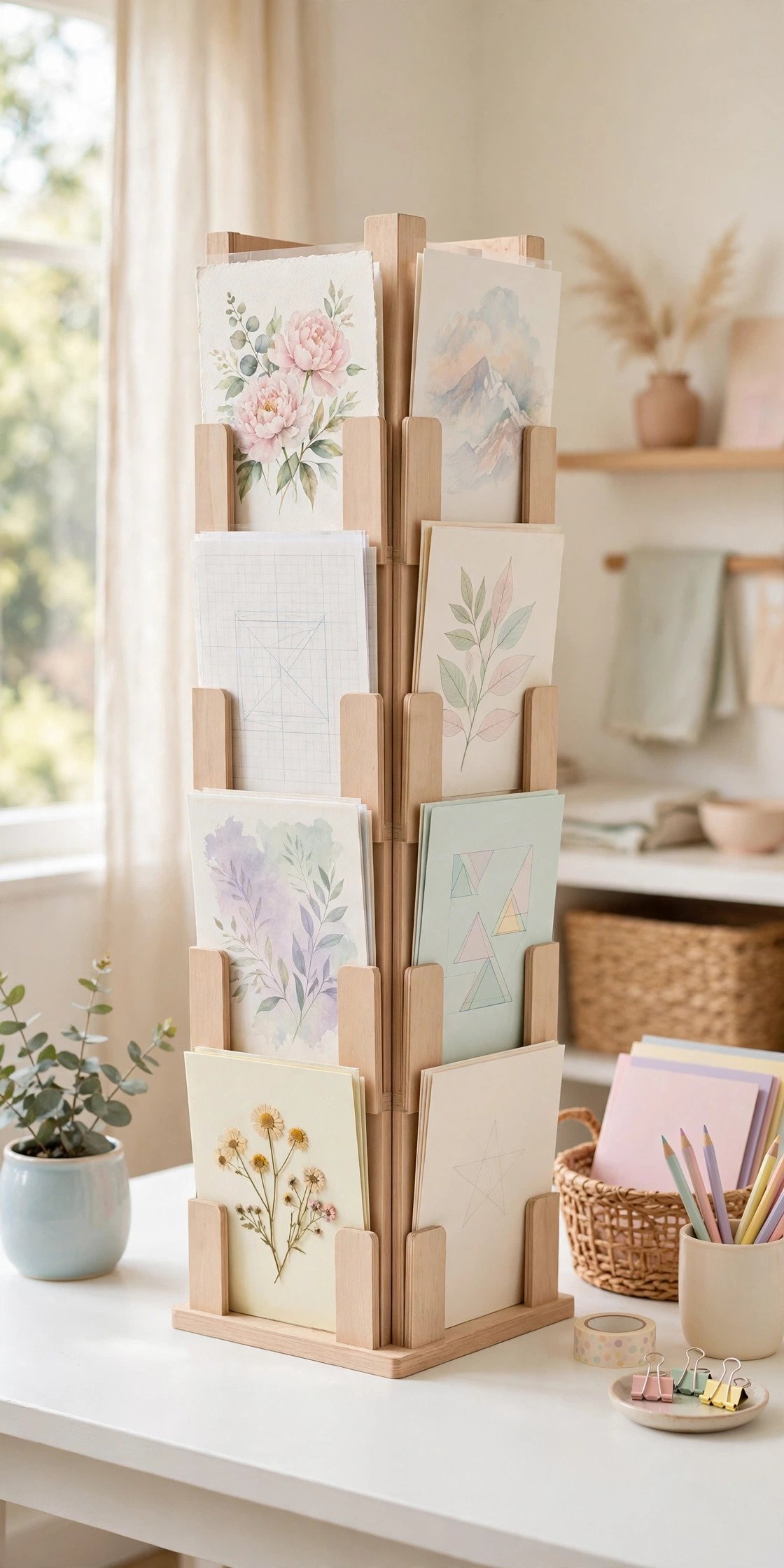
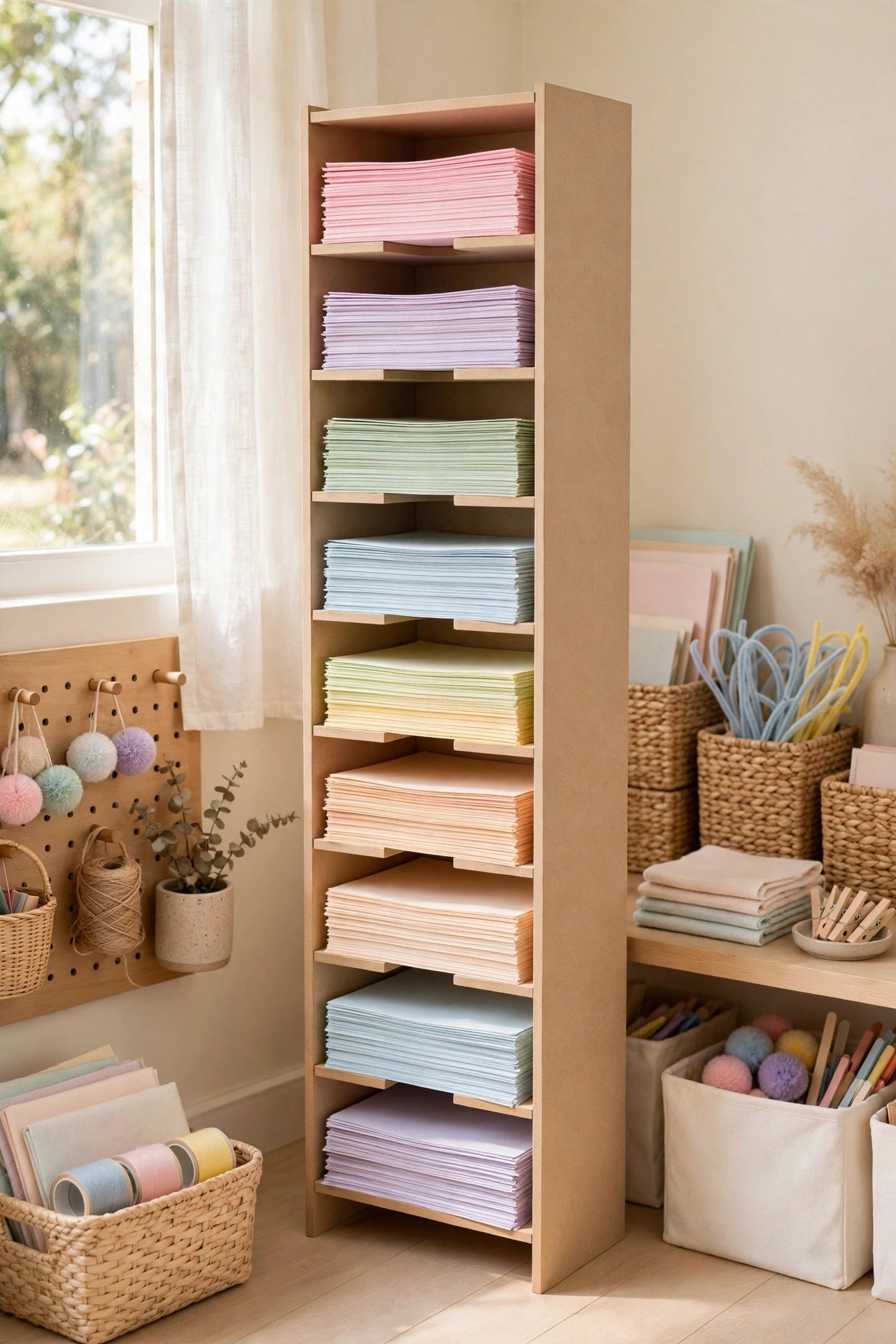
16. Stack Art Paper in a Tall Paper Tower
Stacks of art paper stay much easier to manage when they live in a tall paper tower. Slim horizontal slots keep each sheet flat, apart, and easy to grab without sorting through a pile. Sorting by color or size adds another layer of order, so the exact sheet is easy to find.
Place the tower in the craft corner or beside the homework desk, where your child reaches for art paper most often. Keep plain paper in the lower slots and colored paper up top, and refill the tower when a slot runs low. This tall setup holds a lot of paper without taking up much floor space at all.
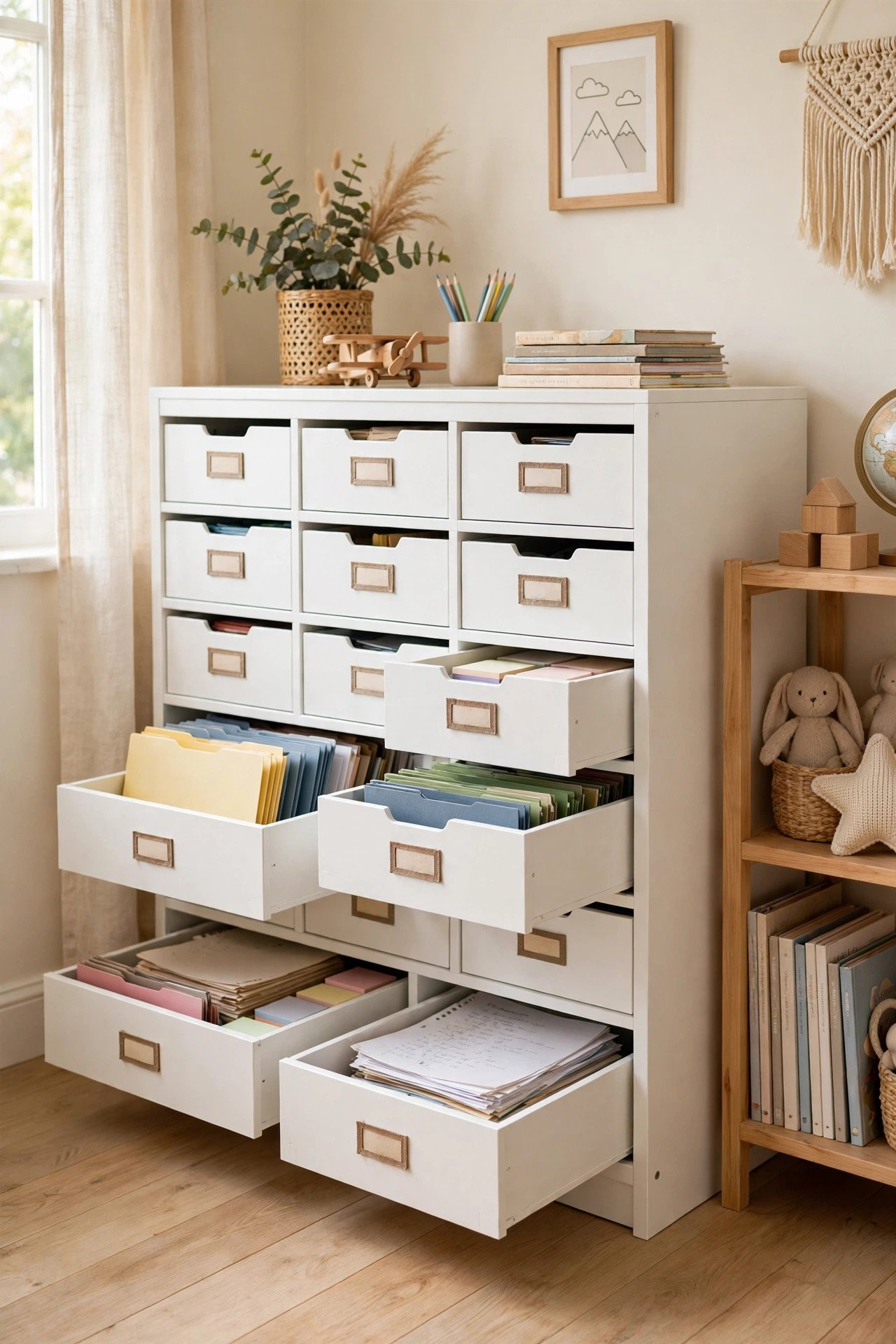
17. Label Every Drawer for School Papers
Paper collections stay manageable when every drawer has its own clear label. Shallow drawers work well for school papers, because each one holds a single category without letting sheets slide around. A label on the front means your child never has to guess which drawer to pull open.
Use the same label style on every drawer so the system looks calm and stays easy to read. Labeling works in every kids’ room, and these stuffed animal storage ideas use the same label habit for plush collections. Check the labels each term, and update any label that no longer matches what lives inside the drawer.
Conclusion
A school paper system does not need to be big or perfect to work. It only needs a clear home for every kind of paper, from the homework due tomorrow to the artwork you want to keep for years. When every sheet has its place, the pile stops growing and the kitchen counter stays clear.
Add a five-minute paper check to your tidy-up, and these nightly reset routines show how to build that habit into your day. Your school paper pile is waiting, and it will be tidy soon. Start with one idea that fits your paper problem, such as a folder basket by the door or labeled trays on the desk.
Frequently Asked Questions About 17 School Paper Organization Ideas for Artwork and Homework
How do I organize school papers without a filing cabinet?
Use a simple tray, basket, or cube shelf system instead of a cabinet. Sort papers into three groups: work to do, work to keep, and work to toss. Labeled folders and a small file bin hold everything your child brings home, and the system fits on one shelf.
How do I keep my child’s artwork without keeping every drawing?
Keep the best pieces in a labeled keepsake box or a display frame, and photograph the rest before recycling them. A photo album of artwork saves the memory without filling a closet. Review the keepsake box each term, and let your child choose which pieces stay and which ones go.
What is the best way to sort homework papers each day?
Give every paper a next step the moment it comes home: a tray for work to do and a folder for finished work. Clear the finished folder into the file bin each evening, and the desk starts fresh every morning. This habit takes five minutes and stops piles from forming.
How can I display my child’s artwork without damaging the walls?
Use a picture ledge, a clip string, or a cork board so artwork hangs without tape or pins. Rotate the display every few weeks so new pieces get their turn and old favorites move into the keepsake box. A changing gallery keeps the wall fresh and your child proud.
How often should I clear out old school papers?
Clear the working trays every week and review the keepsake box at the end of each school term. Toss old worksheets, recycle duplicate forms, and shred papers with personal details. A short clear-out each term keeps the system light and leaves room for the next year of school papers.

Hi, I’m Emily! I turn messy corners into cozy, organized spots. DreamNestDecor is where I share simple, practical home ideas — decor, organization, and small-space solutions that work in real life, not just in photos. Every idea here is carefully researched before it’s shared.