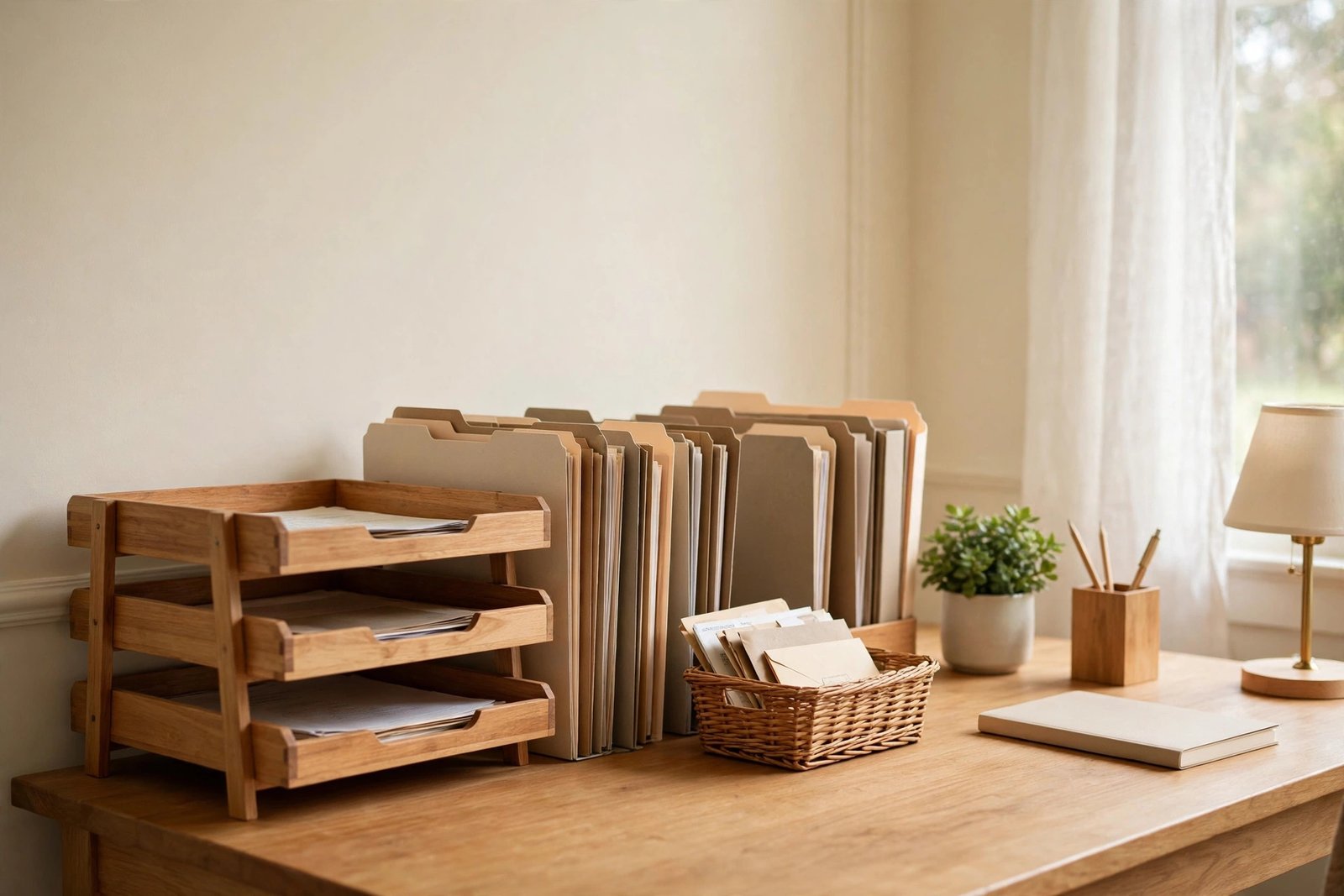
Picture this: you come home with a handful of mail, set it on the nearest table, and promise yourself you will sort it later. By Friday the pile has grown into a small mountain of bills, receipts, and school papers, and the one envelope you actually need is hiding at the very bottom. Paper clutter creeps in quietly, one envelope at a time.
You do not need a bigger house or a complicated system to fix it. You only need one clear home for every piece of paper that comes through your door, and a simple habit for dealing with it. These 21 ideas will help you sort bills, file receipts, and clear paper piles for good, so your home feels calm and every important paper is easy to find.
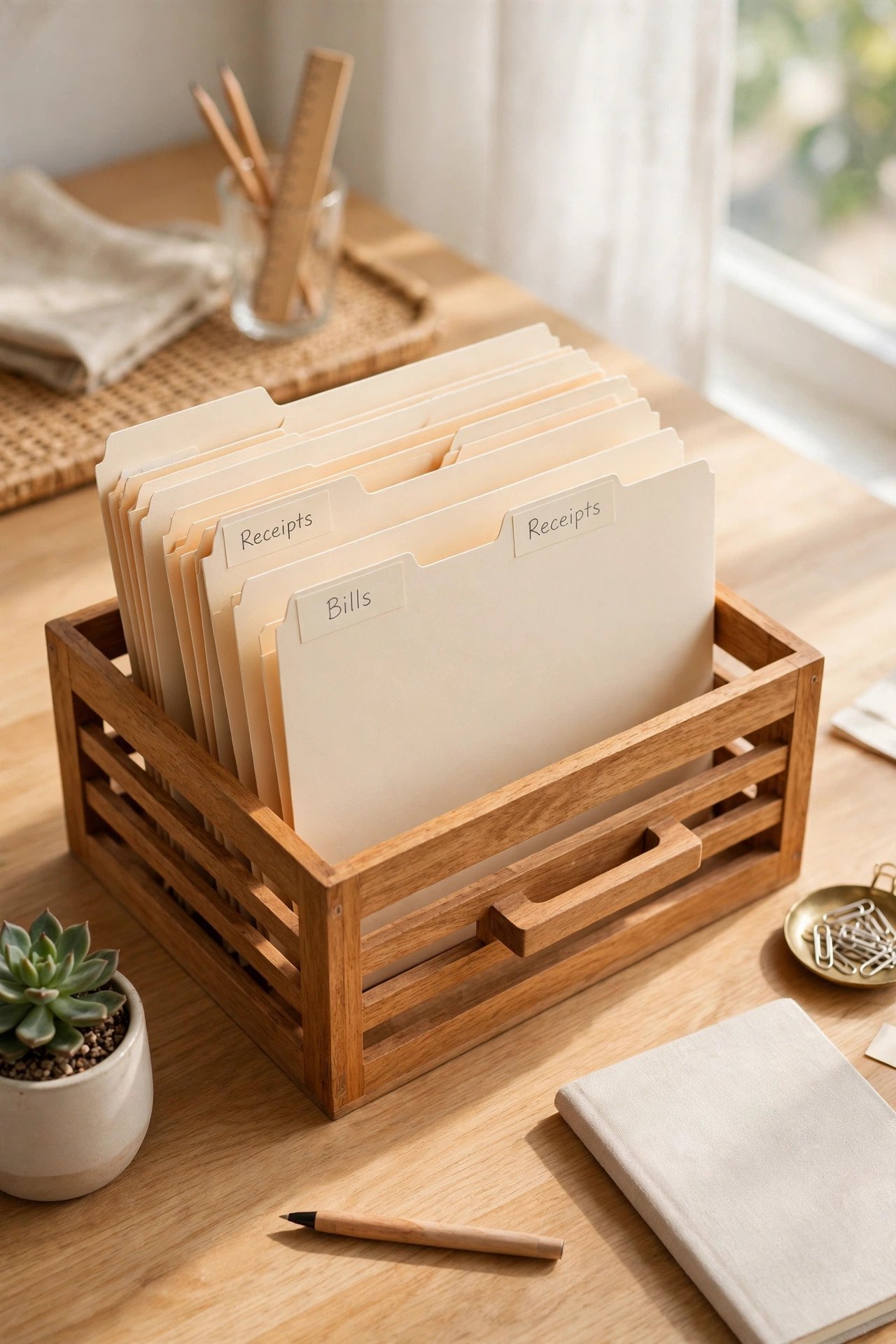
1. Set Up a Filing System With a Storage Box
A filing system is the single best cure for paper clutter, because every paper gets one clear home. Choose a sturdy storage box with hanging files, and label a folder for bills, one for receipts, one for tax papers, and one for each family member. When a paper arrives, it goes straight into its folder instead of onto a pile.
Keep the box where you open your mail, so filing takes seconds and never becomes a chore. Once a month, pull the box out, toss what you no longer need, and move finished papers to a long-term archive. A filing system only works if you use it daily, and a box that sits beside your chair makes that easy.
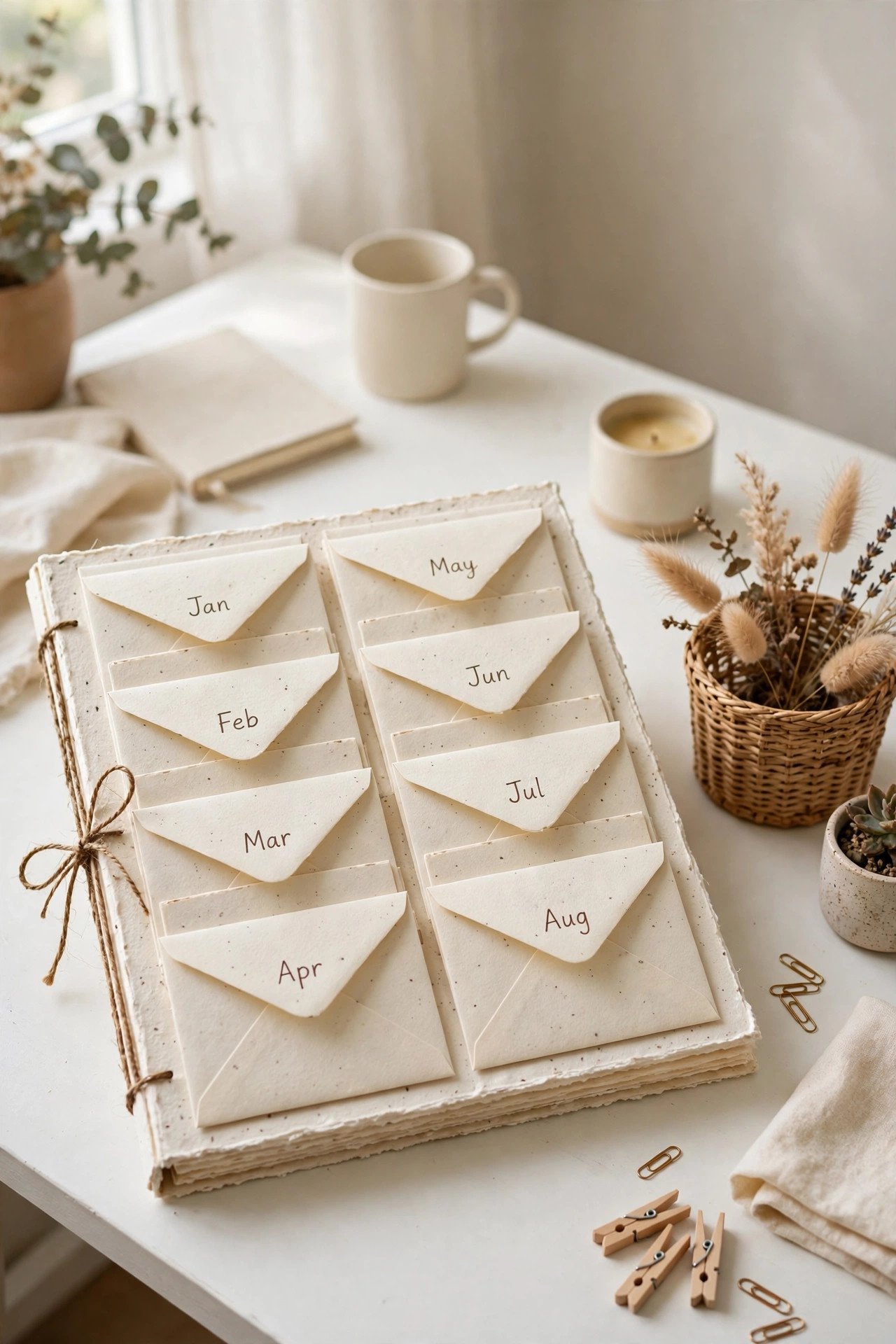
2. Make an Envelope Receipt Book
Receipts are the hardest papers to keep, because they are small, thin, and easy to lose. An envelope receipt book solves this with almost no effort: take a stack of plain envelopes, label one for each month, and slip every receipt inside as soon as you come home. The book keeps a whole year of spending in one neat place.
Choose envelopes in one color and write the month clearly on each one, so the book looks tidy on a shelf. Add a small pocket at the front for receipts you still need to check, and move them into their month once they are sorted. When tax time comes, you will find every receipt exactly where you left it.
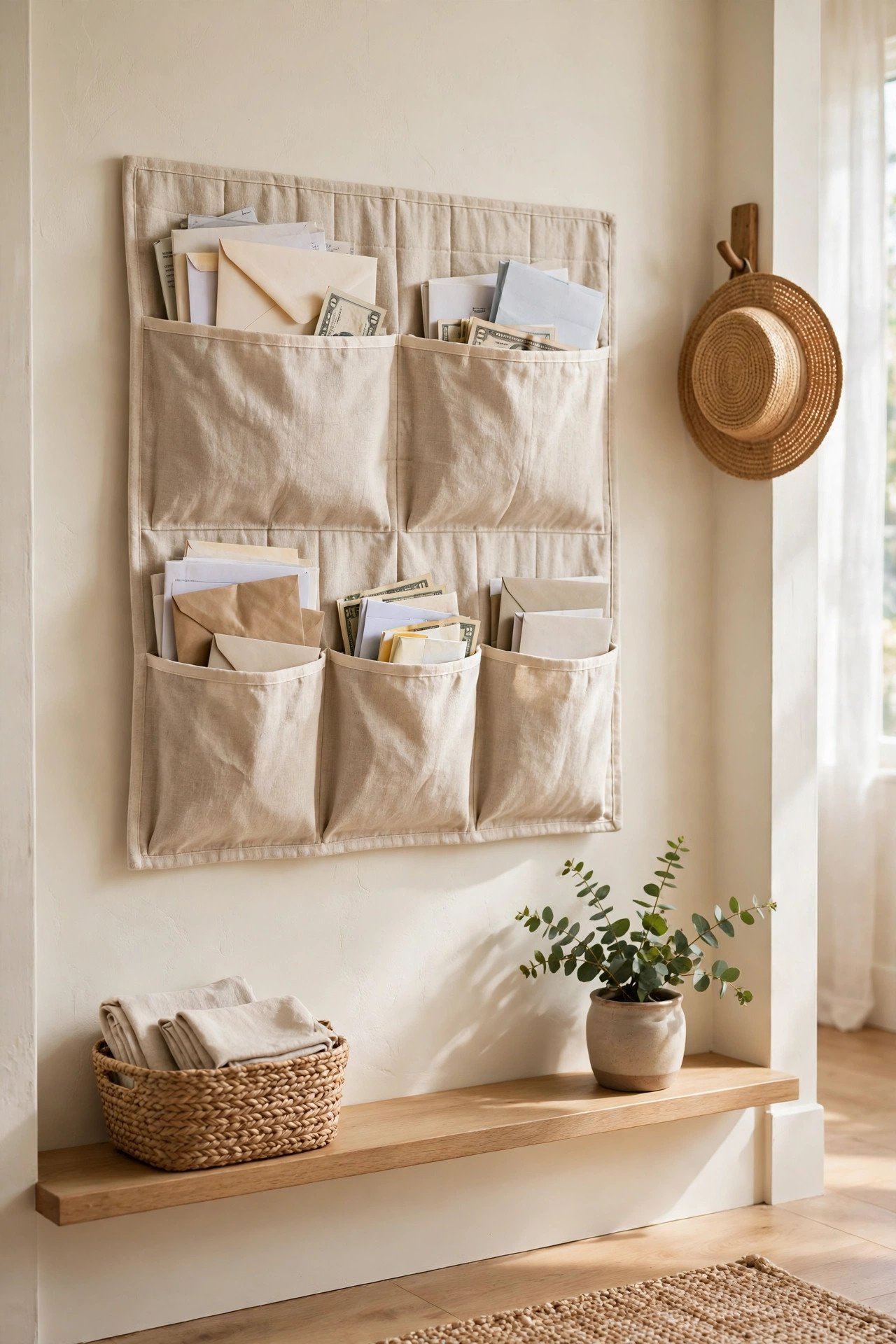
3. Make a Fabric Mail Organizer
A fabric mail organizer turns a boring wall into a pretty sorting station for letters and bills. Choose a fabric you love, stitch or glue simple pockets onto a backing cloth, and hang it where the mail lands each day. Each pocket holds one kind of paper, so nothing drifts onto the table.
Label each pocket clearly, with one for bills to pay, one for letters to answer, and one for papers to file. Pick a fabric that matches your room, so the organizer looks like decor instead of clutter. Empty the pockets once a week, and the wall stays as tidy as the day you hung it.
4. Sort Mail in a Stacked Mail Tray
A mail tray is the fastest way to clear a tabletop, because every paper lands in one shallow stack instead of spreading everywhere. Stack two or three trays on your desk or kitchen counter, and label them for bills, letters, and papers to file. The trays keep today’s mail visible and easy to reach.
Choose trays in a calm color that suits your room, and keep only this week’s mail in them. Each evening, take five minutes to clear the top tray: pay what is due, file what is done, and toss the junk. A tray that stays half empty is proof the system is working.
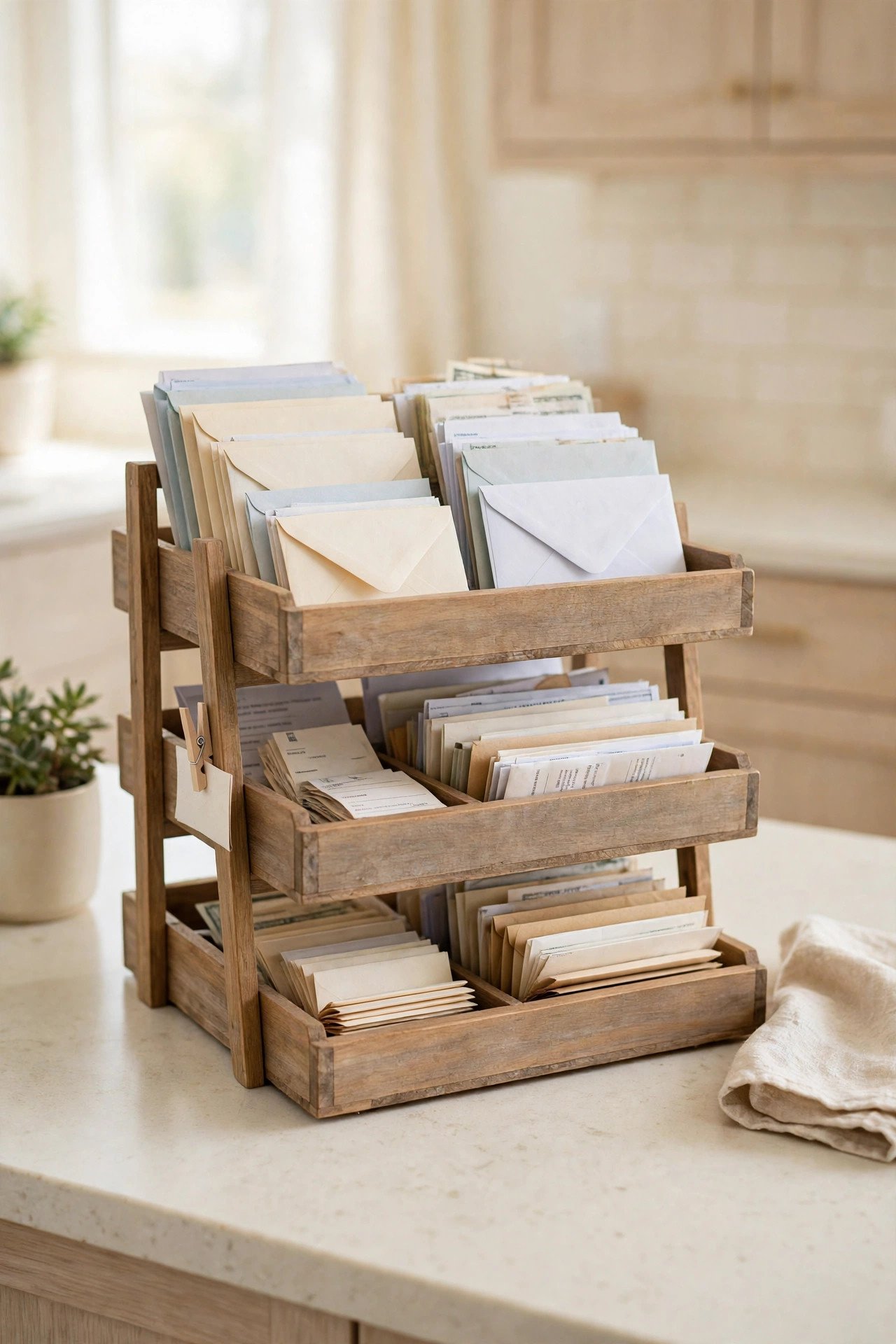
5. Label Task Clips for Paper Piles
Big clips with labels turn a messy stack of papers into a neat bundle you can actually find again. Clip each pile together, write what it is on a small label, and stand the bundles upright in a basket or tray. The labels tell you what is inside without opening anything.
Use a different color clip for each kind of paper, such as green for bills, blue for school papers, and cream for receipts. Keep the clips near your desk so you can grab one the moment a pile starts forming. Labelled bundles stop papers from sliding into one big mixed stack.
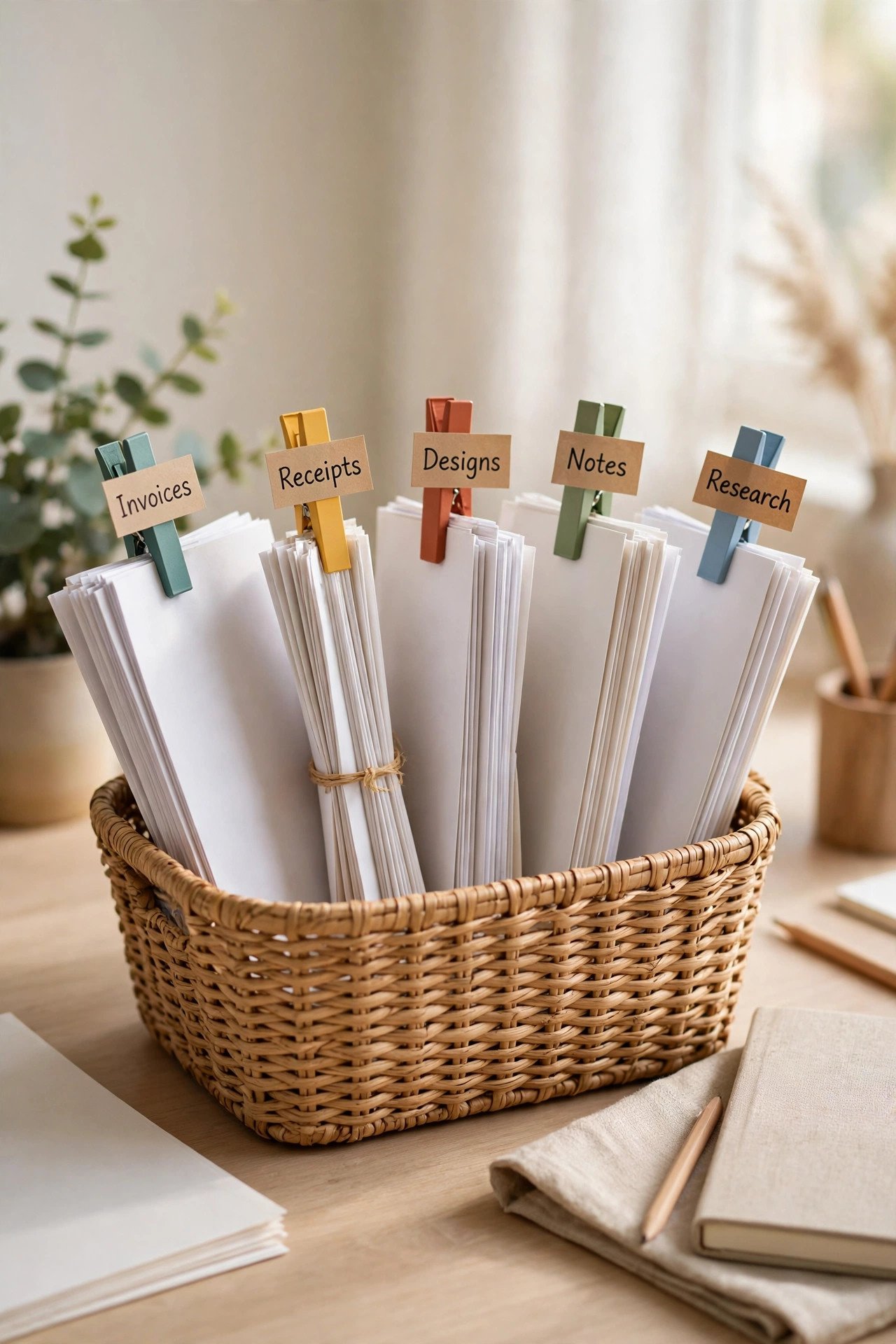
6. Build a Finance Binder for Bills
A finance binder keeps every bill, statement, and budget note in one place you can carry anywhere. Fill a sturdy binder with labelled dividers for rent, utilities, insurance, and savings, and slip each bill behind its divider when it arrives. The binder becomes the whole story of your household money.
Add a pocket at the front for bills that need paying this week, and a calendar page for due dates. Sit down with the binder once a week, pay what is due, and move finished bills to the back. When you need an old statement, you will know exactly which divider to open.
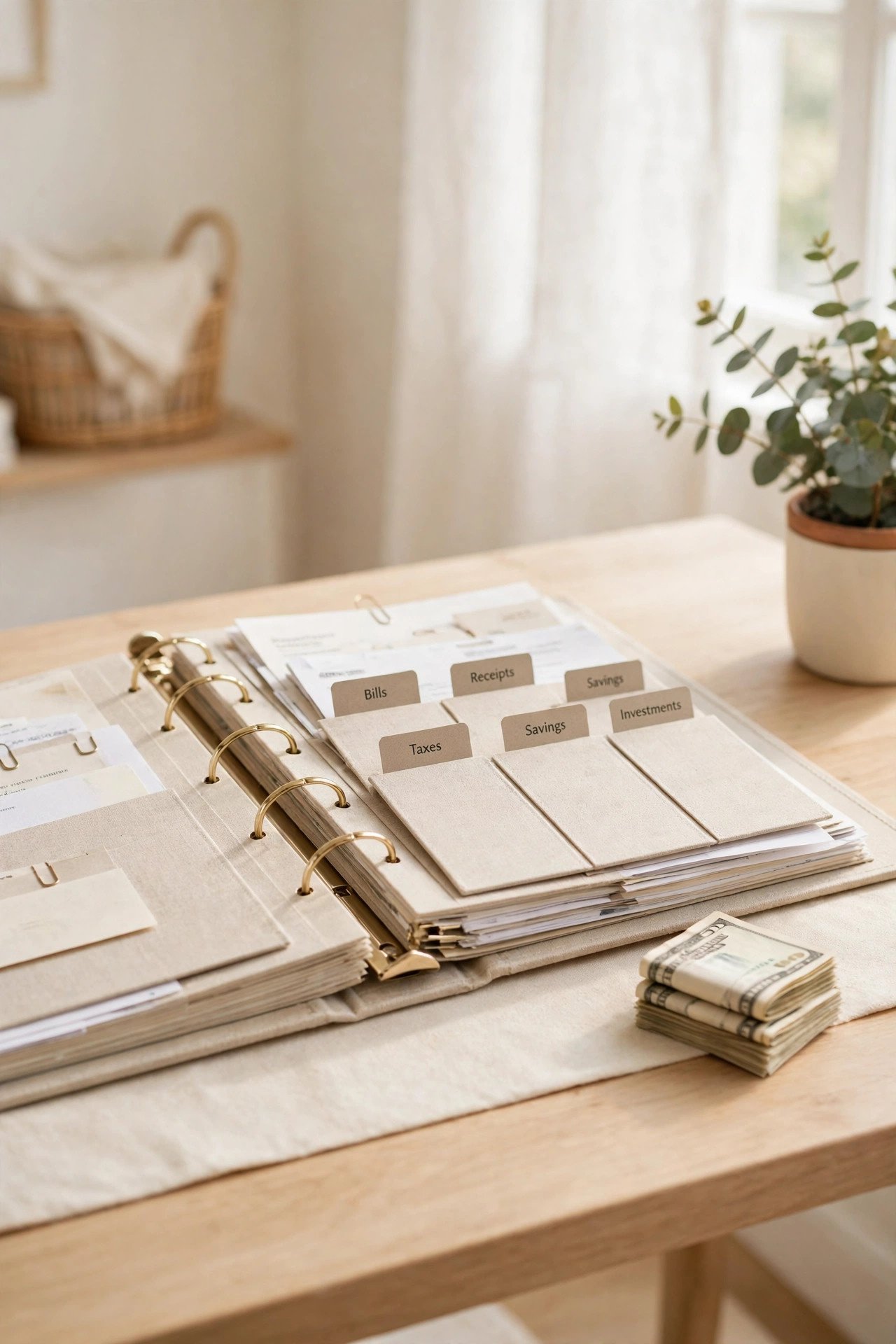
7. Sort Papers in a Plastic Drawer Organizer
A small plastic drawer organizer gives every paper a shallow home on your desk, so nothing stacks up in the open. Label each drawer for bills, receipts, letters, and papers to file, and slide each paper into its drawer the moment it arrives. The drawers keep your desktop clear while everything stays close.
Choose an organizer with clear drawers so you can see what is inside at a glance. Keep it on the desk where you work, and if your desk also holds chargers and cords, these cable management ideas will keep the wires as tidy as the papers. Empty one drawer each week so nothing sits forgotten.
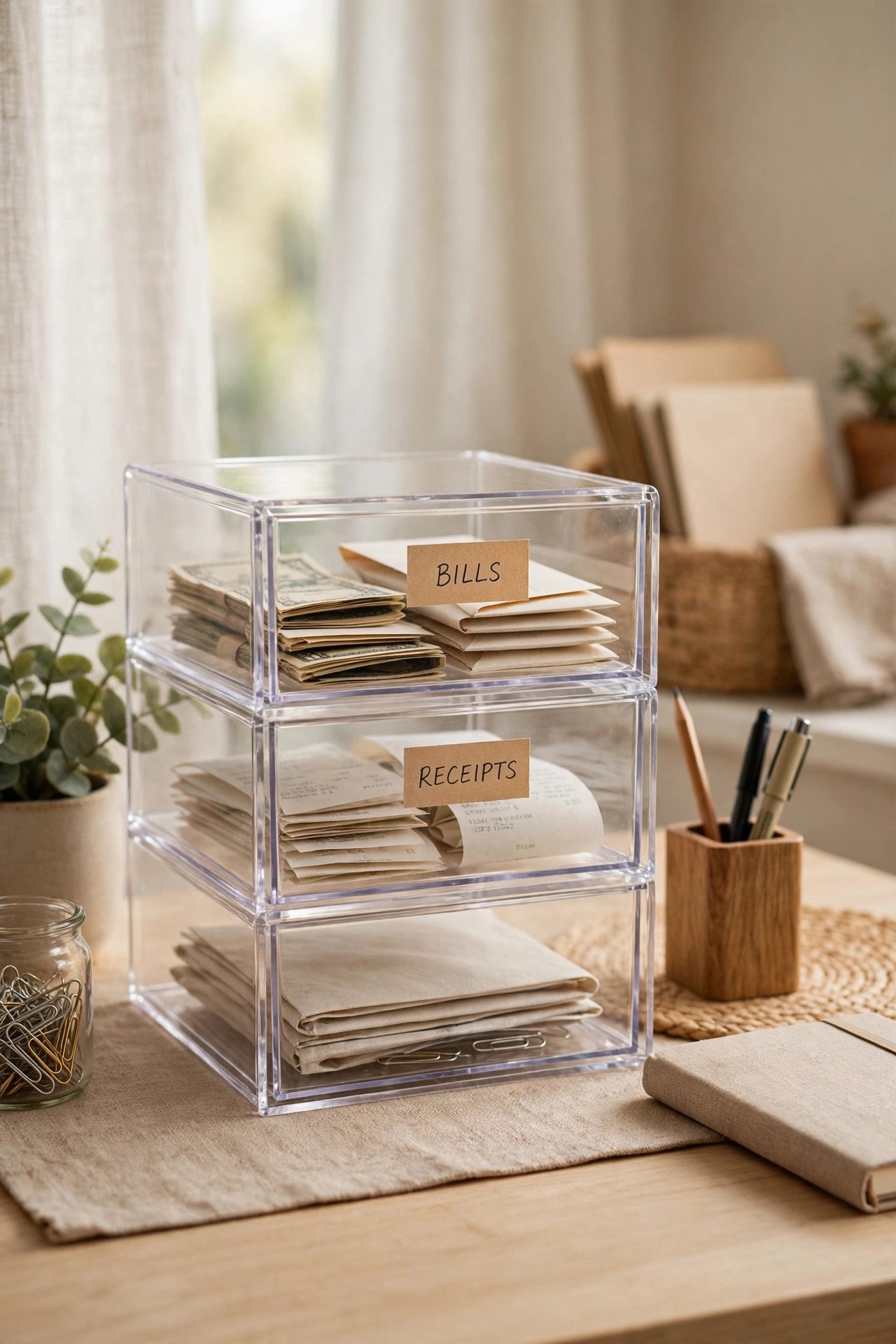
8. Keep Memories in a Labelled Photo Box
Loose photos are paper clutter too, and they deserve a home just like bills do. Sort your printed photos into a sturdy box with dividers for each year or event, and label every section clearly. The box keeps your memories safe and easy to find on a quiet evening.
Start with one small pile, perhaps the photos from last summer, and sort only those before moving on. Toss blurry duplicates and keep only the pictures that make you smile. A photo box that holds your best memories is worth far more than a drawer full of forgotten prints.
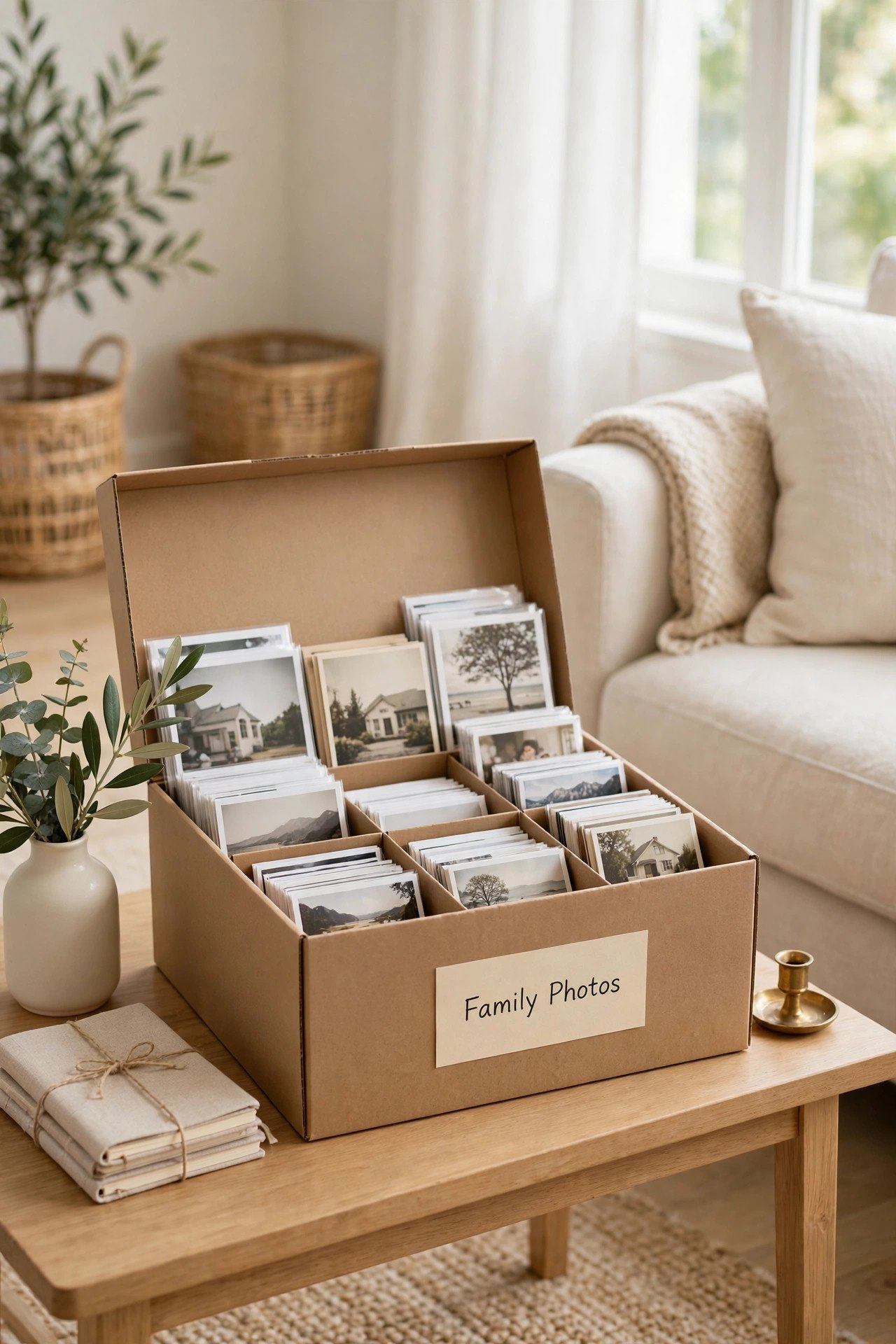
9. Hang Industrial Baskets for Mail
Wire baskets on the wall give your mail a visible home and add a smart industrial touch to the room. Mount two or three baskets near the door, label them for bills, letters, and papers to file, and drop each envelope in as soon as you walk inside. The wall does the sorting work for you.
Choose baskets in a finish that matches your home, such as black metal or warm brass, and keep them at eye level. Empty the bill basket twice a week so nothing waits too long. Wall baskets work best when they stay half empty, with room for tomorrow’s mail.
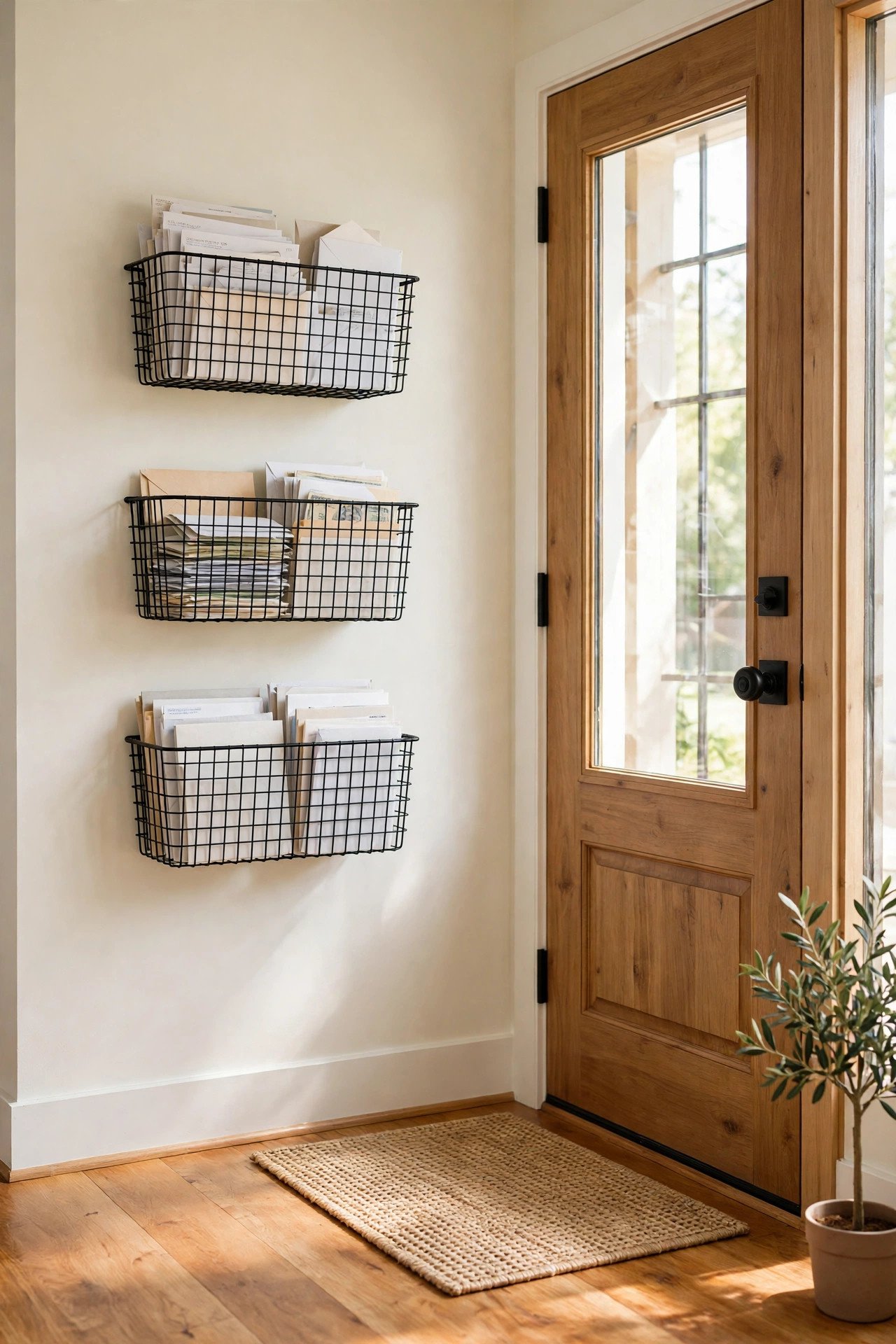
10. Keep Receipts in a Simple Receipt Box
A receipt box is the simplest way to stop small paper slips from covering every surface in your home. Place a small lidded box near the door or on your desk, and drop every receipt into it the moment you come home. The box holds months of spending in one tidy spot.
Label the box clearly and empty it once a month, sorting receipts into envelopes by month or by store. Keep only the receipts you may need for returns or taxes, and recycle the rest without guilt. A small box that you empty often beats a large drawer that nobody ever opens.
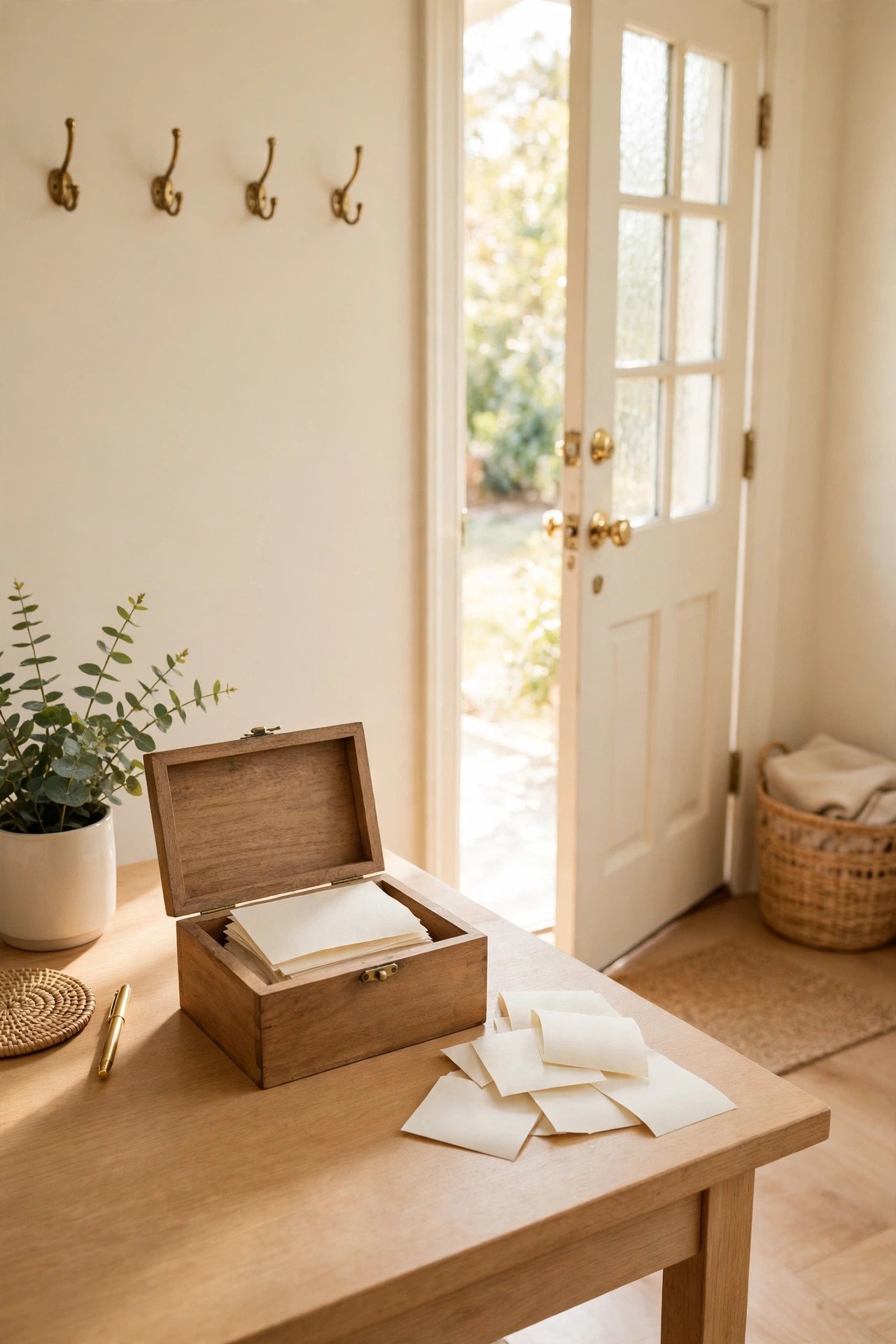
11. Mount a Wall Mail Organizer
A wall mail organizer turns an empty stretch of wall into the hardest working spot in your home. Mount it near the front door with labelled sections for bills, letters, and papers to file, and sort each envelope the moment it arrives. The wall keeps mail visible so nothing gets buried.
Mail starts at the front door, so a tidy landing zone makes the whole system work, and these entryway organization ideas show how to build one that keeps keys, mail, and shoes in order. Add a small pen cup beside the organizer for quick notes, and clear each section once a week.
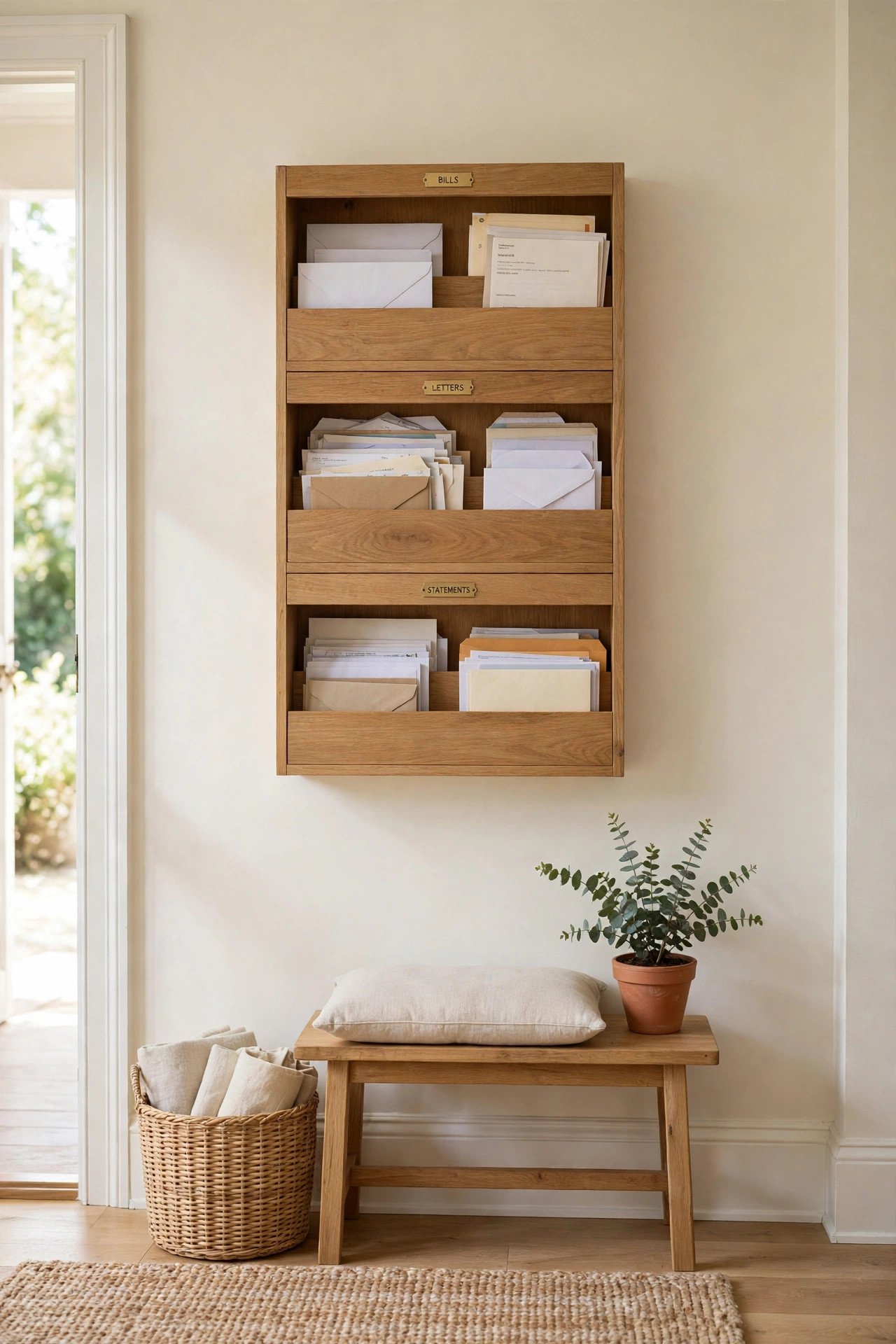
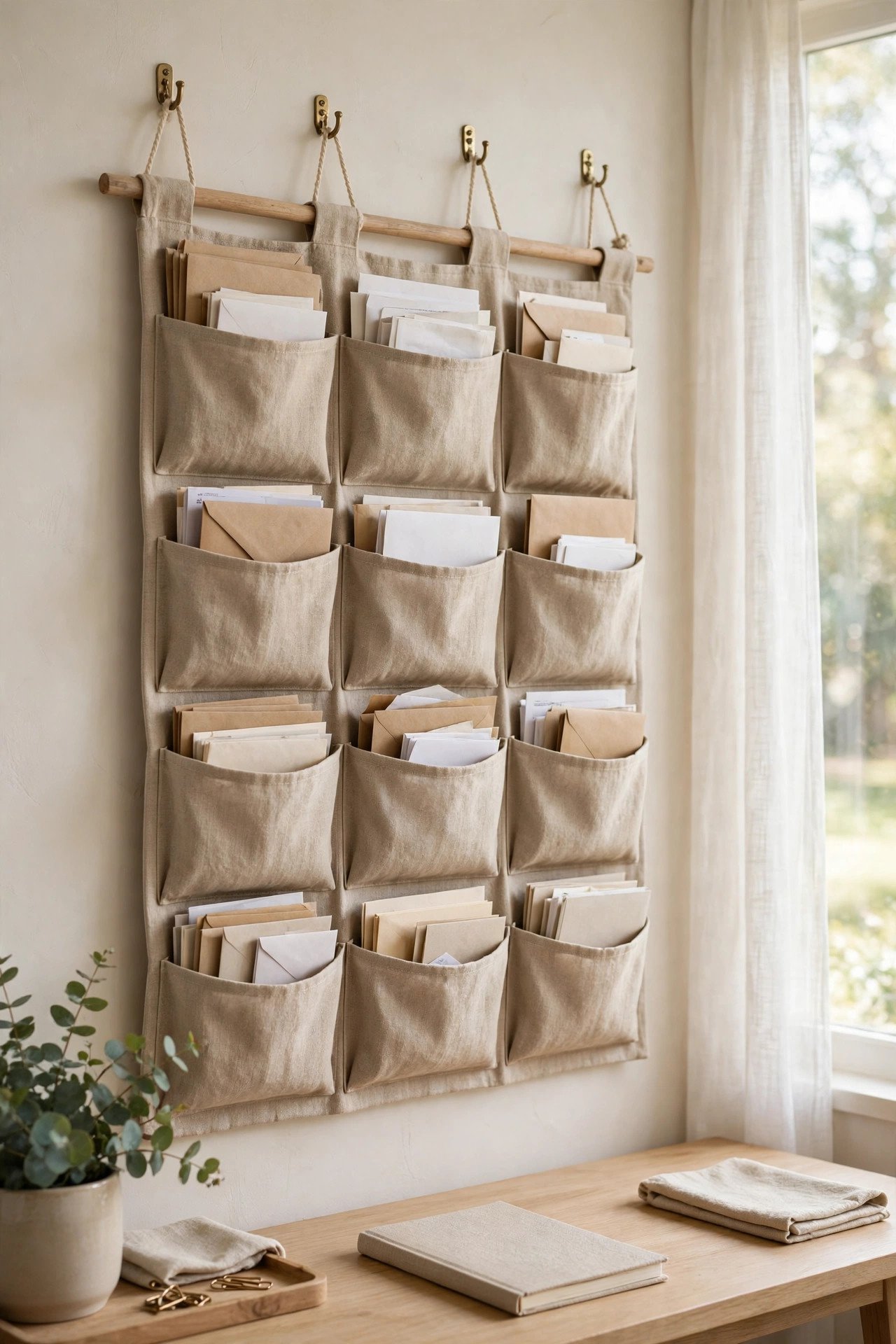
12. Make a Fabric Mail Sorter With Labelled Pockets
A fabric mail sorter with labelled pockets is a soft, pretty way to keep bills from piling on the table. Sew or glue deep pockets onto a fabric panel, label each one for bills due, letters to answer, and papers to file, and hang it where you sort the mail. The pockets hold a surprising amount.
Choose a sturdy fabric in a calm color that suits the room, and make the pockets deep enough for large envelopes. Check the sorter every evening and move papers along the same day they arrive. A sorter that you empty daily never turns into a second pile on the wall.
13. Drop Receipts in a Glass Receipt Jar
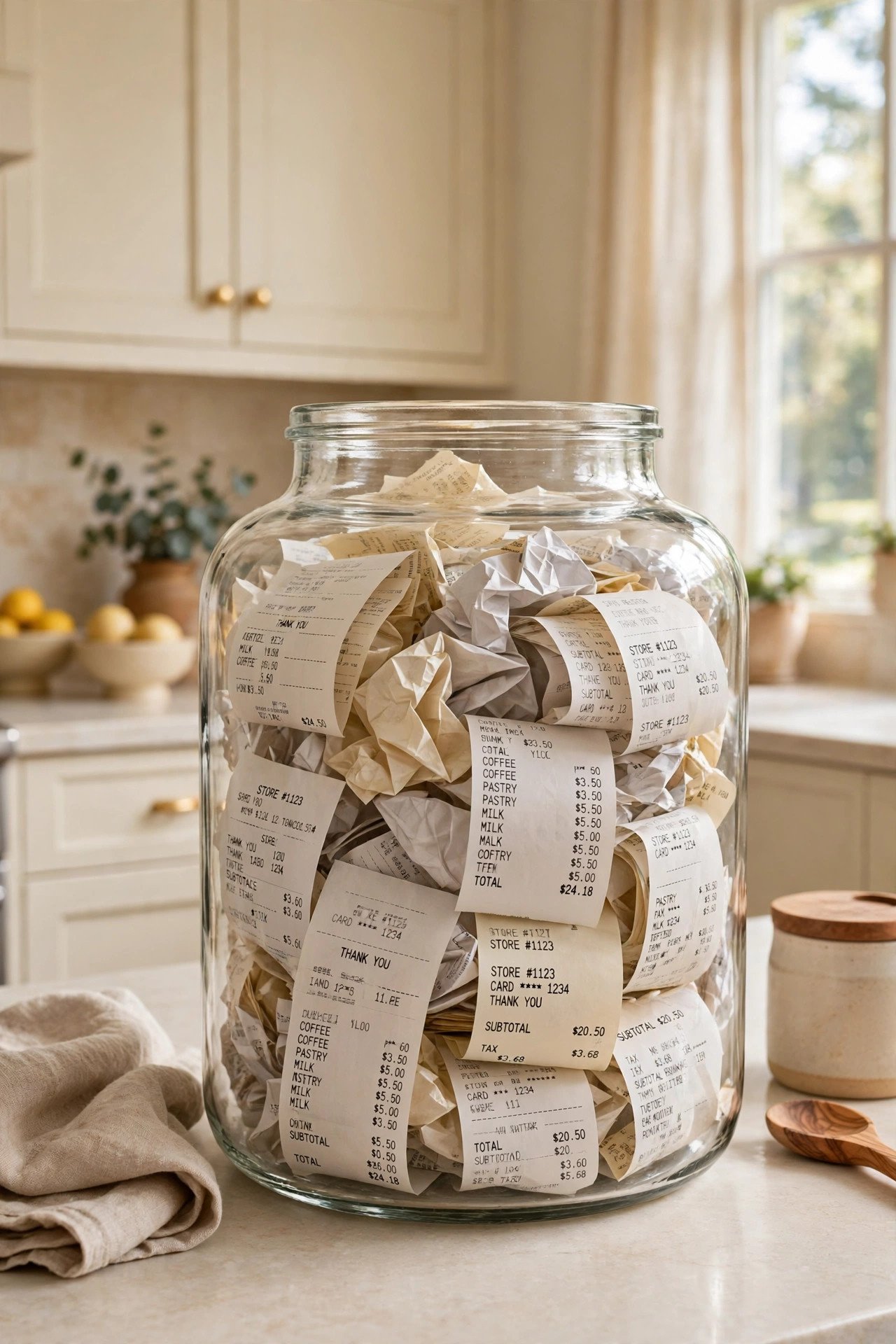
A glass jar is the easiest receipt keeper of all, because you can see at a glance how full it is getting. Place a wide jar on your desk or kitchen counter, and drop every receipt inside as soon as you walk in. The jar turns a scattered habit into one simple toss.
Choose a jar with a wide mouth so receipts slide in without folding, and label it with the month. Empty the jar at the end of each month into an envelope, and start fresh on the first day. A jar that you can see fills up is a jar you will actually remember to empty.
14. Sort Documents in a Letter Tray
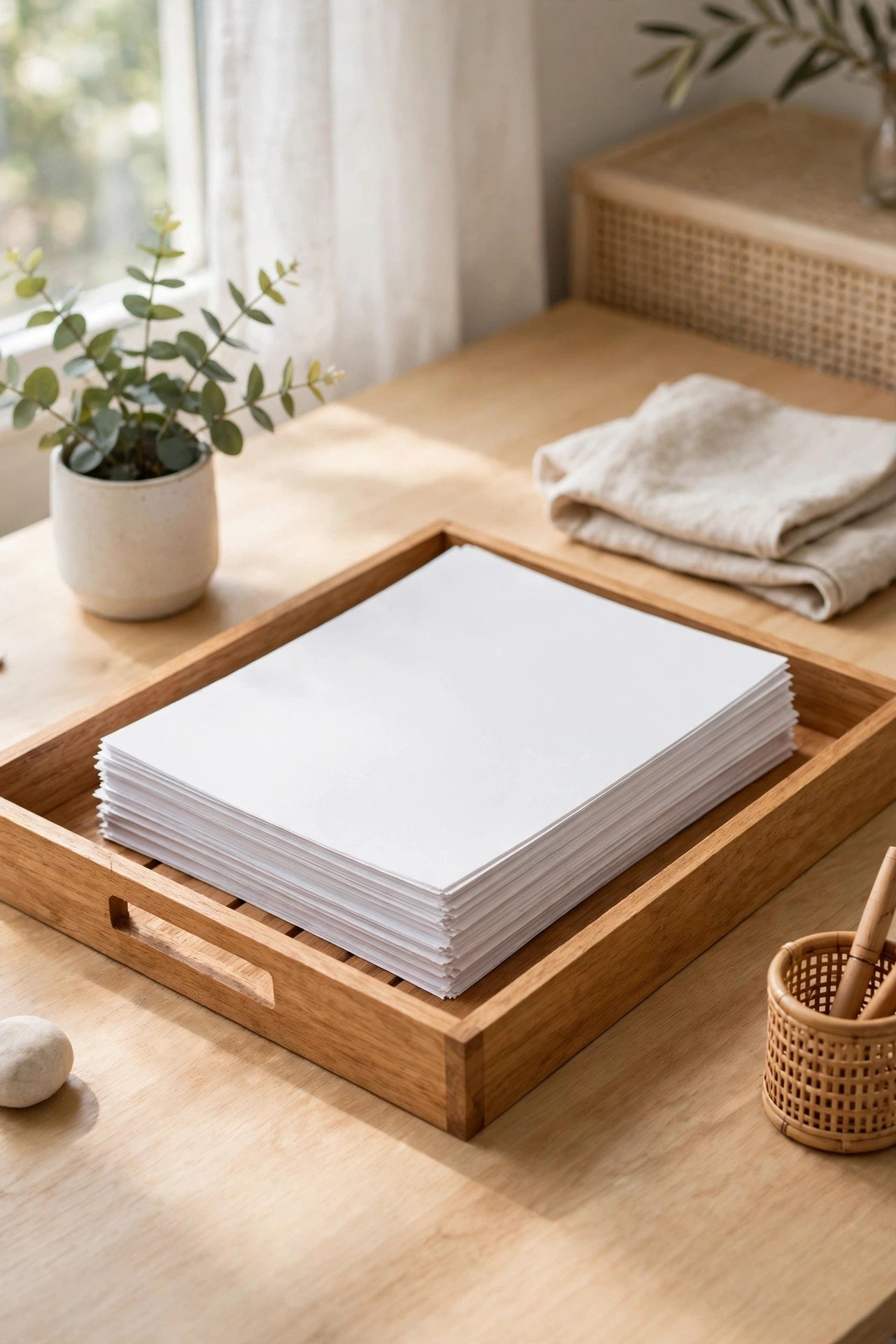
A letter tray keeps your most important documents in one neat stack instead of mixed into every pile in the house. Place a tray on your desk for papers that need action, and label a second tray for papers that are filed and done. The trays make it clear what still needs your attention.
Choose a tray with a low front so you can see the top paper without lifting the stack. Work through the action tray every day, even if you only handle one paper, and the stack never grows scary. A tray that holds only today’s papers is a tray that truly helps.
15. Keep Tissue Paper in a Gift Bag Organizer
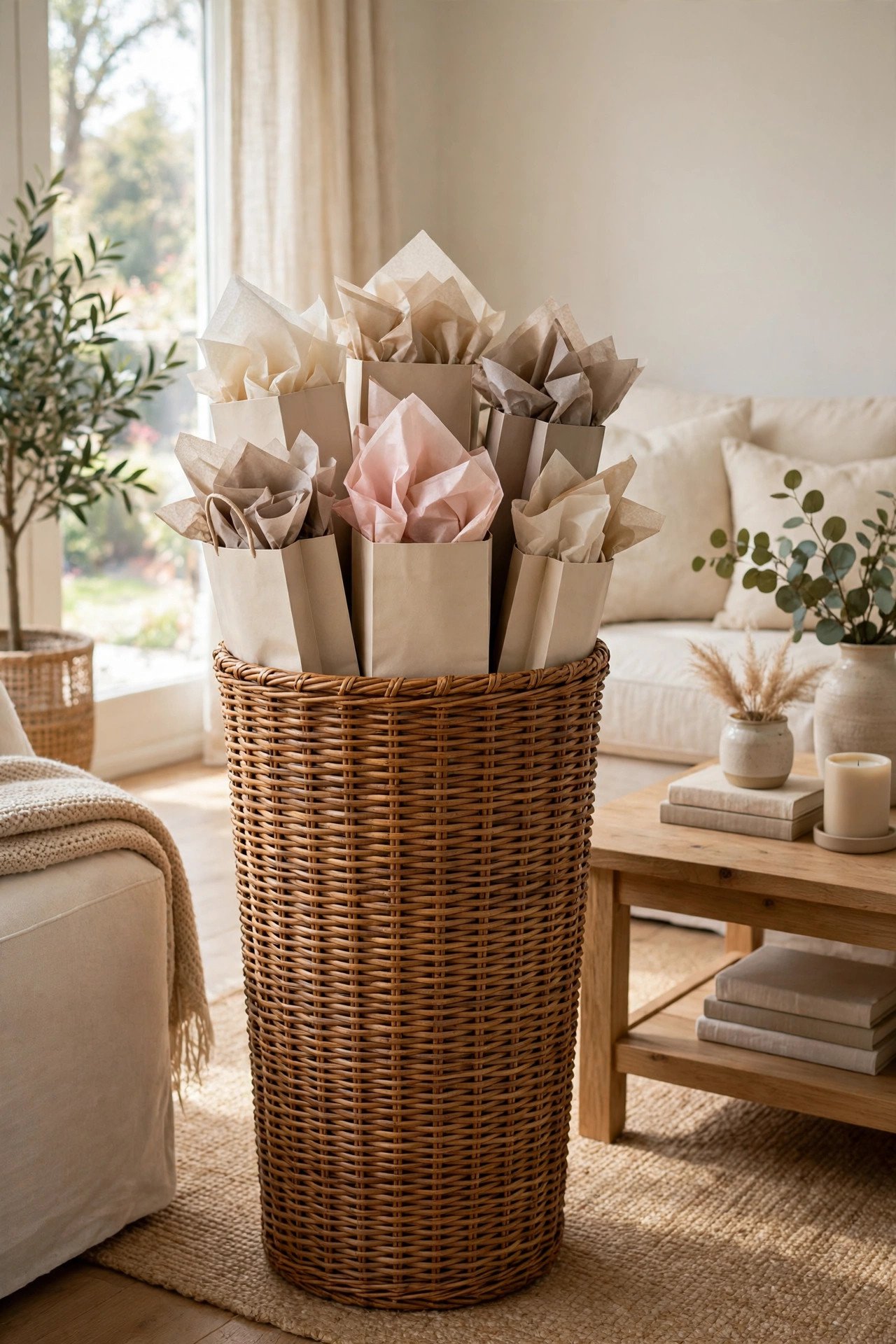
Tissue paper is paper clutter too, and it multiplies quietly every time you receive a gift bag. Stand gift bags upright in a tall basket or a fabric holder, and tuck folded tissue paper inside each bag so sets stay together. The next gift is ready to wrap in seconds.
Sort tissue paper by color, with warm shades in one bag and cool shades in another. Keep the basket in the living room near your wrapping spot, and for a calm room around it, these blanket storage ideas keep throws tidy while you wrap. Toss torn sheets instead of saving them.
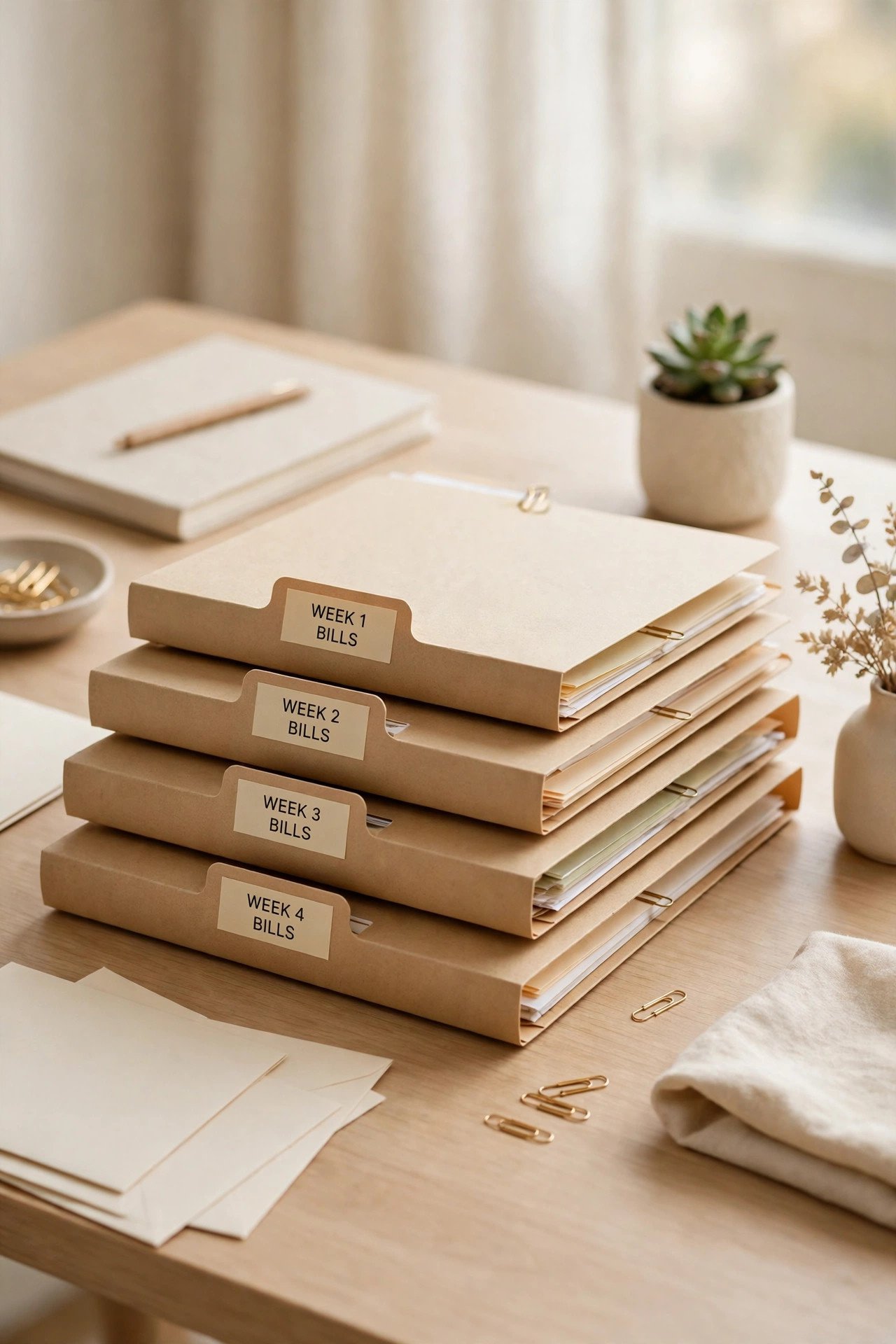
16. Sort Bills into Weekly Action Folders
Bills pile up when they have no clear next step, so give each week its own action folder. Label four folders for the weeks of the month, and drop each bill into the folder for the week you will pay it. The folders turn a scary stack into four small, friendly piles.
Keep the folders where you pay bills, such as a desk drawer or a shelf by your chair. Open the current week’s folder every morning and pay one bill before you start the day. When the week ends, the folder should be empty, and next week’s folder is already waiting.
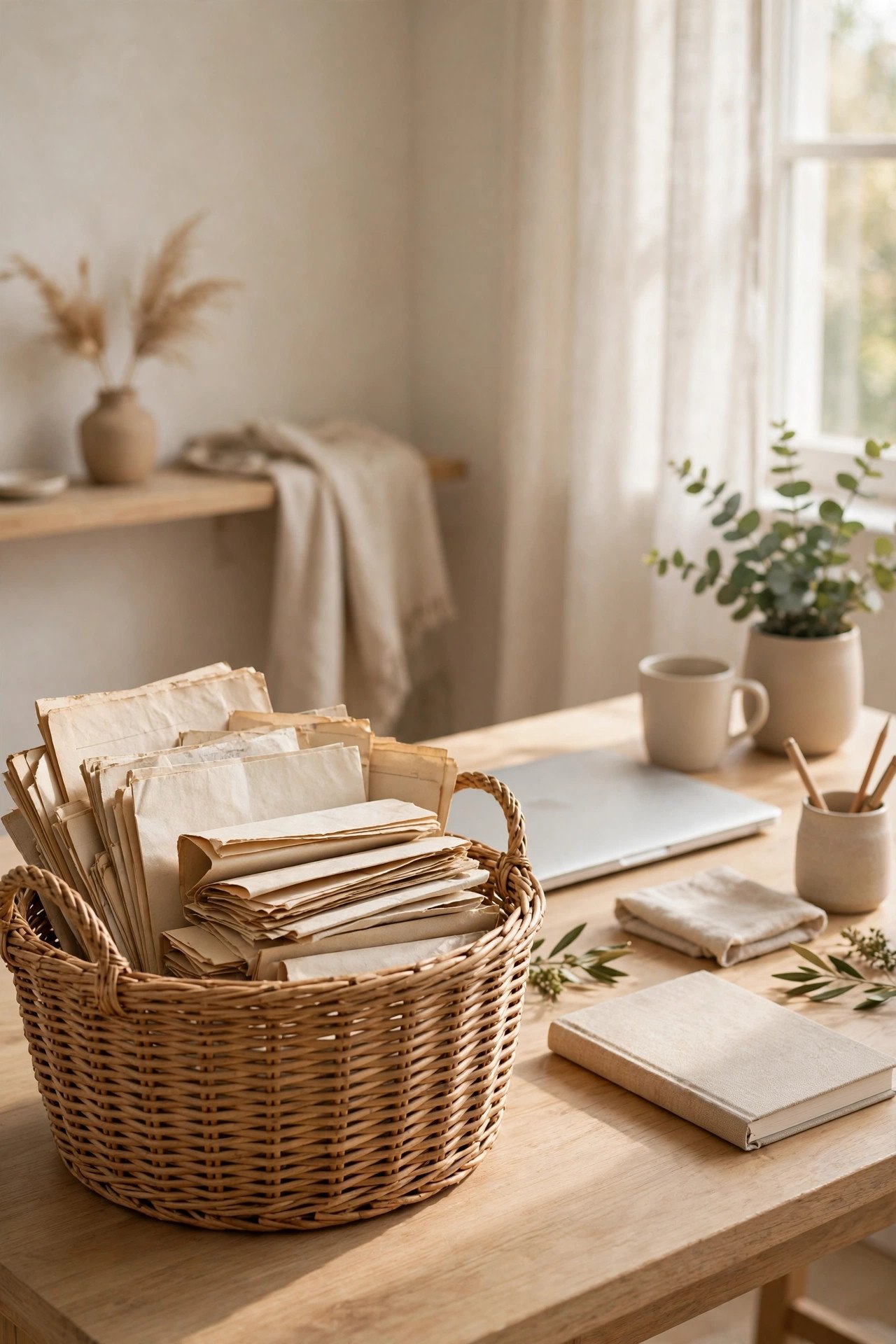
17. Keep a Shredding Basket for Old Statements
Old statements pile up because throwing them away feels risky, so give them a waiting place. Keep a basket beside your desk for papers to shred, and drop old bills and statements in as soon as they are replaced. The basket holds the mess until shredding day.
Pick one day each month to shred the whole basket, and make it a small routine with a cup of tea. Keep only the papers your tax preparer or bank truly needs, and shred the rest without a second thought. A basket that empties monthly never overflows onto the desk.
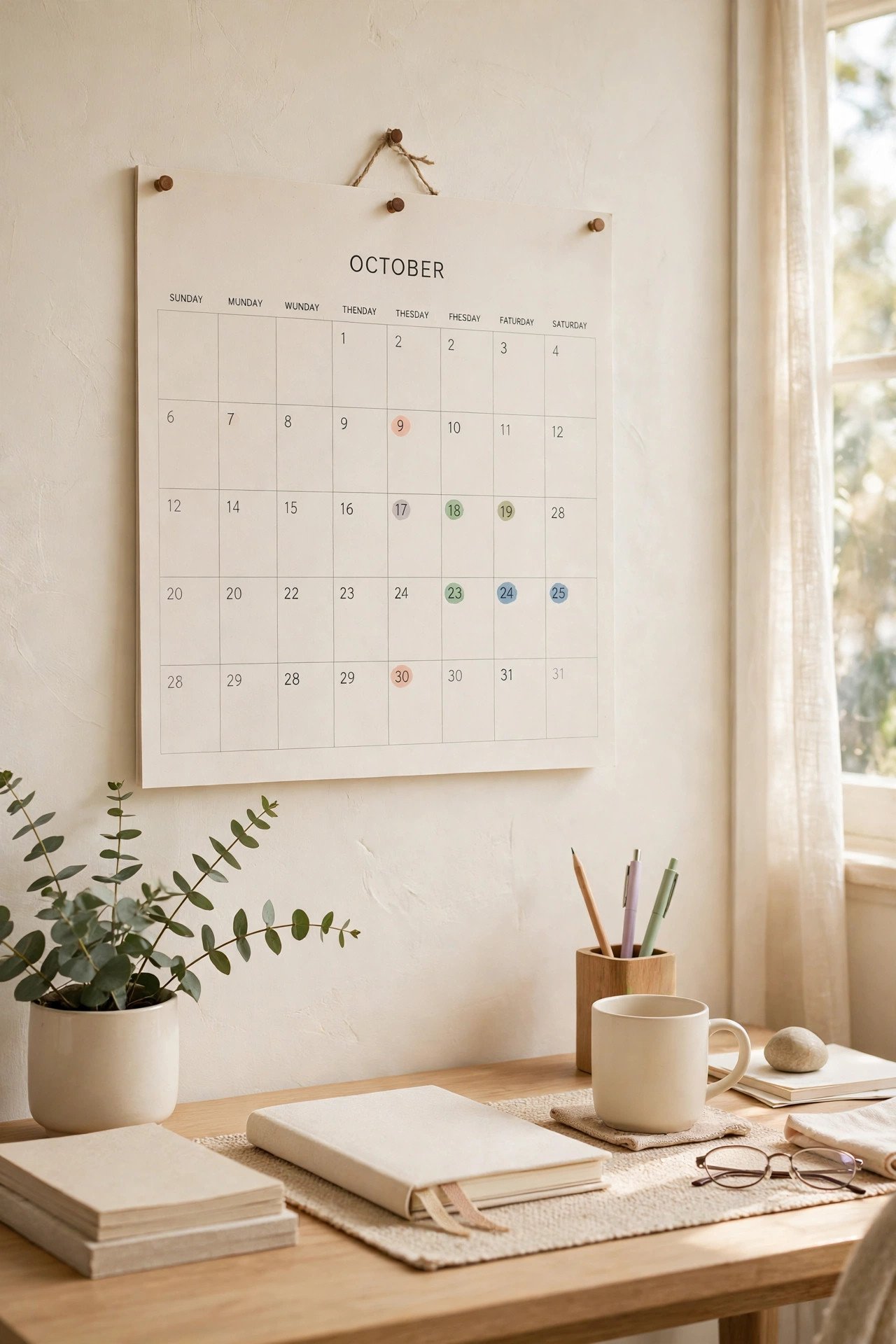
18. Mark Bill Due Dates on a Wall Calendar
A wall calendar turns invisible due dates into dates you can actually see every day. Write each bill’s due date on the calendar in the kitchen or office the moment the bill arrives, and use one color for every bill. The calendar becomes your gentle reminder system.
Hang the calendar where you see it each morning, such as beside the coffee maker or above your desk. Check it while your coffee brews, and pay any bill due in the next three days. A calendar that you glance at daily stops late fees before they happen.
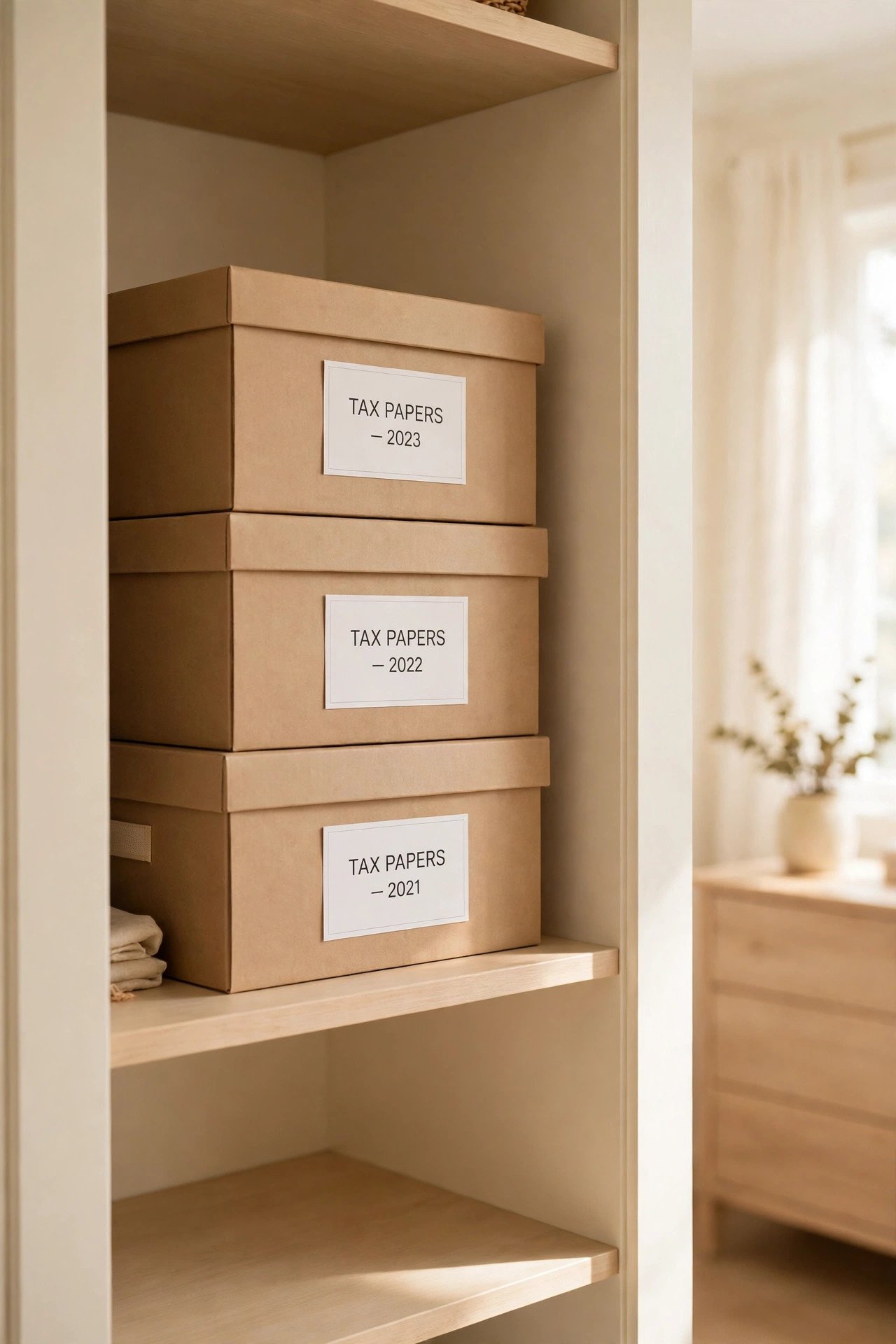
19. Store Tax Papers in a Labelled Archive Box
Tax papers need a home of their own, far from the daily mail pile. Keep one labelled archive box for each tax year, and file pay slips, donation receipts, and tax forms inside as they arrive. The box keeps years of records neat and easy to find.
Store the boxes on a high closet shelf where they stay dry and out of the way. Write the year clearly on the front of each box, and keep the current year’s box within easy reach. When tax season arrives, you will carry one box to the table instead of hunting through drawers.
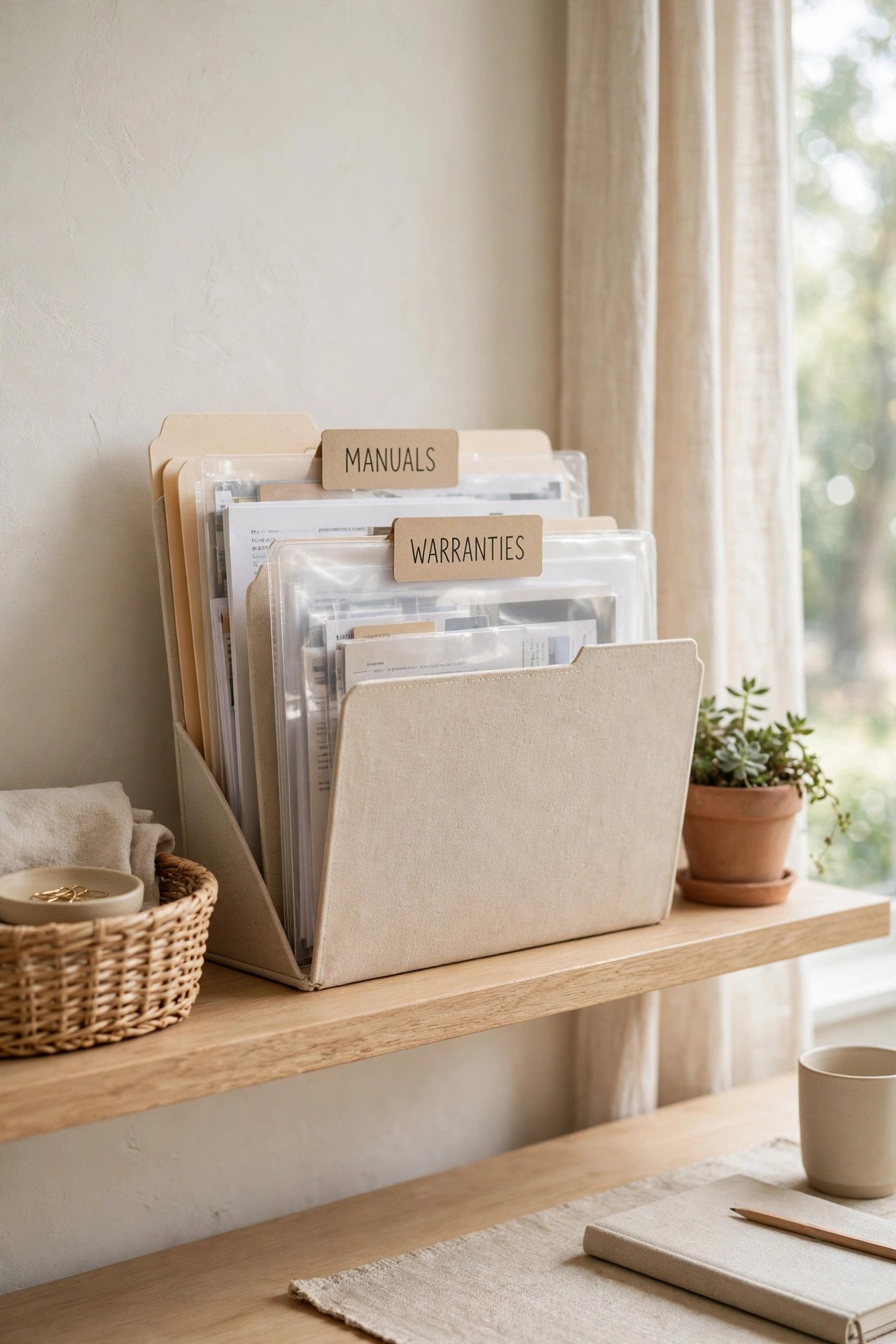
20. File Warranties and Manuals in One Folder
Warranties and manuals are papers you rarely need but can never find when you do. Keep one folder for the whole house, with a labelled sleeve for each appliance and gadget you own. Slip the warranty and manual inside the day you bring something home.
Write the purchase date on the outside of each sleeve, so you know at a glance whether a warranty is still valid. When an appliance breaks, you will open one folder instead of searching the whole house. Remove sleeves for items you no longer own during your yearly paper clear-out.
21. Do a Ten-Minute Weekly Paper Reset
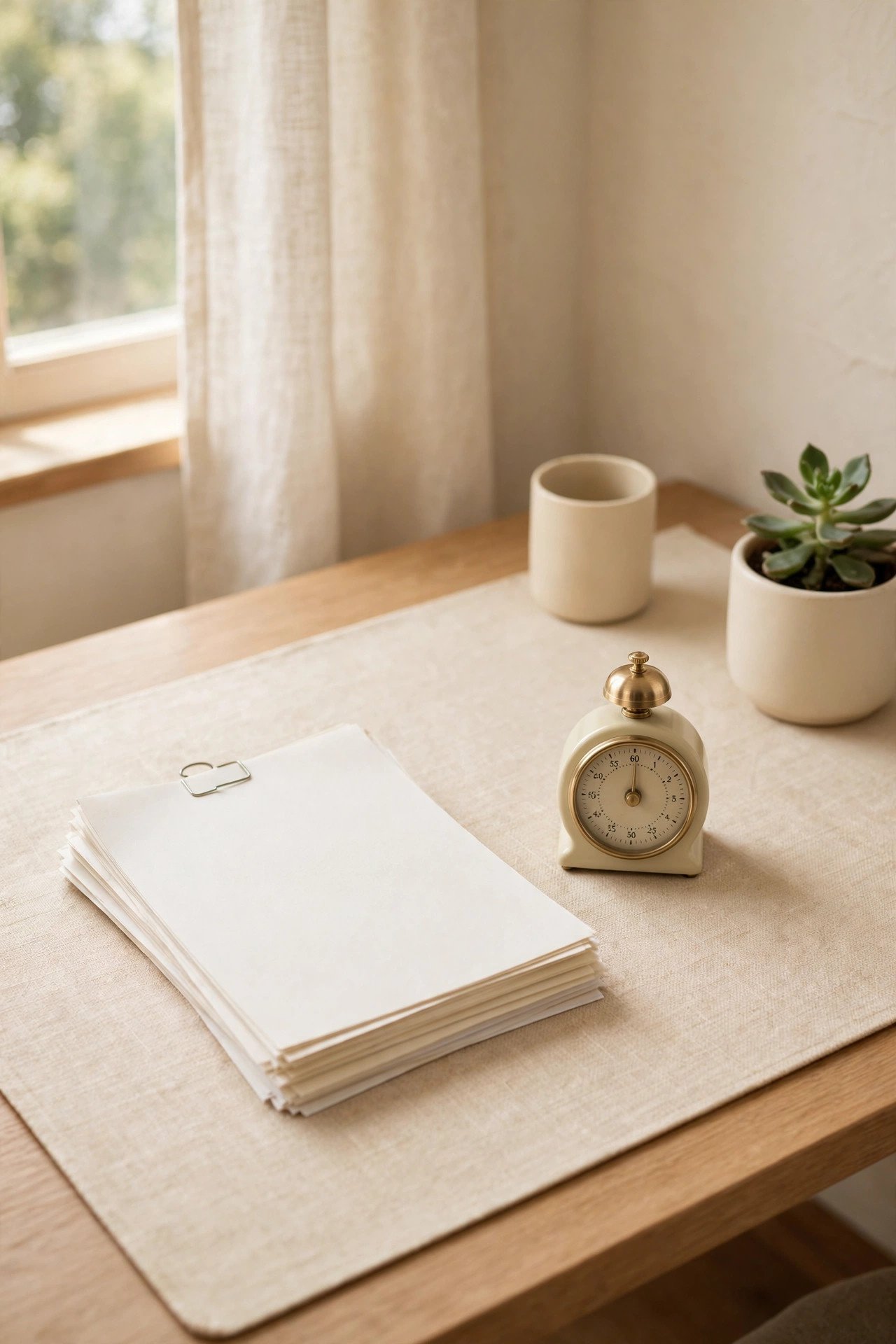
Even the best paper system drifts without a weekly reset, so give your papers ten minutes every week. Set a timer, gather every loose paper in the house into one pile, and sort it fast: pay, file, shred, or recycle. The timer keeps the job small and the pile from growing.
Pick the same time each week, such as Sunday evening, so the reset becomes a habit instead of a chore. Play soft music while you sort, and enjoy the clear table when the timer rings. Ten minutes a week is all it takes to keep paper clutter from ever taking over again.
Conclusion
Paper clutter is not a sign that you are messy. It is a sign that your papers never had a clear home, and now they do. From a simple filing box to a weekly ten-minute reset, every idea in this list gives one kind of paper one clear place to live.
Start with one idea that fits your home, perhaps a mail tray by the door or a receipt box on your desk, and use it for a week before adding the next one. For a calm home beyond the paper piles, these nightly reset routines keep every room tidy in just a few minutes each evening.
Frequently Asked Questions About 21 Paper Clutter Organization Ideas for Bills and Receipts
How do I start organizing paper clutter?
Start with one pile and one home for it. Gather every loose paper into a single stack, then sort it into three groups: pay, file, and toss. Set up a filing box or a mail tray first, and deal with new papers the day they arrive.
How long should I keep bills and receipts?
Keep most bills for one year, or until the year ends and you have checked them against your bank statements. Keep receipts for returns until the return window closes, and keep tax-related receipts for several years. Shred anything old that you no longer need.
What is the best way to organize receipts?
Drop every receipt into one box or jar the day you get it, then sort it once a month into envelopes by month or by store. A receipt book with a pocket for each month works well too. The best system is the one you will actually use every day.
How do I stop paper clutter from coming back?
Give every new paper a home the moment it arrives, and run a ten-minute weekly reset to catch anything that slipped through. Open mail by the door, recycle junk at once, and file the rest the same day. A small daily habit stops piles from ever forming again.
Should I go paperless to reduce clutter?
Going paperless helps a lot, but you do not need to scan everything at once. Start with new bills by choosing e-bills where you can, and scan only the papers you truly need to keep. Keep a small filing box for the rest, and your paper piles will shrink fast.

Hi, I’m Emily! I turn messy corners into cozy, organized spots. DreamNestDecor is where I share simple, practical home ideas — decor, organization, and small-space solutions that work in real life, not just in photos. Every idea here is carefully researched before it’s shared.