Picture this: it is Saturday morning, and your playroom looks like a toy shop after a storm. Blocks cover the rug, dolls lean against the sofa, and you cannot see the floor at all. You love that your kids play hard, but the mess makes the whole room feel stressful instead of fun.
You do not need a bigger room or a bigger budget to fix it. You only need the right bins, baskets, and a simple plan that your kids can follow too. These 21 ideas will help you organize the playroom with bins and baskets, so cleanup takes minutes and playtime feels joyful again.
1. Display Toys on a Simple Wood Shelf
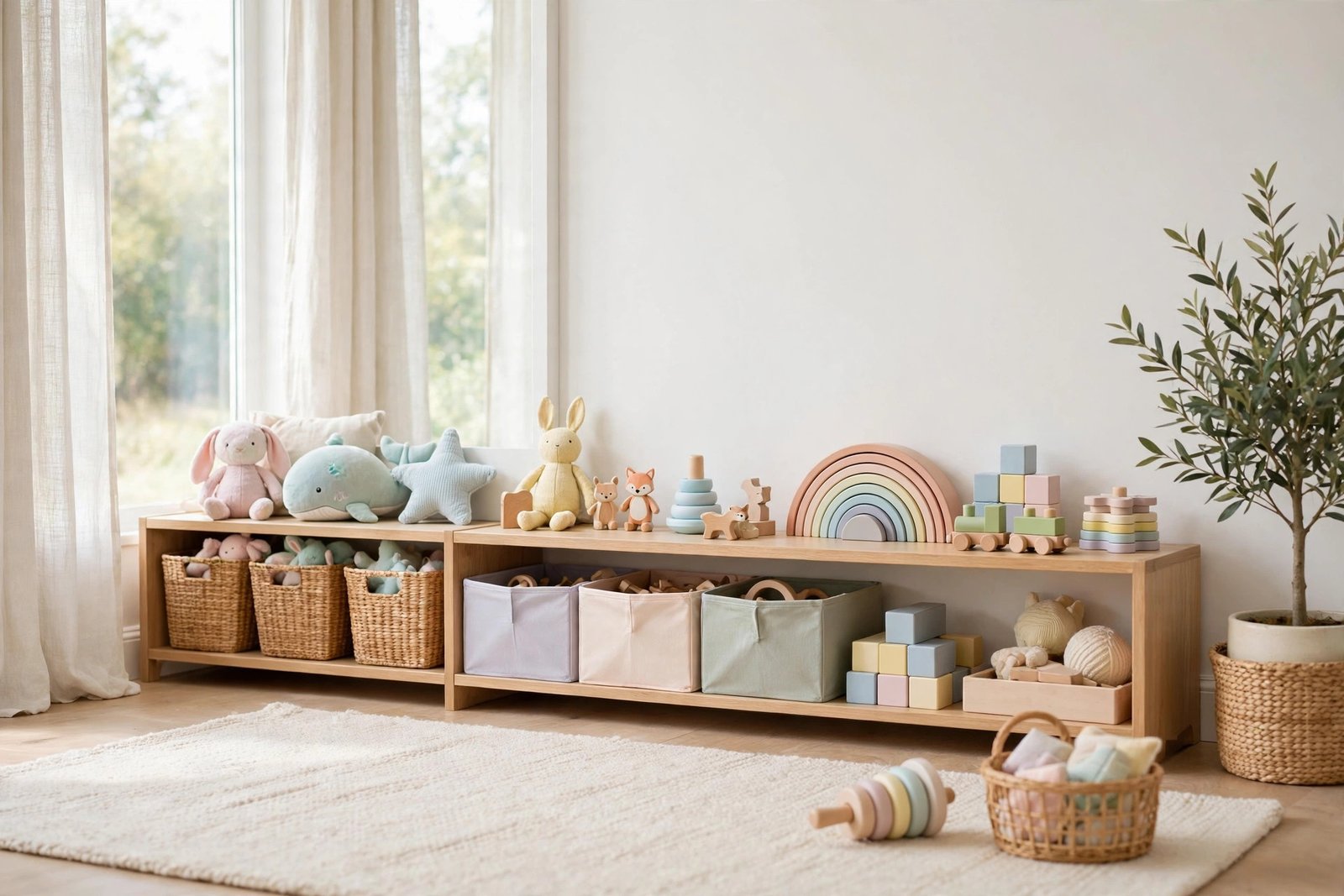
A simple wood shelf turns a messy pile of toys into a display your kids can actually use. Place it low on the wall so little hands can reach every toy without climbing or pulling things down. The open design keeps favorites visible, so nothing gets buried at the bottom of a deep bin.
Choose a sturdy shelf in warm wood that matches the room, and leave a little empty space on each level. A shelf that is not crammed full looks calmer and makes cleanup feel easy. Your kids will learn to return each toy to its own spot when the spot is easy to see.
2. Sort Toys Into Cube Organizers
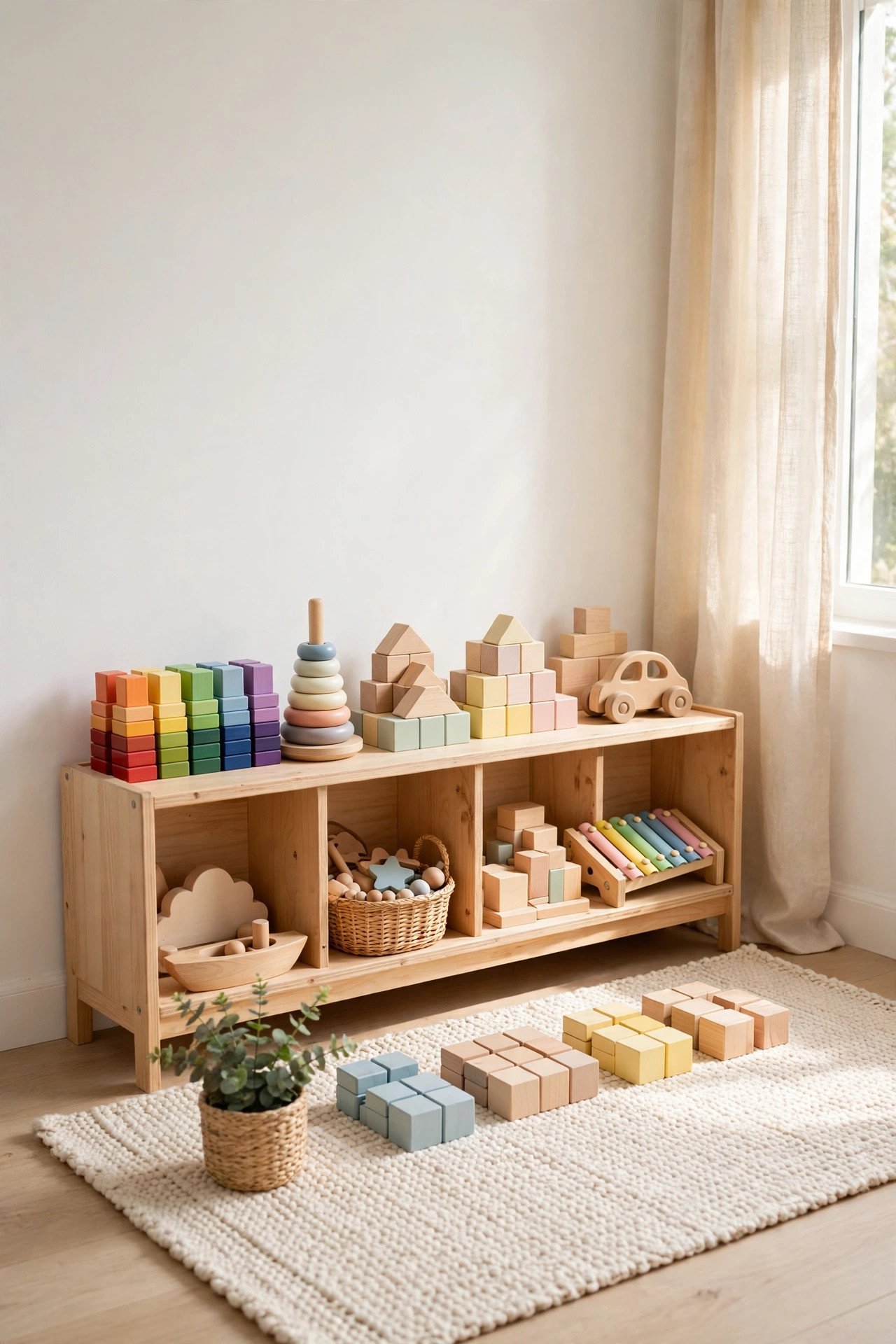
Cube organizers are the workhorse of a tidy playroom, because every cube holds one kind of toy. Place blocks in one cube, dolls in another, and cars in a third, so your kids always know where things belong. The square openings make it easy to slide bins in and out without a struggle.
Choose a unit with nine or twelve cubes and fill some with fabric bins in soft colors. Leave a few cubes open to display favorite toys like books on a shelf. This mix of hidden and open storage keeps the room looking calm while holding a surprising amount of toys.
3. Line Up Books on Low Wall Ledges
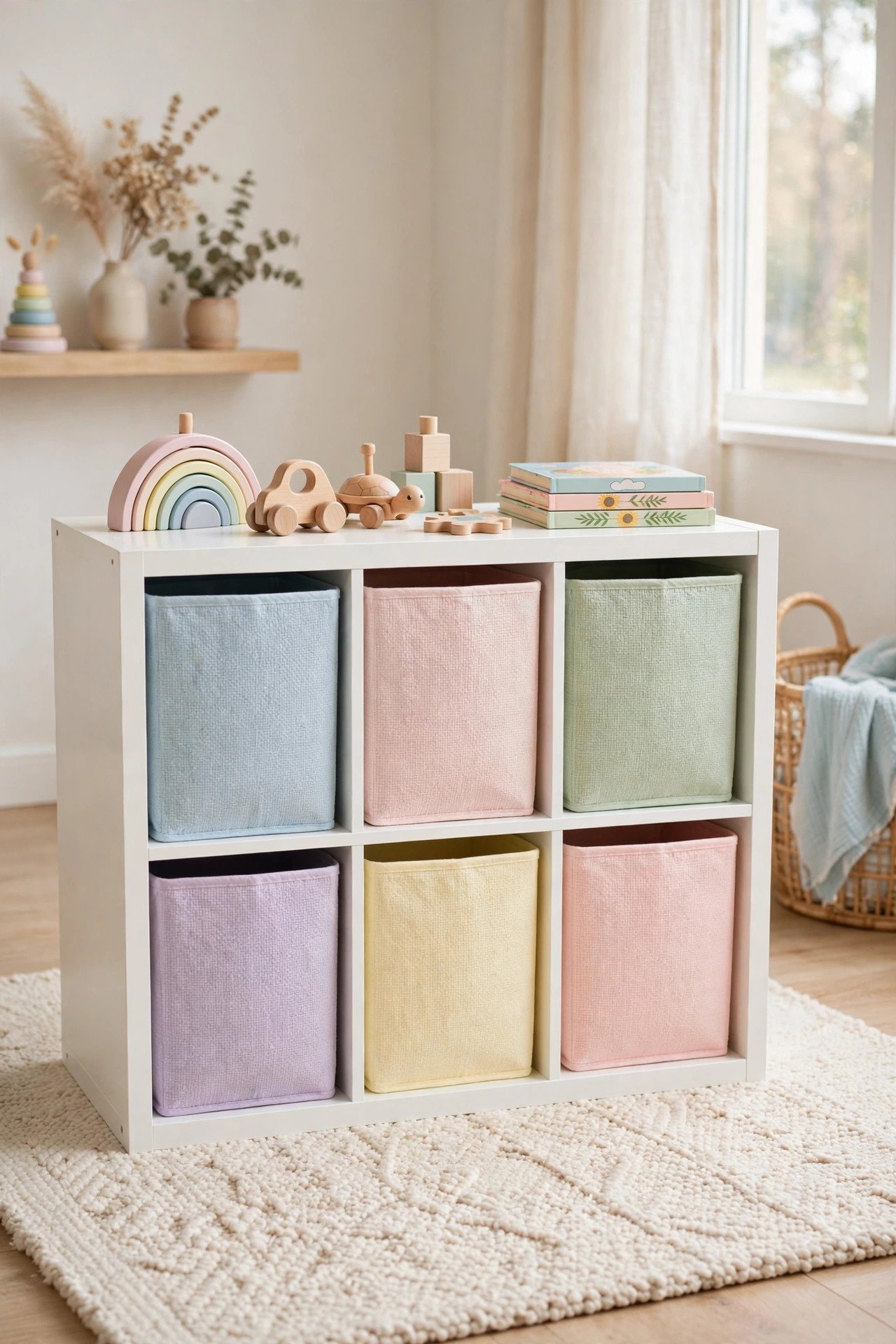
Low wall ledges turn picture books into a colorful display your kids can browse like a tiny library. Mount the ledges at your child’s eye level so little hands can pull a book out and slide it back. The forward-facing covers invite reading far better than spines on a tall shelf.
Keep the ledges shallow so books sit upright without tipping forward. Rotate the books every few weeks to keep the display fresh and interesting. A simple row of ledges along one wall can hold dozens of books without taking up any floor space at all.
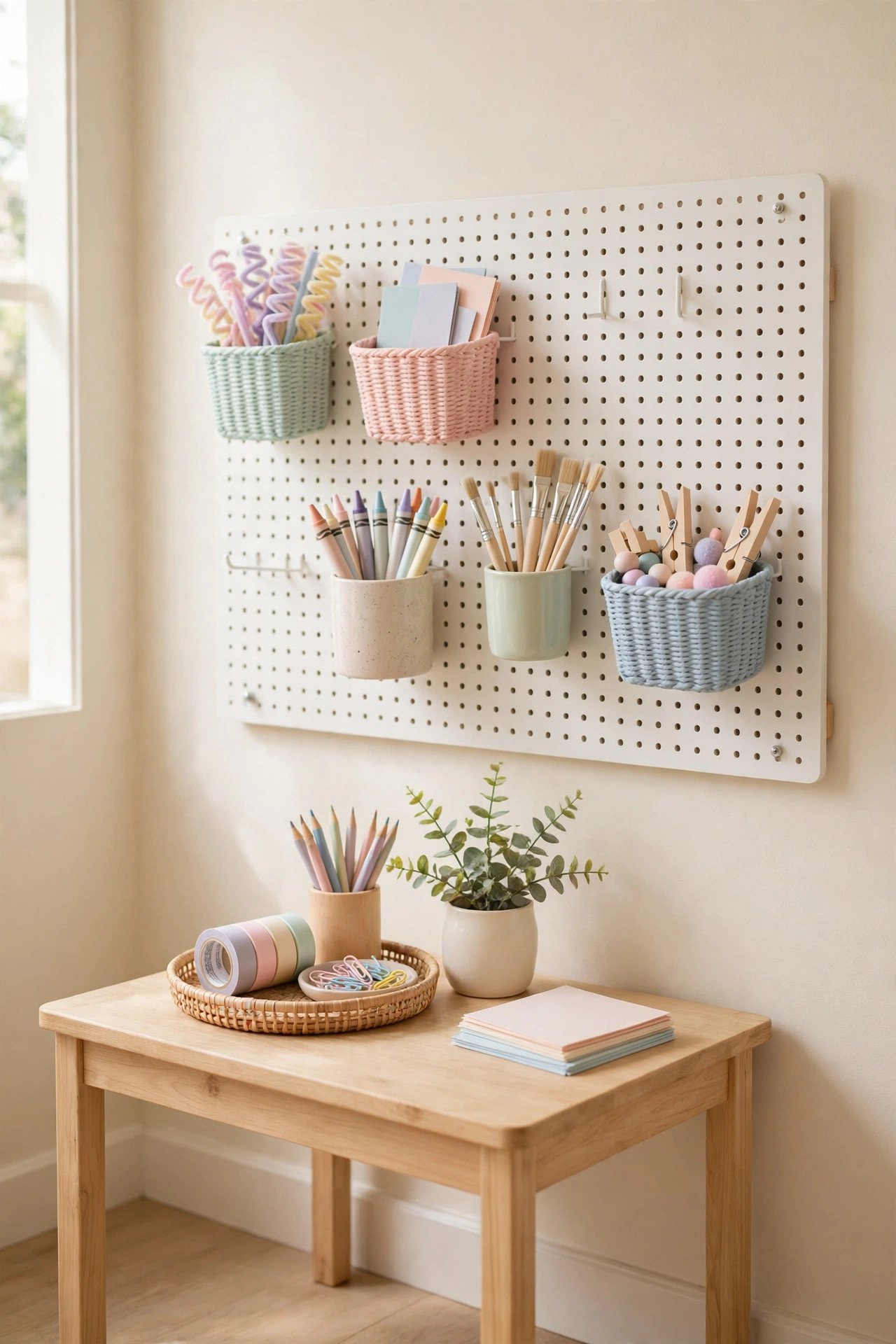
4. Hang a Pegboard for Craft Supplies
A pegboard turns a blank wall into flexible storage for all those craft supplies. Hang small baskets, cups, and hooks to hold crayons, scissors, glue, and paintbrushes where your kids can reach them. The pegboard keeps the table clear for actual creating instead of clutter.
Paint the pegboard in a soft color that matches the room so it looks like decor, not a workshop wall. Let your kids help arrange the hooks and baskets so the setup fits how they really craft. When supplies have a visible home, cleanup becomes part of the fun.
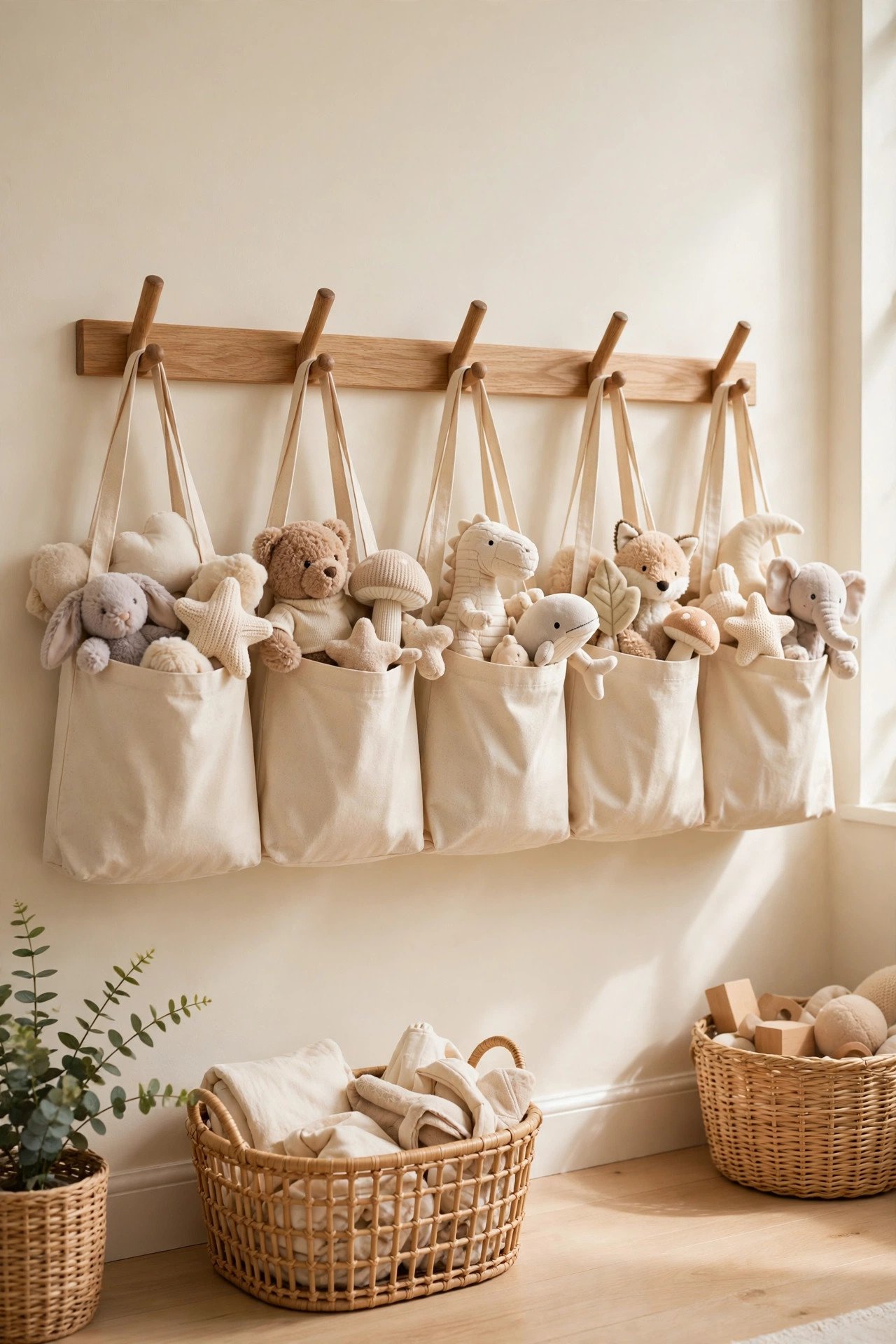
5. Hang Canvas Totes From Wall Hooks
Wall hooks with canvas totes are one of the cheapest ways to tame playroom clutter. Hang a row of hooks at kid height and slip a tote onto each one for blocks, dolls, or dress-up clothes. The soft bags hold a lot and fold flat when they are empty.
Label each tote with a picture or a word so your kids know exactly what goes where. Sturdy hooks hold the weight without pulling out of the wall, and the totes keep small pieces from scattering across the floor. It is simple storage that even toddlers can use.
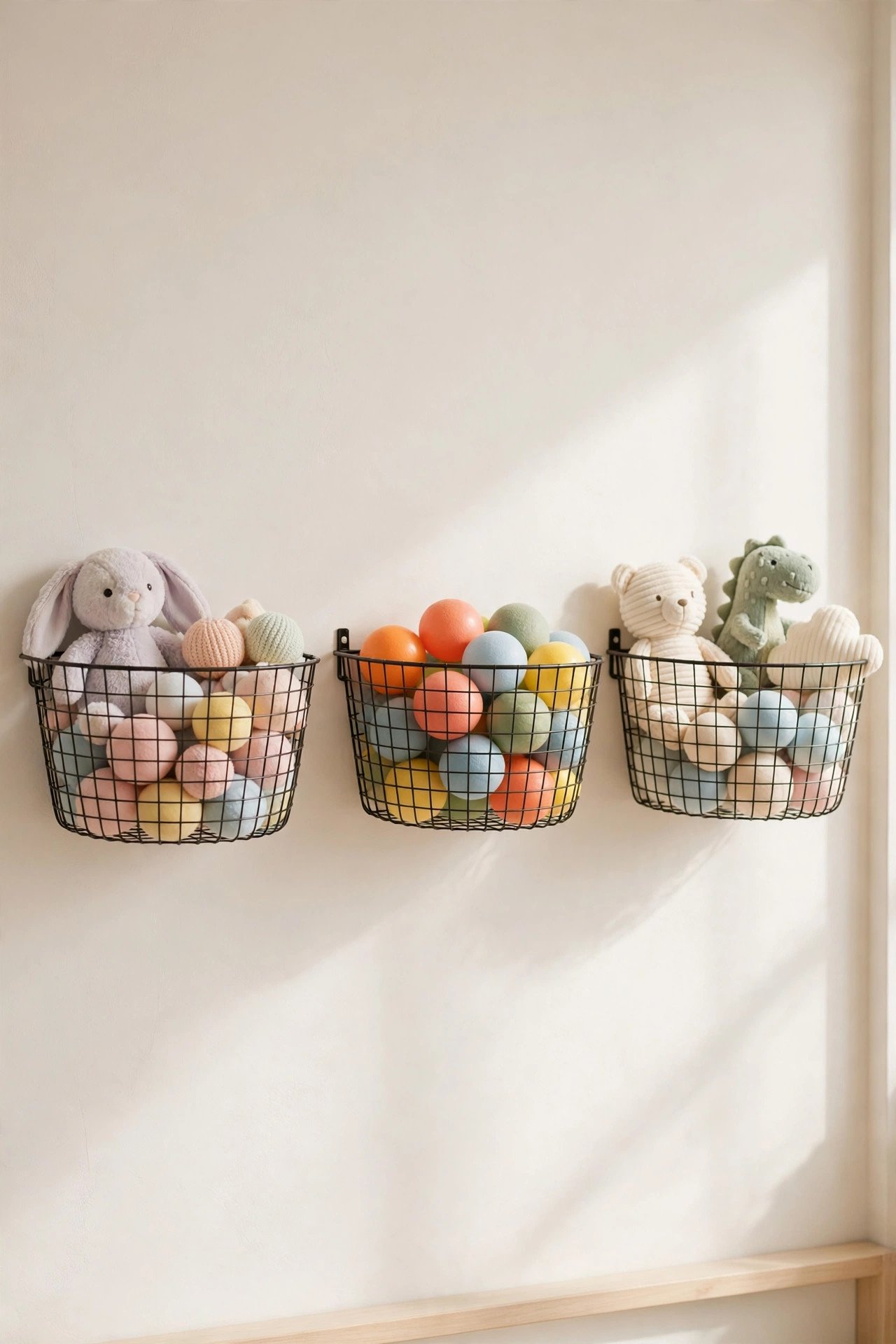
6. Mount Wire Baskets on the Wall
Wire baskets mounted on the wall catch all those oddly shaped toys that never sit neatly on a shelf. Balls, plush animals, and chunky vehicles drop in easily and stay visible through the open wires. Your kids can reach in and grab what they want without dumping everything out.
Mount the baskets low enough for small arms to reach, and keep heavier toys on the bottom row. The open design also lets you see at a glance when a basket is getting full. A row of wire baskets adds an airy, modern look while working hard every single day.
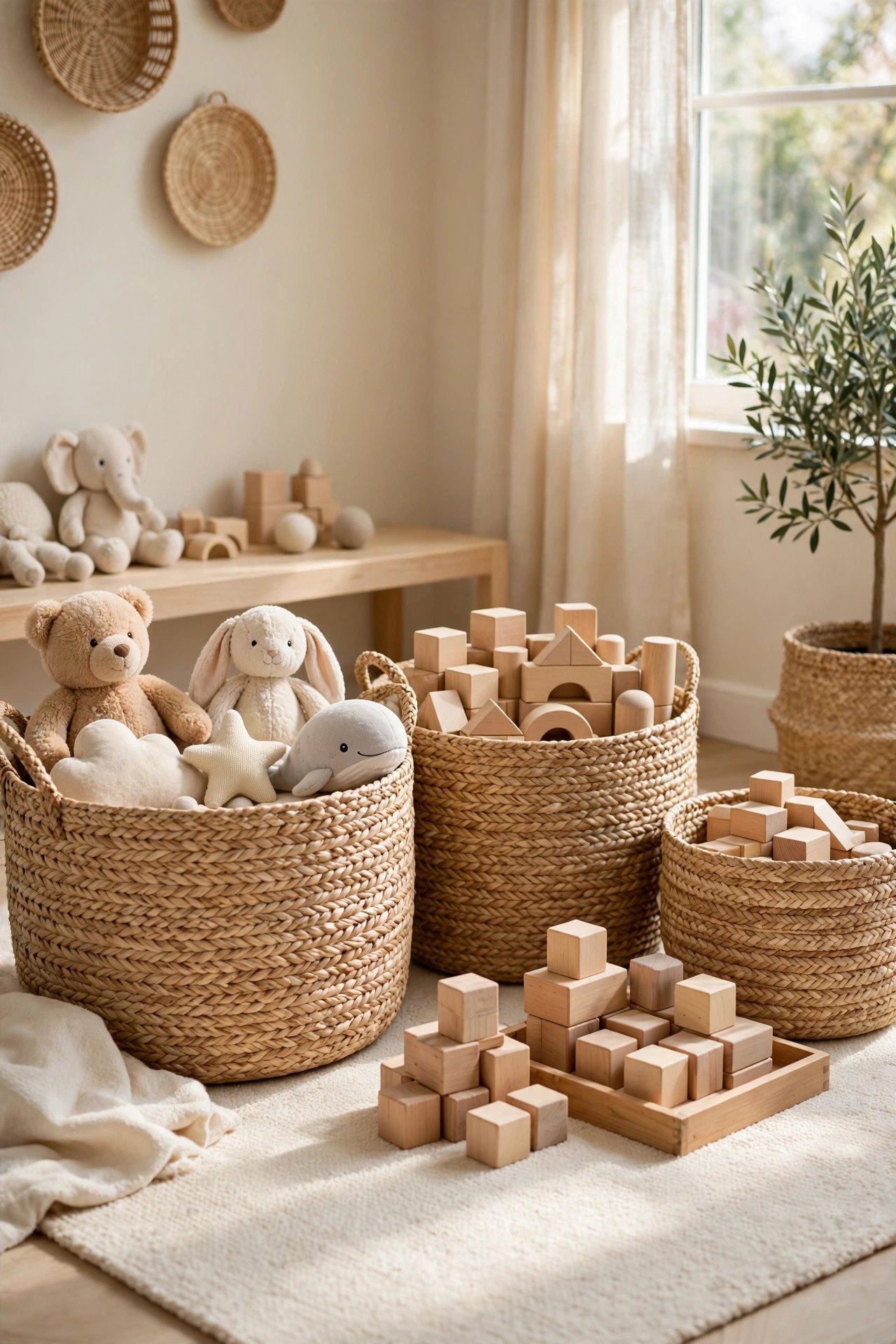
7. Put Woven Baskets to Work
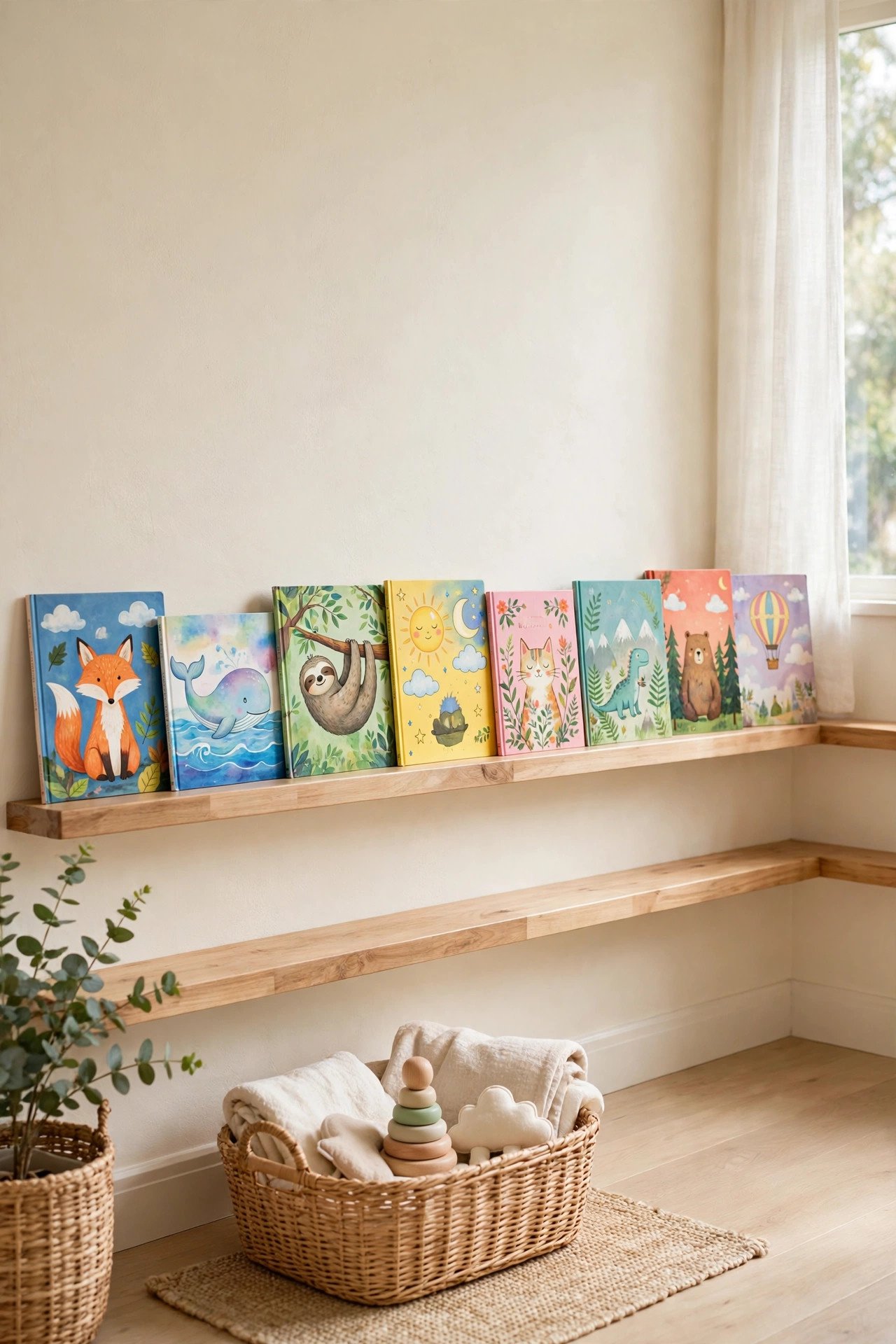
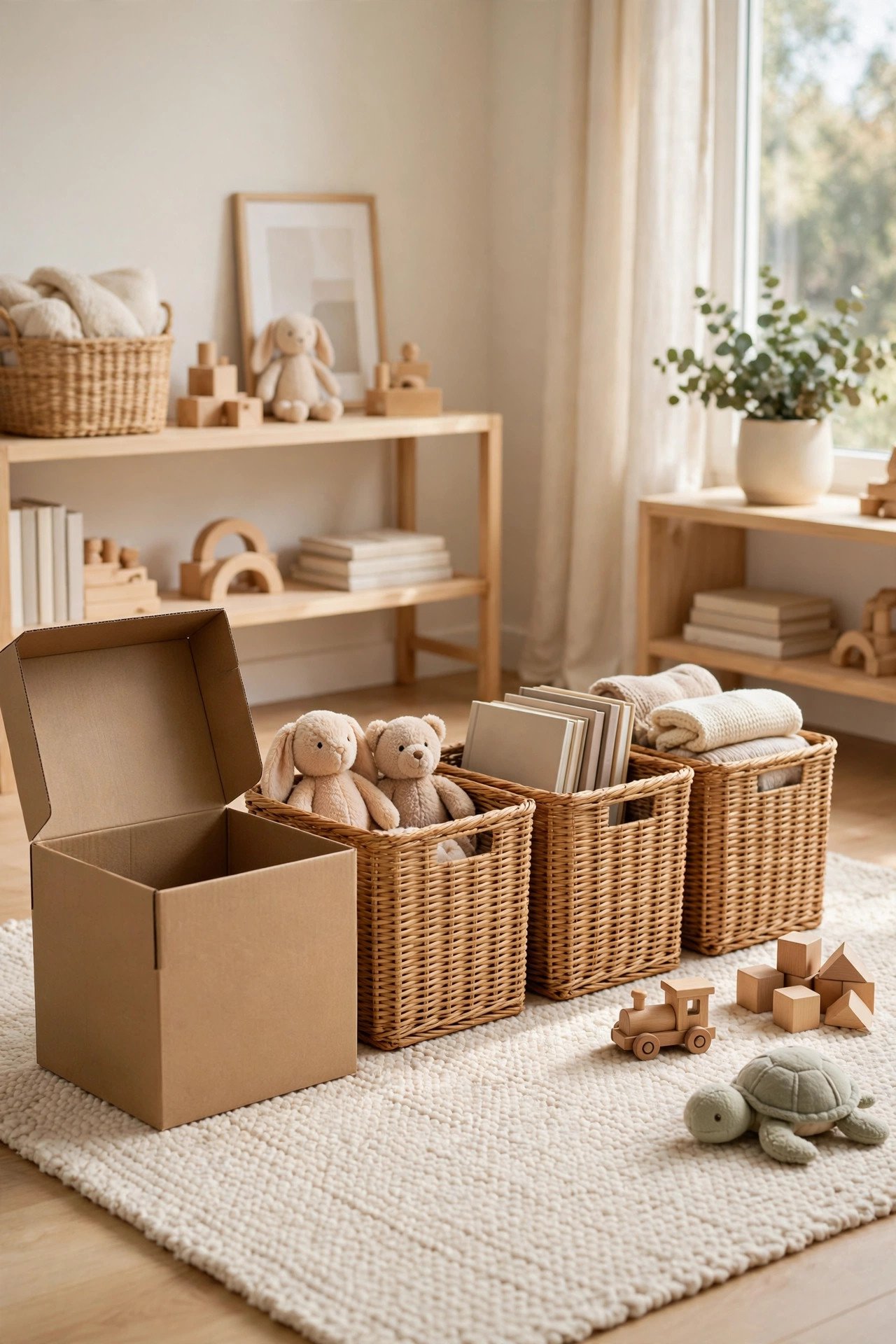
Woven baskets are the quiet heroes of playroom organization, because they hold almost anything and look beautiful doing it. Slide a large basket under a table for blocks, tuck a medium one on a shelf for dolls, and keep a small one by the door for shoes. The natural texture warms up the whole room.
Choose baskets with sturdy handles so your kids can carry them from room to room. Soft toys pile up fast in a playroom, and these stuffed animal storage ideas show how baskets and bins keep every plush friend in its place. Match the baskets in one color family for a calm, coordinated look.
8. Make the Most of Vertical Space
When floor space runs out, look up. Tall shelves, stacked bins, and wall-mounted storage use the height of the room that usually goes to waste. Keep everyday toys low and move seasonal or special toys to the higher shelves where they stay safe and dust-free.
Make sure the tall unit is anchored firmly to the wall so it cannot tip over. A stable step stool lets older kids reach the middle shelves safely on their own. Using vertical space well can double your storage without adding a single piece of furniture to the floor.
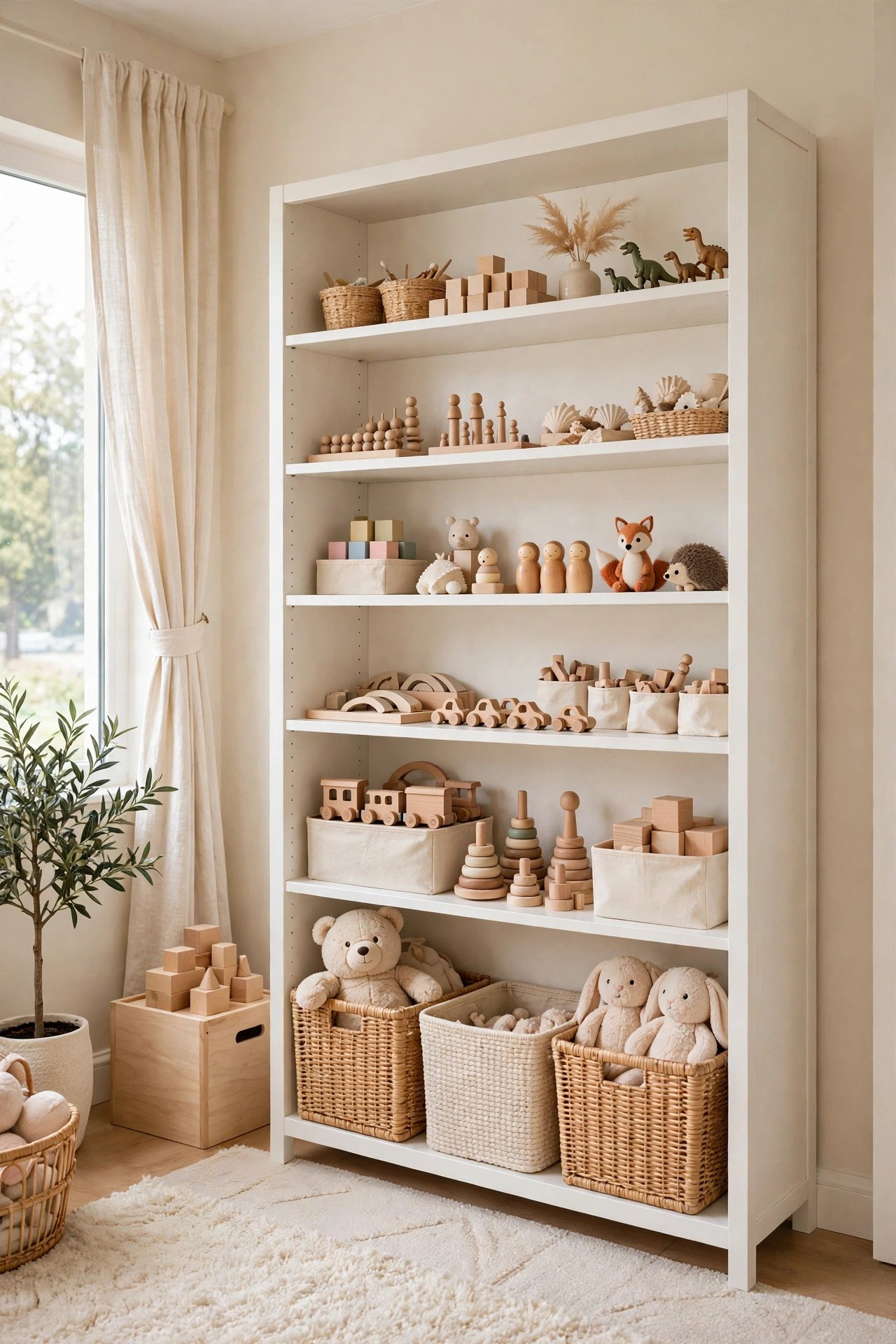
9. Rotate Toys to Keep Things Fresh
You do not need to display every toy at once. Pick a small set for the shelves and store the rest in labeled bins in a closet. Every two or three weeks, swap the sets so your kids rediscover old favorites and the room never feels crowded.
Rotation also makes cleanup faster, because fewer toys are out at any one time. Keep a simple list on the closet door so you remember what is stored where. Your kids will play longer with a smaller set of toys than with a whole room full of choices.
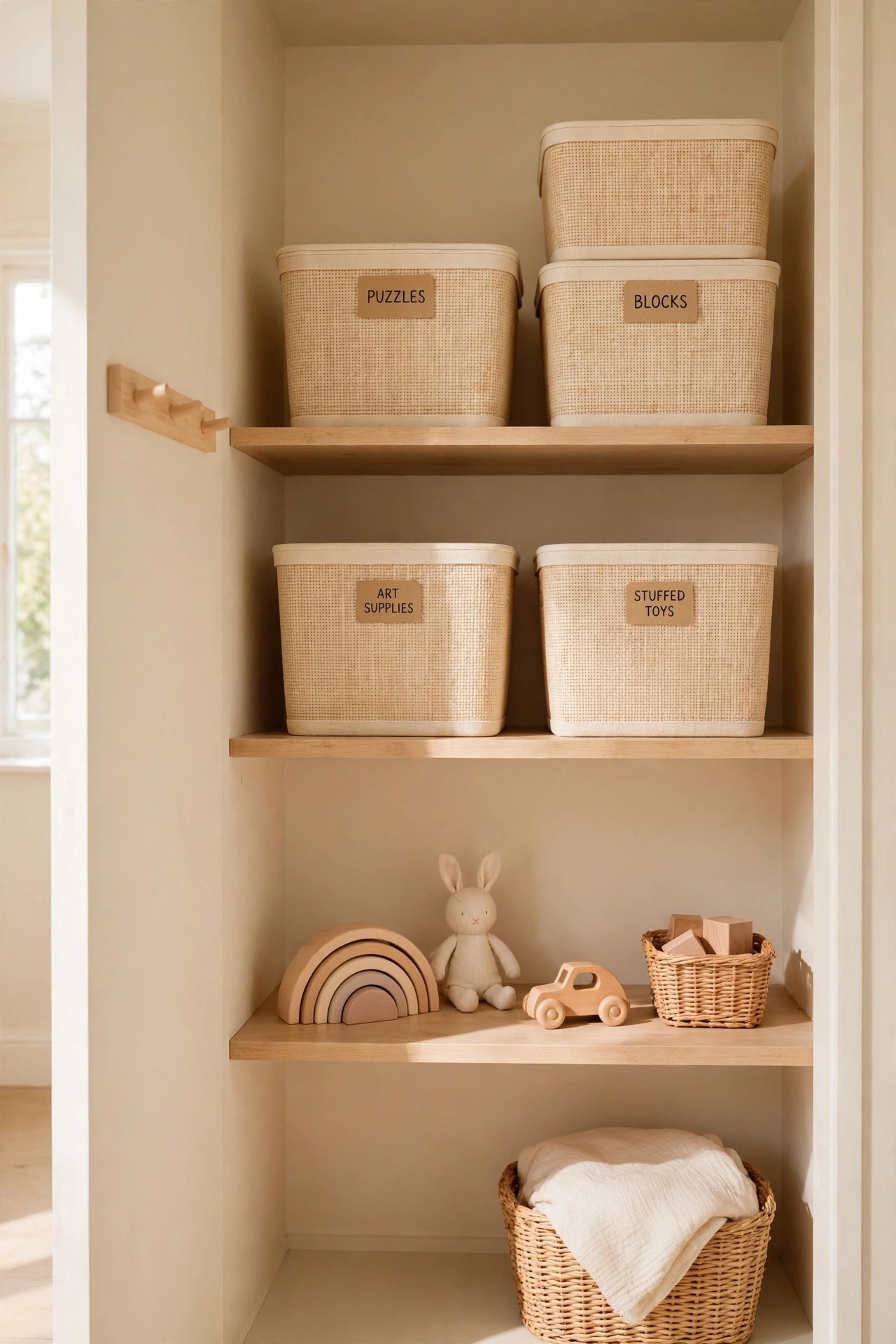
10. Add a Slide-Out Toy Organizer
A slide-out toy organizer is a low frame with shallow bins that pull out like drawers. Your kids can slide a bin out, carry it to the rug, and slide it back when they finish playing. The shallow bins stop toys from piling into a deep, jumbled mess.
This system works beautifully for board games and building sets too, and these board game organization ideas use the same slide-out trick to keep boxes and pieces sorted. Label the front of each bin with a picture so even young kids can put things back correctly.
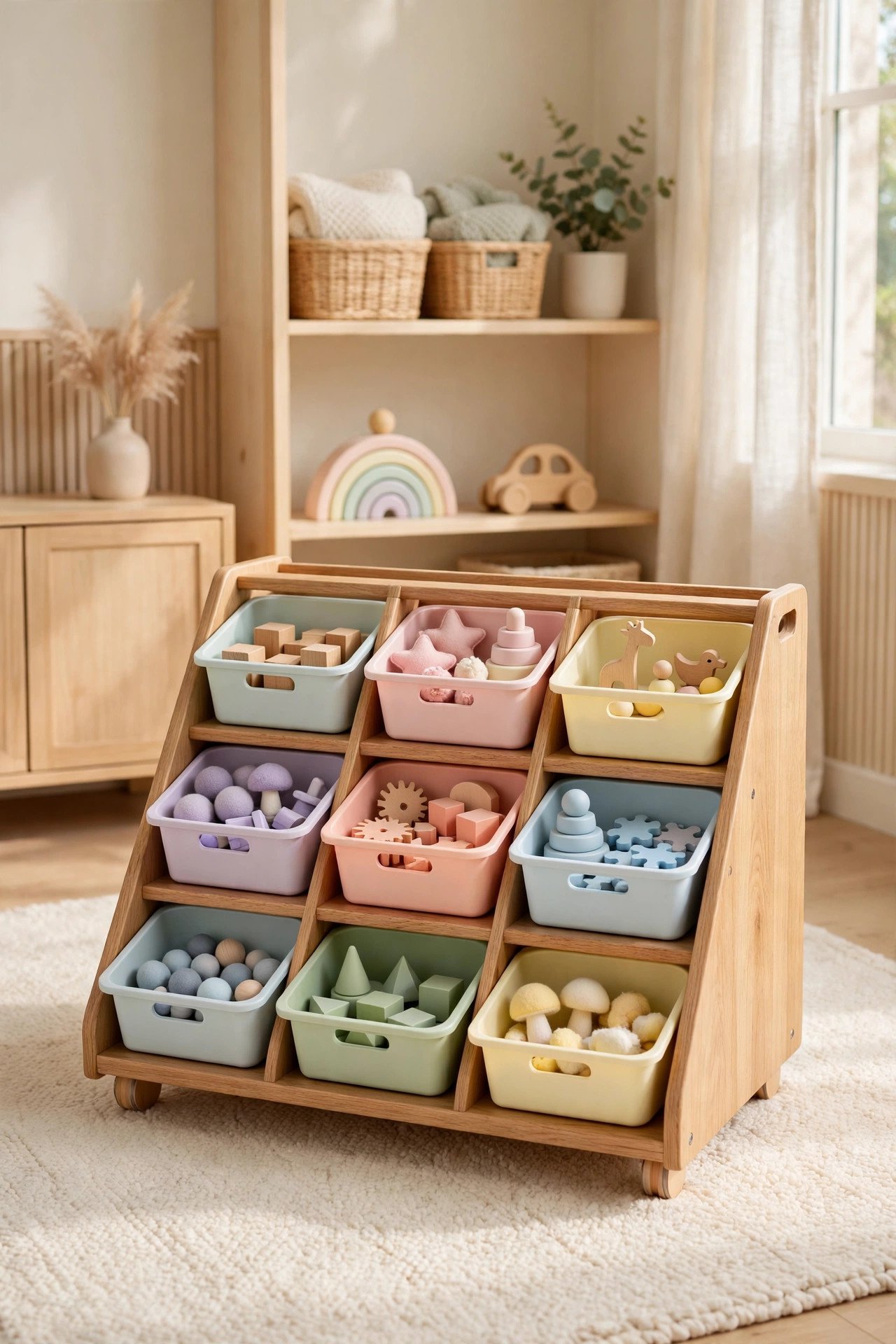
11. Label Every Bin and Basket
Labels are the secret that makes every other storage idea actually work. When a bin says what belongs inside, your kids do not have to guess, and you do not have to supervise every cleanup. Use big, clear words and add a small picture for kids who cannot read yet.
Chalkboard labels, printed tags, or simple masking tape all work well, so choose whatever fits your style. Keep the labels at the front of each bin where they are easy to see. A labeled room teaches kids to tidy up on their own, one bin at a time.
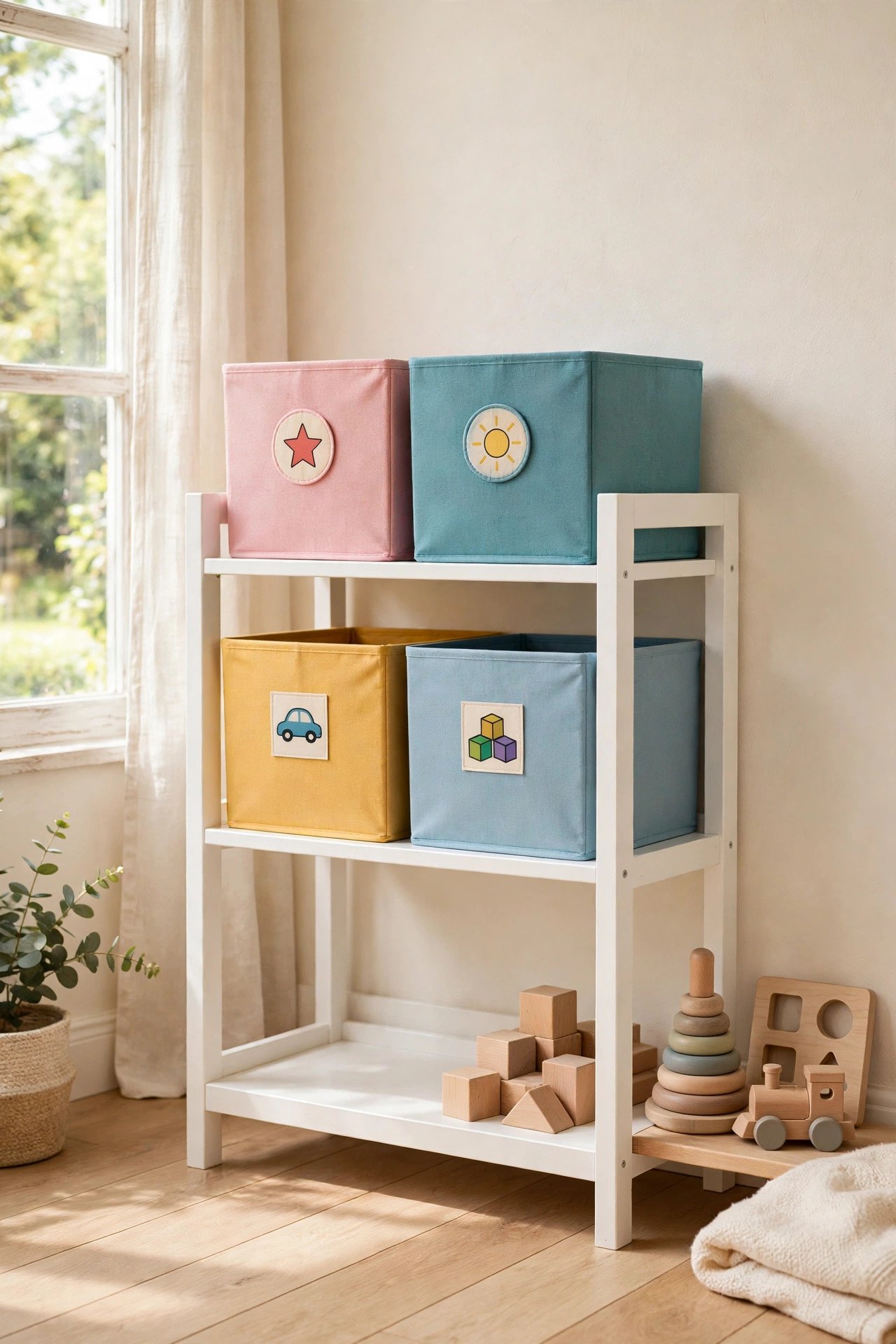
12. Sort Toys by Type Before You Store Them
Before you buy a single bin, gather every toy in the room and sort it into groups. Put all the blocks together, all the dolls together, and all the art supplies together. Sorting first shows you exactly what you own and how much storage each group really needs.
You will probably find broken toys, missing pieces, and duplicates you forgot about. Set those aside to fix, donate, or toss before you start organizing anything else. A good sort takes an afternoon, but it makes every storage idea after it work twice as well for your family.
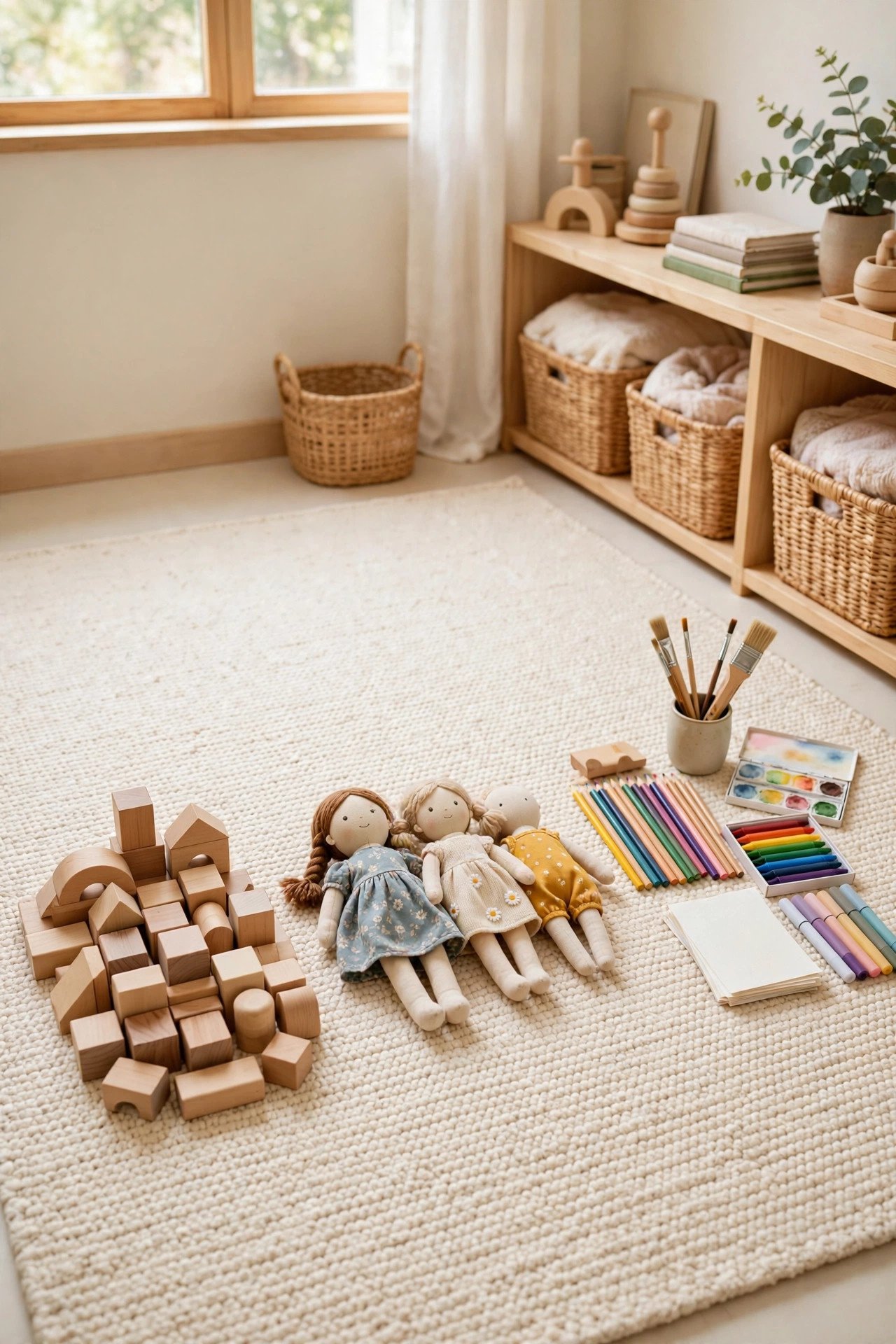
13. Plan the Playroom Around Your Family
The best playroom is not the one from a magazine, but the one that fits how your family actually plays. If your kids build towers all day, give blocks the biggest shelf. If they love to draw, put the craft table near the window and keep supplies within reach.
Watch how your kids use the room for a week before you move anything. Notice where toys pile up and where they never play, then arrange the storage to match those habits. A playroom planned around real life stays tidy far longer than one planned around a picture.
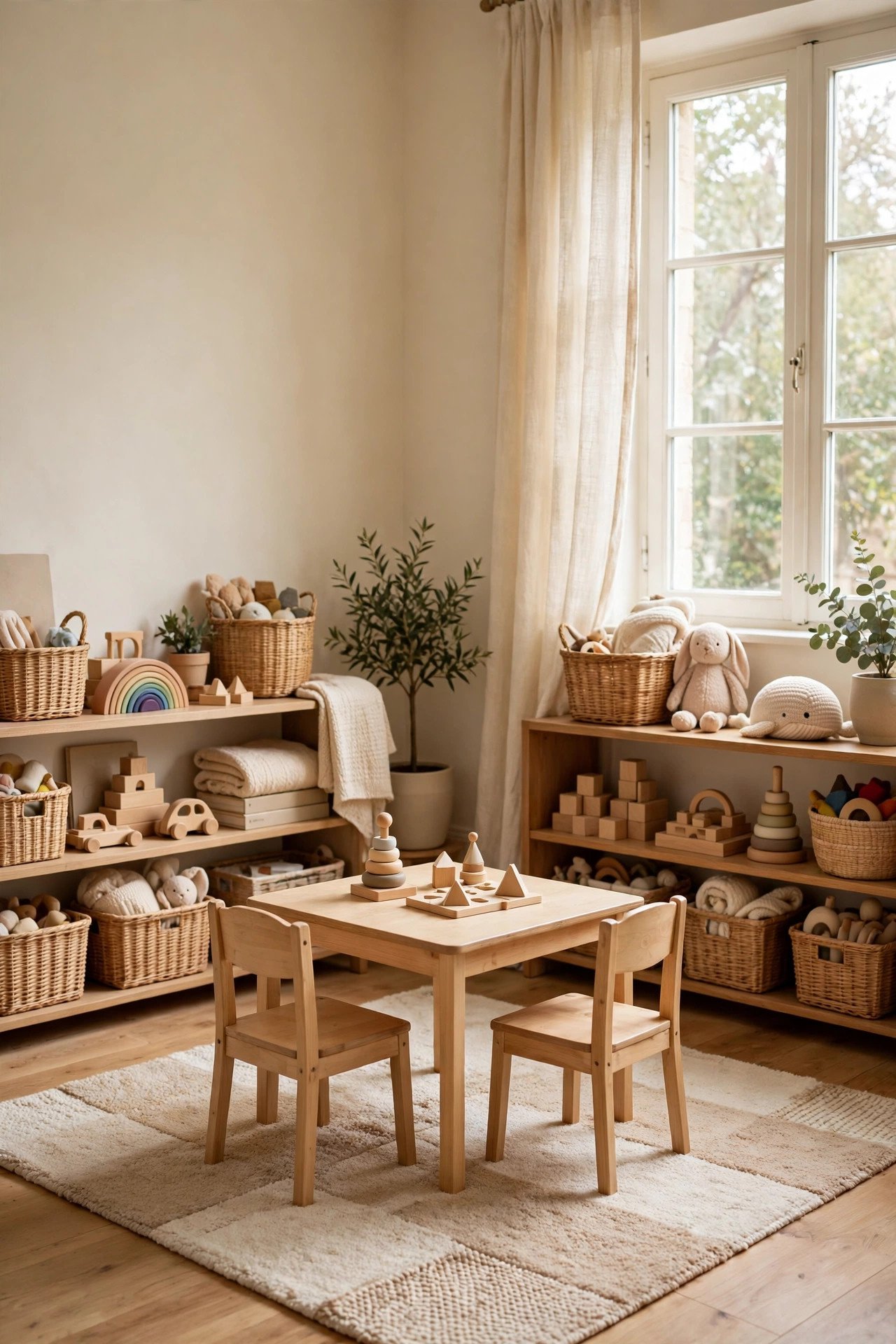
14. Add One Large Storage Unit
One large storage unit can hold almost everything in a playroom if you choose it well. Look for a wide, low unit with a mix of open shelves and closed cupboards. The open shelves display favorite toys while the cupboards hide the messier collections out of sight.
Measure your wall before you shop, and leave a little breathing room on each side so the unit does not crowd the room. Anchor it to the wall for safety, then fill it from the bottom up with the heaviest toys. One strong piece often beats five small ones.
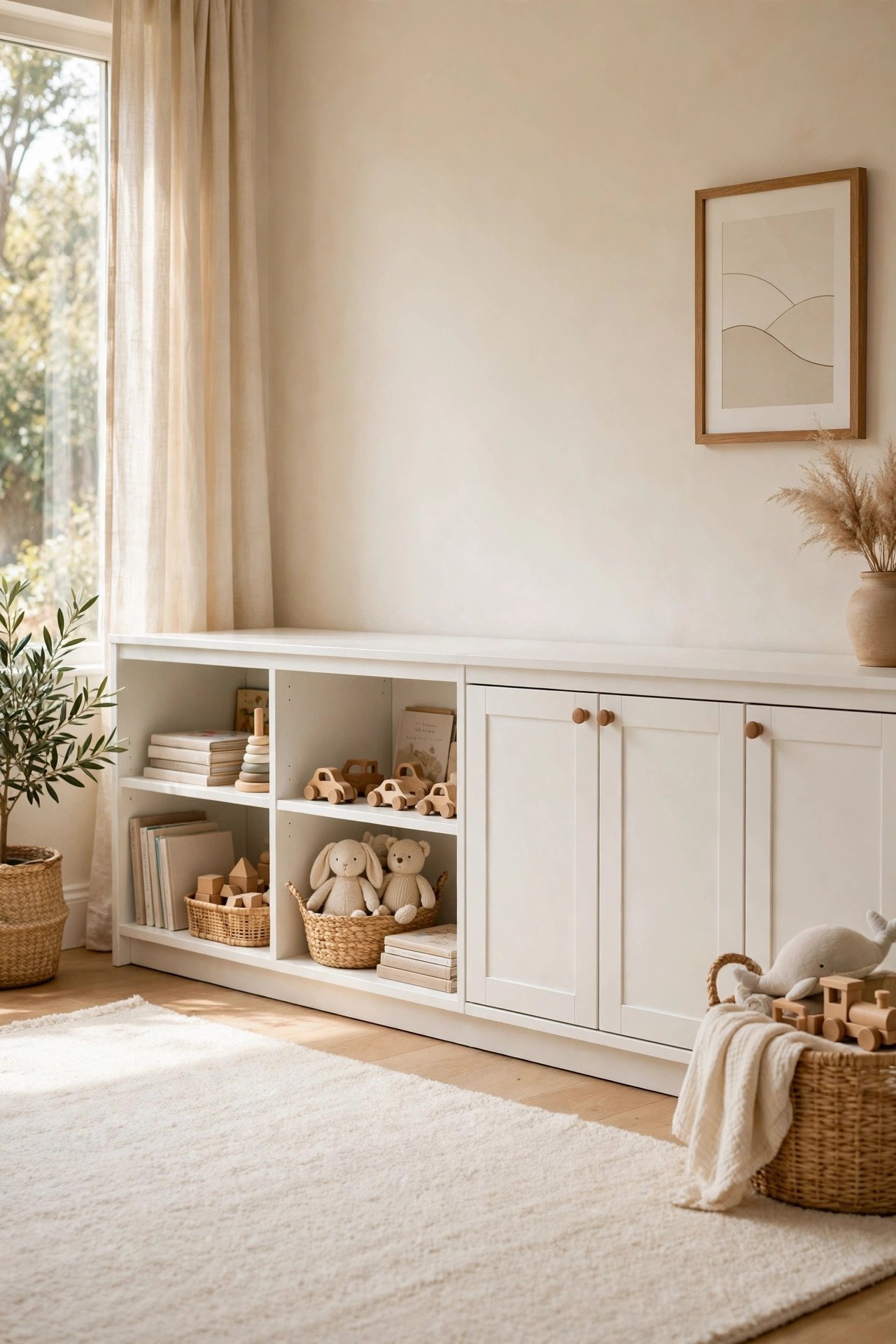
15. Hide Clutter in Lidded Bins
Lidded bins are perfect for the toys that still look messy even when they are put away. Small parts, dress-up accessories, and half-finished projects disappear behind a tidy lid. Stack the bins on shelves or in cubes, and the whole room looks calm in seconds.
Choose bins with lids that lift off easily so kids can open them without help. The same closed-basket trick keeps throws dust-free, and these blanket storage ideas show how lidded storage protects soft things all around the house. Label the lids so nothing gets lost.
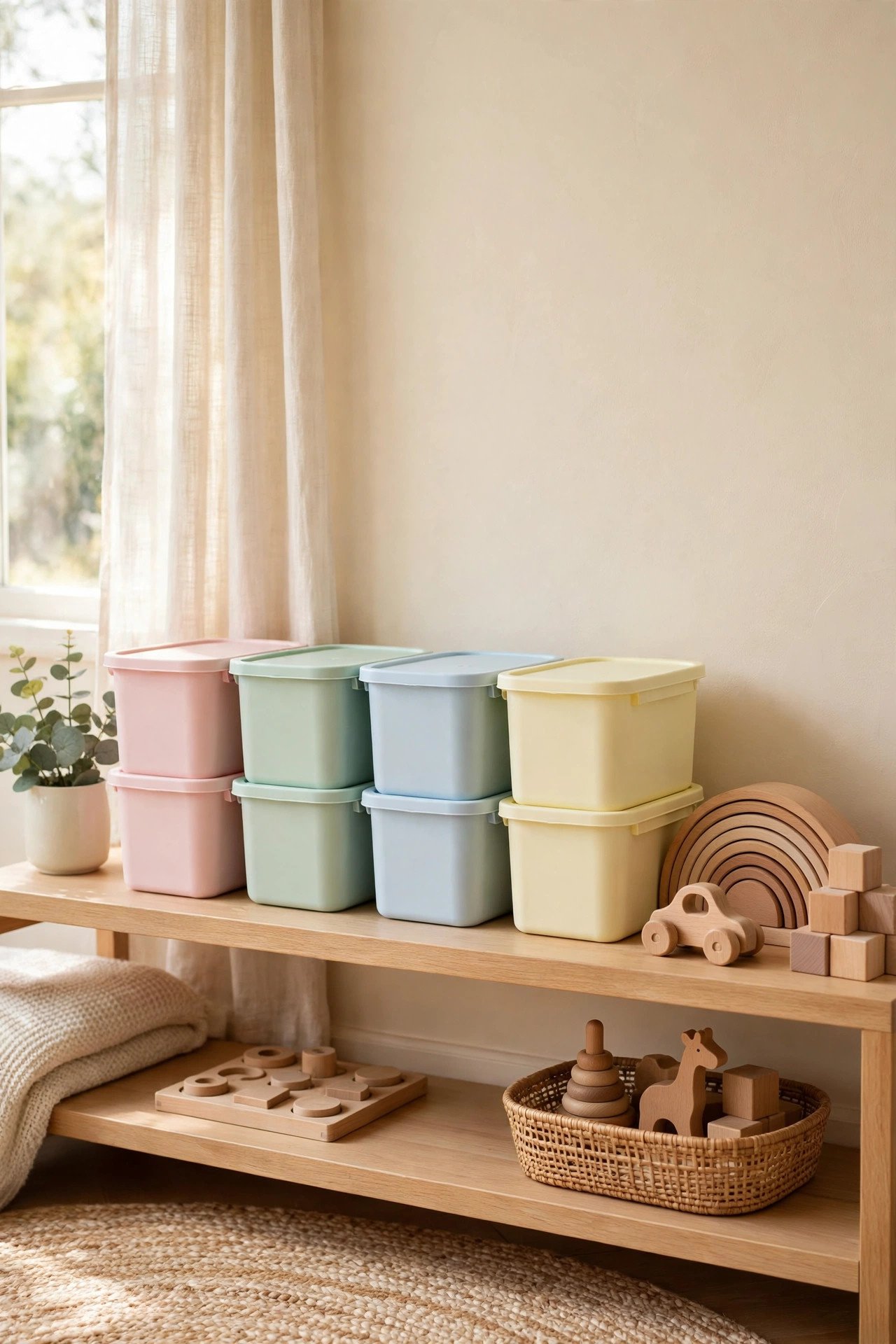
16. Create Zones for Each Kind of Play
Zones turn one big messy room into several small tidy ones. Give building toys one corner, books another cozy corner, and crafts a table by the window. When each kind of play has its own special spot, toys stop wandering all over the room every day.
Use a rug, a low shelf, or a different wall color to mark each zone without building walls. Keep the supplies for each zone inside that zone, so cleanup means returning things a few steps, not across the whole room. Zones make the playroom feel bigger and calmer.
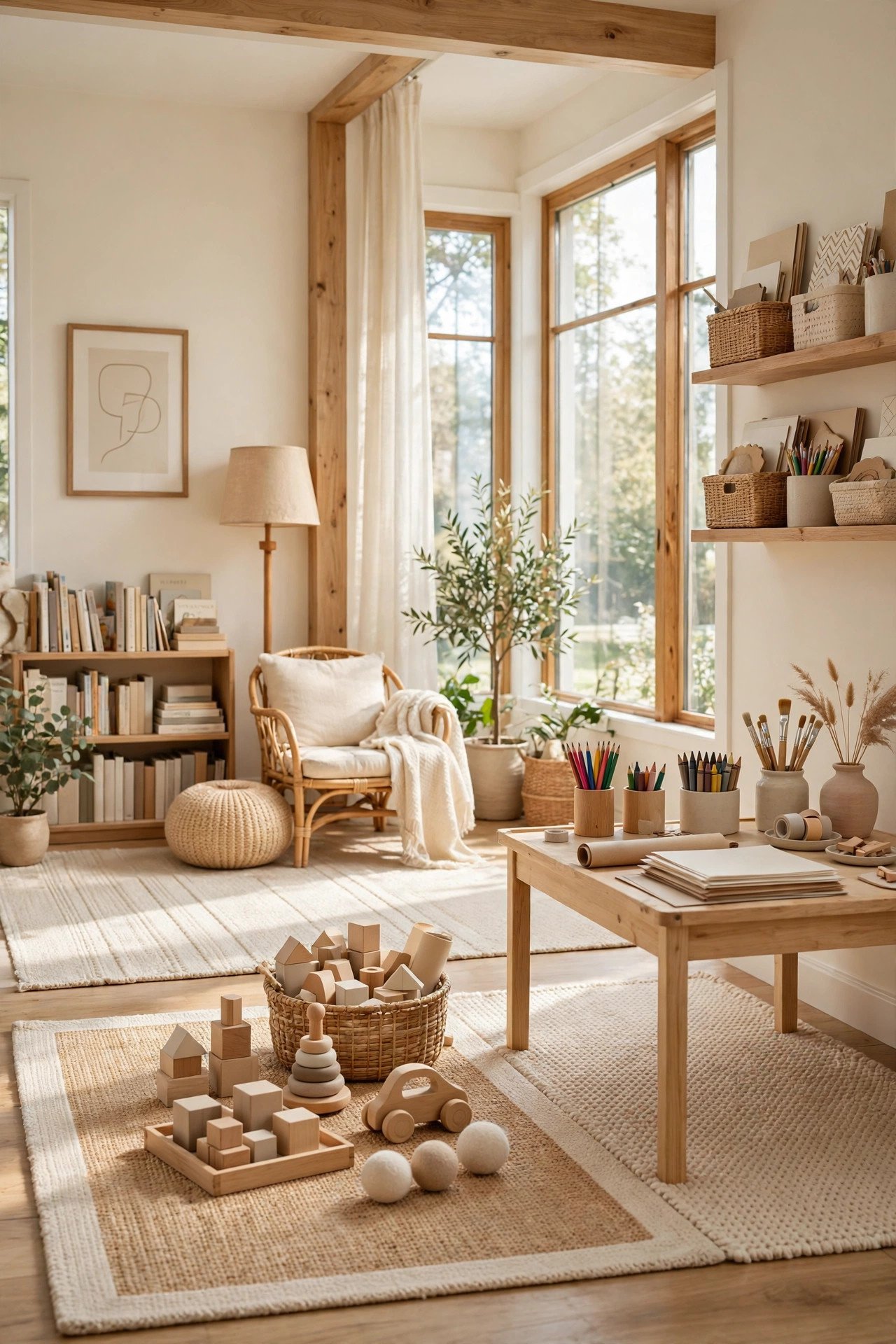
17. Set Up a Table Just for Crafts
A small table just for crafts gives messy projects a home that is not the dining table. Cover it with a wipeable mat and keep paper, crayons, and glue in cups within arm’s reach. Your kids can sit down and start creating without asking you to set everything up.
Choose a table and chairs sized for your kids so they can work comfortably for a long time. Store extra supplies in a rolling cart or a shelf beside the table. When craft time ends, everything slides back into its place and the table is ready for tomorrow.
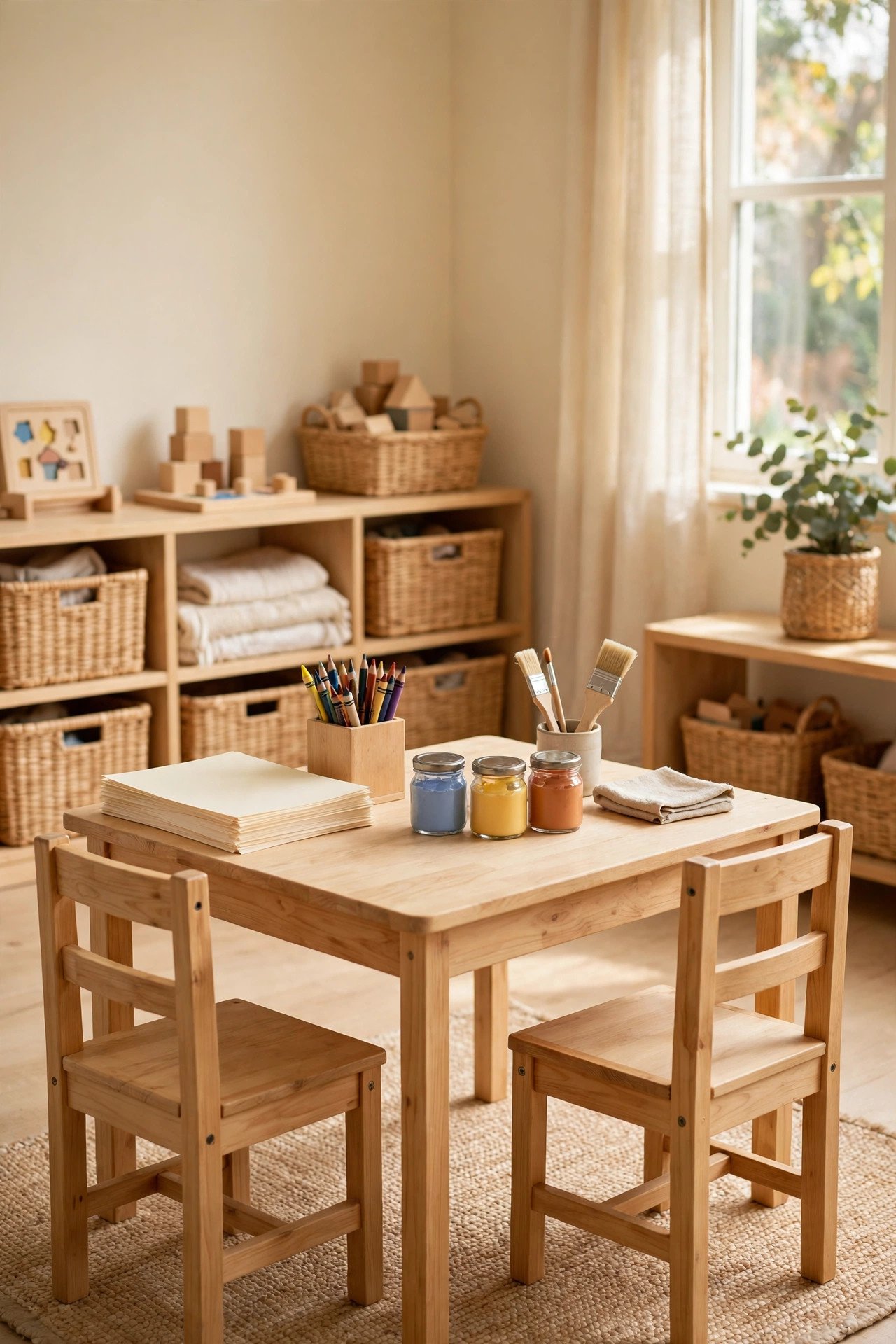
18. Create a Make-Believe Corner
A make-believe corner needs very little to spark big adventures. A small play kitchen, a dress-up rack, or a few cardboard boxes can become a shop, a castle, or a spaceship. Keep the props in one basket so the corner can change with your child’s imagination.
Rotate the props every few weeks to keep the corner feeling new. A basket of hats, a toy phone, and a few stuffed animals is enough to start. When make-believe has its own corner, the rest of the playroom stays tidy while the stories unfold.
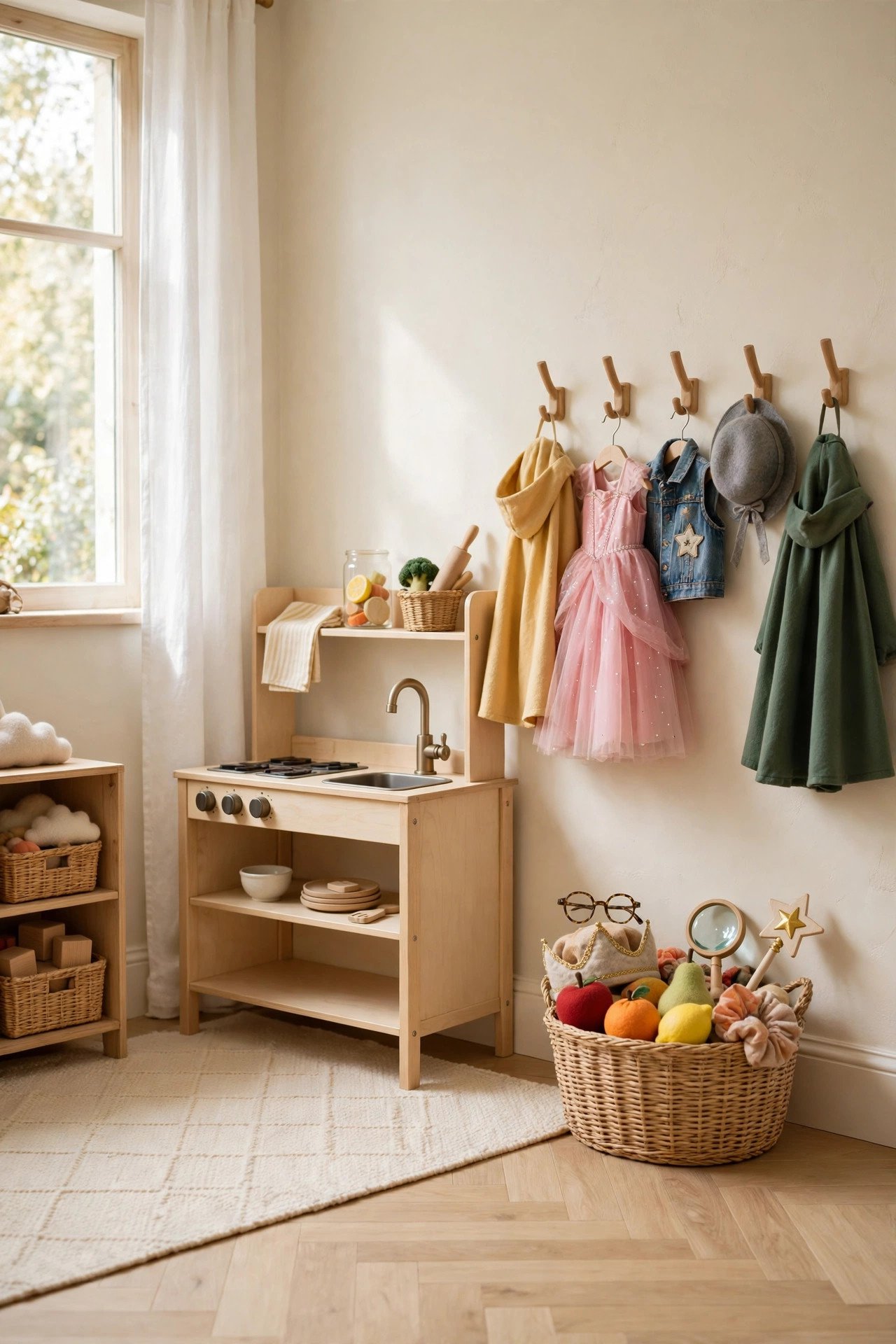
19. Add a Canopy or Teepee Reading Nook
A canopy or a teepee turns a quiet corner into the coziest reading nook in the house. Drape soft fabric over a simple frame, add a floor cushion and a small basket of books, and your kids will beg to sit there. The enclosed shape feels like a secret hideaway.
Keep the nook nice and small so it does not swallow the whole room. A basket of books beside the entrance and a soft blanket inside is all it needs. This little retreat also gives overstimulated kids a calm place to rest during a busy day.
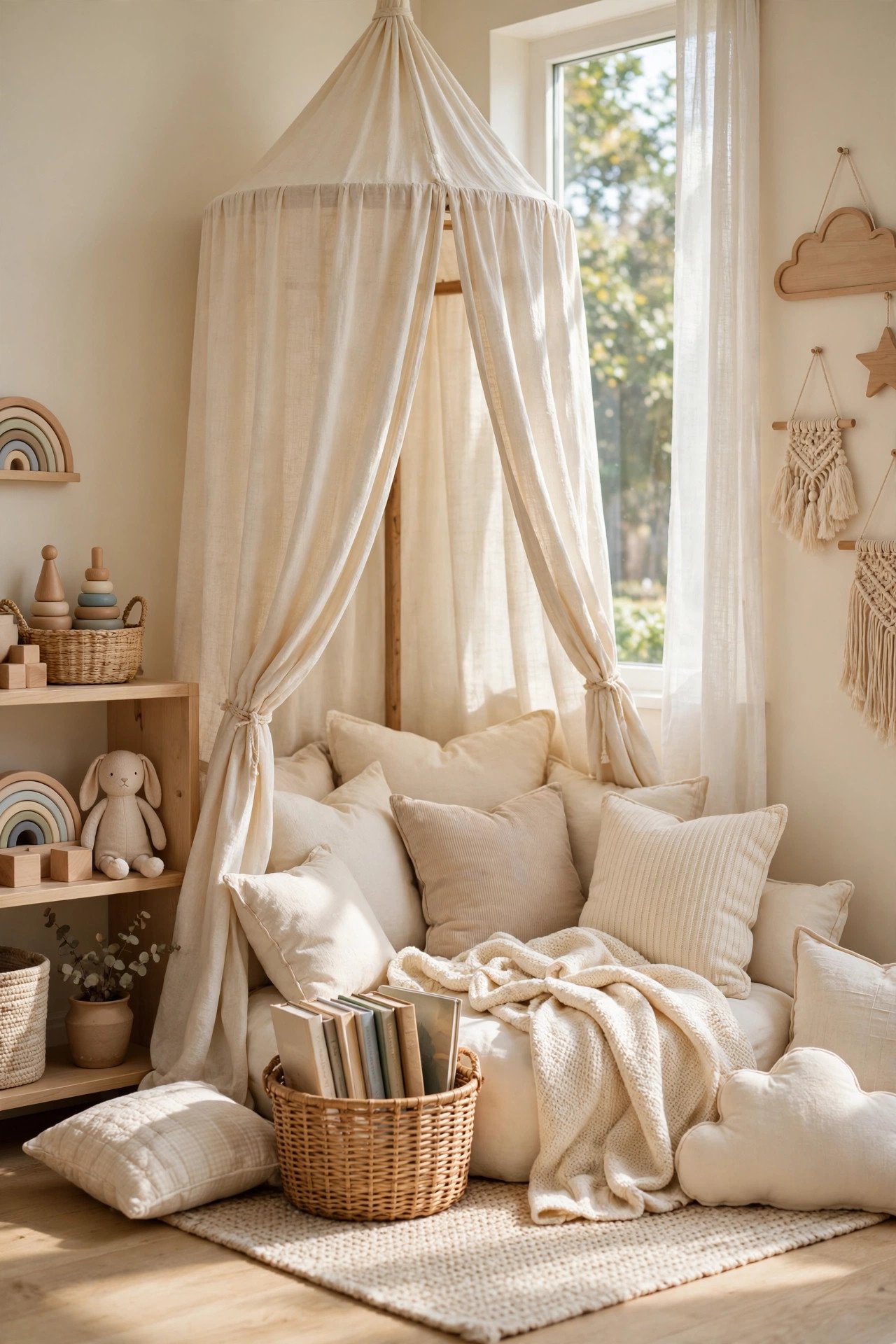
20. Roll In a Cart for Supplies on the Move
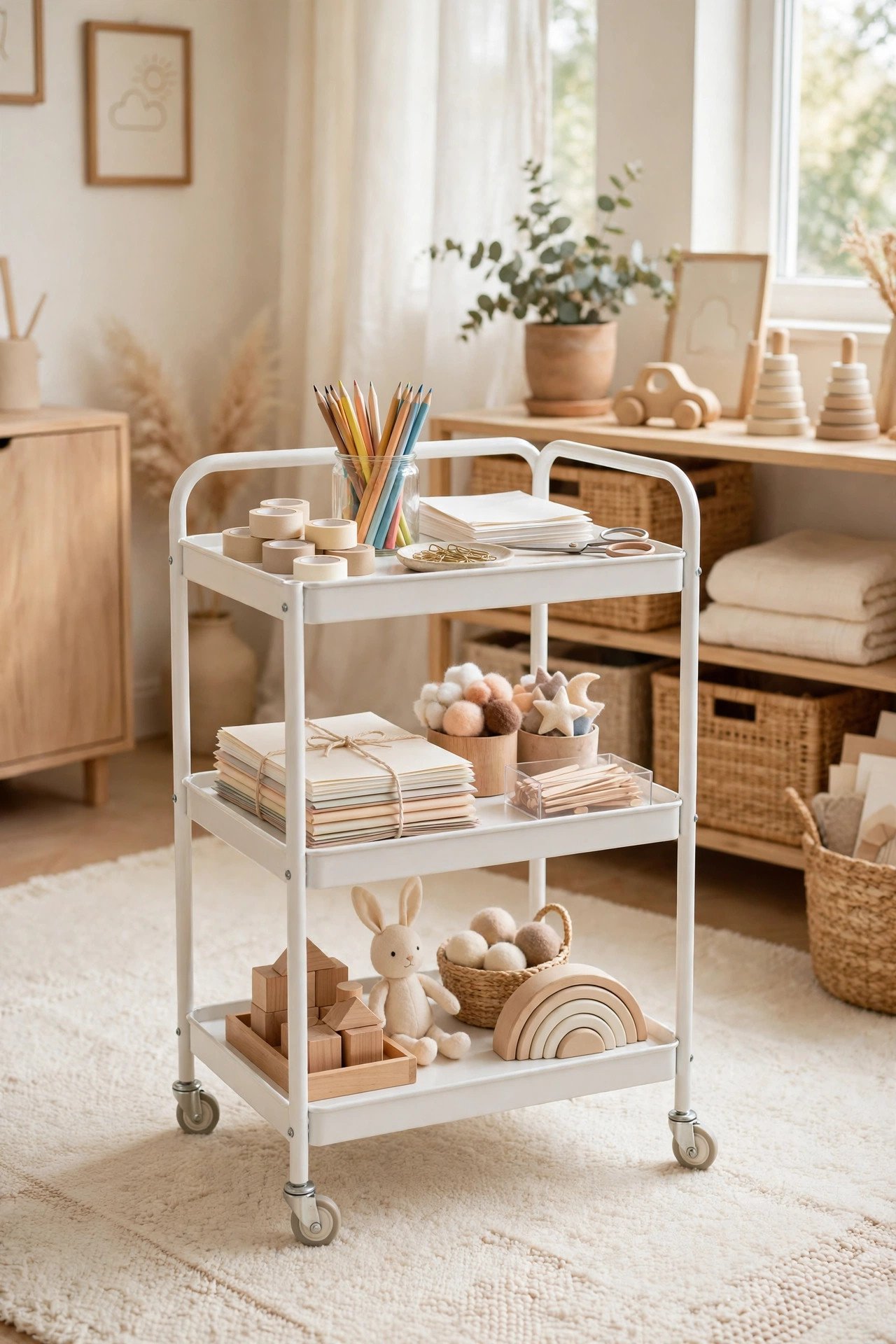
A rolling cart brings supplies right to wherever the playing happens. Load the tiers with crayons, paper, stickers, and small toys, then wheel it from the craft table to the rug. When playtime ends, roll the whole cart into a closet or against the wall.
Choose a sturdy cart with deep tiers so nothing slides off when it moves. Label each tier clearly so your kids know exactly where things live. A cart is especially handy in a shared living room, where the whole playroom has to disappear before dinner.
21. Purge Broken and Outgrown Toys Regularly
No storage system in the world can hold toys your kids have outgrown. A few times a year, go through every bin together and pull out broken toys, missing pieces, and things nobody plays with anymore. Donate what is still good and recycle the rest.
Make purging a fun family habit, not a sad chore. Let your kids choose a few toys to pass on to younger friends, and celebrate the space you gain. A regular purge keeps the playroom from slowly filling up again, no matter how good your storage is.
Conclusion
A tidy playroom is not about perfect shelves or matching bins. It is about giving every toy a home your kids can find and return on their own. When storage is simple and visible, cleanup stops being a daily battle and starts being a habit.
Start with one idea from this list that fits your biggest mess, and add more as the habit grows. A few bins, a good sort, and a nightly tidy will change the room. For a calm home beyond the playroom, see these nightly reset routines that keep every room organized in just a few minutes each evening.
Frequently Asked Questions About 21 Playroom Organization Ideas for Bins and Baskets
How do I keep a playroom organized with kids of different ages?
Give each age group its own low shelf or bin, with baby toys on the bottom and older kids’ small parts up high. Use picture labels for toddlers and word labels for readers. A shared system works when every child can reach their own toys and knows where they belong.
What size bins work best for a playroom?
Medium bins from shoebox size up to a laundry basket work best, because kids can carry them without help. Very large bins get heavy and turn into jumbled pits, while tiny bins hold too little. Choose a few sizes and match each bin to one kind of toy.
How often should I rotate the toys in a playroom?
Rotate the toys every two to three weeks for the best results. Swap a few bins at a time rather than changing everything at once, so the room still feels familiar. Watch which toys your kids miss and bring those back sooner, and retire the ones they ignore.
How can I organize a small playroom with no closet?
Use the walls and the vertical space with shelves, pegboards, and hanging organizers. Choose furniture that stores toys inside, like ottomans, benches, and cube units. A rolling cart and a few labeled bins can hold a surprising amount without any closet at all.
How do I get my kids to clean up the playroom?
Make cleanup fun with a five-minute tidy song or a race to fill one bin. Keep the system simple enough that a child can do it alone, and praise the effort every time. When every toy has a clear home, kids clean up faster and with far less fuss.

Hi, I’m Emily! I turn messy corners into cozy, organized spots. DreamNestDecor is where I share simple, practical home ideas — decor, organization, and small-space solutions that work in real life, not just in photos. Every idea here is carefully researched before it’s shared.