A sloped backyard can feel like a challenge, but the right steps turn that hill into one of your favorite features. Good garden steps make the slope safe to climb, easy to maintain, and beautiful to look at. You will wonder why you waited so long to build them.
From natural boulders to modern granite, these 16 garden step ideas suit every slope and style. Each one helps you move up and down your hill with confidence. Pick the materials you love and start planning your climb.
1. Natural Stone Slab Steps
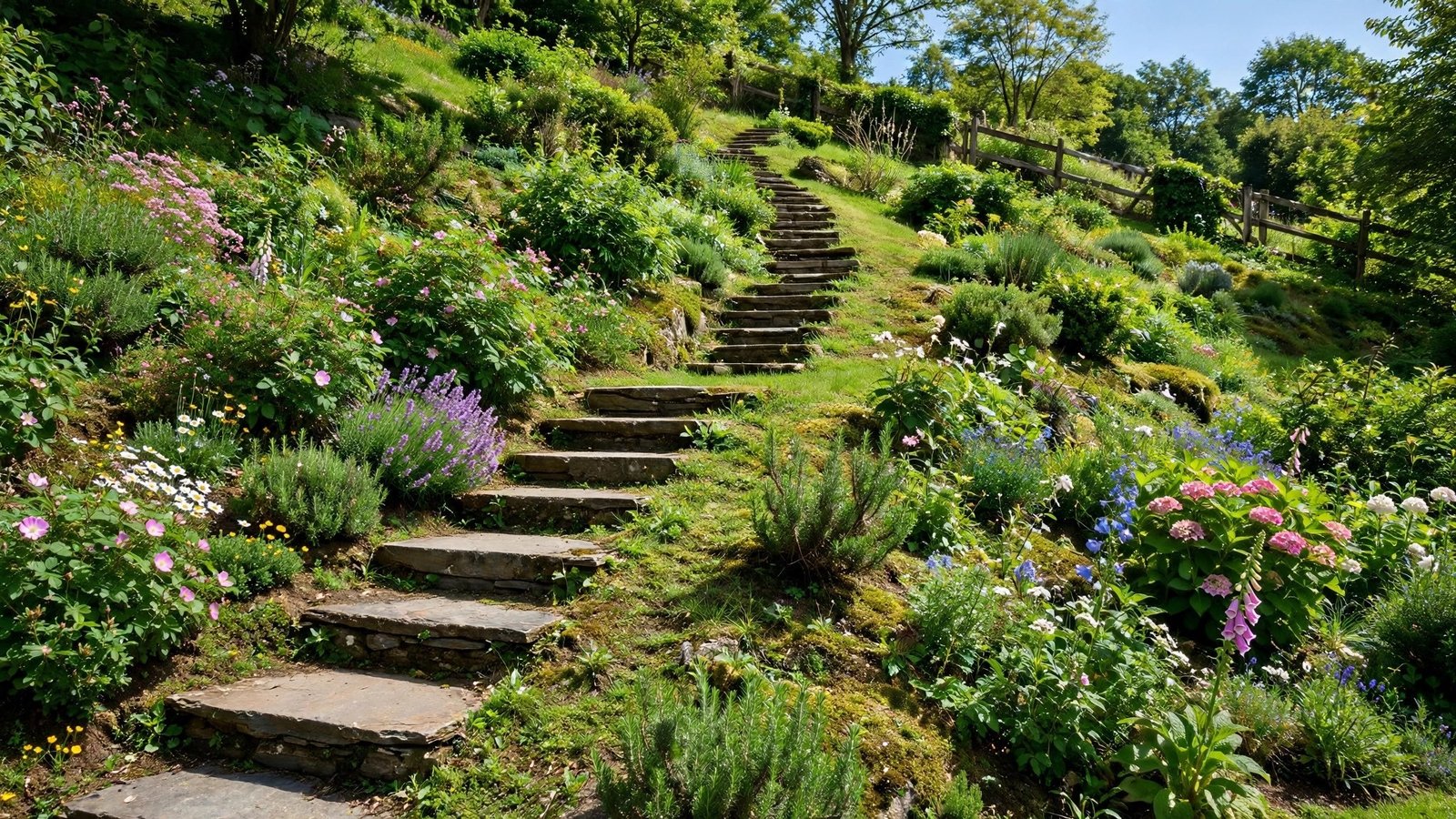
Large natural stone slabs create steps that look like they have always belonged on your hill. Each slab sits on a compacted base for stability that lasts for decades. The irregular shapes blend beautifully with planted slopes.
Choose slabs with a flat top and a comfortable depth for safe footing. Stone steps handle heavy rain and foot traffic with ease. They are an investment that only looks better with age. For natural garden styling, see our European garden antique accents.
2. Wood-Framed Flagstone Steps
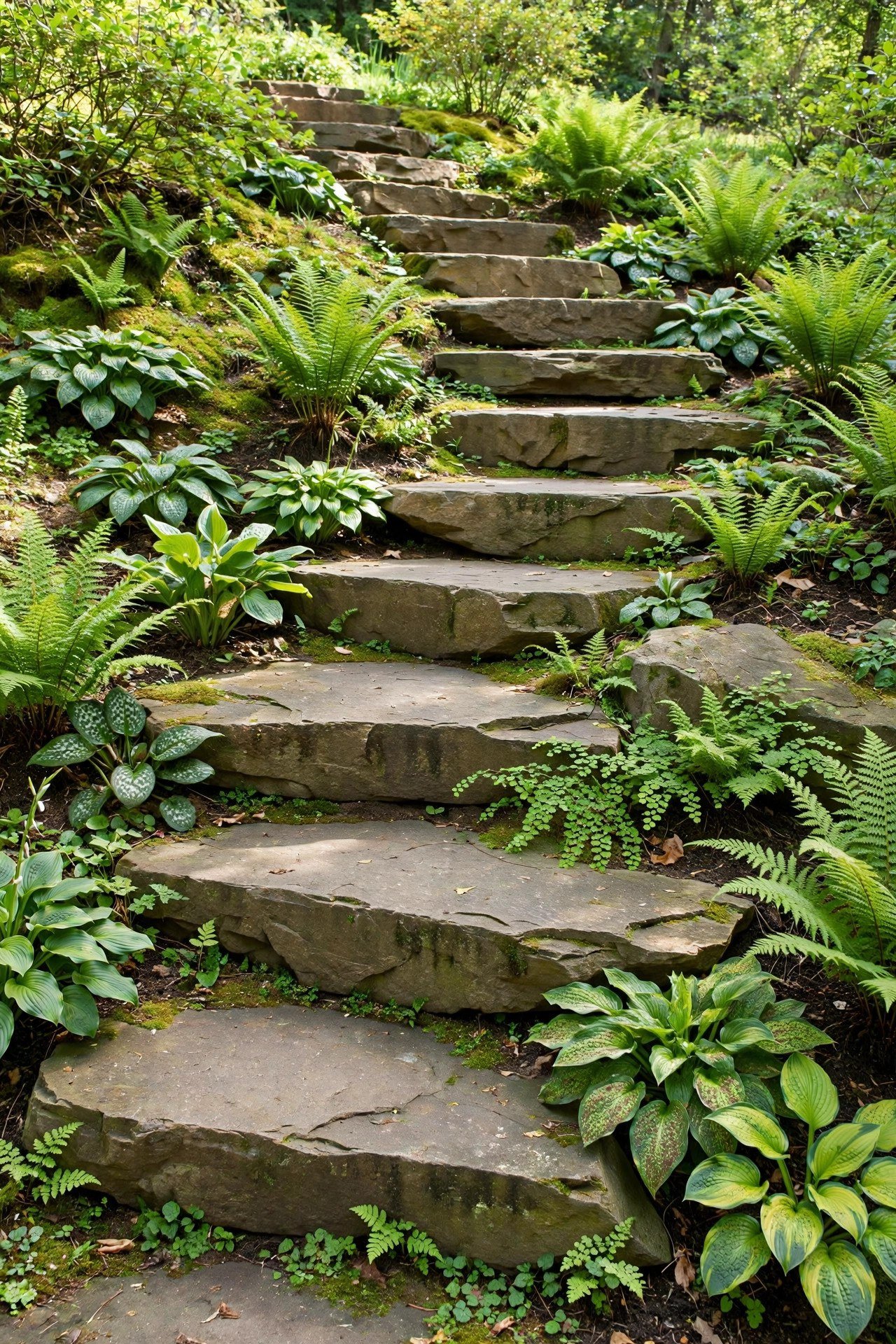
Wood framing with flagstone treads is a perfect DIY project for sloped yards. The timber boxes hold each step in place while the stone gives you solid footing. Gravel joints between the stones add a rustic, natural look.
This build is affordable and uses simple tools most homeowners already own. The mix of wood and stone suits cottage and farmhouse gardens. You can complete a short flight in a single weekend.
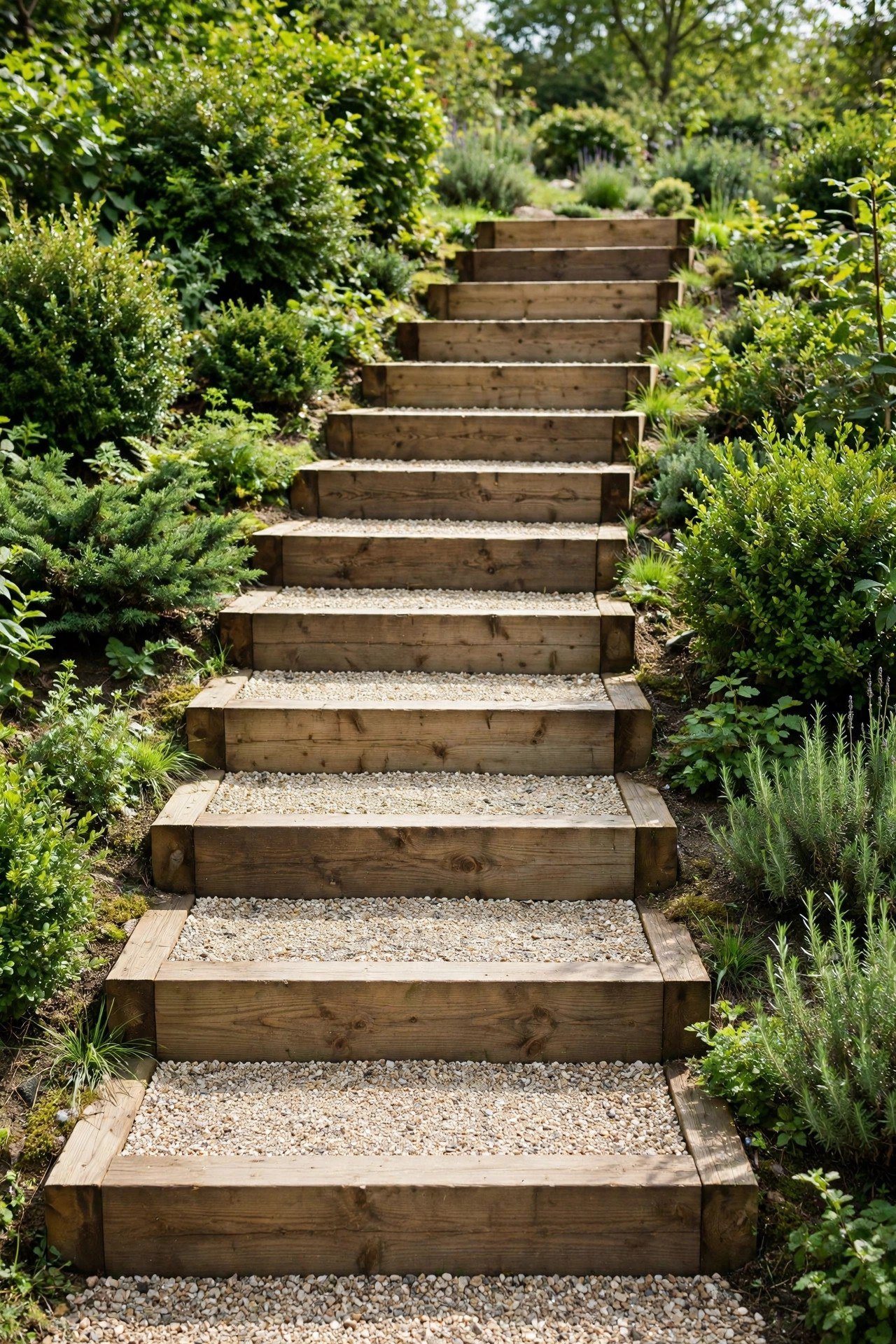
3. Timber and Gravel Steps
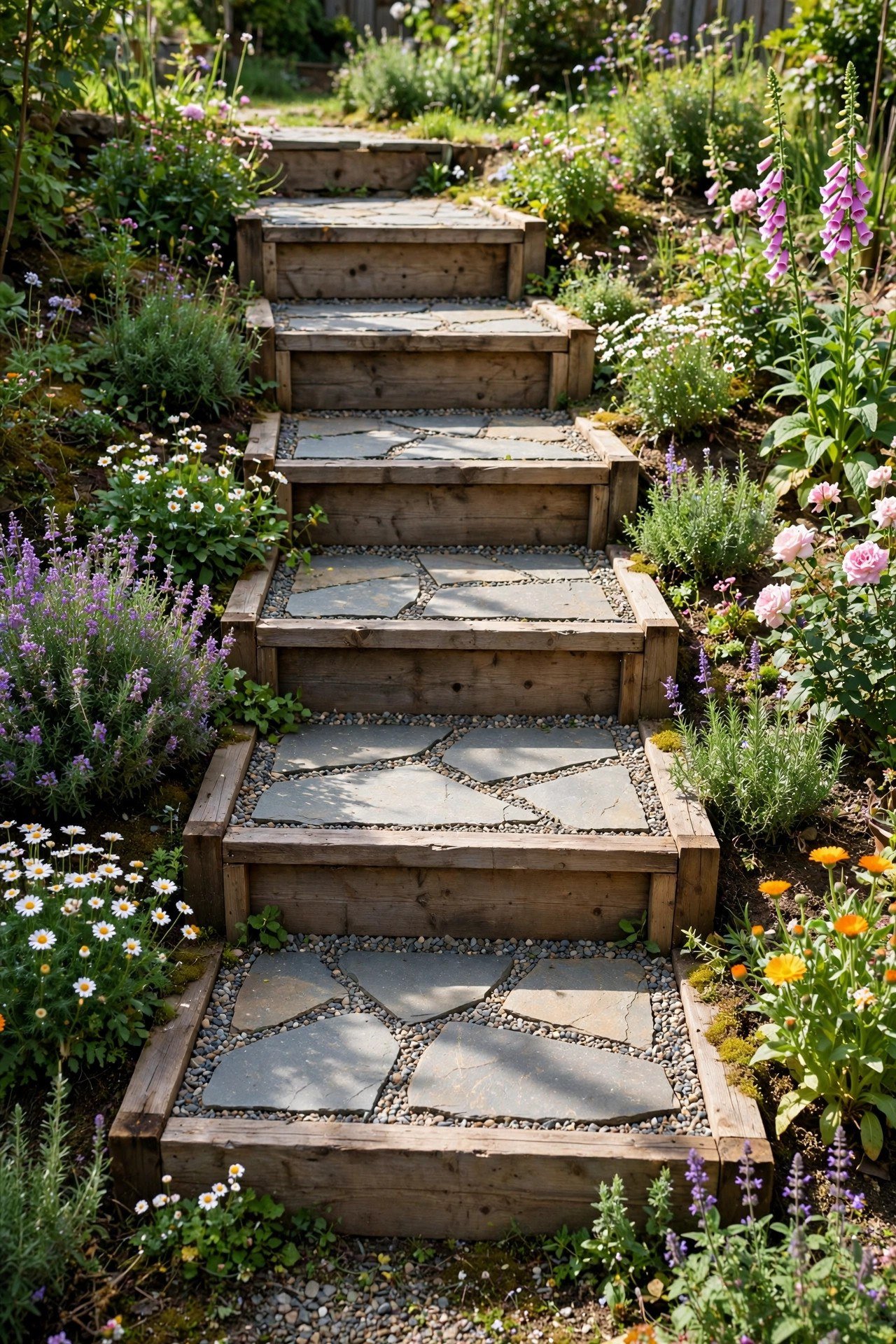
Timber risers filled with gravel make sturdy steps at a friendly price. The wood frames each step while the gravel provides excellent drainage. This combination works well on moderate slopes.
Use pressure-treated or naturally rot-resistant timber for longer life. The gravel surface gives good grip even when wet. It is a practical choice that looks warm and natural.
4. Railroad Tie Steps
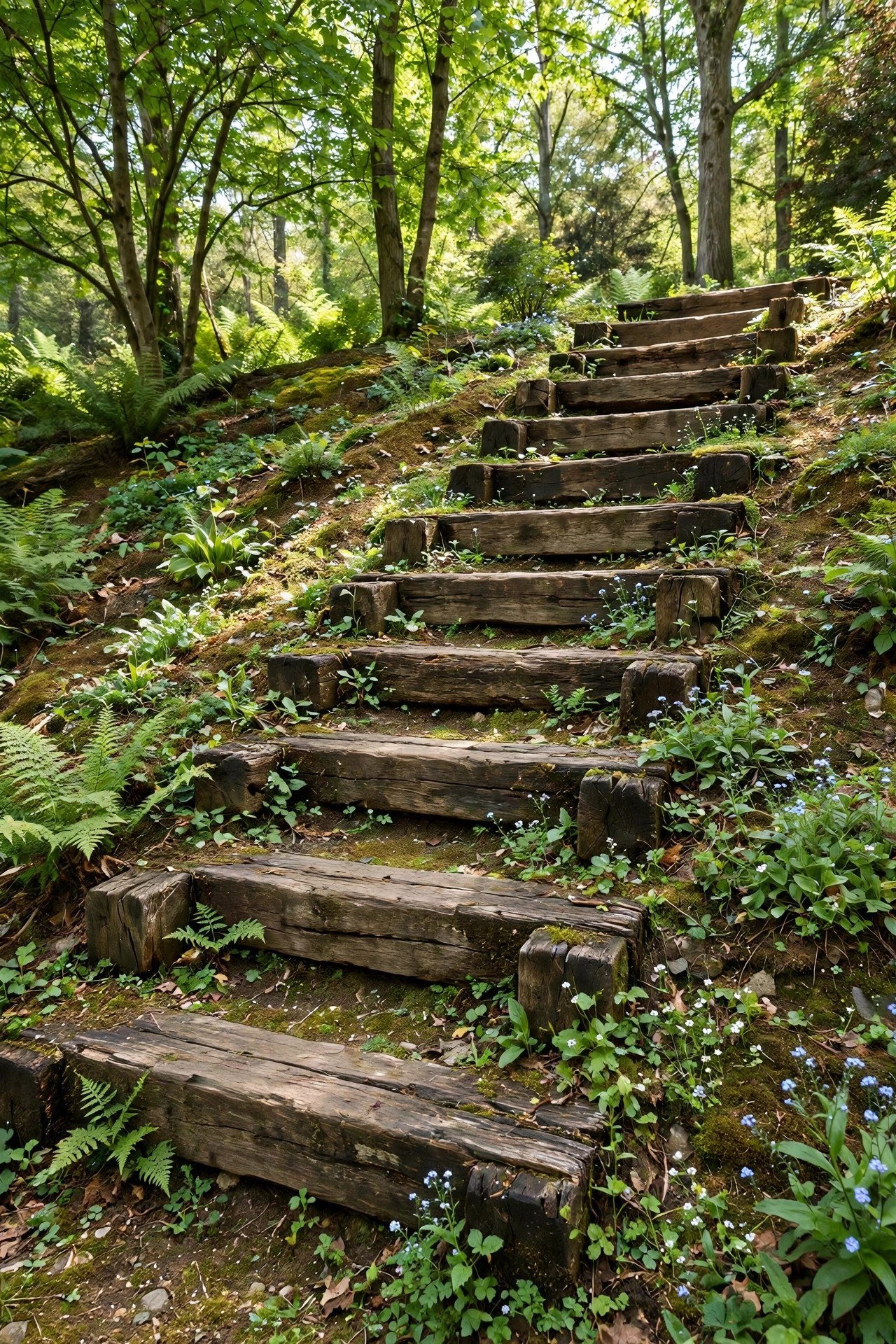
Railroad ties create bold, rustic steps with real character. Their chunky size makes each step feel solid and secure underfoot. This style suits woodland gardens and country yards perfectly.
Stack the ties to match your slope and backfill behind each one. The weathered wood gains a lovely patina over time. For a softer look, plant low ground cover along the edges.
5. Hillside Block Steps With Path Lighting
Stacked concrete blocks form a strong staircase for steep slopes. The uniform blocks give you precise, even steps that feel very safe. Adding path lights along the stairs makes evening climbs easy and beautiful.
Soften the structured look with plants spilling over the edges. This design prioritizes durability and safety above all. It is ideal for hills you use every day. For more outdoor lighting inspiration, browse our romantic porch decor ideas.

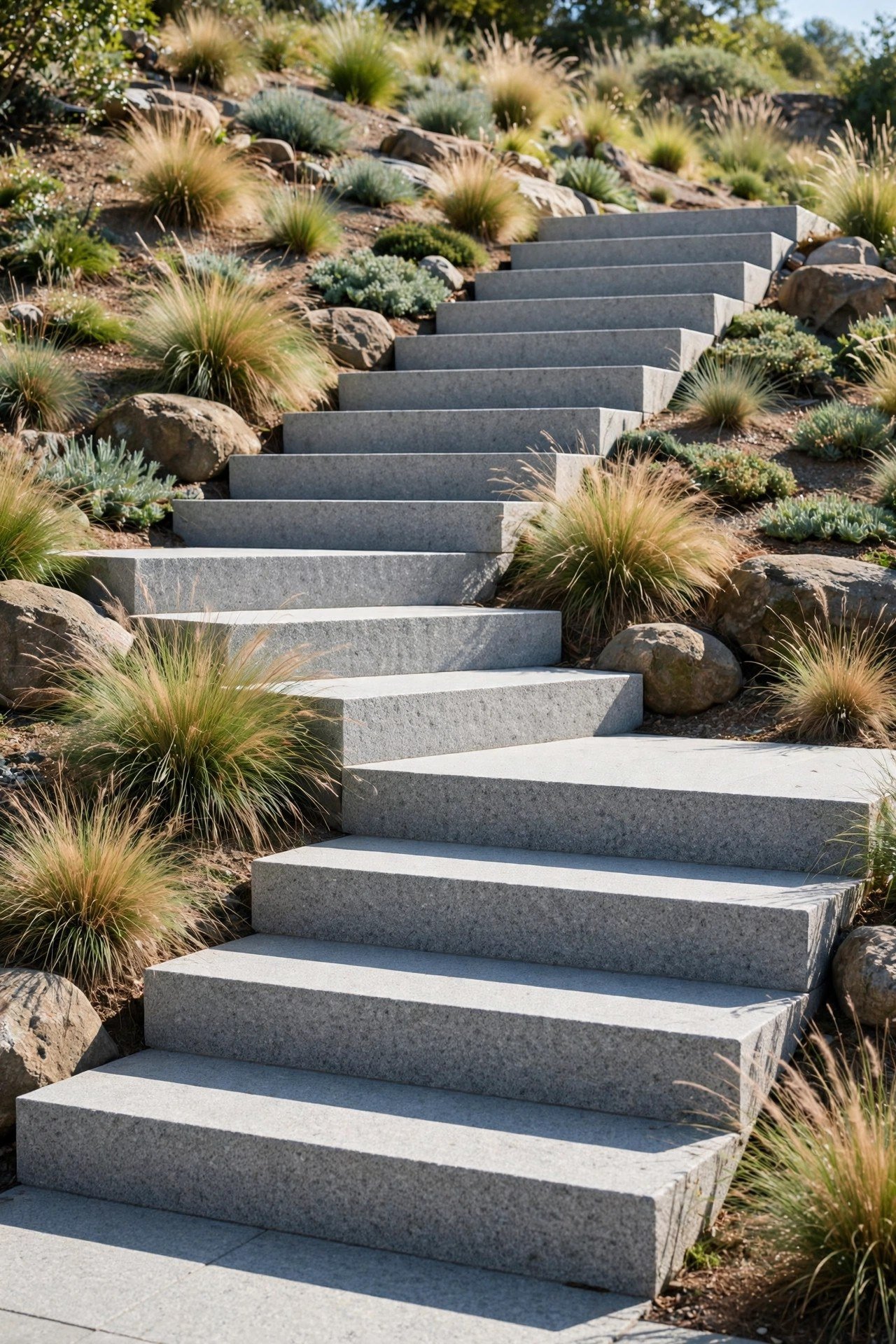
6. Modern Granite Slab Steps
Large granite treads give your slope a bold, contemporary look. The clean stone pairs beautifully with ornamental grasses and architectural plants. This is a high-end choice with incredible longevity.
Granite handles freeze, rain, and sun without flinching. Keep the design simple to let the stone speak for itself. Modern landscapes shine with this strong, minimal staircase.
7. Buried Boulder Steps
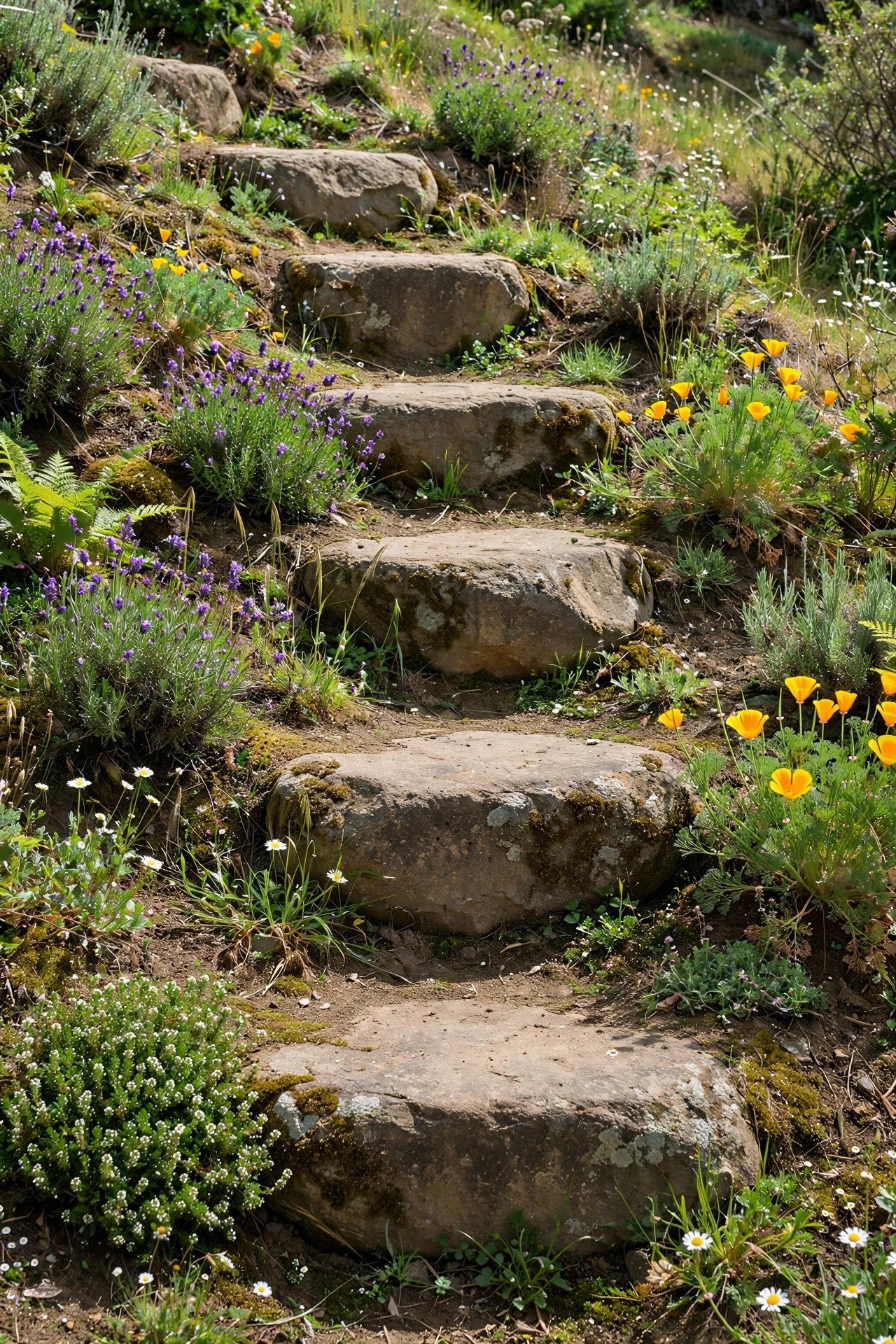
Partially buried boulders make steps that look completely natural. With the flattest side facing up, each boulder becomes a secure tread. They appear as if the hill formed them on its own.
This approach works beautifully in coastal and naturalistic gardens. Choose boulders in local stone for the most authentic feel. The result is rugged, timeless, and full of character.
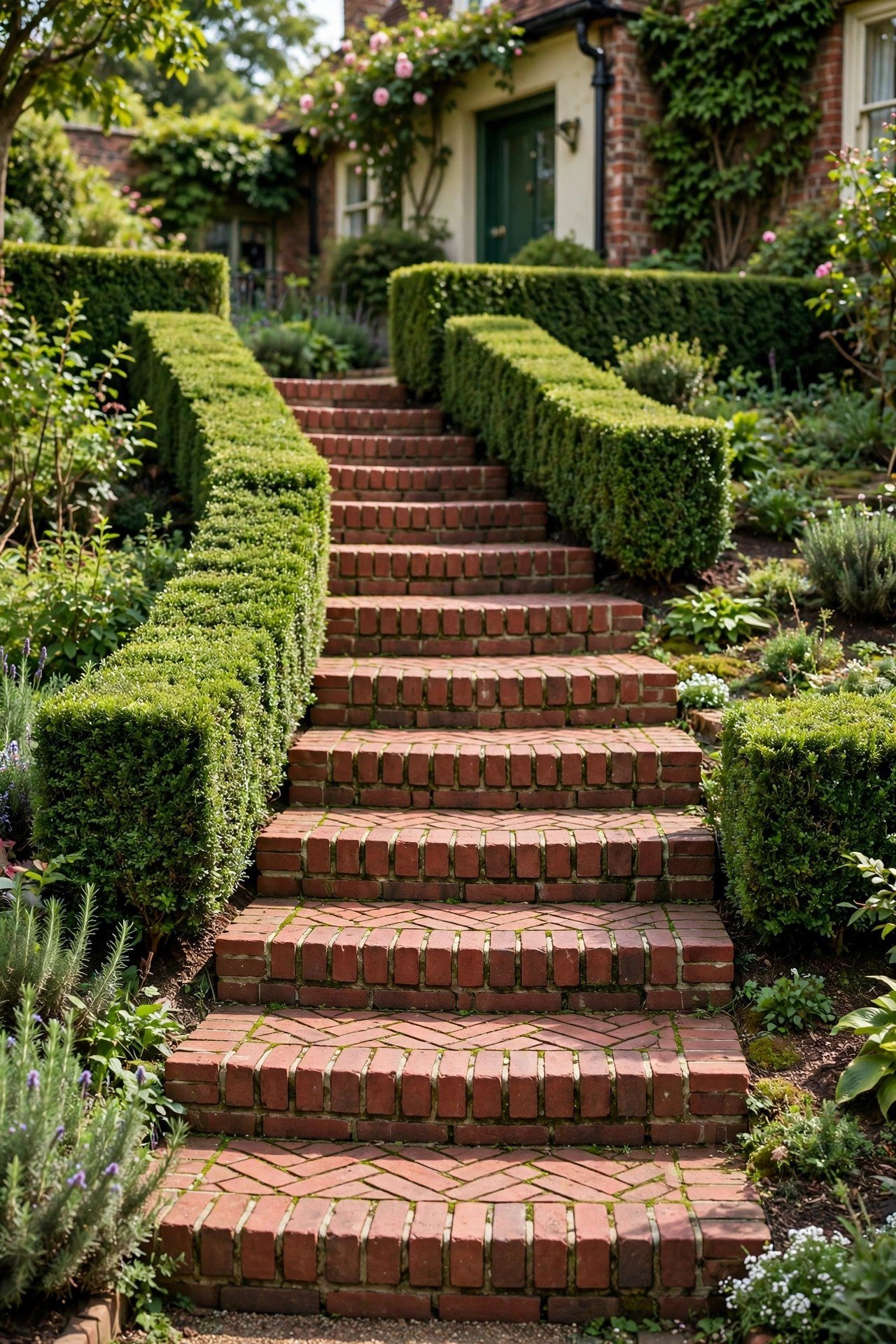
8. Classic Brick Steps
Brick steps bring traditional charm to sloped gardens. The warm color and familiar pattern suit formal landscapes and classic homes. Laid properly, brick steps are sturdy and long-lasting.
Use a herringbone or running bond pattern for visual interest. Good drainage beneath prevents shifting and frost damage. Brick stairs age gracefully and always look welcoming.
9. Stone Steps With Flower Beds on Both Sides
Flanking your steps with flower beds turns a simple staircase into a garden showpiece. Choose slope-friendly plants that need little fuss, like lavender, sedums, and ornamental grasses. The blooms soften every hard edge.
Edge the beds with small stones to keep soil from washing onto the steps. This design delights in every season as different plants take their turn. Your climb becomes a walk through flowers.

10. Curved Steps to a Hidden Garden
Instead of climbing straight up, curve your steps toward a hidden spot at the top. A winding path with well-placed shrubs creates delightful surprise. The upper area can hold a bench, a hammock, or a small patio.
Curved steps feel more natural and are gentler to climb than steep straight flights. This design turns your slope into an adventure. Guests will love discovering what waits at the top.

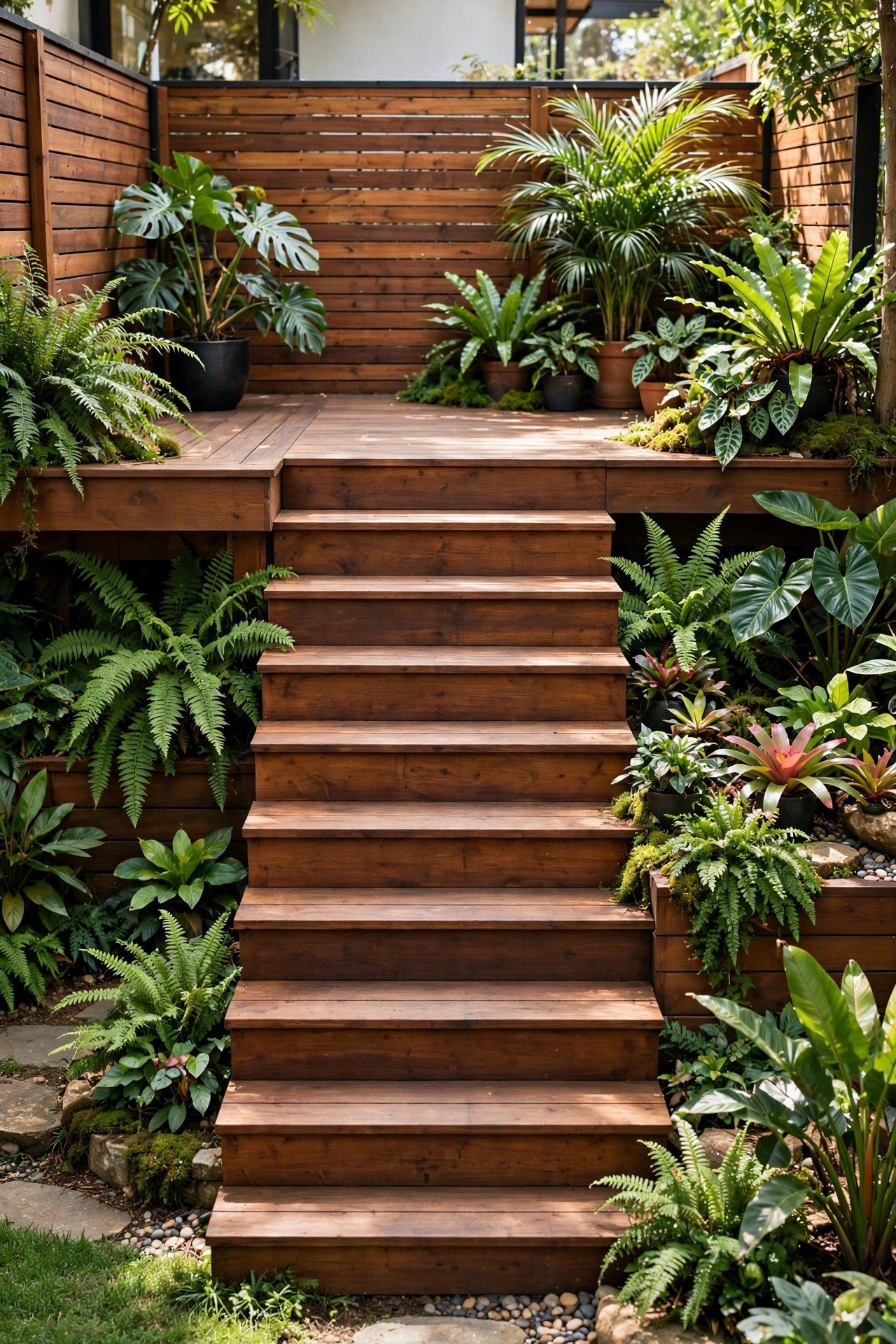
11. Wooden Deck-Style Steps
Deck-style wooden steps create a smooth transition between different levels of your yard. The rich wood tones blend with surrounding greenery for a calm, natural feel. This style suits modern and woodland landscapes alike.
Build them wide and shallow for a relaxed, easy climb. Stain the wood to match your deck or fence. These steps feel like a natural extension of your outdoor living space.
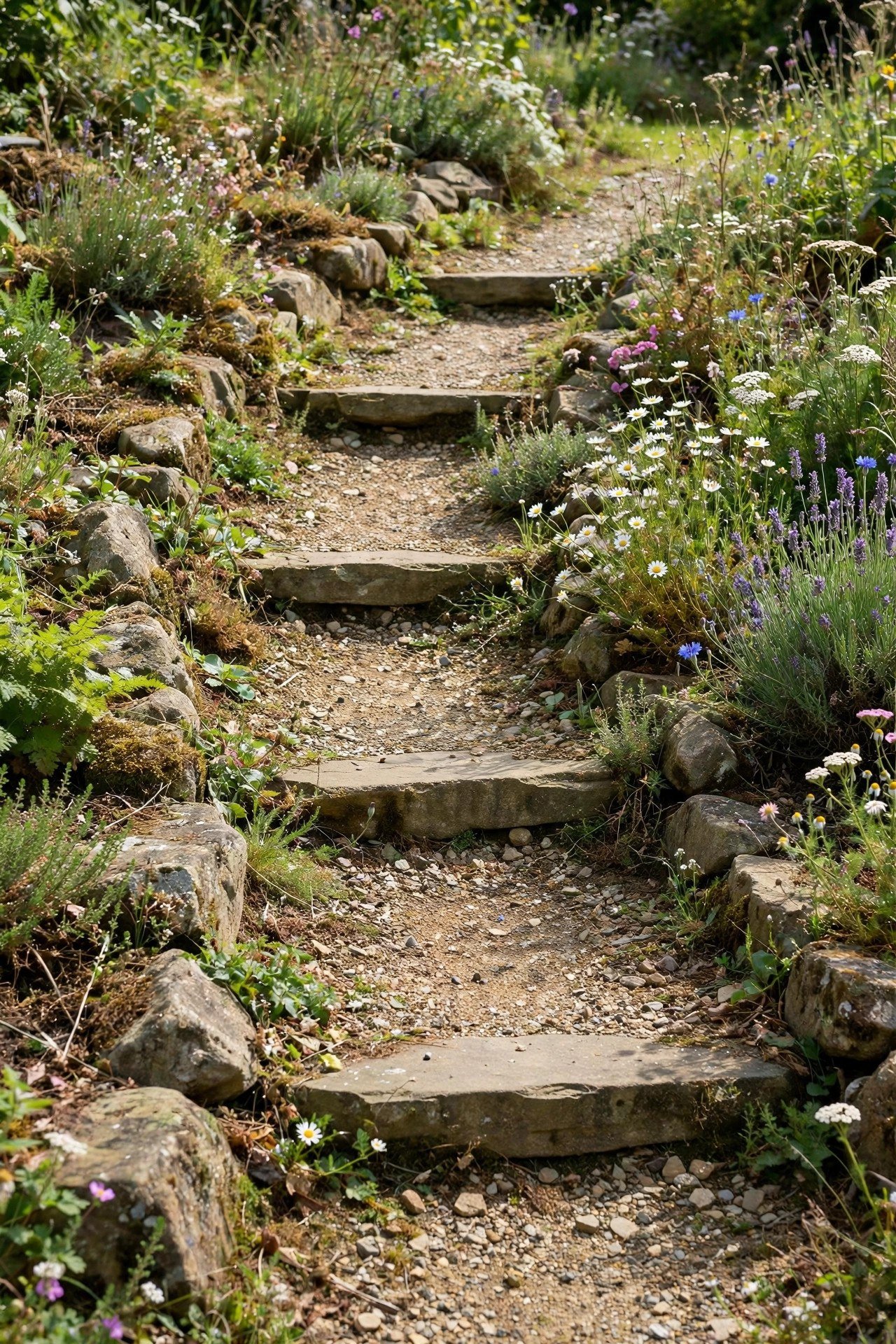
12. Natural Gravel and Stone Step Path
A simple path of gravel with stone treads is one of the most budget-friendly options. The gravel drains well and the stones give you firm footing. This casual style suits informal, natural gardens.
Edge the path with larger rocks to keep the gravel in place. Add small stone tiles between steps for extra charm. It is proof that simple materials can look wonderful. For more budget garden ideas, see our rental-friendly decor hacks.
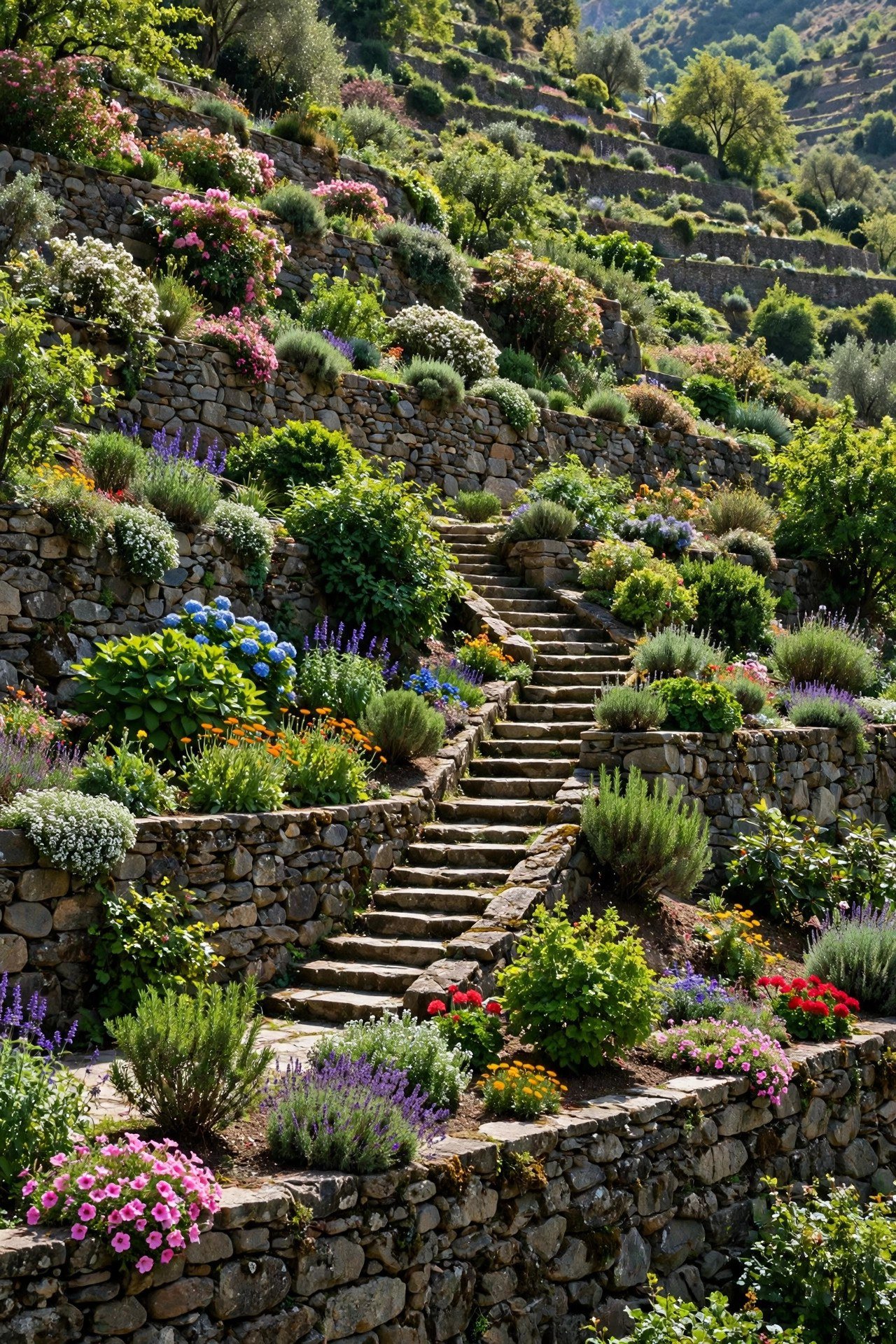
13. Terraced Steps With Retaining Walls
Pairing steps with terraced retaining walls tames even steep slopes. Each terrace becomes a level planting bed while the steps connect them all. This is the most transformative option for difficult hills.
Build the walls from stone, brick, or timber to match your style. The terraces give you usable garden space where none existed. A steep problem slope becomes your favorite part of the yard.
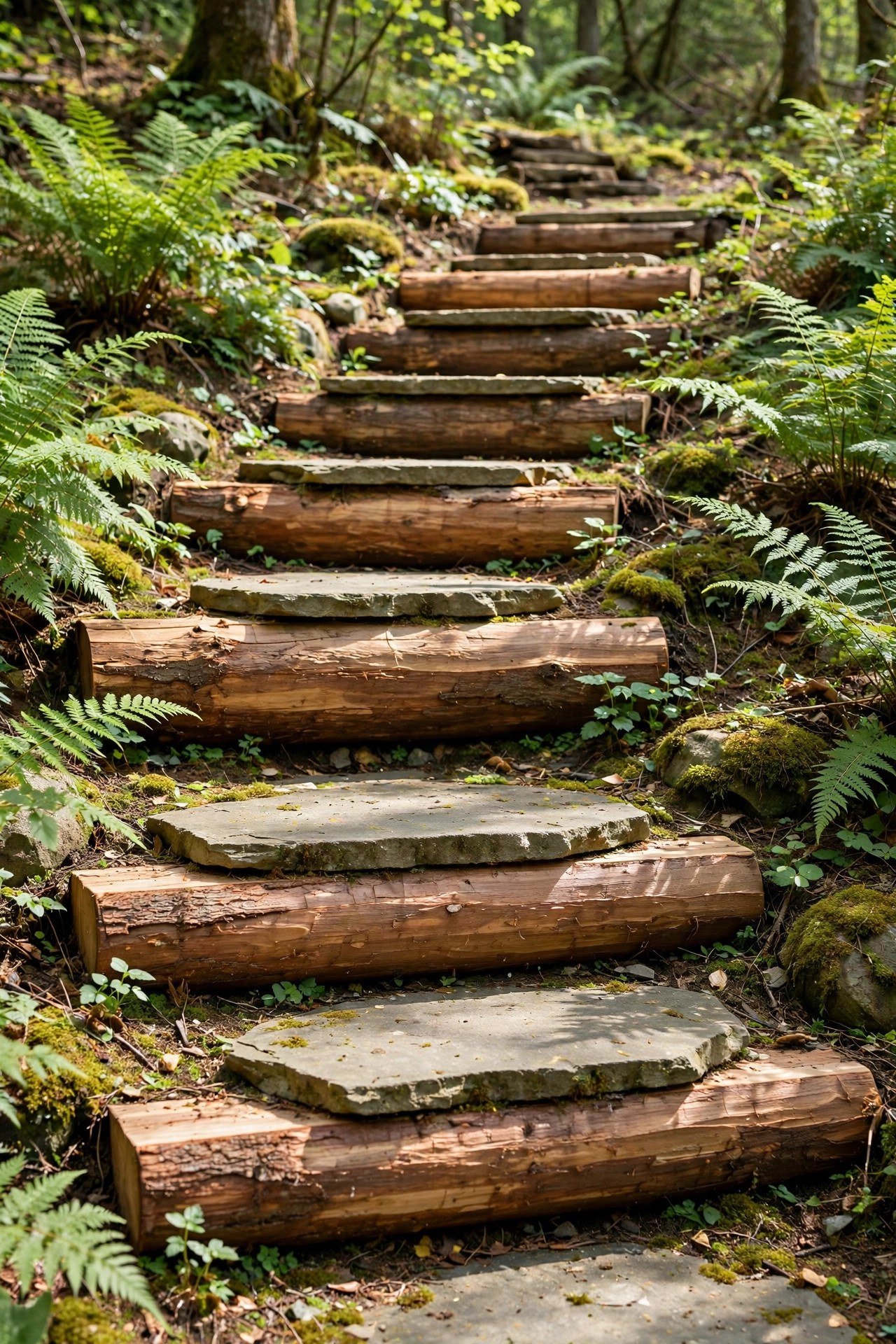
14. Log Riser Steps
Rot-resistant logs, like locust or cedar, make simple and charming step risers. Cut the logs into the slope and backfill with soil or gravel behind each one. A flat stepping stone on each tread gives you solid footing.
This is one of the easiest and most affordable ways to build hillside steps. The natural logs blend into wooded settings perfectly. Simple, sturdy, and full of rustic appeal.
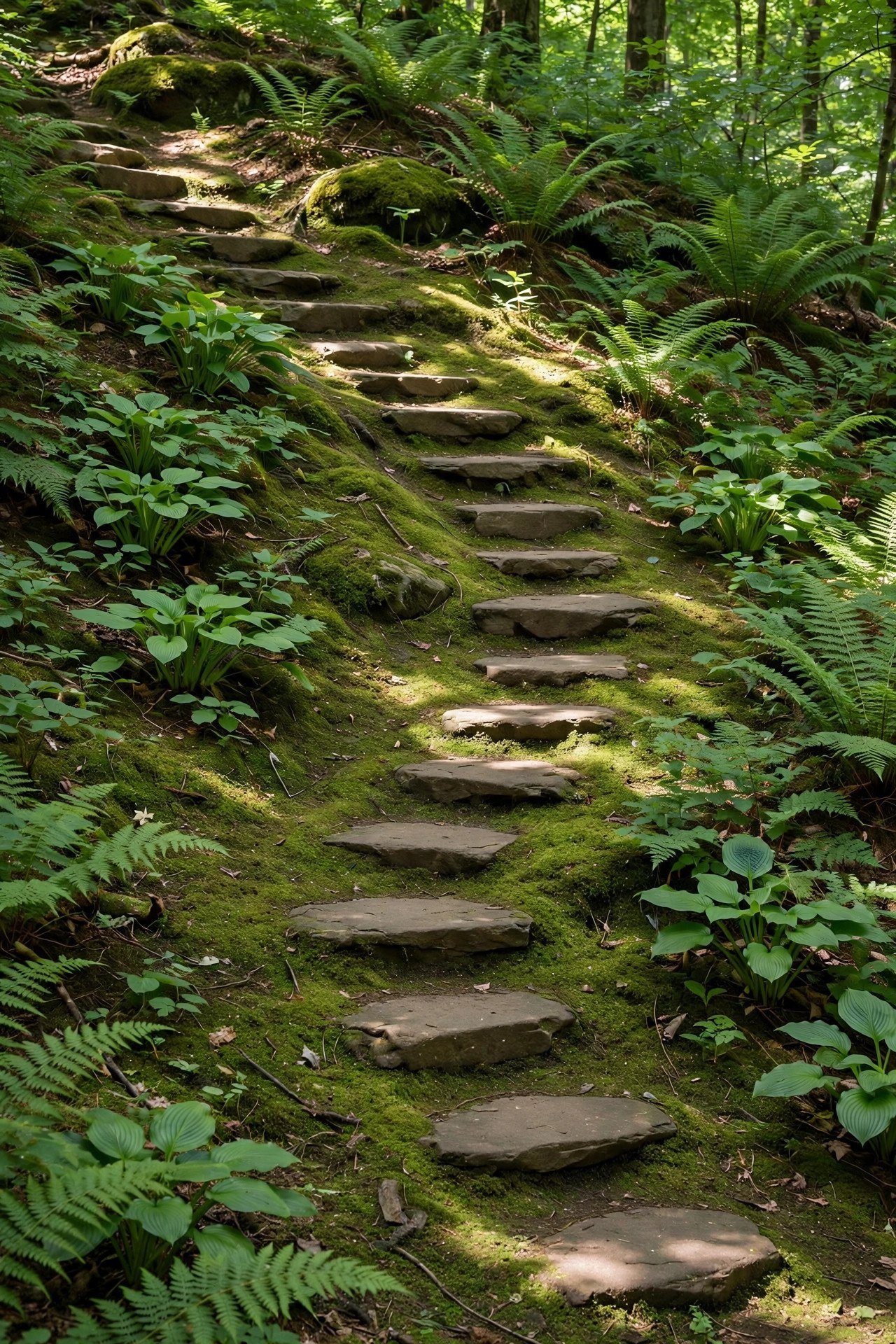
15. Stepping Stone Steps With Moss
Flat stepping stones set directly into the slope create a soft, organic staircase. Moss and low ground cover growing between the stones add age and softness. This look suits shade gardens and woodland paths.
Set each stone firmly with a slight tilt for drainage. The moss keeps the steps from feeling harsh or new. It is a gentle, storybook way to climb your hill.
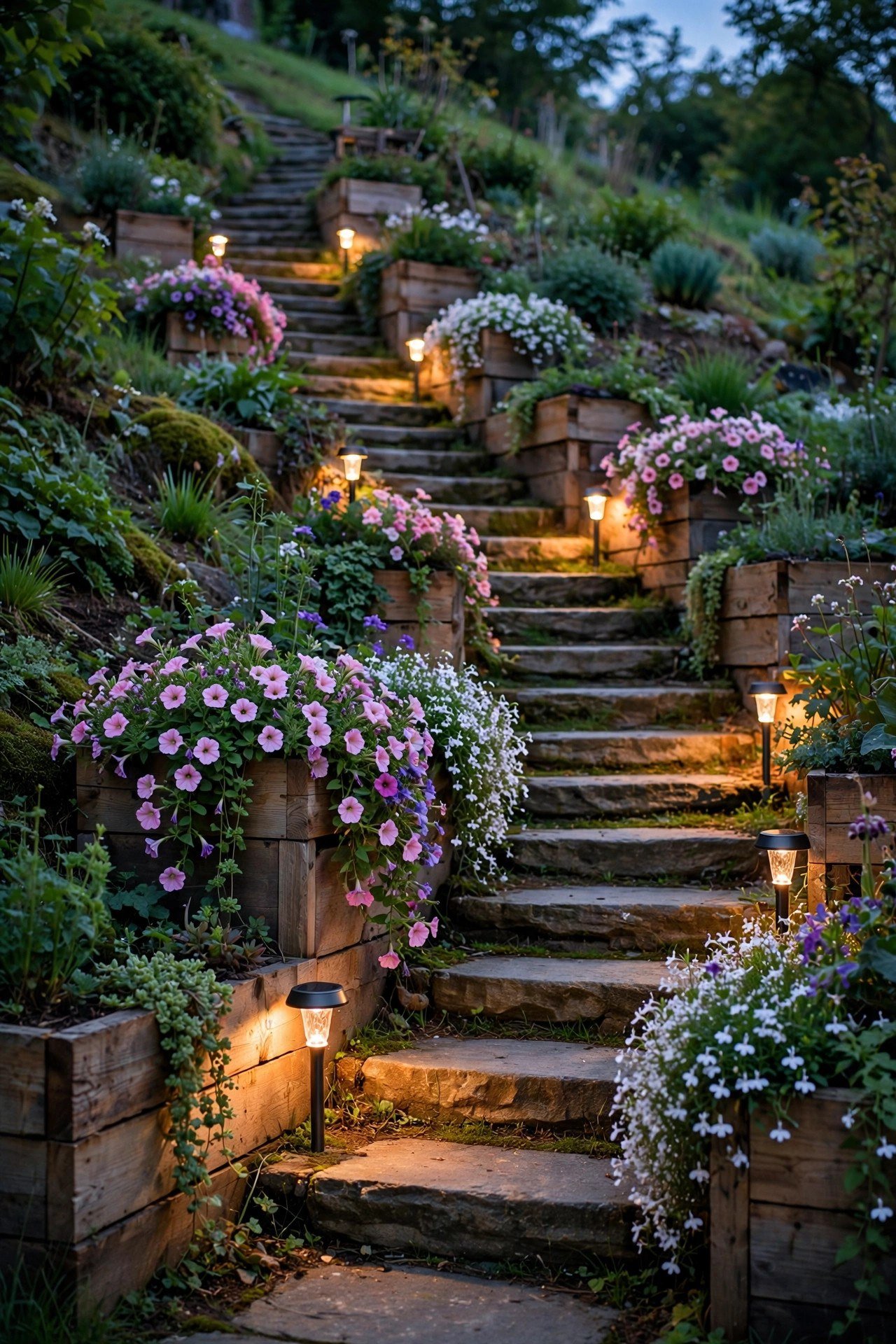
16. Steps Lined With Planters and Lights
Line your steps with wooden planter boxes and solar lights for the ultimate finishing touch. The planters double as low railings while adding color and life. Solar lights make the stairs safe and magical after dark.
Fill the boxes with trailing plants or seasonal flowers for year-round interest. This combination of function and beauty elevates any staircase. Your slope becomes a feature you show off proudly. For evening garden charm, explore our romantic garden styling ideas.
Conclusion
Garden steps do more than help you climb a hill. They make your slope usable, safe, and beautiful, turning wasted space into a garden you love. The right materials and design will serve you for many years.
Start by walking your slope and noting where you naturally want to go. Then choose the step style that fits your budget and your landscape. Your hill is about to become your favorite place in the yard.
Frequently Asked Questions About Garden Steps for Sloped Backyards
What is the best material for garden steps on a slope?
Natural stone and concrete last the longest and need the least maintenance. Wood and railroad ties are more affordable and look warm and rustic but will eventually need replacement. Choose based on your budget, style, and how steep your slope is.
How wide should garden steps be?
Aim for at least 3 feet wide so two people can pass comfortably and you can carry tools or plants. Wider steps feel grander and safer. On very steep slopes, wider treads also make the climb feel less intimidating.
What are the ideal step dimensions for a hillside?
A comfortable outdoor step has about a 6-inch rise and a 15-inch tread depth. Shallower rises and deeper treads feel more relaxed on slopes. Keep your dimensions consistent through the whole flight for safety.
How do you prevent garden steps from shifting?
Set each step on a compacted gravel base for drainage and stability. On steep slopes, anchor timbers or use mortar for stone. Good drainage behind and beneath the steps prevents water from undermining them.
Do garden steps need a handrail?
A handrail is a smart addition on steep slopes, for elderly visitors, and anywhere steps may get slippery. Even a simple wooden rail or a line of sturdy planters adds security. Check local codes if your steps are very tall.

Hi, I’m Emily! I turn messy corners into cozy, organized spots. DreamNestDecor is where I share simple, practical home ideas — decor, organization, and small-space solutions that work in real life, not just in photos. Every idea here is carefully researched before it’s shared.