Maya stared at the spare corner of her bedroom and wished for a real workout space. Her apartment was small, and every inch already had a job. She did not want to give up her fitness goals just because her floor plan was tight.
Instead of waiting for a bigger home, she measured her corner and started with a plan. A foldable mat here, a wall rack there, and soon the corner worked as hard as she did. Her workouts felt better because the space was built around real dimensions and real habits.
You can do the same with whatever space you have. These 28 small home gym layout ideas give you exact clearances, equipment footprints, and placement tricks to fit strength, cardio, and stretching into limited floor space without crowding your home.
1. A Tucked-In Corner Training Spot
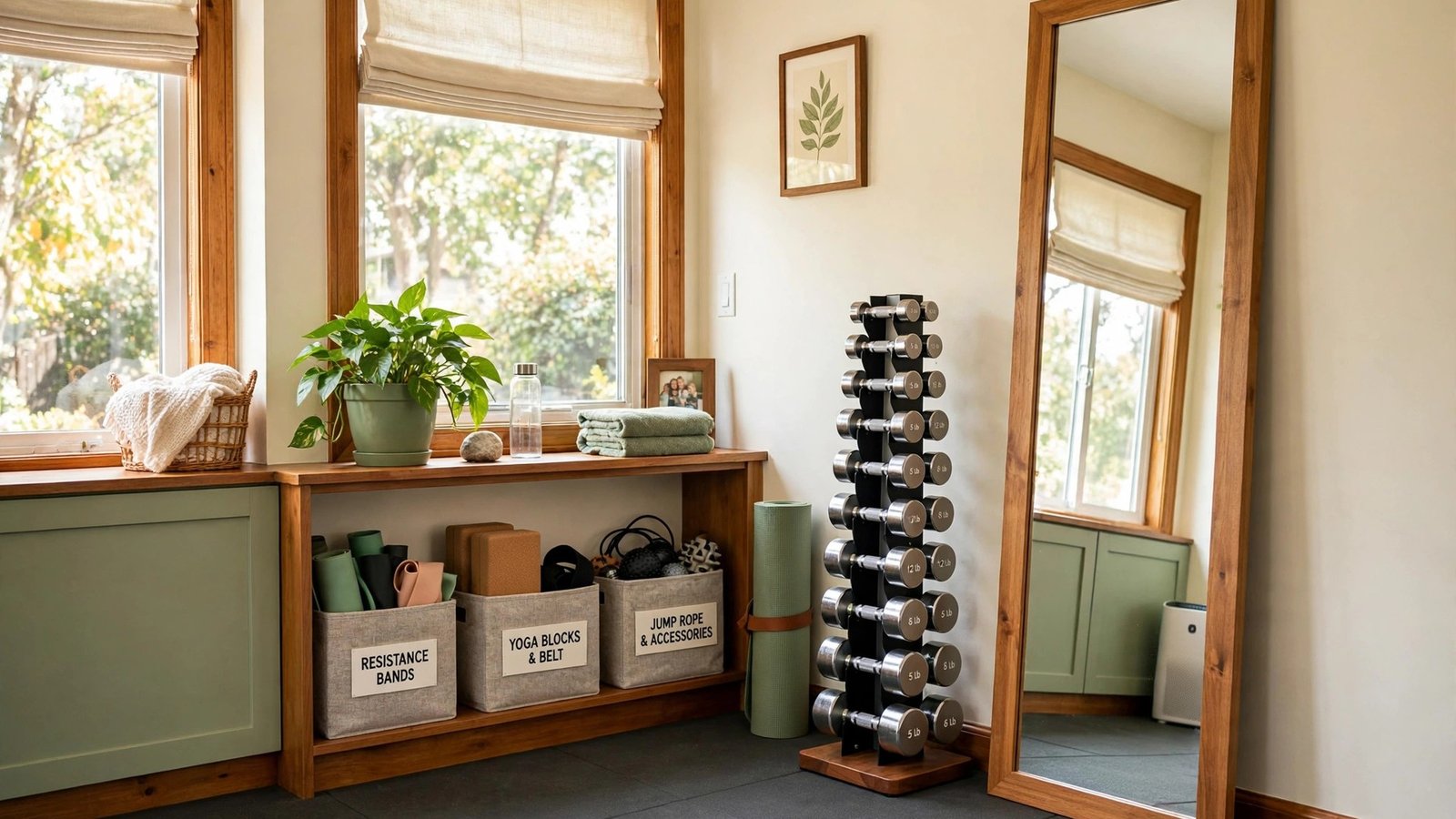
Claim a corner of at least 6 by 6 feet so you have room for lunges and floor work. Lay interlocking rubber tiles in 24 by 24 inch squares to protect the floor and cut noise for neighbors below. Place a vertical dumbbell rack with a 2 by 2 foot footprint tight against one wall, and leave the center fully open for movement.
Mount a 3 by 5 foot mirror on the adjoining wall so you can check your form from 6 feet back. Keep a 3 foot clear radius around your main training spot, and store only daily-use gear here. When every item has a measured home, the corner feels like a studio instead of a storage pile.

2. Garage Corner Fitness Setup
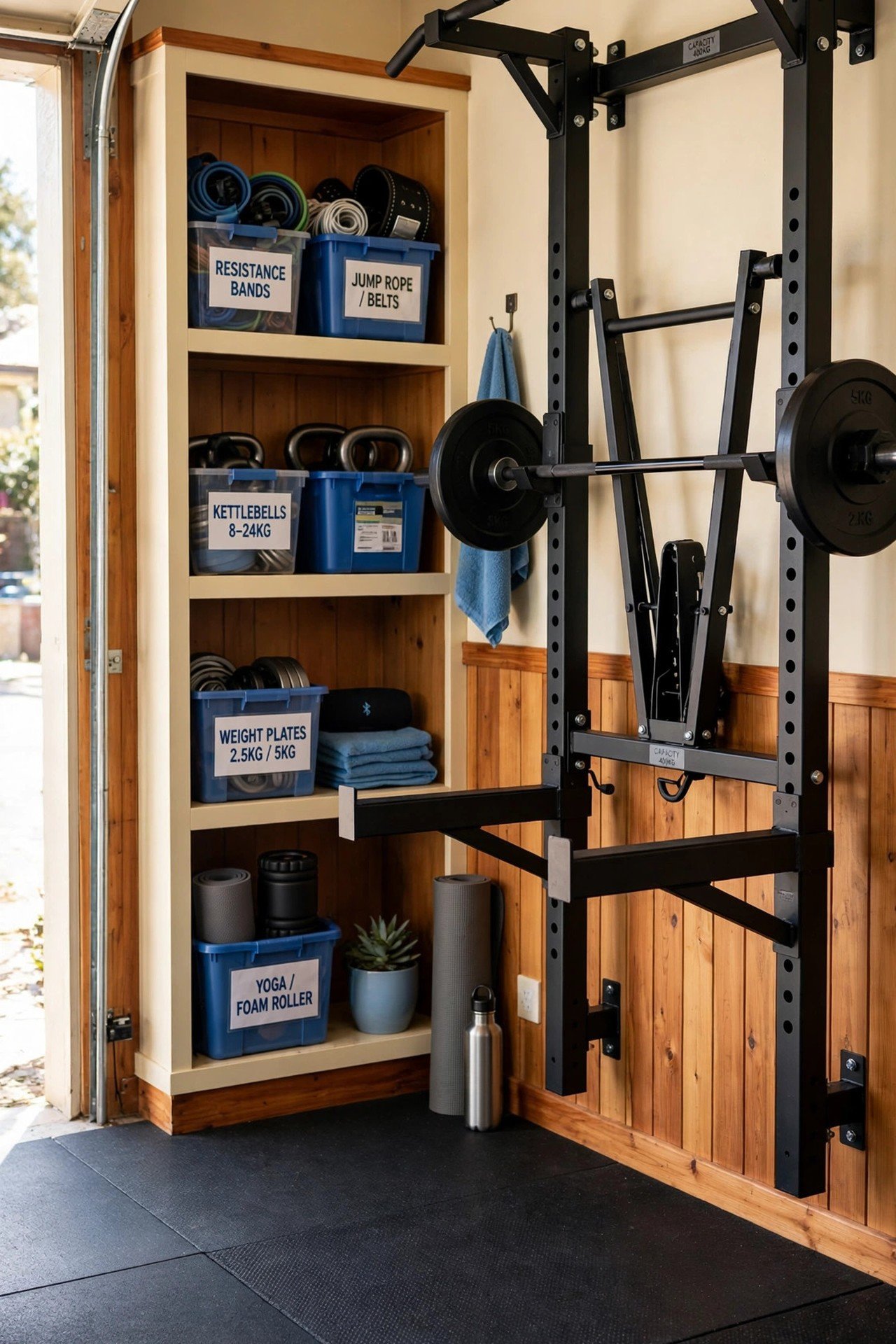
Dedicate one 10 by 10 foot wall section and mark your car parking zone with floor tape so the two never fight. Install a wall-mounted folding squat rack that collapses to 4 inches deep when the car comes home. Cover the concrete with 4 by 6 foot rubber stall mats, which are cheaper and tougher than branded gym flooring.
Hang two 5000K LED shop lights to kill the dingy garage mood and make the space feel safe at night. Bolt a tablet holder at eye level for following workout videos. With the rack folded and mats stacked, you can switch from gym to garage in under five minutes.
3. Closet Turned Compact Gym
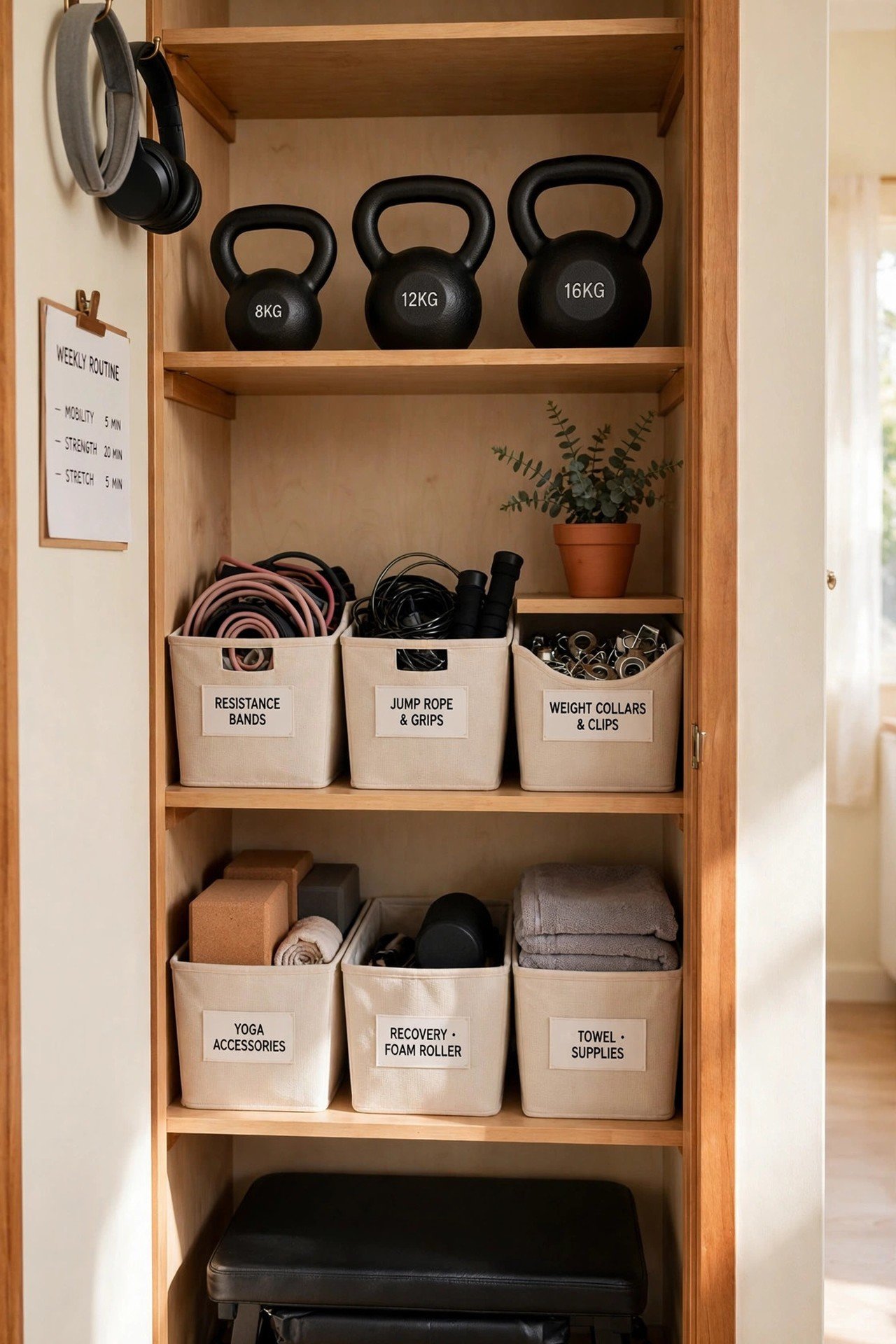
A standard reach-in closet of 2 feet deep by 6 feet wide can hold a surprising amount of gear. Remove the hanging rod and install shelves at 12 inch intervals for kettlebells, medicine balls, and resistance bands. A 36 inch flat bench slides inside for step-ups and seated presses if your closet is at least 22 inches deep.
Keep heavier items on the floor level so nothing topples when you reach in. When the workout ends, close the doors and the bedroom looks untouched. Measure your door swing first so the bench clears it, and add a battery puck light inside since closets rarely have wiring.
4. Wall-Fixed Strength Equipment
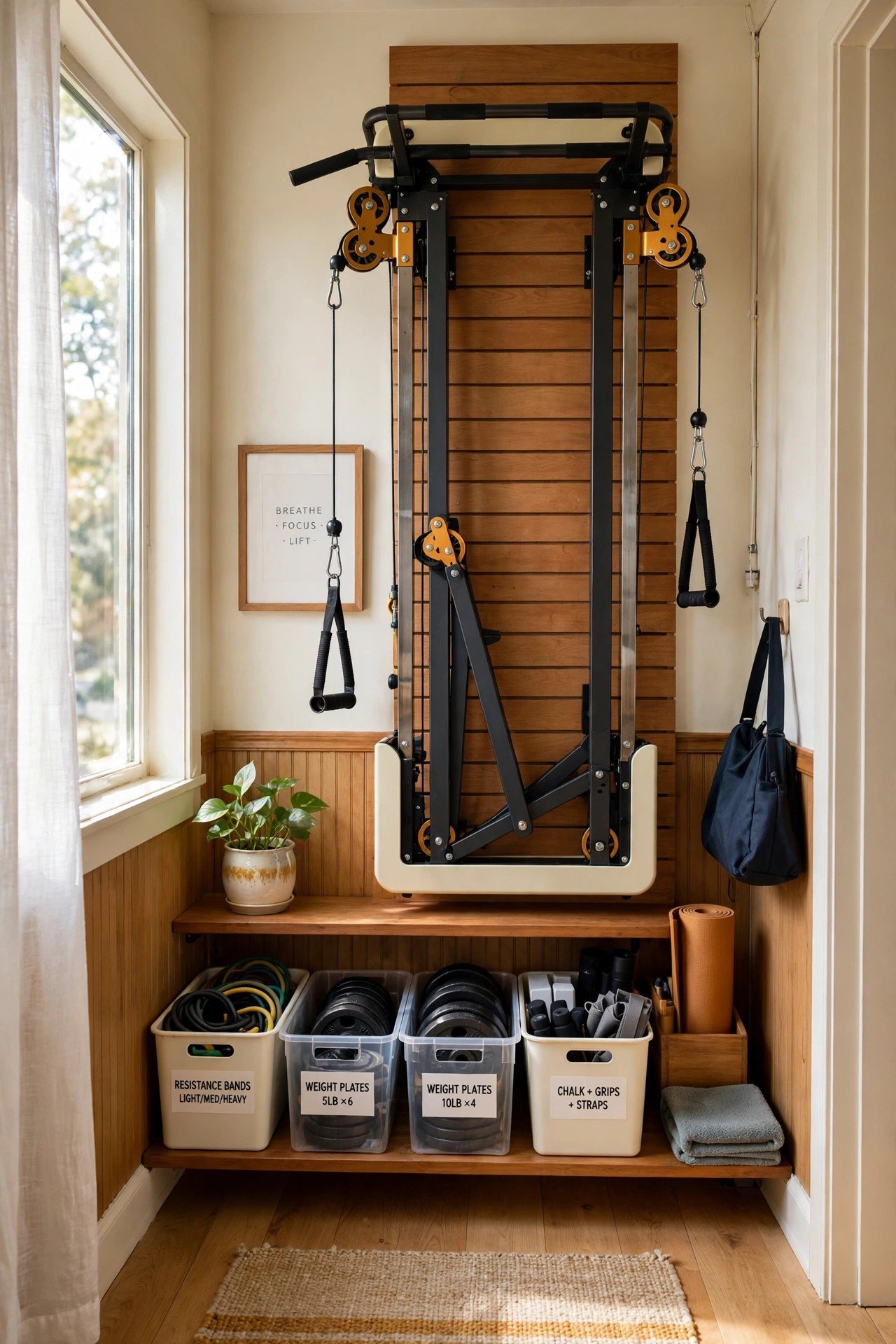
Find your wall studs, which usually sit 16 inches apart, and bolt a folding pulley system directly into them, never into drywall alone. A good unit folds to 6 inches deep and gives you chest, back, and leg work from one station. This setup shines in hallways at least 3 feet wide or in a home office corner.
Mount the main unit at chest height and add a low anchor near the floor for rows and leg work. Keep a 4 by 6 foot mat in front that you roll out only during training. Your floor stays completely free the other 23 hours of the day.
5. Full Mirror Wall for Depth
Mount three 2 by 6 foot frameless mirrors side by side with mirror adhesive and metal J-channels top and bottom for safety. Stand 6 feet back to check full-body form during squats and presses. The reflection doubles visual space, which matters most in rooms under 100 square feet.
Mirrors also bounce window light deep into the room, so pair them with a bright ceiling treatment from these ceiling design ideas for maximum glow. Wipe them weekly since sweat spray dulls the shine fast. A mirrored wall is the cheapest way to make a tiny gym feel professional.

6. Fold-Away Cardio Machine
A folding treadmill needs about 7 feet of open length during use but shrinks to 10 inches wide for storage. Measure your under-bed clearance first, since most beds offer 12 inches and that fits most folding decks. Choose a model with transport wheels so one person can roll it to a window in seconds.
Unfold it facing your TV or a window to make cardio time pass faster. After your session, fold and roll it behind a door or into a closet. You get full heart training with zero permanent footprint, which is ideal for renters.

7. Bedside Workout Nook
Mark a 4 by 6 foot zone beside your bed with a 3 by 5 foot rug that also protects the carpet. Choose equipment in calm neutrals that match your bedding so the nook blends in. A set of light dumbbells, a band, and a mat is enough for a complete morning circuit.
Mount a floating shelf at 48 inches high for your water bottle, towel, and speaker. Rolling out of bed straight into movement removes every excuse. Keep the nook reset each night so your morning starts clean.

8. Fresh-Air Balcony Fitness Corner
Check your balcony weight limit before loading it with heavy gear, and stick to bodyweight tools, bands, and light dumbbells. Lay interlocking outdoor tiles for grip and drainage. A 5-tier vertical plant stand holds yoga blocks and bands while adding greenery that survives the weather.
Store everything in a weatherproof deck box so sudden rain never ruins your gear. Morning sessions here beat indoor workouts for mood, thanks to daylight and fresh air. Even a 4 by 6 foot balcony can host a full stretch and strength routine.

9. Cozy Basement Training Zone
Basements stay cool, but check your ceiling height first. You need at least 7 feet for safe overhead presses. Paint the walls bright white and install 5000K recessed lights to erase the cave feeling. Lay rubber tiles over the concrete to define a 8 by 8 foot training square.
Run a dehumidifier to protect metal gear from rust. The concrete walls contain noise, so you can play music and drop weights without guilt. A basement zone gives you the privacy of a commercial gym at home.
10. Pegboard Gear Display Wall
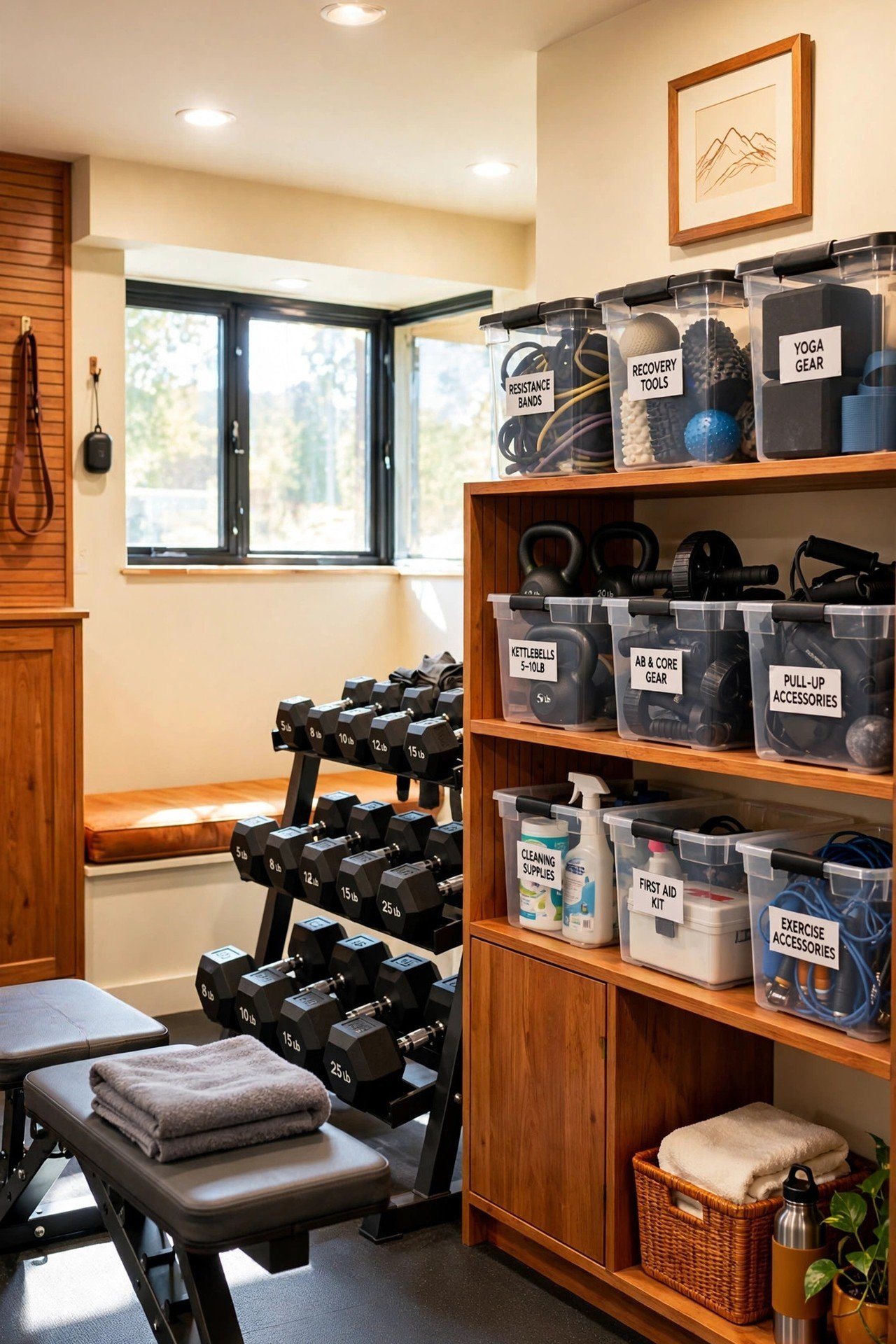
Mount a 4 by 4 foot pegboard on a French cleat so it holds firm and comes down cleanly later. Use hooks rated for at least 10 pounds for heavier items like belts and chains. Arrange gear in workout order, so warm-up tools sit left and finishers sit right.
Paint the board to match your wall color for a built-in look. Baskets clipped to the board catch small items like clips and timers. This wall keeps the floor empty and cuts your setup time to zero.

11. Calm Minimalist Yoga Corner
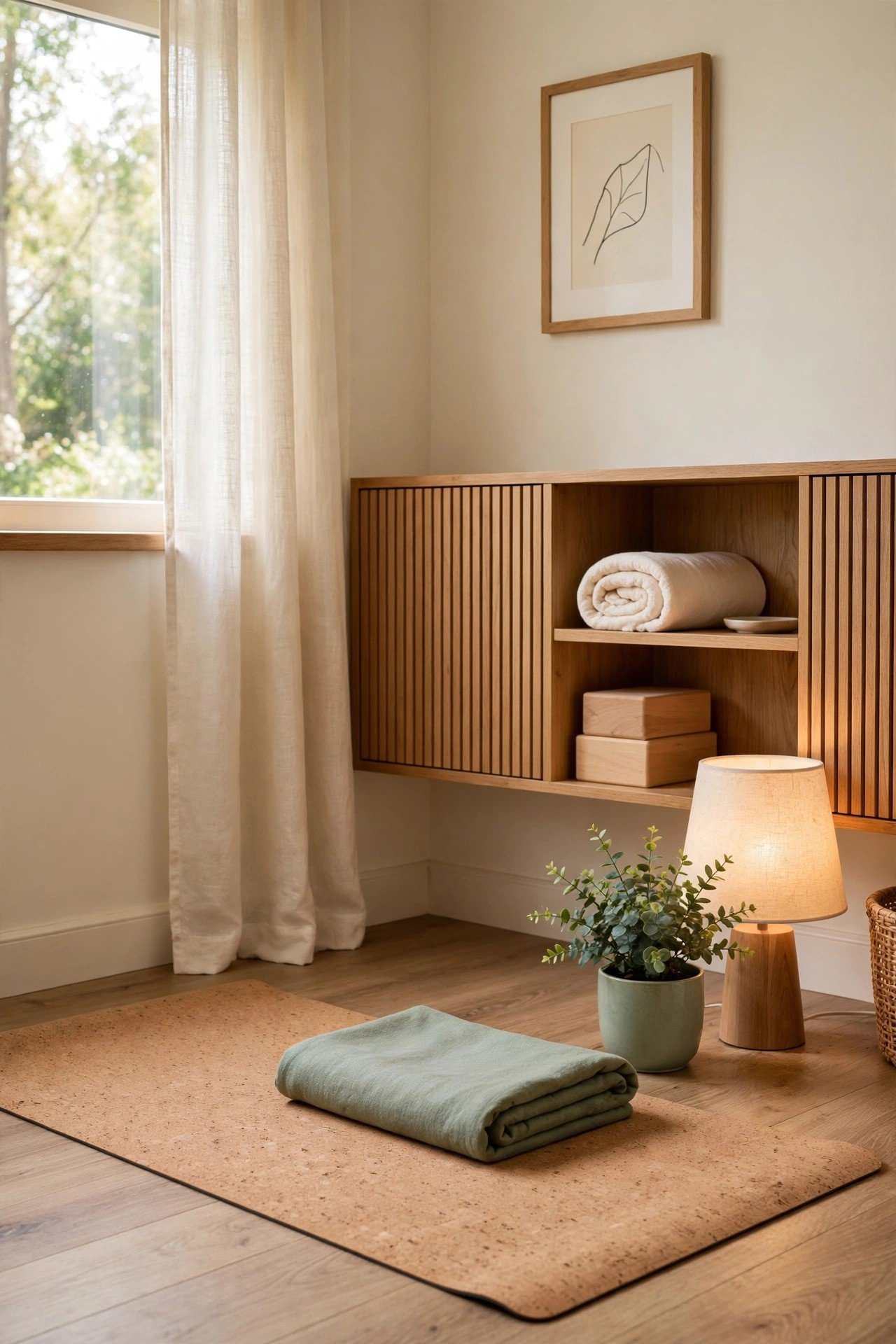
You need a clear 6 by 4 foot rectangle for a mat plus arm reach in every pose. A standard mat measures 24 by 68 inches, so mark the zone with a low-pile rug slightly larger. Keep props minimal, with two cork blocks and one strap on a small stool.
Light the corner with a dimmable 2700K lamp for evening wind-down sessions. A soft limewash finish from these limewash wall paint ideas keeps the walls calm and glare-free. This corner doubles as a meditation spot on rest days.
12. Attic Stretch Studio
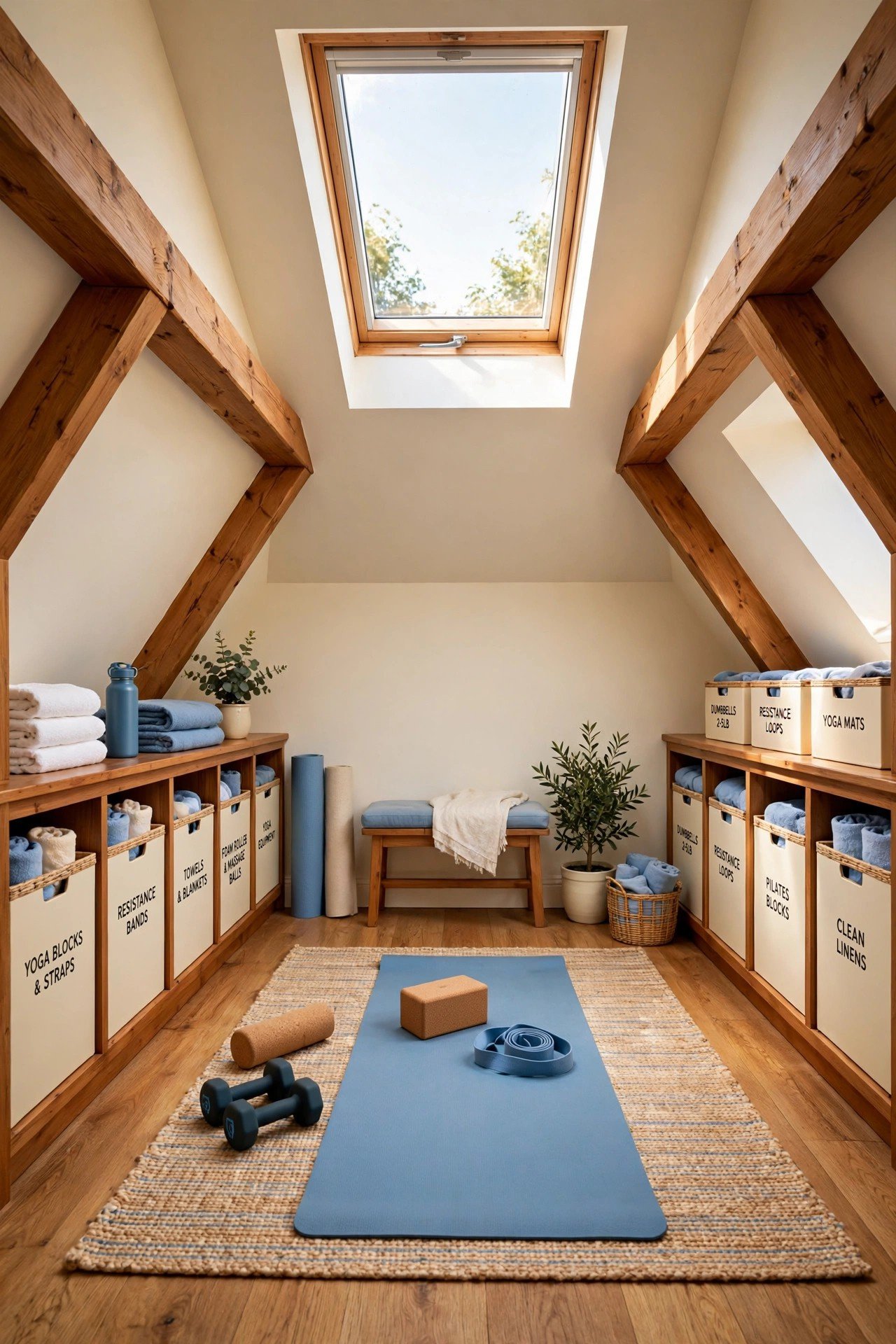
Attics suit floor-based training since sloped ceilings limit standing lifts. Confirm the floor can handle your body weight plus gear before you commit. Place a skylight or bright lamp overhead, since attics get dark fast in the corners.
Slide 18 inch bins under the eaves for bands and blocks, and keep a 4 foot wide center aisle clear for mats. The separation from household noise helps you focus. An attic studio feels like a private retreat precisely because it is out of the way.
13. Guest Room and Gym Blend
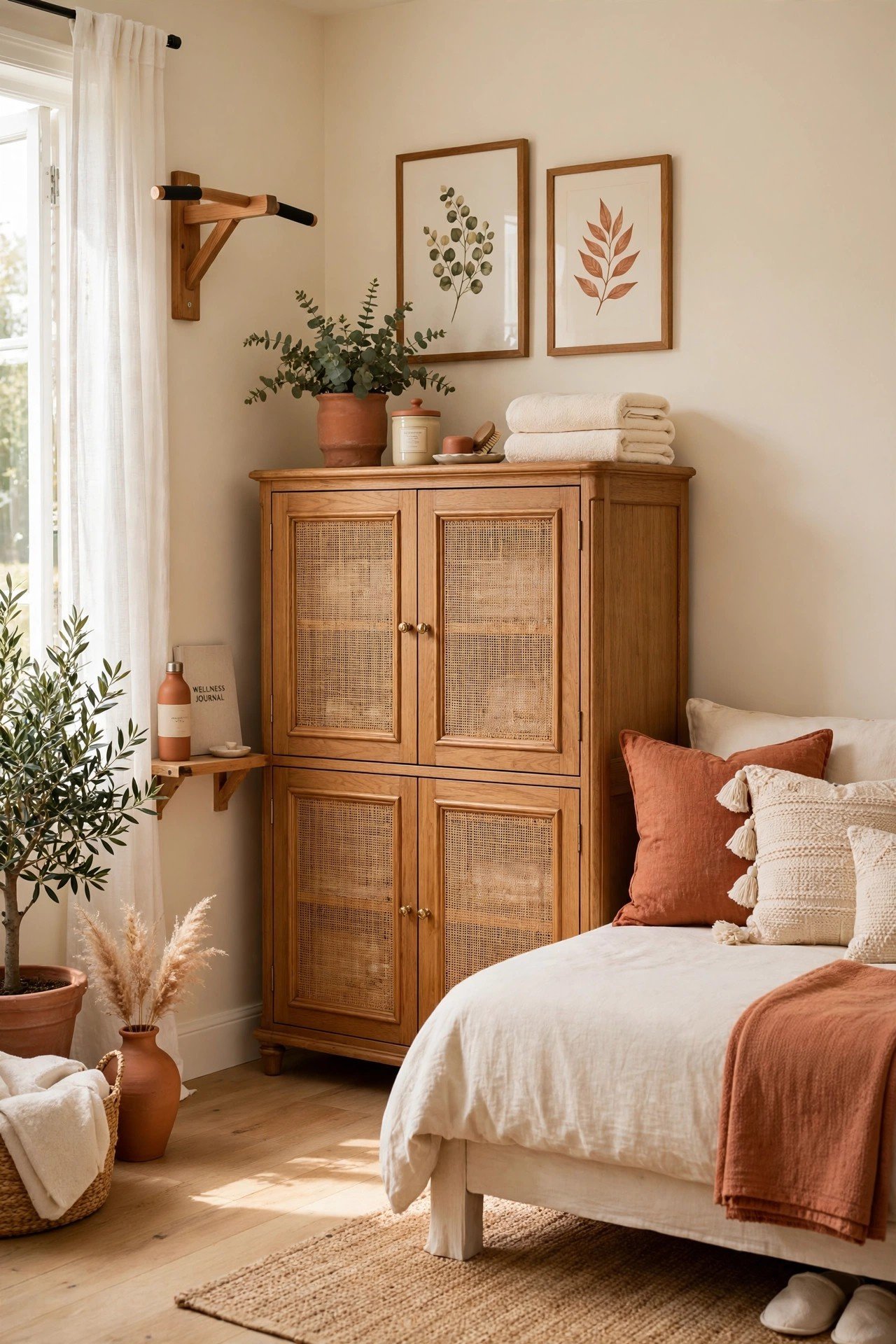
Swap a full bed for a daybed, which measures about 38 by 75 inches and frees nearly 2 feet of floor compared to a queen. Hide daily gear in a 36 inch wide decorative cabinet that reads as furniture to guests. Keep a 3 foot walkway from door to window so the room never feels blocked.
An accent wall from these wallpaper accent wall ideas gives guests a finished look while you train in front of it daily. Roll the mat out only during workouts. Your guests will never guess the serene bedroom doubles as your gym.
14. Protective Rubber Floor Tiles
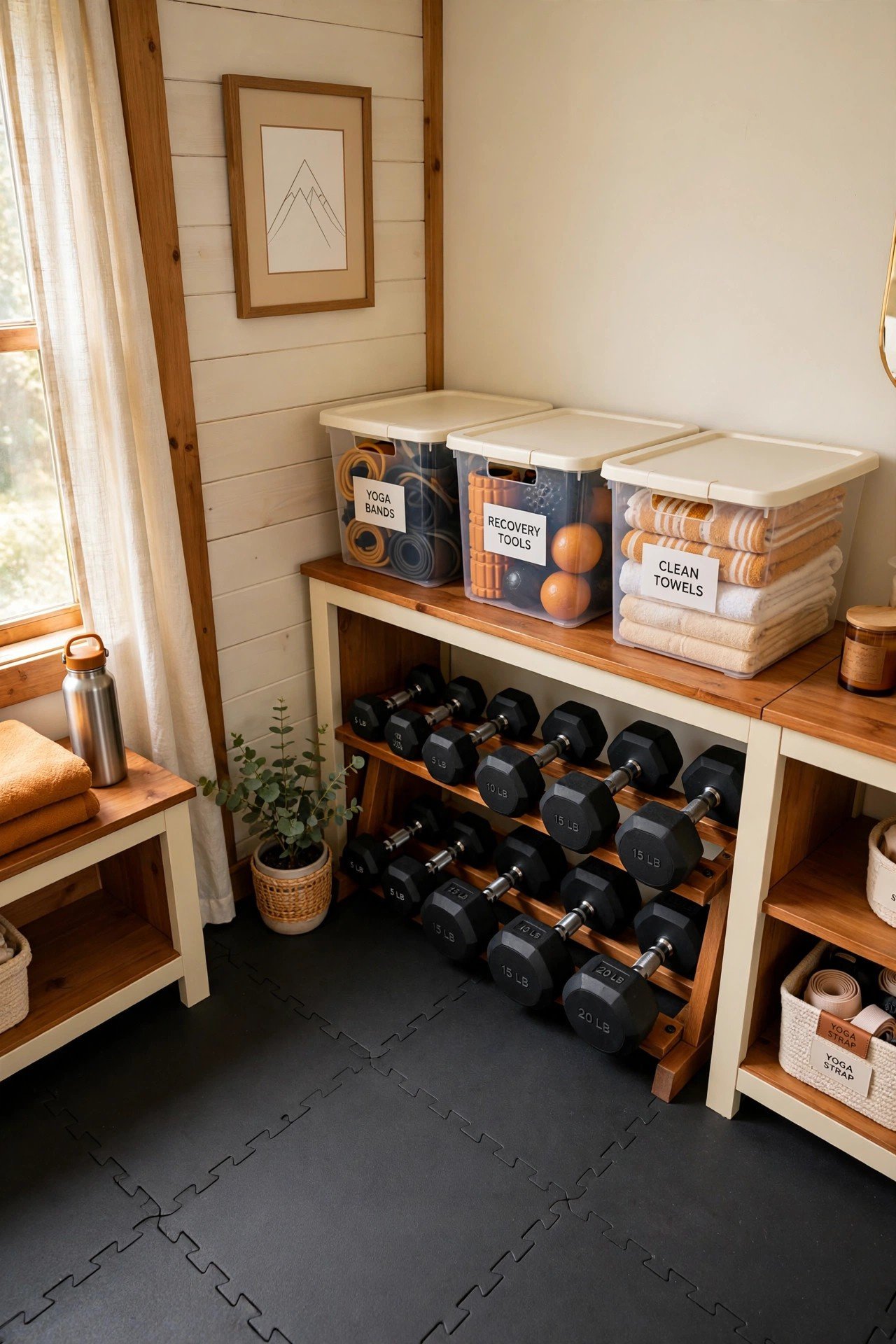
Choose 3/4 inch thick tiles under any area where you drop weights, and 3/8 inch tiles for bodyweight and yoga zones. The standard 2 by 2 foot interlocking squares trim easily with a utility knife for odd corners. Add beveled border ramps so shoes and wheels roll over the edge safely.
Dark speckled tiles hide scuffs better than solid colors. Pull the tiles up twice a year to clean underneath and stop odor. Good flooring is the foundation that makes every other idea work better and last longer.
15. Adjustable Dumbbell Corner
One pair of adjustable dumbbells from 5 to 52.5 pounds replaces about 15 pairs of fixed weights. Set them on a 24 inch high stand so you lift from a safe height instead of the floor. The whole station fits in a 2 by 2 foot footprint.
Dial the weight between sets in seconds, which makes circuits and drop sets practical at home. Their compact shape looks tidy in living spaces. For small homes, this single purchase covers nearly all strength needs.

16. Hidden Cabinet Gym Furniture
Pick an armoire around 40 inches wide by 72 inches tall, deep enough for a folded bench and stacked bands. Mount a shatterproof mirror inside one door for form checks. Drill two small vent holes near the top so stored gear airs out instead of smelling stale.
Dress the doors with decorative molding ideas for a custom built-in look that matches your trim. Lock the casters once it sits in place. By day it is furniture, and in seconds it becomes your gym.

17. Doorway Pull Up Bar
Measure your door frame first, since most leverage bars fit openings 28 to 36 inches wide with trim at least 3 inches deep. Choose a no-screw model rated for 300 pounds so renters stay deposit-safe. Place a 3 by 5 foot mat underneath for hanging knee raises.
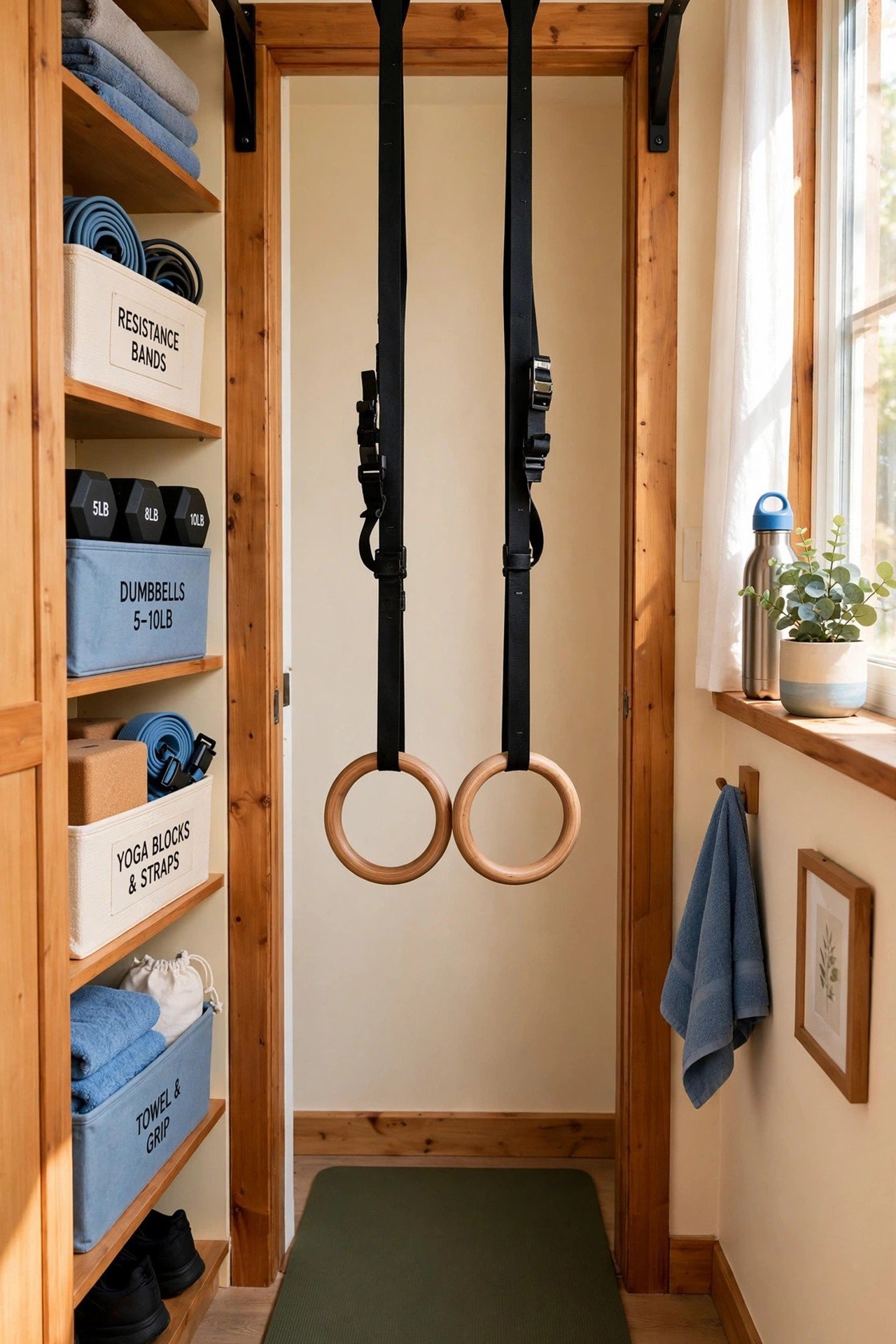
Hang gymnastic rings or a band from the bar to add rows and assisted pull-ups. Multiple grip positions hit back, arms, and core from one bar. It installs in minutes and removes just as fast.
18. Stationary Bike Corner
A modern spin bike needs only a 2 by 4 foot footprint, far less than any treadmill. Park it near a window and lay a 3 by 6 foot mat to catch sweat. Keep a small stool beside it for water, a towel, and your phone.
Point a fan at the bike since indoor cycling heats a small room fast. Ride during TV time to stack habits. You get serious cardio from a corner smaller than an armchair.

19. Resistance Band Anchor Wall
Mount a steel anchor plate with attachment points at ankle, waist, and overhead heights. Color-coded bands from light to extra-heavy clip on with carabiners in seconds. This single plate replaces a bulky cable machine.
Store the full band set in one drawer when you finish. Bands are joint-friendly and travel well, so the same set works at home and on trips. A band wall delivers full-body training for a fraction of machine cost.

20. Desk-Side Movement Corner
Keep a 3 by 5 foot mat rolled beside your desk and unroll it for hourly stretch breaks. Store 3 to 8 pound dumbbells and one loop band within arm reach. Set a timer for 5 minutes of movement every hour to fight stiffness.
Loop a band around a sturdy desk leg for seated rows between meetings. These micro-sessions add up to real weekly volume. You never leave the room, yet your body stays active all day.

21. Living Room Workout Layout
Pick a 36 inch storage ottoman that swallows bands, gloves, and towels between sessions. Choose a mat that rolls to a 6 inch diameter and slides behind the sofa. Match your gear colors to the sofa so everything blends when visible.
Try wallpaper accent wall ideas behind your training spot to make the corner look intentional. Build a 5 minute reset routine, so the room returns to living mode fast. Shared rooms work when the changeover is effortless.
22. Under-Stairs Training Nook
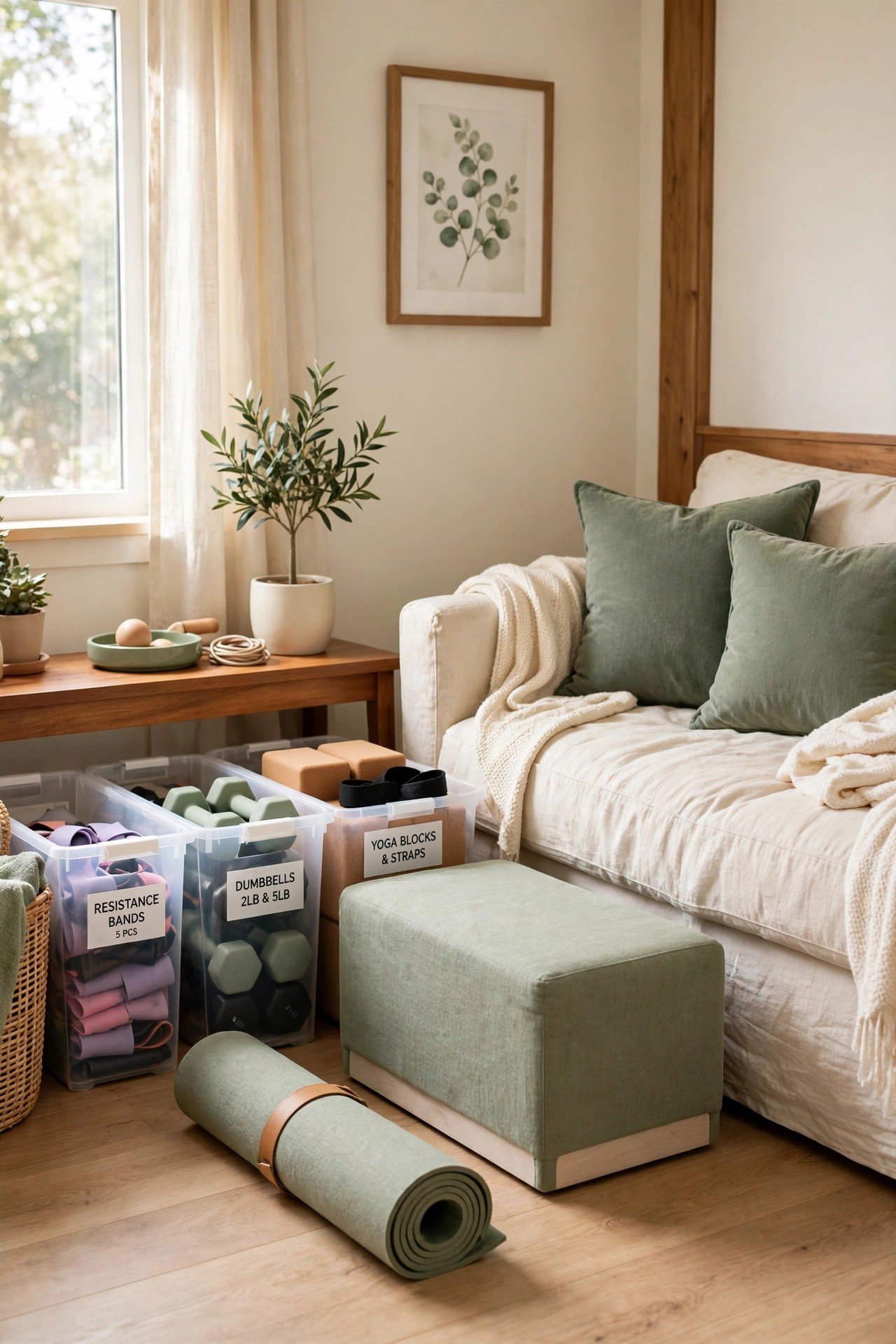
Measure the slope and place a low 16 inch bench where headroom allows seated work. Stick LED strip lights under the stairs since these nooks run dark. Cut rubber tiles to fit the angled footprint so the floor feels finished.
Mount bands and light weights on wall hooks at the tall end. Keep only floor-based gear here, since standing lifts need more height. This reclaimed space keeps your main rooms completely free.
23. Compact All-In-One Trainer
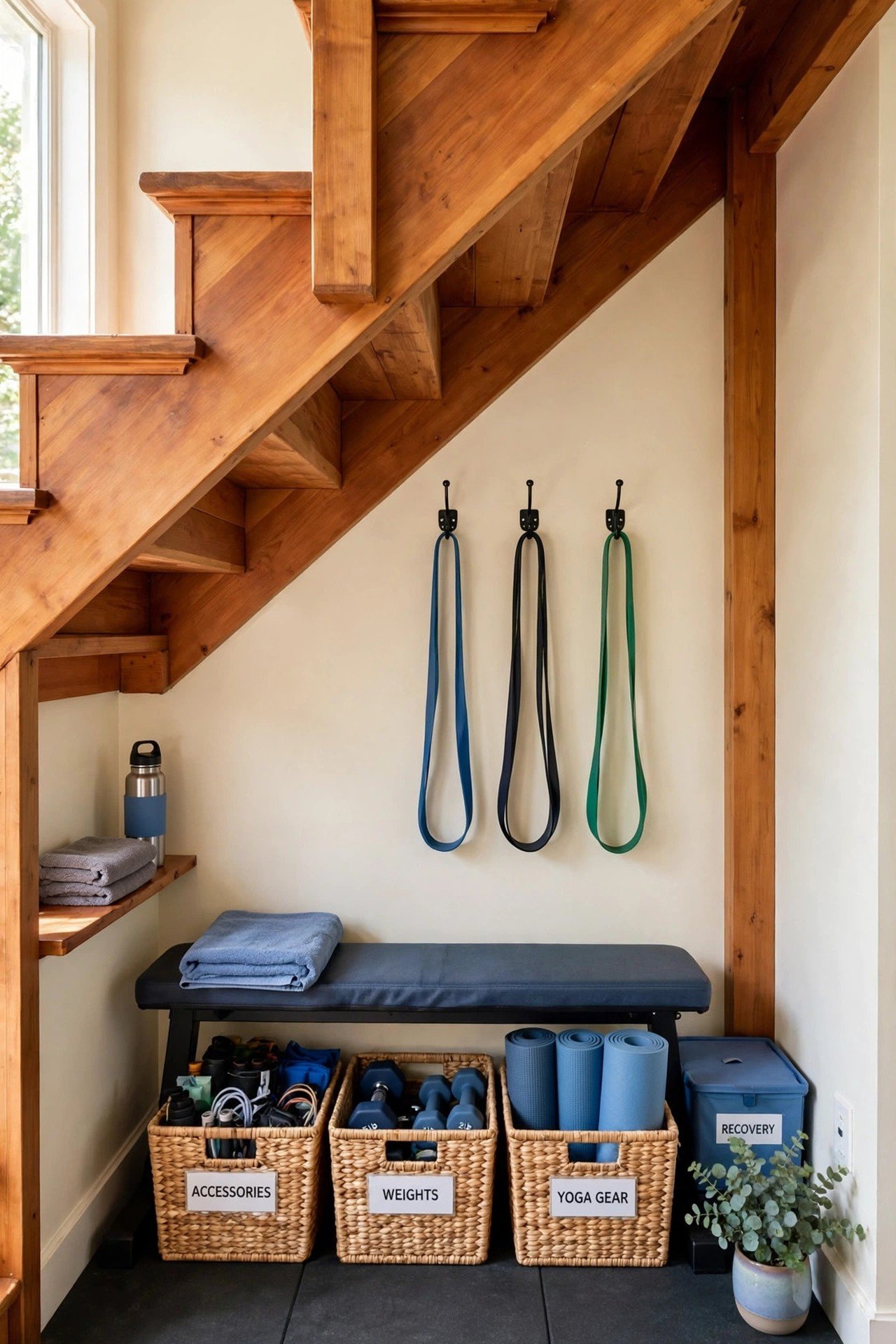
A compact functional trainer with a 4 by 4 foot footprint replaces a cable station, pull-up bar, and leg developer. Look for a 200 pound weight stack and dual adjustable pulleys. You need a 7 foot ceiling for safe pull-up clearance.
Push it against a wall and keep the center of the room open. Switch pulley heights in seconds between exercises. One machine can serve the whole household for years.

24. Storage Bench for Workout Gear
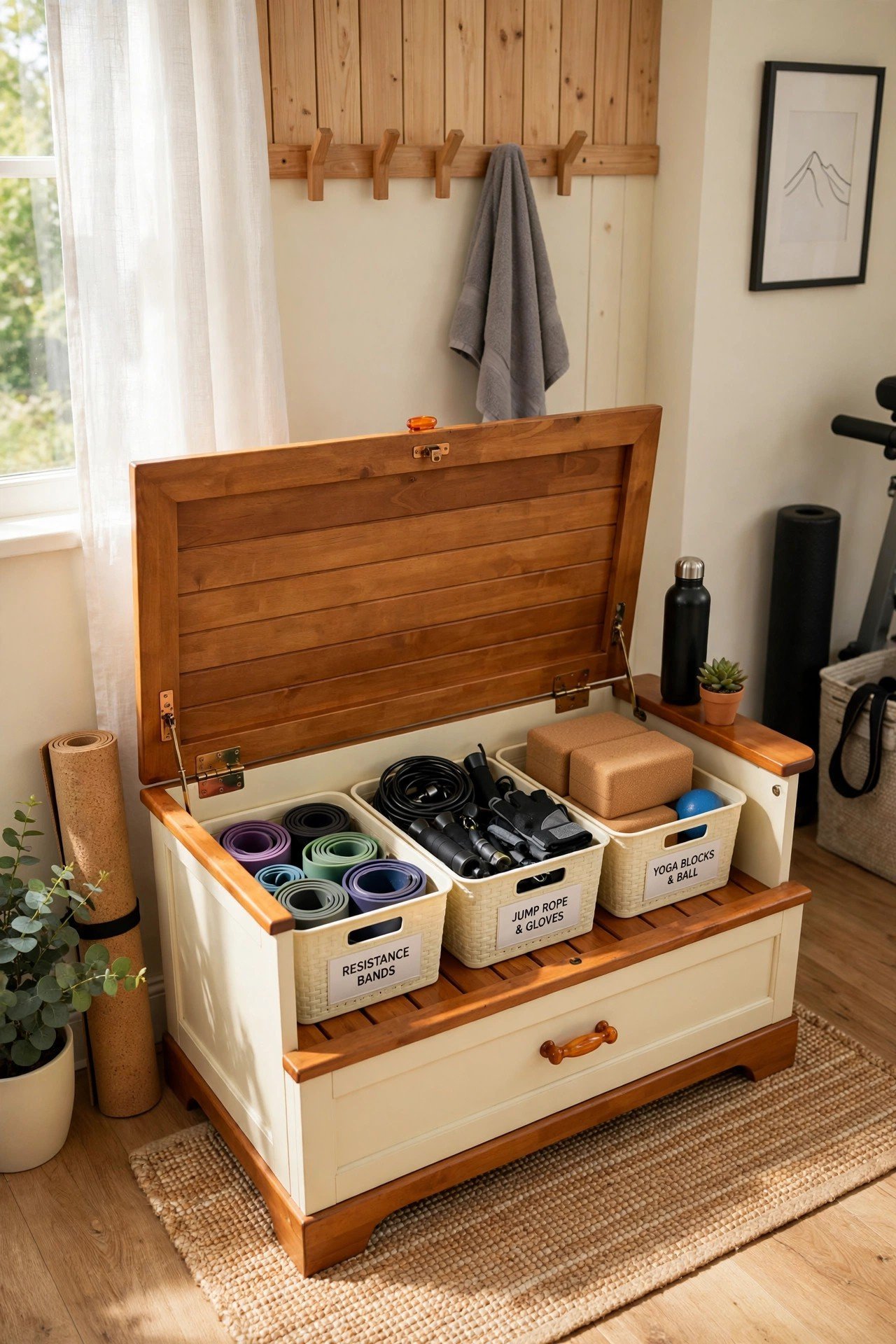
Choose a 48 inch bench with a hydraulic lid that stays open while you load gear. Confirm it supports at least 200 pounds so it doubles as a step-up platform. Add interior dividers so bands, gloves, and towels each have a slot.
Match the bench finish to your other furniture so it reads as decor. Slide it against a wall when not in use. One piece now stores your gym and seats your guests.
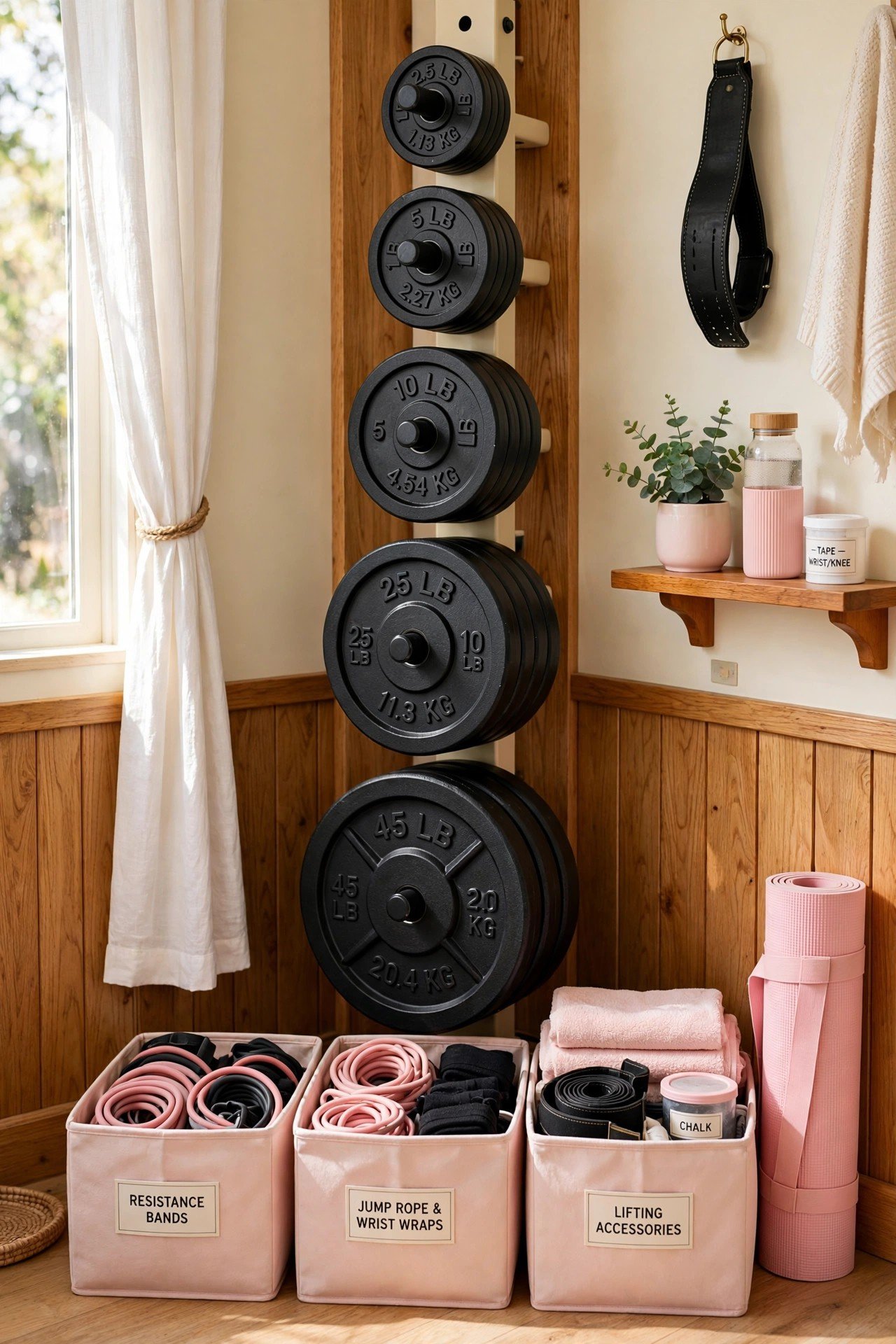
25. Vertical Weight Plate Rack
An A-frame plate tree holds up to 500 pounds in a 2 by 2 foot footprint. Check whether your bar uses Olympic or standard sleeves before buying, since they do not mix. Place the rack beside a door or in a narrow gap where nothing else fits.
Load heavier plates low for stability. Organized plates speed up weight changes mid-workout. Vertical storage turns the bulkiest gear into the tidiest corner.
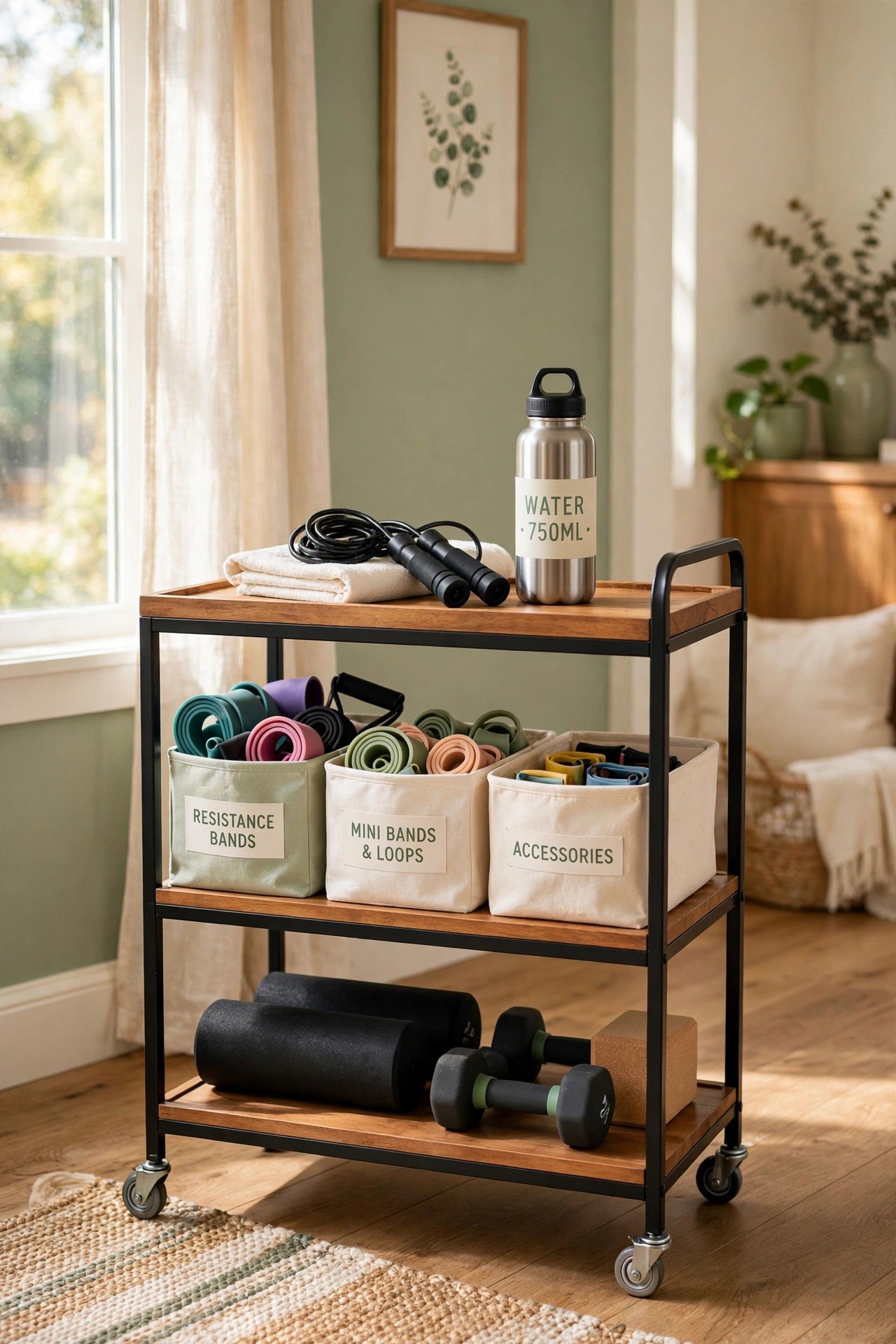
26. Rolling Fitness Supply Cart
Load a 3-tier metal cart with 5 inch locking casters, one tier per workout type. Keep bands and jump rope on top, dumbbells in the middle, and towels and water below. The cart parks in a 2 foot closet gap when you finish.
Wheel it to wherever you train, from the living room to the balcony. Setup drops to seconds since everything travels together. Mobility makes a small home feel much larger.
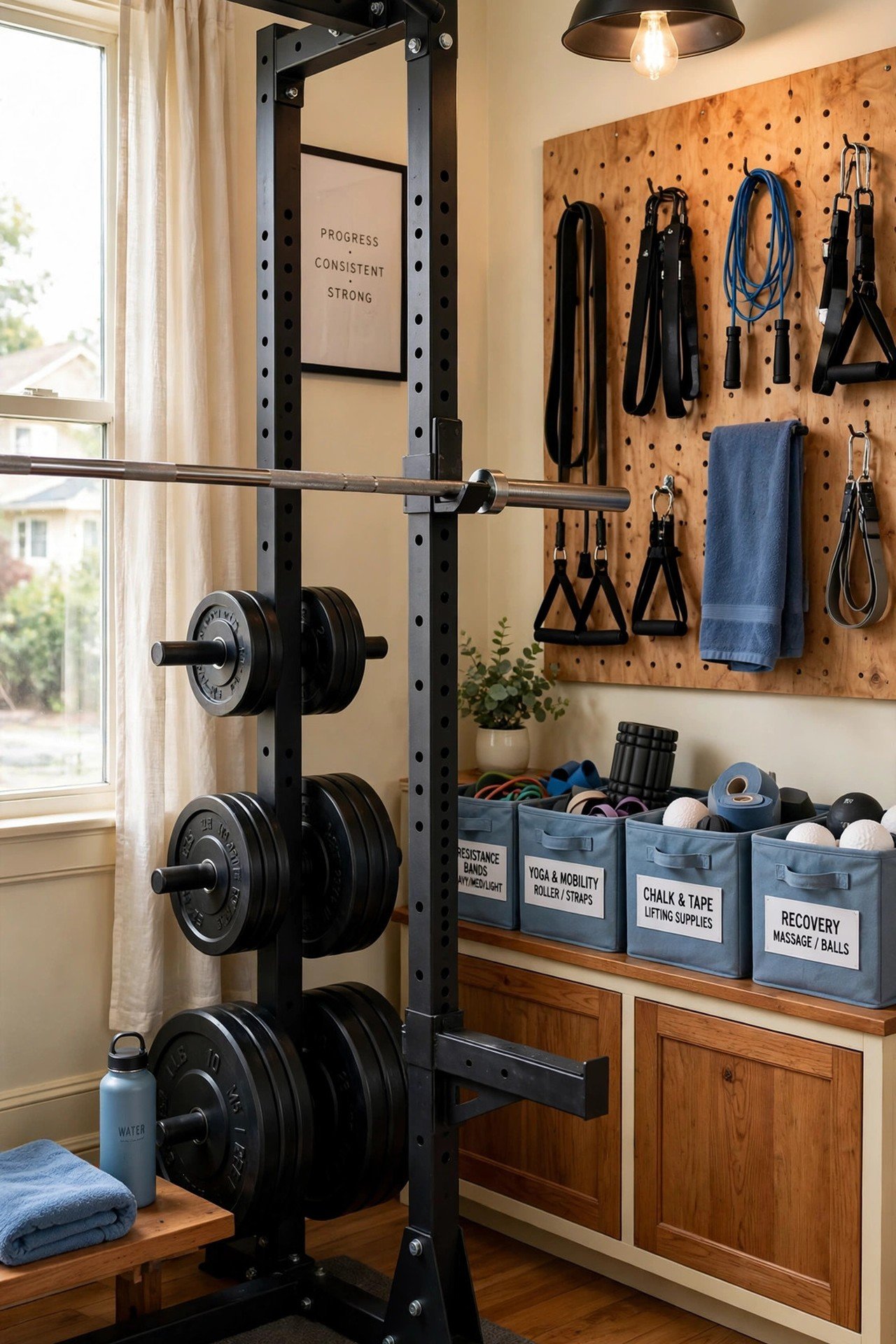
27. Industrial-Style Mini Gym
Build the look around a 4 foot wide steel rack and a 4 by 8 foot pegboard. Use 3000K Edison-style LED bulbs for warm industrial glow without heat. Keep the wall color simple so the small room stays calm under the bold gear.
A textured wall from these board and batten wall ideas adds depth behind the rack. Rubber flooring ties the raw look together. You will look forward to training in a space with real attitude.
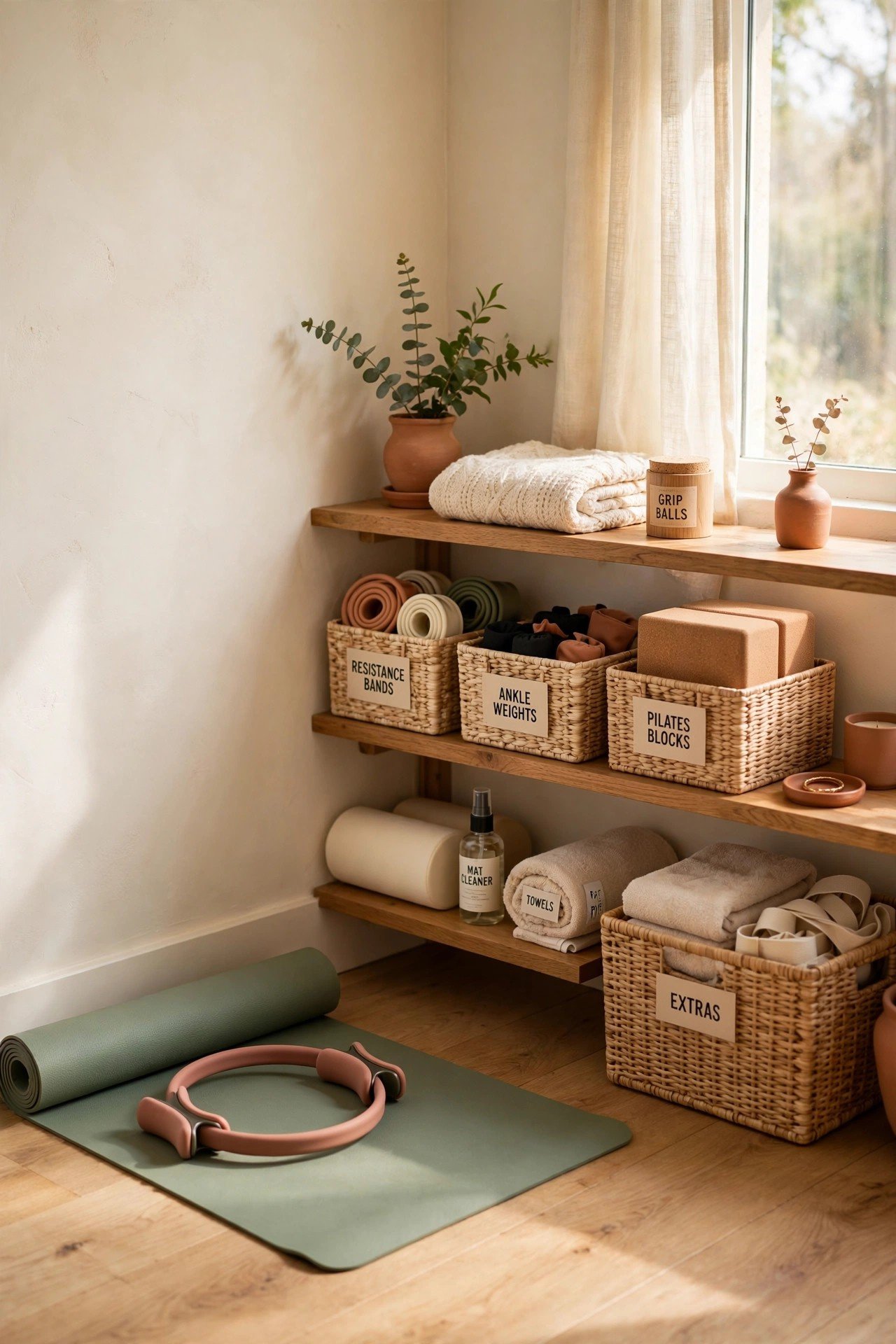
28. Peaceful Home Pilates Corner
Clear a 6 by 6 foot square for full mat work with arm and leg reach. Add a 14 inch pilates ring and two light hand weights on a small shelf. Keep the corner away from the TV so your focus stays on breath and form.
Train barefoot on a thick mat to protect joints. A quiet corner with soft light makes practice feel like a ritual. Gentle, consistent sessions here build deep core strength.
Conclusion
A small home does not limit your fitness, it sharpens your planning. Measure first, choose gear by footprint, and give every item a real home. The ideas above prove that a corner, a closet, or a garage wall can hold a serious workout.
Pick the layout that fits your space and start with one measured change this week. Your future self will thank you for starting today. Small spaces can hold big goals.
Frequently Asked Questions
What is the smallest space that can work as a home gym?
A corner of about 6 by 6 feet is enough for bodyweight moves, bands, and dumbbells. Wall-mounted gear and foldable equipment let you train fully in this footprint. Measure your space before you buy anything.
How do I reduce noise in a small home gym?
Rubber floor tiles absorb most impact noise from weights and jumps. Train during daytime hours and choose low-impact moves for early mornings. A thick mat under cardio machines also helps.
Can I build a home gym in a rental apartment?
Yes, focus on freestanding and foldable gear that needs no drilling. Doorway pull up bars and resistance bands leave no marks. Check your lease before mounting anything to the walls.
What equipment gives the most value in a small space?
Adjustable dumbbells, resistance bands, and a foldable bench cover most training needs. These three items replace a full rack of gear. Add a mat and you have a complete setup.
How do I keep a small gym tidy?
Give every item a home on the wall, in a cabinet, or on a rolling cart. Reset the space after each workout so clutter never builds up. Less visible gear makes the room feel larger.

Hi, I’m Emily! I turn messy corners into cozy, organized spots. DreamNestDecor is where I share simple, practical home ideas — decor, organization, and small-space solutions that work in real life, not just in photos. Every idea here is carefully researched before it’s shared.