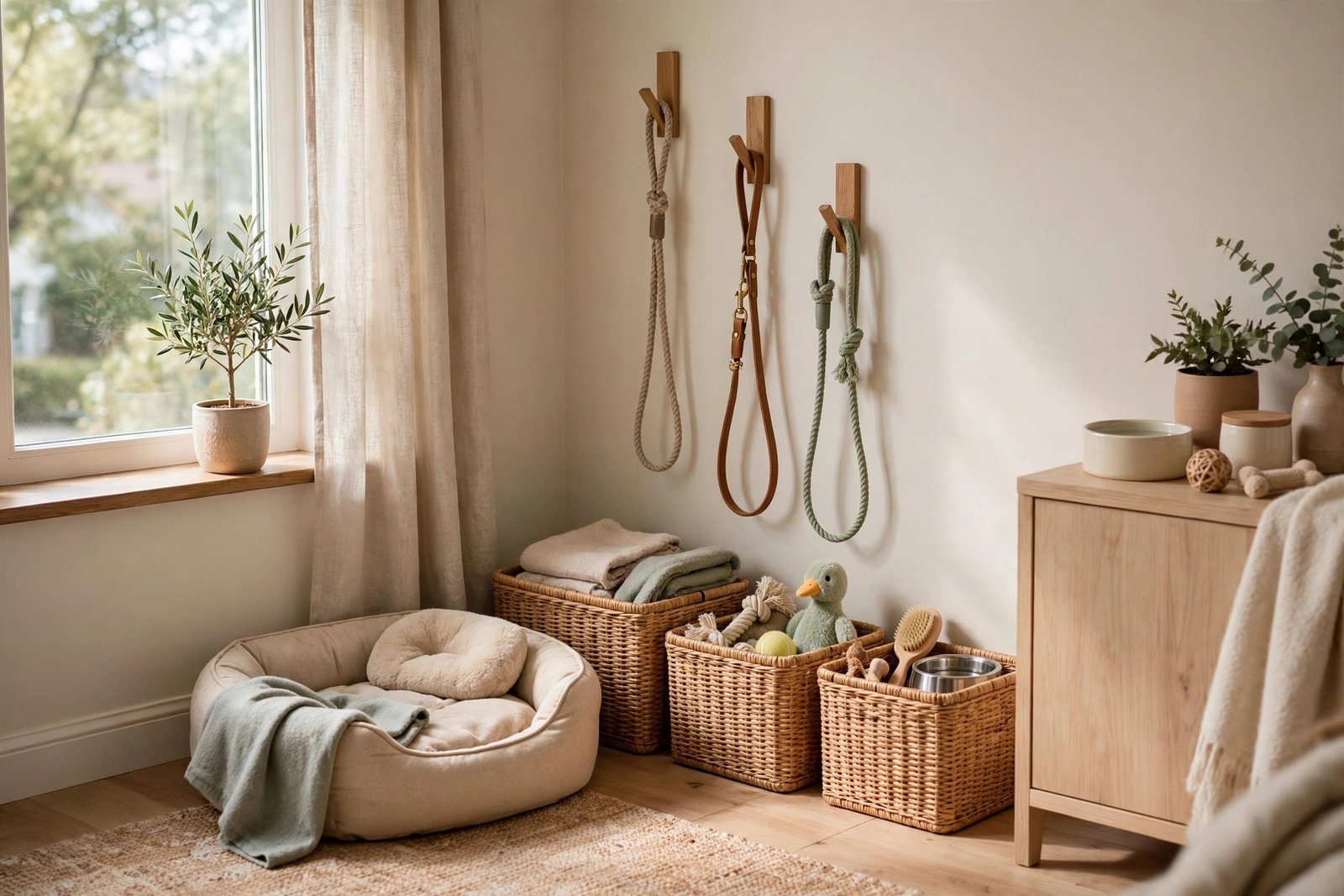
Picture this: you walk through the front door with muddy paws at your heels, and the leash is tangled around a chair leg, the treat bag is open on the counter, and a chew toy is hiding under the sofa. Your pet is happy, but the mess that follows them is not.
You do not need a bigger house or a bigger budget to fix it. You only need a simple system that gives food, toys, leashes, and grooming tools each a clear home, so feeding time and walk time run smoothly. These 14 ideas will help you organize your pet supplies in a way that stays tidy, even on busy days.
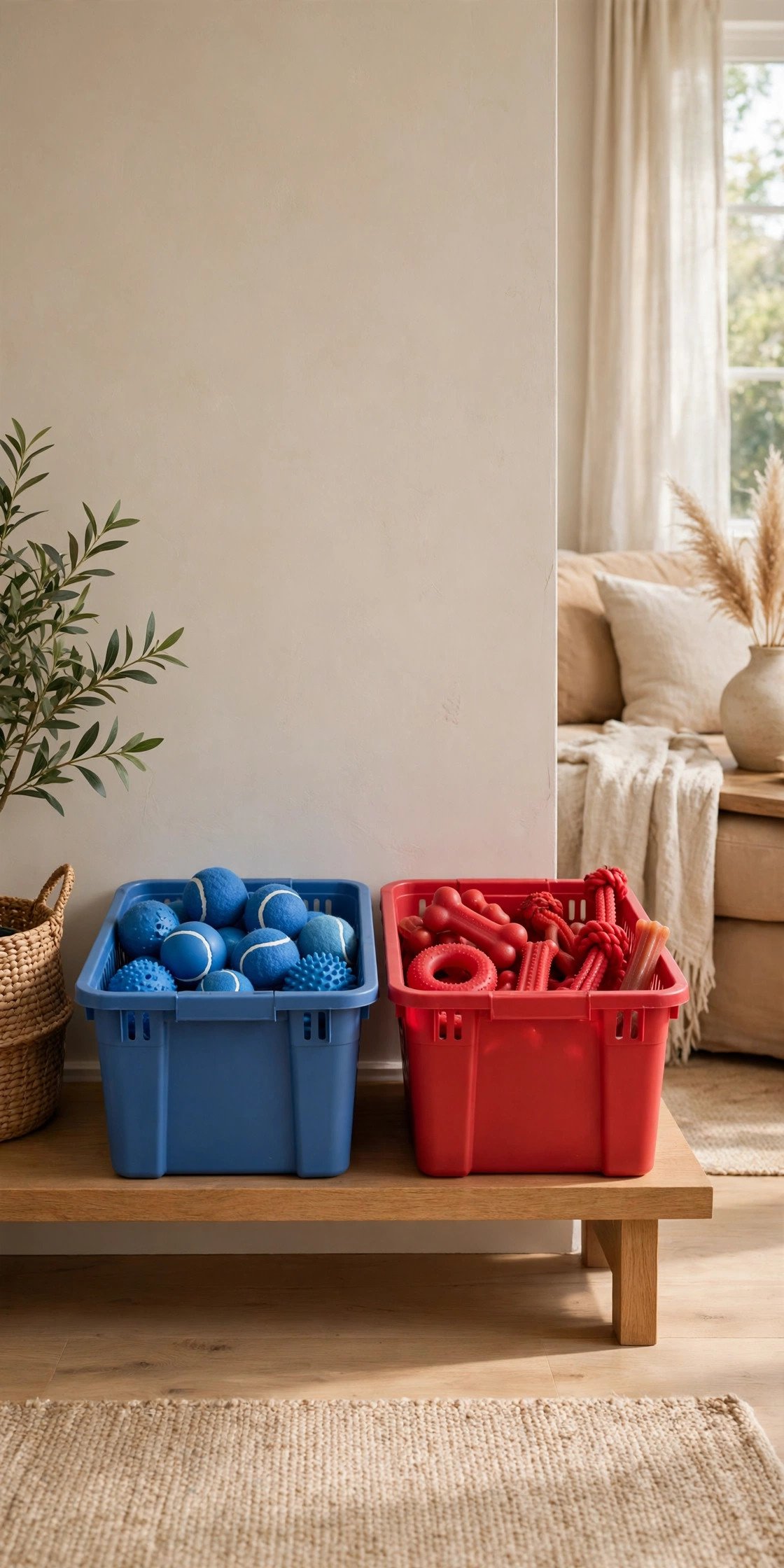
1. Sort Toys Into Color-Coded Bins
Color-coded bins turn a pile of toys into a system the whole family can follow. Give each type of toy its own color, blue for balls, red for chew toys, green for plush toys, and place the bins on a low shelf. When every toy has a color, cleanup takes seconds instead of minutes.
Keep one bin for active toys and one for quiet toys, so playtime has a clear start and finish. Rotate the toys inside the bins each week to keep things fresh without buying anything new. A simple color system also teaches kids to help, because they can see exactly where each toy belongs.
2. Hang Leashes and Collars on a Wall Shelf
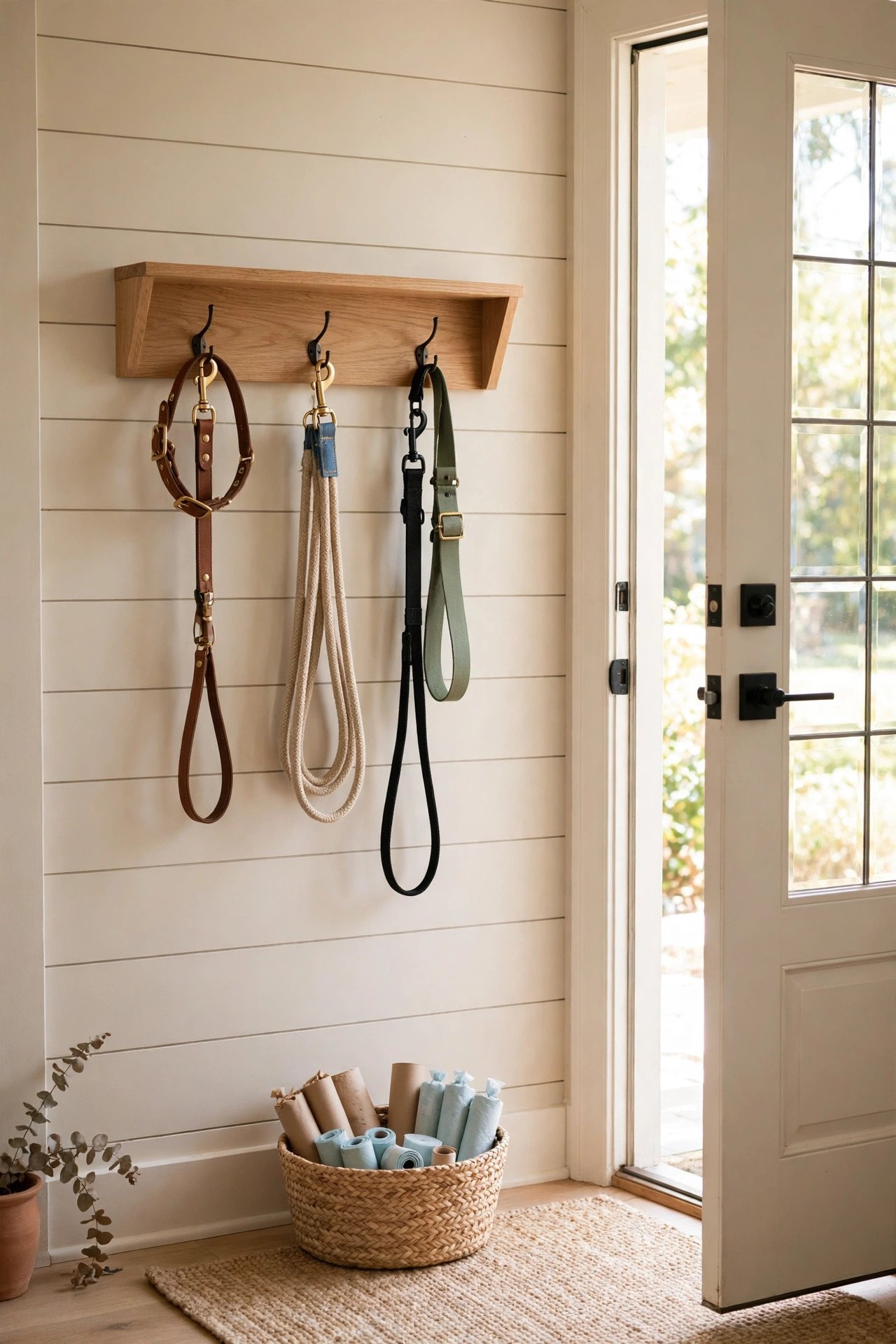
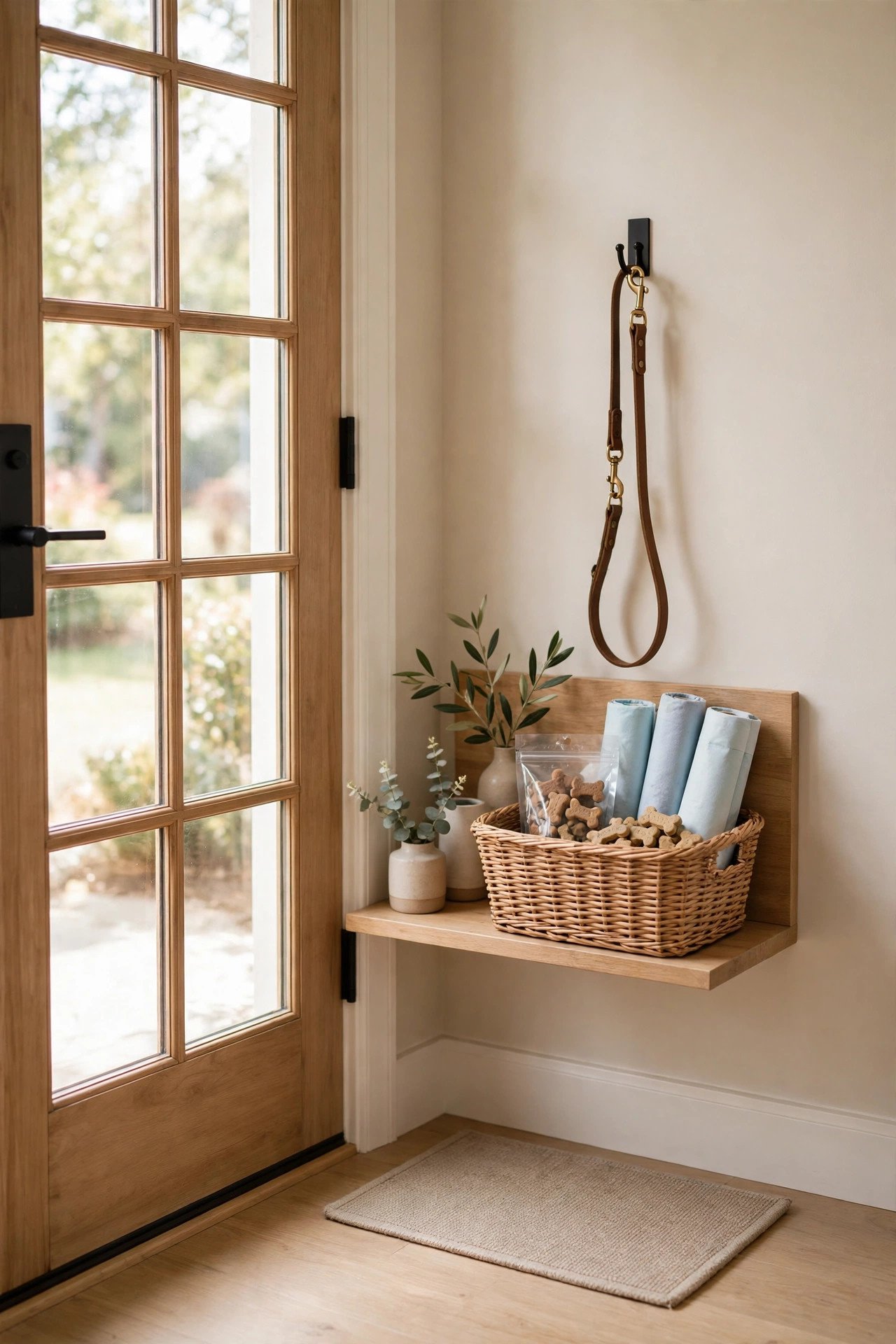
A wall shelf with hooks keeps leashes, collars, and harnesses off the floor and ready for every walk. Mount it near the front door at a height you can reach without bending, and give each pet its own hook. When the gear hangs in one spot, you never waste time searching before a walk.
Add a small shelf above the hooks for waste bags, treats, and a spare key, so everything for the walk sits together. The setup works the same way at home, and these entryway organization ideas show how a landing zone keeps daily essentials visible. Keep one hook empty for items that arrive during the week.
3. Divide a Drawer for Grooming Tools
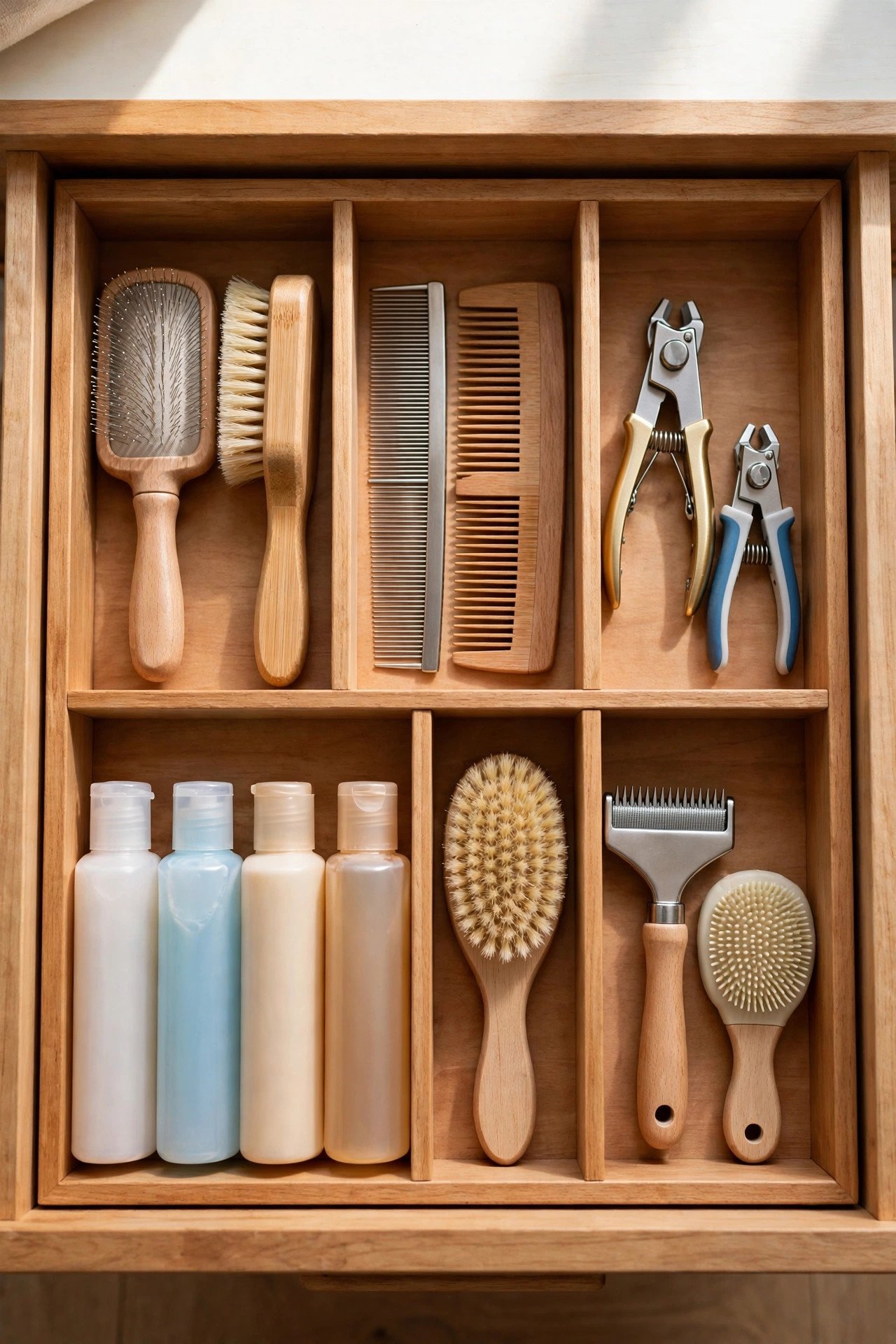
Drawer dividers turn one messy drawer into a grooming station where every tool has a home. Use adjustable dividers to separate brushes, combs, nail clippers, and shampoo, so nothing tangles or gets damaged. When each tool has its own slot, grooming takes less time and feels calmer for your pet.
Keep the tools you use most often at the front, and store seasonal items like flea combs at the back. Small things stay sorted the same way they do at home, and these kitchen junk drawer organization ideas show how tiny compartments keep little items from getting lost. Wipe the drawer out once a month to keep it fresh.
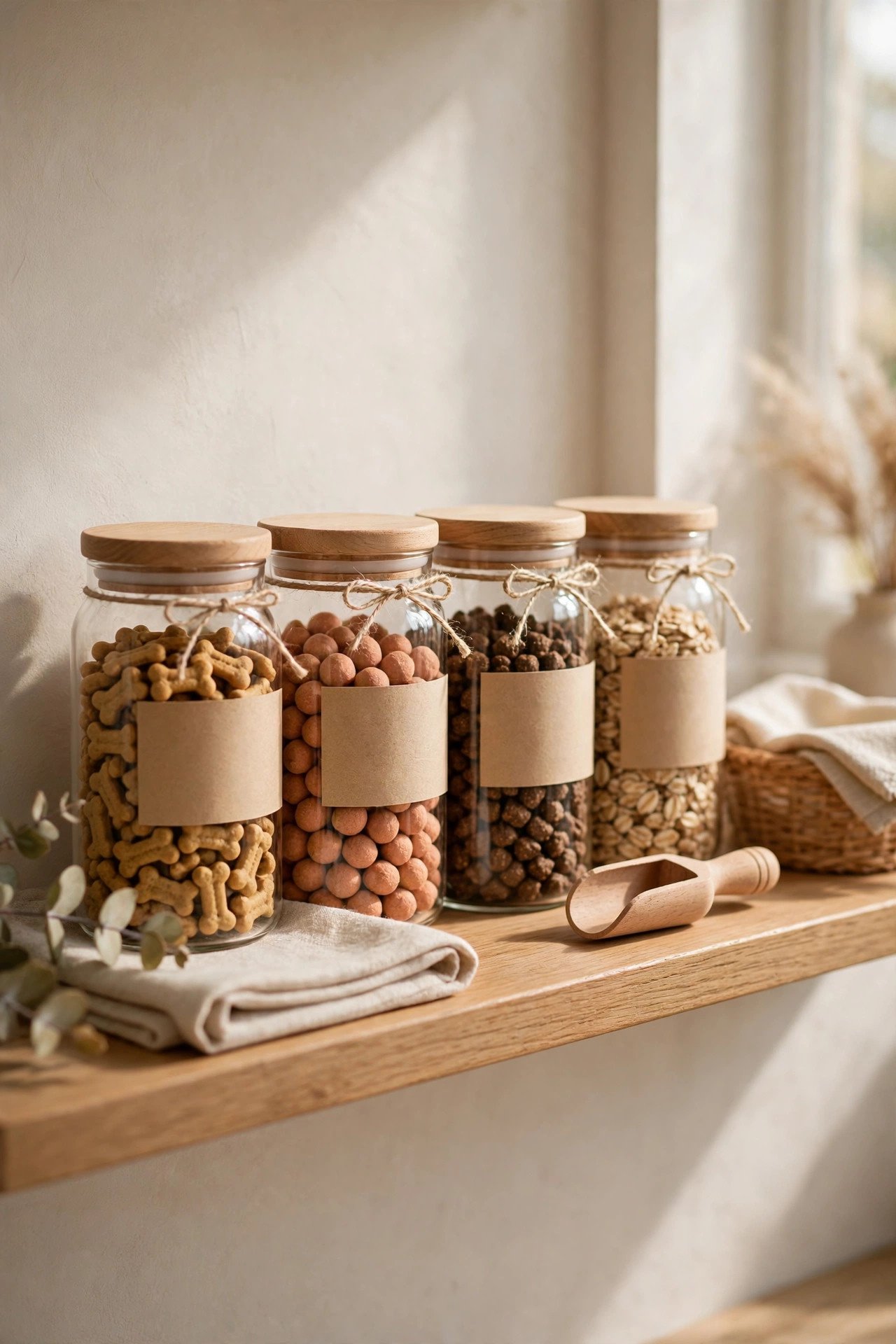
4. Store Treats in Labeled Glass Jars
Glass jars keep treats fresh, visible, and easy to reach, while adding a tidy charm to your pet corner. Choose airtight jars in a few sizes, one for training treats, one for dental chews, and one for biscuits, and label each lid clearly. When you can see the level inside, you always know when to restock.
Place the jars on a shelf or counter away from direct sunlight so the treats stay crisp. Use a small scoop inside each jar so hands stay clean and portions stay consistent. Clear jars also stop you from buying duplicates, because the supply is always in plain sight.
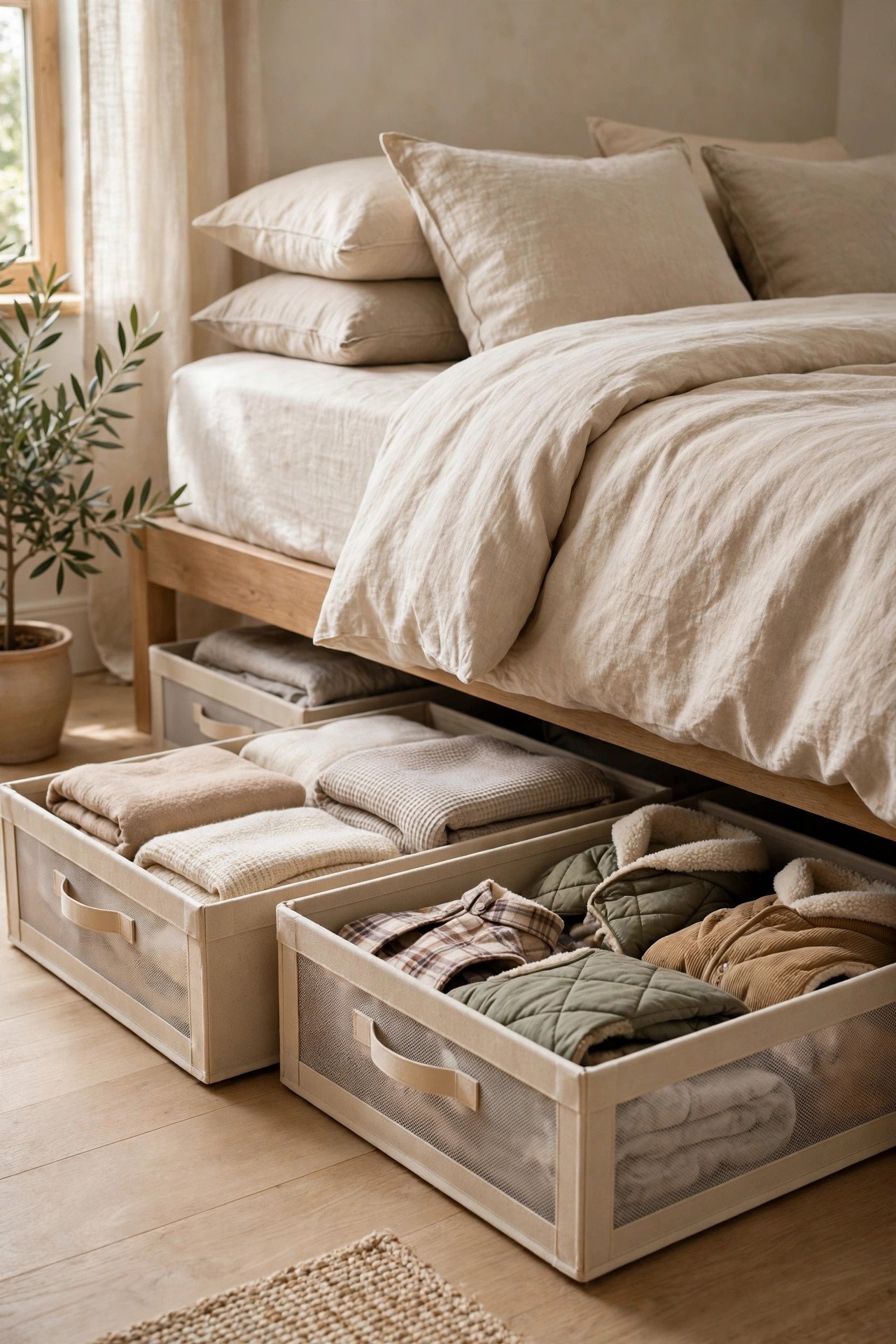
5. Tuck Seasonal Gear Into Under-Bed Boxes
Under-bed boxes give seasonal pet gear a home without taking up closet space. Store winter coats, warm blankets, and booties in one flat box, and cooling mats and summer toys in another, then slide them under the bed. When the seasons change, you swap one box for the other in minutes.
Label the outside of each box so you can find the right one without opening it. Choose boxes with lids to keep dust and fur out, and wash the gear before you pack it away. A seasonal swap keeps the daily pet area light, because only the current season’s items stay out.
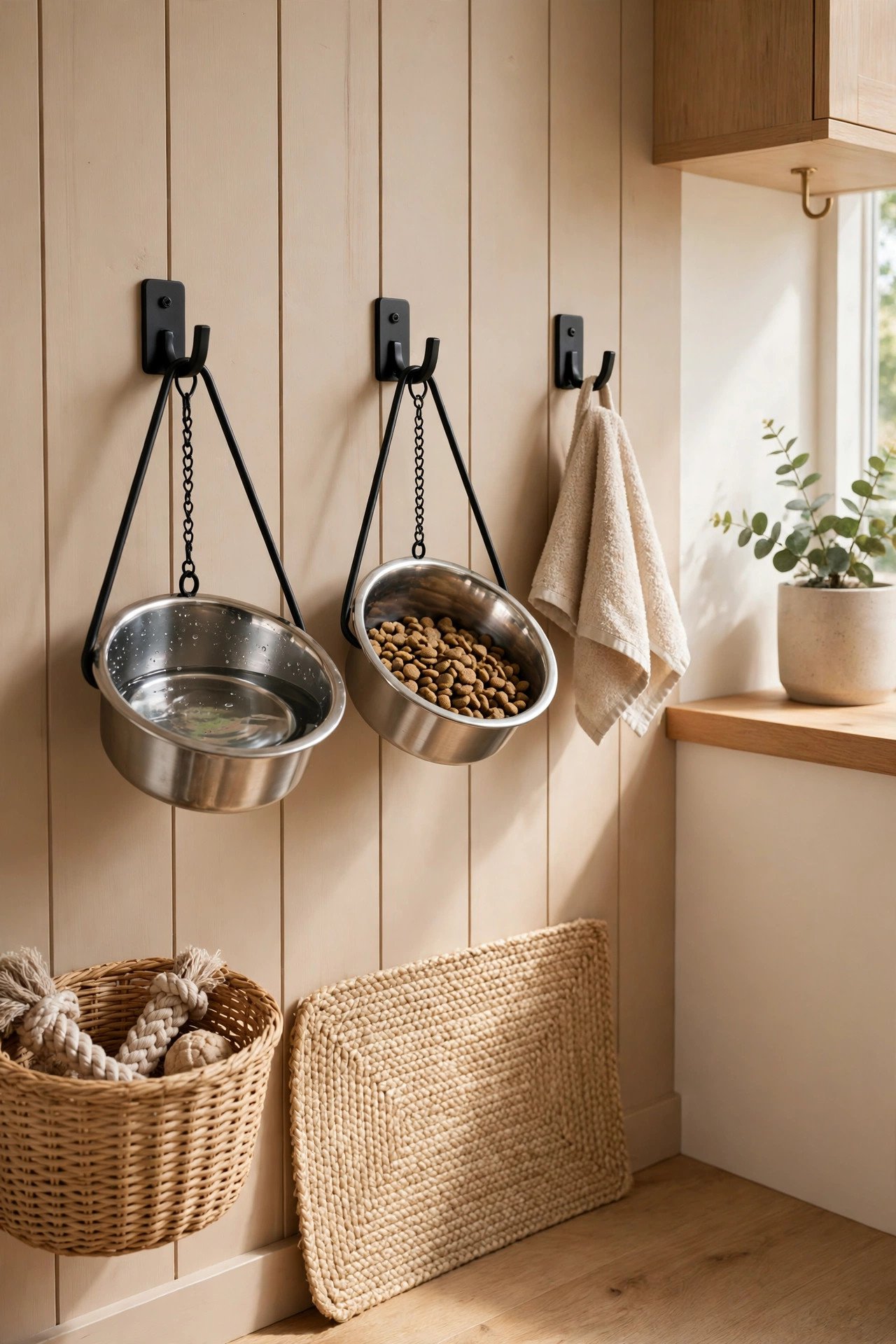
6. Hang Bowls on Wall Hooks Between Meals
Wall hooks free up floor space by giving food and water bowls a place to hang between meals. Mount sturdy hooks at a comfortable height near the feeding corner, and hang the bowls by their rims after washing. When bowls hang instead of sitting out, the floor stays clear and easy to mop.
Choose hooks that match your kitchen or laundry room so the setup looks neat, not cluttered. Keep a small towel on a nearby hook for quick wipe-ups after messy drinkers. Hanging bowls also keeps them away from dust and curious paws, and a quick wipe of the hooks each week keeps them clean.
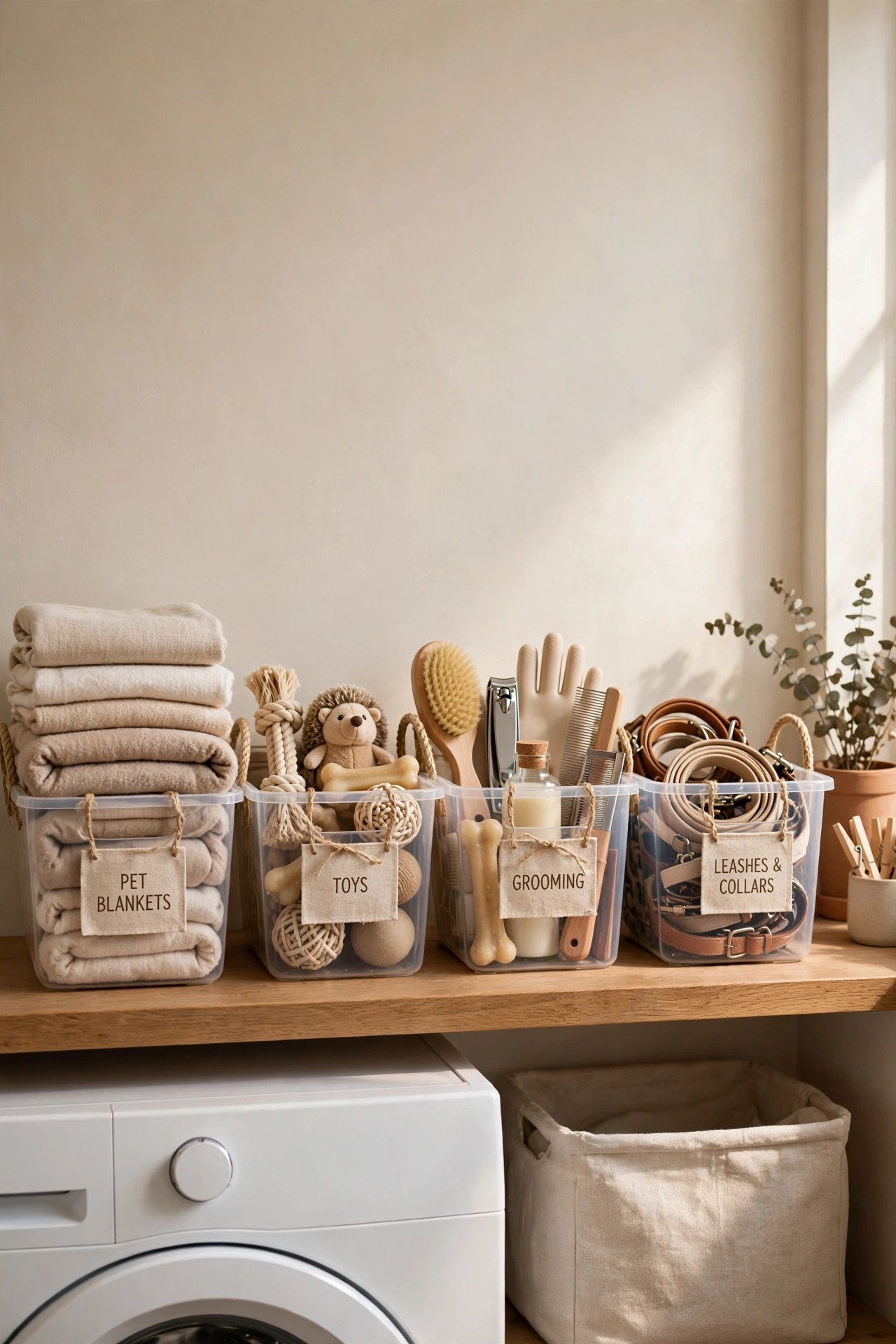
7. Group Supplies in Labeled Plastic Baskets
Plastic baskets group pet supplies by category, so food, toys, and grooming tools never mix. Pick a basket for each category, label the front with a simple tag, and stack them on a shelf or inside a cabinet. When every basket has one job, finding a brush or a ball takes seconds.
Use one basket for clean pet blankets and towels, and wash them on a regular schedule so they stay fresh. Soft items stay neat the same way they do at home, and these blanket storage ideas show simple ways to fold and store blankets. Choose baskets with handles so you can carry a whole category to another room.
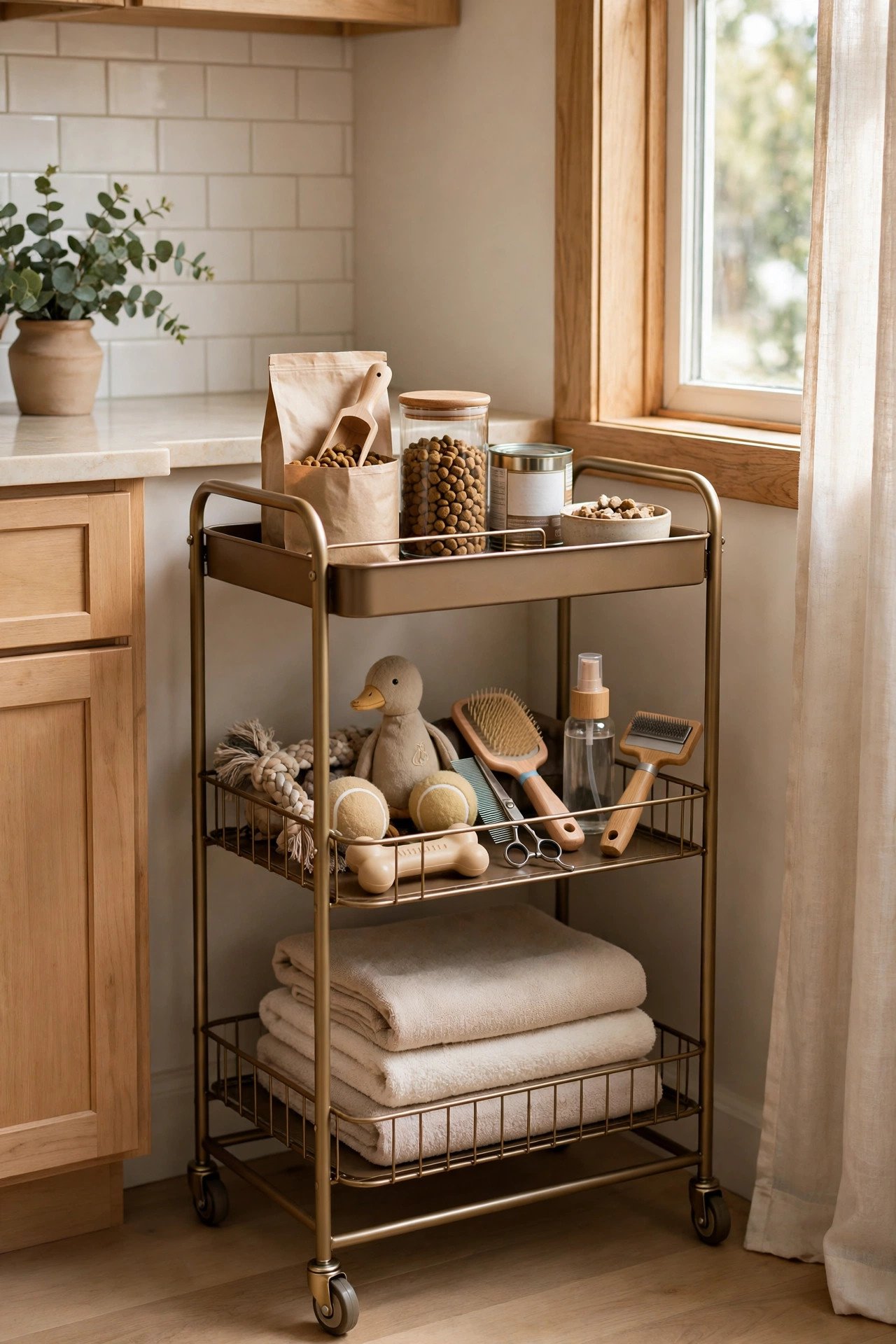
8. Roll a Cart for Everyday Pet Essentials
A rolling cart keeps everyday pet essentials together and moves wherever you need them. Load the top shelf with food and treats, the middle with toys and grooming tools, and the bottom with towels and waste bags. When the cart rolls, you can feed, groom, and play without walking back and forth.
Park the cart in a corner of the kitchen or laundry room so it stays out of the way between uses. Choose a cart with a lip on each shelf so nothing slides off when it moves. A portable cart also helps on bath day, because everything you need travels to the tub with you.
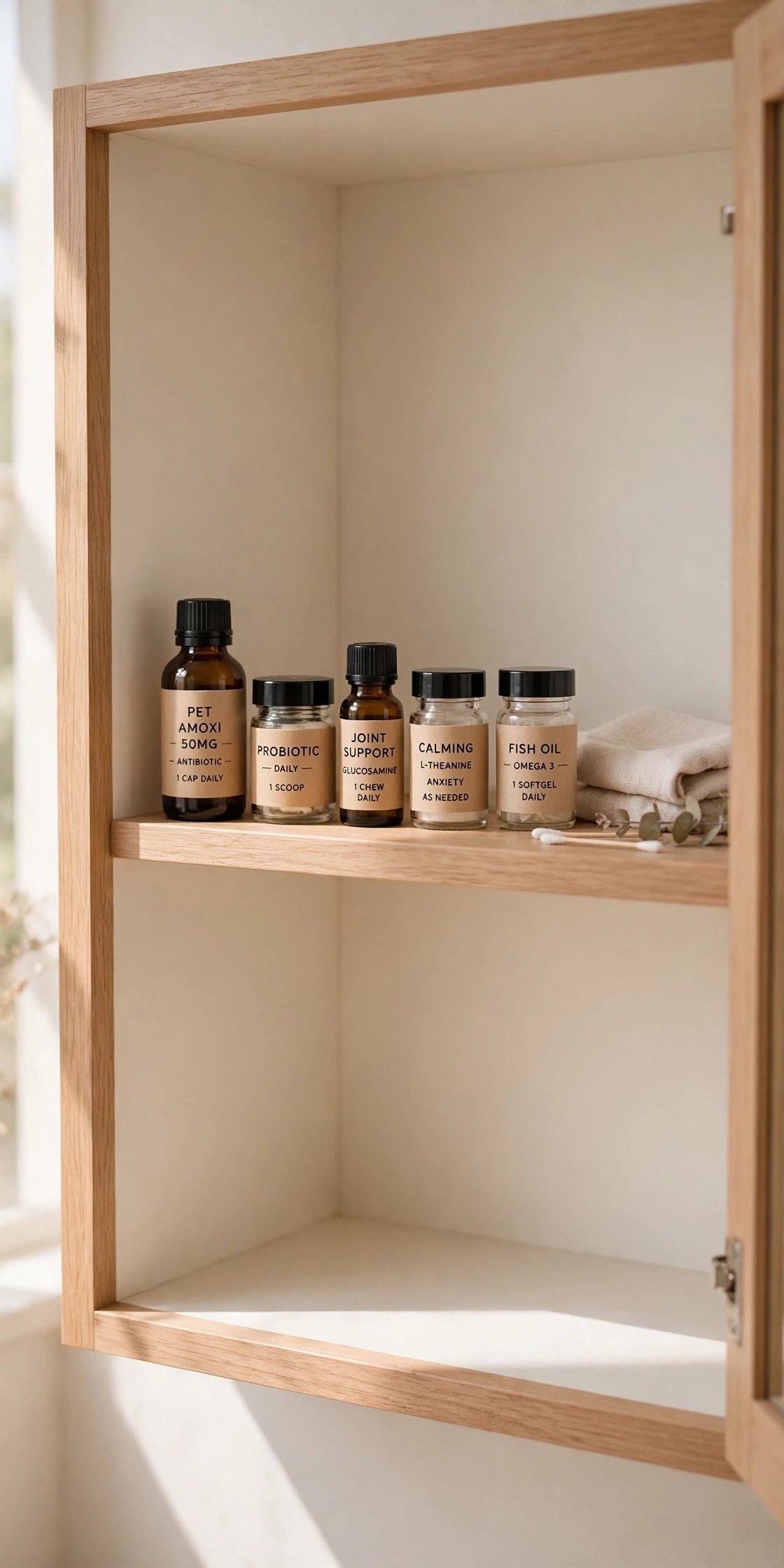
9. Label a Container for Each Pet’s Medicine
Labeled containers keep each pet’s medicine separate, safe, and easy to find in a hurry. Give every pet its own small box with a clear label, and keep prescriptions, vitamins, and flea treatments inside. When medicine has a dedicated spot, you never mix up doses or miss a refill date.
Store the containers on a high shelf or inside a closed cabinet, away from children and curious pets. Write the refill date on the outside of each box, and check the labels once a month for anything expired. A clear medicine system protects your pet’s health and your peace of mind.
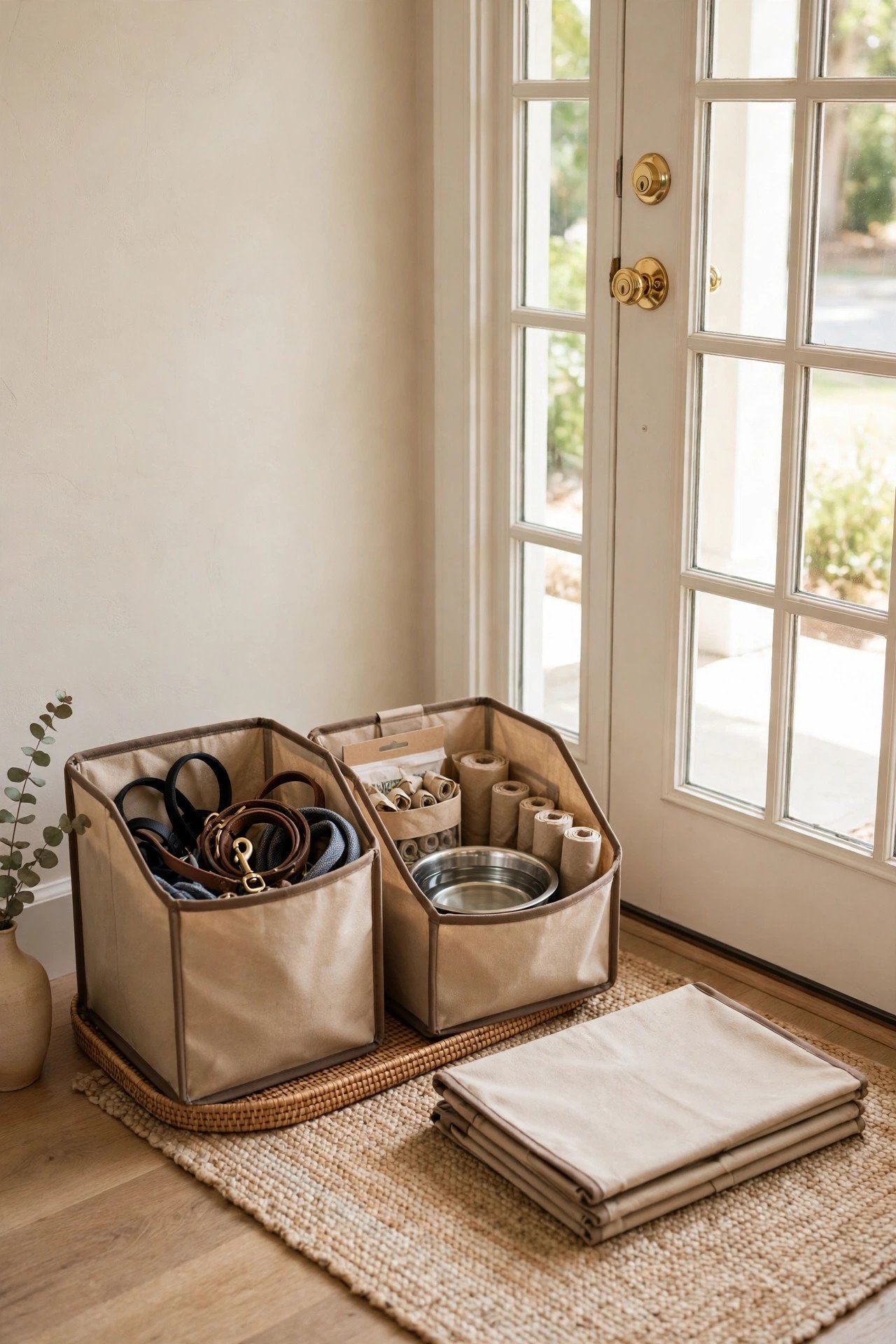
10. Fold Flat Bins for Travel Accessories
Collapsible bins pack flat when you are home and open up when travel day arrives. Keep one bin for car trips with a leash, water bowl, and waste bags, and another for overnight stays with food and a familiar toy. When the bins fold away, they take up almost no space at all.
Store the flat bins in the car trunk or near the front door so they are ready to grab. Pack them the night before a trip, and unpack them as soon as you return so nothing gets forgotten. A travel bin that is always packed turns a last-minute trip into a calm one.
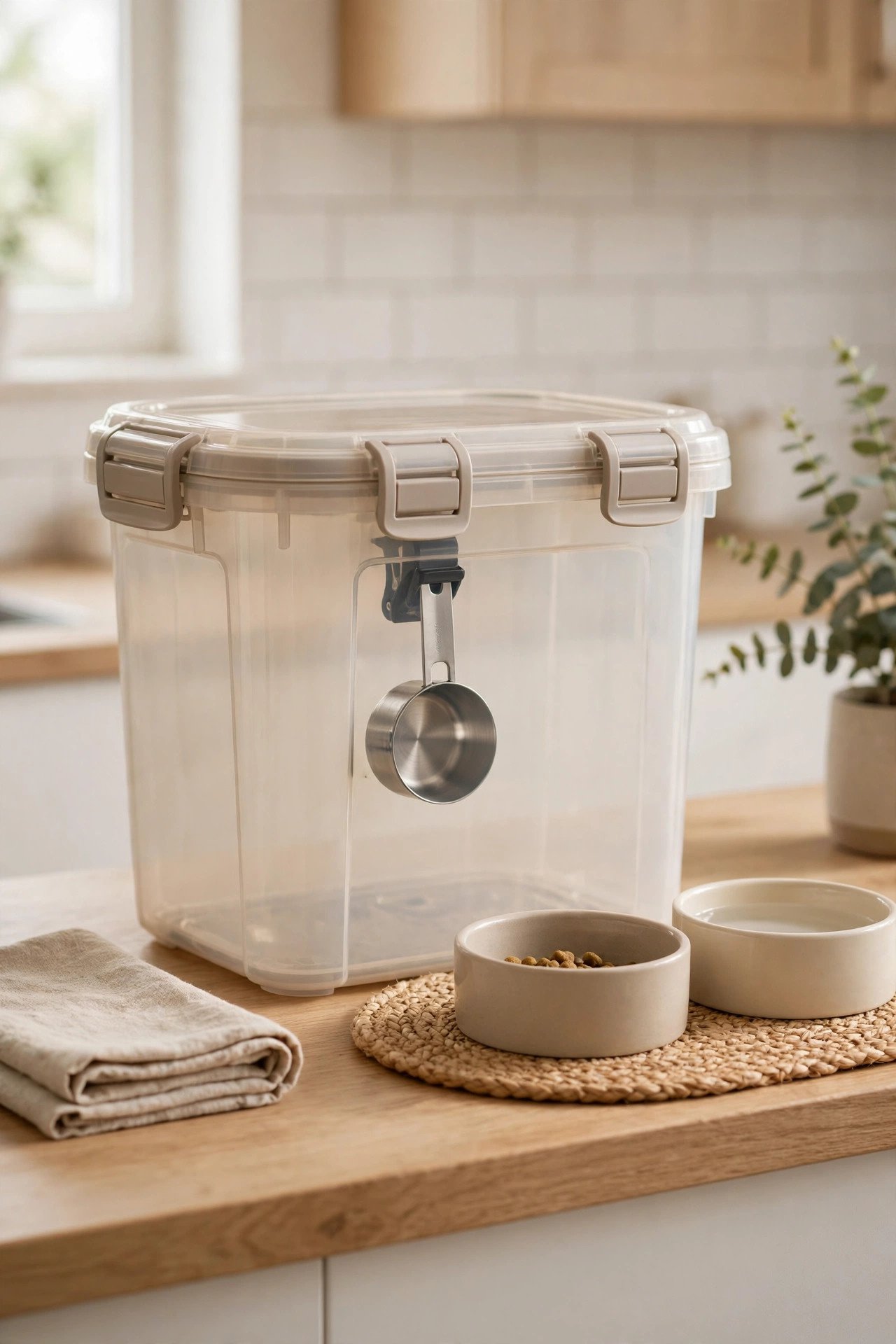
11. Keep Food Fresh in a Sealed Bin With a Scoop
A sealed food bin keeps kibble fresh, dry, and safe from pests between meals. Pour the food from its bag into an airtight bin with a tight-fitting lid, and keep a measuring scoop clipped inside so every serving is the same. When food stays sealed, it keeps its crunch and its smell.
Place the bin near the feeding station but off the floor, so you can scoop without bending. Write the food name and the feeding amount on the lid, so anyone in the family can serve the right portion. A sealed bin also stops spills, because the bag never tips over in the pantry.
12. Set Up a Grab-and-Go Station by the Door
A grab-and-go station by the door makes walks start on time, even on busy mornings. Set a small basket or tray near the entrance with the leash, waste bags, treats, and a towel for muddy paws. When everything for the walk sits in one spot, you can head out in seconds.
Add a hook for the harness and a small mat under the basket to catch dirt and drips. Restock the station each evening, so it is ready before the morning rush. A door station works best when the whole family uses the same spot, every single day.
13. Rotate Toys From a Small Weekly Basket
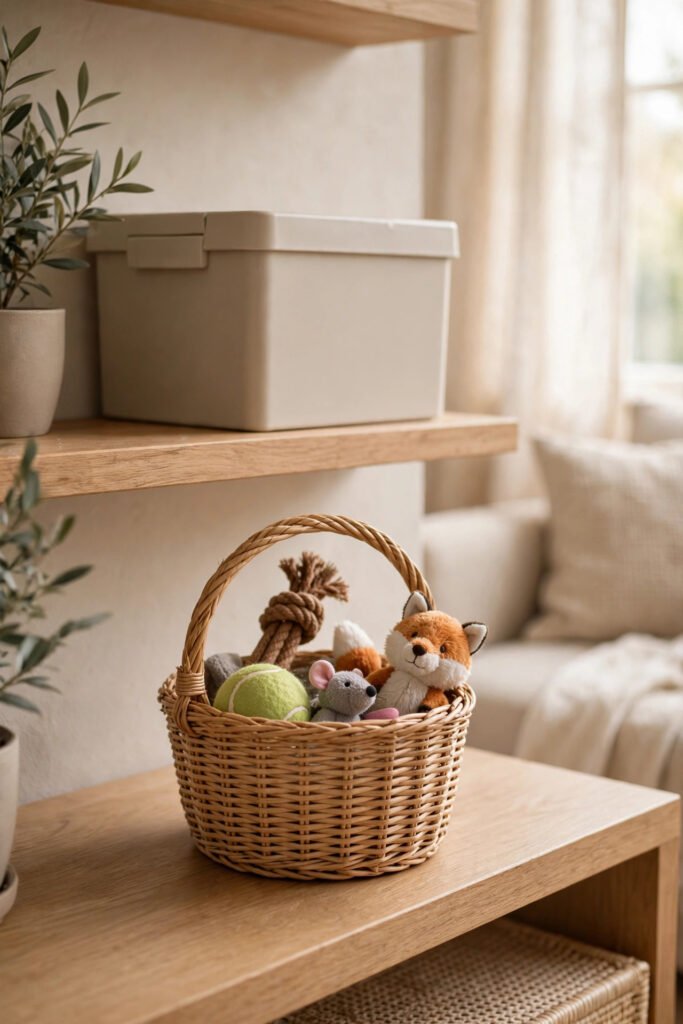
A toy rotation basket keeps playtime exciting without buying new toys every month. Keep a small basket of toys out for the week, and store the rest in a closed box on a shelf. When you swap the toys each Sunday, old favorites feel new again to your pet.
Choose four or five toys for the weekly basket, mixing chew toys, balls, and puzzle toys. Wash the toys before they go back into storage, so the rotation stays clean. A small weekly basket also limits clutter, because only a few toys are out at any time.
14. Place a Washable Mat Under the Feeding Bowls
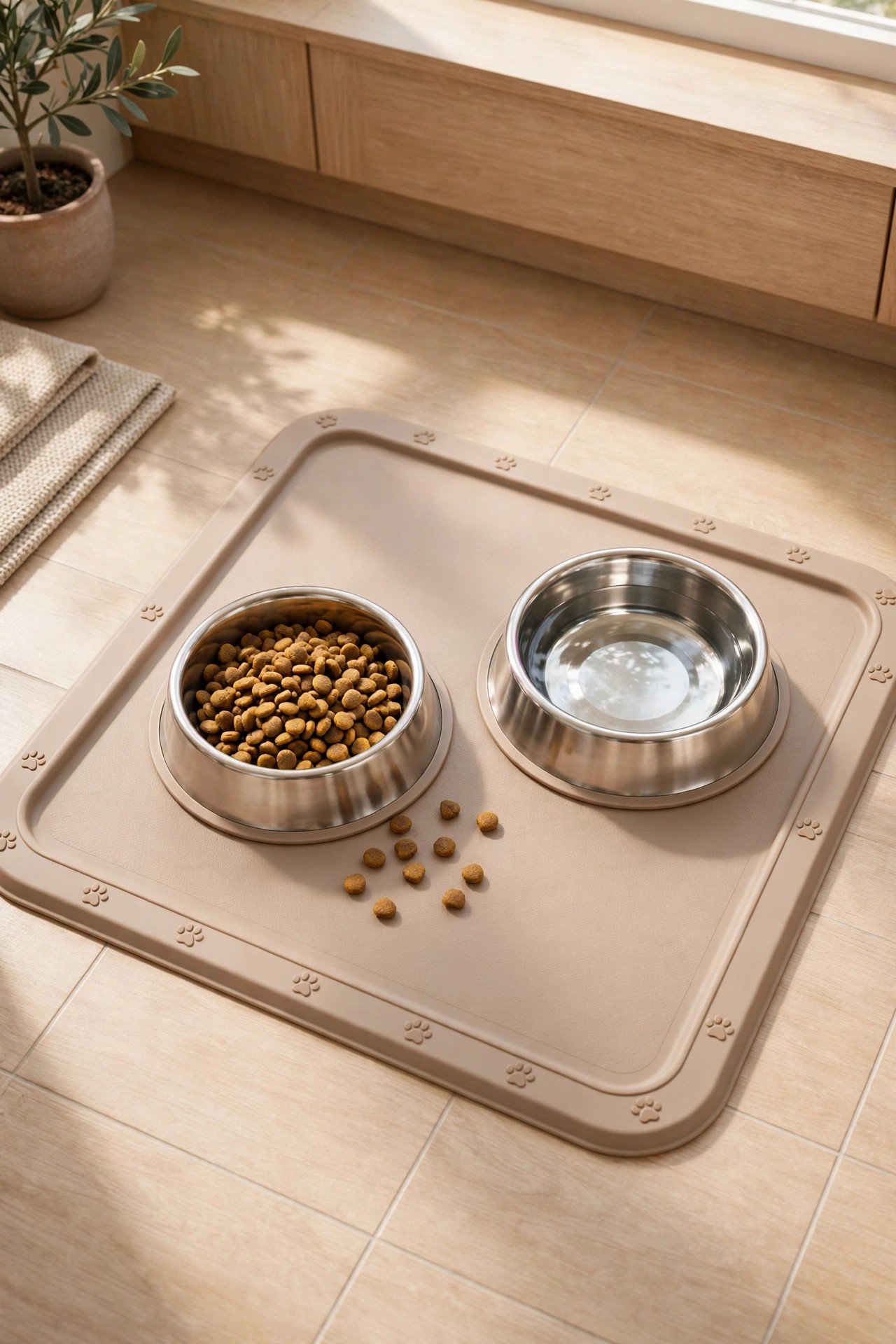
A washable mat under the feeding bowls catches spills, crumbs, and splashes before they reach your floor. Choose a mat with a raised edge and a non-slip base, sized to fit both bowls with room to spare. When the mat catches the mess, cleanup takes one quick wipe.
Pick a mat you can toss in the washing machine, so it stays fresh without extra work. Match the color to your kitchen or laundry room, and keep a spare mat so one is always clean. A feeding mat protects your floor and keeps the feeding corner looking tidy.
Conclusion
A tidy pet corner is not about fancy organizers or a bigger house. It is about giving food, toys, leashes, and grooming tools each a home you can find in the dark, in a hurry, or with a muddy pet at your heels. When every supply has a spot, pet care feels calm instead of chaotic.
A few minutes of tidying each evening keeps the whole system working, and these nightly reset routines show how to build that habit at home. Start with one idea that fits your biggest pet mess, such as a food bin or a leash station.
Frequently Asked Questions About 14 Pet Supply Organization Ideas for Food, Toys, and Leashes
How do I organize pet supplies in a small home?
Use vertical space, such as wall hooks for leashes, a rolling cart for daily essentials, and under-bed boxes for seasonal gear. Keep only the current week’s toys out, and store the rest in a labeled box on a shelf. Small homes stay tidy when every item has one clear home.
What is the best way to store pet food?
Keep pet food in a sealed, airtight bin with a tight-fitting lid, and store it in a cool, dry spot away from sunlight. Use a measuring scoop inside the bin so every serving is the same size. Always check the expiry date, and wash the bin before you refill it.
How do I keep pet toys from taking over the house?
Give toys one home, such as a labeled basket or a low shelf, and keep only a few out at a time. Rotate the toys each week from a storage box, so old toys feel new again. Teach everyone in the family to return toys to the basket after playtime.
Where should I keep leashes, collars, and waste bags?
Hang leashes and collars on hooks near the front door, and keep waste bags in a small basket or pouch on the same shelf. A grab-and-go station by the door means you can head out in seconds. Restock the station each evening so it is always ready.
How often should I clean my pet’s storage bins and bowls?
Wash food and water bowls every day, and wipe down storage bins and baskets once a week. Wash pet blankets and mats every week, or more often if your pet sheds a lot. A short weekly clean keeps supplies fresh and your home smelling clean.

Hi, I’m Emily! I turn messy corners into cozy, organized spots. DreamNestDecor is where I share simple, practical home ideas — decor, organization, and small-space solutions that work in real life, not just in photos. Every idea here is carefully researched before it’s shared.