
Swing open your refrigerator door on a busy morning. Bottles wobble. A small jar of mustard leans against a tall ketchup bottle. Something sticky has dripped down the shelf, and you are not sure what it is. You only wanted the jam, and now three other bottles are sliding toward you like they want to escape.
Most fridge doors turn into a traffic jam because the door is narrow, the shelves are deep, and small bottles have nothing to hold them. They fall over in rows, they hide behind each other, and you end up buying a second bottle of something you already own. It is not your fault. The door was never designed with sixteen kinds of sauce in mind.
But a calm door is easier to build than you think. You do not need a new fridge. You do not need expensive gadgets. You only need a few smart refrigerator door organization ideas that give every small bottle a real home. These 16 ideas will turn that wobbly door into a shelf you actually enjoy opening.
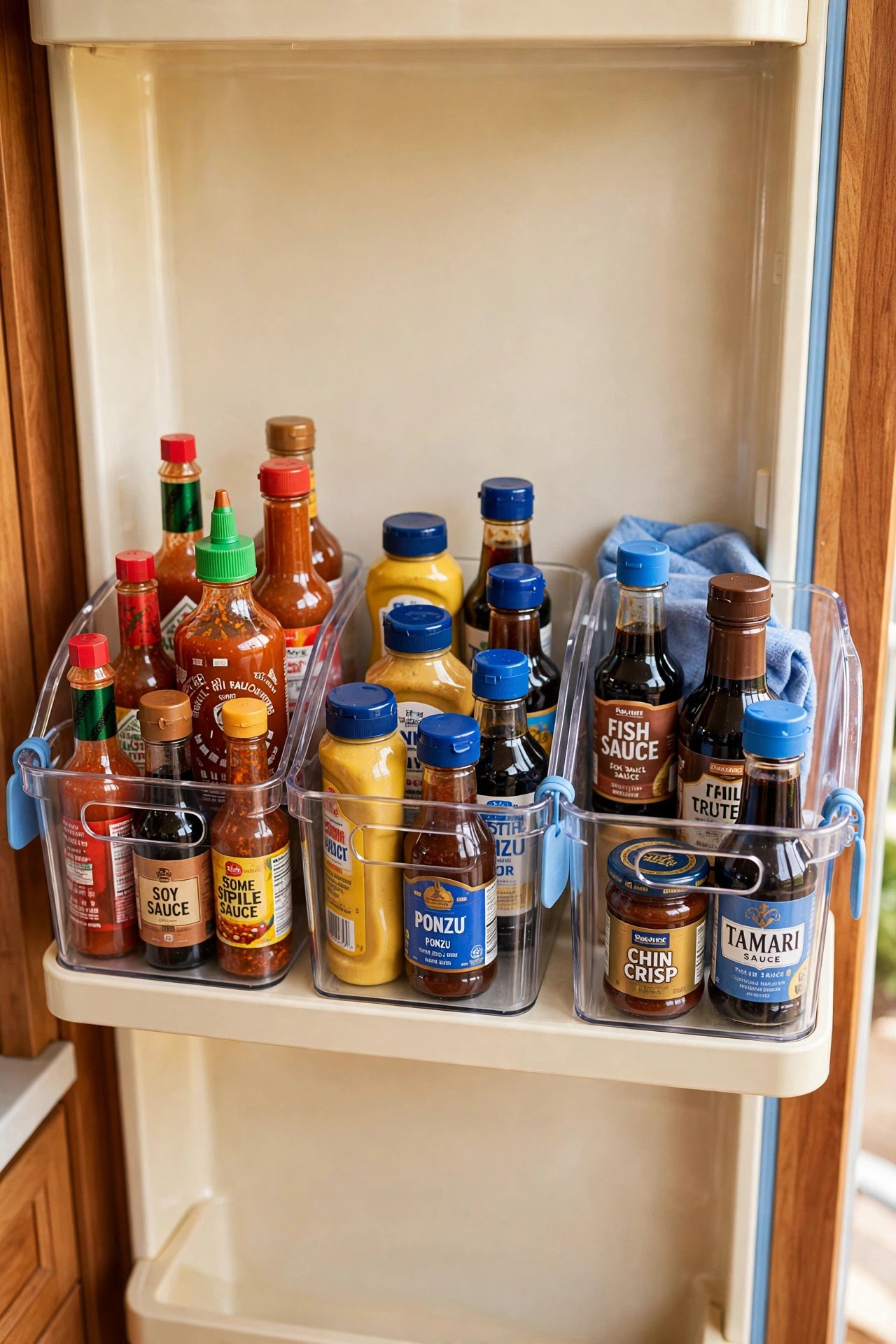
1. Corral Small Bottles in Clear Bins:
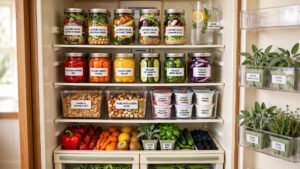
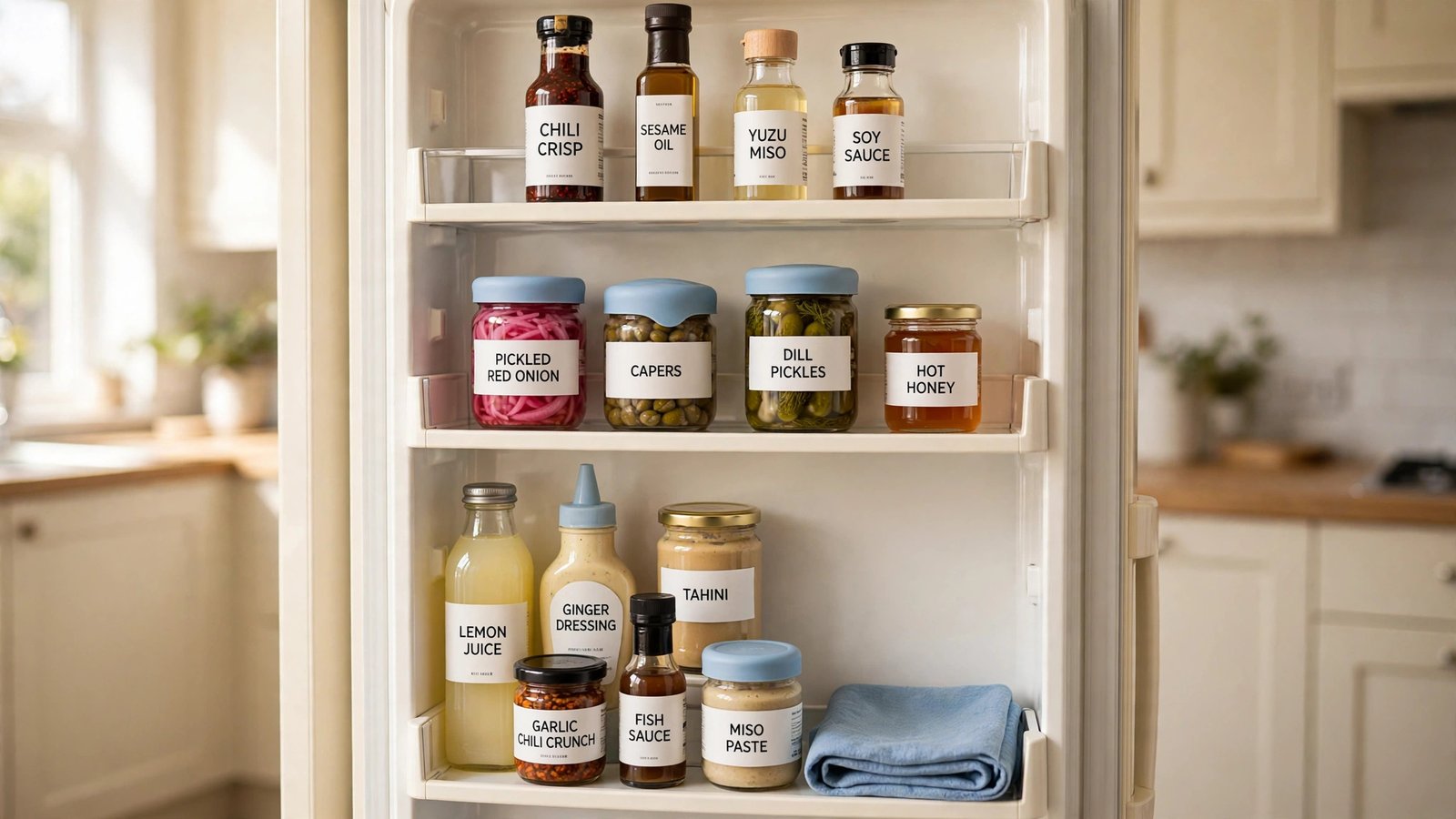
Clear bins are the fastest way to stop door chaos. Instead of ten loose bottles sliding around, you get two or three tidy groups that move as one. Pull out the whole bin, grab what you need, and slide it back. The door opens and closes without a single bottle tipping over, which feels like a small miracle on a busy morning.
Choose bins that are shallow enough for the door but tall enough to hold bottles upright. Fill one with cooking sauces and another with breakfast items so your hand knows where to go before your eyes do. If you love smart ways to make a small kitchen work harder, explore these 20 Small Kitchen Ideas for the Coziest Cottage Retreat Ever too.
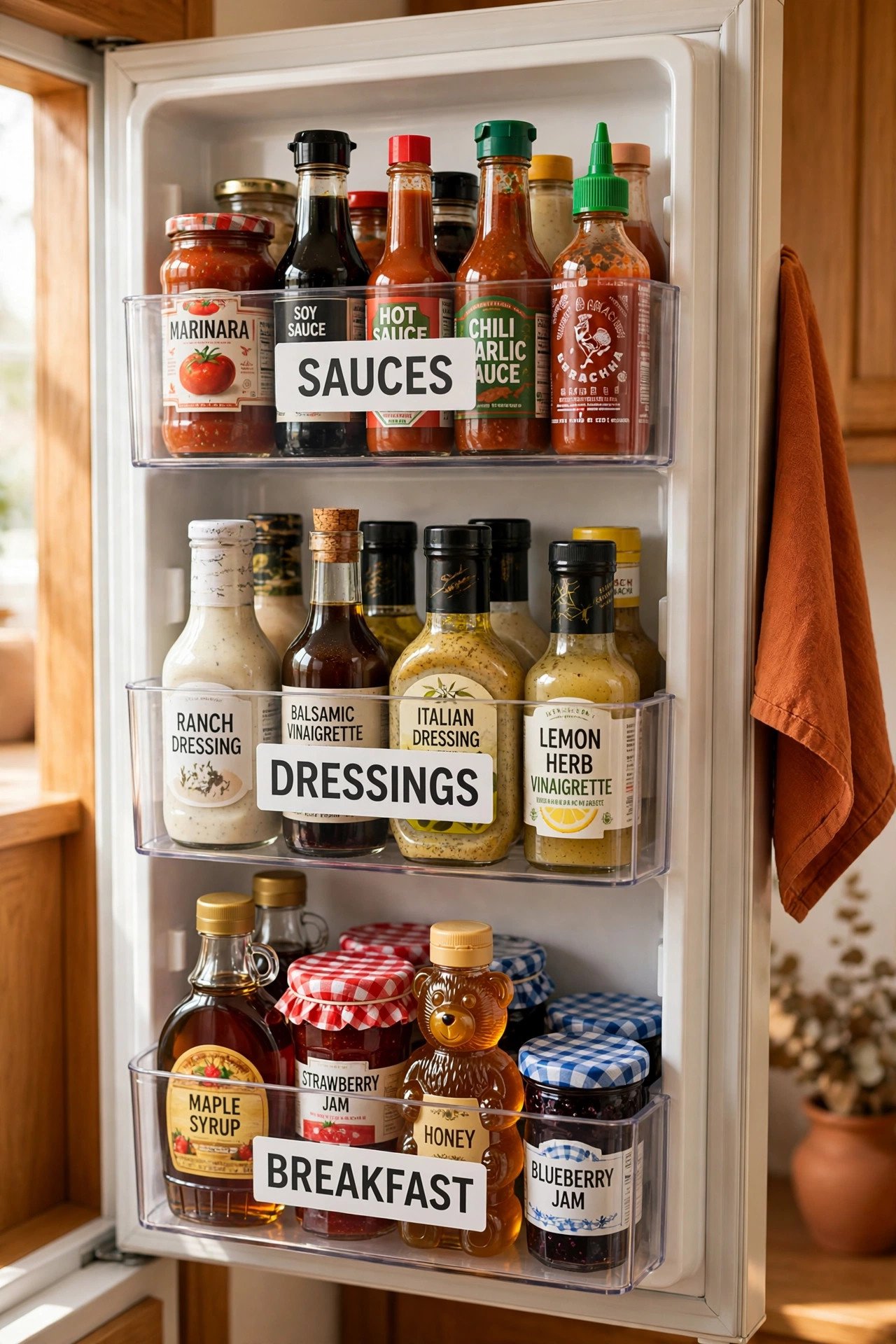
2. Label Every Bin and Bottle Group:
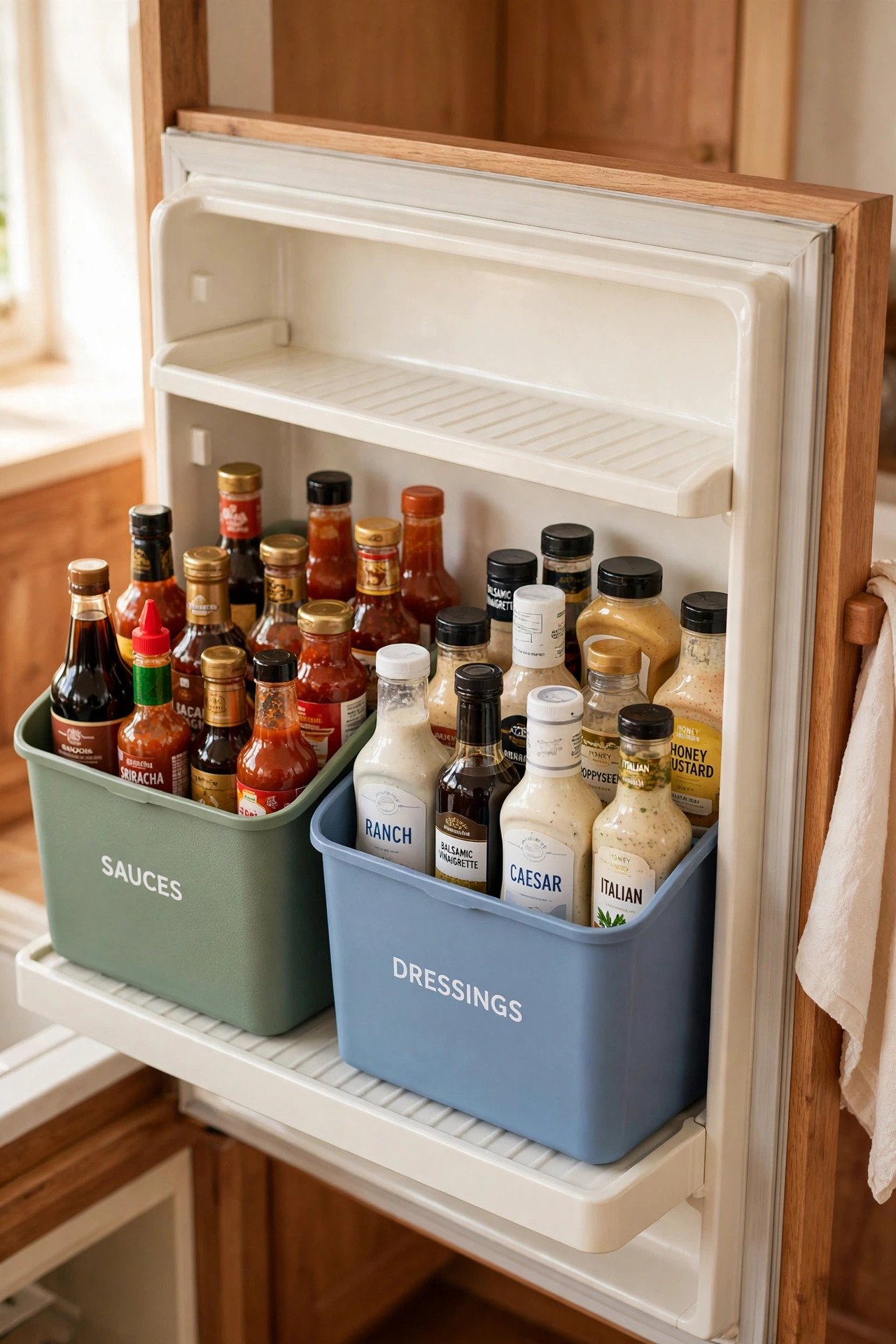
Labels turn a neat door into a door that stays neat. When a bin says SAUCES in big white letters, nobody puts the jam jar there. It sounds simple, but that one little word removes all the daily guessing. Your family will put things back where they belong because the answer is printed right on the bin.
Keep the words short and broad so they still make sense next month. A label printer, masking tape, or simple sticker tags all work well. Labeled zones keep the whole house calmer, the same way a tidy drop zone keeps chaos out of your entry. See these 21 Mudroom Entryway Ideas for a Clean and Perfectly Organized Home for proof.
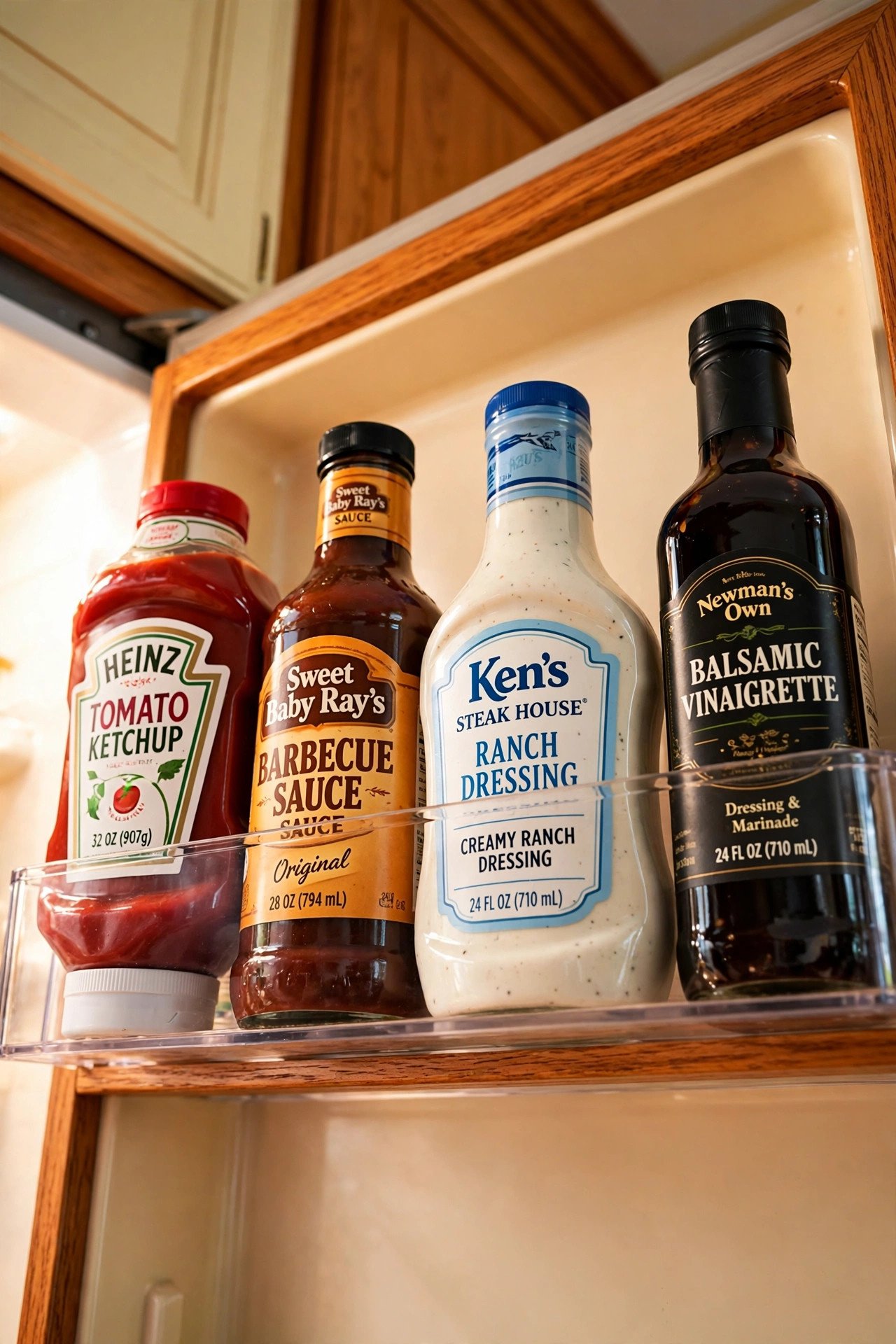
3. Stand Tall Bottles on the Deep Bottom Shelf:
The bottom shelf of the door is the deepest one, and it is perfect for your tallest bottles. Ketchup, barbecue sauce, and big salad dressings stand there without leaning on their neighbors. Because the shelf is low, even tall bottles stay safely below the spill line when you swing the door open.
Keep this shelf for tall things only. Short jars disappear behind tall bottles, so move them up to a shallow shelf where you can see them. One row of tall bottles along the bottom makes the whole door look calmer in seconds.
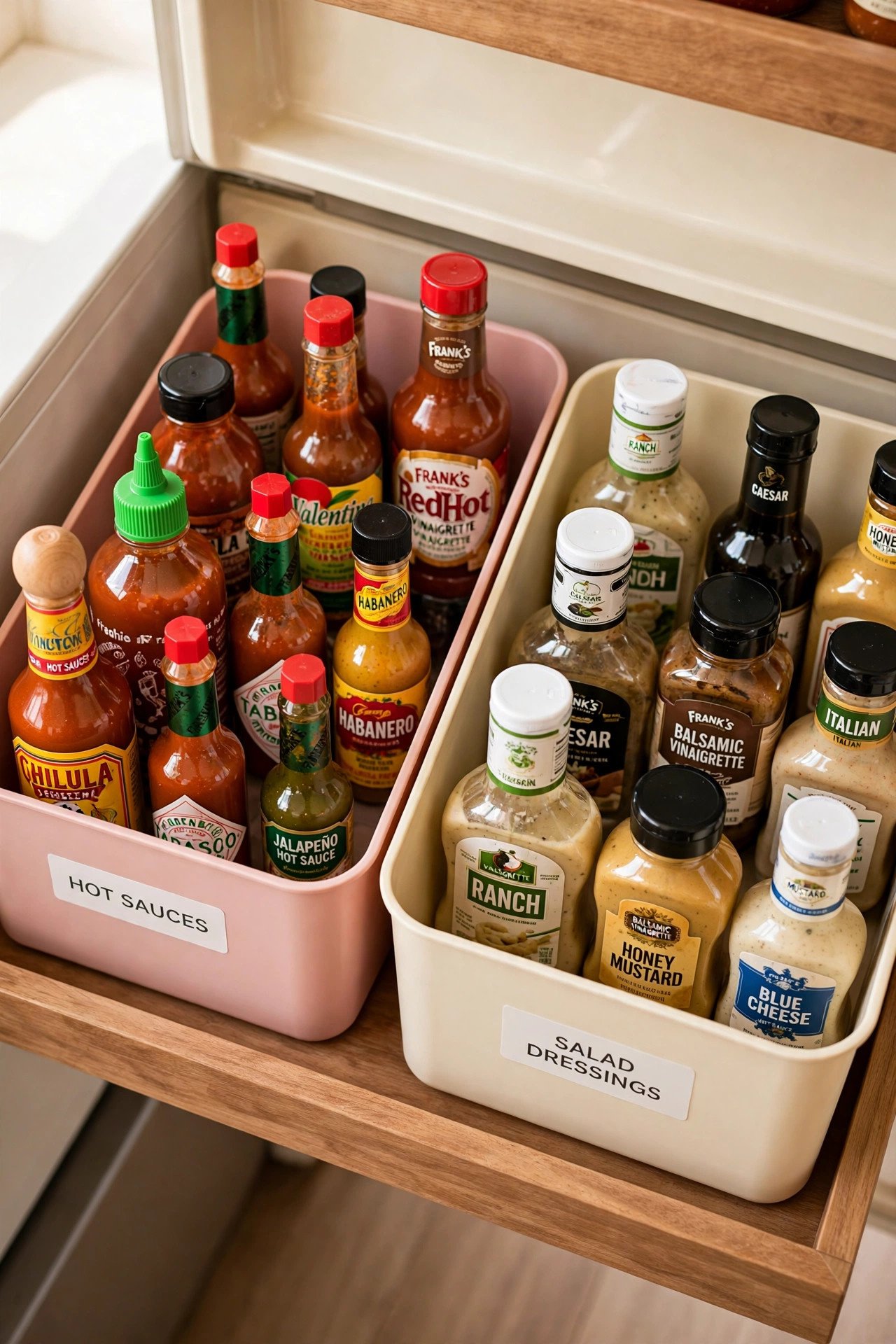
4. Give Every Sauce Family Its Own Zone:
Hot sauces want to live with hot sauces. Dressings want to live with dressings. When sauce families share a zone, you stop scanning the whole door and start reaching straight for the right spot. Dinner prep gets faster because you are not reading every label while the pasta boils over.
Start with the families you use most, like taco night sauces or salad dressings. A small bin or a simple divider can mark each zone. Give it a week and your hand will find the right bottle before your brain even asks.
5. Keep Daily Bottles at Eye Level:
The bottles you touch every day deserve the easiest spot. Mustard, mayo, and your favorite hot sauce should sit at eye level where you can grab them without looking down or stretching up. This one change saves you more daily effort than any fancy organizer on the market.
Move the rarely used bottles, like that specialty sauce from last summer, to the top or bottom shelf. Your door should serve your real life, not a guest you might impress once a year. Daily items stay up front, and occasion items move to the back.
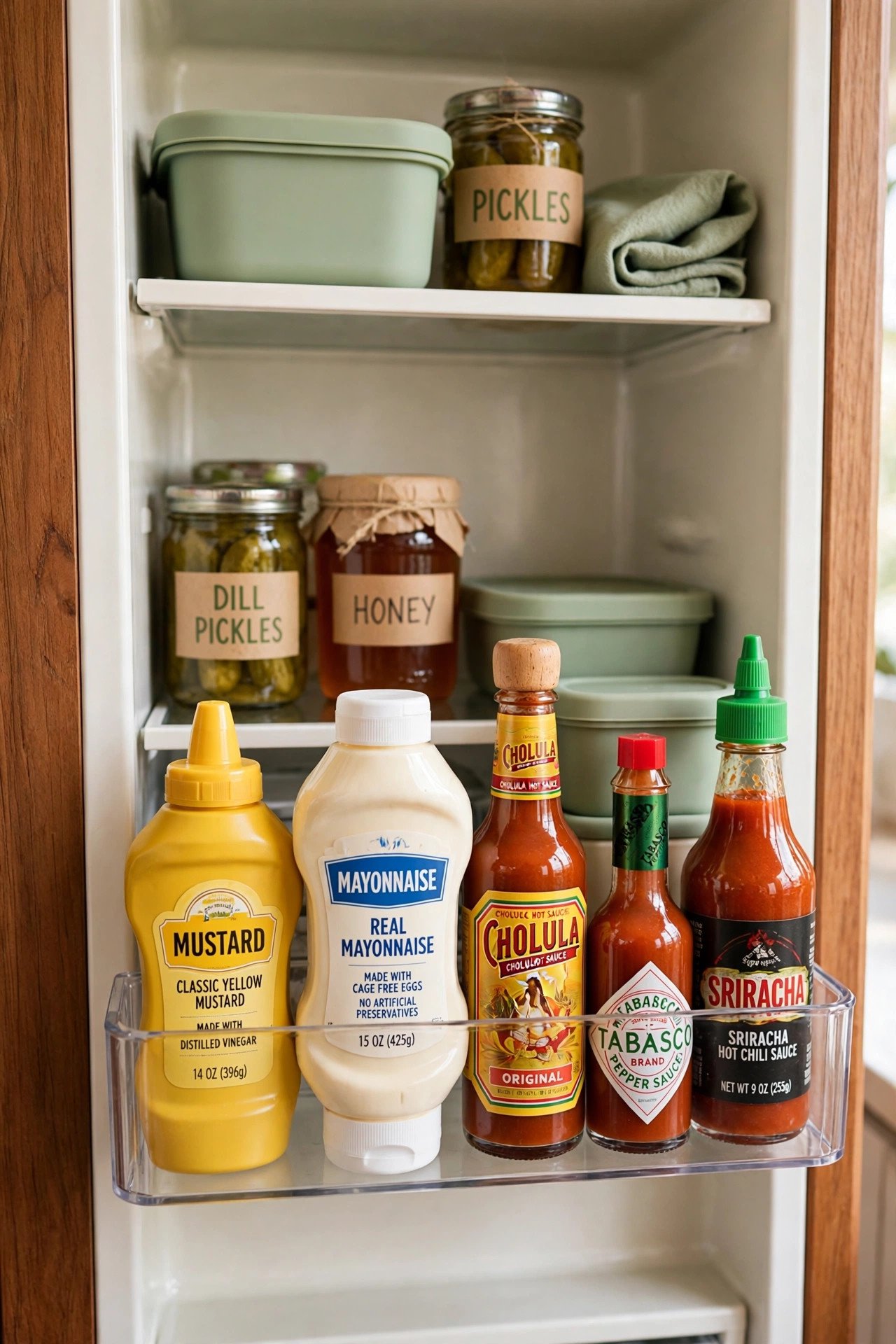
6. Split Wide Shelves With Slim Dividers:
A wide door shelf is an open invitation for bottles to wander. Slim dividers turn one big runway into two or three neat lanes, and suddenly every bottle has a lane to stand in. Nothing slides sideways when the door swings, which is half the battle with small bottles.
Look for narrow clip-on dividers made for fridge doors, or use small bins as natural walls. Leave a little breathing room between lanes so bottles slide in and out without a fight. Your door will look like a tiny grocery store shelf.
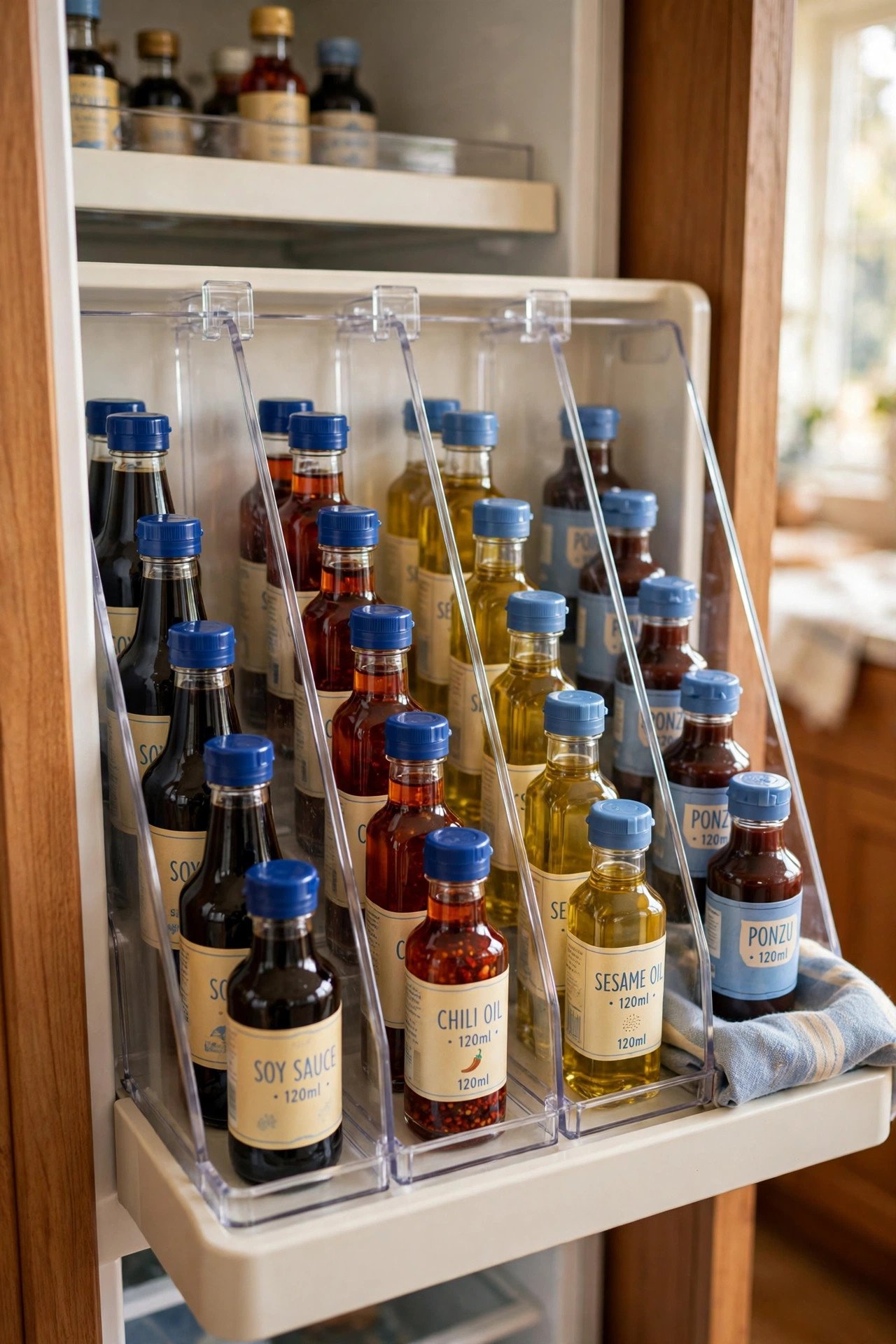
7. Reserve One Shelf for Fast-Grab Favorites:
Not every bottle needs equal attention. Pick the five or six bottles you reach for all week and give them their own shelf. This is your fast-grab shelf, and it should never hold anything you use only once a month. When you are cooking in a rush, this shelf is the only one that matters.
Review this shelf every few weeks and be honest about what earned its spot. If a bottle has sat untouched for a month, move it down a shelf and promote a real favorite. A fast-grab shelf works only when it stays exclusive.
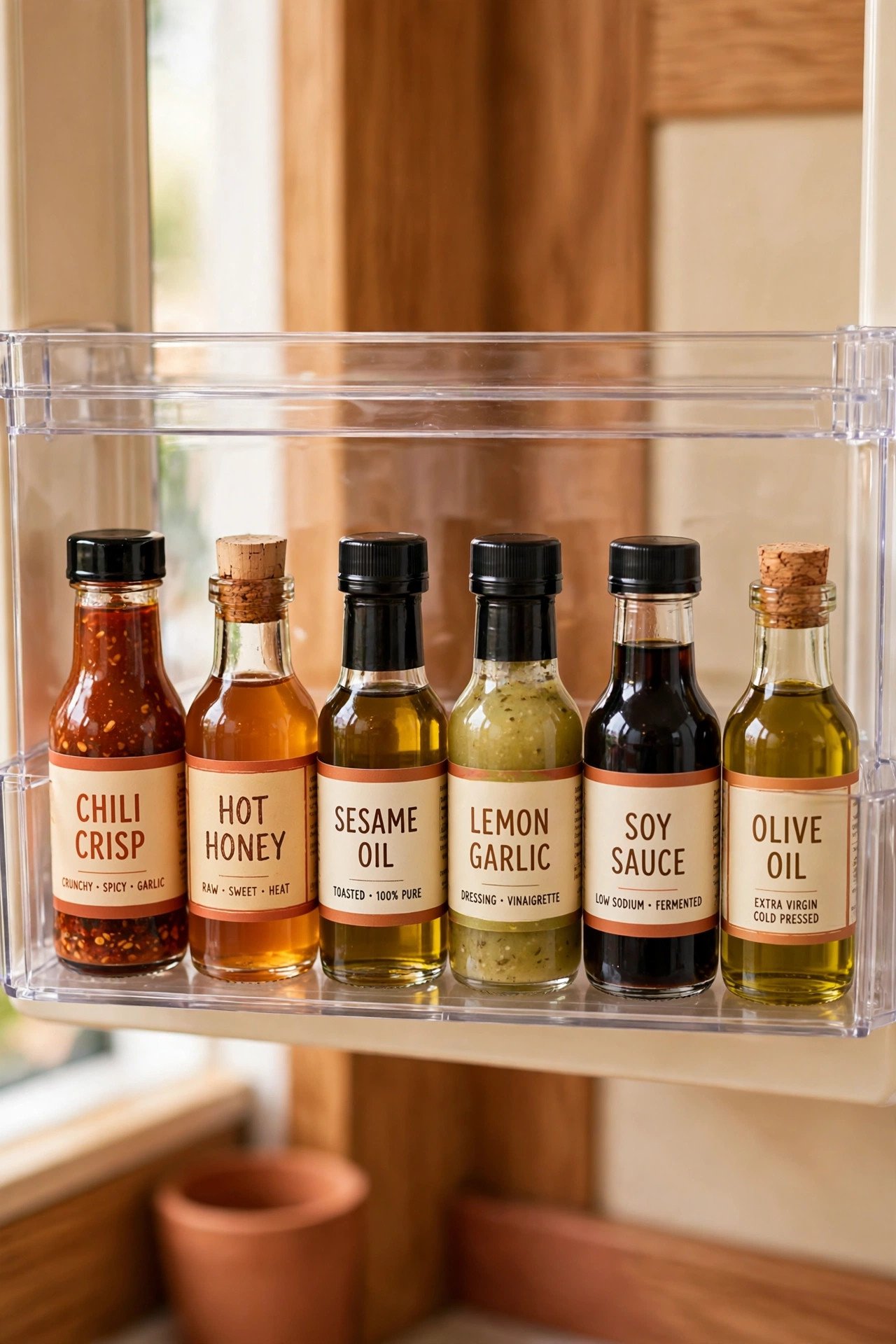
8. Add a Slim Rack for Tiny Jars:
Tiny jars are the hardest bottles to tame. They fall over, they roll behind bigger bottles, and they vanish for months. A slim clip-on rack gives them a narrow home where they stand in a single neat row. Small jars finally behave when they cannot lean on anything else.
This trick is gold in a small kitchen where every inch counts. If you are short on space everywhere, these 23 Small Space Boho Solutions will help you stretch the rest of your home too.
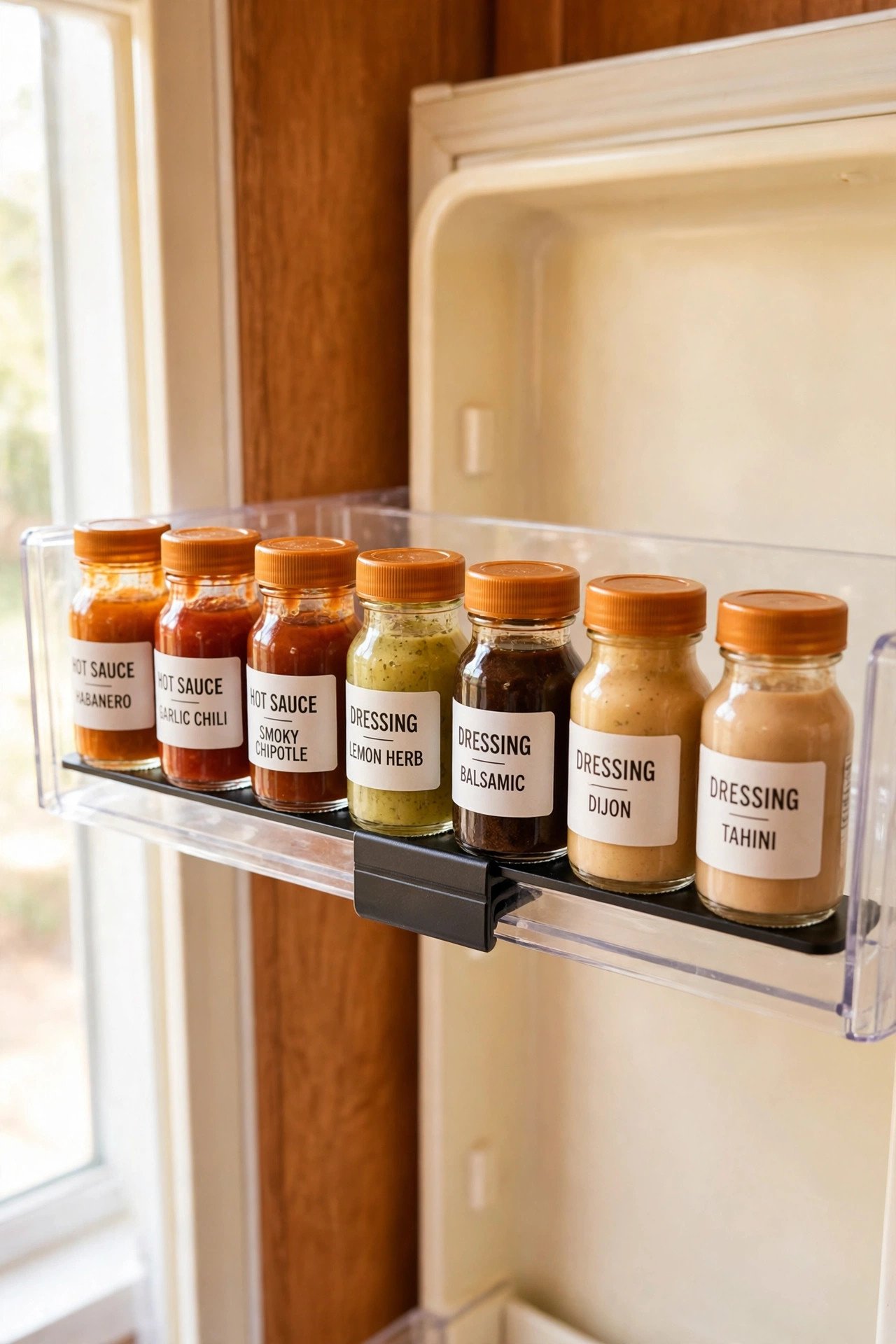
9. Color-Code Your Bottle Groups:
Color coding is the fastest visual shortcut you can add. A sage green bin for sauces and a soft blue bin for dressings lets your eyes sort everything before your hands move. You do not even need to read labels anymore, which makes rushed mornings so much smoother.
Stick to two or three colors so the door looks calm instead of busy. Match the bin colors to your kitchen if you can, because a door you find pretty is a door you will keep tidy. This is organization that doubles as decoration.
10. Spin a Small Turntable on the Door Shelf:
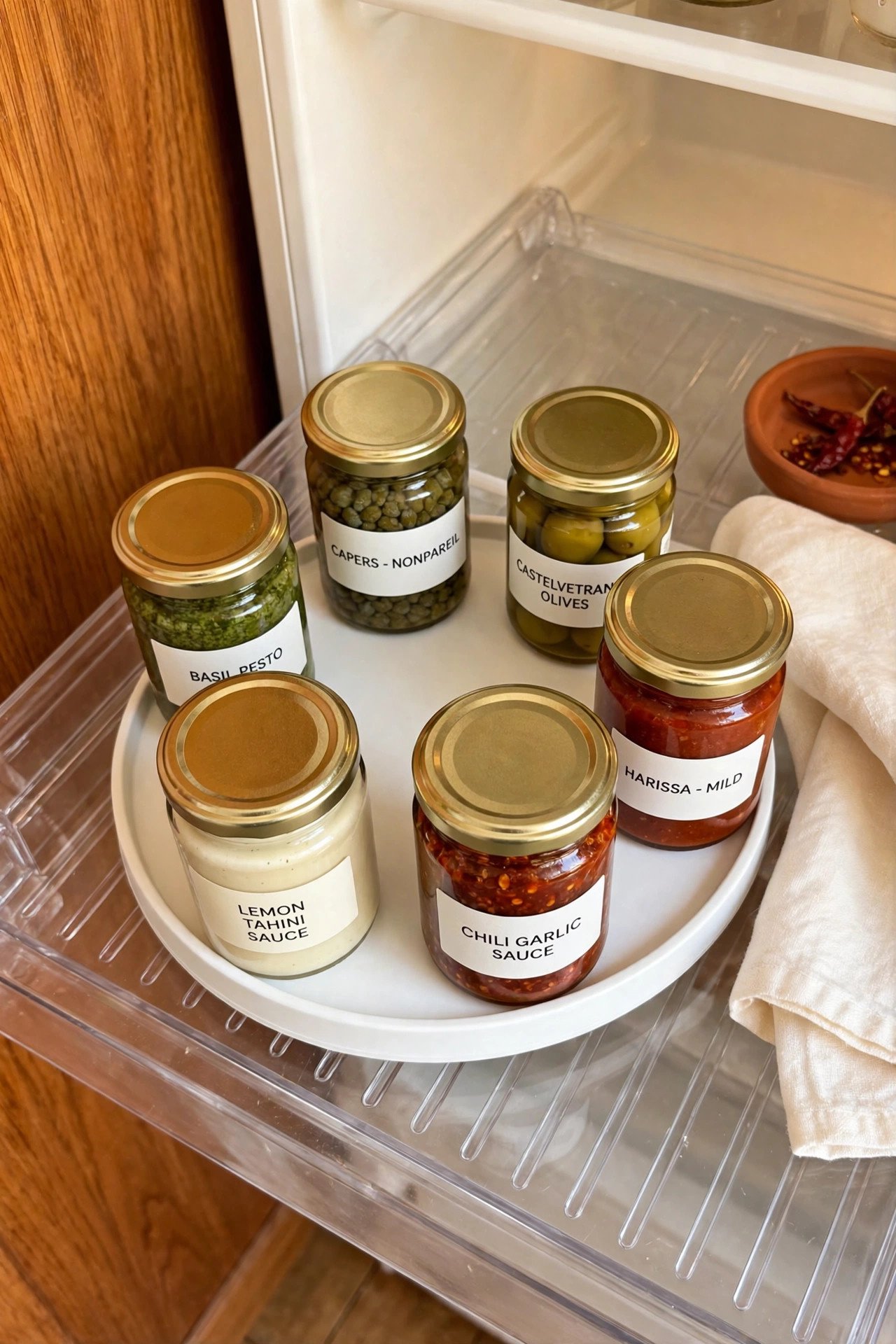
A turntable on a door shelf feels like magic the first time you use it. Give it a spin and the bottle hiding in the back rolls right to your hand. Small jars of capers, olives, and mini sauces stop disappearing because nothing sits behind anything else anymore.
Choose a small turntable that fits the door shelf with room to spin freely. Keep the turntable for round jars and small bottles, and leave square boxes elsewhere. One slow spin beats ten minutes of digging every single time.
11. Build a Drink Station on One Side:
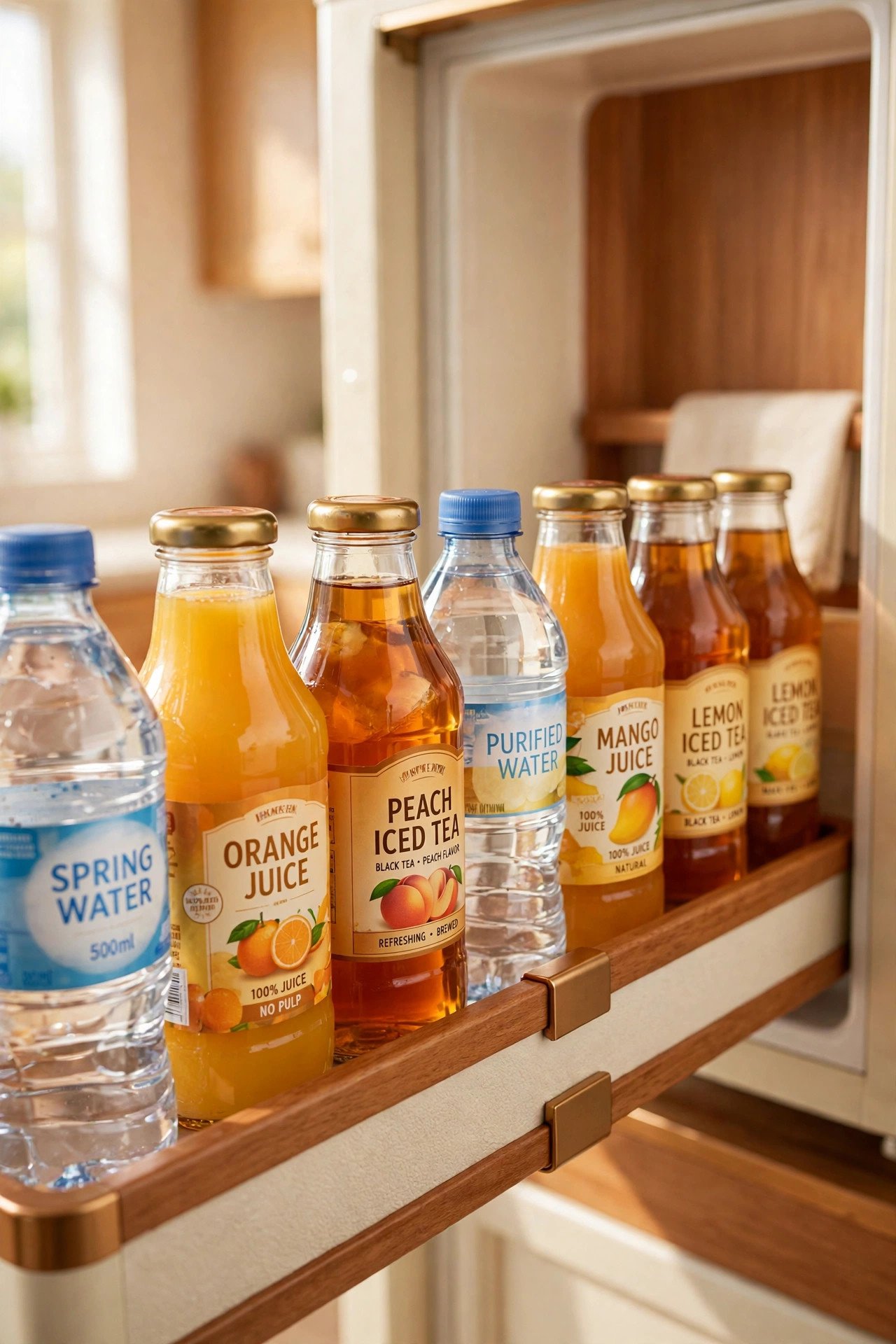
Bottled water, juice, and iced tea take over door shelves fast if you let them. Give drinks their own side of the door and they stop crowding out the condiments. A dedicated drink station means kids can grab water without knocking over the mustard.
Line the bottles up in one neat row with labels facing out. Restock it on the same day each week so it never overflows or runs dry. A calm drink corner keeps the rest of the door calm too.
12. Hang Magnetic Bins on the Fridge Side:
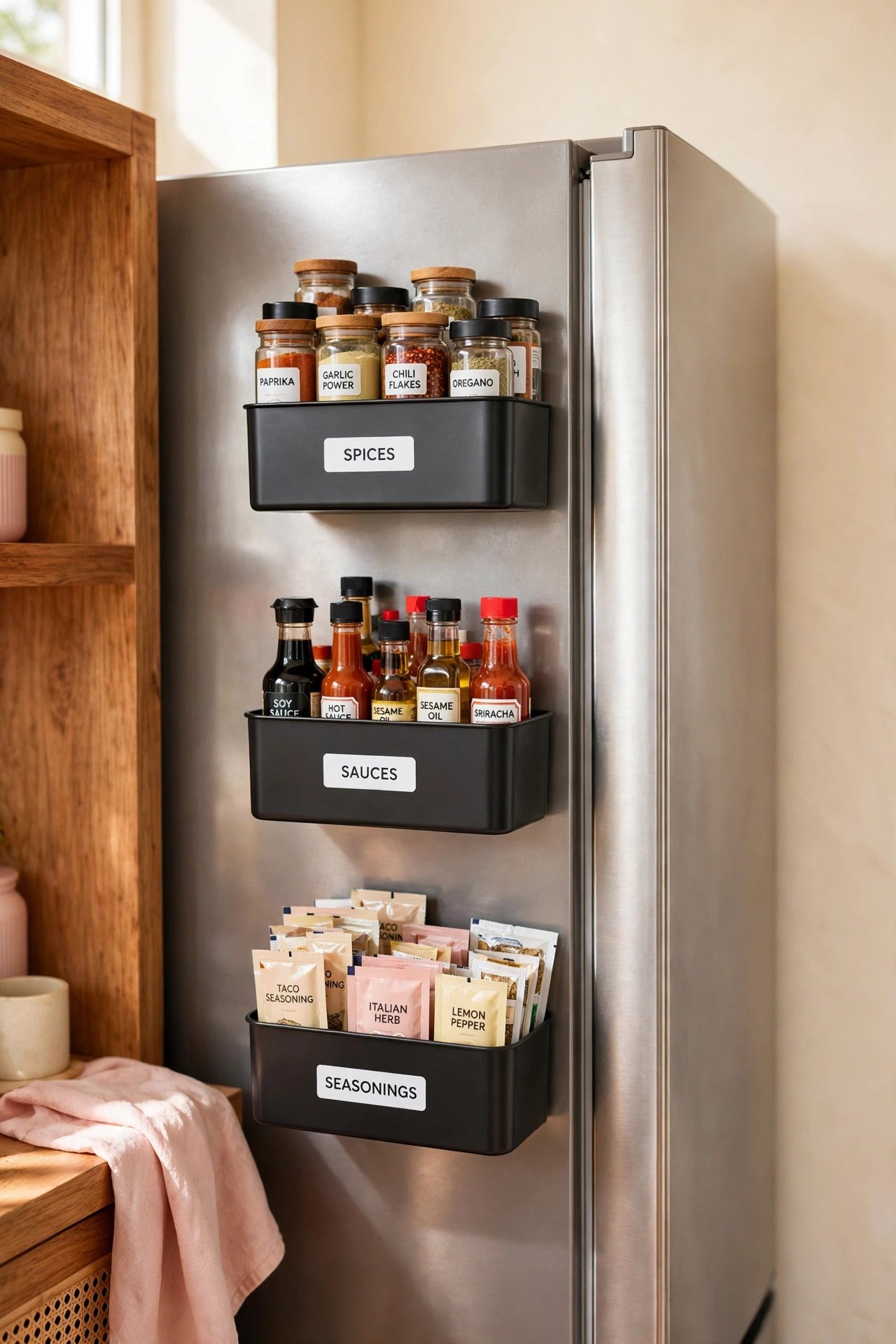
The side of your fridge is wasted space, and magnetic bins turn it into bonus storage. Stick on a few small bins and fill them with spice jars, tiny sauce bottles, or seasoning packets. They hold tight, they cost little, and they free up a whole door shelf.
This is a renter-friendly win because nothing needs screws or drilling. If you rent and love damage-free upgrades, you will enjoy these 24 Rental Friendly Decor Hacks to Personalize Any Space as well.
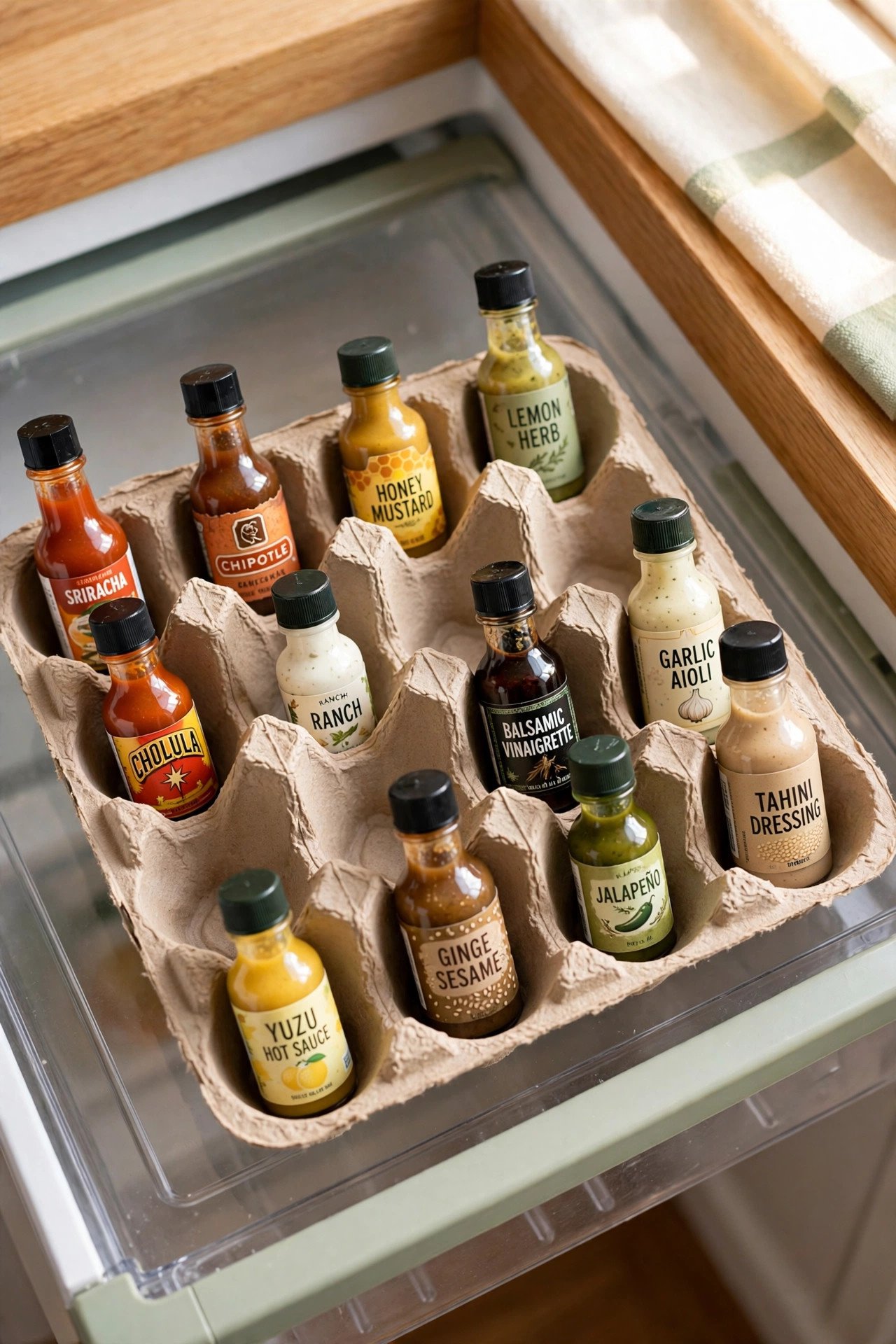
13. Park Bottles in an Egg Carton:
An empty egg carton is the cheapest bottle organizer you will ever own. Cut the lid off, set the bottom half on a door shelf, and stand one small bottle in each cup. The cups grip the bottles so they stay upright when the door swings, even the almost-empty ones.
This trick shines for tiny bottles that never stand on their own, like mini hot sauces or sample dressings. Replace the carton when it gets sticky, which takes about ten seconds. Sometimes the best organizer is already in your recycling bin.
14. Line Shelves for Spill-Proof Cleanup:
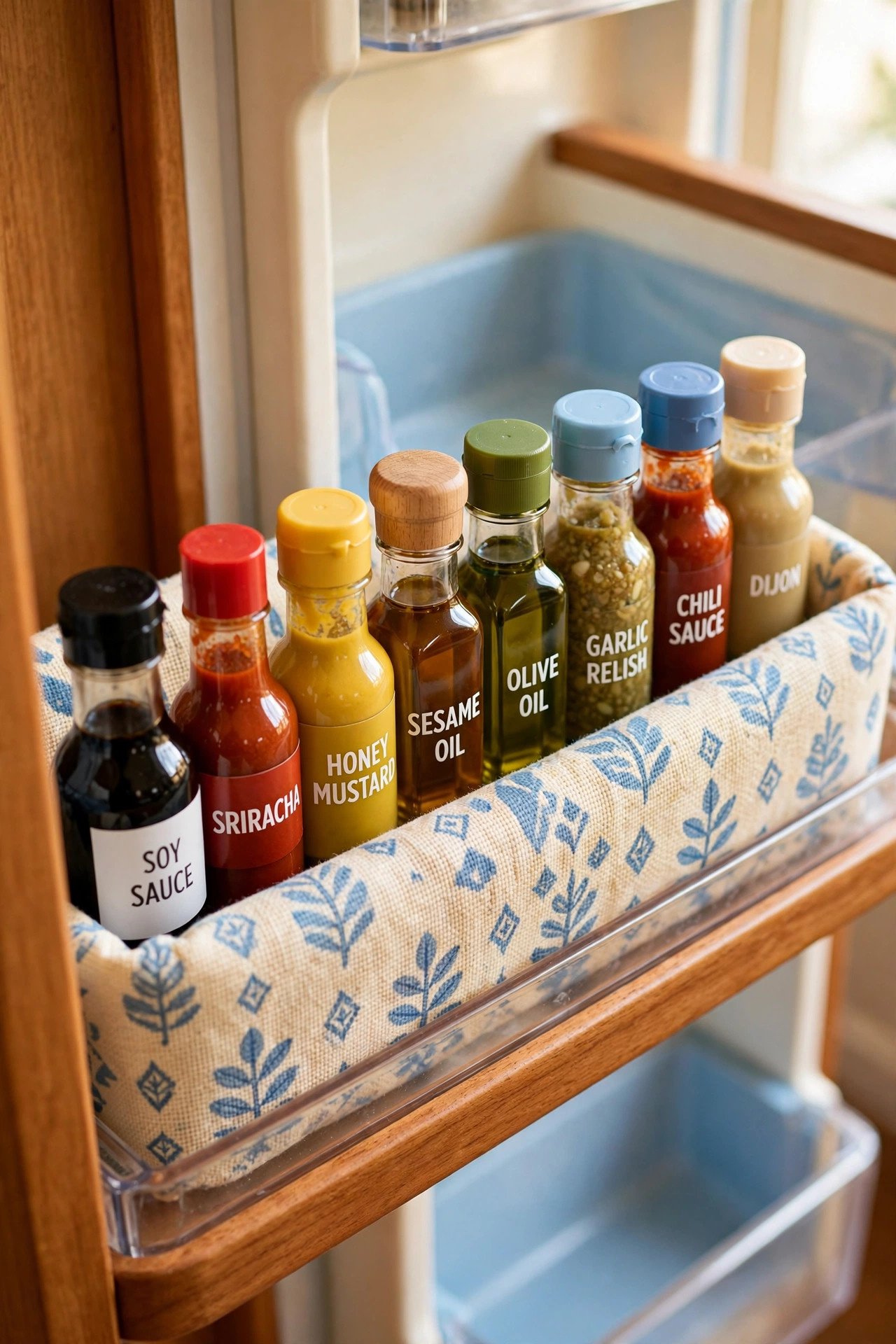
Sticky door shelves are a fact of life, but liners make them a five-minute problem. A washable liner catches the drips from ketchup and syrup before they glue themselves to the shelf. When it gets messy, you pull it out, rinse it, and slide it back in.
Choose liners that grip so bottles do not slide on top of them. Cut them to fit each shelf with no curling edges. Clean shelves also make bottles look better, which quietly encourages everyone to keep them neat.
15. Decant Packets Into Small Jars:
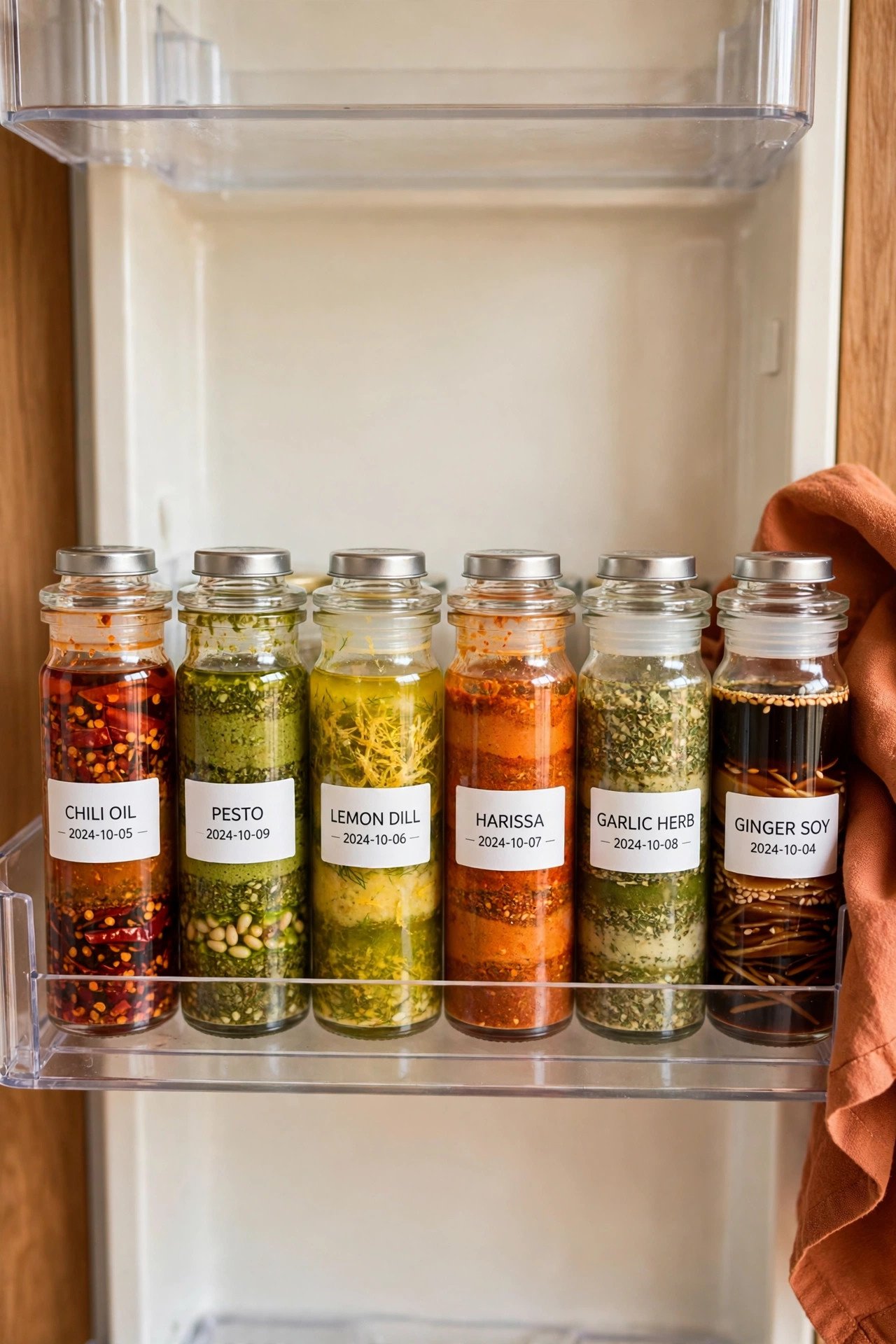
Sauce packets and seasoning pouches turn into door clutter faster than anything else. Pour them into small glass jars with lids and they stack neatly, stay fresh, and look twice as nice. You can see exactly how much is left, so you stop buying duplicates.
Add a small label with the name and the date you opened it. Clear jars work best because you can spot what you need at a glance. If you love visible storage systems, bring the same idea to your closet with these 20 Vintage Wardrobe Storage Ideas.
16. Declutter and Wipe on a Schedule:
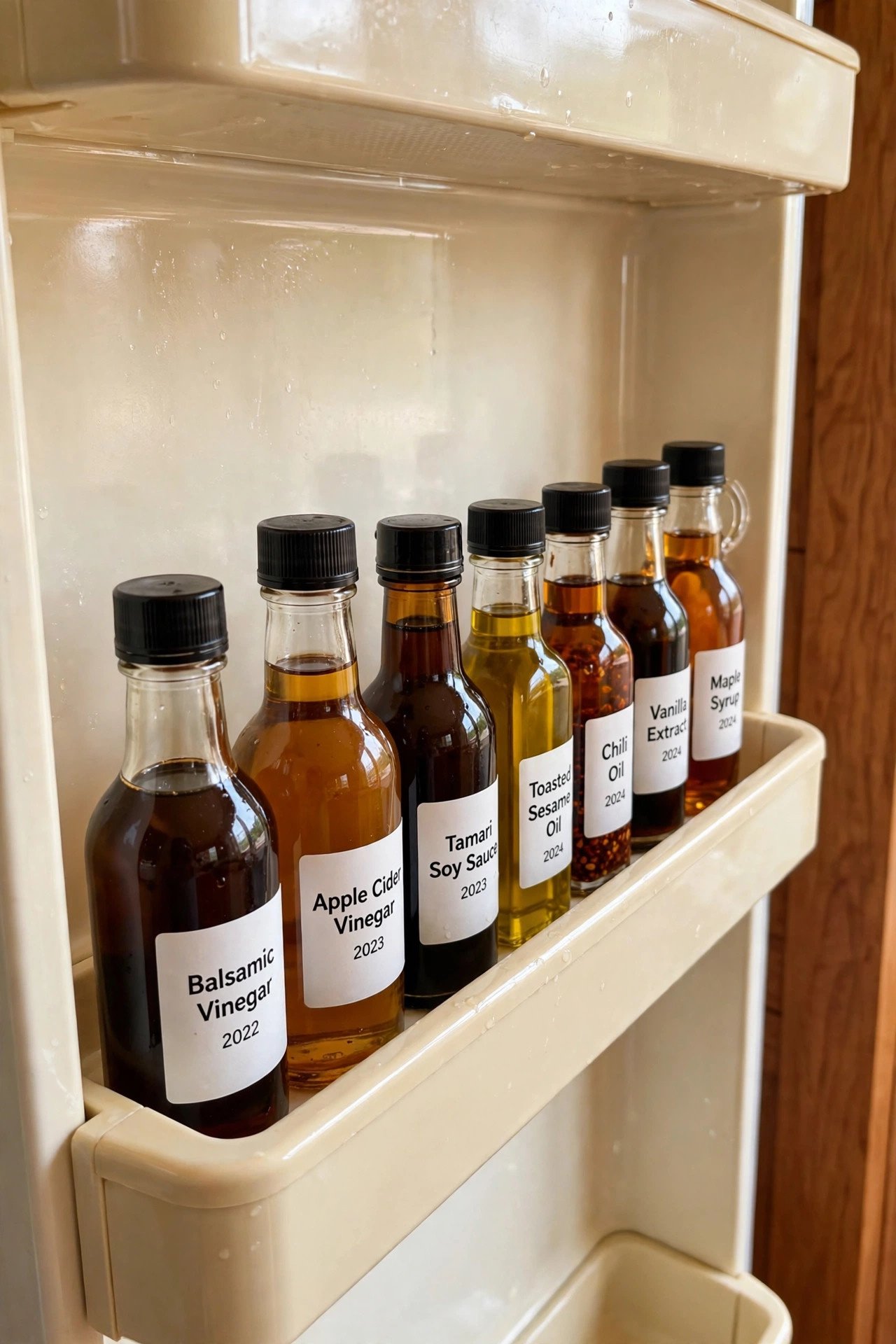
Even the best system needs a reset. Once a month, pull everything off the door, toss what is expired, and wipe the shelves. You will be amazed how many duplicates and mystery bottles appear. A quick declutter keeps the door from slowly sliding back into chaos.
Check dates as you go and put the oldest bottles in front so they get used first. This small habit wastes less food and keeps the door honest. A clean door is not a one-time project. It is a rhythm that takes ten minutes a month.
Conclusion
Small bottles take over the fridge door fast, but a few smart zones bring instant order. Group condiments together, give tall bottles their own shelf, and use small bins so nothing tips over.
Pick one door shelf to fix today. With every bottle visible and easy to grab, your fridge door will finally feel calm.
Frequently Asked Questions About Refrigerator Door Organization
What should I store in my refrigerator door?
Store condiments, sauces, jams, and drinks in the door. These items handle the warmer temperature of the door better than milk or eggs, which belong on the colder inner shelves. Keep the door for small bottles and sturdy jars, and move dairy and raw meat to the main shelves where the cold stays steady.
How do I stop small bottles from falling over in the fridge door?
Group small bottles in bins, narrow racks, or even an egg carton so they brace against each other. Slim dividers also keep bottles from sliding sideways when the door swings. The key is giving every bottle a snug spot instead of leaving wide empty gaps where bottles can wander and tip.
How often should I clean my refrigerator door shelves?
Wipe the door shelves once a month and do a deeper declutter every season. Pull everything out, check the dates, toss expired bottles, and wash the shelves and liners. Monthly attention takes about ten minutes and keeps sticky buildup from turning into a permanent mess.
Are clear bins or solid bins better for the fridge door?
Clear bins work best in the fridge door because you can see every bottle without pulling the bin out. Solid bins hide clutter better, so choose them only if the door looks messy no matter what you do. Either way, add labels so everyone knows where each bottle belongs.
Can I organize my fridge door without buying anything?
Yes. Rearrange bottles by how often you use them, stand tall bottles on the bottom shelf, and use an egg carton or small boxes you already own to corral tiny bottles. A free declutter and a simple zone system can fix most door chaos before you spend a single coin.

Hi, I’m Emily! I turn messy corners into cozy, organized spots. DreamNestDecor is where I share simple, practical home ideas — decor, organization, and small-space solutions that work in real life, not just in photos. Every idea here is carefully researched before it’s shared.