
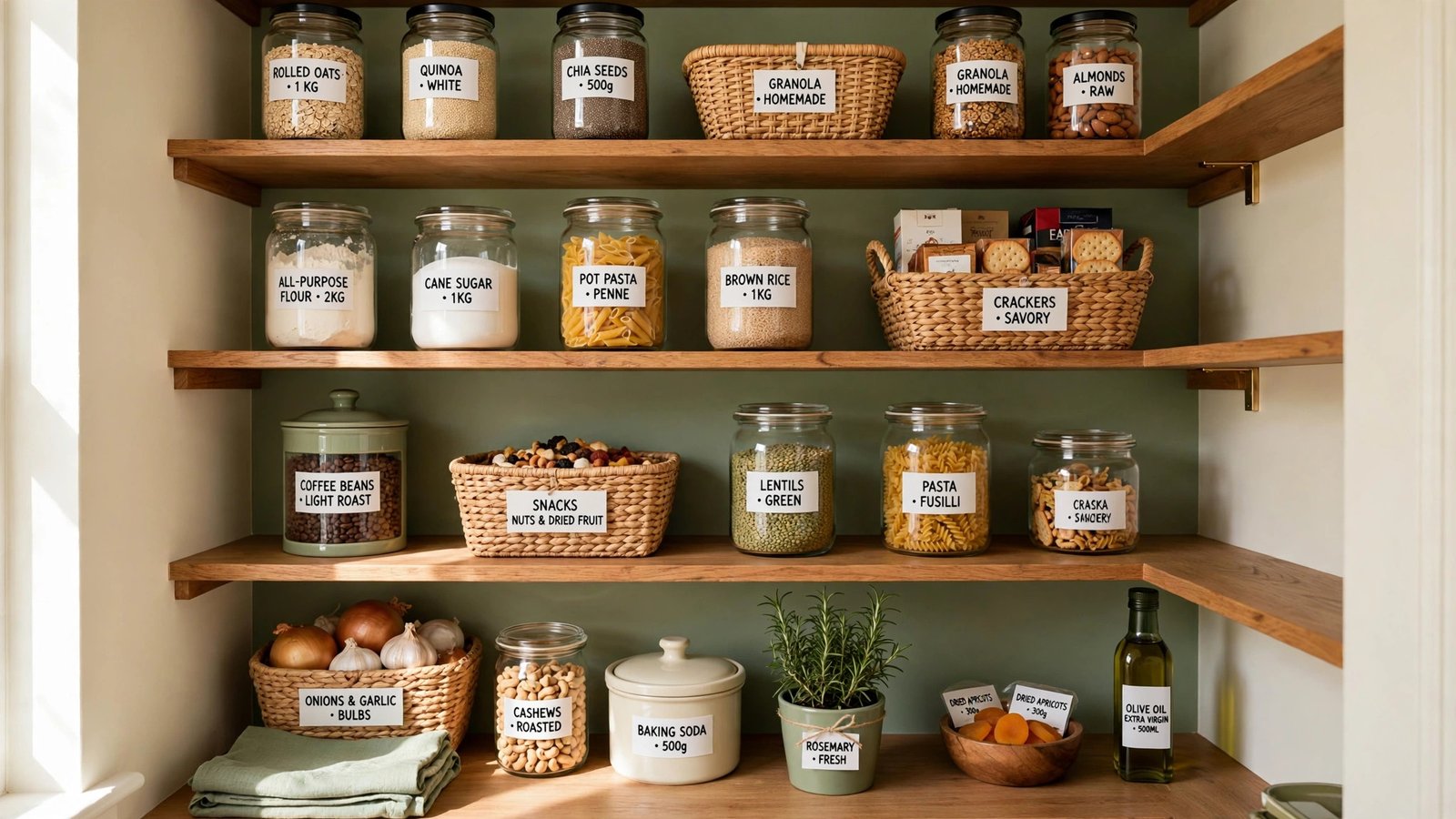
Open your pantry door and take a deep breath. What hits you first? The smell of old cereal boxes, a leaning tower of cans, and that one flour bag that always spills a little trail across the shelf. You push a jar aside, knock over a spice bottle, and give up before you find the pasta.
Deep shelves make everything worse. The food in front hides the food in back, so you buy a third jar of tomato paste when you had two. Narrow shelves bring their own trouble: everything fits, but only in one tight row that turns into a domino line.
You do not need a walk-in pantry or a full remodel. These 19 pantry organization ideas are made for shelves that are deep, narrow, or both. They will help you see everything you own, reach what you use, and keep the space feeling calm. One shelf at a time.
1. Line Narrow Shelves With Warm Wood and Baskets:
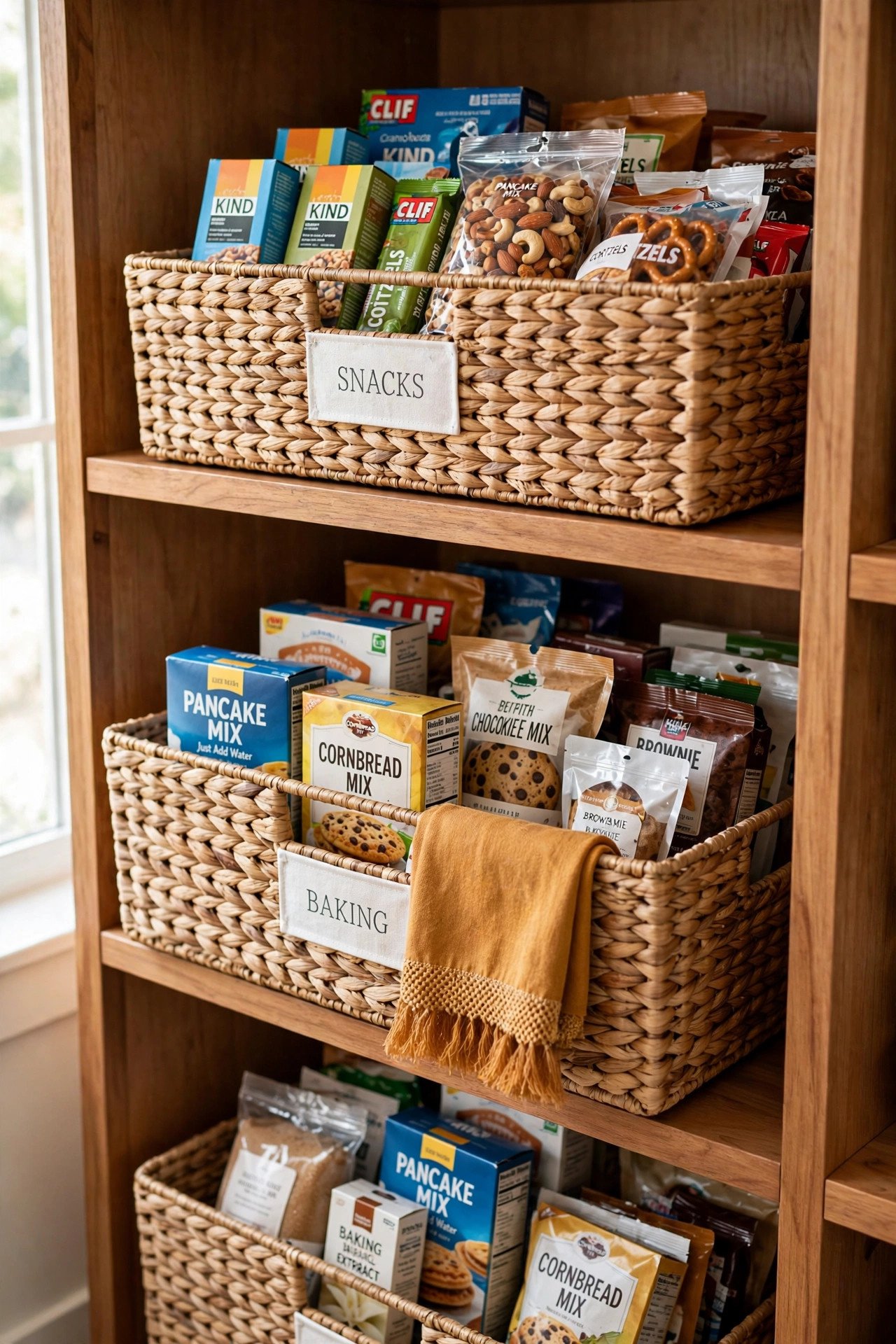
Narrow shelves look best when they feel warm instead of cramped. Line them with wood-toned shelf liners or paint the back panel soft cream, then add woven baskets that slide like drawers. The baskets catch the small packets and bars that usually roll into the dark.
Fill each basket with one family of items: snacks, baking mixes, breakfast foods. A basket pulls out as one unit, so you can reach the back of a deep shelf without moving ten things. Add a white printed label to each basket so everyone puts things back in the right spot.
2. Build a Small Coffee Station on One Shelf:
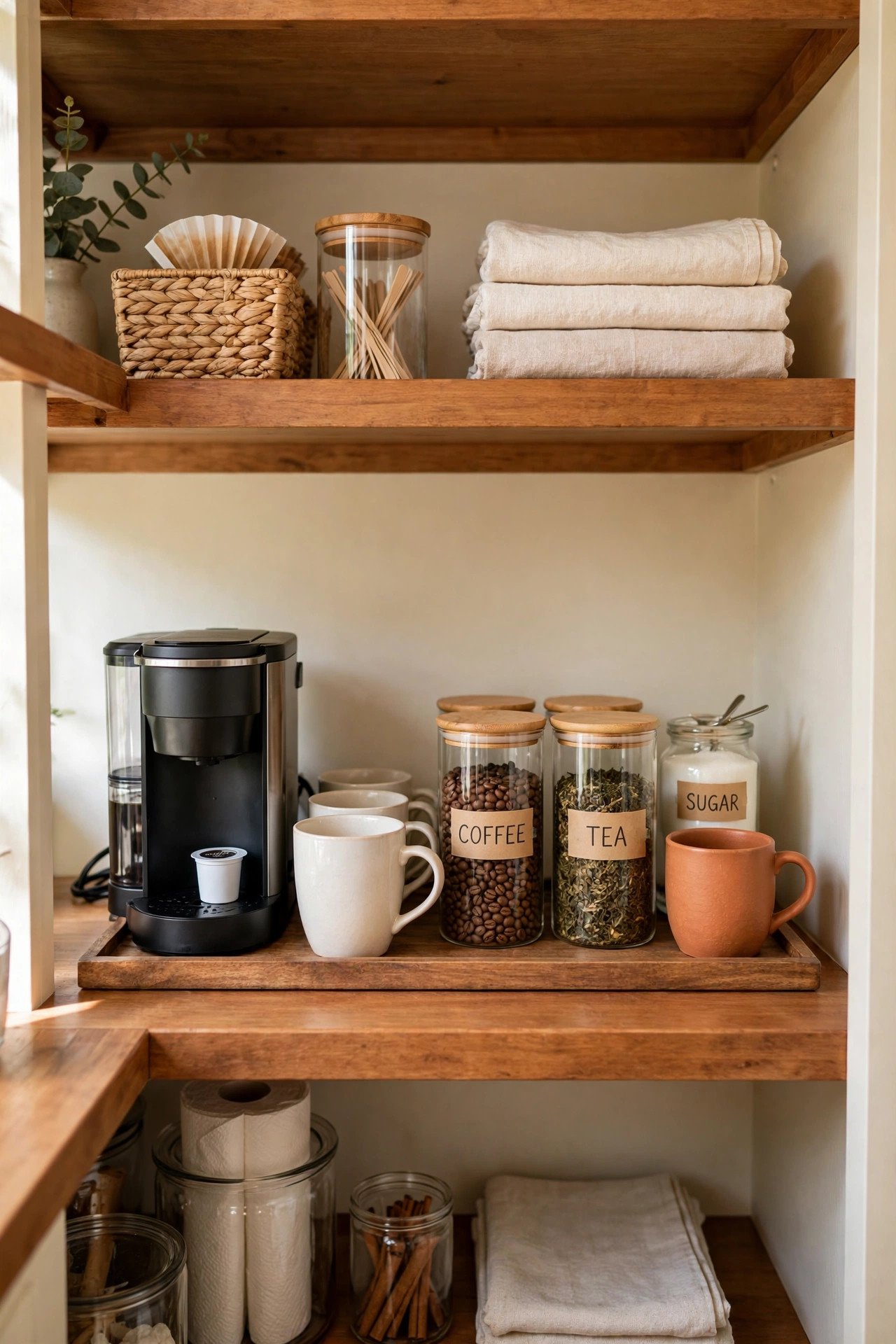
One shelf is all you need for a coffee corner. Clear a single shelf at a comfortable height and give it one job: morning drinks only. A small coffee maker, a row of mugs, and jars for coffee, tea, and sugar turn a dead shelf into the happiest spot in the kitchen.
Use a narrow tray to keep the station together. On a deep shelf, push the coffee maker forward and keep backup filters and beans in a small bin behind it. The shelf stays neat even on busy mornings. For more tiny-kitchen tricks, explore these 20 Small Kitchen Ideas for the Coziest Cottage Retreat Ever.
3. Spin a Lazy Susan in the Deep Corners:
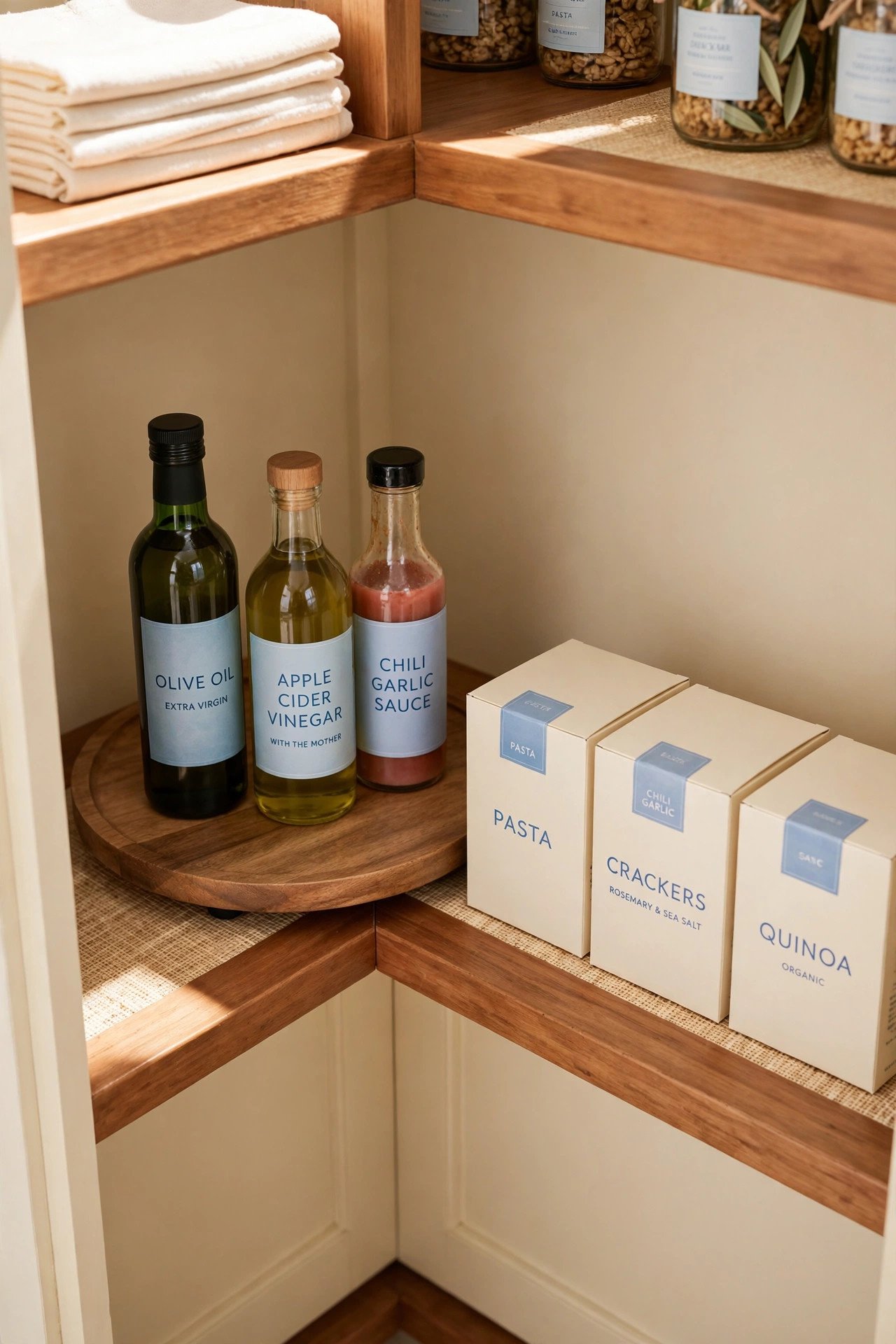
Deep corners are where bottles hide. A round turntable, the kind most people call a lazy Susan, fixes that in seconds. Place it in the darkest corner of a deep shelf, load it with oils and condiments, and give it a gentle spin whenever you need something.
Keep only round bottles on the turntable so nothing wastes the circle. Square boxes and tall cereal containers can live beside it in a neat row. Because everything rotates to the front, you will stop buying doubles of salad dressing you forgot you owned.
4. Upgrade Plain Wire Racks With Simple Inserts:
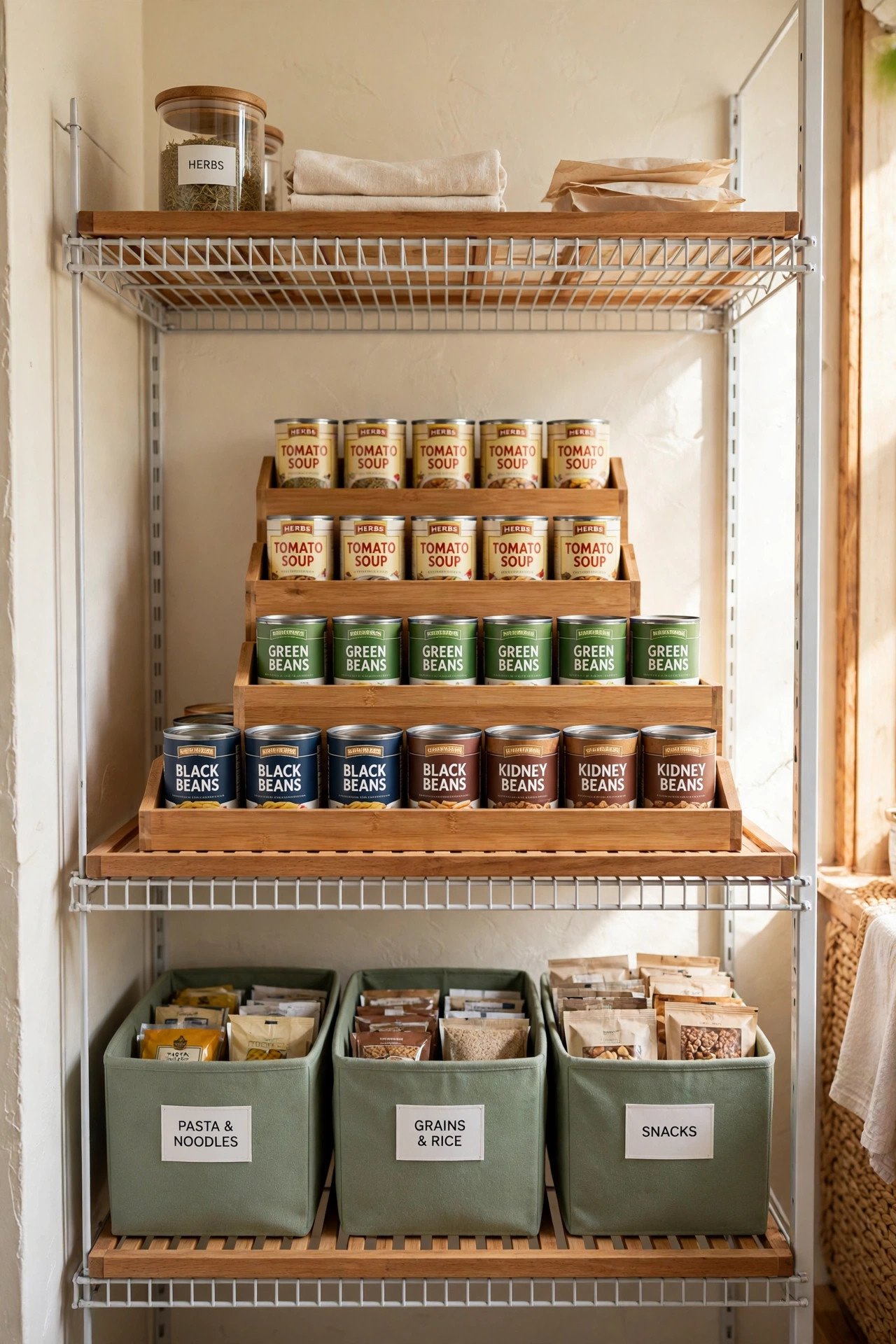
Wire pantry racks are strong, but small cans fall through the gaps and thin boxes tip over. Lay simple shelf liners or thin wooden boards across the wire, and the shelves become solid. A cheap rack then holds everything a wooden shelf can hold.
Add a tiered can organizer so cans sit in stepped rows instead of one deep pile. Group cans by type: soups together, vegetables together, beans together. On a deep rack, a rolling insert brings the back cans forward so nothing expires in the dark where you cannot see it.
5. Calm the Chaos With Matching Gray Containers:
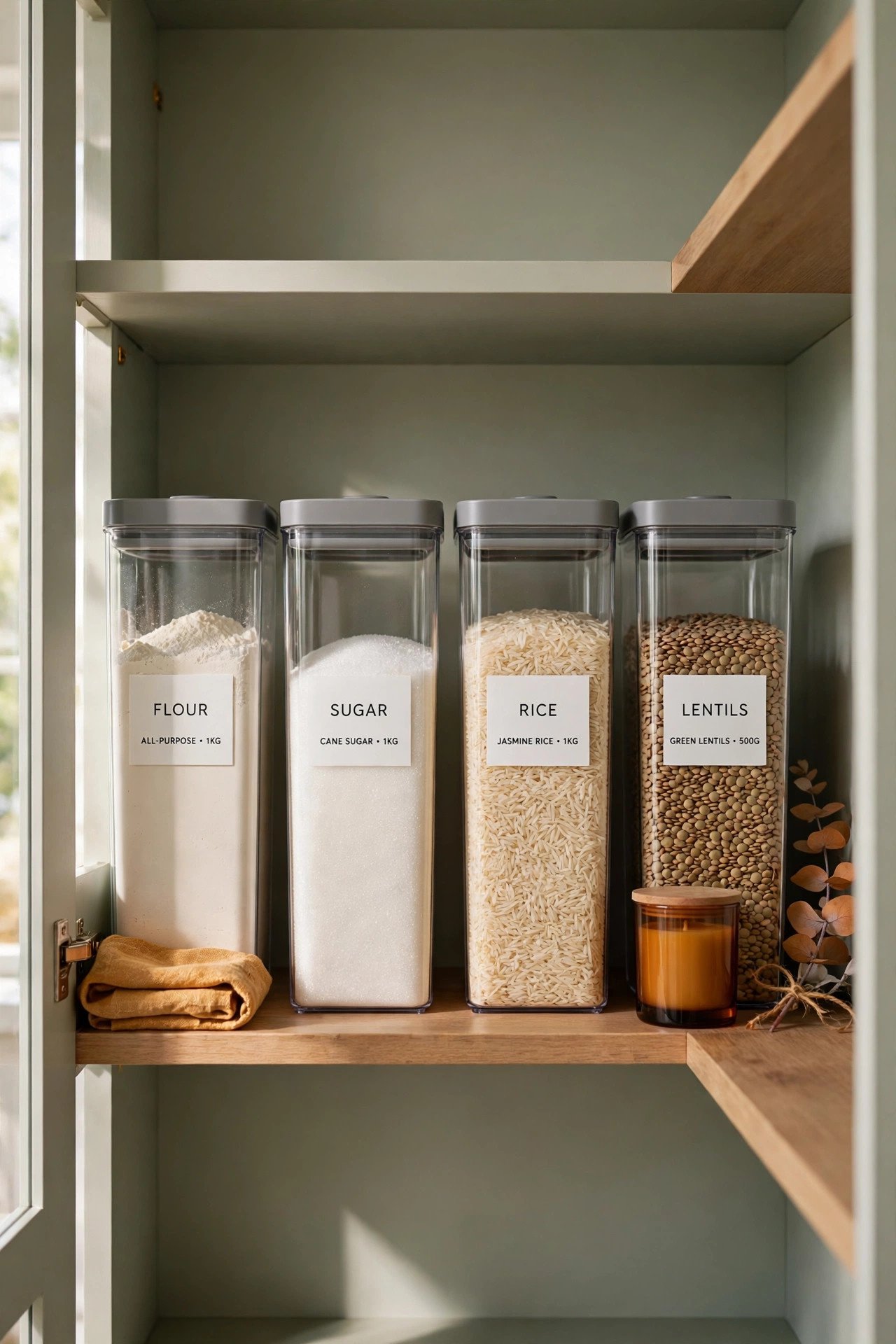
When every package has a different color and size, a narrow shelf looks busy and loud. Pour flour, sugar, rice, and lentils into matching containers with gray lids, and the whole shelf goes quiet. The matching shapes line up in a tidy row even on the narrowest shelf.
Use tall, slim containers on high shelves where you need every inch of height. Square containers fit better than round ones on narrow shelves because they waste less space between them. White printed labels on the front tell you what is inside without opening a single lid.
6. Keep It Neutral With Bamboo Touches:
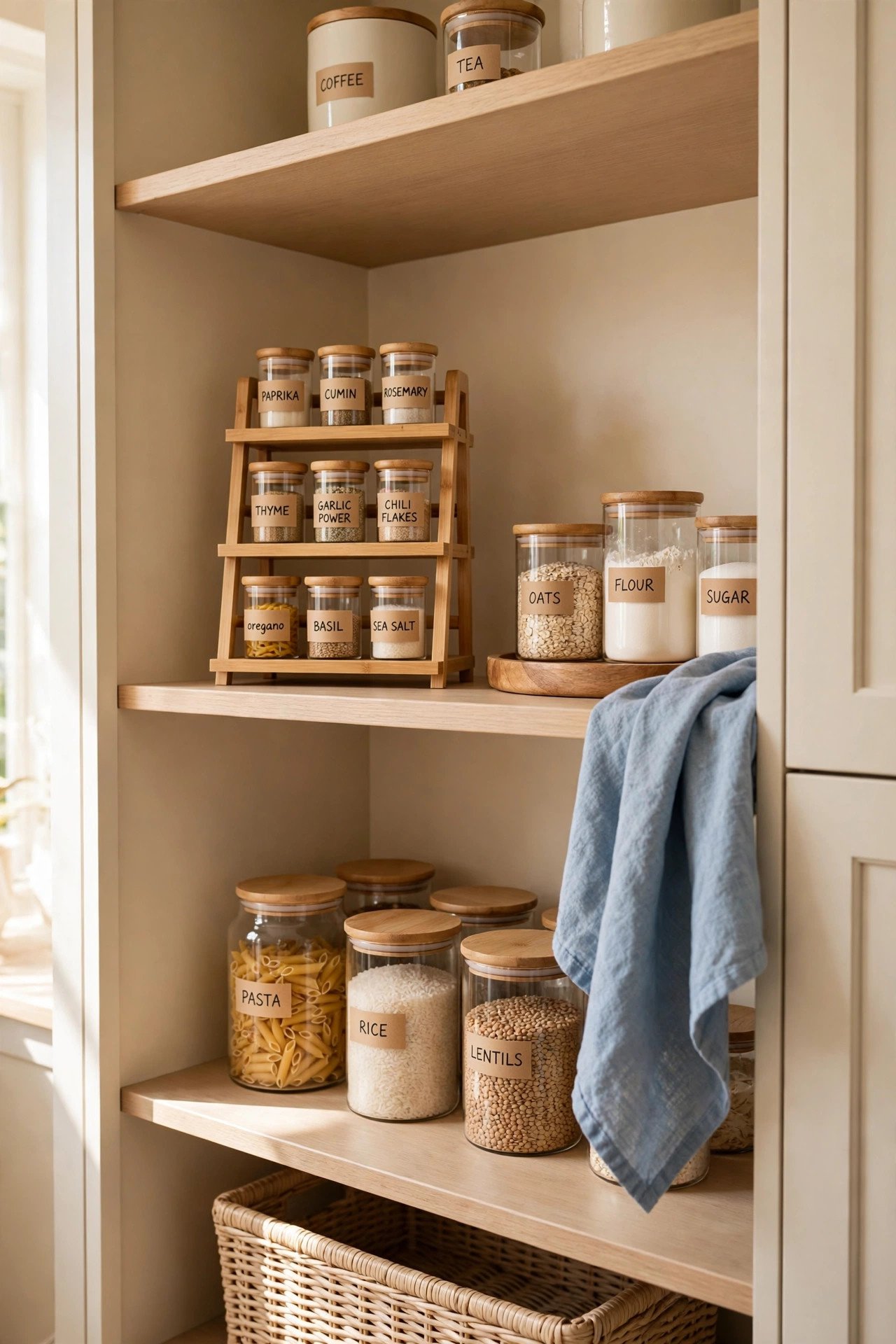
A neutral palette of cream, beige, and pale wood makes a small pantry feel bigger and calmer. Add bamboo accents like a tiered spice rack, wooden lids on glass jars, and a round wooden tray. These small touches warm up the space without adding visual noise.
A bamboo tiered stand is perfect for spices on a deep shelf. The steps lift the back jars into view so you can see every label at a glance. Keep the spice jars small and matching, and fill them fully so the shelf looks neat and intentional instead of half done.
7. Hang Wire Baskets for Sauces and Oils:
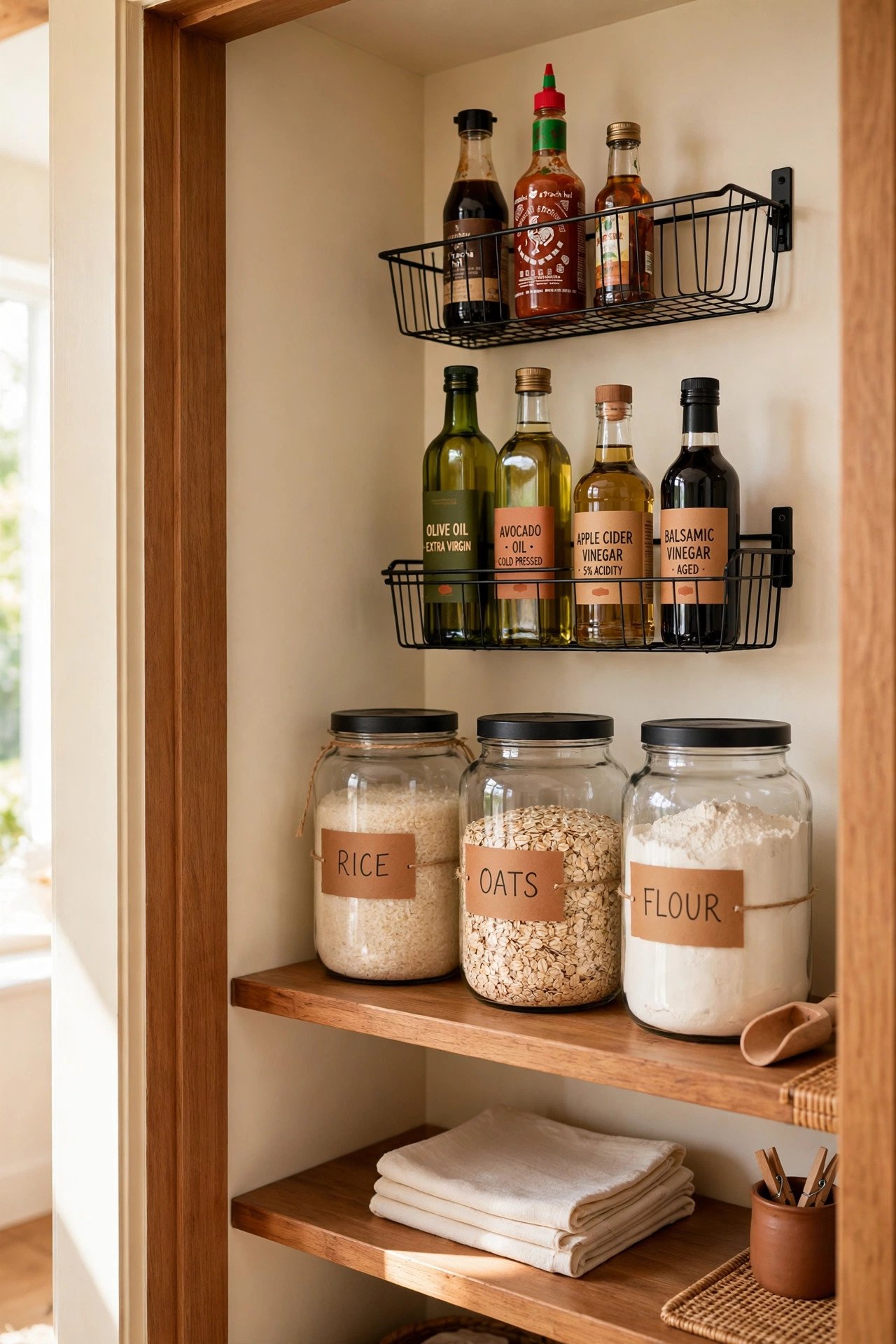
When shelf space runs short, look at the empty wall above the shelves. Mount small wire baskets on the wall or under a shelf and fill them with sauce bottles, cooking oils, and vinegar. The bottles stay visible and easy to grab, and the shelf below stays free for bigger items.
This trick works best on narrow pantry walls where a full shelf would crowd the aisle. Keep the baskets shallow so bottles face forward. Pair them with large glass jars for rice, oats, and flour on the main shelves for a setup that looks as good as it works.
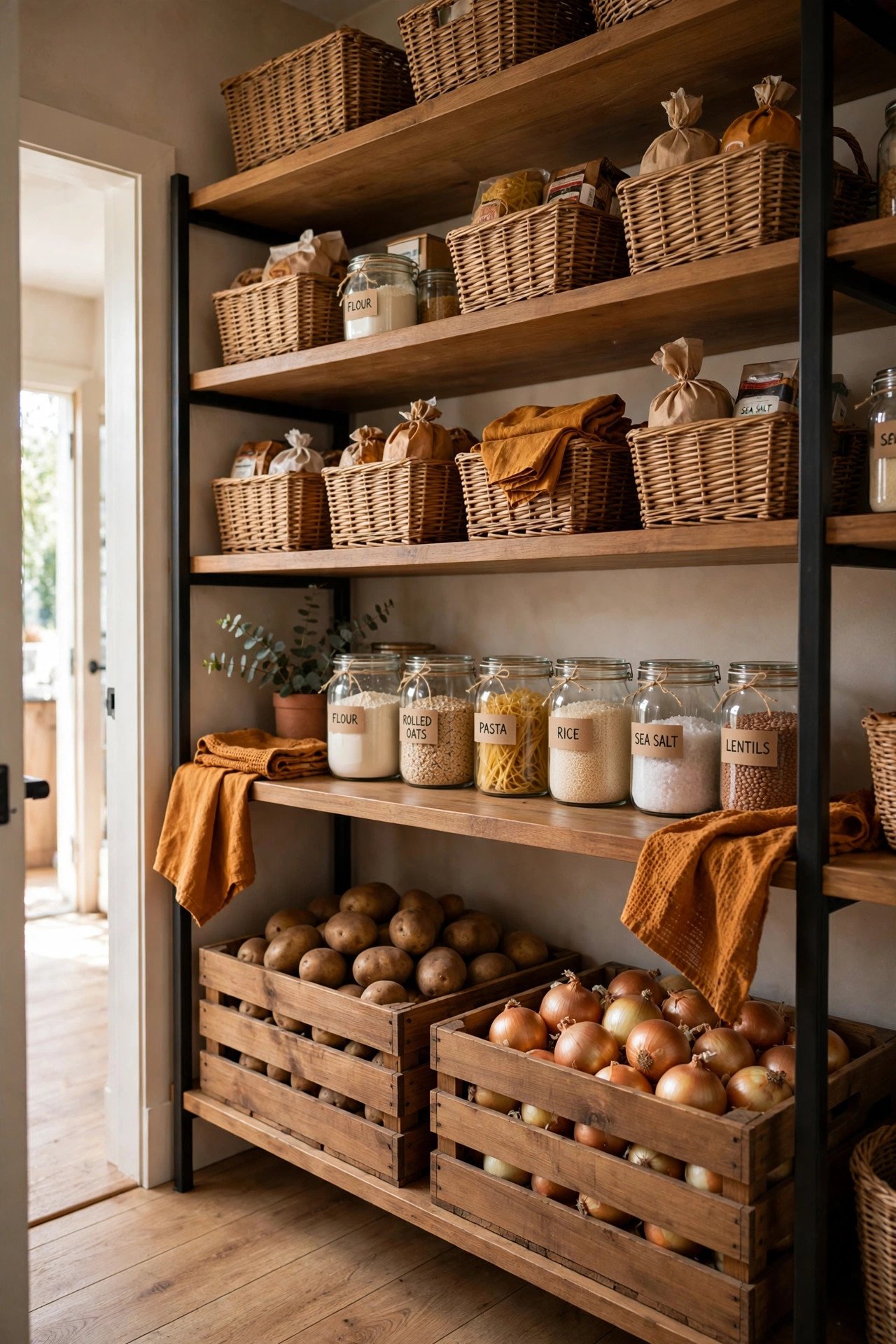
8. Mix Wood, Metal, and Wicker in a Walk-In Pantry:
A walk-in pantry does not need matching shelves to look wonderful. Mix warm wood shelves, simple metal frames, and woven wicker baskets, and the space feels collected and cozy instead of stiff. Different materials also let you pick the right tool for each job: heavy cans on metal, daily snacks in wicker.
Use the deep lower shelves for big crates filled with potatoes and onions, and keep daily foods at eye level in glass jars. When each material repeats in two or three places, the mix looks planned. This is the look that makes a pantry feel like part of the home, not just storage.
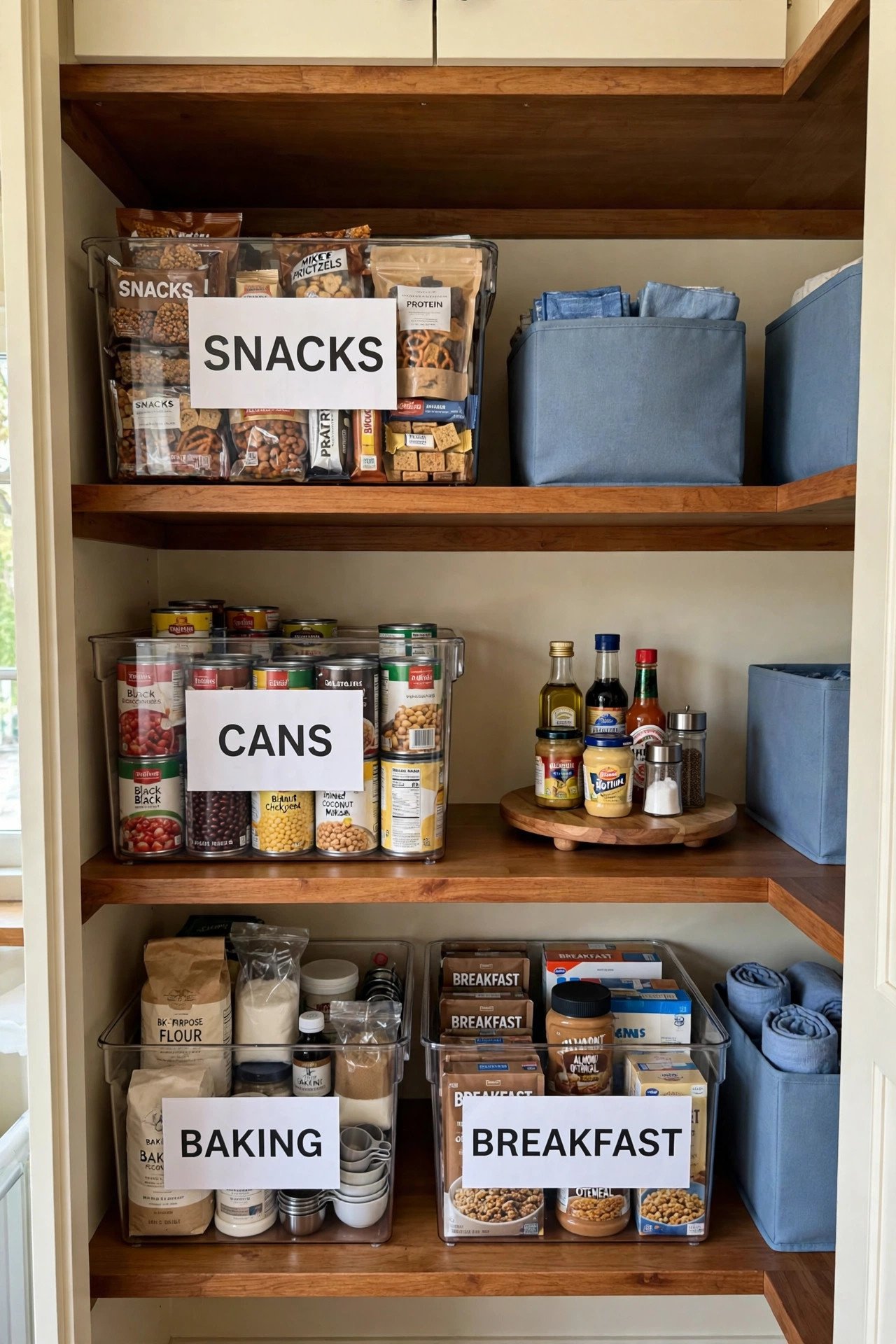
9. Sort Every Shelf Into Clear Category Zones:
The simplest pantry system is also the strongest: every shelf gets a clear category. One shelf for snacks, one for canned goods, one for baking, one for breakfast. When a shelf has a single job, you know exactly where to look and where to put things back.
Clear bins with big labels make the zones obvious even to kids. On deep shelves, place the bins in one row so each pulls out like a drawer. A small turntable can hold the condiments inside one zone. If you love labeled bins everywhere, these 21 Mudroom Entryway Ideas for a Clean and Perfectly Organized Home use the same trick for entryways.
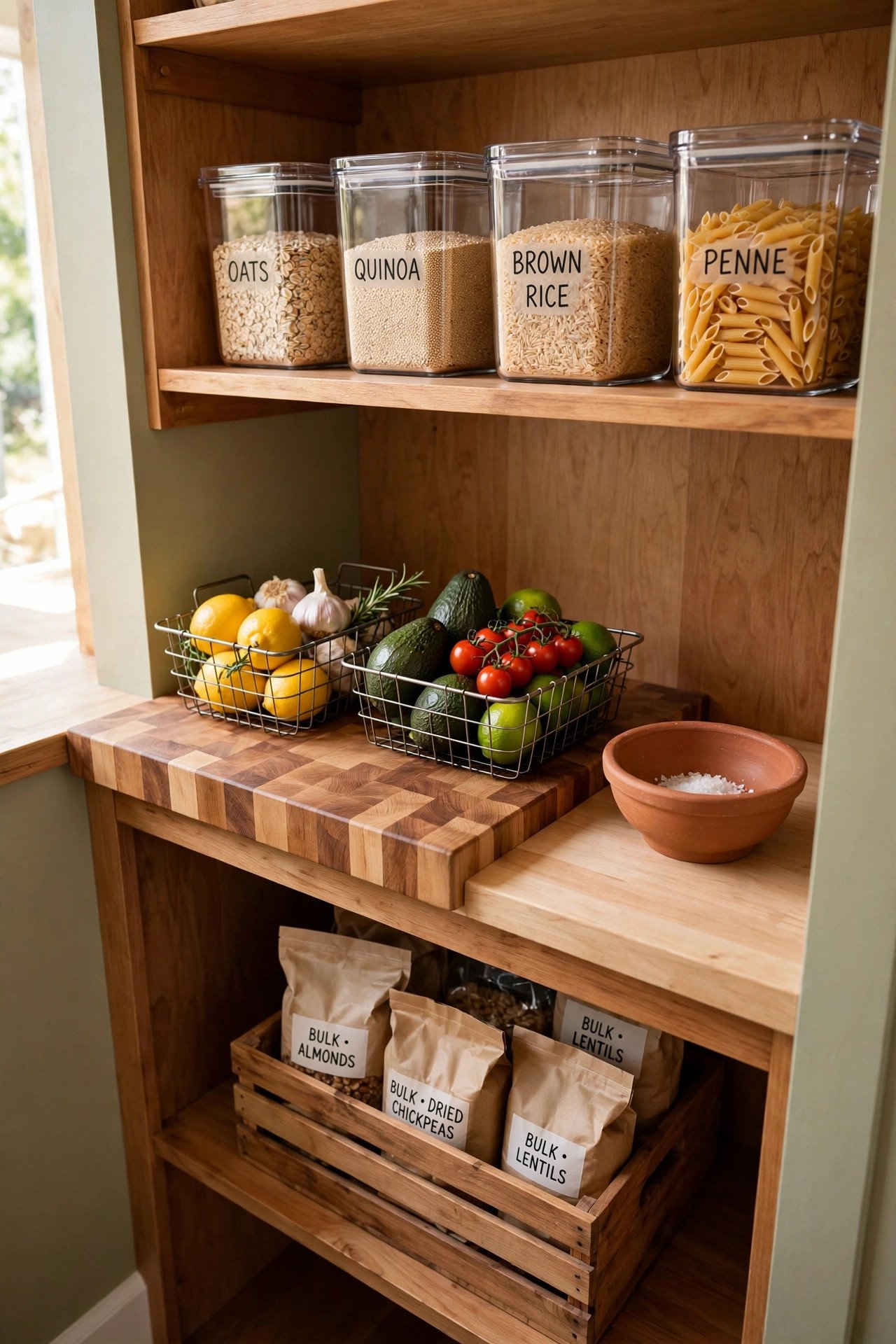
10. Add a Butcher-Block Ledge for Prep Space:
Some pantries have room for a short stretch of counter, and a butcher-block ledge turns it into a hardworking spot. Use it for sorting groceries, filling jars, or staging ingredients before you cook. A warm wood surface makes the pantry feel like a real room.
Store wire baskets of produce on the counter and keep clear containers for grains on the shelves above. On the deep shelves underneath, roll in a crate for bulk items you buy in big bags. A counter inside the pantry saves your kitchen counter for actual cooking.
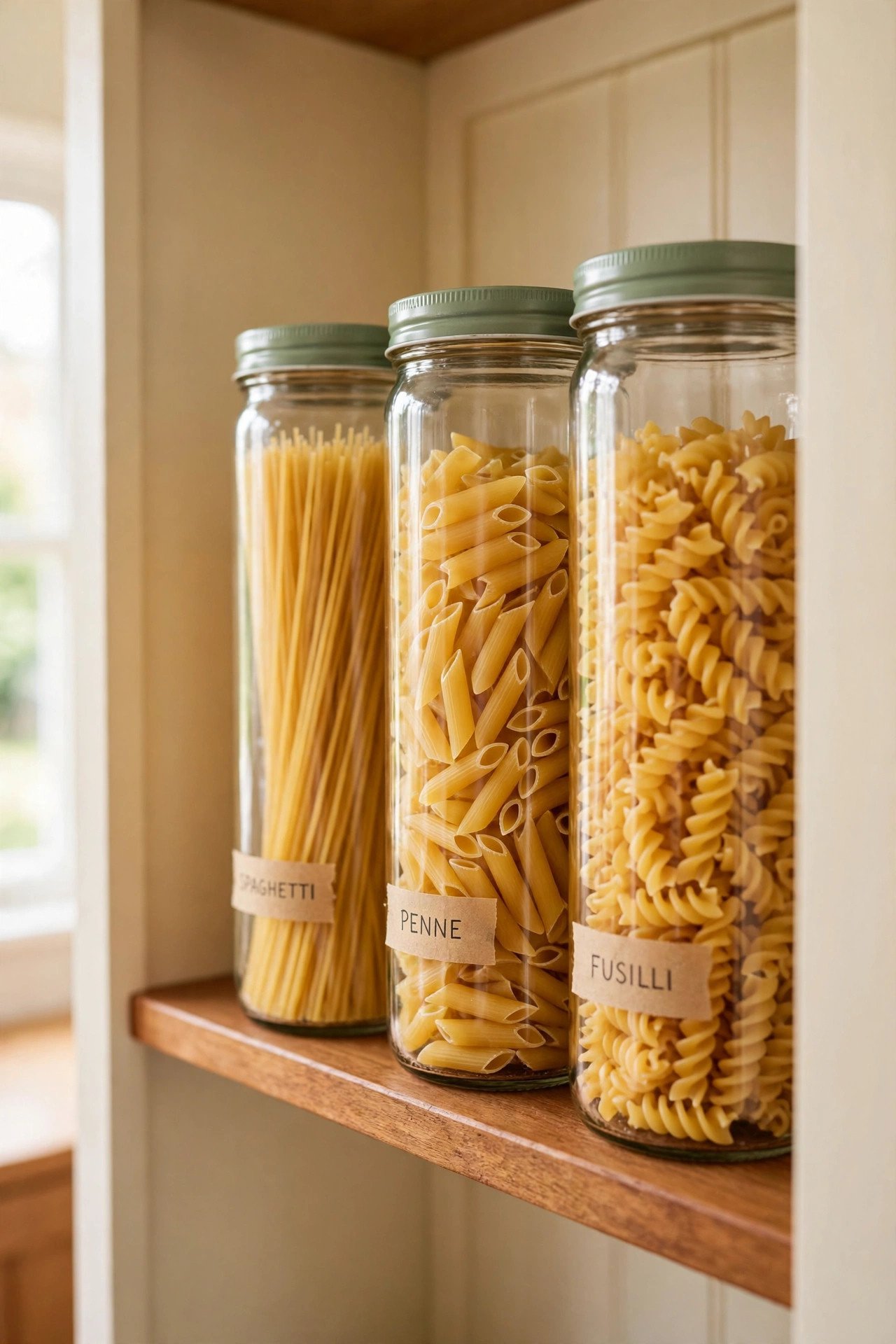
11. Stand Pasta Up in Tall Slim Jars:
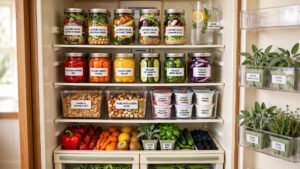
Pasta boxes are tall, thin, and always tipping over. Pour spaghetti, penne, and fusilli into tall slim jars, and they stand straight and steady. The clear glass shows exactly how much you have left, so you never start dinner and find an empty box at the worst moment.
Slim jars are made for narrow shelves because they line up in a perfect single row. Label the lids or the glass with the pasta shape so the jars look tidy. Fill each jar fully after a grocery run so the whole row looks neat and ready to use.
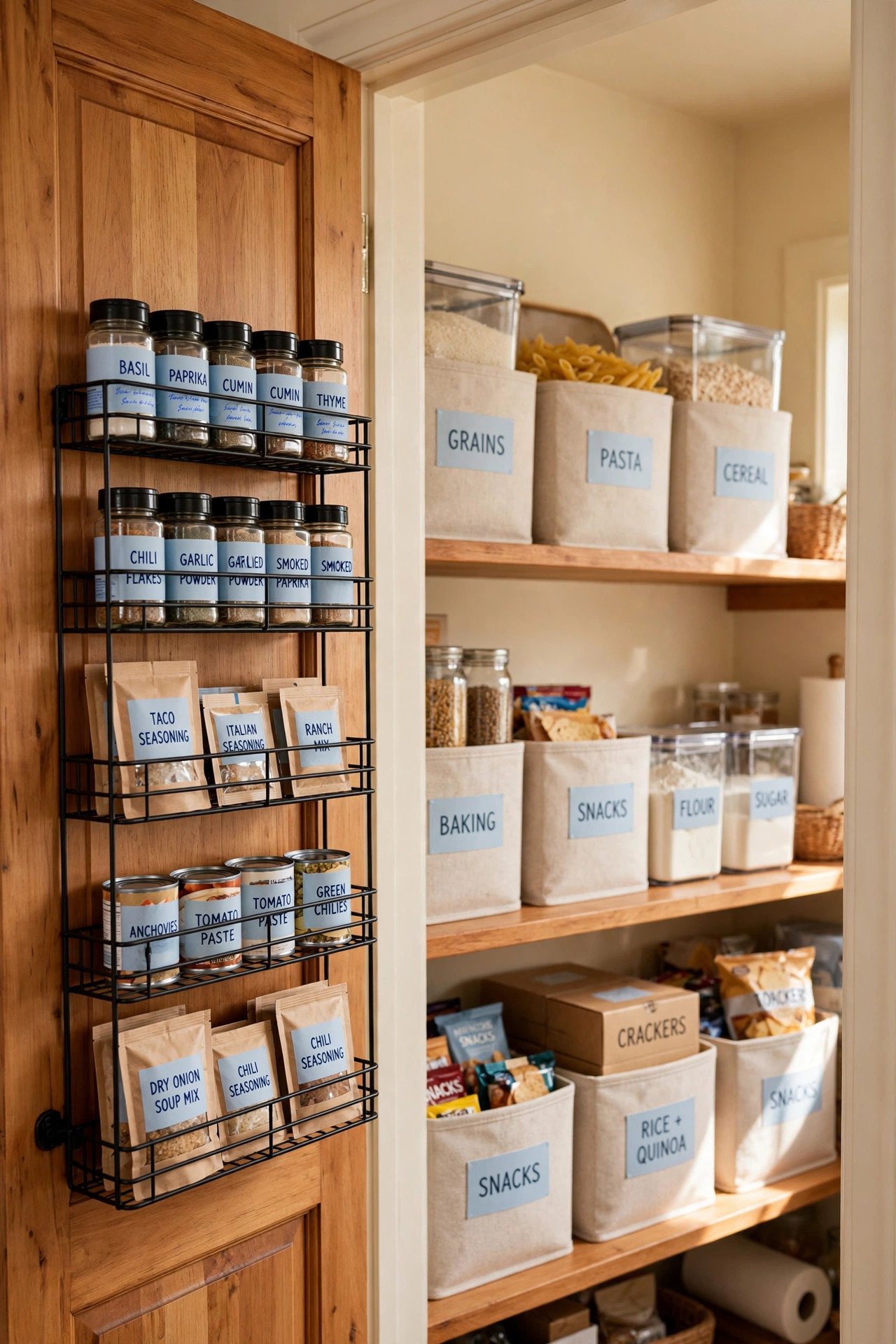
12. Turn the Inside of the Door Into a Pantry:
The back of a pantry door is a full wall of storage most people never use. Mount narrow wire racks or shallow baskets on the door and fill them with spices, small cans, and packets. This is free space that costs almost nothing to set up and holds a surprising amount.
Keep the door racks shallow so the door still closes. Heavy oil bottles belong on the shelves, not the door, so the hinges stay happy. Door storage plus shelf bins can nearly double your storage. Renters can do the same with damage-free options in these 24 Rental Friendly Decor Hacks to Personalize Any Space.
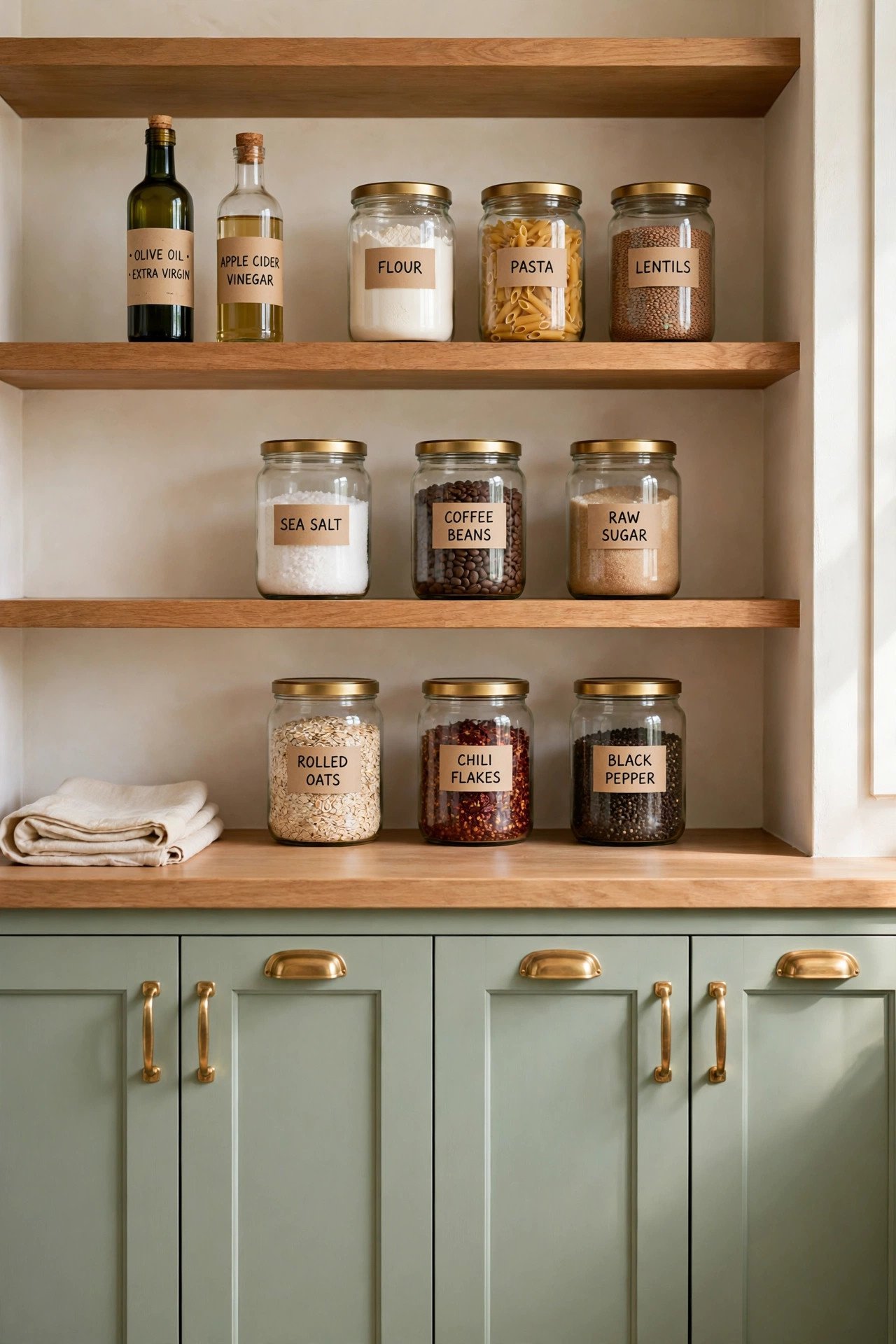
13. Try Sage Green for a Butler-Style Feel:
A little color goes a long way in a pantry. Paint the lower cabinets or the back wall a soft sage green, and the whole space feels fresh and calm. Green pairs beautifully with warm wood shelves and brass handles for a look that feels fancy but still cozy.
Open shelves above the green cabinets are perfect for oils, vinegar, and pretty glass jars. Keep the jars filled and labeled so the open shelves look styled instead of messy. This small color change costs very little but makes the pantry one of the prettiest spots in the house.
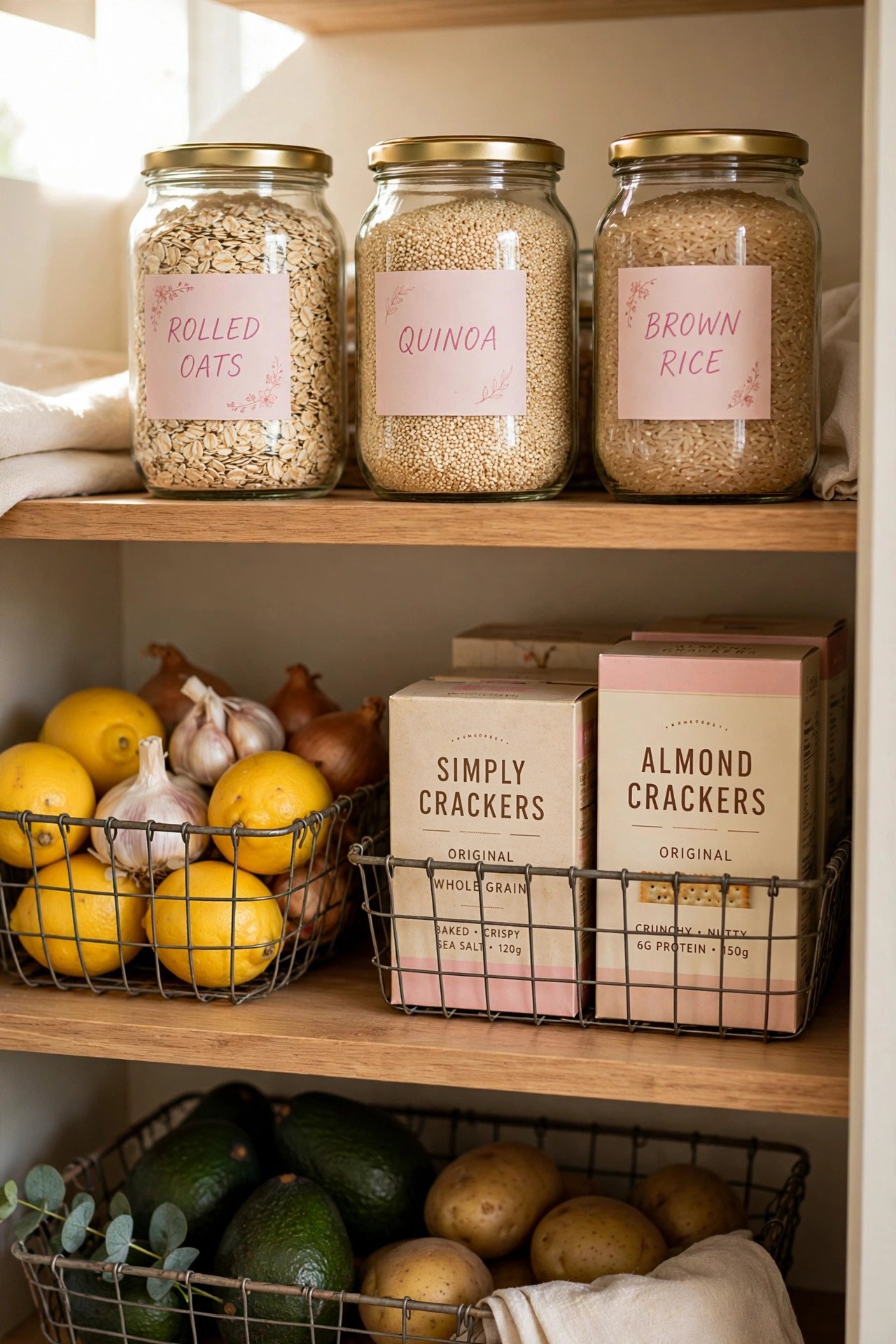
14. Combine Clear Jars, Baskets, and Boxes:
You do not need one perfect system for the whole pantry. Mix clear jars for grains, wire baskets for produce, and the original boxes for crackers and snacks. Each type of food gets the container that suits it best, and the mix looks natural and real.
The key to mixing is keeping colors calm: clear glass, cream labels, beige baskets, and soft accents. On a deep shelf, place the jars in front and the boxes behind them so nothing hides. A pantry that mixes materials looks lived in and warm instead of like a showroom.
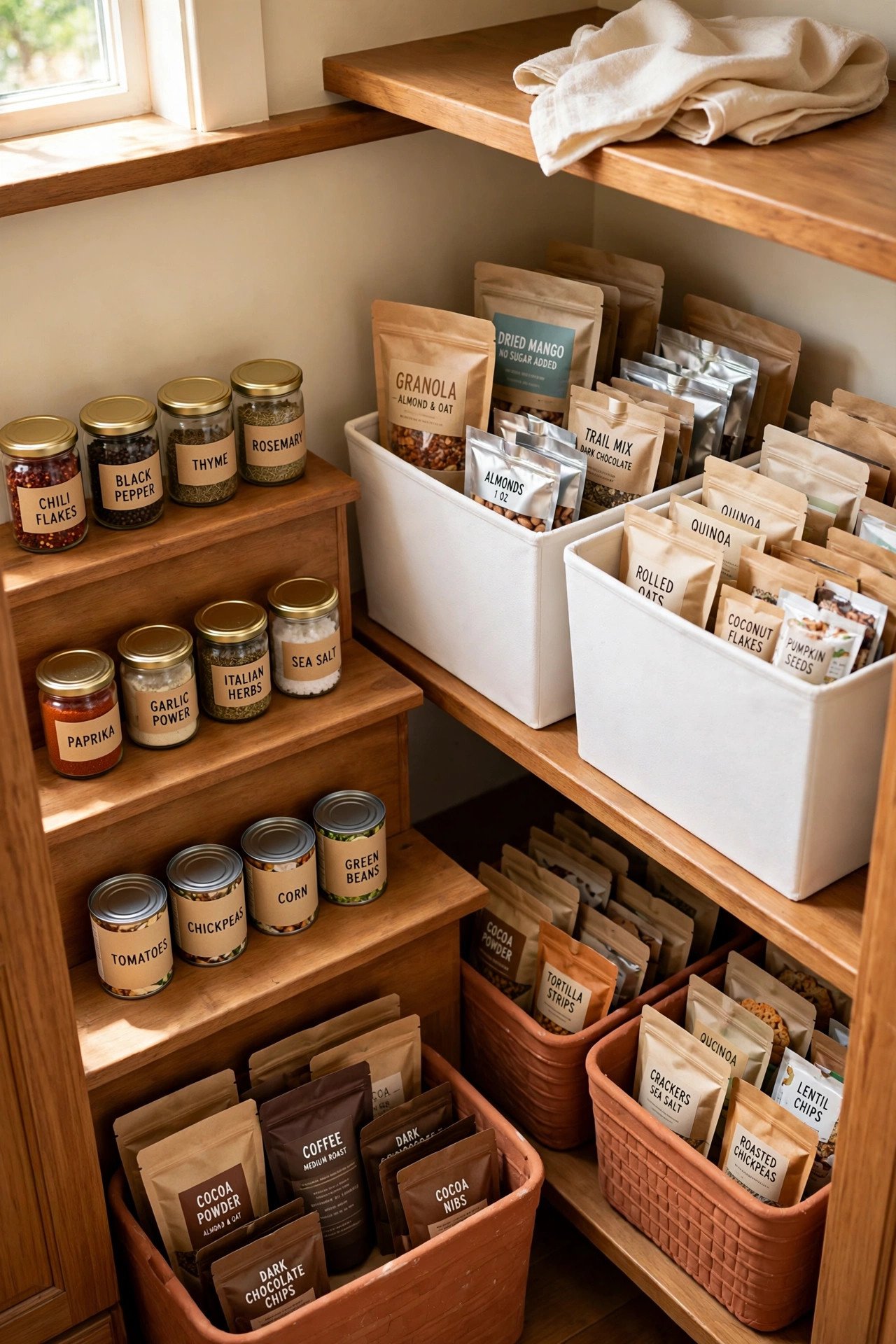
15. Raise Small Items on a Tiered Shelf:
Small cans and jars vanish on a deep flat shelf. A tiered shelf, like tiny stadium steps, lifts the back rows into view. Every can and jar becomes visible at a glance, so you grab what you need and never lose a can of beans for two years.
Use the tiered shelf for cans, small jars, and spice bottles, and move tall cereal boxes elsewhere. White bins beside the steps can hold pouches and packets. This one tool ends the lost in the back problem for good, much like the vertical thinking in these 23 Small Space Boho Solutions.
16. Match Every Jar for a Classic Look:
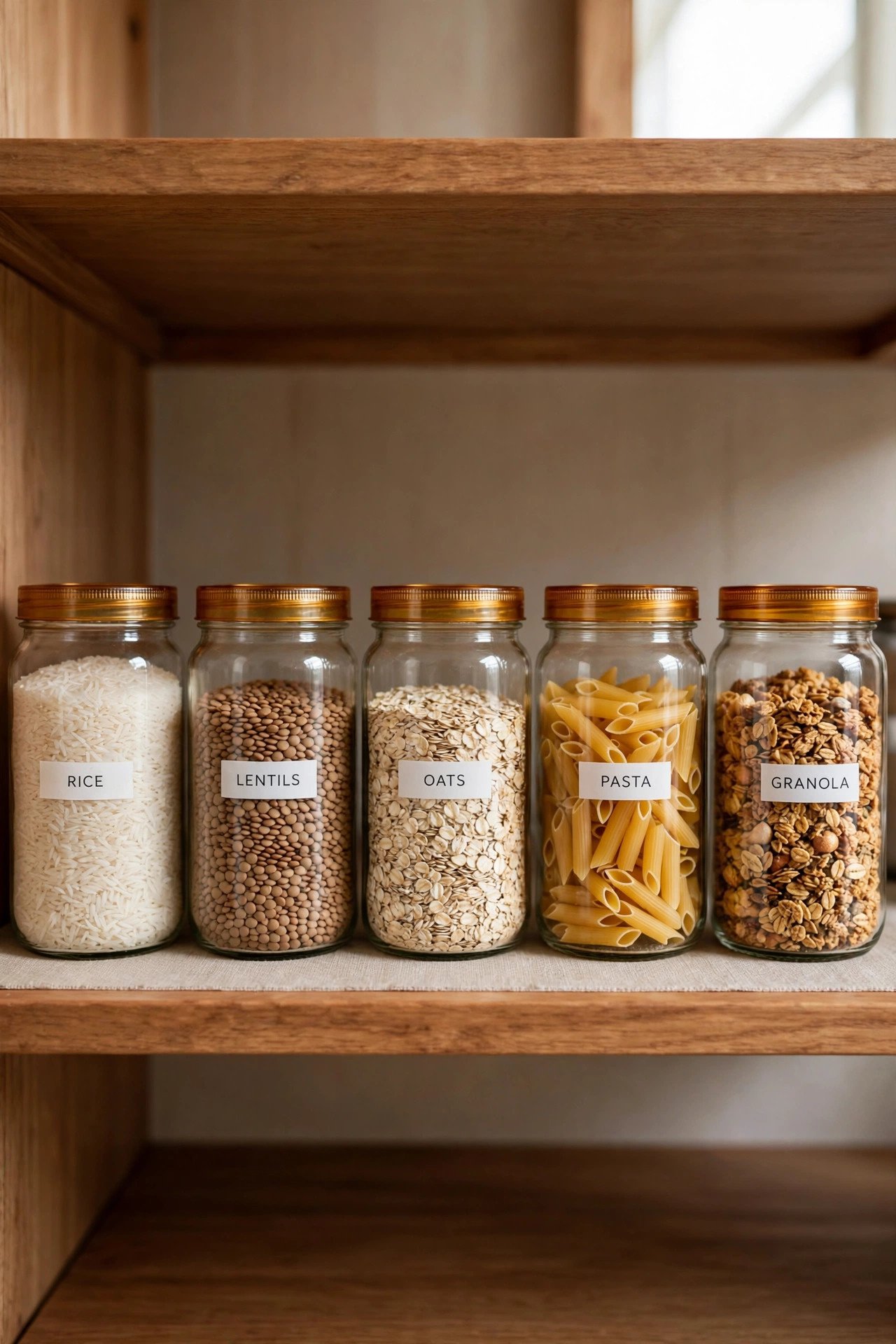
Matching glass jars with the same lids turn a jumble of bags and boxes into a calm, classic pantry. Pour rice, lentils, oats, pasta, and granola into jars of the same style, and the shelves look neat even when they are full.
Keep the labels small and simple, just the food name in clean printed letters. Line the jars in one row on deep shelves and use the back space for backups. Fill every jar fully after shopping. The same matching-jar habit works in these 20 Vintage Wardrobe Storage Ideas.
17. Give Drinks Their Own Pantry Zone:
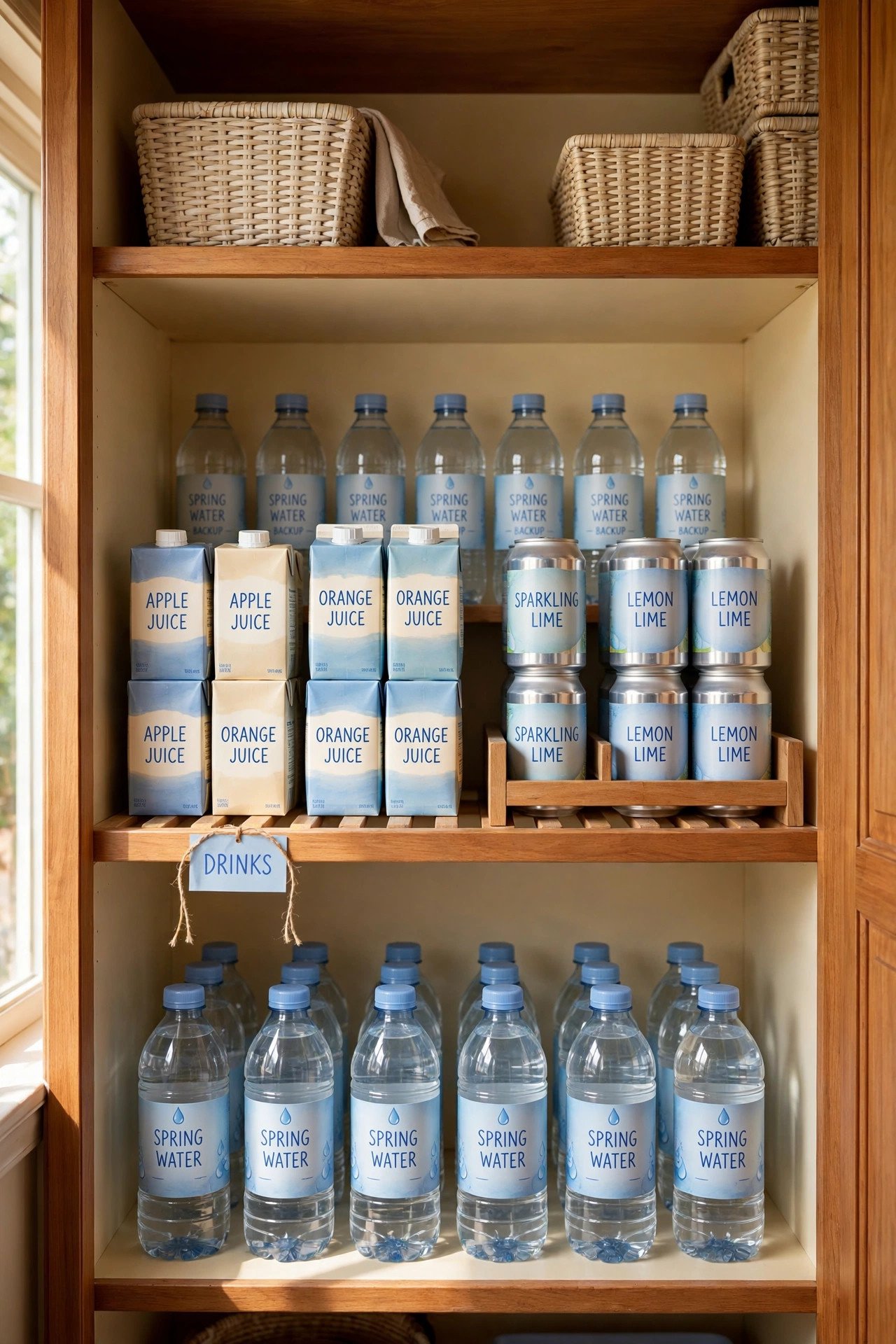
Drinks can take over a pantry fast. Water bottles, juice boxes, and soda cans multiply until they crowd out the food. Give drinks one full zone, and the rest of the pantry breathes again.
Line bottles in neat rows and stack soda cans in a simple rack. Keep drinking glasses or cups away from this zone so it stays only for drinks. On a deep shelf, push the backup bottles to the back and keep the daily drinks in front where small hands can reach them.
18. Set Up a Baking Shelf With a Spice Tower:
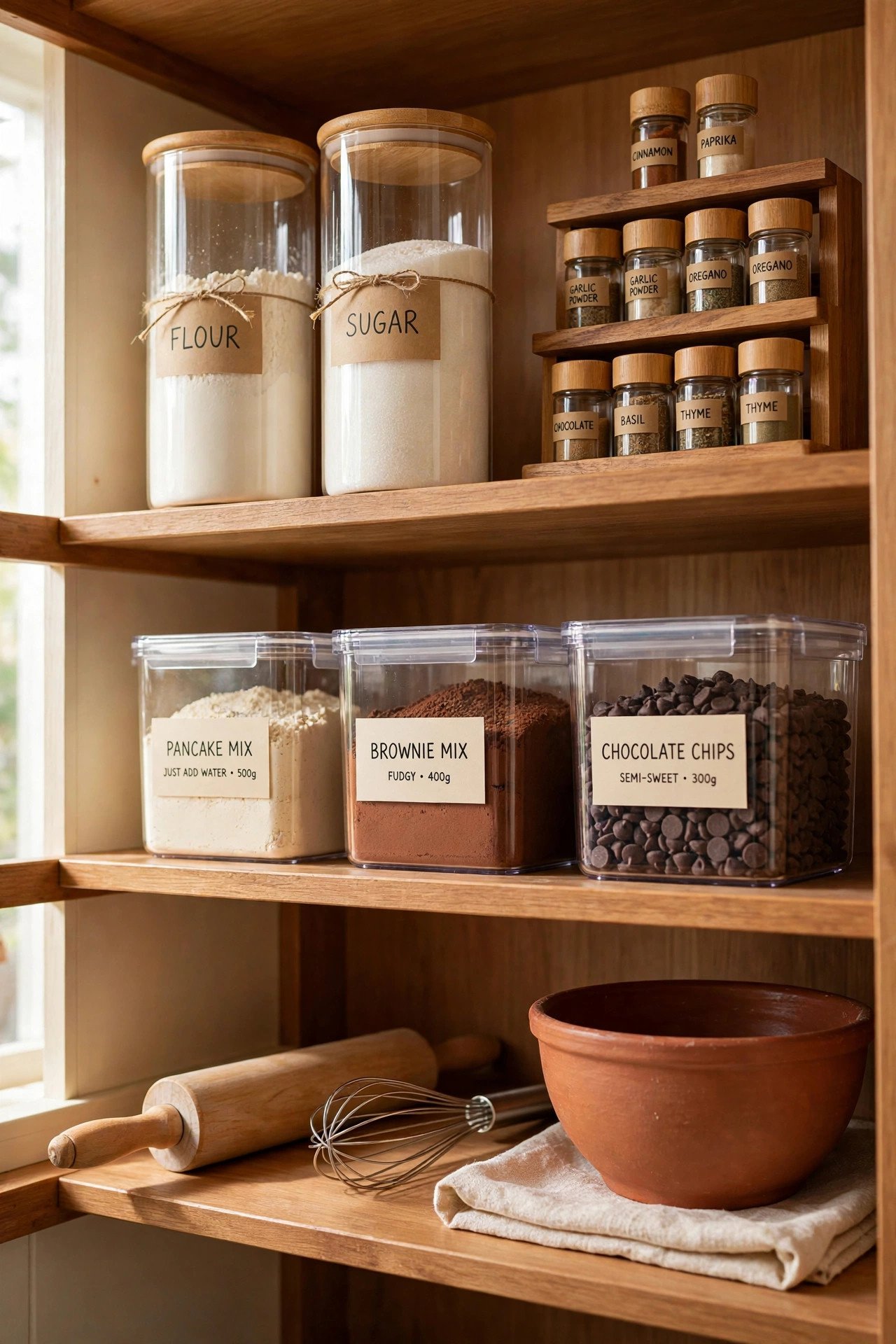
Bakers need everything in one place: flour, sugar, baking powder, vanilla, and a mountain of spices. Give baking its own shelf and build a small spice tower with a tiered stand. When everything lives together, baking day feels fun instead of frantic.
Tall clear containers hold flour and sugar, and rectangular ones hold baking mixes and chocolate chips. The tiered spice stand lifts every jar into view so you never buy a second jar of cinnamon. Keep a rolling pin or whisk on the shelf as a small sign that this zone means business.
19. Store Produce on the Pantry Door:
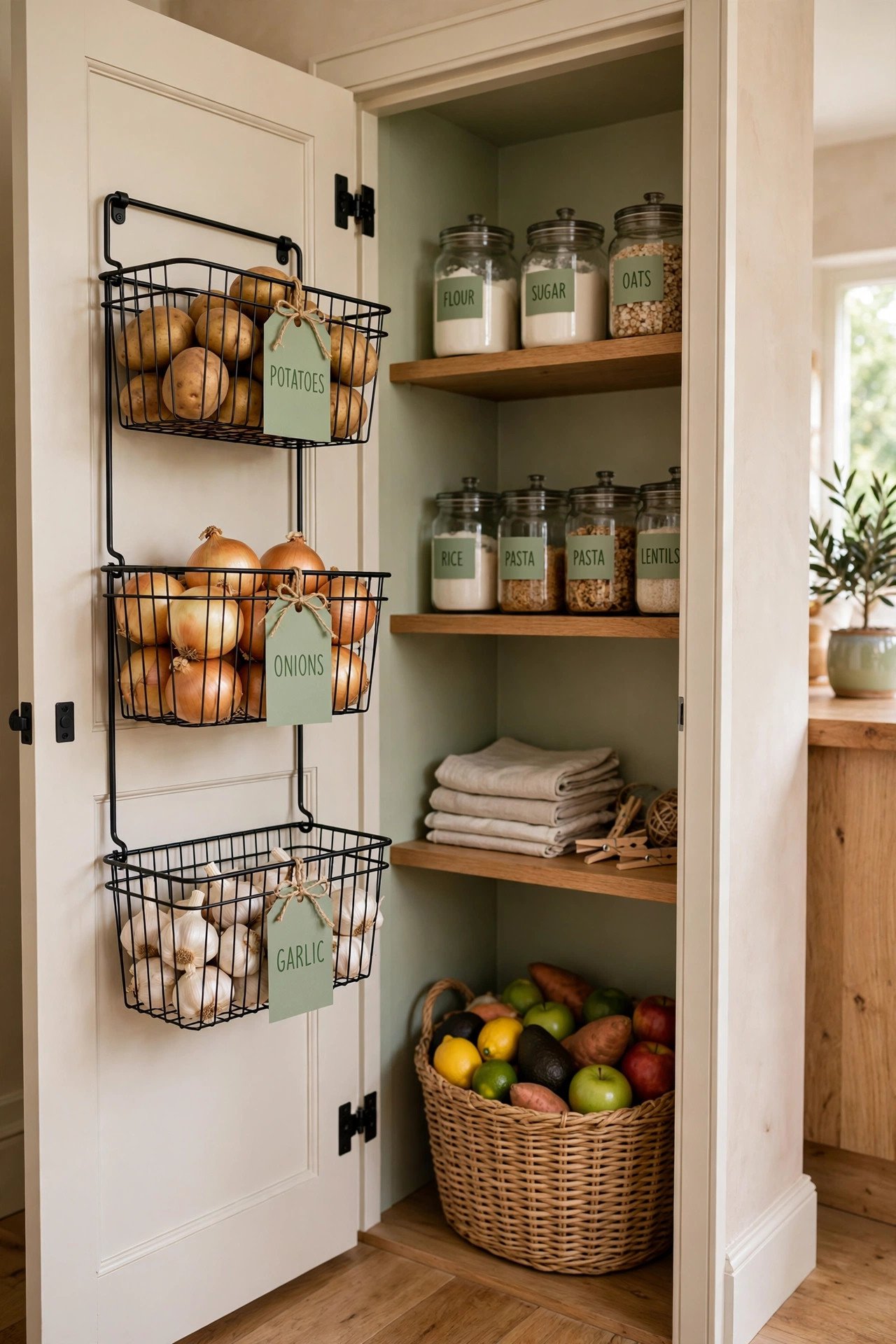
Potatoes, onions, and garlic need air, not sealed bins, and the pantry door is a perfect home for them. Hang wire baskets on the door and let air flow through the produce. This keeps vegetables fresh and frees shelf space for dry goods.
Use one basket for potatoes, one for onions, and a small one for garlic. A woven basket on the pantry floor can hold bulk extras. Keep the door baskets shallow so the door closes fully, and check the produce weekly.
Conclusion
A deep pantry stops feeling like a black hole once every shelf has a job. Pull everything out, group what you use together, and give each group a labeled home near the front.
Start with one shelf this weekend. Small steps keep the project fun, and soon your narrow shelves will feel twice as big.
Frequently Asked Questions About Pantry Organization
How do I organize a deep pantry so nothing gets lost in the back?
Store food in bins that pull out like drawers, one category per bin. Place a tiered shelf or turntable at the back of deep shelves so items rise into view. Keep daily items in front and backups behind them.
What works best on narrow pantry shelves?
Slim containers and single rows work best on narrow shelves. Tall, slim jars line up perfectly, and shallow bins or baskets pull out as one unit. Square containers fit better than round ones because they waste less space between them.
Should I take food out of the original boxes?
Yes for dry goods like rice, pasta, flour, and snacks. Boxes waste space and hide what you have left, so clear jars and labeled bins stop you from buying doubles. Keep crackers and items that go stale fast in their original boxes, sealed tightly.
How do I keep my pantry organized long term?
Give every category its own labeled bin, and keep fewer items overall. Put everything back in its zone after grocery shopping, and do a five-minute tidy once a week. A simple system stays neat much longer than a packed pantry.
Can I organize a pantry in a rental without drilling?
Yes. Use freestanding bins, turntables, tiered shelves, and over-the-door racks that hook on without screws. A tension rod can hold small baskets inside a cabinet too. Everything comes out clean when you move.

Hi, I’m Emily! I turn messy corners into cozy, organized spots. DreamNestDecor is where I share simple, practical home ideas — decor, organization, and small-space solutions that work in real life, not just in photos. Every idea here is carefully researched before it’s shared.