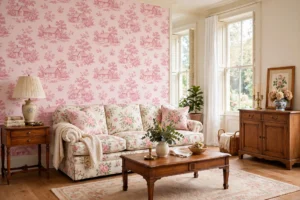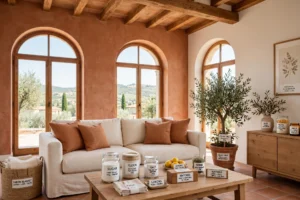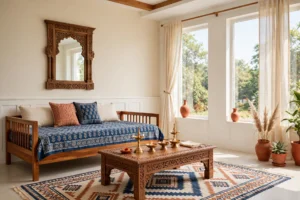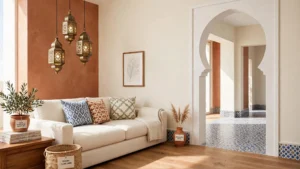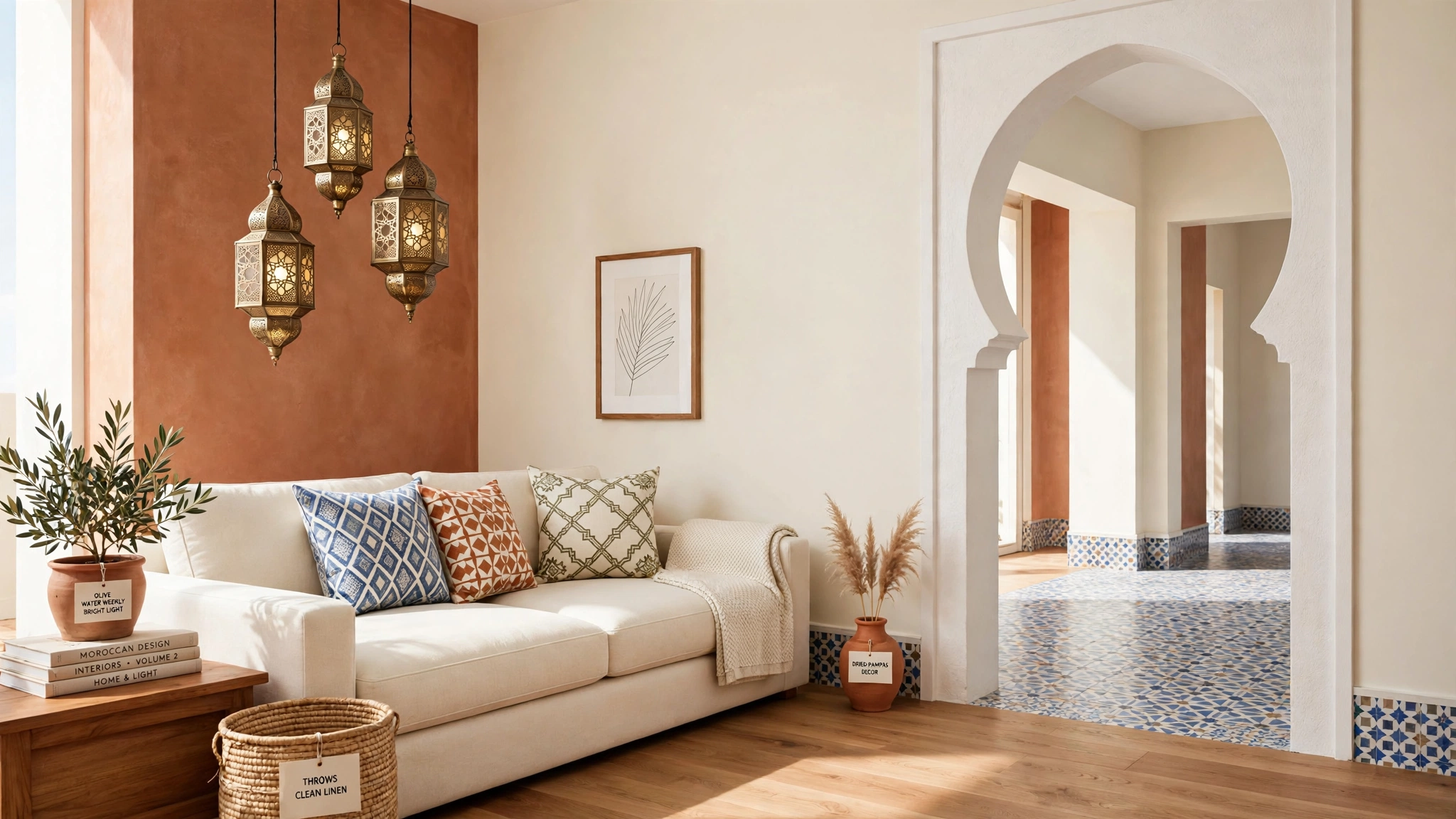
Picture this: you step into a room where warm light filters through pierced brass, geometric tiles gleam under your feet, and every cushion carries a pattern with a story behind it. That layered, sun-washed feeling is exactly what Moroccan inspired design brings into a home. It is bold and calm at the same time, rich in detail but never cluttered.
You do not need to travel to Marrakech or buy a whole new set of furniture to capture it. A few well chosen pieces and patterns can change the whole mood of a room. These 13 Moroccan inspired interior design ideas with geometric details will help you bring that warm, handcrafted style into your own home, one idea at a time.
1. Layer Zellige Tiles in the Kitchen or Bath
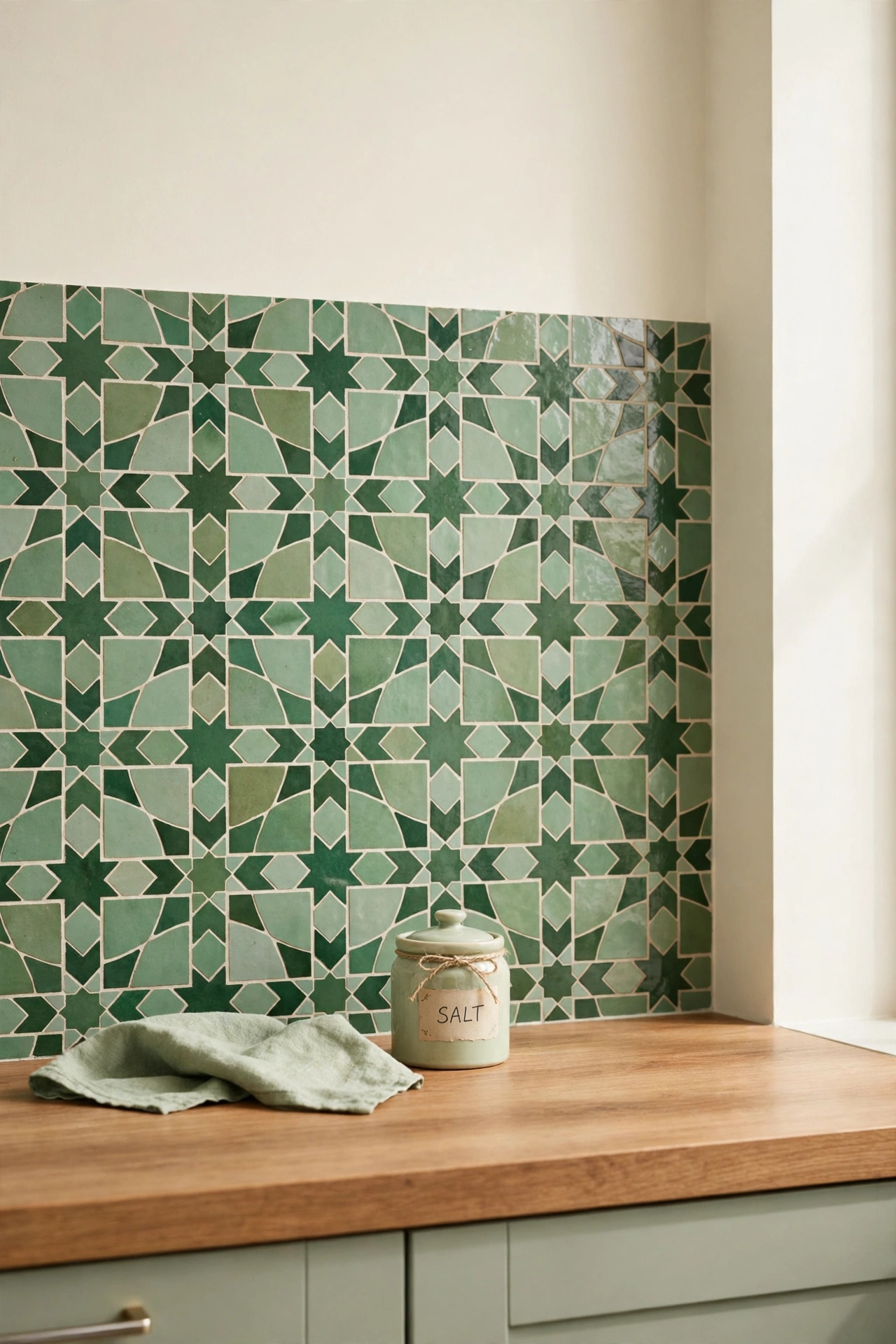
Zellige tiles are handmade glazed tiles with small variations in color and shine, and those tiny imperfections are what make them beautiful. Use them as a kitchen backsplash or a bathroom wall, and the room gains instant depth and character. Star and cross patterns are classic choices that show off the geometry Moroccan design is known for.
Keep the rest of the room simple so the tiles stay the star of the show. Plain cream walls and warm wood cabinets let the glaze catch the light without competition. For more ideas on giving a tiled space a fresh look on a small budget, see these affordable bathroom tile makeover ideas. A single band of zellige tile can transform a plain wall into a work of art.
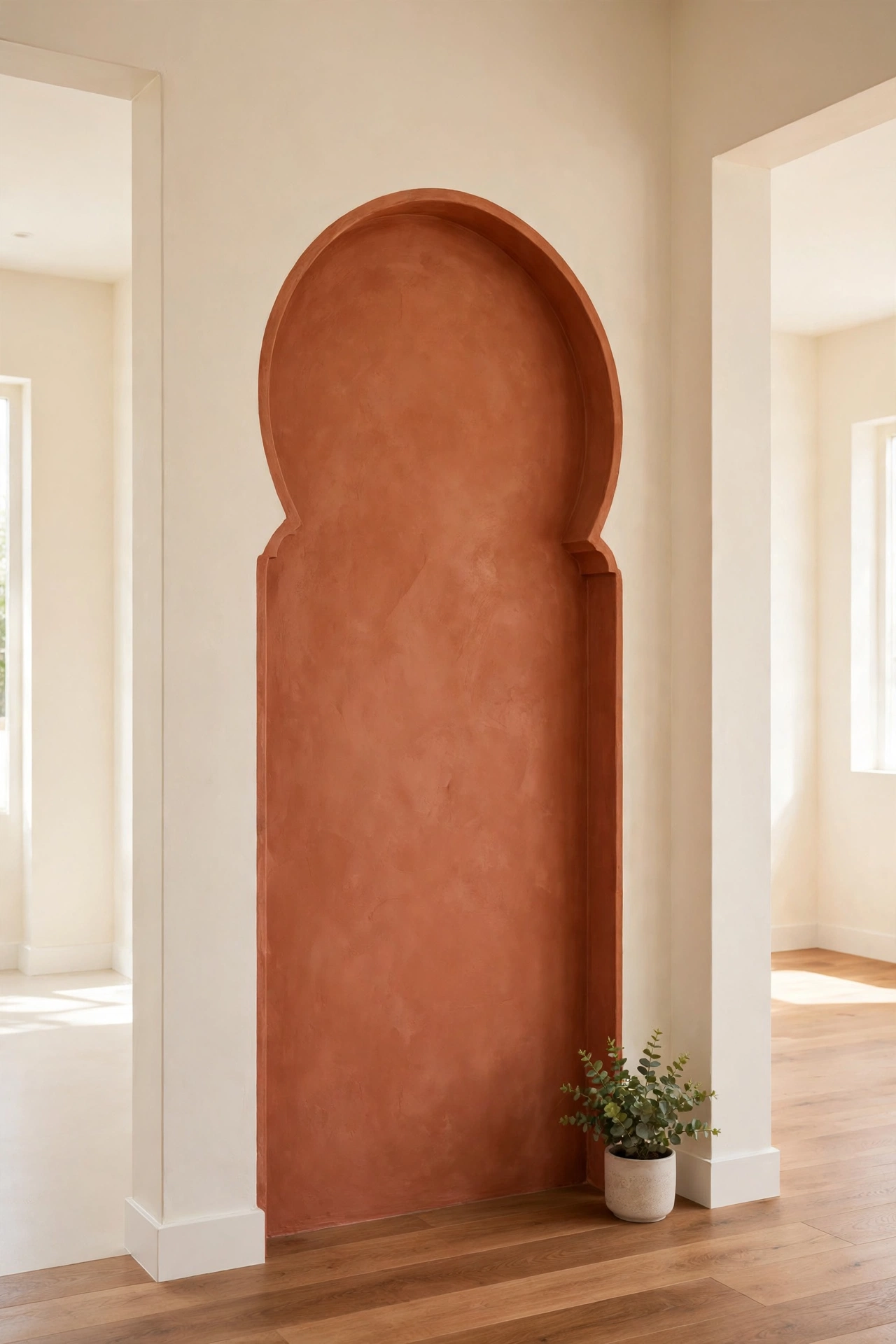
2. Add a Horseshoe Arch Above a Doorway
The horseshoe arch is one of the most recognizable shapes in Moroccan architecture. Its rounded top and slightly narrowed base create a soft, graceful opening that makes even a plain doorway feel special. You can build a real arch into a wall or fake the look with a painted arch frame around an existing opening.
Paint the arch in a deep terracotta or a soft sage so it stands out against a cream wall. The curve draws the eye upward and gives the room a sense of height and history. An arched doorway turns a simple passage between rooms into a moment of beauty you notice every day.
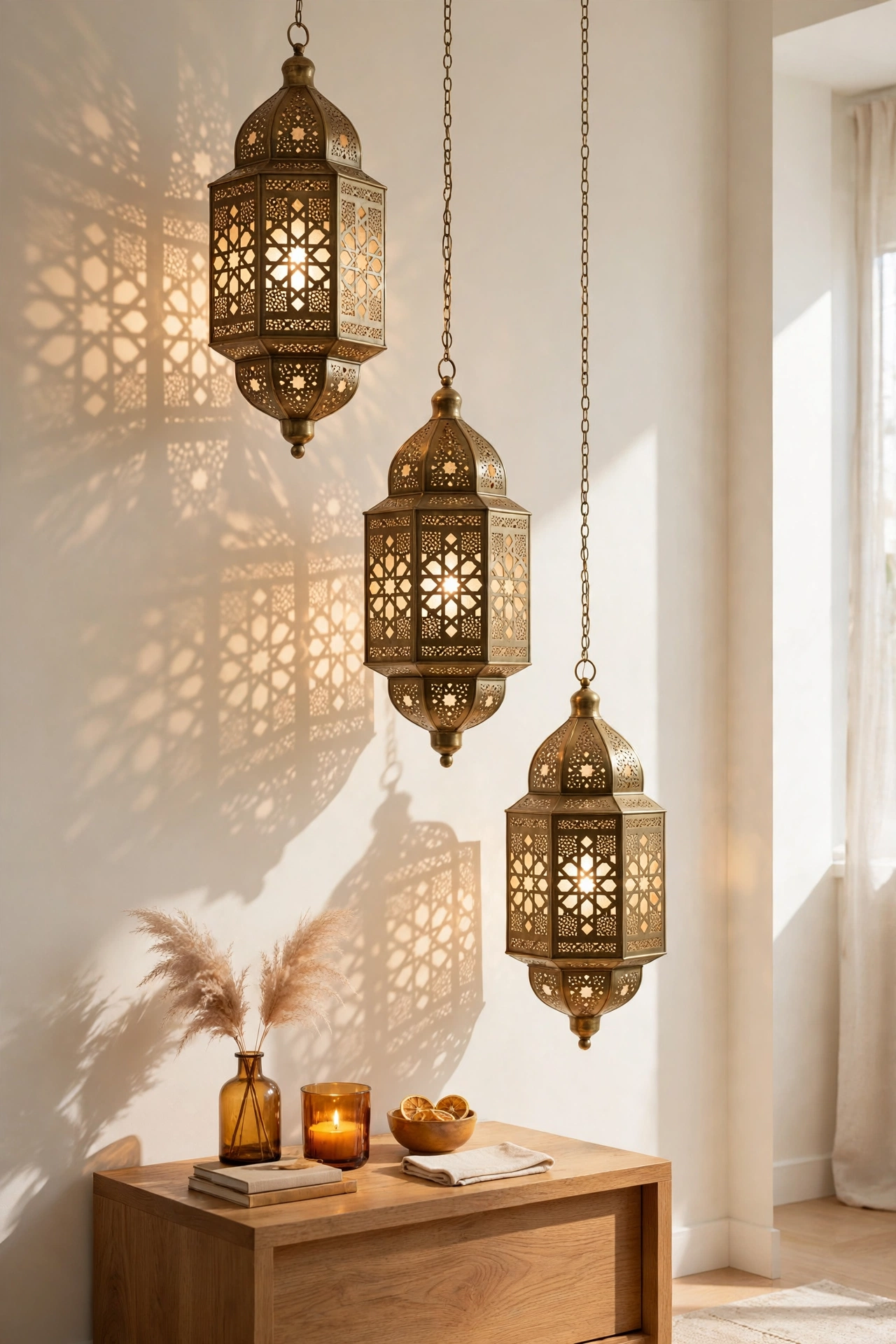
3. Hang Pierced Brass Lanterns for Patterned Light
Pierced brass lanterns are the heart of Moroccan lighting. Tiny holes punched into the metal throw lace-like patterns of light across the walls and ceiling when the lamp is lit. Hang one lantern over a dining table or group three at different heights in a corner for a warm, glowing effect.
Choose lanterns with geometric cutouts such as stars, diamonds, and eight-pointed shapes so the shadows match the rest of your pattern story. Warm bulbs work best because they make the brass glow like candlelight. For more ways to light a room with a statement piece, see these modern floor lamp ideas. A single lantern can change the mood of a whole evening.
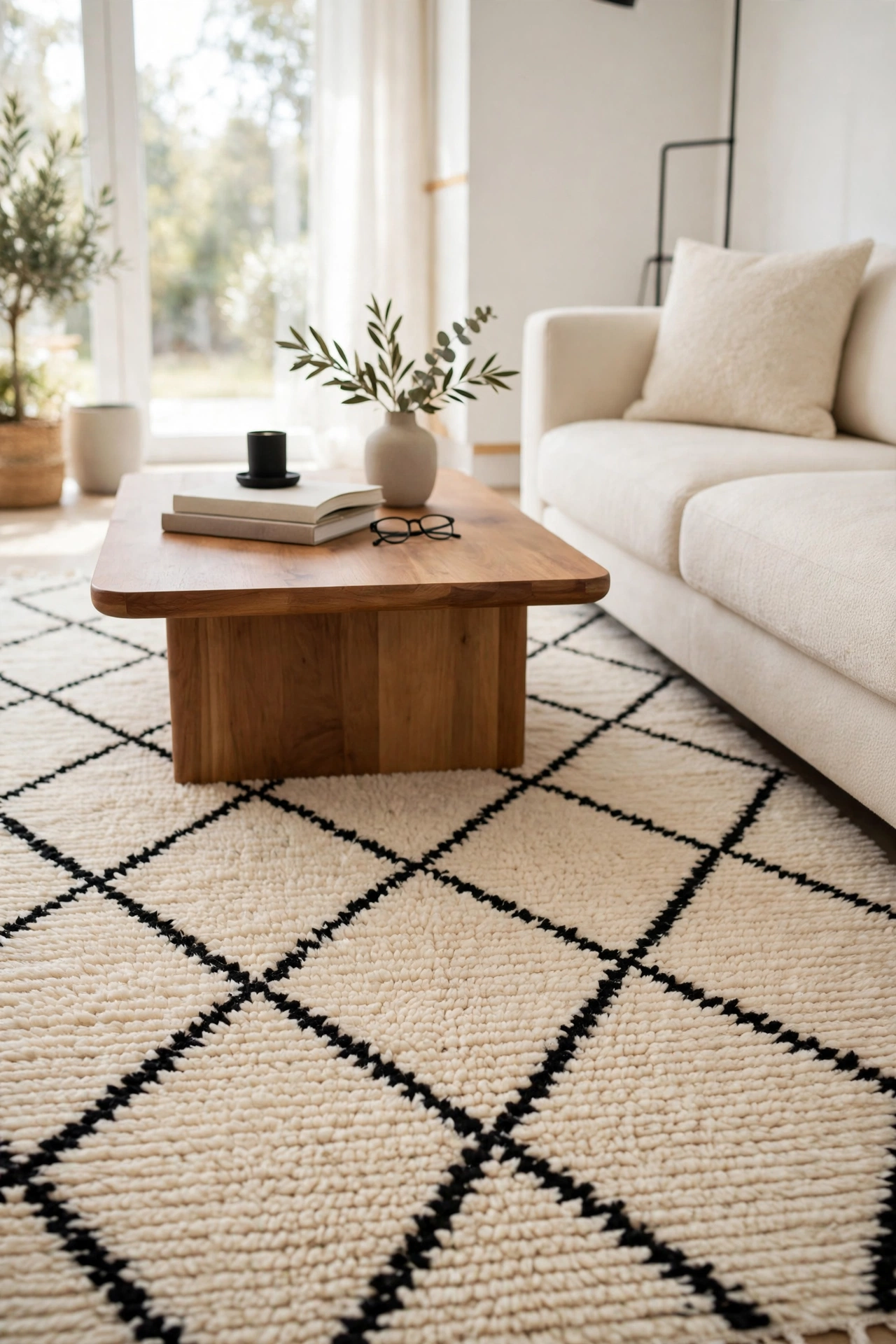
4. Style a Rug With Bold Berber Diamonds
A Berber rug with a bold diamond lattice is the easiest way to bring Moroccan geometry to the floor. The thick wool pile feels soft underfoot, and the graphic pattern anchors the whole room. Place it under a coffee table or in the center of a seating area so the diamonds show from every angle.
Keep furniture low and simple so the rug pattern stays visible. A plain wooden coffee table and cream sofa let the diamonds do the talking. A Berber rug works in almost any room because its pattern is strong but its colors stay calm and natural.
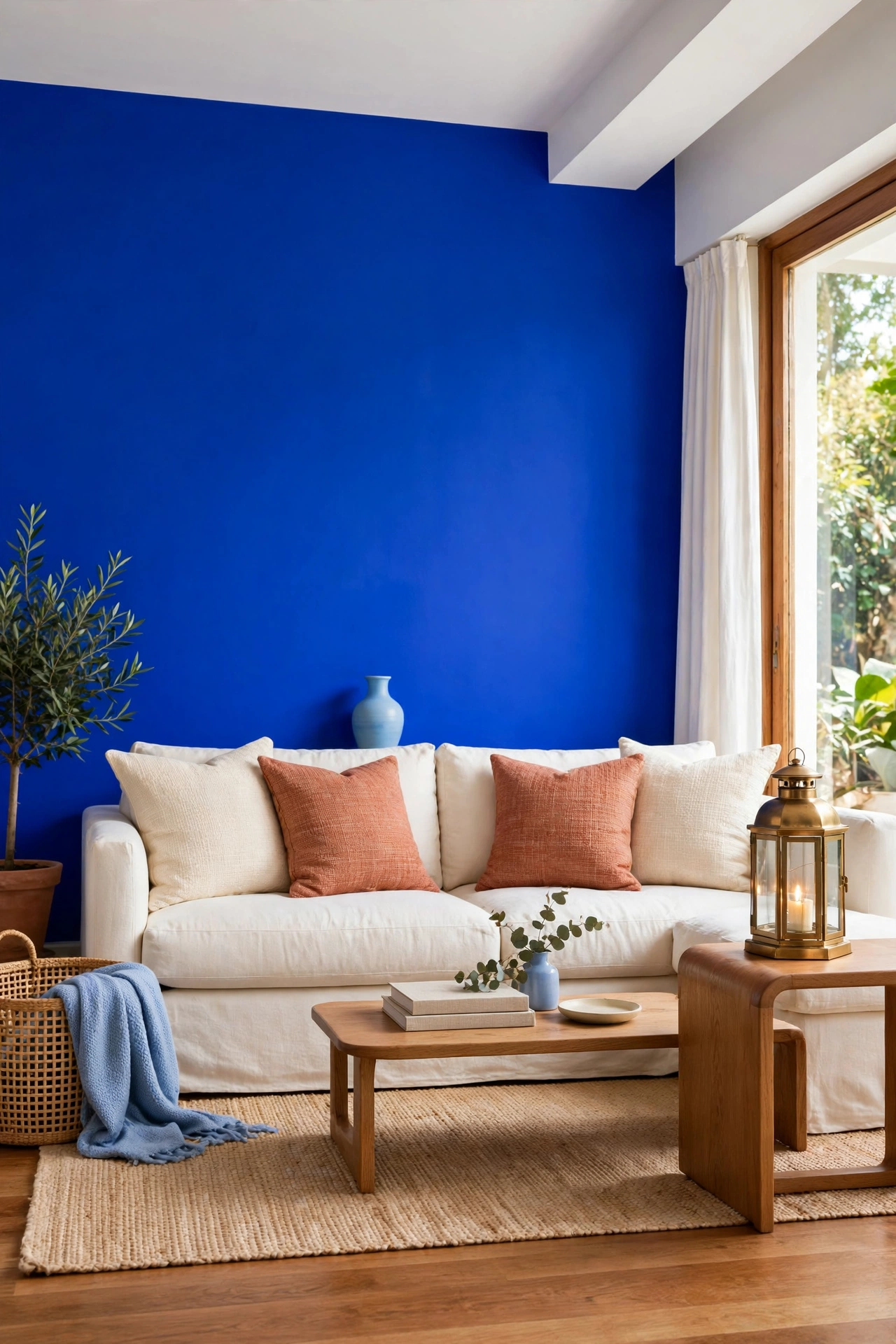
5. Paint a Feature Wall in Majorelle Blue
Majorelle blue is the vivid cobalt shade made famous by the gardens of Marrakech. One wall painted in this rich blue gives a room instant drama and a clear focal point. It works beautifully behind a bed, a sofa, or a dining table where the color can anchor the furniture.
Balance the strong color with plenty of cream, warm wood, and woven textures so the room stays calm. Brass lanterns and terracotta pots look even richer against the blue. A Majorelle blue wall is a brave choice, but it is also one of the fastest ways to make a room feel truly Moroccan.
6. Bring In a Carved Wooden Screen
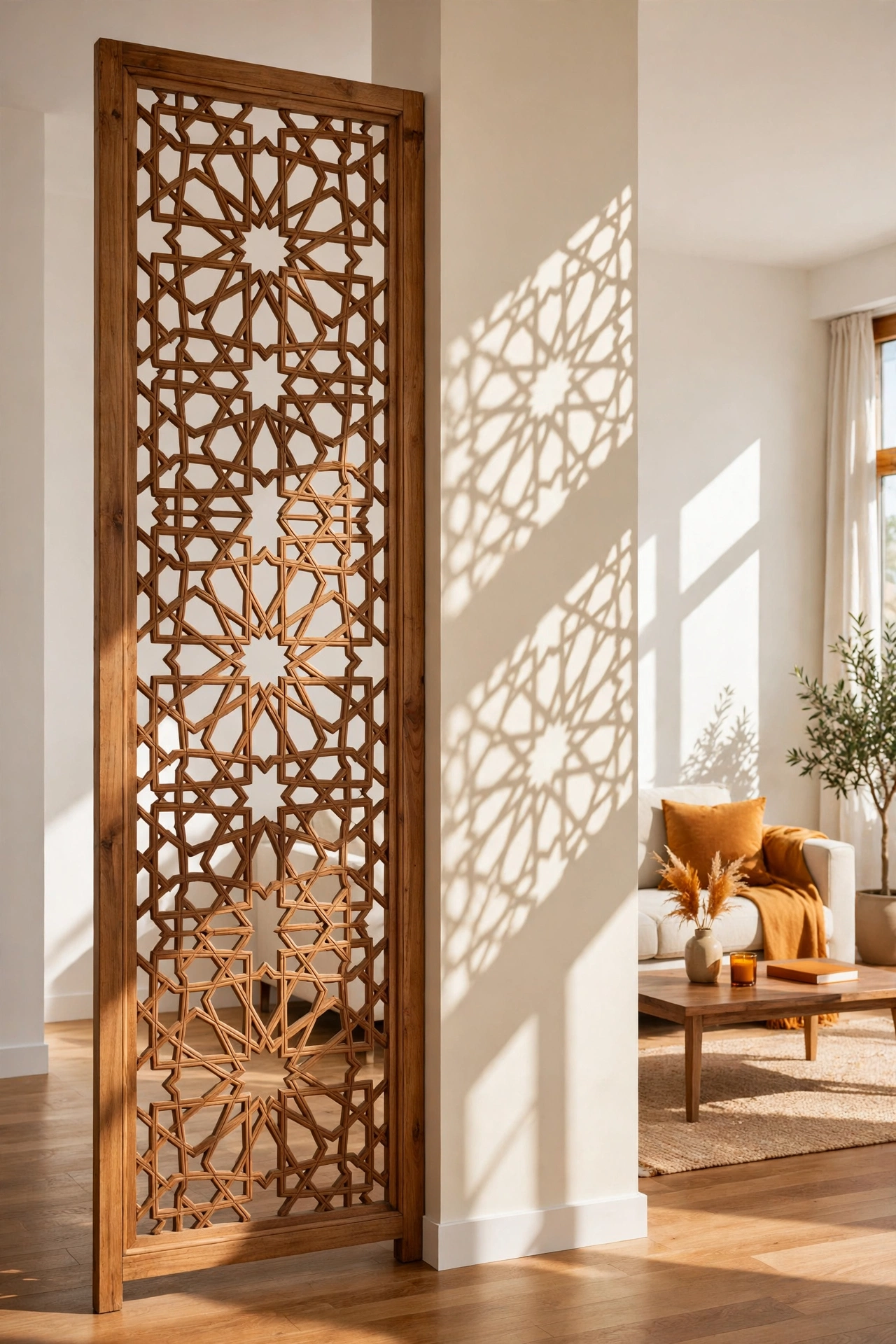
A carved wooden screen, known as a mashrabiya, is a lattice panel that filters light and air while giving you privacy. Use it as a room divider, a headboard, or a decorative panel on a plain wall. The repeating geometric carving casts beautiful shadows when sunlight passes through it.
Choose warm walnut or cedar wood so the screen adds richness without darkening the room. A freestanding screen can also hide an awkward corner or separate a reading nook from the rest of the space. A carved screen is both a piece of art and a practical piece of furniture.
7. Mix Patterned Cement Tiles on the Floor
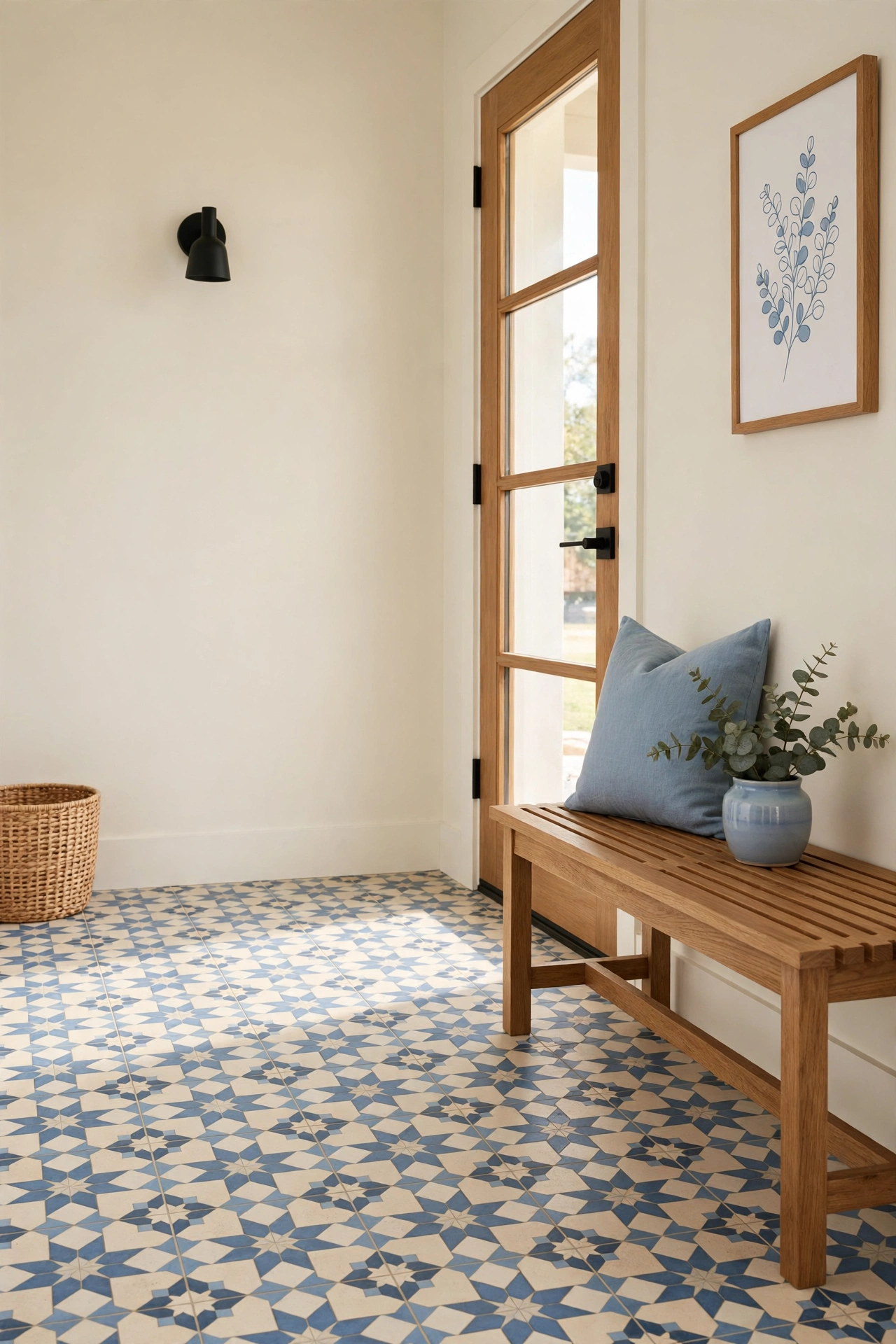
Patterned cement tiles, called encaustic tiles, are made with colored clay pressed into bold geometric designs. Lay them in an entryway, a bathroom, or a kitchen floor, and the whole room gains a handcrafted feel. Eight-pointed stars, quatrefoils, and interlocking diamonds are timeless patterns that never look dated.
Mix two or three complementary tile designs instead of one repeating pattern for a collected, old-house look. Keep the walls plain cream so the floor stays the focus. Patterned cement tiles are durable and easy to clean, so they are as practical as they are beautiful.
8. Dress the Sofa With Kilim and Beni Ourain Cushions
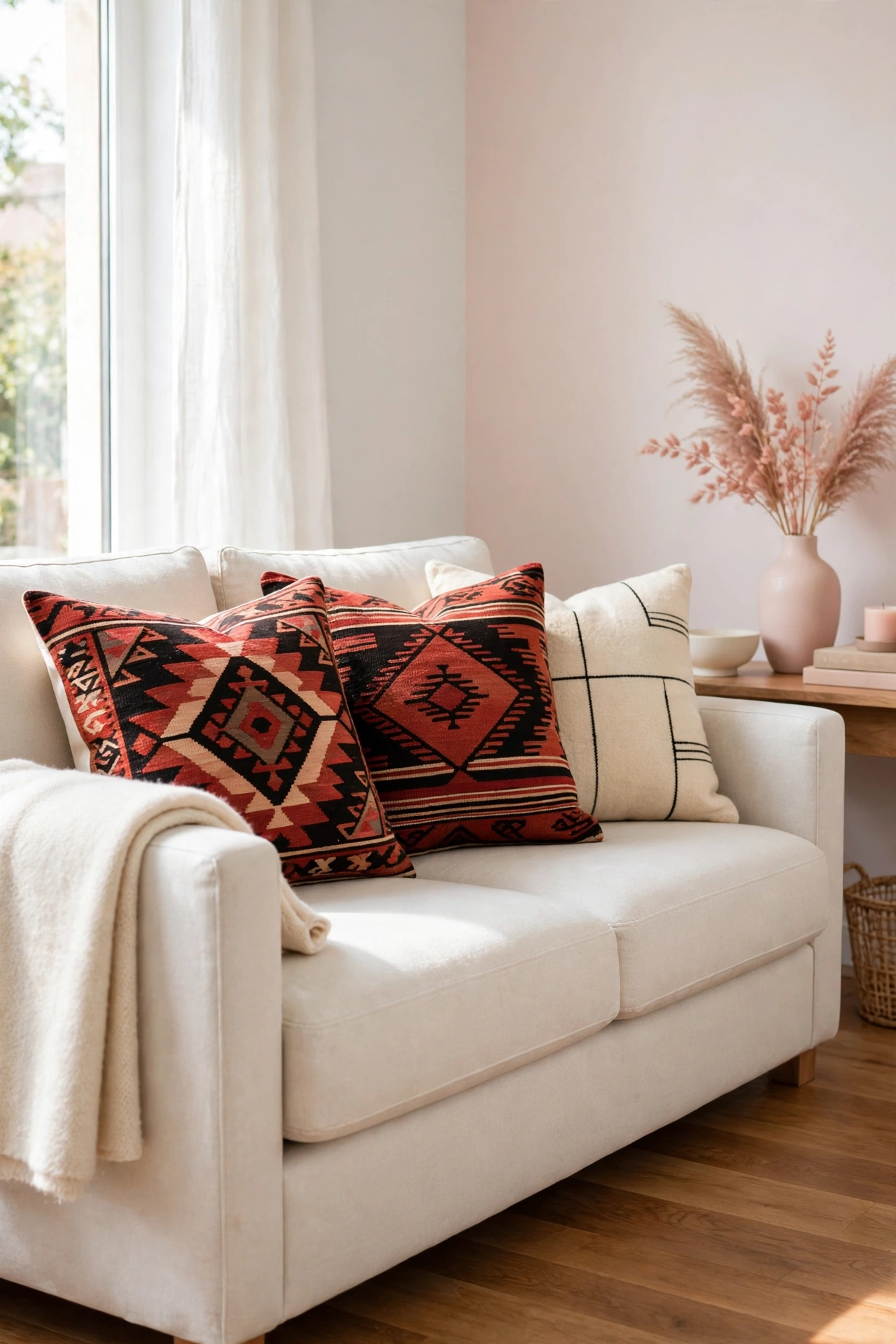
Kilim cushions bring flat-woven geometric patterns in warm reds, oranges, and indigo, while Beni Ourain cushions add soft cream wool with simple black lines. Mix the two on one sofa and you get contrast and harmony at the same time. The patterns feel collected over years rather than bought in one trip.
Stick to two or three cushion colors so the mix stays calm instead of chaotic. A plain cream throw over the arm of the sofa ties the whole arrangement together. Cushions are the easiest place to start with Moroccan style because you can change them with the seasons.
9. Add a Brass Tray Table With Engraved Geometry
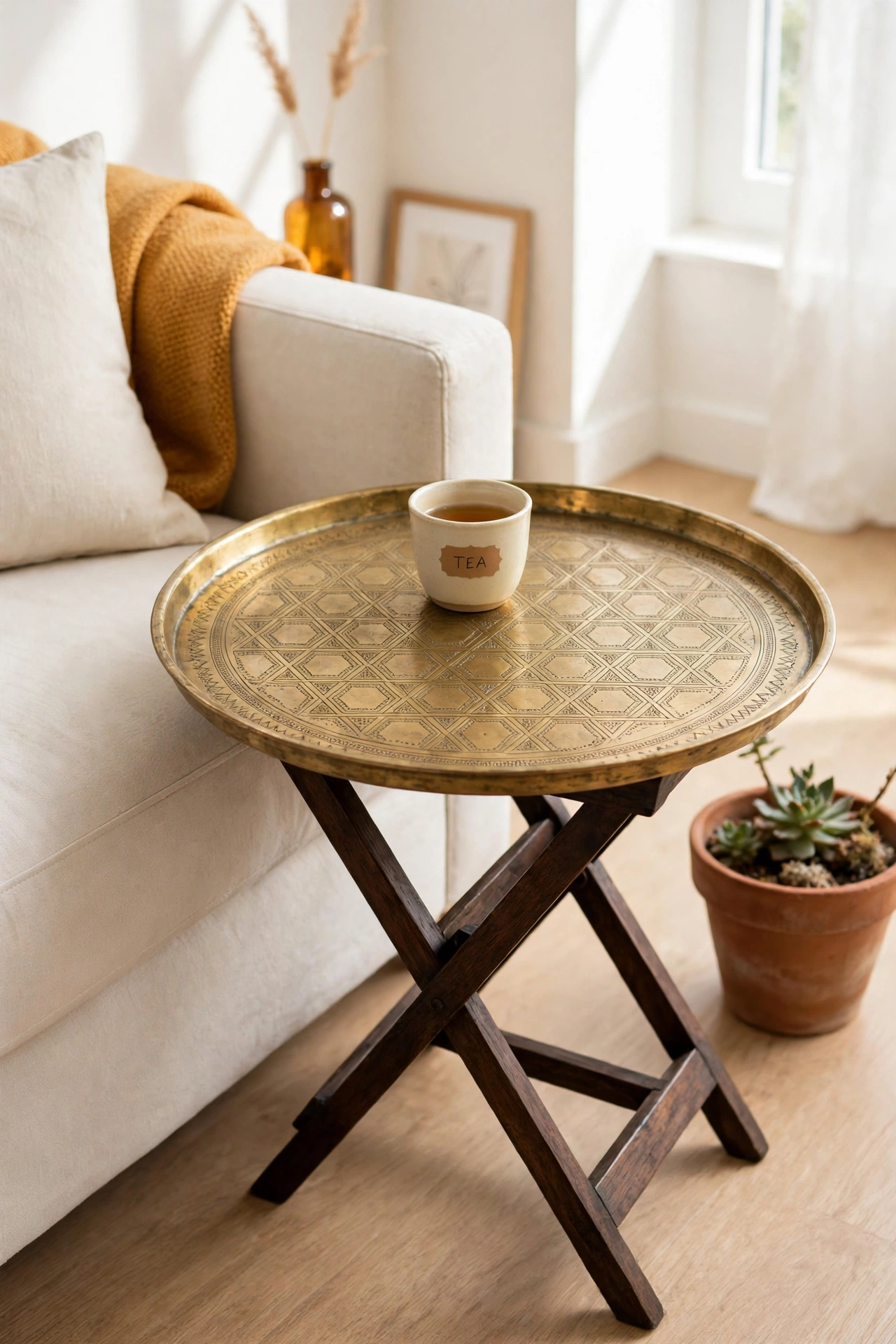
A brass tray table is a round engraved tray set on a folding wooden base. The tray surface is covered in fine geometric engraving that catches the light from every angle. Use it beside a sofa for tea, or in a bedroom corner as a small side table.
The warm gold of the brass pairs beautifully with terracotta pots and deep blue walls. Because the tray lifts off the base, you can carry it to another room whenever you need it. For more ideas on mixing warm metals with other finishes, see these mixed metal decor ideas. A brass tray table is small, but it adds a touch of Moroccan craft to any corner.
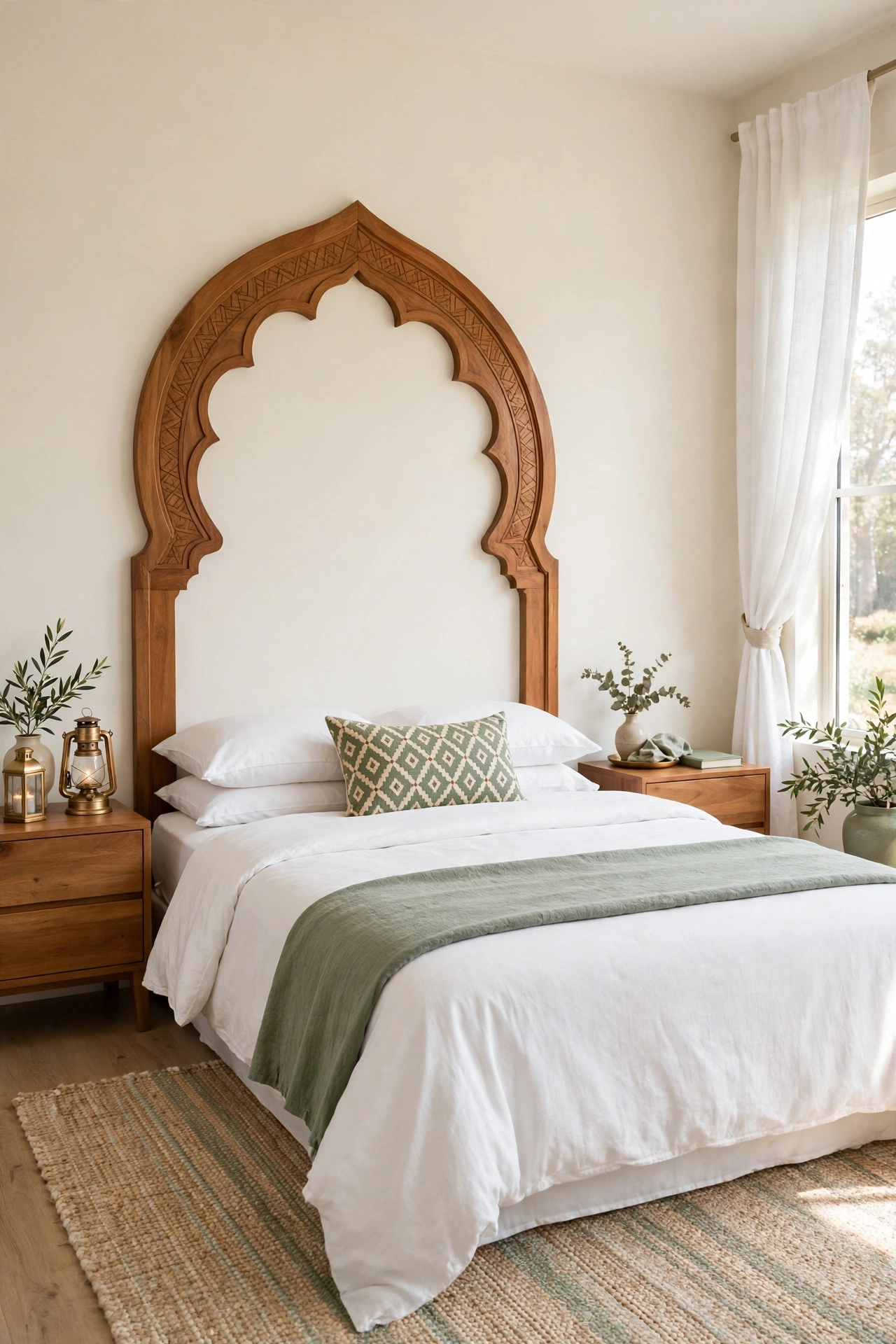
10. Frame the Bed With a Moorish Arch Headboard
A Moorish arch headboard turns a plain bedroom into a riad-inspired retreat. The arched shape can be carved from wood, built from plaster, or painted directly on the wall behind the bed. Either way, the curve frames the bed like a doorway to another place.
Pair the headboard with crisp white bedding and one or two patterned cushions so the arch stays the focus. Warm wood bedside tables and a small brass lantern complete the look without crowding the room. An arch headboard is a strong statement that still leaves the bedroom feeling calm and restful.
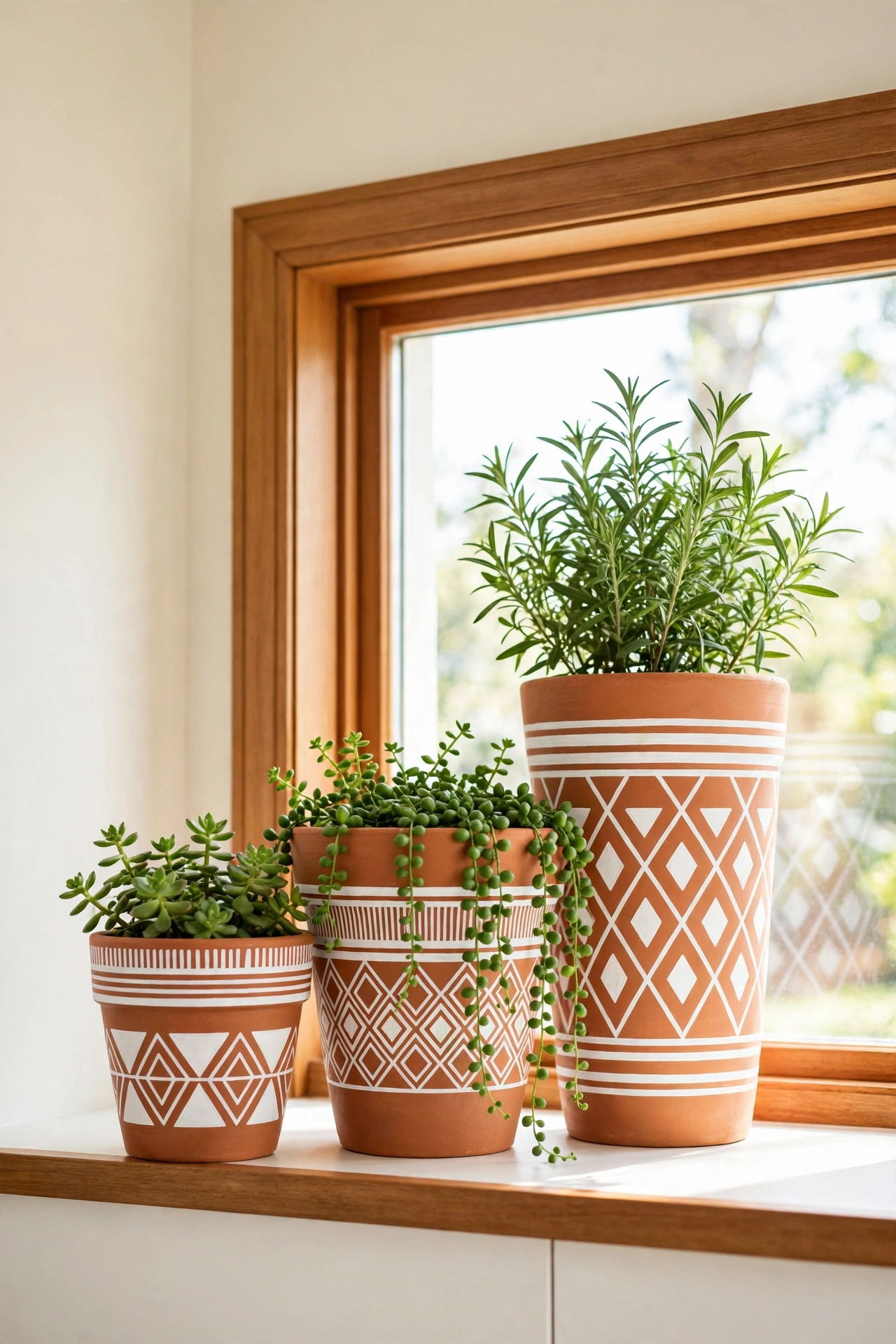
11. Use Terracotta Pots With Painted Patterns
Terracotta pots are a simple and affordable way to bring Moroccan warmth into a room. Paint them with white geometric bands, diamonds, or zigzags, and fill them with green plants or dried palm leaves. Group three pots of different heights on a windowsill or a sideboard for a collected look.
The warm orange clay looks beautiful against cream walls and sage green leaves. Use the same painted pattern on all three pots so the group feels intentional. Terracotta pots are a small detail, but they add color, texture, and handmade charm in one step.
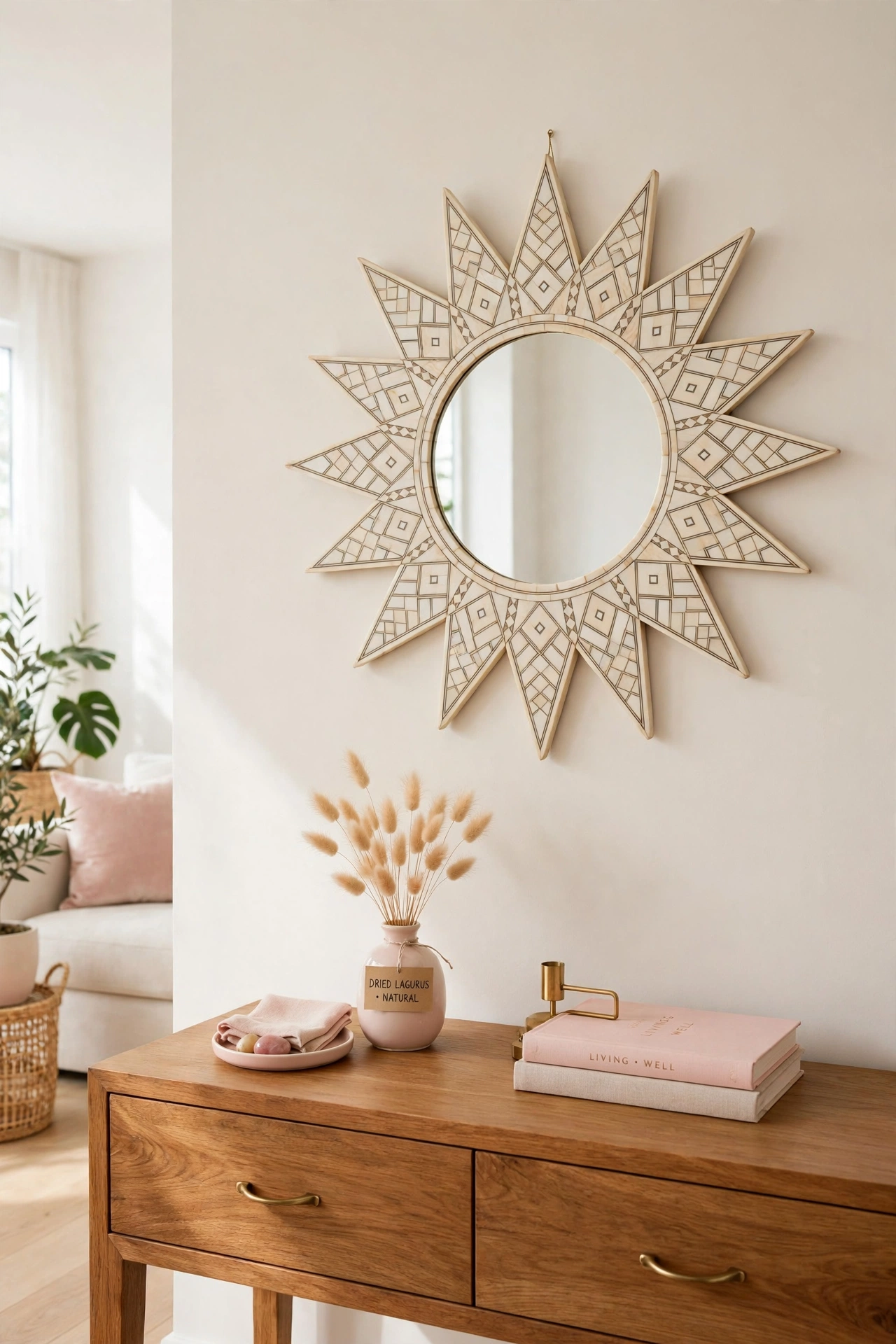
12. Hang a Starburst Mirror With Geometric Inlay
A starburst mirror with bone or brass inlay is a classic Moroccan accent for a plain wall. The radiating points and geometric inlay draw the eye and bounce light around the room. Hang it above a console table, a fireplace, or a dresser where it can reflect a window or a lantern.
Keep the wall around the mirror plain so the starburst shape stands out clearly. One large mirror works better than several small ones because the pattern needs space to breathe. For more ideas on choosing art that makes a wall feel finished, see these oversized artwork ideas. A starburst mirror is both decoration and light, and it suits almost any room.
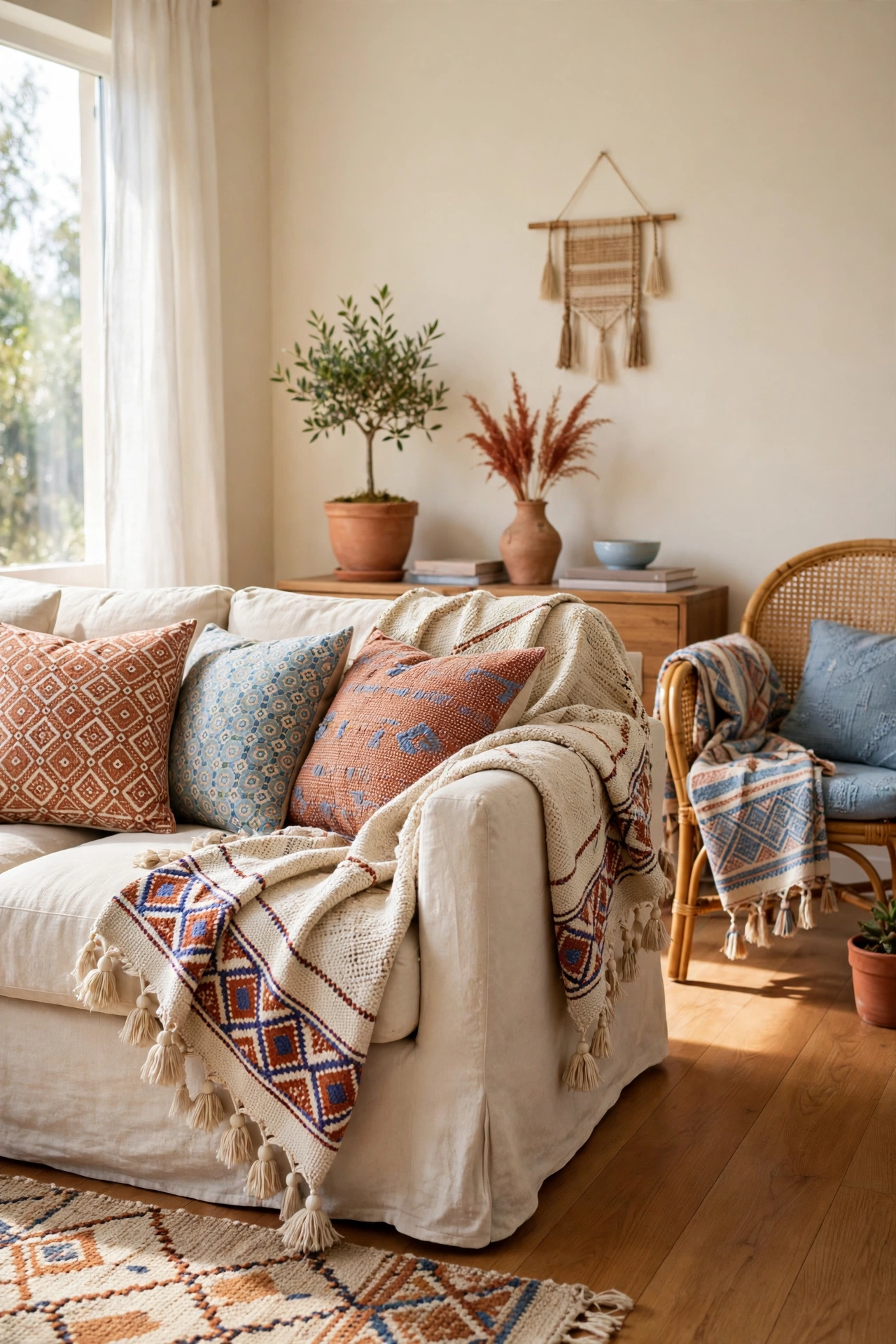
13. Finish With Layered Textiles and Tassels
Moroccan rooms are layered with textiles: a woven throw over the sofa, a patterned blanket at the foot of the bed, and tasseled cushions on every chair. The layers add softness and color, and the tassels give every edge a handcrafted finish. Choose fabrics in warm terracotta, soft blue, and cream so the layers feel rich but calm.
Drape one throw loosely instead of folding it neatly, so the room feels lived in rather than staged. Mix a smooth cotton throw with a chunky wool blanket for contrast in texture. Layered textiles are the final touch that makes a Moroccan inspired room feel warm, welcoming, and complete.
Conclusion
Moroccan inspired design is about pattern, craft, and warmth, not about filling a room with souvenirs. From zellige tiles and horseshoe arches to brass lanterns and Berber rugs, each idea here adds one more layer of that sun-washed, handcrafted feeling. The best rooms mix a few strong geometric pieces with plenty of calm cream and warm wood.
Pick one or two ideas that fit your home and start there. Paint one wall blue, hang one lantern, or lay one patterned rug, and let the room grow from that first step. A Moroccan inspired home does not happen in a day, but every small piece brings you closer to a space that feels like a warm escape.
Frequently Asked Questions About Moroccan Inspired Interior Design Ideas With Geometric Details
What colors work best in Moroccan inspired interiors?
Warm cream and white form the base, with terracotta, Majorelle blue, sage green, and amber as accents. Brass and warm wood add richness without darkening the room. Keep the base light and let the bold colors appear in tiles, textiles, and one feature wall.
How do I use Moroccan patterns without making a room look busy?
Choose one large pattern, such as a rug or a tiled floor, and keep the other patterns smaller and simpler. Leave plenty of plain cream surfaces between patterned pieces so the eye has space to rest. Two or three patterns in the same color family look layered rather than chaotic.
Can I add Moroccan style to a small room?
Yes, small rooms suit Moroccan style well because the patterns add interest without taking up floor space. A starburst mirror, a few patterned cushions, and one brass lantern can change a small room completely. Keep furniture low and light so the room still feels open.
What is the difference between zellige tiles and cement tiles?
Zellige tiles are small handmade glazed tiles with a glossy, uneven surface that catches the light. Cement tiles are larger, matte, and made with colored clay pressed into bold geometric designs. Zellige suits backsplashes and bathroom walls, while cement tiles suit floors and entryways. If you want a patterned wall without real tile, peel and stick wallpaper ideas can give a similar look for a lower cost.
Where can I find Moroccan decor on a budget?
Start with cushions, terracotta pots, and small brass trays, which cost far less than tile or furniture. Thrift stores and online marketplaces often carry lanterns, mirrors, and textiles at low prices. Paint is the cheapest way to add Moroccan color, and one blue feature wall costs less than a single piece of furniture.

Hi, I’m Emily! I turn messy corners into cozy, organized spots. DreamNestDecor is where I share simple, practical home ideas — decor, organization, and small-space solutions that work in real life, not just in photos. Every idea here is carefully researched before it’s shared.