Picture this: you open your closet to grab your favorite scarf, and instead of one quick reach, you dig through a tangled pile of belts, bags, and shoes that slid off their shelf. The scarf is somewhere in the heap, your shoes are in a jumble by the door, and getting dressed takes twice as long as it should.
You do not need a bigger closet or a new wardrobe to fix this. The door you open every day is a whole wall of storage waiting to be used, from hooks and pockets to rails and shelves for shoes, scarves, and bags. These 17 ideas will help you turn your closet door into neat, visible storage so every accessory is easy to see and easy to grab.
1. Slide a Barn Door to Free Floor Space
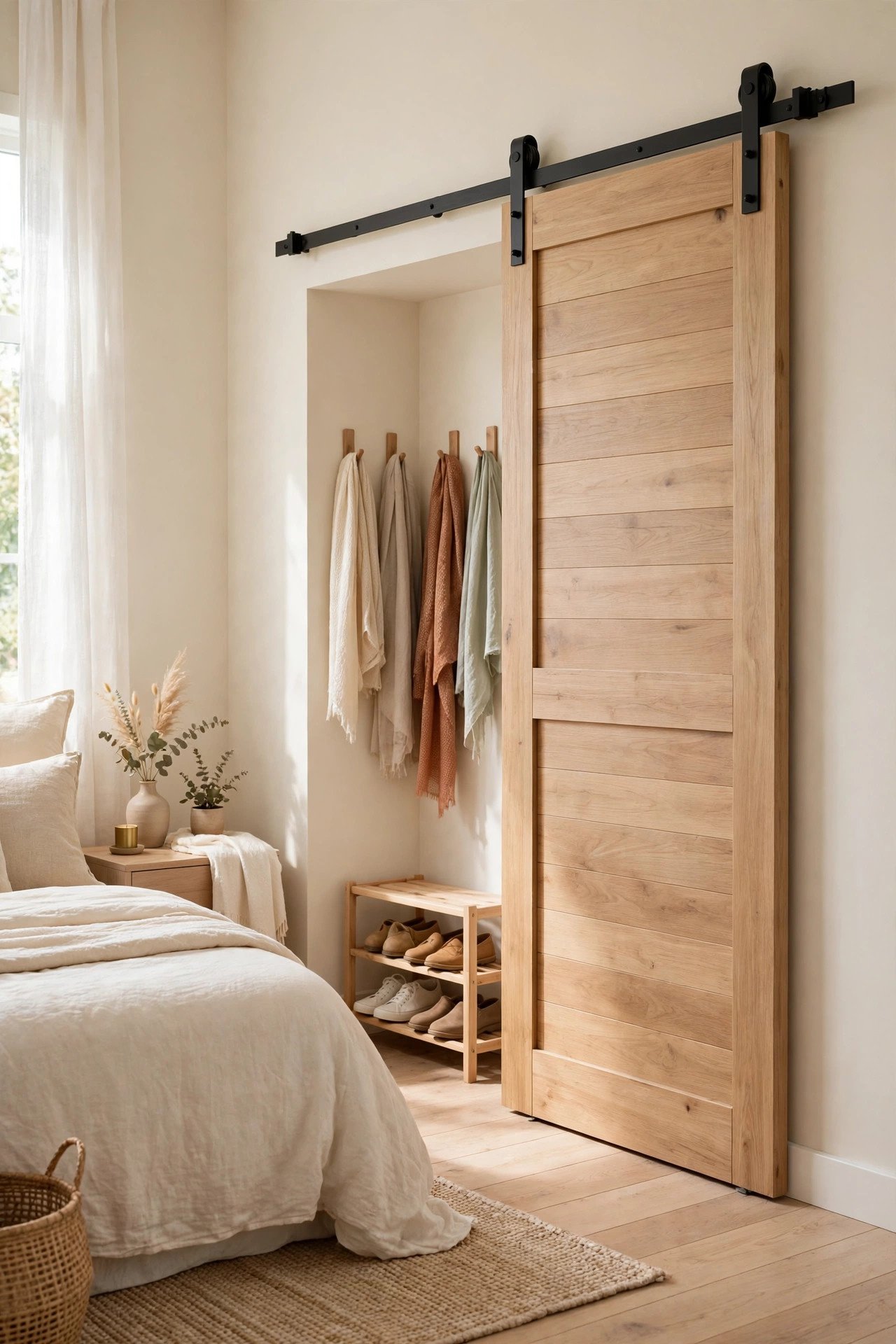
A sliding barn door removes the swing of a hinged door, and that freed floor space is perfect for a shoe rack or a basket of accessories right by the closet. Mount the track above the opening and let the door glide to one side, so nothing blocks the shoes you reach for every morning.
Choose a light wood finish so the door feels warm rather than heavy, and add a slim rail or a row of hooks on the door face for scarves and belts. The door becomes part of the storage instead of just a cover, and the room feels bigger because the floor stays clear.
2. Cover the Door in Fabric Pockets
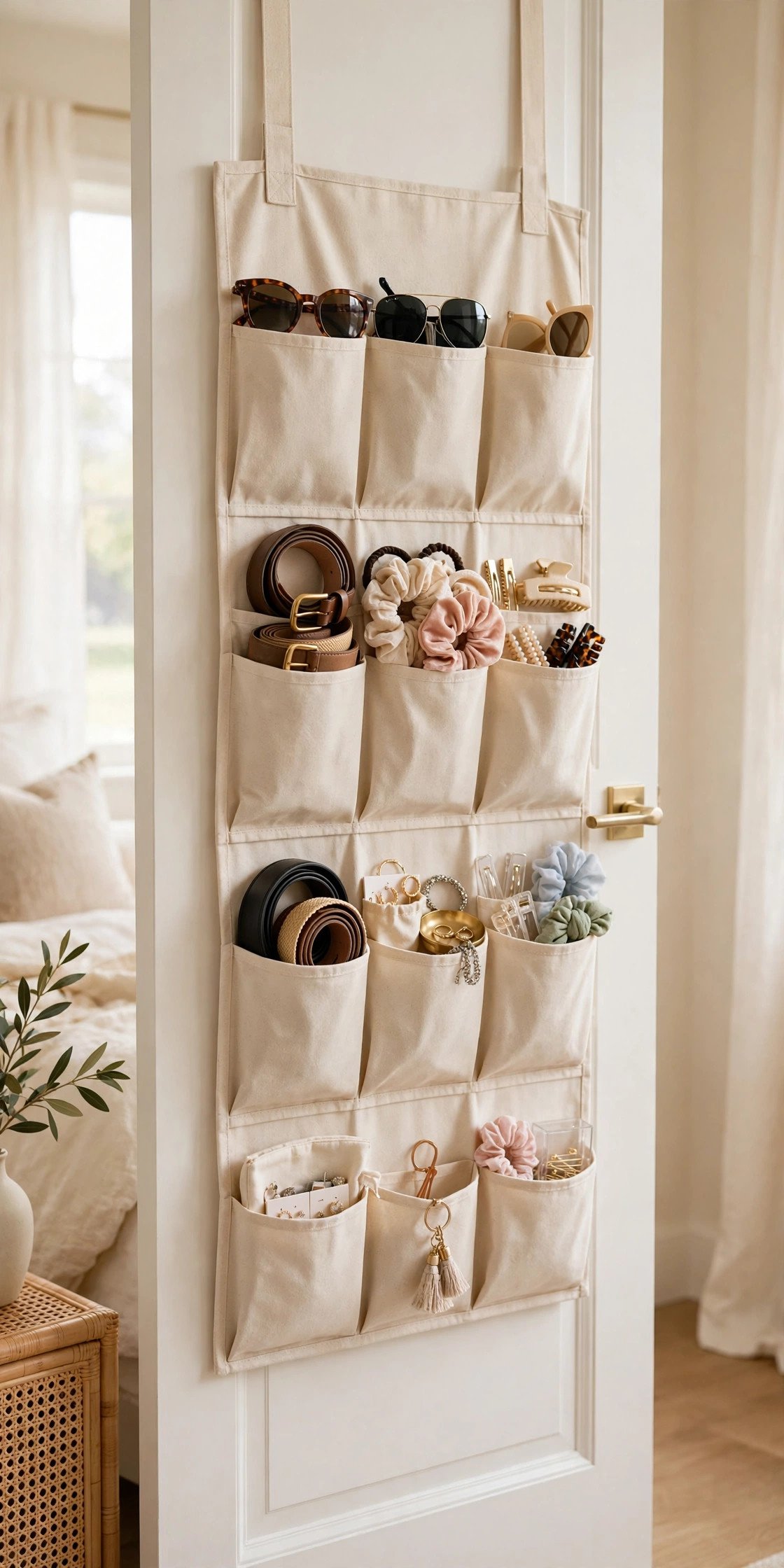
A fabric pocket panel turns a flat closet door into a hanging organizer for small accessories. Sew or buy a panel with clear or canvas pockets, hang it over the door, and give each pocket a job: sunglasses, belts, hair ties, gloves, and spare shoelaces.
Pick a sturdy cotton or canvas so the pockets hold their shape, and keep the heaviest items low so the panel hangs flat. You can see everything at a glance, and nothing gets lost in a drawer. Swap the panel when the seasons change, and the door is ready for the next set of accessories.
3. Paint a Chalkboard Panel for Labels
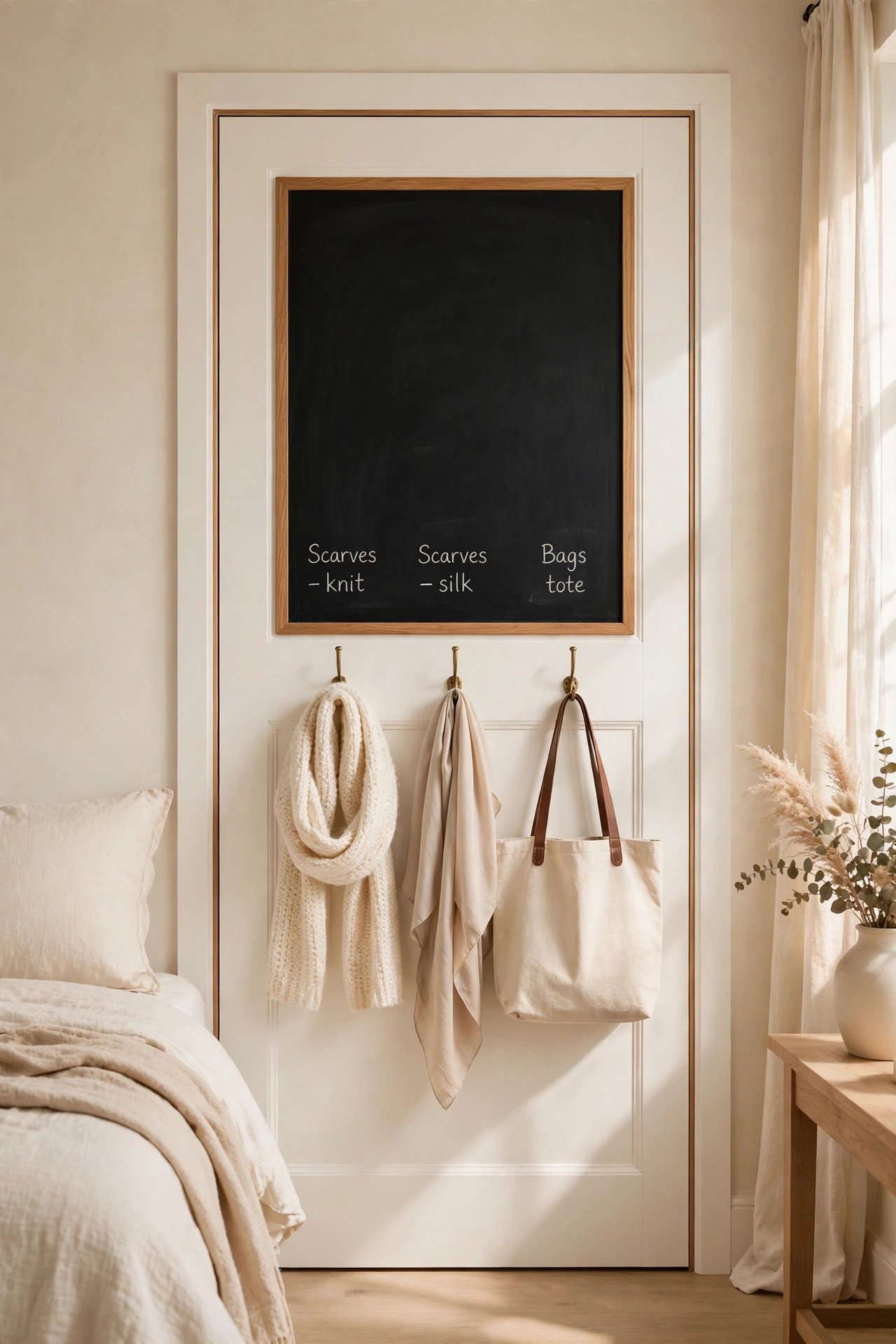
A chalkboard panel on your closet door makes labeling fun and easy to change. Paint the top half of the door with chalkboard paint, then write the week’s shoe plan, a reminder to polish boots, or labels for each hook below. The door becomes a message board and a map for your accessories.
Frame the painted area with thin trim so it looks finished, and keep a small chalk tray on a hook nearby. When the season changes, wipe the board clean and write a fresh list. A chalkboard door works by the front door too, and these entryway organization ideas show how to build a landing zone with one.
4. Swap In Cane Webbing to See Inside
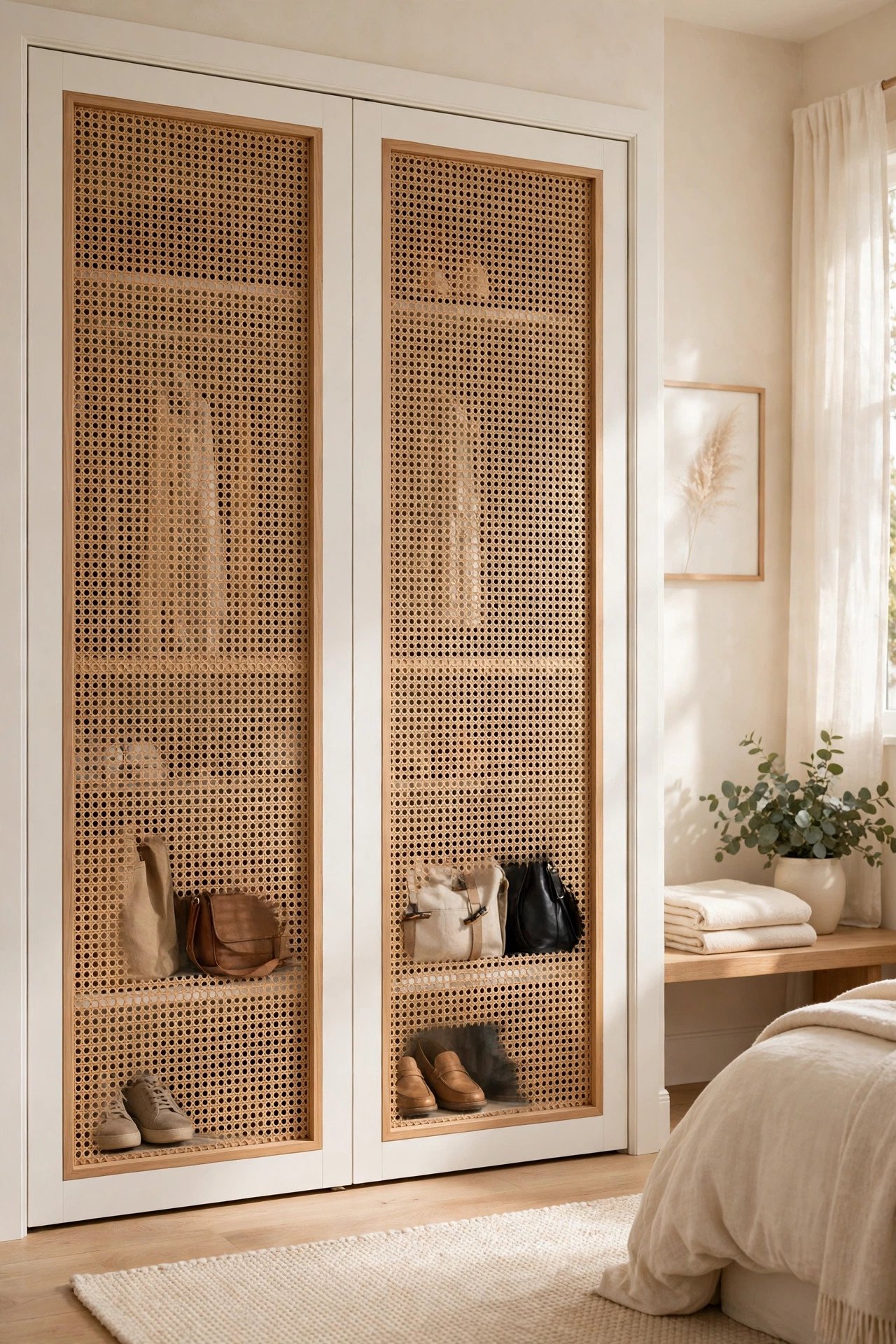
Cane webbing panels let you peek into the closet without opening the doors, so you can spot the shoes or the bag you want before you reach for them. Cut out the center panels of your doors and fit woven cane in their place, trimmed with a simple wood frame.
The open weave lets air move through the closet, which keeps shoes and leather accessories fresh instead of musty. Paint the trim to match the door, and the webbing adds warmth and texture while the closet stays tidy and breathable behind it.
5. Paint Geometric Zones for Each Category
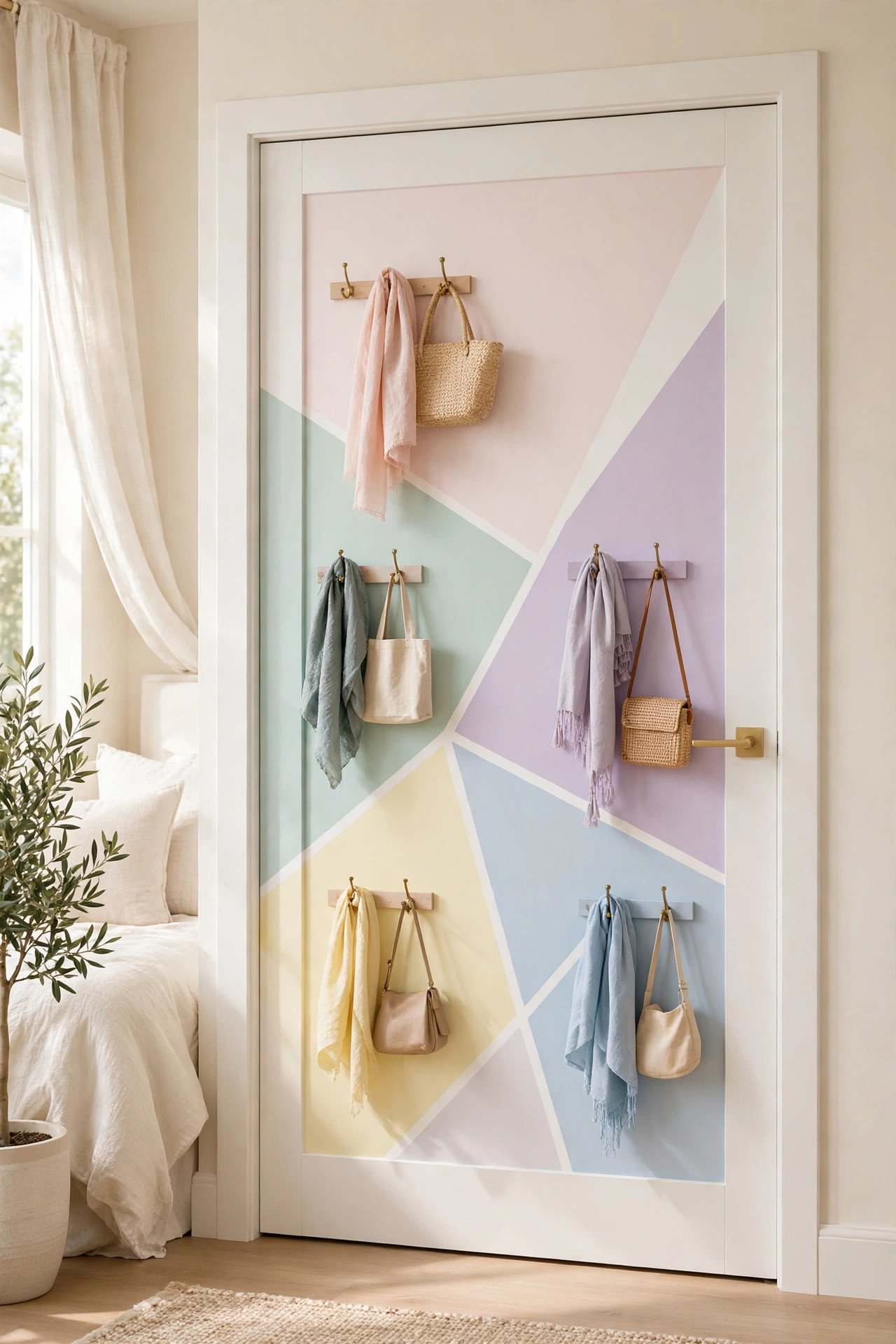
A painted geometric design can divide your closet door into zones, one for shoes, one for scarves, and one for bags. Use painter’s tape to mark off triangles or blocks, then paint each zone in a soft color that matches the room. The pattern turns a plain door into a clear storage map.
Hang a hook or a small rail inside each painted zone so every category has its own spot. Shoes go low, scarves in the middle, and bags up high where they stay out of the way. The zones make tidying quick, because everything has a painted place to return to.
6. Add Mirror Panels with Hooks Below
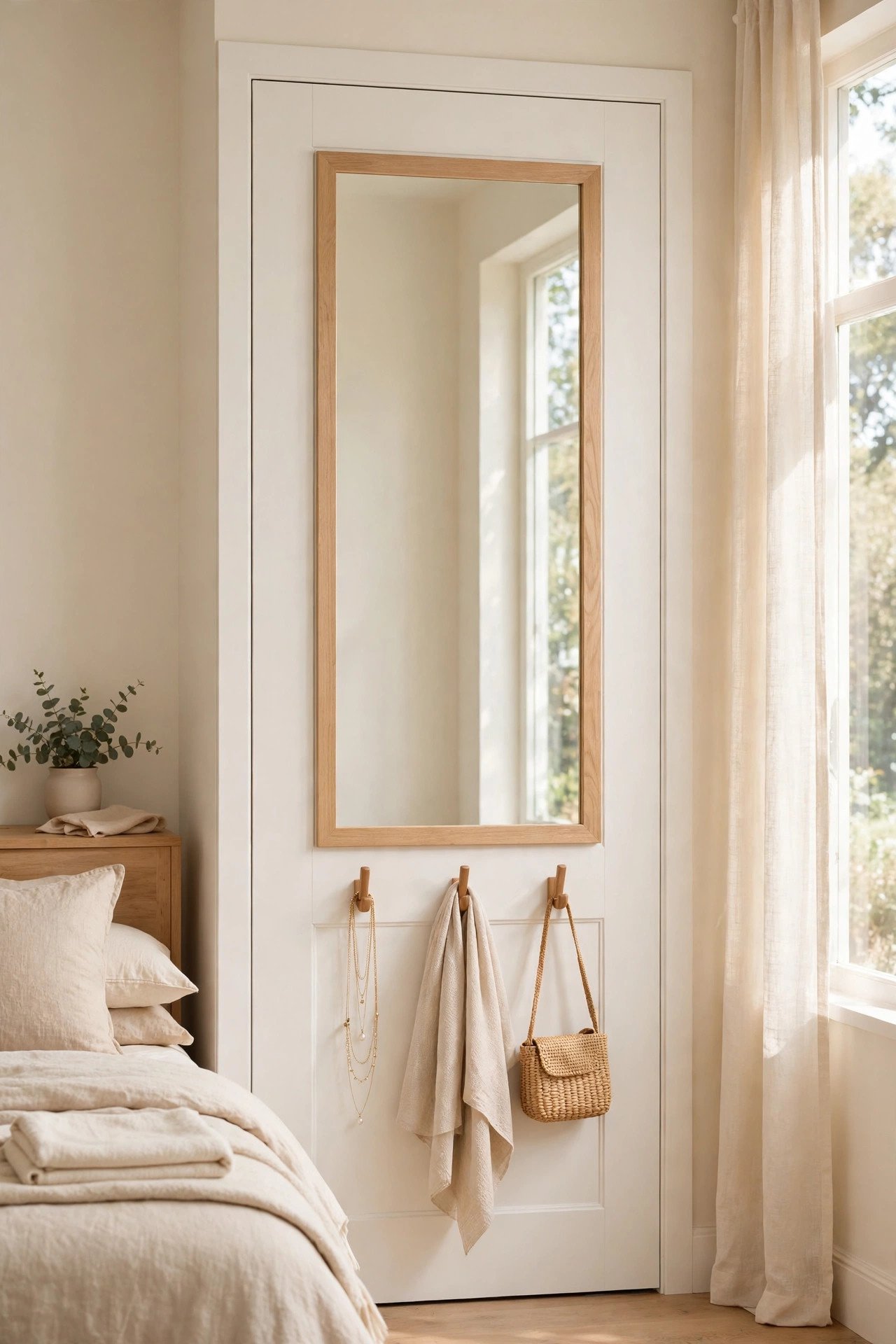
A full-length mirror on your closet door does two jobs at once: it lets you check your outfit and it makes a small bedroom feel bigger and brighter. Fix a slim mirror panel to the door, then add a row of hooks below it for necklaces, scarves, and tomorrow’s bag.
Frame the mirror with light molding so it looks built in rather than stuck on, and keep the hooks at arm height so nothing dangles onto the floor. You check your look, grab your accessories, and head out the door in one smooth stop.
7. Line the Door with Removable Wallpaper Pockets
Removable wallpaper gives your closet door a fresh pattern, and small clear pockets over it turn the door into display storage. Pick a print you love, smooth it onto the door, then add a few clear pockets for sunglasses, jewelry, and hair accessories you want to see.
The wallpaper peels off cleanly when you want a change, so renters can try it without worry. Keep the pockets light and shallow so the door still closes easily, and let the pattern show between them for a look that feels decorated rather than crowded.
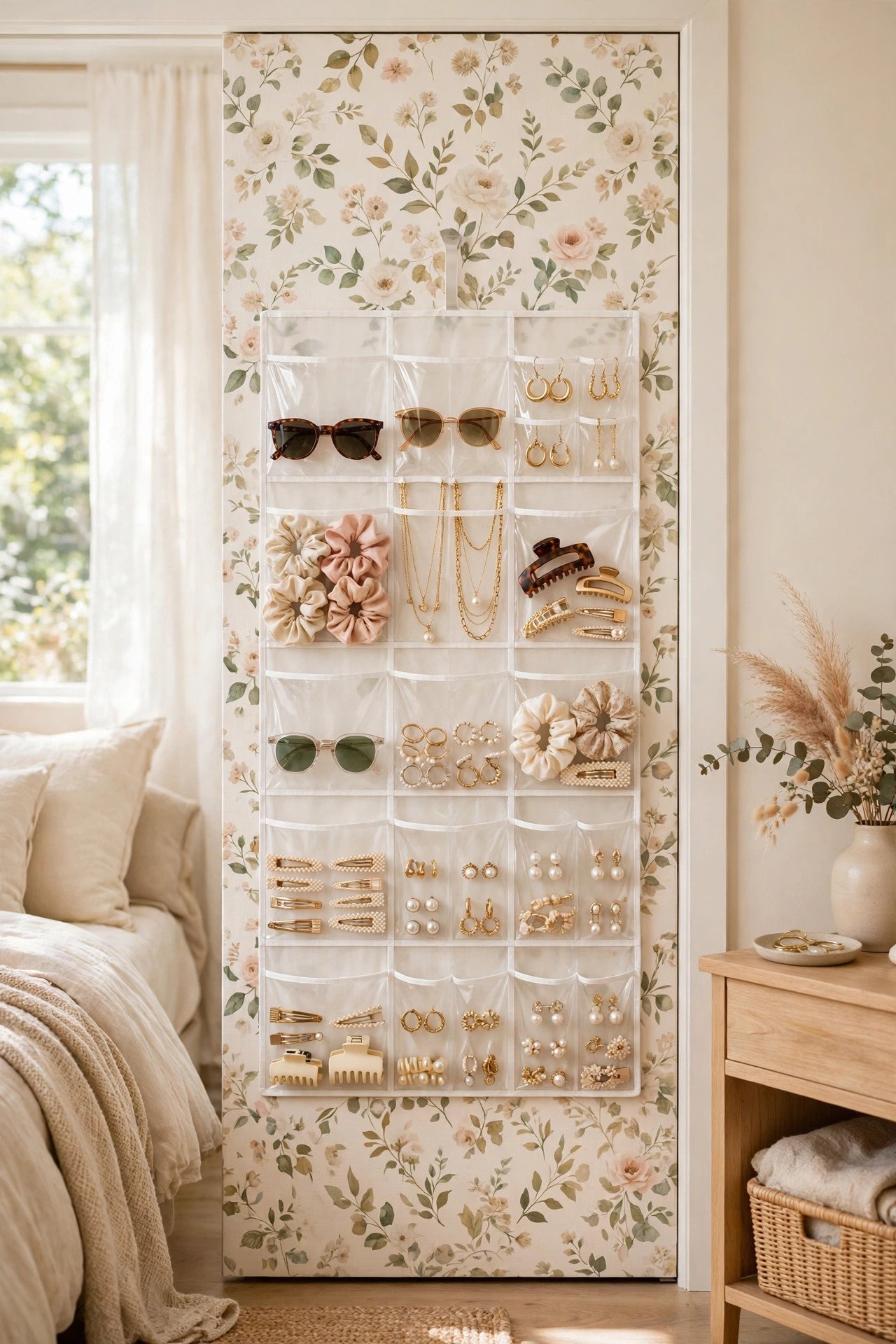
8. Build Shaker Panels with a Hanging Rail
Shaker-style panels add simple frames to a flat closet door, and a slim rail across the panels gives you a place to hang belts, ties, and scarves in neat rows. Attach thin strips of wood to form the frames, paint the door one calm color, and fix the rail at a height you can reach without stretching.
Use small hooks on the rail for the little things that usually vanish, like hair clips, spare buttons, and collar stays. A rail keeps them visible instead of buried, and these kitchen junk drawer organization ideas show how to give small bits a home of their own.
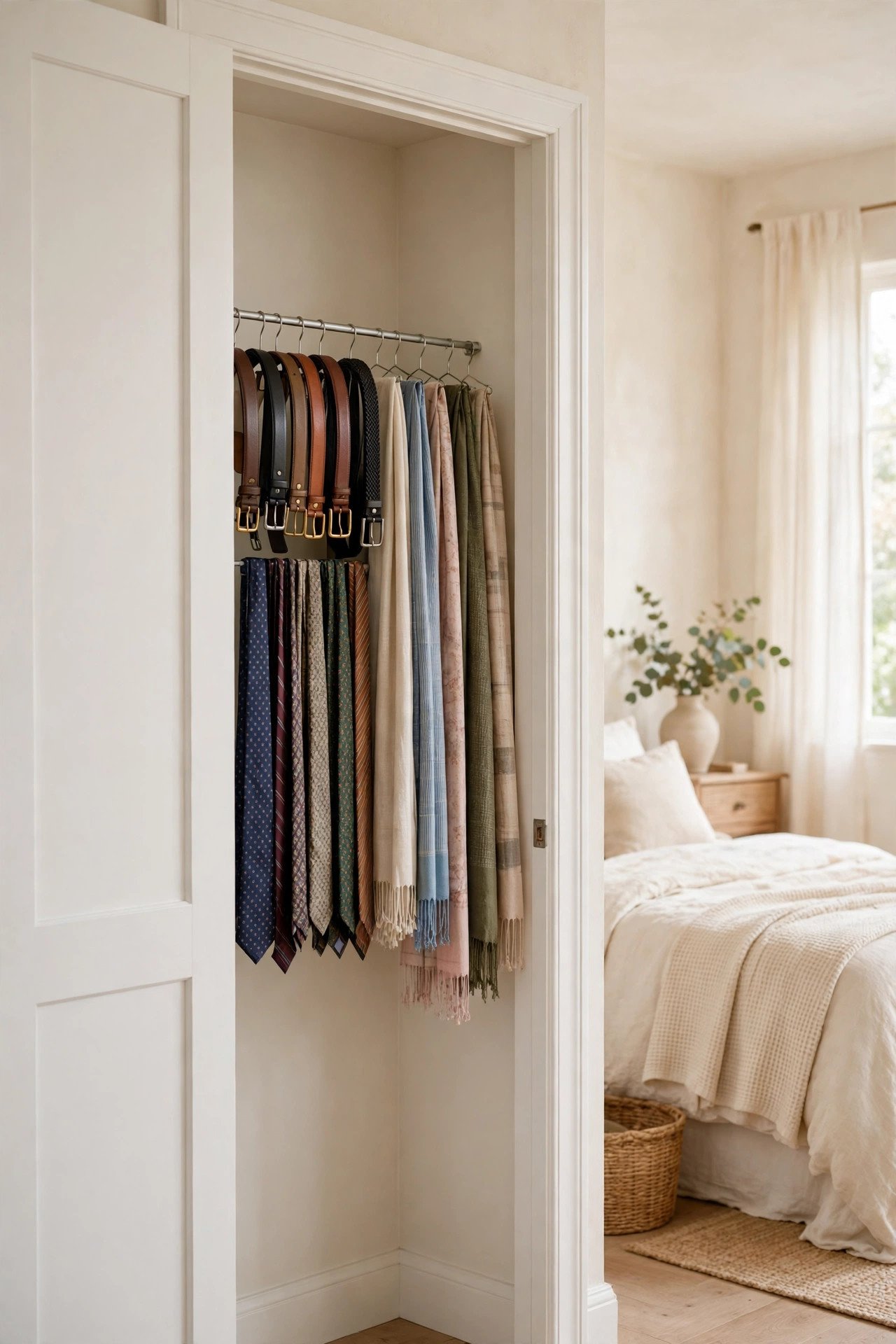
9. Add Faux Wainscoting with Peg Hooks
Faux wainscoting adds a band of molding to the lower half of your closet door, and peg hooks along that band hold bags, hats, and belts at easy reach. Apply the molding in a crisp white, paint the upper half a soft contrasting color, and the door gains the look of custom millwork.
Space the pegs wide enough that bags do not crowd each other, and keep the heaviest bag nearest the hinges so the door swings smoothly. The molding hides the screws, the pegs hold the daily rotation, and the whole door looks finished from across the room.
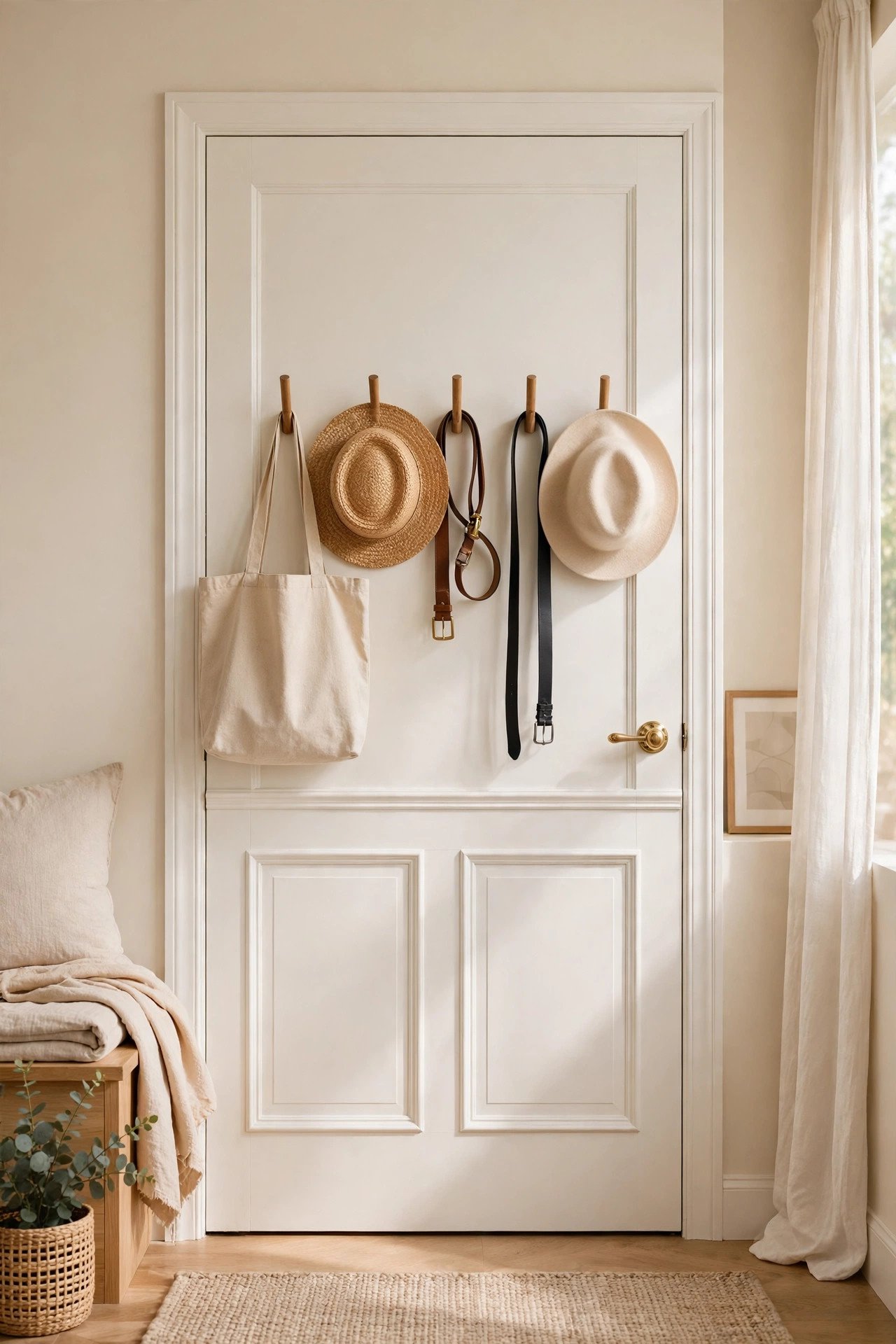
10. Fix Rustic Wood Slats for Peg Storage
Thin horizontal wood slats turn a plain closet door into a warm, textured peg wall for accessories. Fix the slats across the door with small gaps between them, then slide pegs or hooks into the gaps wherever you need them. Belts, caps, and scarves hang in neat rows, and you can move the pegs when the season changes.
Choose a light stain so the wood adds warmth without darkening the room, and keep the slats slim so the door stays light. The gaps let air flow, the pegs hold the everyday pieces, and the door feels like a crafted feature rather than a blank slab.
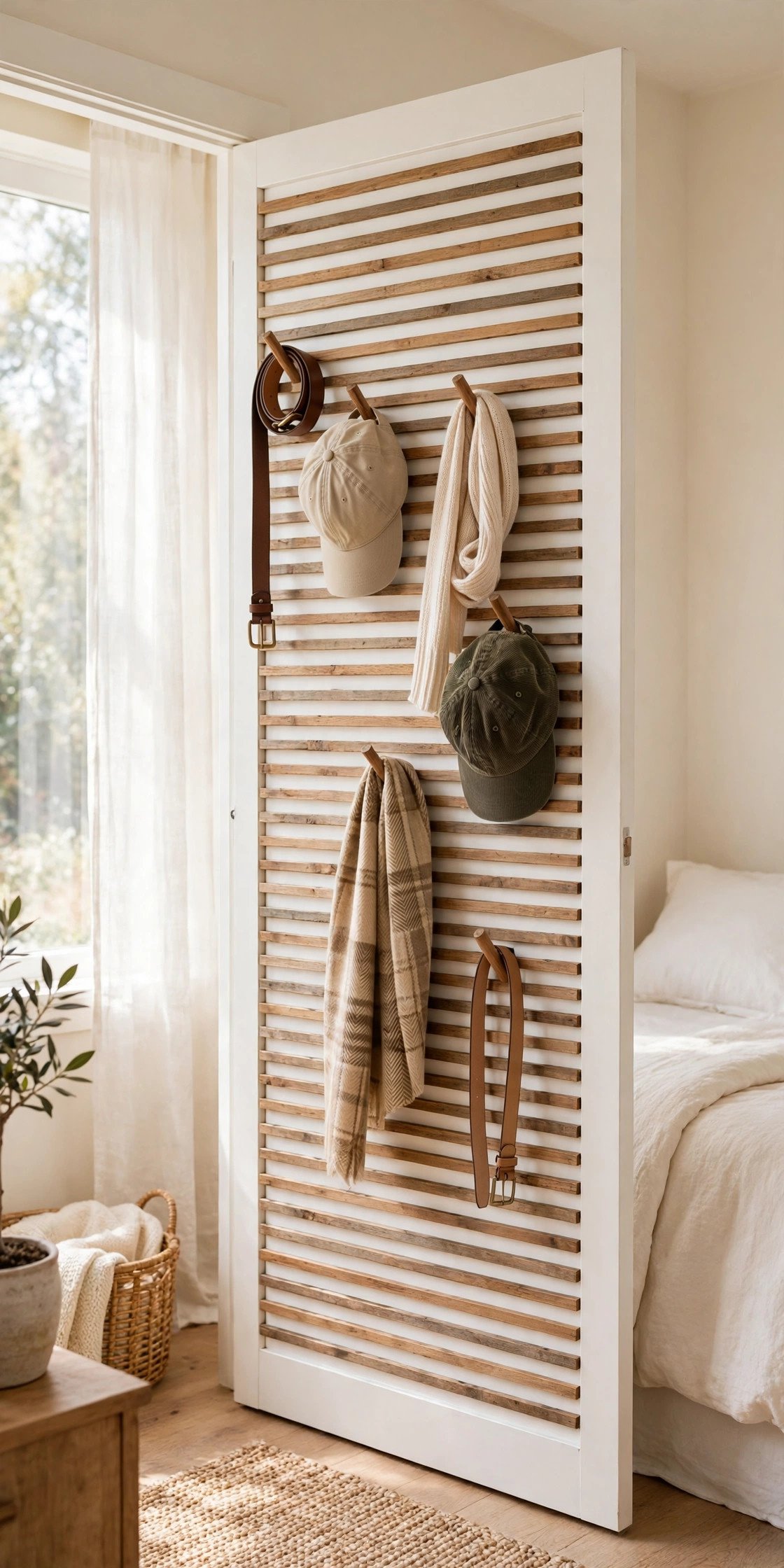
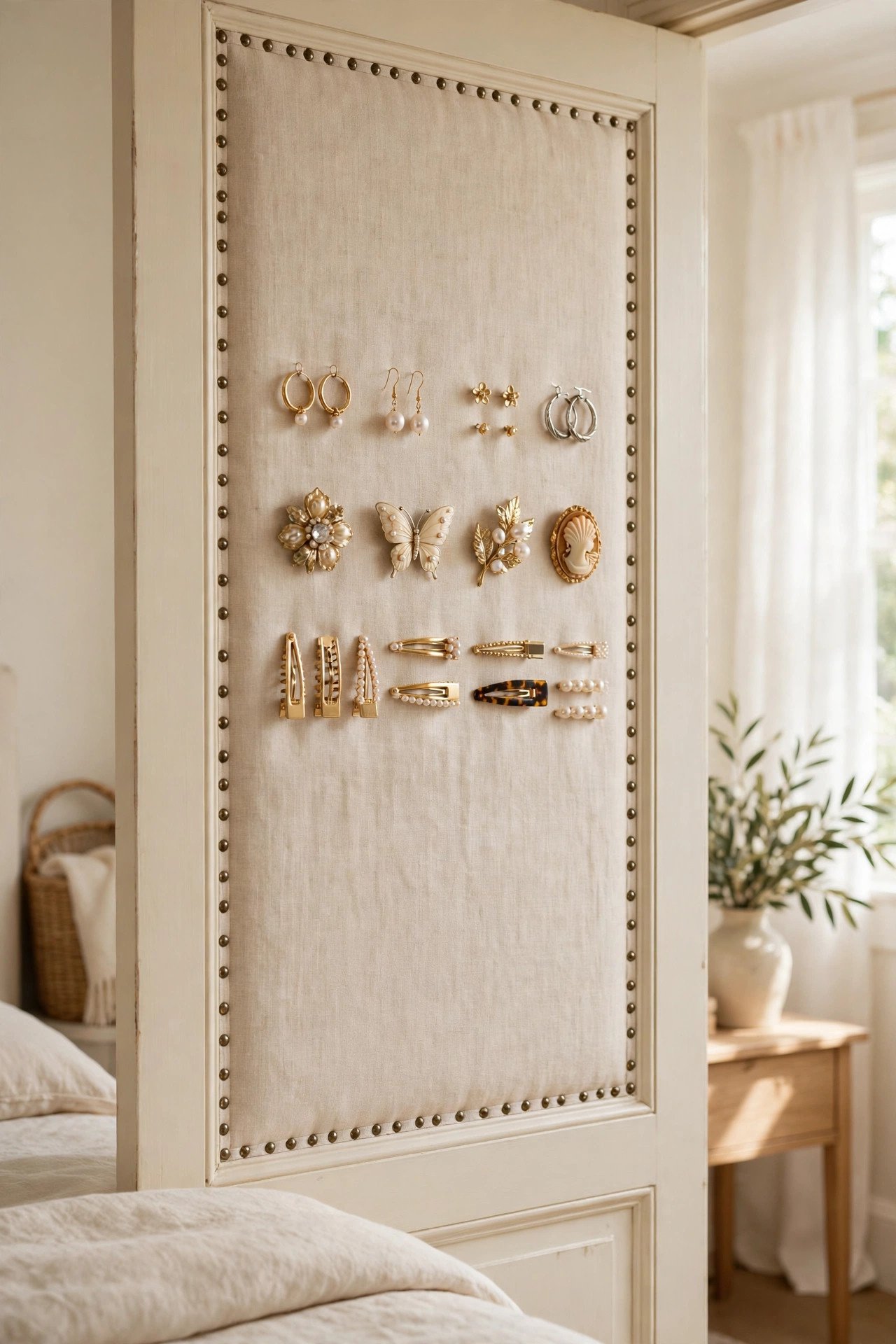
11. Upholster the Door for Pin-Up Accessories
An upholstered closet door gives you a soft surface to pin and display accessories. Cover the door in a firm fabric like linen or velvet over a thin layer of batting, then use pretty pins to hold earrings, brooches, and hair clips where you can see them all at once.
Add nailhead trim around the edges for a finished, tailored look, and keep the pinned pieces light so the fabric stays smooth. The door becomes a jewelry board you open every morning, and the soft texture makes the whole bedroom feel warmer and more welcoming.
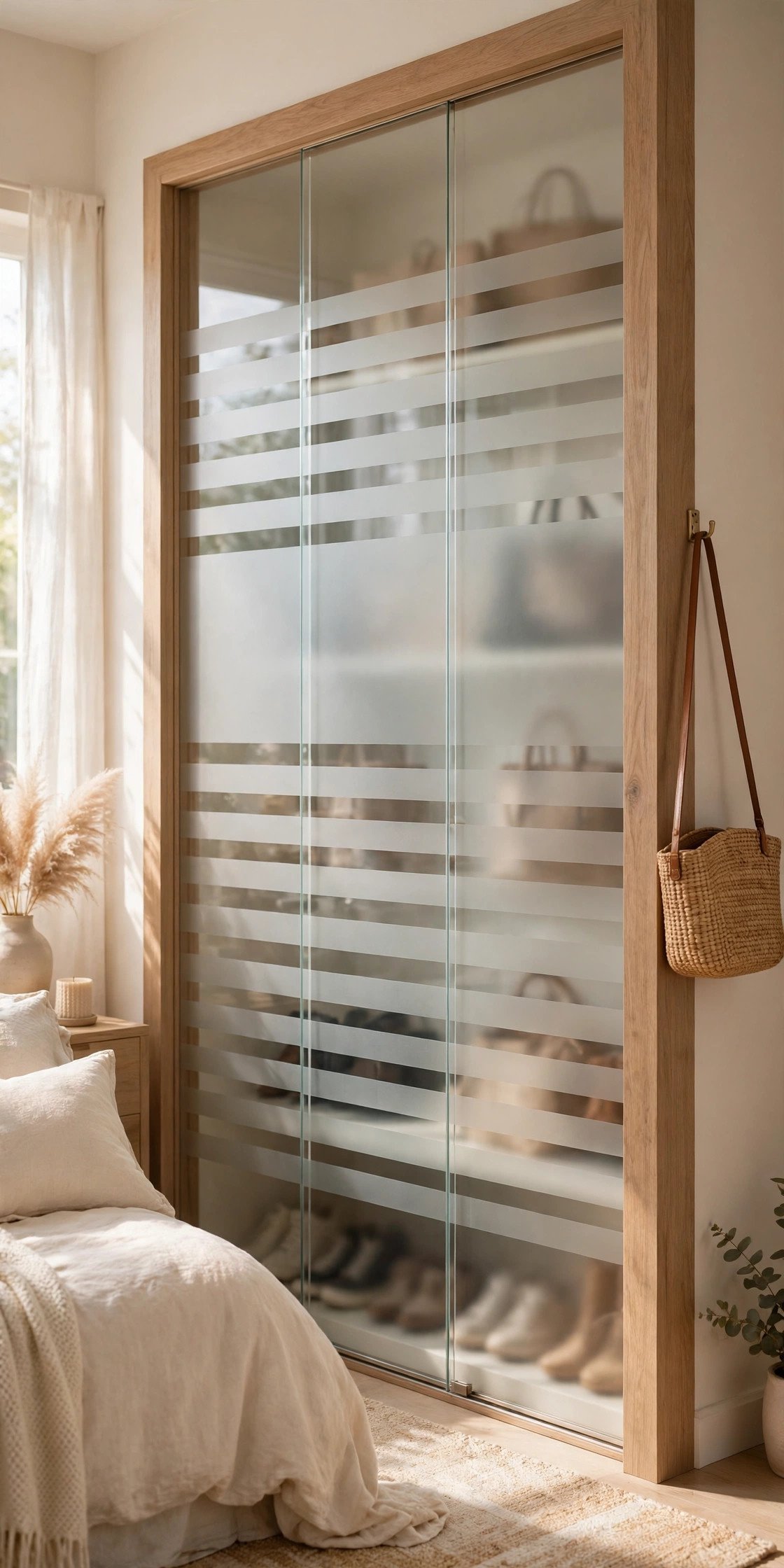
12. Apply Frosted Film to Spot Silhouettes
Frosted film on a glass-paneled closet door lets you see the shapes of shoes and bags inside without showing every detail. Apply the film in stripes or full sheets, and the soft blur keeps the closet looking calm while you still spot the pair you want.
The film sticks on and peels off without damage, so you can change the pattern whenever you like. Pair it with a small hook or two on the door frame for the bag you carry most, and the closet stays private, bright, and easy to read at a glance.
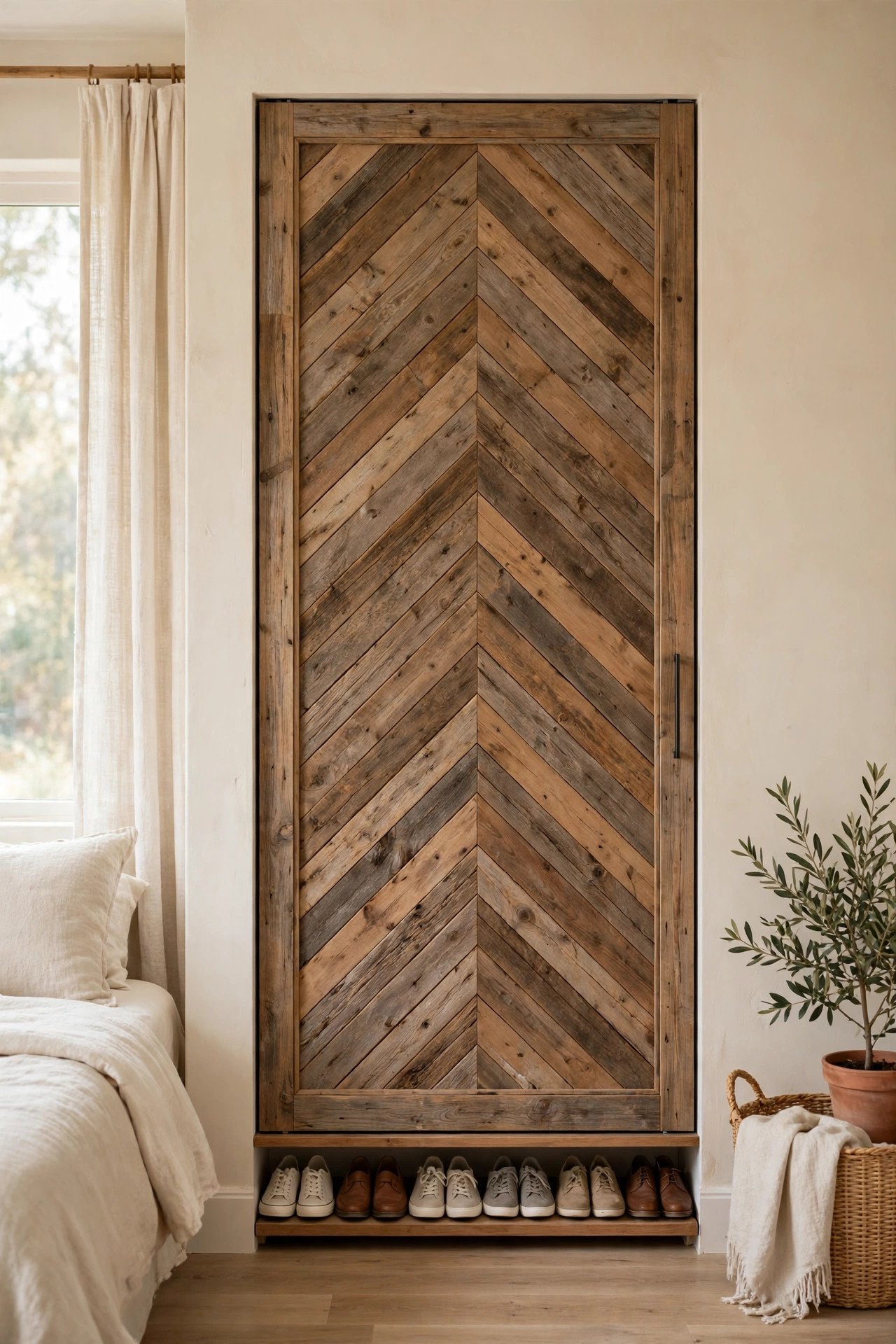
13. Arrange a Chevron Door with a Shoe Rail
A chevron pattern of reclaimed wood turns your closet door into a warm focal point, and a slim shoe rail along the bottom gives everyday shoes a clear home. Cut the planks at an angle, arrange them in V shapes, and fix a low rail where shoes can line up in a tidy row.
Mix wood tones lightly so the chevron has depth without looking busy, and keep the rail shallow so the door still opens fully. Shoes sit in plain sight, the pattern draws the eye, and the closet door does real storage work instead of only hiding the mess.
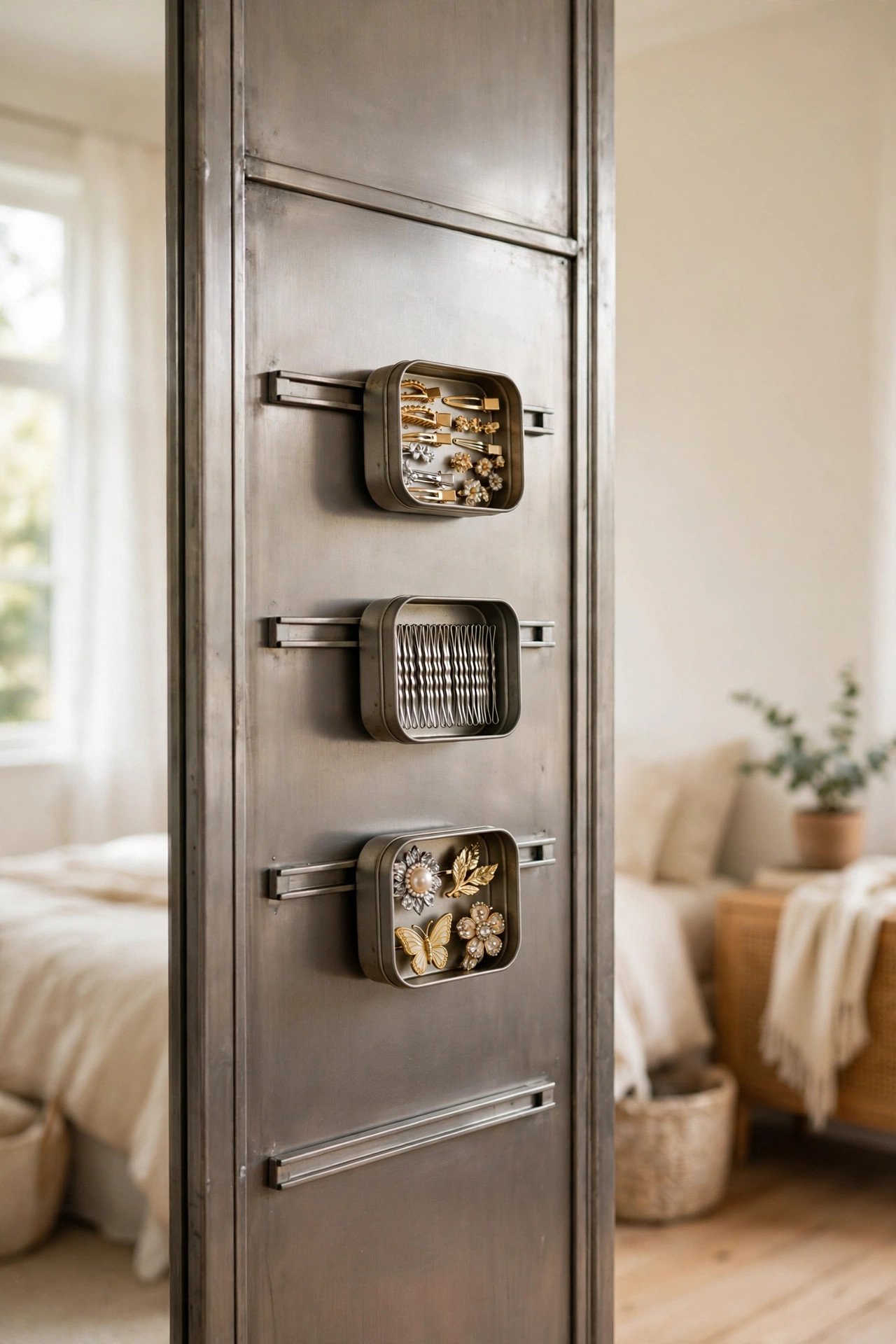
14. Clad the Door in Metal for Magnetic Storage
A metal-clad closet door holds magnetic hooks, strips, and small tins, which makes it perfect for metal accessories like bobby pins, hair clips, and brooches. Fix a thin sheet of galvanized metal or magnetic board to the door, then stick the pieces on in neat rows where you can grab them fast.
Add a magnetic strip for the small metal bits that always disappear, and clip charging cables to it too so they stop tangling in a drawer. The metal adds a cool, modern edge, and these cable management ideas show how to keep cords tidy in the same calm way.
15. Paint a Mural with Labeled Shoe Zones
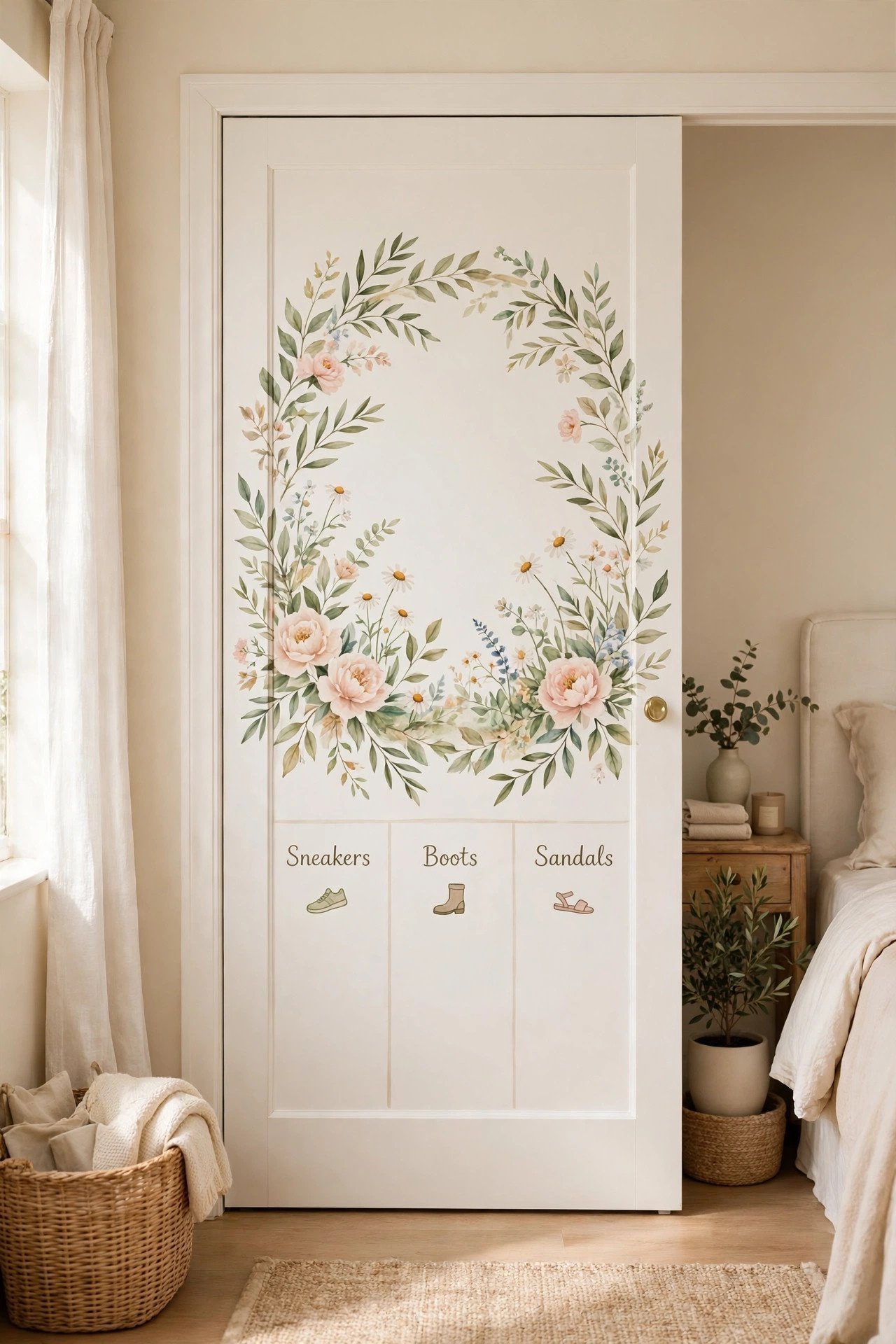
A hand-painted mural turns your closet door into art, and painted labels inside the mural mark a zone for each kind of shoe. Sketch a simple design, like soft hills or a garden row, then paint small labels under it for sneakers, boots, and sandals so everyone knows where each pair belongs.
Keep the colors soft and the labels large enough to read from the doorway, and seal the paint so it survives daily opening and closing. The mural makes the door a favorite part of the room, and the zones keep shoes from piling in a heap on the floor.
16. Frame Molding Squares as Display Nooks
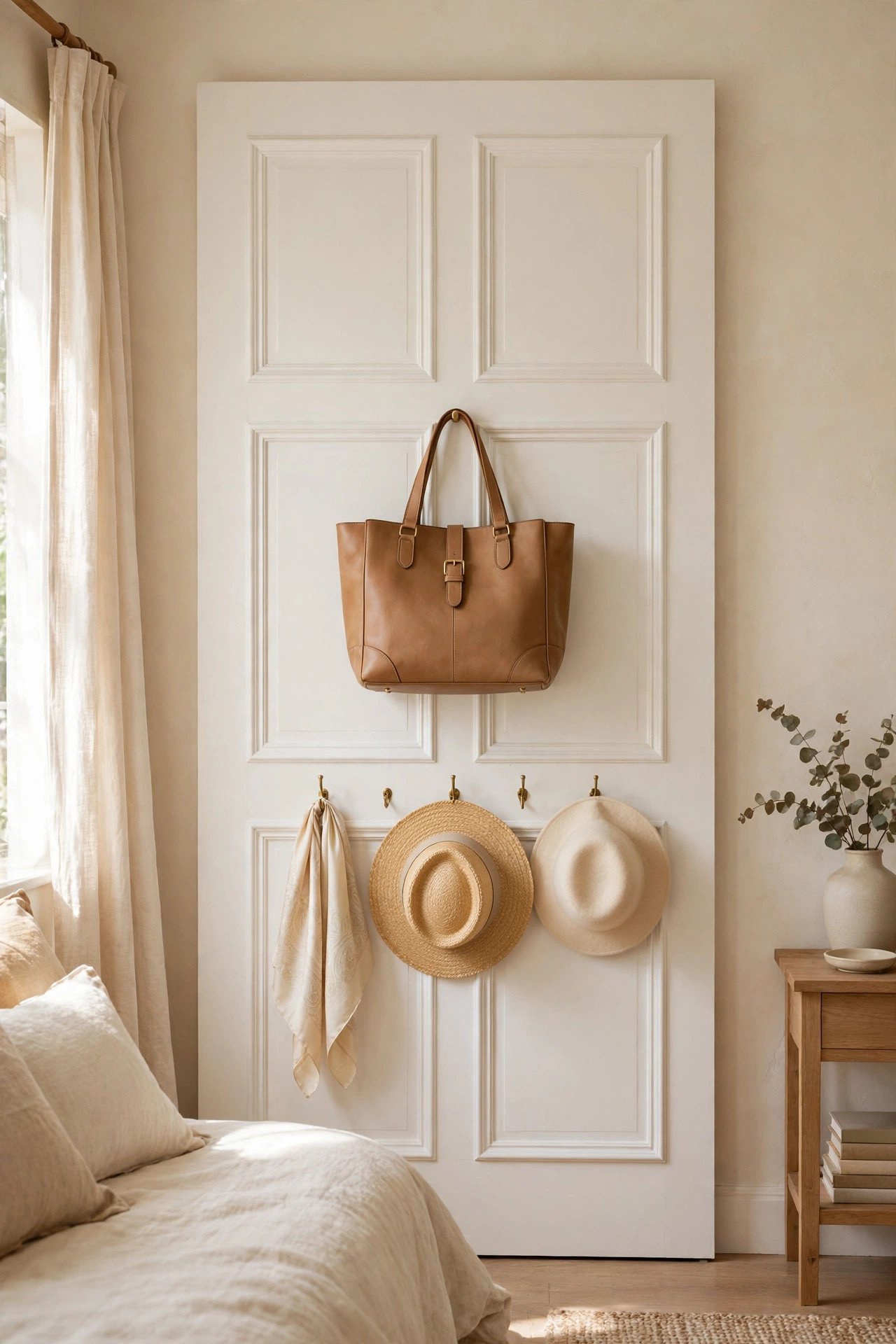
Decorative molding squares turn a flat closet door into a set of little display frames for your favorite accessories. Apply pre-made molding in squares or rectangles, paint them the same color as the door, and use each square for one thing: a favorite bag, a silk scarf, or a row of hats.
Keep one square empty so the display can breathe, and hang the pieces on small hooks inside the frames so they sit flat against the door. The molding adds the look of expensive millwork, and the nooks make choosing an accessory feel like picking from a shop window.
17. Fit Faux Leather Panels with Hooks
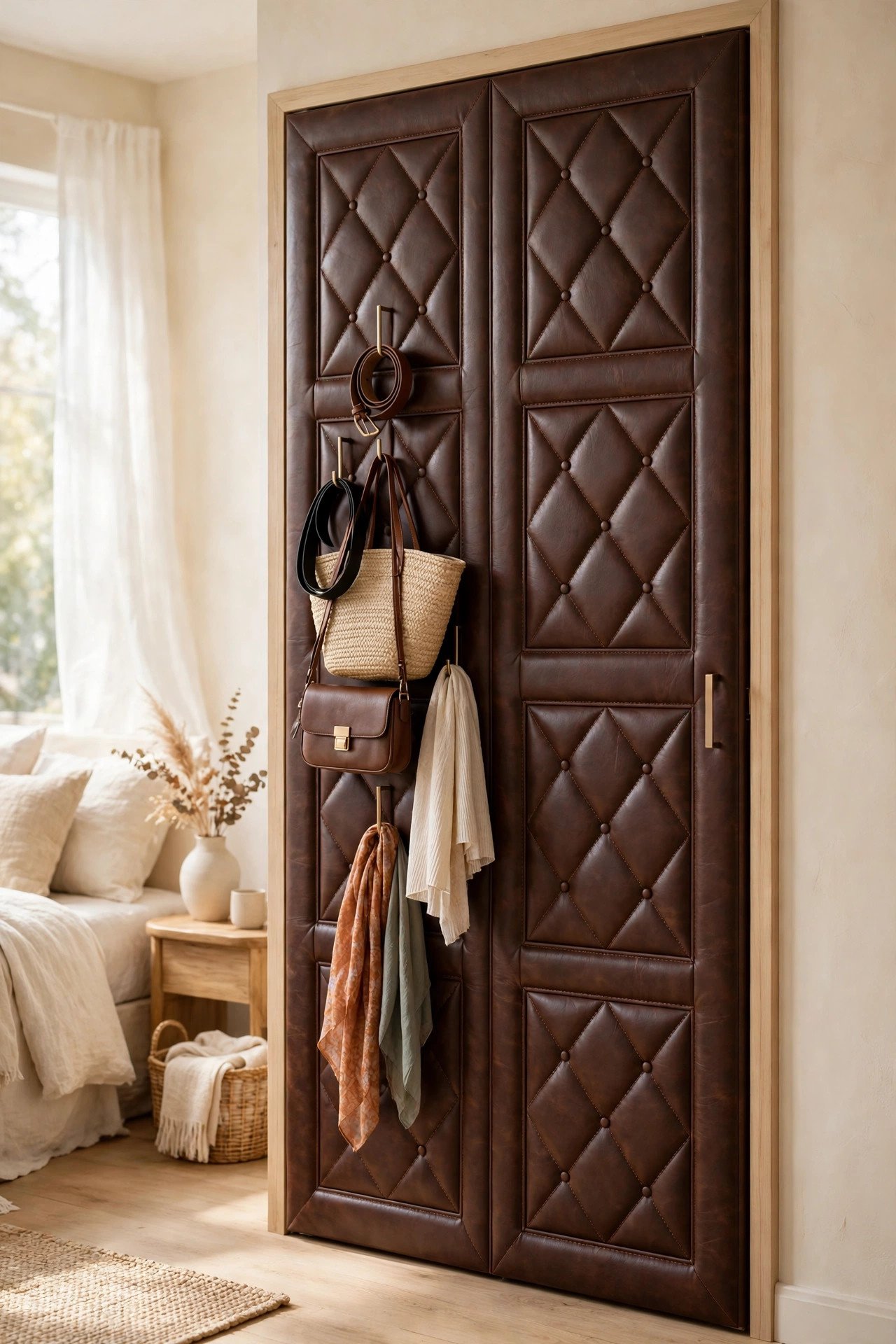
Faux leather panels give your closet door a rich, tailored feel, and hooks set into the panels hold belts, bags, and scarves in style. Cover the door or a framed section of it in textured faux leather, choose a deep brown or soft black, and fix a row of slim hooks across the panels.
The leather hides scuffs from daily use, and the hooks keep the pieces you wear most within easy reach. Wipe the panels clean with a damp cloth, and the door stays handsome while your accessories stay organized and ready to grab.
Conclusion
Your closet door has been holding storage potential all along, and any one of these 17 ideas can turn it from a blank slab into a working part of your routine. Pick the idea that matches your room, your door, and the accessories you reach for most, and let the door carry the pieces that used to pile up on chairs and floors.
The best part is that most of these ideas take an afternoon and a few simple supplies, and they make getting dressed easier every single day. Keep the routine light, and a quick nightly reset helps too — these nightly reset routines show how to tidy the room in minutes. Start with the door you open most, and hang one hook tonight.
Frequently Asked Questions About 17 Closet Door Organization Ideas for Accessories and Shoes
Can I organize shoes on a closet door without damaging it?
Yes, use over-the-door hooks, adhesive strips, or a hanging panel that needs no screws, and keep heavy shoes on a low rail near the hinges. Light loads and removable fixings protect the door, and you can move everything without leaving marks behind.
What is the best way to store scarves on a closet door?
Hang scarves on a slim rail, a row of pegs, or a fabric pocket panel so each one hangs flat and stays visible. Fold them loosely rather than bunching them up, and keep the ones you wear most at eye level so choosing one takes seconds.
How do I keep accessories visible on a closet door?
Use open storage like hooks, clear pockets, and magnetic strips so every piece is on display instead of hidden in a box. Group similar items together, leave space between them, and the door becomes a quick visual menu each morning.
Will door storage work in a small bedroom closet?
Yes, door storage is ideal for small closets because it uses space that is otherwise wasted. Choose shallow hooks and slim rails so the door still closes, and keep the heaviest items low and near the hinges for smooth swinging.
How do I stop a loaded closet door from sagging?
Spread the weight across the door, keep heavy bags and shoes low and close to the hinges, and tighten the hinge screws regularly. If the door still dips, add a third hinge or move the heaviest pieces to a shelf inside the closet.

Hi, I’m Emily! I turn messy corners into cozy, organized spots. DreamNestDecor is where I share simple, practical home ideas — decor, organization, and small-space solutions that work in real life, not just in photos. Every idea here is carefully researched before it’s shared.